
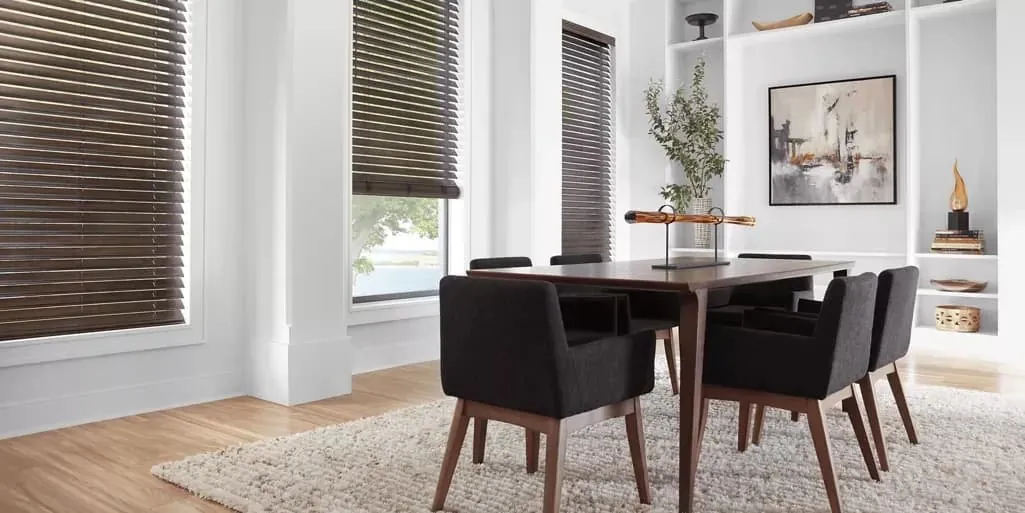
Street-level privacy comes first
Woonsocket’s streets are lined with mill-era triple-deckers and Victorians, packed closely together, with front rooms that look straight onto the sidewalk and side windows that face the next house a few paces away. Inside, the ceilings are high and the windows match them: tall, narrow double-hung sash that floods a room with daylight and also puts it on view.
On a street that close, the first thing any window covering has to do is give privacy at street level, without turning a bright front room into a dim one. Horizontal blinds are well suited to that, because the slat angle separates what comes in from what can be seen. That is where most requests for custom blinds in Woonsocket, RI, begin.
The second thing is height. A window that reaches toward a high ceiling needs a blind that can be made tall, raised without a struggle and set to stay open or closed exactly where you want it.
Six ranges for tall city sash
Six options suit the city’s houses. When we plan custom blinds in Woonsocket, RI, these are the ranges we reach for, and each one travels to your house as a sample so it can be judged against your own trim and light.
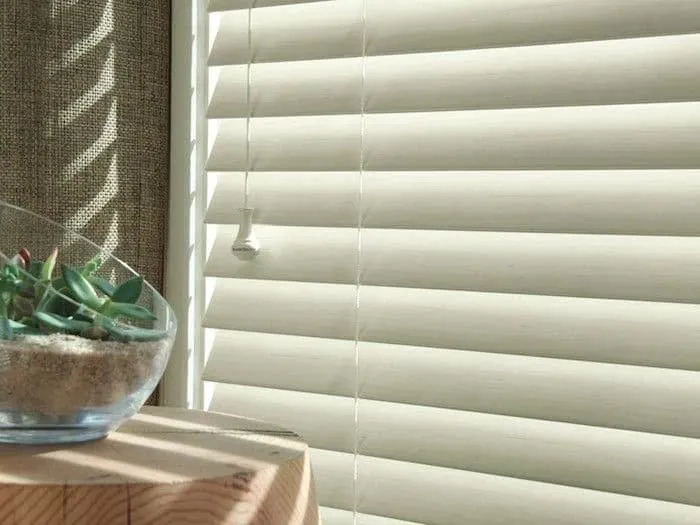
Wood blinds
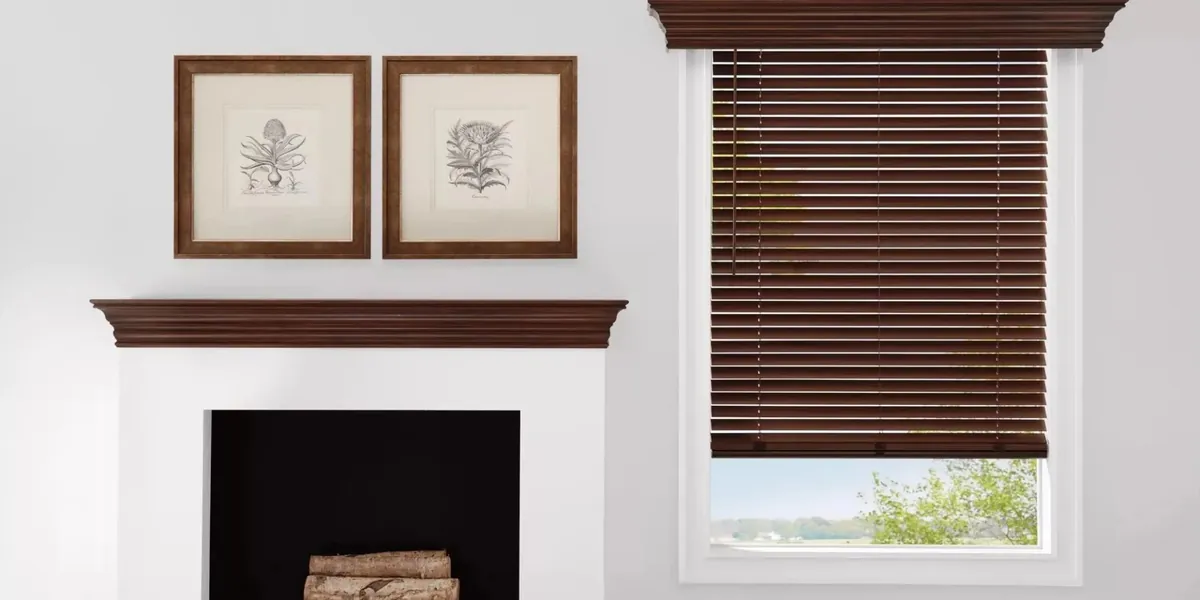
Real wood slats in paints and stains, made to the full height of a tall Victorian sash.
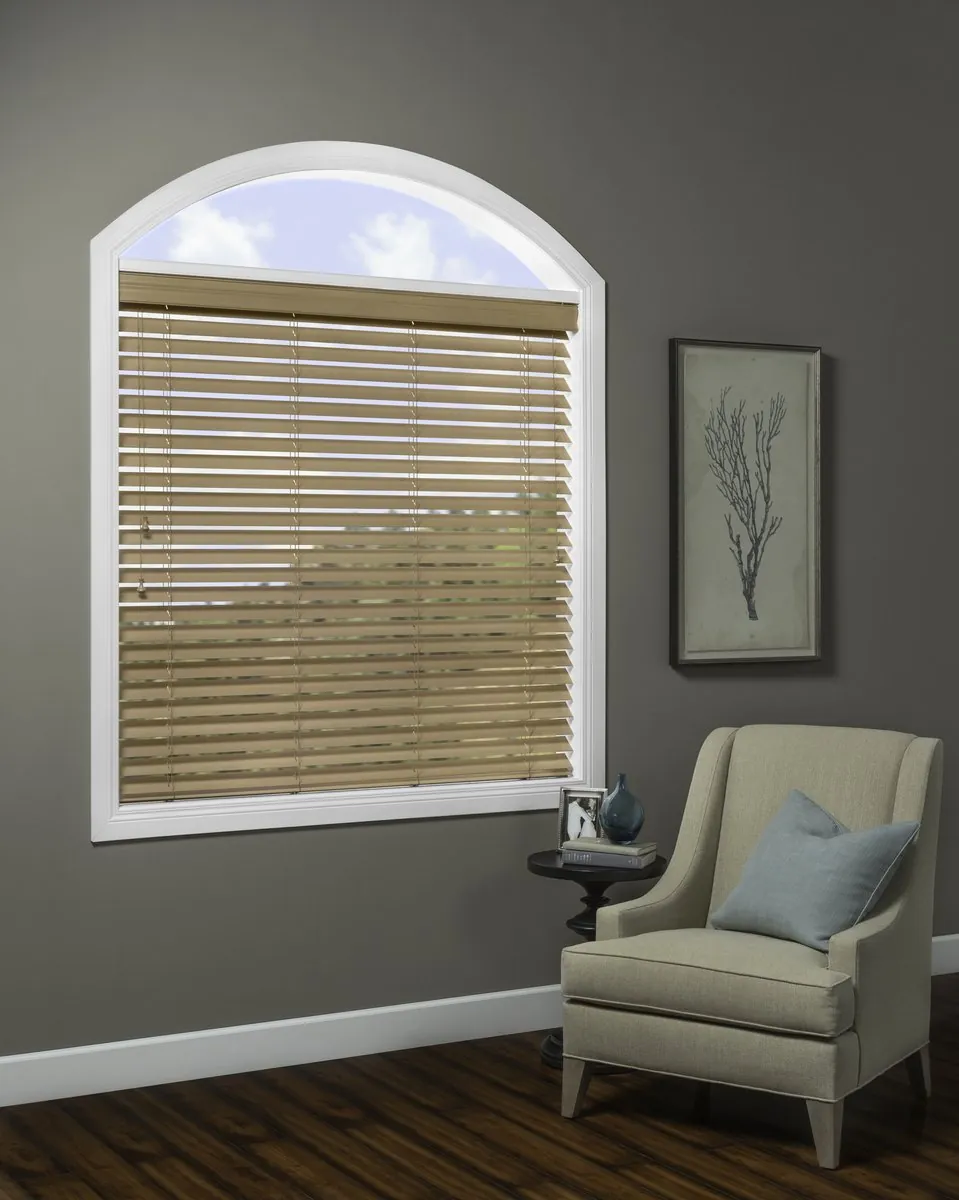
Parkland wood blinds
Hunter Douglas’s real-wood line, for parlors and dining rooms where the original woodwork deserves company.
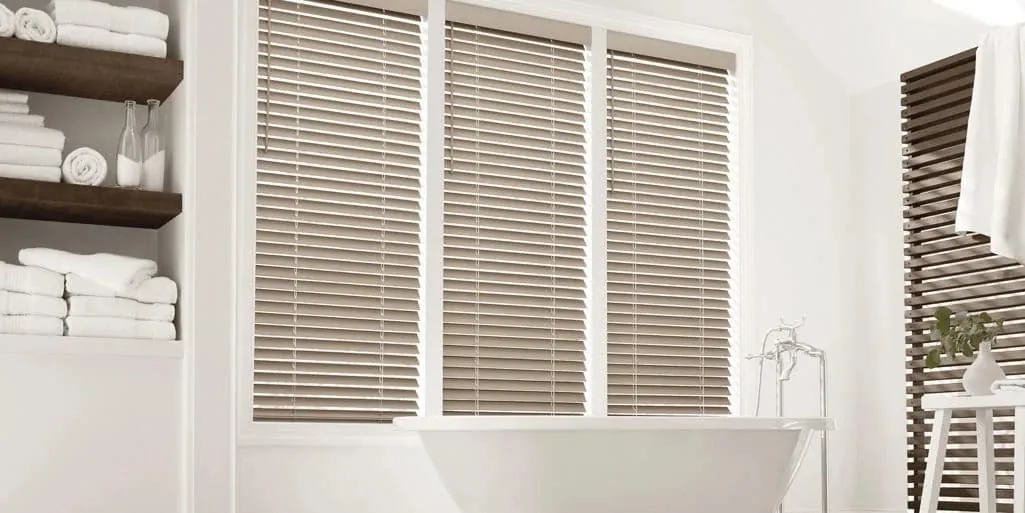
EverWood faux wood blinds
A painted-wood appearance in another material, widely used in kitchens and bathrooms.
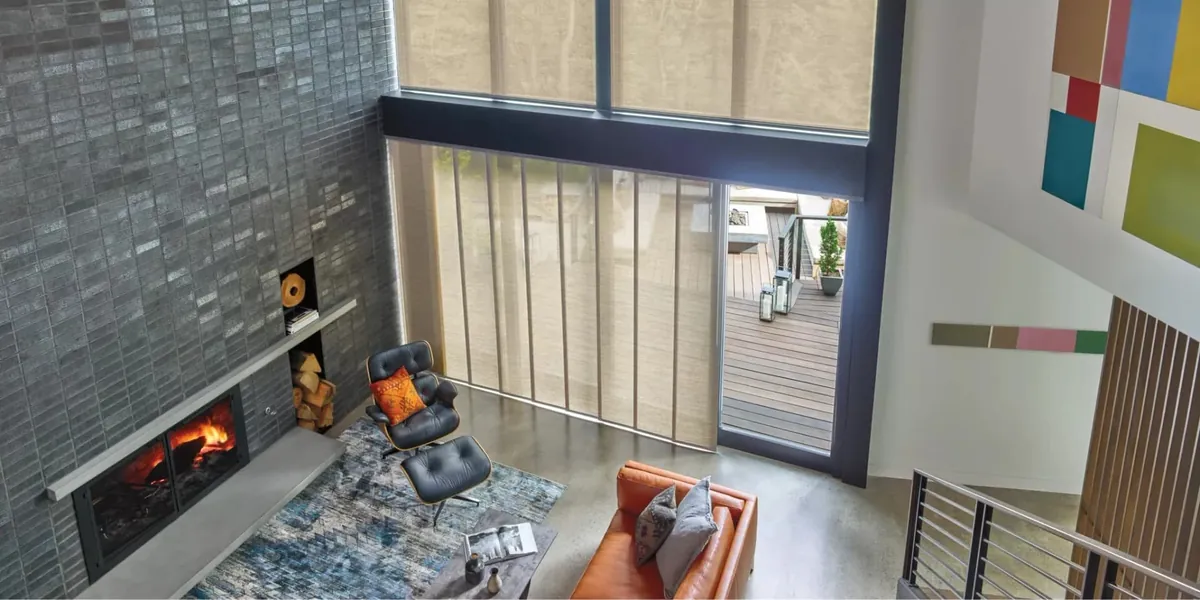
Vertical blinds
For a slider to a back deck or a wide rear opening, with vanes that park at one side.
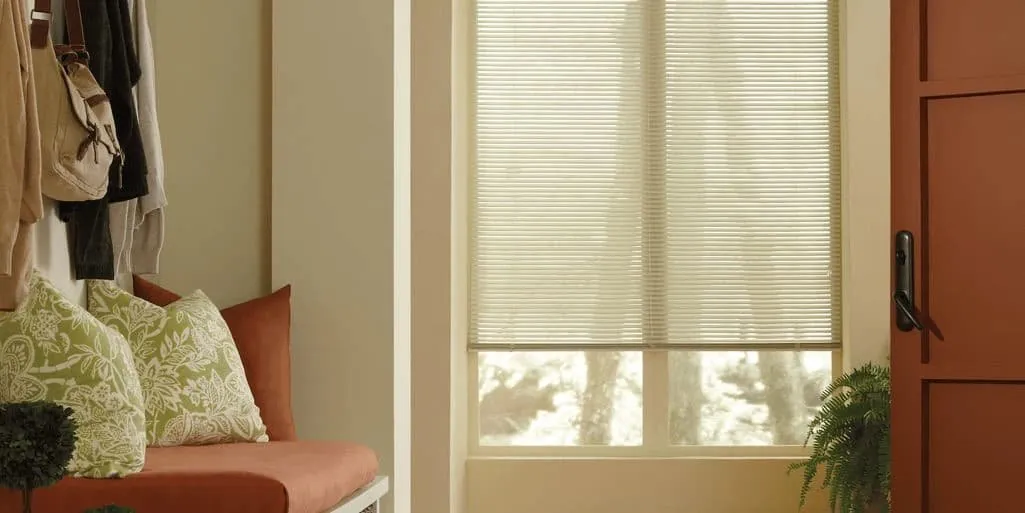
Metal blinds
A slim headrail for door glass, shallow frames and narrow stair windows.
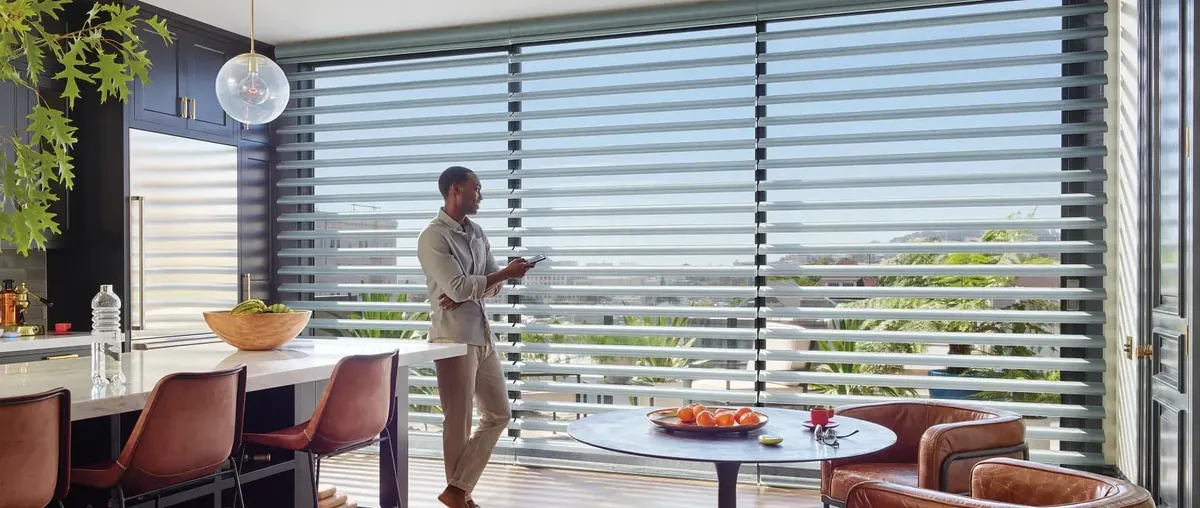
Motorized blinds in Woonsocket
PowerView brings a tall blind’s lift and tilt down to a phone, a remote or a schedule.
Front rooms on a close-set street
A Woonsocket front room is usually only a short step from the sidewalk, sometimes raised a few feet above it, sometimes nearly level. People pass all day, and the houses across the street look back. Bare tall windows give a clear view right into the room.
The answer is in how the slats are angled. Tilt them so they slope down toward the street, and anyone walking past is looking up into the slat faces while you, inside, can still see out over them. Daylight keeps coming in, and the high ceiling stays bright. In the evening, close them fully and the room is private to the whole street. If the front room sits close to street level, a slightly steeper tilt does more; if it sits above the sidewalk, a gentler angle is often enough.
A Victorian parlor or the front room of a triple-decker flat is also where the best woodwork tends to be. A wood blind fitted within the frame, colored to suit the trim, keeps the casings on show and makes the blinds look like part of the room rather than something hung over it.
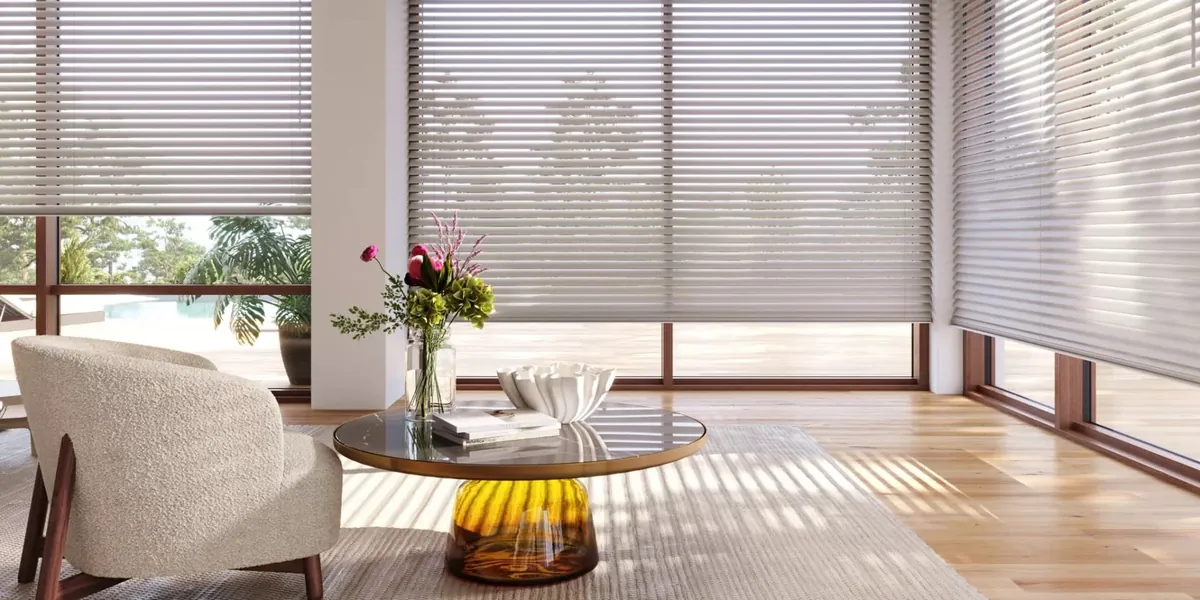
Tall, narrow double-hung windows
High ceilings bring tall windows, and in Woonsocket’s older houses they are narrow too: double-hung sash, longer than it is wide, often set in pairs. Each one needs a blind built to its own size, because older frames are rarely square after so long, and two windows side by side can measure differently.
We measure the width at the top, middle and bottom and the height at both sides and the center, then build to the tightest figure so the blind runs freely all the way down. On a tall window that matters: a blind that rubs at one point catches every time it passes. Where there is depth in the frame, an inside mount keeps the headrail tucked in the opening and the casing visible. Where there is not, a metal blind’s slimmer headrail often fits, or the blind goes on the face of the trim, explained to you before ordering.
Height has two more effects. A tall blind carries a lot of slats, so raising it by hand needs a good lift system; a cordless lift lets you push it up from the bottom rail with no cord pooling on the floor. And when it is raised, the slats gather into a stack at the top, which on a tall window is a small share of the glass, so the view stays largely clear.
Triple-deckers, floor by floor
A triple-decker stacks three homes, one per floor, each with the same tall windows front and back. The needs change as you climb.
First floor
The first floor is the one at street level, and privacy is its main concern. Slats angled down toward the sidewalk block the view in from passers-by. Side windows, facing the next house a few paces away, take slats angled the other way to block a level look from next door. At night, every blind closes.
Second floor
On the middle floor, the sidewalk is less of an issue but the houses next door and across the street are right at eye level, with their own second-floor windows. Here the side windows need the most thought. Slats rising toward the glass meet a look from across the gap with a solid face, while light still comes in over the top.
Third floor
The top floor sees more sky and less street. Privacy matters mainly at night, while light and heat matter more by day, because high windows catch more sun. A blind tilted to bounce the light onto the ceiling keeps the room bright without glare. A darker slat in a top-floor bedroom keeps it dim at dawn.
If you own the whole building, matching the blinds on the street side of all three floors gives the front a tidy, consistent look, and planning the three floors in one visit means one round of measuring and one fitting for the house. If you live on one floor, we can match a color already used on another so the front still reads together.
Victorians and their rooms
Woonsocket’s Victorians have the same tall, narrow sash and high ceilings, often with more rooms on each floor and more original detail. Front parlors and dining rooms tend to take wood blinds, color-matched to the trim and fitted within the frames so the casings stay in view.
Kitchens and baths at the back are usually smaller and face the next house or a back yard. A faux wood blind half open over the sink lets light onto the counter while blocking the view in. Bathrooms take faux wood or metal closed tight. Narrow stair windows, common in Victorians, suit a slim metal blind, and a cordless lift keeps cords off the stairs.
Upstairs bedrooms keep the tall windows. A darker slat closed fully keeps them dim for sleep and blocks the view from the neighboring house at the same height.
A Victorian with many tall windows on each floor can look busy if every room picks its own color. Choosing custom blinds in Woonsocket for a whole Victorian usually starts with one shade for every window the street can see, then lets the rooms at the back and upstairs go their own way. The house keeps a calm face to the sidewalk, and each room still gets the slat that suits its light.
Light from the street after dark
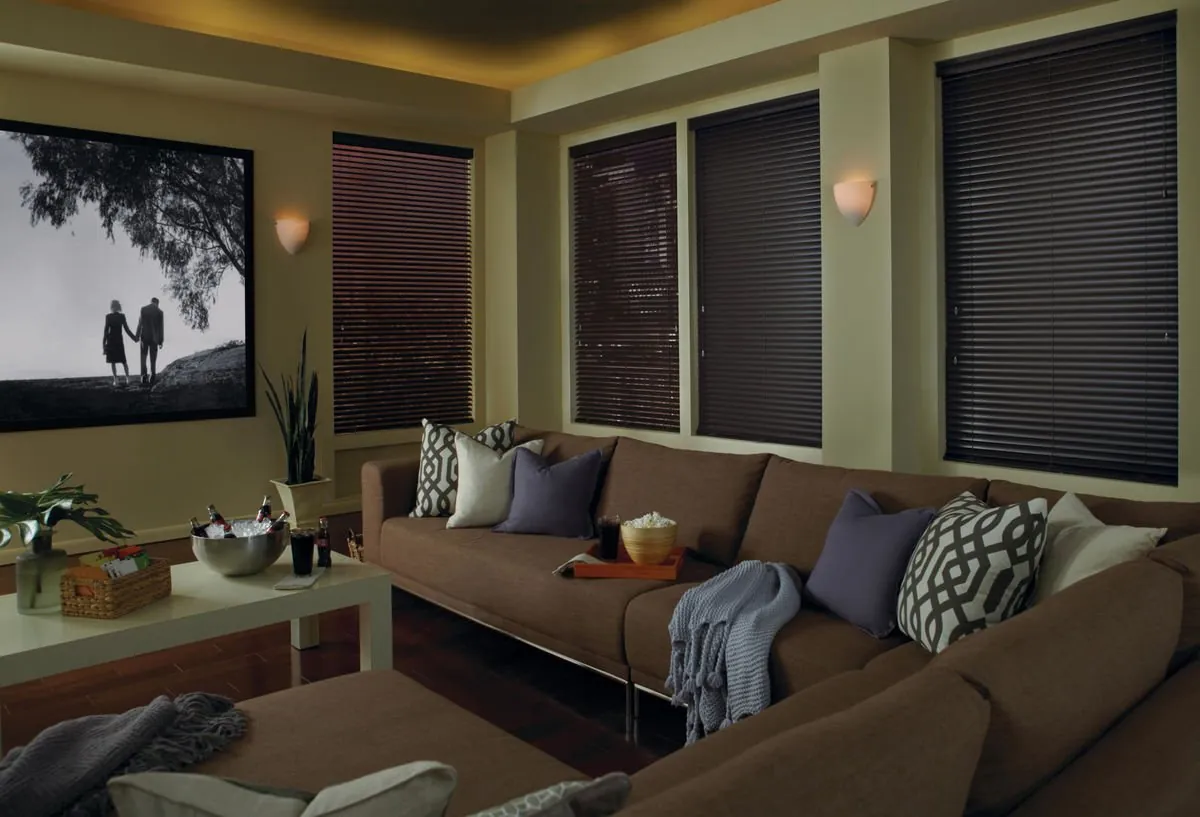
On a close-set city street, evening brings its own light. Streetlamps, passing headlights and the neighbors’ lit windows can all shine into a front room or a bedroom long after sunset. Tall windows let in more of it, simply because there is more glass.
Closed fully, a horizontal blind overlaps its slats and shuts most of that out. A darker slat color helps further in a bedroom, because it absorbs rather than glows when light hits it from outside. Where a gap at the edge of an old frame would let a sliver through, an inside mount built to the tightest measurement keeps the blind close to the jambs. For a front bedroom on a busy street, these details make the difference between a room that is dark enough to sleep in and one that never quite is.
Keeping the middle rooms bright
Many flats and Victorians here are deep from front to back, with their main windows at either end and the side windows facing the next house across a narrow gap. Rooms toward the middle can be short of daylight, and whatever light reaches them comes through those side windows.
For these rooms, the aim is to protect privacy while giving up as little light as possible. A pale slat color reflects light into the room even when the slats are angled to block the view. Tilting the slats so they rise toward the glass sends the light that does come in up onto the ceiling, where it spreads across the room. And because a blind can be fully raised on a cloudy day, you can always let the whole window work when privacy is less of a concern.
Back rooms and back stairs
At the back of a triple-decker or a Victorian, you usually find the kitchen, a bath and the stairs, facing a small yard and the backs of the houses on the next street. These windows tend to be smaller than the tall front sash, and some are narrow and set in a stairwell.
A faux wood blind over the kitchen sink, half open, gives the counter its light while breaking the view from the houses behind. A bath window takes faux wood or metal shut tight. Stairwell windows are often shallow, and a metal blind’s slim headrail fits them well; with a cordless lift, nothing hangs into a stair that several households may share.
Reaching the top of a tall window
On a window that rises toward a high ceiling, the tilt wand and the top of the blind can be a stretch. For windows you use every day, that may be fine. For a window behind a sofa, above a radiator or at the top of a stair, PowerView motorization makes life easier. The blind raises, lowers and tilts from a phone or a remote, and can follow a schedule.
On a close-set street, a schedule that closes every front and side blind at sunset is a simple way to give the house its evening privacy without going room to room. We work out how each motor gets its power at the visit. There is more on motorized blinds in Woonsocket.
Which material for which window
Each blind arrives built to order by Hunter Douglas, and in a Woonsocket house the window usually tells you the material. A parlor or front room with its original casings calls for real wood, painted to match or stained to show the grain. Kitchens and bathrooms lean toward faux wood, which gives the painted look in a different material. Glass doors, shallow frames and the slim windows that light a staircase suit metal, whose fine aluminum slats ride on a very lean headrail. A slider or a broad opening at the back takes a vertical blind, its vanes travelling along a track.
Read up on each range from the custom blinds page, or go straight to wood blinds or vertical blinds.
Color on a street of close neighbors
When houses crowd together like this, the street sees their front windows as one row. Blinds tinted to the trim, usually a white or cream, step back and let each house show its own lines. Indoors there is more room to play: a stained slat in the dining room, something pale by the stove, a deep tone where someone sleeps.
Because ceilings are high and windows long, each room shows more blind than usual, so the shade you pick counts for a little more. Whites, creams and stains all come with us, to be held up against your paintwork in daylight.
How the consultation and fitting work
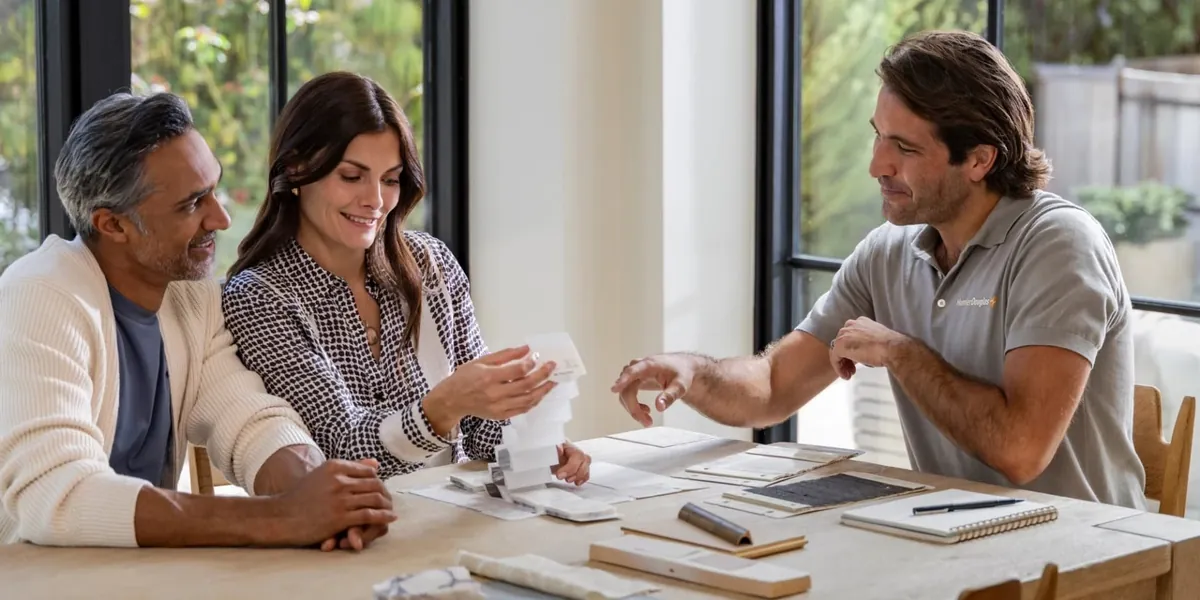
We come to your home, because tall windows, close neighbors and your own light are best judged on the spot.
- Fill in the form or press the call button, and a visit is booked at a time that works for you.
- The van is loaded with samples: slats in wood, faux wood and metal across a wide color range, vertical vanes and the control choices.
- We move through the home with you, noting for every window whether it looks at the sidewalk, the neighbor or the yard.
- Each tall window is measured top to bottom at several points, and every frame is checked for depth.
- A free estimate comes next, and the decision is yours to make when you are ready.
- Hunter Douglas certified installers hang every blind, square it up in its frame and work each lift and tilt before leaving.
Our page on what happens at an in-home consultation goes further. Precise numbers are why custom blinds in Woonsocket glide the whole length of a tall old sash without catching.
A Hunter Douglas Gallery dealer for Woonsocket
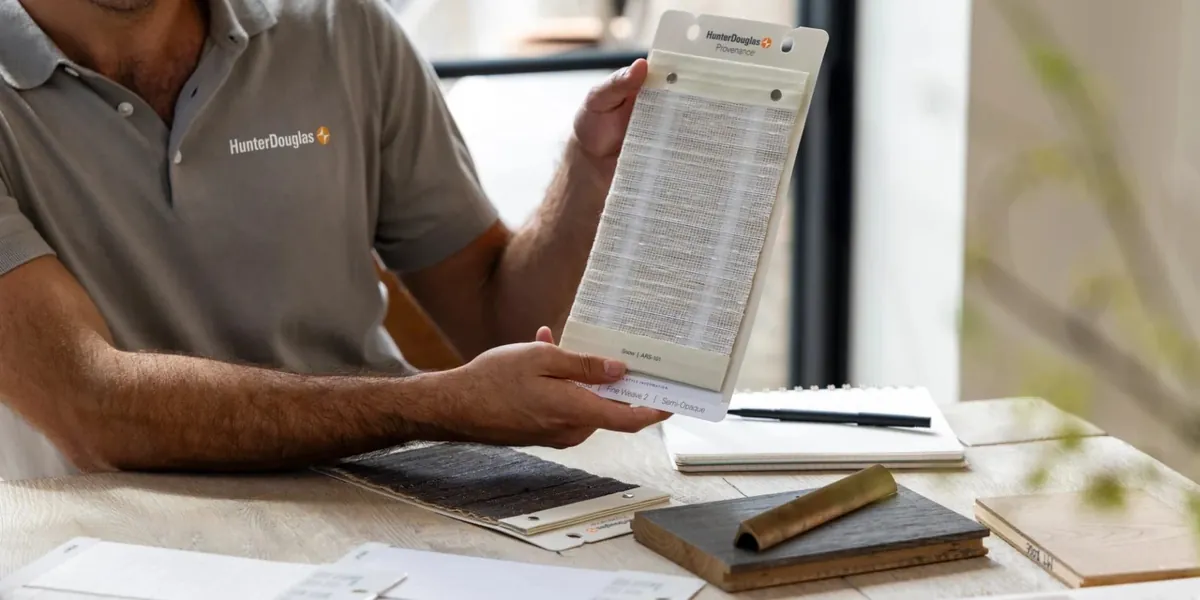
As a Hunter Douglas Gallery dealer, Blinds & Designs carries the whole blind line into a single appointment: wood, faux wood, metal and vertical, the complete palette, each control, and PowerView motorization. Everything is put up by Hunter Douglas certified installers. If a room needs a fresh eye, interior design consultations are offered, and worn or broken blinds and shades can be repaired.
Rooms that suit something else might take cellular shades in Woonsocket, roman shades in Woonsocket or plantation shutters in Woonsocket. The Woonsocket page shows all of it.
Franklin, the closest showroom
Across the state line, Franklin is the showroom closest to Woonsocket. When it is open and how to get there are both on the Franklin showroom page.
Questions from Woonsocket
Our first-floor front room is right on the sidewalk. How do blinds keep it private?
Angle the slats downward toward the road. Anyone walking past meets the slat faces, you keep a view out above them, and the room stays bright. After dark, shut them all the way.
Our windows are very tall. Will a blind that long be hard to lift?
Not with a cordless lift, which goes up with a push on the bottom rail. Where the top of a window is out of reach, PowerView motorization does the lifting and tilting from your phone or a remote.
We live on the second floor of a triple-decker. What suits the side windows?
Slats rising toward the glass. A look across from the next house at the same height meets a solid face, and daylight still slips in over each slat.
Can the blinds match on every floor?
They can. Owners of the whole building can plan all three floors at once; on a single floor, we can match a shade the other floors already use.
Does the estimate cost anything?
No. Every window is measured, and the estimate is free.
Let’s look at your windows
Long windows, high ceilings and neighbors close by are all simplest to sort out face to face. Book a consultation and the samples come to your door, every window is measured, and a free estimate for custom blinds in Woonsocket, RI, is left with you. The call button is there too, as is the Franklin showroom.