
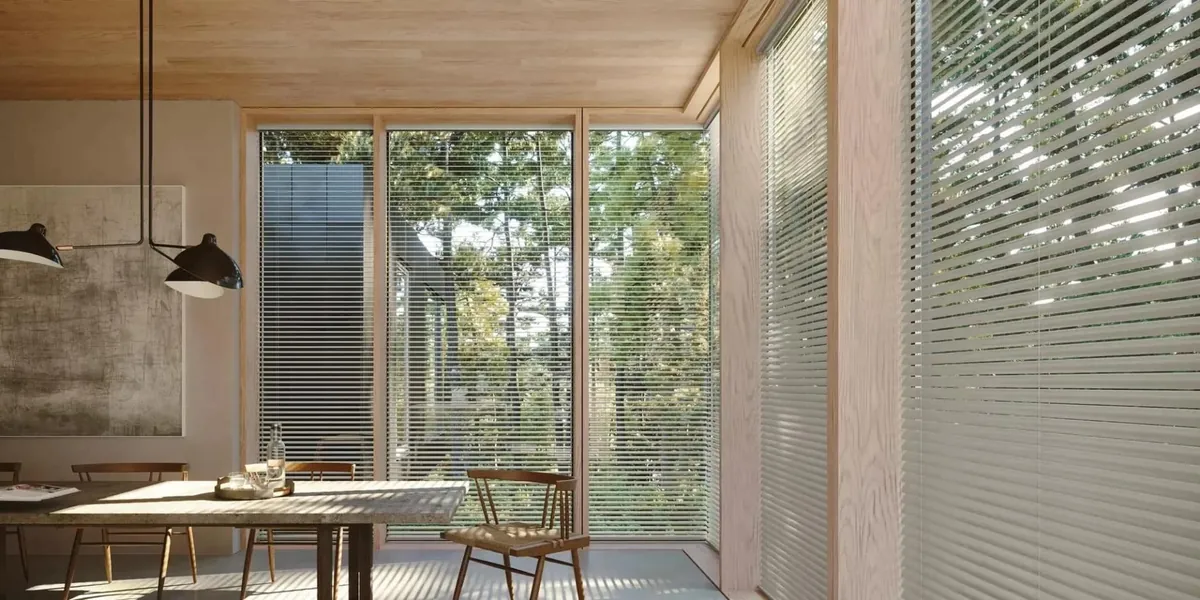
From narrow Victorian sash to two-story foyer glass
Mansfield’s houses span a long stretch of building, and their windows show it. Near the center stand Victorians with tall, narrow sash, the kind of window that looks elegant from the sidewalk and is awkward to dress from the inside. Spread across the subdivisions are post-war ranches and, beyond them, large newer colonials. The newest of those colonials often open with a two-story wall of foyer glass that lights the entry from floor to roofline. Ordering custom blinds in Mansfield, MA, means solving very different windows, sometimes in neighboring streets.
What ties them together is that none of them fit a stock blind well. Narrow sash needs a blind that is slim, long and straight. Foyer glass needs blinds that can be worked from far below. The ranches and colonials have more regular windows, but enough of them that a mismatched set shows from the road.
We measure each window in your house, bring samples to hold against it, and order each blind to its own size from the Hunter Douglas range of wood, faux wood, metal and vertical blinds.
Room by room in a Mansfield house
Each room asks something different of a blind. These are the ones we plan most carefully.
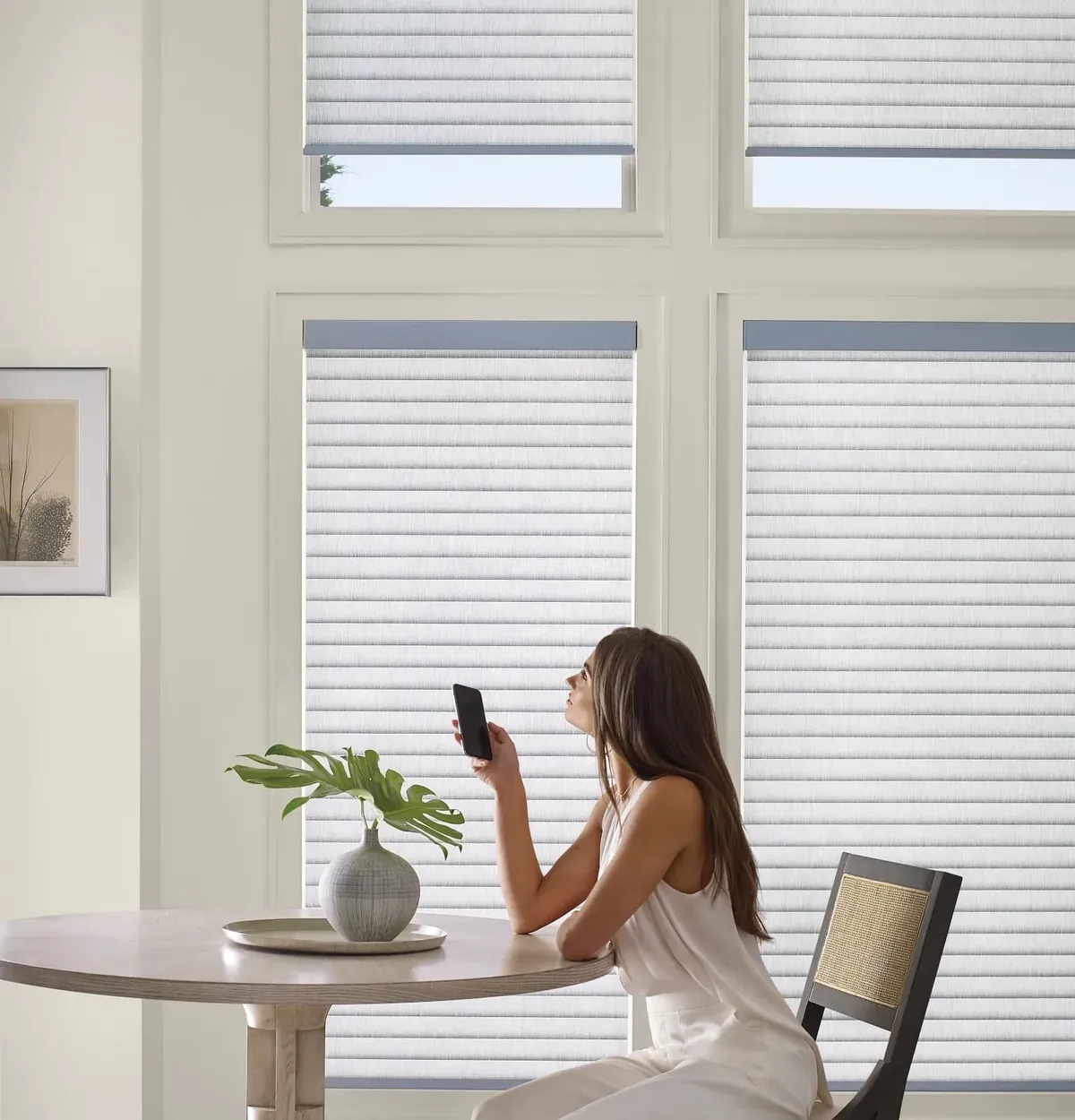
The foyer
Two stories of glass over the front door. Blinds here are often motorized so they can be tilted from the floor or a phone.
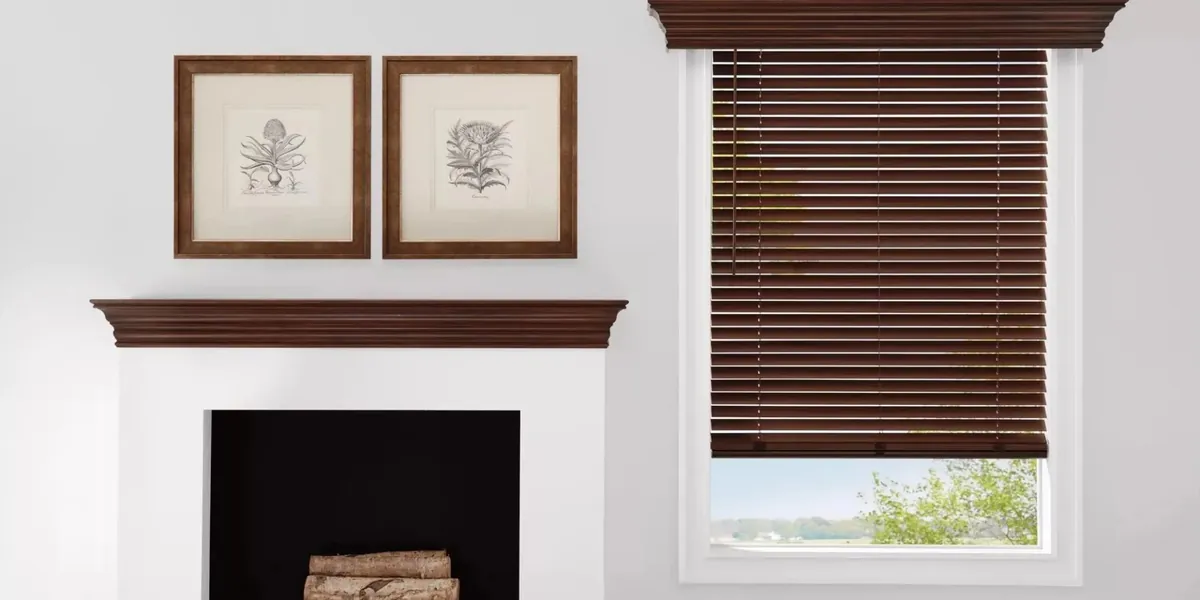
The parlor
Tall, narrow Victorian sash with old trim. Wood blinds in a stain that sits with the woodwork suit it well.
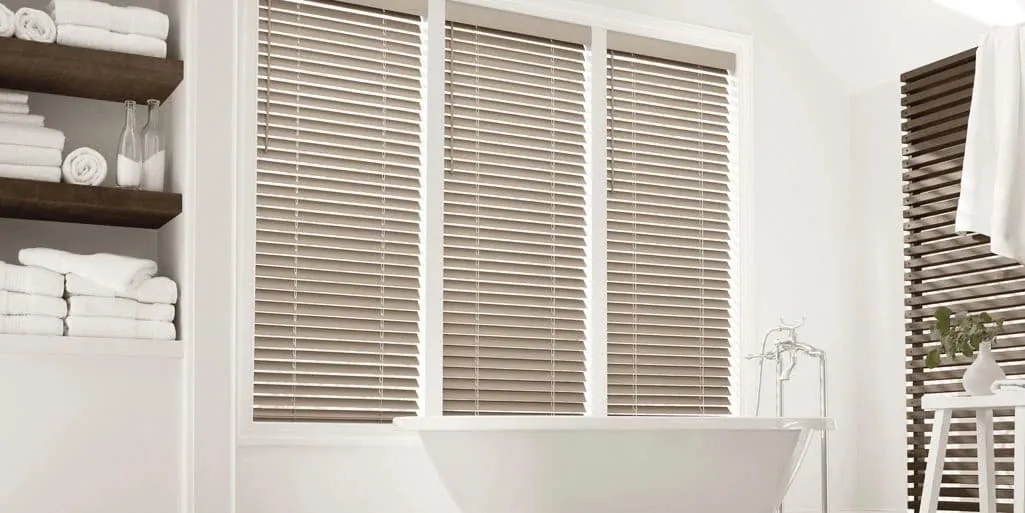
The kitchen
Steam and splashes near the sink. Faux wood is the material we suggest, color-matched to the rooms next door.
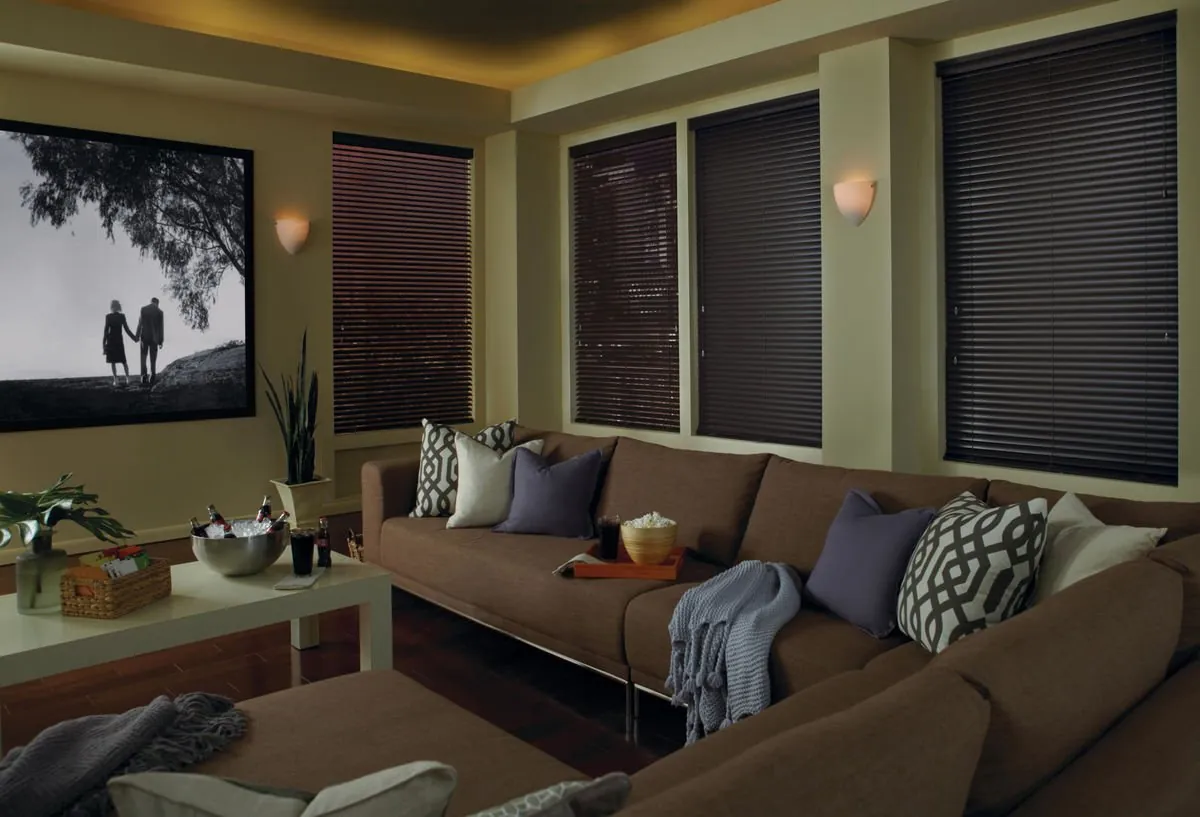
The bedrooms
A darker color and slats that close firmly make for a dimmer room in the early morning.
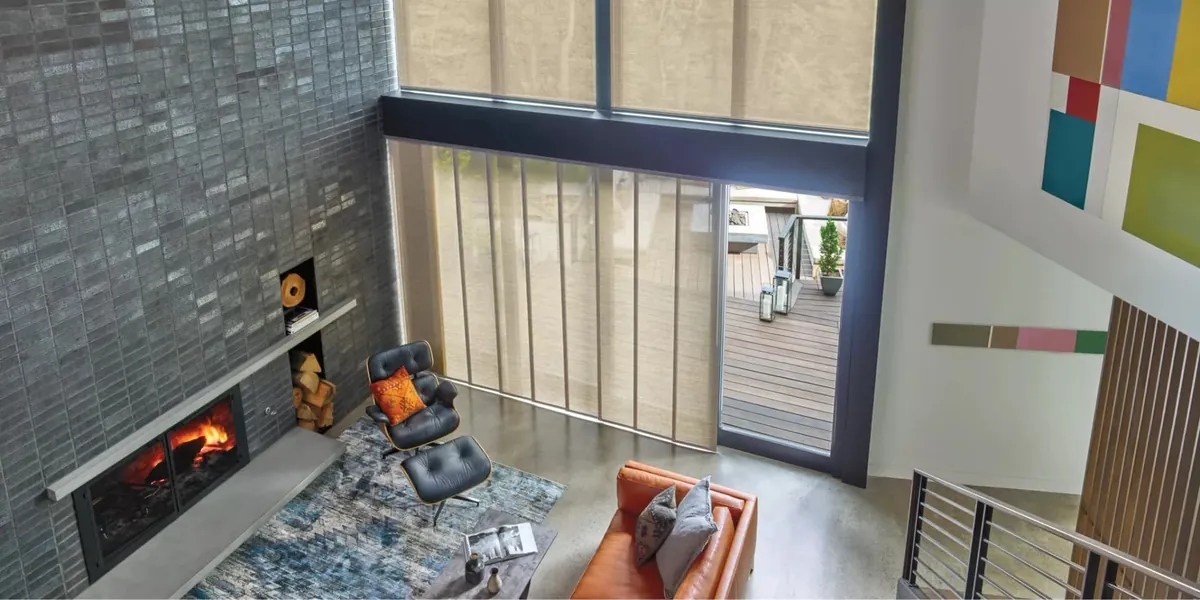
The family room slider
A door to the deck or patio takes a vertical blind that draws aside, so you never have to lift anything to step out.
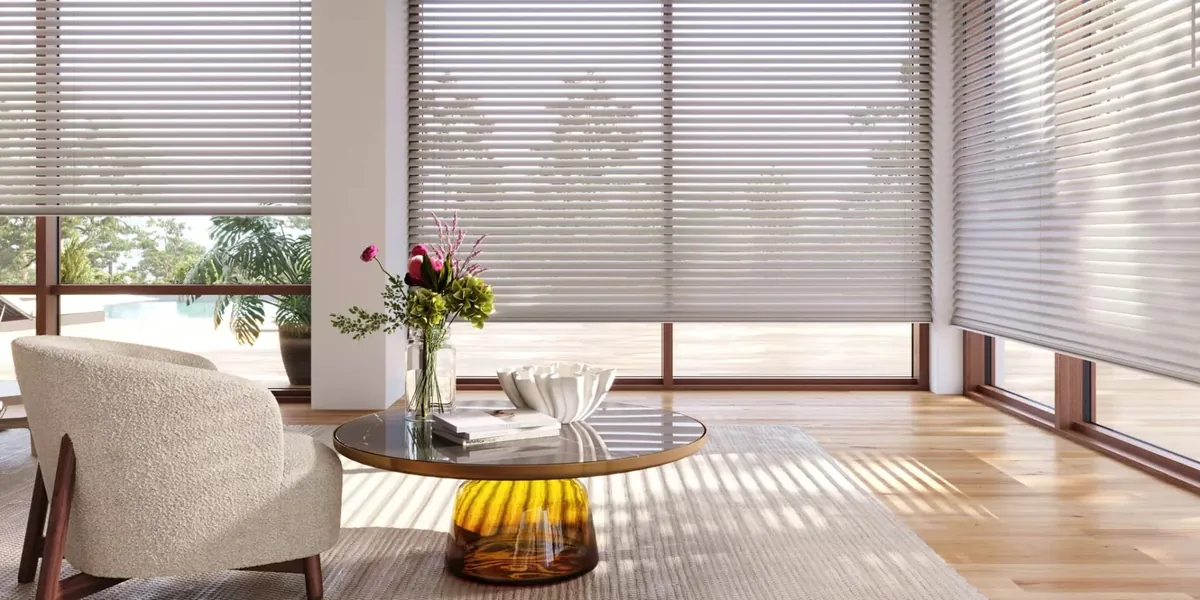
The home office
Slats tilted upward send light to the ceiling and keep glare off a screen through the working day.
Two stories of glass over the front door
The newest colonials in Mansfield tend to make their entrance with glass. Over the front door rises a tall run of windows, sometimes two rows stacked, filling the foyer with light and showing the staircase to the street. It is the feature that sells the house, and it is the window people most often ask us about once they have lived with it for a while.
The trouble comes in three forms. First, sun: depending on which way the house faces, that glass can pour morning or afternoon light down the stairs and onto the landing, bright enough to make the upstairs hall uncomfortable. Second, privacy: at night, with the foyer lit, the whole entry and staircase are on show to the road. Third, reach: the upper windows are well above any ladder most households keep, and well above where anyone would want to climb.
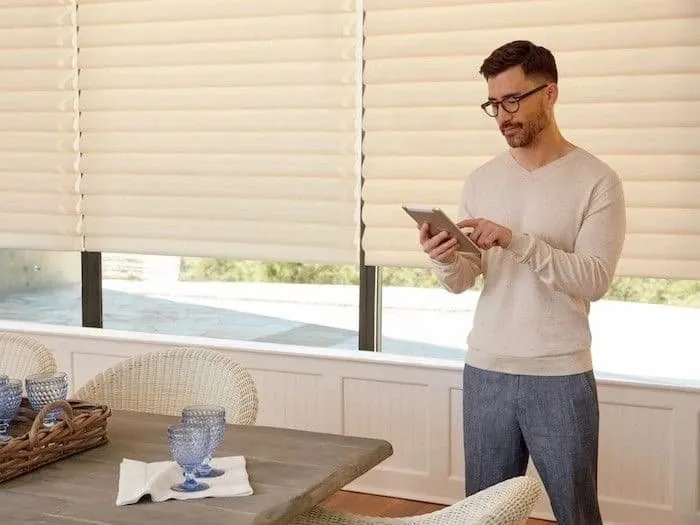
Horizontal blinds handle the first two well. Tilted up, they send daylight toward the ceiling instead of down the stairs; tilted closed, they hide the entry at night. The reach problem is where motorization comes in. With PowerView, the upper blinds tilt and raise from a phone, a remote by the door, or a schedule that closes them at dusk and opens them again in the morning. We plan how each motor is powered at the visit. The lower windows, the ones you can reach from the floor, can be manual or motorized to match.
Our certified Hunter Douglas installers bring what they need to reach the top windows safely and mount the blinds level, so the whole wall lines up from the foyer and from the street.
Narrow sash in the Victorians near the center
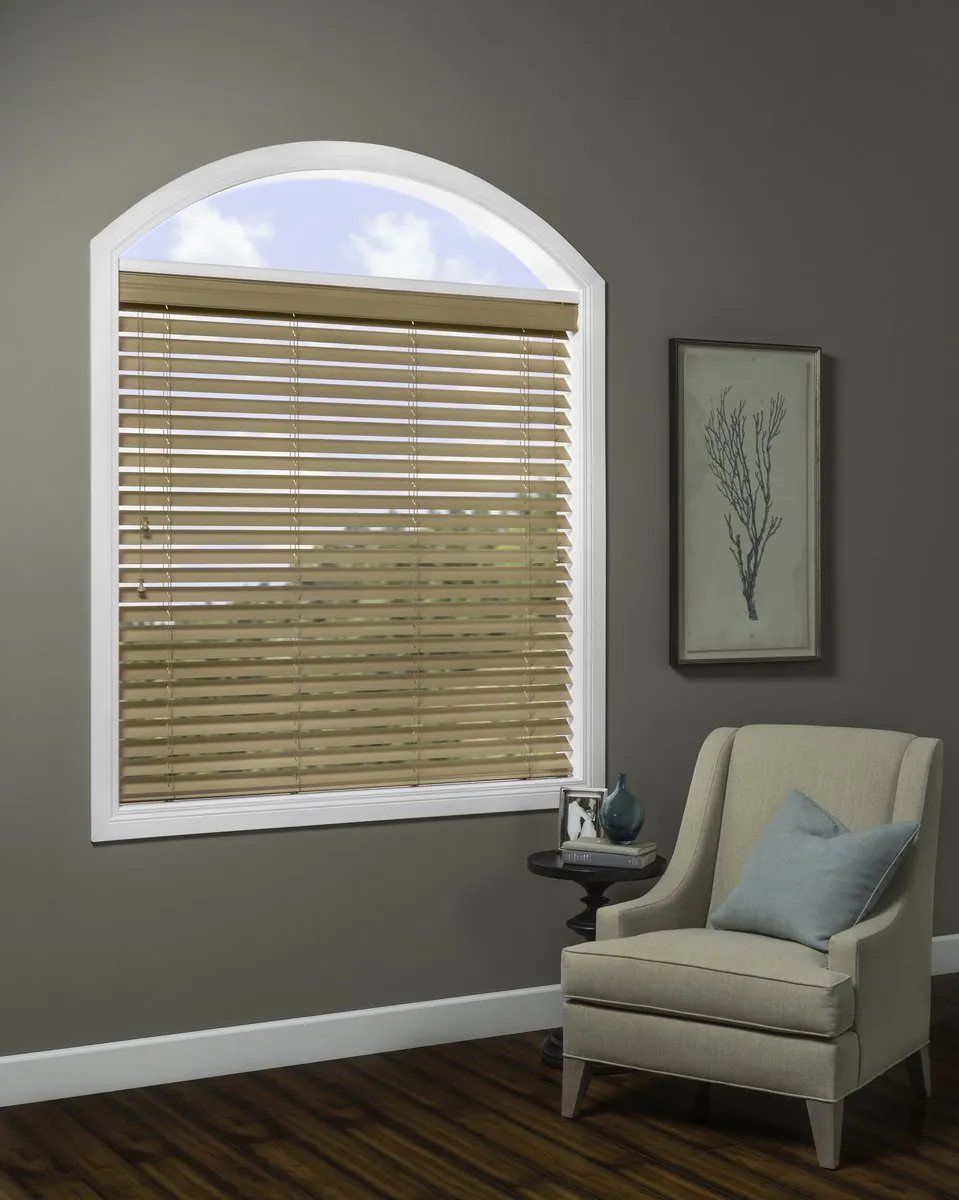
The Victorians close to the center were built with windows much taller than they are wide, often grouped in pairs or threes in the front rooms. A tall, slim window is beautiful, but it is unforgiving: a stock blind either hangs short, leaves a strip of light at each side, or has slats that look too heavy for the width.
A blind made to that window can be as narrow and as long as it needs to be. We measure the opening at several heights, because old frames are rarely square, and order the blind to the tightest point so it drops inside the frame without rubbing. A smaller slat usually suits a narrow sash better than a wide one, both in looks and in the size of the stack at the top when you raise it. We bring both so you can compare them against your own casing.
Where the trim is original and stained, wood blinds in a matching stain make the window read as one piece of woodwork. Where it is painted, most people match the blind to the paint, which lets it fade into the frame when open. We look at depth too: if the frame is too shallow for an inside mount, a slim outside mount above the casing is the alternative.
Sidelights beside the front door
Below the foyer glass, many of the newer front doors are flanked by sidelights: tall, narrow panes on each side of the door. They are easy to overlook while the big windows above take the attention, but they are often the glass that shows the most of the house to anyone standing on the step.
A sidelight is usually only a hand or two wide, set in a shallow frame tight against the door casing. Metal blinds suit it well, because their slim headrail fits a shallow frame and their fine slats look in scale with a narrow pane. Fixing the blind at both top and bottom keeps it from swinging when the door opens and shuts. Made in the same color as the foyer blinds above, the sidelights tie the entrance together, so the whole front reads as one planned piece rather than a big window with two small afterthoughts.
The same thinking applies to the narrow lights beside the front door of an older Victorian, where the frame is often deeper and wood or faux wood can work as well.
The window over the stair landing
In many of the larger colonials, a second tall window sits over the turn of the stairs, lighting the landing between floors. It is close to the foyer glass in its problems: high, hard to reach, and in full view of the street. A blind there has to be operated from somewhere you can actually stand.
If the landing is wide enough, a long tilt wand can reach down to a comfortable height, and a blind that mostly stays lowered with the slats adjusted may be all that is needed. If the window is out of reach from the landing, PowerView is the practical answer, and it can be grouped with the foyer blinds so one tap or one schedule moves them all together.
Color where old trim meets new
A Victorian near the center often has a newer kitchen or family room added at the back, with modern windows and plain painted trim, while the front rooms keep their original woodwork. Choosing blinds for both halves at once is a balancing act. Stained wood blinds that look right against the old parlor casings can feel heavy in a bright new kitchen, and white faux wood that suits the kitchen can look thin in the parlor.
The usual answer is to treat the street side and the back separately. The front windows, which the street sees, keep one finish chosen to suit the original trim. The back rooms, which only the yard sees, take whatever suits them. When we plan custom blinds in Mansfield for a house like this, we hold samples up in both parts of the house during the visit so you can see the difference for yourself, in daylight, before anything is ordered.
Post-war ranches across the subdivisions
Between the old center and the newest builds, many Mansfield streets are lined with post-war ranches. Their windows are regular and easy to reach, so fitting is straightforward, and the decisions are mostly about material and control.
The living room window in a ranch is often the widest in the house. Making it as two or three blinds side by side, with slats lined up across the whole run, keeps each one light enough to raise comfortably and lets you open one section while keeping the rest shaded. The kitchen window over the sink suits faux wood. Bedrooms along the hall usually take a slightly darker color. If the back of the house has a slider, a vertical blind covers it. Many ranches have also been opened up inside over the years, with a kitchen and living room joined into one space. Where that has happened, the windows on the two sides of the room are seen together, so we make them in the same color and slat size, choosing faux wood for both if one of them sits over the sink.
Ordering custom blinds for Mansfield ranches in one visit is simple: every window is on one floor, so we can walk the house from end to end, measure as we go and settle each room in order.
Large newer colonials
Beyond the foyer, the large newer colonials bring a lot of windows: front rooms either side of the entry, a wide family room at the back, bedrooms and bathrooms upstairs, often a sliding door and sometimes a window over the stairs. The openings are mostly standard sizes, but standard is a loose word. Trim and drywall leave each clear opening slightly different, which is why a measured blind fits more neatly than one bought in a stock width.
With so many windows, consistency matters. From the street, every front window shows at once, across two floors. We keep the street side in one color and slat size even where the material changes room to room, so the house reads as one. Inside, you might choose wood in the dining room and study, faux wood in the kitchen and baths, verticals on the slider and motorized blinds in the foyer.
When custom blinds in Mansfield are planned for a colonial of this size, it pays to do the whole house at once: one visit, one set of measurements, one order and one installation.
Which material, and why
All four come from Hunter Douglas, and most houses use more than one.
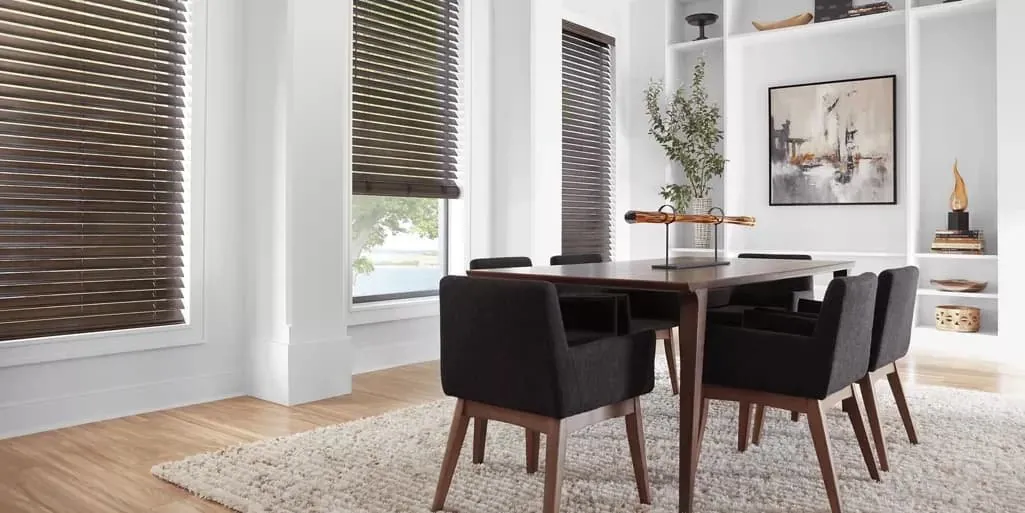
- Wood brings warmth and grain. It is the first choice for the parlor of a Victorian and the dining room of a colonial. You can stain it to match old trim or paint it.
- Faux wood gives the look of painted wood and is the material we suggest for kitchens, bathrooms and mudrooms.
- Metal has slim slats and a shallow headrail, useful for narrow sidelights beside a front door or a frame with little depth.
- Vertical blinds hang and draw to the side, the usual choice for a slider.
Read more on our wood blinds, metal blinds and vertical blinds pages.
How the blinds are worked
The control is chosen per window. A light blind in a ranch bedroom is easy with a cord. A blind you tilt often but rarely raise suits a wand. A room with small children or a pet is safer with a lift that has no hanging cord, where you raise and lower the bottom rail by hand. Anything high, like the foyer glass or a stair window, is where PowerView earns its place, with control from a phone, a remote or a schedule. Our motorized blinds in Mansfield page goes into more detail.
What happens when we come to the house
The choosing happens at your windows, with samples in your hands. Here is how it goes.
- Book a time through Request a Consultation or with the call button.
- We come to you with the sample van, carrying wood, faux wood, metal and vertical samples and the controls.
- If you have foyer glass, we usually start there, looking at how the light falls and where the blinds can be worked from.
- In each room you compare colors and slat sizes against your own trim and in your own light.
- We measure each opening, checking depth for an inside mount, and write up a free estimate.
- When the blinds are ready, our certified Hunter Douglas installers fit them and show you each control.
There is more on our what happens at an in-home consultation page.
A Gallery dealer and certified installers
Blinds & Designs is a Hunter Douglas Gallery dealer, so you choose from the full Hunter Douglas blind range rather than a short list. Our installers are certified by Hunter Douglas, which matters on a two-story foyer where every blind has to hang level and line up with the next. We also offer interior design consultations for help with color across the house, and repairs for blinds and shades you already own.
If some rooms call for a softer covering, compare cellular shades in Mansfield, roller shades in Mansfield or roman shades in Mansfield. For the tall Victorian sash, plantation shutters in Mansfield are worth seeing alongside wood blinds. Everything we offer locally is on our Mansfield page, and the Gallery designation is explained on our Hunter Douglas dealer in Mansfield page. The full range is on our custom blinds page.
Seeing blinds before the visit
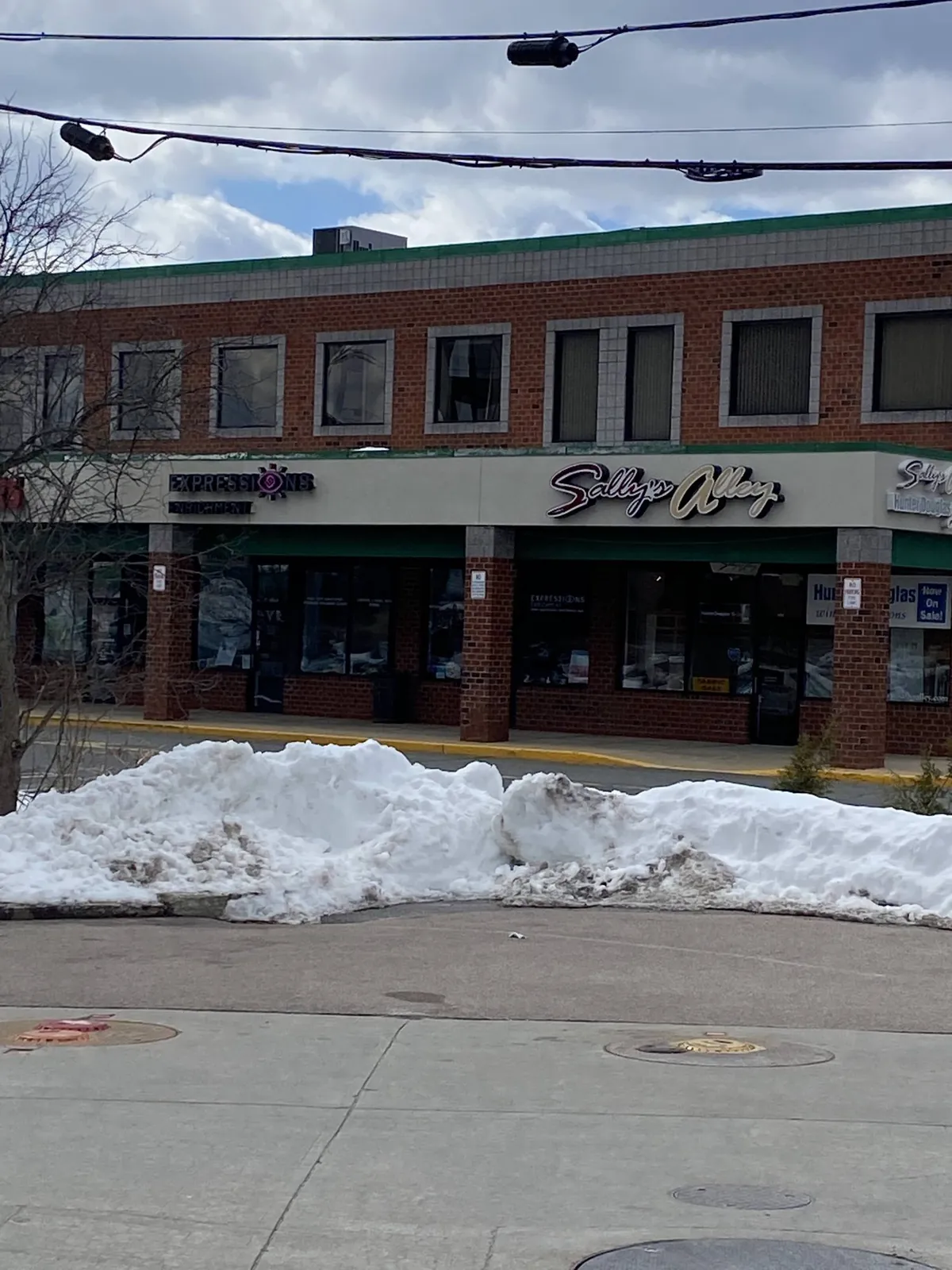
Our nearest showroom to Mansfield is in Franklin. Some people like to call in there first, then have us bring the samples home to see them against the foyer glass and the sash.
Many skip that step and start at home, since the samples come to you anyway. Either way, the measuring and the free estimate happen at your house.
The Franklin showroom’s address and opening hours are on the Franklin showroom page.
Questions from Mansfield
How do you reach and work the blinds on two-story foyer glass?
Our installers bring the equipment to mount the upper blinds safely. To work them afterwards, PowerView lets you tilt and raise them from a phone, a remote or a schedule, so nobody has to climb.
Will a blind fit the narrow sash in my Victorian?
Yes, made to measure it can be very slim and long. We check the frame depth; if it is too shallow for an inside mount, we suggest a slim outside mount instead.
Can the foyer blinds close automatically at night?
Yes. A PowerView schedule can close them at dusk and open them in the morning, which keeps the lit entry private after dark.
Do I have to do the whole house at once?
No, but on a large colonial it helps. One order keeps the street-facing blinds in one color and slat size.
Is there a charge for the estimate?
No. The estimate is free, and there is no pressure to decide on the day.
Book the first visit
Whether it is the foyer glass you have been squinting at or the Victorian sash that has never had a proper blind, the place to start is your own windows. Request a consultation and we will bring the samples to your house, measure every window and write a free estimate for custom blinds in Mansfield, MA. If you have a quick question first, use the call button, or stop by the Franklin showroom.