
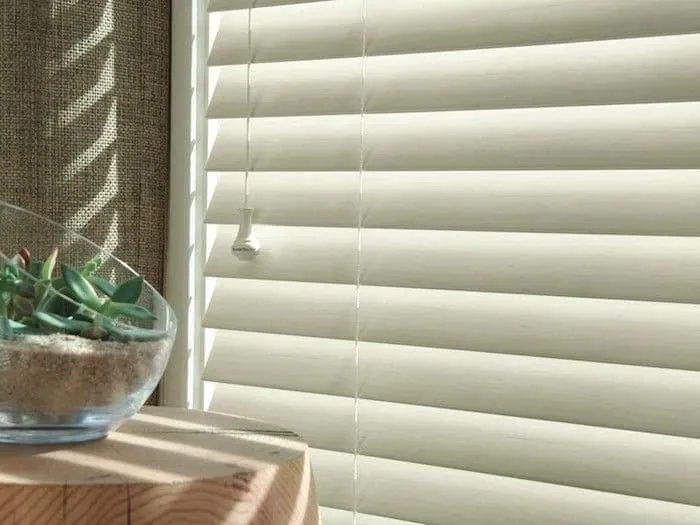
The smallest sash in town, and the largest windows
The antique colonials around Medfield’s center were built with very small original sash. Their windows are modest openings in thick walls, often divided into many small panes, and the frames have had a long time to move. Out on the wooded lots off North Street and Route 27, the newer houses are large and set far back, with generous windows looking into the trees. Custom blinds in Medfield, MA, have to serve both: a blind small and precise enough for a window you could almost span with your arms, and blinds large and consistent enough for a house with many more windows and much more glass.
On the antique sash, a stock blind rarely fits at all. The openings are small and seldom square, and the blind has to sit inside a frame that may be narrower at the top than at the sill. A made-to-measure blind is built to the tightest point, so it drops in cleanly.
On the newer houses, the challenge is the setting. Deep setbacks and tall trees mean the rooms are often shadier than their windows suggest, and the light that does arrive comes in low and changeable, filtered through branches.
The Hunter Douglas blinds we bring to Medfield houses
We carry four families of blind, all from Hunter Douglas. Here is where each one tends to fit.
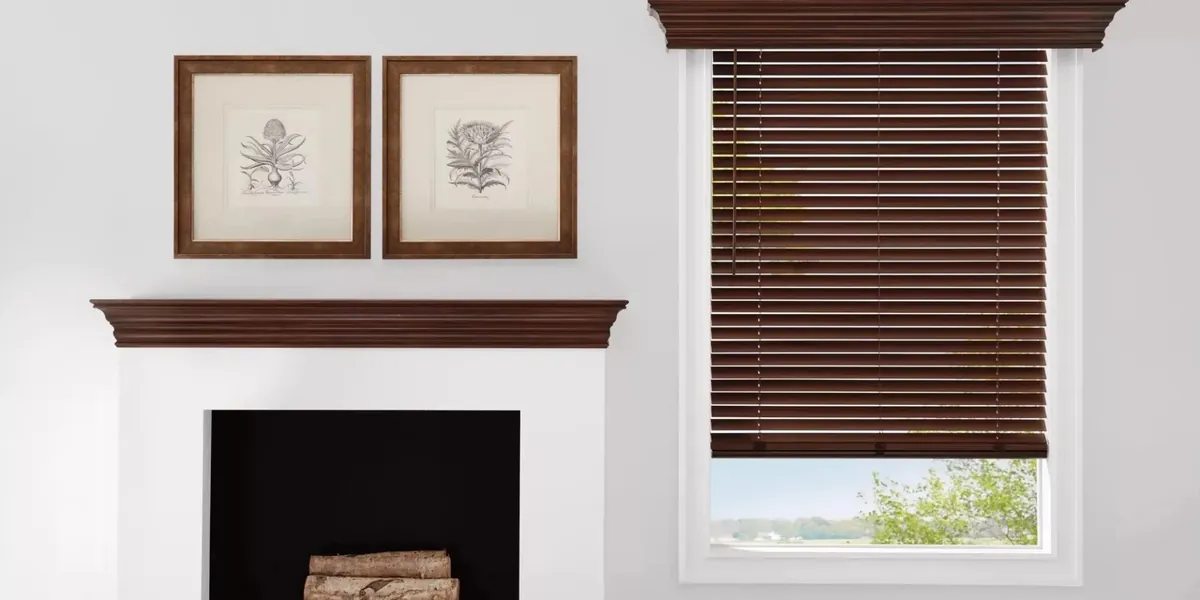
Parkland wood blinds
Real wood slats that can be stained to sit with the old pine and painted trim of an antique colonial.
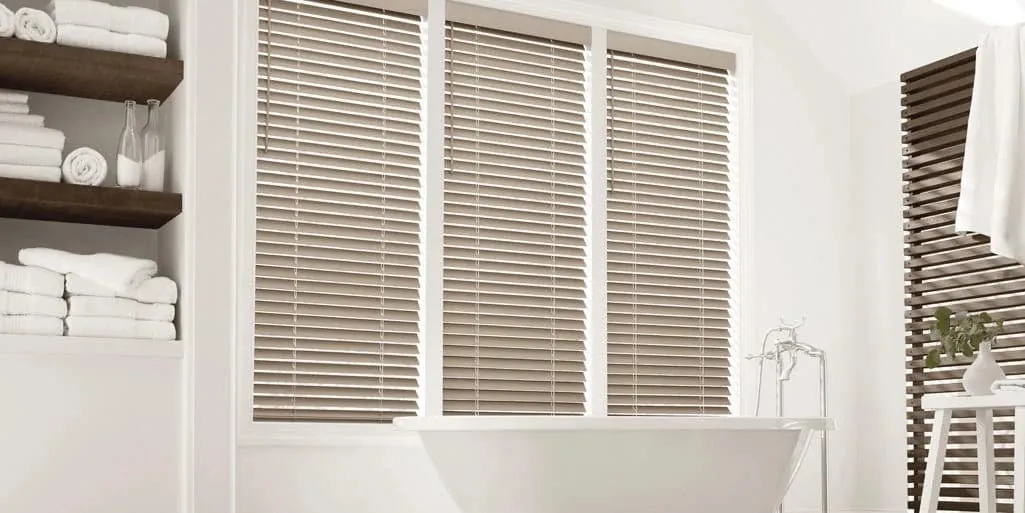
EverWood faux wood blinds
The look of painted wood for the rooms with water: kitchens, baths and the mudroom of a newer house.
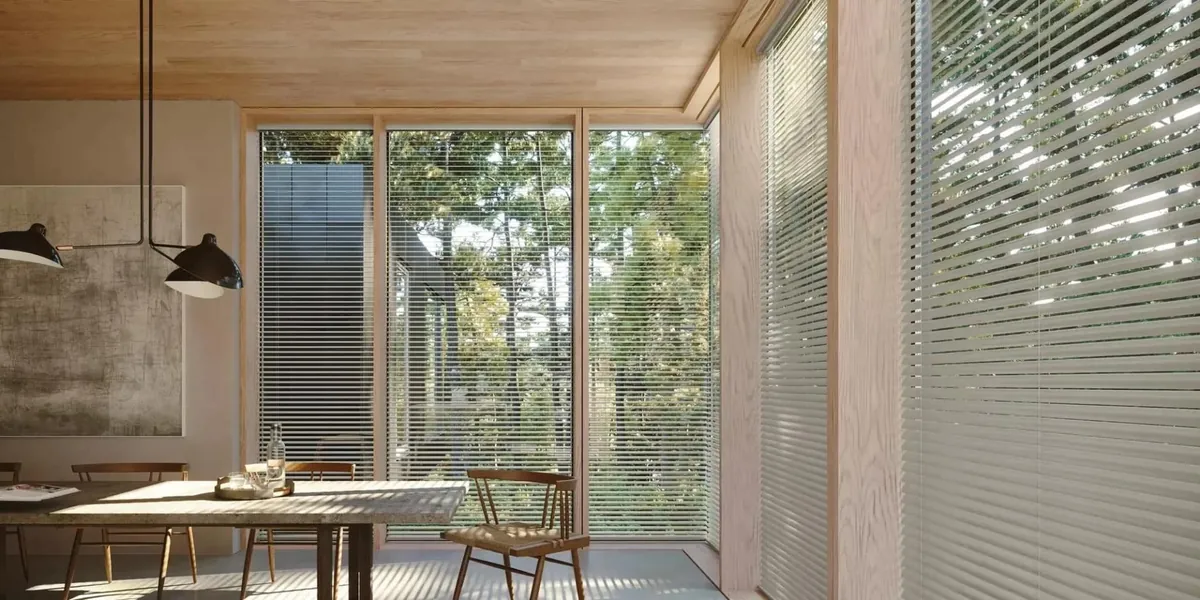
Metal blinds
Fine slats and a slim headrail, for a shallow frame or a window where you want the blind to all but disappear.
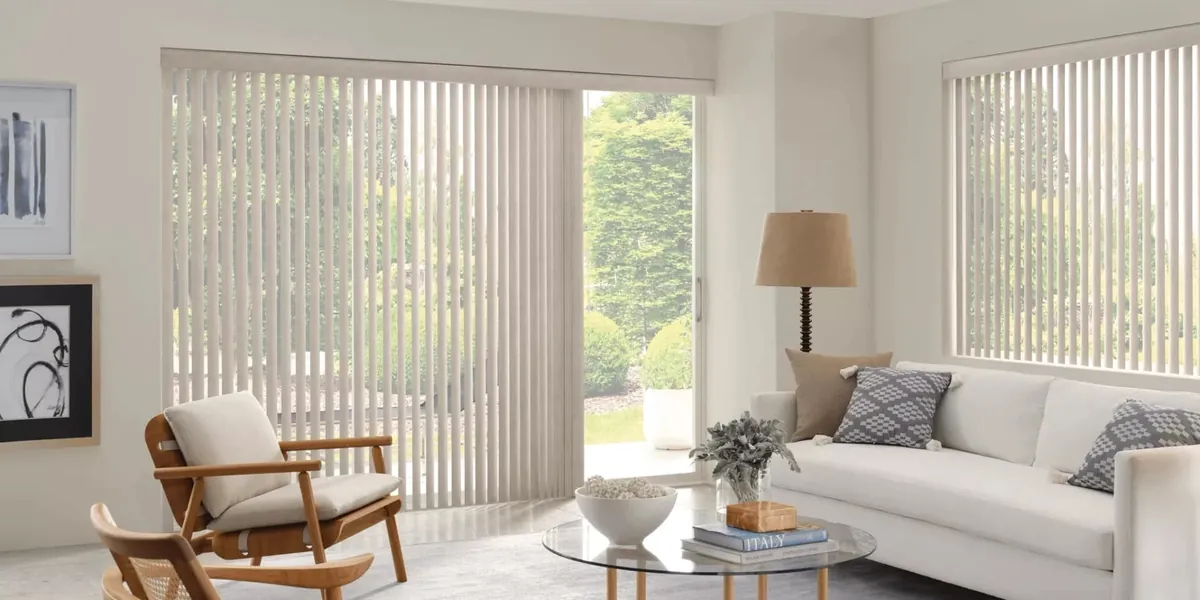
Vertical blinds
Vanes that draw sideways, for the slider from a newer kitchen or family room out to the deck and the woods.
Fitting a blind to very small antique sash
The oldest houses near the center have windows that would look tiny in a new build. The openings are small because the houses were built to hold heat, the walls are thick, and the sash is often made up of many little panes held in thin wooden bars. Many of these windows have been painted many times over, and the frames have shifted as the house settled.
All of that makes measuring the most important part of the job. We take the width at the top, middle and bottom, and the height at both sides, because on an antique frame those numbers rarely agree. The blind is then made to the narrowest width so it slides inside the frame without binding. On a small window even a slight gap at the side shows, so getting this right is what makes a blind look as if it belongs.
Small windows also change how slat size looks. A wide slat on a small sash can seem heavy and leave only a few lines across the glass. A smaller slat suits the scale of the window and stacks into a compact bundle at the top when raised, so the blind covers less of an already small opening. We bring both sizes and hold them up at your windows so you can see the difference.
Depth is usually generous in these thick walls, which favours an inside mount. That keeps the old casing, often the best part of the window, completely on show.
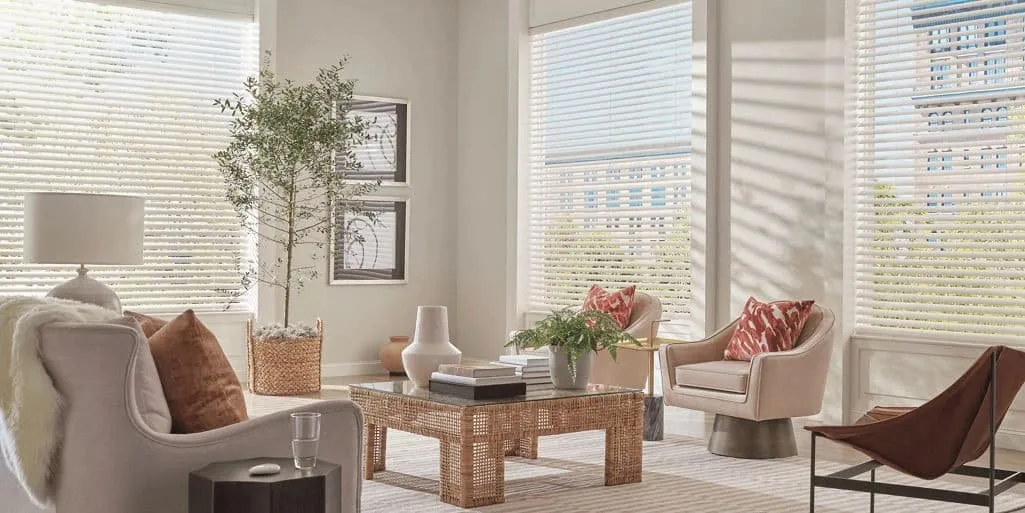
Many small panes behind one blind
A good number of the oldest windows in Medfield are divided into small lights by thin wooden bars, with six or more little panes to each sash. Those bars are part of what makes an antique window handsome, and a blind should not fight them.
Hung inside the frame, a horizontal blind sits just behind the glass and the bars. Raised, it tucks into a short stack under the head of the frame and the divided panes show in full. Lowered with the slats open, the bars still read through the gaps, so the window keeps its pattern even when covered. A slat color close to the bars, white against white paint or a wood tone against stained muntins, keeps the effect quiet.
Lift height deserves a thought too. On a small window, the stack at the top of a raised blind can hide the top row of panes. We show you how much each slat size stacks, at the window itself, so you can choose the one that leaves the most glass clear.
Deep sills in thick walls
Thick old walls give antique sash a deep sill inside, often wide enough to hold a plant, a lamp or a row of books. With a blind mounted high inside the frame and cut to drop just to the sill, that ledge stays usable. The blind comes down in front of the glass and behind whatever sits on the sill, as long as we know about it when we measure.
That is one of the small details we ask about during the visit. If a sill is used as a shelf, or a deep window has a seat built beneath it, we place the blind so it clears both. Getting these custom blinds in Medfield right is often less about the blind itself and more about how the window is actually used day to day.
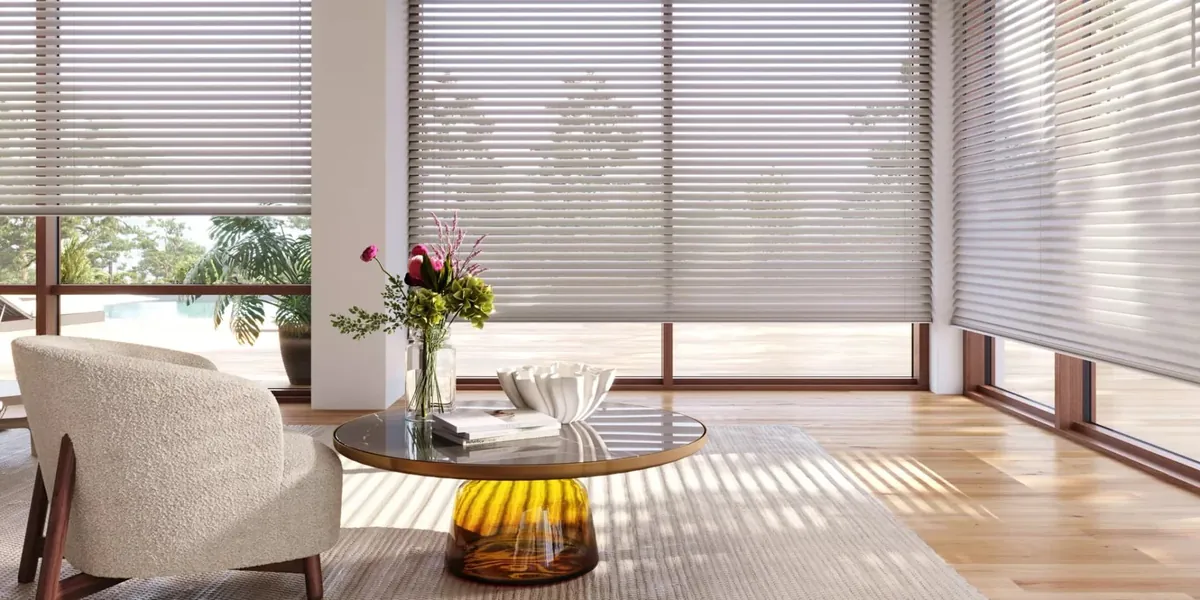
Keeping the character of an antique colonial
In a house this old, the window trim is part of the history. Some casings are stained or left as old pine, others painted in a color picked to suit the house. The blind should work with that, not hide it.
With stained or natural wood trim, Parkland wood blinds in a close stain let the blind read as part of the woodwork. With painted trim, a blind matched to the paint fades into the frame when raised, so the window keeps its proportions. From the street, the blinds should be consistent across the front, because a colonial’s evenly spaced windows make any odd one out stand out.
There is also the question of what a blind covers. Many people prefer to leave the upper part of an antique window clear during the day, raising the blind fully so the small panes and their wooden bars stay visible. A blind that stacks short at the top makes that easy. In the evening it comes down, the slats close and the room is private.
Where a small window sits in a bathroom or a kitchen added to the back of the house, EverWood faux wood in the same color as the front rooms keeps everything matched from outside while standing up to the damp.
Large houses on wooded lots off North Street and Route 27
The newer houses on the wooded lots off North Street and along Route 27 are a different proposition. They sit well back on generous lots, often with the trees close around them. Inside, there are more windows and larger ones: a wide family room at the back, bedrooms on two floors, perhaps a sliding door to a deck.
Tree cover changes how a room is lit. In summer the leaves can make a room quite dim even when the windows are large, while in winter bare branches let low sun straight in. A blind that tilts lets you adjust through the seasons: slats open wide to welcome what daylight there is in summer, then angled to soften the low glare in winter.
Color choice matters more in a shaded room. Light blinds bounce what daylight there is back into the room; darker ones can make a shaded room feel heavier still. We usually suggest lighter colors for rooms that face the woods, and keep darker tones for a study or a media room where dimness is welcome.
When planning custom blinds in Medfield for one of these larger houses, we go room by room through every window, keeping the street side consistent even though it is set well back, because a deep setback still shows the front of the house from the drive.
The big room at the back
Many of the newer Medfield houses put their largest windows at the back, in a family room or kitchen that looks out to the woods. A run of three, four or more windows side by side is common, sometimes beside a slider. On a wall like that, one oversized blind would be heavy to lift and all or nothing to open.
Instead, we make a blind for each window, sized individually but with the slats set to line up across the whole wall when they are lowered. You can then raise the two at the end that face the sun and leave the middle ones open to the trees, or the other way round. The slider beside them takes a vertical blind in the same color, so the wall still looks like one composition. Planned this way, custom blinds in Medfield for a big back room give you much finer control over a space that changes so much with the season and the time of day.
All at once or room by room
Some people like to do the whole house in one go, others start with the rooms that bother them most. Either approach works. If you are doing it in stages, we keep a record of the color and slat size chosen for the street-facing windows, so later orders match the first. In an antique house that has been added to over the years, that consistency keeps the old front and the newer back looking like they belong together. It also means a later visit is quick: the choices for the front are already made, so the conversation can go straight to the rooms that are left, whether that is a bathroom in the old part of the house or a bedroom over the garage in the new.
Privacy with a deep setback
On a lot set far back from the road, privacy from passers-by is rarely the worry. The concern tends to be the other way around: at night, with the lights on, large windows turn the inside of the house into a lit stage visible from the woods and the drive.
A blind with slats that close firmly solves that. During the day you can leave the slats open or raise the blind fully to enjoy the trees. After dark, closing the slats keeps the room private without having to draw heavy curtains across every window. In bedrooms, the same closure helps keep out early morning light, especially in the colder months when bare trees let more sun through.
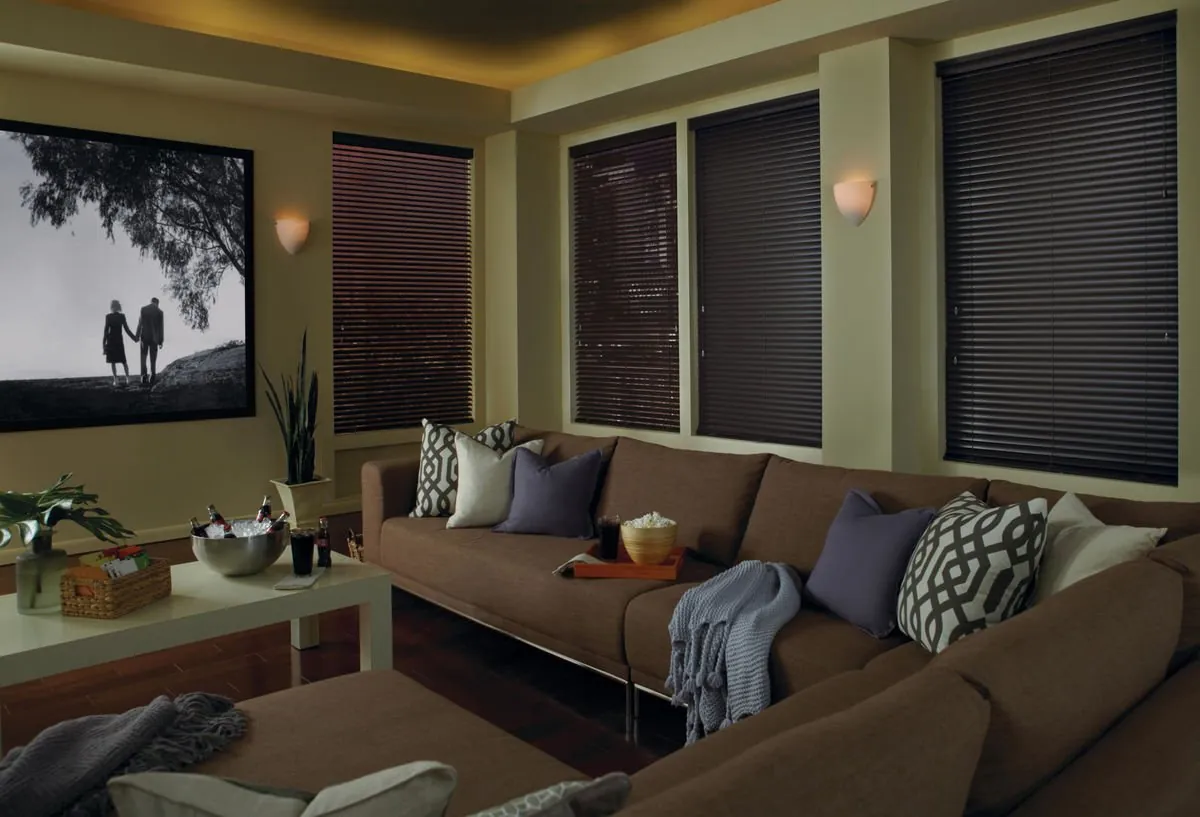
Choosing between the four
Most houses end up with more than one kind of blind.
- Parkland wood is the warmest, with real grain, and it suits the front rooms of an antique colonial and the living and dining rooms of a newer house.
- EverWood faux wood looks like painted wood and is the material we suggest for kitchens, bathrooms and mudrooms.
- Metal blinds are the slimmest, good for shallow frames and for a crisp look.
- Vertical blinds cover a slider or very wide window and draw to the side.
If you want to read about them in more depth before we visit, see our wood blinds page or the whole custom blinds range.
How each blind is worked
On the small sash of an antique colonial, a light blind is easy to raise with a cord, or you might choose a lift with no cord, pushing the bottom rail up and down by hand. A wand can replace the tilt cord on any window. On the larger windows of a newer house, especially the high ones over a stair or the wide family room run, PowerView motorization lets you tilt and raise from a phone, a remote or a schedule. We plan how each motor is powered at the visit. Our motorized blinds in Medfield page has more.
A schedule is particularly handy on a wooded lot: the blinds can tilt open in the morning to catch the light and close at dusk without anyone going from room to room.
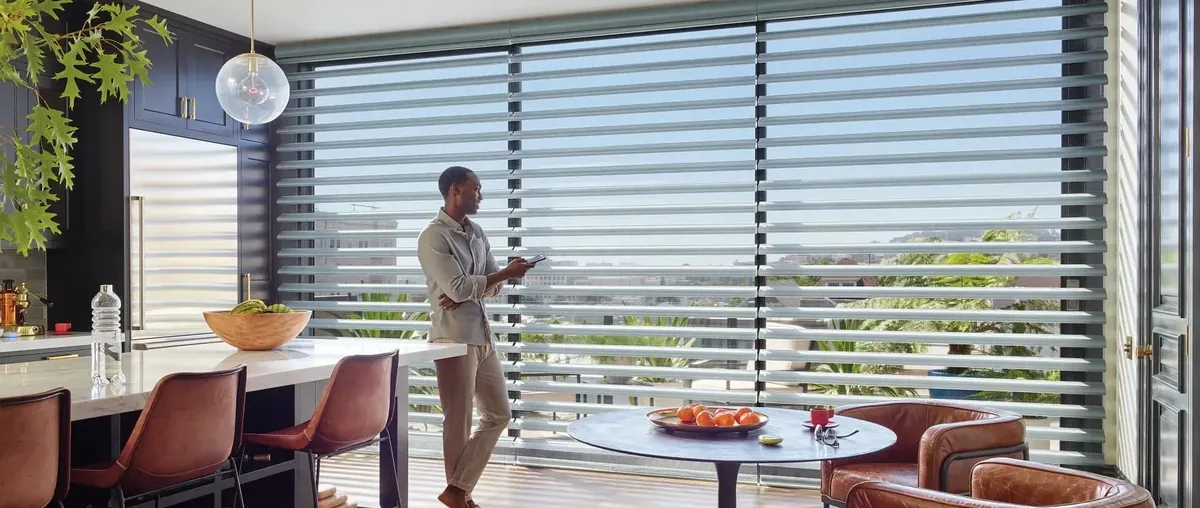
The visit to your house
We come to you with the sample van, because small antique windows and shaded rooms are hard to judge from a picture or a shop floor. This is what happens.
- You choose a time through Request a Consultation, or ask by the call button.
- We bring wood, faux wood, metal and vertical samples, with the different lifts and tilts.
- In an antique house we begin with the smallest sash, where fit and slat size matter most.
- In a newer house we start in the rooms that face the trees, where light and color matter most.
- You hold up samples at your own windows and see them in your own light.
- We measure every opening carefully and give you a free estimate.
- Our certified Hunter Douglas installers return to fit each blind and check it runs smoothly.
You can read what happens at an in-home consultation for more detail.
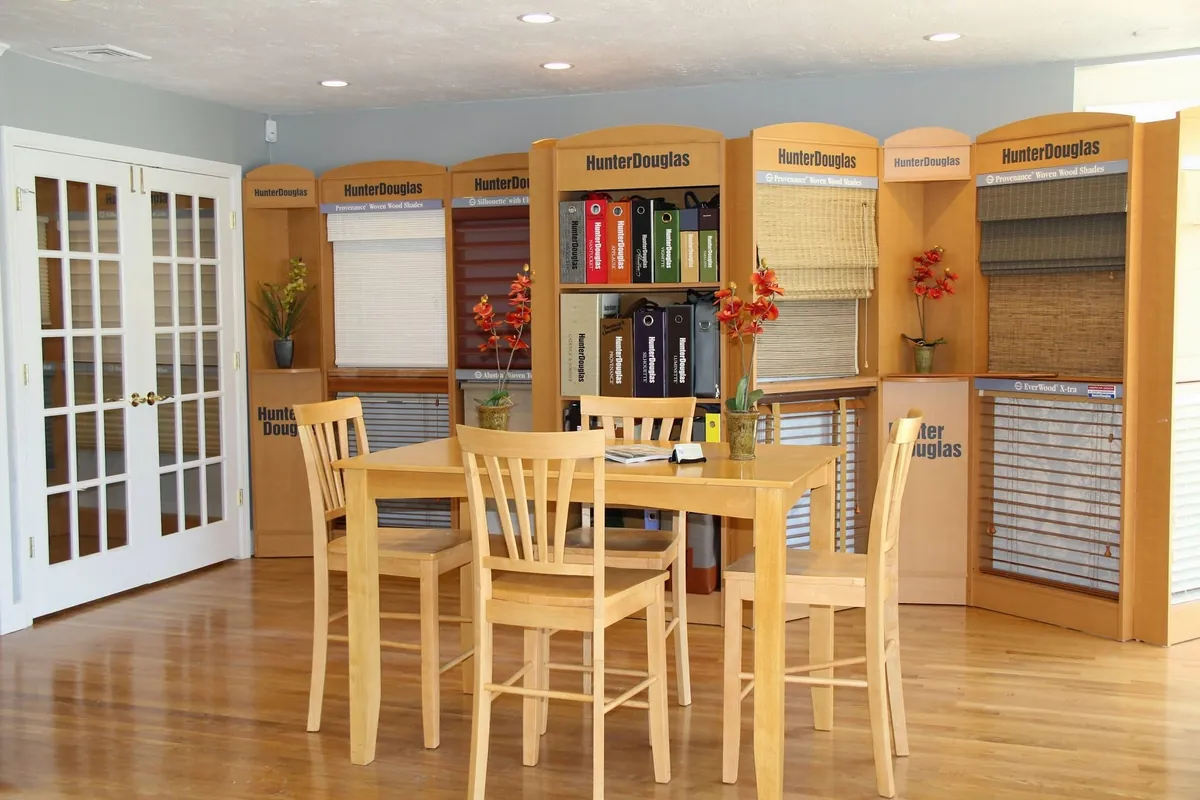
A Hunter Douglas Gallery dealer in your corner
Blinds & Designs is a Hunter Douglas Gallery dealer, so you choose from the complete Hunter Douglas blind range. Our installers are certified by Hunter Douglas, which shows on an antique frame where every blind has to be set level in an opening that may not be.
We also provide interior design consultations, and we repair blinds and shades you already have.
For other rooms, compare cellular shades in Medfield, roller shades in Medfield, roman shades in Medfield or plantation shutters in Medfield, which are often chosen for antique sash. Everything we offer locally is on our Medfield page, and our Hunter Douglas dealer in Medfield page explains the Gallery designation.
Questions from Medfield
Can you make a blind small enough for the original sash in my antique colonial?
Yes. Every blind is built to measurements taken at your windows, so it can be as small as the opening. We measure at several points because old frames are rarely square, and make the blind to the narrowest width.
Will a blind hide my old window trim?
Not if it is mounted inside the frame. The thick walls of an antique house usually give enough depth for that, so the casing stays fully on show.
Our rooms are shaded by trees. What color should we choose?
Lighter colors help reflect what daylight there is back into the room. Darker tones suit a study or media room where you want the room dimmer.
Do you also work on the newer houses off North Street and Route 27?
Yes, often. Those houses usually have more and larger windows, and a slider that suits a vertical blind.
Do you charge for the estimate?
No. The estimate is free, and you can decide in your own time.
Bring the samples to your windows
Small antique sash and tree-shaded rooms are best judged in person, in the light you live with. Request a consultation and we will bring the samples to your house, measure each window and give you a free estimate for custom blinds in Medfield, MA. If you would rather start somewhere other than home, our nearest showroom is in Franklin; its address and hours are on the Franklin showroom page. Or ask a question with the call button.