
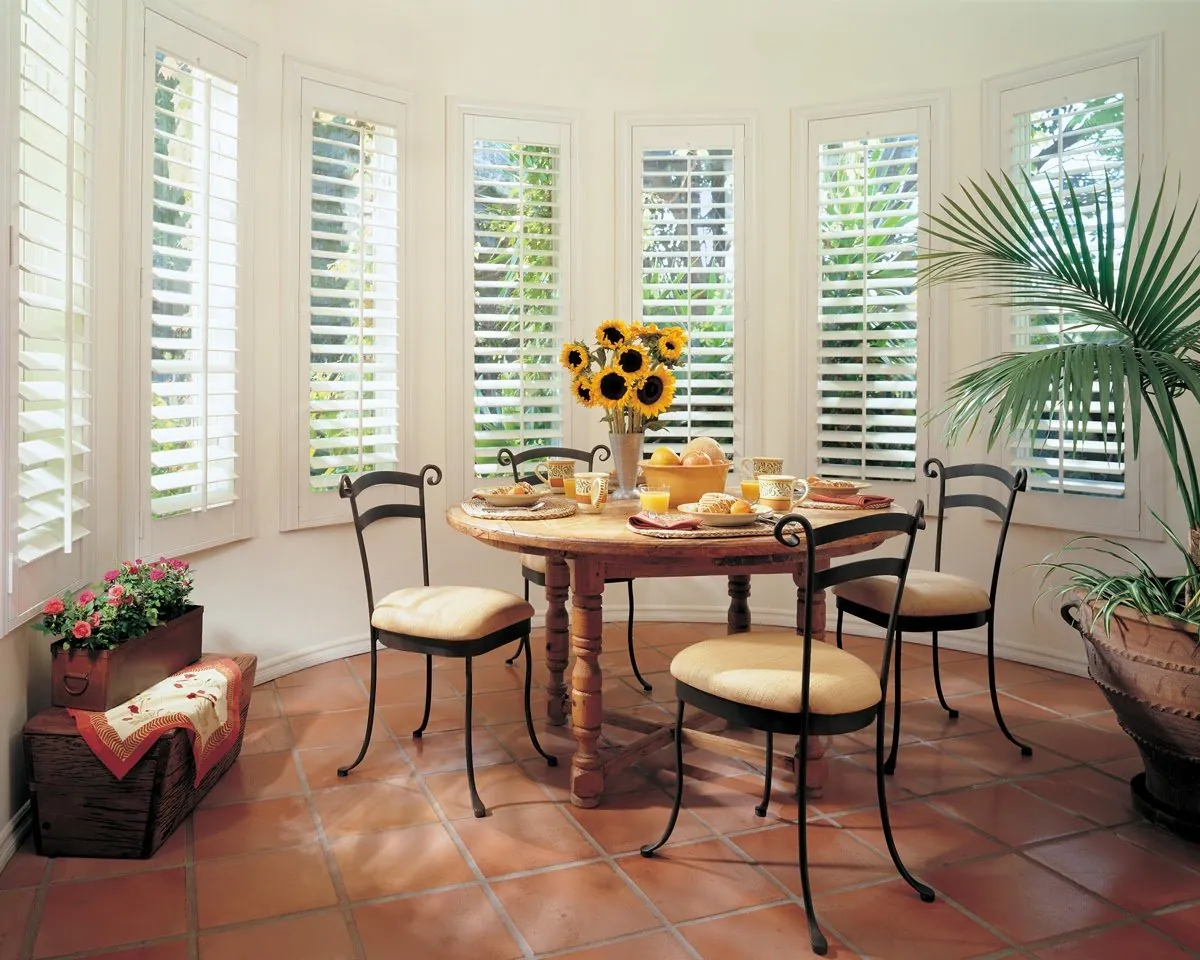
Tiny antique sash and big wooded lots
Medfield has two very different kinds of house, and they rarely sit side by side. Around the center are antique colonials, and the oldest of them still have their very small original sash: little windows of many small panes, set in thick walls. Out off North Street and Route 27, large newer houses stand on generous wooded lots, well back from the road, with plenty of glass in every room. Planning plantation shutters in Medfield, MA, means being just as careful with a window you could cover with two hands as with a family room full of light.
What ties the town together is space. Lots are big, setbacks are deep, and in most houses nobody passing on the road can see in. That changes the priorities. Rather than chasing privacy, most of our Medfield conversations are about light, proportion and how a shutter suits the character of the house.
In the antique houses that means respecting a small window and its woodwork. In the newer ones it means handling a lot of glass without the house looking busy.
Plantation shutters in Medfield, MA, for the smallest original sash
The very small sash in the oldest houses is where a shutter has to be most carefully judged. Get the scale wrong and the window looks crowded; get it right and the shutter looks as though it has always been there. These are the three approaches we use most often on those windows.
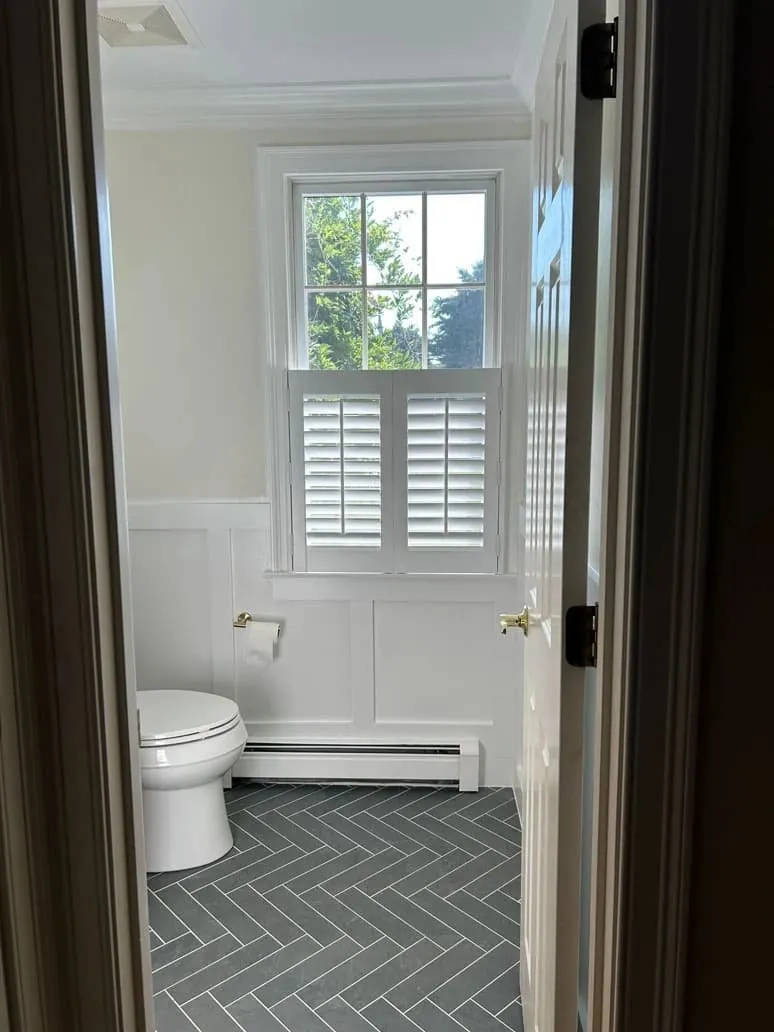
A single panel
On a narrow opening, one hinged panel keeps the louvers a sensible length and swings back in one movement, instead of two tiny panels meeting in the middle.
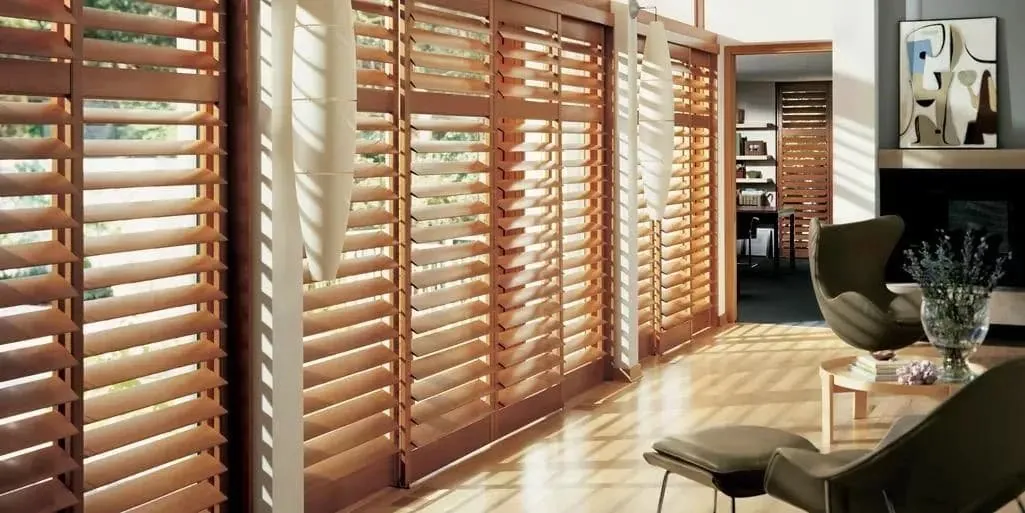
A stained hardwood finish
Where the original trim is natural wood, a stained Heritance shutter can pick up its color rather than sitting against it as a bright white block.
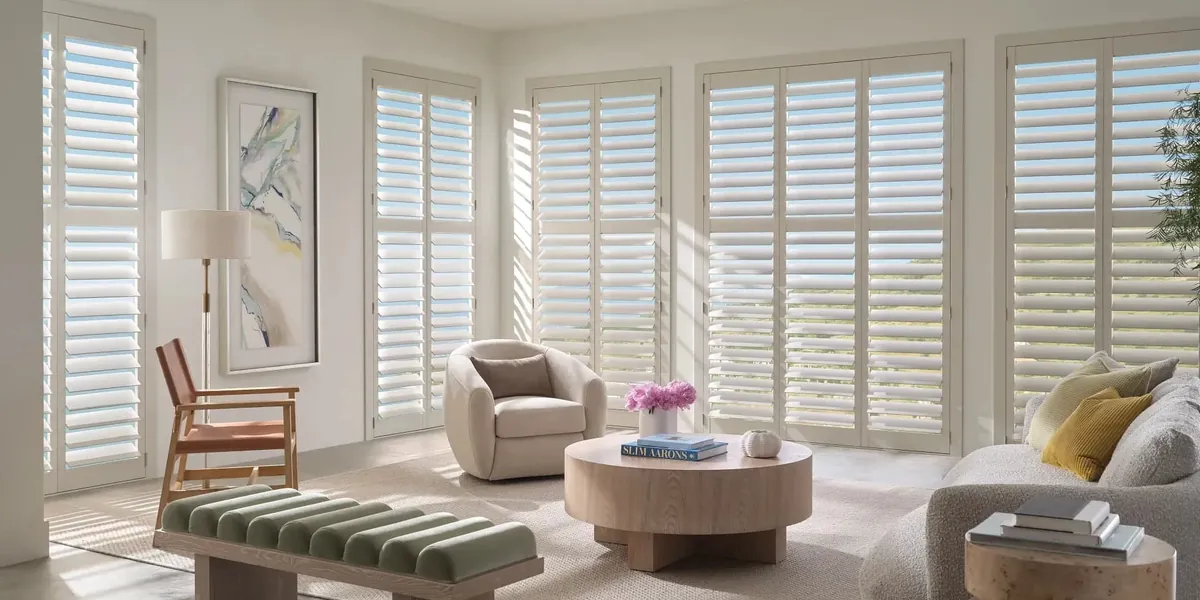
A slim frame on the casing
If the opening is too shallow for the louvers to turn, a slender outside frame on the casing gives them room while leaving most of the trim on view.
Inside the antique colonials around the center
The oldest houses around the center were have small windows set in thick walls, and the openings tell you a lot about how to approach them. The sash is small, often divided into small panes, and set deep into a thick frame with a wide stool below. The casings may be plain boards or moulded, painted many times or stripped back to the wood.
A shutter has to respect all of that. The first rule is scale: a narrow louver suits a small sash, because a broad blade would leave only a few slats stacked up the window and look heavy. The second is fit. Antique openings are almost never square, and a crisp new panel shows every bit of lean. We measure the width at several heights and the height at each side, check the diagonals, and the frame is made to absorb the difference so the panel still sits straight.
The third is depth. Muntins, old sash locks and stops can all stand proud of the glass, and a louver needs space to turn without striking them. Where there is room, an inside mount tucks the frame into the opening and leaves the casing fully visible. Where there is not, we will tell you at the visit and suggest a slim frame on the casing instead. Our page on shutters for older windows explains how we make that call.
When an old window wants to stay uncovered on top
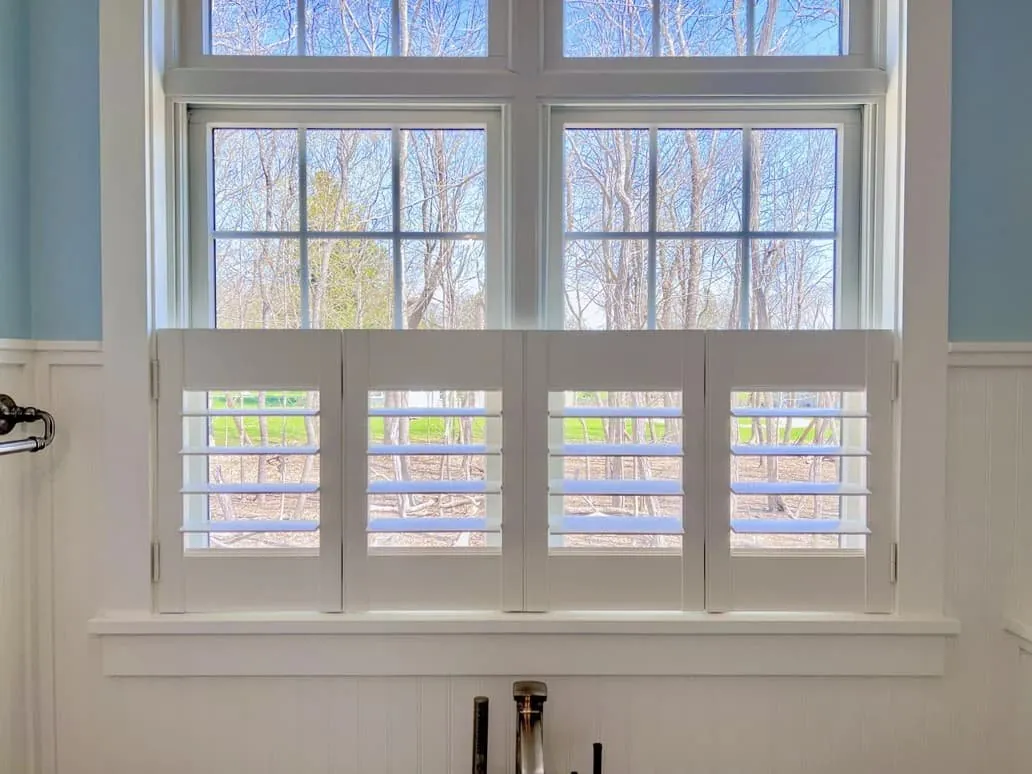
Sometimes the upper panes of an old sash are worth leaving on show. A cafe layout handles that well. The shutter covers only the lower sash, so the room is screened at eye level while the upper panes stay open to the trees and the sky.
A cafe shutter also suits a small kitchen or bath window in an old house, where you want light from above and a little cover below. It mounts within the opening at the meeting rail of the sash, so the line of the shutter follows the line of the window itself.
If you later want to cover the whole window, a full-height panel can replace it. We will talk through both at the visit and hold the samples in place so you can see the difference.
The antique house with a newer wing
Where an older house near the center has been extended, with a family room, kitchen or bedroom wing at the back, the result is two sets of windows in one house: small original sash at the front and larger, more regular windows in the addition.
We plan those houses as two zones that still feel related. The front rooms get narrow louvers, careful inside mounts and often a stained or warm white finish to suit the old trim. The addition can take a wider louver and a decorative frame, since its windows are larger and its trim usually plainer. Keeping the color family the same across both zones ties the house together as you walk from old to new. It is one of the more satisfying ways to plan plantation shutters in Medfield, MA, because each part of the house gets what suits it.
Large houses off North Street and Route 27
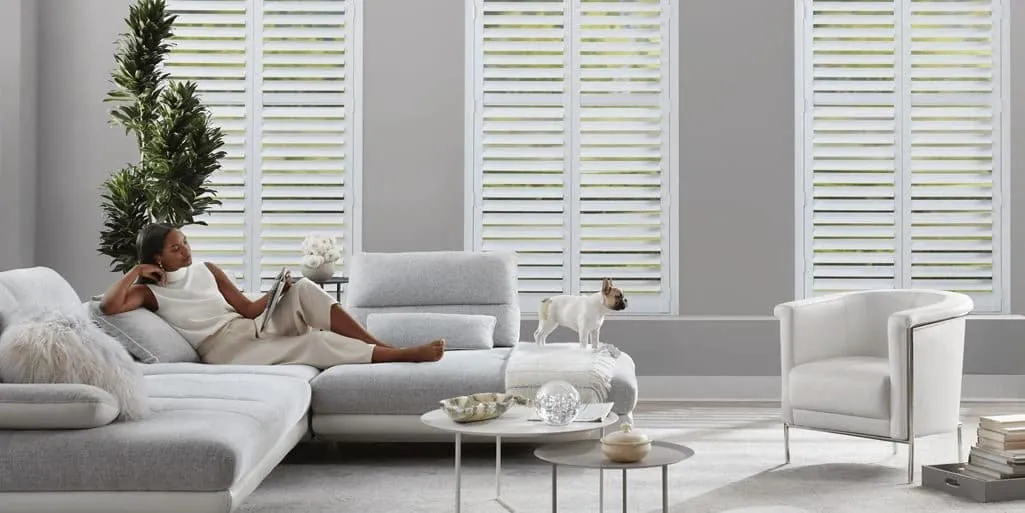
The newer houses off North Street and along Route 27 are a different job entirely. They are large, set on wooded lots, and they usually have generous windows in every room: a long run of glass in the family room, tall windows in a formal living room, and plenty of bedrooms upstairs.
For houses like these, consistency matters. We usually settle on one louver width for the front of the house and repeat it across both floors so the house looks calm from the drive. The family room, seen mostly from inside, can step up to a wider louver if it has a long wall of windows. Builder trim in newer houses can be quite plain, so a decorative frame with a profile around the edge often gives the windows more presence and makes the shutter look like fitted joinery.
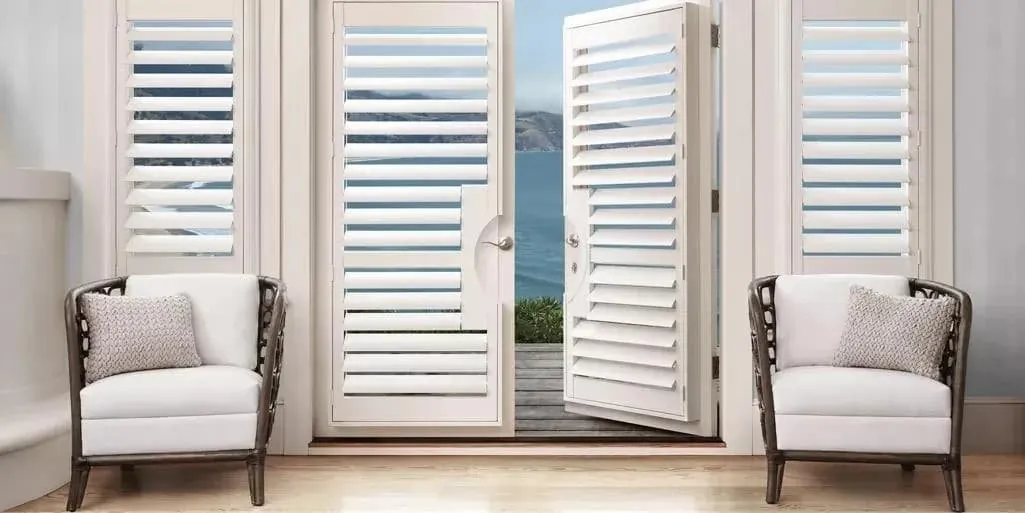
Large rooms also mean wide windows, and a wide window works best divided into several panels hinged to fold back in pairs. You can open the middle for the view and keep the ends closed, or fold the whole lot away when the weather is fine.
Wooded lots and the light indoors
Tree cover is one of the things Medfield’s newer neighborhoods share. It is beautiful from outside, but it means many rooms get less direct sun than their window area suggests, and a heavy covering can make a shaded room feel dim even at midday.
That is where shutters do well. When the panels fold back fully, the window is completely clear and every bit of daylight comes through. When they are closed, the louvers can be tilted up so the light that does arrive is bounced onto the ceiling and spread around the room. In the evening they close flat for the night. One covering does all three jobs.
Color helps too. White and soft whites reflect more light back into a shaded room than darker finishes, which is one reason they are so popular in houses under the trees. In a room that does get strong afternoon sun through a gap in the canopy, tilting the louvers cuts the glare without closing the room off.
Deep setbacks change what shutters are for
In a town where most houses sit well back from the road behind trees, privacy from passers-by is seldom the main concern. That frees you to think about the shutter in other ways.
Many people use their shutters open most of the day, with the panels folded back against the wall, and close them only at night. Others leave the louvers tilted at a comfortable angle and adjust them as the light moves around the house. Either way, the shutter becomes part of the room’s architecture rather than a screen. That is why the frame style and the finish matter so much here, and why we spend time on both. It is also why many Medfield orders put stained Heritance in the front rooms of an antique house, where the shutter is on show all day.
Palm Beach, NewStyle or Heritance
Hunter Douglas makes three shutter collections. They share louver widths and frame styles, so a house can use more than one without any visible change from room to room.
- Palm Beach is the one we suggest for bathrooms, the kitchen sink and any room where water and steam are part of the day.
- NewStyle carries most of a typical house: bedrooms, family rooms, the big windows of a newer build.
- Heritance is hardwood, painted or stained, and it is the natural partner for the natural wood trim of an antique colonial.
Each has its own page: Palm Beach, NewStyle and Heritance. The main plantation shutters page compares the three.
Wet rooms, old and new
Bathrooms and kitchens look very different across Medfield’s two kinds of house. In an antique colonial the bath may be a later addition fitted under an eave or into a former bedroom, with one small window. In a newer house off North Street there is usually a large primary bath with a big window over the tub, plus a powder room and a kitchen with a window above the sink.
All of those rooms suit Palm Beach. It shares its louver widths, colors and frames with the other two collections, so a bathroom shutter painted to match looks no different from the hall. In a small old bath, a single panel or a cafe layout on the lower sash gives cover without making the room feel smaller. Over a kitchen sink facing the woods, many people leave the louvers tilted up all day for light. Choosing plantation shutters in Medfield, MA, for the wet rooms first is a sensible start, since those are the windows used most.
Louvers for small panes and wide glass
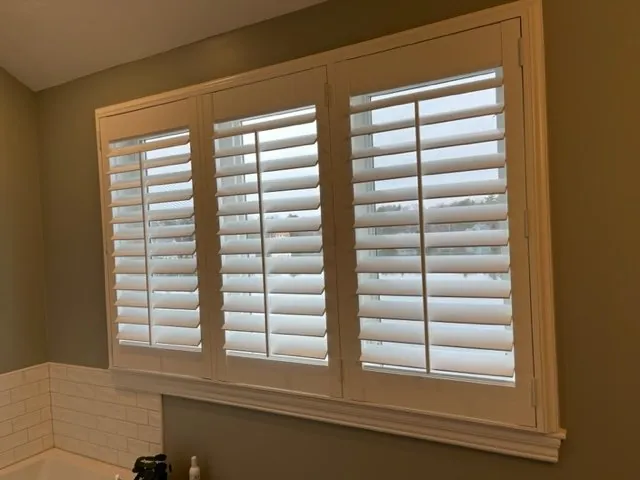
Louver width is the detail you see first on a finished shutter, and Medfield’s two kinds of house sit at opposite ends of the range.
- Narrow louvers are right for the small original sash around the center, where every blade has to stay in proportion with small panes.
- Medium louvers suit standard bedroom and kitchen windows in the newer houses.
- Wide louvers belong on the long runs of glass in a newer family room or living room, where tilting them flat gives you the clearest view of the woods.
There is no rule that a house uses one size throughout. An antique colonial with a modern addition at the back can have narrow louvers in the old rooms and wider ones in the new, as long as each room is consistent within itself. The tilt is a separate choice: a rod on the face, easy to grab and traditional to look at, or a hidden tilt at the edge for a cleaner face.
Color beside antique trim
On an antique colonial, the trim color is often the clue. Woodwork that has been painted many times tends to turn a soft cream, and a bright white shutter set inside it can make the casing look tired. A warm white or an off-white sits better. Natural wood trim calls for a stained Heritance shutter matched to its tone.
In the newer houses, where trim is usually a clean builder white, a crisp white shutter matches it well. Soft grays and taupes are worth a look in rooms with darker walls. We bring finish samples and look at them in your rooms in daylight and again under your lamps, because a color that looks right at noon can look different after dark under the trees.
How the visit goes
Our vans carry shutter samples in every collection, louver width and frame style, so we can bring the showroom to you. A visit usually follows this order.
- You book through Request a Consultation or the call button.
- We start in the room that matters most, often the front room of an antique house or the family room of a newer one.
- You hold samples up against your own sash and trim and compare louver widths and finishes.
- We check each opening for depth, squareness, muntins and hardware, and agree a mount for each.
- Every window on your list is measured, including the smallest.
- You receive a free estimate and decide in your own time.
Read what happens at an in-home consultation if you would like to know more, or ask about our interior design consultations at the same visit.
Fitted by certified installers
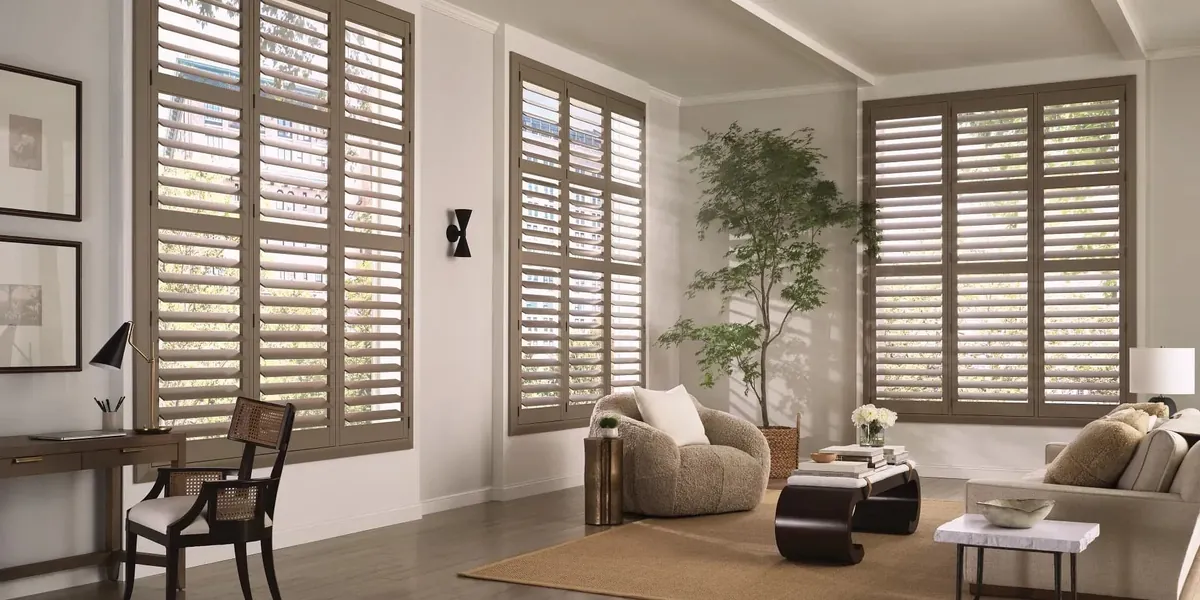
Blinds & Designs is a Hunter Douglas Gallery dealer, so every shutter collection, louver width, frame and finish comes through one consultation. Our installers are certified by Hunter Douglas, and on antique sash that is where the difference shows. Each frame is brought square and level even inside an opening that has leaned for a long time, the panels are hung to close along a straight line, and every louver is checked before the van leaves. If anything needs attention later, we carry out blind and shade repairs too.
A finished set of plantation shutters in Medfield, MA, should look as if it belongs to the house, whatever its age. That is the standard we set ourselves.

The Franklin showroom is nearest
Of our showrooms, the Franklin showroom is the closest to Medfield. Stopping in is a good way to narrow down a style before we visit.
The final choices are still best made at your own windows, where you can see how a louver width looks on a small antique sash or how a color reads under the trees.
Wherever you start, we measure at the house before anything is ordered.
More for Medfield homes
If a room suits something other than a shutter, look at cellular shades in Medfield, roman shades in Medfield or Hunter Douglas in Medfield, or see all our services on the Medfield page.
Questions from Medfield
Can shutters go on very small antique windows?
Yes, with the right scale. A narrow louver and often a single panel keep the shutter in proportion. We check the depth carefully, since muntins and old locks can get in the way of the louvers turning.
My old trim is natural wood. Will a white shutter look wrong?
It can. A stained Heritance shutter matched to the trim usually suits an antique room better. We bring finish samples to hold against your woodwork.
Do shutters make a shaded room darker?
Not when they are open. The panels fold right back to clear the window, and tilting the louvers up bounces light onto the ceiling. White finishes reflect the most light into a room under trees.
Can my addition have different louvers from the old part of the house?
Yes. Narrow louvers in the antique rooms and wider ones in a newer addition can work well, as long as each room is consistent.
Is the estimate free?
Yes. Once every window on your list is measured, the estimate is free and you are under no obligation.
Let us see your windows
Request a consultation and we will bring shutter samples to your house, measure each window, small or large, and leave you with a free estimate. You can also use the call button, or start at the Franklin showroom.