
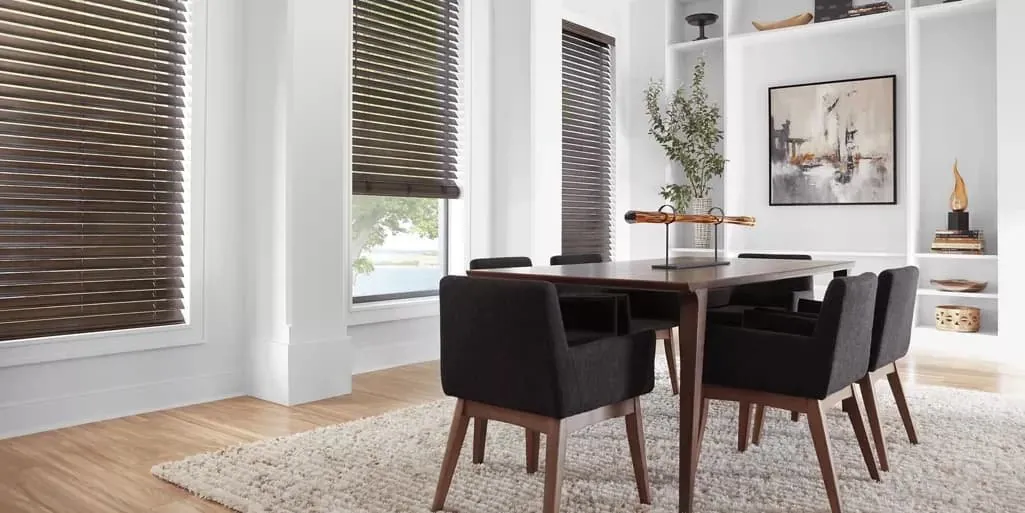
Three eras of house, one careful fit
Drive from the center of Walpole out through East Walpole and on to the newer streets, and you pass through several eras of building in a few minutes. The Victorians and colonials near the center have tall older sash. East Walpole is full of post-war capes with compact rooms and modest windows. Further out, larger newer houses sit on wooded lots with standard modern openings. Custom blinds in Walpole, MA, have to suit all of those, and often more than one era in a single house that has been added to over time.
The common thread is fit. Tall old sash is rarely square, cape windows sit close to furniture in small rooms, and modern openings, though standard in name, vary slightly in their finished size. A blind made to the exact opening sits neatly in every one of them, without the side gaps and short drops of a stock size.
We bring the Hunter Douglas range to your house, help you choose window by window, measure everything and have our certified installers fit the finished blinds.
What each part of a Walpole house asks for
These are the windows and rooms we plan for most often across town, from the center to the outer streets.
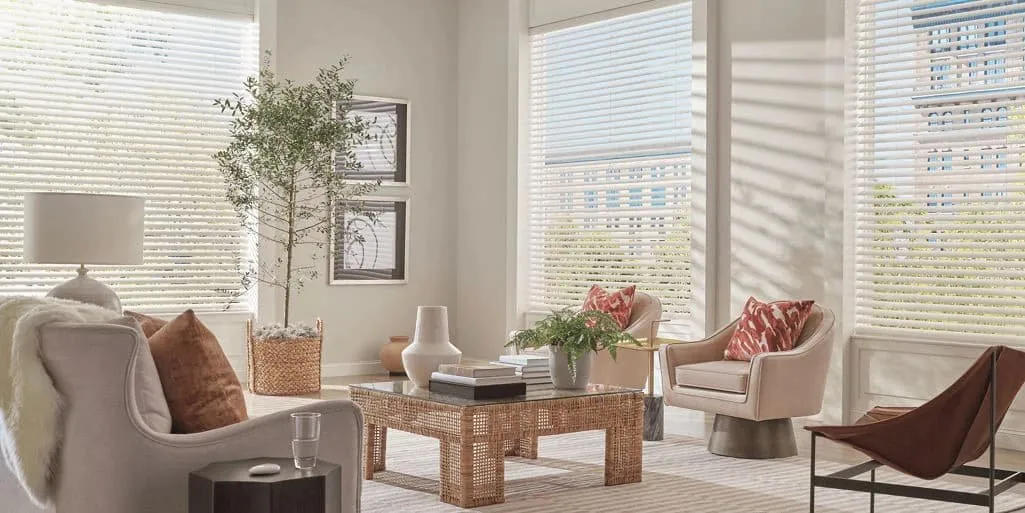
Tall sash near the center
Long, slim blinds made to an opening that may be narrower at the top than the sill, with slat sizes chosen to suit the proportions.
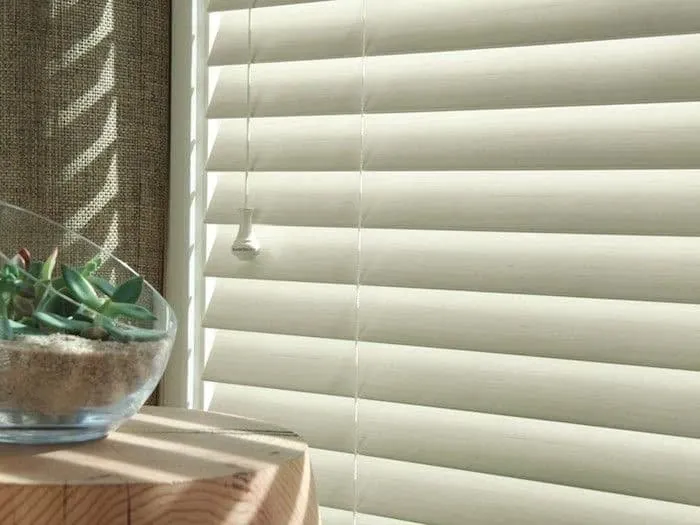
Cape rooms in East Walpole
Smaller windows close to beds, sofas and desks. A lift with no hanging cord keeps a tight room tidy.
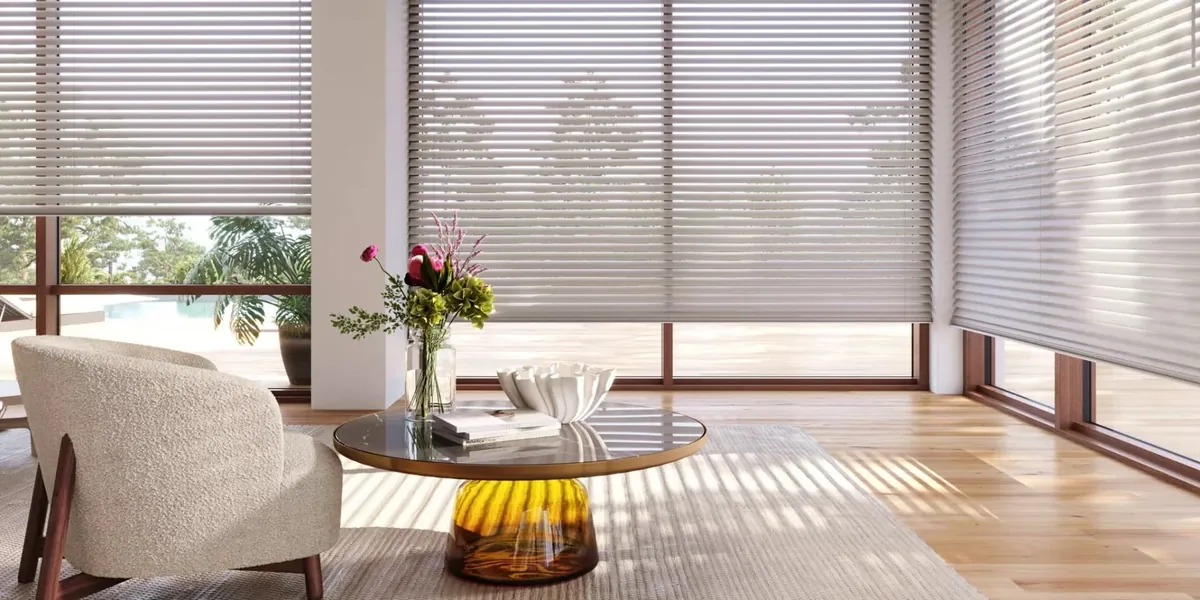
Newer houses on wooded lots
More glass and more rooms, with light that shifts as the trees fill in and thin out through the year.
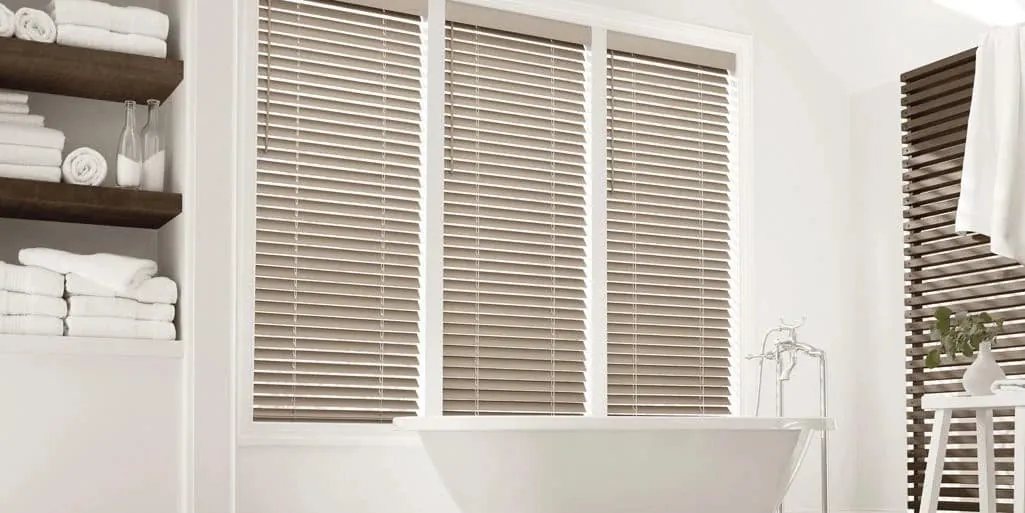
Kitchens and bathrooms
Faux wood is the material we suggest where there is steam or splashing, matched in color to the rooms beside it.
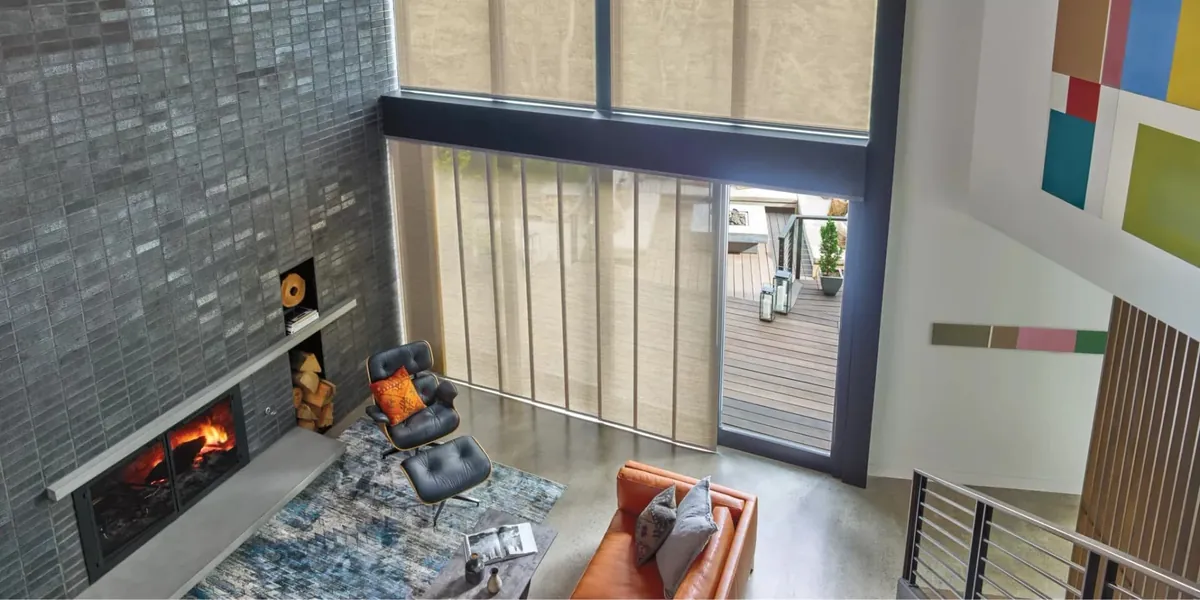
Sliders and wide openings
Vertical blinds that draw to the side, so a door to the deck opens without raising anything.
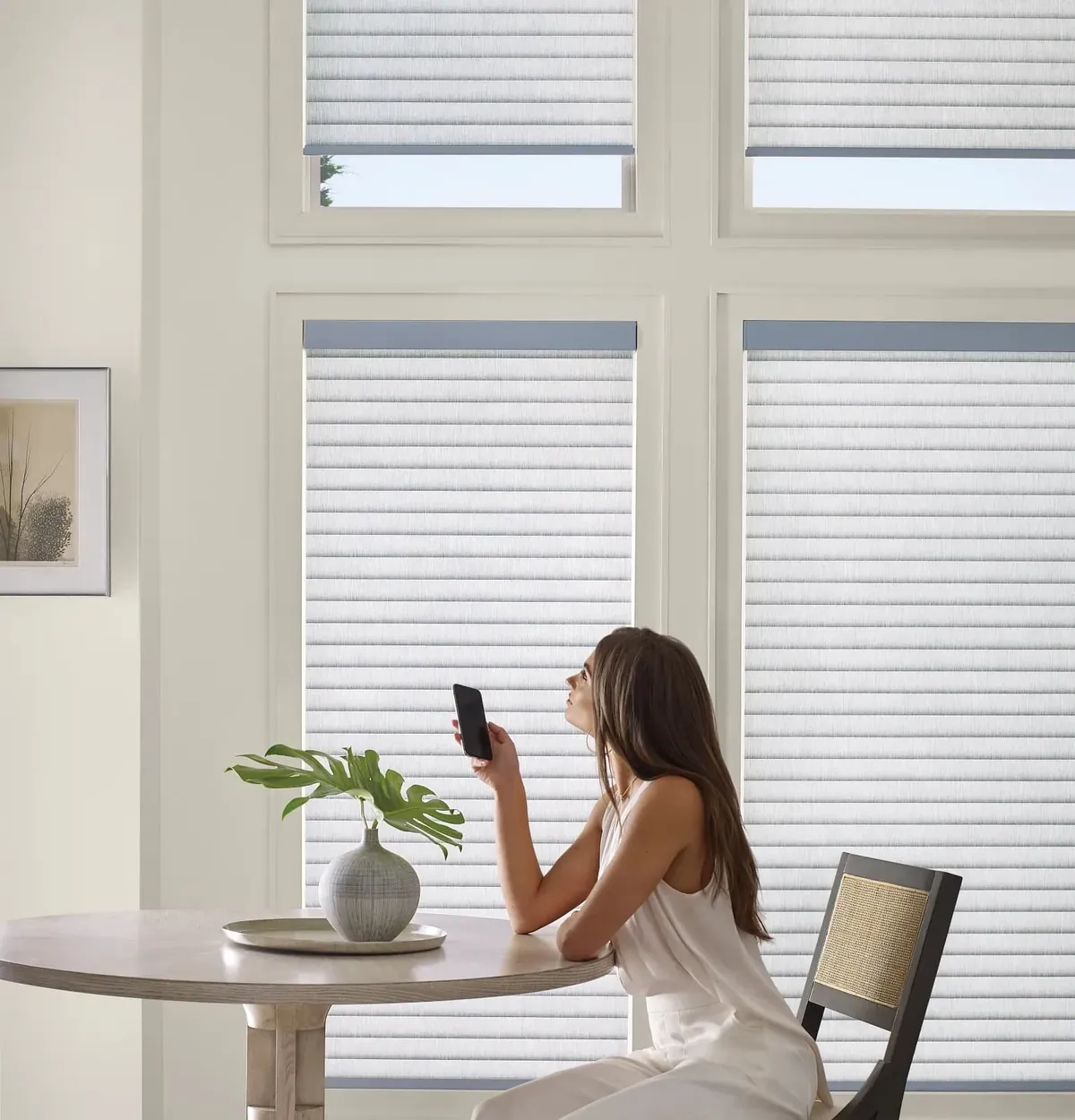
Glass you cannot reach
PowerView control from a phone, remote or schedule for high windows over stairs and entries.
When one house spans more than one era
Plenty of Walpole houses are not one era at all. A Victorian near the center may have a newer kitchen at the back. A cape in East Walpole may have gained a dormer, a family room or a second story. A newer house may have been built to look old from the street, with a mix of tall front windows and plain modern ones elsewhere.
Blinds can either show those joins or smooth them over. The trick is to treat the windows the street sees as one set: same color, same slat size, headrails at the same height, even if the front parlor has tall sash and the addition beside it has standard modern windows. Behind that, each room can have what suits it, whether that is stained wood against old trim or faux wood in a newer bathroom.
We list every window during the visit and mark which ones face the road, so nothing gets out of step. When the blinds go up, the house looks deliberate from outside, whatever the age of each part.
Tall older sash near the center
The Victorians and colonials close to the center have the tallest windows in town. A typical front room might have a pair of long sash windows with deep casings, a sash lock at the meeting rail and lift handles on the lower sash. Each of those details matters when fitting a blind.
The blind has to clear the lock and handles as it rises and falls, so we check how far they stand proud of the glass. The frame has to be deep enough for the headrail if we mount inside; on many older windows it is, but where stops and paint layers have eaten into the depth, we look at mounting on the casing instead. And because old frames move, we measure the width at several heights and make the blind to the narrowest, so it travels without catching.
On a window that tall, slat size changes the look a great deal. Wide slats give fewer lines across the glass and a clearer view when open, while smaller slats suit a slim window and fold into a shallower stack at the top. Holding both against your own sash during the visit is the quickest way to decide.
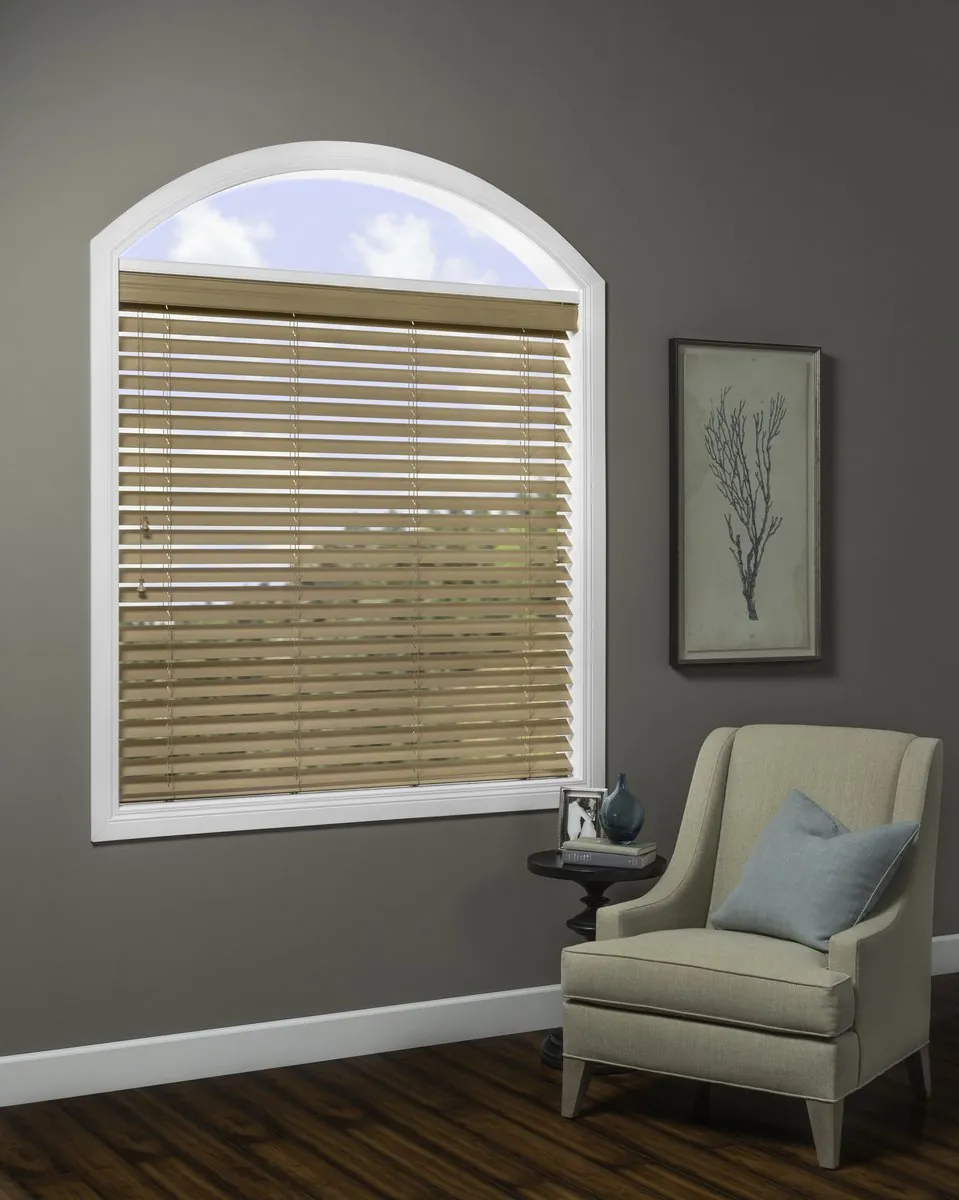
Post-war capes through East Walpole
East Walpole’s capes are compact, well-built houses with modest windows. Downstairs there is usually a living room at the front, a kitchen at the back and one or two bedrooms. Upstairs, under the roof, the bedrooms are lit by dormer or gable windows.
In a small room, furniture tends to sit close to the window: a bed against the wall under it, a sofa backed up to it, a desk in front of it. That makes a long hanging cord a nuisance, and in a child’s room it is something to avoid. A blind with no lift cord, which you raise and lower by moving the bottom rail, keeps the window and the furniture beside it clear. A wand handles tilting.
Small rooms also benefit from lighter colors, which keep them feeling more open, and from slats that tilt upward to bounce daylight off the ceiling rather than straight onto a bed or screen. When we plan custom blinds in Walpole for a cape, the whole house is often settled in one short walk-through, because there are fewer windows and the sizes repeat.
Front rooms close to the sidewalk
Near the center, the older houses stand nearer the road than the newer ones further out, and their front rooms look straight onto the sidewalk. That is where a horizontal blind is at its most useful. Tilt the slats so their upper edge faces the room and you can still see out while anyone walking by sees only the slats. Tip them the other way, upward toward the ceiling, and daylight is thrown deep into the room while the view in stays blocked.
On a tall sash, you can also lower the blind only partway, leaving the top of the window clear for light and the lower part covered for privacy. In the evening, with lamps on, closing the slats fully stops the room from showing to the street. Ordering custom blinds in Walpole for these front rooms is mostly about getting that balance right on each window, which is why we look at each one from the sidewalk as well as from inside.
When a cape has grown
Many East Walpole capes have been extended over the years: a full shed dormer across the back, a family room off the kitchen, a bedroom over the garage. Each addition brings new windows, usually larger and more modern than the originals.
That leaves a house where the front still has its small original windows and the back has newer, wider ones. Blinds can make the two halves feel like one house. We keep the original front windows in a color and slat size suited to their scale, and carry the same color into the additions, even if the slat size or material changes there. The wider windows of a family room might take two blinds side by side rather than one, which keeps each light and easy to raise.
Larger newer houses on wooded lots
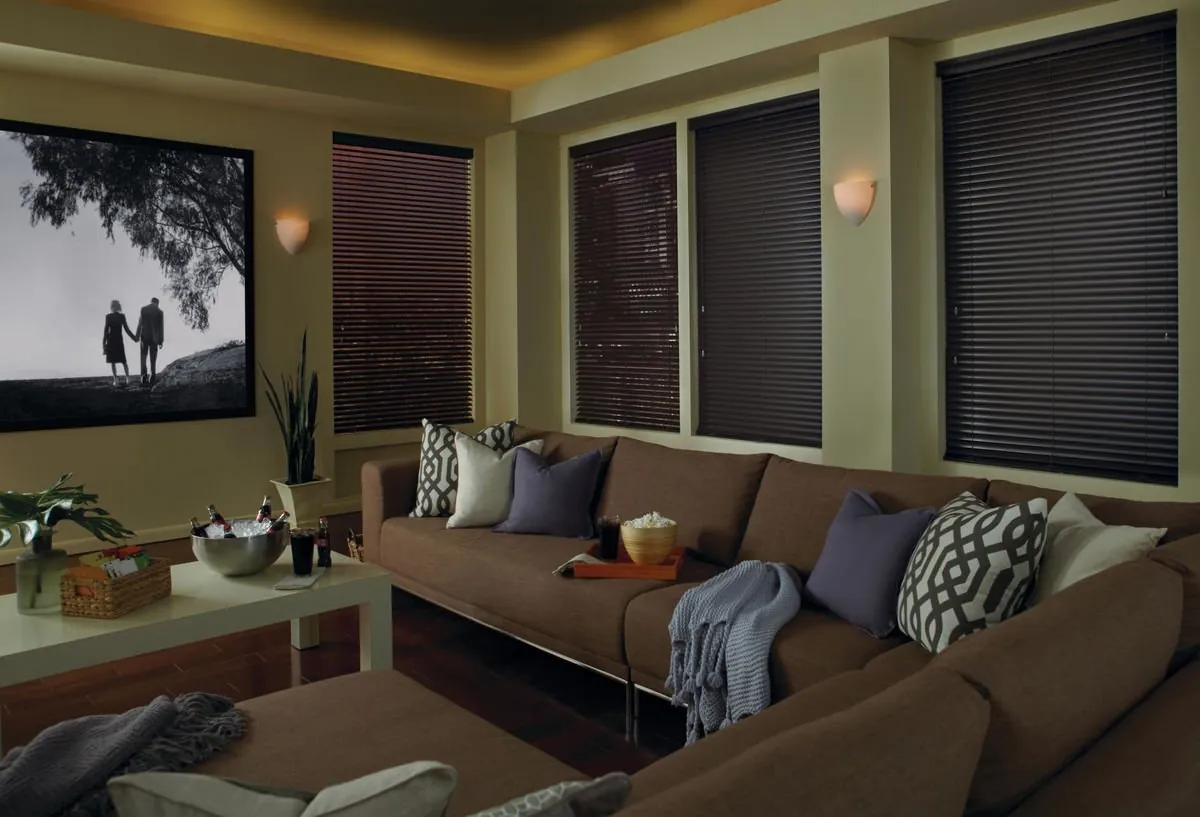
On the outer streets, the newer houses are bigger and sit among trees. The windows are standard modern openings, but there are a lot of them, and the back of the house often opens up with a wide family room and a slider to the deck.
Trees change the light through the year. In summer, the canopy can leave a room dimmer than its windows suggest; in winter, low sun comes through the bare branches. Slats that tilt let you follow those changes, opening wide to gather light on a shady day and angling to cut glare on a bright one. Rooms that face the woods usually suit lighter colors that reflect daylight back in.
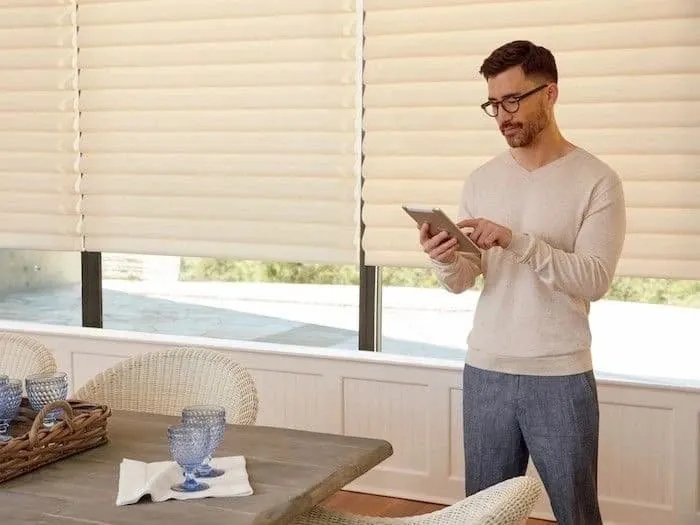
These houses also tend to have the windows that are hard to reach: over a two-story entry, above the stairs, high in a family room. For those, PowerView lets you tilt and raise the blinds from a phone or a remote, or on a schedule, so nobody is fetching a ladder. A schedule suits a wooded lot well: the blinds on the side facing the trees can open in the morning to gather what light there is, and the ones facing the drive can close at dusk, all without anyone walking from room to room. Grouping blinds by room or by side of the house keeps the controls simple, so a single tap moves the whole family room at once.
Slat size, explained simply
The width of the slats is one of the main choices on a horizontal blind, and it is easier to understand at the window than in a catalog.
Wider slats mean fewer slats on each blind. When they are open, there are fewer lines across the glass, so the view out is clearer. When closed, they make a fuller, more solid surface. They suit larger windows and rooms with bigger furniture.
Smaller slats mean more of them, with finer lines. They suit narrow or small windows, where a wide slat would look out of scale, and they stack into a shorter bundle at the top when raised, leaving more glass clear.
In Walpole, the tall narrow sash near the center and the small cape windows often look best with a smaller slat, while the larger windows of a newer house can carry a wider one. You can mix sizes in one house, as long as the windows facing the street match each other.
Inside the frame or over it
Every blind is mounted one of two ways, and the choice depends on the window.
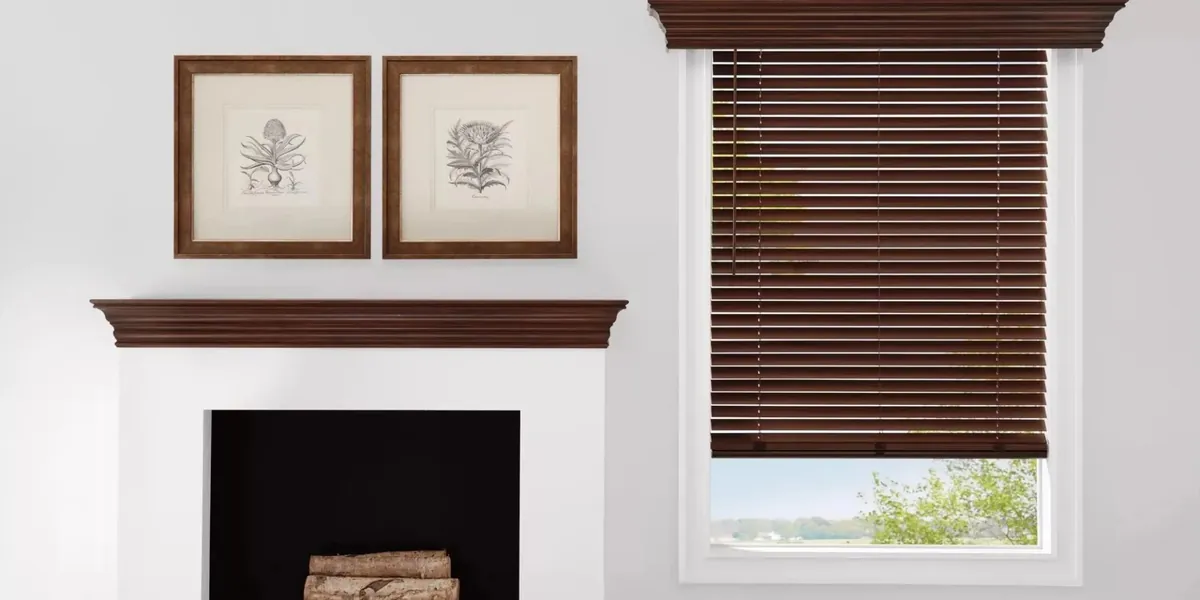
An inside mount sits within the window opening. The trim around the window stays fully visible, and the blind looks built in. It needs enough depth in the frame for the headrail, and an opening that is reasonably square. Most modern windows and many older ones meet both.
An outside mount fixes the blind on the casing or wall above the window, covering the whole opening and a little beyond. It is the answer when a frame is too shallow, when the opening is badly out of square, or when you want a room darker, because it covers the edges where light leaks around an inside blind.
We check both at every window during the visit and tell you which we would choose and why.
Choosing a color across the eras
Color is where a mixed-era house is easiest to get wrong. White blinds that look crisp in a new family room can look stark against cream or stained trim in an old parlor. A warm wood stain that suits the parlor can look heavy in a bright kitchen.
We bring the full color range so you can see each option against each kind of trim in the house, in daylight. Most people end up with one color for every window that faces the street, chosen to suit the oldest windows on the front, and then allow themselves more freedom in the rooms at the back. With custom blinds in Walpole, the street side of a house built in several stages can look as if it was finished all at once.
Cords, children and pets
Loose cords are the thing most people want rid of when they replace old blinds. A lift with no cord at all, worked by hand on the bottom rail, and a wand for tilting remove them entirely, which is the version we suggest first for children’s rooms and any window where a pet sleeps or climbs. On high windows, motorization removes cords from the picture as well.
Materials for each room
All four kinds of blind come from Hunter Douglas.
- Wood has natural grain and warmth, ideal for the front rooms of an older house and the living spaces of a newer one. It can be painted or stained.
- Faux wood reads as painted wood and is the material we suggest for kitchens, bathrooms and laundry rooms.
- Metal is the slimmest, with a shallow headrail for frames with little depth.
- Vertical blinds draw sideways for sliders and wide openings.
More on each is on our wood blinds, metal blinds and vertical blinds pages.
Before, during and after the visit
Before. Book through Request a Consultation or the call button. If you can, note the windows that bother you most so we can start there.
During. We follow the same order every time:
- We arrive with the sample van and walk the house with you.
- At each window we talk about light, privacy and who will use the blind.
- You hold samples against your own trim and compare colors, slat sizes and controls.
- We check depth and squareness and measure each opening.
- You receive a free estimate to think over.
After. When the blinds are made, our certified Hunter Douglas installers fit each one, check it runs smoothly and show you how it works. Read more on what happens on installation day.
What being a Gallery dealer means for Walpole
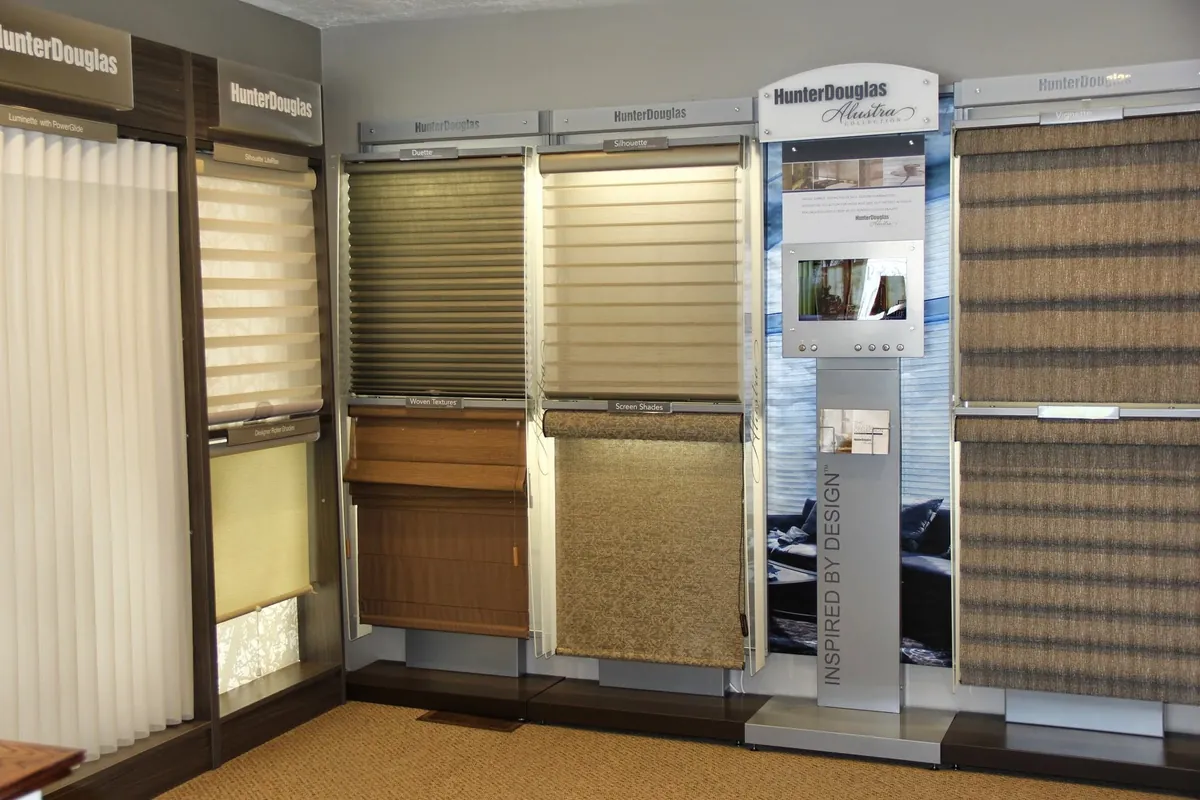
Blinds & Designs is a Hunter Douglas Gallery dealer. For you, that means the full Hunter Douglas blind range rather than a short list, and installers certified by Hunter Douglas to fit it.
We also offer interior design consultations for help with color and coordination, and we repair blinds and shades you already own.
For other rooms, compare cellular shades in Walpole, roller shades in Walpole, roman shades in Walpole, plantation shutters in Walpole or motorized blinds in Walpole. Everything we offer locally is on our Walpole page, and our Hunter Douglas dealer in Walpole page explains the Gallery designation. See the whole range on our custom blinds page.
Questions from Walpole
My house has old sash in front and newer windows at the back. Can the blinds match?
Yes. We keep the windows that face the street in one color and slat size, even if they differ in age and shape, and choose what suits each room behind that.
Will a blind clear the sash lock and handles on my older windows?
We check how far they project during the visit. If an inside blind would catch on them, we look at mounting on the casing instead.
What suits the small bedrooms in an East Walpole cape?
A lighter color and a lift with no hanging cord, which keeps the window clear of the bed or desk beside it.
How do I control a blind I cannot reach?
PowerView lets you tilt and raise it from a phone, a remote or a schedule.
Is the estimate free?
Yes. We measure, then give you a free estimate with no obligation.
Your Walpole windows, measured at home
Whichever era your house belongs to, the right starting point is your own windows with the samples held up against them. Request a consultation and we will bring the van, measure every opening and give you a free estimate for custom blinds in Walpole, MA. Our nearest showroom is in Franklin, with its address and hours on the Franklin showroom page, and the call button is there if you want to ask something first.