
Three eras of house in one town
Walpole is a town of mixed eras, and you can read them in the windows. Near the center, Victorians and colonials keep their tall older sash. Through East Walpole, post-war capes line the streets with modest, regular openings. Further out, larger newer houses sit on wooded lots with standard modern windows and plenty of them. Fitting plantation shutters in Walpole, MA, means switching approach as you move from one era to the next.
The tall sash in the center needs a shutter that respects its height and its age. The capes need something tidy and in scale with smaller rooms. The newer houses need a plan that keeps a lot of glass looking calm. Each asks for different louver widths, different frames and sometimes a different collection.
That variety is what makes Walpole interesting to work in. Very few orders here look like the last one.
Frames that suit each era
The frame is where a shutter meets the house, and choosing the right one does more than anything else to make the result look built in. For plantation shutters in Walpole, MA, we use all three styles regularly, because the town’s housing calls for all three.
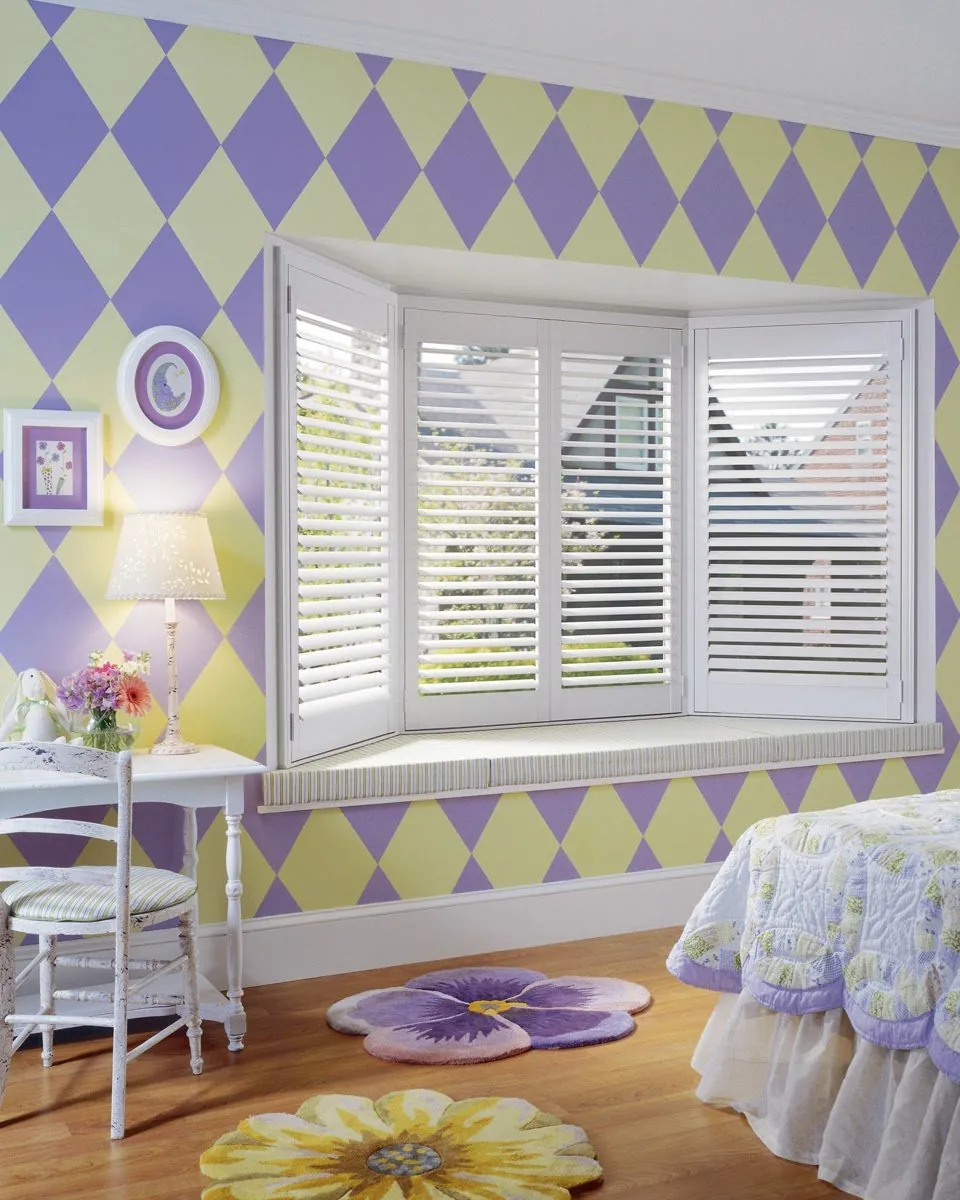
Inside frame
Sits within the opening and leaves the casing on show. The first choice for a deep Victorian sash or a cape window with enough depth for the louvers to turn.
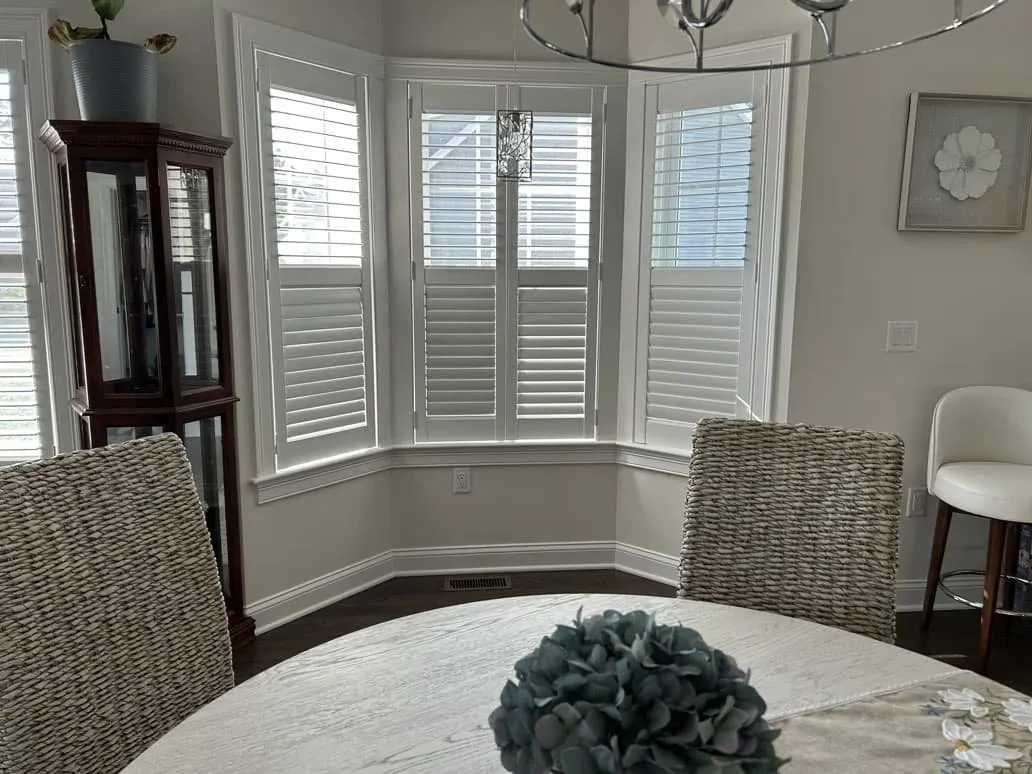
Outside frame
Fixes to the casing or wall around the window. It solves a shallow opening, hardware in the way or an old window that has moved too far out of square.
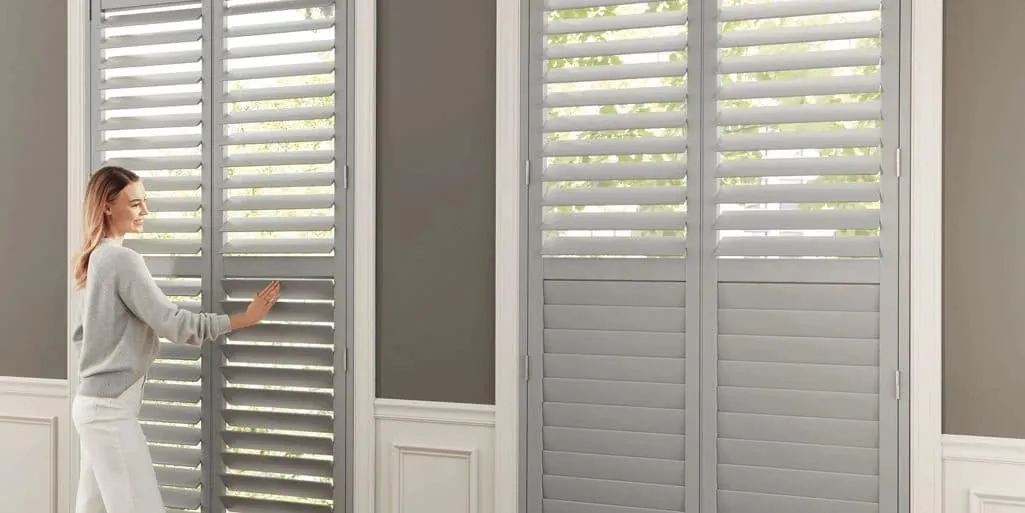
Decorative frame
Adds a moulded profile around the edge. It gives plain builder trim in a newer house the look of fitted joinery.
Tall older sash near the center
The Victorians and colonials around the center were built with tall windows, and those windows set the character of the front rooms. A tall sash brings in a lot of light and makes a ceiling feel higher. It also leaves a room on show to the street once the lamps go on.
A shutter on a window like that needs to manage its height. A divider rail partway up each panel breaks the louvers into two sections that tilt independently, so you can keep the lower half closed for privacy while the upper half lets in the sky. On the tallest windows, two tiers of panels can do the same job and let the bottom pair fold away on its own. Narrow or medium louvers keep the blades in scale with an older sash.
Then there is the opening itself. Older frames move over time, and a tall window shows any lean clearly once a straight new panel is set inside it. We take measurements across the window at several heights and up both sides, check the diagonals, and build the frame to take up the difference. Where sash locks or stops leave too little depth, we say so and suggest an outside frame on the casing instead. Our guide to shutters for older windows covers those checks.
Post-war capes through East Walpole
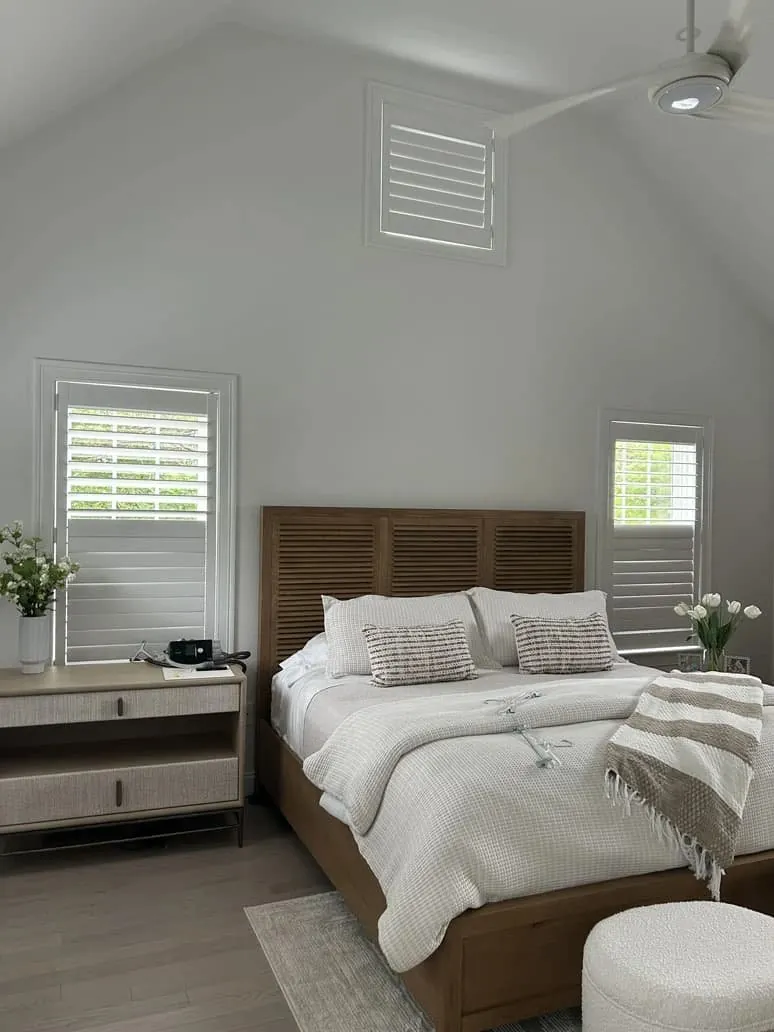
The capes in East Walpole are compact, practical houses, and their windows are regular and reasonably square. Downstairs, the front room usually has a window either side of the door, with the kitchen and a bedroom or two behind. Upstairs, under the roof, the rooms are smaller, with windows in the gable ends or in dormers.
In rooms this size, a shutter needs to be neat. A medium louver suits most of the downstairs windows, and the panels fold back flat without taking up the room. Matching shutters on the two front windows give the house a balanced face from the street. Many cape owners like a cafe layout on those front windows, covering only the lower sash, so the room stays private at eye level while the top half stays open.
Upstairs, the gable and dormer windows are often a little smaller and set back in the wall. A single panel with a narrower louver usually suits them best. We check how far each panel needs to swing, since a sloped ceiling or a short wall beside a dormer can limit the space.
Newer houses on wooded lots
The larger newer houses on Walpole’s wooded lots are a different proposition. They have more windows, bigger rooms, and standard modern openings throughout. Here the challenge is not fitting but planning: how to give a house with a great deal of glass a consistent, settled look.
We start with the street side. One louver width and one frame style across the front windows, on both floors, keep the house looking orderly from the drive. The family room at the back, usually with a wall of windows facing the woods, can move up a blade size for a clearer view, since that room is mostly seen from inside. Plain builder trim often benefits from a decorative frame.
Wide windows are divided into several panels that fold back in pairs. That lets you open the middle and keep the ends shut, or clear the whole window in fine weather. Because most of these houses are on one or two levels with standard ceiling heights, every shutter is within easy reach, which suits a covering you adjust by hand.

Louver widths, from the center outward
Louver width changes the look of a shutter more than anything else, and Walpole’s mix of eras uses the whole range.
- Narrow louvers for the tall older sash near the center and the smaller windows upstairs in a cape. They keep the shutter fine and in proportion.
- Medium louvers for the downstairs rooms of the East Walpole capes and the bedrooms of newer houses. A safe, balanced choice.
- Wide louvers for the woodland-facing family rooms of the newer builds, where you want to look out through as few blades as possible.
How the louvers tilt is the other half of the decision. A tilt rod down the face of the panel is easy to reach and has a traditional look. A hidden tilt at the edge leaves the face of the shutter plain and the view through it clear. Both work well; it is about the look you prefer.
Privacy in the center, light under the trees
The two ends of town have opposite problems. Near the center, the older houses sit closer to the street and to each other, so privacy in the front rooms matters. Out on the wooded lots, privacy matters less, but the trees can leave rooms dimmer than their windows suggest.
Shutters handle both. Near the center, tilting the louvers slightly down lets you see out while blocking the view in, and a divider rail lets the lower section stay closed while the upper section opens. Under the trees, folding the panels flat against the wall clears the glass entirely, while blades turned upward send what light there is toward the ceiling. In the evening, the same shutters close flat everywhere.
That flexibility is why many households choose plantation shutters in Walpole, MA, for houses of every era. One covering adapts to a street-facing parlor and a woodland family room alike.
How shutters get used through the year
A shutter is not something you set once and forget. Over a year in Walpole, the way you use it changes with the light.
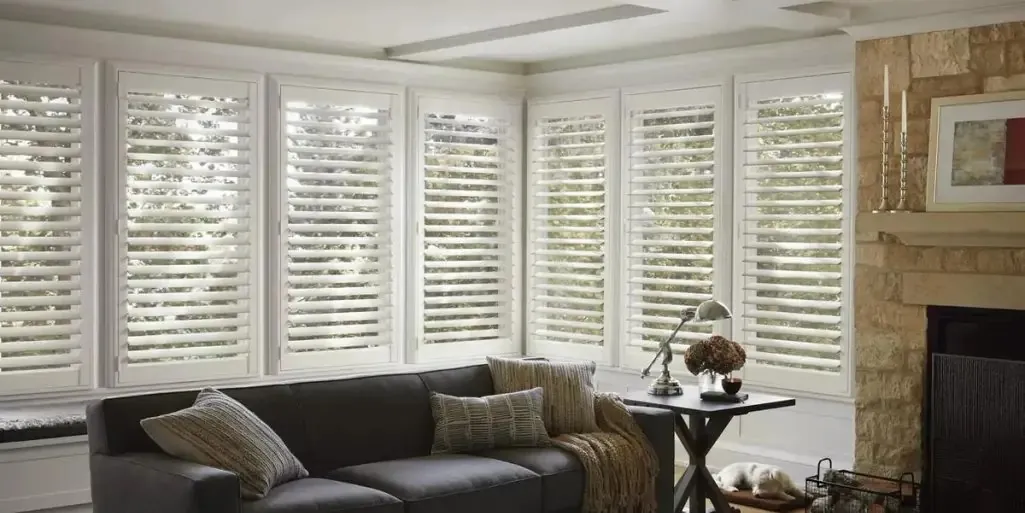
On long summer days, many people fold the panels right back in the morning and leave them open, with the window clear to the garden or the woods. When the sun swings round in the afternoon, the louvers come halfway closed on the hot side of the house to soften it. Autumn brings lower sun and earlier evenings, so the louvers get tilted up more often to keep rooms bright while screening them from the road. Through the winter, with the trees bare, rooms on the wooded lots suddenly get more daylight, and the blades are angled to make the most of it before closing flat at dusk.
Because everything is adjusted by hand and nothing needs a cord or a motor, the shutter simply follows whatever the day is doing.
The whole house now, or a room at a time
Some households cover every window in one order; many start with two or three rooms. Either works, provided a few choices are fixed at the start. Those are the blade width for the street-facing windows, the frame profile and the paint or stain color. We keep them on file, so panels added a year later match the first ones exactly.
In a center Victorian, the parlor and the room above it are the usual first step. In an East Walpole cape, it is often the two front windows and the kitchen. On a wooded lot, the family room tends to go first. Spreading plantation shutters in Walpole, MA, over time that way is perfectly normal, and the house never looks half done from the road.
Choosing between the collections
Hunter Douglas makes three shutter collections, and a Walpole house often uses more than one. They share louver widths and frame styles, so changing material from room to room is invisible from the hallway.
Palm Beach is the collection we suggest for bathrooms, the kitchen sink window and the laundry, anywhere water and steam are part of daily life. NewStyle handles most of the house: the cape’s front rooms, the bedrooms, the family room of a newer build. Heritance is real hardwood, painted or stained, and it suits the front rooms of a Victorian or colonial near the center, especially where the original trim is natural wood.
You can read more on the Palm Beach, NewStyle and Heritance pages, or compare them on the main plantation shutters page.
Color for old trim and new
Paint color is the decision people second-guess most, so we make it at the window rather than from a chart. In the Victorians and colonials near the center, casings have usually been repainted over and over, and that build-up mellows toward ivory. Put a stark white panel against it and the woodwork suddenly looks grubby by comparison. A softer white, with a little warmth in it, tends to blend.
East Walpole capes and the newer houses on the wooded lots generally have fresh, bright trim, and a clean white shutter lines up with it exactly. If a room has deep wall colors, a pale gray or a mushroom shade can look more deliberate than white. And in a Victorian whose trim was never painted at all, Heritance can take a stain chosen to sit with the old wood.
We test finishes in the morning light and again at dusk, since under trees the color can shift a long way between the two.
Kitchens and baths across the eras
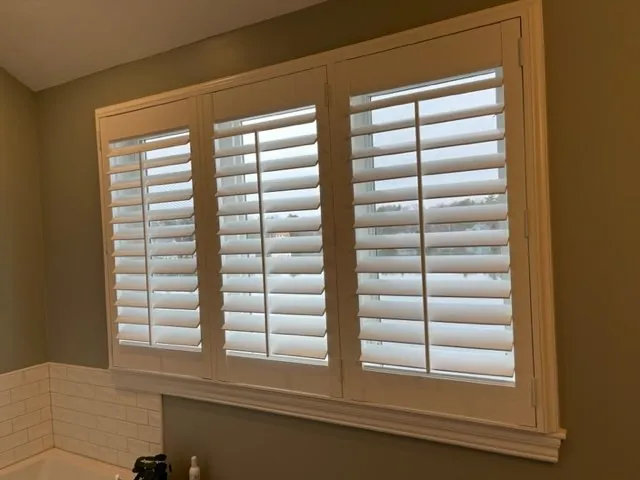
Each era put its wet rooms in a different place. In a center Victorian, the bathroom is often a narrow room with one deep window, sometimes at the back over a porch roof. The capes of East Walpole keep the bath and kitchen close together at the rear, the sink window looking onto the yard. On the wooded lots, newer houses tend to give the main bathroom a generous window by the tub, with a powder room near the front door.
Palm Beach is our usual answer for every one of those. It takes the same colors and frames as the rest of the house, so nobody can tell the bathroom panels apart from the bedroom ones once they are up. Small, deep bath windows often get a single hinged panel, or a half-height cafe shutter so the top light stays open. A kitchen sink window works well with blades angled upward, which keeps the worktop bright. Many plans for plantation shutters in Walpole, MA, deal with these rooms early, because they are the windows you notice every single day.
What we check before anything is ordered
Every shutter is made for one opening, so the visit is careful. These are the checks we run on each window.
- Width at the top, middle and bottom, and height at both sides and the center.
- The diagonals, to see whether an older opening has racked.
- Depth, and anything that sticks out: sash locks, stops, cranks or a deep stool.
- Room for the panels to swing, especially beside a dormer wall or a window seat.
- Where a divider rail should sit, so it lines up with the sash.
With those noted, we put together a free estimate, and there is no rush to answer it. For a fuller picture of the visit, see what happens at an in-home consultation.
Franklin showroom, or the van comes to you
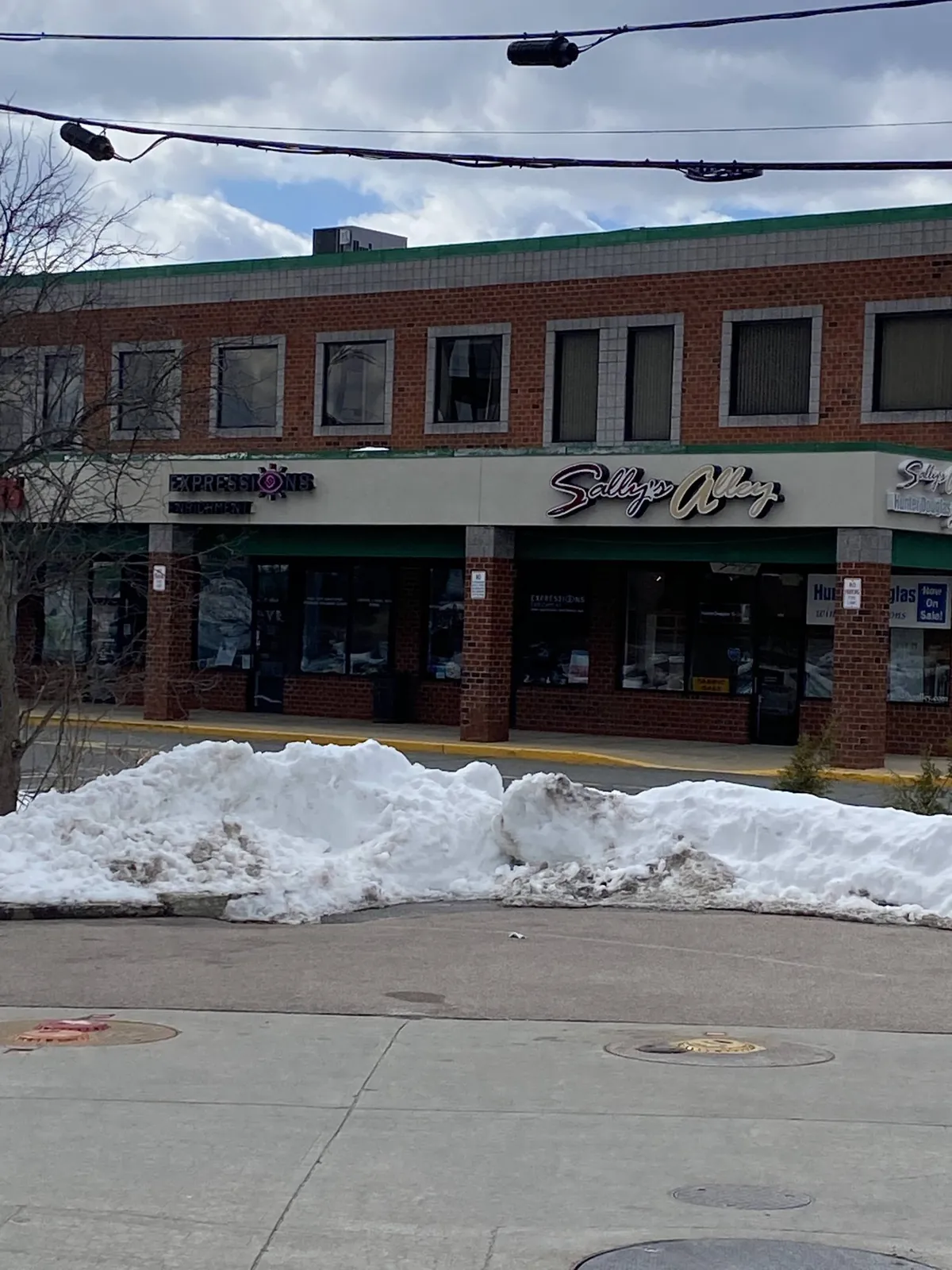
The Franklin showroom is the nearest of ours to Walpole. It is a good place to start if you like to see the collections before anyone comes to the house.
Or skip the drive: we can bring the showroom to you, with a van stocked with shutter samples. Seeing a blade size against your own sash, in the light that room actually gets, settles most questions quickly.
Either route ends the same way, with every window measured by us in your house before an order is placed.
Gallery status, certified fitting
As a Hunter Douglas Gallery dealer, Blinds & Designs can put the whole shutter range in front of you at once: Palm Beach, NewStyle and Heritance, with every blade size and frame profile. The people who fit them hold Hunter Douglas certification. Their skill shows most on the center’s tall old sash, where a frame has to read straight inside an opening that is not, and where a pair of panels has to close neatly down the middle. Repairs are part of what we do too, for blinds and shades as well as shutters, if anything needs looking at later.
Some rooms are better served by something else. Have a look at custom blinds in Walpole, cellular shades in Walpole or motorized blinds and shades, or see the full list for town on the Walpole page. For help pulling a room together, ask about interior design consultations.
Questions from Walpole
Do shutters suit the tall windows in an older house near the center?
Yes. A divider rail or two tiers of panels manage the height, and a narrow or medium louver keeps the shutter in scale. We measure carefully because older openings are rarely square.
What works on the small upstairs windows of a cape?
Usually a single panel with a narrower louver, mounted inside the opening if there is depth. We check the swing beside sloped ceilings and dormer walls.
Will my newer house look too busy with shutters on every window?
Not if the street side shares one louver width and frame. The family room at the back can take a wider louver for the view.
Can I have a stained finish?
Yes, with Heritance, which is hardwood. It suits natural wood trim in an older house, and we bring samples to match.
What happens after you measure?
You receive a free estimate based on your own windows. There is no obligation, and you decide in your own time.
Book your consultation
Whatever the era of your house, a consultation is the easiest way to judge shutters on your own windows. Samples travel with us, each opening is measured, and the estimate is free. The call button works too, or you can begin at the Franklin showroom.