
Deep reveals around the historic center
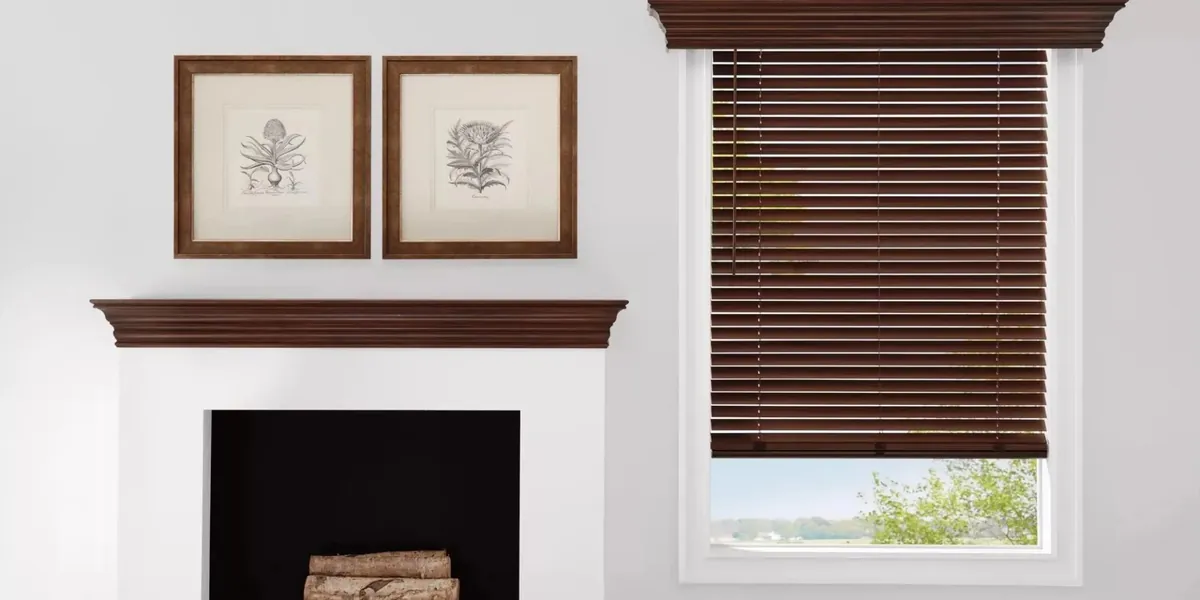
Around Holliston’s center, the antique colonials and Victorians share one feature that shapes every blind we make for them: deep reveals. The windows are set well back into thick walls, so each tall, narrow sash sits at the end of a recess with wide side jambs and a broad sill. That depth is a gift for a blind. It leaves room for the headrail to disappear into the top of the opening, and it frames the blind so it looks like part of the window rather than something hung in front of it. For custom blinds in Holliston, MA, those reveals are where the planning starts.
A deep reveal does bring choices. The blind can sit close to the glass, leaving the recess open on the room side, or further forward, nearer the face of the wall. Each changes the look, how much the sill can be used, and how the light falls into the room.
Out in the subdivisions off Washington Street, the newer colonials on wooded lots have standard modern sizes. They are simpler to fit, but there are many more of them in each house, and the aim there is one consistent finish from room to room.
Three kinds of blind for Holliston windows
Every blind we fit comes from the Hunter Douglas range. These are the three types we point to most often here, alongside faux wood for kitchens and baths.
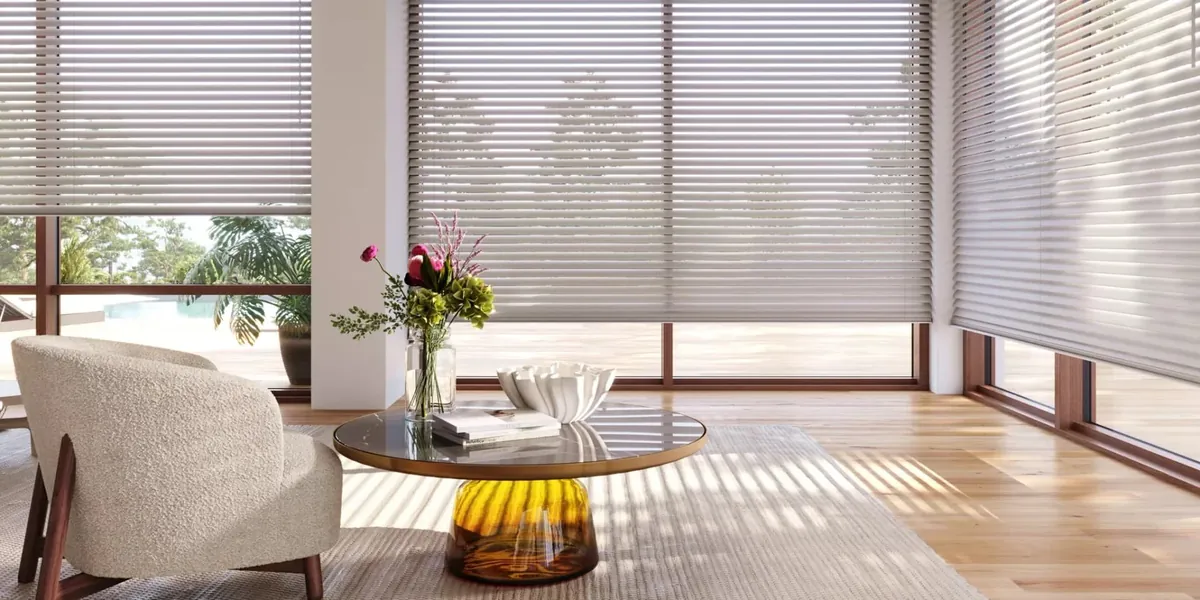
Wood blinds
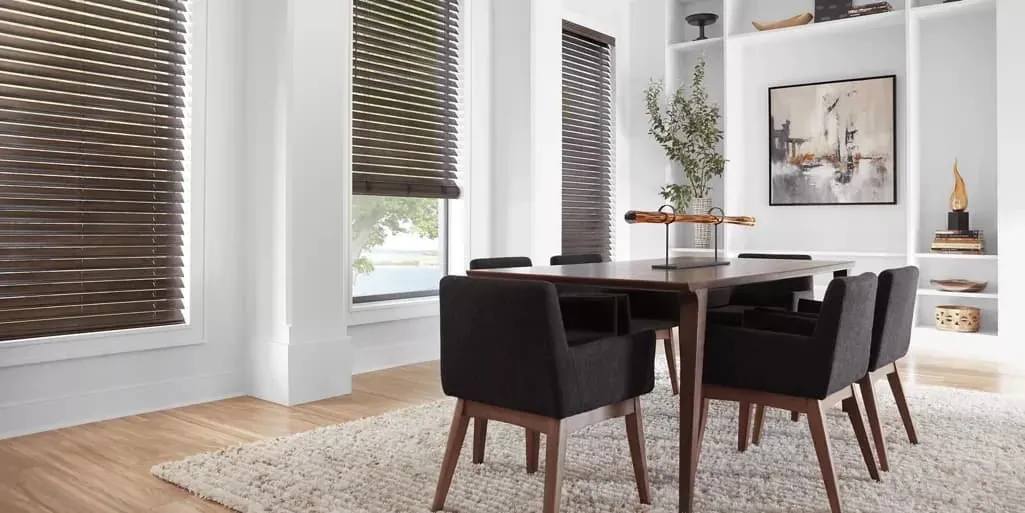
Real wood in stain or paint. On the tall sash of an antique colonial, it sits naturally against the old casings.
Metal blinds
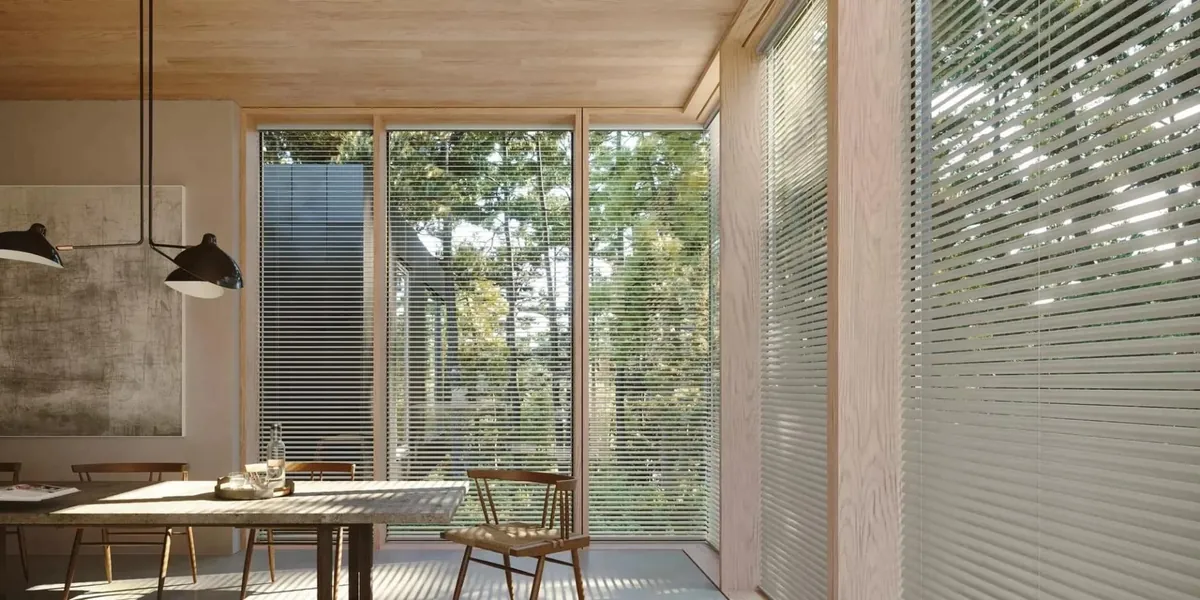
Slim slats and a shallow headrail. A clean, light option for a modern room or a window with a shallow frame.
Vertical blinds
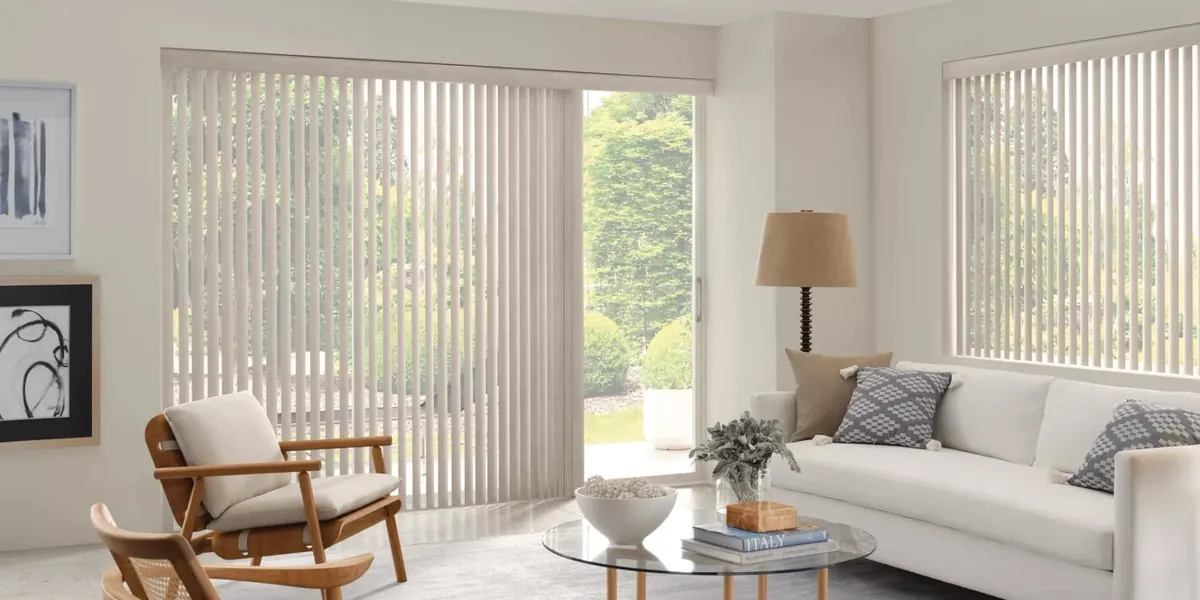
Vanes that hang and draw aside, made for the slider from a newer kitchen or family room to the deck.
Where to set a blind in a deep reveal
When a window sits at the back of a deep recess, there is more than one place to fix the blind, and the choice changes the room.
Close to the glass. The blind sits just behind the sash, and the full depth of the reveal stays open on the room side. The sill becomes a usable ledge even with the blind lowered, and the recess reads as a frame around the window. This is often our first suggestion on an antique colonial, because it keeps the deep jambs and old trim on show.
Forward in the reveal. The blind sits nearer the room face of the wall. That suits a window where the sash hardware stands well out from the glass, or where a radiator or a deep sill makes it awkward to reach a blind set further back. It also hides more of the old sash when lowered, which some people prefer in a bedroom.
Either way, the headrail tucks up into the top of the opening and the blind stays inside the recess, so the casing around the window remains completely visible. We look at each window from inside and outside before suggesting one or the other, and we explain the difference at the window rather than on paper.
Tall, narrow sash in the antique houses
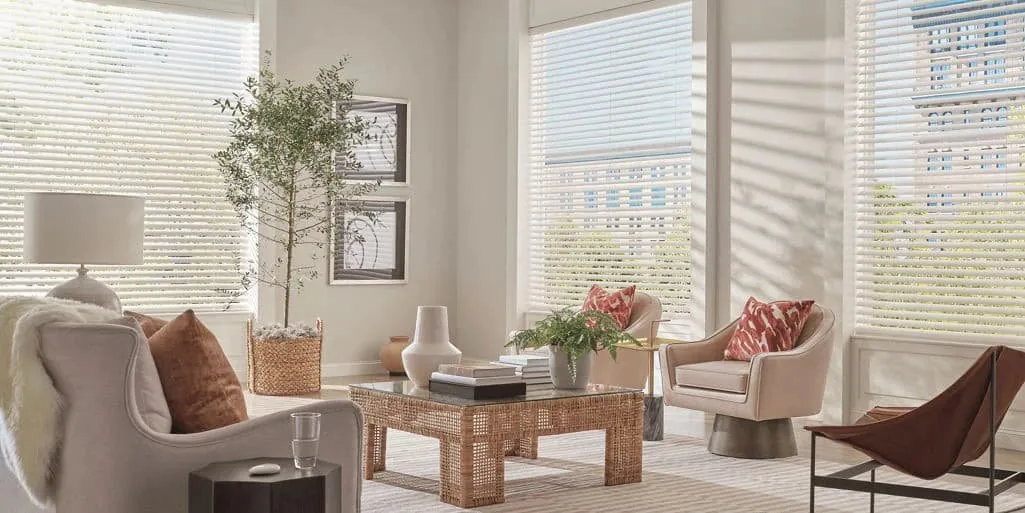
The historic houses around the center have windows that are much taller than they are wide, often in pairs in the front rooms. Within a deep reveal, a tall sash looks even slimmer, and a blind has to match that proportion.
We measure the width at the top, middle and bottom of each reveal, because old walls are rarely true, and the blind is made to the narrowest point so it travels freely without brushing the jambs. Height is measured at both sides for the same reason. On a narrow window, a smaller slat usually looks better in scale than a wide one, and it stacks into a shorter bundle when raised, leaving more of the tall glass clear. We bring both slat sizes to the house so you can see them in your own reveals.
Color follows the trim. Stained casings pair well with wood blinds in a close stain, so the window reads as one piece of woodwork. Painted casings usually suit a blind matched to the paint, which almost disappears when raised. The street sees the backs of all the front blinds at once, so we keep those consistent across the front of the house.
Light along a deep jamb
A deep reveal does something useful with daylight. The wide side jambs and sill catch light from the window and bounce it into the room, which is why a recessed window in a thick old wall often feels brighter than its glass would suggest. A blind can work with that or against it.
Set close to the glass, with the slats tilted upward, a blind sends daylight up onto the head of the reveal and the ceiling beyond, and the painted jambs glow with it. A light slat color adds to the effect. Set further forward, a blind closes off the reveal itself, which darkens the room more fully when lowered but loses that glow when open. In a bedroom you may want the darkness; in a front parlor, most people keep the reveal open and the light moving.
Paired sash and a shared headrail line
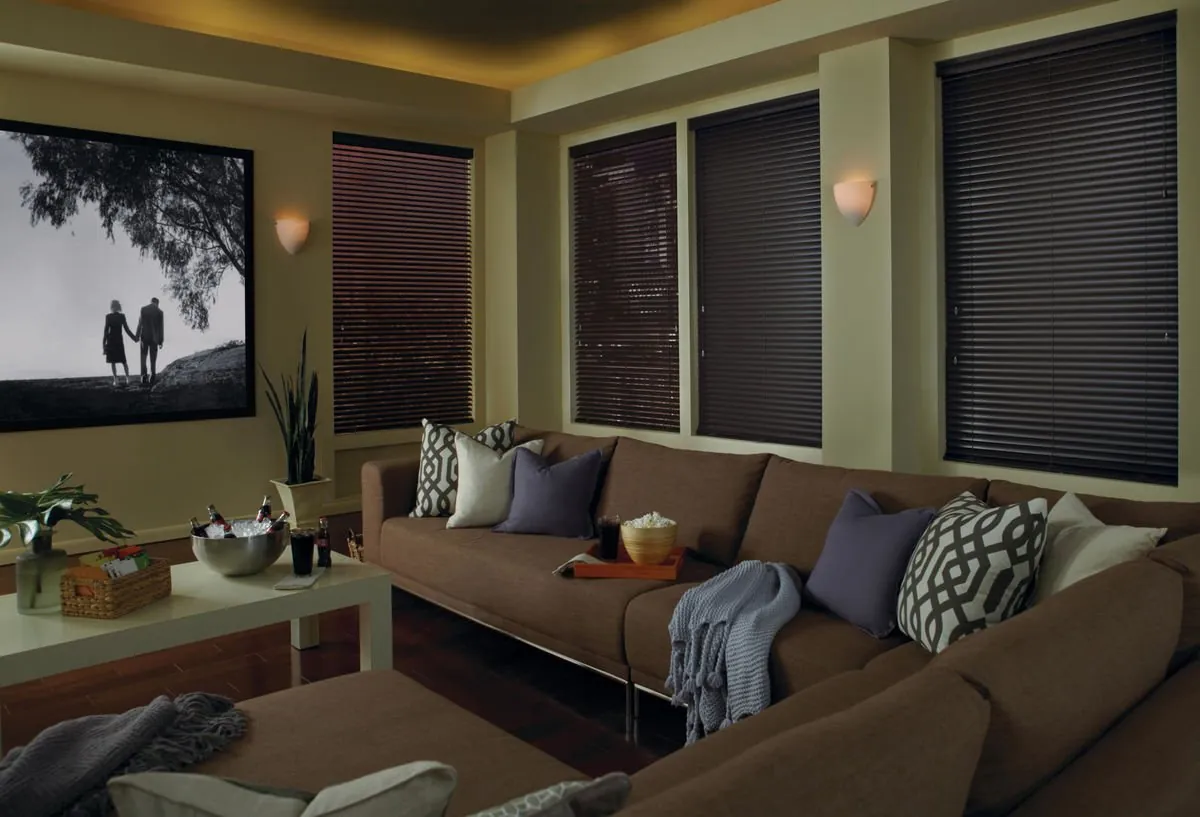
The front rooms of the historic houses often have their tall windows in pairs, set close together with a narrow pier of wall between them. Each window has its own reveal, so each takes its own blind, but the pair is read as one feature from inside and from the street.
We make the two blinds as a matched set: same slat width, same color, headrails set at exactly the same height within their reveals, and the bottom rails stopping at the same line when lowered. If one reveal is a touch narrower than its twin, as often happens in an old wall, each blind is made to its own opening so both fit cleanly while still looking identical. That level of care is what custom blinds in Holliston are for on these older houses, where a small mismatch between two windows a hand apart would catch the eye every day.
Keeping the street view of a historic house
From the road, the antique colonials and Victorians around the center are defined by their windows: evenly spaced, tall, and set deep in the walls. A blind that hangs crooked, sits at a different height or shows a different color from the one beside it spoils that rhythm.
Made to measure and mounted inside the reveal, every blind on the front sits at the same height and in the same color, and from the sidewalk the windows keep their proportions. Raised during the day, the blinds tuck into the top of each recess and nearly vanish. Lowered at night, they look even and intended. Choosing custom blinds in Holliston for an older house is as much about how the front looks from outside as how each room works inside.
Newer colonials off Washington Street
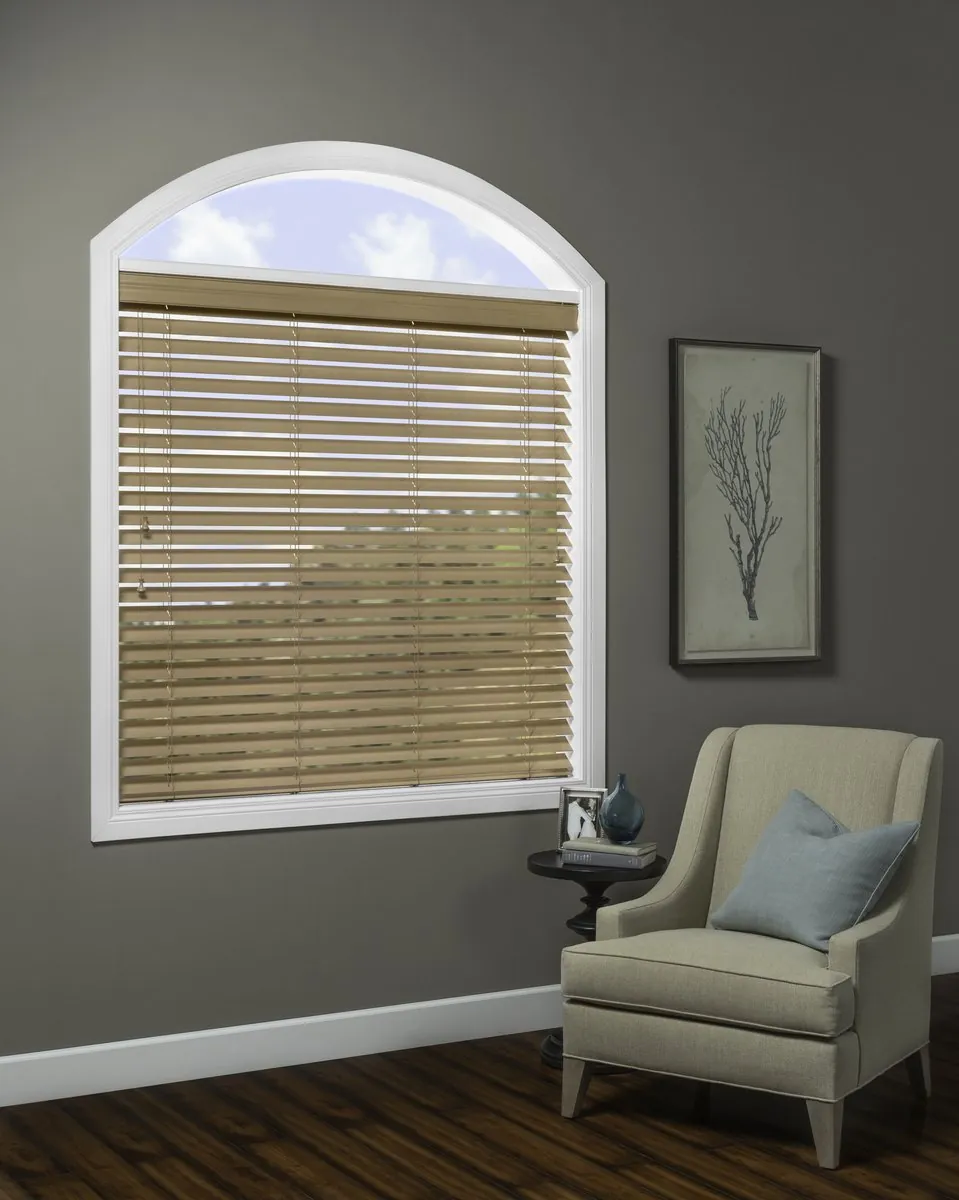
The subdivisions off Washington Street are full of newer colonials on wooded lots, with standard modern window sizes throughout. Standard makes fitting easier, but it does not remove the reason to measure. Trim, drywall and framing leave each clear opening a little different, and a stock blind bought in a fixed width will almost always leave a gap or need forcing in.
These houses have more windows than an antique colonial: a front room each side of the entry, a big family room at the back, bedrooms and baths upstairs, often a slider and sometimes a window over the stairs. With so many, a consistent finish matters. We plan the order room by room, keep the street-facing windows in one color and slat size, and vary the material behind that where the room calls for it. Because the sizes repeat so often in a subdivision house, the bedrooms upstairs may all share one window size, and the front rooms another. That makes it easy to settle on a choice in one bedroom and carry it through the rest, with each blind still made to its own measured opening. The visit to a colonial off Washington Street is often quicker than one to an antique house for exactly that reason, even though there are more windows to count.
The wooded lots bring their own light. Trees around the house soften the sun in summer, and the rooms that face them can be dimmer than their windows suggest. Lighter blind colors help reflect daylight back in, while a darker tone suits a den or media room. When planning custom blinds in Holliston for one of these colonials, we look at each side of the house with you and choose the color accordingly.
Rooms with water
Kitchens, bathrooms and laundry rooms need a different material from the living rooms. Steam and splashes are hard on real wood over time, so faux wood is the material we suggest wherever there is water nearby. From across the room it reads as painted wood, and because it can be matched in color to wood blinds in the rooms around it, the house looks consistent from outside.
In an antique house, the kitchen and bathroom are often in a later part of the building, with plainer windows than the front. A faux wood blind in the same color as the front blinds ties the two parts together. In a newer colonial, faux wood suits the kitchen window over the sink, the main bath and the mudroom off the garage. More is on our EverWood faux wood blinds page.
The family room and the slider
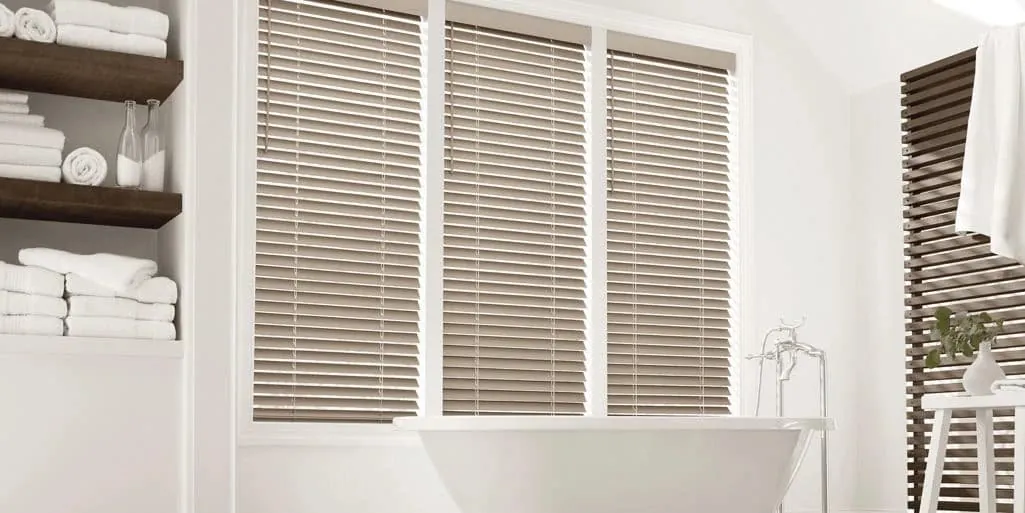
The back of a newer Holliston colonial usually opens up: a wide family room with a run of windows, and a slider to a deck or patio. A horizontal blind on the slider would have to be raised every time someone stepped out, so a vertical blind is the usual answer there. It draws to one side, and the vanes turn to let light in or block it.
On the windows beside the slider, horizontal blinds in a matching color keep the wall looking unified. For a long run of windows, we make a blind for each one, sized so the slats line up across the whole wall. That keeps each blind light enough to raise easily and lets you shade the windows facing the sun while leaving the others open to the trees.
How the blinds are worked
The control is chosen for each window and the person using it.
- A cord to raise and lower, with a separate tilt, the classic arrangement.
- A wand in place of the tilt cord, so only one control hangs at the side.
- A lift with no cord at all, worked by moving the bottom rail, which suits children’s rooms and windows near pets.
- PowerView motorization, controlled from a phone, a remote or a schedule.
Motorization makes sense on windows that are hard to reach, such as the tall sash behind a deep sill and a radiator in an older house, or a high window over the stairs in a newer one. We plan how each motor is powered at the visit. See our motorized blinds in Holliston page for more.
From the first visit to the finished windows
We bring the Hunter Douglas samples to your house, because deep reveals and wooded light are hard to judge anywhere else.
- Pick a day that suits you, using Request a Consultation or the call button.
- The van pulls up with the samples, and we stand at the windows with you, looking at them from the room and from the yard.
- On an older house, we hold a slat at the glass end of each reveal and then at the room end, so you can see both positions.
- Colors and slat widths go up against your own casings, in daylight, until one looks right.
- Each opening is measured at its top, center and sill, and the figures go into a free estimate you can keep and consider.
- On fitting day, the certified installers set each headrail, check the blind clears the jambs from top to bottom, and hand over the controls.
For a fuller picture, see what happens at an in-home consultation.
Who makes and fits your blinds
As a Hunter Douglas Gallery dealer, Blinds & Designs can order any blind in the Hunter Douglas line for you: every wood, faux wood, metal and vertical option, in every color and slat width. The people who come to hang them hold Hunter Douglas installation certification. In a deep antique reveal, where the jambs lean a little and the head of the opening is seldom level, that training is what gets a row of tall blinds hanging true. Help with colors and fabrics across a whole house is available through our interior design consultations, and if an older blind or shade in the house has stopped working, our repair service can look at it.
Not every Holliston window wants a blind. Compare cellular shades in Holliston, roller shades in Holliston, roman shades in Holliston and plantation shutters in Holliston, which suit deep reveals well. Everything we offer locally is on our Holliston page, and our Hunter Douglas dealer in Holliston page explains the Gallery designation. The full range is on our custom blinds page.
The nearest showroom to Holliston
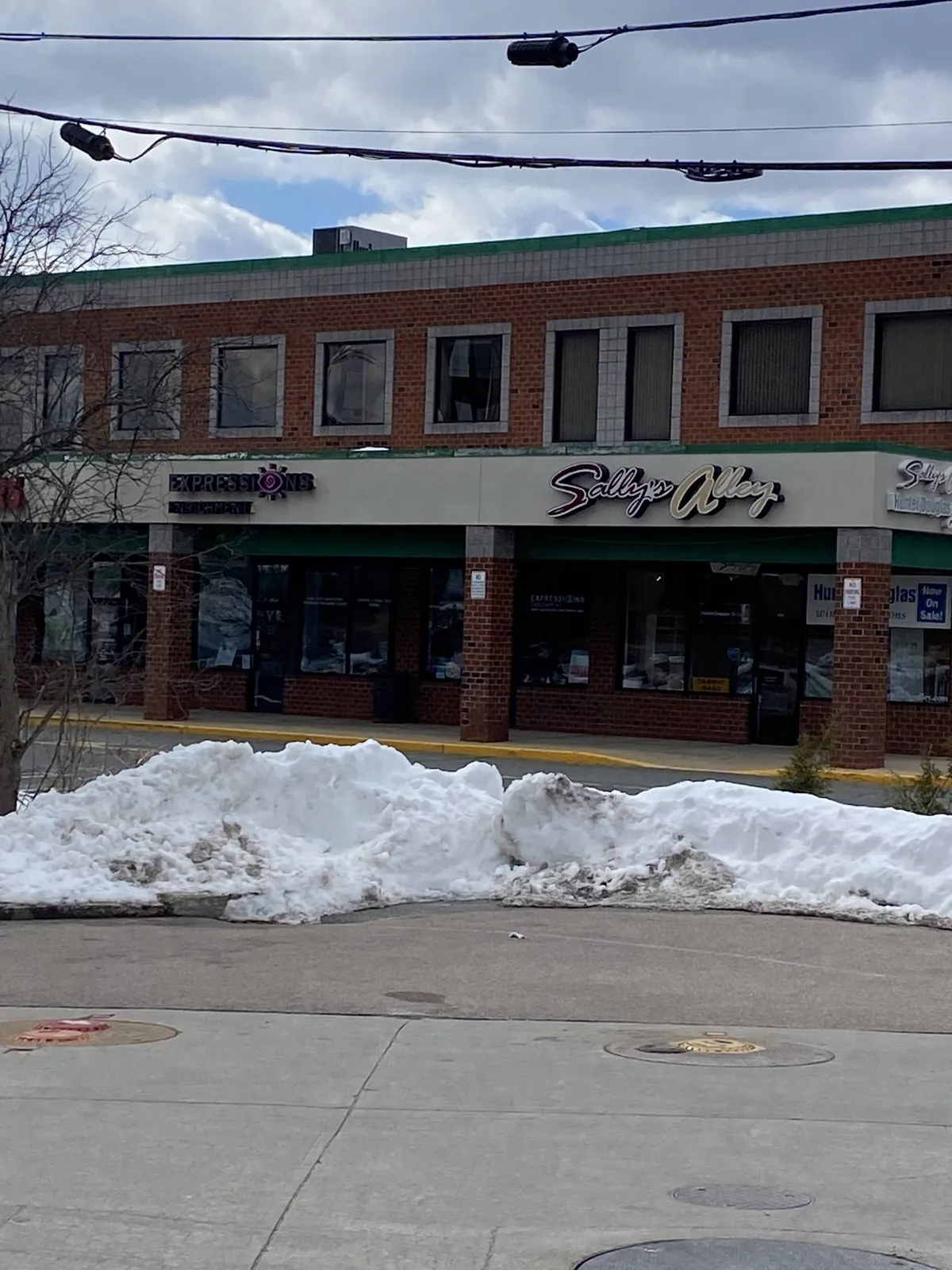
The showroom nearest Holliston is in Franklin. A trip there suits anyone who wants to narrow things down before the van comes out to the house. It is not a required step: the samples travel to you, and the reveals that make Holliston windows unusual can only really be judged at home.
Directions, the street address and opening times are listed on the Franklin showroom page.
Questions from Holliston
My windows are set in very deep reveals. Where should the blind go?
Usually close to the glass, which keeps the recess and the old casing on show and leaves the sill usable. Where sash hardware stands out or a radiator is in the way, we may suggest setting it further forward. We show you both at the window.
Will an inside mount hide my historic trim?
No. The blind sits inside the reveal, so the casing around the window stays fully visible.
My newer colonial has standard windows. Are measured blinds still worth it?
Yes. Each finished opening is slightly different, and measured blinds fit without gaps and run more smoothly than stock sizes.
What do you suggest for the slider to the deck?
A vertical blind, which draws aside so the door opens freely, in a color matched to the windows beside it.
Is the estimate free?
Yes. After we measure, you receive a free estimate and can decide when you are ready.
See the samples in your own reveals
A blind in a deep reveal is a small piece of joinery as much as a window covering, and it is chosen best standing in front of the recess it will live in. Ask for a visit with the Request a Consultation button, mention whether the house is one of the old ones near the center or a newer colonial off Washington Street, and we will come prepared for it. You will leave the visit with every window measured and a free estimate for custom blinds in Holliston, MA, in hand. The call button and the Franklin showroom are there too, if either suits you better.