
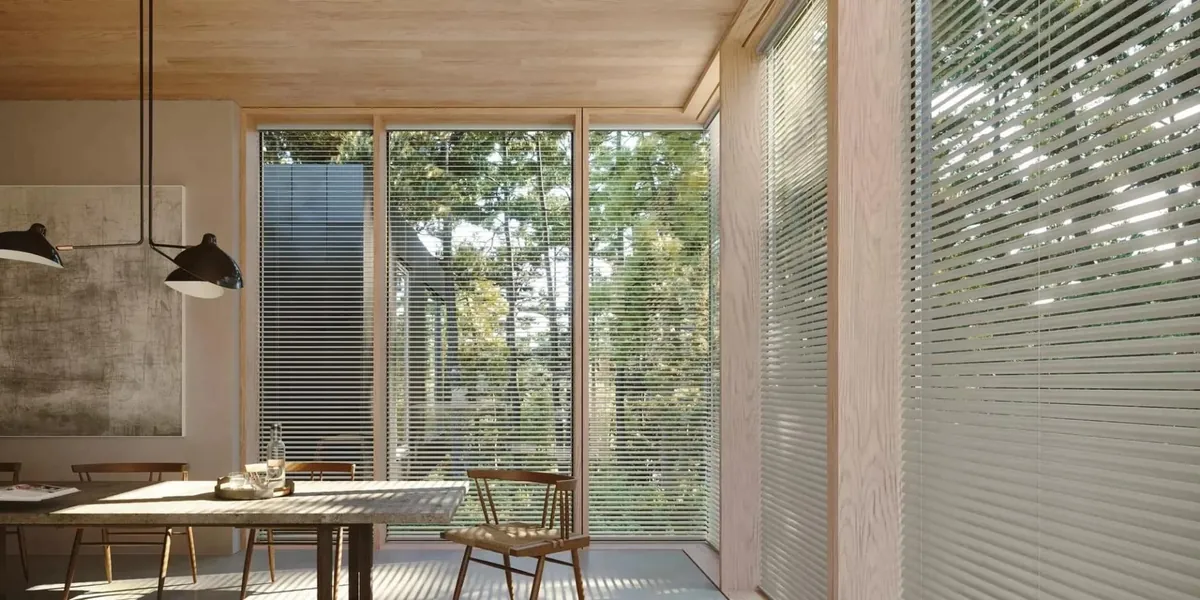
Long glass, low sills and a lot of shade
The houses on the wooded lots around Lake Massapoag were built to look out at the trees. The colonials and especially the mid-century contemporaries have long runs of glass, often with sills set low to the floor, so a living room may have a whole wall of windows starting not far above the rug. Yet with deep setbacks and heavy tree cover, those rooms are often darker than all that glass would suggest. Choosing custom blinds in Sharon, MA, is about holding on to every bit of daylight the trees let through, while still being able to close a long wall of windows at night.
That is a different brief from a sunny town lot. In most Sharon houses the problem is not too much sun but too little, and blinds that block more light than they need to make a shaded room gloomier still. The right slat color, slat width and mount can make a real difference to how bright a room feels with the blinds open.
Low sills bring their own considerations: a blind that drops to a sill near the floor is close to furniture, children and pets, and on a long run of windows there may be a lot of blinds to work.
What we plan for in a Sharon house
These are the window situations we see most around the lake and on the wooded streets nearby.
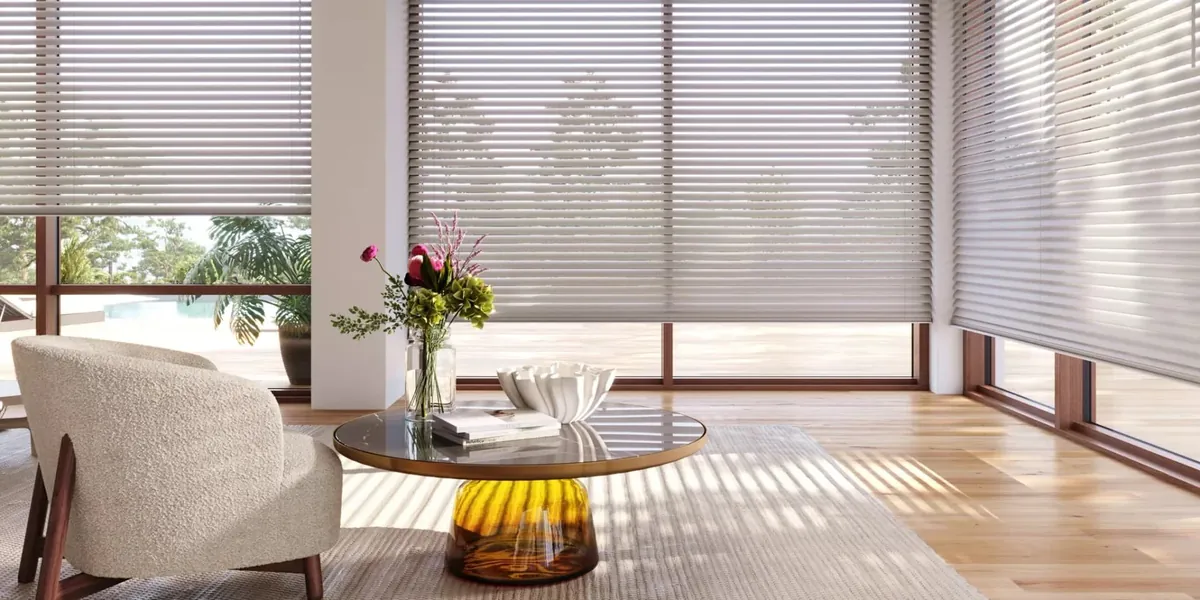
Long runs of glass
A blind for each window, sized so the slats line up along the whole wall, rather than one heavy blind across it.
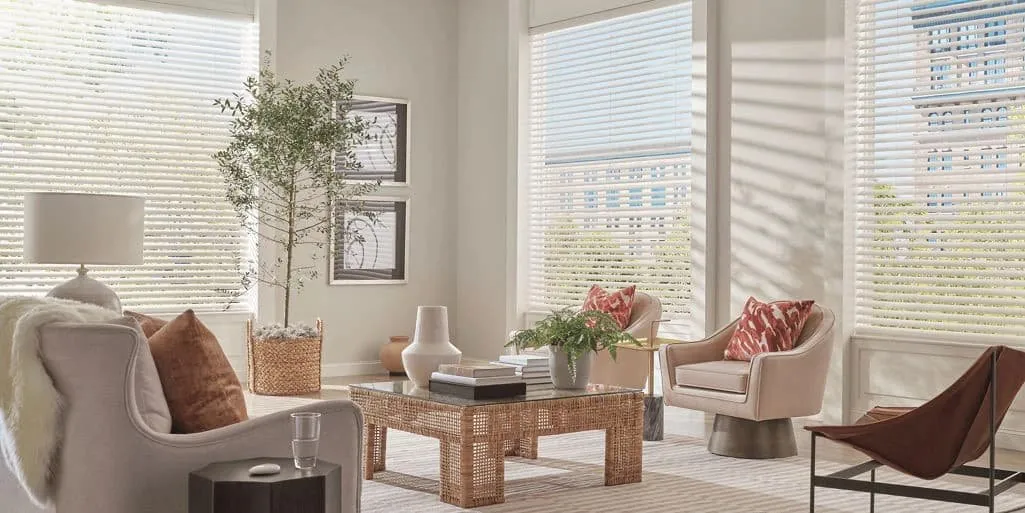
Low sills
Blinds that stop neatly at a sill near the floor, with controls that keep cords away from small hands and paws.
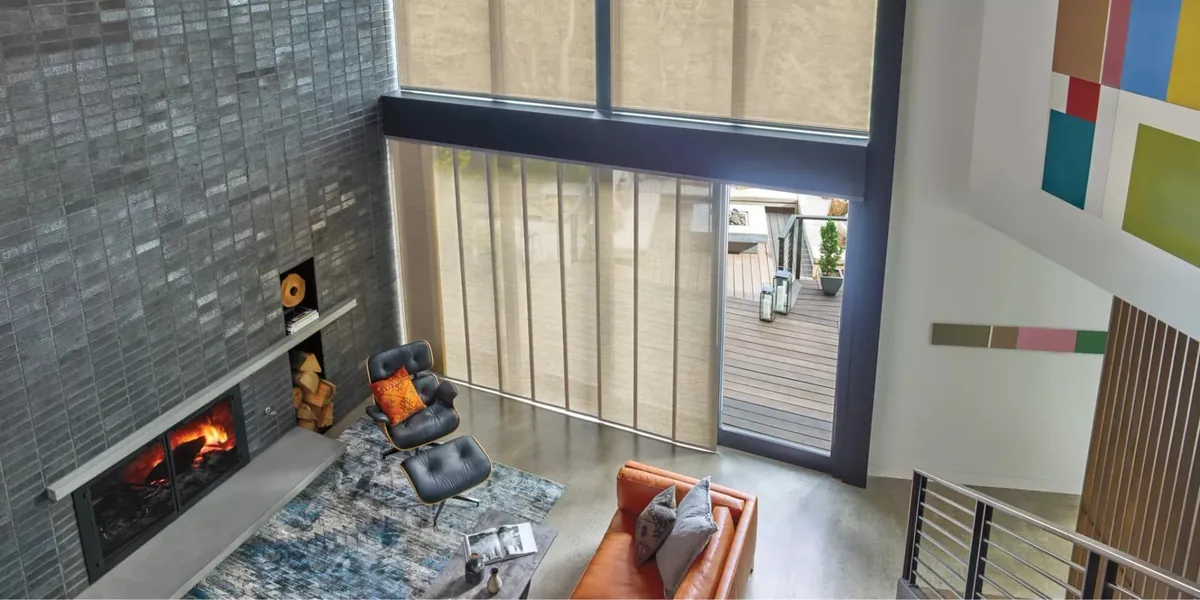
Sliders to the yard
Vertical blinds that draw aside, so a door onto the deck or terrace opens freely.
Rooms that want darkness
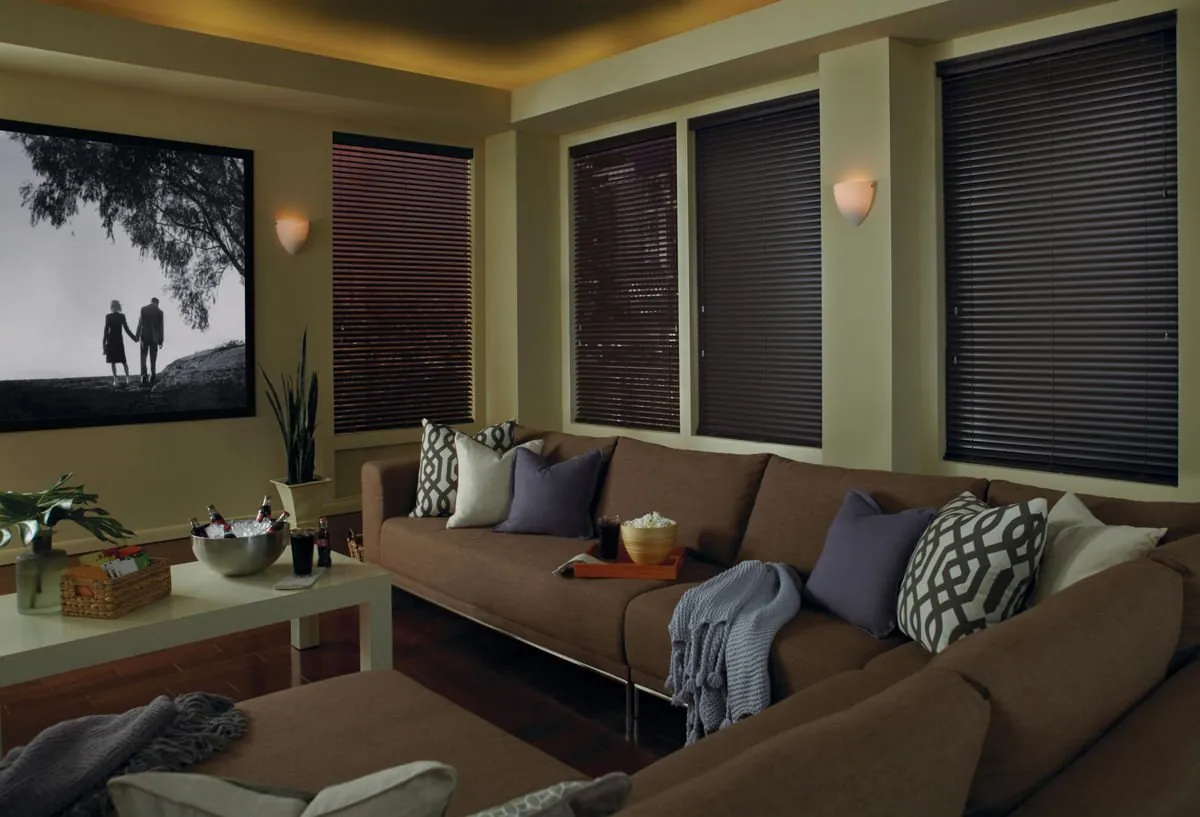
For a bedroom or den, a darker slat that closes firmly, even in a house where most rooms need all the light they can get.
Making the most of shaded light
On a lot where tall trees stand close to the house, the light reaching the windows has already been filtered through leaves. In summer, a north or east-facing room under the canopy can feel dim at midday. Every choice about the blind either adds to that or helps against it.
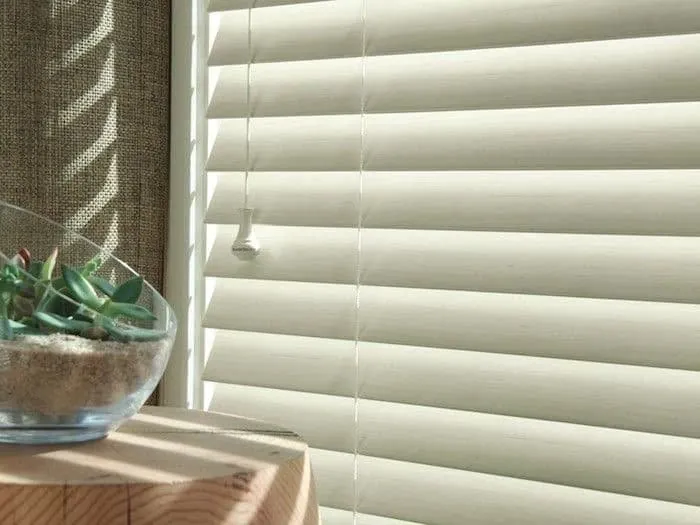
Color. Light slats reflect daylight back into the room when open and tilted, while dark slats absorb it. In a shaded Sharon room, white, cream or a pale wood tone is usually the better choice, keeping the room brighter with the blinds in use.
Slat width. Wider slats mean fewer slats in each blind, so when they are open there is more clear glass and less blind between you and the trees. On a long run of windows facing the woods, a wider slat often helps the room feel more open.
Stack. When you raise a blind fully, the slats gather at the top. A blind mounted inside the frame stacks within the window; one mounted above the frame can be set high enough that the stack sits mostly above the glass, leaving the whole window clear. In a dark room, that extra strip of daylight counts.
Tilt. Angled upward, open slats throw light onto the ceiling, which spreads it through the room far better than light landing on the floor near the window.
We hold samples up at your windows during the visit so you can compare how each color and width affects the light in your own rooms.
Mid-century contemporaries and their glass
The mid-century contemporaries around Lake Massapoag are some of the most distinctive houses in the area. Their long, low lines often come with walls of glass: a row of tall windows across the living room, panes running close to the floor, sometimes high windows tucked under a sloping roof. They were designed to bring the woods inside.
Blinds on a house like this have to respect the design. Slim metal blinds suit the clean lines and almost vanish when raised. Wood blinds in a pale, natural tone can echo the timber that many of these houses use inside. Whatever the material, the blinds along a run of glass need to line up exactly, with headrails at one height and bottom rails stopping at one line, because on a wall of windows any variation is obvious.
For very wide openings, we usually make one blind per window, each sized separately but set to match its neighbors. That keeps each blind light enough to lift and lets you open some windows while closing others. Where glass runs right down to a low sill, we check what sits in front of it, because a blind dropping into a sofa back or a radiator cover will not close properly.
High windows under a sloping ceiling need a different approach, which we cover further down.
Colonials on wooded lots
The colonials around the lake and on the wooded streets have more conventional windows, evenly spaced across two floors, but they share the setting: deep setbacks and tall trees. Their rooms can be just as shaded as the contemporaries’, especially on the side facing the woods.
On a colonial, the street-facing windows read as a set from the drive, even with a deep setback, so we keep those blinds to one color and slat size. Inside, each room gets what it needs. A living room facing the trees might have wide, light slats; a dining room with stained trim might take wood blinds in a matching stain; a kitchen and bathrooms take faux wood. When we plan custom blinds in Sharon for a colonial, we list every window and note which side of the house it faces, because on a heavily treed lot that tells you more about the light than the window size does.
Low sills and the people around them
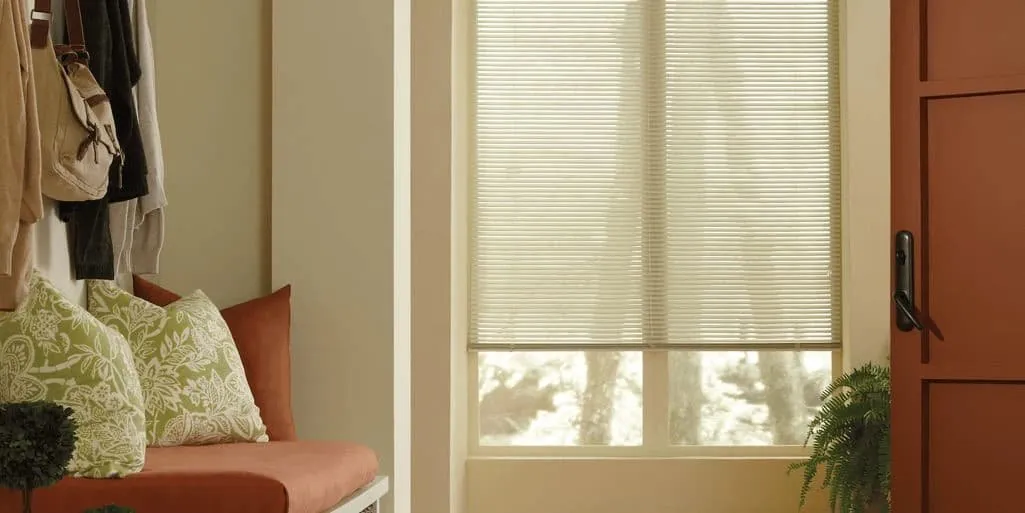
A window that starts low on the wall is lovely to sit beside, and children and pets love it too. That makes the controls on a low-sill blind more important than on one set at a normal height.
A loose lift cord hanging to the floor beside a low window is exactly what most people want to avoid. A lift with no cord at all, where you raise and lower the blind by pushing or pulling the bottom rail, removes it entirely. A wand handles tilting. For a long run of low windows, motorization removes the controls from the window altogether and lets you move a whole wall of blinds at once.
Low sills also mean the bottom rail is at eye level for anyone sitting on the floor or on a low sofa. A neat finish matters there, so we make sure each blind drops exactly to its sill and stops level with its neighbors.
Closing a wall of glass at night
During the day, the trees give Sharon houses a lot of privacy. After dark, it is a different story. With lamps on inside and dark woods outside, a long run of windows turns into a lit picture visible from the yard, the drive and the lake side.
Horizontal blinds close that off without heavy curtains. With the slats shut, the wall of glass becomes a quiet, even surface. In the morning, tilting them open brings the trees back in. On a long run, doing that by hand at a dozen windows twice a day becomes a chore, which is where PowerView earns its place: one tap on a phone or a remote, or a schedule tied to the time of sunset, moves them all.
Windows under a sloping roof
Many of the contemporaries have high windows under a raked ceiling, sometimes angled to follow the roofline. These bring precious light into a shaded house, and most people leave them uncovered for that reason.
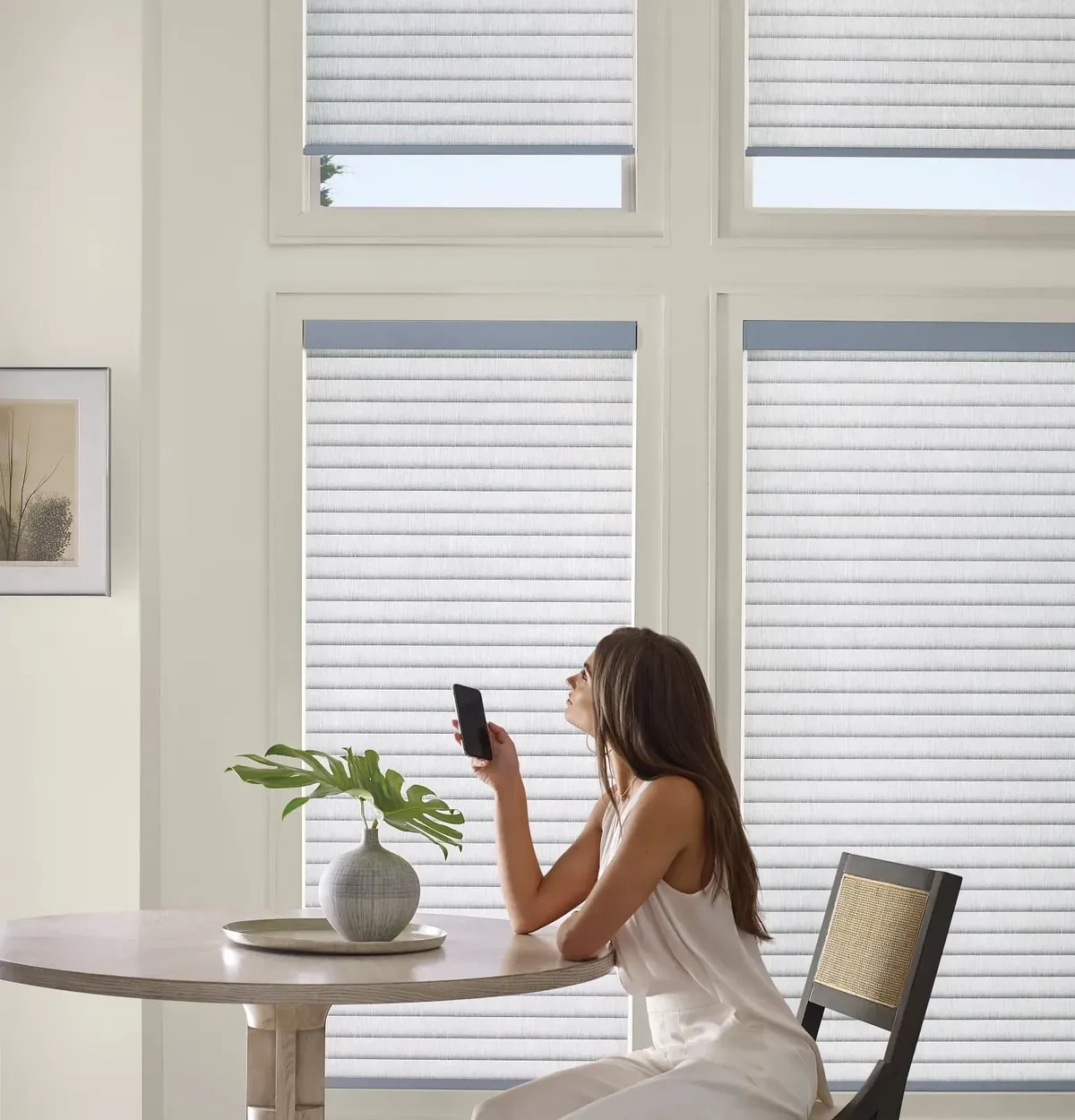
Where they do need a blind, perhaps over a bedroom or a room with a screen, reach is the issue. A high rectangular window can take a blind with PowerView control, worked from a phone, a remote or a schedule. Angled windows that follow the roof are a specialist shape, and we will look at them carefully during the visit before saying what will suit. Often the best answer is to leave the angled glass open and cover only the rectangles below.
How each motor gets its power is something we work out with you at the visit. More on motorized options is on our motorized blinds in Sharon page.
Kitchens and bathrooms under the trees
The rooms with water need their own material, and in a shaded house they need light too. A kitchen at the back of a colonial, facing the woods, may be one of the dimmer rooms in the house, and a bathroom window is often small to begin with.
Faux wood is the material we suggest for both. It reads as painted wood, stands up to steam and splashes, and comes in the same light colors that help a shaded room. Where a kitchen window sits over the sink, we make sure the lift is one you can reach comfortably across the counter. In a bathroom, slats tilted upward give privacy while still letting daylight in from above. Matched in color to the blinds in the rest of the house, the faux wood rooms look no different from outside. These are small windows, but with custom blinds in Sharon chosen for the whole house at once, they come in the same order as everything else and go up in the same installation visit.
One order for a long run
On a contemporary with a wall of glass, it is tempting to do the big room first and the rest later. The catch is that a long run of windows sets the standard for every other blind in the house. If the living room has a particular color and slat width, the bedrooms and kitchen will suit the same choices, and ordering them separately months apart risks a slightly different match.
Ordering custom blinds in Sharon for the whole house together avoids that. We measure every window in one visit, settle the color and slat width for the main run, carry those choices into the other rooms where they suit, and vary the material only where the room calls for it. The installers then fit the lot in one go, lining up the long run with the same care as the smallest bathroom window.
Wood, faux wood, metal or vertical
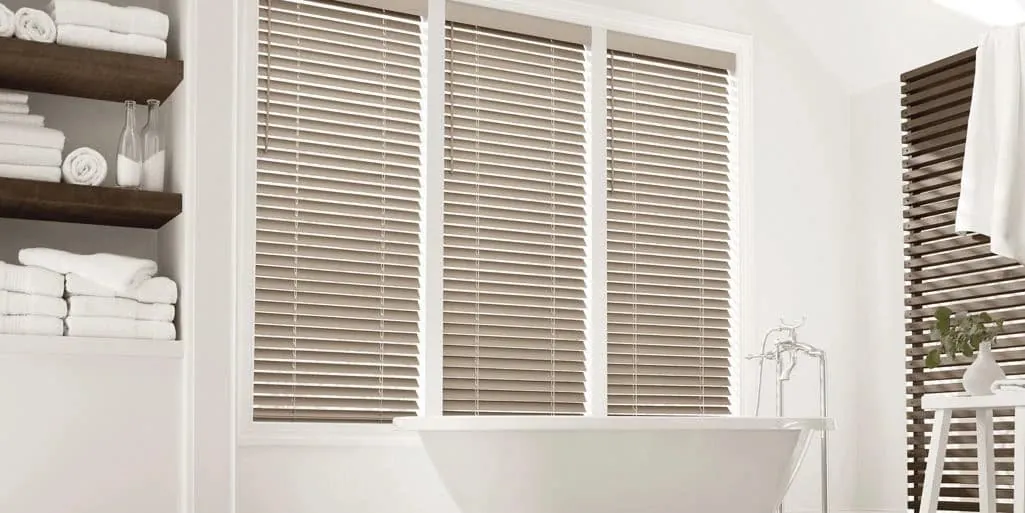
Every blind comes from the Hunter Douglas range, and most Sharon houses use two or three of the four.
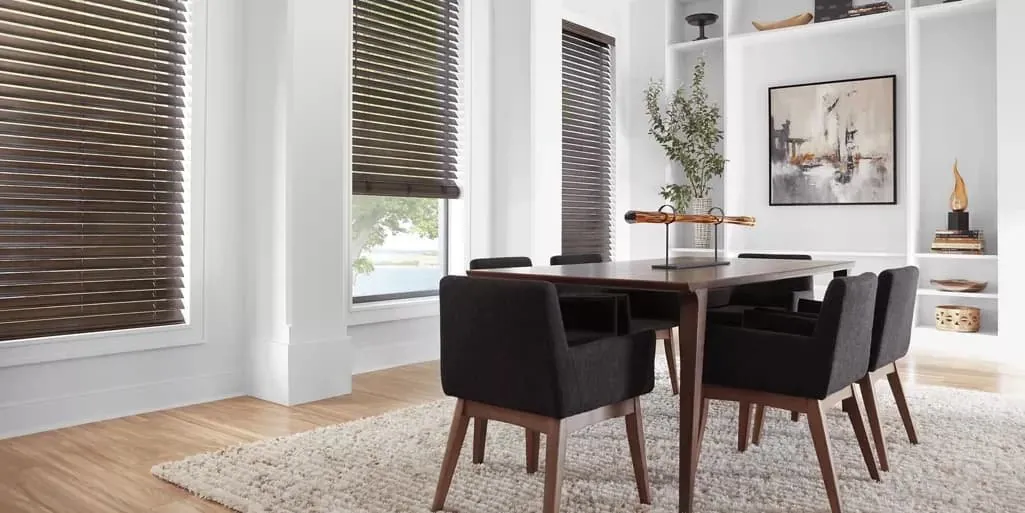
- Wood brings natural grain and warmth, and a pale wood tone suits the timber interiors of many mid-century houses. It also suits a colonial’s front rooms in a stain or paint.
- Faux wood looks like painted wood and is the material we suggest for kitchens and bathrooms.
- Metal has the slimmest slats and headrail, and its crisp lines suit a contemporary house.
- Vertical blinds draw sideways, for sliders and very wide glass you want to open across rather than up.
You can read about each on our wood blinds, metal blinds and vertical blinds pages, or browse the whole custom blinds range.
We bring the samples to Sharon
Sharon sits in the shop-at-home territory we run from Canton, so for most Sharon houses the natural place to start is at home. There is no Canton storefront to visit; instead, the van comes to you with the Hunter Douglas samples. Our Canton shop-at-home page explains how that works.
Choosing at home suits a shaded house especially well, because the light under the trees is impossible to judge anywhere else. A visit runs like this.
- Ask for a time with Request a Consultation, or reach us through the call button.
- The van arrives with wood, faux wood, metal and vertical samples and the different controls.
- We start in the darkest room, usually the one facing the trees, and talk about how bright you want it.
- You hold colors and slat widths up at your own glass and watch how each changes the light.
- Along a long run of windows, we look at how the blinds will line up and how they will be worked.
- We measure each opening, check sill heights and anything sitting below the glass, and write a free estimate.
- When the order is ready, our certified Hunter Douglas installers fit every blind and show you the controls.
To read more, see what happens at an in-home consultation.
If you would like to see a showroom
Some people like to call in at a showroom as well as having the van visit. The nearest showroom to Sharon is in Franklin, and its address and opening hours are on the Franklin showroom page. Our main showroom is in North Dartmouth, with details on the North Dartmouth showroom page. Either way, the measuring and the free estimate happen at your house.
A Gallery dealer working in Sharon houses
Hunter Douglas names dealers who meet its standards Gallery dealers, and Blinds & Designs is one. What that gives a Sharon household is access to the whole blind line, not a pared-down selection, and installers trained and certified by Hunter Douglas to hang it. On a long wall of glass, their care in setting every headrail to one level is what makes the run look right.
Beyond blinds, we offer interior design consultations and repairs to blinds and shades already in your house.
If a room calls for something else, look at cellular shades in Sharon, roller shades in Sharon, roman shades in Sharon or plantation shutters in Sharon. Our Sharon page gathers every service we offer in town, and the Hunter Douglas dealer in Sharon page says more about the Gallery standing.
Questions from Sharon
Our rooms are dark because of the trees. Will blinds make them darker?
Not if they are chosen for it. Light colors and wider slats keep more of the window clear and reflect daylight back in, and a blind mounted above the frame can stack mostly above the glass when raised.
How do you handle a long wall of windows in a contemporary?
With one blind per window, each made to its own size but set to line up with its neighbors, so you can open some and close others. PowerView can move the whole run at once.
Where can I see the blinds before deciding?
At home. Sharon is in our Canton shop-at-home territory, so the van brings the samples to your house. If you would also like to see a showroom, the nearest is in Franklin.
What suits windows with very low sills?
A lift with no cord, worked by the bottom rail, or motorization, so no cords hang near the floor. We also check what sits below each window before measuring.
Is the estimate free?
Yes. We measure at your house and leave you a free estimate.
Start under your own trees
The light under Sharon’s tree cover is particular to each house, which is why the choosing is done at your windows. Use Request a Consultation to arrange a visit, tell us whether the house is a colonial or one of the contemporaries near the lake, and we will bring the van, measure the long runs and the low sills, and leave a free estimate for custom blinds in Sharon, MA. The call button reaches us if you want to talk first.