
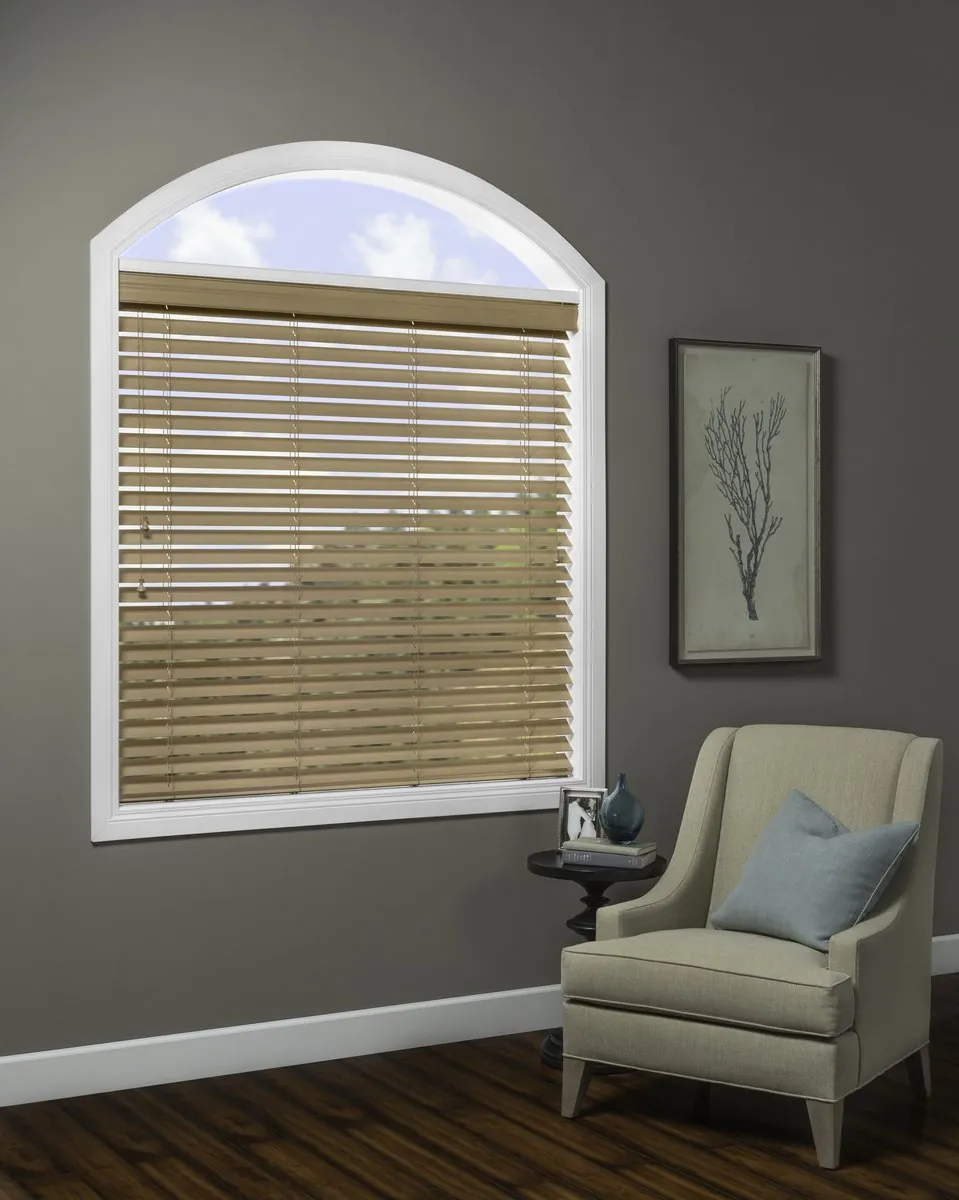
Formal rooms and tall sash
The big houses of Milton were built for formal living. Around Milton Village and on the streets that climb toward the Blue Hills, large colonials and Victorians have front parlors, dining rooms and libraries with tall sash windows, high ceilings and wide openings that were planned for full-length curtains. Many rooms have double-width windows, two sash side by side under one head casing, and the scale of everything is generous.
That scale is what makes custom blinds in Milton, MA, worth getting right. A blind in a room like this is a large object. It has to suit the proportions of the window, sit well with the trim and the furniture, and work smoothly on a long drop. A stock blind sized to the nearest standard width rarely does any of that in a house of this kind.
Down in the lower village the houses are later and simpler, post-war homes with regular openings and smaller rooms. Their blinds are about everyday comfort and a tidy, matched look. We plan both kinds of house in the same way: at your windows, with the Hunter Douglas samples in hand.
Custom blinds in Milton, MA, by material
Each blind is made to the measurements we take at your house. The four Hunter Douglas families below cover nearly every window in a Milton home, old or new.
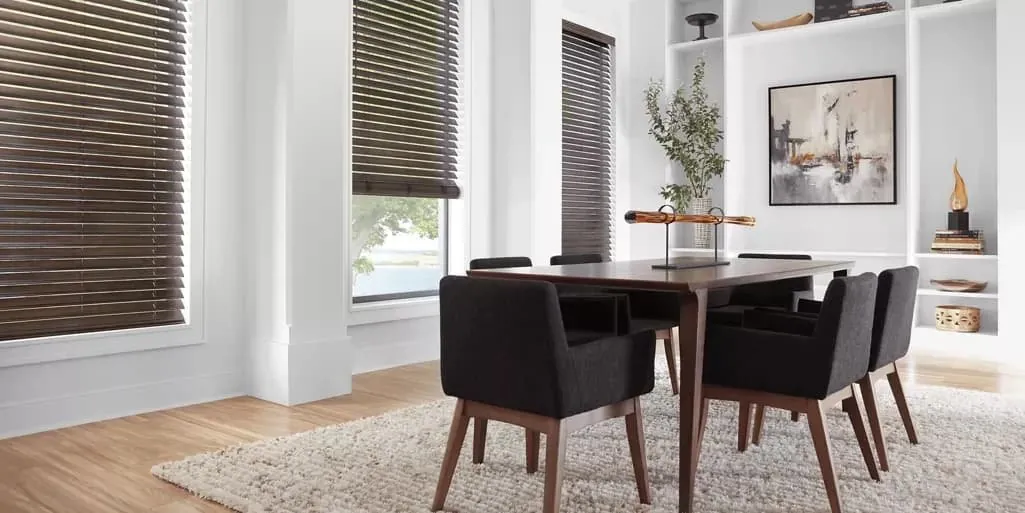
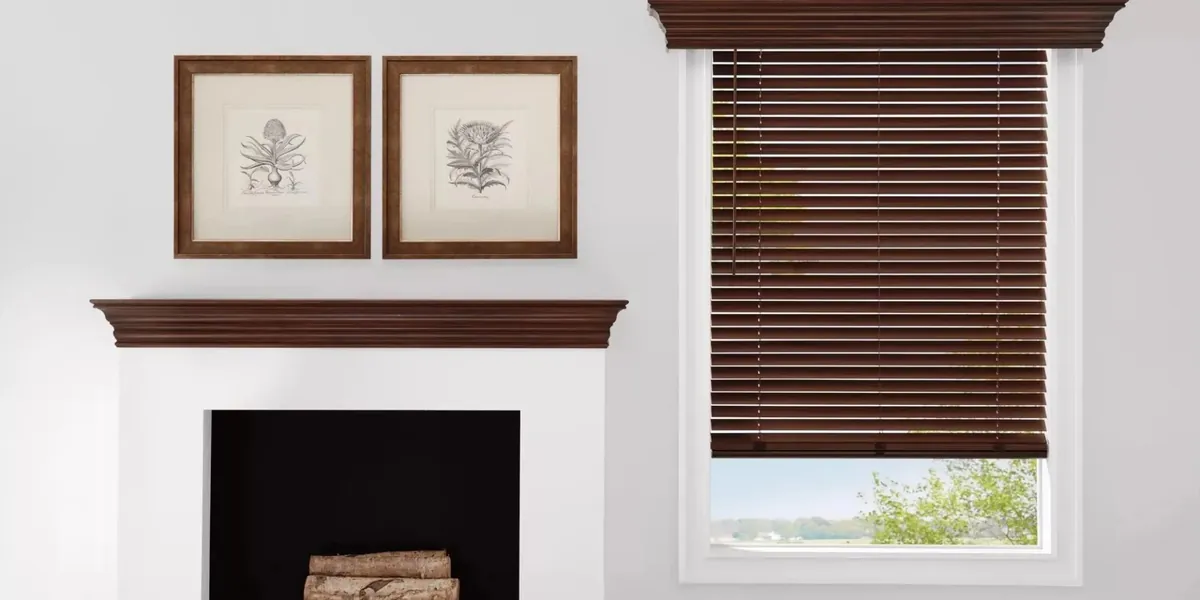
Parkland Wood Blinds
Real wood slats in stains and paints, at home in a paneled library or a dining room with wood floors and a long table.
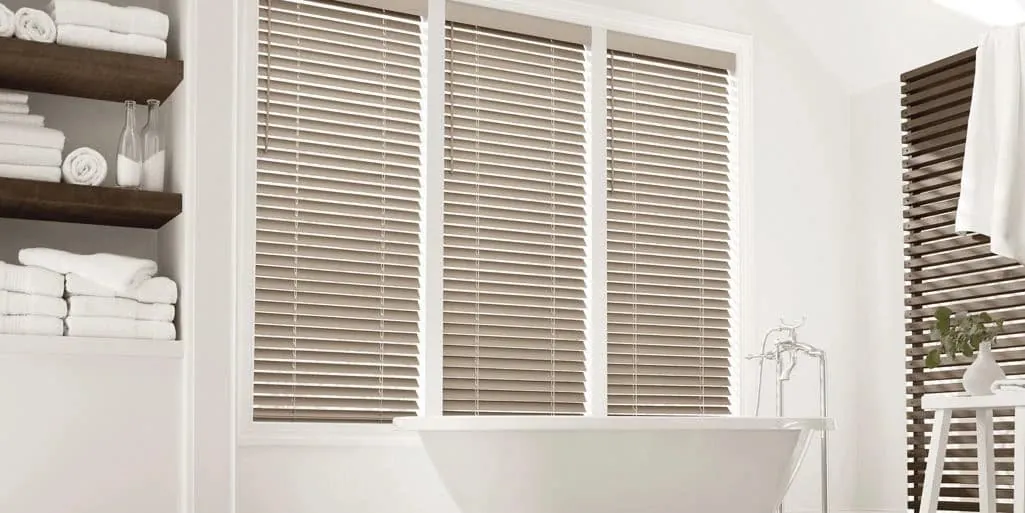
EverWood Faux Wood Blinds
A faux wood slat that matches the look of wood, chosen by many owners for kitchens, baths and back halls.
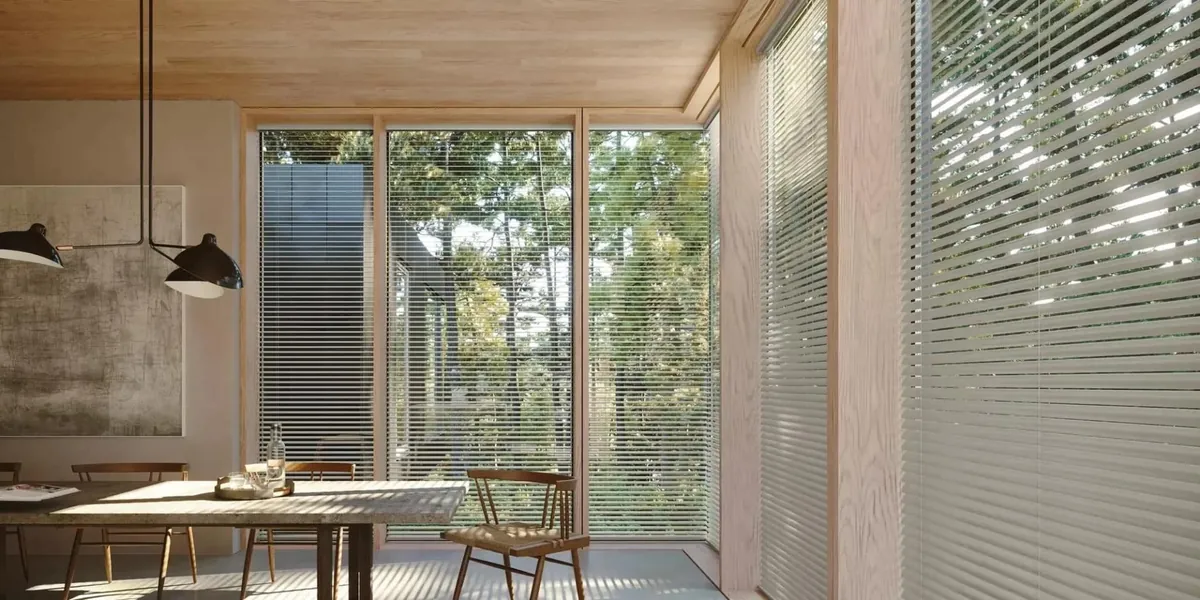
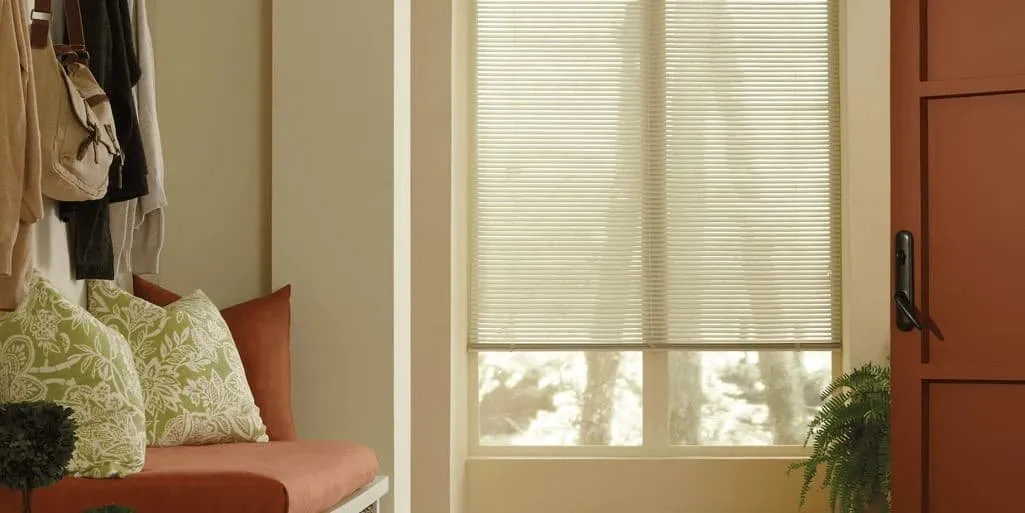
Metal Blinds
Fine aluminum slats and a slim headrail, for shallow frames, door glass and the narrow lights beside an entry.
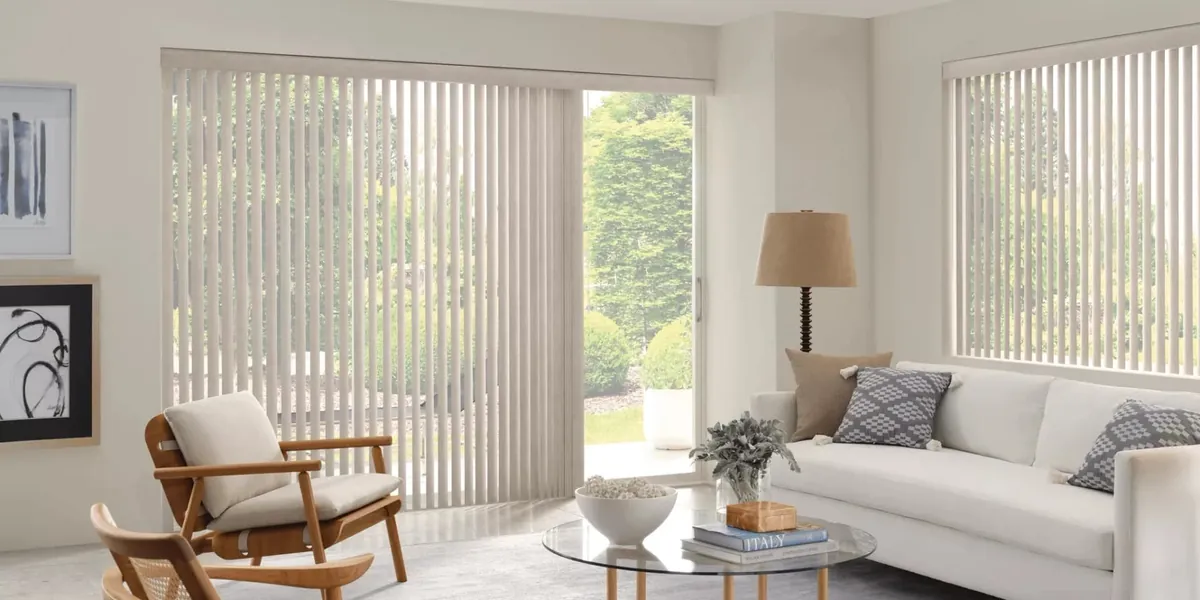
Custom Vertical Blinds
Vanes that hang from the head and draw aside, for a slider to a terrace or a wide wall of glass in a later addition.
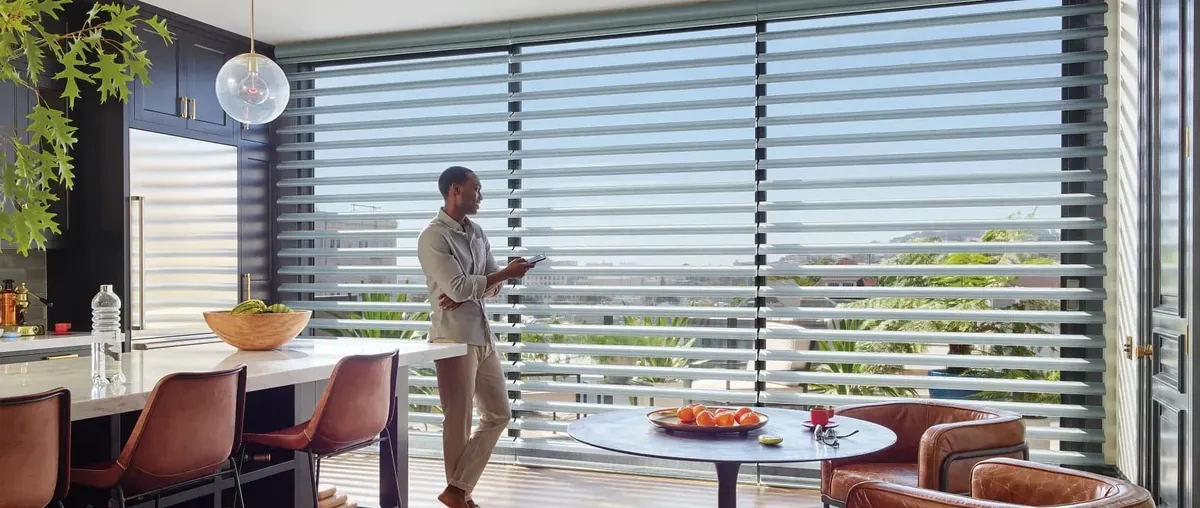
Double-width openings: one blind or two
A double-width window is one of the signatures of an older Milton house. Two tall sash stand side by side, separated by a narrow wood mullion, under a single wide head. From outside they read as one large window. Inside they light a room generously.
There are two ways to dress an opening like that with blinds. The first is a single wide blind across both sash. It gives an unbroken line of slats, which suits a formal room, but a very wide blind is heavier to raise and lifts as one piece. The second is a pair of blinds, one per sash, meeting at the mullion. A pair lets you raise one side and leave the other lowered, and each blind is lighter to operate.
In most Milton parlors we suggest the pair, with headrails aligned at exactly the same height and slats set to tilt together, so that from across the room the pair still looks like one. Where the mullion is very slim or you want the cleanest possible line, a single blind with PowerView motorization takes the effort out of the weight. We show you both at the window before you choose.
Drapery-scale rooms and where a blind fits
Many rooms in the large houses were designed around full-length curtains, with wide walls on either side of the windows and high ceilings above. Some owners still dress them that way. Others prefer a cleaner look, with blinds alone doing the work.
If you plan both, the blind does the daily job of light and privacy, mounted inside the window frame, while the curtains hang outside the frame and frame the window. An inside mount matters here, because it keeps the blind out of the way of anything that hangs in front of it. We check the depth of each frame at the visit to make sure that is possible.
If blinds are to stand alone in a big room, scale matters more. A wider slat, a wood with real presence, or a matching cornice across the top can give a blind enough weight to hold its own against a high ceiling and a large window wall. A thin slat in a room of that size can look slight. This is one of the things that is easier to judge with the sample in the room than from a photo.
Tall sash near the Blue Hills
The houses up against the Blue Hills often sit higher than the road, with trees around them and long views from the upper windows. Their sash are tall, and on the upper floors the light can be strong, coming in over the treetops rather than filtered by the house next door.
A tall blind on a tall window has a practical challenge: the stack. When a horizontal blind is fully raised, its slats gather at the head of the window, and on a long drop that bundle can hide a noticeable strip of the upper glass. A narrower slat makes a shorter stack. An outside mount above the window can lift the stack clear of the glass altogether, although it covers more of the trim.
Reaching the top of a very tall blind is the other consideration. On the second floor of a house like this, PowerView motorization lets you raise, lower and tilt from a remote or a phone, and set a schedule that closes the slats on the west-facing rooms as the sun drops. We plan how each motor is powered at the visit.
Libraries, dining rooms and paneled walls
Formal rooms in older Milton houses often have rich woodwork: paneling, built-in bookcases, a carved mantel, deep window casings. Here real wood blinds are the natural partner. A Parkland blind stained to sit beside the woodwork looks as though it belongs to the room, and the slats can be tilted to throw soft light across the shelves without striking the spines of the books directly.
In a painted room the same house might take a white or cream wood blind, matched to the trim, so the window architecture stays the feature. Owners often like a single color on every window that faces the street and a stained finish only where a room’s paneling calls for it. That keeps the front of the house consistent while the rooms behind keep their character.
Dining rooms bring their own question: light at the table. A dining room used mostly in the evening may want slats that close completely; one used for long lunches may want slats that tilt to cut glare off the table while keeping the view of the garden.
Entry halls and stair landings
The front hall of a large Milton colonial is often a room in its own right, with a wide staircase, a landing window halfway up and narrow side lights flanking the front door. Each of those openings asks for something slightly different.
The side lights are tall and very slim, and they sit right beside the door, so a blind there must be shallow enough not to catch on the door frame or the hardware. A metal blind with its slim headrail is often the neatest answer, mounted inside the narrow frame and matched in color to the blinds in the rooms beyond.
The landing window is usually tall, sometimes with an arched or decorative upper sash, and it is awkward to reach across the stairs. A blind on the lower sash only leaves the upper glass on show, and motorized control means nobody has to lean over the banister to lower it. Because the landing window is seen from the front hall and from the street, its blind should match the front rooms in color, even if its control is different.
Upstairs bedrooms in the big houses
The bedrooms on the upper floors of the large houses tend to be spacious, with two or three tall windows each and, in the houses near the Blue Hills, views over the trees. Ordering custom blinds in Milton, MA, for these rooms is mostly a question of darkness and of matching the windows to each other.
A darker slat color makes a closed blind feel dimmer, and an outside mount that overlaps the frame a little reduces the bright line around the edges. Where a bedroom has windows on two walls, one slat width and one headrail height across all of them keeps the room calm. Guest rooms on the third floor of a Victorian, under the roof, often have small windows in the gables, and each one gets a blind made for its own opening, so nothing hangs too short or too narrow.
The post-war houses of the lower village
Below the village, the houses change. Post-war homes on smaller lots have regular openings, lower ceilings and simpler trim. These are easier windows to fit, and a whole-house order usually comes together quickly because the sizes repeat from room to room.
For custom blinds in Milton, MA, at this end of town, the decisions are more about daily use. Kitchens and bathrooms often take EverWood faux wood. Bedrooms take a darker slat for sleep. A living room that faces the street takes a pale color that suits the house from outside. If there is a slider to the back yard, a vertical blind is the usual answer, drawing aside so the door opens freely.
Because these houses sit closer together than the big houses up the hill, side windows often face a neighbor. A blind tilted with its slats angled up keeps the room private while sending daylight toward the ceiling, which helps a smaller room feel brighter.
Wood and faux wood in one large house
A large colonial can have well over a dozen windows, across formal rooms, a kitchen wing, bathrooms, bedrooms and a back hall. Most of those houses end up with both wood and faux wood, and that is a good thing.
Real wood goes where its warmth and grain matter: the parlor, the dining room, the library, the main bedroom. EverWood goes where many owners prefer a material that is not real wood, such as the kitchen, the baths and a mudroom. The two come in matching colors, so from outside the house reads as one set, and inside you only notice the difference if you go looking for it.
Metal blinds and vertical blinds fill in around them. A side light by the front door, a door to the terrace with glass in it, a shallow window in a later addition: metal. A slider in a family room added at the back: vertical.
Choosing colors for a formal facade
From the street, a large Milton house shows a lot of windows. When every blind on the front matches, the facade looks composed. When they do not, the windows draw the eye for the wrong reason.
White and cream are the most common choice for the street side of a colonial or Victorian, because they disappear against painted trim. A warmer wood tone can work on the front of a house with darker trim or natural shingles. Inside, owners feel freer: deep stains in a library, a soft gray in a modern kitchen, a crisp white in a sunroom.
A good rule is to settle the street-facing color first and let each room choose after that. If you are choosing other window coverings at the same time, our pages on cellular shades in Milton, roman shades in Milton and plantation shutters in Milton may help, and the full list is on our Milton page.
How a Milton consultation runs
In Milton we lead with the in-home consultation. A sample means far more held against a tall sash in a high-ceilinged room than it does on a counter, so the visit happens at your house.
- Book through Request a Consultation, or use the call button to talk first.
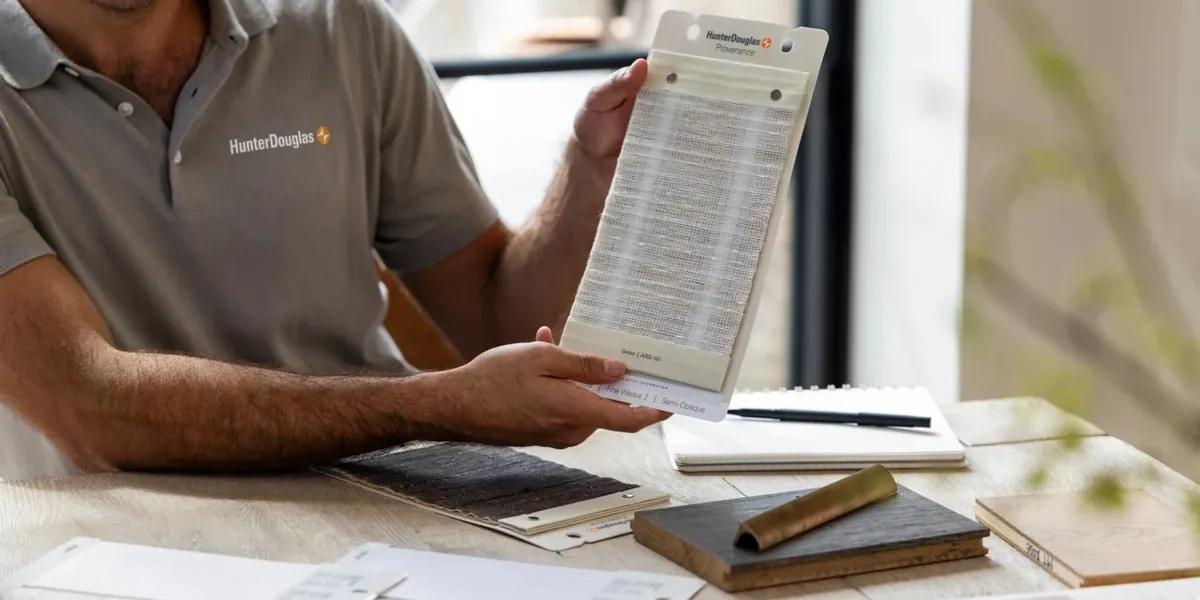
- We arrive with a van of Hunter Douglas samples, from wood and faux wood to metal and vertical.
- We start in the rooms that matter most to you, often the formal rooms at the front.
- At each window you compare slat widths, colors and finishes against your own trim and light.
- We talk through pairs or single blinds on double-width openings, mounts and controls.
- Each window is measured, and you receive a free estimate to consider at your own pace.
Interior design consultations are also available if you would like advice on the room as a whole. Read about what happens at an in-home consultation.
A media room or a study that needs darkness
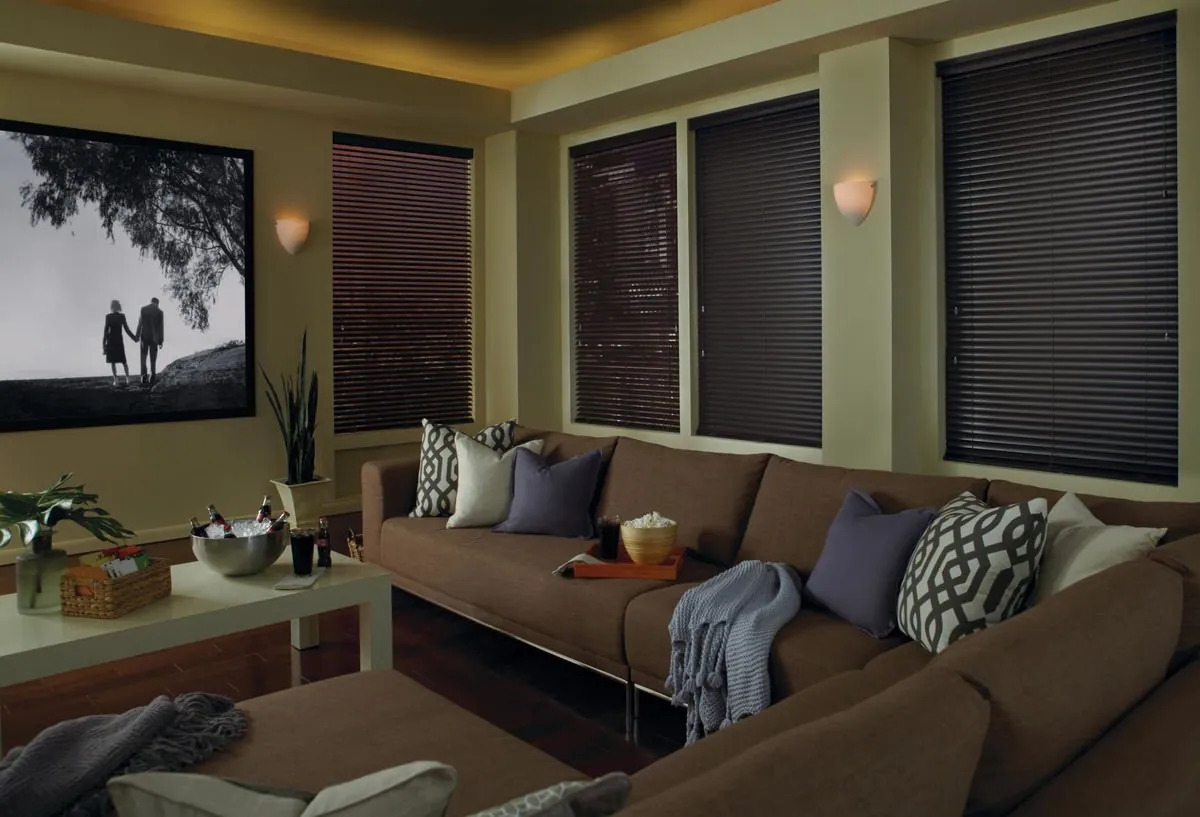
Large houses often have a room set aside for watching films, or a study where a screen is in use for much of the day. Glare on a screen is the problem in both. A blind with darker slats, closed, takes the brightness out of the room, and partly tilted it cuts the glare while leaving some light for reading.
In a room like this, PowerView pays its way. A single scene on the app can close every blind in the room at once, and open them again afterward. For a study used in the morning, a schedule can tilt the slats against the low east sun at the time you sit down. These choices are part of the conversation at the visit, so the right control goes on the right window. In a house with many rooms, we can group the blinds by room on the app, so the dining room, the study and the bedrooms each respond to their own setting.
Visiting a showroom, or staying home
Milton is served through our shop-at-home service from Canton, so the first step is almost always a visit to your house with the samples. If you would also like to see Hunter Douglas products in person, our nearest showroom is in Franklin.
Blinds & Designs is a Hunter Douglas Gallery dealer, and our installers are certified by Hunter Douglas. Every blind on this page is available through us, with PowerView motorization. Estimates are free, and we repair blinds and shades you already own. The whole range is on our custom blinds page.
Questions from Milton
Should a double-width window take one blind or two?
Usually two, one per sash, with matching headrails and slats so they read as one. A pair lets you raise one side alone. A single wide blind works too, and PowerView can take the effort out of lifting it.
Can blinds work alongside full-length curtains?
Yes. The blind mounts inside the frame and handles light and privacy, and the curtains hang outside it. We check the frame depth at the visit.
My sash are very tall. Will the raised blind block the top of the window?
A raised horizontal blind gathers at the head. A narrower slat makes a shorter stack, and an outside mount above the window can lift it clear of the glass.
Do wood and faux wood look different from the street?
Not noticeably. They come in matching colors, so a house can use wood in the formal rooms and faux wood elsewhere and still look like one set.
Do you charge for the estimate?
No. The estimate is free once we have measured.
Start with your windows
Whether it is a double-width window in a Village parlor or a row of regular openings in the lower village, the decision gets easier the moment the samples are at the glass. Request a consultation and we will bring every option for custom blinds in Milton, MA, to your house, measure each opening and leave a free estimate. For a quick question first, use the call button.