
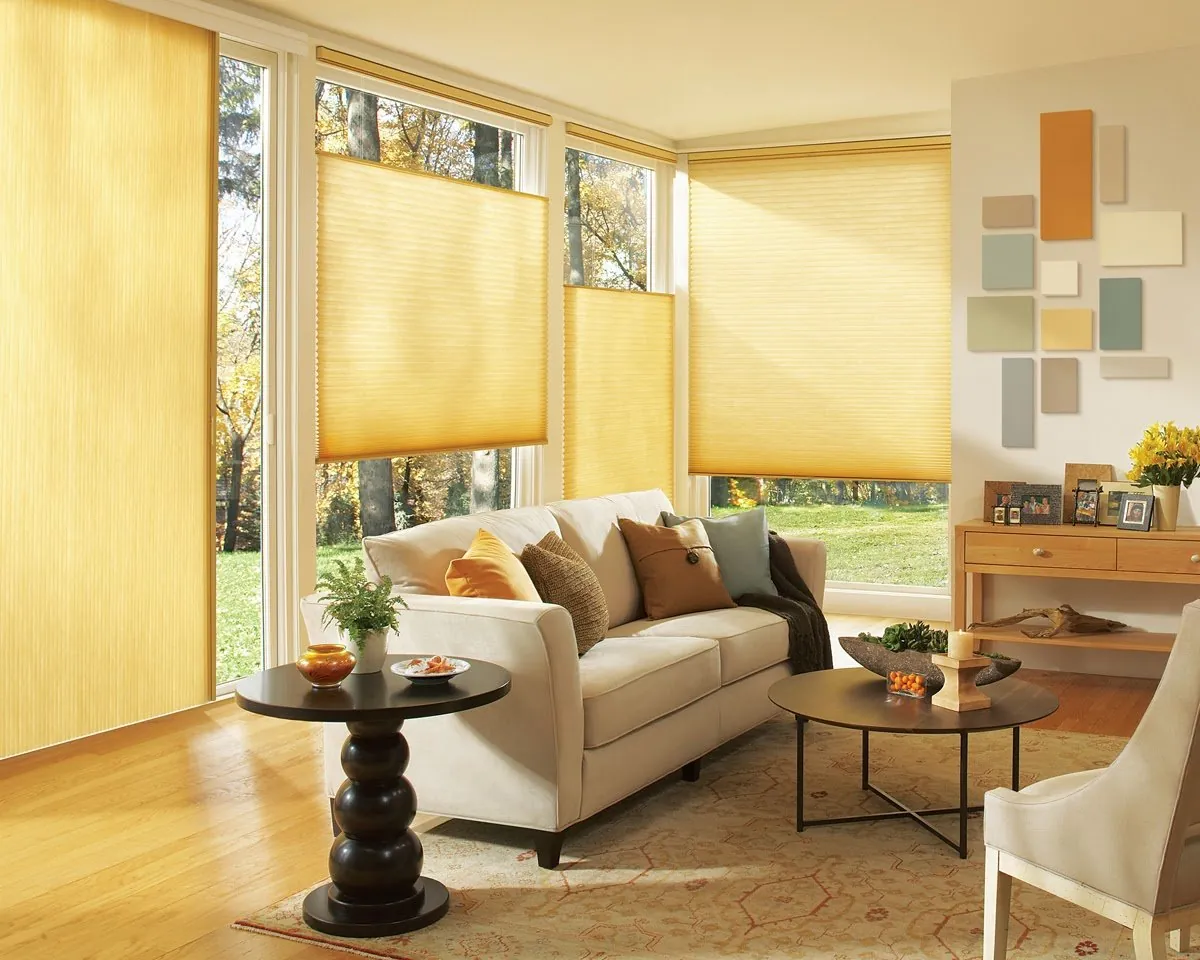
From the Highlands to the square
Braintree Highlands is mostly capes and colonials, and as you head outward the streets turn into newer subdivisions with houses set well back on their lots. Closer to the square the houses are older, with two-families standing nearer together. Almost everywhere the windows are standard modern openings, which makes the town a straightforward place to plan honeycomb shades. The work is less about solving awkward windows and more about getting comfort, light and a consistent look right across a whole house. That is the brief we bring to every visit for cellular shades in Braintree, MA.
The honeycomb does the comfort part. Inside the fabric is a line of enclosed tubes, and with the shade lowered they hold air that stays put. That buffer slows the winter cold coming off the glass and slows the summer heat coming in, so a living room or bedroom stays nearer to the temperature you set.
With real setbacks between most houses and the street, many Braintree rooms are not closely overlooked. That leaves more freedom to choose fabric for light and color first, and privacy second.
Three honeycomb fabrics for a Braintree house
Rather than a different product in every room, most cellular shades in Braintree, MA, come down to choosing fabrics by how each room is used. These are the three we most often show.
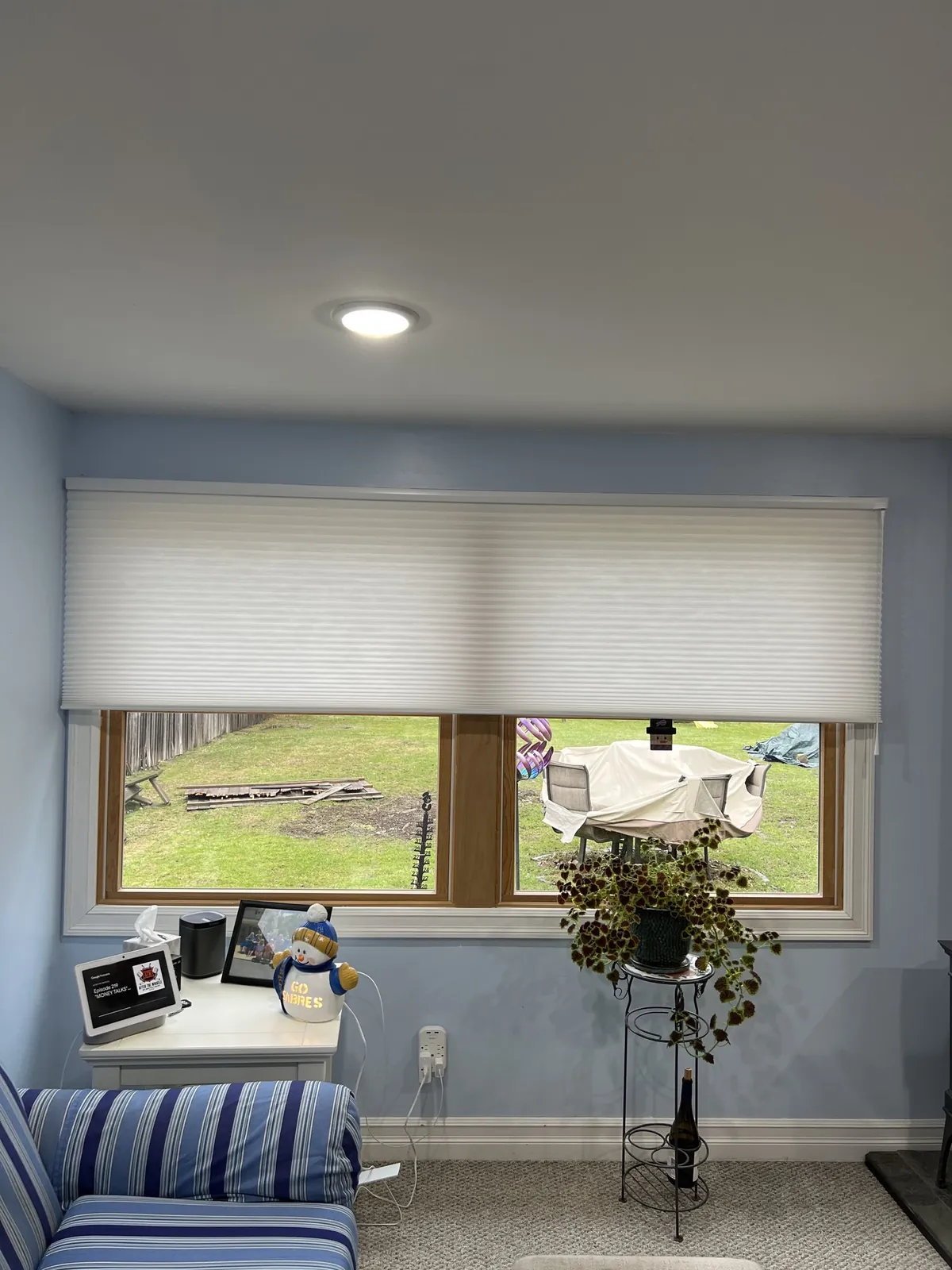
Soft, light-filtering fabric for living spaces
Keeps a living room or family room bright while taking the hard edge off direct sun. With a setback from the street, it is often all the privacy the room needs.
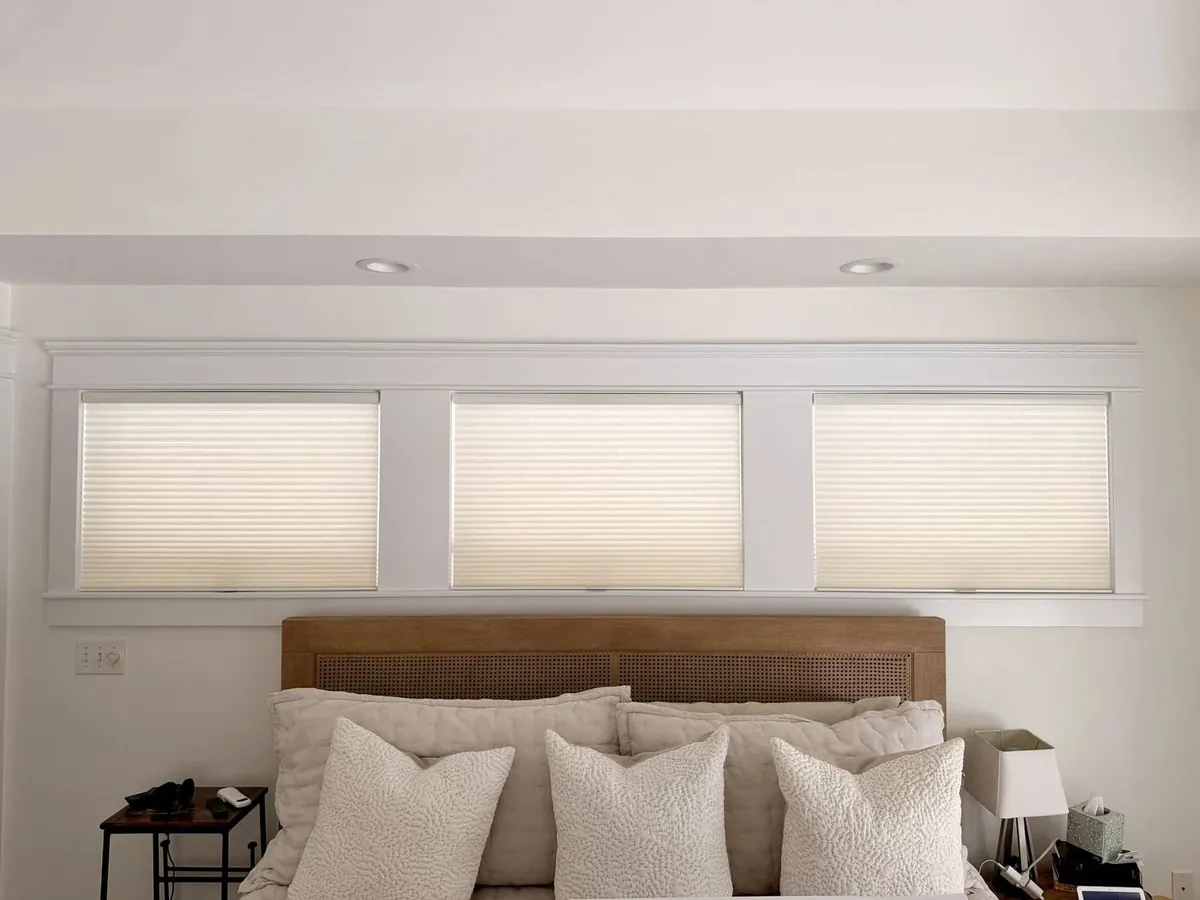
Denser fabric for bedrooms
A heavier fabric for sleeping rooms, so the room stays dim in the early morning and private in the evening.
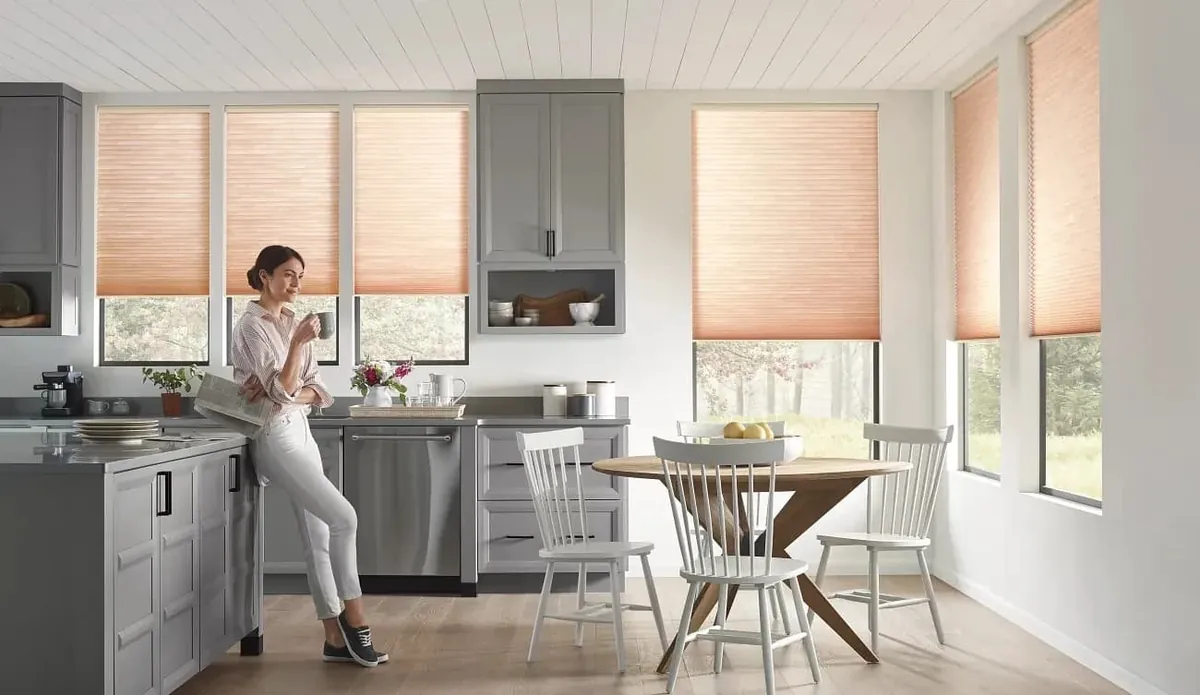
Warm colors for kitchens
A kitchen can carry more color than the rest of the house. A warm tone over the sink and the breakfast table makes the room feel lively on a gray winter morning.
Standard openings, one plan for the whole house
The windows in a Highlands cape or colonial, and in most of the newer subdivisions, come in familiar modern sizes and repeat from room to room. That is a real advantage. A plan for honeycomb shades can be made for the whole house at once, with a fabric for the day rooms, another for the bedrooms and perhaps a third for the kitchen, and every window measured in one visit.
Standard does not mean identical, so every opening is still measured. Modern frames vary in depth, and locks or tilt latches can sit close to the front. With enough depth, the headrail hides within the frame and the casing remains visible. Without it, the headrail is fixed to the casing above, with a little overlap either side, and that overlap blocks the thin line of light that would otherwise show round the edges.
A whole-house plan does not have to be a whole-house order. Many households start with the rooms that feel coldest or brightest and add the rest over time. Because the fabric and measurements are decided up front, every room added later matches the first.
Living rooms with a view of the street
With a real setback between the house and the road, a front living room in Braintree can usually keep its shades raised most of the day without feeling on display. The front window is often the biggest in the house, and it is the one that gives the room its character, so the shade has to look good both up and down.
Raised, a honeycomb shade stacks into a slim band at the top of the window, leaving nearly all the glass clear. Lowered in the evening, it turns the window into a soft, even panel of color and keeps the warmth of the room from draining out through the glass. In a colonial with a pair of front windows, matched shades at one height keep the front of the house neat from the street.
For a wide picture window, we often suggest two or three shades side by side rather than one very wide shade. They line up as one when moved together and can be set at different heights when the sun comes round to one end of the room.
Family rooms and kitchens in the newer subdivisions
The newer houses on the outer streets usually put the kitchen, breakfast area and family room together across the back, with plenty of windows and often a sliding door out to a deck or patio. That open space is the heart of the house and the place where light and comfort matter most.
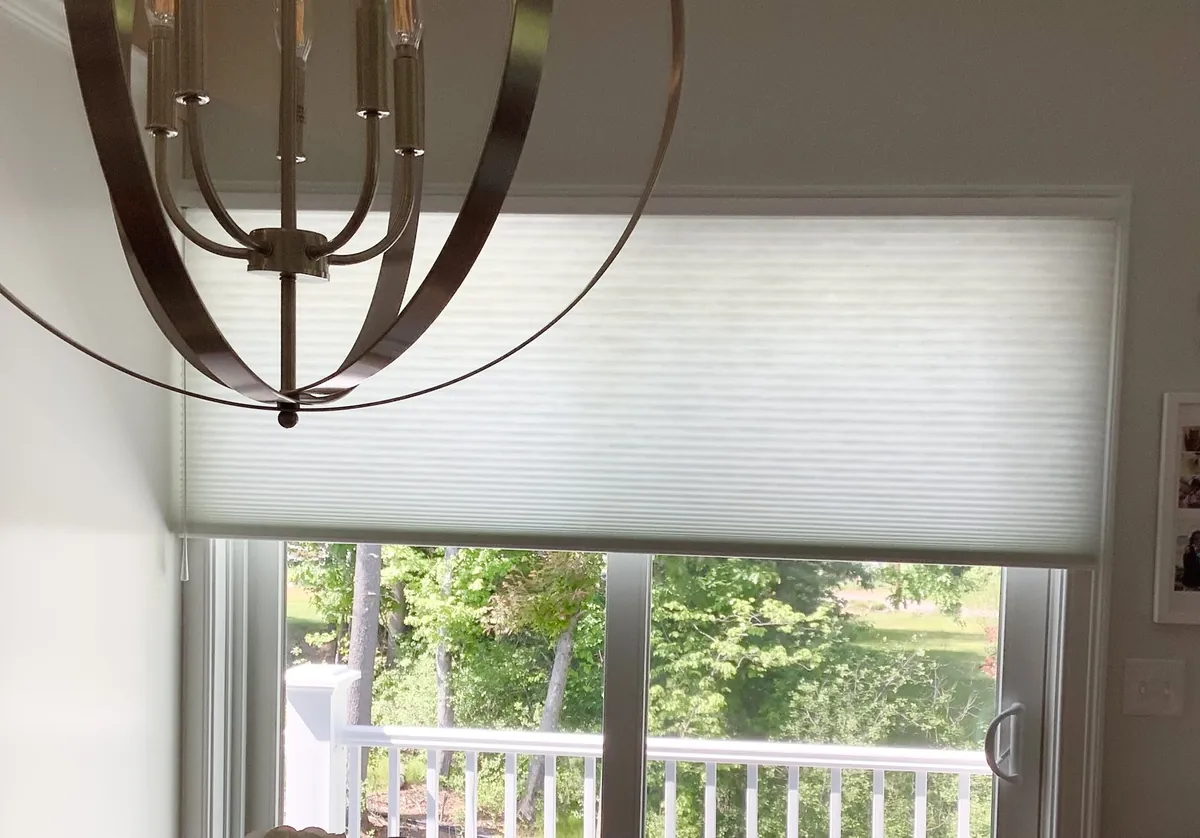
Keeping one fabric across the whole open space makes it feel calm and connected, even when the windows are different sizes. A light-filtering honeycomb works well here: the room stays bright for cooking and homework, and the low afternoon sun that comes across the back yard is softened rather than blocked. For the slider, we plan a honeycomb layout around the traffic through the door and the chairs nearby.
Because these rooms face the back, privacy is rarely the issue. Glare on a television or a laptop often is, and that is easiest to judge at the visit, with the samples in the room at the time of day the sun bothers you.
Bedrooms under the eaves and on the second floor
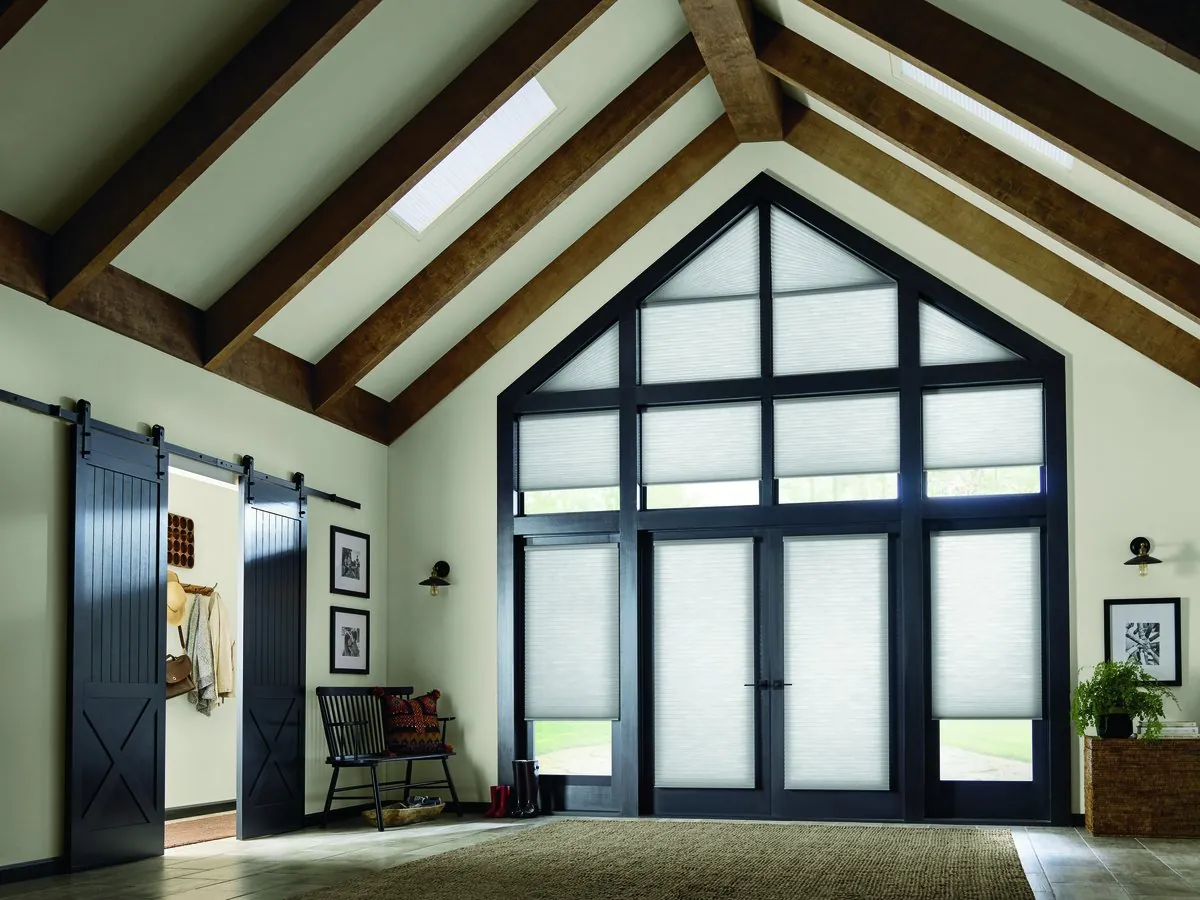
Highlands capes put their bedrooms up under the roof, with dormers and sloping ceilings. Those rooms are the chilliest part of the house in January and the stuffiest in July, and the dormers are right where the temperature changes. A honeycomb shade in a dense fabric is one of the most useful things you can put on a dormer: it keeps the heat in after dark in winter and keeps the low early sun off the pillows in June.
Colonial bedrooms are larger, with windows on more than one wall in the corner rooms. Shades in one fabric on every wall pull the room together, and a heavier weave keeps it private and dim. For children’s rooms, where a dark room at bedtime in summer makes a real difference, the choice of fabric is worth taking time over, and we bring enough samples to compare.
The sunny side and the shaded side
With houses set back on their lots and few close neighbors, many Braintree homes get sun on more than one side, and the difference between the bright rooms and the shaded ones can be striking. A south-facing living room may be flooded with light through the winter afternoons while a north bedroom barely sees the sun at all.
That is a good reason not to choose one fabric for the whole house without looking. On the bright side, a light-filtering honeycomb takes the glare off a television or a dining table and slows the heat on a summer afternoon, while still letting the room enjoy the winter sun when the shade is raised. On the shaded side, a paler fabric keeps a dim room from feeling heavier than it already is. When we plan cellular shades for Braintree houses, we walk round the rooms in order of the sun and hold samples up on both sides, so the choice for each room is made in the light it actually gets. A room that changes through the day, bright in the morning and shaded by evening, gets a fabric that suits both.
Two-families near the square
The houses near the square are older than the Highlands and closer together, and many are two-families. The windows there may be a mix of original openings and replacements, and the side windows of one house can face the next across a short gap.
Here privacy comes back to the top of the list. A translucent fabric screens the gap between houses while the room keeps its daylight, and bedrooms or bathrooms facing next door are better in something heavier. Where the whole building belongs to one household, one color along the front windows keeps the facade orderly, and each flat is free to pick its own fabric. Mention the second unit when booking and both can be measured in the same trip.
Why the cells keep a house comfortable
The name comes from the end view: a line of cells, like a slice through a honeycomb. Over a window, those cells pin the air in place. Air that circulates moves heat around easily, while trapped air does not, so the shade works as a buffer, holding warmth inside through winter and holding back the sun’s heat through summer.
In Braintree houses with standard modern windows, the glass is usually decent already, and the shade adds a second layer of comfort on top. It is most noticeable on the coldest and the hottest days, and in the rooms with the most glass. Anyone curious about the detail can read cellular shades and winter heat.
Shop at home: how the visit works
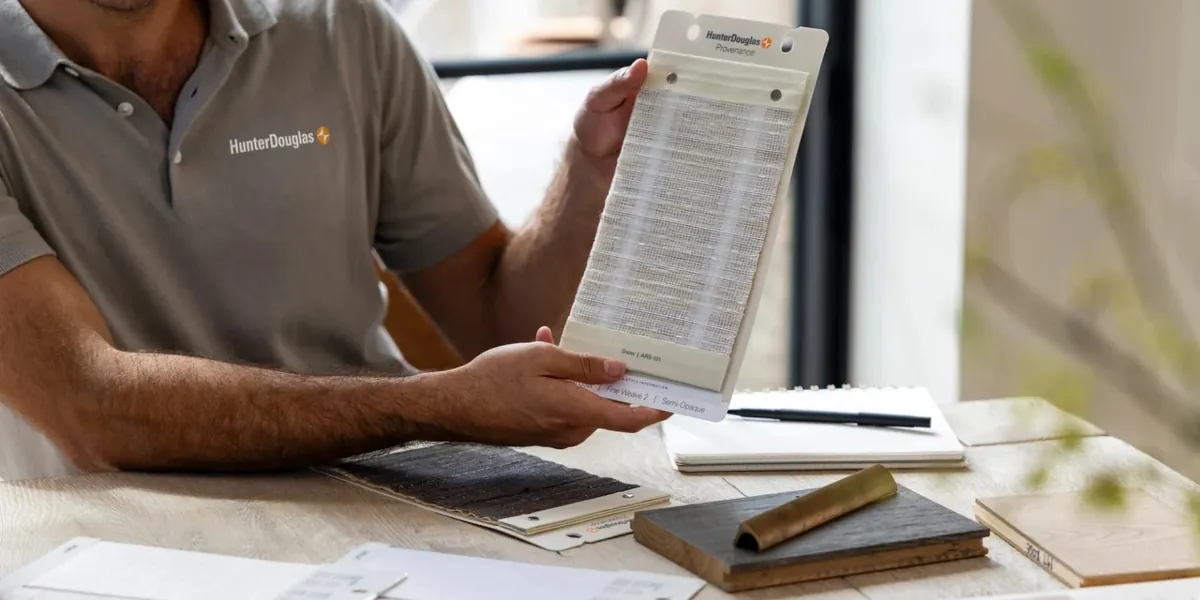
Braintree falls within our Canton shop-at-home service, which means the consultation happens in your house. With samples on board the vans, we can bring the showroom to you, and that matters, because a fabric shifts in color from one room’s light to the next.
- Pick a day and time on the Request a Consultation form, or ring through on the call button.
- A consultant arrives carrying Duette and Applause swatches, both sheer-feeling and heavy weaves, in plenty of colors.
- You choose where to begin, usually the family room, the front room and the bedrooms.
- Swatches are held at each window in that room’s real light, two or three at a time for comparison.
- The consultant measures each window on your list and notes the depth of every frame.
- A free estimate is left with you, and the decision can wait as long as you like.
Help with a whole room, from paint color to the other window treatments, is available through interior design consultations at that same appointment. There is more on the process in what happens at an in-home consultation.

Duette, Applause or both
Hunter Douglas makes two honeycomb lines, and they hold air the same way. Duette is the bigger collection, with the widest choice of fabrics and colors, and it is often chosen for the living room and family room, where the shades are most on show. Applause offers a separate palette that sits comfortably in bedrooms, kitchens and the repeating windows of a cape or colonial.
Mixing the two is common in Braintree houses, with Duette downstairs in the main rooms and Applause elsewhere, and you compare them at your own window first. The Duette and Applause pages describe each line, and our main cellular shades page shows the whole Hunter Douglas honeycomb family.
Adding PowerView
With PowerView, honeycomb shades answer to a handheld remote, a phone app or a timetable you set once. In a Braintree colonial that might mean the front-room shades lowering at sunset every evening, the family room shades rising when you come down in the morning, and the shades in a child’s room closing at bedtime without a reminder.
It also solves the shade that sits out of reach behind a sectional or across a wide counter. One room or every room can be motorized. Planning to add motors down the line? Mention it during the consultation, so today’s shades are ready for them. Powering each motor is worked out at the house, window by window. See motorized blinds in Braintree for more.
Fitting day
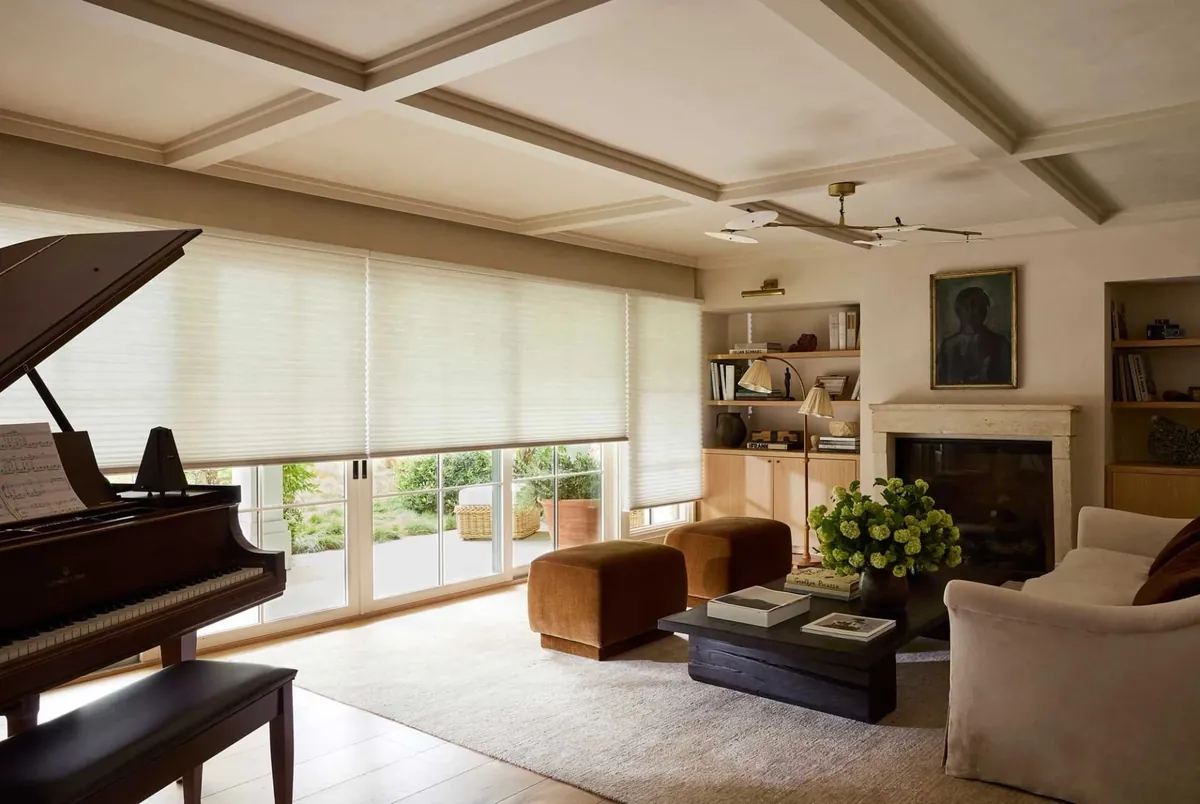
When the shades have been made to your measurements, certified Hunter Douglas installers come back to hang them. The order of work is simple.
- Brackets go into solid framing at each window, set to the mount agreed at the consultation.
- Each headrail is clipped in and levelled, and grouped shades are checked so they line up across the window.
- Every shade is raised and lowered to make sure it runs smoothly.
- Any PowerView motors are set up with their remotes, the app and the schedules you want.
- You get a quick walk-through of how everything works before the installers leave.
Built to each opening, the shades sit flush and tidy, with only slim gaps at the edges.
Colonial dining rooms and front halls
A Braintree colonial usually has a dining room off the front hall, often with a pair of windows to the front and one to the side. It is a room used less often than the kitchen but used for the occasions that matter, frequently in the evening, when the windows are dark and cold. A honeycomb shade lowered before dinner makes the table beside the glass noticeably more comfortable.
Because the dining room is part of the formal front of the house, it often suits a slightly richer fabric than the bedrooms, in a color that works with the walls and any rug. The front hall and the stair landing above it usually have a window or two of their own; picking cellular shades in Braintree for those in the same fabric as the dining room keeps the front of the house consistent as you walk through it.

A Gallery dealer at your door
As a Hunter Douglas Gallery dealer with Hunter Douglas certified installers, Blinds & Designs can offer a Braintree house the complete honeycomb line: all of Duette, all of Applause and PowerView, picked with you at home and hung by the same company that measured.
Other rooms can be planned at that same visit, because our Hunter Douglas range also covers blinds, shutters, roller shades, roman shades and drapery. A sunny family room might suit roller shades in Braintree, and a colonial dining room might want plantation shutters in Braintree. Every service we offer locally is on the Braintree page.
Our nearest showroom to Braintree is in Franklin; the Franklin showroom page has its details.
Questions from Braintree
My house is set well back from the street. Do I still need privacy fabrics?
Often not in the living spaces during the day. A light-filtering fabric keeps rooms bright and softens sun, and the setback does the rest. Bedrooms and bathrooms usually still want a denser fabric for evenings.
Can I plan the whole house and buy a few rooms at a time?
Yes. Measurements and fabric choices for every room are recorded at the first visit, so later rooms match.
Do honeycomb shades help in a cape’s upstairs bedrooms?
They are one of the best uses for them. Dormer windows sit in rooms that run cold in winter and warm in summer, and the air held in the cells helps on both counts.
We own a two-family near the square. Can both units be done together?
Yes. Mention both flats on the booking and the consultant measures them in a single trip, with separate fabric choices inside and one color along the front if you want it.
How much is the estimate?
There is no charge. Estimates are free and come after the measuring.
Ready when you are
A Highlands cape, a colonial in one of the newer subdivisions or a two-family near the square: each is quickest to plan with the samples in the room and a tape measure at the window. Send a request through Request a Consultation and we will arrive with the honeycomb swatches, take the measurements and set out your cellular shades in Braintree, MA, in a free estimate. Anything you want to ask beforehand, the call button is there for it.