
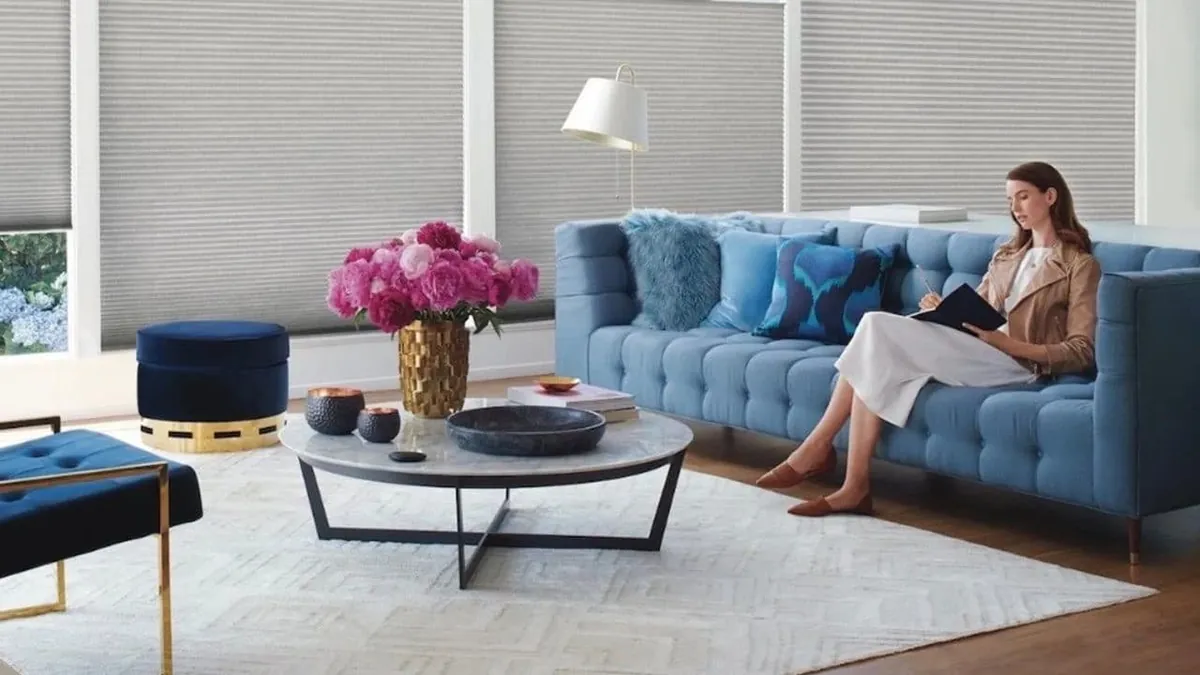
When the next house is only a few strides away
Holbrook’s streets are lined with post-war capes and ranches on small lots, most of them from the same building boom, with standard openings throughout and very short setbacks between neighbors. Step out of a side door and the next house is right there. That closeness shapes nearly every choice about window coverings: what shows through a kitchen window at supper time, how much light a bedroom gets from the porch lamp next door, how warm a small room stays when it has a window on each outside wall. Those are the questions behind every plan for cellular shades in Holbrook, MA.
Honeycomb shades cover the warmth question well. Their fabric forms a row of closed pockets, and when the shade is lowered the pockets hold still air in front of the glass. Because heat moves slowly through air that is not moving, a small room keeps its warmth longer once the sun goes down.
They cover the closeness question too, because the fabric comes in weights from soft and translucent to dense enough for a bedroom, so each window can be screened exactly as much as it needs.
Honeycomb shades around a Holbrook house
Three settings where honeycomb shades make the most difference in a cape or ranch on a small lot.
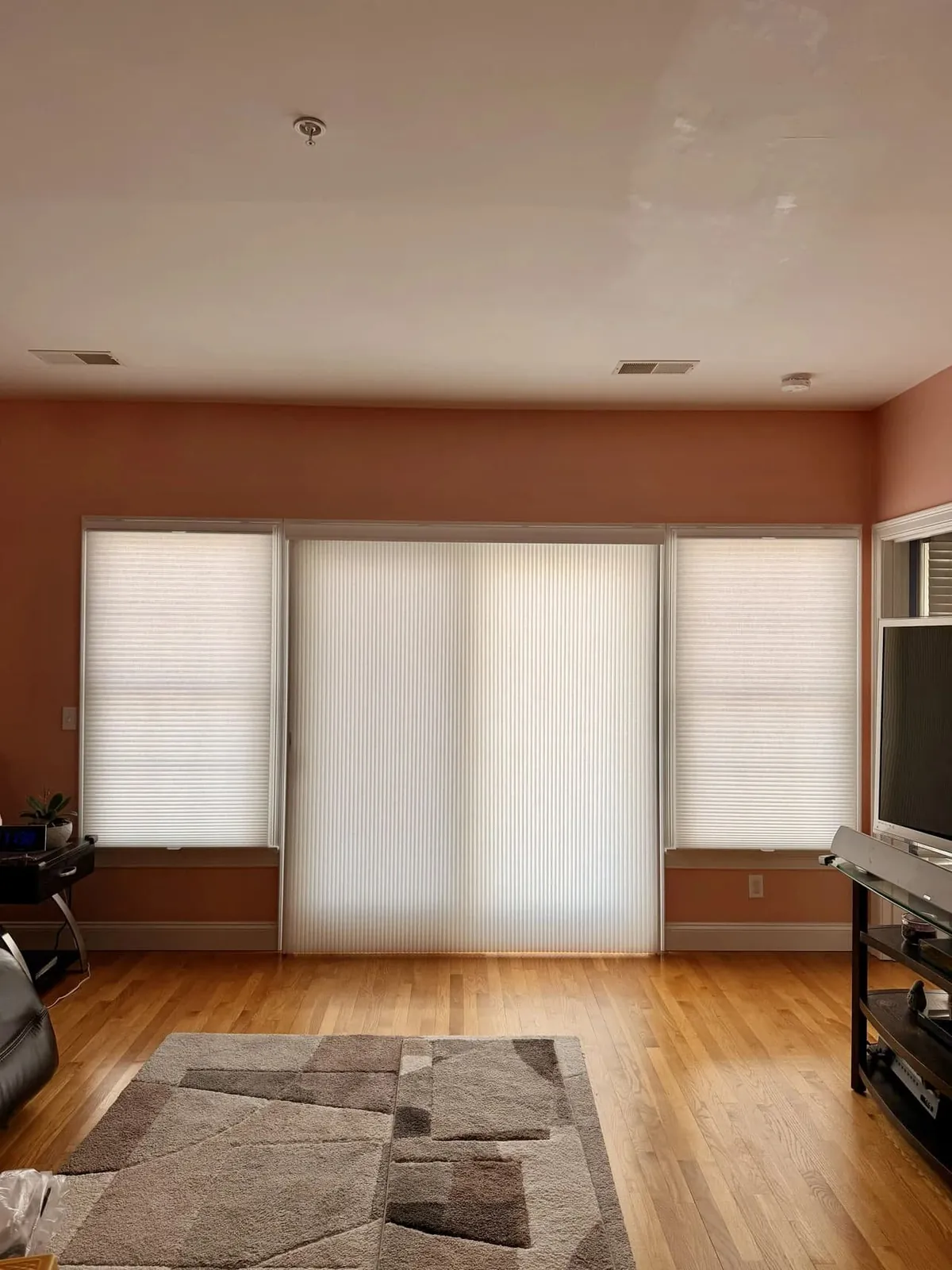
Side windows facing next door
On very short setbacks, side windows look across at the neighbor’s. A translucent fabric keeps the daylight and loses the view in.
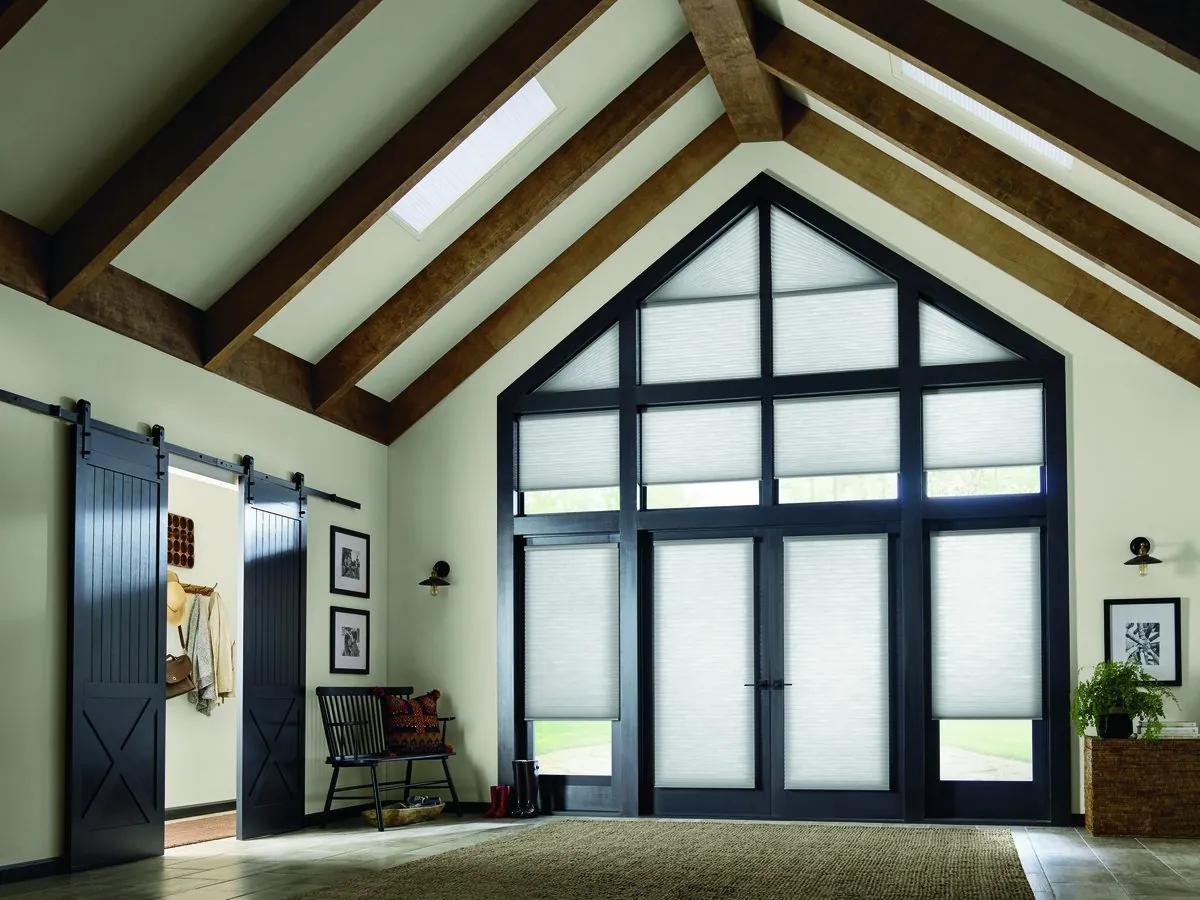
Duette honeycomb shades
The broadest Hunter Douglas honeycomb collection, often chosen for the front room of a cape or ranch where the shade is most on show.
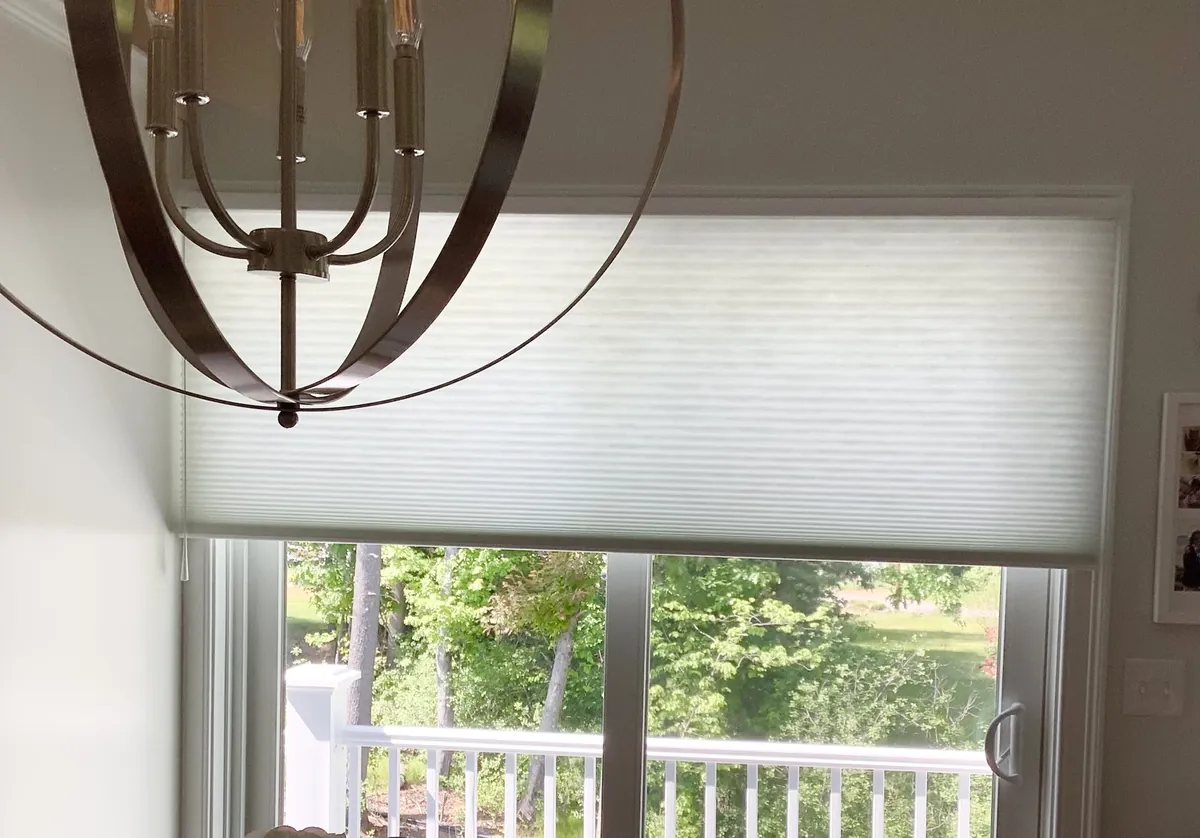
Back doors and sliders
A large pane of glass off the kitchen, often facing a neighbor’s yard. A honeycomb shade cuts the chill and screens the room in the evening.
Five decisions, one small house
Planning honeycomb shades for a Holbrook cape or ranch comes down to five decisions. None of them is hard, and making them in order keeps the whole house consistent.
- Which rooms first. Most households start with the room that feels coldest or most overlooked, then add the rest. A plan for the whole house can still be drawn up at the first visit so later rooms match.
- How much screening. Translucent fabric for the living spaces, where daylight matters most; heavier fabric for bedrooms and bathrooms, especially on the side facing next door.
- What color. One quiet color for the rooms you see together, so a small house feels calm; more freedom in kitchens and bedrooms.
- How it mounts. Inside the frame where the depth allows, on the casing above where it does not.
- Whether to motorize. PowerView for any shade that is awkward to reach or that you would like on a schedule.
The rest of this page goes through those decisions as they play out in Holbrook’s houses.

Very short setbacks: screening without losing the light
On many Holbrook streets the gap between houses is only a driveway or a narrow side yard. That means kitchen faces kitchen and bedroom faces bedroom, sometimes at the same height. Heavy curtains would solve the problem by shutting out the light altogether, which is a poor trade in a small house.
A translucent honeycomb fabric is the better answer for the rooms you use in daylight. Lowered, it glows with the light coming through it, and what is behind it turns into soft shapes from outside. You keep the daylight, and the neighbors keep their view of their own side yard.
After dark the balance changes. A lit room is easy to see into, and a fabric that screens well at noon may show more than you want at nine at night. That is why bedrooms and bathrooms on the close side usually take a heavier weave. A porch light or a street light outside a bedroom is another reason for a heavier fabric, as it keeps the room dark enough to sleep.
The cape: bedrooms under the roof
Holbrook’s capes keep their living rooms, kitchen and often one bedroom on the ground floor, with more bedrooms upstairs under the slope of the roof. The upstairs rooms have dormers, small windows that project from the roof, and those rooms are the hardest in the house to keep comfortable. They warm up quickly on a summer afternoon and cool off fast on a winter night.
A honeycomb shade on each dormer is a sensible first step. Lowered at night in winter, it holds warmth in the room. Lowered on a summer afternoon, it slows the heat coming in. Because the dormers on one cape often look straight at the dormers on the next, a heavier fabric suits them, giving full screening at night and keeping early light off the bed.
Dormer windows are small and set deep into the roof, so the depth of the frame is checked carefully. Where the headrail fits inside, the shade is almost invisible when raised. Where it does not, it mounts on the casing above.
The ranch: everything on one floor
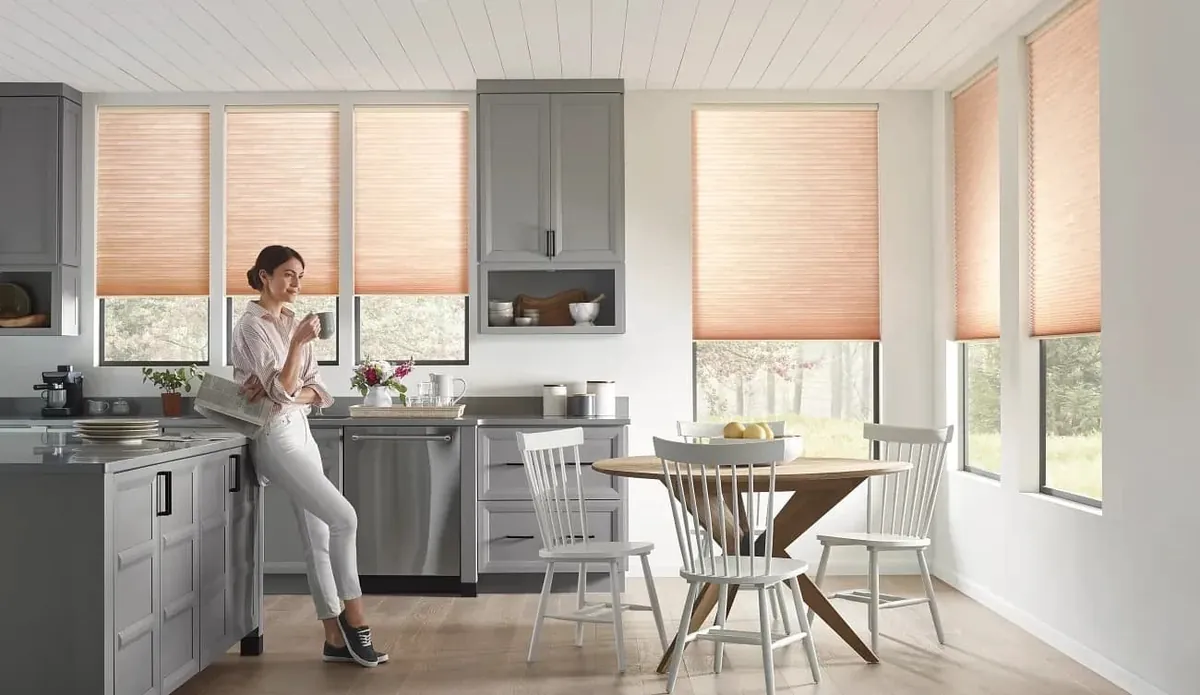
A Holbrook ranch lays its rooms out in a line: a front room with the largest window, a kitchen and eating area behind, and bedrooms along a hall at one end. Every room has an outside wall, and on a small lot most of them have a neighbor within sight.
The front window is the place to begin. Broad windows like this one often take two or three shades side by side rather than one, so each section can sit at its own height when the sun moves across the room, and all of them line up when they move together. The kitchen window above the sink takes a shade that rises well out of the way, in a fabric that keeps the room bright. The bedrooms, lined up along the side of the house, take the heavier weave.
Because ranch openings are standard and repeat, the measuring is quick and the order is simple. Still, every window gets its own measurements, because no two frames in a house of this age are quite alike after years of paint and settling. Where a ranch has had some windows replaced and kept others, the frames can differ in depth from room to room, so the mount is decided window by window. The fabric stays the same throughout, so the difference never shows once the shades are up.
The front room and the sidewalk
On a short setback, the front of a Holbrook house is only a few paces from the sidewalk, and the front room window faces the street directly. Through the day that window is the main source of light for the living room, so covering it completely is rarely what anyone wants.
A translucent honeycomb lowered partway is the everyday setting: the top of the window stays bright, the lower part is screened from passers-by, and the room keeps most of its daylight. In the evening, lowered fully, the shade closes the room off from the street and holds the warmth in front of the biggest pane in the house. For cellular shades in Holbrook front rooms we usually suggest the same calm color on every street-facing window, so the house looks neat from the curb.
Bathrooms and the small windows
Every cape and ranch has a few small windows that get forgotten: the bathroom window, often on the side facing next door; a narrow window by the back door; a small window lighting a stair or a hall. On a small lot, the bathroom window in particular is rarely more than a short distance from a neighbor’s.
These windows suit honeycomb shades well because each shade is made to its own opening, however small, in the same fabric family as the rooms around it. For the bathroom, a weave heavy enough for complete screening still lets a soft glow of daylight in when the shade is down. In a ranch, where the bathroom usually sits along the bedroom hall, it can share the bedrooms’ fabric so the whole wing matches.

Choosing color for a small house
Small houses show their color choices. In a cape or ranch you can often see the front room, the dining area and the hall from one place, and if every window has a different fabric, the house looks busier and smaller than it is.
Choosing one calm color for those connected rooms, usually a soft white, an ivory or a warm gray, lets the house feel larger and lighter. Behind closed doors the bedrooms and the kitchen can take whatever color suits them. From the street, one color across the front windows gives the house a neat, finished face, which matters when it sits close to the sidewalk.
When it comes to choosing cellular shades in Holbrook, the swatches always go up at the windows before a color is fixed. The same fabric can look warmer in a south-facing front room and cooler in a bedroom on the shaded side.
Why honeycomb shades keep small rooms warmer
Look at a honeycomb shade from the end and you see a row of hollow cells. Lowered, the cells hold air in place. Moving air carries heat away from a room quickly; air held still does not. So the shade forms a buffer between the cold glass and the room, and slows the summer heat coming the other way.
Small rooms feel this more than large ones, because the window is never far from where you sit or sleep. A bedroom with windows on two walls, common in the corner rooms of a ranch, can lose much of its chill near the glass simply by lowering the shades at dusk. For more, see our guide on cellular shades and winter heat.
A consultation at your kitchen table
Holbrook is part of our Canton shop-at-home service, which means the consultation happens in your house. The vans carry the samples, so we can bring the showroom to you, and every decision is made at the windows themselves, looking across at the house next door.
- Book a time through Request a Consultation, or use the call button.
- A consultant arrives with Duette and Applause swatches in several colors and in both translucent and heavier weaves.
- You show the consultant the rooms that bother you most: the cold one, the overlooked one, the one with the street light outside.
- Swatches are held at each window, so you see the color from inside and how much they screen from outside.
- Each window on your list is measured, and the depth of every frame is checked.
- You are left with a free estimate and as much time as you need.
If you want a second opinion on color or on the other window treatments in a room, ask about our interior design consultations. The guide to what happens at an in-home consultation explains the visit in more detail.
Comparing Duette and Applause
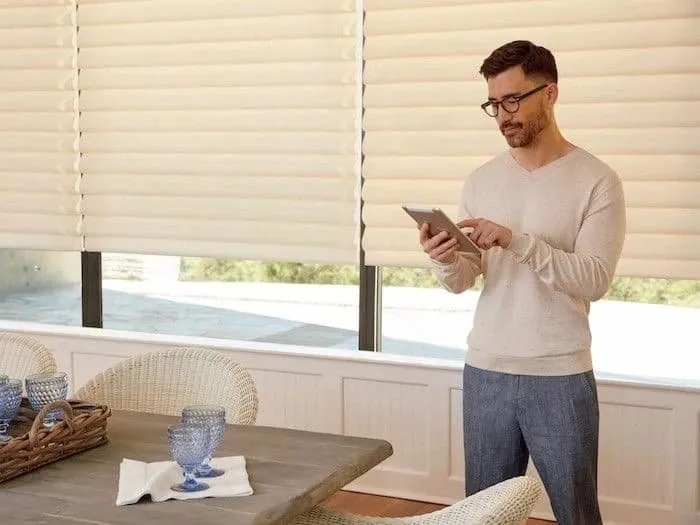
Duette and Applause are both Hunter Douglas honeycomb shades and hold air in the same way. The difference is in the fabric collections. Duette has the largest range of textures and colors, which is why it is often chosen for the front room. Applause offers a separate palette that suits the bedrooms, the kitchen and the rest of a cape or ranch.
A good number of orders for cellular shades in Holbrook, MA, use both. You compare them side by side at your window before choosing. See the Applause honeycomb shades page for that line, or the main cellular shades page for the full Hunter Douglas honeycomb range.
When a motor makes sense
PowerView motorization lets honeycomb shades rise and fall from a remote, a phone app or a schedule. In a small house that is less about reaching high windows and more about routine. A schedule can lower the shades on the close side of the house every evening before the lamps go on, and raise the front-room shades in the morning, with nobody walking from window to window.
Motors also help with a shade behind a bed, a sofa or a deep counter. One room or the whole house can be motorized, now or later; if later, mention it at the visit so the shades you choose now are ready. We work out how each motor is powered at the house. There is more on our motorized blinds in Holbrook page.
Hanging the shades
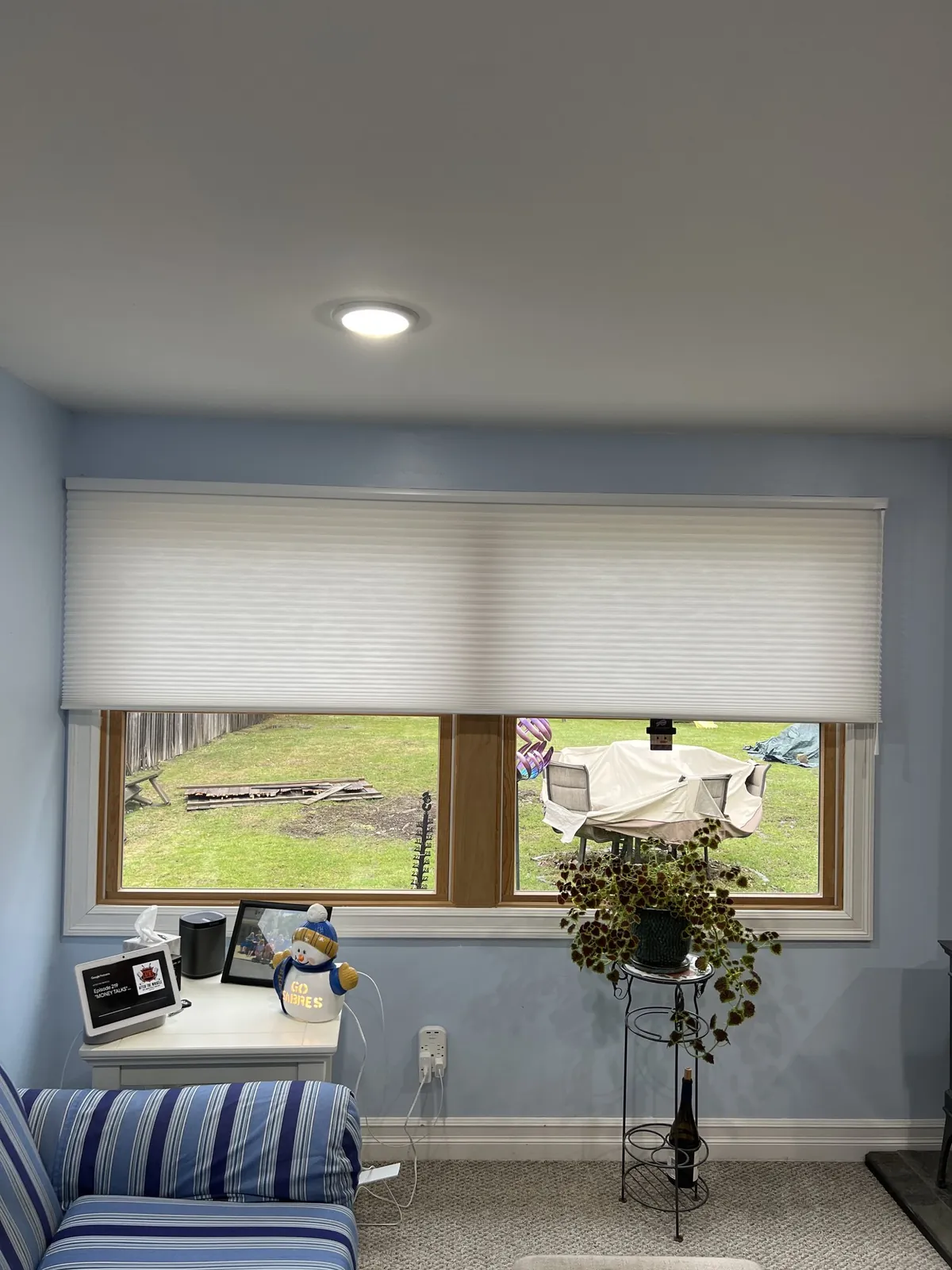
When your shades have been made to the measurements, our certified Hunter Douglas installers return to put them up.
- Each bracket is fixed firmly, inside the frame or on the casing as agreed.
- Headrails are clipped in and levelled, and side-by-side shades on a wide window are lined up.
- Every shade is raised and lowered to make sure it runs evenly.
- PowerView motors, if any, are paired with their remote and the app and set to your schedule.
- You are shown how it all works before the installers leave.
Made for its own opening, each shade sits neatly in place, with only narrow gaps at the edges.

Why a Gallery dealer for Holbrook
Blinds & Designs is a Hunter Douglas Gallery dealer, and our shades are fitted by installers certified by Hunter Douglas. For a Holbrook cape or ranch, that means the whole honeycomb range, every Duette and Applause fabric and PowerView, with one company measuring, ordering and installing.
We also carry Hunter Douglas blinds, shutters, roller and roman shades and drapery, and offer blind and shade repairs, so other rooms can be planned at the same visit. A bright front room might suit roller shades in Holbrook, and a bedroom might take roman shades in Holbrook. Our Holbrook page has everything we do in town.
The closest place to see Hunter Douglas products in person is our Franklin showroom.
Questions from Holbrook
The house next door is very close. Will a honeycomb shade give us enough privacy?
Yes. A translucent fabric screens the view in by day while keeping the room bright, and a heavier weave gives full screening at night in bedrooms and bathrooms. We hold both at your windows so you can see the difference.
A street light shines into our bedroom. What helps?
A heavier honeycomb fabric keeps the room dark enough to sleep and still holds warmth in the cells. Mounting the shade inside the frame where possible keeps the edges tidy.
Can you plan the whole house even if we only buy a few rooms now?
Yes. Measurements and fabric choices for every room are recorded at the first visit, so the rooms you add later will match.
Are dormer windows too small for honeycomb shades?
No. Each shade is made to its own opening, however small. We check the depth of each dormer frame and mount on the casing where an inside mount will not fit.
Is the estimate free?
Yes. Once the windows are measured, you receive a free estimate.
See the samples in your own rooms
On a small lot with a neighbor close by, the right shade is the one that looks good from your sofa and screens well from next door, and the only way to judge that is at the window. Request a consultation and we will come to your house with the honeycomb samples, measure the windows you want covered and leave you a free estimate for your cellular shades in Holbrook, MA. Questions before then are welcome on the call button.