
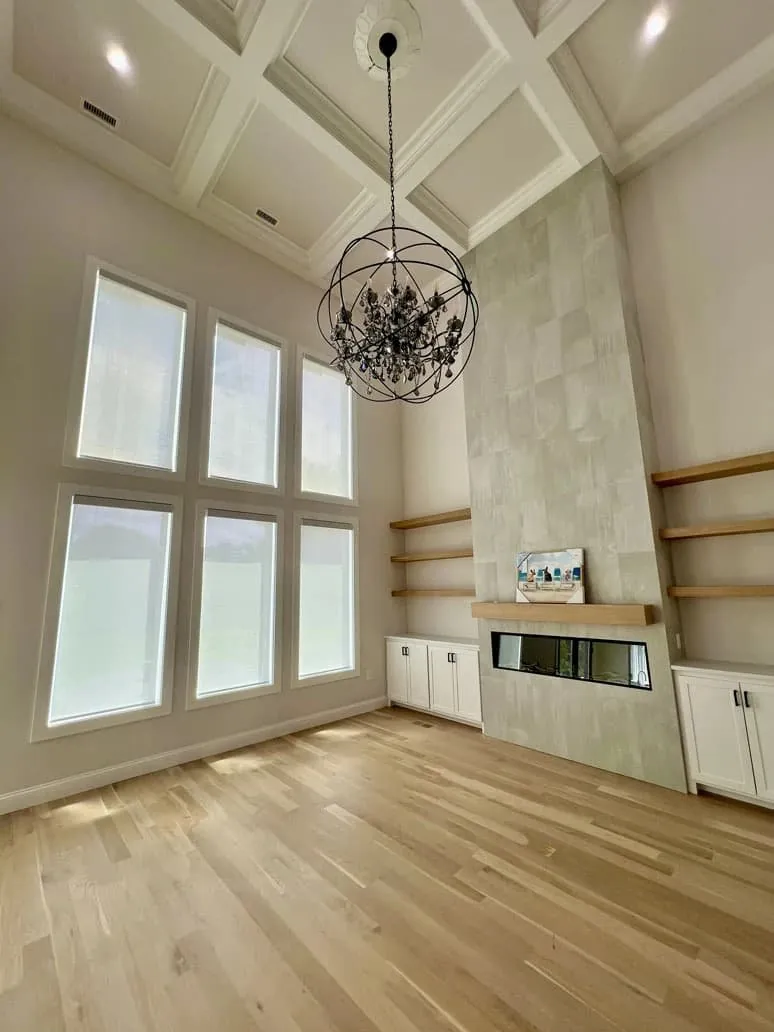
Privacy begins at the sidewalk
Brockton packs a lot of house onto its streets. Across the city, Victorians and two- and three-family homes stand shoulder to shoulder, many of them only a short walk of lawn from the curb. Their windows are tall and narrow double-hungs under high ceilings, and on a close-set street the first floor of each one sits right at eye level with whoever is passing. That is the problem we are asked to solve most often when we plan roller shades in Brockton, MA: how to keep a front parlor or a first-floor bedroom private without shutting the daylight out.
A roller is a good answer for that kind of window. It is one flat panel of fabric that comes down from a slim roll at the top, so it suits a tall, slender sash without adding bulk, and when it is raised it tucks almost out of sight under the head of the frame. The cloth decides everything else, from a soft weave that turns the glass into a gentle glow to a full blackout for the bedroom that faces a streetlight.
Out toward the edges of the city the houses change. Post-war ranches sit lower, on wider lots, with broad picture windows and bedrooms down a single hall. Those rooms raise different questions, mostly about sun and glare, and we cover them further down.
Three roller families for a Brockton house
These are the Hunter Douglas roller shades for Brockton homes that cover nearly every window we see in the city, from a third-floor flat to a ranch on the outskirts. Every one of them comes to your door as a real sample.
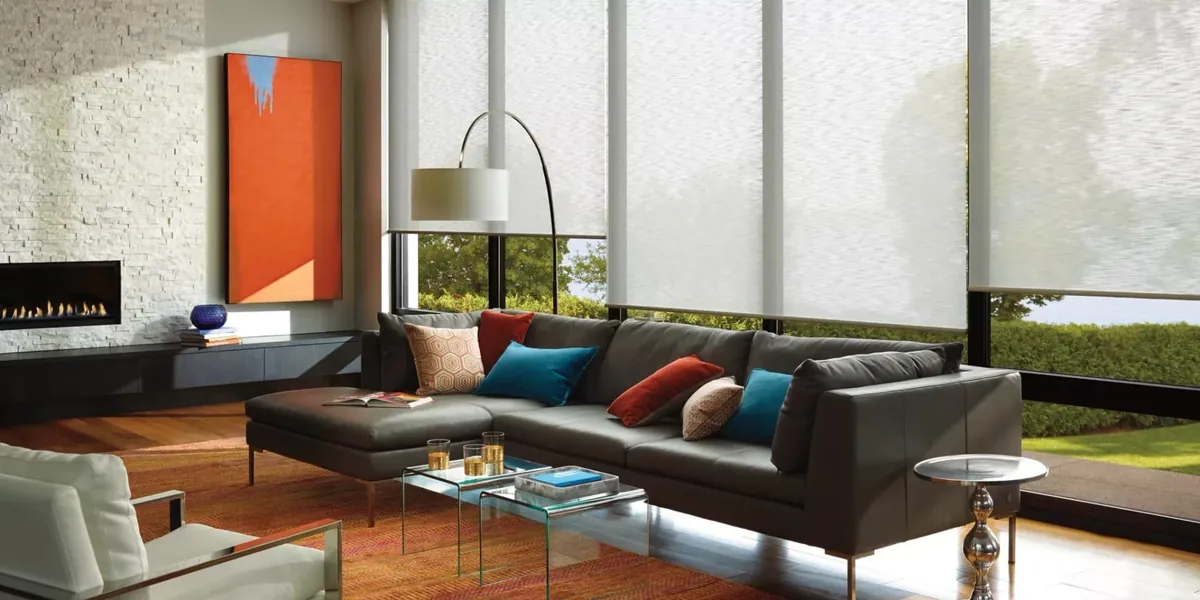
Designer Roller
Plain and textured cloth in light filtering, room darkening and blackout. The everyday choice for tall double-hungs on every floor of a multi-family.
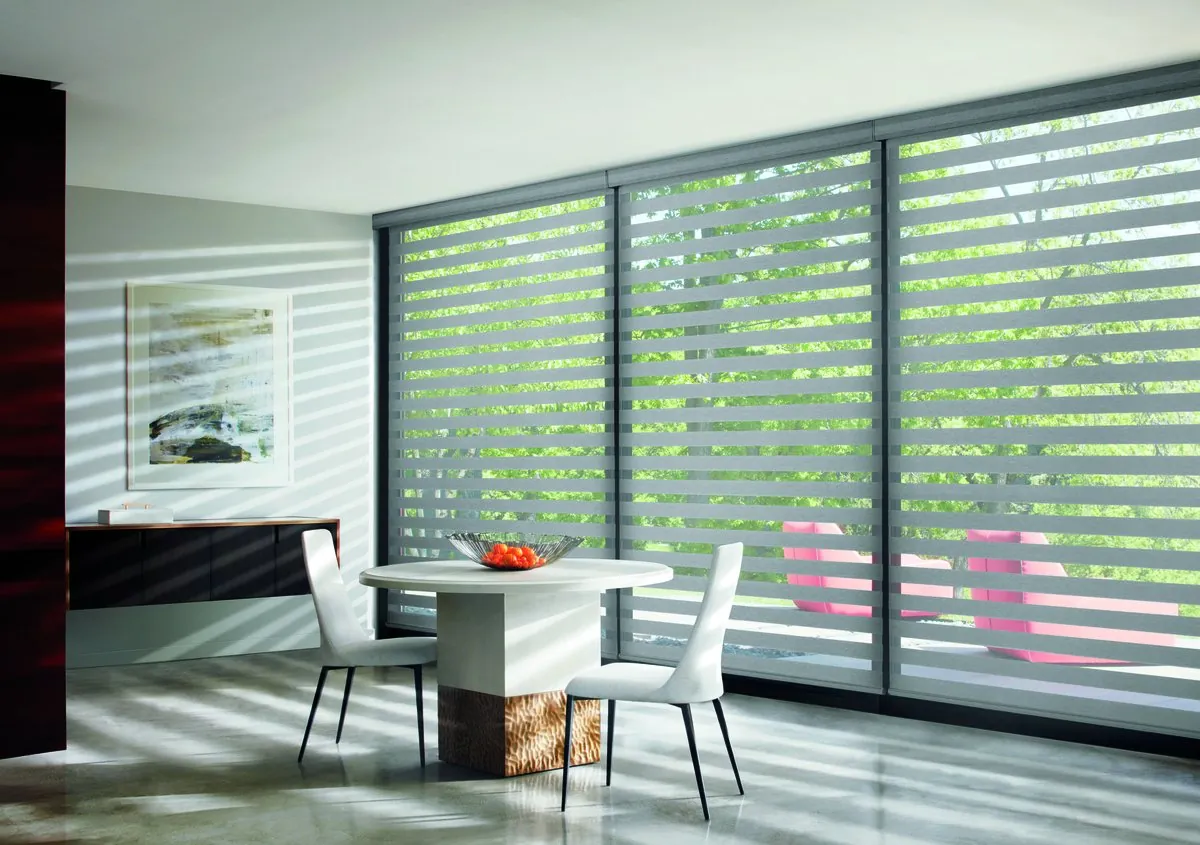
Designer Banded
Two layers of striped fabric that slide past each other, so a window can move from open to covered without the shade going up or down.
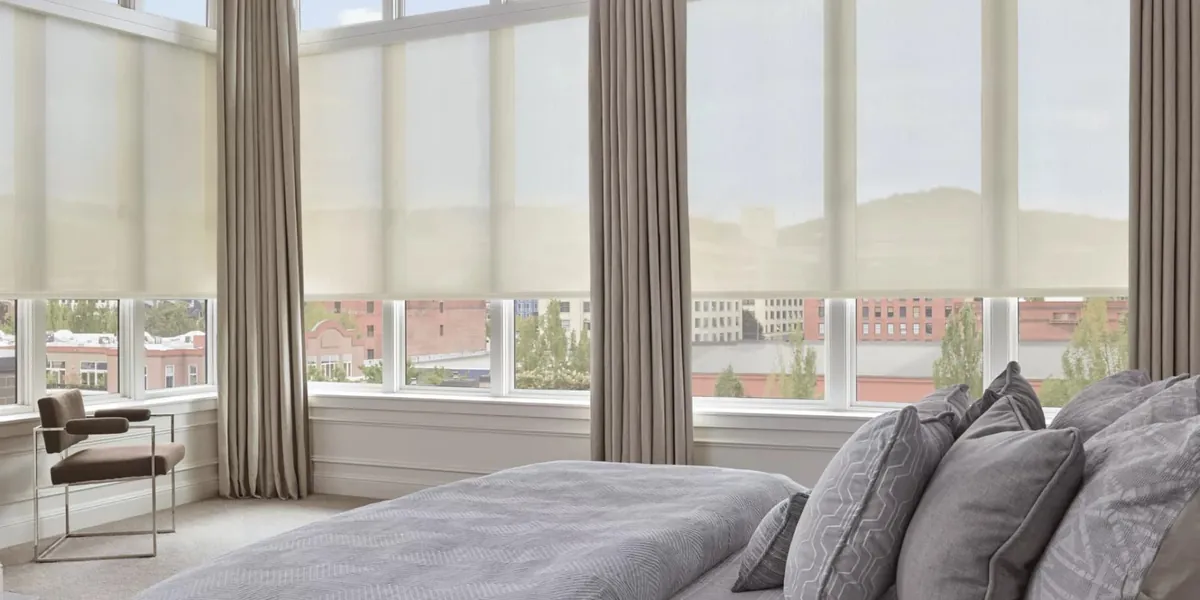
Designer Screen
Solar screen cloth for a bright wall, chosen by its openness. It tames glare and keeps the view, which suits a ranch’s sunny picture window.
Tall, narrow sash under high ceilings
The Victorian windows across Brockton are a pleasure to dress, because their proportions do half the work. A tall, slim opening already looks elegant, and a roller that fills it edge to edge simply follows those lines. The trick is the height. A window that reaches well above head height leaves a long panel of glass, and a long panel of glass on a street-facing wall is a lot of window to keep private.
The usual plan is to treat the top and the bottom of the window differently in your mind, even though it is one shade. Most of the day, the upper part of the glass shows only sky and the cornice of the house across the street, so nobody is looking in through it. The lower part is where the sidewalk can see. A roller parked part of the way down covers the lower sash and lets the upper glass pour light into a room with a high ceiling. Because the fabric is flat and plain, a shade stopped halfway looks deliberate rather than half finished.
Inside mounting suits these openings when the frame has the depth for it, because the fabric then sits within the casing and the woodwork stays in view. Many older Brockton frames have generous casings worth showing off. Where the depth is shallow, the shade can sit on the face of the casing instead. We look at each window and talk it through with you before anything is ordered.
Two- and three-families, floor by floor
A multi-family house is really two or three homes stacked on one footprint, and each floor has its own relationship with the street. That shapes the fabric choice more than anything else.
The first floor is the one on show. Its front room is closest to the sidewalk and its side windows usually look across a narrow driveway at the house next door. Light filtering cloth is the workhorse here: daylight passes through and the room stays bright, while from outside the window reads as a soft, even surface rather than a view into the room.
The second floor sits above eye level from the street, so its front windows can often take a more open weave or a solar screen. Its side windows still face the neighbors at the same height, though, and those generally want the same privacy as downstairs.
The third floor, where there is one, is often tucked under the roof with smaller or dormered windows. Bedrooms up there tend to want room darkening or blackout, because they catch the earliest light and there is little else to shade them.
If you own the building and want every unit done together, we can plan all the floors in one visit and keep a single color facing the street, so the front of the house looks tidy from the curb while each unit chooses its own fabric inside.
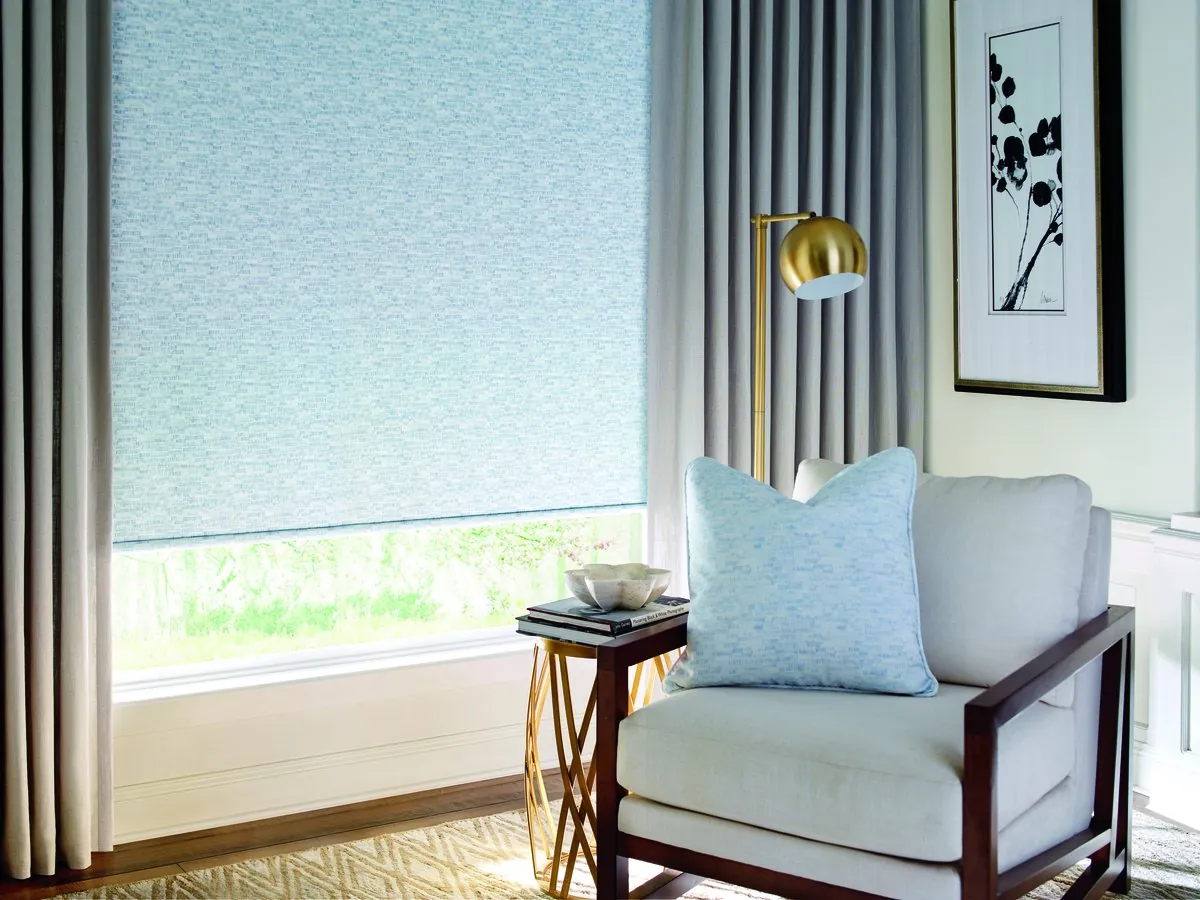
Side windows and the house next door
On many Brockton streets, the side of one house looks straight at the side of the next across a strip of driveway. Those side windows are the hardest working openings in the house. They let in useful light from the east or west, but they also face a neighbor’s kitchen, stair or bedroom at close range.
Banded cloth is often the neatest answer. It carries alternating sheer and solid stripes on two layers. Line the sheer stripes up and you can see through; shift them a little and the window closes. That small adjustment lets you keep the light in the morning and close the view when the house next door is busy, all without raising or lowering anything.
A plain light filtering roller is the simpler route and suits a side window that never needs to be seen through. Both look clean on a narrow sash, and both can be paired with a different fabric on the front windows of the same room.
After dark the picture changes. A lamp inside turns lighter cloth into a lit screen that shows shapes, so side bedrooms and bathrooms usually want a denser fabric for the evening.
Bedrooms that face a streetlight
City streets stay lit all night, and in a dense neighborhood a streetlight can sit only a few yards from a bedroom window. For a lot of Brockton households that glow is the main reason to choose a roller in the first place.
Room darkening cloth keeps most of that light out and gives a room a calm, dim feel. Blackout cloth stops light at the fabric itself. On a tall window the edges matter as much as the fabric, because a narrow line of light round the sides can still be noticeable from the bed. We talk through mounting for each bedroom window with that in mind, so you know what to expect before you choose.
Children’s rooms, nurseries and any room used for daytime sleep after a night shift are the usual places for blackout. Front bedrooms on the first floor of a two-family often go the same way for privacy alone.

Ranches on the outskirts
Away from the denser blocks, the ranches have a different rhythm. Everything sits on one floor, the lots are wider and the houses stand back a little farther from the road. Privacy is still a question, because every room is at ground level, but light becomes the bigger topic.
A ranch living room usually has one broad picture window facing the street. If it faces south or west, it can flood the room with afternoon sun and throw glare across a television or a computer screen. A solar screen is the shade we suggest comparing first for that window. Its open weave cuts the glare while the yard and the street stay in view, so the room still feels connected to the outside.
Down the bedroom hall, the windows are smaller and look out to the side or back yard. Room darkening cloth handles most of them. The kitchen at the back often wants something light and easy, a pale light filtering roller that brightens the room in the morning.
A ranch is also the easiest house to give a single, uniform look. Every window sits at the same height on the same level, so a full set of rollers lowered to one line gives the outside a crisp, ordered face.
Picking a solar screen by its openness
When a room needs the view kept and the glare cut, the decision comes down to the screen’s openness, which is simply how open the weave is. A more open weave gives a clearer picture of the outdoors and a brighter room, with more of the sun’s sting coming through. A tighter weave calms the sun and gives more daytime privacy, but the outdoors softens into a hazy picture.
Color changes the balance too. A dark screen is easier to see through, because the eye looks past it, and it tends to suit a room with a television. A light screen glows when the sun hits it and reads as more private from the street during the day.
There is one thing to keep in mind on a close-set street. A screen is private by day because it is brighter outside than in. After dark, with lamps on, the balance flips and the room shows through. On a city lot, a screen room that faces a neighbor or the sidewalk often pairs well with an evening plan, whether that is a denser fabric in the same room or simply drawing it with a banded shade.
Light filtering through blackout, room by room
Most Brockton houses end up with two or three fabrics chosen for different rooms. It helps to see the range laid out plainly.
- Light filtering: daylight in, a soft blur out. Front parlors, kitchens and side windows facing the next house.
- Room darkening: most light kept out. Most bedrooms, and first-floor rooms that need privacy after dark.
- Blackout: light stopped at the fabric. Nurseries, third-floor bedrooms and rooms that face a streetlight.
- Solar screen: glare cut, view kept. A ranch picture window or a sunny upper-floor front room.
A typical two-family might take light filtering across the first-floor front, banded cloth on the side windows, room darkening in the bedrooms and a screen on the upstairs front. Choosing roller shades in Brockton, MA, this way gives every room its own answer, while one outward color keeps the house looking like a single piece from the street.
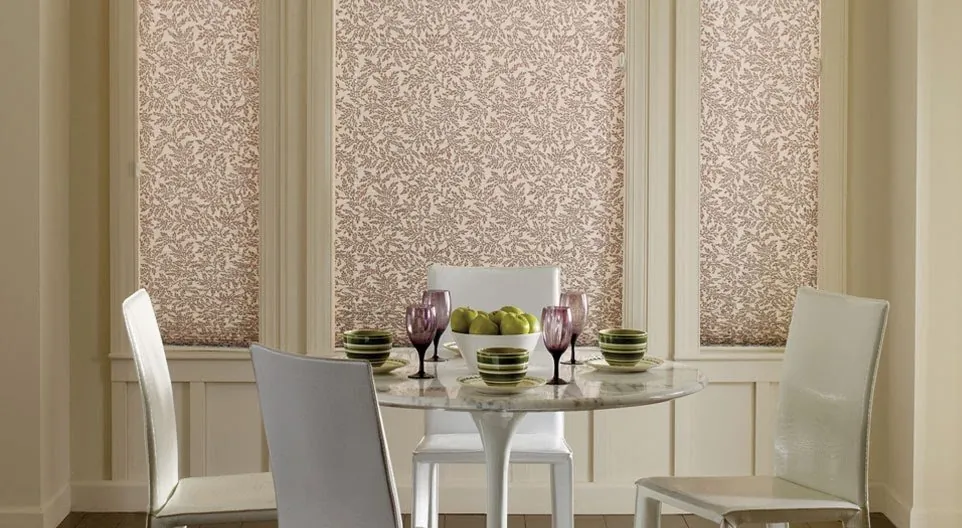
Designer and Alustra in one visit
Hunter Douglas organizes its rollers in two families. Designer is the broad, practical range: smooth and textured weaves, solar screens and banded cloth. It covers every window in a multi-family from the front door to the back stair. Alustra is the more tailored collection, with richer woven fabrics. The Alustra Woven Textures range is a favorite for a front room with original trim, where a hand-woven look sits well against old woodwork.
Plenty of Brockton orders use both. A Victorian might take Alustra in the front parlor and dining room and Designer everywhere else. We bring both families in the van so you can hold them side by side at the same window. The full line-up is on our roller shades page.
Motorized rollers for tall windows
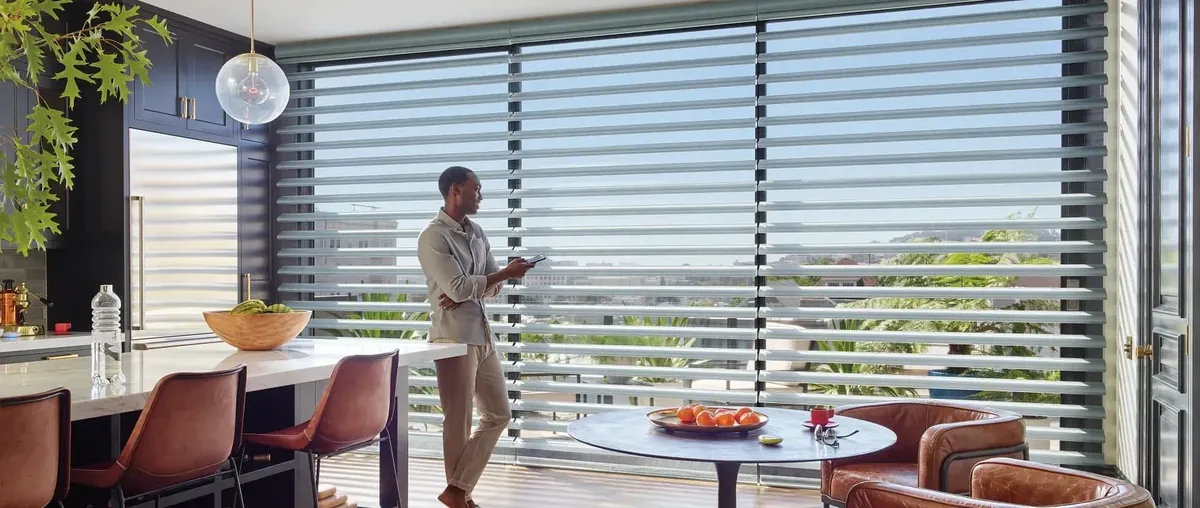
A tall window under a high ceiling is a lovely thing until you have to reach the top of it. PowerView motorization takes that problem away. Rollers move from a phone app or a remote, or on a schedule you set, so a row of tall front windows can come down together at dusk and rise together in the morning.
In a multi-family it is often the third-floor bedrooms and the stair windows that benefit most, because they are the hardest to reach. Shades can be grouped, so all the windows facing the street stop at the same line. We plan how each motor is powered at the visit, window by window. For more on the options, see our page on motorized blinds and shades in Brockton.
Shop at home across the city
Brockton is served by our shop-at-home territory, so the easiest way to choose is at your own windows. A consultant arrives with a van of samples, which means we can bring the showroom to you. You see each cloth against your own trim and in your own light, which is the only way to judge how a fabric looks on a north window in November or a west window at five in the afternoon. The Canton shop-at-home page explains how the territory works, and nearly every order for roller shades in Brockton begins with one of these visits.
A visit tends to run like this:
- You book with Request a Consultation or the call button and mention roller shades.
- A consultant arrives with the Designer and Alustra samples.
- You walk through the rooms together, starting with the street-facing windows.
- You hold fabrics up at each window and compare light filtering, banded, screen and blackout.
- Each opening is measured, and mounting is talked through window by window.
- You receive a free estimate, with time to think it over.
If you want help bringing a room together, ask about our interior design consultations at the same visit.
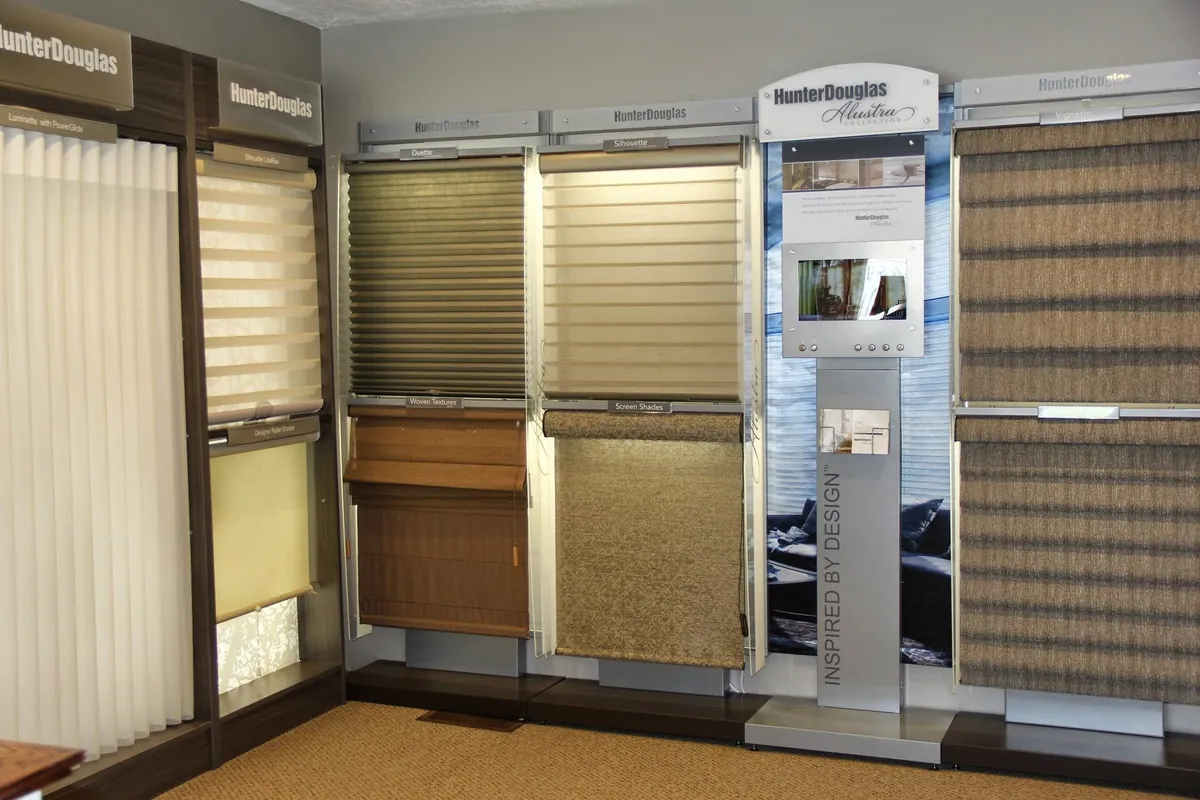
A Gallery dealer at your door
Blinds & Designs is a Hunter Douglas Gallery dealer, so the whole Hunter Douglas roller range is open to you, Designer and Alustra alike. Our installers are certified by Hunter Douglas, and the shades go up the way the maker intends.
We also handle blind and shade repairs, design help and window covering automation, so one relationship covers the house for years. If a bedroom also needs warmth on a cold north wall, compare cellular shades in Brockton during the same visit. Our Brockton page lists everything we do in the city.
If you would like to see shades in a showroom as well as at home, our Franklin showroom is the nearest one to Brockton.
Questions from Brockton
Our first floor is close to the sidewalk. Will a roller keep it private and still bright?
Yes, in daylight. A light filtering roller lets the light in while the window reads as a soft, plain surface from outside. After dark, with lamps on, a denser fabric gives more privacy.
Do rollers work on tall, narrow Victorian windows?
They suit them well. A roller is a flat panel, so it follows a slim opening neatly and can be stopped part of the way down to keep the upper glass open to the sky.
Can you do every unit in our two-family at once?
Yes. We can plan each floor in one visit and keep one outward color across the street side while each unit chooses its own fabric inside.
Is there a showroom in Brockton?
No. Brockton is in our shop-at-home territory, so a consultant brings samples to you. The nearest showroom is Franklin.
Do you charge for the estimate?
No. The estimate is free and carries no obligation.
Start with the front window
The window most Brockton households want to fix first is the one closest to the sidewalk, and it is the best place to begin. Request a consultation and a shop-at-home consultant will bring the Designer and Alustra range to your house, try the cloth at your front and side windows, look at the bedrooms that catch the streetlight, and leave you with a free estimate. Roller shades in Brockton, MA, are easiest to choose with the fabric in your hand and your own street outside the glass. If you would rather talk first, the call button at the top of the page reaches us too.