
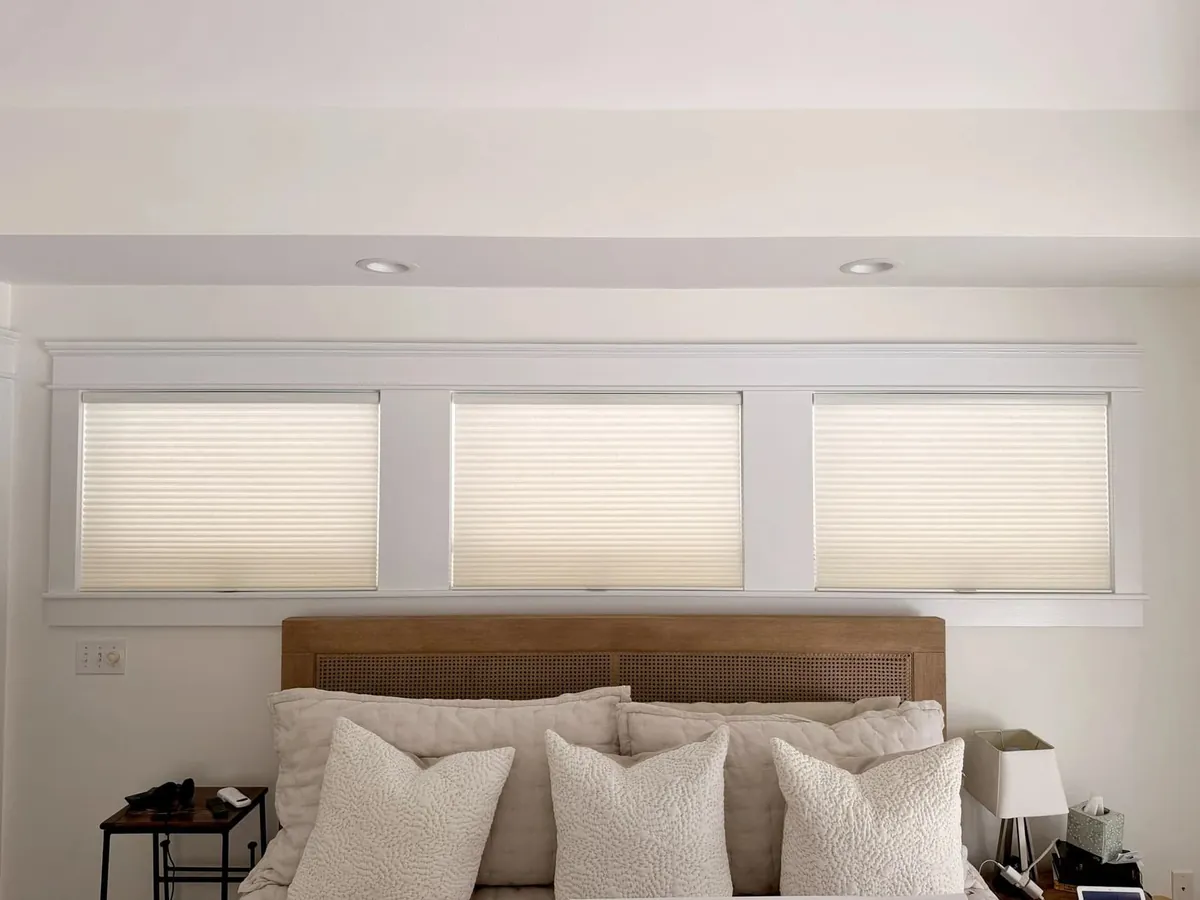
Small windows, close neighbors
Whitman packs a lot of house onto small lots. Two-families sit close together, post-war capes line the side streets, and a handful of Victorians stand near the center. Walk between any two of them and you notice how short the distance is from one house’s window to the next house’s wall. Look at the older houses and you notice something else: the original window openings are small, some of them surprisingly so. Both facts shape how we plan cellular shades in Whitman, MA.
A small window has little light to spare. Cover too much of it, even when the shade is raised, and a room that was already dim gets dimmer. A short sightline to the neighbors means the window cannot simply be left bare either. The job is to protect your privacy while giving up as little daylight as possible, and to keep the room warm while you are at it.
Honeycomb shades are good at all three. The fabric is light enough to let a soft glow through, the shade gathers into a slim bundle when raised, and the air held inside its pockets slows the heat leaving through the glass. Duette and Applause are the two Hunter Douglas lines we bring for it.
Honeycomb options for Whitman’s smaller openings
Every house is different, but these three questions decide most of what goes on a Whitman window.
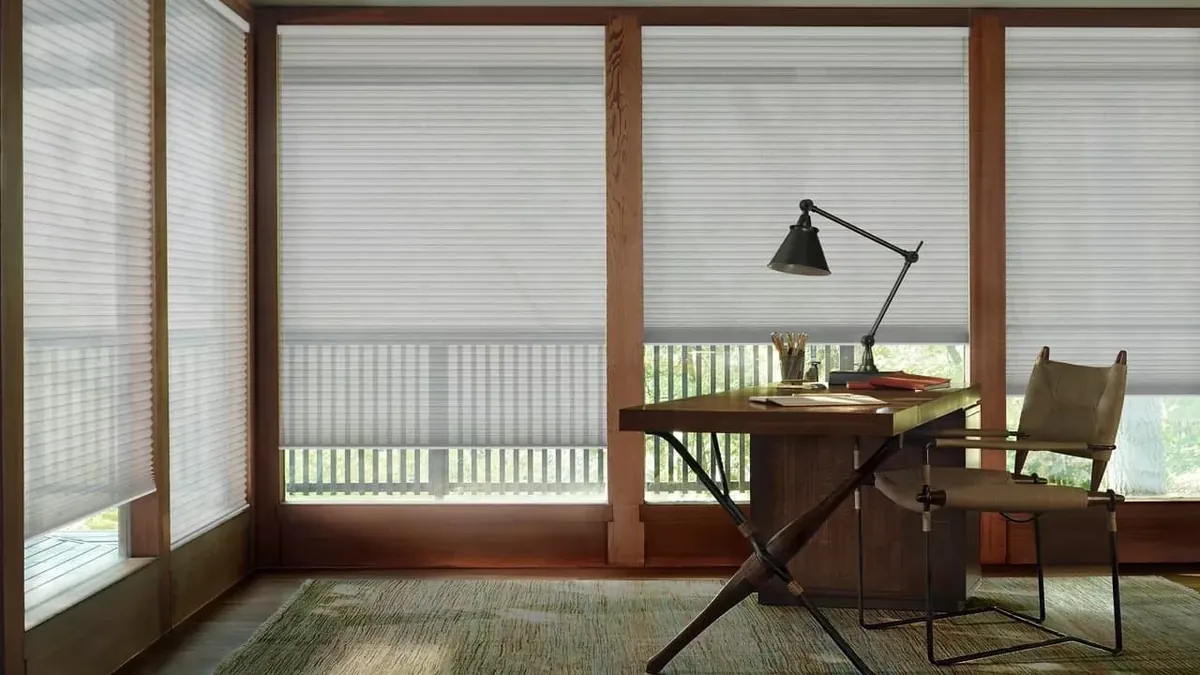
Duette for narrow original windows
Honeycomb shades can be built for slim openings, so the small sash in an older house still gets a proper fit. Duette covers the widest range of sizes.
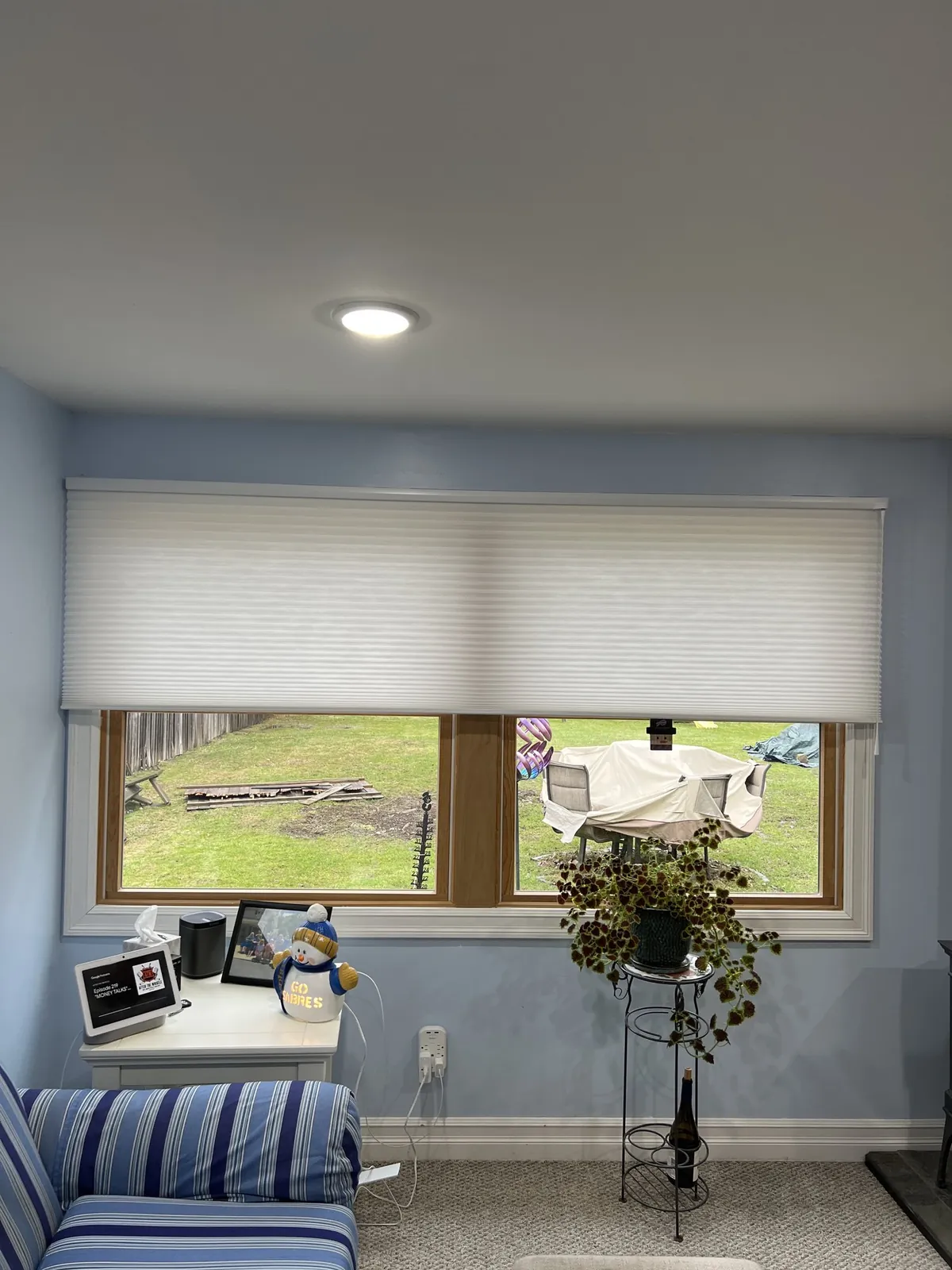
Lighter fabrics that keep the daylight
In a room with one small window, a fabric that glows rather than blocks keeps the room bright while the view in is softened.
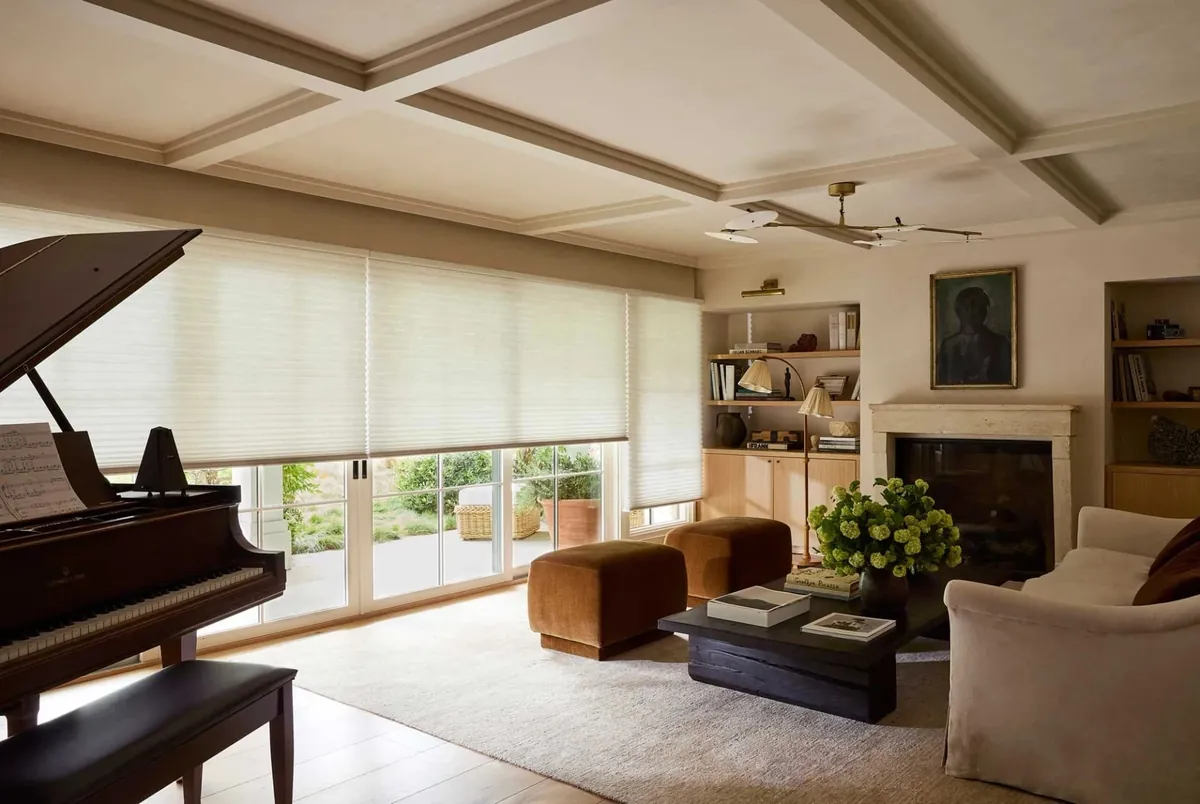
Heavier fabrics for side bedrooms
Where a bedroom looks straight across at the house next door, a denser fabric keeps it private after dark. Applause has its own range to compare.
How much daylight can a small window spare?
Every raised shade leaves something behind at the top of the window: the headrail and the folded fabric, stacked up. On a big window nobody notices. On the small original openings in an older Whitman house, that stack can sit across a real slice of the glass, and the room loses light it cannot afford.
Honeycomb shades help here, because the pleated fabric folds tightly and the stack is slim. Even so, on the smallest windows we look closely at where the shade should sit. Mounted inside the frame, the stack sits inside the glass area. Mounted on the wall just above the frame, the whole shade can rise clear of the glass when it is up, so the window gives you every bit of light it has. That outside position also lets the shade overlap the sides of the opening a little, which helps with privacy at the edges.
There is a trade-off. An inside mount shows off the trim; an outside mount covers a little of it. On a Victorian near the center with handsome casings, you might prefer the inside mount and accept a slightly smaller opening. On a plainer cape window where daylight matters more than trim, the outside mount often wins. We hold the samples up both ways so you can see what each looks like on your own window.
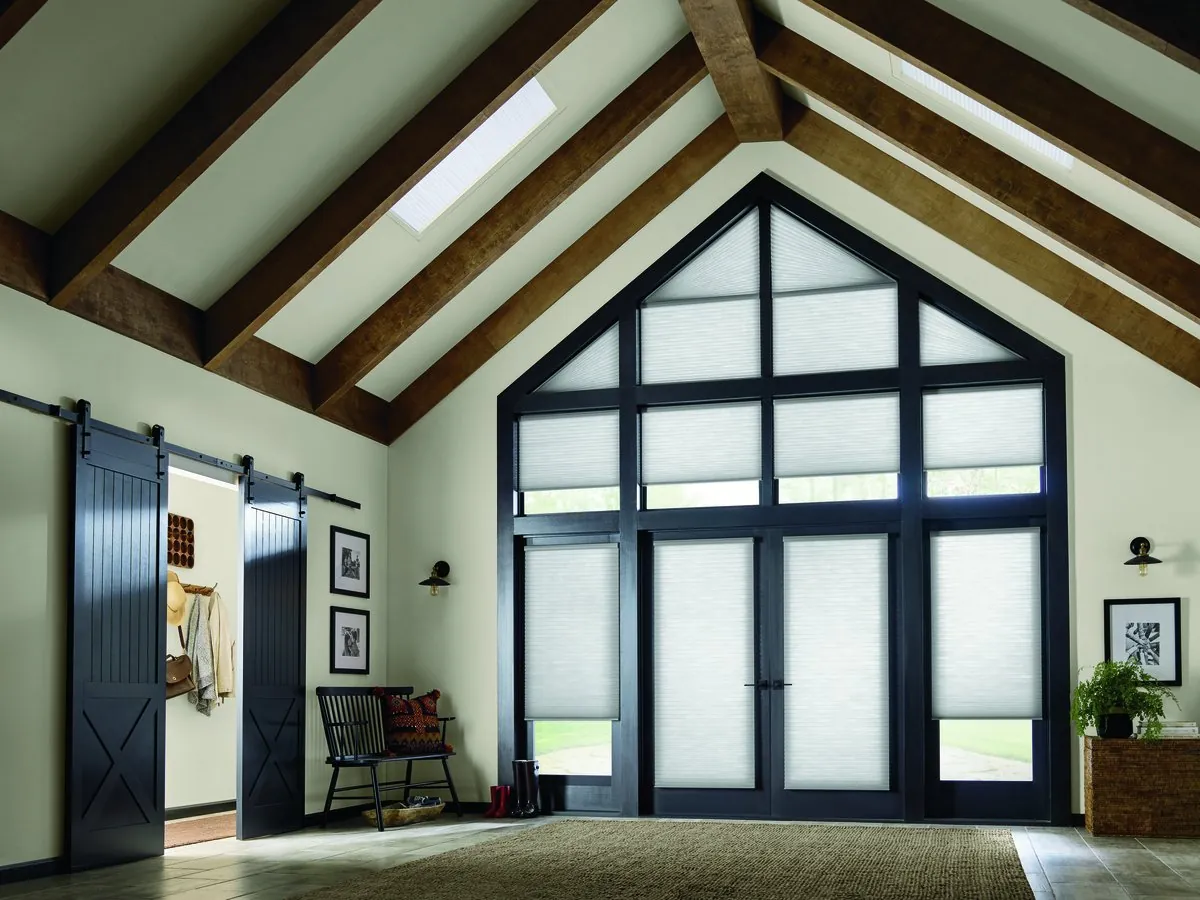
Short sightlines between houses
On a small Whitman lot, the side of your house might face the side of the next one across a driveway or a strip of lawn. Windows that face each other at that distance are the ones people ask about most. Kitchens and bathrooms on the side of the house, and bedrooms on the second floor of a two-family, all fall into this group.
During daylight, a lighter honeycomb fabric is often all you need. With the sun on the outside, the fabric glows and the room behind it turns to a soft blur, while plenty of light still reaches you. After dark the situation flips. With lamps on inside, a lighter fabric shows more than it hides. For rooms used in the evening, a heavier fabric, or a room-darkening one in a bedroom, does the job.
Most houses end up with a mix. The front room on the street side might take a lighter fabric for daytime brightness, the side bedroom a heavier one, the bathroom something in between. Choosing fabrics room by room for cellular shades in Whitman, MA, is what lets a house that sits close to its neighbors still feel open during the day.
Two-families: one building, two sets of needs
Whitman’s two-families usually stack one unit above the other, with matching windows on each floor. The first floor deals with the street and the neighbors at eye level. The second floor looks over the fence and into the trees, with more light and more sky, but often more heat in summer because it sits under the roof.
That difference shows up in the shades. Downstairs, privacy leads, and fabrics are often a little heavier. Upstairs, warmth and summer sun lead, and a honeycomb shade lowered through the afternoon keeps a top-floor unit from overheating. If you own the whole building and want the street to see a uniform front, keeping the outward-facing color the same on both floors is the simplest way to do it. If you own or rent one unit, we just plan yours, and the other floor can match later by picking the same outward color.
Post-war capes on small lots
Much of Whitman away from the center is post-war capes, built close together on compact lots. The ground floor usually has a living room at the front, a kitchen at the back and a bedroom or two. Upstairs, under the slope of the roof, are bedrooms lit by dormers.
Those dormer bedrooms are where honeycomb shades often do the most good. The roof wraps around them on three sides, so they bake in summer and chill in winter, and the dormer window sits deep in its own small recess. A honeycomb shade in that recess, sized to the opening, cuts both the summer heat and the winter cold, and in a darker fabric it keeps out the early light that tends to reach an upstairs bedroom first.
On the ground floor, a cape’s windows are usually evenly spaced along the front and back walls. With neighbors close on either side, the side windows matter as much as the front, and choosing one pale outward color for the whole house keeps every face of it looking tidy.
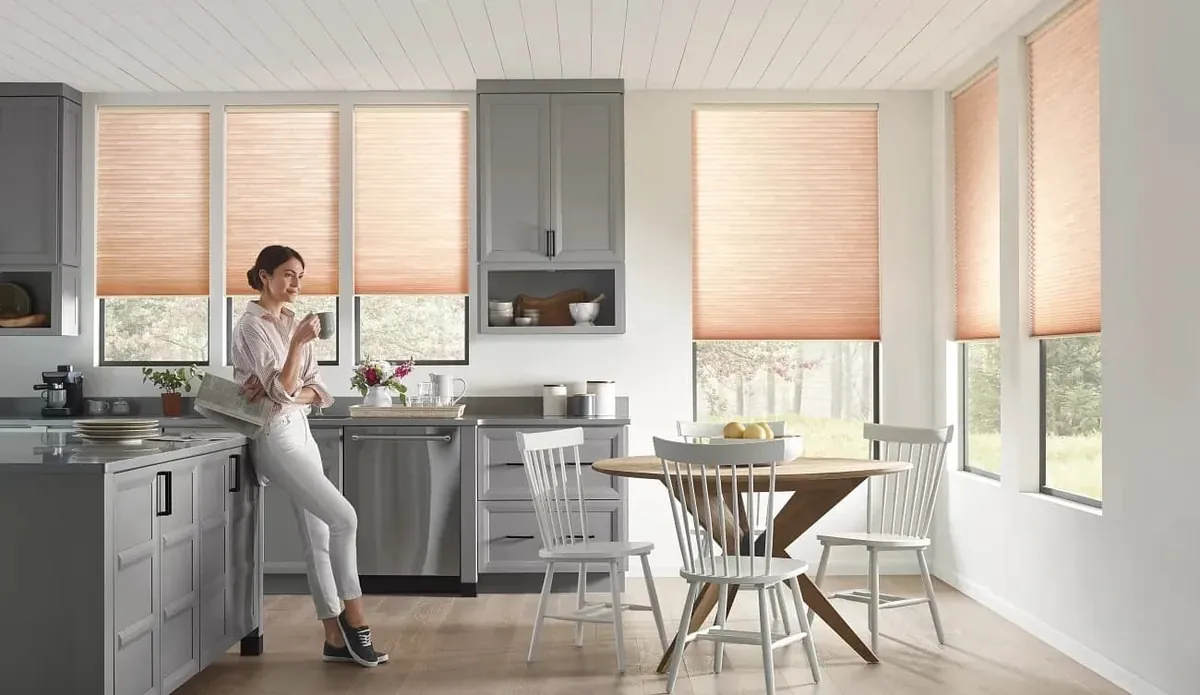
The Victorians near the center
Around the center, Whitman’s Victorians bring a different set of windows: taller sash, deeper trim, and openings that were built by hand and have moved a little over the years. Some are tall and narrow; some, on side elevations and back stairs, are small and oddly placed.
For these houses we measure each opening on its own, top, middle and bottom, and check the depth at more than one point. An inside mount looks best where the frame allows it, keeping the casing in full view. Where an old frame is too shallow or out of square, a shade mounted on the face of the casing is the honest answer. Either way, the shade is made to the measurement of that window, not to a standard size.
Victorians often have a few windows that are hard to reach, such as a stair landing or a high window over a built-in. PowerView motorization lets you raise and lower those shades from a remote, a phone app or a schedule. We plan how each motor is powered at the visit. There is more on our motorized blinds and shades in Whitman page.
Duette and Applause, side by side
People often ask which of the two Hunter Douglas honeycomb lines is better. The honest answer is that they do the same job in the same way, with air held in each cell, and the difference lies in the choices each line gives you. Duette is the broader collection, with the most fabrics, textures and sizes, which matters on the odd-sized openings of an older house. Applause is its own collection with its own colors, and on the standard-sized windows of a post-war cape it often covers everything you need.
Whitman houses tend to mix them sensibly. A Victorian’s narrow side windows and stair landing might need Duette for the size range, while the kitchen and back bedroom go with Applause. A cape done all at once might use one line from top to bottom so every window matches. When we plan cellular shades in Whitman, MA, we put both sets of swatches on the sill so you compare them in the same light, at the same window, at the same moment. The main cellular shades page goes into both.
Kitchens and bathrooms on the side of the house
On a narrow lot the kitchen and bathroom often end up on a side wall, looking across at the house next door. They are also the rooms where you most want daylight: you are cooking, washing up, getting ready in the morning. A bare window gives you light and no privacy; a blind closed tight gives you privacy and no light.
A honeycomb shade sits between those two. In a lighter fabric it lets the room stay bright while softening the view in from a few yards away. In a bathroom, where steam and a small window are the norm, a shade made to the opening covers the glass completely, edge to edge, so nobody across the driveway sees in while you are at the mirror. And in winter, the air held in the cells takes the chill off a small room where you are standing right beside the glass. We often suggest cellular shades in Whitman, MA, for these two rooms first, because the side window is the one that makes them hard to use. Once that window is sorted, a kitchen or bathroom that felt exposed becomes a room you can use with the shade down and the light still on your work.
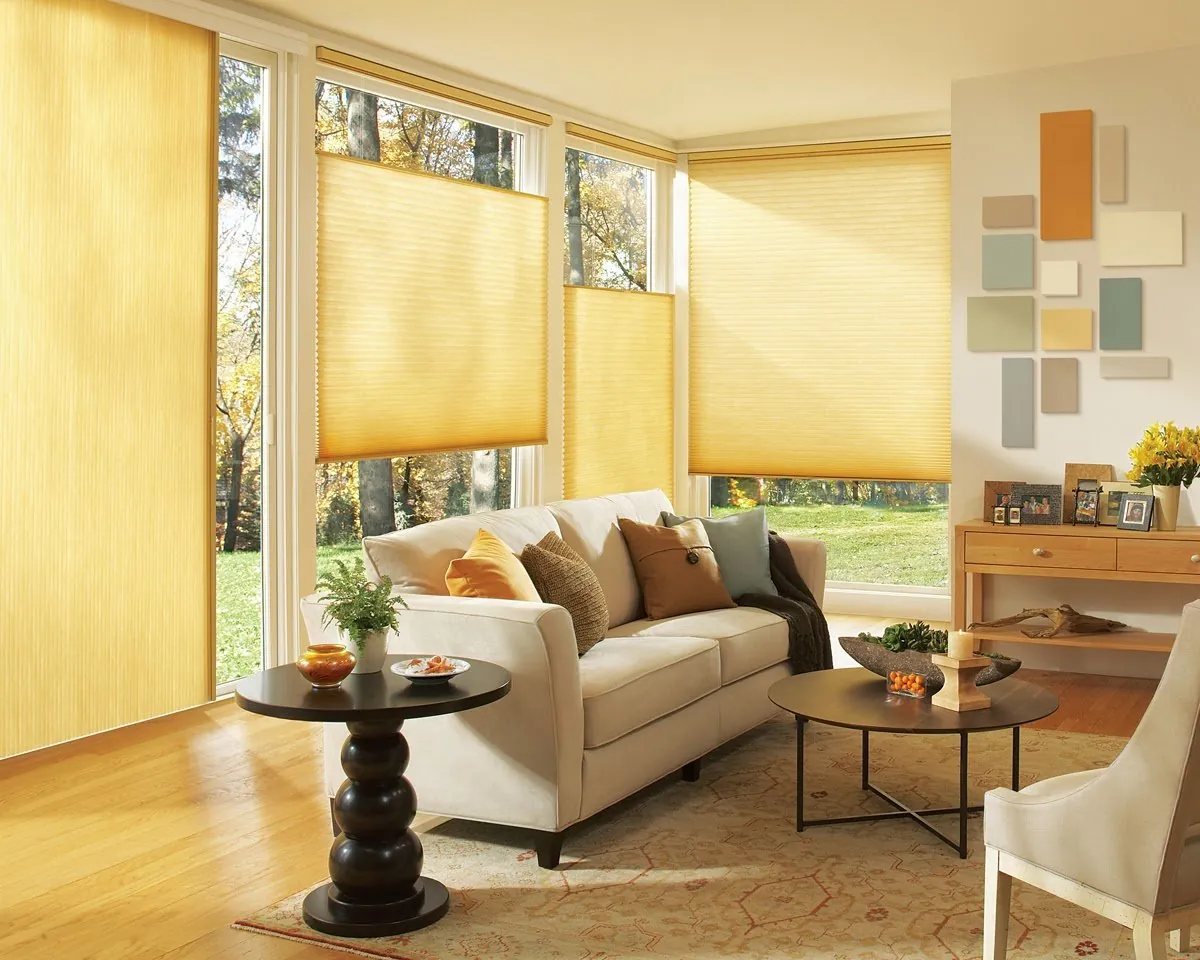
What goes on inside the cell
Slice a honeycomb shade across and you see what gives it the name: a row of hollow, six-sided pockets running the width of the shade. When it is lowered, those pockets fill with air that cannot move. Air that cannot move is slow to pass heat from one side to the other.
So the shade sets a quiet buffer between the glass and the room. On a winter night, the heat in the room stays on the room side a little longer; the cold off the glass stays on the window side. In a small room with one window, where the glass is never far from where you sit, that difference is easy to notice.
In summer the pockets slow the sun’s heat coming through the glass. For an upstairs dormer room or the top floor of a two-family, lowering the shades on the sunny side through the hottest hours keeps the space more comfortable by evening.
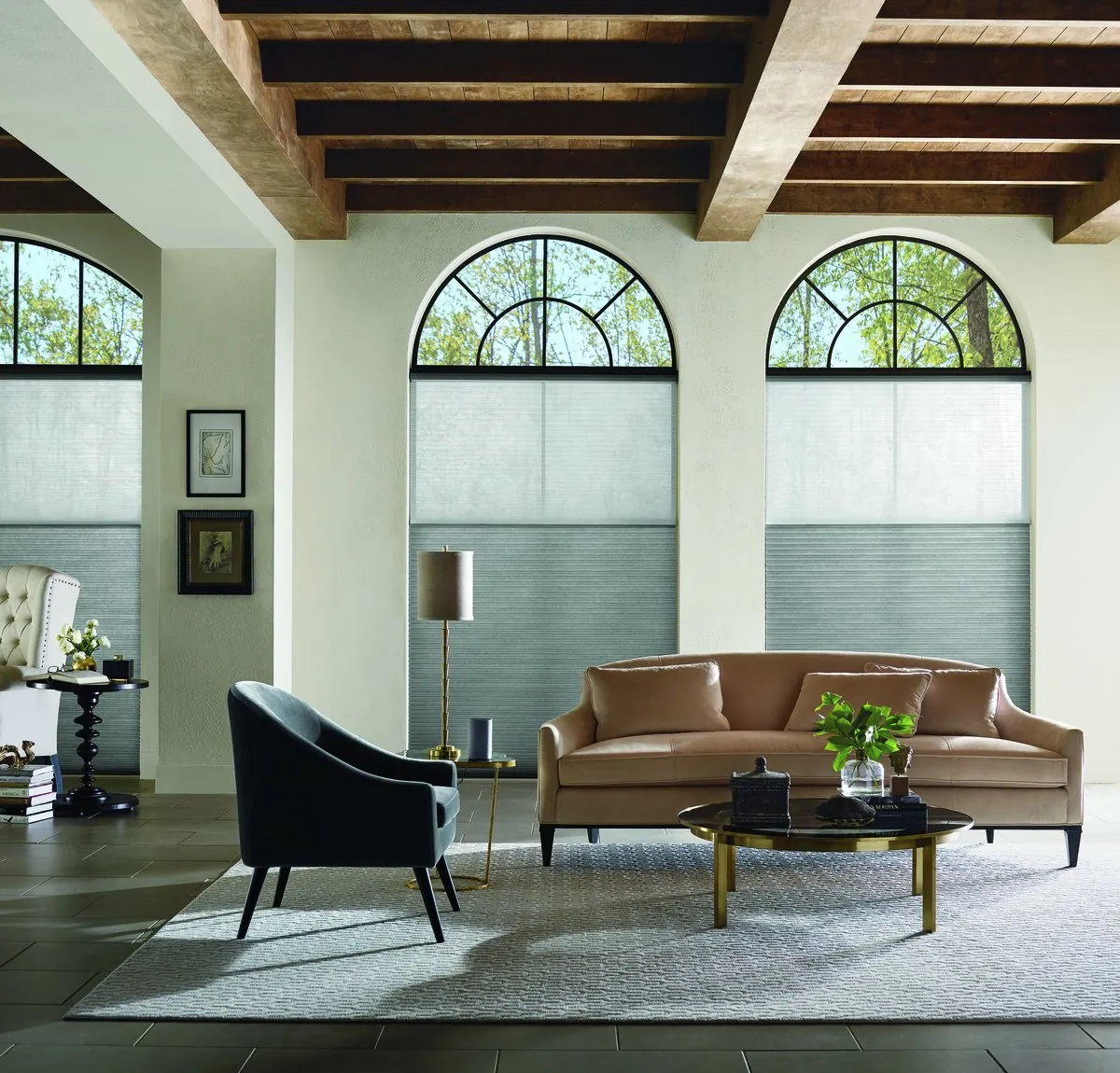
From booking to the day they go up
Whitman is part of our shop-at-home territory run from Canton, so the consultation takes place at your house. Our vans carry samples, which means we can bring the showroom to you. Here is the path from first contact to finished windows:
- You book through Request a Consultation, or use the call button, and we settle on a time.
- We arrive with honeycomb samples in light, medium and heavy fabrics and a range of colors.
- We go through the rooms with you, paying close attention to the small windows and the ones that face the house next door.
- You hold fabrics up at your own glass to see how much light each lets through and how much of the room it hides.
- We measure every window and talk through inside or outside mounting for each.
- You get a free estimate for the shades you are considering, with no pressure on the day.
- When your order arrives, our certified Hunter Douglas installers fit each shade, level the headrails and show you how they work.
You can read more about our shop-at-home service from Canton, and about what happens at an in-home consultation.
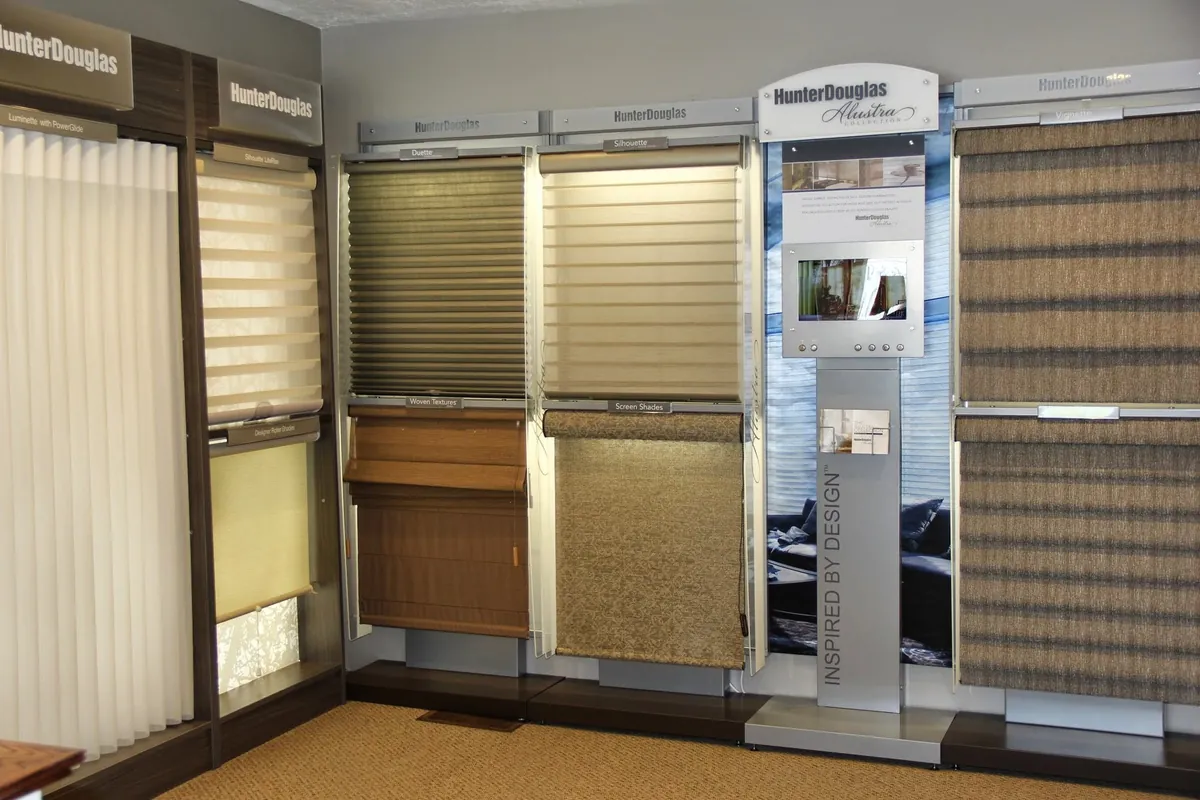
Why a Hunter Douglas Gallery dealer matters on a small window
Blinds & Designs is a Hunter Douglas Gallery dealer. On a house with small and unusual openings, that means the whole honeycomb range is available to you, so you are not forced into whatever happens to fit a stock size.
Every shade is made to measure and fitted by installers certified by Hunter Douglas. If a shade or blind you already own needs attention, we handle blind and shade repairs as well, and if a room calls for something other than honeycomb, we have Hunter Douglas blinds, shutters, roller and roman shades.
For the rest of the house, see custom blinds in Whitman, roman shades in Whitman or plantation shutters in Whitman, or everything we do in town on our Whitman page.

Samples at your door, a showroom when you want one
For a house with small windows and close neighbors, the most useful place to choose a fabric is right at the glass. A swatch looks very different in a bright store from how it looks on a small north window across from the house next door. That is why we start at home.
If you also want help with color and fabric for the whole room, ask about our interior design consultations when you book.
And if you would like to see the shades in a store, the Franklin showroom is our nearest to Whitman.
Questions from Whitman
My older house has very small windows. Will a shade make the room darker?
It does not have to. Honeycomb shades stack slimly when raised, and on the smallest windows we can mount the shade just above the frame so it rises clear of the glass. A lighter fabric also keeps the room bright when the shade is down.
Which fabric works for a window that faces my neighbor’s?
For daytime, a lighter fabric that glows in the sun softens the view in while light still comes through. For rooms you use at night, a heavier fabric hides more. We bring both so you can compare them at that window.
Do both floors of a two-family need the same shades?
No. Each floor can choose what suits it. If you want a uniform look from the street, keeping the outward-facing color the same on both floors does that, even if the two units order at different times.
Can you fit shades on the dormer windows upstairs?
Yes. A honeycomb shade sized to a dormer helps with both summer heat and winter chill in upstairs cape bedrooms, and a darker fabric keeps out the early light.
Do I have to visit a store to choose?
No. We bring the samples to your home. If you would like to see the shades in a store too, the Franklin showroom is the nearest.
Ready when you are
The easiest way to decide on cellular shades in Whitman, MA, is with the fabrics held up against your own small windows and close neighbors. Request a consultation and we will bring the honeycomb samples, measure every window you want covered and give you a free estimate. If you would like to ask something first, use the call button.