
When the next house is only a few yards away
On many Whitman streets, the view out of a side window is the side of the house next door. Two-families stand close together, post-war capes sit on small lots, and the Victorians near the center were built with their neighbors within easy reach. The sightlines between houses are short, which means a kitchen window can look straight into another kitchen and a bedroom can face a bedroom across a narrow strip of grass. That closeness shapes nearly every plan we make for plantation shutters in Whitman, MA.
The other thing Whitman’s older houses share is small windows. The original openings in the older stock are modest, often narrow, and sometimes there is only one in a room. A small window needs a covering that does not swamp it, and a shutter sized precisely to the opening can look as if it were always part of the house.
Every window is planned on site. We hold samples up in your own frames, look across to the house next door with you, and agree what each window needs to hide and what it needs to keep.
Where shutters help most in a close-set house
These are the three situations we meet over and over again on Whitman visits.
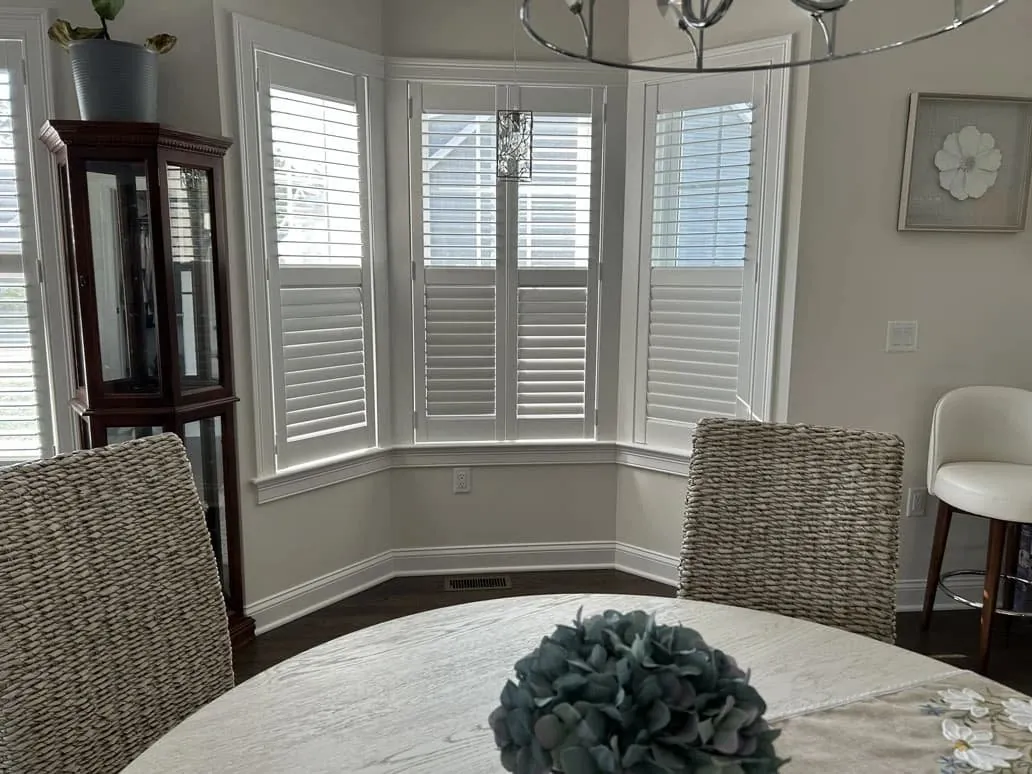
The window facing next door
Side windows a short distance from the neighbor, where the louvers screen the view across while still letting daylight into the room.
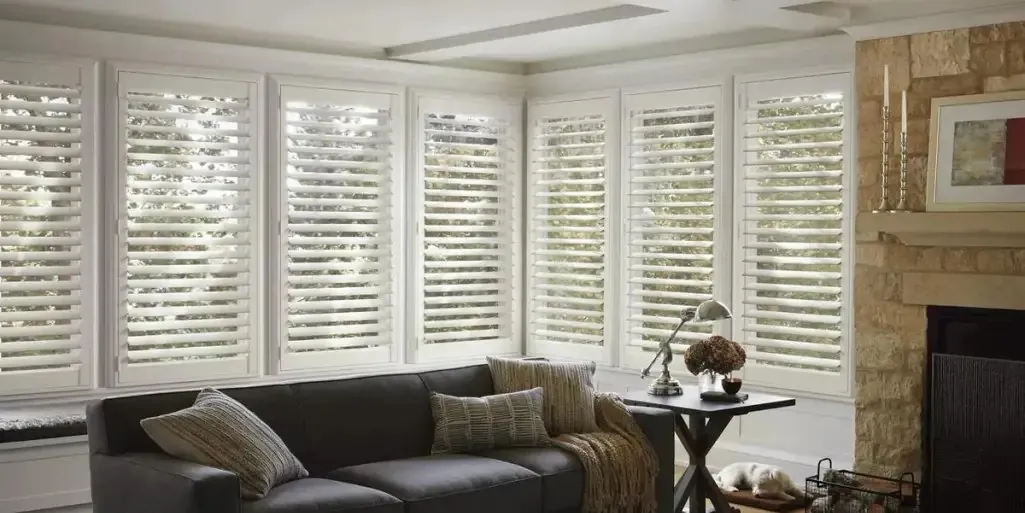
The small original opening
Older windows that are modest in size, where the louver and frame need to be in proportion so the shutter does not crowd the glass.
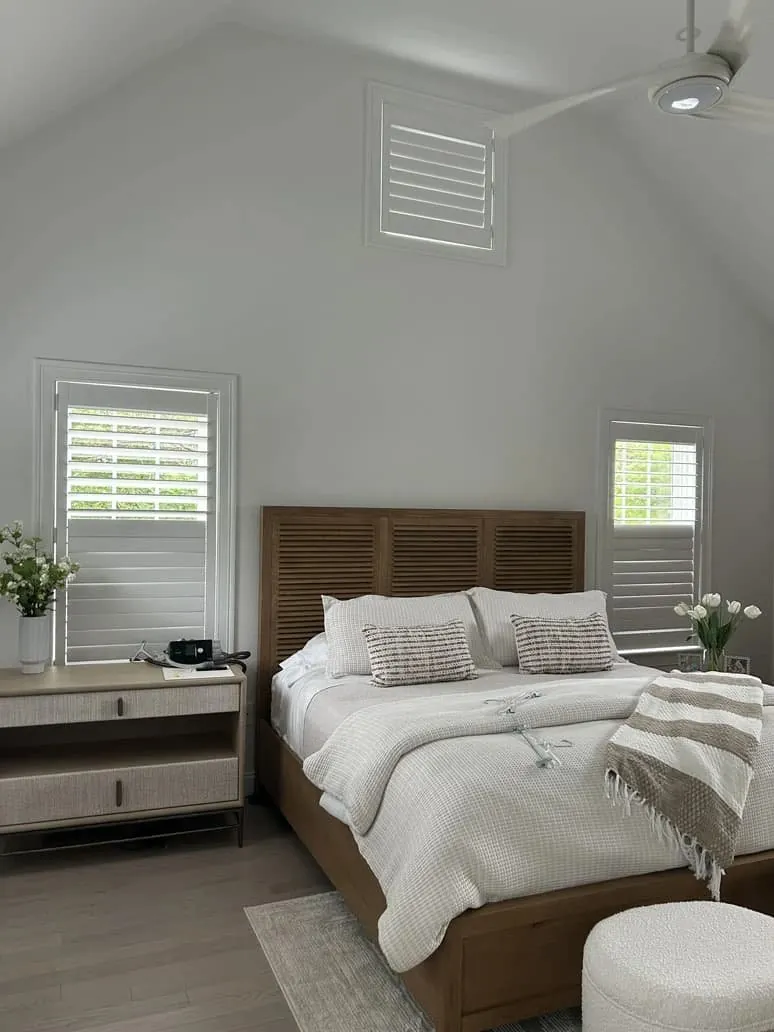
The upstairs unit
In a two-family, the second floor faces a different set of neighbors and a different kind of light from the first.
Short sightlines, and what louvers do about them
A louver is a horizontal blade that tilts. When all the blades in a panel are angled with their top edges pointing into the room, someone looking in from outside, at about the same height as the window, sees mostly the flat faces of the slats. Meanwhile, the daylight that comes through the gaps is directed upward onto your ceiling, where it spreads across the room. You keep the light and lose the view in.
In a Whitman house where the next window is a short way across the side yard, this is the most useful thing a shutter does. It means you do not have to choose between a dark room with a drawn curtain and a bright room that the neighbors can see into. Turn the blades flat when you want the view, angle them for privacy during the day, and close them fully at night.
Short sightlines also mean that a little tilt matters. When the other house is close, a few degrees of angle changes what can be seen far more than it would with a distant view. We show you this during the consultation by standing at the window with the sample and adjusting the louvers while you look across to the neighbor’s house.

Small windows in the older houses
The older homes in Whitman, the Victorians near the center and some of the earlier two-families, have original openings that are smaller than what you would find in a house built later. Many of them are still the first windows the house was given.
A small window deserves careful proportion. If the louvers are too big, only a handful of blades fill the panel, and the shutter looks clumsy. If the frame is too heavy, it eats into the glass and the room feels darker than it should. In most of these openings, a smaller louver and a slim frame keep the shutter in scale, so the window looks finished without losing its light.
Older openings are also rarely perfectly square. Years of settling and many layers of paint leave casings slightly out of true. That is one more reason we measure each window individually, rather than assuming two windows that look the same are the same size. Our guide to shutters for older windows covers what we look for in an older frame.
The Victorians near the center
Closer to the middle of town, the houses get taller and the trim gets richer. Whitman’s Victorians have high front rooms, porches that bring visitors right up to the parlor glass, and windows that are narrow even when they are tall. The neighbors are close here too, but the bigger question is usually how to respect the old woodwork.
A Victorian parlor window often has a deep casing and a wide sill, both worth showing off. How much depth each opening offers affects how the shutter and its frame relate to that woodwork, so we look closely at every window before suggesting how the panels should sit.
The porch is the other local twist. Anyone on the porch steps is only an arm’s length from the front windows. With plantation shutters in Whitman, MA, on a Victorian front, the blades can stay angled through the day so callers at the door see the faces of the louvers rather than the inside of the parlor.
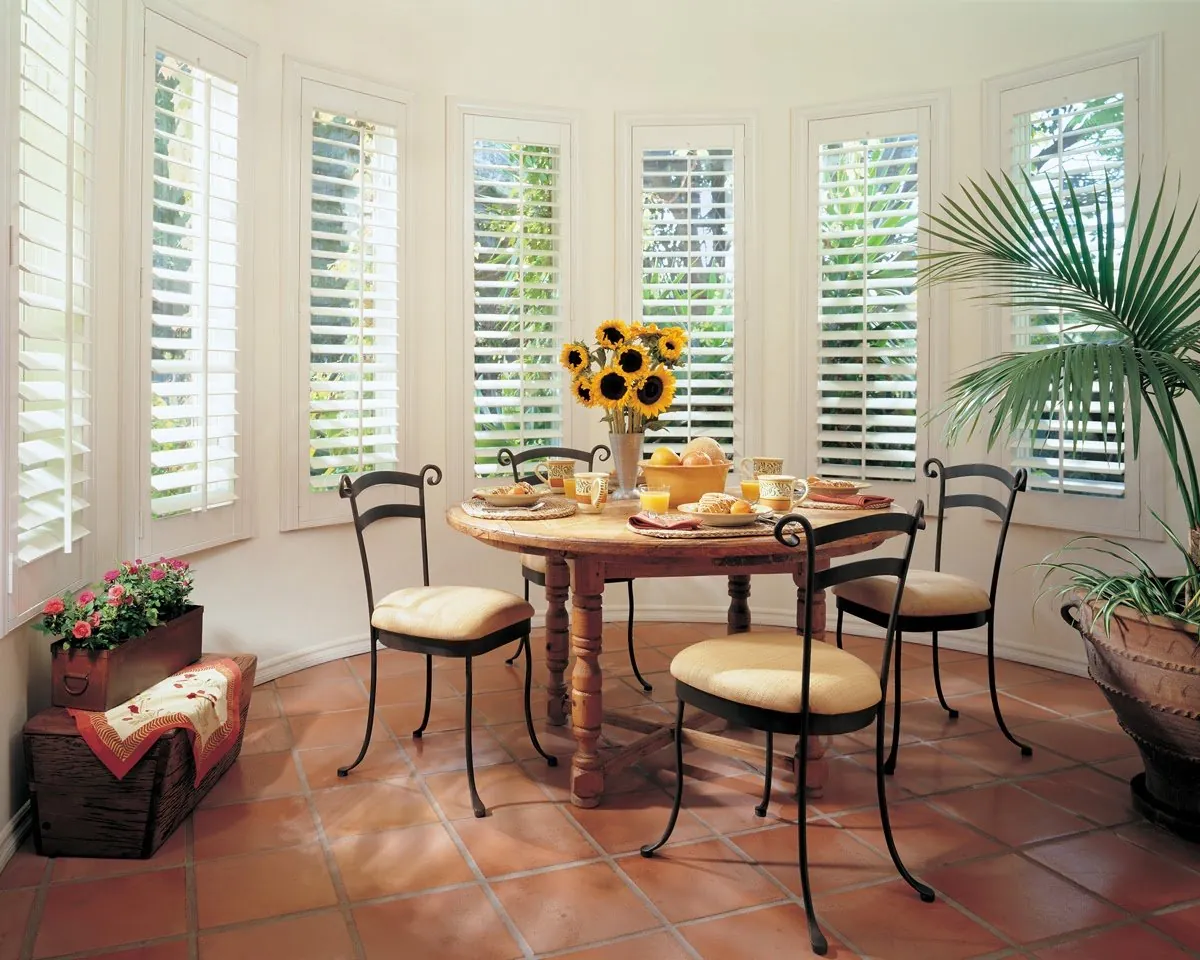
Plantation shutters in Whitman, MA, for two-family houses
Stack two households in one building and each gets a different slice of the neighborhood. Downstairs lives at porch level. The sidewalk, the mailbox, the driveway and the kitchen of the next two-family are all within a few strides of the glass, so the downstairs windows spend most of their day with the blades tipped for privacy, opened wide only on the yard side or late at night with the room dark.
Upstairs sees the street from above. A passerby has to look up to see in, and the front windows can often sit with their panels folded back and the louvers flat. The exception is the side elevation. In Whitman the upper floor of one two-family often lines up with the upper floor of the next, window for window, so the side bedrooms upstairs need just as much screening as anything below.
Whoever owns the building, there is a practical argument for one finish on every front window. Seen from across the street, the two floors then read as one house rather than two different tastes. Inside, each household tilts and folds its own panels however it likes. If you rent or own a single unit, we simply plan your windows, and the rest of the building can follow later or not at all.
The visit, arranged from Canton
Whitman falls within the area our Canton shop-at-home team looks after, so everything begins at your kitchen table rather than at a counter somewhere. A consultant pulls up in a van loaded with Hunter Douglas samples and carries them indoors; our Canton shop-at-home page sets out how that service runs. Put simply, we can bring the showroom to you. In a house where every decision hangs on how close the neighbor is, seeing a louver in your real side window is worth more than any display.
A first appointment usually goes in this order:
- Ask for a time with Request a Consultation, or tap the call button.
- Shutter samples from all three Hunter Douglas collections are carried in.
- You point out the window that feels most exposed, and we begin there.
- With the sample in your frame, you tilt the blades and look across at the next house from where you normally sit.
- Each opening you want covered gets measured.
- Afterward, you get a free estimate for those windows.
Anyone curious about the visit in more depth can read what happens at an in-home consultation beforehand.
Capes on small lots
The post-war capes in Whitman are compact houses on small lots: living room and kitchen on the first floor, bedrooms tucked under the roof behind dormers, and a side wall that faces the neighbor across a slim yard. Their openings are standard sizes, simpler to work with than the older stock near the center.
On the ground floor, the front living room window looks at the street and the side windows look at the next cape. Privacy toward the sidewalk at the front, privacy toward the neighbor at the side, daylight from the back: that is the pattern for most of these houses.
Under the roof, each dormer is a small, deep box with a sloped ceiling on either side. A shutter set into that box leaves the slope untouched and the knee wall free for a dresser or a bed. Because dormer bedrooms are small, a pale finish that throws light back into the room makes them feel larger than they are.
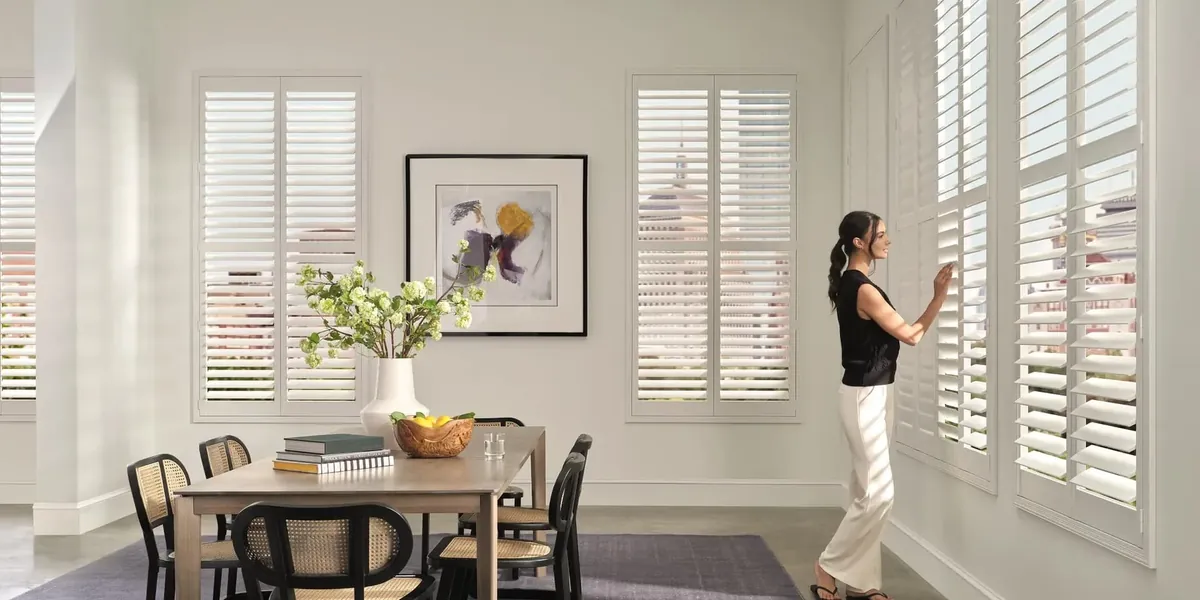
Blade width in a small room
How wide each blade is makes a surprising difference in a small Whitman room. Wide blades mean fewer of them in a panel, a cleaner, more contemporary face and a broader view through the gaps when they lie flat. Narrow blades mean more of them, a closer rhythm and a look that sits comfortably beside old casings and modest sash.
As a starting point, we tend to suggest the narrower blade for the original windows in older houses and a middle width for the standard openings of the capes. Your eye settles it, though, and the fastest way to decide is to hold two widths in the same window and step back to the doorway.
The frame on a modest window
Every shutter sits in a frame, and on a small window the frame claims a share of the opening that would otherwise be glass. That makes its profile a real decision rather than a detail.
Where the casing is handsome, a narrow frame keeps attention on the woodwork and gives up as little glass as possible. Where the casing is worn, patched or thick with paint, a frame with more body draws a fresh, straight line around the window. Frame samples go up against your own trim at the visit so you can judge them where they will actually live.
Kitchens, bathrooms and stair windows
The working rooms of a Whitman house, the kitchen, the bathroom and sometimes a stair landing, often have a single small window facing the side yard and the neighbor.
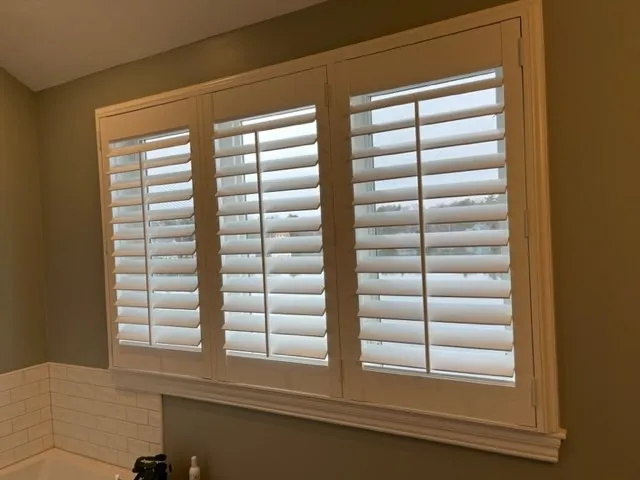
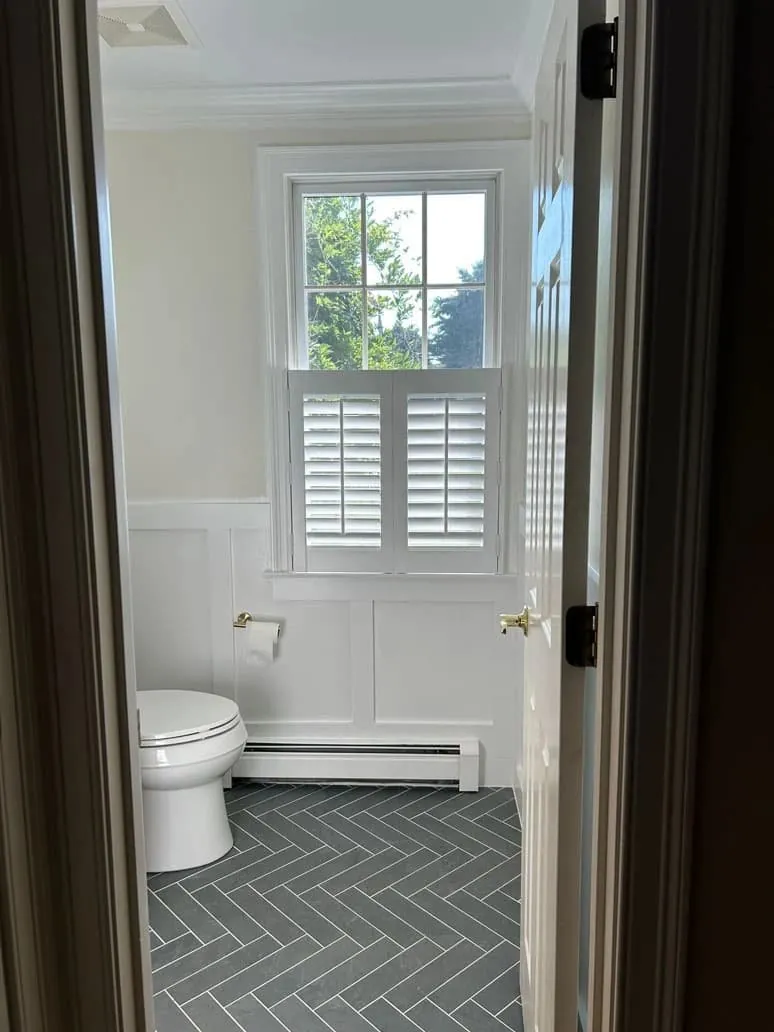
In a kitchen or bathroom, a shutter on just the lower half of the window, the cafe style seen in our own portfolio photos, hides the counter or the tub while the upper glass keeps its view of the sky. Where privacy is needed at every hour, a full-height panel whose blades close completely is the surer choice.
A stair window is often overlooked, but in a close-set house it may face straight into the neighbor’s living room. A small shutter here, matching the rest of the house, closes a gap in the privacy that tends to show up only once every other window is done.
Morning to night on a tight street
It helps to picture a normal weekday. At breakfast, the kitchen on the side of the house is the room most on view, so its lower glass stays screened while the top lets the morning in. Once the house empties out, there is little reason to keep anything open, and on a street where the next window is close, many households leave the side blades angled all day.
Late afternoon brings the low western sun across the back or side of the house. A small tilt keeps it off a screen or a homework table without shutting the room in. After dark, when a lit room on a short sightline is easy to see into, every panel closes with one movement of the louvers. Planning plantation shutters in Whitman, MA, around that daily pattern is what makes them feel natural to live with rather than something you have to manage.
A consistent look on a close street
On a tight street the house fronts are seen together, almost as one long facade. Giving every front window of a Whitman house the same finish, blade width and frame makes your front read as settled and deliberate in that row.
Indoors, sameness helps a small floor plan feel calm. When the living room, dining room and kitchen are all visible from one spot, matched shutters stitch the rooms together. White matched to the trim is the usual choice, though a den with dark paint or wood paneling can carry one of the painted colors in the Hunter Douglas range while the rest of the house stays light.
Palm Beach, NewStyle or Heritance
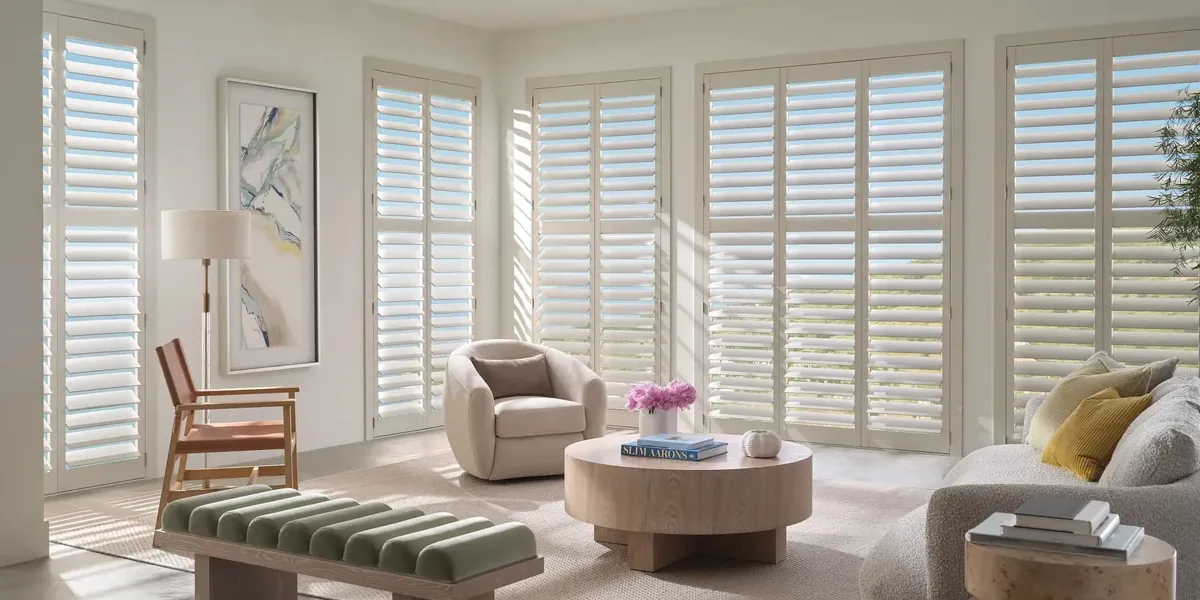
We bring every Hunter Douglas shutter collection to the house: Palm Beach, NewStyle and Heritance. Each one goes into your window frame in turn, so the comparison happens against your trim and under your daylight, not under store lighting.
Mixing is fine. A household might pick one collection for the bath and kitchen and another for the bedrooms, so long as the finish and blade width match wherever two rooms are in view at once. For an overview of all three, see the main plantation shutters page.
Who stands behind the shutters
We are a Hunter Douglas Gallery dealer, and shutters ordered for Whitman homes go in through certified Hunter Douglas installation. In small, slightly out-of-square openings, that careful fit is what lets a pair of panels meet cleanly in the middle.
Beyond shutters, Blinds & Designs handles interior design consultations, repairs on window coverings you already have, and window covering automation. Samples travel to you, so a showroom trip is optional; when you do want one, our Franklin showroom is the closest.
Other choices for Whitman windows
Shutters are not the answer in every room. Where a bedroom has to go properly dark, cellular shades in Whitman may serve better, and a back door onto the yard is often an easier fit for roller shades. Everything we offer in town is gathered on our Whitman page.
Questions from Whitman
My kitchen window faces my neighbor’s kitchen. What works?
Covering only the lower half of the window hides the counter and keeps the sky in view. A full-height panel with the blades tipped up does the same job and shuts completely after dark.
Will a shutter make a small window look smaller?
Not when it is in proportion. Narrower blades and a slim frame keep it in scale with an older, modest opening.
I rent the upstairs of a two-family. Can I do just my windows?
Yes. We plan your unit alone, around the views and the light your floor gets.
Is there somewhere to see samples without a trip?
Your own living room. Our Canton shop-at-home team brings them to Whitman houses, and Franklin is the closest showroom if you want to visit one as well.
Do I pay for the estimate?
No. Once the windows you picked are measured, the estimate is free.
The window across the side yard comes first
Every Whitman house seems to have one: the side window that stays covered all day because it looks straight at the neighbor. Mention it when you book. The consultant will set up there first, louver samples in hand, so you can tilt the blades while looking across the side yard. That one window tends to decide the blade width and finish for the rest, and from there we can lay out plantation shutters in Whitman, MA, for a single room or every small opening in the house, then send you a free estimate. Use Request a Consultation below, or the call button if a quick question comes first.