
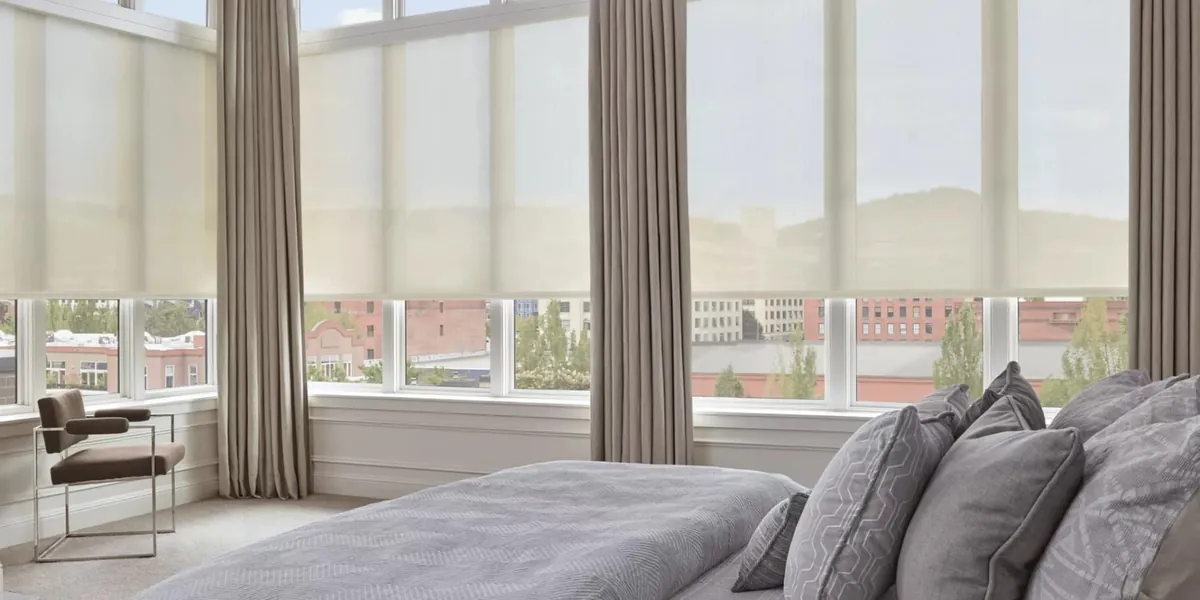
Old sash, open land
East Bridgewater still has room to breathe. Antique colonials and farmhouses stand on larger lots, often well back from the road, with fields, stone walls or trees between one house and the next. Their windows are the small, deep-set sash of an older way of building, thick walls and modest panes. Closer to Route 18 and Central Street, the post-war capes and newer colonials bring regular modern openings and a slightly closer pattern, though the town as a whole stays low in density. Those are the houses we have in mind when we plan roller shades in East Bridgewater, MA.
Low density changes the usual conversation. On a crowded street the first question is privacy from next door. Here it is more often about light: the sun arriving across open ground with nothing to soften it, a view across a field you want to keep, and a dark country night when a lit window can be seen from far down the road.
A roller is well matched to that job. It is a plain, flat panel that rolls neatly out of the way, so it never crowds a small old window, and its fabric can be chosen anywhere from an open solar screen that keeps the view to full blackout for a bedroom that faces the morning.
Roller lines that suit the town’s houses
These three Hunter Douglas lines cover the antique sash and the newer openings alike. Every sample comes to your house in our van.
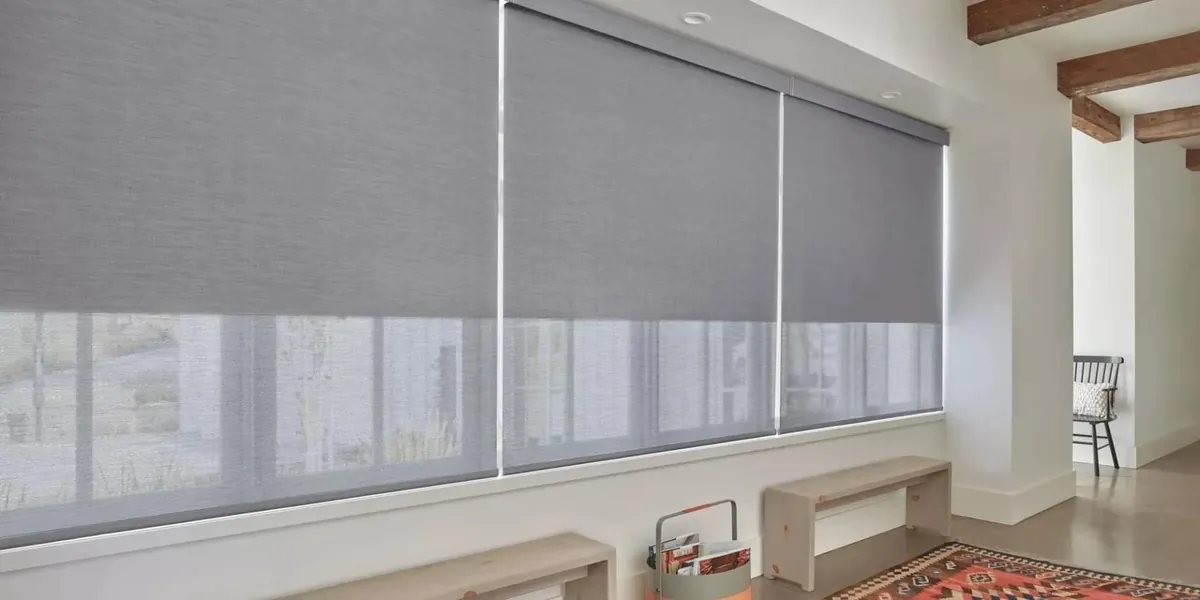
Designer Roller
Plain and textured cloth from light filtering to blackout. The workhorse for bedrooms, kitchens and the small sash in an older house.
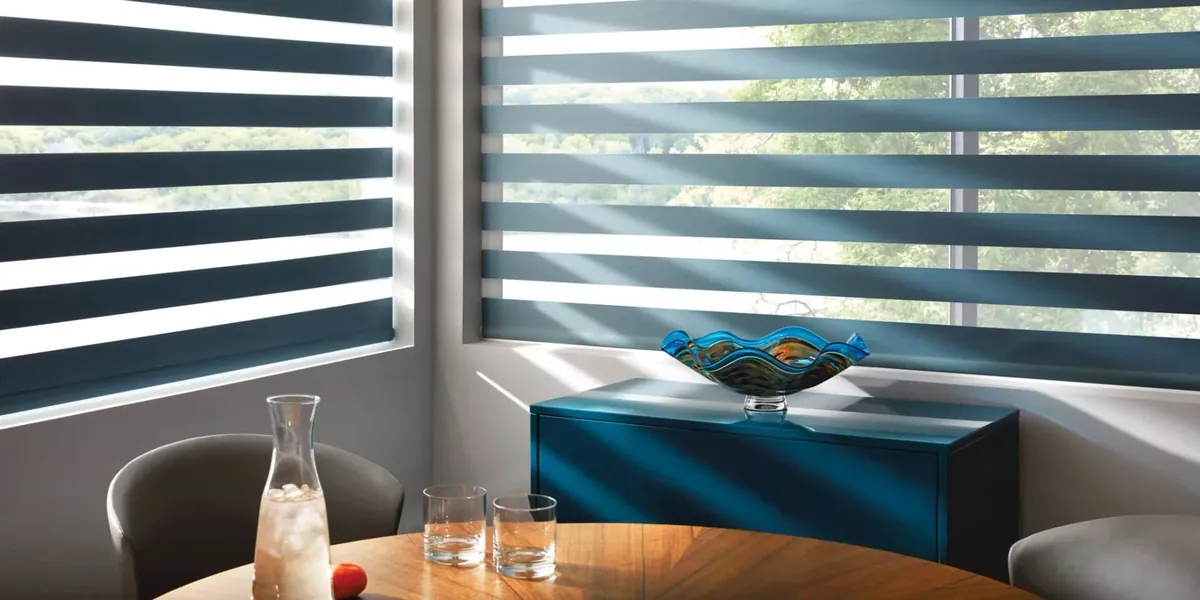
Designer Banded
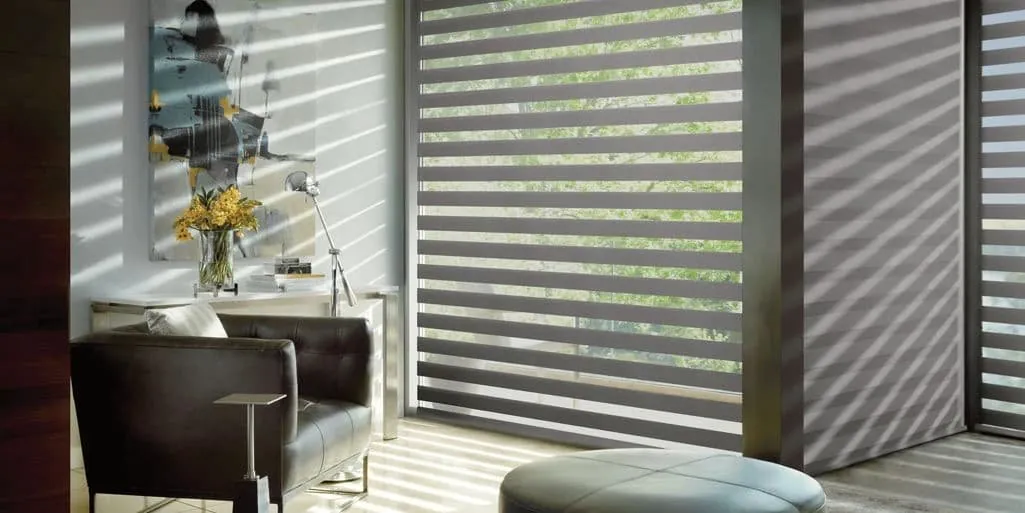
Sheer and solid stripes on two layers, so a window moves between view and cover. Useful in a corner room with windows on two walls.
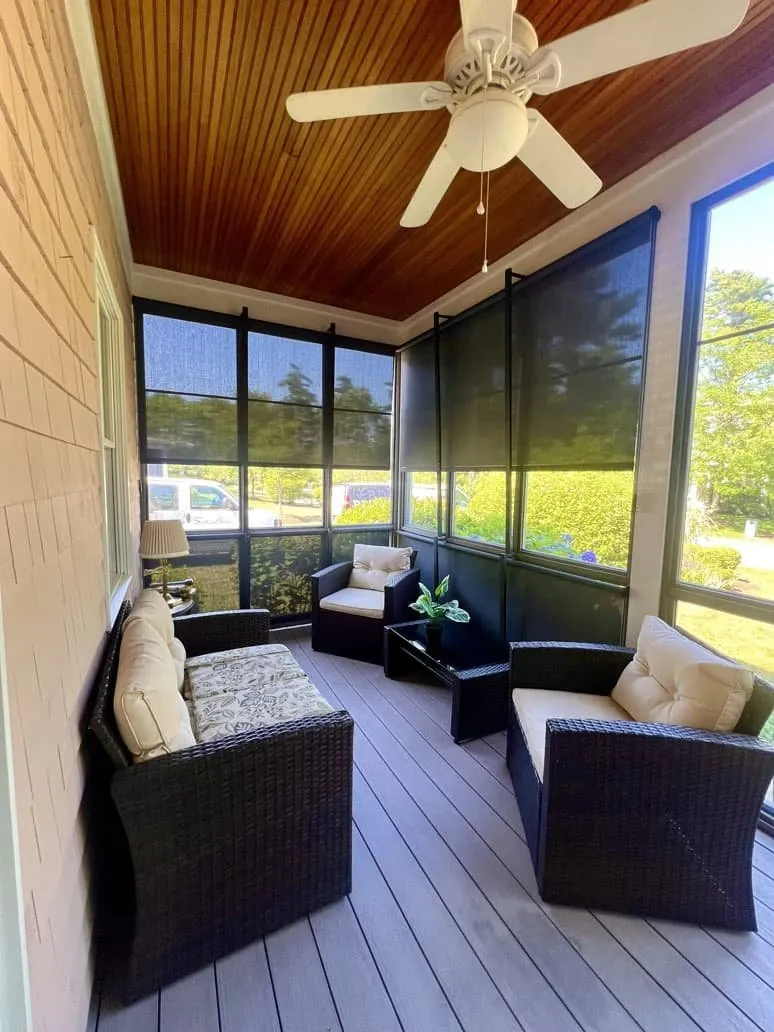
Designer Screen
Solar screen fabric that tames sun coming across open land while the fields and trees stay in sight. Good for porches and family rooms.
Deep-set sash in an antique colonial
The older houses here were built with thick walls, and their windows sit well back in the wall. That deep reveal is part of their charm, and it is also a gift for a roller. When the opening has depth, the shade can sit right inside it, so from the room you barely see the roll at all and the old casing stays fully on show. Raised, the fabric tucks up under the head of the opening and the whole of each small pane is free to let light through.
Small sash makes that slimness matter. In an antique house the windows are often modest, and each room may have only one or two. A covering that hangs below the head when raised, or adds a bulky stack, takes light away from rooms that do not have much to begin with. A roller avoids both.
Old frames come with their quirks. A house that has stood this long has usually shifted a little, and openings that look alike from the yard can differ by a fraction from top to bottom. Some have sash locks or old hardware sitting in the reveal. We look at each opening in turn and settle the mount with you before anything is ordered, so the finished shade sits straight in a frame that may not be.
Farmhouse rooms with windows on several sides
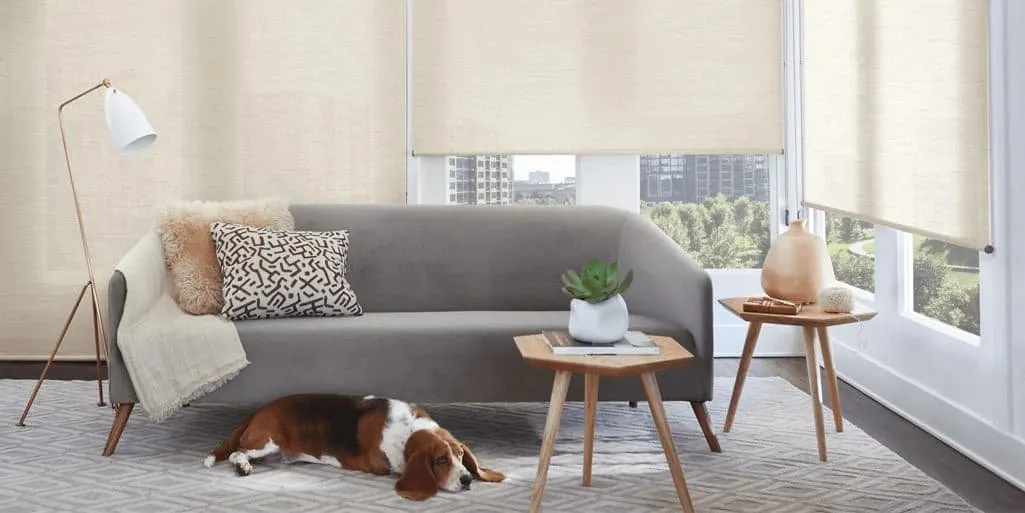
Farmhouses tend to grow in stages, with an ell, a back kitchen or a later wing added on. The result is rooms with windows on two or three walls, each facing a different way. A kitchen might take the morning sun through one window, the midday sun through another and look out over the barn or the garden through a third.
That variety is the best argument for choosing fabric room by room, and sometimes window by window. A light filtering roller on the sunniest window spreads the glare without darkening the room. A more open screen on the window with the best view keeps it. A banded roller on a corner window lets you open the view in the morning and close it in the afternoon when the sun comes round.
The aim is to keep the character of an old farmhouse room, bright, plain and practical, without letting the sun take over. Rollers suit that, because they are unfussy and disappear when they are not needed.
Capes and colonials off Route 18 and Central Street
The newer neighborhoods near Route 18 and Central Street are easier ground. Post-war capes have compact rooms and standard openings. The newer colonials are larger, with a front living room and dining room, a family room at the back, often with a slider, and bedrooms upstairs.
These houses sit a little closer together than the farmhouses, but most still have more room around them than a town center. Privacy is part of the plan, mostly on the front windows and any side windows that face a neighbor, but it rarely dominates.
In a cape, light filtering cloth at the front, room darkening in the dormer bedrooms and a pale weave in the kitchen cover most of the house. In a colonial, the family room slider is the window most worth thinking about, because it takes the afternoon sun and gets used all day. A solar screen keeps that room comfortable with the yard in view, and a matching roller on the door keeps the wall consistent. Upstairs, room darkening or blackout in the bedrooms is the usual pick.
Porches, ells and sunrooms
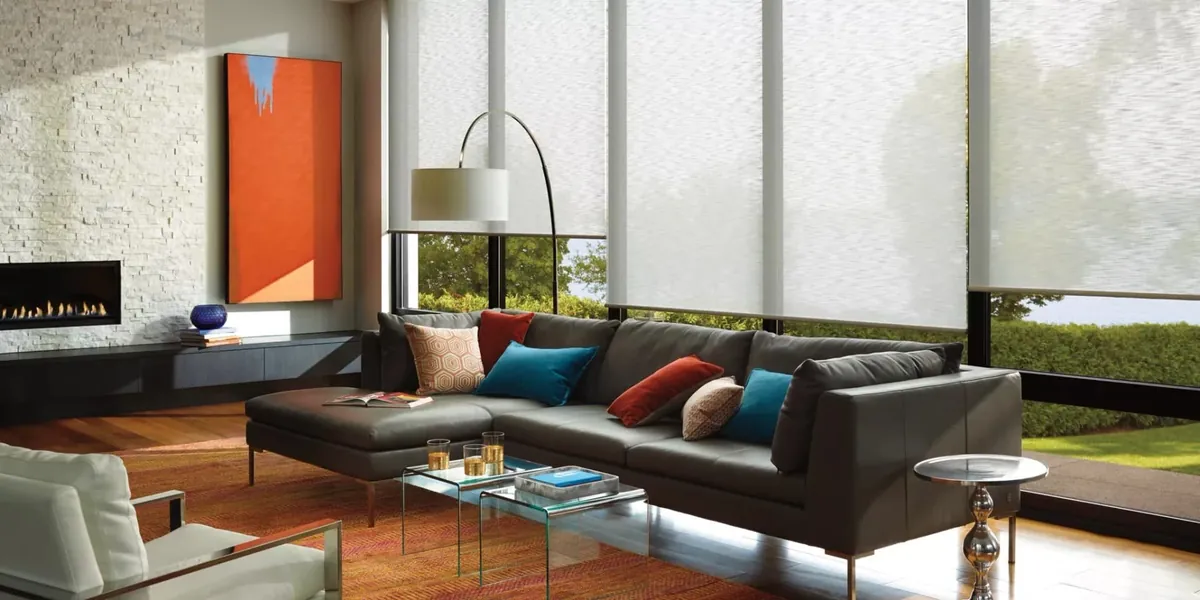
Many older houses in town have gained a porch, a sunroom or a glassed-in ell over the years, and many newer colonials have a sunroom or a three-season room off the kitchen. Those rooms are mostly glass, and on open land they take the sun from several directions with nothing to block it.
A solar screen is the natural fit, because it lets those rooms stay what they were built for: a bright place with a view. Lowered, a screen softens the sun across every pane while the garden, the field or the woods stay visible. Raised, it disappears at the top of each opening. Matching the screen color on every window keeps a glassy room looking calm rather than busy. When we plan roller shades in East Bridgewater, MA, for a porch or sunroom, we look at which walls take the strongest sun at different times of day, because one room can need a tighter weave on the west side than on the east.
Light with nobody looking in
On a big lot with no house close by, many rooms barely need privacy in daylight at all. That opens up choices that would not work on a busy street. A family room looking over a field can take a fairly open solar screen, because nobody is near enough to see in. A kitchen facing the back of the property can stay almost fully open, with a light roller lowered only when the sun is at its strongest.
What those rooms do need is control over the sun. With nothing to shade them, windows facing south or west can get bright enough to make a room uncomfortable to sit in and to wash out a television or a computer. A roller lets you bring the light down to a comfortable level and raise it again when the sun moves on.
Dark nights in a low-density town
The other side of open land is the night. Away from streetlights, East Bridgewater evenings are properly dark, and a lit window stands out from a long way off. A room that feels completely private by day can be very visible after sunset from the road, a driveway or the next property across the field.
That is where the fabric choice matters. Light filtering cloth is private by day but shows shapes once lamps are on. Solar screens are open by day and become see-through at night. For the rooms you use in the evening, especially those facing the road, a room darkening fabric gives the steadiest privacy. In a room with a screen for the daytime view, a second, denser roller on the window nearest the road, or a banded roller that closes fully, gives you an evening option.
Bedrooms add one more point. With no streetlights, a dark bedroom is easy, but the early sun across open ground is not. An east-facing bedroom in a farmhouse can be bright at first light. Room darkening or blackout fabric gives you the choice of when the day starts.
Roller shades in East Bridgewater, MA, against strong sun
When sunshine crosses a field before it reaches the glass, a solar screen is usually the first fabric we unroll. What sets one screen apart from another is openness: picture a fine mesh, with the holes a little larger or a little smaller. Larger holes leave the tree line crisp and the room bright, though some of the sun’s dazzle comes in with them. Smaller holes settle the light down and keep the room more private by day, while the field outside turns slightly misty.
The fabric’s color nudges things further. Charcoal and bronze screens almost vanish when you look out through them, which helps in a room with a television. Ivory and stone screens light up when the sun strikes them and look more closed from the yard.
On a big lot, the screen is often the main shade in a family room, porch or sunroom, with the evening plan coming from a denser roller on the window nearest the road. On the deep-set sash of an antique house, a screen inside the reveal looks especially neat.
Matching fabric to room
Most houses in town end up with a short list of fabrics:
- Light filtering for kitchens, front rooms and any window where you want soft daylight and a blurred view.
- Room darkening for bedrooms and rooms used in the evening that face the road.
- Blackout for east-facing bedrooms, nurseries and any room for daytime sleep.
- Solar screen for family rooms, porches and sunrooms facing open land.
An antique colonial might use light filtering in the small front-room sash, blackout in an east bedroom and a screen in a back room looking over the fields. A newer colonial off Route 18 might use light filtering at the front, room darkening upstairs and a screen on the family room slider. Choosing roller shades in East Bridgewater, MA, this way puts the right fabric in each room without the house looking patchwork from outside.
Color on an old house
On an antique house the outside matters. Many have been carefully kept, with painted trim and traditional colors, and a bright or dark shade in a small window can look out of place from the road. Neutral whites, creams and soft grays are the safe outward colors, and they sit well with old glass and painted sash.
Inside, there is more freedom. A richer fabric in a front parlor or a pattern in a child’s room does not change the house’s face. In a newer colonial, where the outside is more uniform, the same principle holds: one outward color across the front, and the inside can vary.
PowerView for a big house
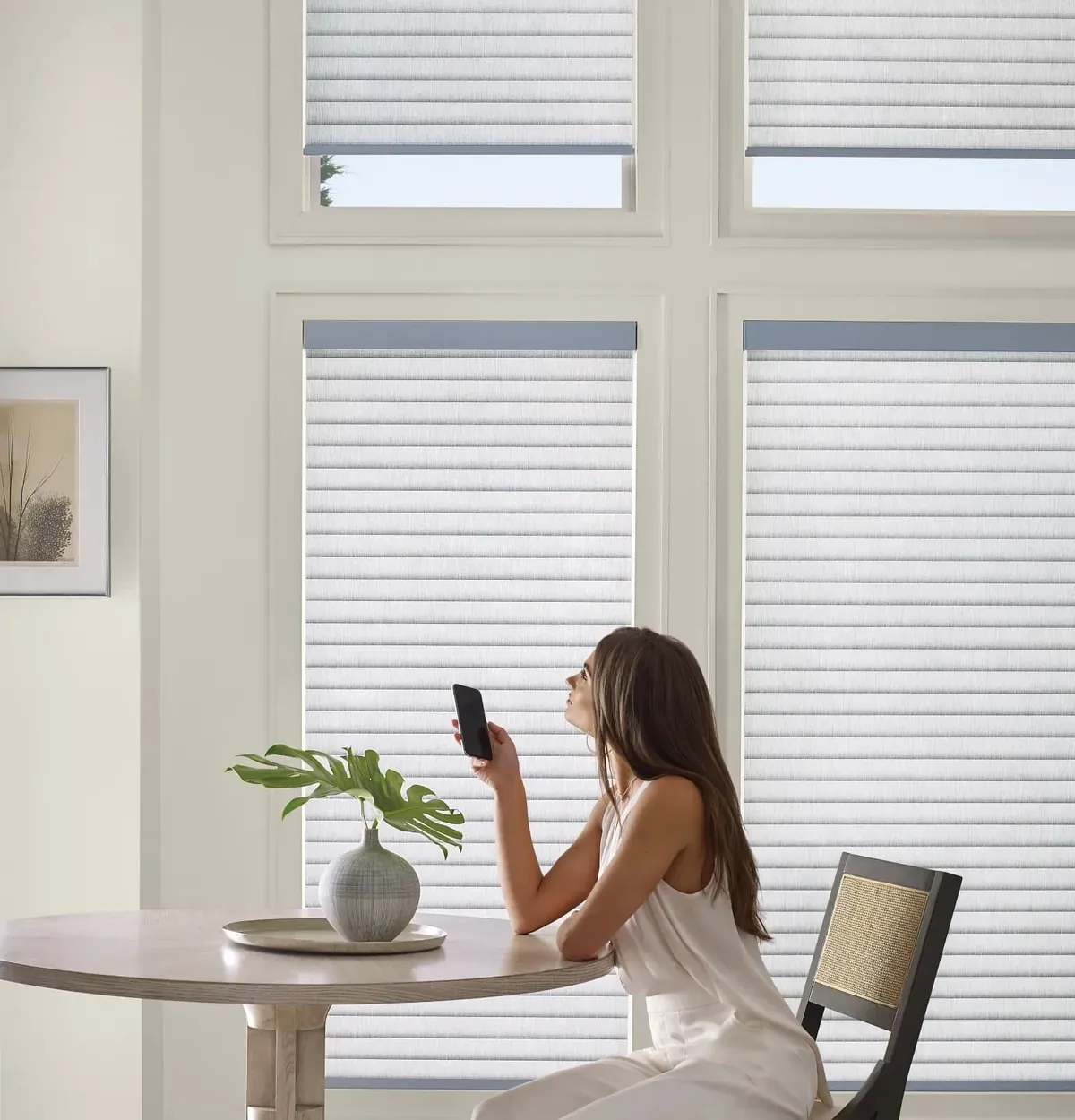
Hunter Douglas PowerView can be added to these rollers, so they move from an app, a remote or a schedule. In a larger colonial or a rambling farmhouse with many windows facing different ways, a schedule is the real benefit. Shades on the sunny side can lower in the afternoon, the rooms facing the road can close at dusk, and bedroom shades can rise at the time you choose.
Motorization also suits windows that are hard to reach, such as a stair window in a colonial or a high window in a farmhouse wing. Powering each motor is something we sort out on site, one window at a time. The page on motorized blinds in East Bridgewater goes further.
Designer and Alustra
Two Hunter Douglas families supply every roller on this page. Designer is the dependable one, with smooth weaves, textures, banded stripes and screens that will dress a farmhouse kitchen as happily as a colonial’s upstairs hall. Alustra brings the finer cloth. Its Alustra Woven Textures fabrics have an earthy, hand-loomed look that feels at home beside wide old floorboards and painted paneling.
A common pattern in town is Alustra in the parlor or keeping room and Designer through the rest of the house. You can see the entire family on the main roller shades page, and both come out of the van at the visit.
Choosing at home
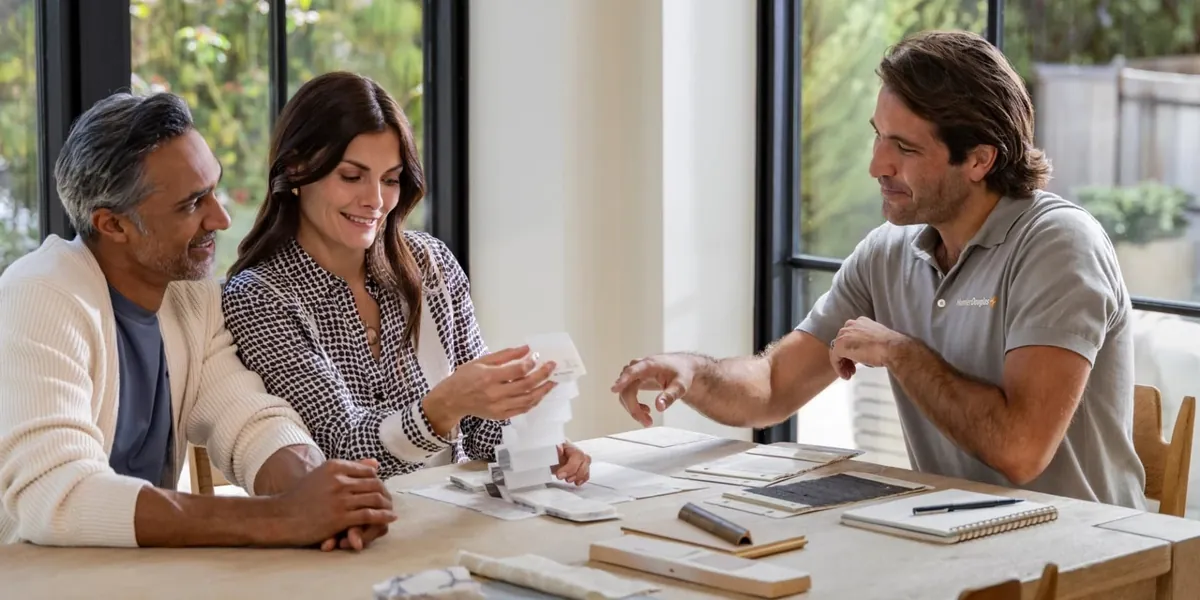
Our shop-at-home consultants cover East Bridgewater, which means you pick fabric where it will hang, looking at your own field or yard through the glass. The vans are loaded with samples, so in effect we bring the showroom to you. The Canton shop-at-home page tells you more about the territory.
- Set a time through Request a Consultation or the call button, and tell us rollers are on the list.
- Your consultant pulls in with cloth from both Hunter Douglas roller families.
- The tour begins in the brightest rooms and the ones closest to the road.
- Screens, light filtering cloth and blackout are tried in the windows that call for them.
- Each opening is measured, the deep-set sash with particular care.
- A free estimate stays with you while you think it over.
Interior design consultations are offered too, and can share the same appointment; read about them on our interior design consultations page.
What a Gallery dealer brings
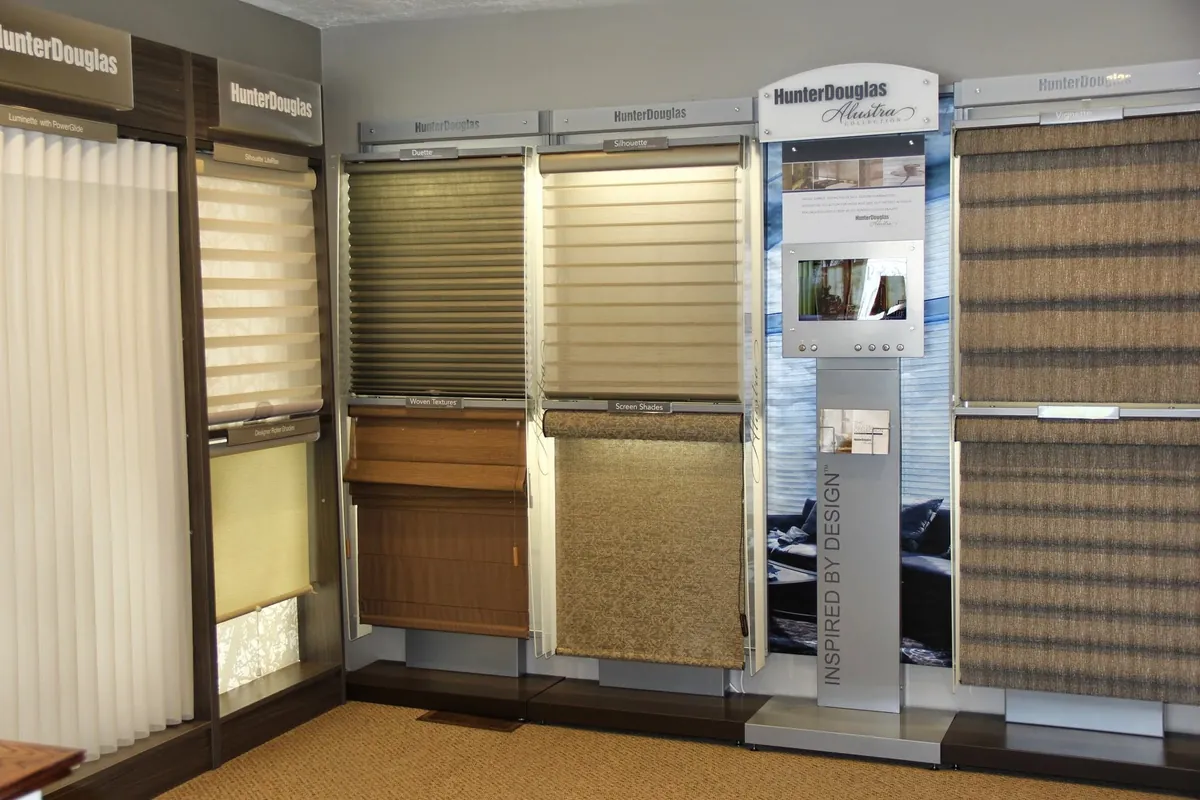
Being a Hunter Douglas Gallery dealer means the entire roller catalog, Designer and Alustra both, is open to Blinds & Designs customers, and installers certified by Hunter Douglas put every shade up.
Hunter Douglas blinds, shutters, cellular and roman shades come from the same source, and older shades that have stopped working can come to us for repair. A drafty farmhouse bedroom might be better served by cellular shades for East Bridgewater, and the East Bridgewater page gathers all our services here.
Prefer to browse in a store too? Franklin is the closest of our showrooms; see the Franklin showroom page.
Questions from East Bridgewater
Our antique colonial has small, deep-set windows. Will a roller fit?
Usually very well. The depth of the reveal often lets the shade sit inside the opening, almost out of sight, with the old casing on show. We check each frame before suggesting a mount.
We have no close neighbors. Do we still need privacy fabric?
By day, often not. At night, a lit window can be seen from the road or across a field, so rooms you use in the evening usually want a denser fabric.
Which shade suits a room that faces open fields?
A solar screen is the usual choice. It cuts the glare and keeps the view, and its openness can be chosen to suit how bright the room gets.
Is there a showroom in East Bridgewater?
There is not. We drive the samples out to you instead, and Franklin is our closest showroom.
Do you charge for the estimate?
Never. Estimates cost nothing and commit you to nothing.
See the fabric in your own light
On open land the light is what you are really choosing for, and it shifts from one room to the next. Ask for a consultation and we will bring both roller families out to the house, hold screens and blackout at your brightest windows and fit the cloth to the deep-set sash in the oldest rooms, then leave a free estimate on the table. Roller shades in East Bridgewater, MA, are much easier to judge with the field outside the glass. A question first? The call button near the top reaches us.