
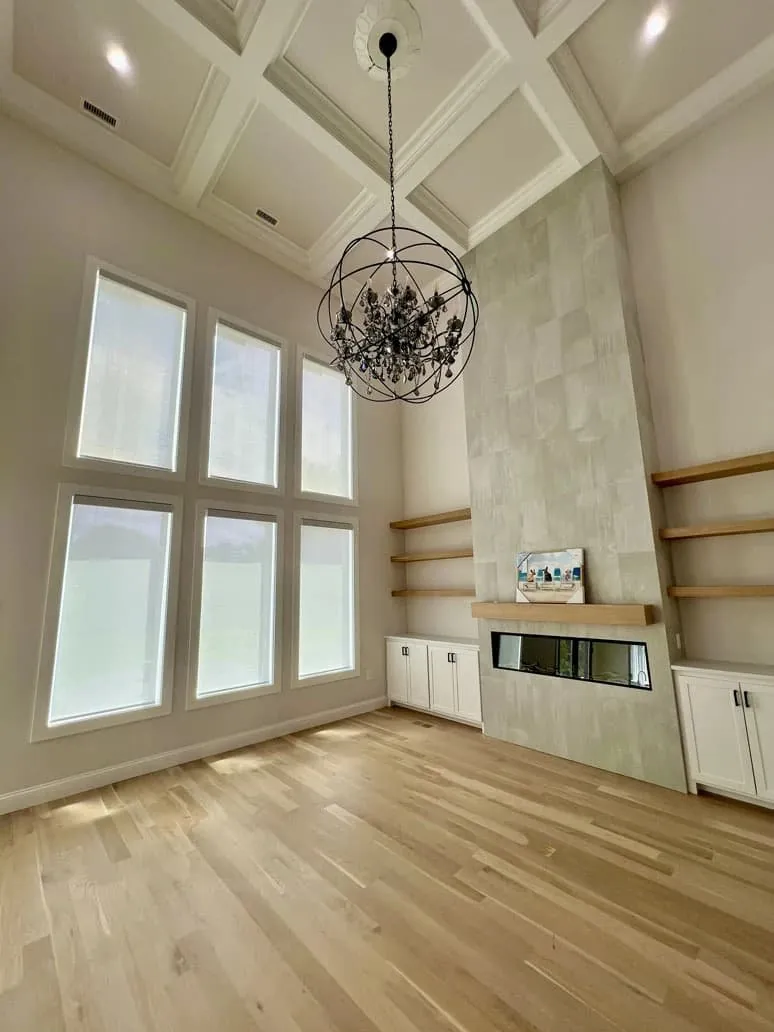
Hard light and tall glass
Out on the outer Cape the light changes character. With little land to soften it, it arrives hard and direct, bright enough to bleach a sofa and sharp enough to make a screen unreadable. In Orleans that light meets two very different kinds of house. Near the village center there are antique capes with small, low windows. Out toward Nauset and Pleasant Bay, the newer houses are built around the water, and their bay-facing glass often runs from floor to ceiling.
So window treatments in Orleans, MA, cover a very wide range. On one street you might be fitting a narrow cape window barely wider than a shoulder; on the next, a wall of glass two stories high. Both have to stand up to the same strong sun.
Much of the town is seasonal, too. A house that sits closed for part of the year still has that light working on it every day, and planning for the empty months is part of the job.
Window treatments in Orleans, MA, by service
Each card leads to an Orleans page with more detail about that service. Start with the room that troubles you most, or let one visit cover the whole house.
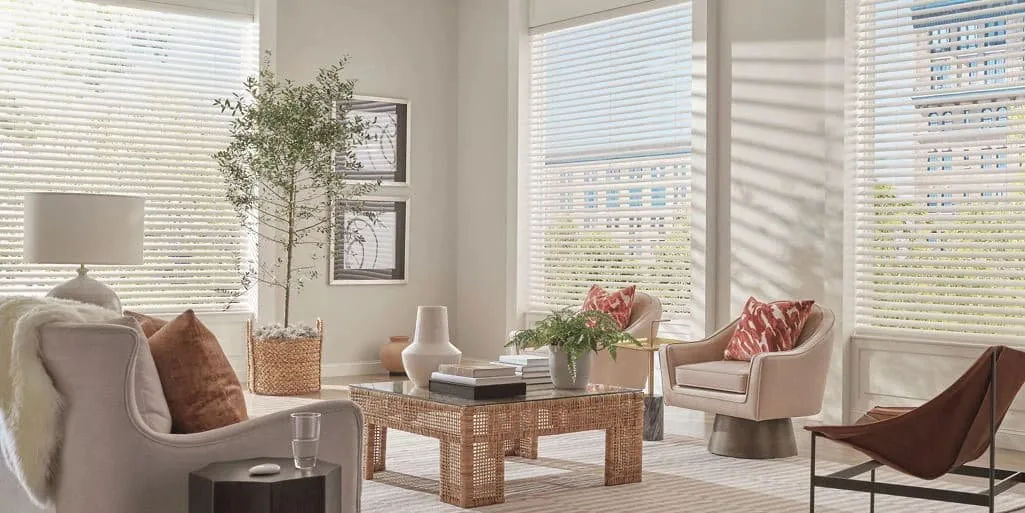
Blinds
Wood, faux wood and metal slats that tilt to send strong sun up to the ceiling, sized for a small cape window or a tall new one.
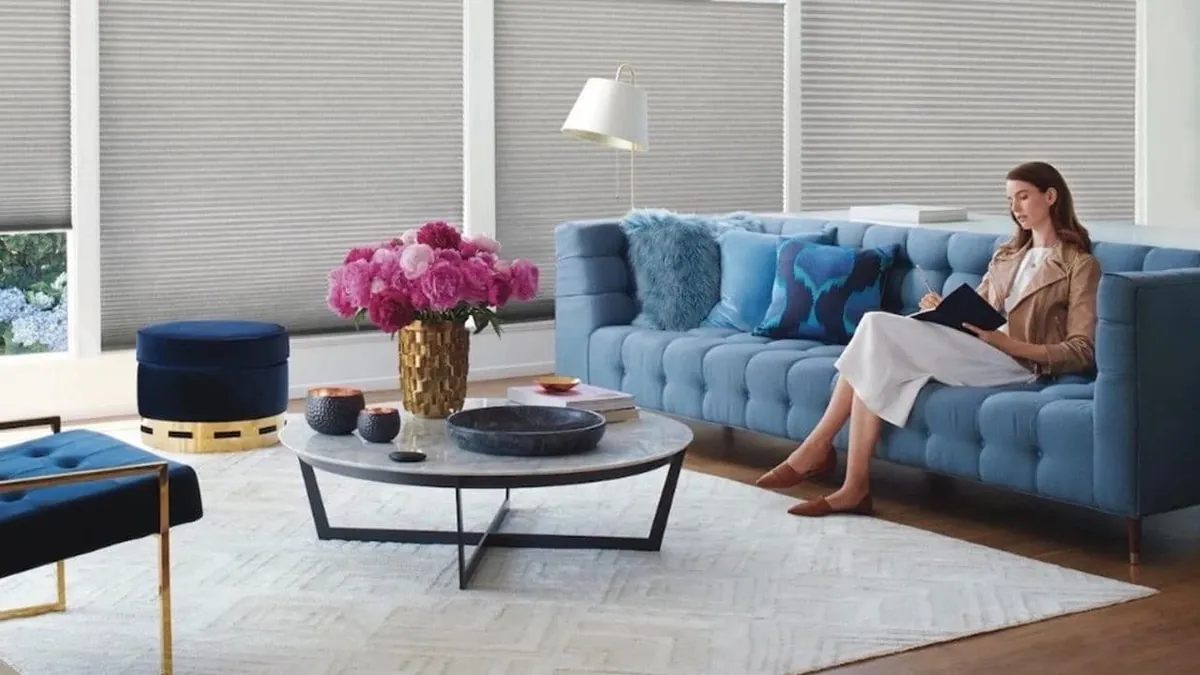
Honeycomb shades
Duette and Applause cells that buffer the glass from summer heat and winter cold, and protect what sits behind them.
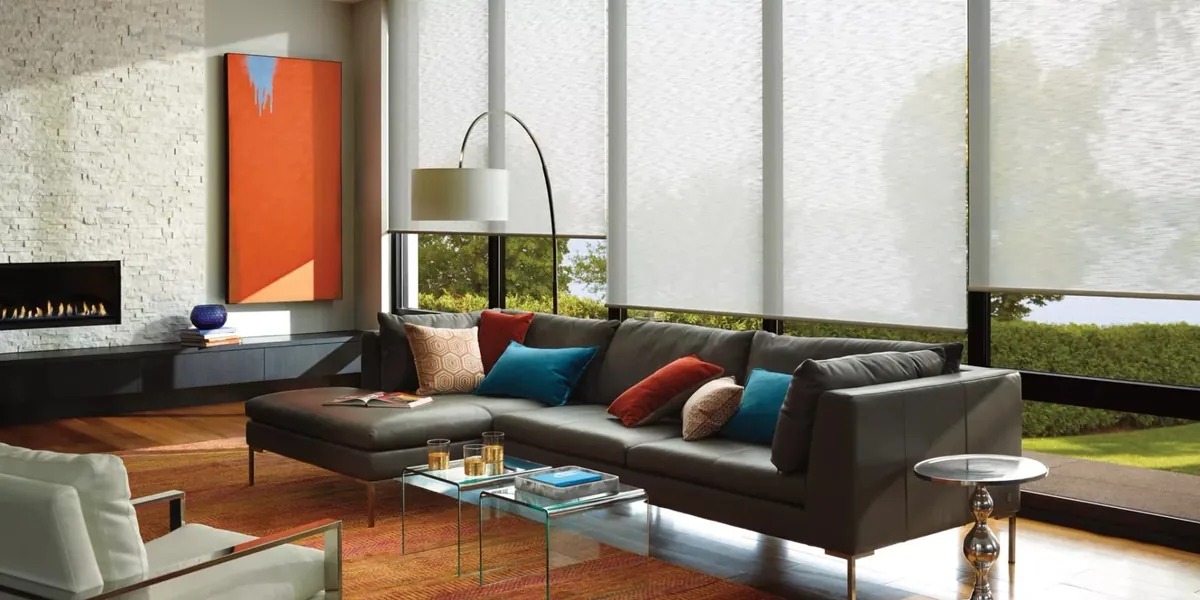
Roller and screen shades
Rollers and screen weaves that cut the glare across Pleasant Bay and still leave the water in sight.
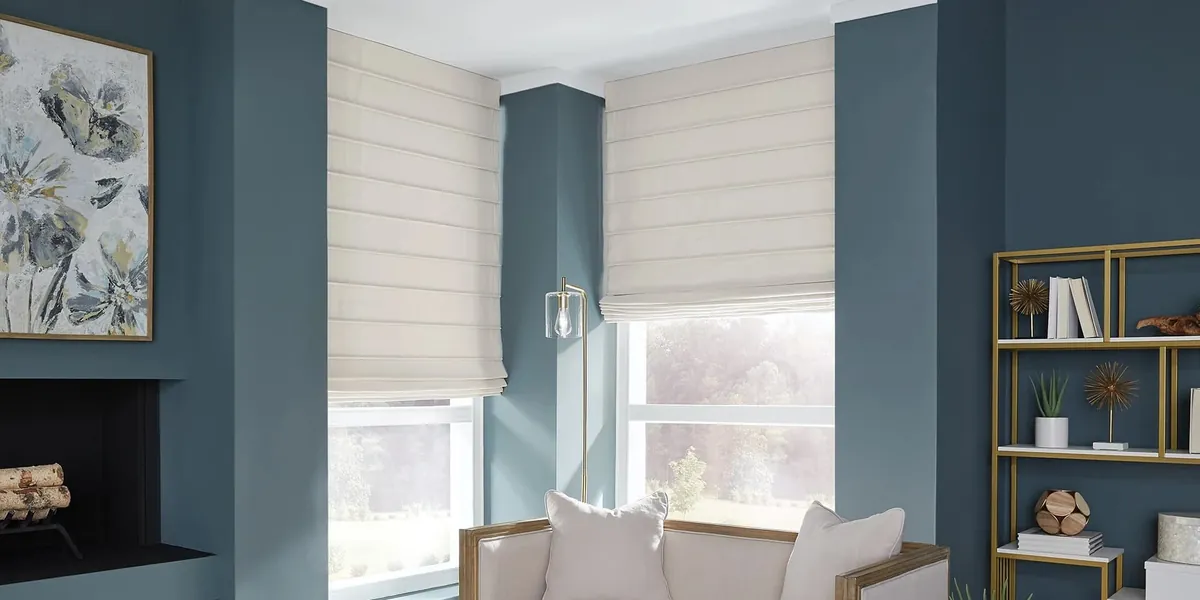
Roman shades
Vignette and Carole Fabrics romans for a cape’s front room, lined to slow the fading in strong sun.
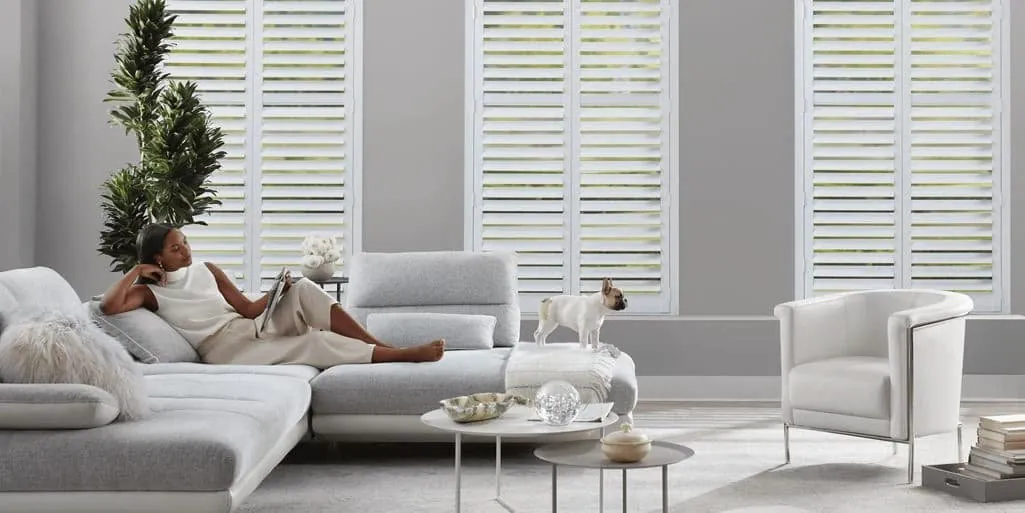
Plantation shutters
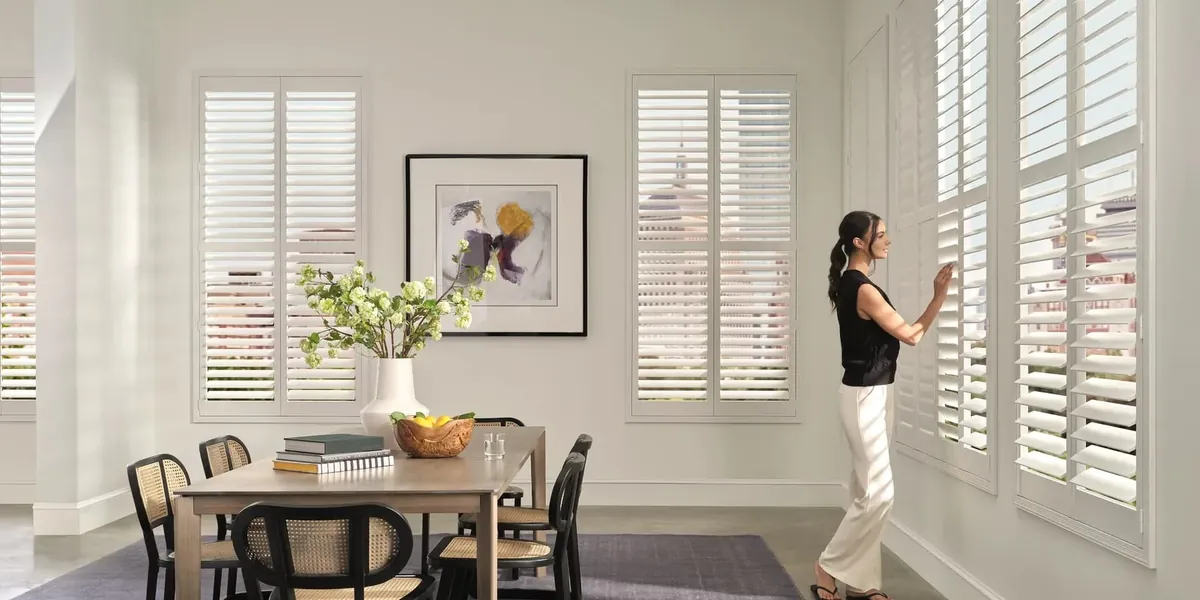
Palm Beach, NewStyle and Heritance shutters that tilt to filter hard light and close firmly at night.
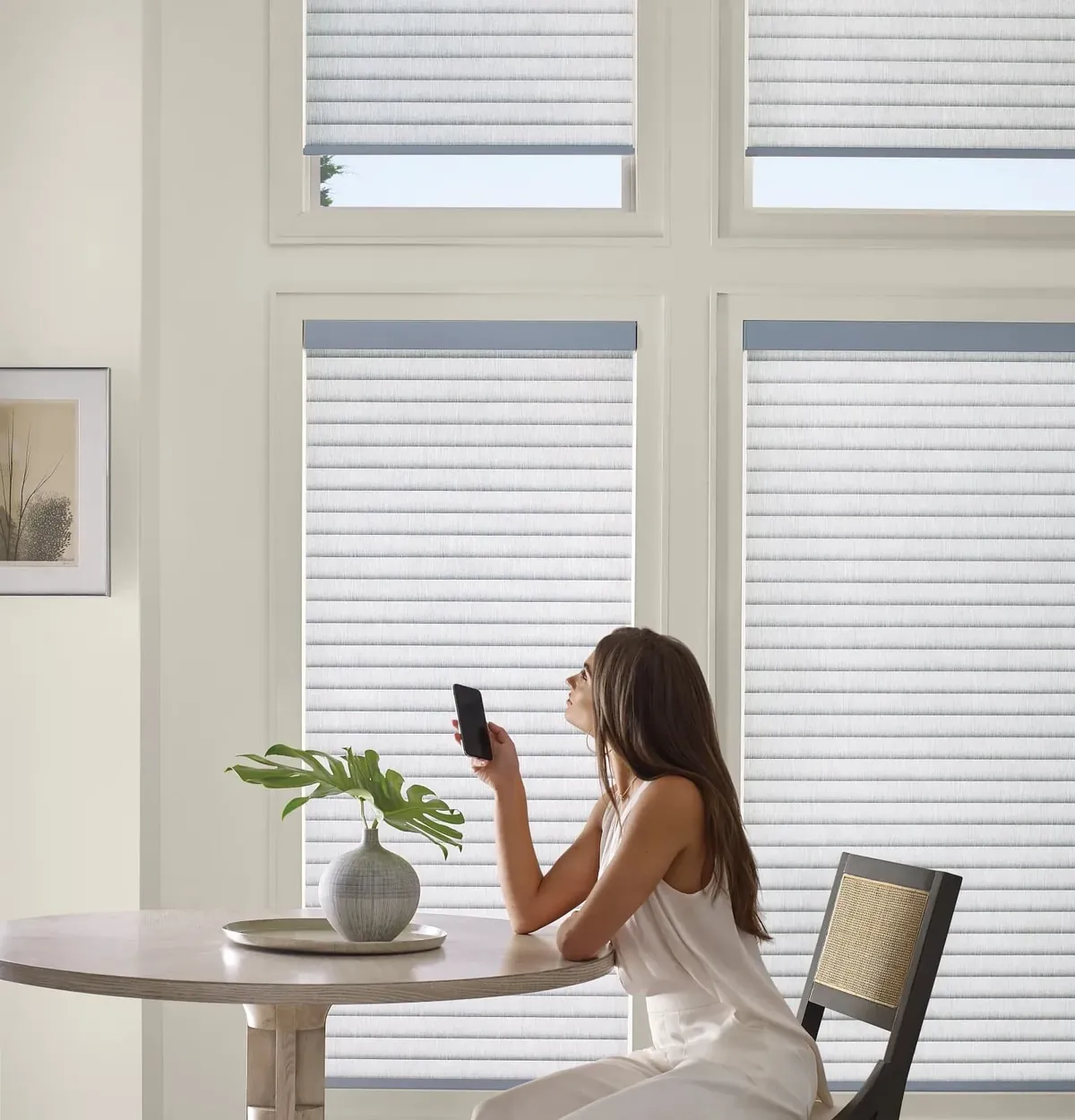
Motorized blinds and shades
PowerView for glass too tall to reach, with schedules that protect a closed house through the off-season.
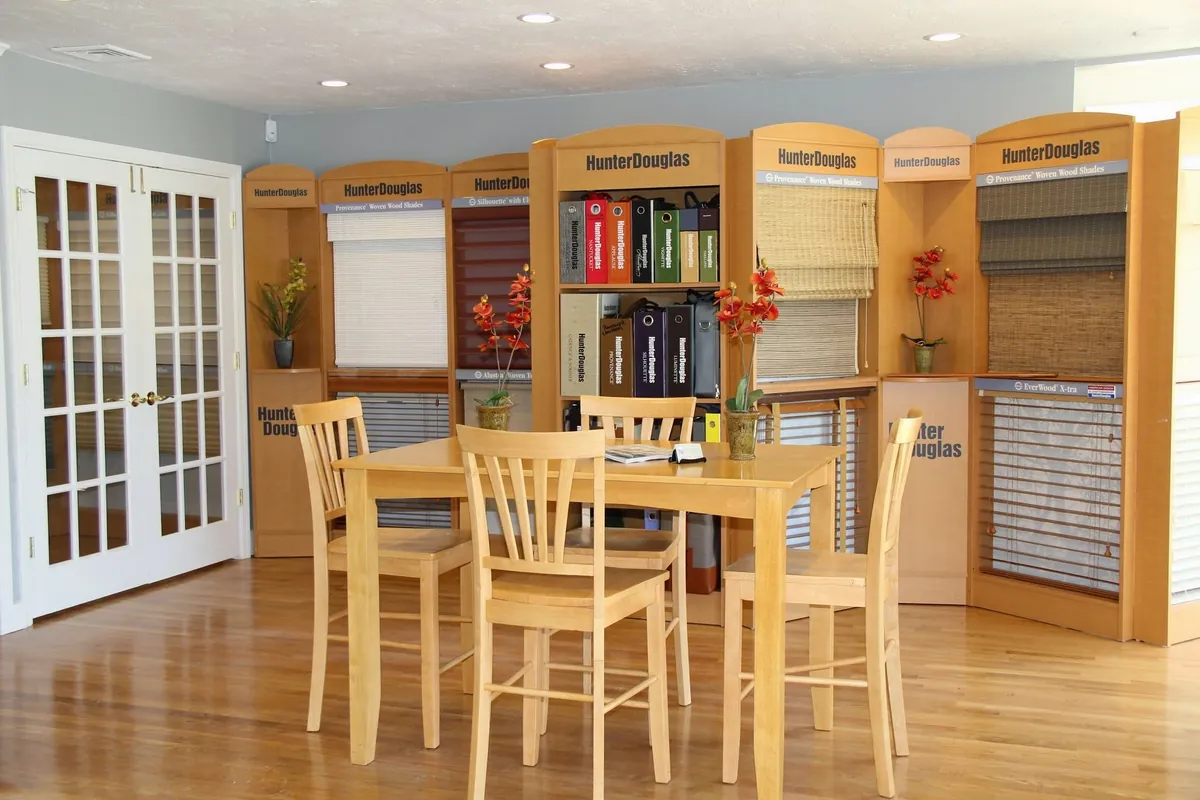
Hunter Douglas dealer
Every Hunter Douglas line from a Gallery dealer, with installation by our certified Hunter Douglas installers.
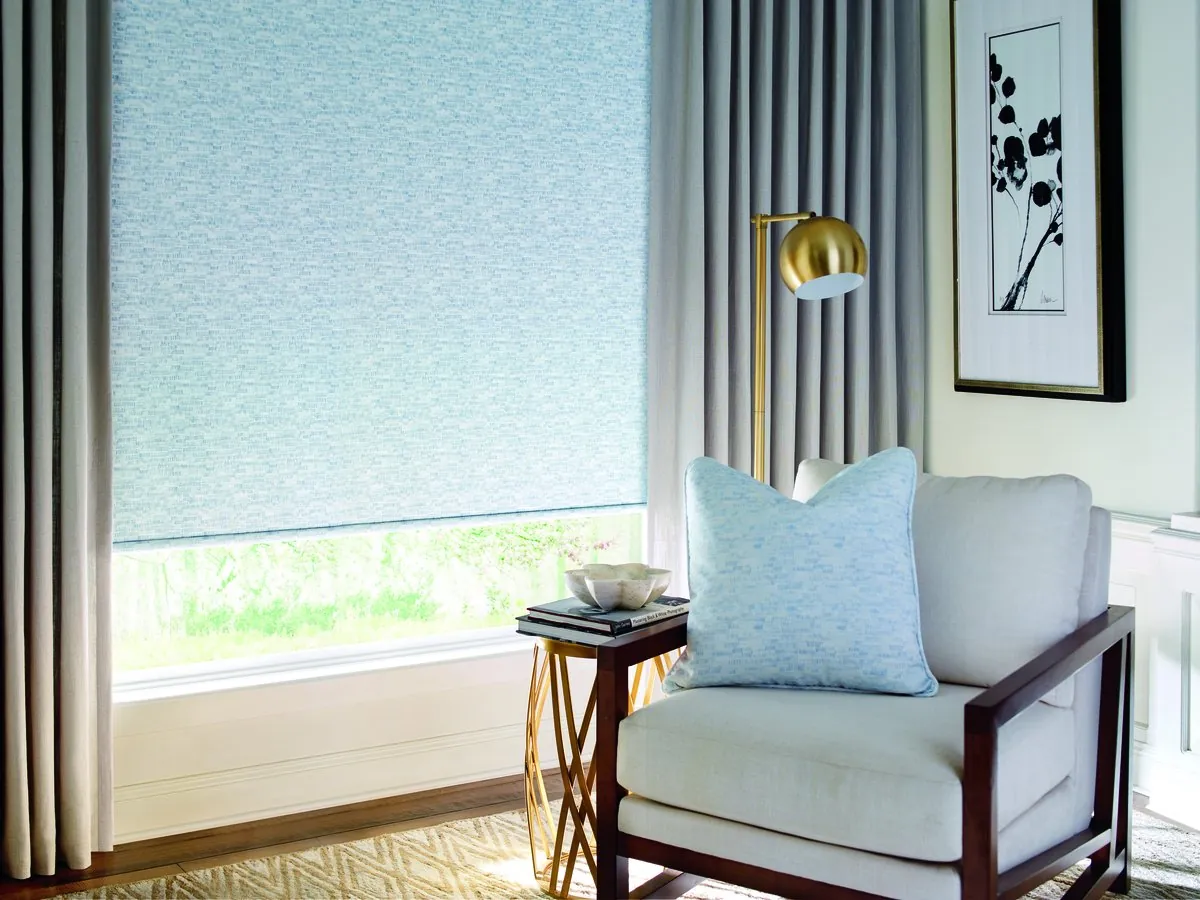
Custom drapery
Hunter Douglas drapery to soften a tall glass wall and close it off on a dark evening.
Floor-to-ceiling glass on the bay side
The newer houses toward Pleasant Bay and Nauset were designed for one thing: the view. Walls of glass face the water, sometimes running the full height of a great room, often with sliders and transoms built in. In the evening, with the light on the water, there is nothing like it. At noon on a July day, with the sun pouring straight in, the room can be hard to sit in.
Covering glass like that is a different craft from covering a normal window. The shades are tall and wide, so the fabric has to hang flat and roll or stack neatly. Several shades often sit side by side across one wall, so they need to line up perfectly at every height. And the top of the glass may be well out of reach, so how each shade is raised and lowered matters as much as what it looks like.
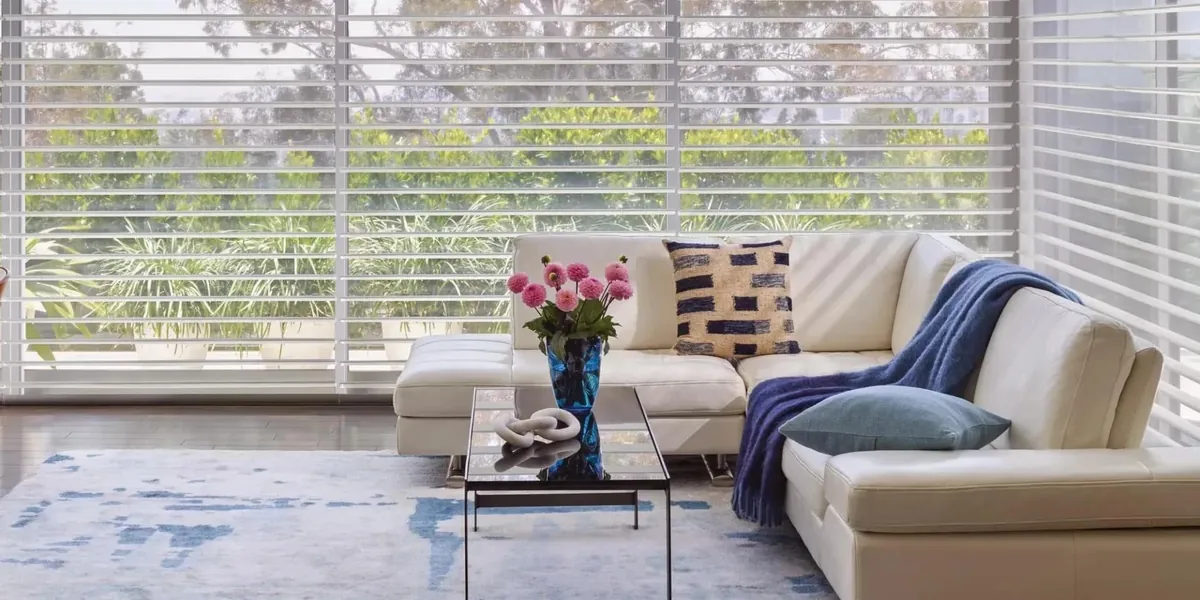
Roller and screen shades handle big glass beautifully: the fabric hangs flat, rolls tight and can be set side by side with small gaps. Sheer shades with soft vanes give a lighter, more filtered look. Vertical sheers and gliding panels suit the tallest walls, drawing aside like curtains and stacking at one end. And for nearly all of it, PowerView motorization takes the effort out of moving a shade that tall.
What hard light does to a room
The outer Cape’s sun does more than brighten a room. Over a summer it bleaches fabric, lightens wood floors unevenly and warms the air near the glass. In a seasonal house the effect builds up quietly while nobody is there to see it.
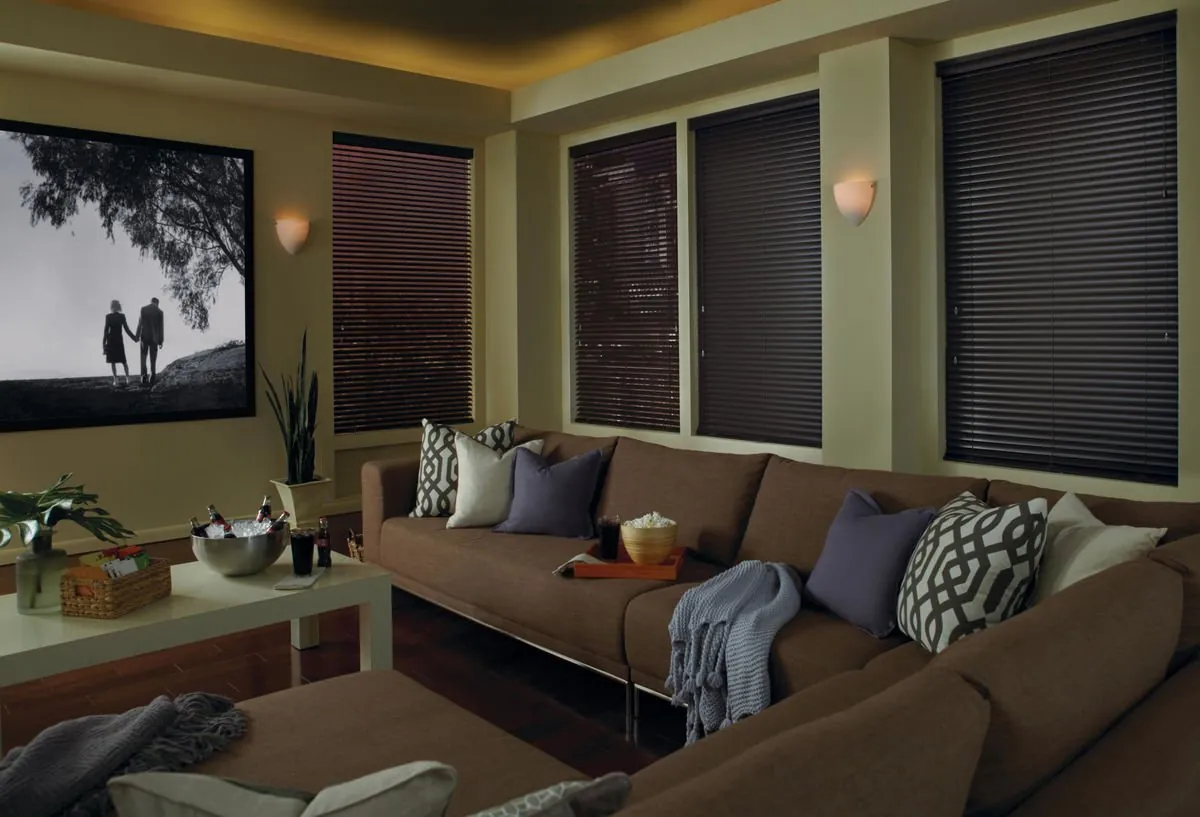
The answer is fabric that does a little all day rather than a lot some of the time. A screen weave cuts much of the light and heat while leaving the view. A light-filtering honeycomb diffuses the sun into an even glow. A room-darkening fabric blocks almost all of it, which suits bedrooms and rooms you want to shut up while away. The darker and denser the fabric, the more it shields the room, so we usually plan different densities for different sides of the house.
Color matters too. A pale fabric toward the glass bounces more light back out and keeps the room cooler; a darker fabric shows the view better through a screen weave. We bring both to try at your windows.
Vertical sheers and gliding panels
On the tallest glass, a shade that rolls up is not always the best answer. A vertical sheer hangs in soft fabric vanes from a track at the top and draws to one side like a curtain. The vanes rotate to let light in or close for privacy, and when drawn back they stack neatly at the edge of the glass.
Gliding fabric panels work in a similar way: flat panels slide past each other on a track, much like sliding doors, and suit a wide modern opening. Both are especially good on a slider or a set of doors to a deck, because they clear the opening completely when you want to step outside.
Keeping the top of tall glass tidy
On a short window, a headrail is barely noticed. At the top of a glass wall, a row of headrails is the first thing you see when you look up. How the top of each shade is finished makes a big difference to how the room feels.
Roller shades can sit in a slim cassette or behind a fascia that hides the roll and the brackets. Where the house has a recessed pocket built into the ceiling, shades can disappear completely into it. Honeycomb shades stack very slim when raised. Matching the headrail color to the frame or the ceiling makes the whole line almost vanish.
When several shades share a wall, we plan the gaps between them and the order of the brackets so the line reads as one. Motorized shades on the same wall can also move together, so they stop at exactly the same height.
Antique capes near the village center
The older houses near the village center are the opposite of the bay-side builds. Low ceilings, small windows, thick walls and old trim make these rooms cosy, and every pane of glass counts.
Here an inside mount is usually best, tucked into the frame so the trim stays visible. Honeycomb and roller shades stack into a slim band, hiding little of the glass when raised. Roman shades with flat folds suit a front room. Shutters inside the opening give privacy from the street and let the top louvers catch the light.
Old frames are rarely square, so we measure each one at several points and suggest an outside mount where the opening is too shallow or too uneven. In a cape with very small windows, drapery hung high and wide can make a room feel bigger.
How an Orleans consultation runs
The samples travel to you, so every fabric and slat is seen in your own light, which is the only light that counts on the outer Cape.
- Ask for a visit with the Request a Consultation form or the call button.
- Our consultant arrives in the van with screens, honeycombs, romans, sheers, blind slats, shutter louvers and drapery fabric.
- You walk through the house together, starting with the rooms that face the water.
- Samples go up against your own glass, so you see how much view each screen keeps and how each fabric looks with the sun behind it.
- Every opening is measured, from the smallest cape window to the full height of a glass wall.
- You receive a free estimate, and decide in your own time.
The page on what happens at an in-home consultation covers the visit in more depth.
A house that is closed part of the year
Many Orleans houses fill in summer and close for the rest of the year. The sun keeps working on an empty house, and a row of shades left half up for months shows from the road.
PowerView shades can follow a schedule while you are away, lowering on the sunny side through the day and rising in the evening so the house looks lived in. The app lets you check or change the schedule from wherever you are. If motorization is not in the plan, lowering a dense fabric on the sunny side before you leave does much of the same job. Cordless lifts leave nothing hanging near the sill.
Opening the house in spring is a good time for a consultation, because we see what the winter sun has done and which rooms need help first.
Bedrooms and guest wings
Newer Orleans houses often have a guest wing or a row of bedrooms on the water side, and the morning light off Nauset or the bay finds its way in early. Room-darkening honeycomb shades and blackout rollers fitted closely inside the frame keep these rooms dark, and side channels close the light gap at the edges.
In an antique cape the bedrooms are upstairs under the eaves, with small windows and sloping ceilings. Slim shades fitted inside each opening work best, and a PowerView shade suits a gable window that is hard to reach.
Decks, porches and screened rooms
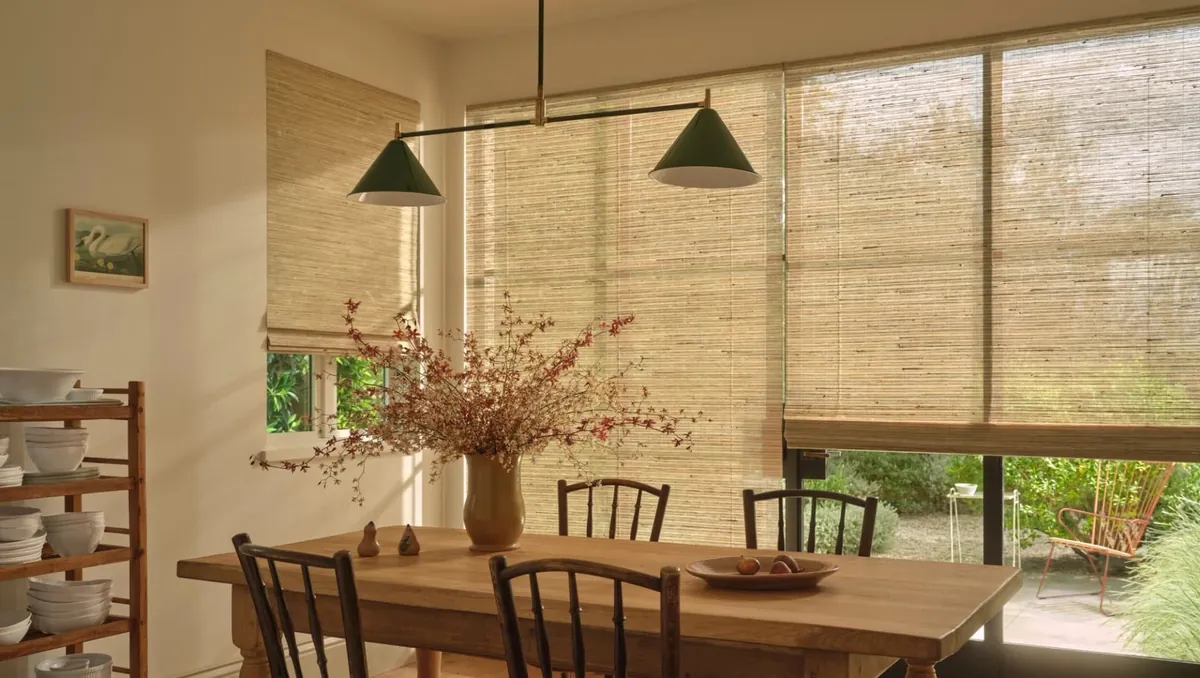
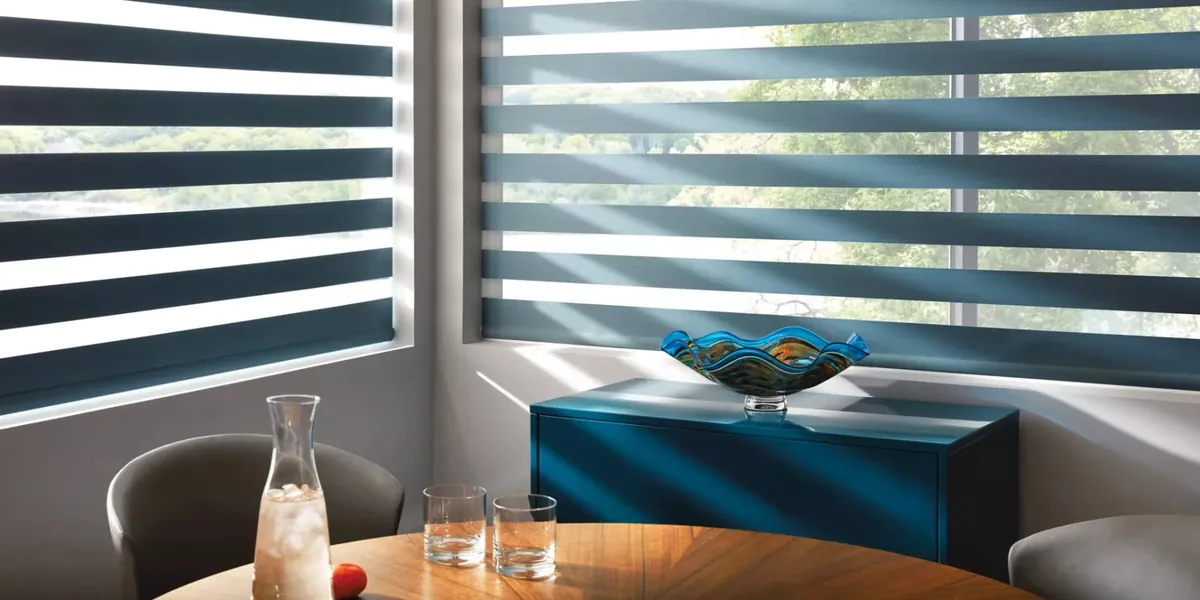
Bay-side houses usually have a deck or screened porch facing the water, and the windows and doors onto it take the full afternoon sun. Screen shades on a porch drop to cut the glare across the water and lift away when the sun moves round. Woven shades add a natural texture that suits a casual room.
Doors onto the deck need a treatment that clears the opening completely. Vertical honeycomb shades and gliding panels stack to one side. On a French door, a shade fixed to the door itself moves with it.
Color and texture in strong light
Hard light shows every texture and every flaw. A woven shade in natural fibers looks rich in sunlight, because the light picks out the weave. A plain roller looks crisp and modern. A roman in linen or a soft blend softens a room full of hard surfaces.
Strong sun also changes how color reads. A fabric that looks warm in a sample book can look washed out at a sunny window, and a cool gray can turn blue. That is exactly why we bring the samples to the house. Planning window treatments in Orleans, MA, with the samples at your own glass avoids surprises once the shades are hung.
Kitchens and great rooms
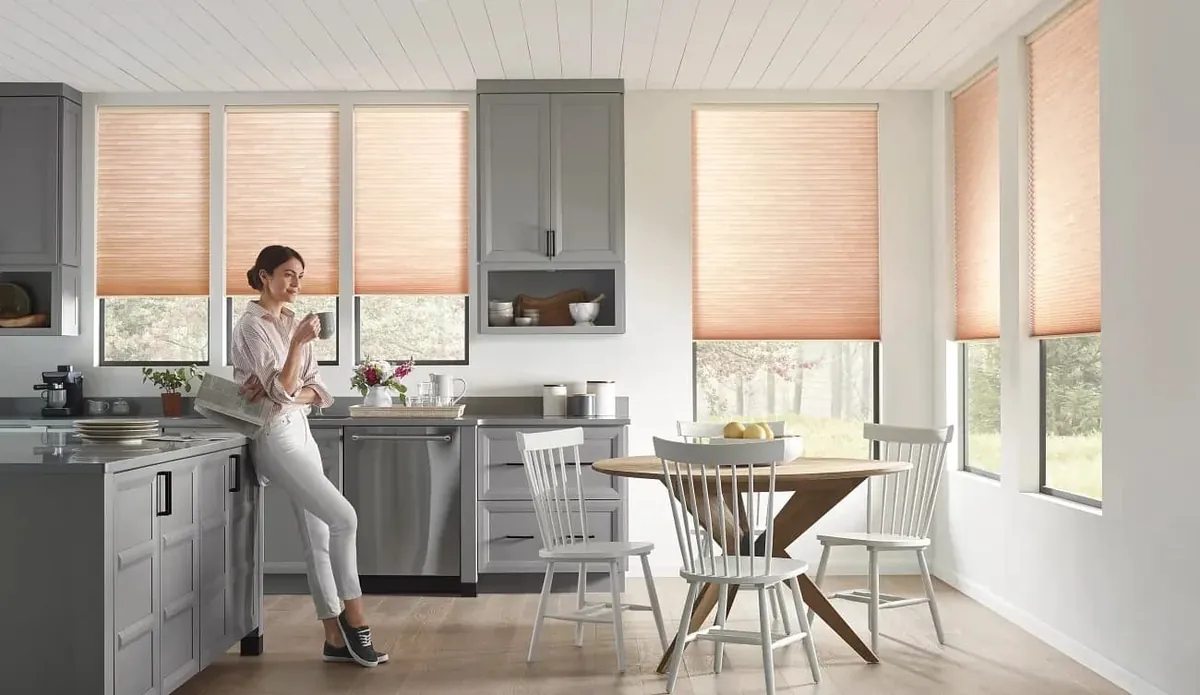
In many newer Orleans houses the kitchen opens into a great room, and the whole space faces the water. That means one long run of glass with very different needs along it: glare control over the island, a clear view from the sofa, and privacy at night across the whole wall.
Banded shades, with alternating sheer and solid stripes, let you fine-tune the light by lining the stripes up or offsetting them. Screen rollers do the daytime work across the wall, and a PowerView scene can lower the whole run to the same height with one press. Near the sink, a wipeable roller or faux wood blind copes with steam and splashes.
Transoms, clerestories and odd shapes
Contemporary houses on the bay side love unusual glass: a row of clerestory windows high under the roofline, a transom over every door, a triangle of glass in a gable, a round window at the top of a stair. They let in wonderful light, and at the wrong hour they throw a bright patch straight onto a sofa or a bed.
Many of these shapes can be covered. Honeycomb shades can be made for angled tops and some specialty shapes, and shutters can be built to follow an arch or a slope. Where a shape is better left open, covering the rectangular glass below it and letting the top glow is often the most elegant answer. High clerestories are an obvious place for PowerView, because no one wants to climb up to them twice a day.
In the antique capes the odd windows are smaller: a narrow light beside the front door, a tiny pane in a back stair, a half-round in the attic. Slim shades or a shutter panel made to the exact size finish them neatly.
Bathrooms near the water
A bay-side bathroom often has a big window, because the view from the tub was part of the design. Privacy still matters, especially when a path or a neighbor’s deck is in sight. A top-down, bottom-up shade covers the lower glass and keeps the sky. Shutters tilted upward let light in and keep eyes out, and they cope well with steam. Faux wood blinds suit a window that gets splashed.
Mixing products across one house
A house with a cape at its heart and a glass wing on the water side might use five different products. That is normal. What keeps it looking like one house is a consistent color toward the glass and matching headrails through each floor. Planning window treatments in Orleans, MA, as a whole also means PowerView shades in every room can share one app and one set of schedules. The window treatments page shows the whole range.
The Gallery dealer difference
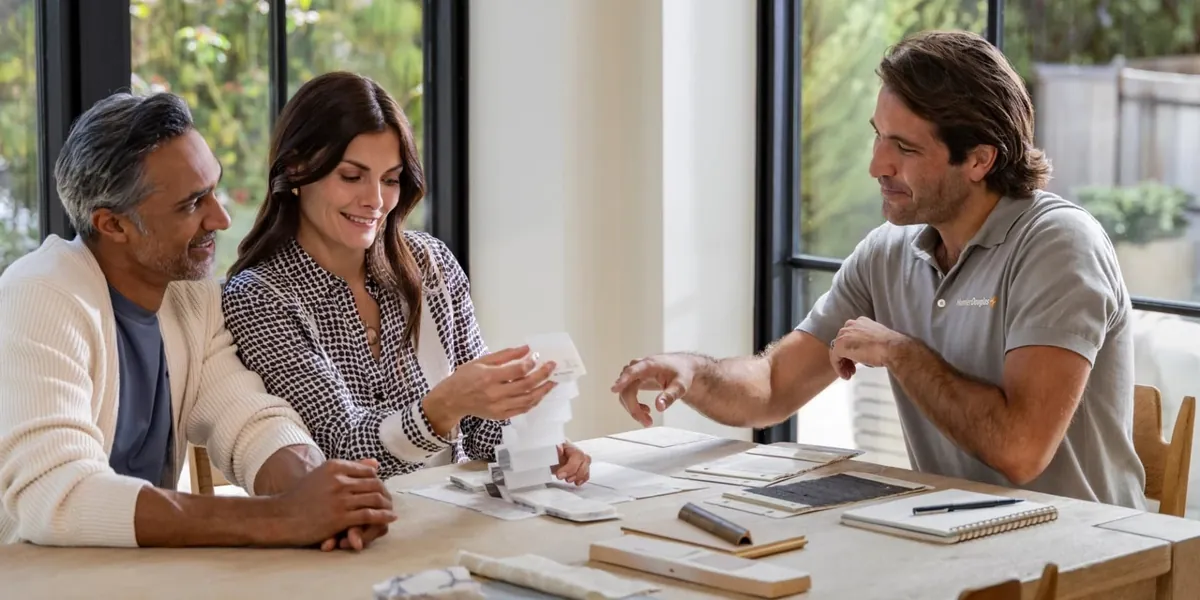
Tall glass on the bay and small sash in the village rarely want the same product, so it helps that a Hunter Douglas Gallery dealer carries the whole family: screens, sheers, honeycombs, romans, woven shades, blinds, shutters, drapery and PowerView.
Each order is hung by Blinds & Designs’ own certified Hunter Douglas installers. For help pulling colors and textures together, we offer interior design consultations, and we take on repairs for blinds and shades you already have.
More about the brand is on our Hunter Douglas page.
Seeing the products in person
Orleans projects are usually decided right at the house, because samples ride along in the van. When you would like to see the range in person first, Sagamore is our nearest showroom.
Measuring, ordering and fitting stay with the same people, and there is never a charge for the estimate.
Questions from Orleans
What works on floor-to-ceiling glass facing Pleasant Bay?
Roller and screen shades hang flat on tall glass and keep the view, vertical sheers and gliding panels draw aside like curtains, and PowerView takes the effort out of reaching the top. We often combine them across one wall.
How do I stop the strong sun fading my furniture?
Choose a fabric dense enough for that side of the house, from screen weaves to room-darkening honeycombs, and keep it down during the brightest hours. PowerView schedules do that automatically, even when the house is closed.
Will shades fit the small windows of an antique cape?
Yes. Every shade is made to the opening, and inside mounts suit most cape windows. We measure each one first because old frames are rarely square.
Can the tops of tall shades be hidden?
Yes. Rollers can sit in slim cassettes or behind a fascia, and shades can fit into a recessed ceiling pocket where the house has one.
Is the estimate free?
Yes. The estimate after your consultation is free.
Where to begin
Strong light makes samples look different at every window, so the best start is a visit. Ask for a consultation, and a consultant will bring the van, try fabrics at your own glass, measure every opening and leave a free estimate for window treatments in Orleans, MA. The call button is there if you want to talk first, and the Sagamore showroom is our nearest.