
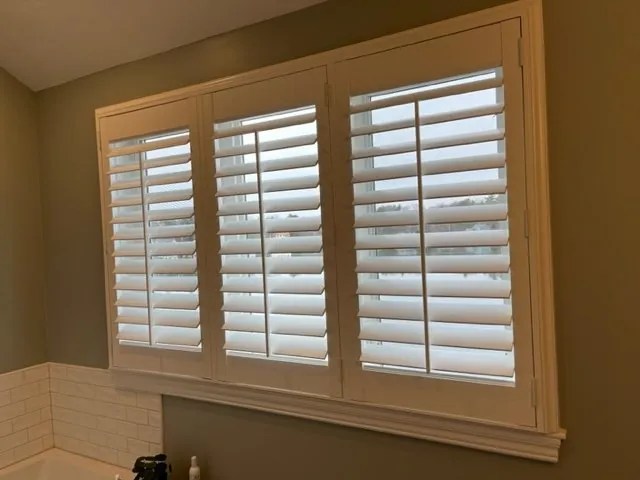
Old sash, open land and a lot of windows
East Bridgewater spreads out. Antique colonials and farmhouses sit on larger lots, often well back from the road, and between them run post-war capes and newer colonials on the streets off Route 18 and Central Street. The density is low, and many houses have open ground on every side.
The older houses bring small sash windows set deep in thick walls. That depth is a quiet gift: a shade can sit well inside the opening, with its headrail and motor hidden from view, leaving the old trim untouched. Motorized blinds in East Bridgewater, MA, are less about hiding from a neighbor and more about running a house with many windows on a sensible routine, by handset, by phone or by a weekly timetable.
Whatever the age of the house, each shade is made for the opening as it stands today.
Styles that suit East Bridgewater windows
We look at every option at your windows. These three come up again and again in East Bridgewater, and each has its own page for the town.
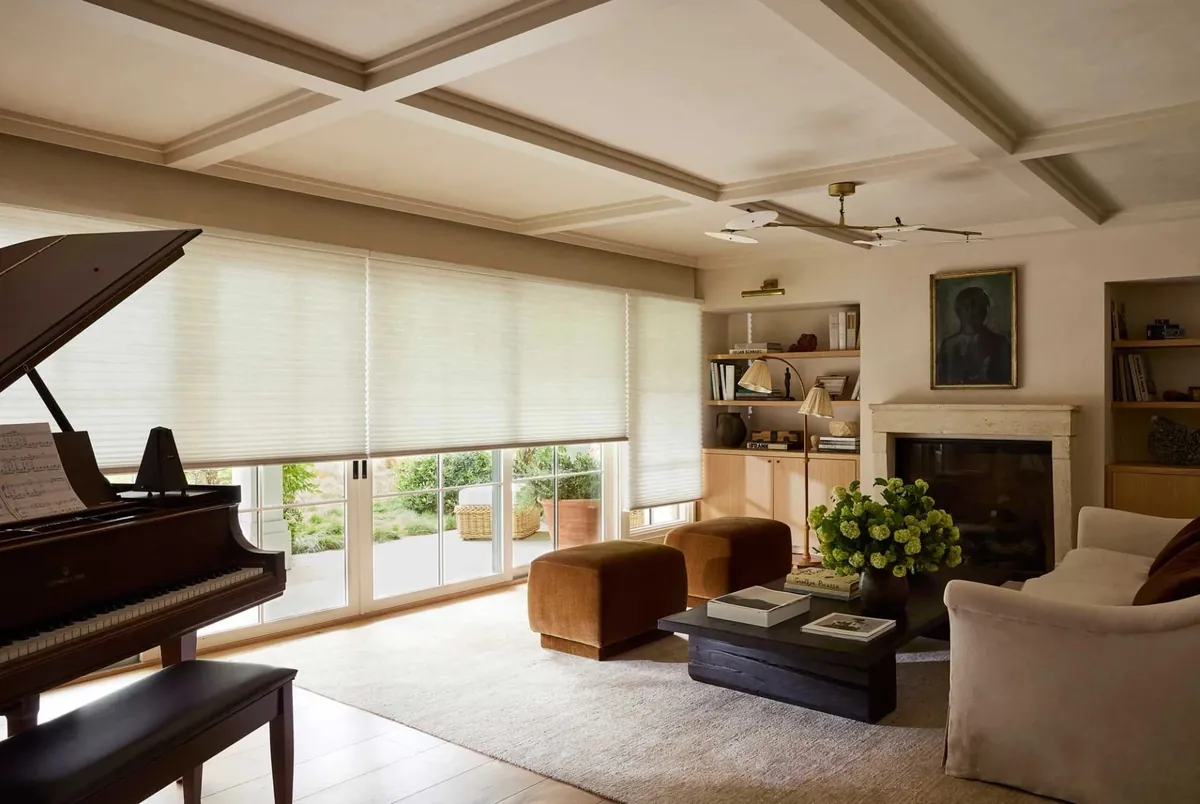
Cellular shades
Honeycomb fabric that fits neatly in a deep opening. Light-filtering for living rooms, room-darkening for bedrooms.
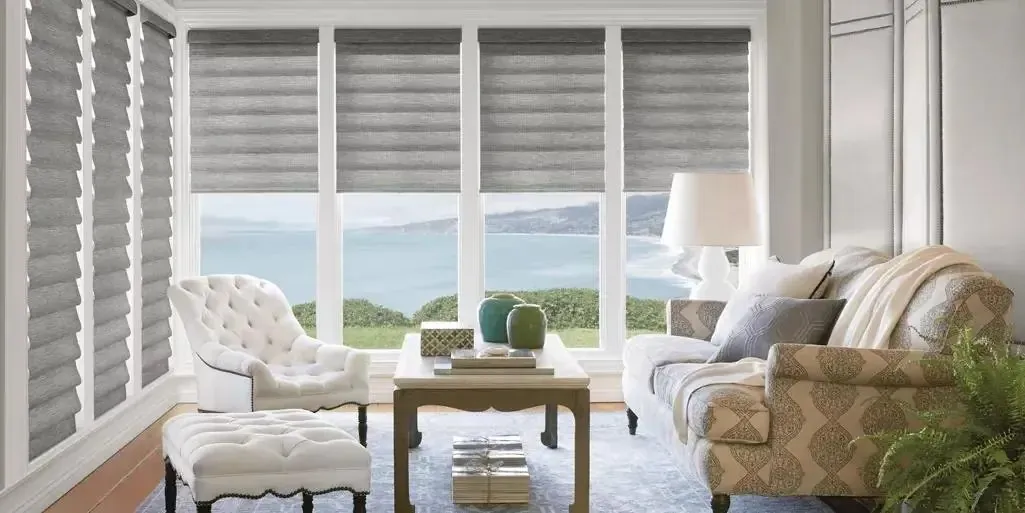
Roman shades
Soft folds that sit comfortably with the paneled rooms and older trim of an antique colonial.
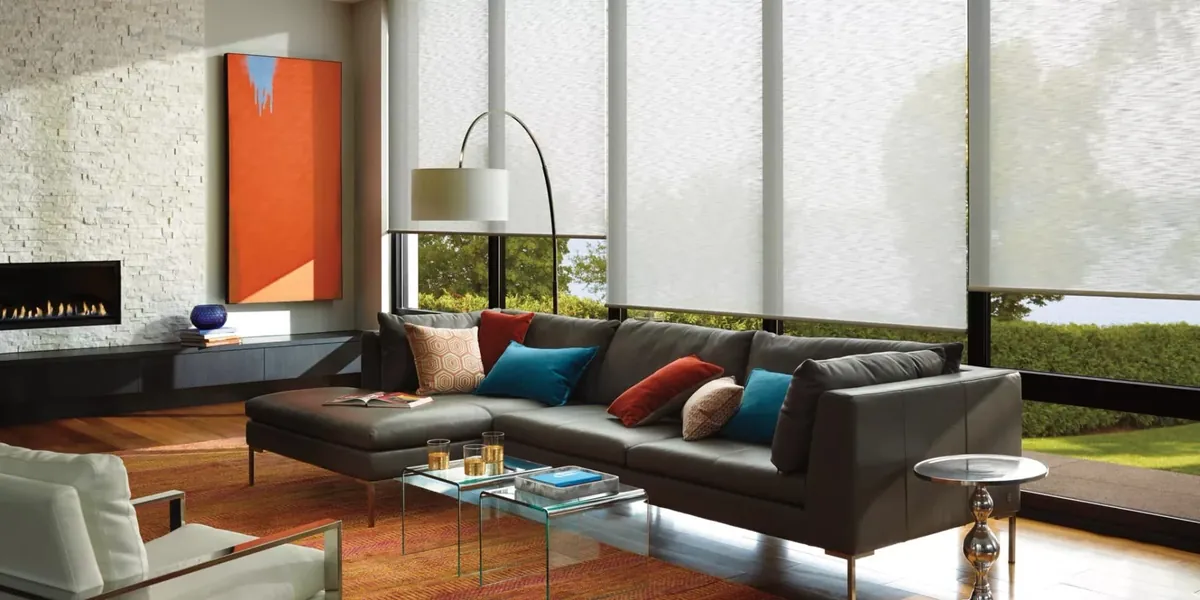
Roller shades
A plain, compact shade for the family rooms and kitchens of the newer colonials, with screen fabrics for bright rooms.
Deep-set sash in the antique houses
The oldest East Bridgewater houses were built with thick walls, and their small sash windows sit well back from the face of the room. Stand at one and you will often find a wide sill and a deep reveal on either side of the glass.
That depth matters for motorization. It usually leaves plenty of room to mount a shade entirely inside the opening, so the headrail and the motor sit behind the face of the trim and the window keeps its original look. From outside, the house still reads as an antique, with nothing new showing at the glass.
It also matters for reach. A deep sill puts the shade further away from you, and in a farmhouse kitchen or a front parlor, there is often a table, a radiator or a window seat in front as well. Leaning across all of that to pull a cord is exactly the kind of chore that a handset removes.
Older frames are rarely perfectly square, and no two openings are quite alike. Each window is measured on its own at the consultation, so every shade is made for its own opening.
Low density, open sides, many windows
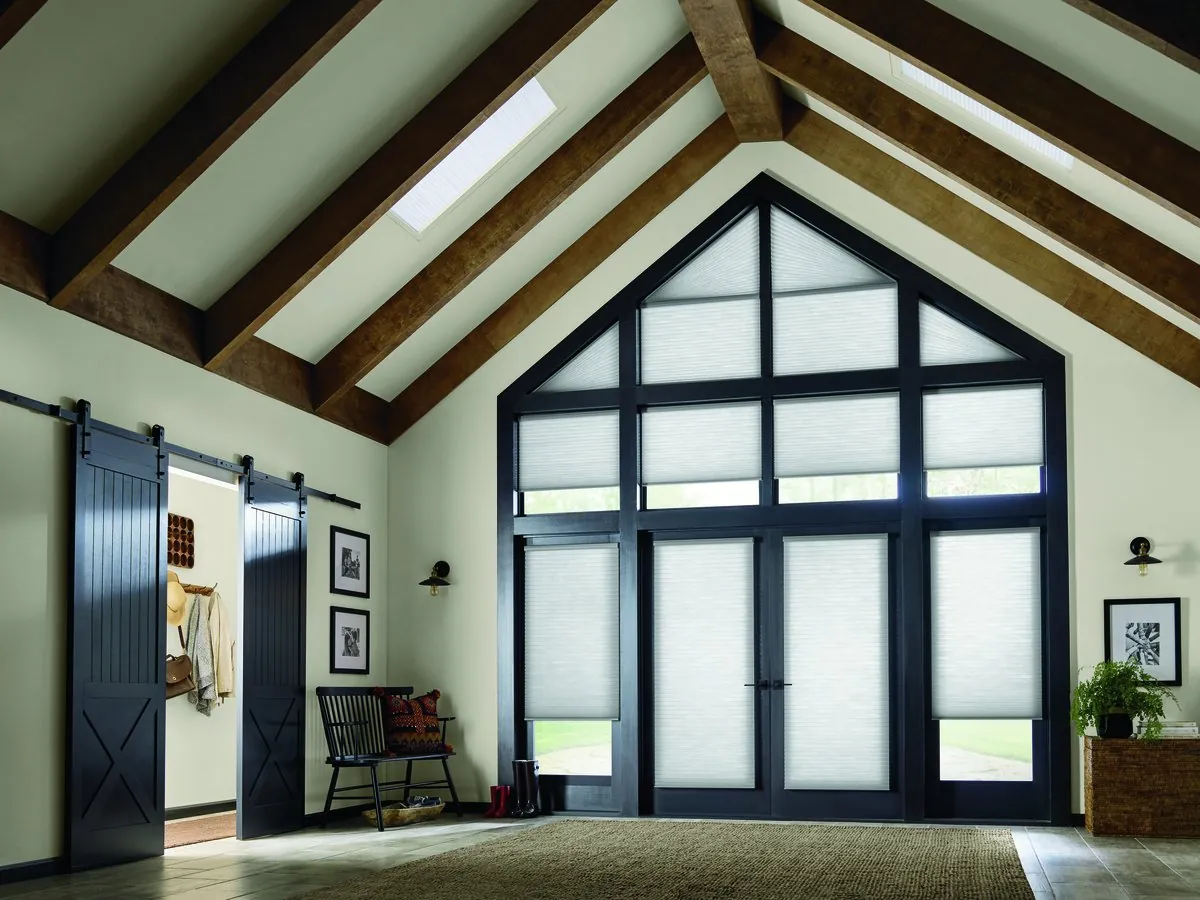
On a larger lot, privacy is often not the main concern. Many East Bridgewater houses look out over their own yards, fields or trees, with no neighbor in direct view. What these houses do have is a lot of windows on every side, and light that arrives from a different direction at each hour of the day.
That is what makes a motorized system useful here. Rather than walking from room to room to open the east side in the morning and close the west side later, you can group the shades by side of the house and move each side with one press, or let a timetable handle the routine. The house stays comfortable to sit in without anyone tending to it all day.
At night, the picture changes. A lit room in a dark, open landscape is visible from the road a long way off, and the windows themselves turn black. An evening timetable can lower the shades at an hour you choose, so the house closes up without a tour of every room.
Farmhouses and their additions
East Bridgewater farmhouses have often grown over time: an original block with small deep-set sash, a later kitchen ell, perhaps a sunroom or a family room added on the back. Each part may have a different kind of window, from the old sash in the front rooms to larger modern units in the addition.
That variety is easy to handle with PowerView. A roman shade in the original parlor, a honeycomb in the bedrooms and a roller in the newer family room can all run on the same system and answer the same handset. You choose the shade for each room on its own merits, and the control stays simple.
Grouping can follow the house as well. The old front rooms can be one group, the addition another, so you can close up the part of the house you are not using while leaving the rest open.
Capes and colonials off Route 18 and Central Street
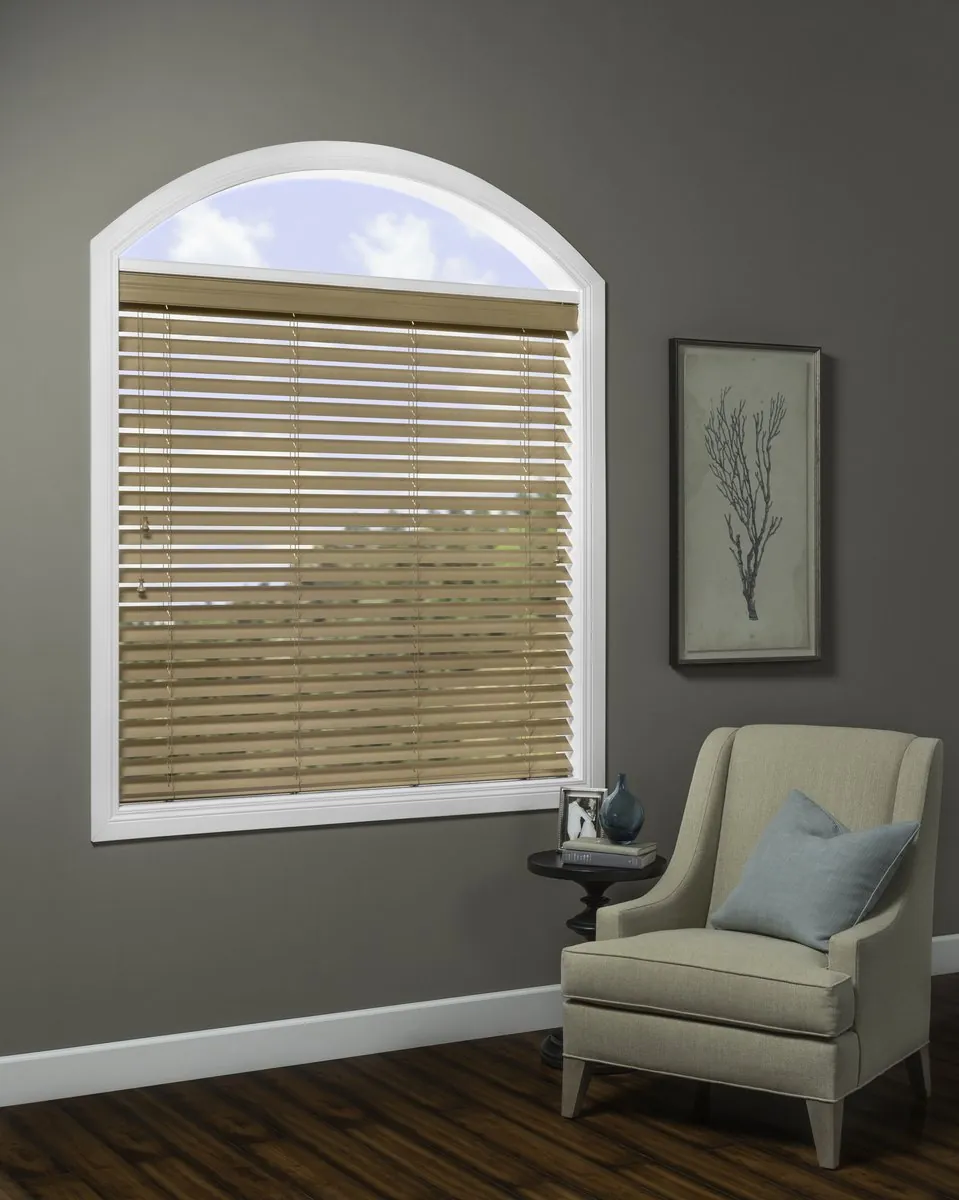
Away from the antique houses, East Bridgewater has plenty of post-war capes and newer colonials, especially on the streets off Route 18 and Central Street. These have standard modern openings that are square and regular, and their routines look more like those of any busy household.
In a cape, the upstairs dormer bedrooms are the hard reach, set back under the roof behind beds and dressers. A handset by the bed or a morning timetable takes care of them. Downstairs, the front window and the window over the kitchen sink are the ones people adjust most.
In a newer colonial, the number of windows is the issue. A front room, a dining room, a family room with a run of glass across the back, a kitchen and three or four bedrooms can add up to a lot of shades. Linked into groups and run on timetables, motorized blinds in East Bridgewater turn the morning and evening rounds into one press each, or none at all.
Kitchen ells and back entries
In many antique East Bridgewater houses, the kitchen lives in an ell off the back of the main block, with windows on two or three sides and a door out to the yard or the driveway. The sink window looks over the yard, a side window catches the morning, and the back door often has a window of its own beside it.
That makes the kitchen one of the busiest rooms for shades. On a motor, the kitchen can be its own group: lifted together first thing, lowered partway when the afternoon light comes across the counters, closed at night with the rest of the house. A handset hung by the back door means whoever comes in last can close up the room without crossing it.
Wide lots, long driveways and the view from the road
Because so many houses here sit well back on larger lots, the view from the road is of the house as a whole, not of individual rooms. What a driver sees at dusk is a pattern of lit and dark windows across the front and sides.
Linked shades help the house look cared for from that distance. When the front windows all finish at one height, and close together at the same hour each evening, the house reads as one. For anyone who travels or keeps irregular hours, a timetable keeps that pattern going on the days nobody is home to tend to it. It is one of the less obvious reasons people ask about motorized blinds in East Bridgewater, but it comes up often at the consultation.
Paneled rooms and painted trim
The antique colonials often keep their original painted paneling, wide window casings and thick muntins. Anything new at the window has to sit comfortably beside that woodwork.
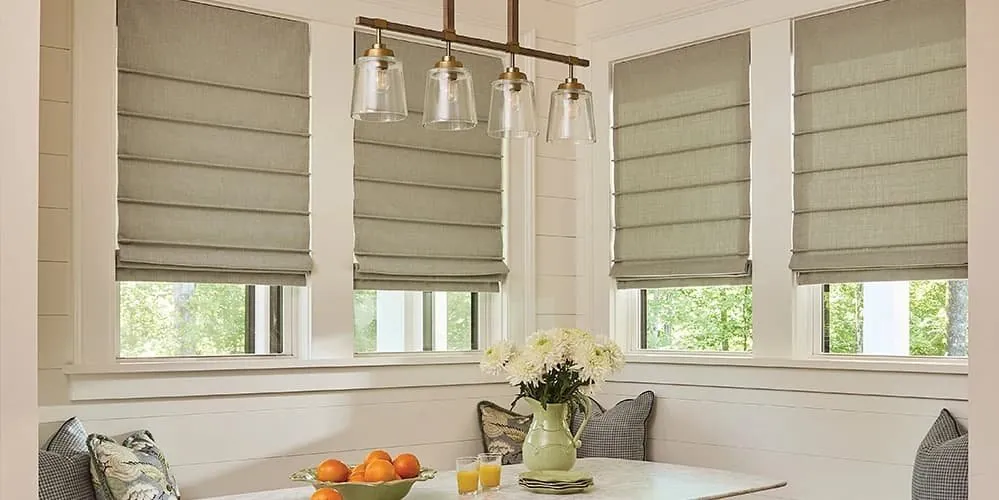
This is where the deep reveal earns its keep again. A honeycomb or a roman shade mounted inside the opening leaves the casing completely clear, so the paneling and trim stay the focus of the room. Fabric color can be chosen to disappear against the paint, or to pick up a color from the room, and we can bring samples that suit both directions.
Three ways to move the shades
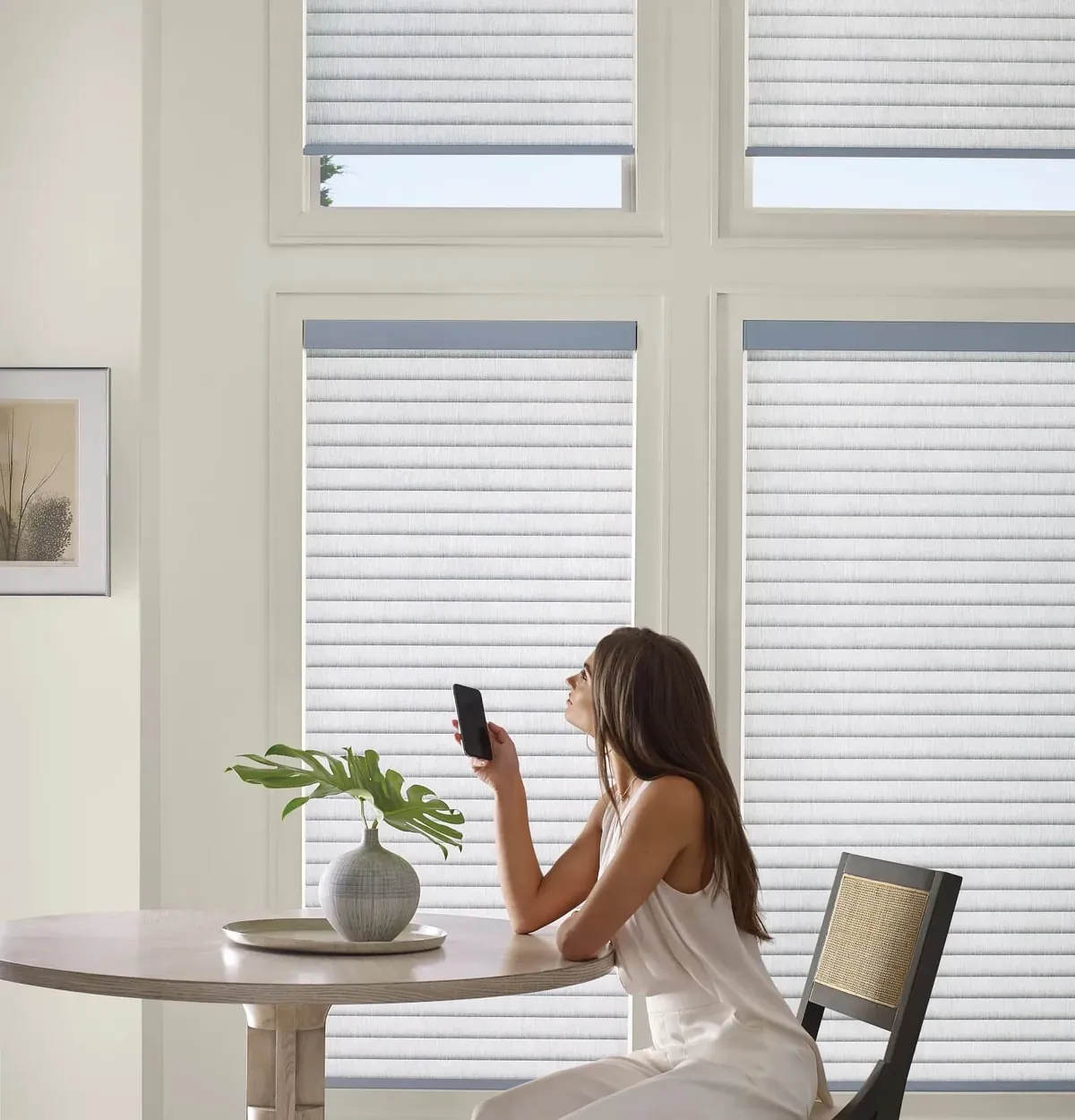
PowerView offers a handset, an app and timetables, and every East Bridgewater household mixes them differently.
- Handset. Up, down and stop, for one shade, a room or a group. It needs no phone and is the easiest thing to hand to a visitor.
- App. Every shade listed by room on your phone or tablet. Set an exact height, or store a position and give it a name, then recall it with one tap.
- Timetables. Weekly plans that open and close chosen shades at the times you set. They repeat on their own, and the handset overrides them whenever you like.
For a deeper look, see how motorized shades are controlled and our window covering automation page.
A day in an East Bridgewater farmhouse
Imagine a house with an original front block, a kitchen ell and a newer family room across the back.
- First thing, the kitchen shades in the ell lift on a timetable, so the room is bright when the coffee goes on.
- A little later, the bedrooms upstairs rise on their own plan, with days off set later than working days.
- Through the middle of the day, the family room shades sit at a stored height that keeps glare off the television.
- In the late afternoon, when the sun drops toward the back of the house, a press of the handset lowers that side.
- Once evening arrives, a final timetable closes the front rooms and the family room together, at the hour the household chose.
None of it needs anyone to walk the house. The handset is there for anything the plan does not cover.
Front parlors that face the road
Even on a large lot, the front of an antique East Bridgewater house often faces the road directly, with the parlor and dining room windows lined up across the façade. Those small sash windows are the face of the house, and they are what people see when they drive by.
Linked into one group, the front shades rise and fall together and stop at the same line. With roman shades in a soft fabric, the front keeps a traditional look; with honeycomb set inside the deep reveal, the shade almost disappears. Either way, the façade looks considered rather than patchy.
Bedrooms under old rooflines
Antique colonials and farmhouses often tuck bedrooms under steep rooflines, with small windows in the gable ends or low in the knee walls. These are among the hardest windows in the house to reach, and they catch the morning sun with nothing outside to screen them.
Room-darkening honeycomb on a motor keeps those rooms dim until the hour you choose. A timetable can raise them on working days and leave them down later on days off, and a handset on the nightstand handles everything else. For a guest room that sits empty most of the week, a timetable can also open and close it with the rest of the house, so it never looks unused from outside.
Sunrooms and enclosed porches
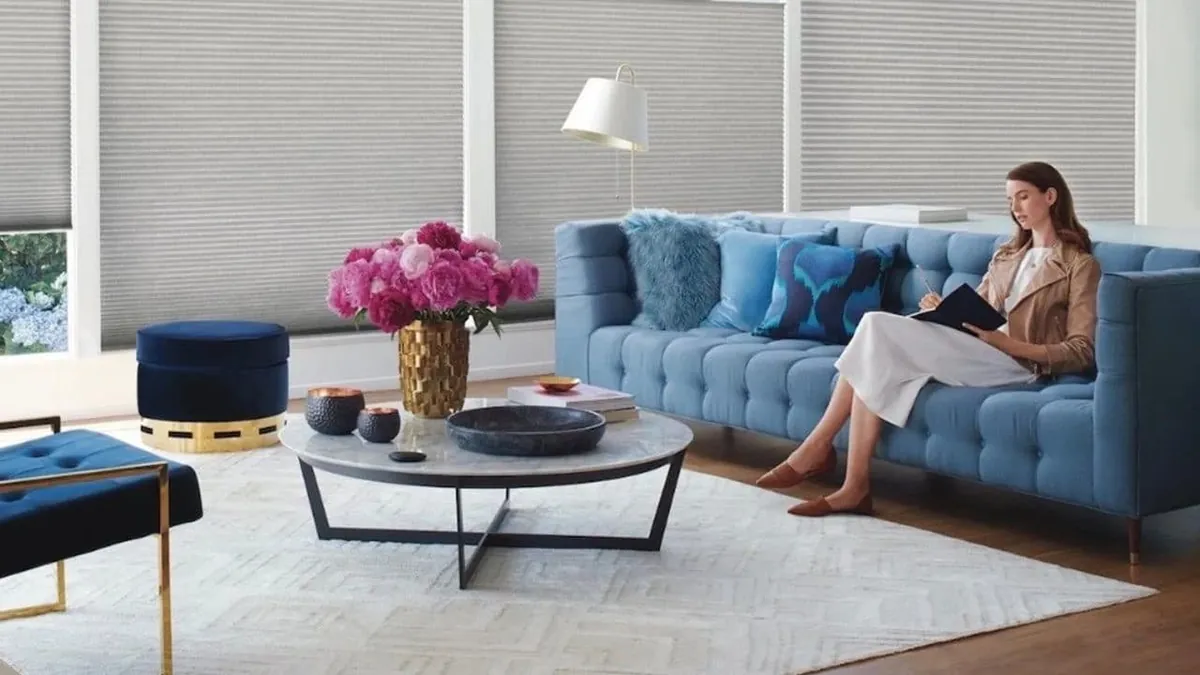
Many East Bridgewater houses have a sunroom or an enclosed porch on the back or side, with windows on three sides and little to shade them. These rooms are wonderful in the morning and can be hard to sit in by mid-afternoon, when the light comes in low and bright.
A motorized screen roller or light-filtering honeycomb gives you control without fuss. The shades on the sunniest side can lower partway in the afternoon and rise again later, and the whole room can be grouped so every shade finishes at the same height. Because there are usually a lot of windows in a sunroom, this is often where motorization saves the most effort.
An enclosed porch on an older farmhouse may also have windows of slightly different sizes, added at different times. Each one is measured separately, and once they are linked in the app the shades still move as a single set. Of all the motorized blinds in East Bridgewater we plan, the sunroom group is often the one used most, because it is the room whose light changes most through the day.
Where to put the first motors
Nothing obliges you to do the whole house. For an East Bridgewater property, the windows that repay a motor first are usually the front parlor group, the sunroom or porch, and whichever bedroom sits highest under the roof. Further shades can be ordered later and paired to the handsets, app and timetables already in place. Treat the first few as a trial: live with motorized blinds in East Bridgewater, MA, for a season, then decide which rooms come next.
Samples brought out to East Bridgewater
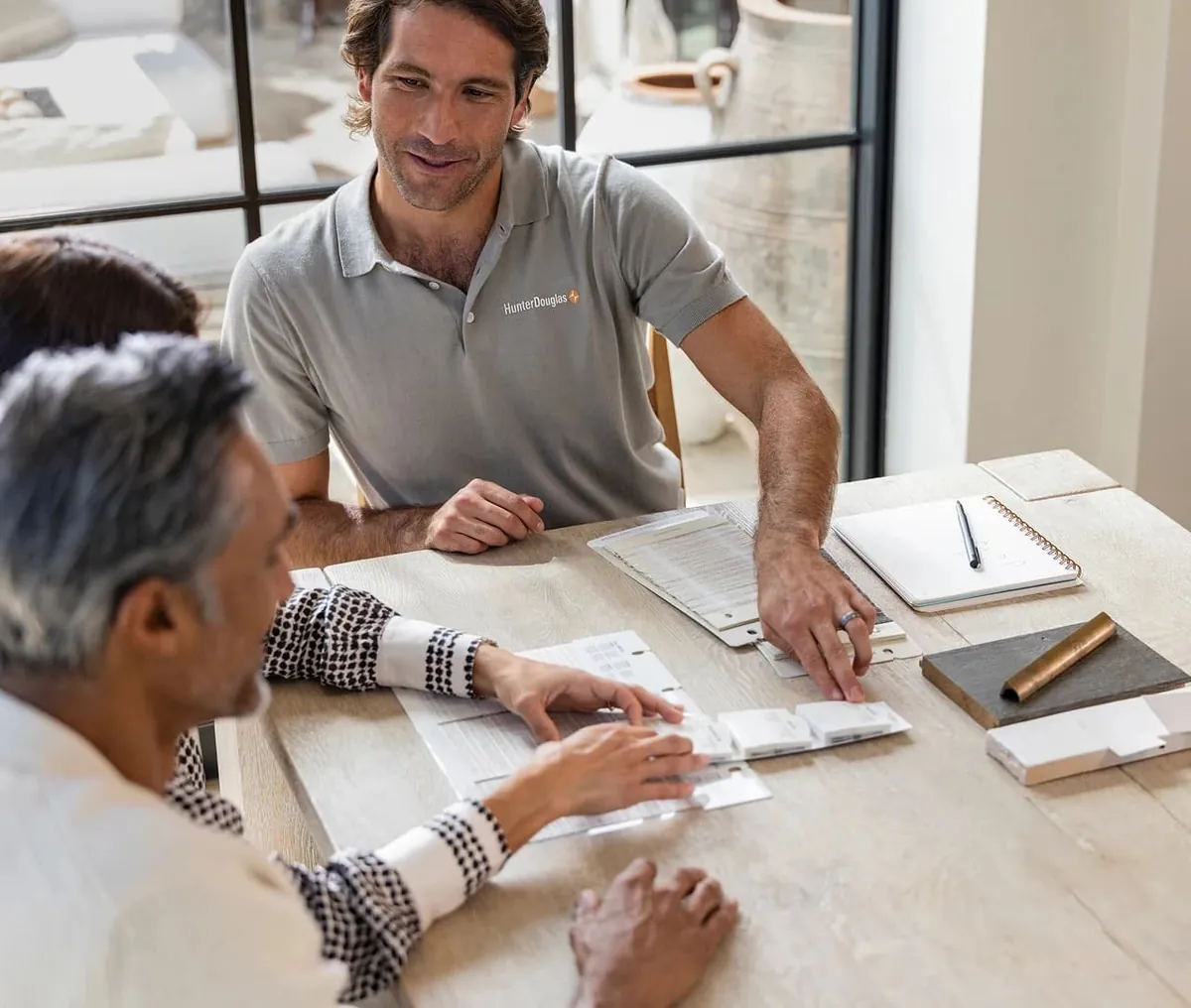
East Bridgewater is part of the shop-at-home territory we cover from Canton, so the consultation takes place in your house. Our van arrives with Hunter Douglas samples, and you try them at your own deep-set sash and your own modern windows. The Canton shop-at-home page explains how the service works.
In an antique house, that is essential: how a fabric looks inside a deep reveal, against old trim and painted paneling, is impossible to judge from a catalog. During the visit we also decide how the shades should be grouped, which rooms want timetables, how many handsets the household needs and how each motor will be powered. Every opening is measured, and you receive a free estimate to consider at your own pace.
Interior design consultations are also available for help with color and fabric across a whole house. If you would like a showroom visit too, the nearest to East Bridgewater is Franklin, on the Franklin showroom page.
A Gallery dealer for old and new houses alike
Blinds & Designs is a Hunter Douglas Gallery dealer. Whether your East Bridgewater house is an antique colonial, a farmhouse with additions or a newer colonial off Central Street, the full range is available, and every style can run on the same PowerView system.
All installation is done by certified Hunter Douglas installers, who fit each shade, check every motor and set up the groups and timetables agreed at the consultation. We also repair blinds and shades you already own. The full range is on motorized blinds and shades, and everything we offer locally is on our East Bridgewater page.
Questions from East Bridgewater
Our antique house has deep-set windows. Will a motorized shade fit?
Usually very well. Deep reveals often leave room to mount the shade fully inside the opening, so the headrail and motor stay out of sight. Each frame is measured individually.
We have a lot of windows. Do they each need a separate control?
No. Shades can be grouped by room, by side of the house or by part of the house, and moved together from a handset, the app or a timetable.
Can different styles run on the same system?
Yes. Roman shades in the parlor, honeycomb in the bedrooms and rollers in the family room can all share one PowerView system.
Is it possible to start with just a few windows?
Yes. Most households start small and add more later.
Do we need to go to a store?
No. Our van brings samples to your house. If you would like to visit a showroom as well, Franklin is the closest.
Choose the room that needs the most attention
In an East Bridgewater house, that might be a sunroom that gets too bright, a parlor with windows you cannot reach over the sill, or a bedroom under the eaves. Request a consultation and we will come out with samples, measure every window and give you a free estimate.
If you would like to ask something first, use the call button, or read about our in-home consultations.