
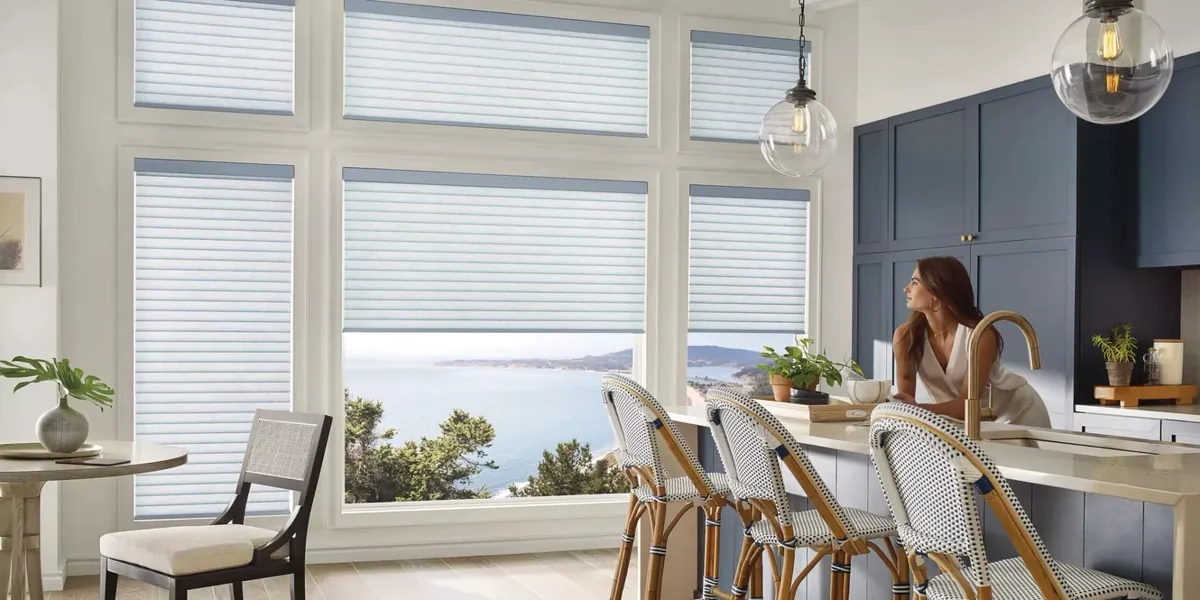
Capes, the Landing and the water
Weymouth is several kinds of town at once. Across North and South Weymouth, post-war capes and ranches line street after street. Around Weymouth Landing, older two-families stand closer together, built for a busier, denser corner of town. Near the Back River, newer condominiums look out over the water. And all along the river and harbor side, houses face a coastal exposure that brings bright, reflected light into the rooms closest to the shore. Roller shades in Weymouth, MA, have to answer to all of those.
A roller is a good common thread. One flat panel of fabric rolls up into a slim tube at the head of the window, so it suits a compact cape room, a narrow two-family sash and a wide condominium slider equally well. What changes from one house to the next is the cloth: light filtering for privacy without gloom, room darkening and blackout for sleep, and solar screens for the rooms where the water throws sunlight back at the glass.
We plan each of those by looking at the house, the window and what lies outside it, whether that is a sidewalk a few steps away or a stretch of open river.
Hunter Douglas rollers for every part of town
Three Designer lines cover almost every window we see in Weymouth, from a South Weymouth ranch to a river-view condominium. All of them come to your door as real samples.
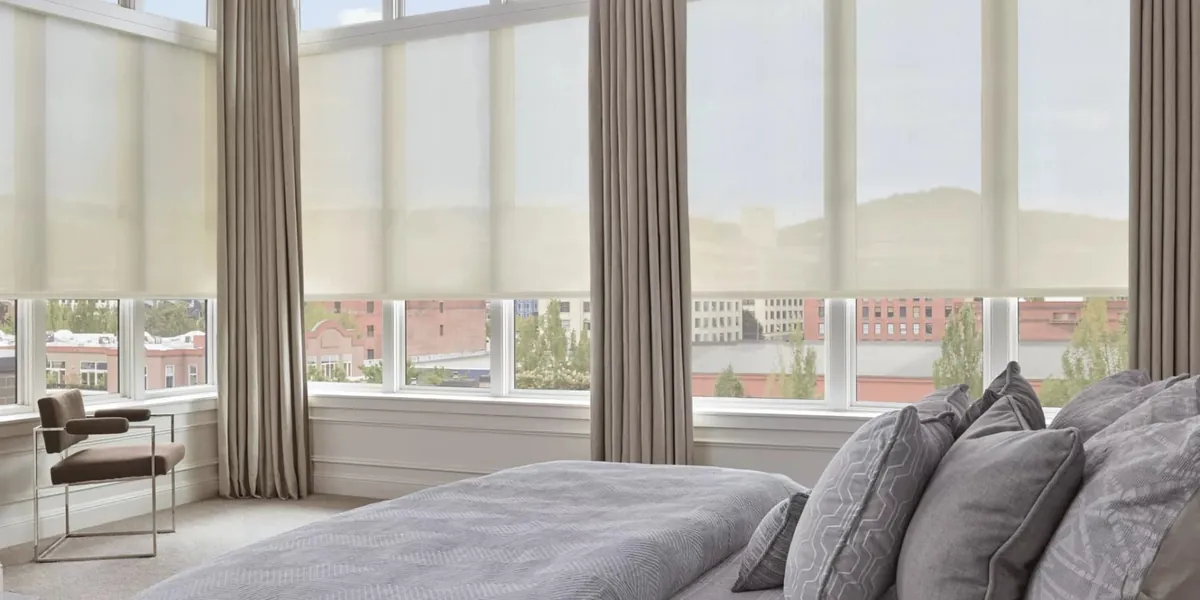
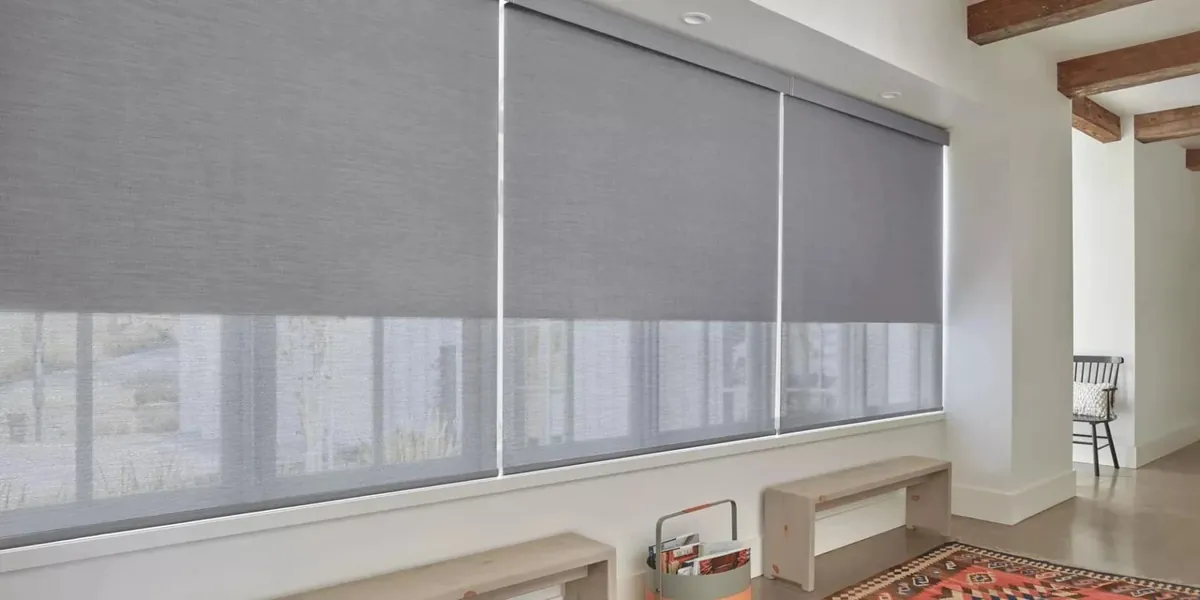
Designer Screen
Solar screen cloth that cuts the dazzle off the water while the view stays open. The first choice for rooms on the river and harbor side.
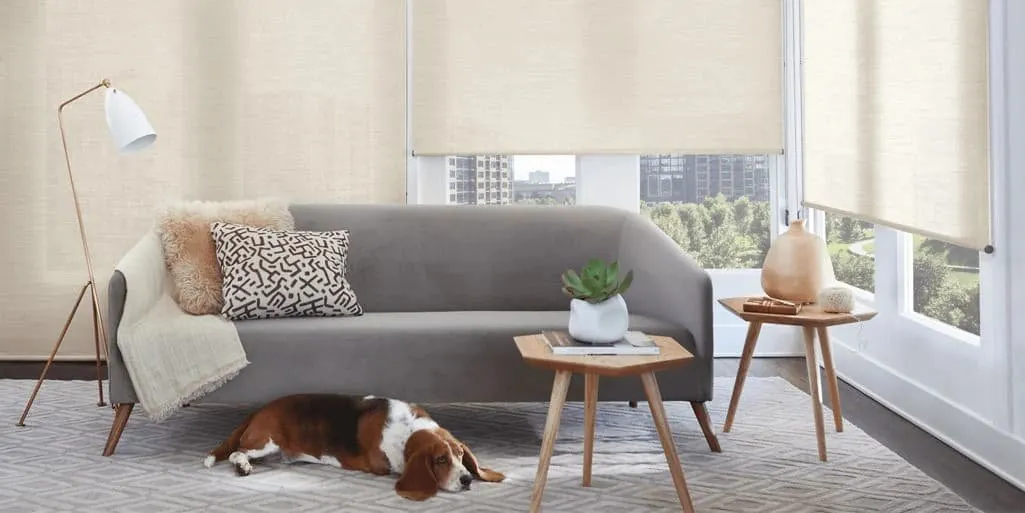
Designer Roller
Plain and textured fabric from light filtering through blackout. It covers the bedrooms, kitchens and front rooms in a cape or two-family.
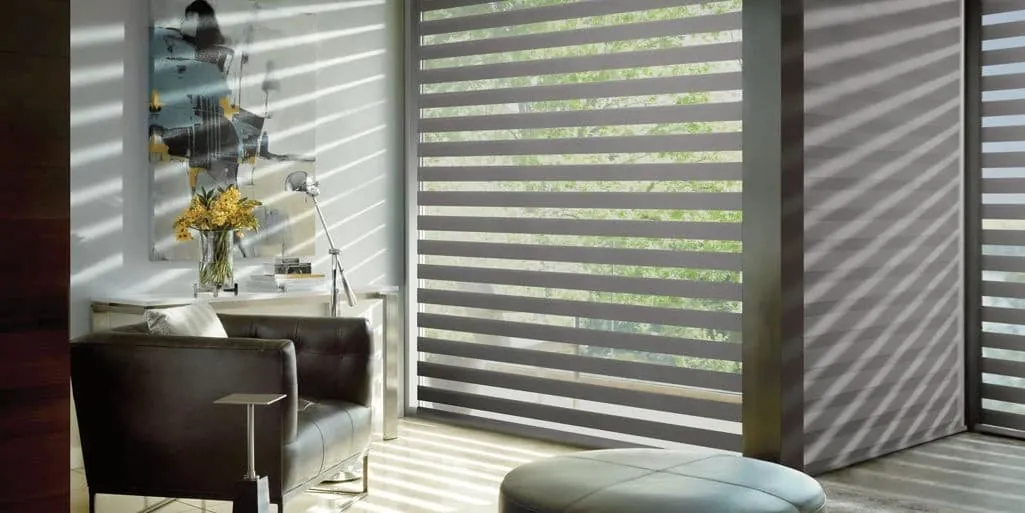
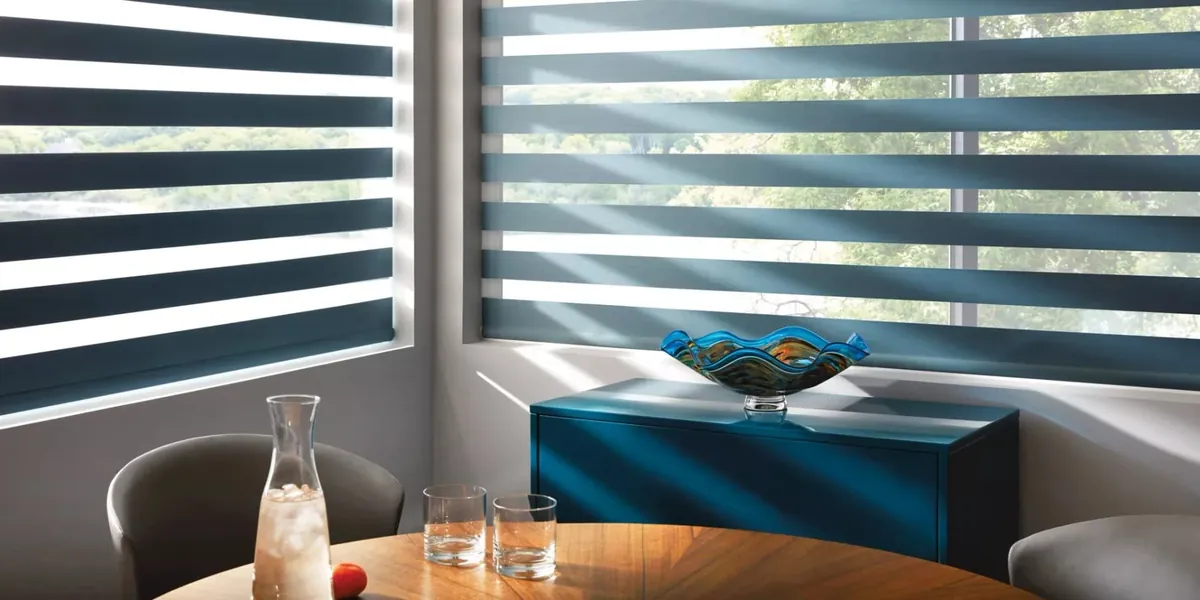
Designer Banded
Alternating sheer and solid stripes on two layers, so a window shifts between open and private with a small adjustment. Useful near the Landing, where houses sit close.
Capes and ranches in North and South Weymouth
Most Weymouth houses are post-war capes and ranches, and their windows are regular and familiar. That keeps the fitting side simple and leaves the real choices to the fabric.
In a cape, the living room and kitchen share the ground floor with a bedroom or two, and the upstairs bedrooms sit under the roof behind dormers. The front windows look at the street from a modest distance, so light filtering cloth is the usual pick: it brings daylight in and makes the glass read as a soft, even surface from outside. The dormer bedrooms often catch the first or last sun through a single small window; room darkening or blackout gives them a calm, dim feel when you want it.
In a ranch, every room is on one floor and close to the outside. The living room at the front is the most visible room in the house, the bedrooms run along a hall, and the kitchen looks out the back. Light filtering in front, room darkening in the bedrooms and a pale weave in the kitchen covers most ranches neatly, with a screen added on any wall that takes strong sun.
Because these houses are so regular, it is easy to give the whole street side one outward color, so the house looks tidy and settled from the road.
Two-families near Weymouth Landing
Around the Landing the houses are older and closer together, and many are two-families with an apartment on each floor. Their windows are often taller and narrower than in a cape, and their side windows face the house next door across a driveway.
Each floor has its own needs. Downstairs, the front room is near the sidewalk and benefits from light filtering cloth by day and something denser in the evening. Upstairs, passers-by cannot easily see into the front rooms, so a lighter weave or a screen often works there, though the windows on the sides look across at the neighbor’s second floor and still call for privacy.
The side windows are where banded fabric helps most. Line up its sheer stripes and you have a view of the sky and some daylight; shift them and the window closes. On a kitchen or stair window that looks straight at the house next door, that small adjustment does a lot.
Owners of a whole two-family can have both apartments planned at one appointment. A shared outward color on the road side keeps the building looking cared for, while each tenant or family picks the cloth inside.
Condominiums near the Back River
The newer condominiums near the Back River tend to have larger windows and sliders onto a balcony or patio, often facing the water. Those openings are the main feature of the unit, and the view across the river is usually the reason someone chose it.
A solar screen is the natural fit for that glass. It cuts the glare off the water while keeping the view, so the living room is comfortable through the afternoon without closing it off. On the slider itself, a roller that matches the windows beside it keeps the wall consistent.
Bedrooms in a condominium often face the same way as the living room, which means early or late sun straight off the water. Room darkening or blackout fabric gives you the choice of when the day begins. If your association has guidelines about what shows from outside, bring them to the visit and we will choose fabrics and outward colors with them in mind.

Light off the river and the harbor
Houses on the river and harbor side get more than ordinary sunshine. Water reflects light, so on a bright day the sun reaches the room twice: once from the sky and again bouncing up off the surface. That reflected light comes in at a low angle, under the line where a lowered shade might stop, and it can be surprisingly bright in a living room or kitchen facing the water.
It also moves. Ripples on the river or the harbor make the light flicker across the ceiling and walls, which is lovely for a moment and tiring for a whole afternoon, especially if you are working at a screen or watching television.
A solar screen handles this better than most fabrics. Lowered fully, it softens both the direct and reflected light across the whole pane while the water stays visible. A screen in a darker color is easiest to see through, which matters when the view is the point of the room. In bedrooms facing the water, a room darkening or blackout roller keeps the early reflected light out entirely.
Porches, decks and sunrooms near the shore
Houses on the harbor side and along the river often have a porch, a deck door or a small sunroom pointed at the water, because that is where the view is. Those rooms collect light from the sky and the water together, and in the afternoon they can be the brightest space in the house.
A row of solar screens across a sunroom keeps it usable without turning it into an ordinary room. Each screen comes down over its own pane, so you can lower the ones taking the worst glare and leave the rest open. Raised, they all but disappear. Choosing the same screen color on every pane keeps a room made mostly of glass looking calm. For roller shades in Weymouth, MA, on a porch or deck door, we usually suggest holding a darker screen and a lighter one up side by side in the late afternoon, because the difference in how they handle the water’s glare is easy to see in that light.
Roller shades in Weymouth, MA, by openness
Screens are compared by openness. Picture the weave as a very fine net: wider gaps keep the boats and the far bank sharp and the room bright, but let more sparkle in; narrower gaps settle the glare and make the room harder to see into by day, while the river takes on a gentle haze.
On the water side, many people choose a fairly tight weave for the living room, because the reflected light is stronger than it is inland. In a kitchen or a room used mostly in the morning, a more open weave may be enough. Color shifts the result again: dark screens are easiest to see through, pale screens glow and look more private from outside.
Evenings need a separate thought. A screen hides the room only while the daylight outside outshines the lamps within. Once the sun is down and the lights are on, the room can be seen from the water side. For a condominium with a balcony or a house beside a waterfront path, a denser roller on at least one window keeps the evening private.
Fabric by part of town
The right mix depends on which Weymouth you live in:
- A cape or ranch inland: light filtering at the front, room darkening or blackout in bedrooms, a screen on the sunniest wall.
- A two-family near the Landing: light filtering on the downstairs front, banded fabric on the side windows, room darkening in bedrooms, a more open fabric upstairs at the front.
- A condominium by the Back River: solar screens on the water-facing glass and slider, blackout or room darkening in bedrooms.
- A house on the harbor side: a tighter screen on rooms facing the water, a denser fabric where evening privacy matters.
Whatever the mix, keeping one outward color on the windows that face the street or the water makes the house look consistent from outside, which matters on a busy road and on a waterfront alike.
Bedrooms facing the morning
Plenty of Weymouth bedrooms catch the sun early, whether it comes across the yard of a South Weymouth ranch or straight off the water by the Back River. A dimming cloth is enough for most sleepers. A full blackout cloth is the one to pick for a nursery, a child’s room, or a night-shift worker who sleeps through the morning.
The edges are part of the picture. With an inside mount on a standard frame, the shade sits close to the sides of the opening; on a taller or older window near the Landing, mounting on the casing can sometimes give a better result. At each bedroom window we show you how the choice of mount affects the edges before anything is ordered.
PowerView on the water side
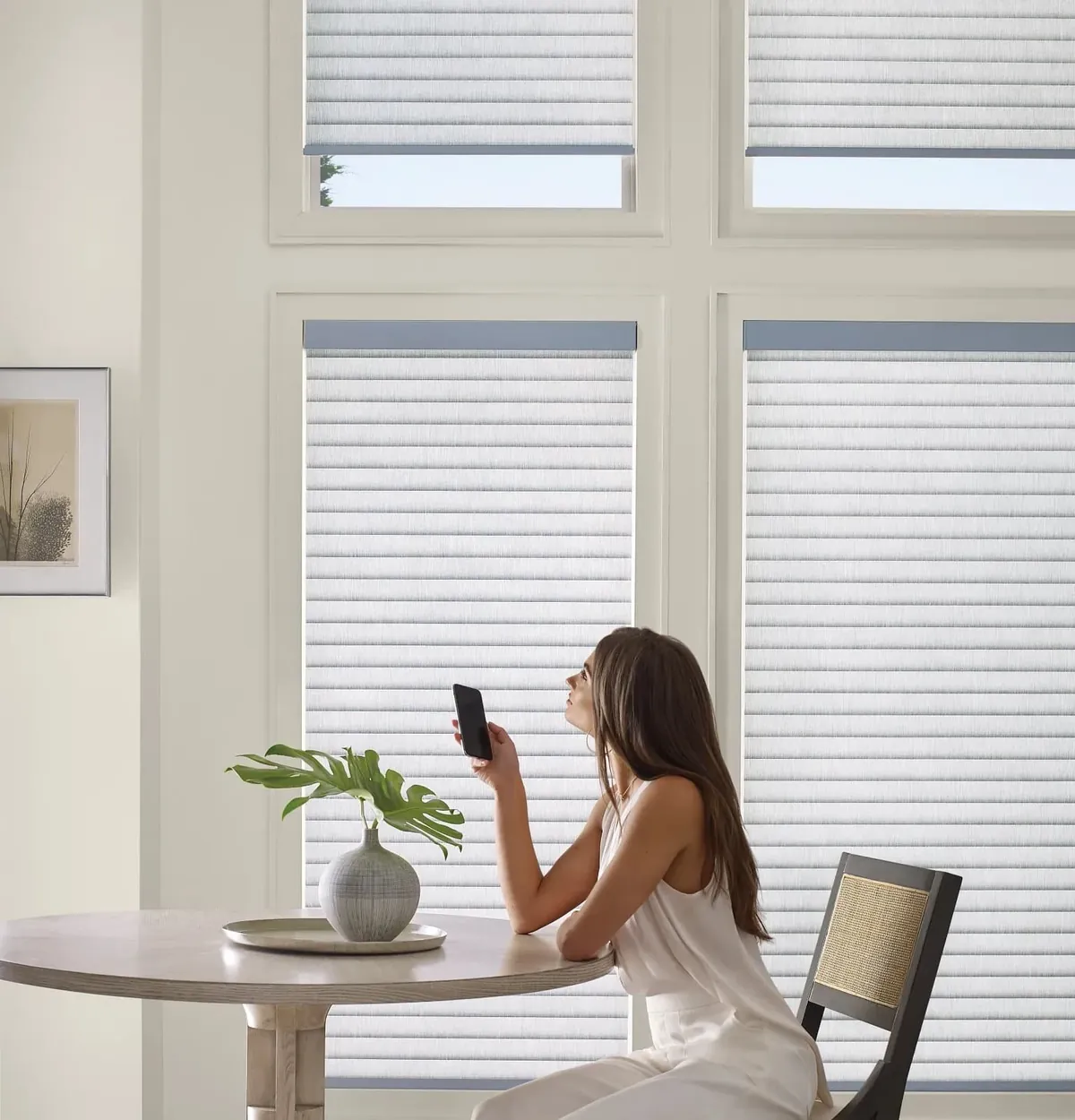
Hunter Douglas PowerView puts your rollers on a phone, a handheld remote or a timetable. On the river and harbor side, a schedule is the easy win: screens can lower when the afternoon glare off the water begins and rise again in the evening to bring the view back. Bedroom blackout can open at the time you choose.
In a two-family near the Landing, the tall front windows and stair windows are the usual candidates. In a condominium, a wide slider is easier to manage with a motor. Power for each motor is worked out at the visit, window by window. The motorized blinds in Weymouth page has more detail.
Kitchens, baths and the side of the house
The busiest windows in a Weymouth house are often the smallest. A kitchen window over the sink, a bathroom window on the side of a ranch and a stair window in a two-family near the Landing all need privacy more than anything else, and they are opened, reached over and walked past all day.
A roller suits them because nothing hangs low and nothing gets in the way. Over the sink, a raised shade sits tight under the head of the frame, clear of the tap. In a bathroom, a dense light filtering cloth or a room darkening fabric keeps the room private day and night. On a stair window, matching the cloth to the rooms on either side ties the side of the house together. Planning roller shades in Weymouth, MA, means walking to these windows as well as the big ones, because they are the ones you notice every day.
Designer and Alustra
Every fabric mentioned here sits in one of two Hunter Douglas families. Designer does the everyday work and has an answer for nearly any window in town. Alustra is the dressier sibling, and its Alustra Woven Textures cloth suits a living room where the shade should feel like part of the furniture.
A river-view condominium might pair Designer Screen on the glass with an Alustra weave in the den, while a cape in North Weymouth might stay with Designer from top to bottom. Samples of both ride along, and you can browse the complete range on the main roller shades page.
Samples at your door
Weymouth sits inside our shop-at-home area, so nobody has to fight traffic to a store. Our consultant arrives with a van full of samples, bringing the showroom to you, and every cloth is judged against your own glass, whether it looks at a neighbor’s siding or across the Back River. Details of the territory are on the Canton shop-at-home page.
- Book a time online with Request a Consultation, or press the call button.
- Tell us if any rooms face the water, so the right screens come along.
- Go room to room with your consultant, testing cloth at each window.
- Let us measure each opening.
- Keep the free estimate and decide whenever you are ready.
Help with color, furniture and the room as a whole is available through our interior design consultations, which can share the same appointment.
Why work with a Gallery dealer
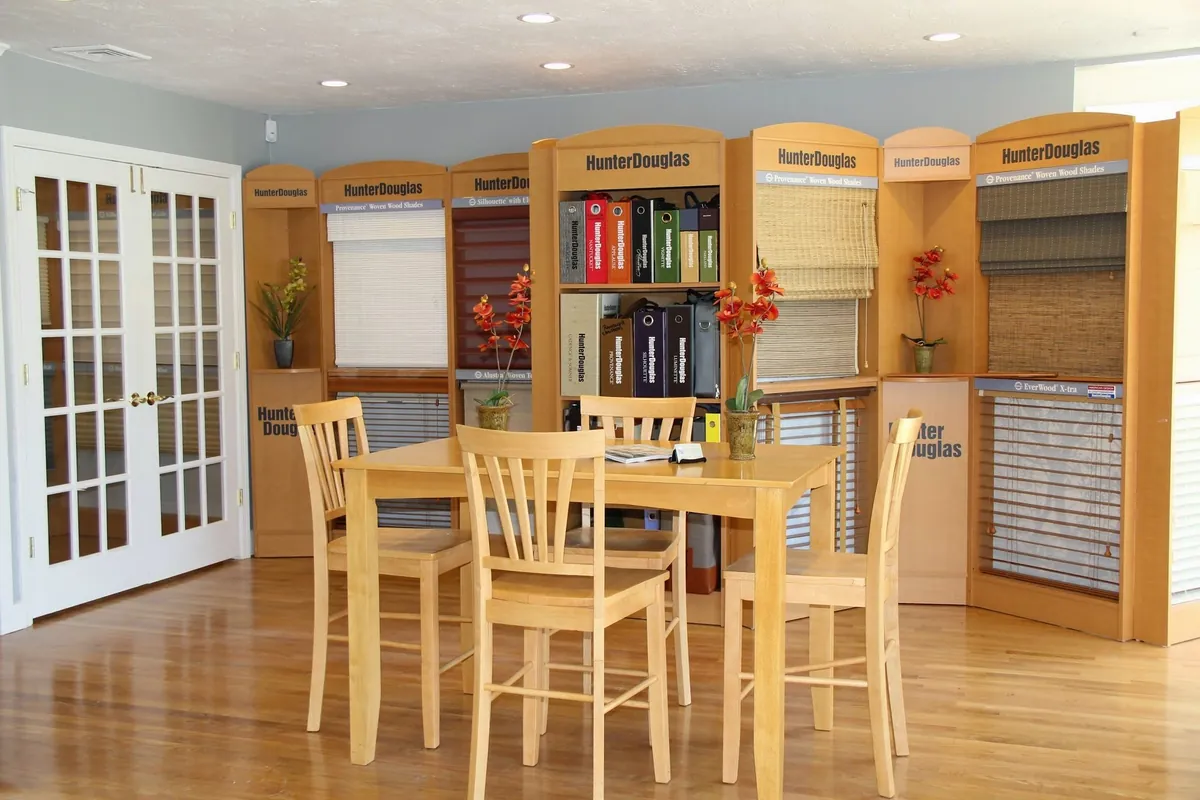
Hunter Douglas names Blinds & Designs a Gallery dealer, so all of its rollers are within reach for your home, and installers certified by Hunter Douglas fit each one.
We carry Hunter Douglas blinds, shutters, cellular and roman shades as well, and we repair shades and blinds you already own. If a bedroom also feels cold in winter, ask to see cellular shades in Weymouth at the same visit. Everything we offer in town is on our Weymouth page.
If you would like a showroom visit too, the Franklin showroom is our closest to Weymouth.
Questions from Weymouth
Our living room faces the Back River. How do we cut the glare and keep the view?
A solar screen is the answer most people choose. It softens both direct sun and the light reflected off the water, and a darker screen is easiest to see through.
Can you do both floors of our two-family near the Landing?
Yes. We can plan both units in one visit, keep one color facing the street and let each floor choose its own fabric.
Do rollers suit a condominium slider?
They do. A roller on the slider matched to the windows beside it keeps the wall consistent, and a screen keeps the view.
Is there a showroom in Weymouth?
No. We visit Weymouth homes with samples instead. Our closest showroom is in Franklin.
Will the estimate cost anything?
No. Estimates are free and there is no obligation.
From the Landing to the river
Whichever part of Weymouth you call home, the right roller depends on what is outside the window. Ask for a consultation and we will bring both Hunter Douglas roller families to the house, try them on the road side, the side windows and any glass that looks at the water, and hand you a free estimate before we go. Roller shades in Weymouth, MA, are far easier to judge with the real view behind the fabric. Questions first? Use the call button near the top.