
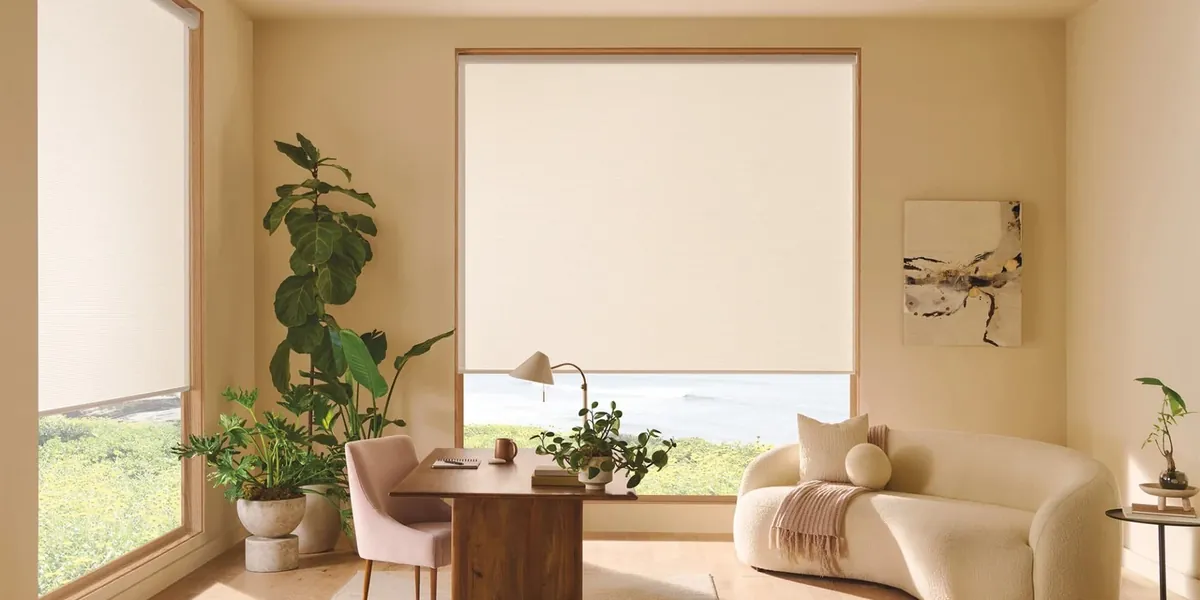
Rooms built around the harbor
Along Main Street and around the harbor, Hingham’s antique colonials and Federal houses have stood for a very long time, and they carry the expectations that come with that. Their windows are small, deep-set sash in thick walls, often with original casings, and anything hung in them is seen from the street as part of a carefully kept face. Down by the water, many rooms were arranged with one purpose: to look out at the harbor. Inland, the picture changes again, with larger newer houses set back on wooded lots. Roller shades in Hingham, MA, need to respect all three.
A roller is a quiet, disciplined choice for that kind of house. Its single sheet of cloth winds away at the top of the opening and, once raised, is hard to spot at all. Lowered, it is a calm, plain surface with no folds, ruffles or bulk to compete with old woodwork or to break up a view. Fabrics run from solar screens that keep the harbor in sight, through light filtering weaves, to blackout for bedrooms.
The trick is matching the cloth to each room: discreet and neutral where the house faces Main Street, open and glare-cutting where it faces the water, and suited to dappled light where it sits among trees.
Three Designer lines for Hingham houses
These Hunter Douglas lines cover almost every window from a Federal parlor to an inland great room. Every sample comes to your door in our van.
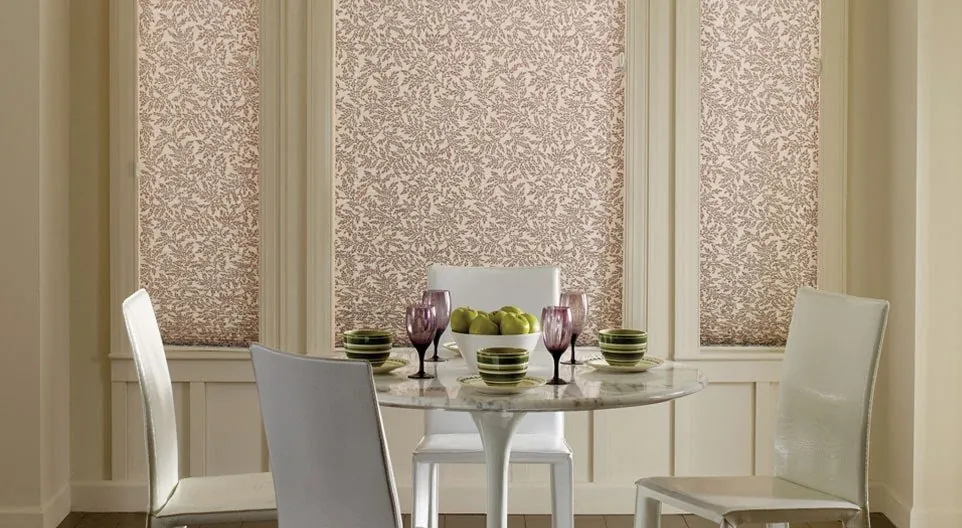
Designer Roller
Plain, textured and patterned cloth from light filtering through blackout. The core of most orders, from small sash bedrooms to inland kitchens.
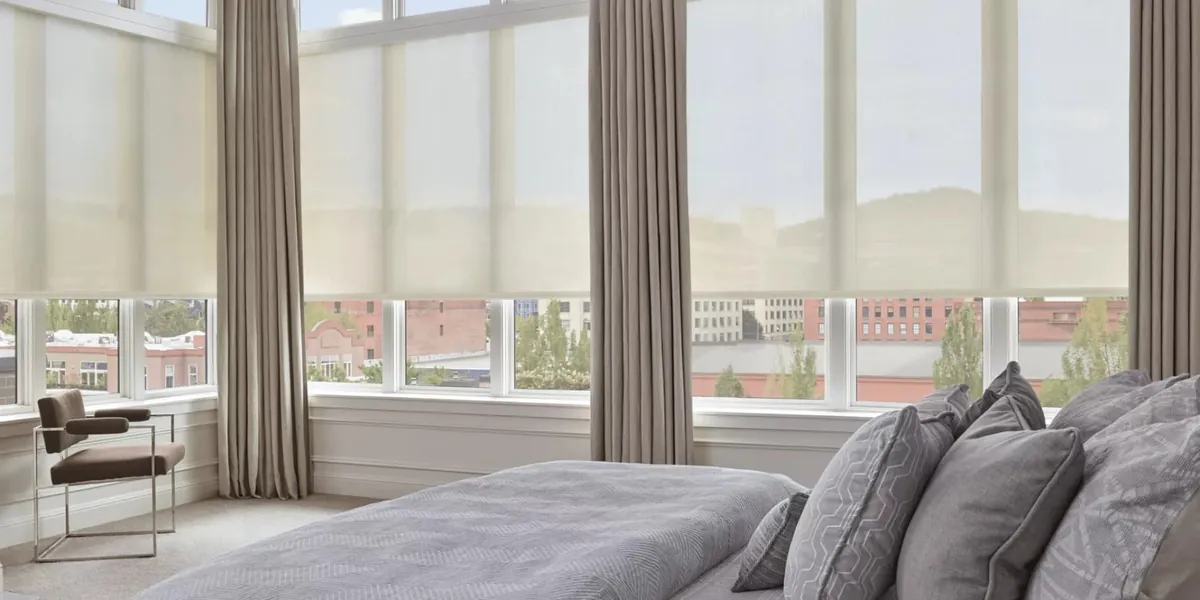
Designer Screen
Solar screen fabric that takes the glare off the harbor while the boats and the far shore stay in view. The first choice for a water-facing room.
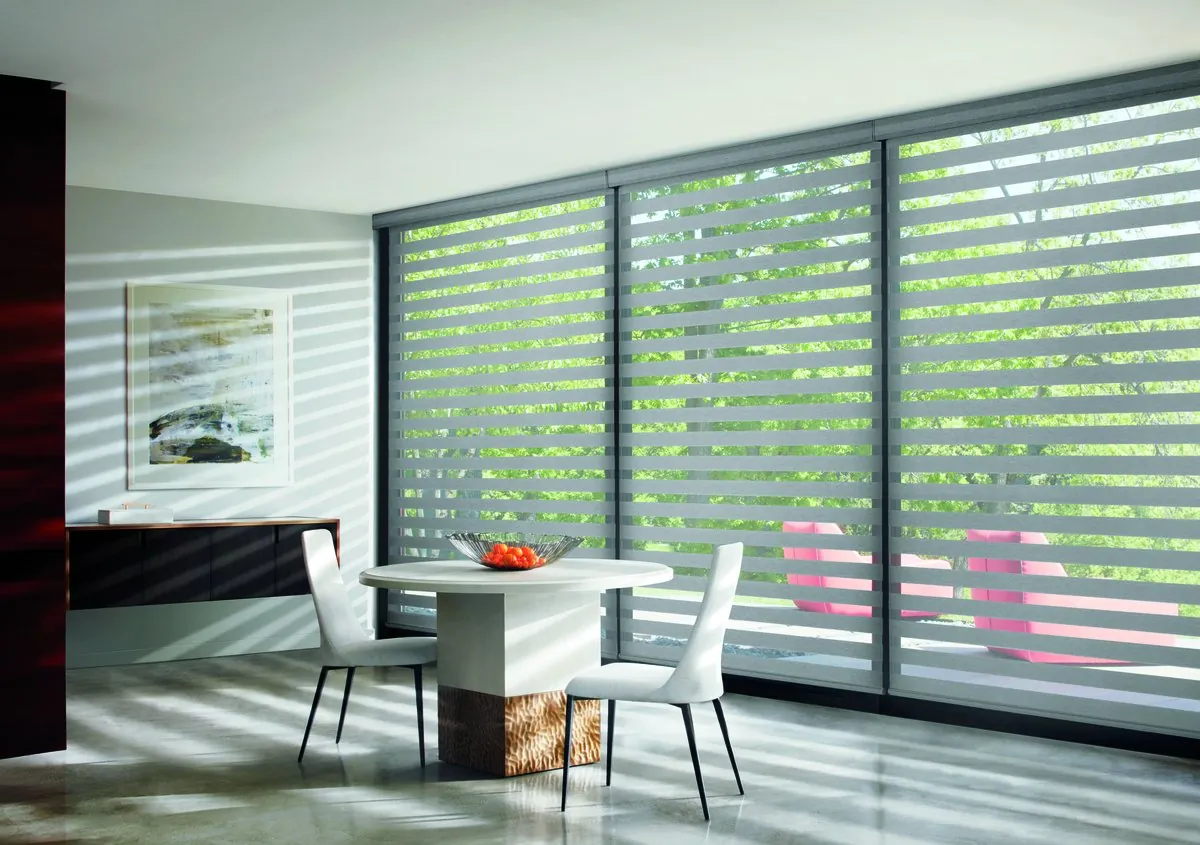
Designer Banded
Sheer and solid stripes on two layers that shift between view and cover. Handy on a corner room that faces both the street and the water.
Small, deep-set sash on Main Street
The antique colonials and Federal houses on and around Main Street share a particular kind of window. The walls are thick, so the sash sits well back from the room, and the panes are small, divided by muntins into a grid. The casings are often original and the paint has been looked after for a long time.
That deep reveal is a natural home for a roller. Where the depth allows, the shade can sit right inside the opening, tucked up under the head of the frame. From the room you see the casing and the old glass, not the shade. From the street, when it is lowered, you see a plain panel set back behind the sash, which looks orderly and restrained, exactly what a house like this asks for.
Because the windows are small, light is precious. A covering that stacks bulkily at the top or hangs below the head when raised steals daylight from rooms that may have only one or two windows each. A roller raised fully gives the whole pane back to the room.
Old frames are rarely square. A house of this age has settled, and an opening can vary slightly from top to bottom or side to side, with old hardware in the reveal. We look at each window individually, check the depth and the line of the frame, and agree the mount with you before anything is ordered. Where an inside mount is not right, mounting on the face of the casing is the alternative, and we will explain why.
What the street sees on an old house
On a historic street, the outside of every window is part of the streetscape. A bright color, a strong pattern or a mix of different shades across the front can look out of place on a carefully kept Federal facade.
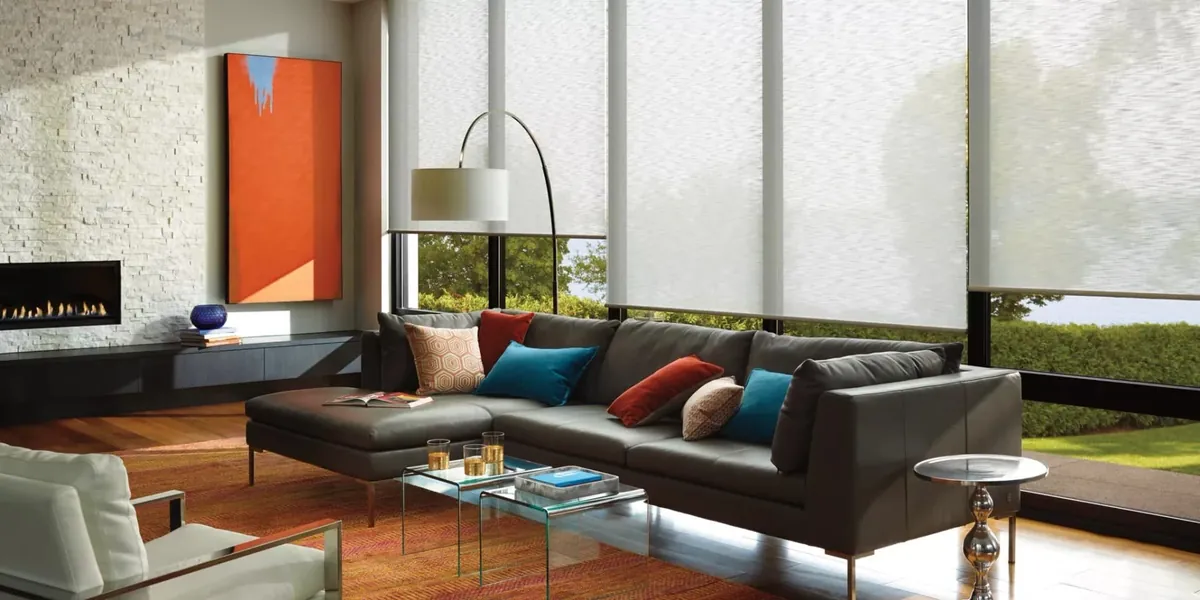
The simple discipline is to keep the outward color quiet and consistent. Warm whites, ivories and soft stone colors sit comfortably behind old glass and painted sash, and when every front window shows the same color, the house looks composed. That still leaves room for character inside. A parlor can take a richer Alustra fabric, a child’s room can have a pattern, and none of it changes the view from Main Street as long as the outward face stays calm.
Lowering the front shades to the same line in the evening helps too. On a street of old houses, a row of windows with shades stopped at matching heights reads as tidy and intentional.
Harbor rooms and the view
Around the harbor, many rooms were laid out for the view. A living room with a run of windows facing the water, a kitchen at the back of an old house that opens toward the moorings, a bedroom upstairs with the harbor framed in its sash. In those rooms the view is the point, and any window covering that hides it for most of the day is the wrong choice.
The difficulty is the sparkle. On a bright afternoon the harbor acts like a mirror laid flat, throwing a second dose of sun up through the glass beneath the brim of any shade that is only partly down. It dances on the ceiling with every ripple, and it can make a book or a laptop hard to read.
Most harbor rooms end up with a solar screen. Pulled all the way down, it tames the sun from above and the glitter from below at once, yet the moorings and the opposite shore remain in plain sight. Deep-toned screens are the easiest to look through, since the eye skips past them, and that suits a room whose whole reason is the harbor. Pale screens brighten when the sun lands on them and look more closed from the waterfront in daylight.
Choosing roller shades in Hingham, MA, for a harbor room is mostly about balancing those two: how much glare to take out and how much view to keep. Holding two or three screens at the window in the late afternoon is the clearest way to decide.
Openness, explained for the water side
Screens differ in openness, which is simply how open the weave is. A more open screen gives a clearer view and a brighter room, and lets more glare through. A tighter screen calms the light more firmly and offers more daytime privacy, and the view softens into a gentle haze.
Because the harbor bounces so much light, rooms facing it often take a closer weave in the main sitting room and a looser one in a breakfast room that gets its hardest sun later in the day. Color then adjusts the result by a shade or two.
Evenings call for a plan as well. A screen keeps a room private only while it is brighter outside than in. After dark, with lamps on, the room shows through to the water and to anyone on the path or the street. Giving each harbor room one heavier roller, or a banded shade that can close completely, keeps the evening private and leaves the daytime view untouched.

Larger newer houses on wooded lots
Inland, Hingham’s newer houses are larger and sit back among trees. The windows are bigger, the ceilings are often higher, and many have a two-story family room or great room with a wall of glass facing the woods.
Trees change the light. In summer, leaves shade much of the house and the light inside is soft and dappled. In winter, with the leaves down, the same rooms take far more sun, and the low winter light reaches deep into the house. A shade that is barely needed in July may be the one you use every afternoon in January.
Rollers handle that well, because they disappear when not needed and come down quickly when the sun gets in. A light filtering fabric suits most living spaces. A screen keeps the view of the woods in a family room facing south or west. Bedroom windows that faced green leaves all summer can let in a startling amount of dawn once the branches are bare, so a dimming or blackout cloth earns its place there.
Privacy is rarely the first concern on a wooded lot, but it matters after dark. A lit house among trees can be seen from the road or a neighbor’s drive in winter, so rooms used in the evening that face those directions may want a denser fabric.
Stair halls, studies and the back of an old house
Antique houses on Main Street often have a narrow stair hall with a single window at the landing, a small study or keeping room at the back and a kitchen that was added or rebuilt later. Those rooms face side yards and back gardens rather than the street, and they come with their own light.
The stair window is usually the hardest to reach and the easiest to forget. A plain roller in the same outward color as the front windows keeps the side of the house consistent. The study, often lined with books, suits a light filtering cloth that softens the glare across the desk without darkening the room. The kitchen at the back, where historic expectations relax a little, is the place to bring in a pattern or a warmer color if you like. When we plan roller shades in Hingham, MA, for an old house, we walk through every one of these smaller rooms as well as the front parlors.
Tall glass in a great room
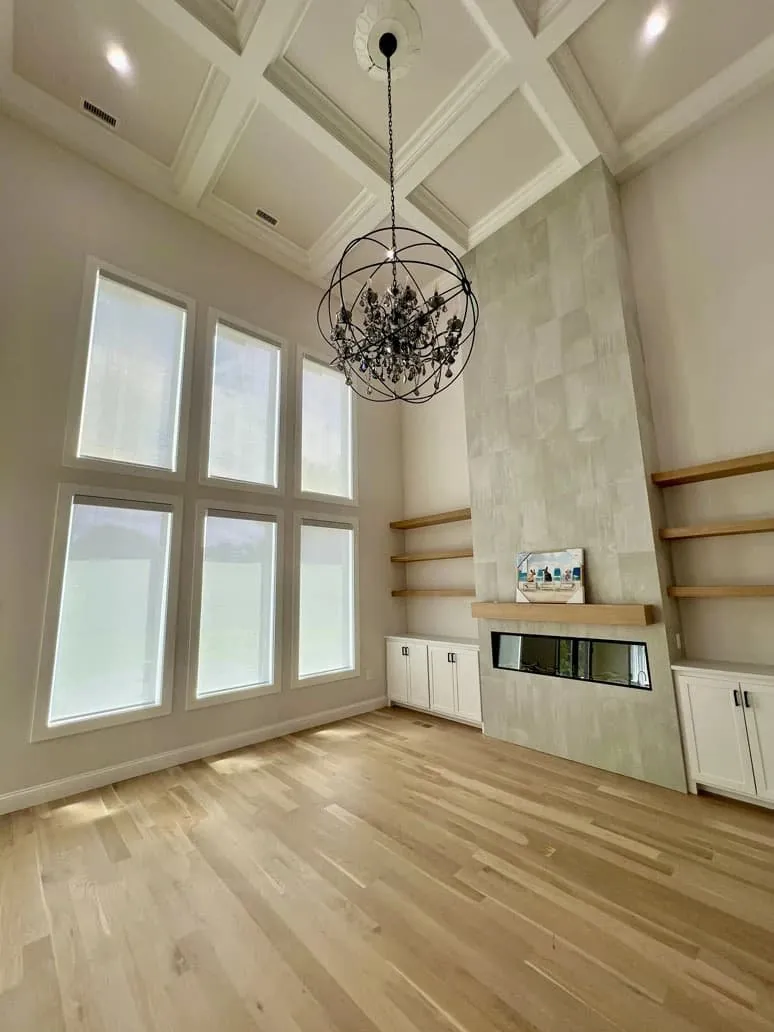
The great rooms in newer inland houses often have windows stacked two stories high. Those upper windows are the hardest openings in the house to dress, and also the ones that let the most sun in.
Rollers suit them because they are slim and straightforward, and each window can have its own shade so the upper and lower rows can be set differently. Many people lower the upper row in the afternoon to cut glare and leave the lower row open for the view of the woods. Others choose a screen for both rows and lower them together.
High windows are where motorization makes the most sense, because there is no comfortable way to reach them by hand. We cover that in the PowerView section below.
Fabric by kind of house
Most Hingham houses settle on a short list of fabrics:
- An antique or Federal house on Main Street: light filtering or room darkening in the small sash, a neutral outward color across the front, perhaps an Alustra fabric in the parlor.
- A harbor-side house: screens wherever the harbor fills the glass, a heavier cloth close by for nighttime, and dark fabric in any bedroom looking at the moorings.
- A newer house inland: light filtering in living spaces, a screen in the great room or family room, and dimming cloth upstairs.
Hold one outward color across the front and the house keeps its composure from the road and from the water. Picking roller shades in Hingham, MA, room by room like this gives every space the right cloth without upsetting the character of the house.
PowerView for high windows and the harbor
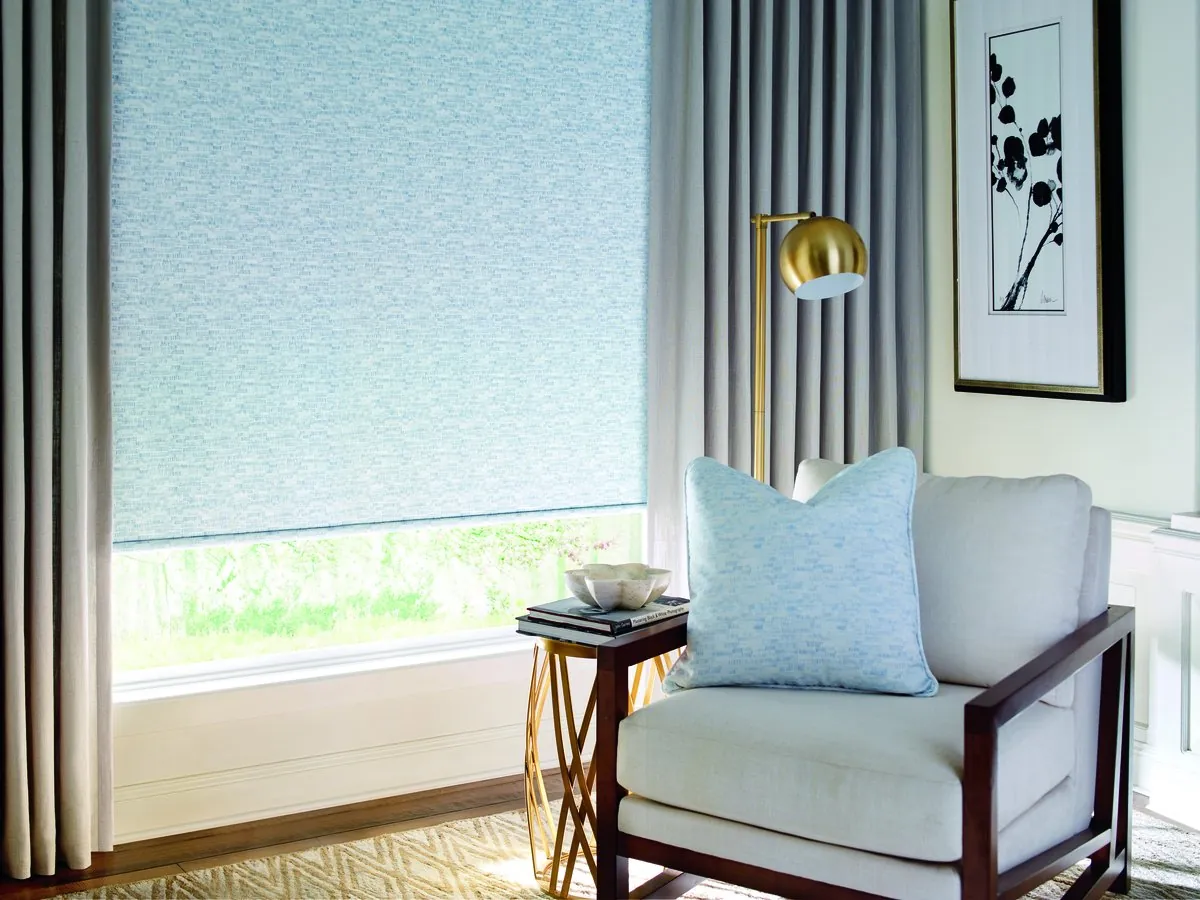
Hunter Douglas PowerView lets rollers move from a phone app, a remote or a schedule. In an inland great room, it is the practical answer for the upper row of windows. In a harbor room, a timetable can bring the screens down as the sparkle on the water builds and lift them again for sunset. In an old house on Main Street, it can lower the front shades at dusk to the same line every night.
Shades can be grouped so a whole wall moves together. How each motor gets its power is decided at the visit. Our motorized blinds in Hingham page goes into more depth.
Designer and Alustra
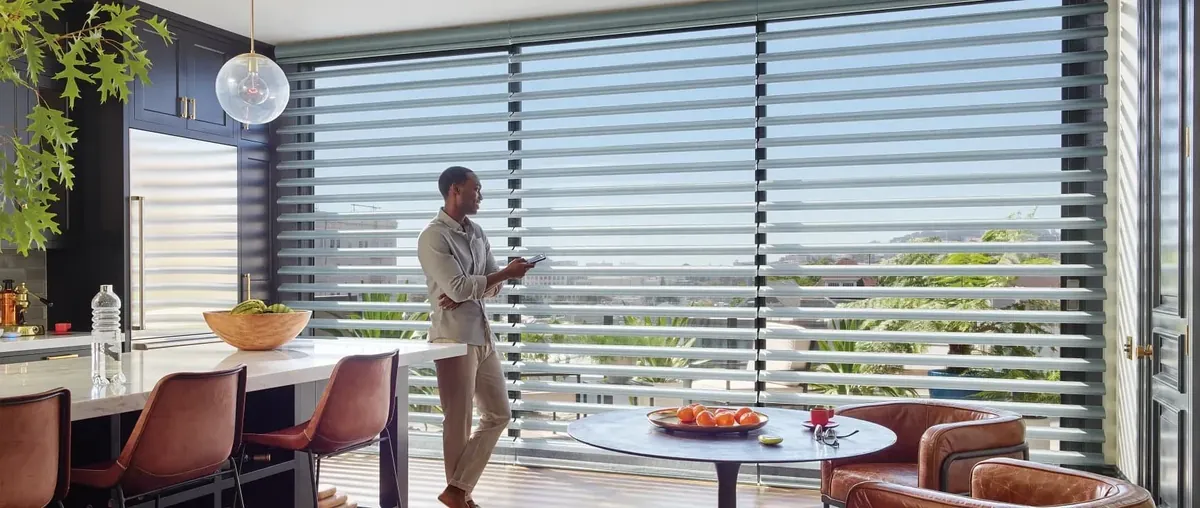
Hunter Douglas organizes its rollers into two families. Designer covers the essentials: plain, textured and patterned cloth, banded fabric and solar screens. Alustra is the more refined collection. The Alustra Woven Textures cloth, with its loomed, natural character, looks right at home against wide pine boards and painted paneling in an antique parlor.
A Federal house might take Alustra in the front parlor and dining room and Designer elsewhere. A newer inland house might use Designer Screen in the great room and an Alustra fabric in a study. Both families come in the van, and our roller shades page shows the full range.
Choosing in your own rooms
Hingham is covered by our in-home service, so the cloth travels and you stay put. A consultant brings samples of both roller families, which is how we bring the showroom to you, and each one is held against your old glass, your harbor outlook or your wall of windows among the trees. You can read about the territory on the Canton shop-at-home page.
- Set up a visit with the Request a Consultation form or the call button, and tell us which rooms look at the water or the street.
- If you can, choose a time when the glare is at its worst in the room that bothers you most.
- Walk the house with your consultant and hold screens and fabrics at each window.
- Have each opening measured, with extra care on the old deep-set sash.
- Take your time over the free estimate.
For guidance on color and furnishings across a room or the whole house, our interior design consultations can be arranged alongside.
A Gallery dealer for an old house or a new one
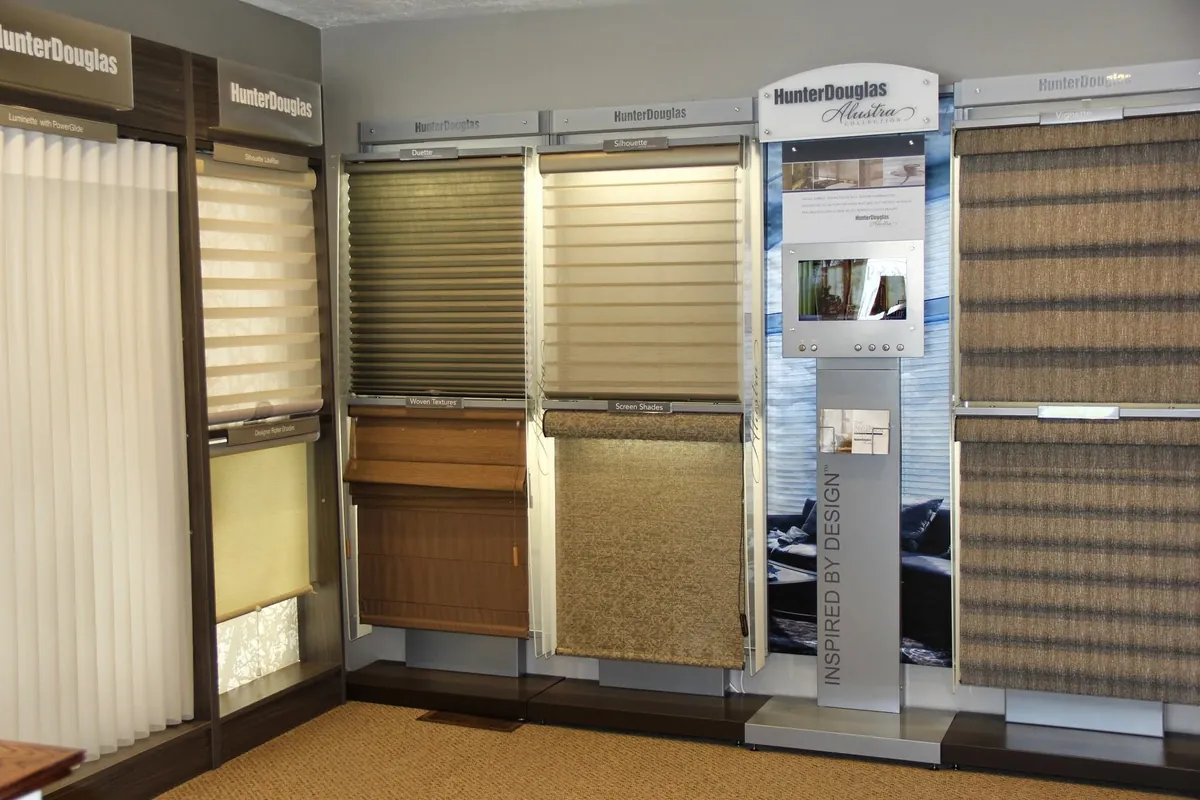
Blinds & Designs is a Hunter Douglas Gallery dealer, which opens the complete roller range, Designer and Alustra, for your house. Every shade is fitted by installers Hunter Douglas has certified.
Shutters, blinds, cellular and roman shades from Hunter Douglas are part of the same offer, and shades already hanging in the house can come to us for repair. A small-paned bedroom in an old house that runs cold may be a candidate for cellular shades in Hingham, which we can show you alongside. The Hingham page brings together everything we do here.
Like to browse in person as well? The nearest of our showrooms to Hingham is in Franklin; see the Franklin showroom page.
Questions from Hingham
Will a roller suit the small, deep-set windows in our Federal house?
Usually very well. The depth of the reveal often lets the shade sit inside the opening, almost out of sight, with the casing and old glass on show. We check every frame before suggesting a mount.
How do we keep our harbor view and still cut the glare?
Lower a solar screen. It calms the sun overhead and the glitter coming up off the harbor, and the moorings stay in sight. Deep-toned screens are the clearest to look through.
What color should the shades be on a house on Main Street?
A quiet, consistent outward color, such as a warm white or ivory, keeps the front composed. Inside, each room can still have its own fabric.
Is there a showroom in Hingham?
No. We come to Hingham homes with the samples. Franklin is the showroom nearest to town.
Is the estimate free?
Yes. It is free and you are under no obligation.
Start with the room that matters most
For many Hingham households that is the harbor room; for others it is a Main Street parlor with bare sash or a great room flooded with winter sun. Ask for a consultation and we will start at that window with both roller families, then work through the rest of the house and leave a free estimate. Roller shades in Hingham, MA, are simplest to settle with the real view, or the real street, right behind the cloth. The call button at the top of the page is there if you would like to talk first.