
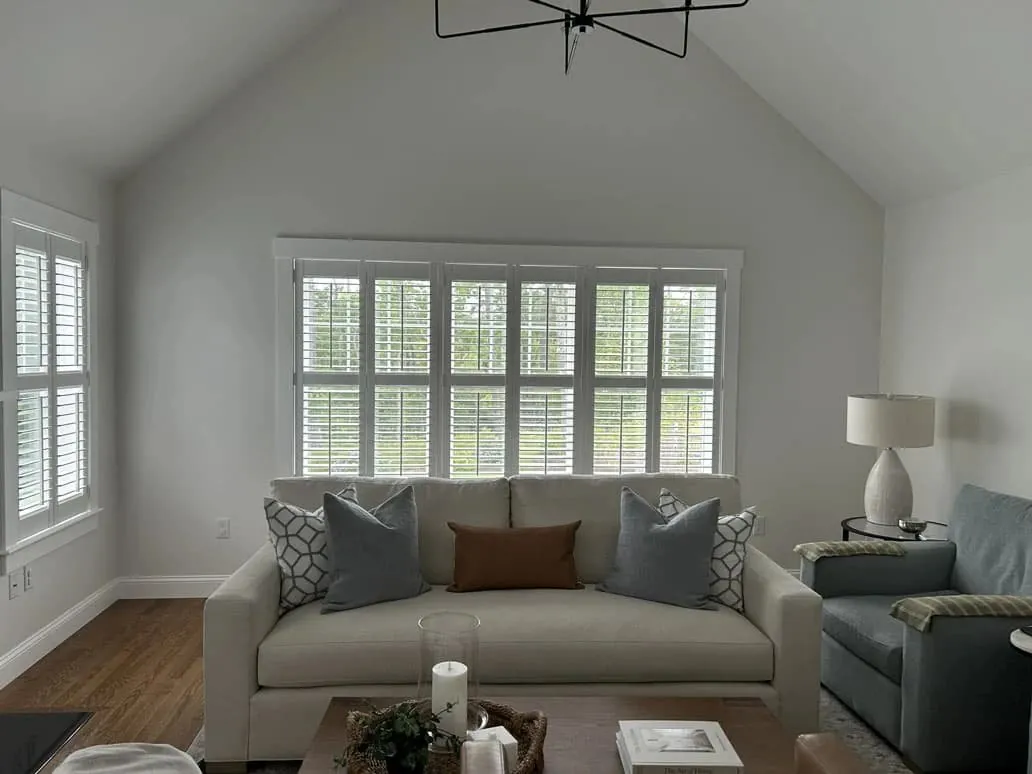
Shingle, salt and open water
Cohasset gives a shutter two very different jobs. In the village and around the harbor, shingled houses sit close together on narrow lots, their windows facing a neighbor’s porch as often as the water. Out along Jerusalem Road the lots open up, the houses get larger, and whole walls of glass face the Atlantic with nothing between them and the weather. We plan plantation shutters in Cohasset, MA, with both of those settings in mind, because the right louver for a cottage parlor on a side street is rarely the right one for a great room that takes the full sweep of the sea.
What ties the two together is the air. Salt rides in on every onshore breeze, it settles on sills and hinges, and it finds any piece of hardware left exposed near a window that opens in summer. A shutter is a piece of furniture that lives right at the glass, so the conversation about where it hangs and how it moves starts on the first visit.
The third thread is formality. Many of the older village houses were built with dressed windows in mind, with casings and proportions that expect drapery, and a shutter in those rooms has to sit comfortably beside fabric rather than replace it.
Plantation shutters in Cohasset, MA, by setting
The windows here fall into a few clear groups. These are the situations we plan for most often, and the samples for each come with us to the house.
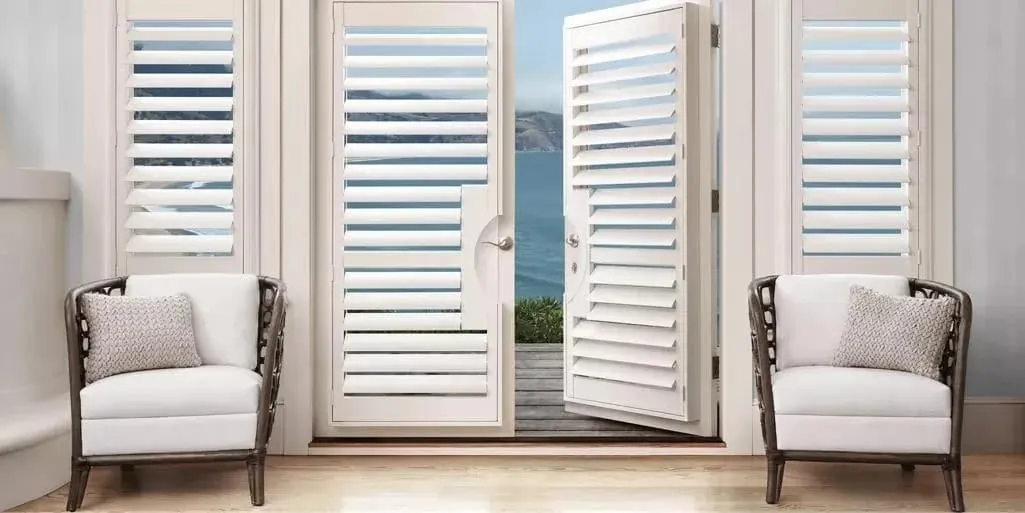
Ocean-facing rooms
Wide openings and doors toward the water, where panels must fold well clear of the glass to give back the whole view on a calm morning.
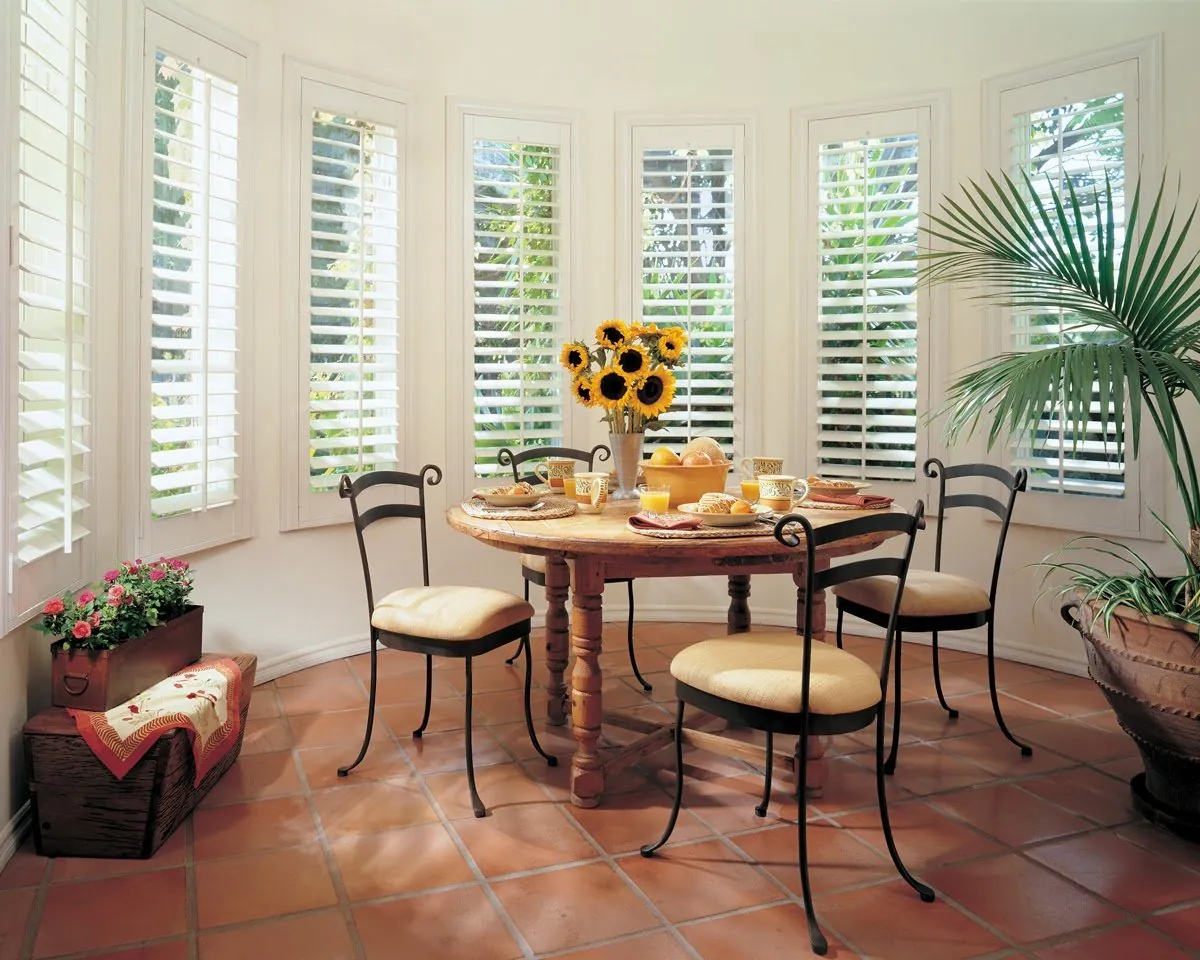
Bays and breakfast nooks
Shingled houses love a bay. Every window gets its own panels, with the louvers lined up around the curve so the bay reads as one piece.
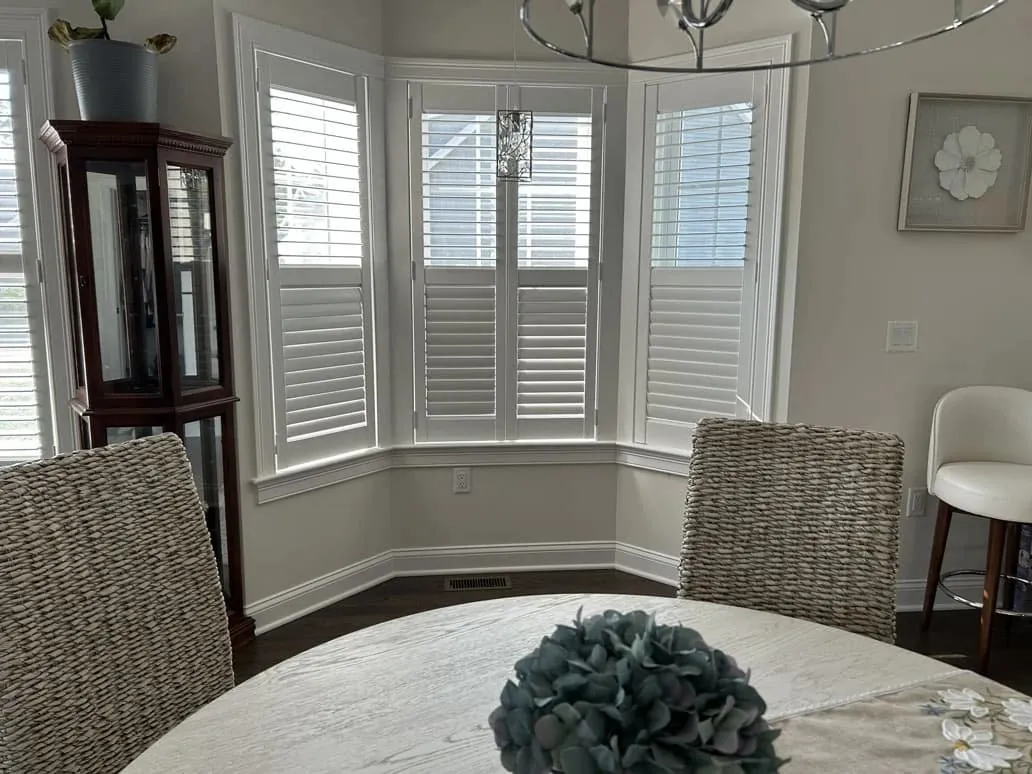
Cafe style in formal rooms
Lower-half panels give a village dining room privacy from the sidewalk while drapery or an open upper sash frames the top of the window.
A visit to your house comes first
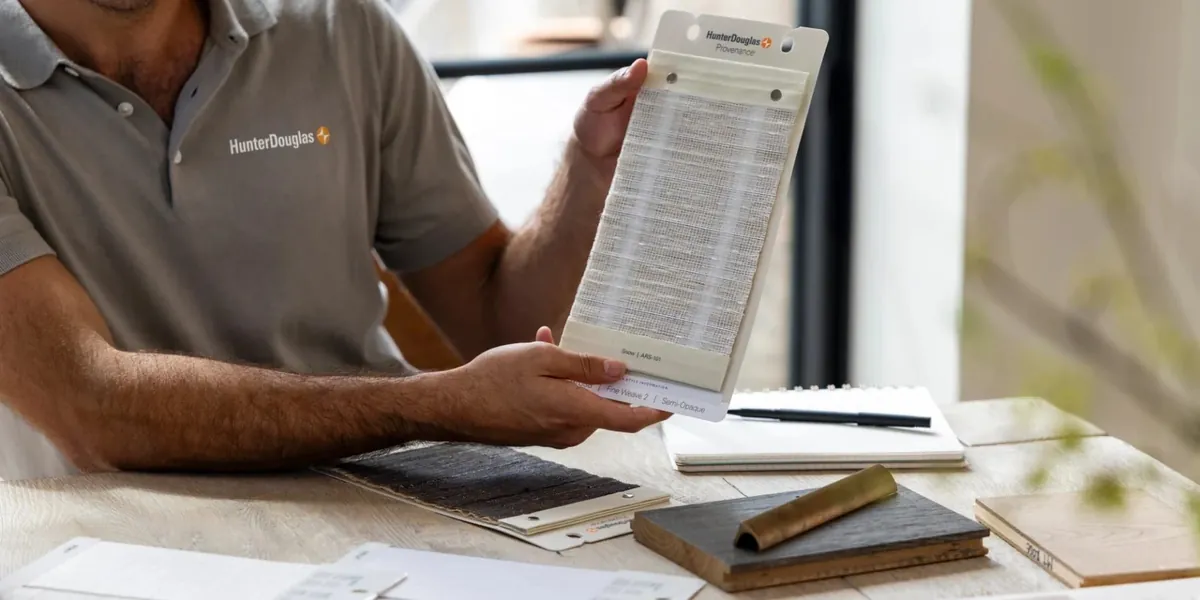
Cohasset sits inside our Canton shop-at-home territory, which means the planning happens in your rooms and not across a counter. Our vans carry shutter samples from all three Hunter Douglas lines, so we can bring the showroom to you and hold each one against the casing it would actually meet.
That matters more here than in most towns. A louver that looks right in a catalog can feel heavy on a cottage window with slender muntins, and a sample that seems bold in hand can vanish against a full wall of ocean glass. Seeing both in the real light, at the real time of day, settles questions that no photograph can.
A typical appointment runs in this order:
- You choose a time through Request a Consultation or the call button.
- We start in the room you care about most, often the one that faces the water or the street.
- Palm Beach, NewStyle and Heritance samples go up against your trim, one after another, so you compare louvers and frames side by side.
- We talk through how you use the room, morning and evening, and where drapery stays or goes.
- Every window you want covered is measured, including bays, doors and side lights.
- You receive a free estimate and take whatever time you need to decide.
If you would like a hand with the whole room as well, our interior design consultations cover paint, fabric and how the windows fit into the space. The page on what happens at an in-home consultation explains the visit in more detail.
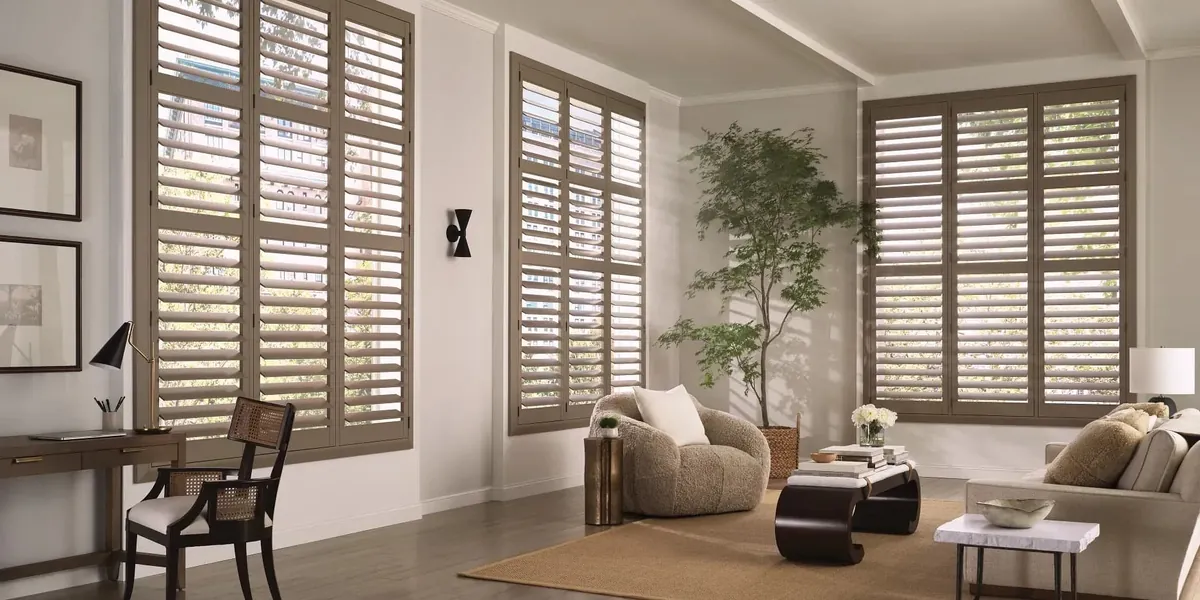
Village houses near the harbor
The streets that run down toward the harbor are lined with shingled houses of every age: some with steep roofs and dormers, some with a deep porch across the front, many with small-paned sash that has been painted and repainted many times over. Their rooms tend to be modest, their ceilings lower, and their windows arranged in pairs or threes along a single wall.
In a room like that, scale is everything. A smaller louver sits comfortably on a narrow sash and lets enough slats climb the panel that it looks finished rather than sparse. When the louvers tilt, the light comes in as soft bands rather than a single broad wash, which suits a cozy room with low ceilings.
Proximity is the other constant. Many village houses are only a few steps from the next one, and a parlor window can face straight into a neighbor’s kitchen. Split panels help: the lower section stays closed for privacy while the upper section tilts open to the sky. Set the divider at the height of the meeting rail on the sash and the shutter follows the lines the original builder drew.
The big houses along Jerusalem Road
Further out, the houses grow and so do the windows. Great rooms with walls of glass, French doors to a terrace, tall transoms over the main openings and bedrooms that look straight out to sea are the rule rather than the exception. These rooms are built for the view, and any covering that blocks it when it does not have to is the wrong covering.
Shutters earn their place because they disappear when you want them to. Hinged panels fold back against the frame and leave the glass entirely clear. When the sun turns hard over the water in the afternoon, a quarter turn of the louvers cuts the glare without closing the room. At night, with the lights on and the ocean dark, closed panels turn a glass box into a room again.
For openings this wide, we divide the span into several narrower panels rather than a few broad ones. Narrow panels fold more neatly, swing through less of the floor, and stack tidily at the edges where they will not crowd a sofa or a dining table placed near the glass. Louver size can step up here as well: a larger blade gives a wider view between the slats when tilted flat, and it holds its own visually against a big opening.
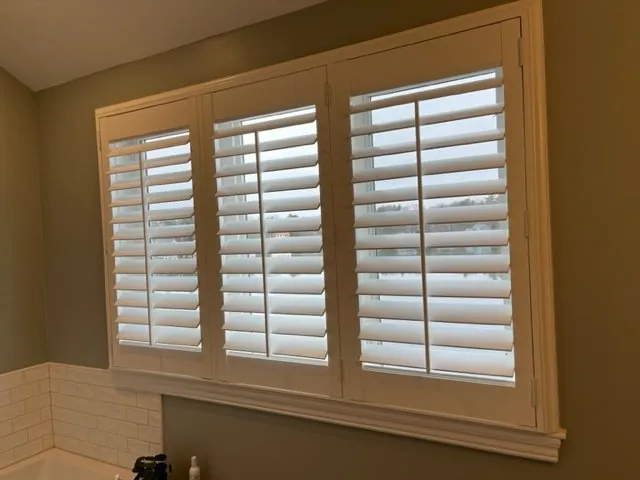
Weather off the open ocean
Few towns on our map take the sea as directly as the exposed side of Cohasset. Wind drives spray and salt toward the houses, and in winter a northeaster can hammer the seaward walls for days. Inside, that shows up as condensation on cold glass, salt film on sills, and hardware near an often-opened window that needs looking after.
We cannot promise that any covering is unaffected by salt air, and we will not pretend otherwise. What we can do is plan with it. At the consultation we look at which windows open most, where the spray reaches, and how close each shutter will sit to the glass, and we talk through the choices for those openings in plain terms. A window that is rarely opened may want a different plan from a terrace door that stands open half the summer.
The other side of the weather is the light. On a clear day the water throws glare up into rooms at angles a street-facing house never sees. Louvers handle that better than almost anything: tilt them upward and the bright light bounces off the ceiling instead of landing on the floor or a screen.
Shutters and drapery in a formal room
Plenty of the older village houses have rooms that were made to be dressed: a front parlor with tall windows and a high casing, a dining room where fabric was always part of the design. Some owners want to keep drapery in those rooms and add shutters for daily control of light. Others want to remove the fabric and let the woodwork show.
Both work, provided the plan respects the room. When drapery stays, the shutter normally sits inside the window opening and the fabric frames it from the wall, so the two layers never fight. We check that each panel can swing fully open without brushing the curtains, and that the louvers line up with the window’s own proportions so the shutter looks original to the house. Many of these rooms suit a cafe treatment on the lower sash, which keeps the formal top of the window on show.
When the drapery goes, the shutter takes over the job of framing the window, and the choice of frame style becomes much more important.
Louver sizes for Cohasset windows
Louver size is the single most visible decision. Small-paned sash in a village cottage usually looks best with a modest blade, enough slats to fill the panel and keep the scale gentle. Large openings toward the water can take a broader blade that gives a wider gap between slats and a more open, contemporary feel.
A house does not have to use one size throughout, but most do, because a single louver carried from room to room makes the inside feel planned and gives the outside a calm, even look. Where a house mixes cottage-scale rooms with a new wing of big glass, it can make sense to choose the size that suits the main rooms and carry it through, or to pick two sizes and keep each to its own part of the house. We hold the samples up in both settings before anyone decides.
Frame styles and old casings
The frame is where the shutter meets the trim, and in a village house that trim may be original, deep and carefully restored. A slim frame that tucks inside the opening keeps the casing in full view. A frame with more profile can stand in for missing or plain trim, or give a modern opening a finished edge.
Old houses rarely have square windows. Frames that have settled over a long life can lean, bow or taper from top to bottom, and the shutter has to look straight in an opening that is not. That is one of the reasons every window is measured on site. Where an inside fit would leave uneven gaps, we explain the alternatives and show how each would look against your trim.
Side lights beside a front door, narrow windows flanking a chimney and small attic windows under the eaves all get the same frame style as the main rooms, so even the oddest openings belong to the same plan.
Color against shingle and sea
Shingled houses weather to silver and brown on the outside, and their interiors often lean on white trim, painted floors and soft, sandy walls. A shutter in a white or warm off-white usually blends with that palette and reads from the street as part of the house rather than an addition. In an older village house, where the casings carry many coats of slightly creamy paint, a warmer white tends to sit better than a bright one, which can make the original trim look tired beside it.
Rooms on the ocean side are a different case. The light there is cool and strong, and a crisp white can look almost blue at midday, while a gentle off-white holds steady from morning to dusk. Some owners choose a soft gray or a taupe for a den or a study, picking up the color of the shingles or a stone fireplace. We judge every color at the window, once in daylight and again under lamps, before it goes on the order for plantation shutters in Cohasset, MA.
Choosing among Palm Beach, NewStyle and Heritance
Hunter Douglas makes three shutter collections, and samples of each travel to every Cohasset visit. Our pages on Palm Beach, NewStyle and Heritance go into each one, and the main plantation shutters page compares them. In practice the choice for plantation shutters in Cohasset, MA, is made at the window, with the sample against your casing and the sea light coming in.
Many households end up with one line throughout. Some choose by room, putting a particular collection on the seaward walls and another in the back bedrooms or the baths. We lay out what each would mean for every opening so you can decide with the whole house in view.
If your house still has its original sash, our article on shutters for older windows answers many of the questions that come up in the village.

Why a Gallery dealer for a coastal house
Blinds & Designs is a Hunter Douglas Gallery dealer. For a house on the water that means all three shutter collections from one source, with louver sizes, frame styles and colors compared side by side in your rooms rather than guessed at from a brochure.
Our installers are certified by Hunter Douglas, and the people who measure your windows are the same company that fits the shutters. If something needs attention later, we handle blind and shade repairs too.
The nearest showroom to Cohasset is our Franklin showroom, and most Cohasset projects never need the drive, because the consultation comes to you. Whenever you want to compare other coverings for the rest of the house, see what we do across town on our Cohasset page.
The rest of the house
Shutters rarely cover every window in a house this close to the water. A bedroom that faces the sunrise over the ocean may want a darker covering, and a tall stair window can be easier to manage with a motorized shade. We plan those alongside the shutters at the same visit, so colors and lines agree from room to room.
For the rooms where shutters are not the answer, look at cellular shades in Cohasset for warmth on a cold seaward wall, roman shades in Cohasset for a softer look in a formal room, or motorized blinds and shades in Cohasset for openings that are hard to reach. Our Hunter Douglas dealer page for Cohasset covers the full range.
Questions from Cohasset
Can shutters handle the salt air on an ocean-facing wall?
Salt reaches every part of a house near open water, and we never claim any covering is untouched by it. At the consultation we look at which windows open most and how exposed each wall is, and plan each opening with that in mind.
Will shutters block the view from a room facing the water?
Not when you want the view. Hinged panels fold back against the frame and clear the glass completely. When the afternoon glare comes off the ocean, tilting the louvers cuts it while keeping the room bright.
Can I keep the drapery in my village dining room?
Yes. The shutter usually sits inside the window opening and the drapery frames it from the wall. We check that each panel swings open without touching the fabric, and a cafe treatment on the lower sash is often a good fit for these rooms.
What louver size suits a small-paned cottage window?
A modest louver usually suits a narrow sash best, because enough slats fill the panel to look finished. We hold several sizes against your own window so you can compare them in your light before deciding.
Is the estimate free?
It is. After we measure every window you want covered, you get a free estimate with nothing to sign on the day.
Book a time at your windows
Whether the house sits on a side street near the harbor or out along the road above the open ocean, planning plantation shutters in Cohasset, MA, starts the same way: with samples against your trim in your own light. Request a consultation and we will arrange a visit, measure each opening and send a free estimate. You can also reach us on the call button if you want to talk it through first.