
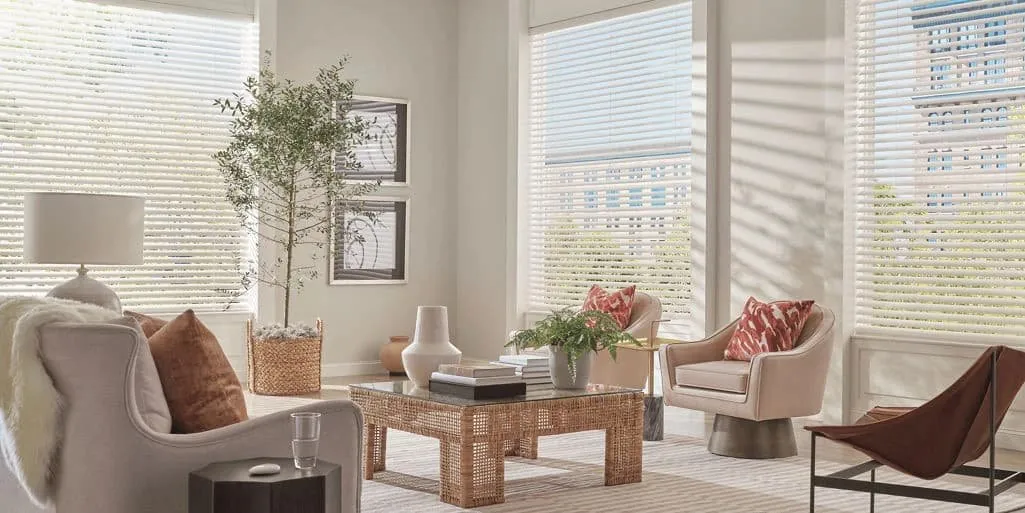
Colonials, wooded lots and a tall front hall
Most streets in town are lined with post-war colonials and larger, newer houses set among trees, with a cluster of older Victorians close to Needham Center. The newer stock is built around standard modern openings, which makes it straightforward to fit. The largest houses add something harder: a front hall rising through two stories with a tall sheet of glass above the door. Custom blinds in Needham have to handle the easy windows well and the difficult ones properly.
On a wooded lot, the light changes through the year. In summer the canopy filters it, and in winter the bare branches let low sun straight into rooms that were shaded a few months before. A blind that tilts lets you follow that change from season to season without rethinking the window.
The Victorians near the center bring tall sash, high ceilings and trim worth keeping in view. Their blinds need to suit the proportions of an older room rather than simply cover the glass.
Three families of blinds for every room
Each of these is a Hunter Douglas blind built to the sizes we measure in your house. Between them they cover the windows in a colonial, a newer house and a Victorian alike.
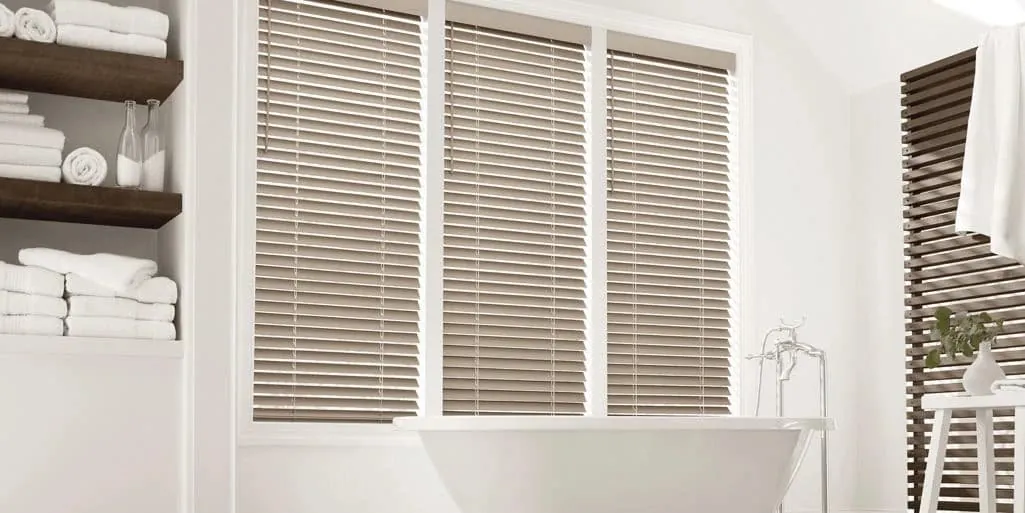
Wood and Faux Wood Blinds
Parkland real wood for living rooms and studies, EverWood faux wood for kitchens, baths and the mudroom, in colors that match across the house.
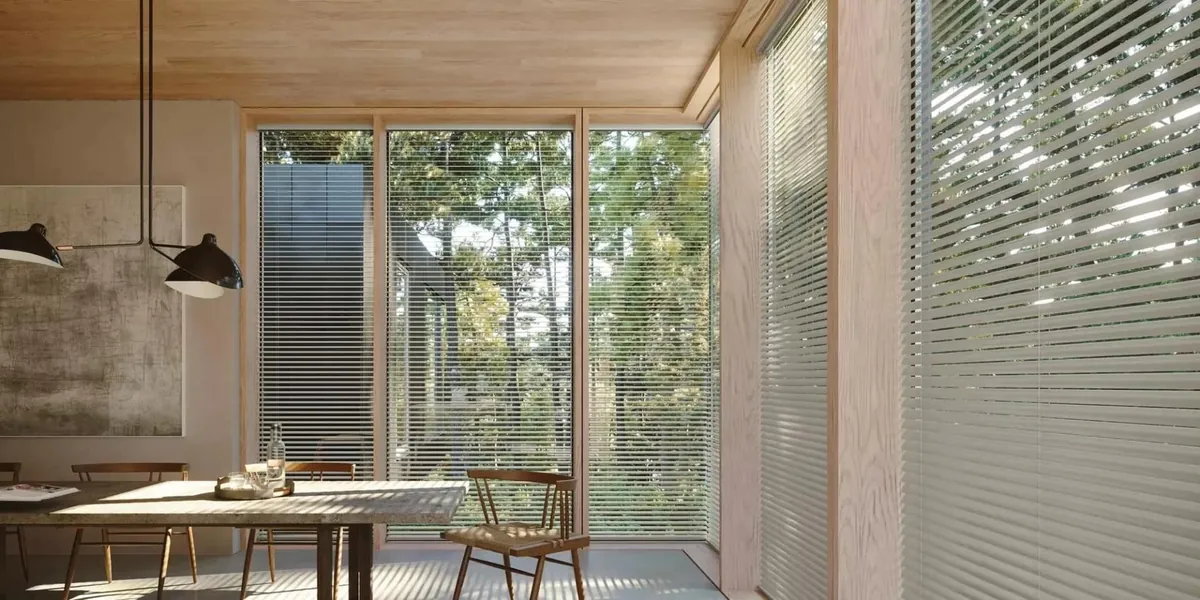
Metal Blinds
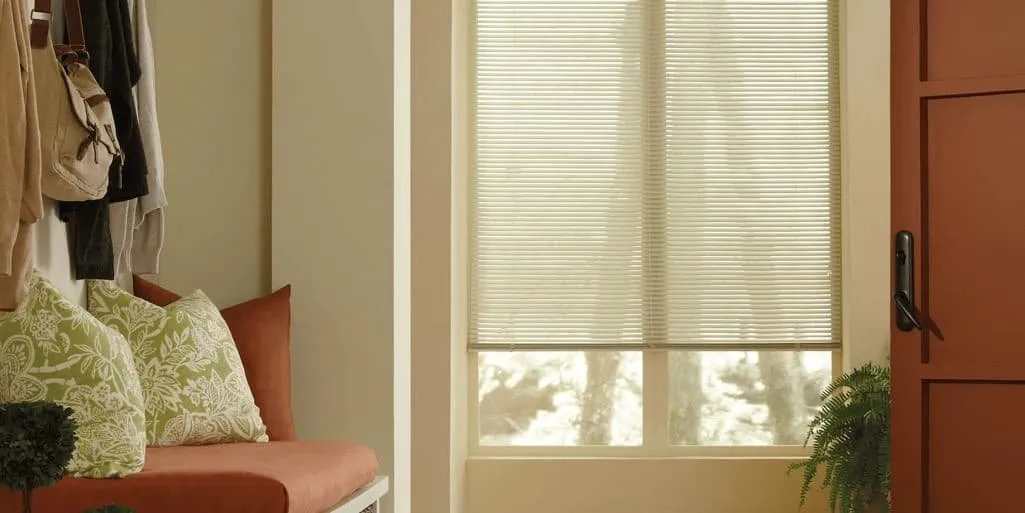
Slim slats on a narrow headrail, made for side lights, door glass and frames without much depth.
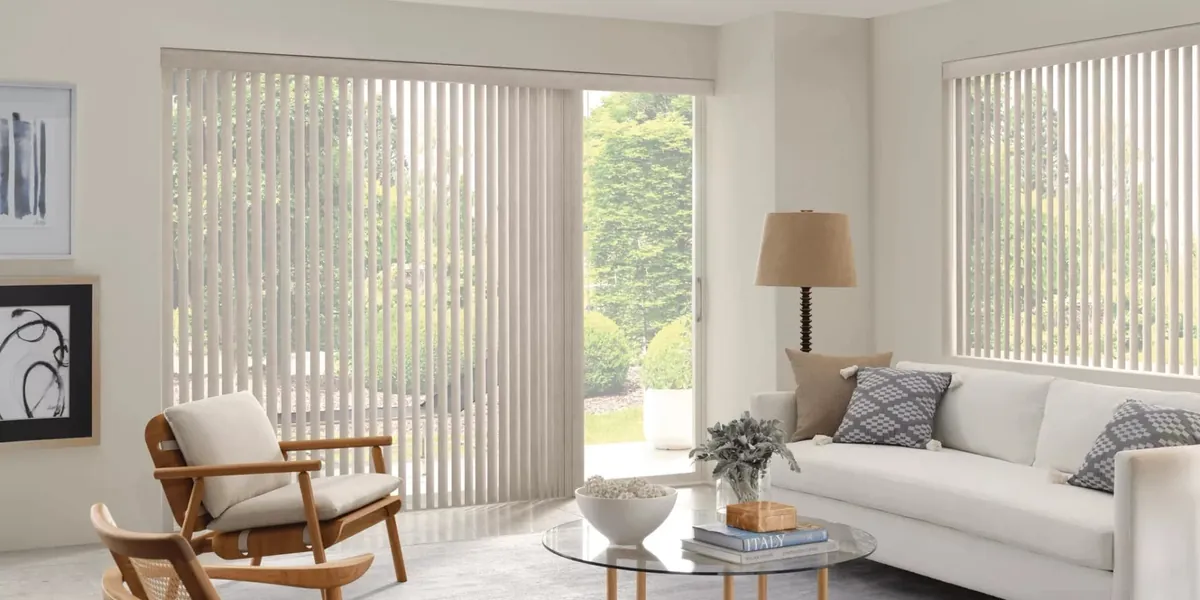
Vertical Blinds
Vanes that stack to one side of a slider to the patio or the back deck, and rotate to steer the daylight.
The two-story foyer
In the largest newer houses, the front door opens into a hall that climbs the full height of the house. Above the door, and sometimes on either side of it, a tall window fills the upper wall. From the street it gives the house its presence. From the inside it pours light down the stairs, and in the morning or the late afternoon, depending on which way the house faces, it can throw a hard patch of sun across the floor and up the landing.
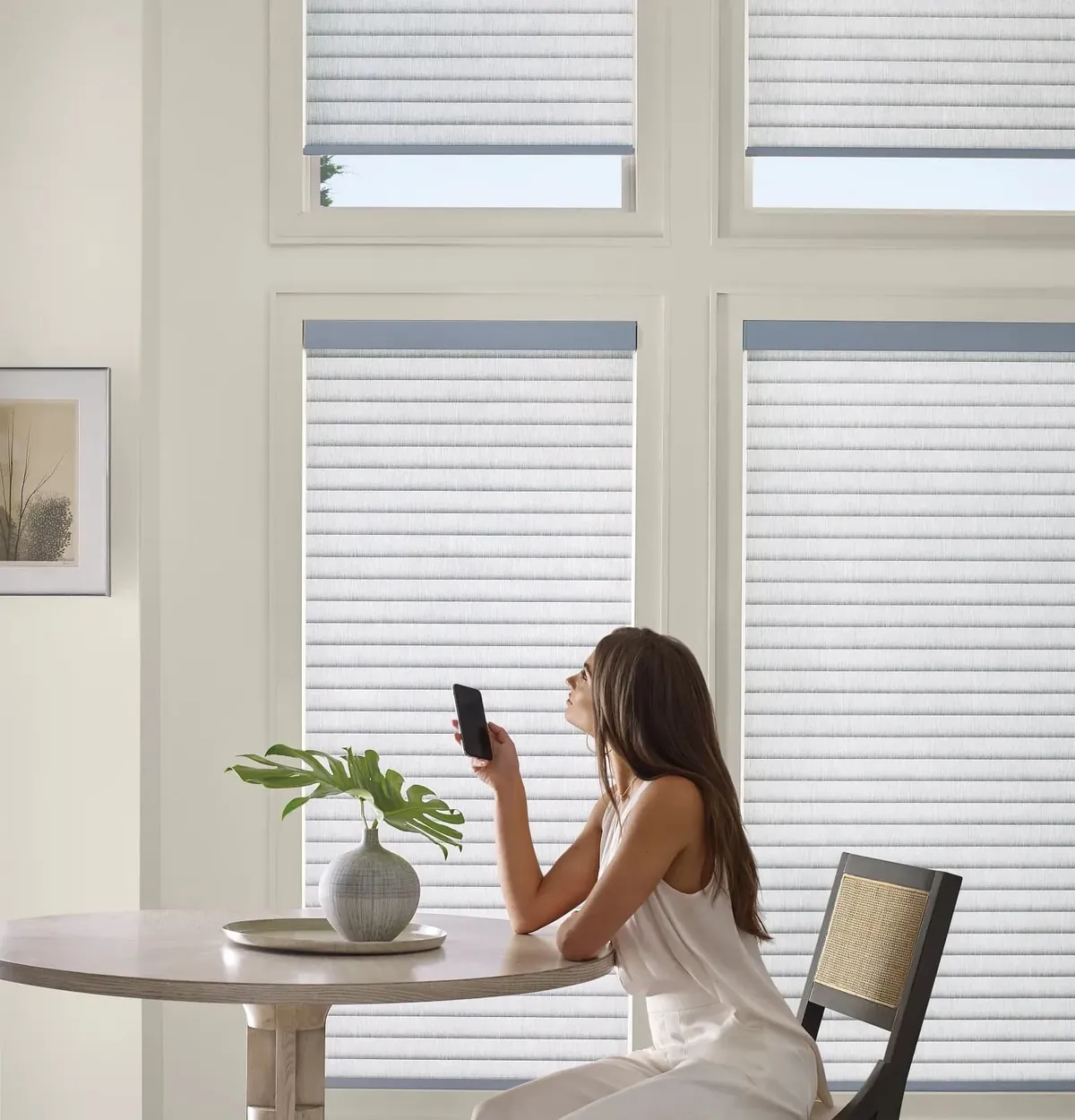
Dressing that glass starts with reach. A blind high above a staircase cannot be raised or tilted by hand without a ladder, so in practice it either stays where it is forever or it is motorized. With PowerView, the foyer blind can be lowered, raised and tilted from a remote by the door or from the Hunter Douglas app, and grouped with the blinds in the rooms off the hall. A schedule can close it at a time you choose and open it again in the morning.
Shape is the second question. Foyer glass may be a single tall pane, a pair of tall panes, or a rectangle with a transom above. Each section gets its own blind, made for its own opening, with headrails aligned so the composition still reads as one window. We plan how each motor is powered while we are there, and the motorized blinds in Needham page has more on PowerView.
Post-war colonials and their regular openings
The post-war colonials that fill so many streets have a pleasing regularity: the same sash sizes repeat across the front, the bedrooms upstairs match one another, and trim is simple and painted. For blinds, that makes life easier. A whole-house order comes together quickly once the openings are measured, and a single slat size and color across the front of the house gives the facade a tidy, settled look.
Inside, these houses tend to have a living room across one side, a dining room on the other, and a kitchen and family room at the back that may have been opened up or extended over the years. Each part asks for something slightly different. The front rooms, seen from the street, want the outward color. The kitchen wants a material many owners prefer near a sink. The family room, often with a slider to the yard, wants verticals.
Bedrooms upstairs in a colonial usually have two windows each, sometimes on two walls. Custom blinds in Needham bedrooms are mostly about sleep: a deeper slat color for a darker room when closed, and an outside mount that overlaps the frame slightly where you want the least light around the edges.
Large newer houses among the trees
The larger newer houses on wooded lots have bigger rooms and more glass, but their openings are still standard modern sizes. What sets them apart is the setting. With trees on several sides, a room that looks private in July can feel exposed in January, when the leaves are gone and the neighbors’ lights show through the branches.
Horizontal blinds answer that change better than most coverings, because the tilt is so fine. Angled upward, the slats keep a room screened from the side while still lifting daylight onto the ceiling. In summer, open slats let the green filtered light in. In winter, when the sun comes low through the bare trees, a partial tilt takes the glare off a screen or a polished floor without closing the room down.
These houses often have a great room with a high ceiling and a wall of windows facing the back of the lot. There, a row of matching blinds, set at the same height, gives a calm finish. Where the upper windows are out of reach, motorized control does the same job it does in the foyer.
Victorians near Needham Center
The older Victorians close to the center are a different kind of house. Ceilings are higher, sash are taller and narrower, and the trim around the windows is often deeper and more decorative than anything in the post-war stock. Some of those openings are slightly out of square after a long life, so every one is measured at more than one point before a blind is ordered.
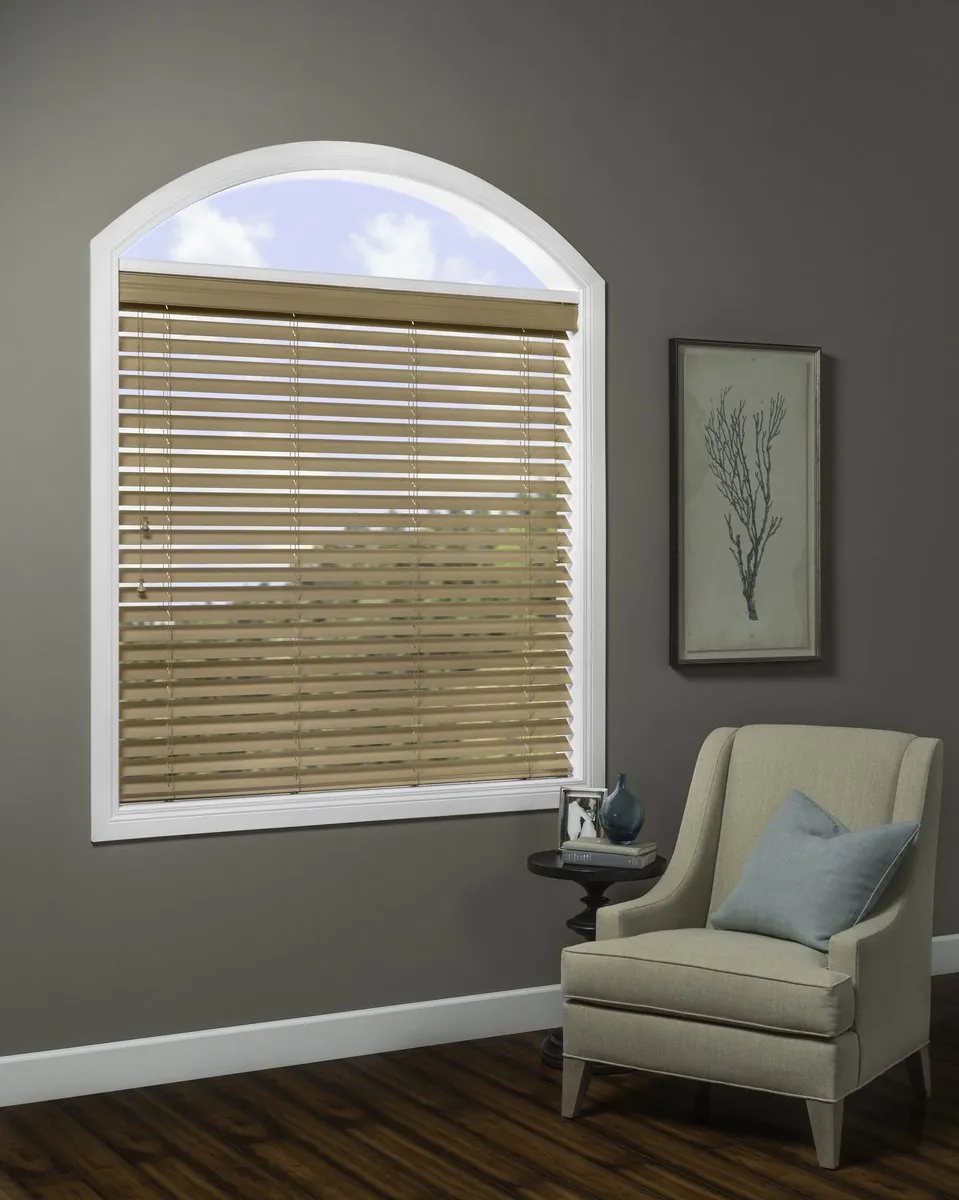
Wood slats suit these rooms naturally. A wood blind in a tone that sits well with the woodwork, or a painted slat matched to white trim, keeps the window architecture as the feature. Where the casing has enough depth, an inside mount keeps the blind within the frame and leaves the decorative trim fully visible.
Tall Victorian sash raise the question of the stack: when a horizontal blind is fully raised, its slats gather at the top of the window. A narrower slat gives a shorter stack, so less of the upper glass is covered when the blind is up. Holding a sample in the actual window shows you the difference quickly.
Kitchens, baths and the mudroom
In a busy house, the rooms by the back door work hardest. Kitchens see steam and cooking, bathrooms see showers, and a mudroom sees boots, bags and a door that opens constantly. Many households choose EverWood faux wood for these rooms because it gives the look of a wood slat without being real wood, and its colors match the Parkland wood blinds used in the front rooms.
A kitchen in a colonial that has been extended often has a window over the sink and a bank of windows around a breakfast table. Over the sink, a blind mounted inside the frame stays clear of the faucet and the counter. Around the table, a row of blinds at one height lets you tilt out the morning sun while still seeing the yard.
Mudroom doors with glass panes are a good place for a metal blind fixed to the door itself. Its narrow headrail keeps it from catching when the door swings, and it tilts like the rest of the blinds in the house, so the back entrance does not look like an afterthought.

Family rooms and the slider to the yard
Many houses in town, old and new, have a family room at the back with a sliding door out to a deck, a patio or the yard. A horizontal blind on that door means pulling it all the way up every time someone goes outside. Vertical blinds are the practical answer: the vanes hang from a track above the door, slide aside to clear the opening, and turn to soften the light when the door is closed.
On a slider facing the woods, a vertical blind can stay partly turned for much of the day, letting in the view of the trees while softening the sun. On one facing a neighbor across the fence, the vanes can close fully in the evening. We match the vane color to the horizontal blinds in the same room, so the slider and the windows look like one set.
A home office facing the trees
Plenty of colonials have given up a spare bedroom or a corner of the basement to a desk, and the larger newer houses often have a study off the front hall. In most of them, the desk ends up near a window, because the view of the woods is the best thing in the room. The trouble starts when the sun moves round and lands on the screen.
Custom blinds in Needham studies are chosen around that moment. A wood blind tilted slightly takes the reflection off a monitor while leaving the trees in view. Closed fully behind you, it gives a plain, tidy background for video calls. In a study off the foyer, matching the blind to the ones in the hall keeps the front of the house consistent, while a darker slat inside the room helps it feel quieter in the afternoon.
Basement offices with small, high windows at ground level need something different: a slim blind sized exactly to a shallow frame, often metal, that keeps out the view of passing feet without making a lower room feel shut in.
Stair landings, side lights and the view from the road
The stair in a colonial usually has a landing window halfway up, and the front door often has narrow side lights on one or both sides. These small openings are easy to forget until everything else is done, and then they are the windows that do not match.
Side lights are tall and very slim, and they sit right against the door frame, so a blind there has to be shallow enough not to catch on the door or the hardware. A metal blind mounted inside the narrow frame usually fits neatly, in the same color as the blinds in the rooms beyond. The landing window, seen from both the hall and the street, should carry the outward color too, even if it is a different material from its neighbors.
From the road, a house with matched blinds on every front window, side lights and landing included, looks composed. When ordering custom blinds in Needham for a whole house, we list these small openings first so none of them is left out, and we measure them with the same care as the large windows.
Planning the whole house together
A colonial or a large newer house may have a great many windows, and most owners do the whole house at once or in two stages. Either way, it helps to decide a few things first. Settle the color that faces the street, then the slat size, then which rooms take wood and which take faux wood. After that, each room can be fine-tuned.
If you split the work into stages, start with the rooms that cause the most trouble, usually the foyer, the bedrooms that take the early light or the room with the screen, and record the outward color and slat size so the second stage matches the first exactly. In a Victorian near the center, the front parlor and dining room often come first, because they set the look of the house from the street and the rest of the rooms can follow their lead later.
If you are also looking at other window coverings for the same house, the pages on cellular shades in Needham, roller shades in Needham, roman shades in Needham and plantation shutters in Needham cover them, and the Needham page lists every service we offer in town.
Your consultation, at home
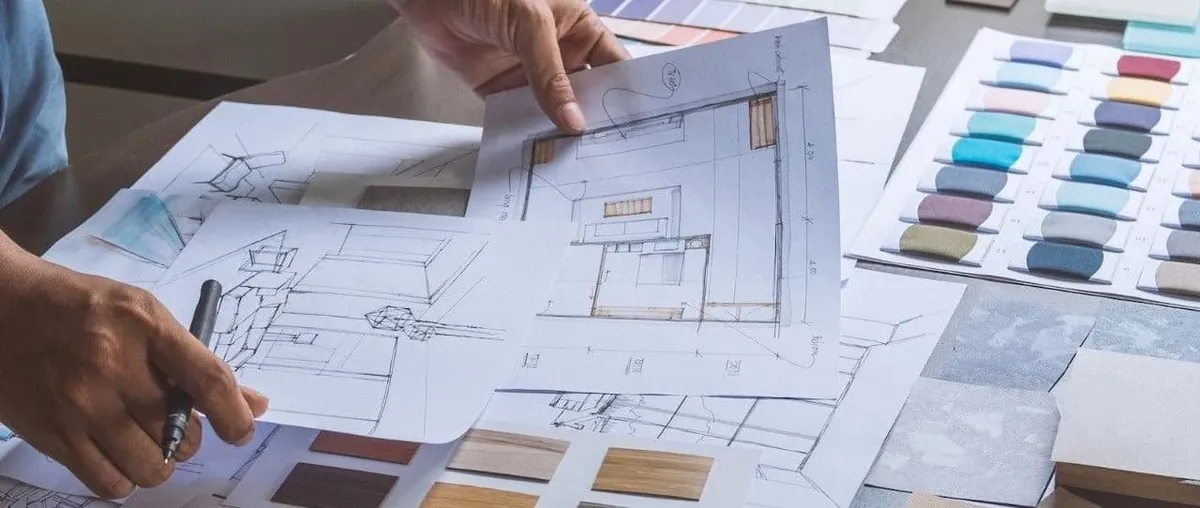
Needham sits within our Canton shop-at-home territory, which means we bring the samples to your house instead of asking you to travel. In a home with a tall foyer and windows facing woods on several sides, seeing a slat against your own light settles more questions than any brochure.
- Choose Request a Consultation, or tap the call button if you would like a quick word first.
- On the day, we bring wood, faux wood, metal and vertical samples from Hunter Douglas.
- We walk the house with you, starting wherever the problem windows are, often the foyer.
- You compare slat colors and sizes against your trim, your floors and the light through the trees.
- We measure every opening and talk through mounts and any motorized windows.
- You get a free estimate for custom blinds in Needham to look over in your own time.
Interior design consultations are available if you would like a broader view of a room. For more detail on the visit, see what happens at an in-home consultation.
Gallery status, certified installers and a showroom nearby
As a Hunter Douglas Gallery dealer, Blinds & Designs offers Hunter Douglas blinds across its collections, and our installation is certified by Hunter Douglas. That counts most on the windows that are hard to get right: the tall glass over a front door, a Victorian sash that is out of square, a long row in a great room.
The visit happens at your house, but if you would like to see Hunter Douglas products in person as well, our nearest showroom is in Franklin. Estimates are free, and we also fix blinds and shades you already own. Our custom blinds page covers the full range, and the Hunter Douglas dealer page for Needham explains the Gallery status.
Questions from Needham
How do you handle the tall window above our front door?
Usually with a motorized blind, since it is out of reach. PowerView lets you raise, lower and tilt it from a remote or the app, and each section of the glass gets its own blind, aligned with the others.
Our colonial has the same window size all along the front. Does that help?
Yes. Repeating sizes make a whole-house order simple, and one slat size and color across the front keeps the house looking consistent from the street.
Will blinds work in an older Victorian with tall, uneven sash?
Yes. We measure each opening at several points and fit the blind to it. A narrower slat helps keep the raised stack short on tall sash.
Which blind works best on the slider to the deck?
A vertical blind. It slides aside to clear the doorway and the vanes turn to soften the light when the door is shut.
Is the estimate free?
Yes. Once every window has been measured, you receive a free estimate.
Start with the window that bothers you most
For many houses in town it is the foyer glass; for others it is a bedroom that gets light too early, or a family room slider that never looks finished. Wherever you would like to begin, request a consultation and we will come to the house with the samples, measure every window and leave you a free estimate. The call button is there if you have a question first.