
Colonials, wooded lots and two-story glass
Needham’s housing falls into three broad groups. Post-war colonials line many of its streets, with regular double-hung windows repeated from room to room. Large newer houses stand on wooded lots, built with standard modern openings and, in the biggest of them, a two-story foyer with glass rising above the front door. Near Needham Center, older Victorians bring taller sash and more varied windows. Roller shades in Needham, MA, have to suit all three.
A roller is a good fit for that range because it adapts so easily. In a colonial it gives a tidy, consistent look across a row of matching windows. In a newer house it handles big openings and high glass without fuss. In a Victorian it sits inside the frame and leaves the old trim in full view.
The trees matter too. Many lots here are wooded, so the light in a room depends as much on the leaves outside as on which way the window faces. That changes through the year, and it is one of the first things we think about when choosing a fabric for a Needham room.
Rollers for every kind of Needham house
For most roller shades in Needham, MA, the choice starts with one of these: a classic roller in plain, textured or patterned cloth, a banded shade for adjustable light, or, for a room where a honeycomb look suits better, a cellular shade instead. Each card links to its own page.
Designer Roller
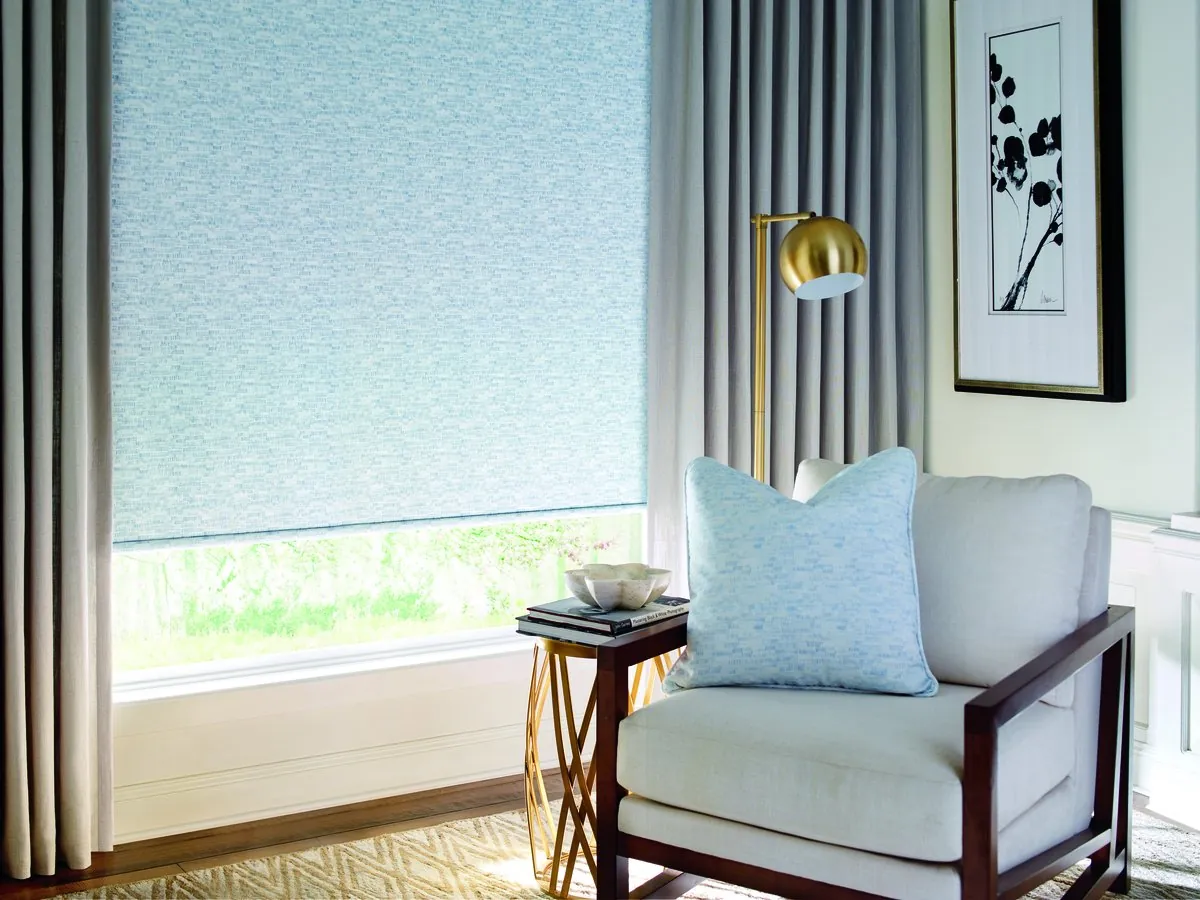
Plain, textured and patterned cloth from light filtering to blackout. The everyday roller for colonials and newer houses alike.
Designer Banded
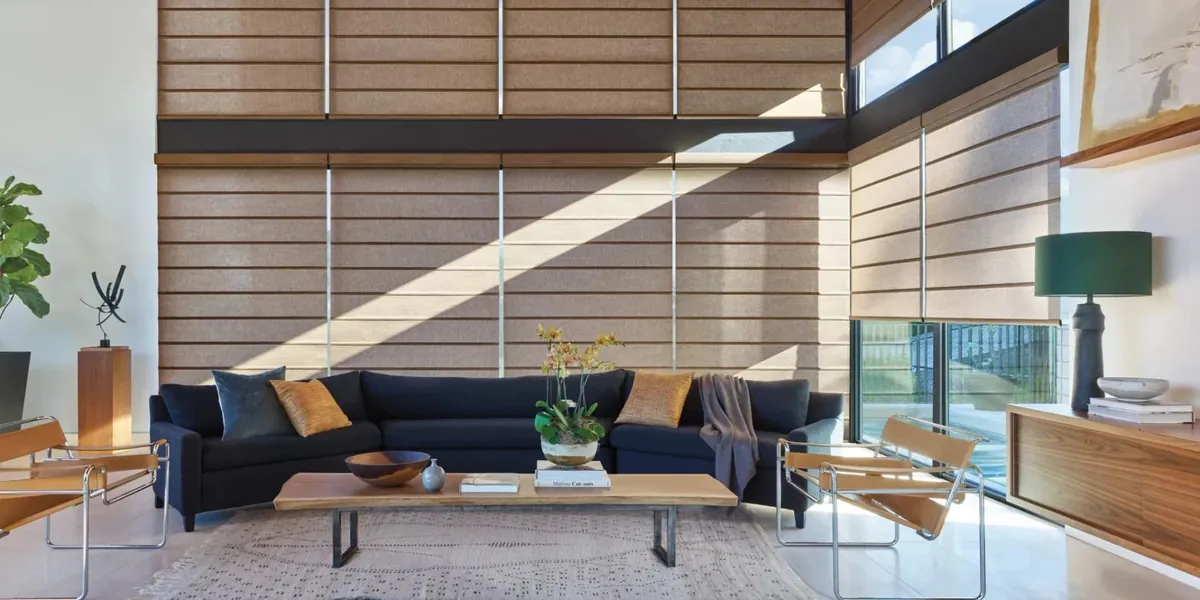
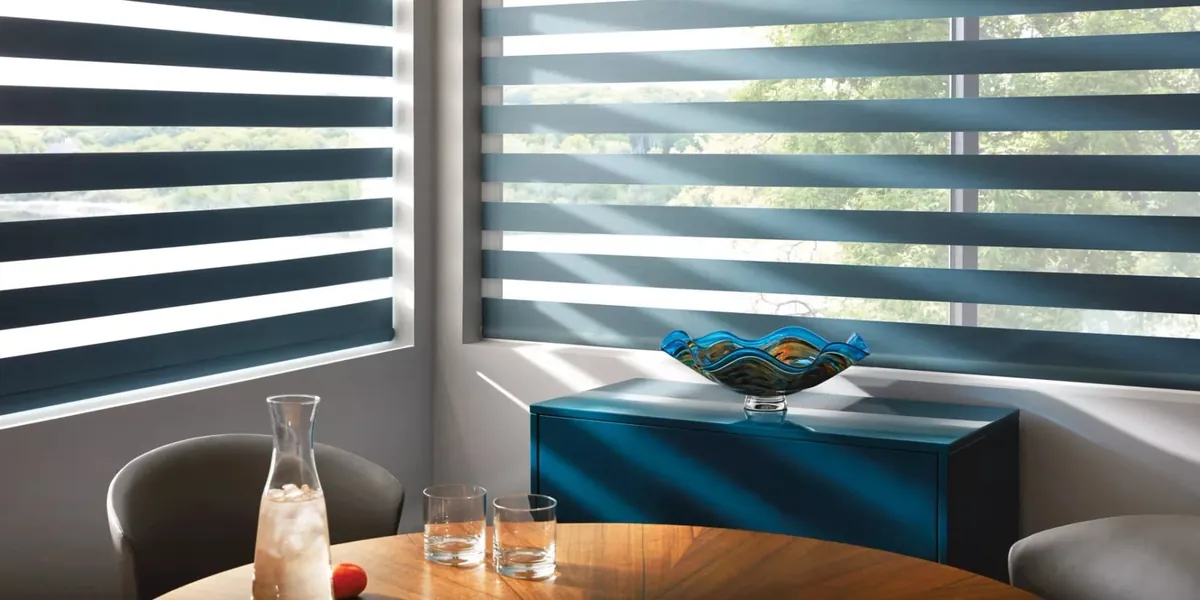
Alternating sheer and solid bands that slide past each other, so a family room can go from open to private without raising the shade.
Cellular Shades in Needham
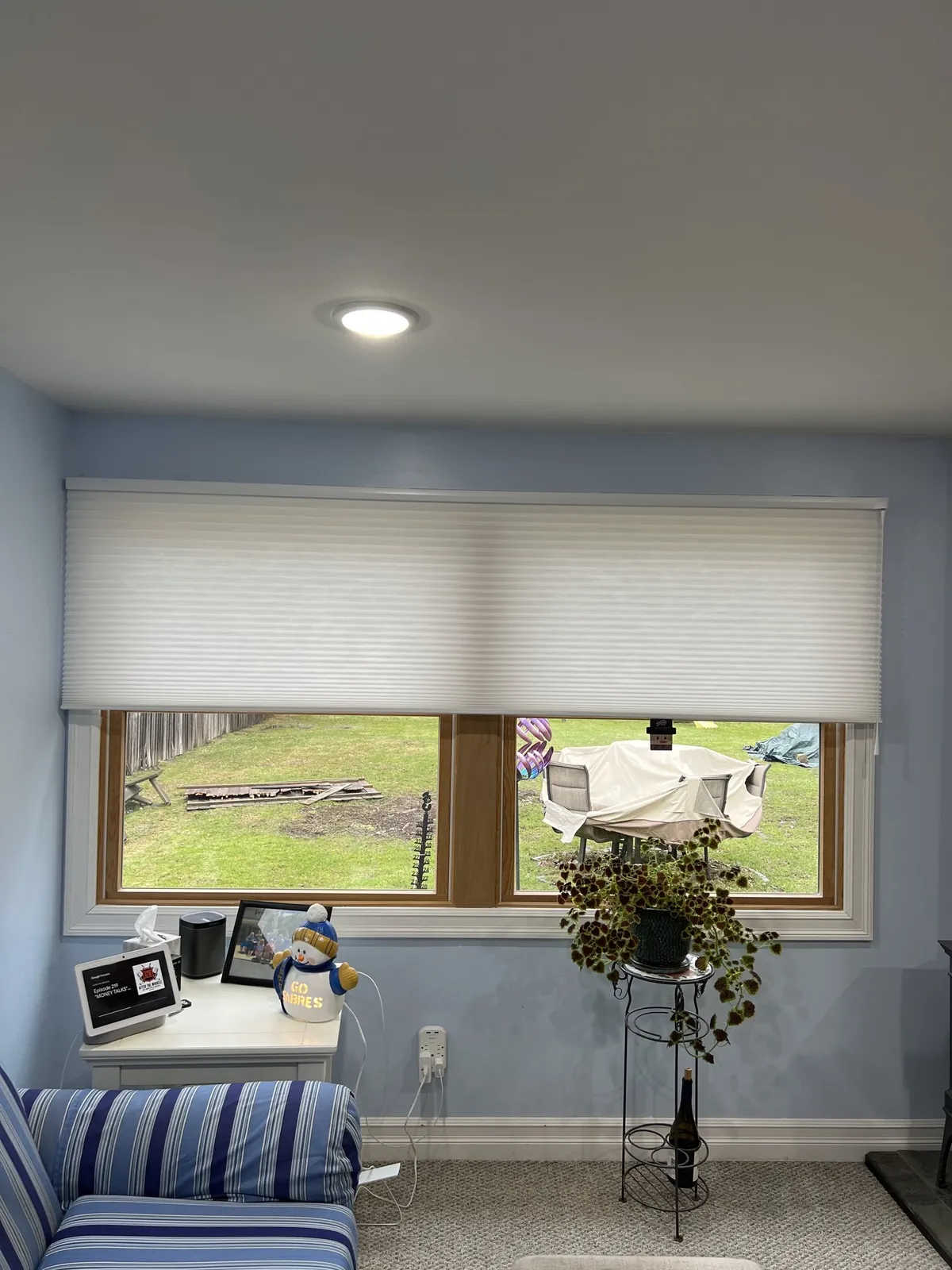
When a room needs a honeycomb shade rather than a roller, see our cellular shades page for Needham homes.
The two-story foyer
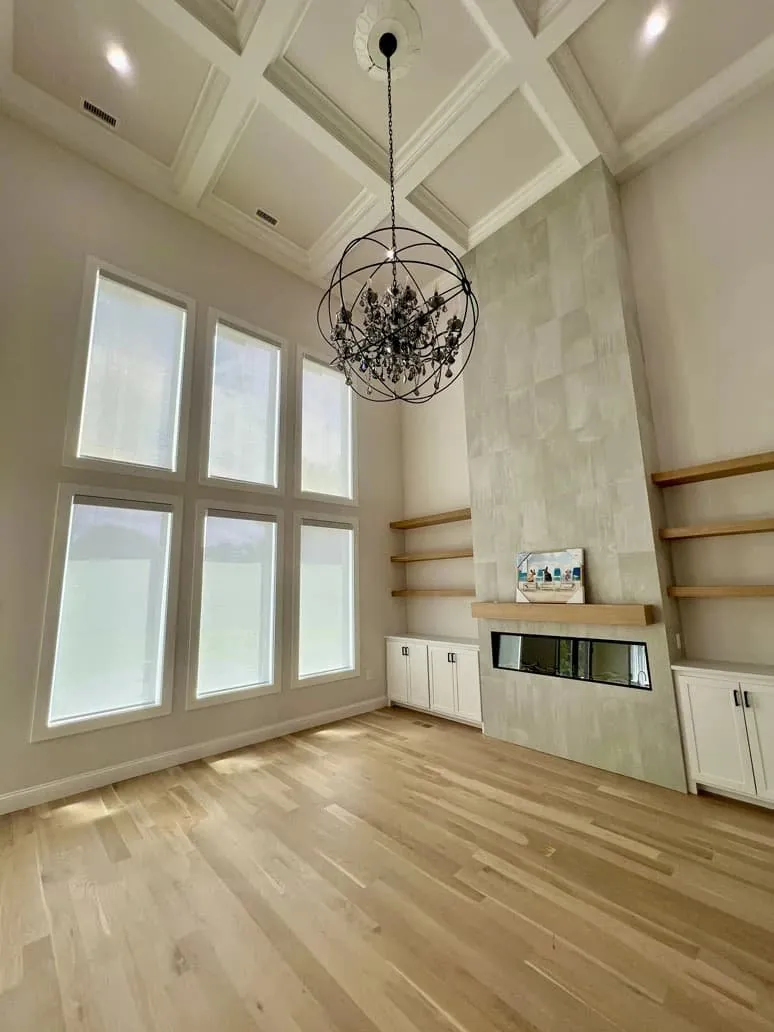
The largest of Needham’s newer houses often open with a two-story foyer: a front door below, and above it a tall run of glass that lights the entry and the stair. It is the window people notice first, from the street and from inside, and it is usually the hardest one in the house to dress.
The glass is high, sometimes very high, and often arranged as a set of panels or a large window with smaller ones around it. In the morning or the afternoon, depending on how the house faces, sun pours through and lands on the stair, the floor and the furniture in the hall. At night, a lit foyer with bare glass is the most visible room in the house.
Roller shades in Needham, MA, handle this kind of window well. Each panel can take its own shade, all in one fabric, so the composition reads as a single piece from outside. A light filtering cloth softens the entry by day while keeping it bright. A solar screen keeps the view of the trees or the street if the foyer window faces somewhere worth seeing.
Where the foyer glass reaches well above any comfortable height, the next question is how you will work the shades at all.
Shades you cannot reach by hand
A shade at the top of a two-story window is not something anyone wants to raise and lower by hand every day. This is where Hunter Douglas PowerView motorization stops being a convenience and becomes the sensible choice.
With PowerView, the foyer rollers answer to a remote or an app on your phone. They can follow a schedule, lowering when the sun comes round to the front of the house and rising again later, so you do not have to think about them at all. The same system can take in shades elsewhere in the house: a family room window wall, bedroom blackout rollers that open at a set time, or a home office screen that drops during the brightest hours.
How each motor gets its power is something we settle with you at the visit, window by window. Our page on motorized blinds in Needham covers motorization through the rest of the house, and the guide to how motorized shades are controlled explains the controls plainly.
Post-war colonials and their regular windows
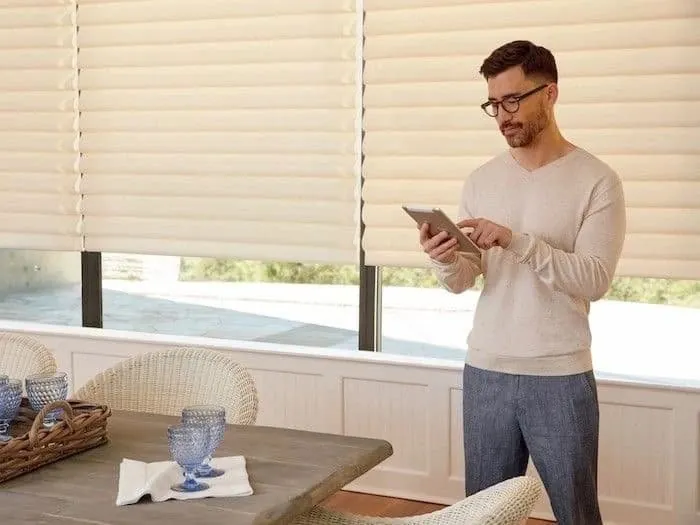
The post-war colonials that make up much of Needham were built with a steady rhythm of windows: double-hung sash of the same size across the front, repeated in the rooms behind and upstairs. That regularity is a real advantage when choosing shades.
Matching rollers across the street side of a colonial give the facade a neat, even look, every shade lowered to the same line. Inside, the fabric can change from room to room while the outward face stays the same. Light filtering in the living room, room darkening in the bedrooms, a screen on the kitchen window that takes the afternoon sun: the house can do all of that while looking consistent from the road.
Because the openings are standard, the conversation at the visit moves quickly past fit and on to fabric and color. That leaves room to be a little bolder where it suits. A patterned roller in a breakfast nook, a deeper color in a child’s bedroom or a textured cloth in a den can give a colonial room real character without fighting the architecture.
Wooded lots and changing light
Many of Needham’s houses, newer and older, sit among mature trees. That softens the light in a way that is easy to misjudge. A room facing south may get far less direct sun than its direction suggests, because the trees filter it for much of the year.
The trees also change with the seasons. In summer the leaves shade the windows and the light is green and gentle. In winter the branches are bare, and the same window lets in more sun, lower in the sky and further into the room. A fabric chosen on a shady July afternoon can feel darker than you expected in January.
For that reason, a lighter light filtering cloth is often the better long-term choice in a room surrounded by trees. Where a window looks out on the woods or the garden and the view is part of the room, a solar screen keeps it in sight while handling the brighter winter sun. Upstairs, bedrooms that face open sky above the treeline may still want blackout cloth, even when the rooms below are shaded.
Victorians near Needham Center
The older Victorians near Needham Center are a different kind of house. Their sash is taller, their trim more elaborate, and their windows less uniform: a bay here, a narrow window beside a fireplace there, a tall stair window on a landing.
In these houses, roller shades in Needham, MA, are usually mounted inside the frame, which leaves the woodwork alone. Raised, the shade nearly disappears under the head of the window. Lowered, it gives a plain, quiet surface that lets the trim, the plaster and the room lead. A woven or textured cloth in a soft neutral often looks most at home beside old wood.
Bays are worth planning carefully. Each window in the bay usually takes its own shade, lowered to the same line so the bay reads as one. On a stair landing, where the window is hard to reach and seen from inside and out, a light filtering cloth keeps light moving through the middle of the house, and motorization saves leaning over a banister.
Older frames are not always square. Openings settle over the years, and that is one reason we look at every window in person and why your shades go up with certified Hunter Douglas installation.
Whole-house orders in the newer stock
The large newer houses on wooded lots tend to have many windows with standard modern openings, and owners often want to plan the whole house at once rather than room by room over several years.
That is where a roller’s range comes into its own. One family of shades can cover the house, with a different opacity in each room and a consistent look throughout. Great rooms with big windows take screens or light filtering cloth. Bedrooms take room darkening or blackout. A home office takes a screen that keeps glare off the desk. Bathrooms and laundry rooms take a denser cloth for privacy.
Choosing roller shades in Needham, MA, for a whole newer house in one visit also means the colors are chosen together. The outward faces can match across every window, and the fabrics inside can be chosen to suit each room’s paint and furniture, all seen side by side.

Matching the cloth to each floor
Designer and Alustra rollers run from light filtering through room darkening to blackout. In a Needham house it often helps to think about the choice floor by floor.
On the main floor, light filtering is the usual starting point. It keeps living rooms, dining rooms and kitchens bright and soft, gives privacy from the street by day, and lets the trees and the garden stay part of the room. Screens take its place on the sunniest windows, especially where the leaves are thin or the window faces open lawn.
Upstairs, bedrooms call for something heavier. Room darkening cloth suits most adults’ rooms, cutting the light to a low glow. A blackout roller is the stronger answer for a nursery, a room facing east, or anyone who sleeps late in summer. In a primary bedroom with a sitting area, the two can be mixed: blackout beside the bed, light filtering by the chair.
On a lower level or in a finished basement used as a media room, blackout cloth helps the screen. In a basement office, a light filtering roller on the small high windows softens the light without making a room that is already low on daylight feel darker.
Screens and openness when trees frame the view
Solar screen fabric is woven with small openings, and the openness of the weave decides the balance between view and glare. On a wooded lot, that choice works a little differently from a house in the open.
Because the trees already filter much of the light, many Needham rooms can take a more open screen than you might expect, keeping a clear view of the woods with only a light veil across it. On the windows where the trees are thinner, or in winter when they are bare, a tighter weave takes more of the brightness off the floor and the furniture.
Color plays its part. A darker screen is easier to see through, because it fades against the bright sky between the trees. A lighter screen brightens the room and blends with white trim, with the outlook a little softer. Remember that a screen gives daytime privacy only: once the lights are on, a lit room can be seen through it, so bedrooms and street-facing rooms need a denser cloth or a second layer for the evening. The guide to choosing fabric for a sunny room goes into more detail.

Designer or Alustra in a Needham home
Hunter Douglas makes two families of roller. Designer is the broad, everyday range, with plain, textured and patterned cloth, screens and banded fabrics, light filtering through blackout. It covers almost every room in a colonial or a newer house.
Alustra is the more refined collection. In a Victorian parlor near the center, a fabric from Alustra Woven Textures brings a natural surface that suits old wood and plaster. In the formal rooms and great rooms of a large newer house, Alustra Architectural gives a clean, tailored finish on big modern openings and on foyer glass.
Plenty of houses mix the two, with Alustra in the rooms guests see and Designer upstairs and in the family spaces. Our roller shades overview describes every line.
Before we arrive
Needham is part of our shop-at-home territory, so a consultant comes to you with a van of samples. You see every fabric in your own light, against your own walls and trim, rather than under shop lighting. The Canton shop-at-home page explains how the territory is run. A little preparation makes the visit more useful:
- Request a consultation online or through the call button, and mention whether the house is a colonial, a Victorian or a newer build.
- Walk the house and note which rooms feel too bright, too dark or too exposed to the street.
- Point out any foyer or stair glass you cannot reach, so we can talk about motorization.
- Think about which bedrooms need real darkness and which only need softening.
- Keep paint chips or fabric swatches handy for matching colors.
We leave a free estimate before you decide anything. For help with the whole room, ask about our interior design consultations.
Gallery dealer range, certified fitting
Blinds & Designs is a Hunter Douglas Gallery dealer. That opens the whole Hunter Douglas range to your house: every Designer and Alustra roller, solar screens and banded fabrics, PowerView motorization, and the shades, blinds, shutters and drapery that might suit other rooms.
The same company that helps you choose fits your shades, with certified Hunter Douglas installation. If shades already in the house need attention, we welcome blind and shade repair as well.
For other coverings in the same rooms, compare Roman shades in Needham or plantation shutters in Needham, or read about us as your Hunter Douglas dealer in Needham.
A showroom when you want one
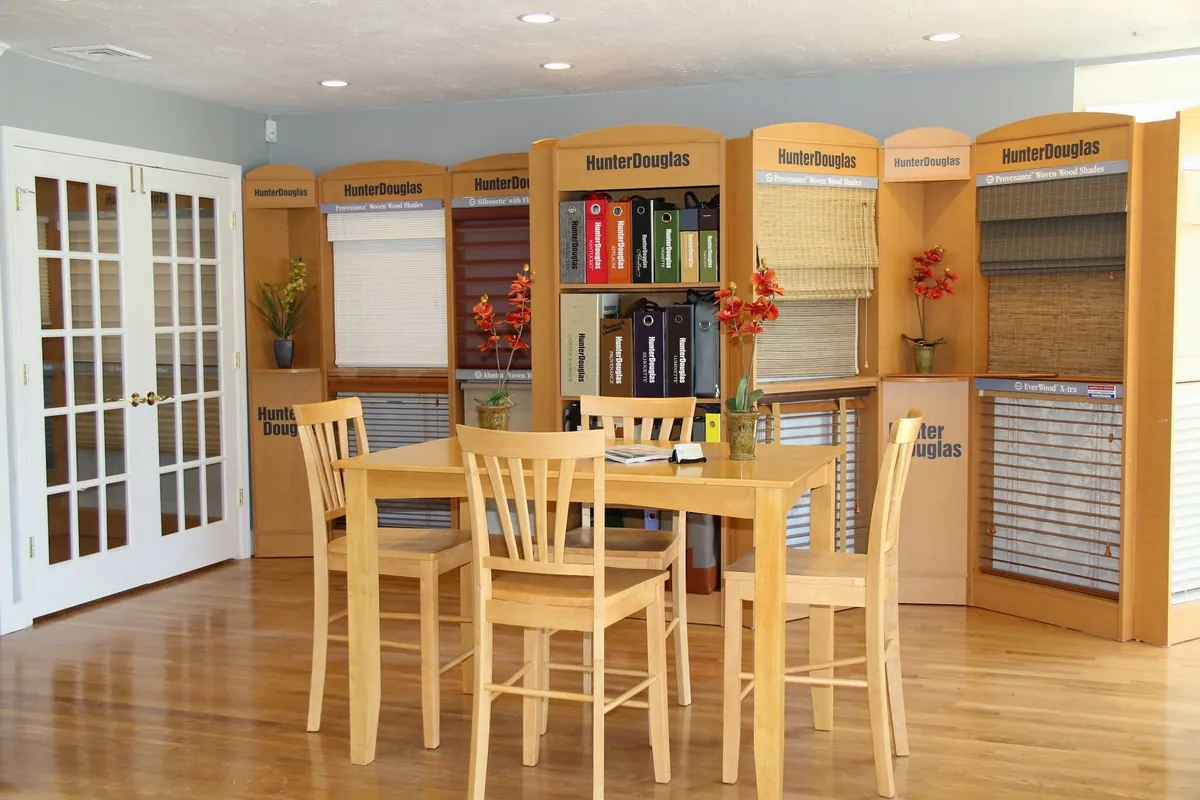
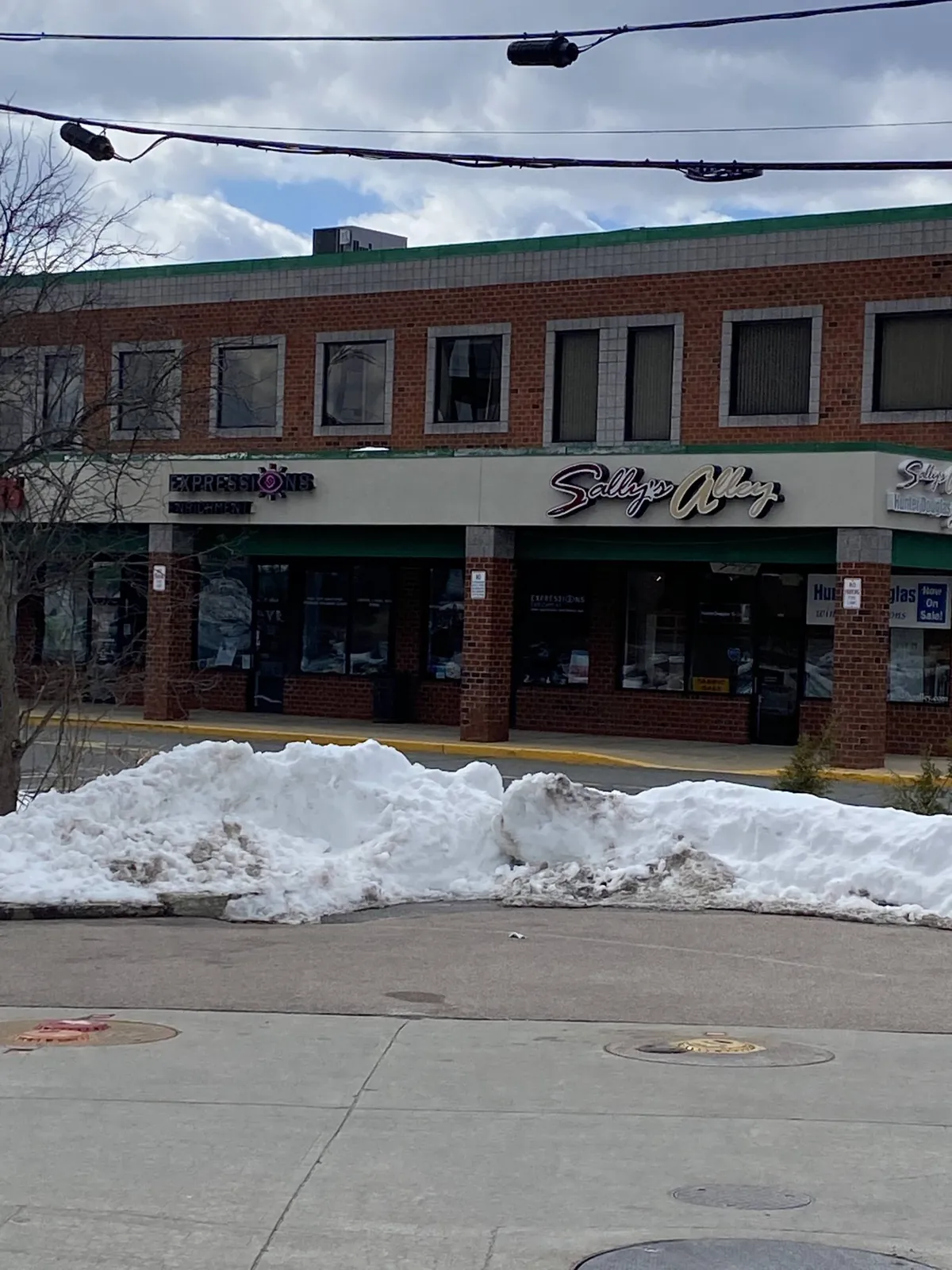
Most Needham customers choose at home, because the trees, the foyer glass and the colors of each room are easier to judge in place. If you would also like to see shades in a showroom, the nearest is our Franklin showroom.
Everything we offer in town, from blinds and shutters to motorization, is listed on our Needham page.
Questions from Needham
Can you shade the glass above our two-story foyer?
Yes. Each panel can take its own roller in one fabric, so the window reads as a whole. Because the top shades are out of reach, most owners motorize them with PowerView.
Our post-war colonial has the same size window in every room. Should every shade match?
The outward face usually matches across the front for a neat look from the street. Inside, the fabric can change from room to room to suit how each one is used.
Our lot is heavily wooded. Which fabric works best?
Trees soften the light for much of the year, so a lighter light filtering cloth or a more open screen often suits those rooms. Bare winter branches let in more sun, which is worth keeping in mind.
Do rollers suit the older windows in a Victorian near the center?
They do. Mounted inside the frame, a roller leaves the old trim in view and nearly disappears when raised. We look at every opening in person, because older frames are not always square.
Does the estimate cost anything?
No. Estimates are free, with no obligation.
Begin where the light is hardest
In most Needham houses one window gives the most trouble: the foyer glass above the front door, a family room facing open lawn, or a bedroom that brightens far too early. That is the window to start with. Request a consultation and we will bring the full roller and screen range to your house, look at the trees and the way each room faces, talk through motorizing the glass you cannot reach, and leave a free estimate for every room you have in mind. The call button at the top of the page reaches us as well.