
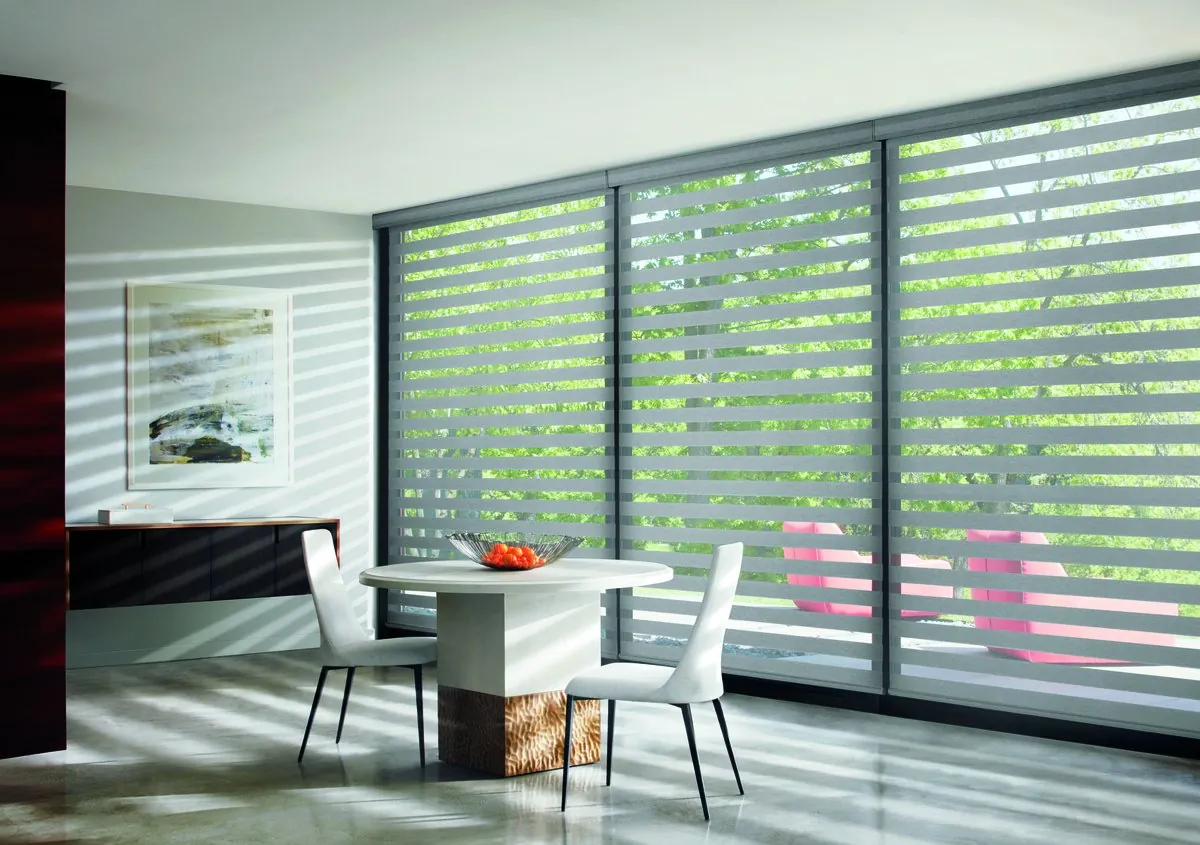
Big glass by the harbor, plain openings inland
Harwich divides neatly in two. Down in Harwich Port, shingled houses crowd toward the harbor and the sound, and the rooms that face the water are mostly glass. Inland, through the villages, the houses are post-war ranches and newer colonials with windows of ordinary, sensible sizes. Window treatments in Harwich, MA, have to suit both, and the two halves of town rarely want the same thing.
The sound-facing rooms take the weather and the sun head on. Nothing stands between them and the water, so the light is strong from late morning on and the glass gets hot. Those rooms need a treatment that controls glare and heat without walling off the view that the house was built for.
The inland houses are simpler to fit and more forgiving, which leaves more room to choose on looks, feel and how each room is used.
Our services in Harwich
Each card links to a Harwich page that goes into that service properly. These are the window treatments in Harwich, MA, we plan and fit, from a single room to the whole house.
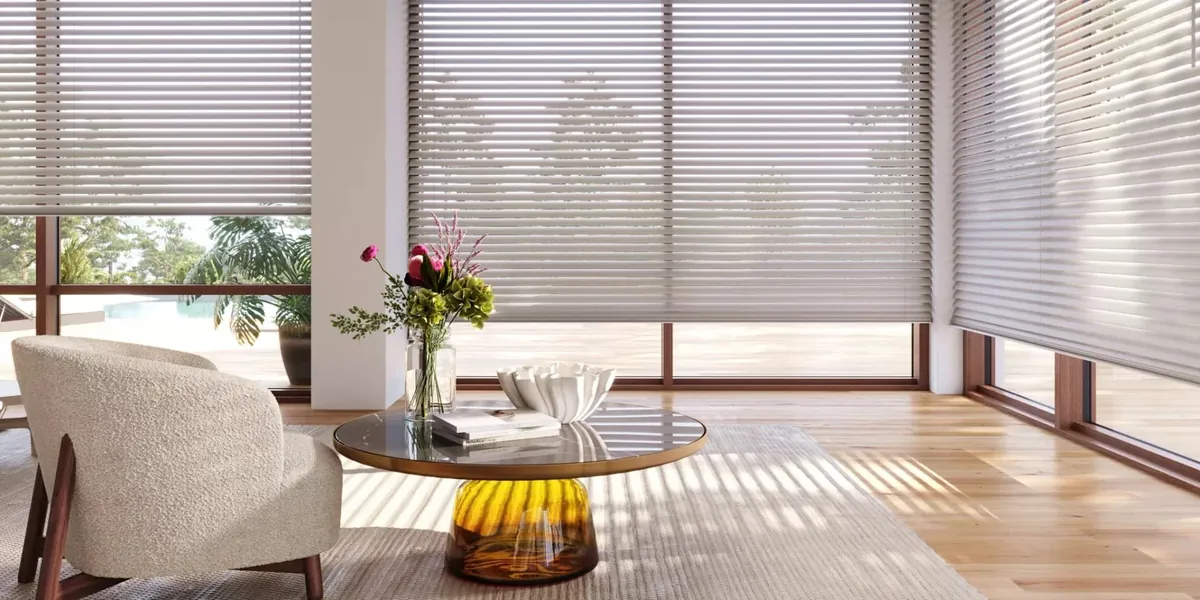
Blinds
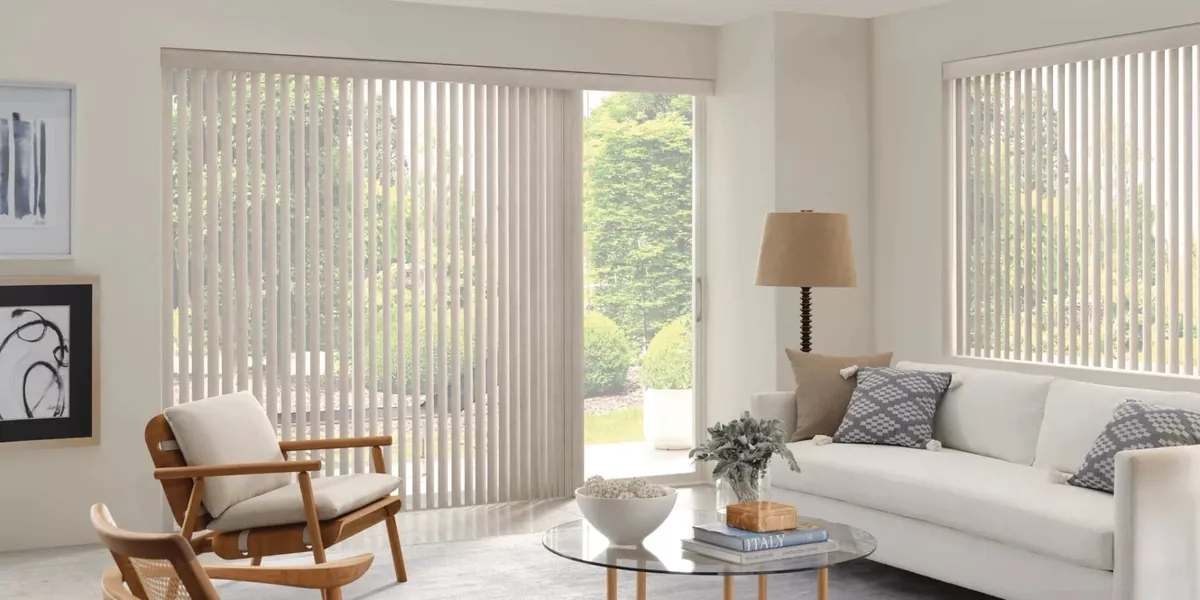
Wood, faux wood and metal slats that tilt to bounce strong sun up off the floor, plus verticals for a big slider.
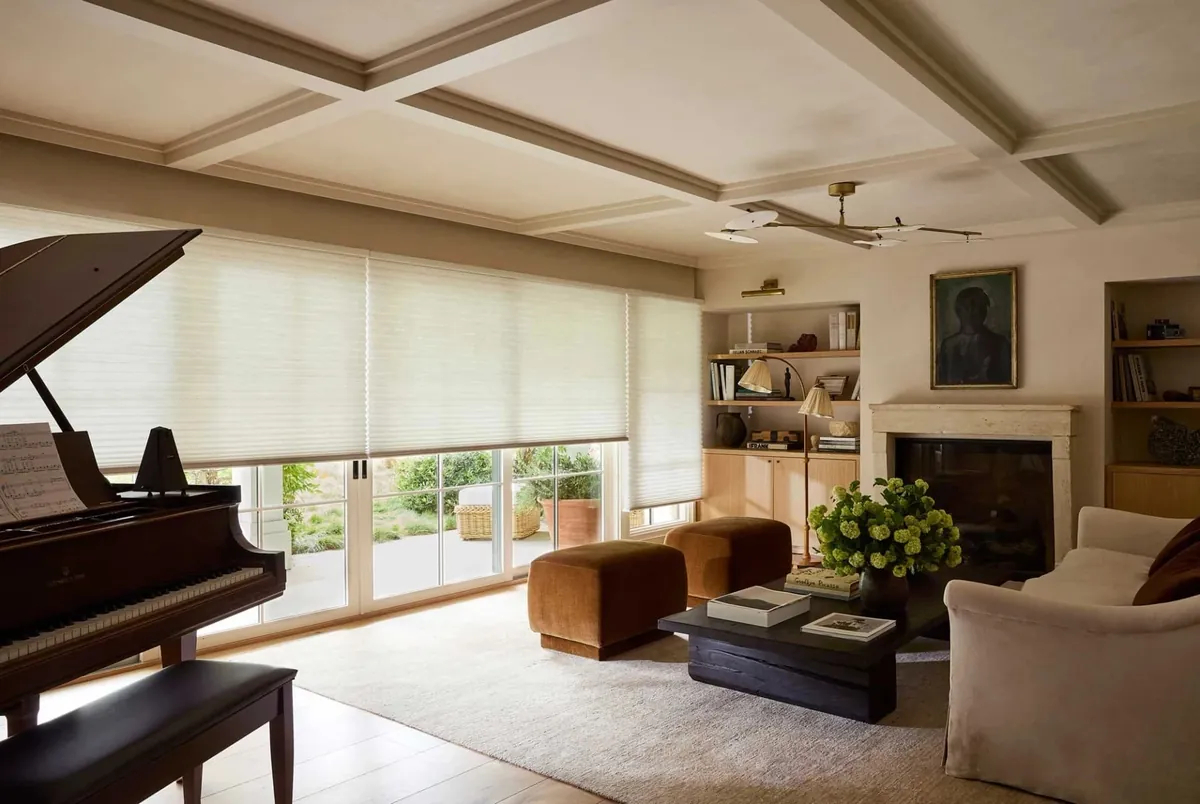
Cellular shades
Duette and Applause honeycombs to calm the heat on a wall of glass, and to warm a ranch room in January.
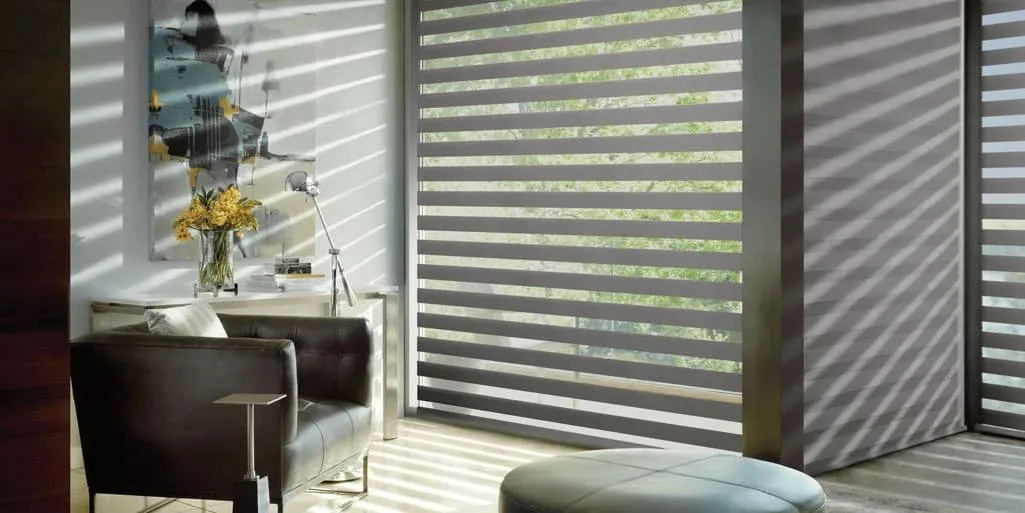
Roller and solar shades
Screen, banded and solid rollers, chosen by how much of the harbor you want to see with the shade down.
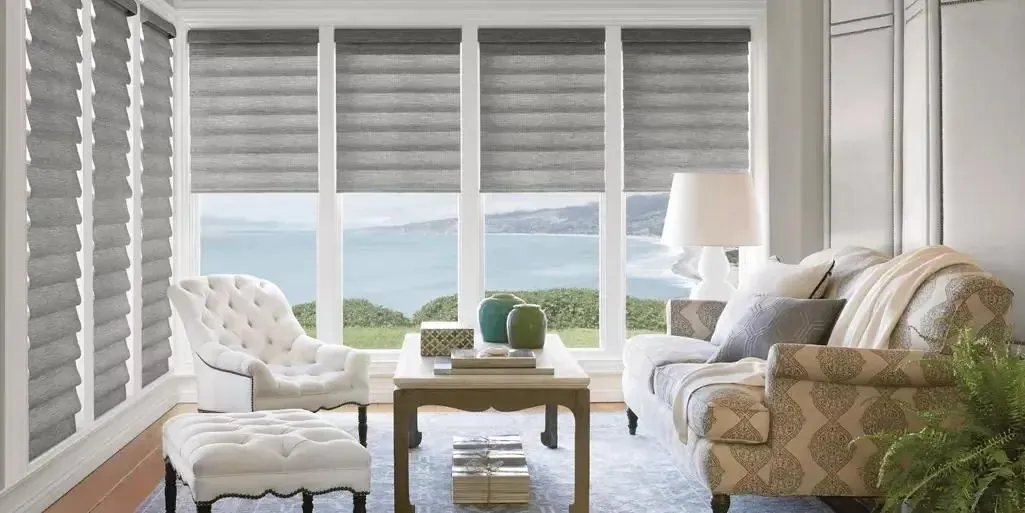
Roman shades
Vignette and Carole Fabrics romans that bring softness to a bright sunroom or a colonial dining room.
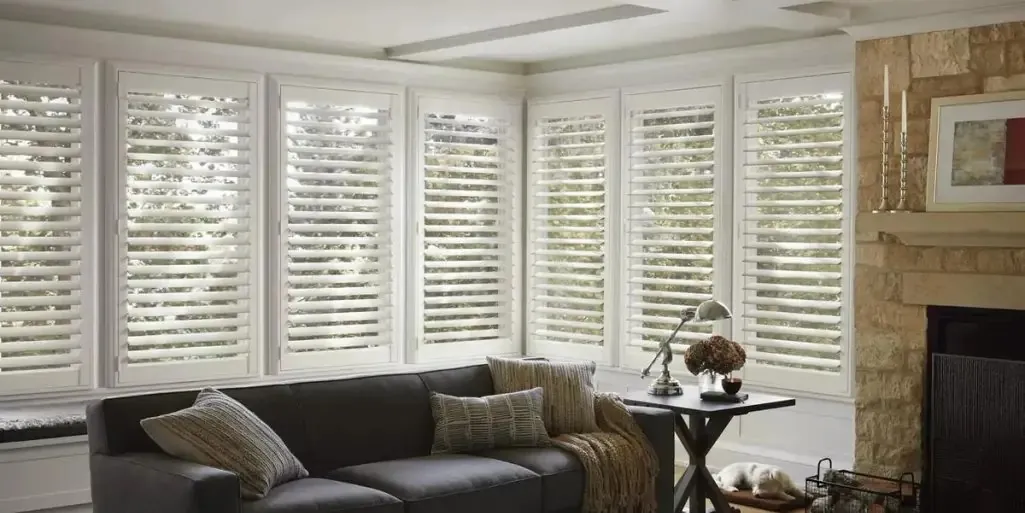
Plantation shutters
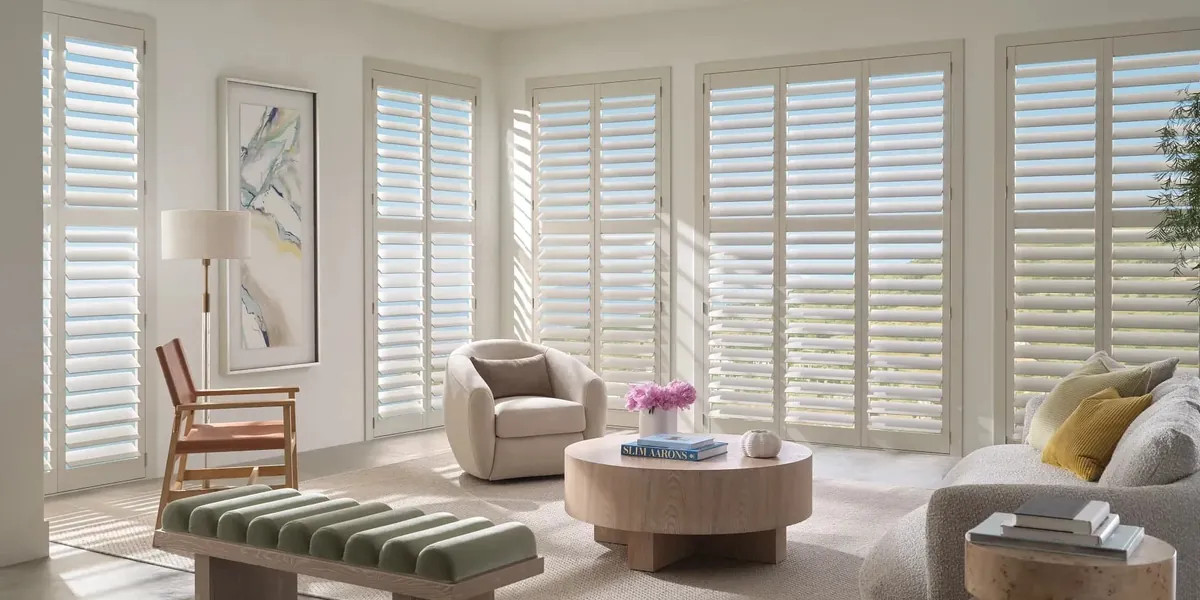
Palm Beach, NewStyle and Heritance shutters for a ranch living room or a shingled house a short walk from the water.
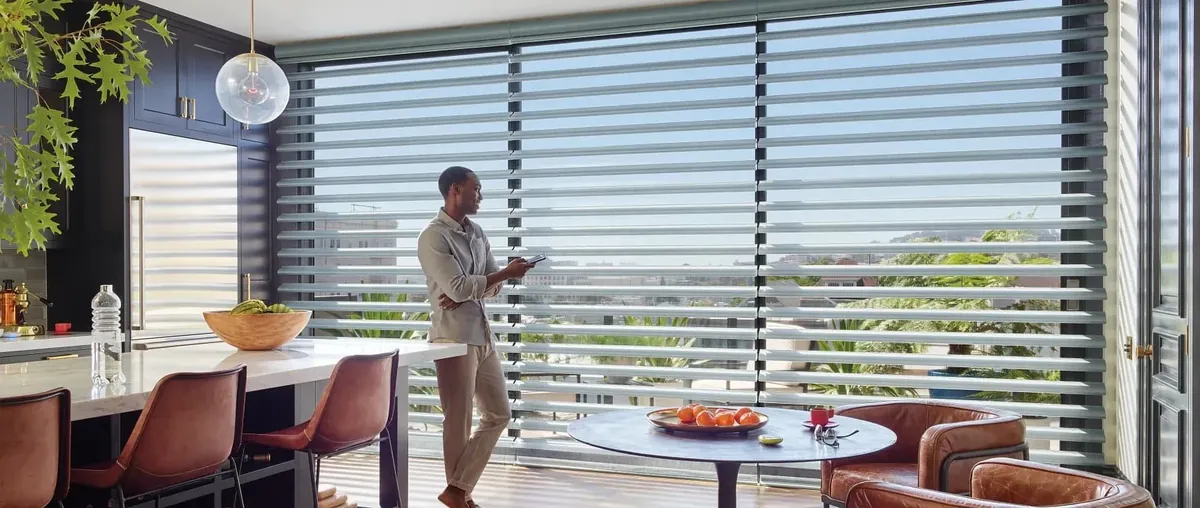
Motorized blinds and shades
PowerView moves a whole wall of sound-side shades at once, by remote, phone or a schedule that follows the sun.
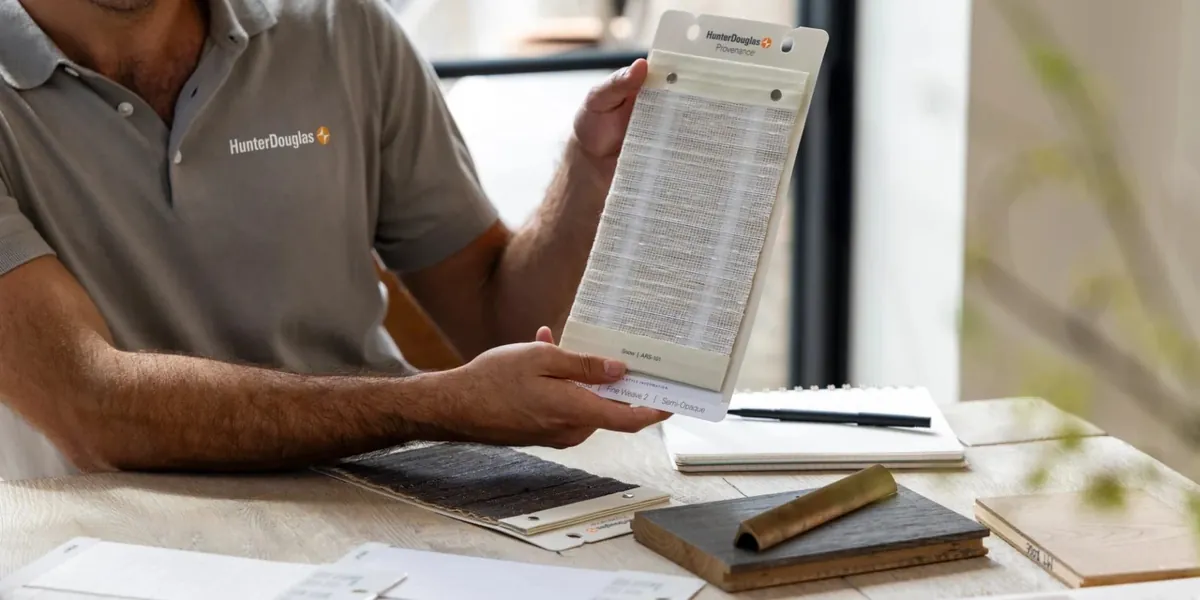
Hunter Douglas dealer
The complete Hunter Douglas range from a Gallery dealer, installed by our own certified Hunter Douglas installers.
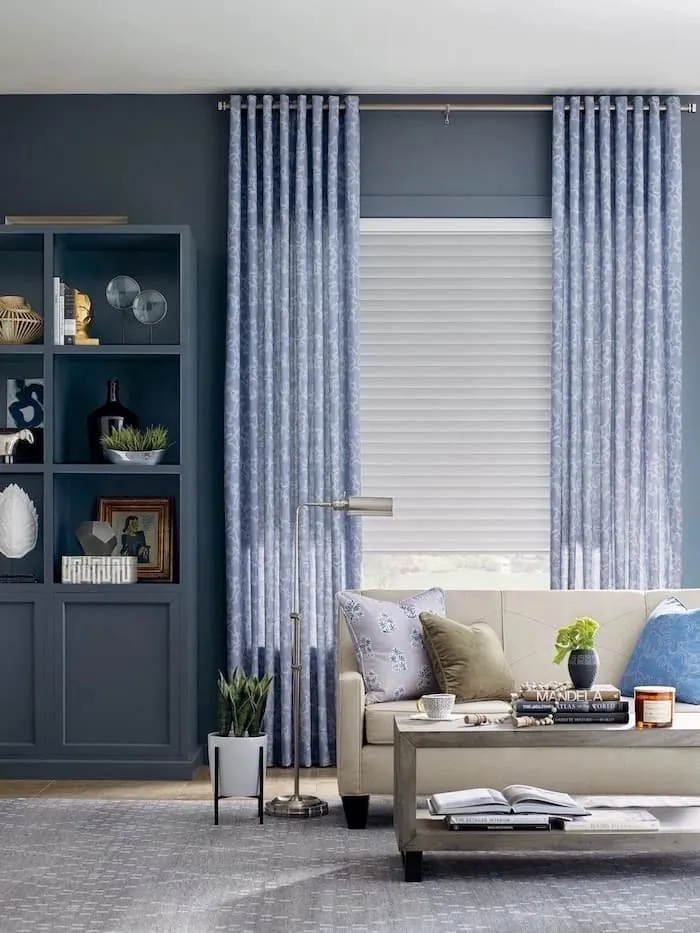
Custom drapery
Hunter Douglas drapery panels to soften a big room, framing a shade that handles the daily light.
A wall of glass facing south
Nantucket Sound lies to the south of Harwich Port, which means the water-facing rooms look straight into the sun for most of the day. In summer the sun climbs high and pours heat onto the floor near the glass. In winter it hangs lower and reaches right across the room, which is lovely on a cold afternoon and hard on anything that fades.
The rooms themselves tend to be built for the view. Big picture windows, sliders, glass doors to a deck and sometimes a run of windows across the whole back of the house. That much glass in that much sun gets warm, and it throws glare onto any screen, counter or page.
There are three ways to handle it, and many houses use all three in different rooms.
- Screen and filter. Solar screen rollers and sheer shades cut the glare and much of the heat while the view stays. The openness of a screen weave decides how much you see; we bring several to hold up at the glass.
- Insulate. Honeycomb shades trap a layer of air against the glass. Lowered on a summer afternoon, they keep the room cooler; lowered on a winter night, they keep it warmer.
- Steer. Blinds and shutters let you angle the light up to the ceiling or down to the floor, so the room stays bright without the sun landing on the sofa.
Choosing fabric for strong sun
On the sound side of town, fabric choice decides how a shade ages. A pale fabric reflects more light back out through the glass and keeps the room cooler; a dark one shows the view better through a screen weave but holds more heat at the window. Neither is wrong, and the right one depends on whether the room is mostly for looking out or mostly for keeping cool.
Color toward the glass also affects what the shade looks like from the beach or the road, which matters when a row of shingled houses faces the same stretch of water. Many people choose a white or soft neutral facing outward and a warmer color facing the room. Honeycomb shades make that easy, because the two faces can be different.
When we plan window treatments in Harwich, MA, for a water-facing room, we bring fabrics in several weights and colors and hold them up at the glass in full sun, so you see how each one changes the room before deciding.
Sliders and decks on the harbor side
Most Harwich Port houses have at least one slider onto a deck or patio, and on the water side it is usually the biggest single piece of glass in the house. It also gets used constantly in summer, so whatever covers it has to clear the opening fully and stand up to being pushed aside dozens of times a day.
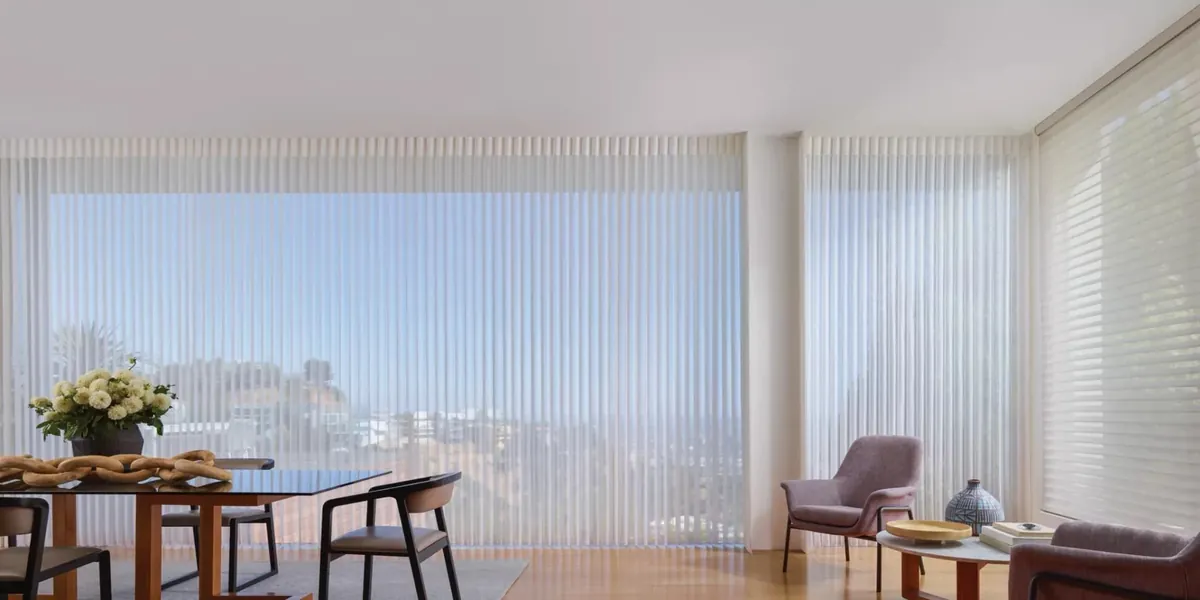
A vertical honeycomb shade stacks neatly to one side and adds insulation to that wide pane. Gliding fabric panels move on a track like a set of sliding doors and suit a wide modern opening. Vertical blinds let you turn the vanes to follow the sun without drawing anything back. On a French door, a shade or shutter fixed to the door moves with it.
Shingled houses near the harbor
The older houses in Harwich Port are shingled, close set and often added to over the years. A summer cottage may have gained a second floor, a sunroom or a glassed-in porch, each with windows of a different age and size. Planning these houses is less about the house as a whole and more about each room in turn.
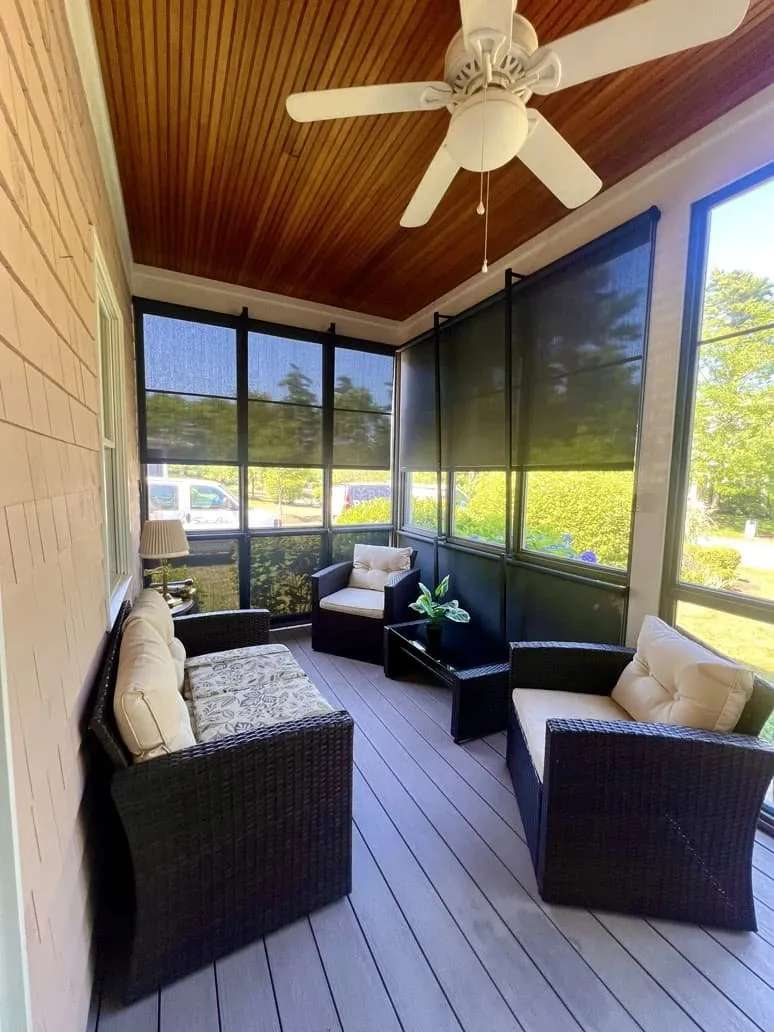
Porches and sunrooms usually face the water and have glass on three sides. Solar screen rollers or woven shades suit them, with a fabric that copes with strong sun. A screened porch can take outdoor-friendly screen shades that drop to block a low afternoon sun.
The original rooms often have smaller, older windows. Cellular and roman shades fitted inside the frame keep these rooms tidy. On the street side, where the next house is close, top-down, bottom-up shades or cafe shutters give privacy without losing daylight.
Inland ranches: one floor, every window on view
Away from the water, the post-war ranches of the inland villages put everything on one level. A long front of windows faces the road, a picture window anchors the living room, and the bedrooms sit at the other end behind smaller, evenly sized windows.
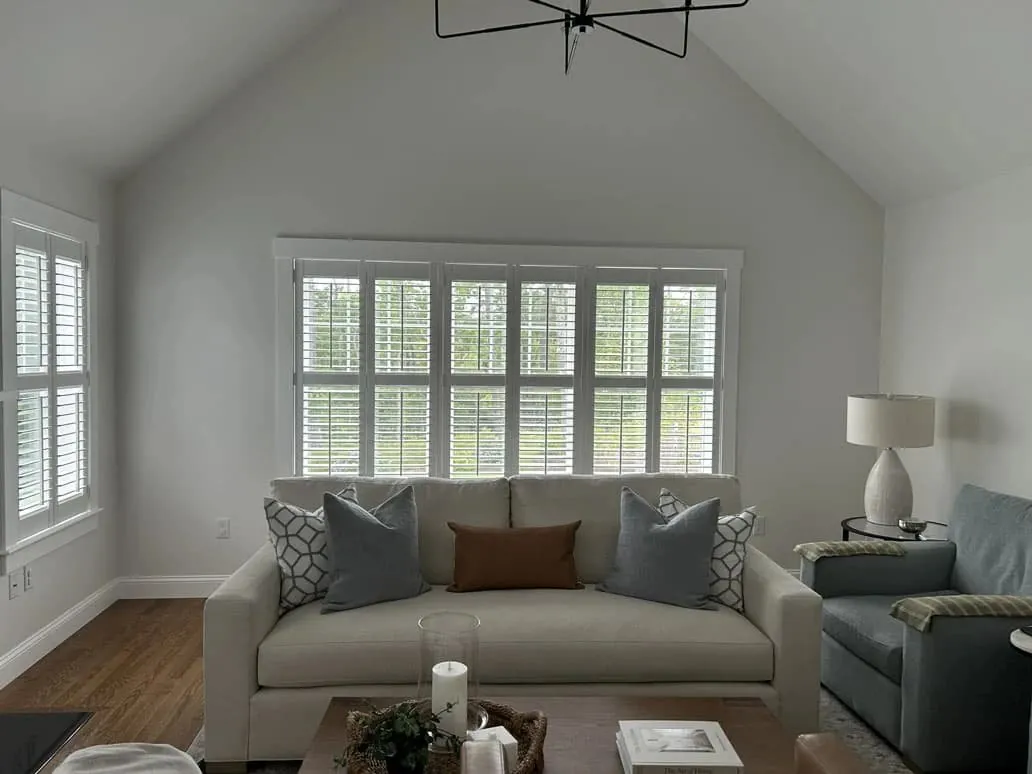
That regularity is a real advantage. Openings that share a size make it easy to keep a consistent look across the whole front. Shutters on the picture window and the bedroom windows give a ranch a crisp, finished face from the road. Faux wood or wood blinds in matching colors do the same at a lighter touch. Honeycomb shades in bedrooms keep the rooms warmer in winter and darker on summer mornings.
A ranch picture window is often wider than one shade should be, so it is usually split into two or three shades on one headrail. They can rise together or separately, which lets you keep the view open on one side and the sun off the television on the other.
Newer colonials: tall rooms and standard sizes
The newer colonials off the main roads usually have standard window sizes, but one or two rooms that are not standard at all: a two-story foyer, a great room with a cathedral ceiling, a window high above the stairs. Those are the rooms that people tend to leave bare because they are hard to reach.
Motorized shades solve the reach problem completely. A PowerView shade on a high window can be lowered from the floor with a remote, from the app or on a schedule. For an arched or angled window at the top of a wall, honeycomb shades and shutters can be made to follow the shape, or the top can be left open while the rectangular window below is covered.
Getting ready for the consultation
A consultation works best when you have thought a little about each room first. You do not need answers, just a sense of what bothers you. A few things worth noting before the visit:
- Which rooms get too hot, too bright or too cold, and at what time of day.
- Where privacy matters most, and from which direction you can be seen.
- Any windows you have never covered because nothing fitted.
- Whether you might want motorization now or later.
- Any furniture or floors you want to protect from fading.
Then the visit itself runs in a clear order.
- Book through the Request a Consultation form or the call button.
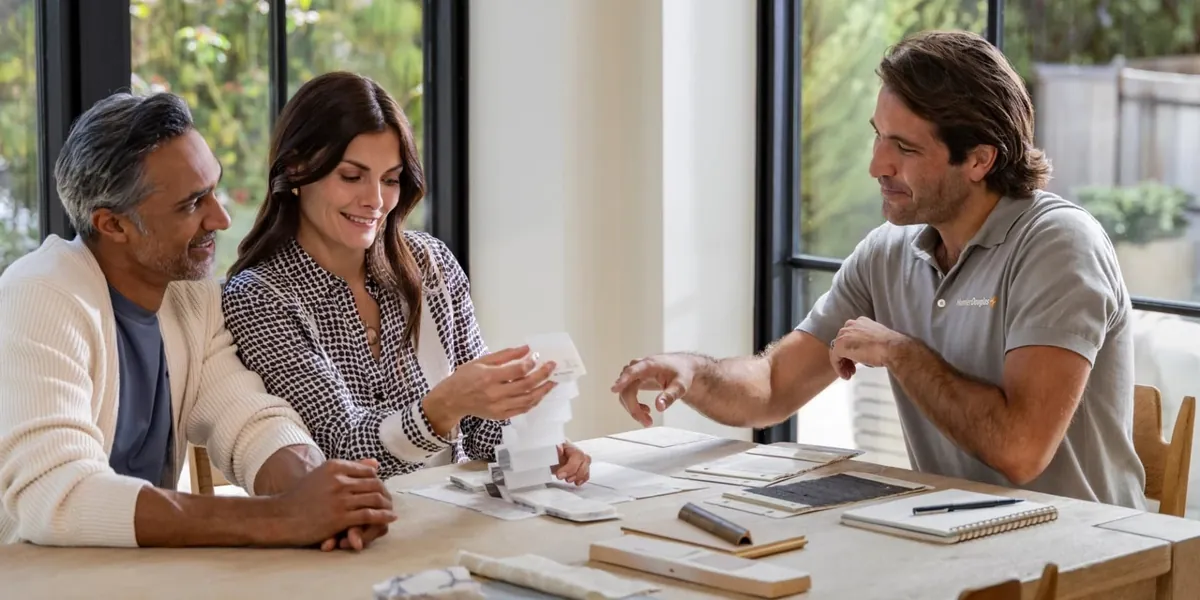
- A consultant arrives with samples of fabrics, slats, louvers and drapery.
- You go through the rooms together, starting with the ones on your list.
- Samples are held at your own glass, at the time of day the problem shows.
- Each window is measured and its frame depth checked.
- You receive a free estimate and take your time deciding.
Read more about what happens at an in-home consultation if you would like the full picture.
Wind, weather and exposed glass
Houses near the sound take the weather full on. Wind drives rain against the glass, and a window left open on a breezy day lets the air move a shade back and forth. That puts strain on brackets and lifts over time.
Fixing brackets into solid framing rather than plaster alone keeps a shade or shutter steady through years of daily use. Side channels on a roller shade stop it swinging in a draught and close the light gap at the edges. Shutters have little to move once they are hung, which suits a room where windows stay open through summer. And cordless lifts remove the cord and cord lock altogether, so there is nothing to tangle or flap.
Kitchens, bathrooms and busy rooms
The busiest rooms in a Harwich house need treatments that are easy to clean and hard to damage. Kitchens with a view of the water still have a sink, a stove and a lot of steam; bathrooms need privacy and cope with damp.
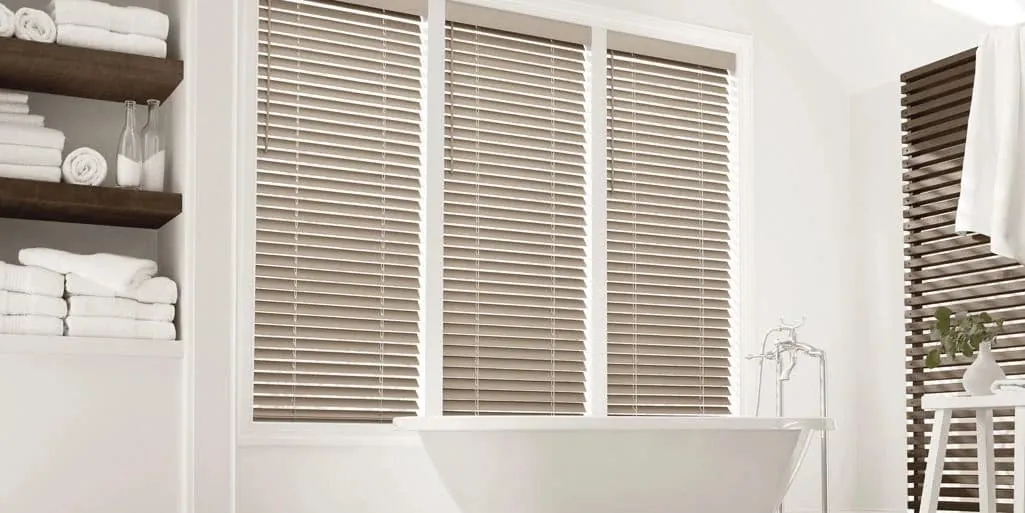
Faux wood blinds and many roller fabrics wipe clean. Shutters suit a bathroom well and can be tilted for light while blocking the view. A top-down, bottom-up shade over a tub covers the lower glass and leaves the sky above. In a family kitchen, a cordless or motorized shade keeps cords out of reach and away from the counter.
Doing the house in stages
Not every project covers the whole house at once. A common plan in Harwich is to start with the rooms that face the sound, because they take the most sun, and come back to the bedrooms and the inland side of the house later.
That works well as long as the first stage is planned with the rest in mind. Choosing a color family toward the glass and a headrail finish at the start means the later rooms will match. If motorization is likely later, the first PowerView shades and the app can grow as more rooms are added. We can give you a free estimate for the whole house with the rooms listed separately, so you can decide what comes first.
Living rooms with a screen and a view
The family room in many inland colonials faces the backyard, and in Harwich Port it faces the water. Either way it is the room where the television sits, and the afternoon sun tends to land right across the screen.
Banded shades, with their alternating sheer and solid stripes, let you line up the solid bands to block glare on the screen and then shift them to let light and view through. Blinds do the same with tilting slats. A motorized shade on a PowerView scene can drop to a set height when the television comes on and rise again later, so nobody gets up mid-film.
Bedrooms and sleep
Bedrooms in both halves of town tend to want the same thing: dark enough in the morning, soft light by day. In a Harwich Port house with a bedroom over the water, the early light reflects off the sound and finds every gap.
Room-darkening honeycomb shades and blackout rollers fitted closely inside the frame block most of it. An outside mount that overlaps the trim, or side channels, closes the remaining edges. Drapery over the shade adds a final layer and warmth in winter. For a child’s room or guest room, cordless lifts are the sensible choice.
Keeping the whole house consistent
Mixing products is normal, and in a house with two very different kinds of room, it is almost certain. What makes it work is keeping a few things constant. From outside, one color facing the glass across the front keeps the house calm. Inside, matching headrail colors and mounting styles room to room ties it all together. Planning window treatments in Harwich, MA, as one project, even if the work is done in stages, keeps those choices consistent. The window treatments page gives you an overview of the full range.
What a Gallery dealer brings to Harwich
Blinds & Designs is a Hunter Douglas Gallery dealer. That means the whole Hunter Douglas range in one visit: honeycomb, roller, roman, sheer, woven and banded shades, wood and metal blinds, three shutter collections, drapery and PowerView motorization.
The fitting is done by our own Hunter Douglas certified installers. We also offer interior design consultations for help with color and fabric, and repairs on blinds and shades you already have.
Learn more on our Hunter Douglas page.
Visiting the Sagamore showroom
Most Harwich projects are settled at the house, because the samples come in the van. If you would like to see the products in person first, our Sagamore showroom is the nearest to town.
The estimate is free, and the same people who measure also install.
Questions from Harwich
How do I control the heat and glare in a room that faces the sound?
Solar screen rollers cut glare while keeping the view, honeycomb shades insulate the glass, and blinds or shutters let you steer the light. We bring all three to try at your windows at the time of day the sun is strongest.
What looks best across the front of a ranch?
Shutters or matching blinds across the front give a ranch a tidy, consistent look from the road. A wide picture window is usually split into two or three shades on one headrail.
Can you cover a high window in a two-story foyer?
Yes. PowerView shades on high windows can be raised and lowered from the floor by remote, app or schedule. Arched tops can be followed or left open.
Can I start with a few rooms and add more later?
Yes. We plan the colors and finishes for the whole house first so later rooms match, and the estimate can list each room separately.
Is the estimate free?
Yes. The estimate after your consultation is free and covers every window you ask about.
Your next step
The best way to choose window treatments in Harwich, MA, is to see the samples at your own glass. Request a consultation and a consultant will bring the van, measure your windows and leave a free estimate. Use the call button to talk it through first, or visit the Sagamore showroom.