
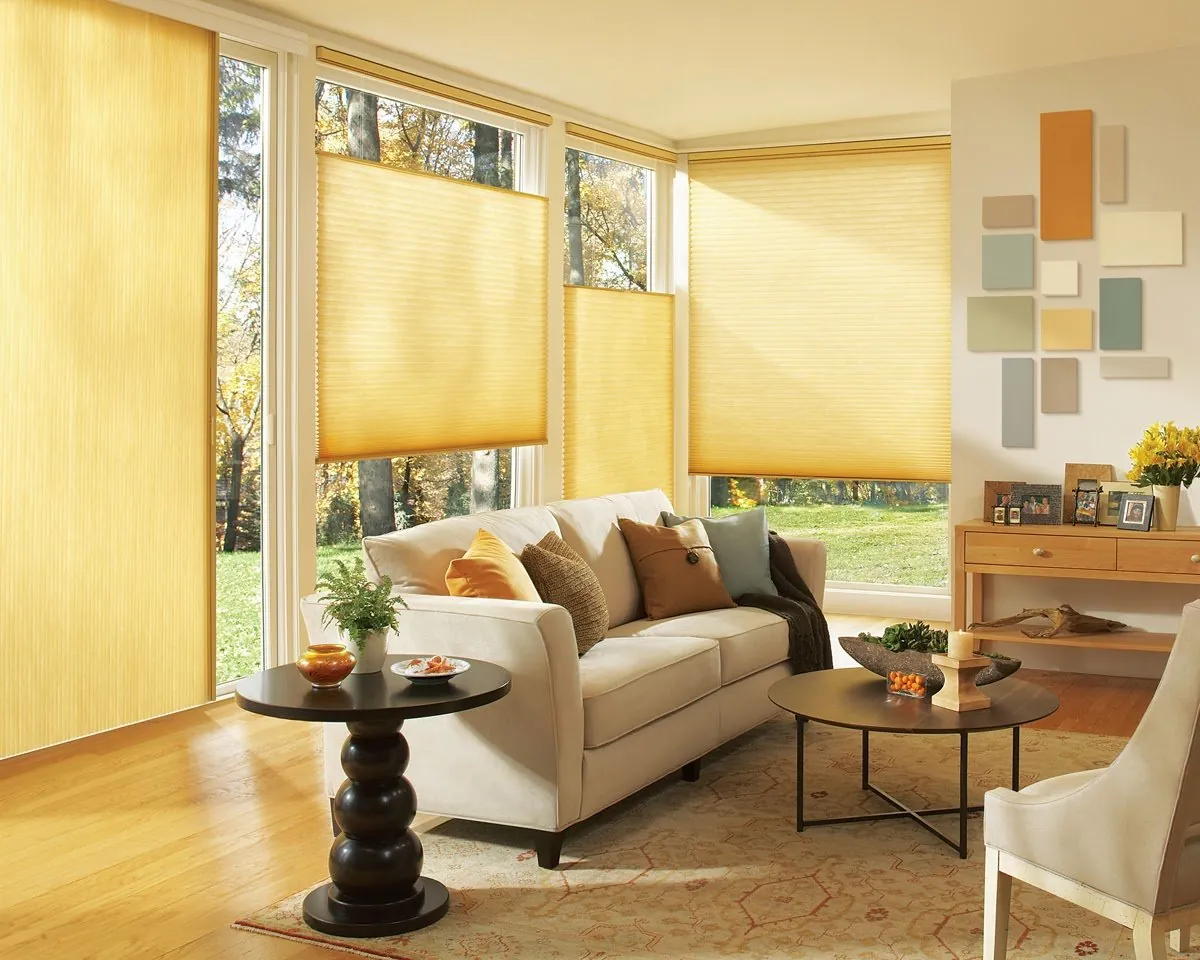
Open land, sun on every side
Carver is a town of space. Capes and ranches sit on big lots among the cranberry bogs, the newer colonials off Tremont Street have room around them, and from many windows the view runs a long way before it meets anything. That openness is what makes window treatments in Carver, MA, a particular kind of job.
With few trees or neighbors to block it, the sun reaches a house from several sides in turn. A living room can take the morning light through one wall and the evening light through another, with nothing in between to soften either. On open ground across a bog, a low sun comes in flat and bright.
Privacy works differently here, too. The nearest house may be well out of sight, so the question is less about who can see in by day and more about glare, heat, fading and how a lit room looks from the road after dark.
Window treatments in Carver, MA, service by service
Each card leads to a Carver page with the full detail. These are the services we offer in town, whether you start with one sunny room or plan the whole house in one go.
Blinds
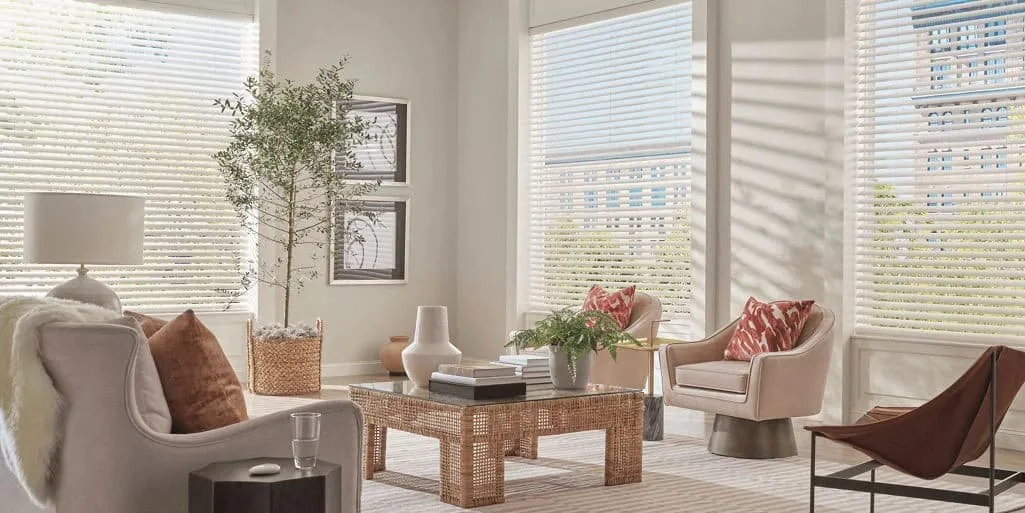
Slats in wood, faux wood or metal that tilt to steer the sun as it moves from one side of the house to the next.
Cellular shades
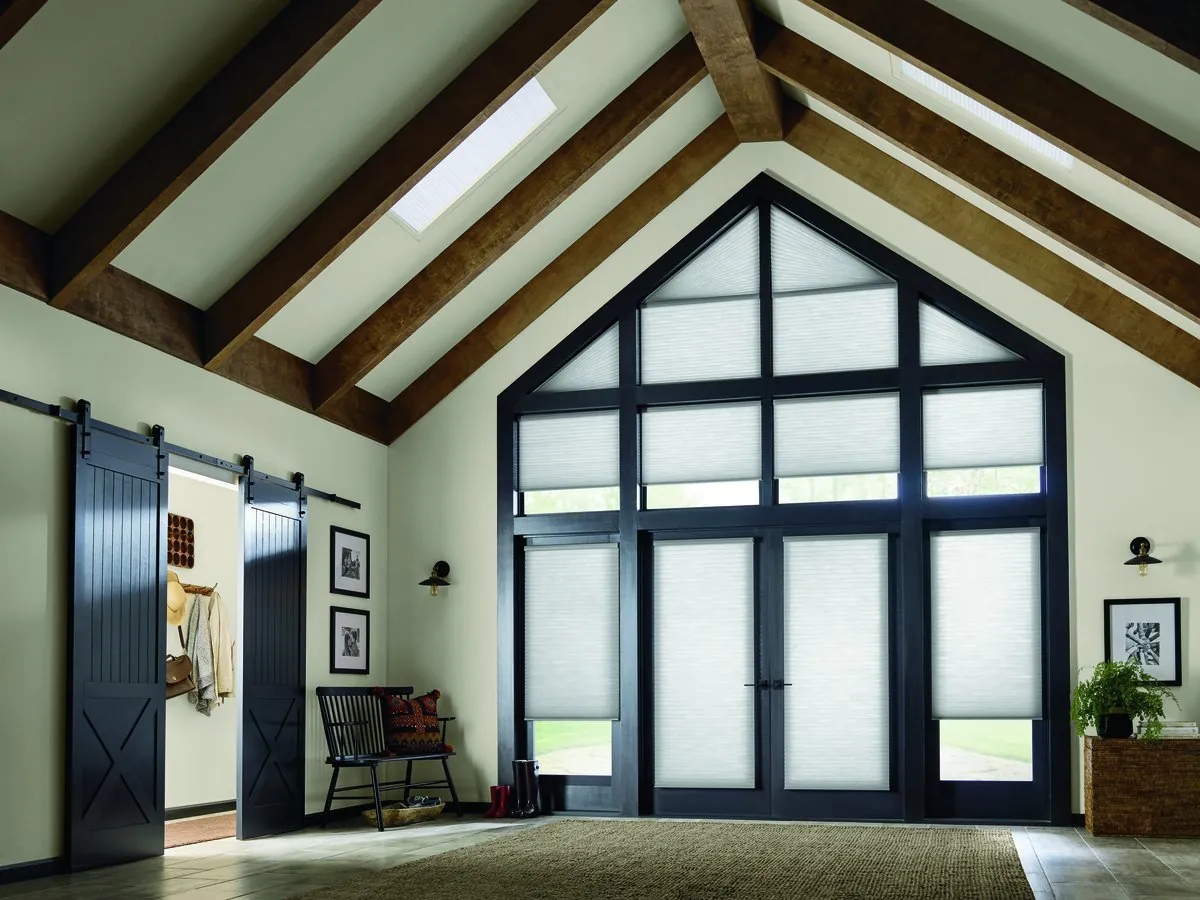
Duette or Applause honeycombs to calm the heat on a sunny wall in summer and keep the warmth in through a windy winter.
Roller and screen shades
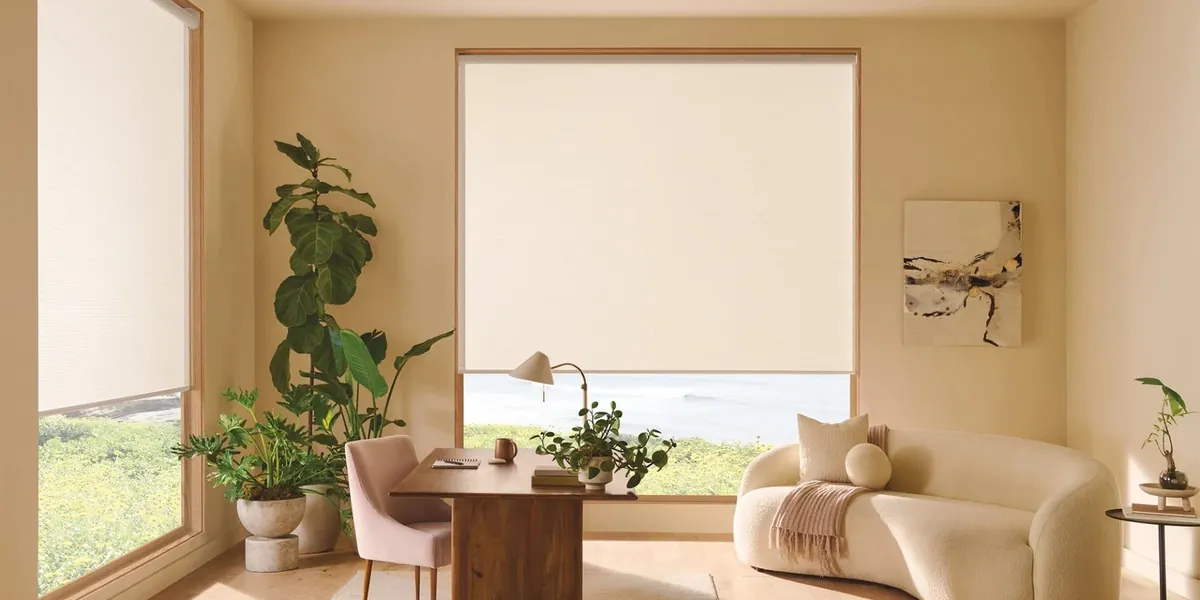
Mesh fabrics that tame the glare and keep the long view across the bogs, plus blackout rollers for bedrooms.
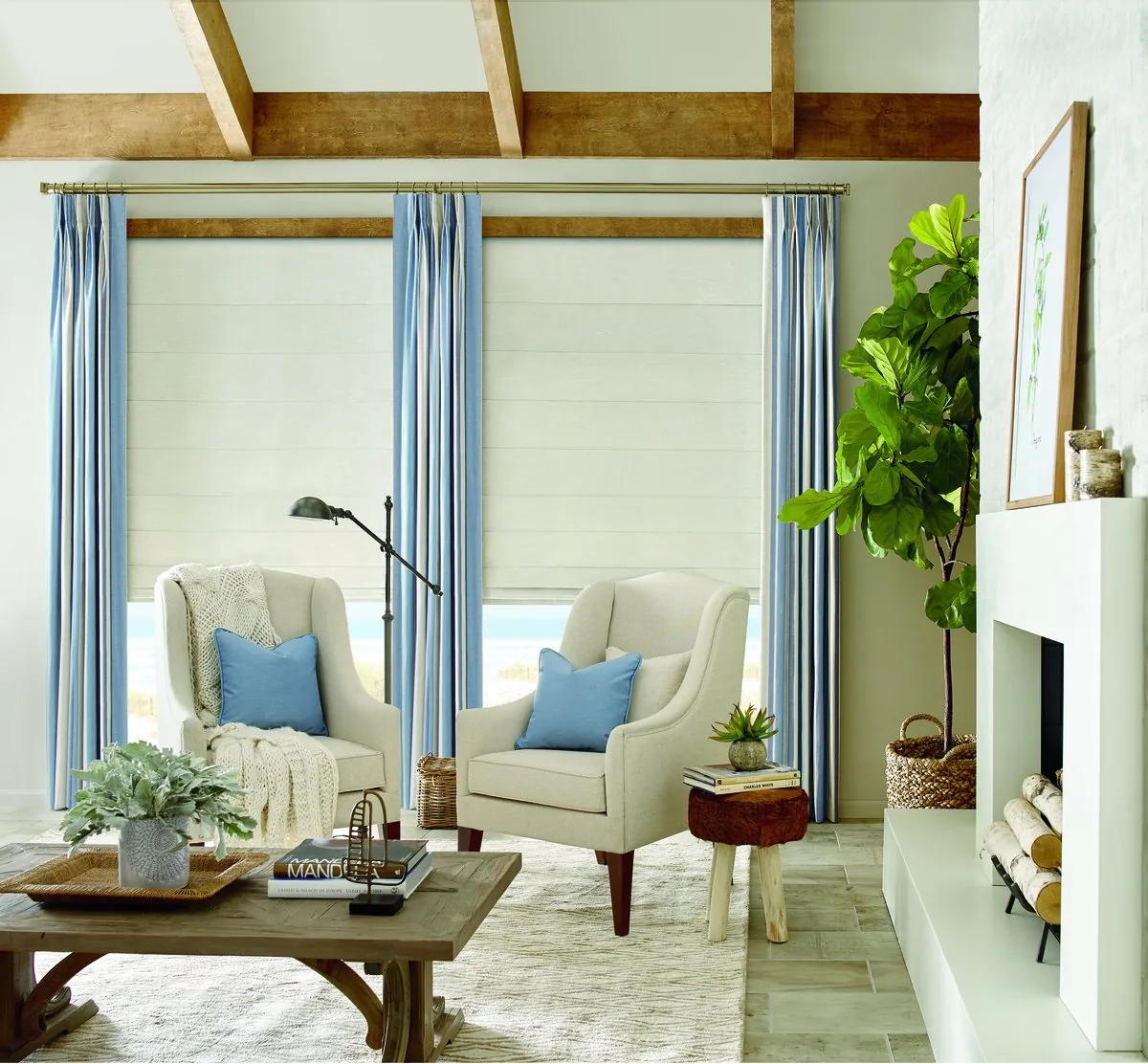
Roman shades
Soft folds from Vignette or Carole Fabrics for a cape’s living room, lined to protect a sofa from the afternoon sun.
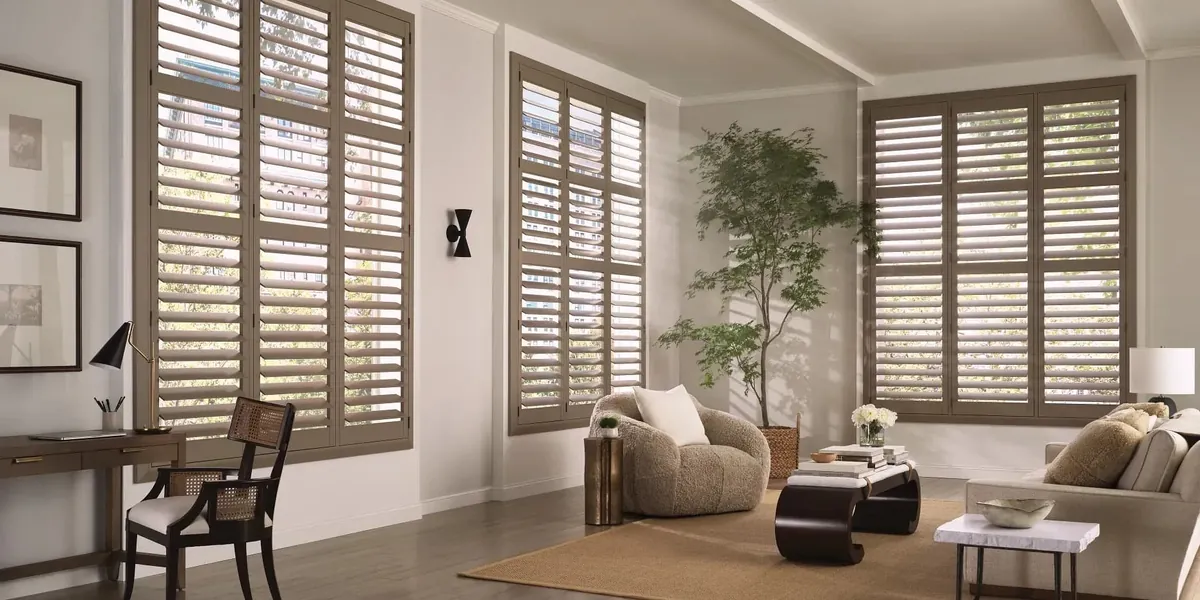
Plantation shutters
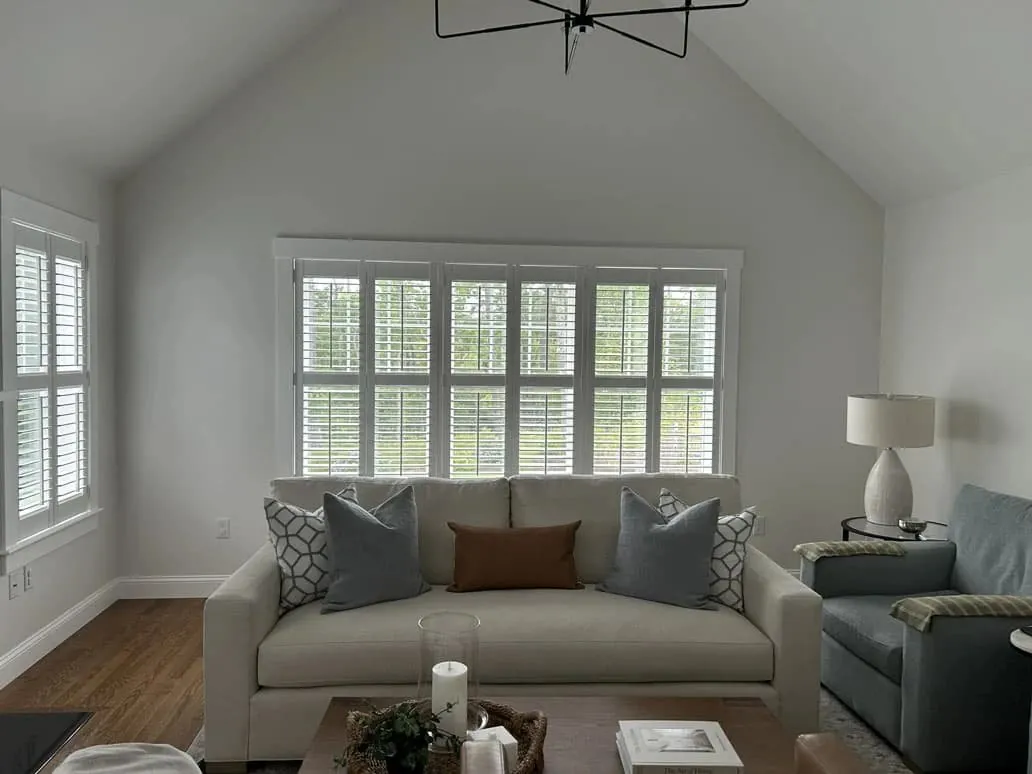
Louvred panels from the Palm Beach, NewStyle and Heritance lines, which let you angle the light room by room through the day.
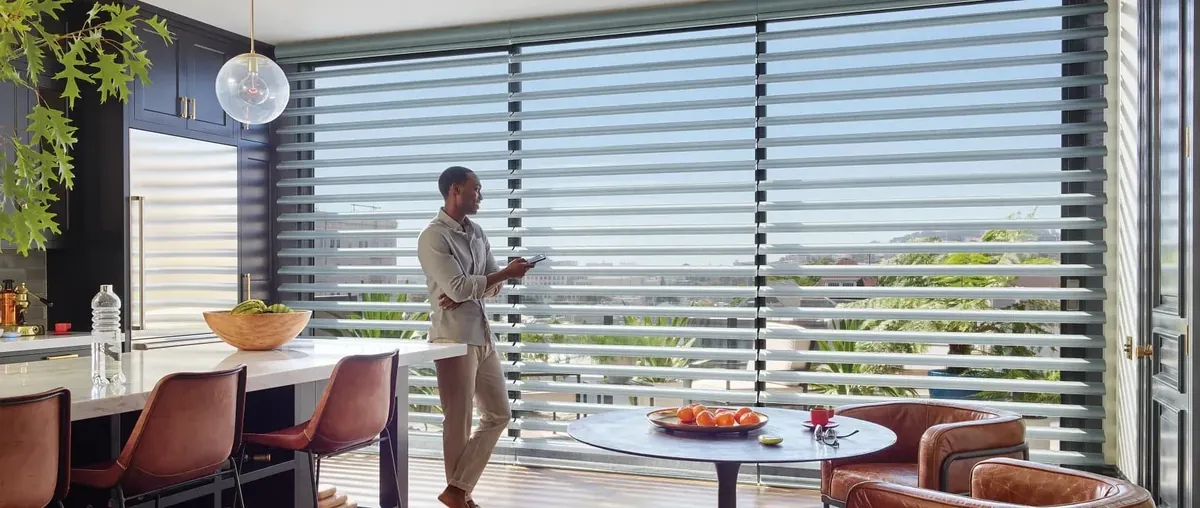
Motorized blinds and shades
PowerView schedules that move each side of the house in step with the sun, with nobody touching a cord.
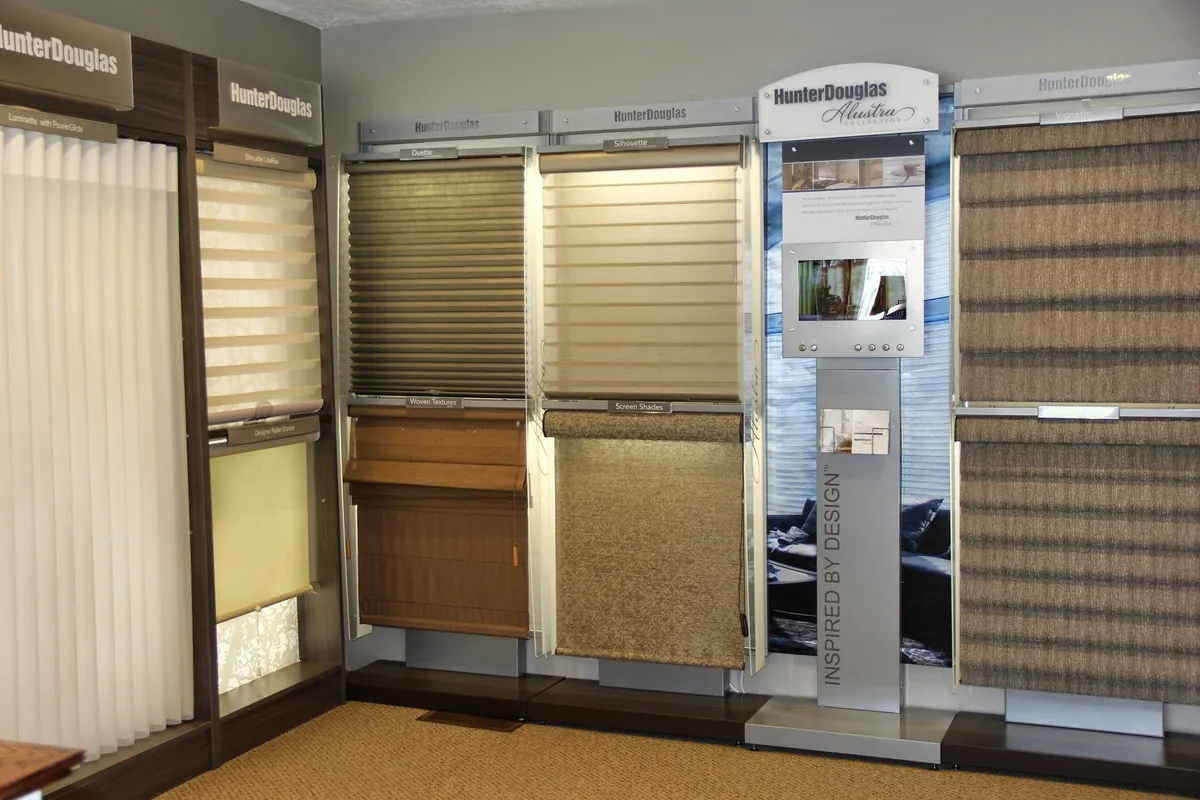
Hunter Douglas dealer
The whole Hunter Douglas range from a Gallery dealer, installed by our certified Hunter Douglas installers.
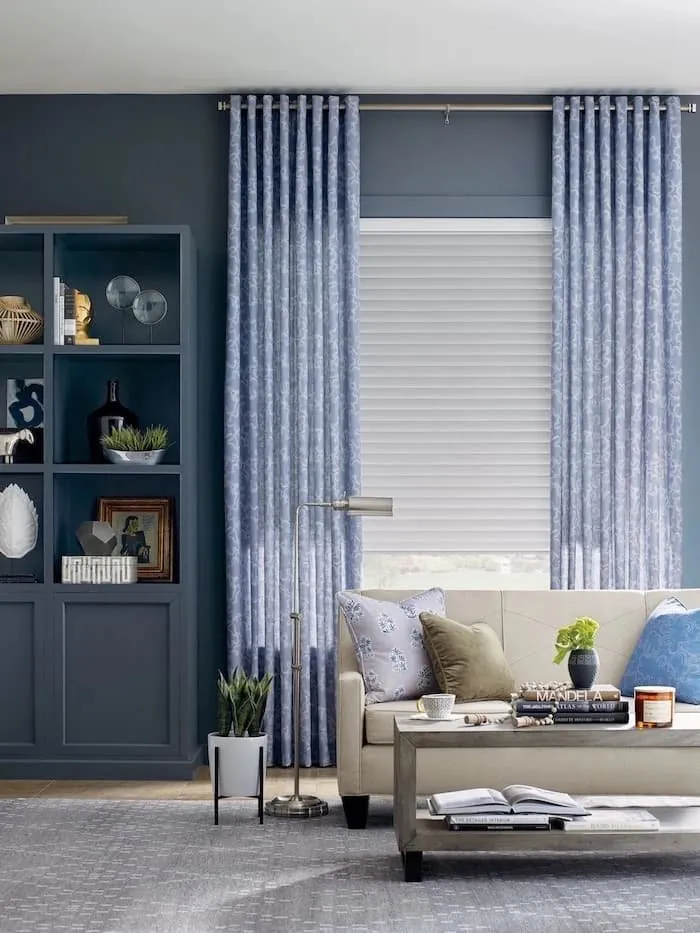
Custom drapery
Lined panels from Hunter Douglas to warm a big living room and close off dark glass on a winter evening.
Following the sun around the house
In a town with neighbors and trees close by, the sun usually reaches a house through one or two windows at a time. In Carver, with open ground on every side, it can work its way right around the house in a day. The east rooms are bright at breakfast, the south rooms take the high sun at midday and the west rooms are flooded with low light toward evening.
That means each side of the house needs its own plan, and often a room with windows on two walls needs two different answers. A kitchen with an east window and a south window might take a screen roller on one and a top-down honeycomb on the other. A living room with windows facing south and west might use shutters on both, so the louvers can be tilted differently as the day goes on.
PowerView makes this far easier to live with. Each face of the house gets its own group and timetable. The morning-side shades lift at breakfast, the midday side comes down while the sun is overhead, and the evening side closes as the light turns low and orange across the fields. One app runs the lot, and you can change any of it when the seasons shift.
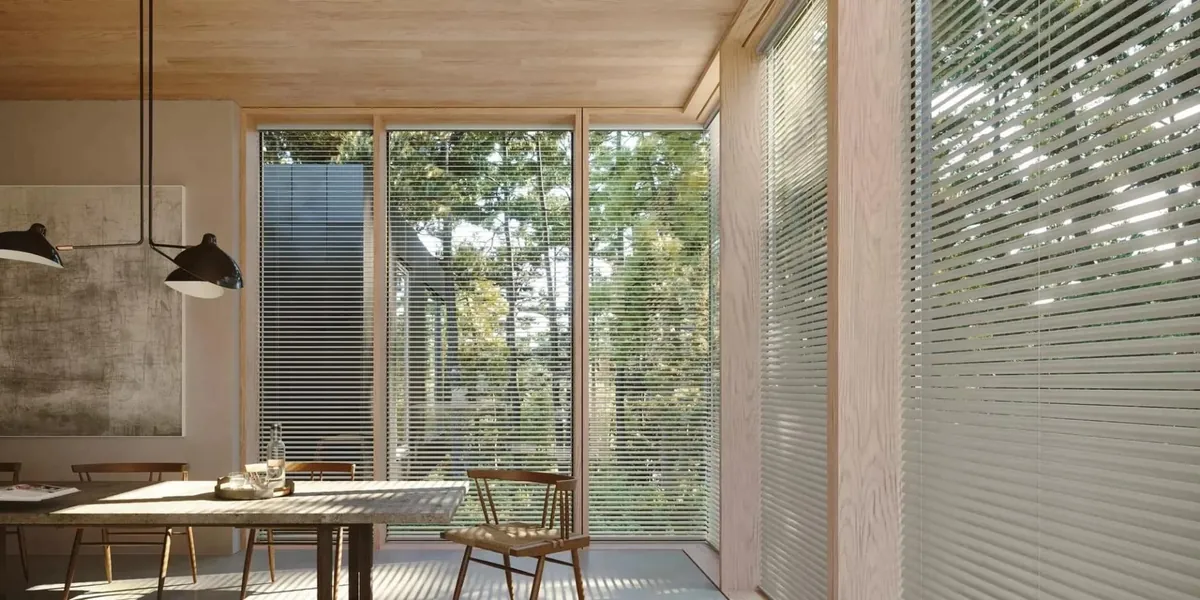
Keeping the long view across the bogs
Plenty of Carver houses look out over open bogs, fields or woodland, and that long sightline is one of the pleasures of living here. Closing it off with a heavy blind defeats the purpose.
A solar screen is where most bog-side rooms begin. Its fine mesh knocks back the brightness and some of the warmth, yet the fields and the line of trees beyond still show through; pick a looser mesh to see more of the land, a closer one to stop more sun. Top-down, bottom-up shades let you block the sun at the top of the window while the lower glass, at eye level from a chair, stays clear. Sheers with floating fabric vanes turn hard light into a soft glow and still show the shapes outside.
When the shade is up, it should vanish. Roller shades in a slim cassette and honeycombs that stack tight at the head leave the whole window open to the view.
When nothing screens the sun
On an open lot, there is no tree to cast shade and no house next door to block the low light. Sun falls directly on floors, rugs and furniture for hours, and the glass warms up on a summer afternoon.
That steady exposure fades fabric and lightens wood floors unevenly. A room-darkening or light-filtering honeycomb protects what sits behind it while keeping the room comfortable. Lined romans and drapery give furniture a second line of defence. Screen rollers cut a large share of the heat and glare without making the room dim.
Choosing the right density for each side of the house is the key. The west and south walls usually need the most protection, while a north-facing room may need nothing more than a light-filtering fabric for softness.
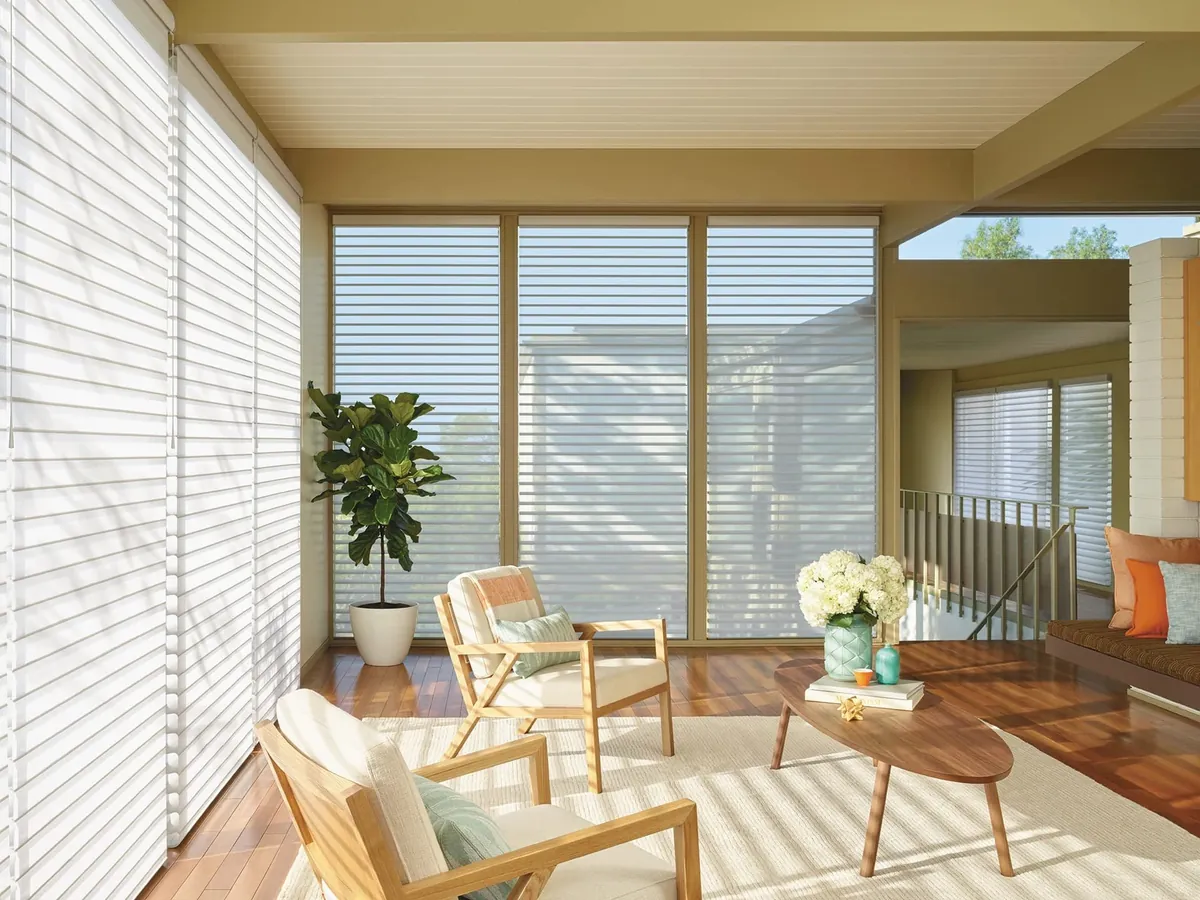
Capes on big lots
The capes scattered through Carver are often set well back from the road on generous land. Inside, the rooms are modest, the ceilings are lower and the windows are of a sensible, traditional size. On the second floor, rooms sit beneath the roof slope, lit by dormers and gable ends.
Inside mounts suit these rooms well, tucking the shade into the frame and leaving the trim visible. Honeycomb shades are a favorite: they keep a cape’s rooms warm in winter, stack slim when raised and come in fabrics from soft light-filtering to room-darkening. Romans add softness to a living room. Shutters across the front windows give a cape a classic, finished look from the road.
Bedroom windows in a cape are often set low in a dormer or high in a gable. Slim shades made to each opening fit them well, and a PowerView shade on a gable window means nobody stands on the bed to close it.
Long, low ranches
Carver’s ranches spread out on one floor, with a long run of windows across the front and a picture window in the living room. Because the land around them is open, those windows often take the sun all afternoon.
Rather than one huge shade, a broad picture window normally gets a pair or a trio sharing a single headrail, each free to move on its own or all together. That lets you drop the shade on the sunny side while keeping the view open on the other. Shutters across the whole front of a ranch look crisp and consistent from the road. In the bedrooms at the far end of the house, honeycomb shades keep the mornings dark and the winter nights warmer.
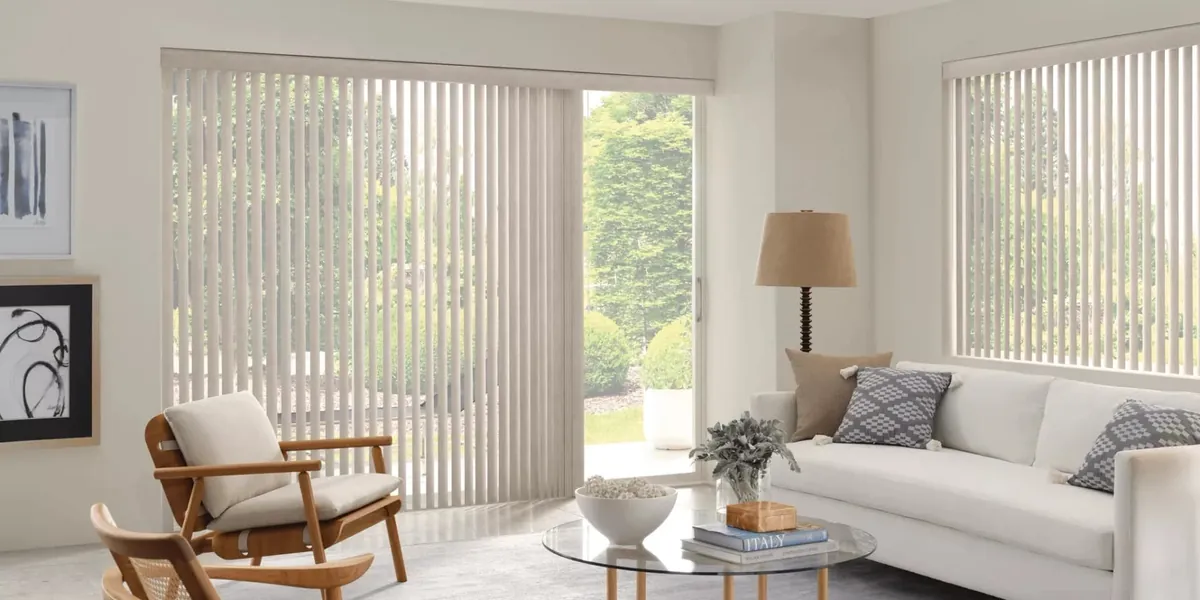
Sliders onto a back patio or deck are common in ranches. A vertical honeycomb shade or vertical blinds draw aside so you can walk straight out.
The consultation, at your own windows
Light on open land is hard to judge anywhere else, so we come to you with the samples in the van.
- Choose a day with the Request a Consultation form, or use the call button.
- A consultant arrives with shades, blind slats, shutter louvers and drapery fabrics to try.
- You go through the rooms together, side by side of the house, talking about when each one gets too bright, too warm or too cold.
- Samples are held at your own glass, so you see how each screen weave treats the view and how each fabric looks in your light.
- Every window is measured, and frame depths are checked.
- You receive a free estimate and can take as long as you like to decide.
Read what happens at an in-home consultation for more about the visit, and our page on choosing fabric for a sunny room is useful reading before it.
Colonials off Tremont Street
The newer colonials off Tremont Street bring their own mix: standard window sizes in most rooms, plus a two-story foyer, a family room with tall windows or a bonus room over the garage with a window high in the gable.
Standard sizes make it easy to keep a consistent look, and matching blinds or shutters across the front of the house give it a tidy face from the road. Honeycomb shades in bedrooms do double duty, darkening the room on summer mornings and adding warmth in winter. In a busy family house, cordless lifts are the sensible choice, because they take the cord out of reach of children and pets.
The tall windows are where PowerView earns its place. A shade at the top of a foyer window or above a family room can be lowered by remote, by app or on a schedule. Arched tops can be followed by a shutter or honeycomb, or left open to let the light glow through.
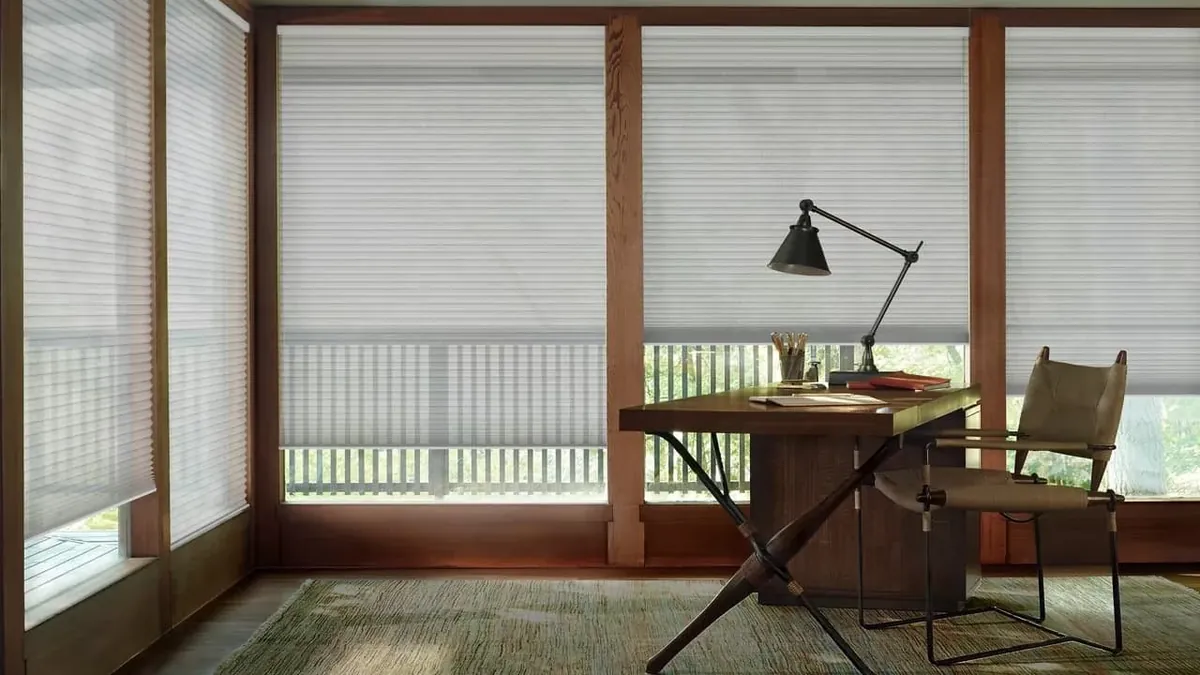
A lit house on a dark road
By day, a Carver house on a big lot feels completely private. After dark it is a different story. With the lights on inside and nothing else around, every uncovered window glows, and from the road you can see straight into the room.
A screen weave that hides the room in daylight turns transparent from outside the moment a lamp is switched on, so a room that relies on one needs a second layer for the evening. Room-darkening honeycomb shades, solid rollers or drapery panels drawn at dusk close the room off. A sheer with fabric vanes only needs its vanes shut. A PowerView schedule can lower the front-facing shades at sunset every evening, so the house is private without anyone remembering.
Winter wind across open ground
The same open land that brings in the sun also lets the wind blow straight across in winter. A house with no trees around it feels the cold on its windows more, especially on the side facing the prevailing wind.
Honeycomb shades help most here, because their cells trap still air against the glass. A double-cell fabric does more than a single cell, and a close fit inside the frame leaves less room for cold air to creep round. Drapery panels drawn over the shade at night add another layer. Our page on cellular shades and winter heat explains why the cells matter.
Kitchens, mudrooms and the back door
Country houses get used hard, and the back of the house takes most of it. Mudrooms, kitchens and back halls see boots, dogs, groceries and constant coming and going. Treatments here need to be tough and easy to clean.
Faux wood blinds suit these rooms, wiping clean and standing up to damp. A wipeable roller works over a kitchen sink. Half-height shutters on the bottom sash keep a back hall private while letting light in at the top. On a back door with glass, a shade fixed to the door itself moves with it and never swings into the way.
Home offices and screens
A lot of Carver houses now hold a home office, often in a spare bedroom or a room over the garage. On open land the sun reaches a desk from whichever side the window faces, and a laptop screen washes out in minutes.
The fix is to control the light without darkening the room. Blinds tilted upward send the sun to the ceiling and keep the desk in shade. A screen roller lowered just past the top of the monitor cuts the glare and keeps the view. Banded shades, with alternating sheer and solid stripes, let you line up a solid band exactly where the glare falls. Choosing window treatments in Carver, MA, for a working room is mostly about putting the screen where the sun is not.
Guest rooms and bonus rooms over the garage
Bonus rooms over a garage tend to have a window high in the gable and one or two low windows under the eaves. They are often the hottest rooms in the house in summer, because the roof bakes in the open sun all afternoon.
Room-darkening honeycomb shades help here twice over: they keep the room dark for a guest sleeping in and they slow the heat coming through the glass. A PowerView shade on the gable window can close on a schedule before the afternoon sun arrives, so the room stays cooler by the time anyone goes up.
Rooms with windows on three walls
Sunrooms and family rooms with glass on three sides are common in Carver, built to take in the open land around the house. They are the brightest rooms in the house and the ones most likely to overheat.
Plan these rooms as one, with the same fabric and headrail on every wall so the room reads as a whole, but with a fabric chosen for the sunniest side. By day a screen roller holds the view. Honeycomb shades help in spring and autumn when the room is cool at night. Motorized shades grouped by wall can follow the sun round the room automatically.
Putting the whole house together
Very few Carver houses end up with one product in every room. A cape might have shutters at the front, honeycombs upstairs and a roller in the kitchen; a ranch might pair rollers in the living room with honeycombs in the bedrooms. Keeping one color toward the glass across each side of the house, and using the same headrail finish floor by floor, makes it all look planned. Planning window treatments in Carver, MA, as one project also makes PowerView schedules simple, since every motorized shade can share one app. The window treatments page shows the full range.
Why buy through a Hunter Douglas Gallery dealer
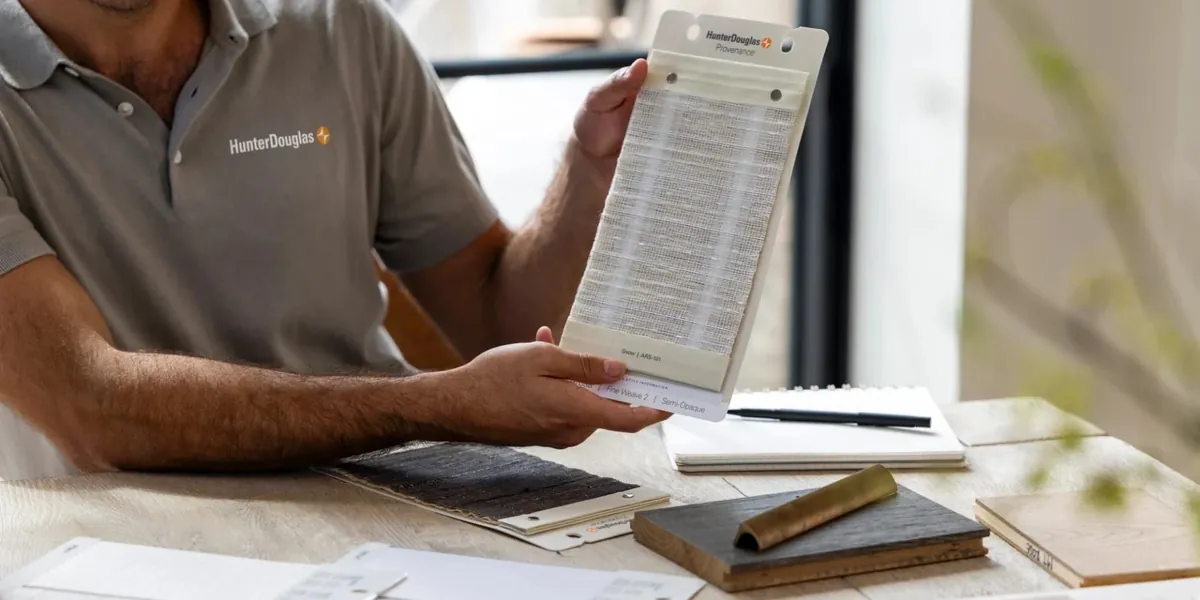
A house that takes the sun on every side often needs a different product on each wall, and a Hunter Douglas Gallery dealer has all of them: screens, honeycombs, romans, sheers, woven shades, blinds, shutters, drapery and PowerView.
Blinds & Designs’ own certified Hunter Douglas installers do every fitting. We offer interior design consultations for help tying colors together across a big house, and we repair blinds and shades you already own.
Read about the brand on our Hunter Douglas page.
Our nearest showroom to Carver
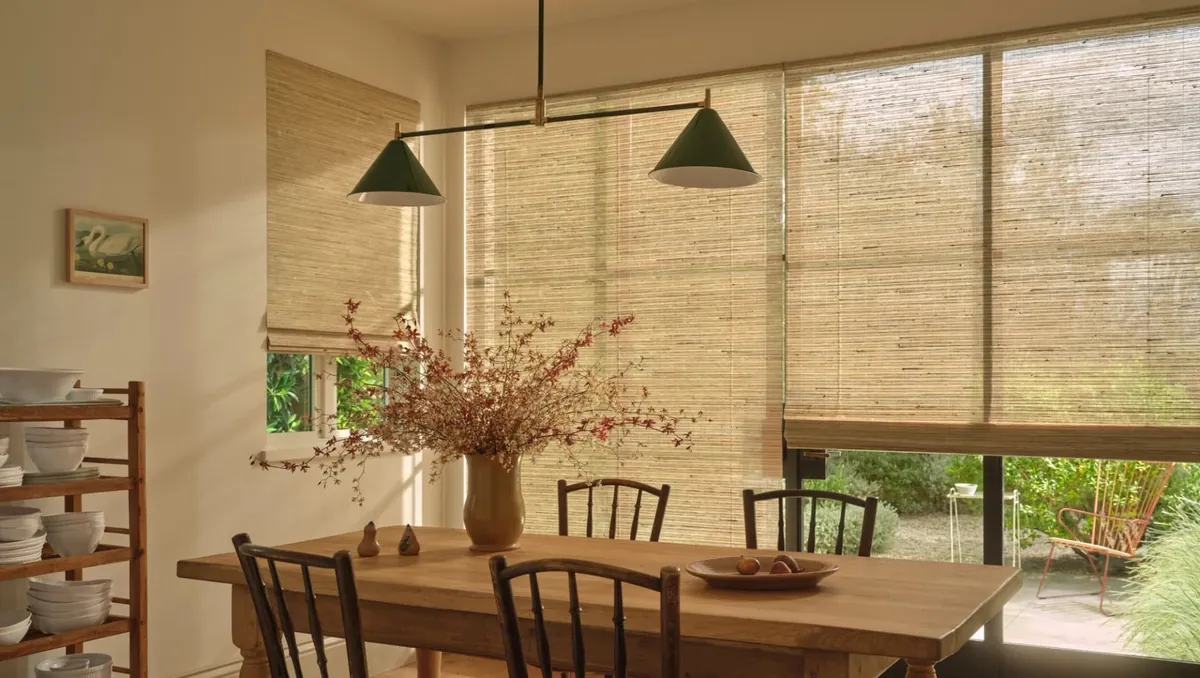
Most Carver projects are decided at home, because the consultant brings the samples. If you would rather see the products in person first, our Sagamore showroom is the nearest to town.
The estimate is free, and one crew measures, orders and installs.
Questions from Carver
My living room gets sun from two sides. What should I do?
Give each wall the answer its own sun calls for. Shutter louvers can sit at a different angle on every window, and PowerView lets the morning wall and the evening wall run on separate timetables.
How do I keep the view across the bogs and still cut the glare?
A solar screen roller cuts glare and heat while the view stays visible. A top-down, bottom-up shade blocks the sun high on the glass and leaves your eye level clear.
Our house is private by day but feels exposed at night. Why?
Once lamps are lit indoors, a screen fabric no longer hides the room from the road. Add something solid for the evening, such as drapery, a blackout roller or a room-darkening honeycomb.
What helps on a cold, windy side of the house?
A snug honeycomb inside the frame, with drapery pulled across at night. The pocketed fabric holds still air at the glass, which slows the chill.
What does the estimate cost?
Nothing. Every estimate is free, whether it covers a single picture window or the whole house.
Your next step
Window treatments in Carver, MA, are easiest to choose with the samples in your own light. Ask for a consultation, and a consultant will bring the van, try fabrics on each side of the house, measure every window and leave a free estimate. Use the call button if you would like to talk first, or visit the Sagamore showroom.