
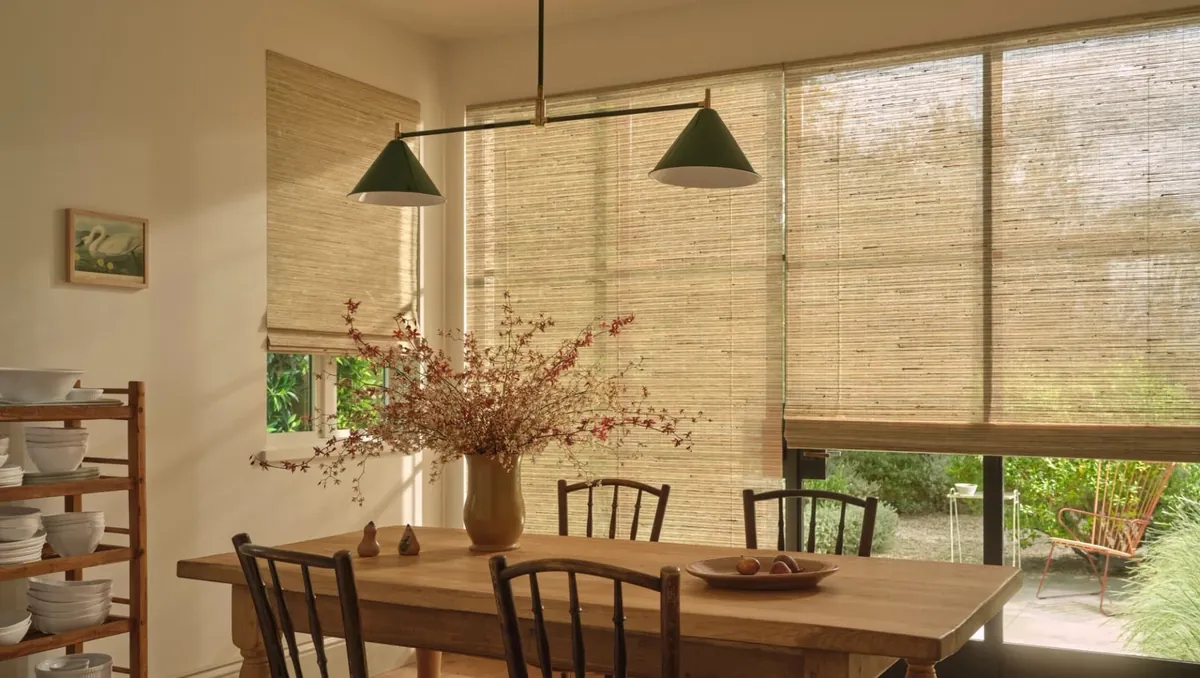
Three eras of house in one town
Few towns pack as much variety into their housing as Uxbridge. Along the Blackstone, the mill-era houses still have their original narrow openings. Out on the older roads, antique farmhouses stand on their own land. And off Route 16, newer colonials bring standard modern windows and bigger, brighter rooms.
Three housing eras means three quite different sets of windows. Planning window treatments in Uxbridge, MA, starts with working out which kind of house we are standing in, because a narrow mill-era opening, an old farmhouse sash and a modern colonial window each ask for something different.
We are comfortable with all three. Many of our visits here are to houses in one era; some are to houses that mix them, where an older home has been added to over the years.
Every Uxbridge service page
The cards open the Uxbridge page for each service, with notes on how it suits each of the town’s housing eras.
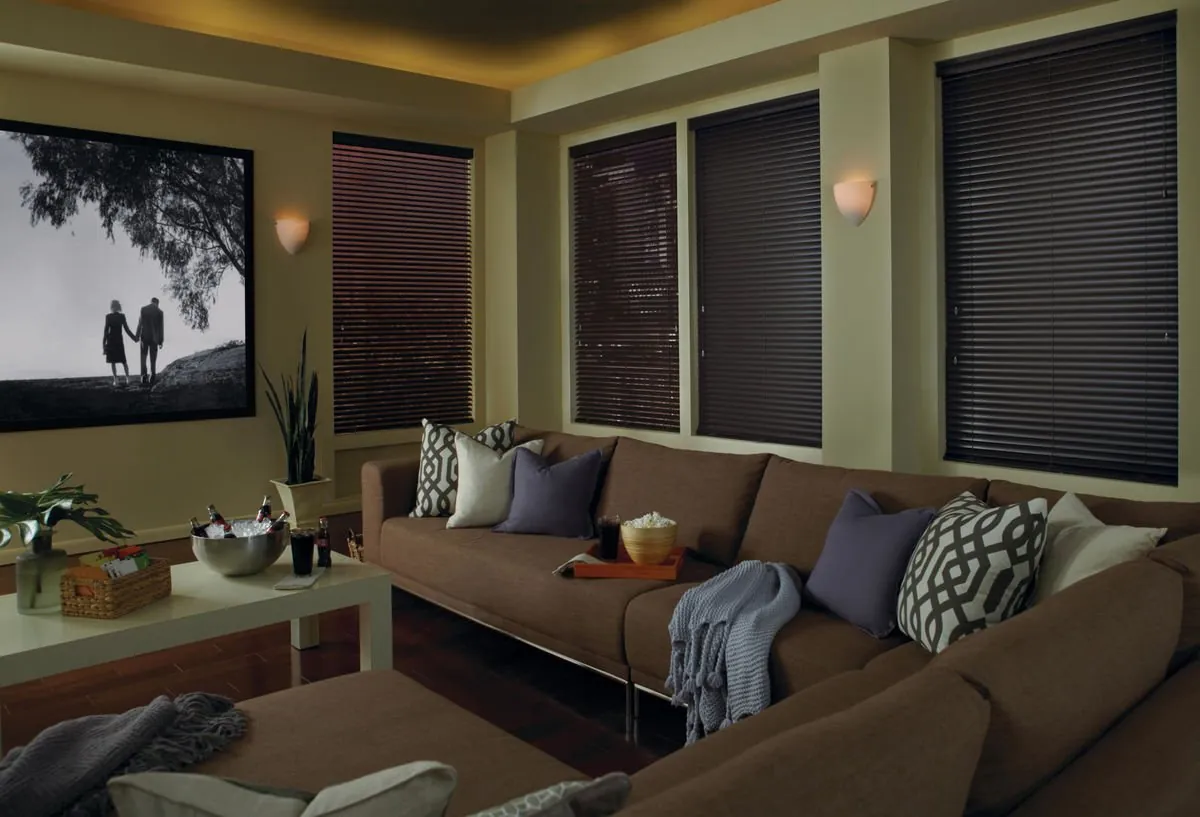
Custom blinds
From a slim mill-era opening to a colonial slider: blinds in real wood, faux wood, metal and vertical styles.
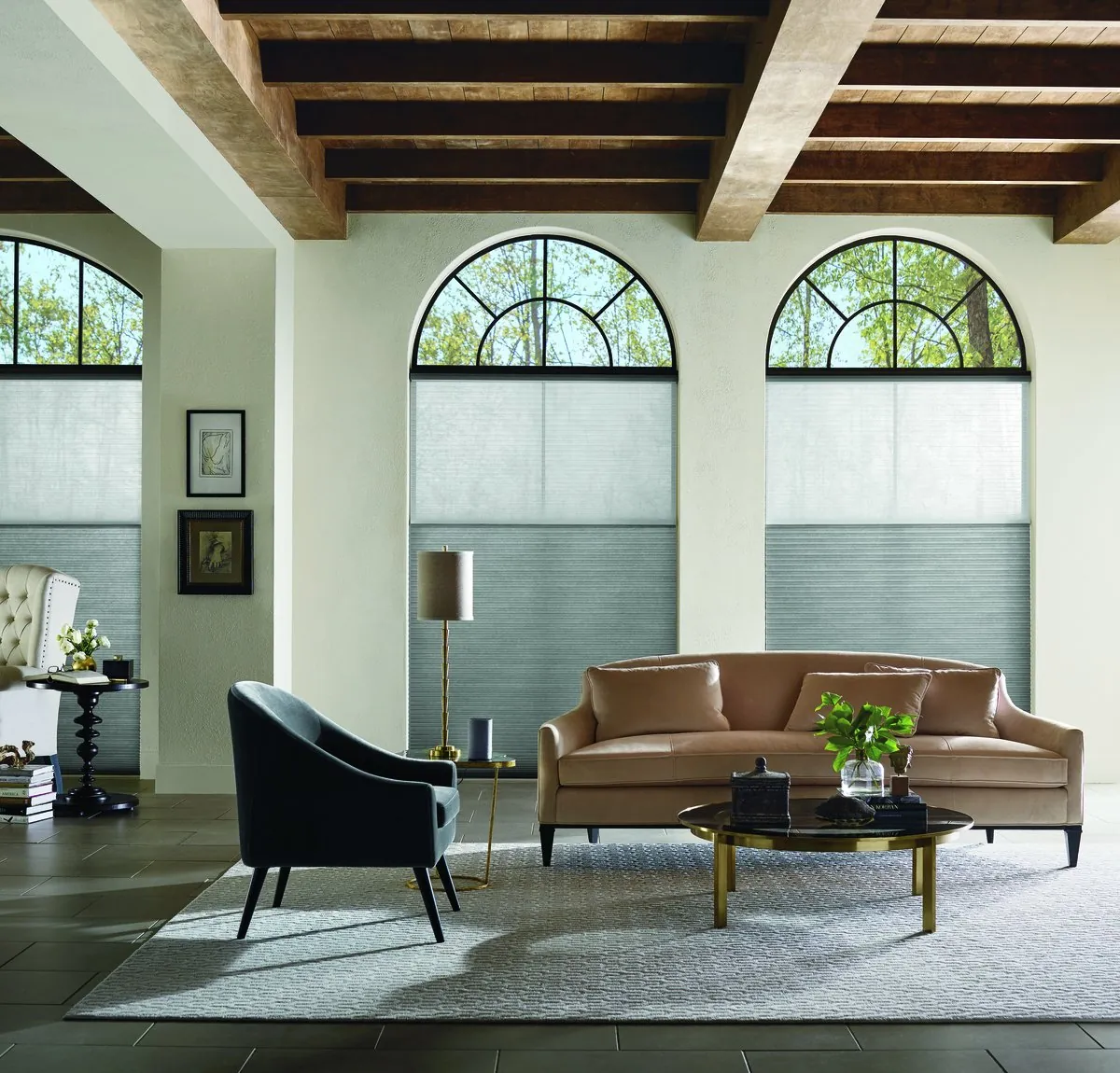
Cellular shades
Duette and Applause honeycomb shades. Air trapped in the cells helps an older room keep its warmth.
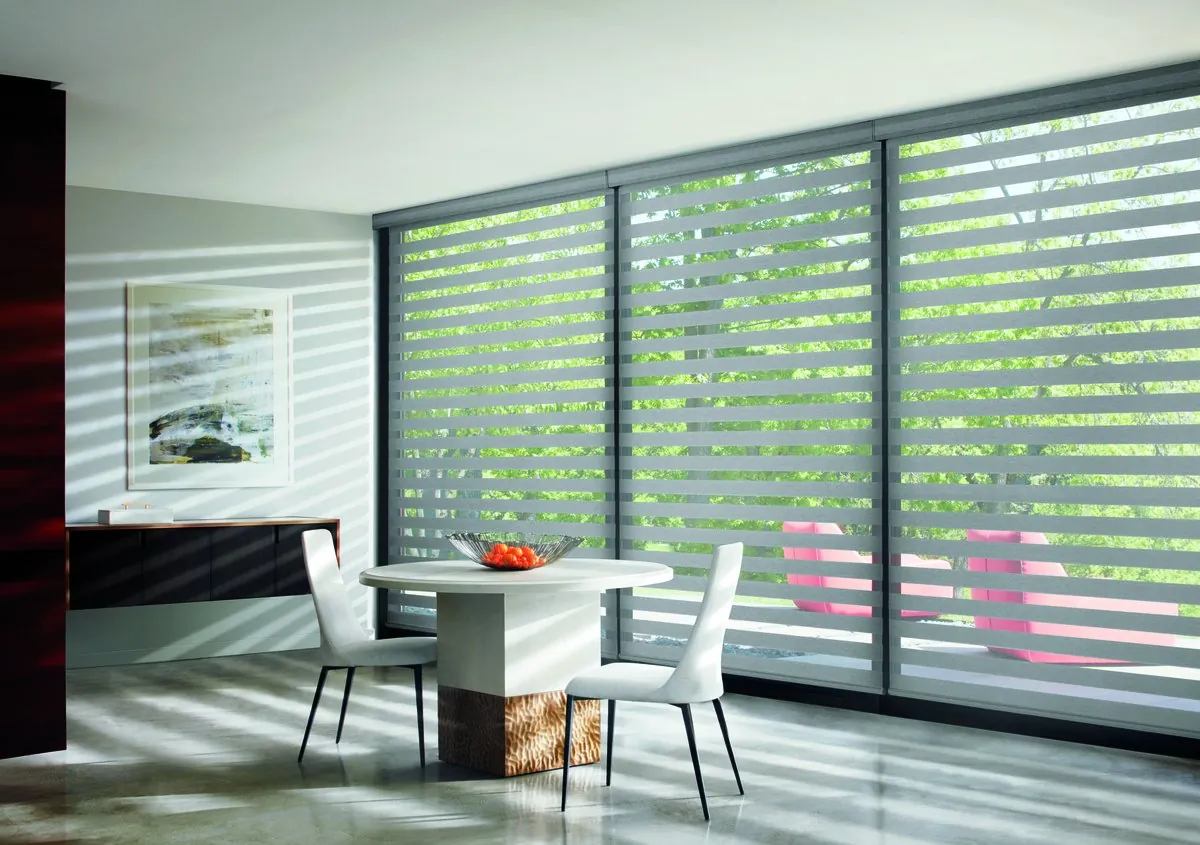
Roller shades
Rollers and solar screens from Designer and Alustra. Openness is the dial between keeping the view and stopping glare.
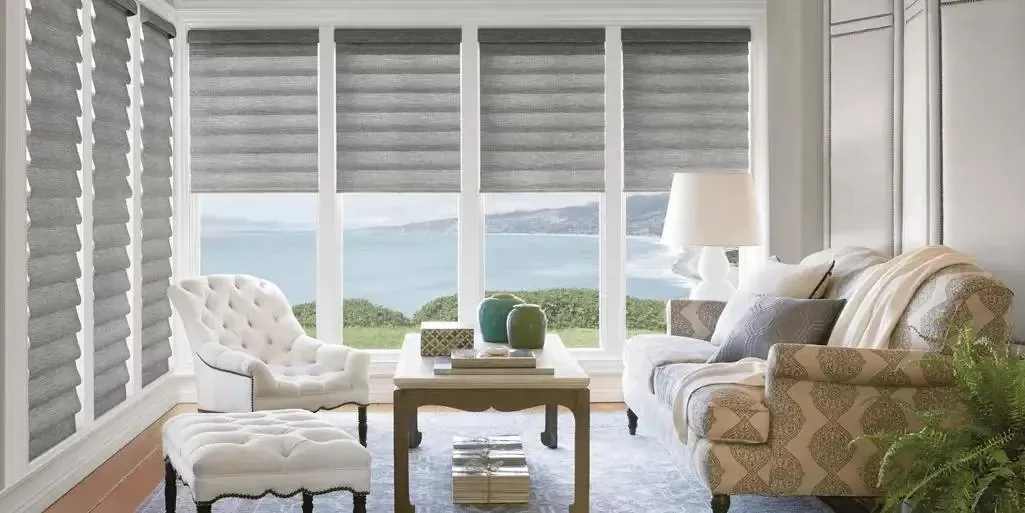
Roman shades
Fabric shades in flat or folded styles from Vignette and Carole Fabrics, warm in a farmhouse parlor.
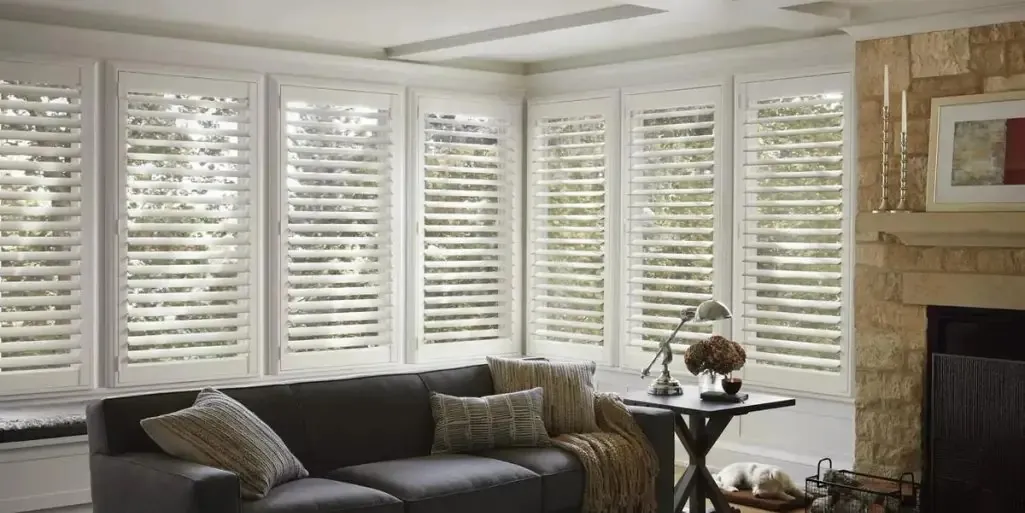
Plantation shutters
Palm Beach, NewStyle and Heritance shutters, sized in louver and frame to the era of the window.
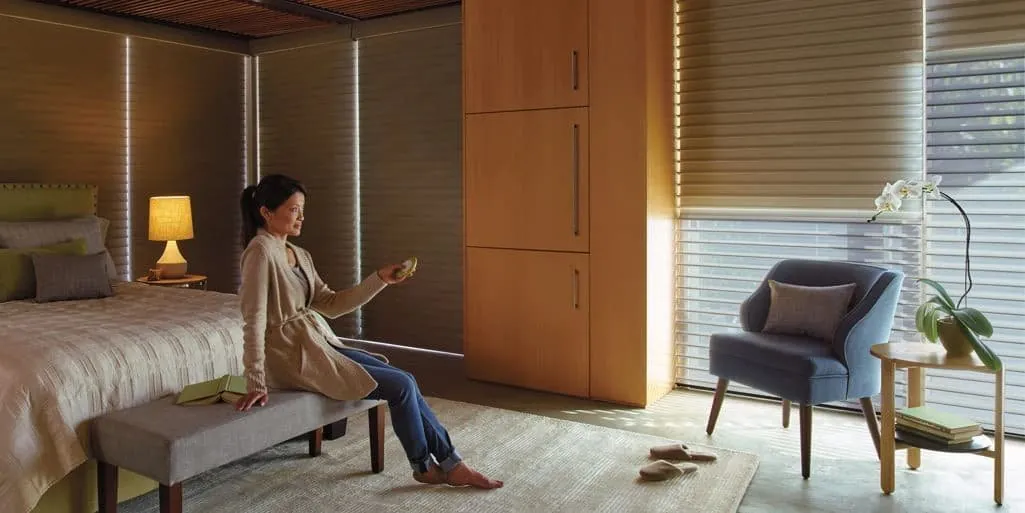
Motorized blinds and shades
PowerView remote, app and scheduled control, from a single bedroom shade to a whole colonial.

Hunter Douglas dealer
Our Hunter Douglas Gallery dealership, with certified Hunter Douglas installation on each job.
The three eras at a glance
Mill-era houses by the Blackstone
Original narrow openings, often close to the neighbors. Fit and privacy come first.
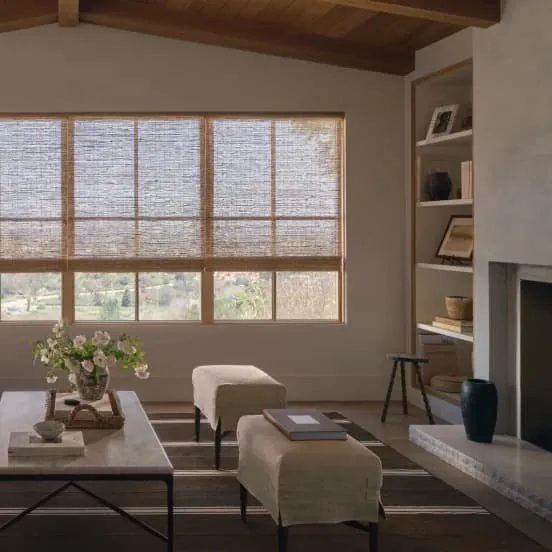
Antique farmhouses on the outer roads
Older sash on houses with land around them. Light, warmth and a fit to old frames.
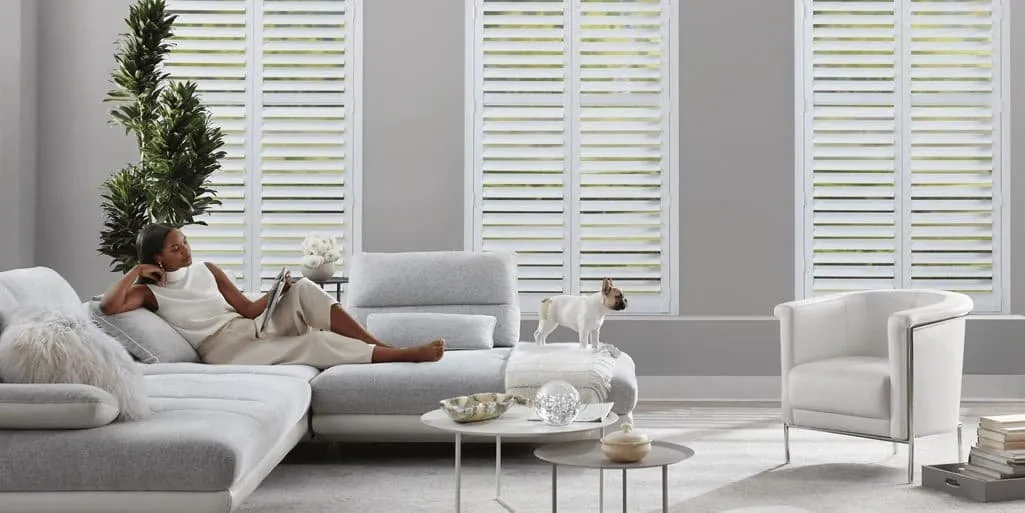
Newer colonials off Route 16
Standard modern windows, more of them, bigger rooms. A plan across the whole house.
Mill-era houses: narrow openings near the river
The houses along the Blackstone were built in the mill era with narrow window openings, and many still have them. A narrow opening has proportions worth keeping. A covering that hangs too wide or too heavy can make it look squat; one that sits neatly inside the frame keeps its upright line and leaves the trim in view.
Before we suggest a mount, the consultant measures each opening and checks how deep the frame runs. In a house of this age, two windows in the same room can differ, and a frame that has settled may not be quite square. Where the depth allows, an inside mount is the neatest result. Where it does not, we show you how a slim outside mount would look.
The coverings that suit narrow openings best are the ones with a small footprint. Raised, a honeycomb shrinks to a narrow band. A roller tucks almost out of sight. A faux wood blind tilts to let light in and keep the view out. A flat roman in a quiet fabric gives a front room some softness.
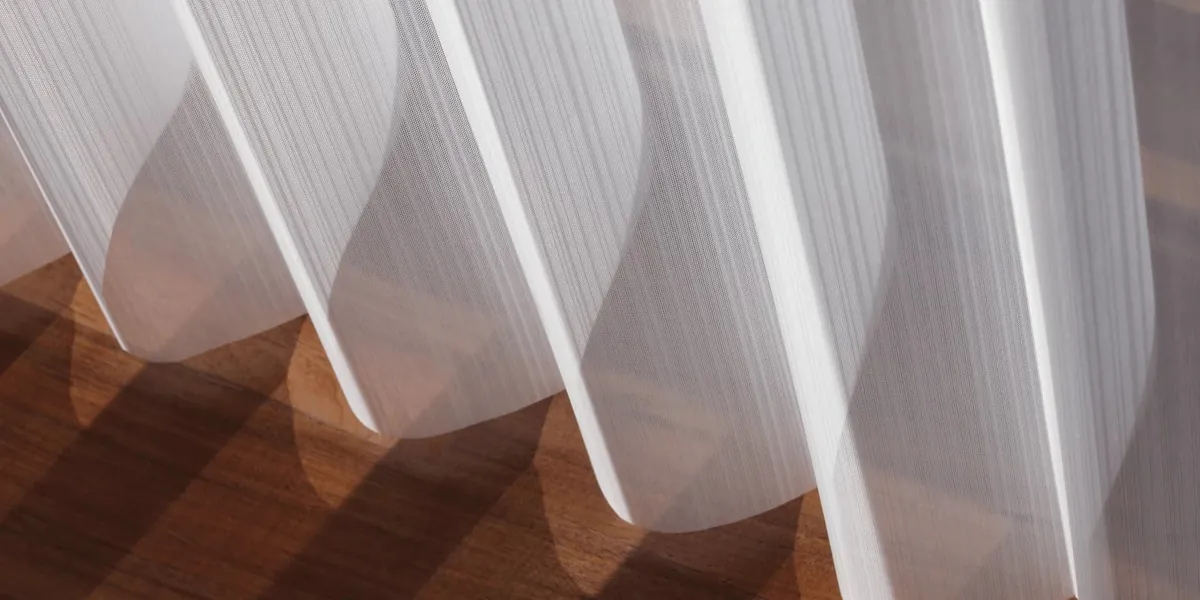
Privacy in the river houses
Mill-era housing tends to sit close together, so side windows often look straight at a neighbor and front windows sit near the street. Those windows still need to let light in, especially in rooms with only one or two of them.
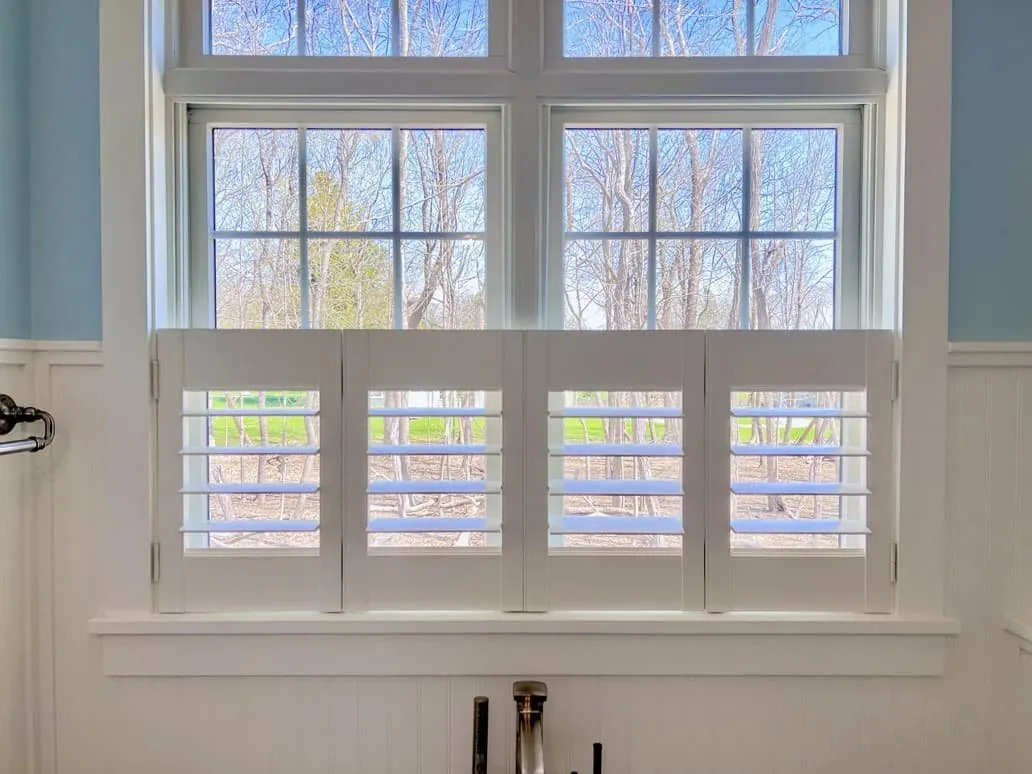
The trick is to keep the brightness while losing the view. Light-filtering honeycombs and rollers give a soft glow with no clear line of sight. Blinds and shutters, tilted upward, send light to the ceiling and cut the view from outside. Sheer shades such as Pirouette let you choose between bright and private with one control. And cafe shutters on the lower half of a window keep eye level private while leaving the top open.
At night, think again. With lamps on inside, a light fabric can show the room to the street. For bedrooms and evening rooms in the river houses, a denser fabric, or a blind or shutter that closes fully, is the better choice.
Antique farmhouses: old sash with land around it
On the outer roads, the antique farmhouses are a different proposition. They stand on their own land, often with fields or woods around them and no close neighbor, so privacy is a smaller worry. What matters more is light, warmth and fitting coverings to old, often irregular frames.
Farmhouse windows may vary from room to room, especially where rooms were added over time. Each covering is made to the measured size of its own window, so a house of mixed openings still looks tidy. Old frames are often deep enough to take a covering inside the opening, which leaves the original casing and sill fully on show.
With open land around, sun can reach the farmhouse windows from several sides. A west-facing sitting room or a south kitchen can get strong light. A screen, a filtering honeycomb or a sheer will each soften it, and tilting blinds or shutters let you direct it. Choosing window treatments in Uxbridge, MA, for a farmhouse is often more about managing the sun than hiding from anyone.
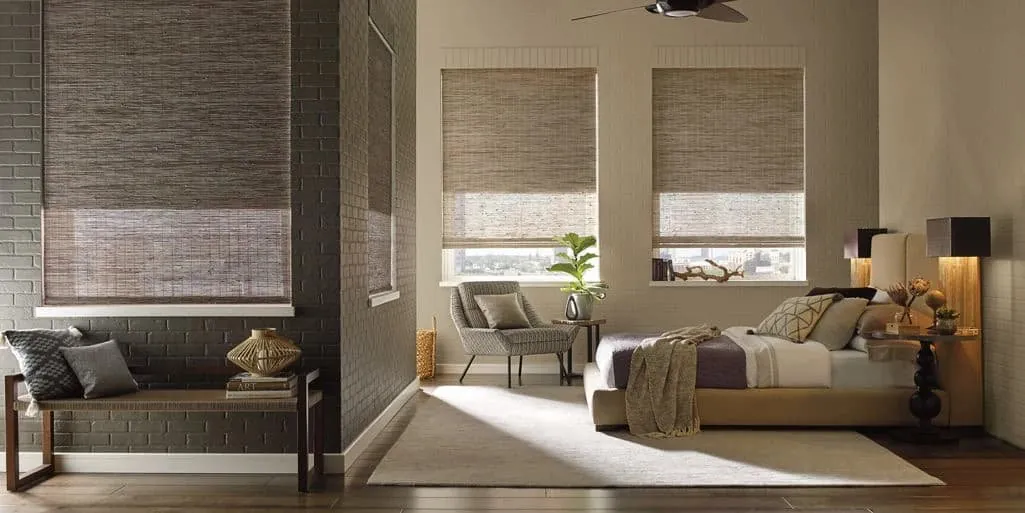
Bigger rooms, broader glass on the farm roads
Some farmhouse rooms are larger than anything in the mill-era houses: a kitchen that runs the depth of the house, a sitting room with windows on two walls, a back room that opens onto the land. Those rooms often have several windows close together, sometimes of slightly different heights where the house has been altered over time.
Here, lining the coverings up matters. When every shade in a room stops at the same height when raised, the room looks calm even if the windows are not quite matched. We measure each one and plan the tops so they read as a set. Window treatments in Uxbridge, MA, for a farmhouse room like this are often the same product on every window, in one color, with the size of each made to its own frame.
Where a farmhouse has a door to a porch or a yard, a vertical blind or a vertical honeycomb stacks to one side so the doorway stays clear, while the windows on either side take a matching horizontal shade.
Warmth in the two older eras
Both the mill-era houses and the antique farmhouses were built long before modern glazing, and their older windows can make a room feel cool on a winter evening. Honeycomb shades are the simplest help. Every cell is a small pocket of still air, and drawing a Duette or Applause shade down after dark puts that layer between a cold pane and whoever is sitting beside it. There is more on this in cellular shades and winter heat.
A farmhouse parlor can add drapery over a honeycomb or roman for a second layer and a softer, fuller look. In a small mill-era room, a single honeycomb inside the frame usually does the job without crowding the space.
Character in the older houses
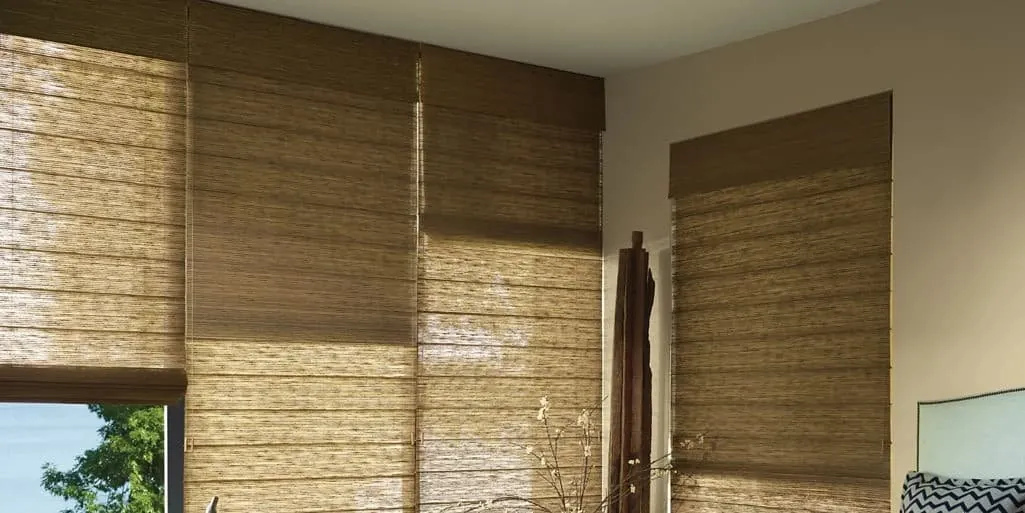
Older houses have things worth keeping: original casings, old woodwork, wide sills, the shape of the old sash. Good coverings work with them. Shutters echo the look of an older house. Wood blinds in a warm stain sit well against old trim. Romans in a plain or gently patterned fabric suit a farmhouse parlor or a mill-era front room.
Where the casing is decorative, we mount inside the frame so it stays fully visible. Where the frame is shallow, we pick slim hardware. Either way, the aim is for an old window to still look like an old window. See shutters for older windows for more on fitting old frames.
Newer colonials off Route 16
The colonials off Route 16 bring the town’s third era. The windows here come in the usual modern sizes, and most frames have room for a covering to sit within them. Rooms are bigger, there are more windows across two floors, and there is usually a family room or kitchen at the back opening onto a deck.
In these houses, the most useful thing is a plan. Choosing one product at a time can leave a colonial looking patchy from outside. Our usual advice is to settle on a lead product and a single color for the bulk of the rooms. The exceptions follow naturally: a faux wood blind at the kitchen sink and in the baths, a screen where the afternoon sun is strongest, and a vertical covering at the deck door.
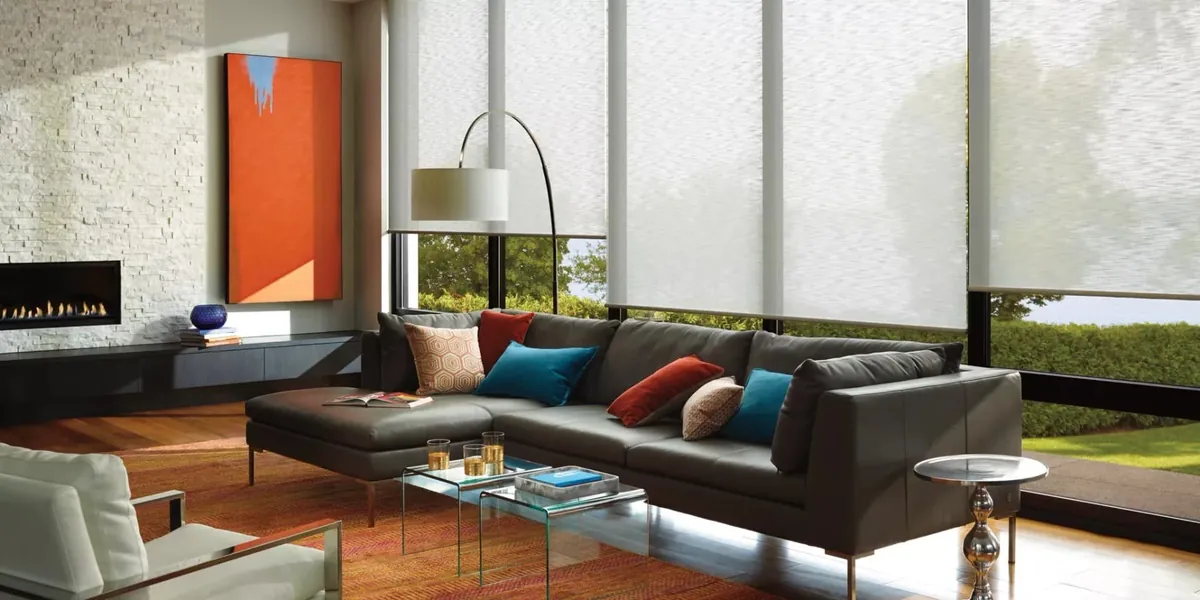
The family room at the back is often the brightest room in the house. A solar screen keeps the view of the yard while cutting glare, and its openness decides the balance between the two. A light-filtering honeycomb or a sheer gives a softer feel. Choosing fabric for a sunny room is a useful read here.
Motorized shades across many windows
With many windows across two floors, a colonial is where PowerView earns its keep. Link the shades of a whole floor so they travel together, give them a timetable that drops them ahead of the hot part of the day, or simply reach for the app or the handheld remote. A high window over a two-story foyer or a stair becomes simple to control.
Motorized shades also help in the older eras. In a farmhouse with windows on every side, a schedule can follow the sun around the house. In a mill-era home, a shade behind a sofa or above a stair can be moved without a stretch. Powering each motor is settled at the house visit, not afterwards. The motorized blinds and shades page shows the options.
Moving between eras
With three eras side by side, the house on one road can have nothing in common with the house on the next. A mill-era home by the river, a colonial off Route 16 and an antique farmhouse on its own land can all be a short drive apart, and coverings that suited one of them rarely suit another, because the windows themselves are so different. Even the depth of the frames, the height of the sills and the direction the main rooms face tend to change from one era to the next.
That is one reason we treat every visit as a fresh start rather than a copy of the last house. A shade that sat well in a narrow mill-era frame may look lost on a colonial’s wider window, and a solar screen that tamed a west-facing family room may be too much for a small farmhouse window with little light to spare. Planning window treatments in Uxbridge, MA, works best when it starts from the windows in front of us.
When one house spans more than one era
Some Uxbridge houses mix eras: an antique farmhouse with a modern addition, or an older house with some replacement windows and some original ones. Coverings can bring the parts together. The same color throughout, or the same product family with mounts adjusted to each window, keeps the house feeling like one home rather than two.
We find these houses benefit most from a full-house plan at the first visit, even if the work is done in stages. That way, a room done this year will still match a room done later. Our interior design consultations help with colors and fabrics across several rooms.
Room by room, era by era
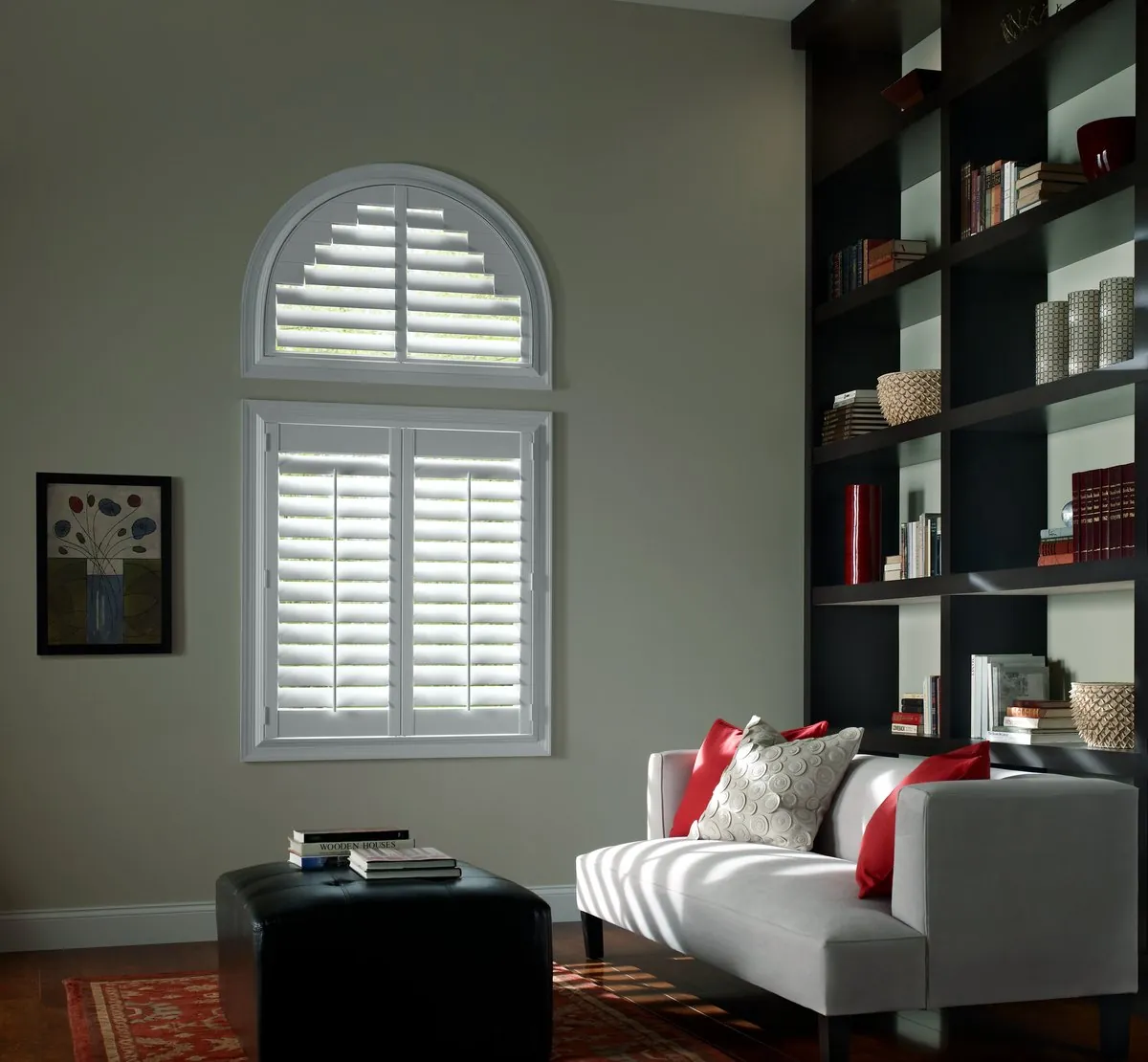
Mill-era front room. Near the street. Shutters, a roman or a filtering honeycomb inside the narrow frame.
Mill-era bedroom. Close to the neighbors. A denser honeycomb for evening privacy and a darker room.
Farmhouse sitting room. Sun from more than one side. A solar screen or a light-filtering honeycomb, sometimes with drapery.
Farmhouse kitchen. Plenty of light wanted. A faux wood blind or a roller that clears the glass when raised.
Colonial family room. Wide glass at the back. A solar screen or sheer, possibly on PowerView.
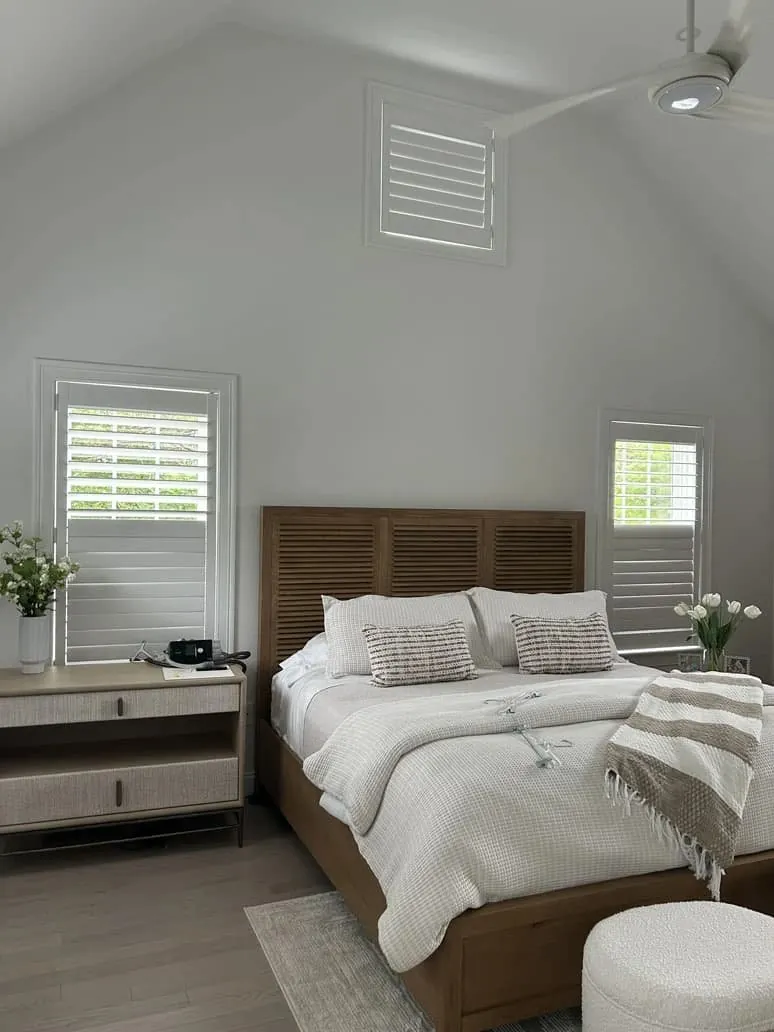
Colonial bedrooms. Darkness and warmth. A darker honeycomb, perhaps scheduled to open in the morning.
A Gallery dealer for every era of house
Three eras of housing need the widest choice of products, and that is what a Hunter Douglas Gallery dealer can offer. Blinds & Designs carries the full Hunter Douglas range.
Hunter Douglas certified installers hang each order. Add to that sample vans that bring the choice to your door, estimates at no cost, help from an interior design consultation, and motorized PowerView control when you want it. Repairs are welcome too, for blinds and shades you already own: see blind and shade repair.
How the home visit works
The showroom travels: samples ride in our vans, so whichever era your house belongs to, you can see each fabric in your own windows and light.
- You show us around and point out what each room needs.
- The consultant measures every window and checks each frame, which matters most in the older houses.
- Samples from the van go up against your glass.
- We suggest products room by room, and a plan for the whole house if you want one.
- A free estimate follows, with no deadline to answer.
When the order comes in, it is hung by installers that Hunter Douglas has certified. In the older houses they work gently around original trim; in the colonials they pair any motorized shades with your app before they go. See what happens on installation day, or read about in-home consultations.

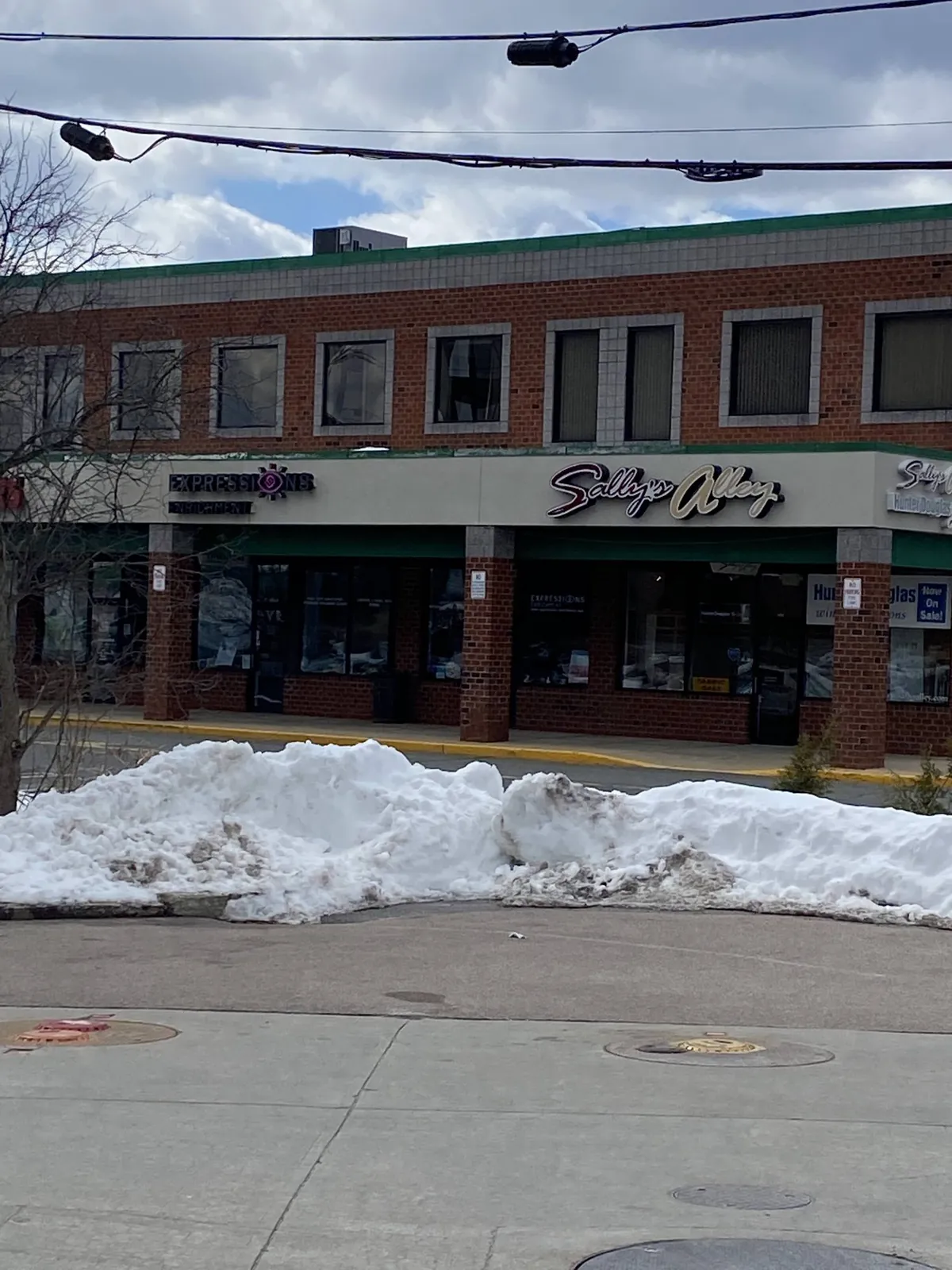
The Franklin showroom is nearest to Uxbridge
For Uxbridge, our nearest showroom is in Franklin. Some people visit first, bringing a photo of a narrow mill-era window, a farmhouse sash or a colonial family room.
The final choice is usually made at home, where you can see the samples in your own windows. Many people do both.
Questions from Uxbridge
We live in a mill-era house by the river. Will coverings fit the narrow openings?
In most cases. We measure each opening and check the frame depth. Where it allows, an inside mount keeps the narrow line; where it does not, we use a slim outside mount.
Our antique farmhouse has windows of different sizes. Is that a problem?
No. Each covering is made to its own window’s measurements, so a house of mixed openings still looks tidy. A shared color ties the rooms together.
What is the first step for a newer colonial with many windows?
Start from the whole house. Pick a lead product and color, then decide which rooms, such as the kitchen, the baths, a sunny family room or the slider, need something else.
Our house is part antique and part addition. How do we make it look like one house?
Use the same color throughout, or the same product family, with mounts suited to each window. A whole-house plan at the first visit helps even if the work is done in stages.
Does the estimate cost anything?
No. The estimate is free, and you can decide in your own time.
A good place to start
For window treatments in Uxbridge, MA, in a mill-era house by the Blackstone, an antique farmhouse or a colonial off Route 16, a home visit is the simplest first step. Book a consultation; the van brings the samples, every window is measured and you are left with a free estimate. You can also talk to us through the call button, or come by the Franklin showroom.
Our window treatments page lays out every shade, blind, shutter and drapery line we sell.