
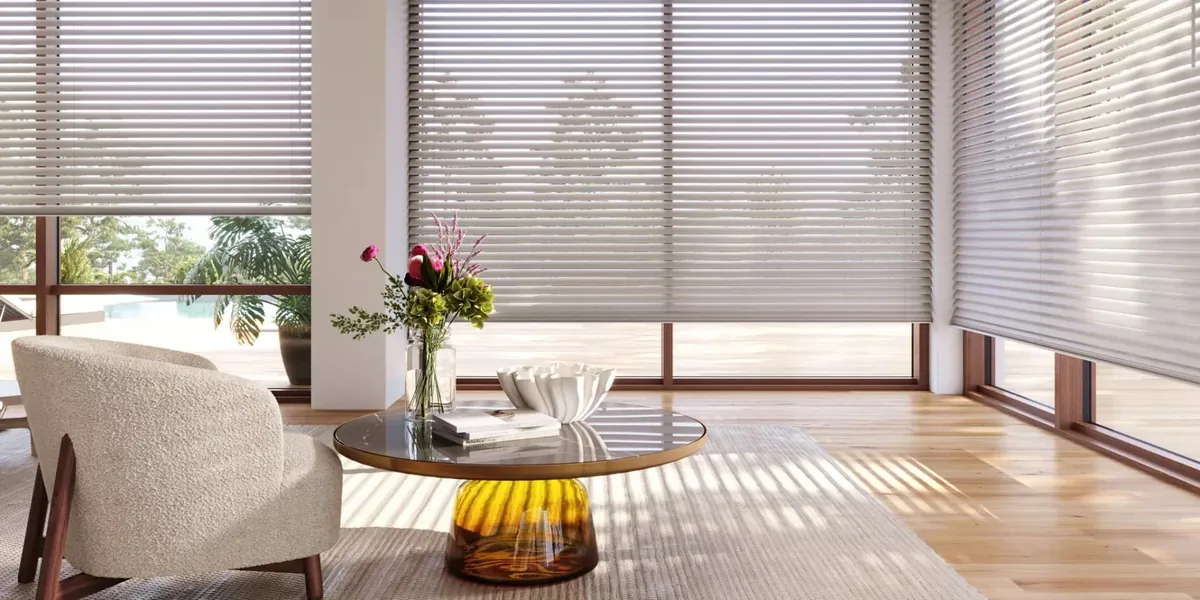
Mid-century houses, close neighbors
Most of Randolph was built in a short stretch after the war, from the fifties into the sixties, and the houses show it. Capes, ranches and two-families sit on modest lots, with standard single-hung and slider windows from one end of the house to the other. The gap to the next house is often short, so a side window can look straight into a neighbor’s.
That makes window treatments in Randolph, MA, less about unusual shapes and more about everyday use. How do you keep a side bedroom private without living in the dark? What works on a slider, which opens sideways rather than up? How do you keep two apartments in one house looking like one house from the street?
Those are the questions we answer at your kitchen table, with samples in hand, at the windows themselves.
What we can do for your house
These are the window treatments in Randolph we offer, and every card here leads to the page for that service in town.
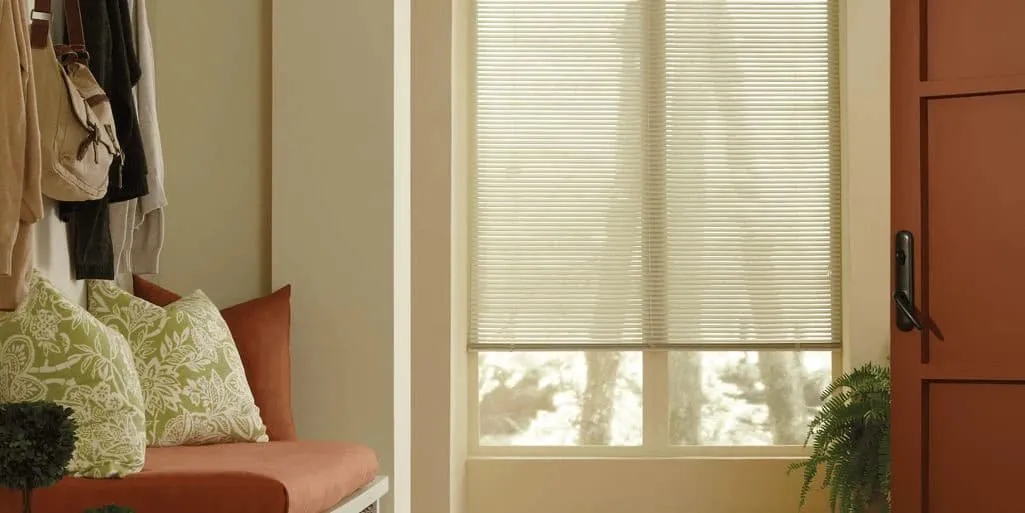
Custom Blinds in Randolph
Wood, faux wood, metal and vertical blinds. Tilting slats give fine control on a side window that faces the house next door.
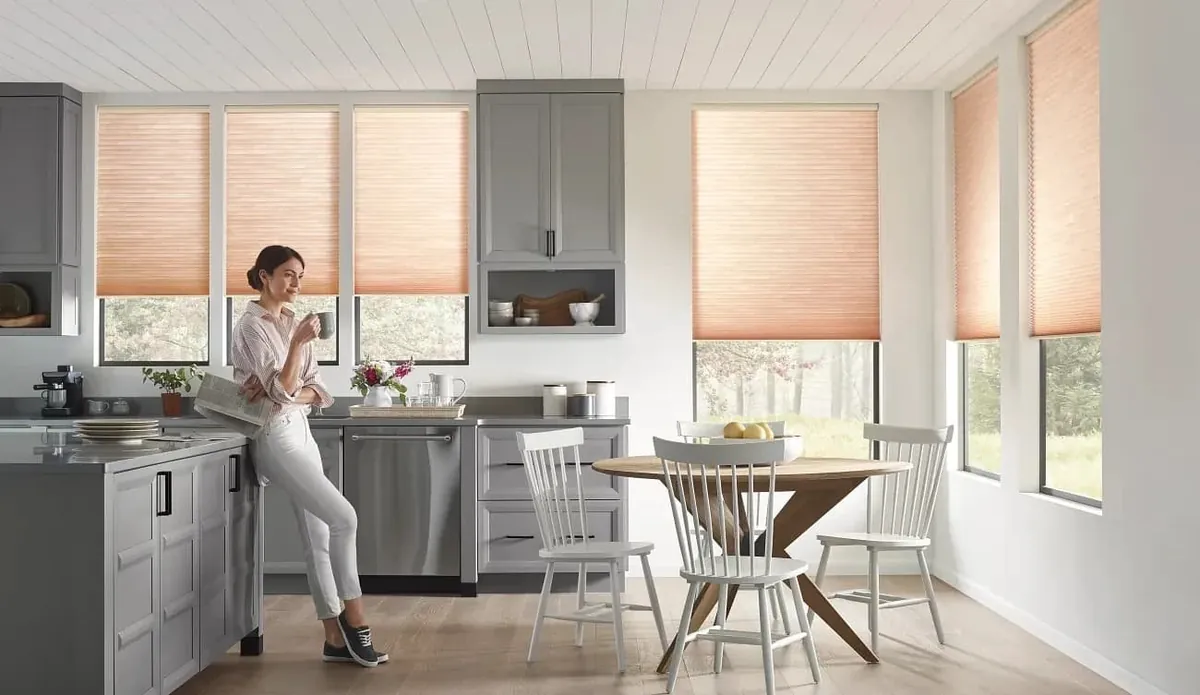
Cellular Shades in Randolph
Duette and Applause honeycomb shades, including top-down, bottom-up styles that keep light coming in over a close neighbor.
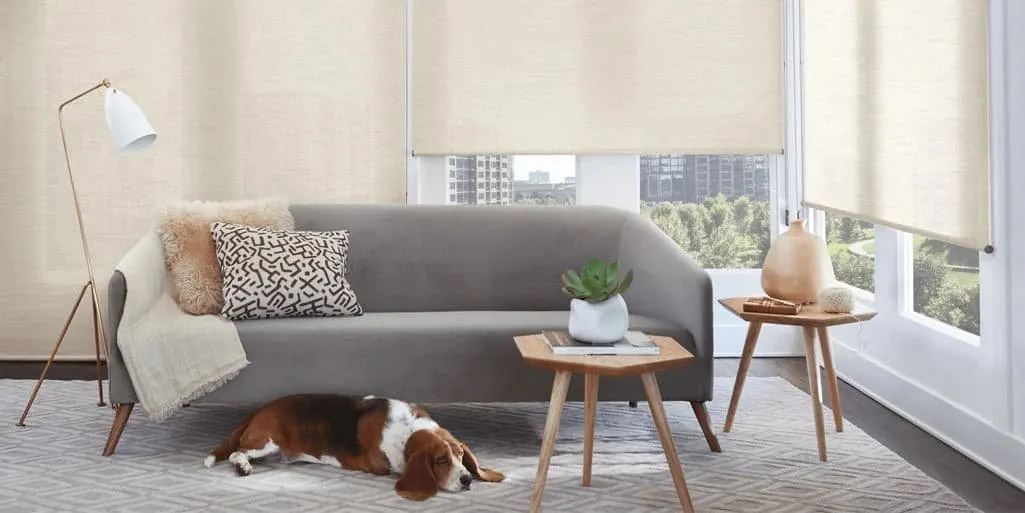
Roller Shades in Randolph
Designer and Alustra roller and solar screen shades, with the openness picked for how much view and glare you want.
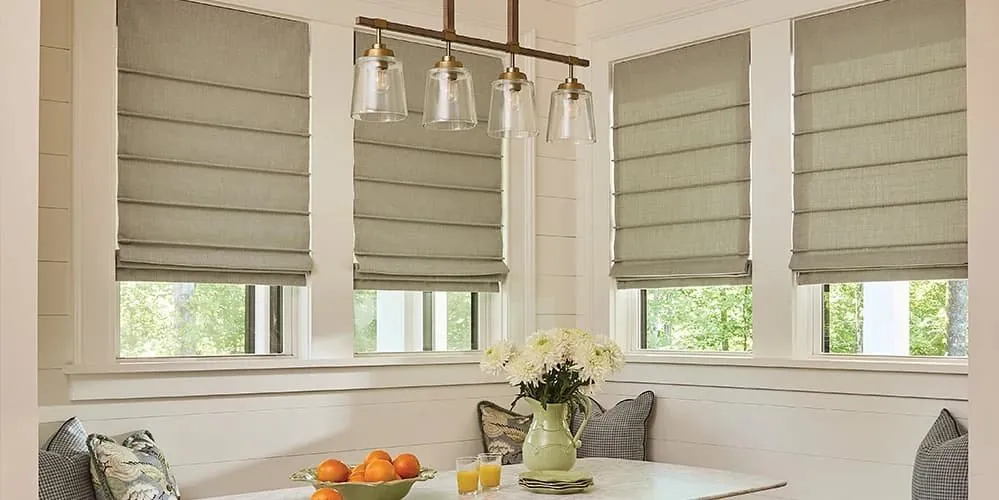
Roman Shades in Randolph
Vignette and Carole fabric shades, flat or folded, to soften a living room or bring color to a kitchen.
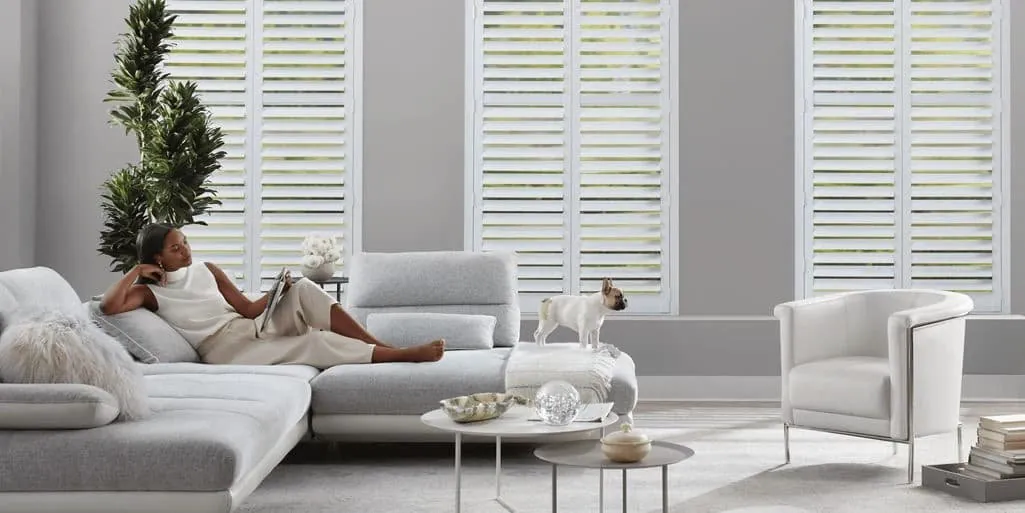
Plantation Shutters in Randolph
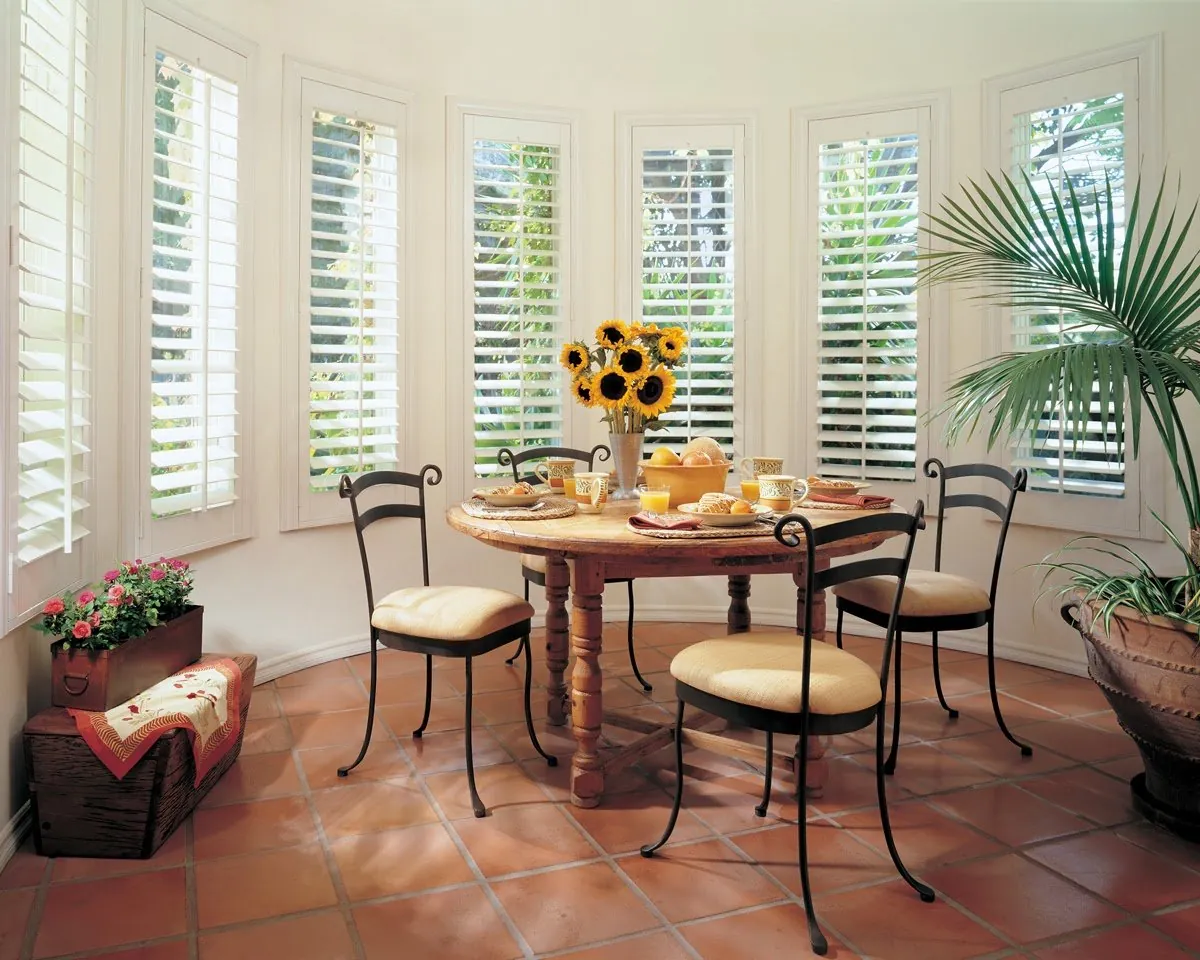
Palm Beach, NewStyle and Heritance shutters, a lasting finish for a cape’s front room or a ranch’s bedrooms.
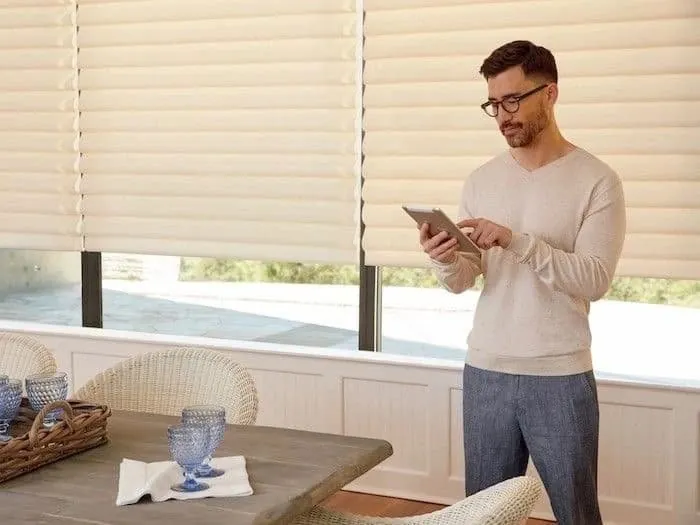
Motorized Blinds and Shades in Randolph
PowerView control from a remote, an app or a schedule, so a whole floor opens or closes together.
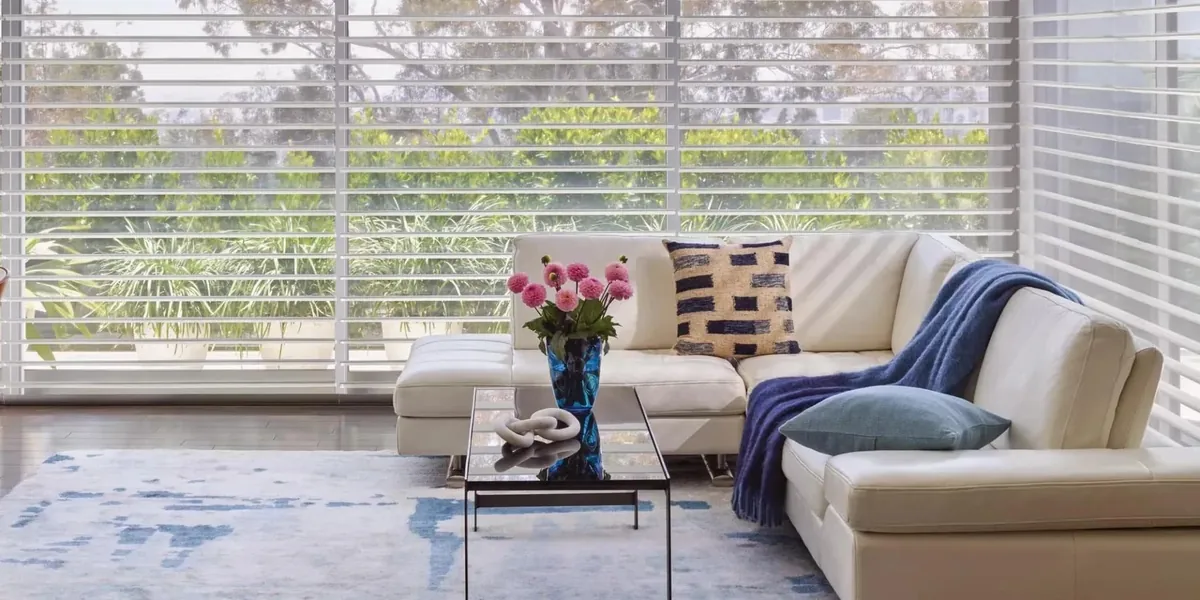
Hunter Douglas Dealer in Randolph
A Hunter Douglas Gallery dealer offering the full range, put up by certified Hunter Douglas installers.
Single-hung and slider windows
The two window types you find all over Randolph behave differently, so they suit different coverings.
A single-hung window has a fixed upper sash and a lower one that slides up. It is the classic shape of a post-war cape or ranch: taller than wide, usually square in the frame, often replaced with a vinyl unit at some point. Almost anything fits it well. Honeycomb shades, rollers, roman shades, blinds and shutters can all be inside mounted, and the regular size makes it easy to keep every window on a floor matching.
A slider opens sideways, with one half gliding past the other. Sliders are usually wider than they are tall and often sit higher on the wall, in a bedroom, a kitchen or over a ranch’s bathroom vanity. Because the window opens sideways, a covering that lifts from the bottom works fine, but it has to be wide and stay straight across its whole width. Honeycomb shades and rollers handle wide, short openings well. Blinds work too, though a very wide blind is heavier to lift, so a motor is worth considering.
For the high bedroom sliders that many ranches have, the stack height matters a lot. A short opening loses a big share of its glass to a tall stack, so a slim honeycomb or a roller that winds away almost completely is usually the better pick.
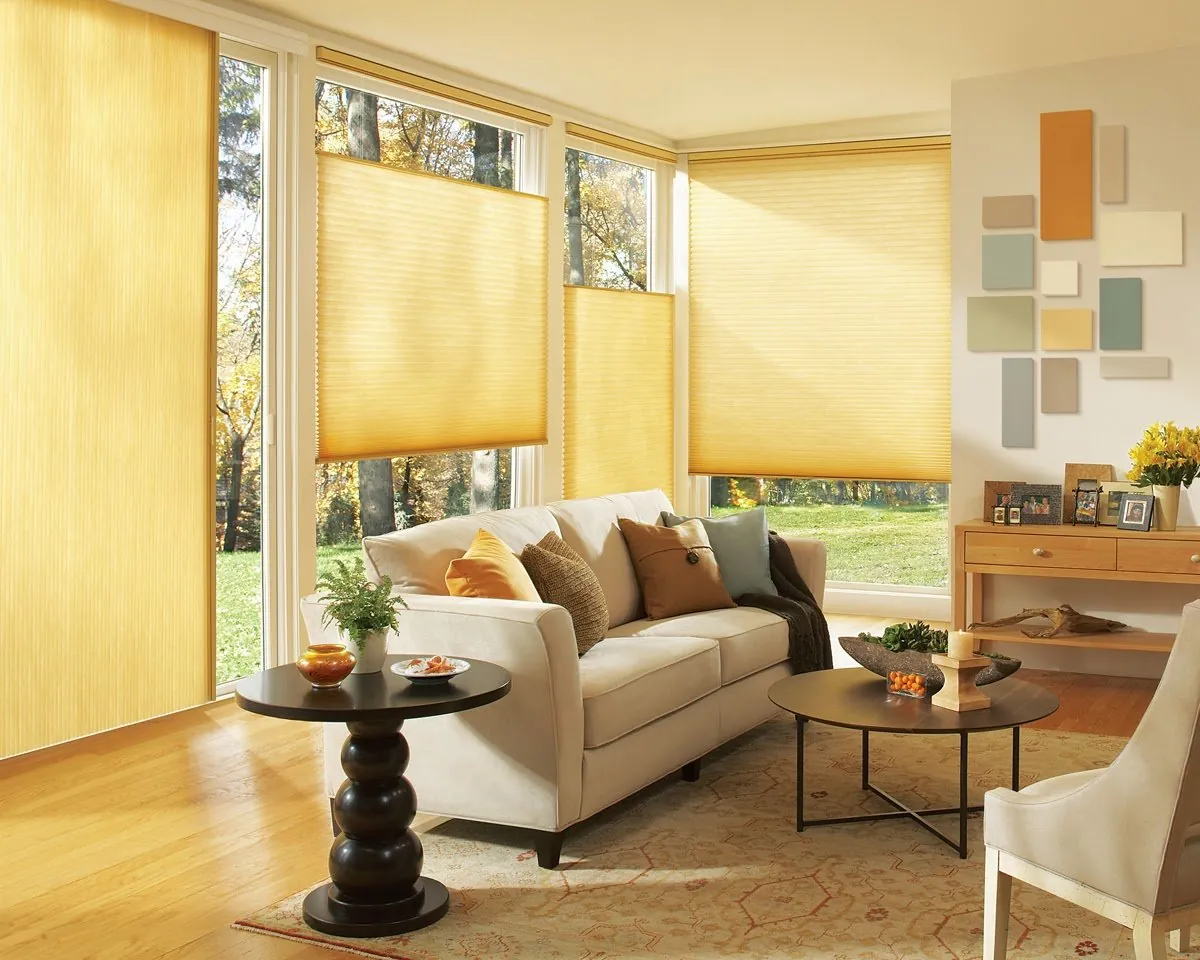
When the next house is a driveway away
Short setbacks between houses are the defining feature of many streets here. A side window in a bedroom, a bathroom or a dining room may face a neighbor’s window across a driveway, close enough that privacy matters at noon as well as at night.
There are a few good ways to handle it:
- Top-down, bottom-up shades. The lower part of the window stays covered and the upper part opens to the sky, so daylight comes in above the neighbor’s sightline.
- Light-filtering fabrics. A honeycomb or roller in a light-filtering fabric blurs the view in both directions while keeping the room bright.
- Blinds tilted up. With the slats angled upward, you see sky and the neighbor sees ceiling.
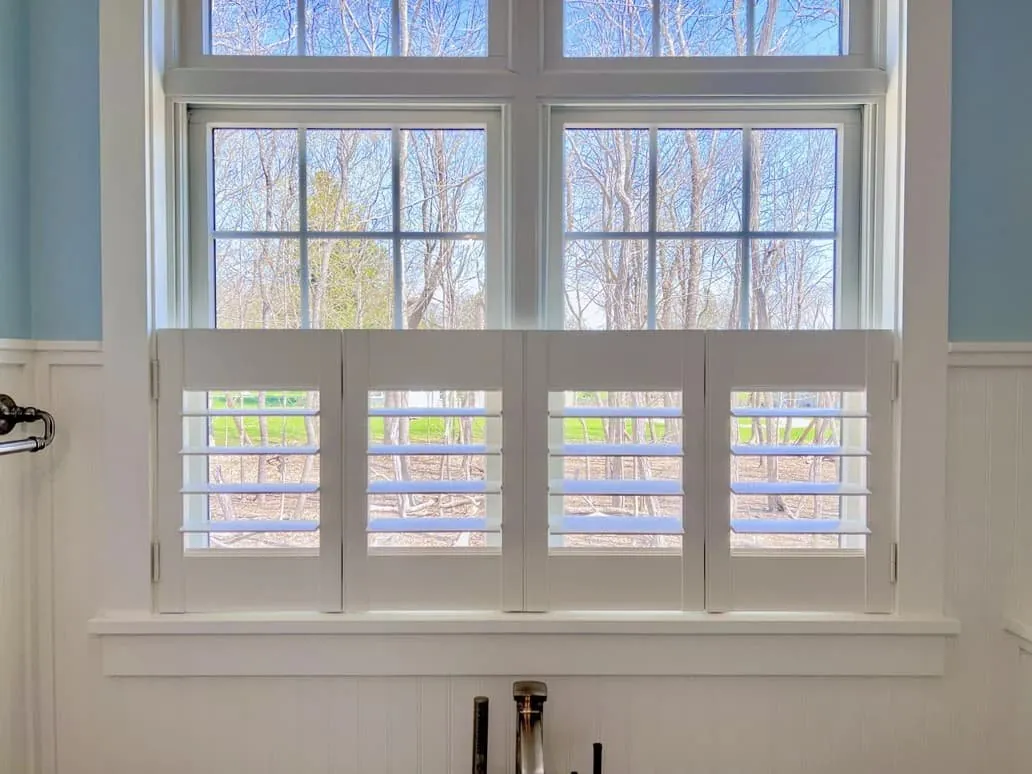
- Cafe shutters. Covering only the lower half of a kitchen or bath window, they keep the top clear for light.
The side windows are also where the street side matters least, so you can be practical. A plain white roller in a side bathroom and a patterned roman shade on the front window of the same room can live happily together.
Two-families: two homes, one facade
Randolph has a good number of two-families, with one apartment over the other or side by side. Each unit has its own kitchen, its own bedrooms and its own idea of how the rooms should look. From the street, though, it is still one building.
If you own a two-family, it helps to agree a common face to the street: the same color on the outward side of every covering on the front, or at least on each floor. Inside, each unit can then choose freely. Many owners keep it simple in both units, with the same honeycomb or roller fabric throughout, because matching windows make a building look cared for.
Two-families also bring duplicated rooms. Two kitchens, two front living rooms, two sets of bedrooms. That repetition is useful: once a product has proved itself in one unit, the other can follow with confidence. Keep a note of what the first unit chose, and the second can match it even if it is done a while later.
Ranch living rooms and picture windows
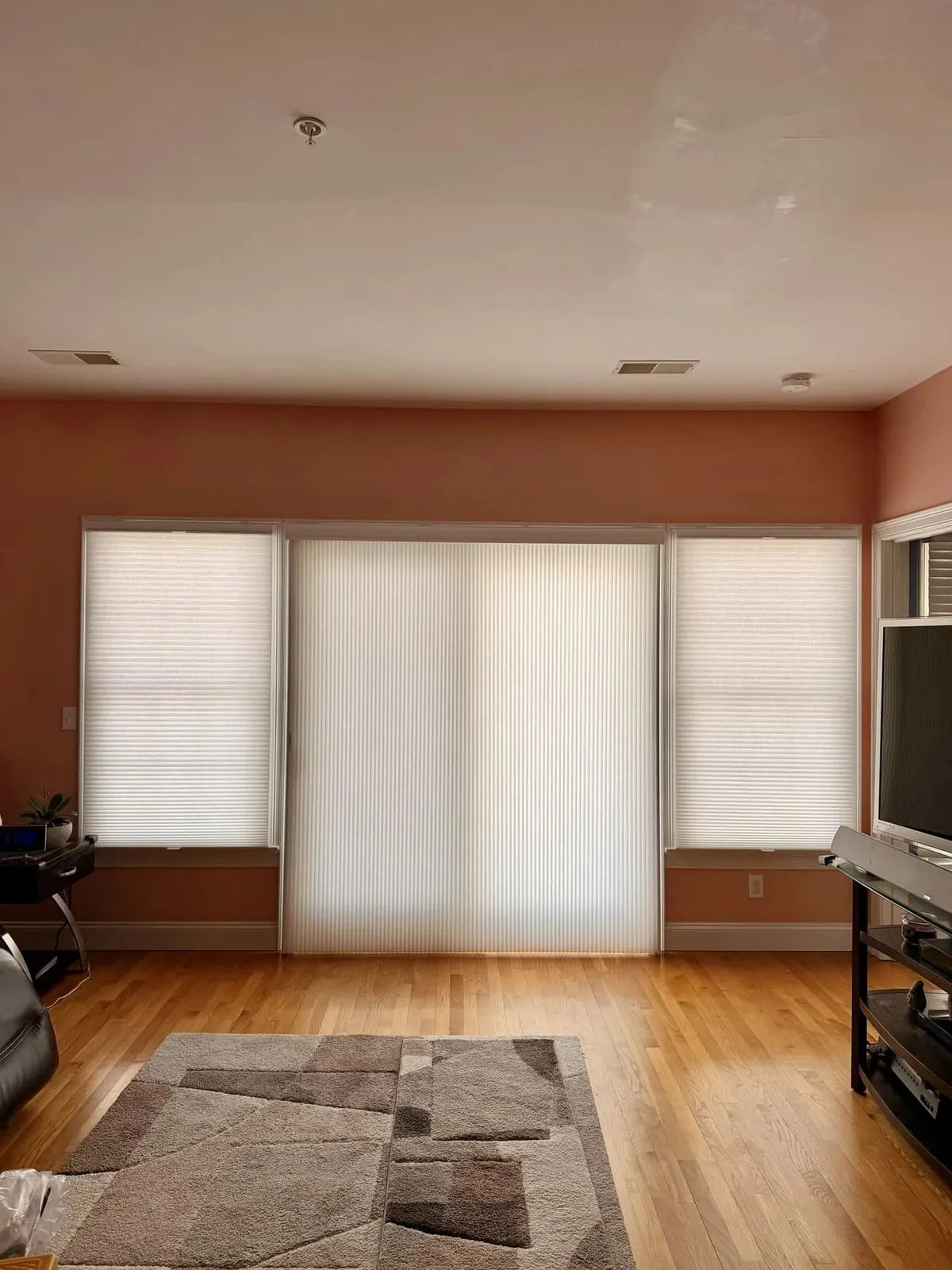
Many ranches built in this period have a wide picture window in the front living room, sometimes flanked by narrower opening windows. It is the largest piece of glass in the house and it faces the street, so it sets the tone.
One honeycomb shade or roller across the whole picture window gives the cleanest look. If it is too wide for a single shade, two or three on one headrail move together and still read as one. Sheer shadings are a lovely choice here too, giving soft daylight and a filtered view of the street with the vanes open. Shutters can frame a picture window handsomely, though on a very wide one the panels need to be planned so the louvers line up neatly across the run.
Picking colors for compact rooms
Rooms in a post-war cape or ranch are usually modest in size, and the window covering is a large share of what you see on each wall. A shade that matches or sits just lighter than the wall color lets the window recede, which makes a small bedroom or den feel more open. A strong pattern or a dark fabric draws the eye straight to the window, which can be lovely in one feature room but busy if repeated everywhere.
White and soft neutrals also reflect daylight back into the room, which helps on a side window that only gets light bounced off the house next door. We bring a spread of tones so you can hold a pale fabric and a richer one side by side at the same window and decide by eye.
Capes: bedrooms under the roof
Upstairs in a cape, the bedrooms tuck under the roof, with shorter walls and windows set in dormers or in the gable ends. Those windows are often smaller than the ones downstairs, and the dormer recess leaves little room on either side for anything bulky.
An inside-mount honeycomb shade or roller fits a dormer neatly and keeps the stack small. For a child’s room or any bedroom where sleep matters, a room-darkening or blackout fabric makes a real difference on summer mornings. Gable-end windows are usually standard rectangles and can follow the same plan, which keeps the upstairs consistent.
Sliding doors to the back yard
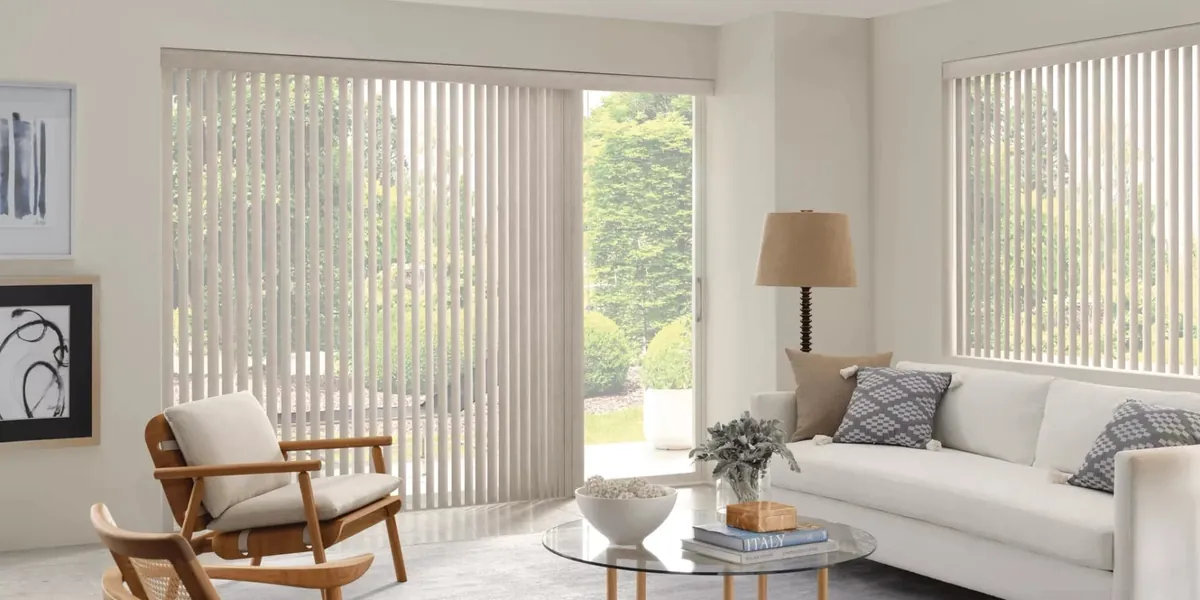
Most capes and ranches from this period open to the back yard through a sliding glass door, either from the kitchen, a family room added later or a dining area. It is used constantly, so the covering on it has to get out of the way quickly.
Vertical blinds and vertical honeycomb shades both travel sideways and stack at one edge, so the door opens fully. A vertical honeycomb matches honeycomb shades on the windows beside it, and vertical blinds give a clean, tailored line. Where you want a softer look, gliding fabric panels are another option. If the door faces west or south, a light-filtering fabric takes the edge off afternoon glare without blocking the yard.
How the home visit goes
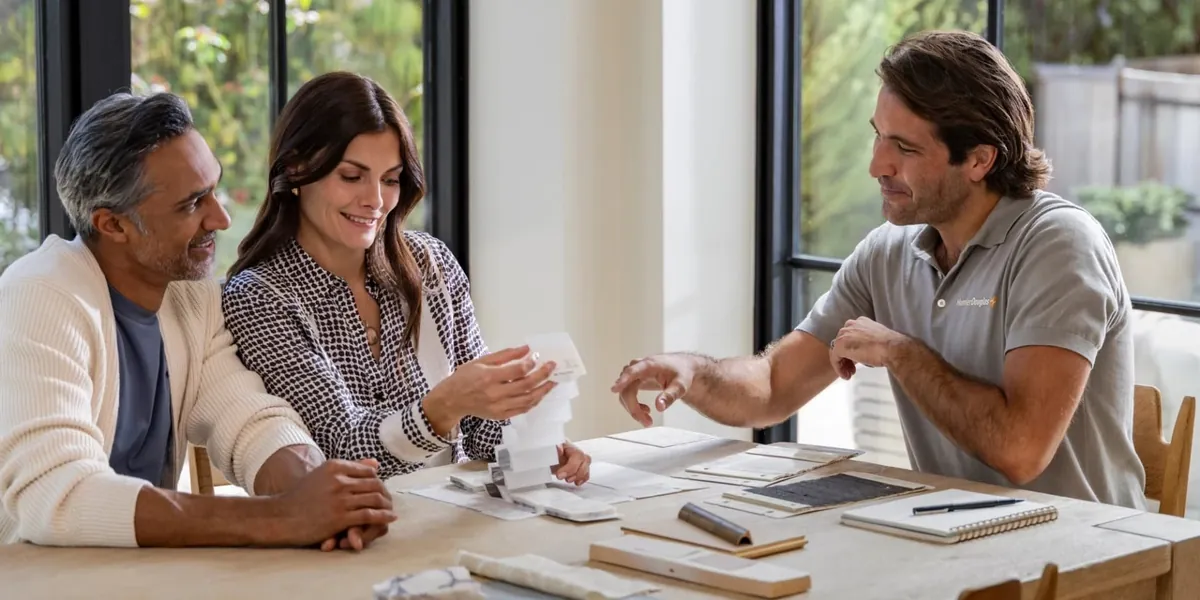
Randolph houses are mostly standard in size, but every window still needs to be measured and every room seen in its own light. Our shop-at-home service runs from Canton, and since the vans carry samples, we can bring the showroom to you.
- Pick a time through Request a Consultation, or press the call button and we will set it up.
- A consultant comes to the house with fabric books, blind slats, shutter samples and a PowerView remote.
- We walk the house room by room, starting with the windows that cause you the most trouble.
- Samples go up at the glass, so you can see how each fabric handles your light and your neighbor’s view.
- Each window is measured, and any slider, door or odd size is noted.
- You receive a free estimate and can take your time over it.
The Canton shop-at-home page explains the service, and what happens at an in-home consultation goes through a visit in more detail.
Choosing one product or several
A smaller house can look calm and pulled together with one product throughout, and that is a sensible starting point for window treatments in Randolph houses of this kind. Honeycomb shades in one color, for example, can go on every window from the living room to the bedrooms, with a room-darkening fabric where you sleep.
Mixing products works well too, as long as it follows the rooms. A typical mix might be:
- Shutters on the front living room and dining room windows.
- Room-darkening honeycomb shades in the bedrooms.
- Faux wood blinds or cafe shutters in the kitchen and bath.
- A vertical honeycomb or vertical blinds on the back slider.
The street side of everything stays in one tone, so the house looks consistent from outside.
After dark on a close-set street
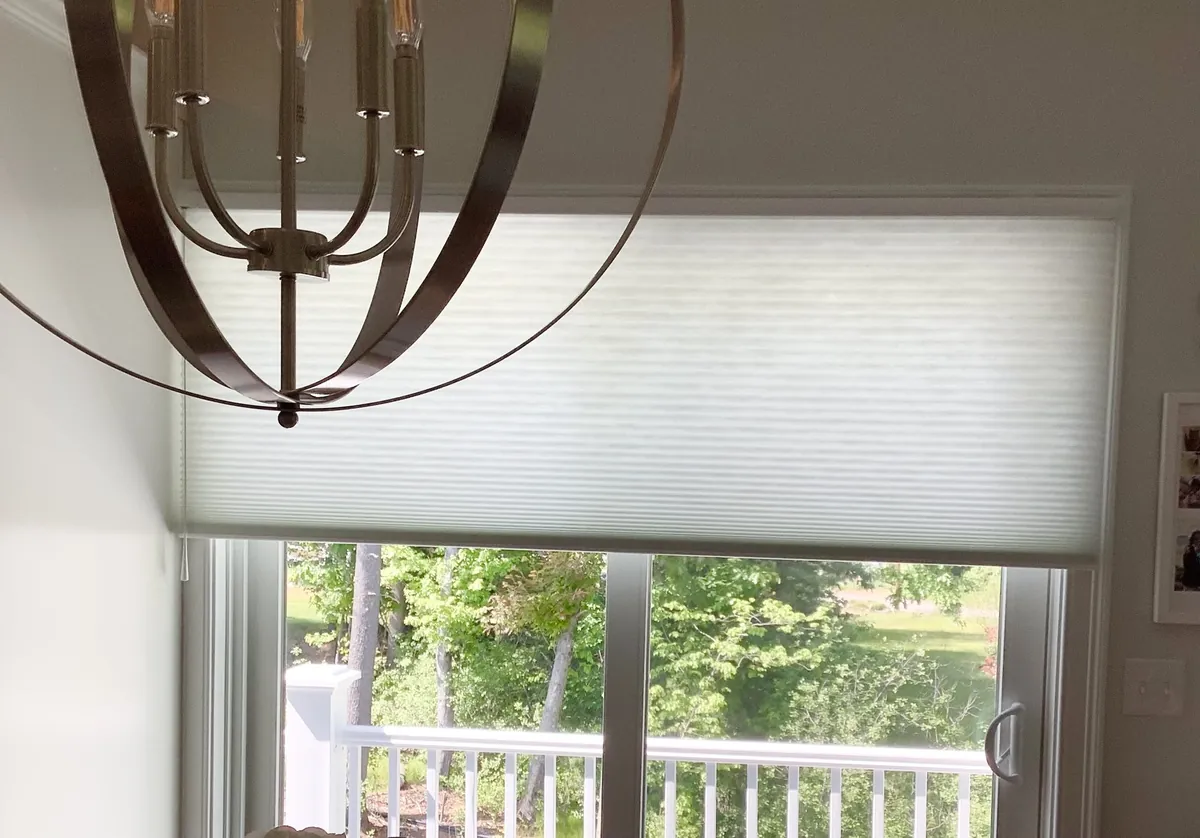
Daytime privacy is only half the story when the houses are close. Once the lamps go on, a lit room can be seen clearly from the sidewalk and from the house next door, even through a fabric that felt private at noon. A light-filtering shade glows at night and shows silhouettes; a room-darkening one does not.
So in the rooms you use most in the evening, the living room, the bedrooms and a bath with a side window, it is worth choosing with the night in mind. Many owners pick a single honeycomb in a room-darkening fabric for bedrooms and a light-filtering one for the kitchen, where privacy matters less after supper. Shutters close tight with the louvers turned, which also handles evenings well.
Front entries and dining corners
Many capes open straight into the living room, or into a small front hall with a narrow window beside the door. That little window is easy to forget, yet it is the one visitors see first. A slim honeycomb shade, a mini blind or a small shutter panel finishes it neatly and gives privacy at the door without darkening the hall.
Dining areas in these houses are often a corner of the kitchen or the end of the living room rather than a separate room. Treating those windows as part of the bigger room, with the same product and color, makes the space feel larger. Where a dining corner has its own window looking at the neighbor’s driveway, a top-down shade or cafe shutters give privacy at the table while keeping the daylight.
Kitchens and baths in a mid-century house
Kitchens and baths in these houses often have a single small window, sometimes a slider, set over a sink or a tub. They need privacy, they need light, and they are reached across a counter or a tub, which makes a hard-to-work cord a daily nuisance.
Cafe shutters over the lower half of a kitchen window keep the top open for light. A motorized honeycomb or roller takes the reach out of it altogether. In a bath where a neighbor’s window faces yours, a top-down shade kept lowered from the top keeps the room private while light comes in above. Faux wood blinds are another common choice for both rooms.
Motorizing a whole floor
On a one-floor ranch, every window in the house can be reached from the same level, which makes PowerView automation easy to plan. Shades can be grouped by room or by side of the house and controlled from a remote, an app or a schedule you set: the bedrooms open at breakfast time, the living room closes in the evening, the side windows stay at a set height through the day. We plan how each motor is powered at the visit. More on control is on the motorized blinds and shades in Randolph page.
Mending what is already up
If your house came with blinds or shades that have stopped working properly, a repair may be all they need. A broken cord, a slat that will not tilt or a shade that has slipped out of its brackets can often be put right. We are happy to look at coverings you already own. See blind and shade repair.
Buying from a Gallery dealer
Blinds & Designs is a Hunter Douglas Gallery dealer, which means a cape, a ranch or both floors of a two-family can draw on the full Hunter Douglas range: honeycomb, roller, roman, sheer and woven shades, wood, faux wood and metal blinds, verticals, shutters, drapery and PowerView.
Certified Hunter Douglas installers fit every order, from a single bathroom shade to every window in a two-family. Free estimates, interior design consultations, automation and repairs round out the window treatments in Randolph, MA, that we offer.
Questions from Randolph
What works best on a slider window?
A honeycomb shade or a roller handles a wide, short slider well, because both stay straight across the width and stack small. Blinds also fit, and a motor makes a wide one easier to raise.
My bedroom window faces the house next door. How do I keep it private and still get light?
A top-down, bottom-up shade covers the lower glass and opens the top to the sky. A light-filtering fabric also blurs the view while keeping the room bright.
I own a two-family. Should both units have the same window treatments?
They do not have to match inside, but keeping the street side of every front window in one color makes the building look tidy. Many owners choose the same product for both units because it keeps things simple.
What goes on a sliding glass door?
Vertical blinds or a vertical honeycomb shade, both of which slide to one side so the door opens fully. Gliding fabric panels are another option.
Is the estimate free?
Yes, estimates are free, and there is no rush to decide.
Getting started
New window treatments in Randolph start at your own windows. Request a consultation and we will come with samples, measure every window and leave a free estimate. If you also like seeing a showroom, our nearest is in Franklin, and its page has the address and opening times.
If you want to see the whole range first, our window treatments page has it all.