
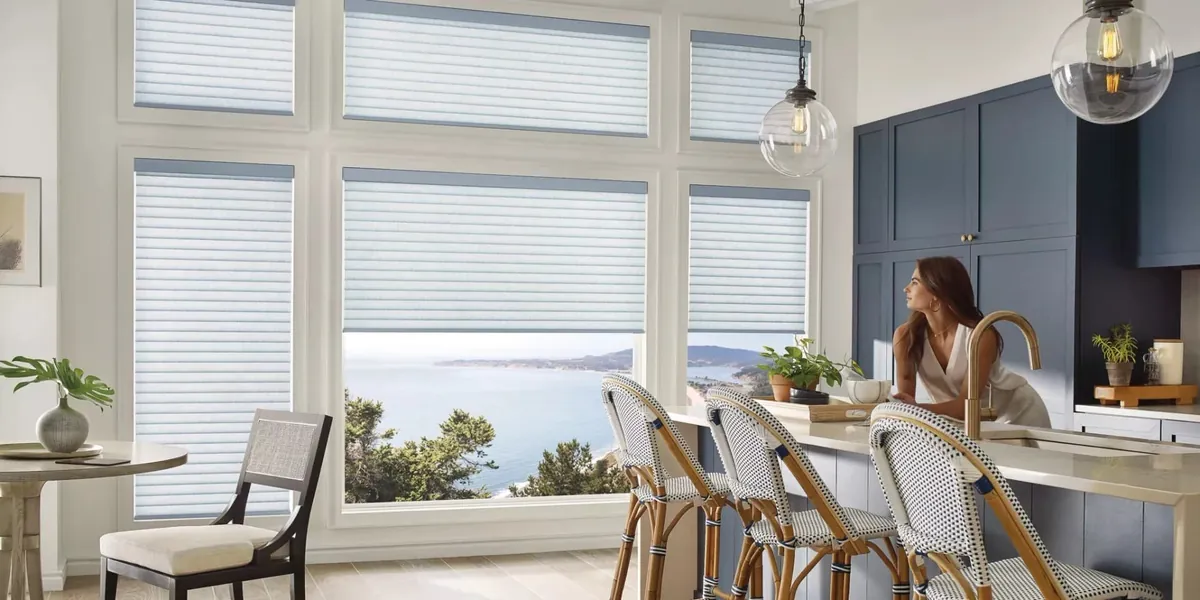
Stacked homes and water light
Quincy packs a lot of variety into its streets. Across Wollaston and North Quincy, dense two- and three-families stand shoulder to shoulder, their tall, narrow sash looking across at the next building. Out on Squantum, shingled houses take the full force of the coast. Near the center, older buildings have been converted into condominiums, each unit separately held, with its own windows. Toward Houghs Neck, the water is close and the light off it is strong.
Each of those settings asks something different of window treatments in Quincy, MA. In a three-family, the issue is neighbors a few feet away and three households behind one facade. By the water, it is glare, bright reflected light and keeping the view. In a condo, it may be a building where every unit’s windows show from the same street.
We sort those questions out at the windows themselves, bringing samples to whichever floor you live on.
Our services in Quincy
Below are the window treatments in Quincy we provide. Tap a card for that service’s own page in the city.
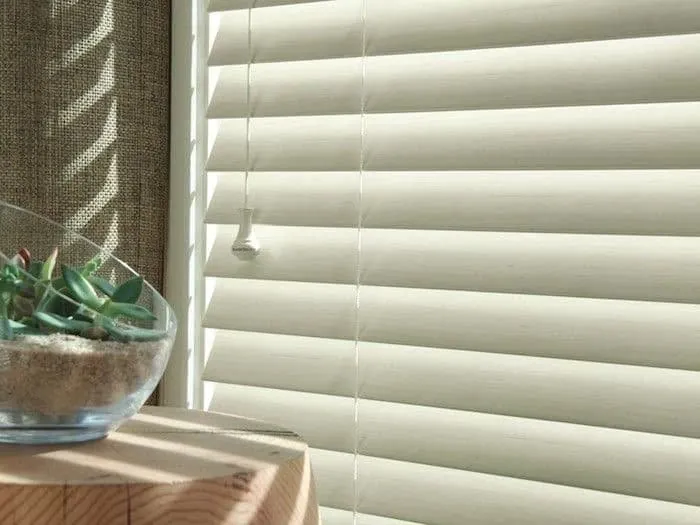
Custom Blinds in Quincy
Wood, faux wood and metal blinds plus verticals. Tilted slats give privacy toward the building next door without losing light.
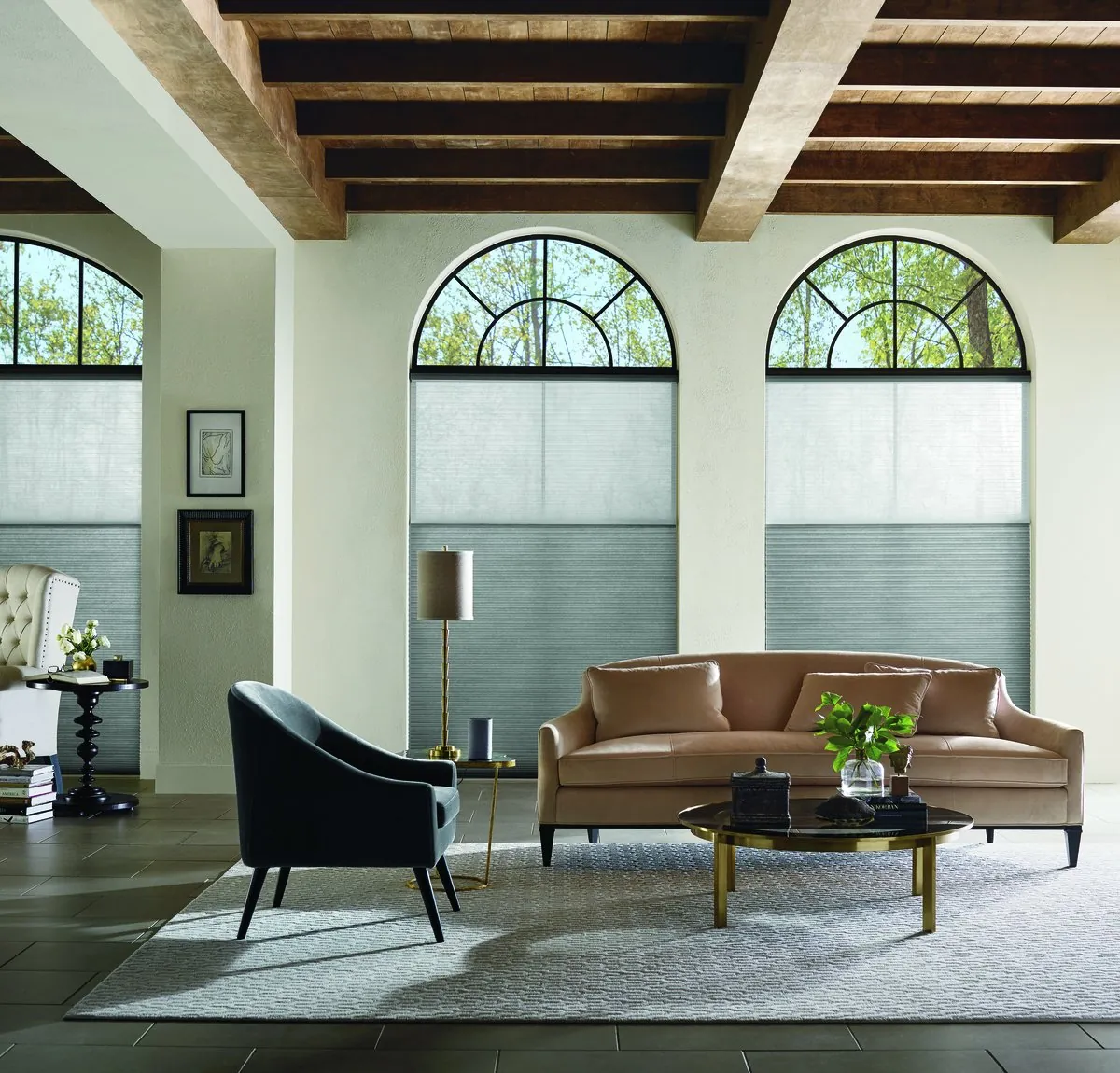
Cellular Shades in Quincy
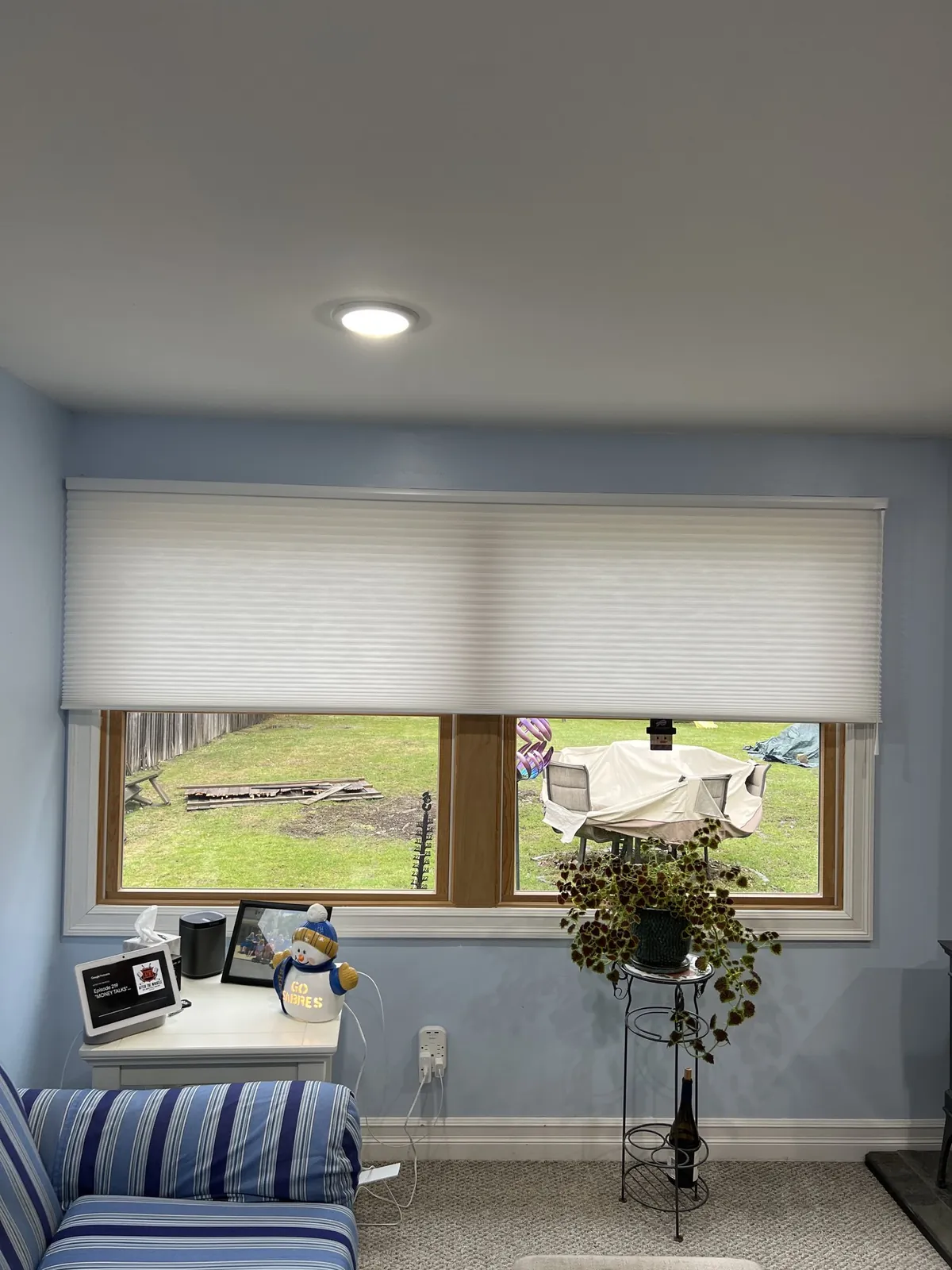
Duette and Applause honeycomb shades that fit narrow sash neatly, with top-down, bottom-up styles for close neighbors.
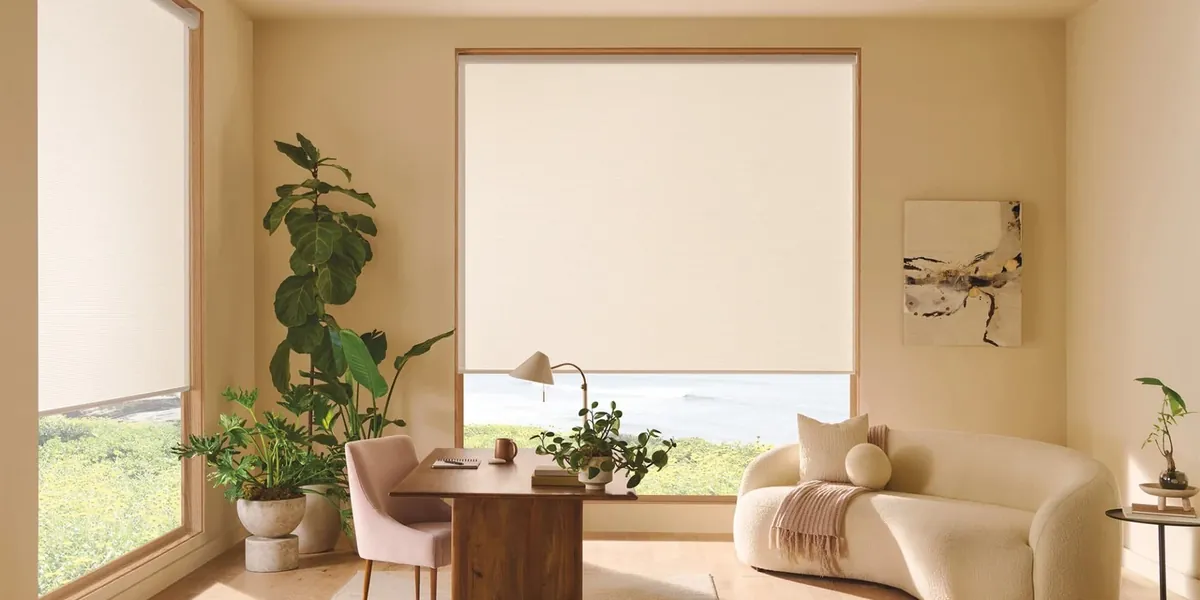
Roller Shades in Quincy
Designer and Alustra rollers and solar screens. Pick the openness for how much water view and glare you want.
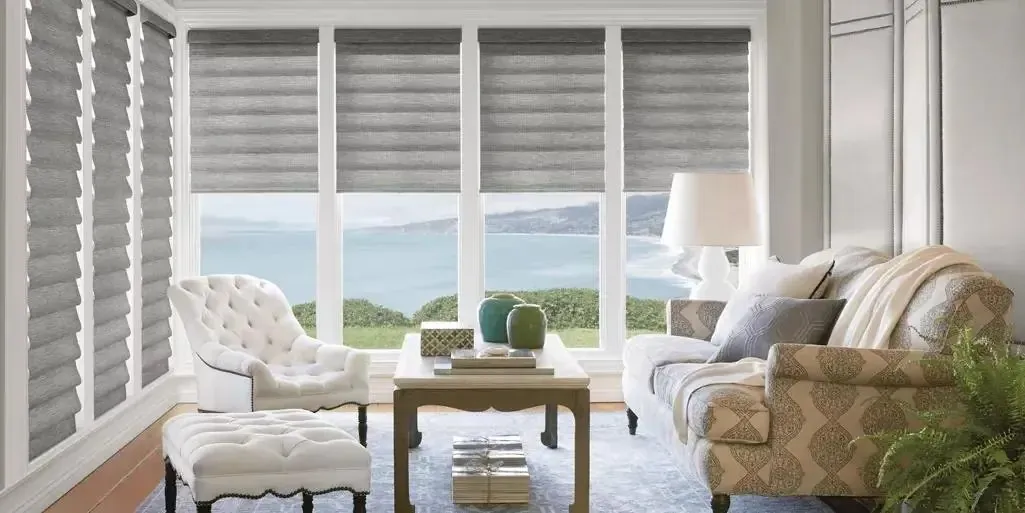
Roman Shades in Quincy
Vignette and Carole flat and folded romans, for a front room in a two-family or a sunroom near the shore.
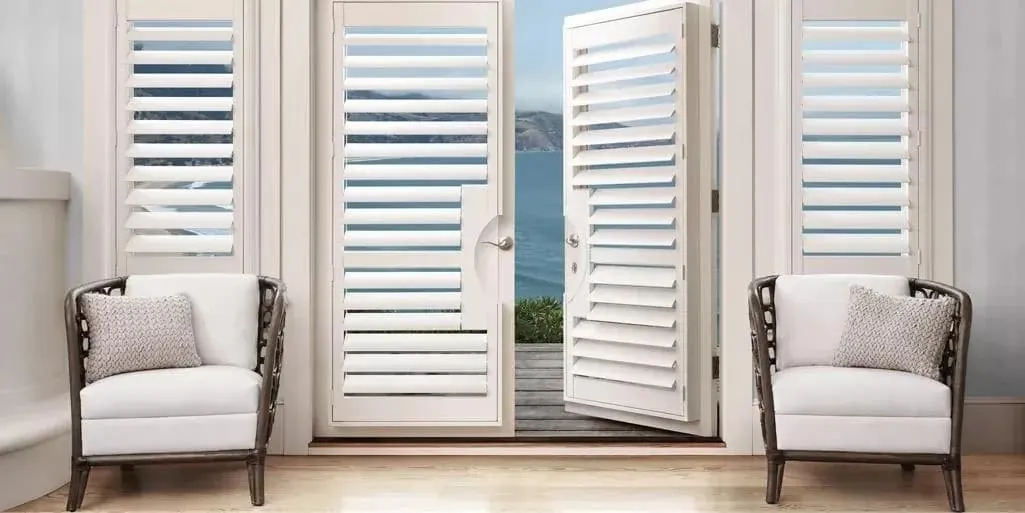
Plantation Shutters in Quincy
Palm Beach, NewStyle and Heritance shutters, sized to tall narrow sash or the wider glass of a shingled house.
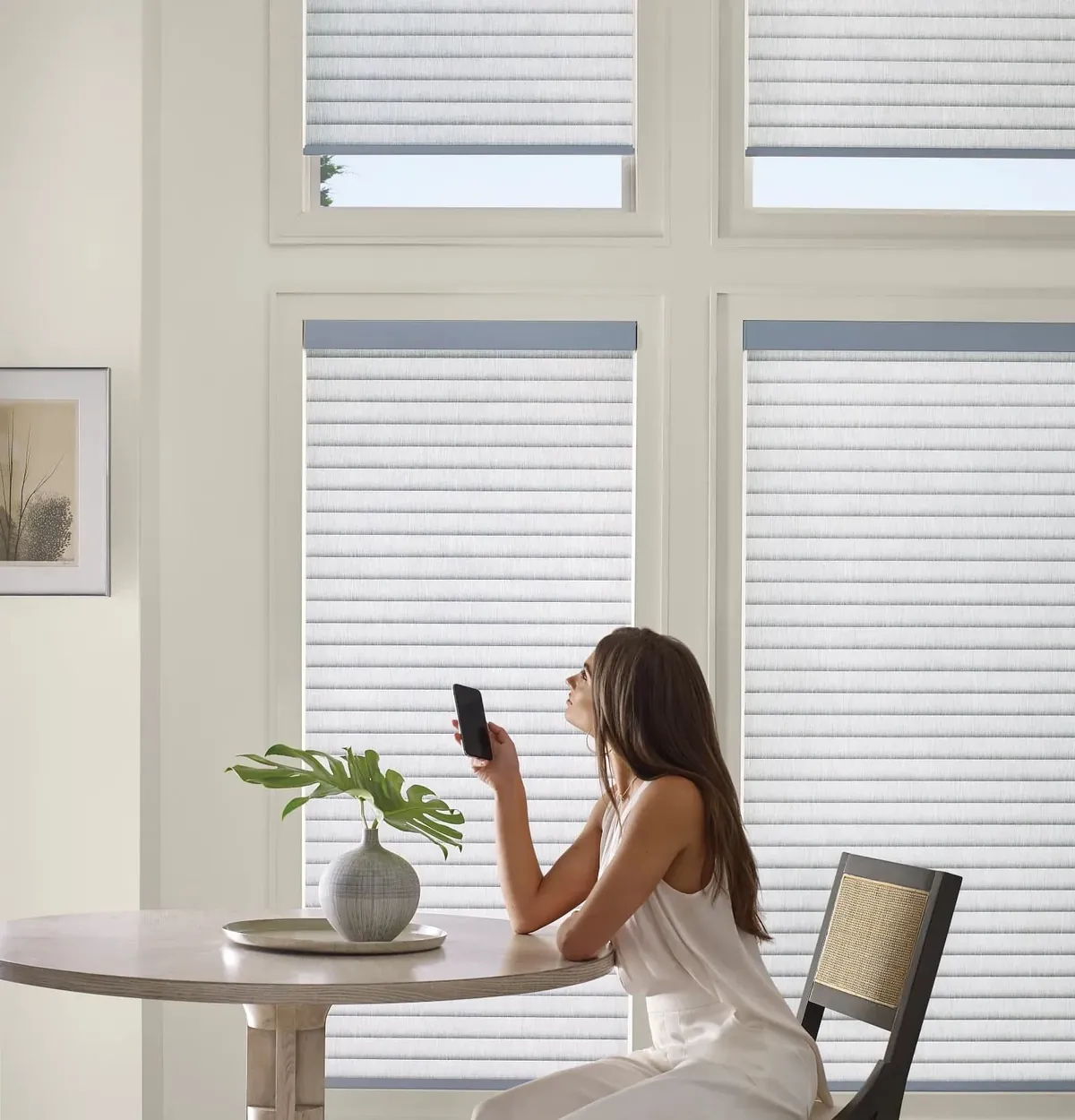
Motorized Blinds and Shades in Quincy
PowerView, worked by remote, phone app or timed schedule, so water-facing rooms can close against glare on their own.
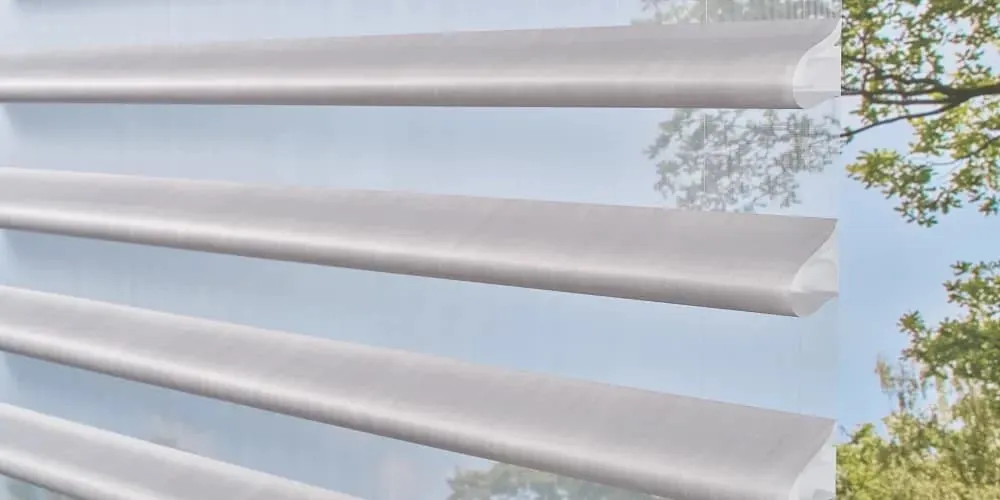
Hunter Douglas Dealer in Quincy
As a Hunter Douglas Gallery dealer, we offer the full line, and certified Hunter Douglas installers fit it.
Three floors, three households, one front
The two- and three-families of Wollaston and North Quincy stack their homes one above the other. Each floor usually has the same layout: a front room facing the street, a run of rooms down one side, a kitchen at the back. Each household picks its own window coverings, often at different times, and from the sidewalk the result is one tall facade with every window on view.
When the front windows on each floor carry different colors and styles, the building looks busy from outside. When they share one outward color, it looks cared for. Owners of the whole building often settle that by fitting the same simple product on every front window. Where each floor is owned separately, agreeing on a neutral backing for the street side is a friendly compromise that still leaves each unit free to choose inside.
Because the floors repeat, the windows usually repeat too. Once one floor is measured and fitted, the others often follow the same plan, which makes the whole building straightforward to complete over time. Note what the first floor chose and later floors can match it.
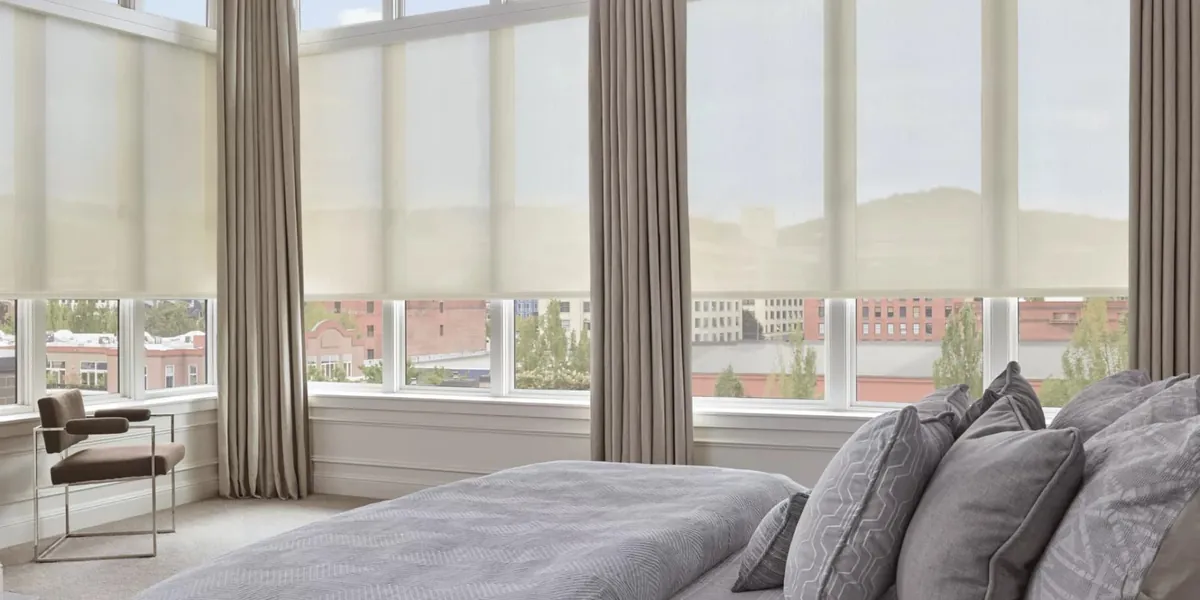
Tall narrow sash, neighbors close by
The sash in these older multi-families runs tall and narrow, and along the sides of the building it often looks straight across at the next house, sometimes only a driveway’s width away. Light along those side walls is limited, and privacy matters at all hours.
For those side windows we usually suggest:
- Top-down, bottom-up honeycomb shades, lowered from the top so the lower glass is covered and daylight still comes in above the neighbor’s sightline.
- Blinds with the slats tilted up, which show the sky to you and the ceiling to anyone looking in.
- Light-filtering fabrics that blur the view in both directions without darkening a room that already lacks direct light.
- Pale colors, which bounce what light there is back into the room.
Narrow glass also means the stack height matters. A covering that gathers into a deep bundle at the top hides a big share of a narrow opening. Honeycomb shades fold very slim and rollers wind away almost completely, which keeps the most glass open.
Rooms that face the water
On the Squantum and Houghs Neck sides, coastal exposure changes everything about the light. Sun comes off the water as well as from the sky, so a room can be bright from below as well as above, and glare can be fierce on a clear afternoon. The view is usually the reason the windows are there, so blocking it completely is the last thing anyone wants.
Solar screens are the natural fit. Their openness factor decides the balance: a more open weave keeps more of the view and lets in more light, while a tighter one cuts more glare and gives more privacy in daytime. Light-filtering honeycomb shades soften the light without hiding the horizon, and sheer shadings give a filtered view with the vanes open and full privacy when closed. Top-down shades help when the low sun comes in under the eaves, covering the lower glass where the glare lands and leaving the sky above open.
Color changes how a screen looks from inside as well. Choosing window treatments in Quincy rooms that face the water is easiest with a pale screen and a darker one held up side by side against your own outlook, so we bring both.
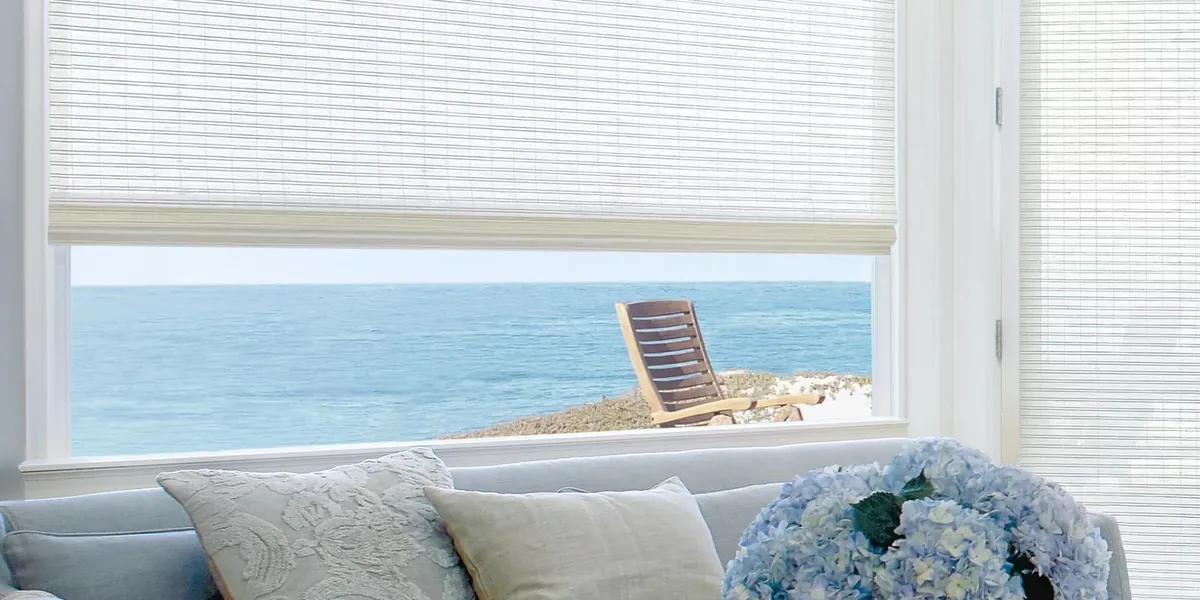
Shingled houses on Squantum
The shingled houses out on Squantum tend to have more varied windows than the multi-families inland: wider openings on the water side, smaller windows elsewhere, perhaps a porch or a sunroom. Each side of the house can face a completely different kind of light.
That often means planning two or three fabrics in the same product family: a solar screen on the water side, a light-filtering honeycomb on the road side and a room-darkening fabric in the bedrooms. Kept in one outward color, the house still looks consistent from the street. Shutters suit these houses well too, especially on a water-facing front room, where the louvers can be angled to cut glare while still showing the view between them.
Window treatments in Quincy for a house by the water are mostly about controlling bright light while keeping the view, and the choices here reflect that.
Condominium conversions near the center
Near the center, older buildings have been converted into condominium units. Each unit chooses its own window coverings, but the building as a whole still shows one face to the street.
If your building has an association, it may have a view on what shows from outside, so it is worth asking before choosing a color for the street side. A white or soft neutral backing is the safe choice almost everywhere and leaves you free to choose the room-facing color. Inside, many conversions mix original tall windows with newer openings, so measuring each one individually matters. A unit on an upper floor may also have a window high on a stair or in a loft, where a motorized shade saves a long reach.
Bedrooms in a busy neighborhood
In dense streets, bedrooms often face another building, a streetlight or both. For sleep, room-darkening honeycomb shades or blackout rollers make the biggest difference, especially on summer mornings when it gets light very early. A neutral backing keeps the street side tidy. Where a bedroom is at the front of a multi-family, the shade on that window also does the job of keeping the building’s facade even, so choosing a room-darkening fabric with a matching outward color handles both.
Shutters close tightly too, and their louvers can be tilted to let some air and light in at night while blocking a direct view. For a child’s room, motorized shades or shutters keep cords out of the way.
Streetlights and evening privacy
Dense streets stay lit after dark. A streetlight outside a front bedroom, headlights sweeping a ground-floor room, the glow of the building next door: all of it reaches inside unless something stops it. And the reverse is true too, since a lamp-lit room on a close street can be seen clearly from the sidewalk and from the windows opposite.
So for front rooms and side rooms alike, it is worth choosing with evening in mind. A light-filtering fabric that feels private at noon will glow and show shapes at night, while a room-darkening fabric will not. Shutters with the louvers closed block the view completely. In living rooms where daylight matters most, a sheer shading or a light-filtering honeycomb works well in the day, and many owners of front rooms simply accept a slightly heavier fabric so the room is private at night without a second covering.
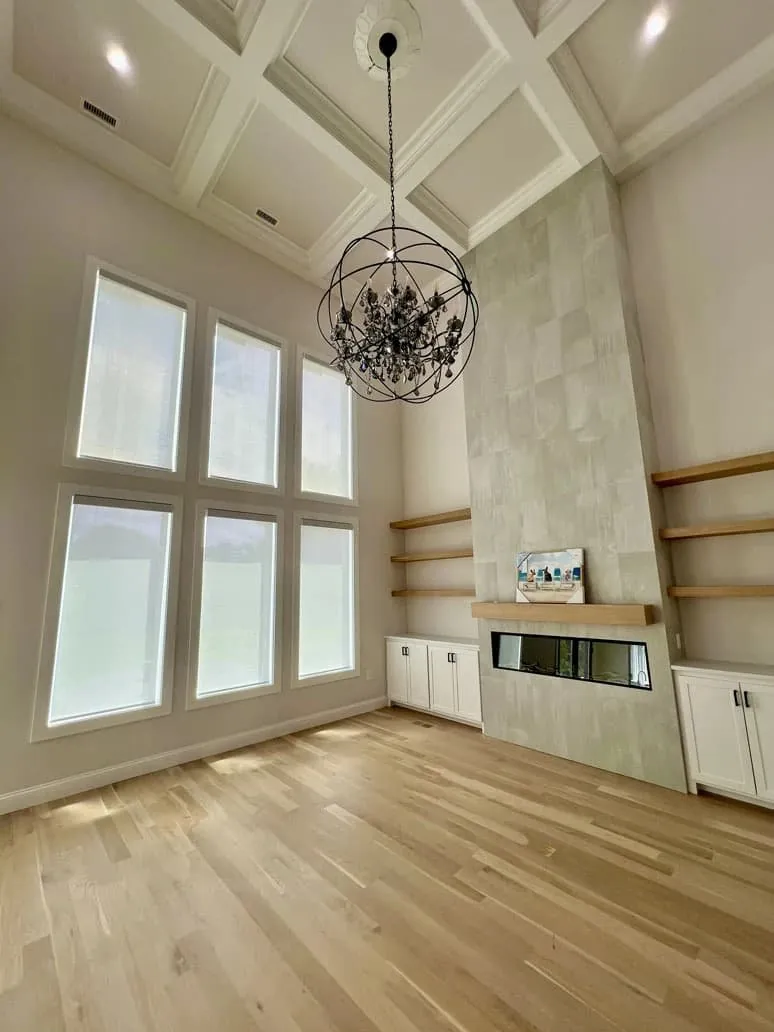
Stair halls and shared entries
Multi-families and condominium buildings often have a shared front hall and a stair running up the side of the building, with a tall window at each landing. Those windows belong to everyone, which is why they tend to be left bare or covered with whatever was there before.
If you own the building or sit on its association, those landing windows are worth including. A simple roller or honeycomb in the same outward color as the units’ front windows ties the whole facade together, and because nobody lives in a stair hall, a light-filtering fabric left at one height is usually all it needs. Where a landing window is hard to reach over the stairs, a motorized shade on a schedule removes the need for anyone to climb up to it.
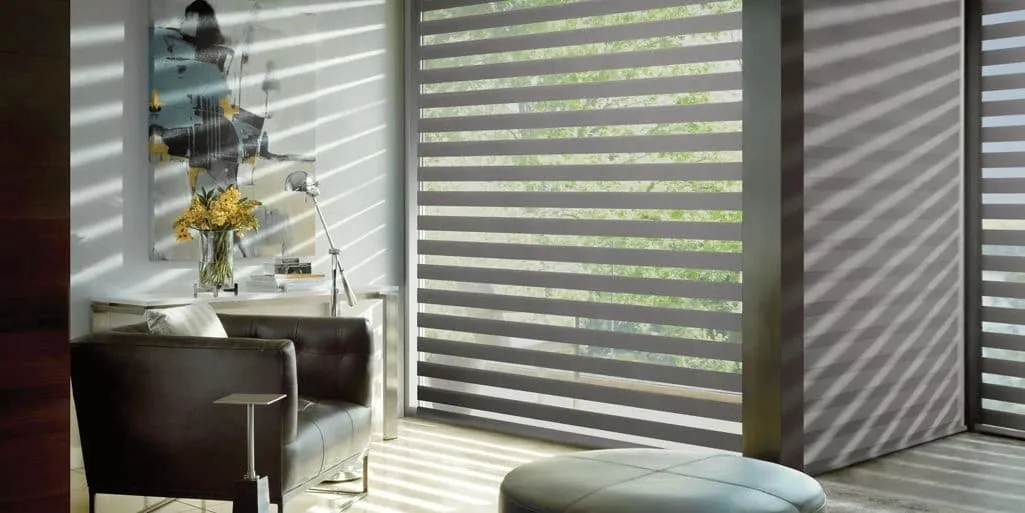
Sunrooms and porches near the shore
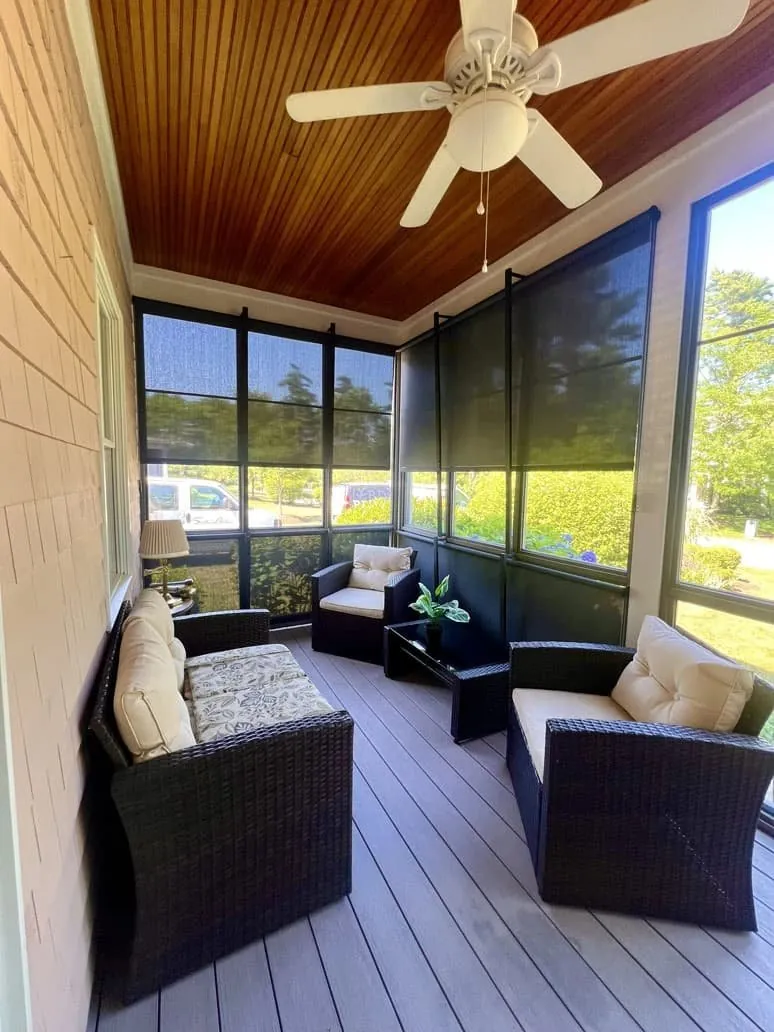
Some of the houses on Squantum and toward Houghs Neck have a sunroom, an enclosed porch or a room with glass on three sides. These are the brightest rooms in the house and often the most used in summer, which makes them the hardest to get right.
Solar screens on every pane keep the glare down while leaving the outlook in view, and they look tidy from outside because they hang flat. Roman shades in a light fabric soften a sunroom used for reading or entertaining. Where the room has many windows, PowerView lets the whole room lower together from one remote or on a schedule, rather than shade by shade. On the land side of the same room, a light-filtering honeycomb in a matching color can take over, so the room keeps one look while each wall gets the fabric its light calls for.
Kitchens and back porches
At the back of many Quincy multi-families, a kitchen opens onto a rear porch, often one stacked above another. The kitchen windows face the back yards and the porch door gets constant use.
A door covering mounted to the door itself, held at the foot so it does not swing, keeps the door easy to use. Over the sink, cafe shutters, a roller or faux wood blinds leave the top glass open for light. Because back windows often face the back of another building across a narrow yard, a light-filtering fabric is a sensible default.
How the visit works
Your floor of a three-family, a condo near the center or a house on Squantum: the windows are best seen in their own light, and the samples are best held up against them. Our shop-at-home service is organized from Canton, where there is no store to visit, so every Quincy consultation takes place at your home, with vans carrying samples to bring the showroom to you.
- Book through Request a Consultation, or press the call button.
- The consultant climbs to your floor with fabric books, solar screen samples, slats and a PowerView remote.
- We look at the light on every side, from the street, the neighbors and, where there is one, the water.
- Fabrics and screens are tried in the window, so you can compare view, glare and privacy for yourself.
- Every window is measured, with any that differ from the rest noted.
- A free estimate follows, and you decide when you are ready.
The Canton shop-at-home page has more about the service. If glare is your main concern, our guide to the best shades for sun and glare is a good read before the visit.

Glare on a schedule
For water-facing rooms, the glare arrives at about the same time each day, depending on which way the room faces. PowerView lets you set schedules so shades lower at those times and rise again later, as well as control everything from a remote or an app. Shades can be grouped by room so a whole wall of glass moves together. High windows in a stairwell or loft are also good candidates. How each motor will be powered is planned with you at the visit. See motorized blinds and shades in Quincy for more.
Getting worn coverings working again
Older buildings often come with blinds and shades already up, some of them well worn. If a cord has broken, a slat will not tilt or a shade has dropped, it may well be fixable. We are happy to look at what you already have and tell you plainly whether repair makes sense. See blind and shade repair.
Gallery dealer, every floor
Blinds & Designs carries Hunter Douglas Gallery dealer status, so a unit in a three-family, a condo near the center or a shingled house on the shore can choose from across the Hunter Douglas range: honeycomb, roller and solar screen, roman, sheer and woven shades, blinds, shutters, drapery and PowerView.
Certified Hunter Douglas installers fit every order, whether one bedroom shade or every front window on three floors. Free estimates, interior design consultations, automation and repairs are part of the service. Our nearest showroom to Quincy is Franklin; its page has the address and hours.
Questions from Quincy
What is best for a window that faces the water?
A solar screen is usually the first choice, with its openness picked for how much view and glare you want. Light-filtering honeycomb shades and sheer shadings are good alternatives, and top-down shades help when the low sun comes in under the eaves.
My side windows look straight into the next building. What do you suggest?
A top-down, bottom-up shade lowered from the top, or blinds with the slats tilted up. Both keep daylight coming in while blocking the direct view.
Do the floors of a three-family need matching window treatments?
Not inside, but a shared outward color on the front windows keeps the facade looking even. Noting the first floor’s choices lets each later floor match whenever it is done.
Does my condo association have a say in window coverings?
Some associations have a view on what shows from outside, so it is worth checking before choosing a street-side color. A white or neutral backing is the safe choice.
Is there a fee for the estimate?
There is no fee. Estimates are free and come with no obligation to go ahead.
Start with a visit to your floor
New window treatments in Quincy, MA, begin at your windows, wherever they are: the top floor in Wollaston, a condo near the center or a house facing the water. Request a consultation for samples, measuring and a free estimate. One room or a whole building, one floor this year and the next floor later: the plan can be as large or as small as you need. A question first? The call button is the quickest way through.
For the full range in one place, start with our window treatments page.