
Front rooms close to the road
Through most of town, houses sit on modest lots with short setbacks. A cape’s living room or a ranch’s front bedroom may be only a short walk from the road, and the colonials built off Union Street more recently line up their front windows in neat rows facing the street. Whatever is in those windows is on show to everyone driving past.
The good news is that the windows themselves are mostly standard modern openings: regular sizes, square frames, even recesses. That makes window treatments in Rockland, MA, easier to plan than in a town full of odd old sash. The real decisions are about how the front of the house looks from outside, how private the front rooms feel, and which product suits the way each room is used.
We make those decisions with you at the house, with samples held up to the actual glass.
Choose a service to see its Rockland page
Every card is one of the window treatments in Rockland, MA, with its own page for the town.
Custom Blinds in Rockland
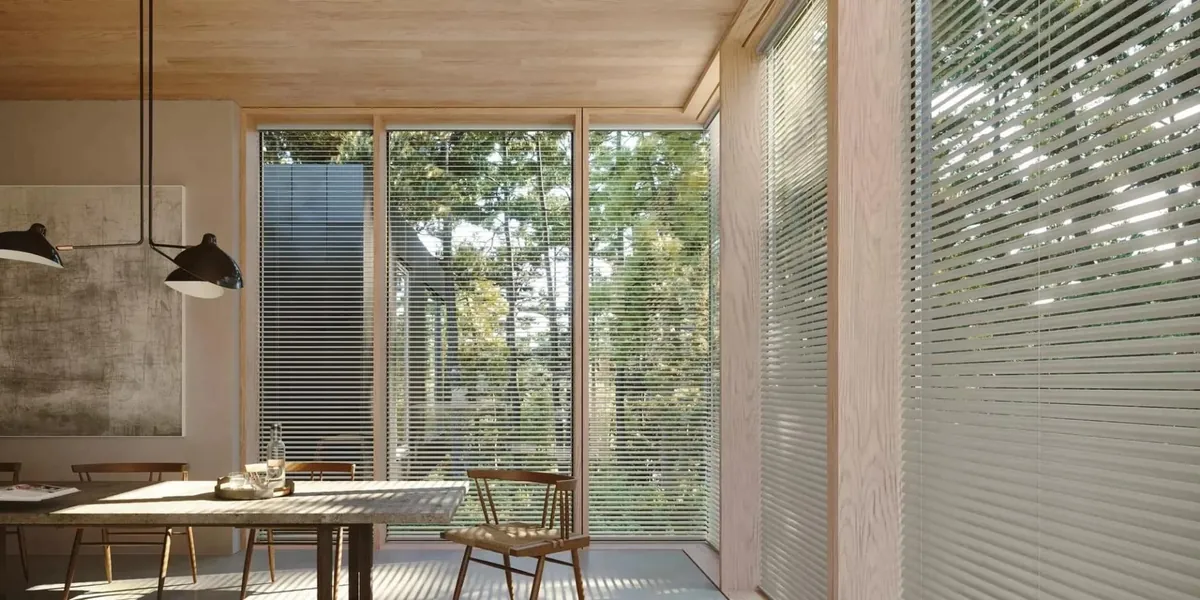
Wood, faux wood, metal and vertical blinds. On a row of matching openings, blinds give a crisp, even look from the road.
Cellular Shades in Rockland
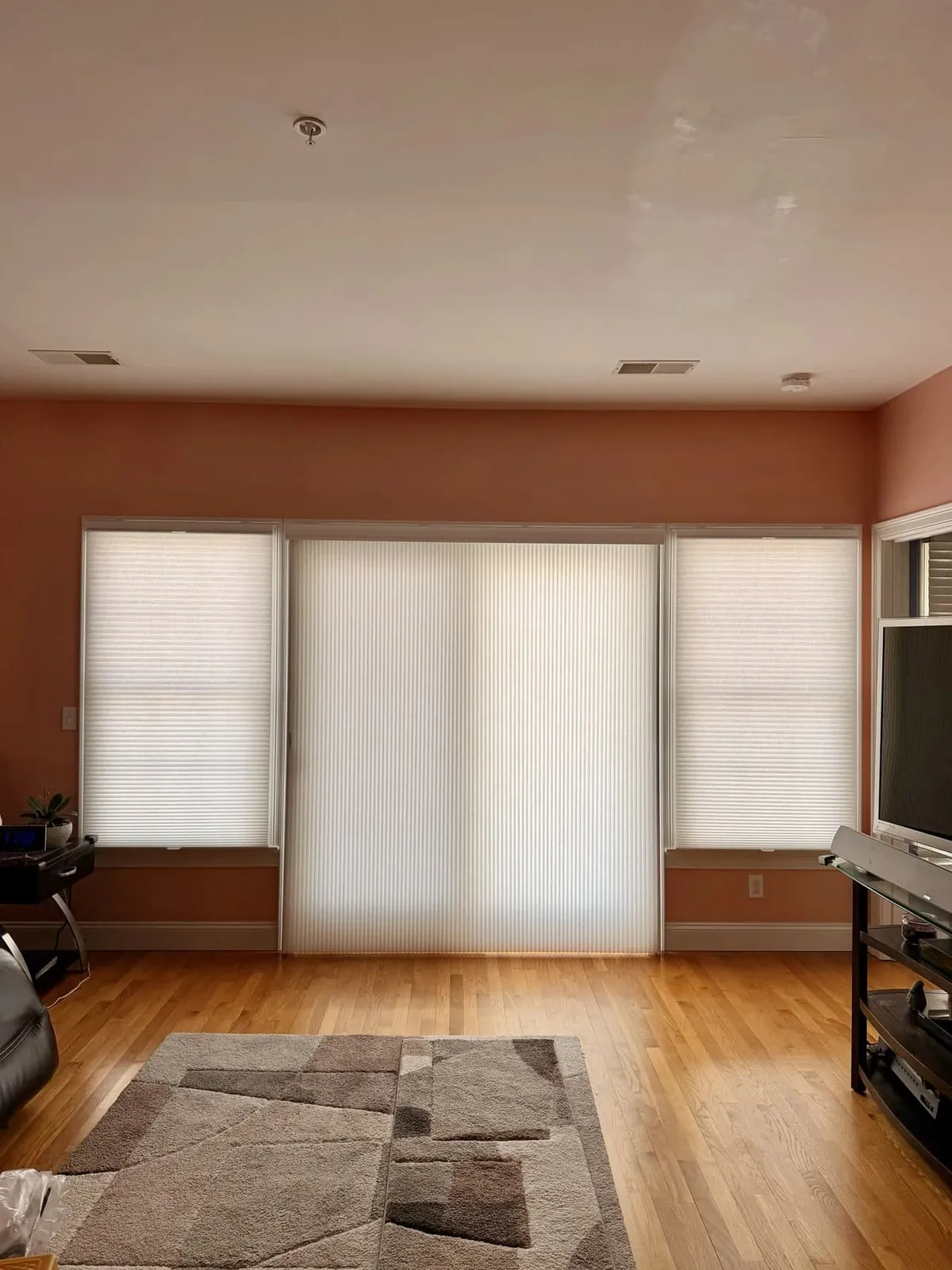
Duette and Applause honeycomb shades, a tidy fit for regular openings, with matching vertical styles for a slider.
Roller Shades in Rockland
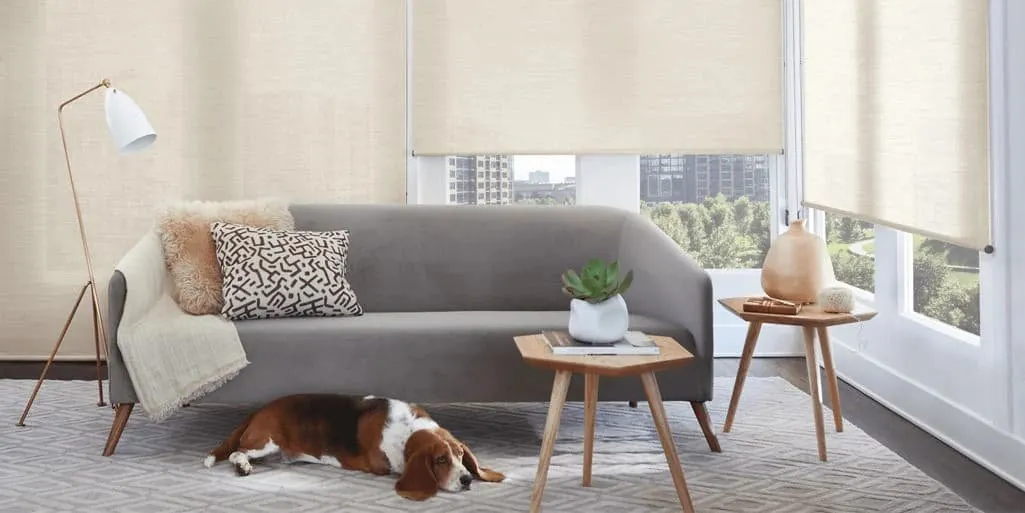
Designer Roller and Alustra shades in solid or screen fabrics, where openness decides how much you see out and how much glare comes in.
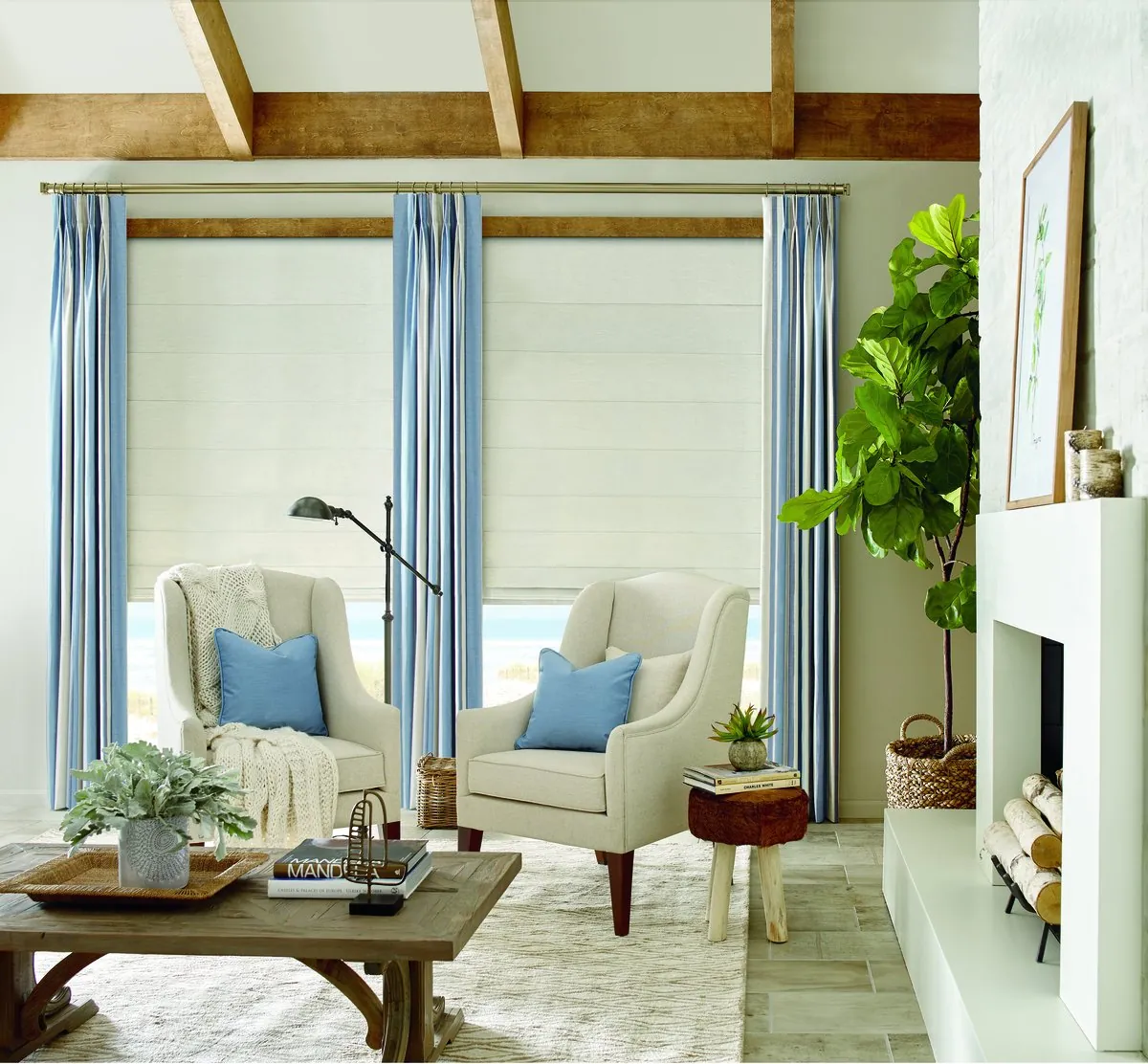
Roman Shades in Rockland
Vignette and Carole romans, flat or folded, to add fabric and pattern to a colonial’s formal rooms.
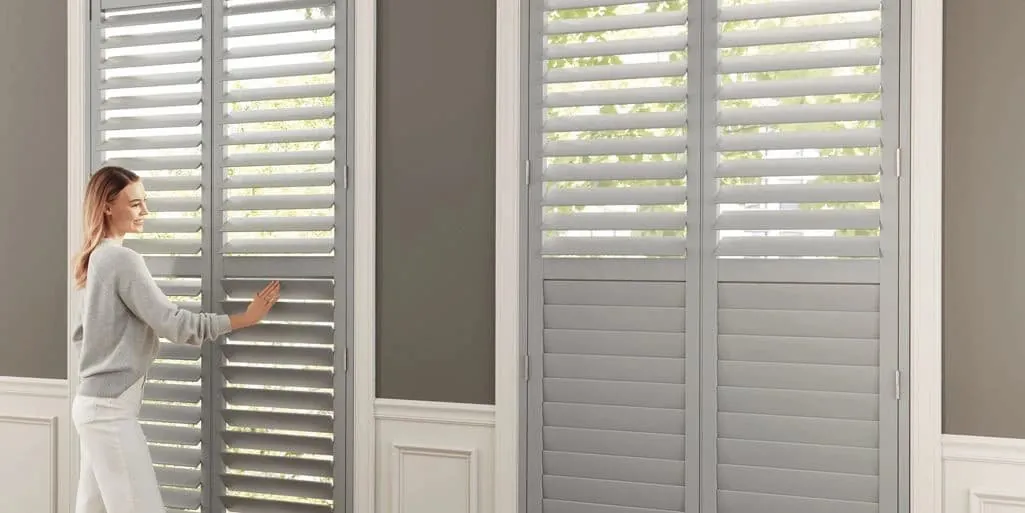
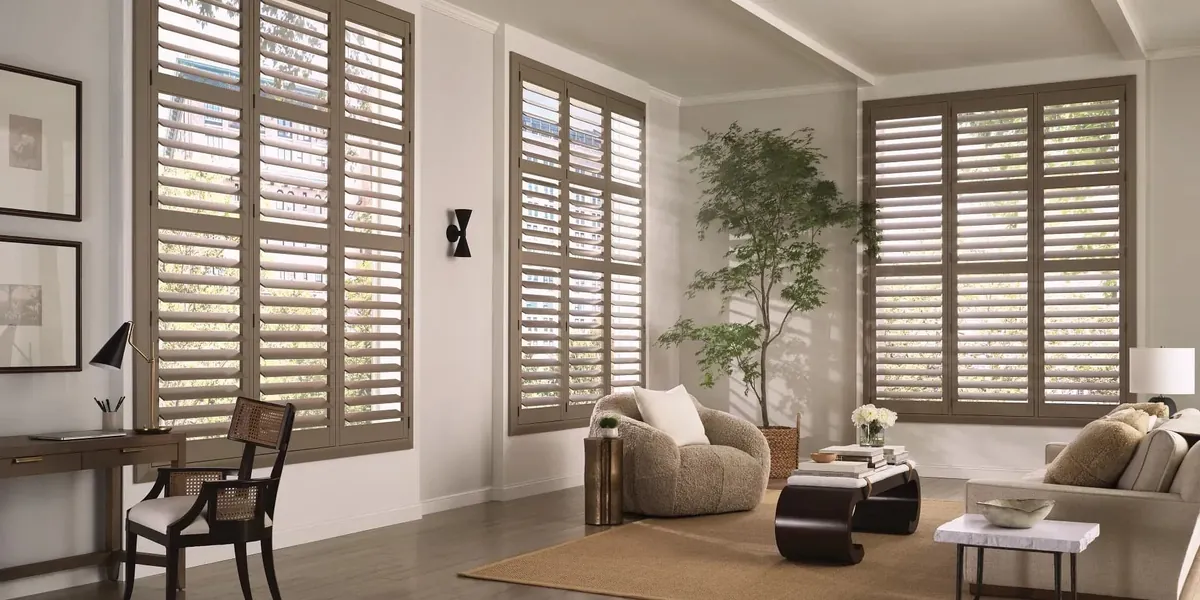
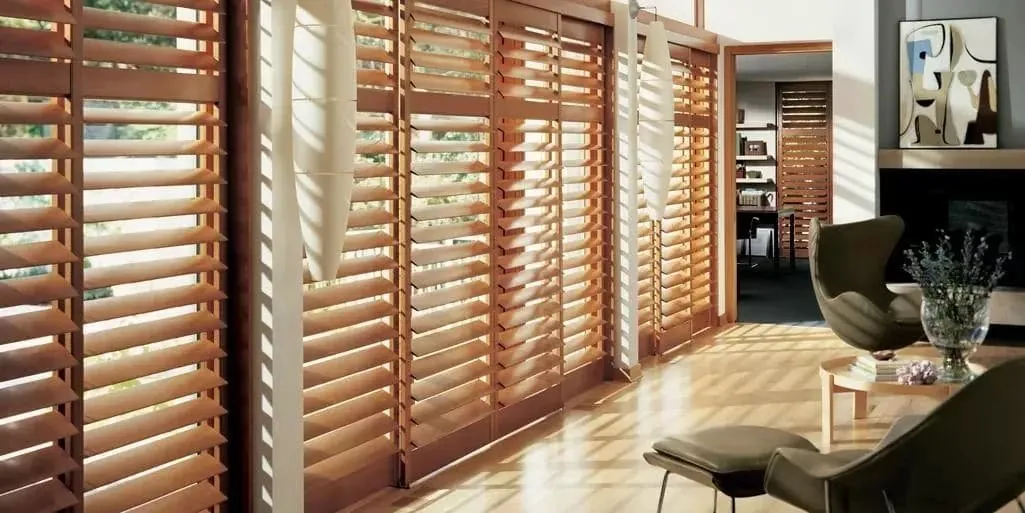
Plantation Shutters in Rockland
Palm Beach, NewStyle and Heritance shutters in a choice of louver sizes and frame styles for modern openings.
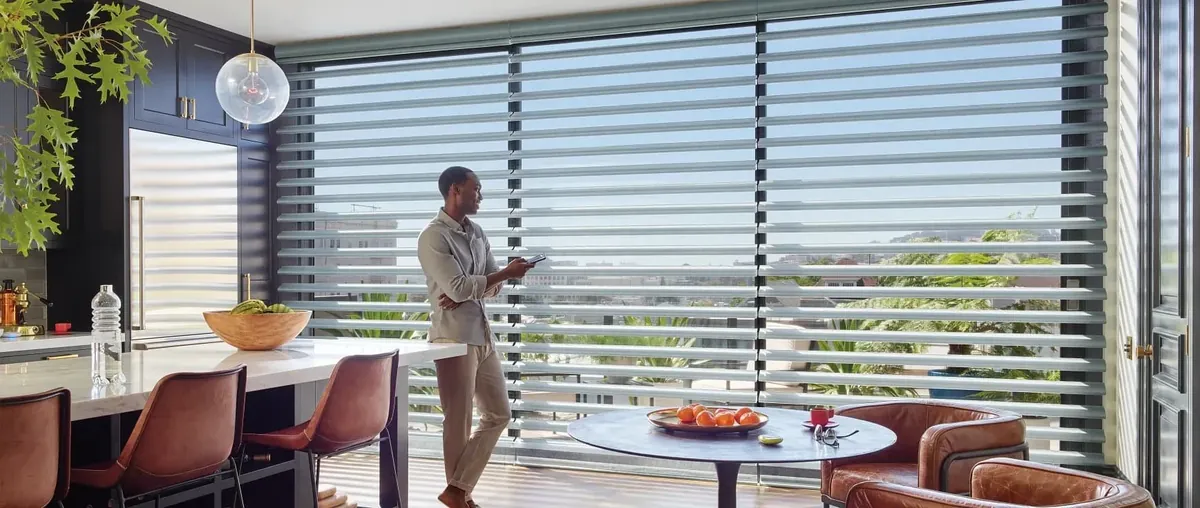
Motorized Blinds and Shades in Rockland
PowerView automation, worked by remote, by app or on a timetable, across one room or two floors.
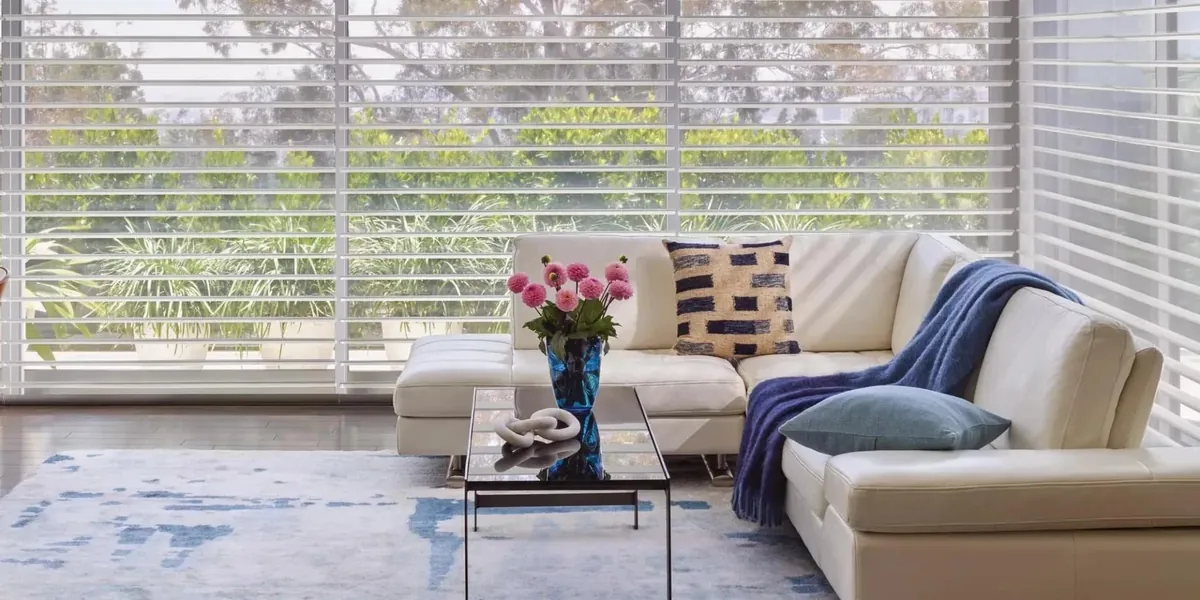
Hunter Douglas Dealer in Rockland
As a Hunter Douglas Gallery dealer, we carry the complete range, fitted by certified Hunter Douglas installers.
The street face of the house
With short setbacks, the front of a house is close enough to the road that its windows are a big part of its look. From outside, each covering shows its back, and a mix of colors and products across the front can make even a well-kept house look unfinished.
A simple rule helps: keep the outward face of every front window the same tone. That can be white, cream or a soft neutral, chosen to sit well with the siding and trim. Many honeycomb and roller fabrics have a neutral back whatever the color facing into the room, so you can still choose a bolder color inside. Shutters look the same from inside and out, which makes them an easy way to give a front a consistent face.
This matters most on the colonials, where the front windows are arranged in matching rows on two floors. One window in a different product or color stands out straight away.
Colonials off Union Street
The newer colonials in the neighborhoods off Union Street follow a familiar plan: a center or side hall, living and dining rooms at the front, a kitchen and family room across the back, and bedrooms upstairs. The front is usually symmetrical, with windows of the same size spaced evenly on both floors.
That regularity is a gift. One product and size can repeat across the whole front, which keeps ordering simple and the look tidy. Inside, the formal front rooms often suit shutters or roman shades, while the family room and kitchen at the back lean toward honeycomb or roller shades that are easy to raise and lower many times a day.
Upstairs, the bedrooms take room-darkening honeycomb or roller fabrics, and a home office takes a light-filtering one. Many colonials also have a window on the stair landing and one over the front door. Those are worth planning at the same time so they match.
Capes and ranches on modest lots
Across the rest of town, capes and ranches set the tone. A cape has its living room at the front, a kitchen at the back and bedrooms upstairs in dormers. A ranch spreads everything along one floor, often with a wide living room window facing the road and a slider out to the back yard.
Because the openings are standard, these houses suit a single product throughout if you like a calm, simple look. Honeycomb shades are a popular choice for that, with a room-darkening fabric in the bedrooms. Others prefer shutters on the front windows and shades elsewhere, keeping one color throughout.
On a ranch, the wide front window is the one to plan first. A single shade, a group of shades on one headrail, or shutters laid out evenly across the run all work well.
Privacy without closing up the front rooms
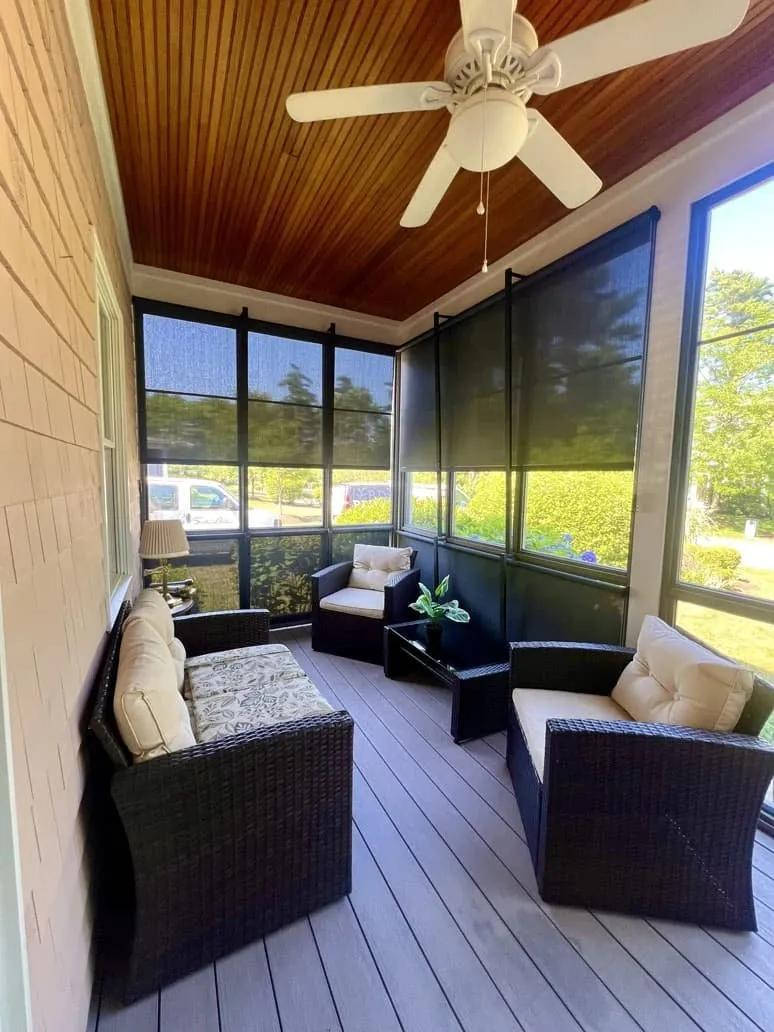
A front room close to the road needs privacy, but nobody wants to sit in the dark all day. The trick is choosing coverings that let light in while breaking up the view from outside.
- Light-filtering fabrics in a honeycomb or roller shade let daylight through while blurring shapes.
- Sheer shadings give filtered light and a soft view out with the vanes open, and privacy with them closed.
- Shutters with the louvers angled upward show sky from inside and ceiling from the road.
- Solar screen fabrics cut glare and keep a view out by day, though they show more of a lit room at night.
In the evening, the picture changes. A lit room shows through most light-filtering fabrics, so for a front room you use at night, shutters or a room-darkening fabric close it off completely.
Landings, entries and the odd small window
Even a house of standard openings has a few windows that do not fit the pattern. A colonial often has a window on the stair landing, sometimes higher than the others and awkward to reach. There may be narrow sidelights beside the front door, a small window in a powder room under the stairs, or a half-round light over the entry.
These are easy to leave until last and then forget, yet they are seen by everyone who comes in. A slim honeycomb shade or a roller suits a landing window, and PowerView takes care of one that is hard to reach. Sidelights can take a narrow shade or a shutter panel. A half-round light can often stay uncovered for daylight, unless it lets strong sun into a hall. We measure all of them at the same visit so they match the rooms around them, and the house looks finished from the front door to the top of the stairs.
Sliders, French doors and the back of the house
The back of most houses here opens to a yard, a deck or a patio. Capes and ranches usually have a sliding glass door; many colonials have a slider or French doors off the kitchen or family room.
For a slider, a covering that moves sideways keeps the door easy to use. Vertical blinds and vertical honeycomb shades both stack to one side, and a vertical honeycomb matches honeycomb shades on the windows beside it. For French doors, a shade or shutter mounted on each door moves with it, so the doors swing freely.
Since the back of the house usually looks onto your own yard, privacy matters less there. Light and glare often matter more, especially on a west-facing family room in the late afternoon.
How your consultation works
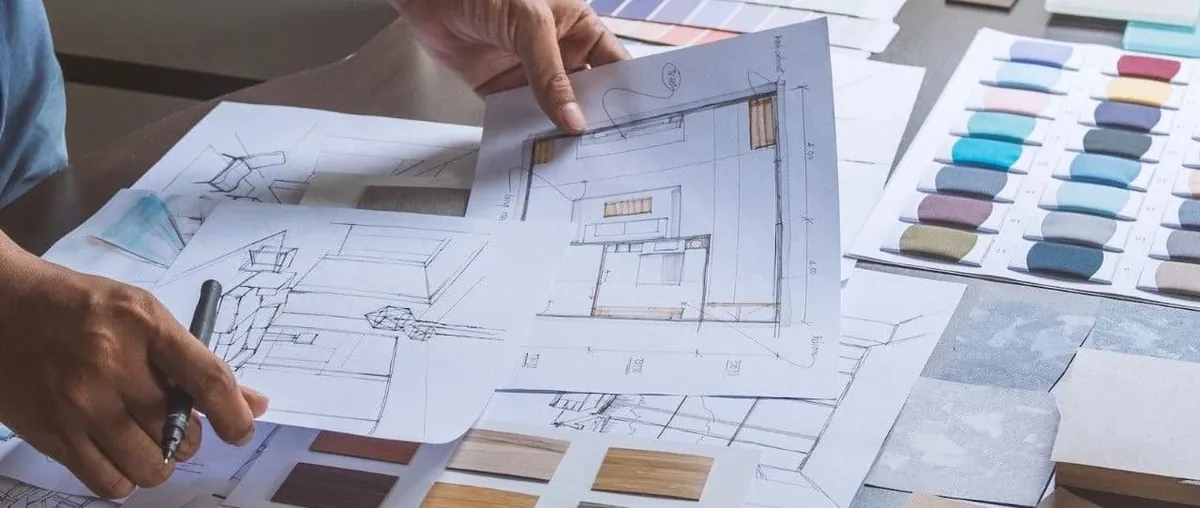
Our shop-at-home service runs from Canton and our vans carry samples, so we can bring the showroom to you. For a house with standard openings, a single visit usually covers every room.
- Arrange a visit through Request a Consultation, or with the call button.
- A consultant comes to the house with fabric books, slats, shutter samples and a PowerView remote.
- We look at the front first, agreeing the outward color for every street-facing window.
- Samples go up in each room so you can judge light, privacy and color in place.
- Every opening is measured, including stair, door and landing windows.
- You receive a free estimate, with time to think it over.
More detail is on the Canton shop-at-home page, and what happens at an in-home consultation walks through a typical visit.
Planning a whole house at once
With regular openings throughout, many homeowners in town choose to do the whole house in one go. It keeps the colors consistent, makes the front look finished from day one and means one visit and one estimate.
A typical whole-house plan for a colonial might look like this:
- Shutters on the front living and dining room windows.
- Roman shades in a dining room where you want pattern or color.
- Honeycomb shades in the family room and kitchen.
- Room-darkening honeycomb or roller shades in the bedrooms.
- A vertical honeycomb or vertical blinds on the slider.
If you would rather start small, the front rooms are the natural first step, because they set the look of the house. The rest can follow later in the same color.
Dormers in a cape
Upstairs in a cape, the bedrooms sit under the roof with their windows set in dormers. The dormer walls leave little space beside the glass, and the sloping ceiling leaves little above it, so anything bulky crowds the room.
An inside-mount honeycomb or roller shade fits a dormer best. It sits within the recess, clears most of the glass when raised and leaves the sloped ceiling uncluttered. Room-darkening fabrics suit dormer bedrooms that catch early sun, and the same color across every dormer keeps the roofline neat from the road.
Color against siding and trim
Because the front of the house is so visible, the outward color of your coverings should suit the outside of the house as much as the rooms inside. White and cream work with most siding and trim colors and are the safest choice for a front that should look uniform. On a darker house, a soft gray or a warm neutral can sit more comfortably than bright white.
Inside, you are free to choose. A colonial’s dining room might take a patterned roman shade while its outward face matches the rest of the front. When we plan window treatments in Rockland, MA, we check both faces of every front covering, so the inside suits the room and the outside suits the house.
Kitchens and family rooms
The kitchen and family room are often the busiest rooms in the house, and their windows open and close more than any others. A product that is easy to work matters here more than anywhere.
Honeycomb and roller shades raise and lower smoothly. Faux wood blinds tilt to control light without being raised at all. Shutters over the lower sash of a kitchen window keep privacy at the sink and light at the top. In a family room facing west, a light-filtering or screen fabric takes the edge off afternoon glare without shutting out the yard.
Bedrooms and early light
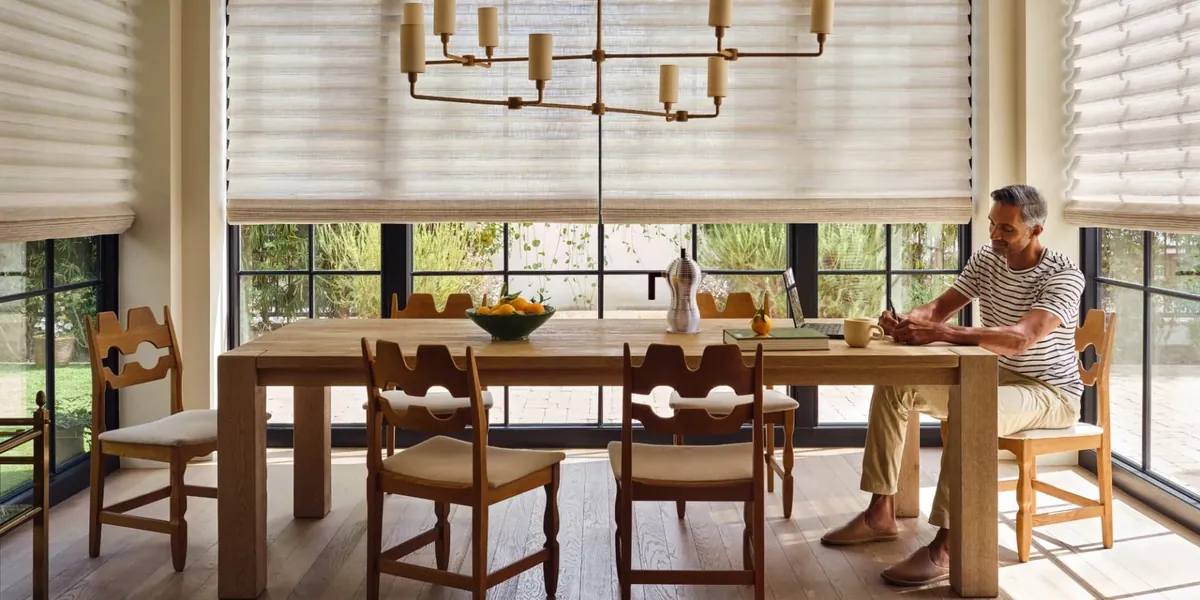
Bedrooms in capes, ranches and colonials alike tend to face the street or the side yard, and many catch early morning sun. For good sleep, a room-darkening honeycomb or roller fabric keeps the room dim well after sunrise. Shutters closed tight also darken a room well and give privacy at the same time. On a bedroom that faces the road, that privacy counts in the evening as much as the darkness does in the morning.
For children’s rooms, a plain, sturdy shade that stays down most of the day without the room feeling closed in is often the best fit. If you would like bedrooms to open gently in the morning without anyone getting up to do it, PowerView can handle that on a schedule.
Banded shades and texture
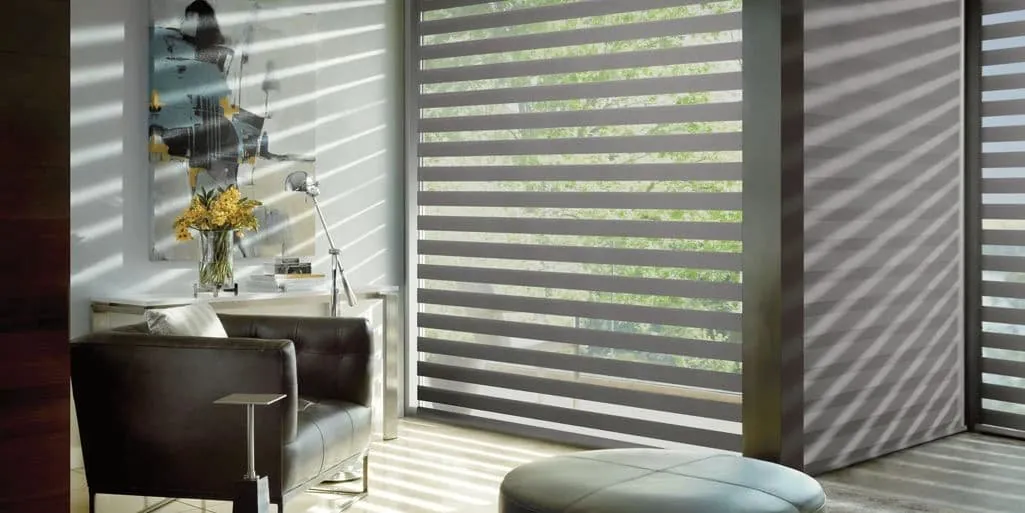
Not every room wants plain fabric. Banded shades, with alternating sheer and solid stripes, let you shift between view and privacy by moving the shade only slightly. They suit a kitchen or a home office where you want light most of the day.
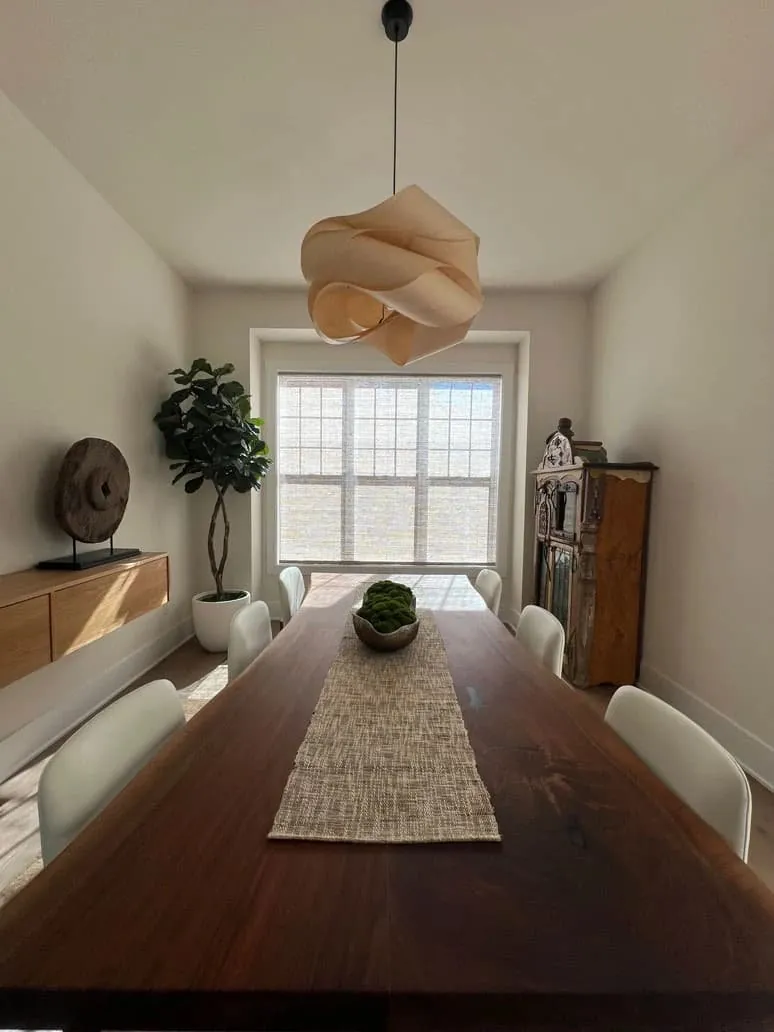
Woven wood shades bring a natural texture to a den or dining room and sit comfortably beside wood floors. In a newer colonial with plenty of white trim, a single room of woven shades can add warmth without upsetting the consistency of the front.
PowerView across two floors
On a colonial, motorization saves a lot of trips up and down stairs. PowerView shades can be grouped by floor, by room or by side of the house, and run from a remote, a phone app or a schedule. The front rooms can close at dusk on their own, and the bedrooms can open at a set time each morning. We plan how each motor is powered at the visit. For more, see motorized blinds and shades in Rockland.
Repair for coverings you already have
Not everything needs replacing. If a blind has a broken cord, a shade will not stay up or slats will not tilt, a repair may be the answer. We are glad to look at window coverings you already own. Read about blind and shade repair.
The strength of a Gallery dealer
Blinds & Designs is a Hunter Douglas Gallery dealer. That means the whole Hunter Douglas line is available for your house: honeycomb, roller, banded, roman, sheer and woven shades, wood, faux wood and metal blinds, vertical blinds, shutters and PowerView automation. Certified Hunter Douglas installers put up every order, from one window to two full floors. Free estimates, interior design consultations and repairs round out the window treatments in Rockland, MA, that we offer.

The nearest showroom: Franklin
Most of our work in town starts with a visit to your house, because the light, the setback and the street view can only be judged in place. If you would also like to see the range in person, our nearest showroom is in Franklin.
The Franklin showroom page lists the address and opening hours. You are welcome to call in before or after your in-home consultation.
Questions from Rockland
My windows are all standard sizes. Does that make things easier?
Yes. Standard, square openings take almost any product inside the frame, and one size can often repeat across a whole front. The main choices are fabric, color and how much light you want in each room.
How do I keep the front of the house looking consistent?
Keep the outward face of every front window in one tone. Shutters look the same from both sides, and many shade fabrics have a neutral back whatever the color inside.
What works on French doors?
A shade or shutter mounted on each door, so it moves with the door and the doors swing freely.
Can I start with a few rooms and add more later?
Yes. Many homeowners start with the front rooms and add the rest later in the same color, so it all matches.
Is the estimate free?
Yes. Estimates are free, and there is no pressure to decide on the day.
Take the first step
The front of the house is usually the best place to begin, because it sets the look from the road and gets the most use. Request a consultation and we will bring samples, agree an outward color with you, measure every opening and leave a free estimate. Your new window treatments in Rockland, MA, can be the whole house or a single room. Nearby, there are pages for Abington, Hingham and Weymouth.
If you want to see the whole range first, our window treatments page has it all.