
Old sash, harbor views and wooded lots
Along Main Street and around the harbor, antique colonials and Federal houses carry their age with pride. Their sash is small and set deep in thick walls, and the street expects them to look the part, with nothing at the windows that jars against the period from outside. Down by the water, many rooms were laid out to face the harbor, so whatever covers those windows must protect the view rather than block it.
Inland, the picture changes. Larger newer houses sit on wooded lots, with bigger modern windows, taller rooms and trees doing much of the screening that a neighbor’s wall would do elsewhere.
Window treatments in Hingham, MA, have to serve both worlds: discreet, period-friendly coverings for the historic houses, and practical, often larger-scale solutions for the newer ones. We start every project at the house, looking at the windows, the light and the outlook with you.
The services we offer in town
Every card below opens the town page for one of the window treatments in Hingham, MA, that we provide.
Custom Blinds in Hingham
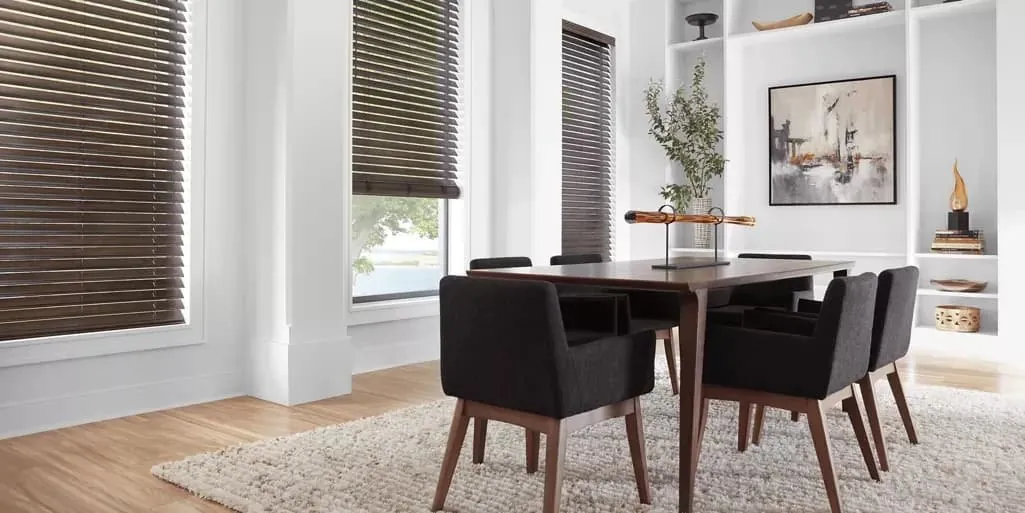
Wood, faux wood and metal horizontal blinds, and verticals. Wood slats suit the painted trim of an older house.
Cellular Shades in Hingham
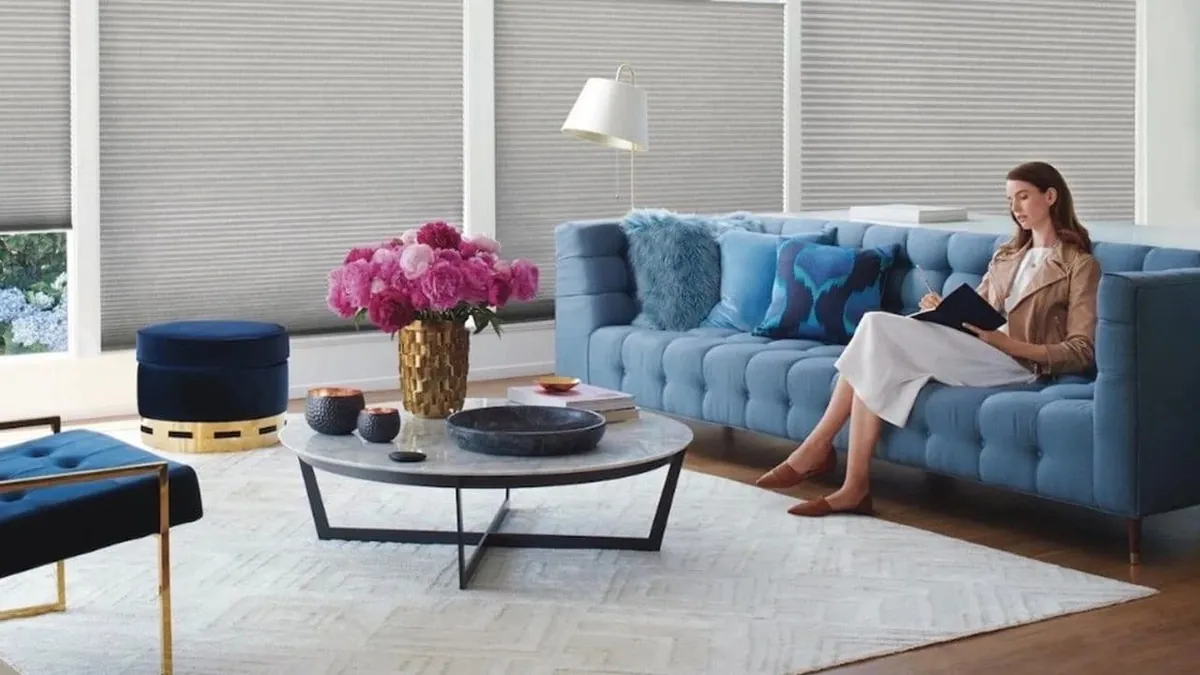
Duette and Applause honeycomb shades, a quiet choice that hides inside a deep old frame when raised.
Roller Shades in Hingham
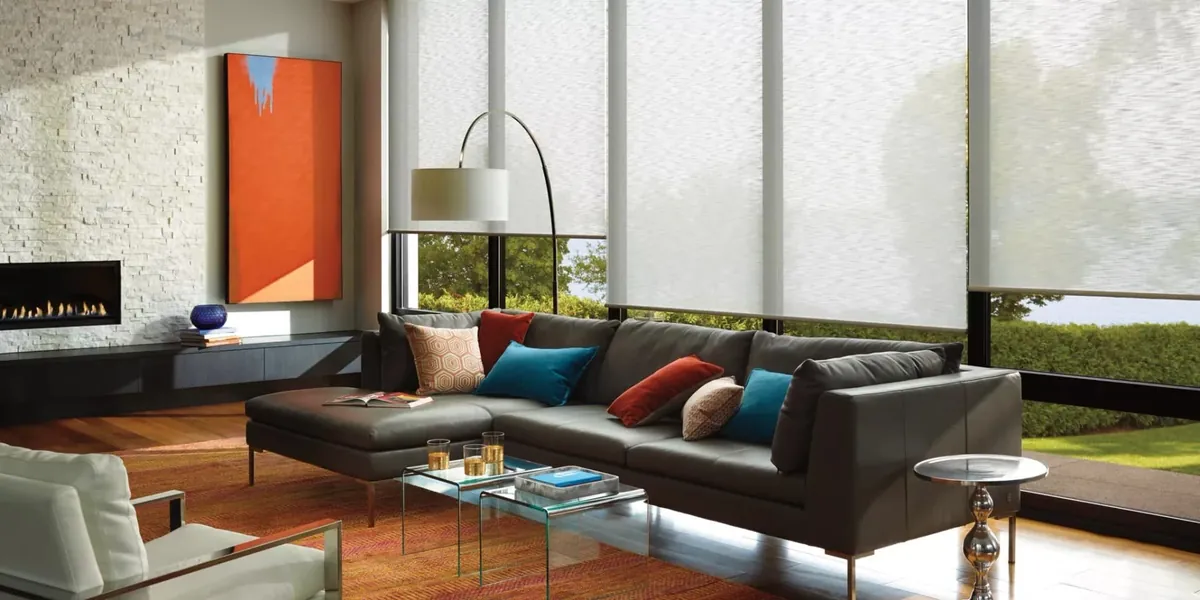
Designer Roller and Alustra shades, including screen fabrics that soften the harbor glare and keep the water in sight.
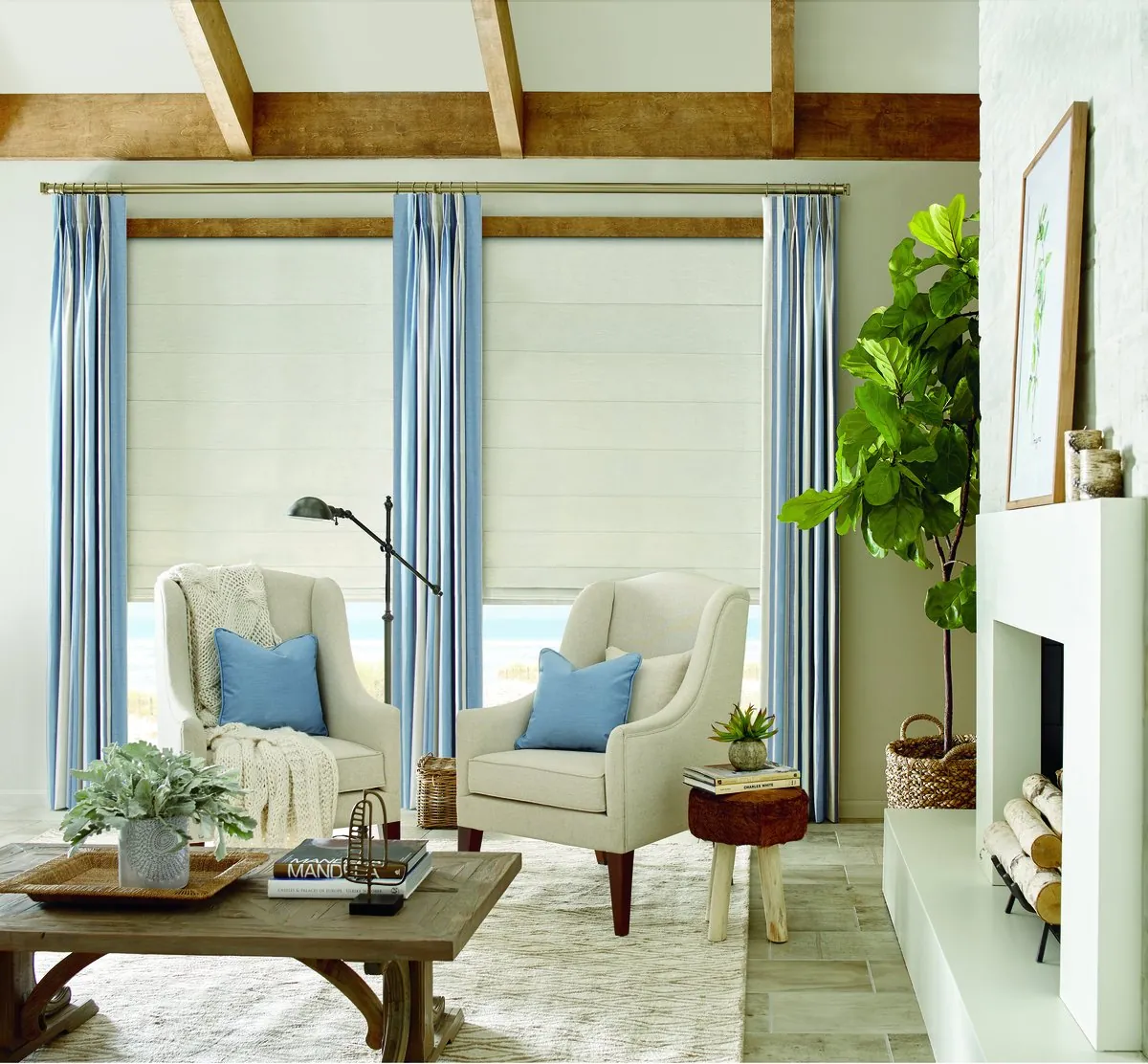
Roman Shades in Hingham
Vignette and Carole romans, flat or folded, a classic fabric finish for formal rooms in a period house.
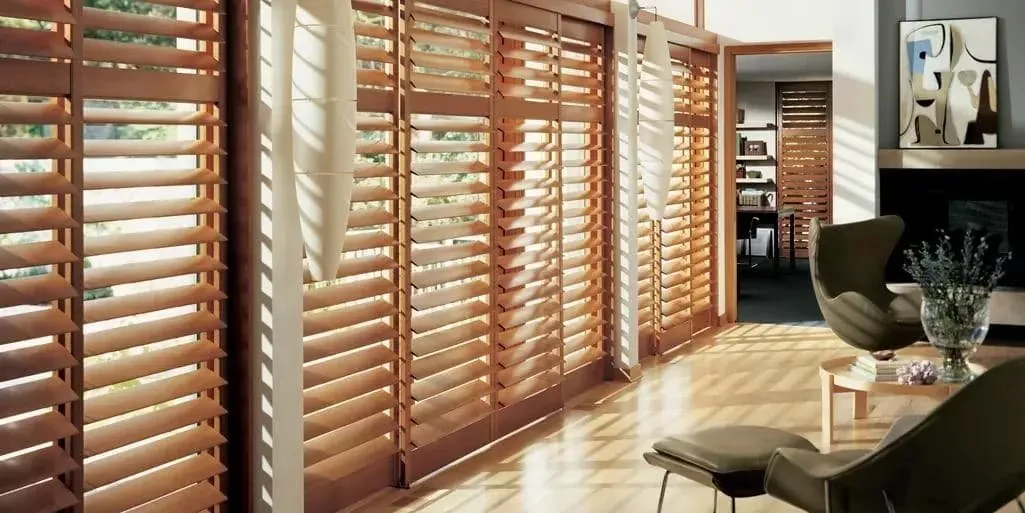
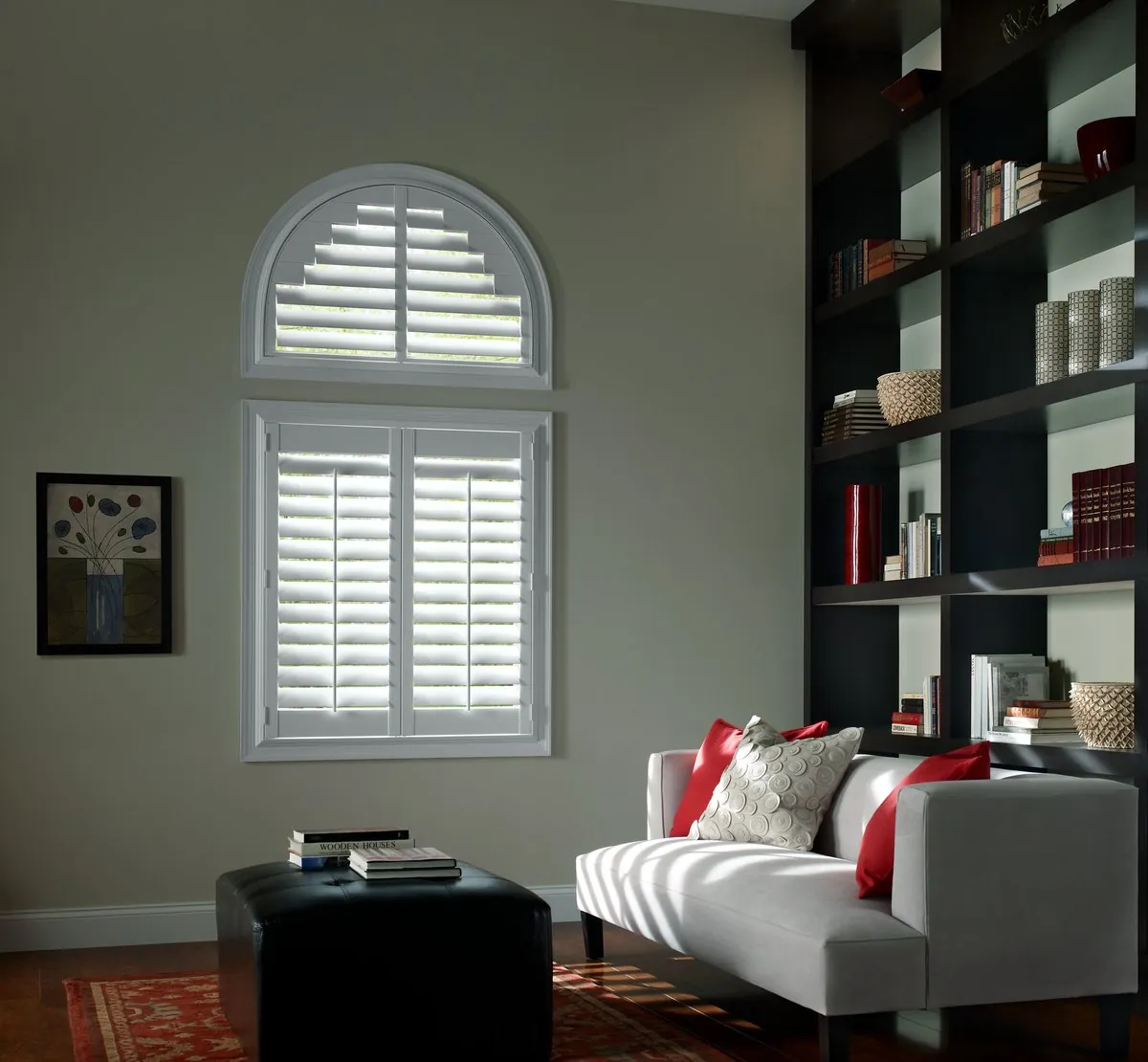
Plantation Shutters in Hingham
Palm Beach, NewStyle and Heritance shutters, painted or stained, with louvers sized to old sash or new.
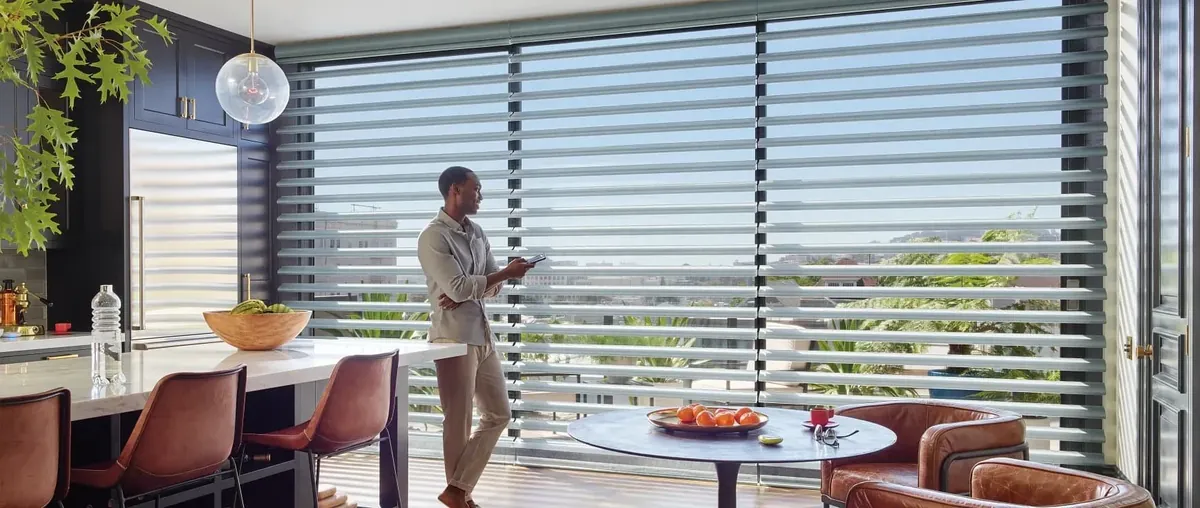
Motorized Blinds and Shades in Hingham
PowerView automation by remote, app or schedule, ideal for tall glass in a newer house or a harbor room that changes with the light.
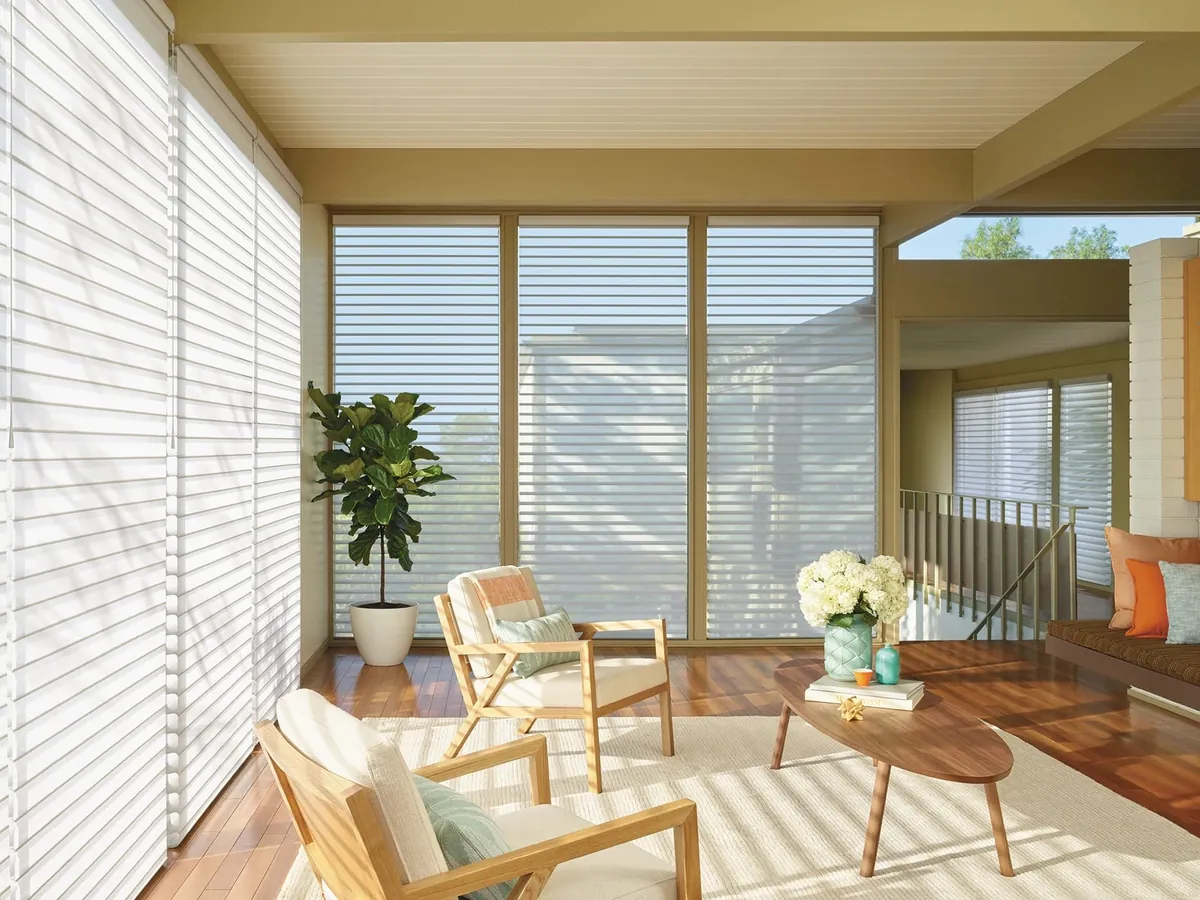
Hunter Douglas Dealer in Hingham
The complete Hunter Douglas line from a Gallery dealer, installed by certified Hunter Douglas installers.
Respecting a historic street
The houses along Main Street and near the harbor are part of a streetscape people look at closely. From outside, a period house reads best when its windows look calm and consistent: the same light tone behind every pane, nothing shiny, nothing that breaks the rhythm of the sash.
That points to a few simple principles for the street face. Keep the outward color of every covering on the front white, cream or a soft neutral that suits the trim. Choose products that sit inside the opening, so the casing and the sash stay visible from outside. Interior shutters are a natural fit, because they belong to the tradition of these houses and look orderly from the street whether open or closed.
Inside, you have far more freedom. A dining room can take a patterned roman shade or a stained wood blind, as long as what faces out matches the rest of the front.
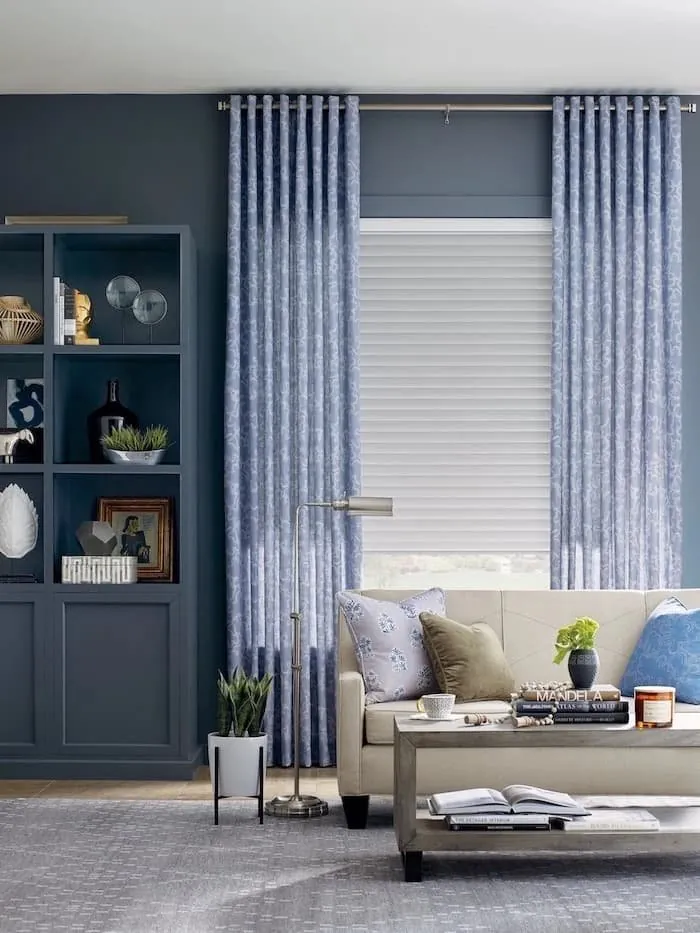
Small panes set deep in thick walls
The antique colonials and Federal houses have small sash, often with many panes, set back in walls much thicker than a modern house’s. The recess is deep, which is useful: a covering mounted inside it sits back from the room and almost vanishes when raised.
Honeycomb and roller shades suit this well, because both stack very small, so a small window keeps nearly all its glass when they are up. Shutters can sit within the recess too, with louvers in a size that suits the scale of the panes. Small louvers keep the look in proportion on small sash; larger ones belong on bigger modern windows.
Old openings can also be slightly out of square after a long life. When we measure, we check each one at several points, and where a frame is uneven, a covering fixed to the face of the casing hides the difference while leaving the room looking tidy.
Federal houses and their formal rooms
Federal houses are known for symmetry: a central door, often with a fanlight or sidelights, and evenly spaced windows on each side and on each floor. Inside, the front rooms are usually formal, with fine trim, fireplaces and tall proportions for their period.
These rooms suit coverings with a tailored line. Shutters fitted inside each opening suit the symmetry of the facade. Roman shades in a quiet fabric add softness without fuss. Drapery panels over a shade can frame a window in a formal room while the shade handles light and privacy. A fanlight or a transom over the door is usually left clear, so the entry hall keeps its daylight.
Because the facade is so regular, it matters that every front window looks the same from the street. One product and one outward color across the whole front keeps the house’s symmetry intact.
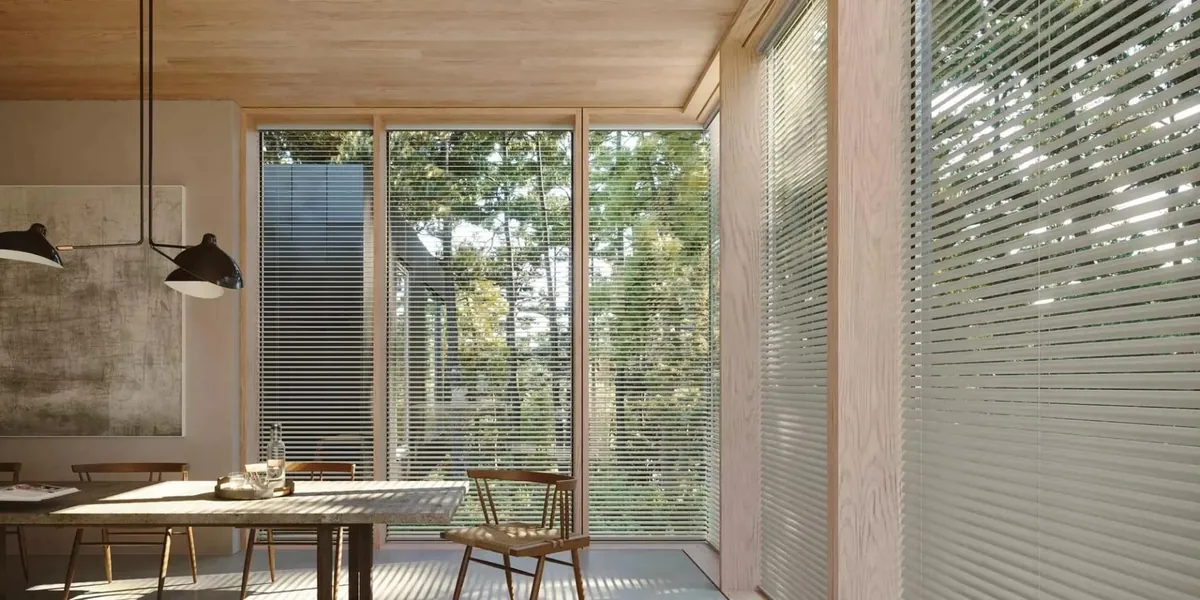
Rooms built around the harbor
Near the water, the best rooms in the house face the harbor, and the view is the point of the room. Anything at those windows should step aside when you want to look out, and help when the light gets too strong.
- Screen roller shades cut glare off the water while keeping the view. You choose the openness to balance the two.
- Sheer shadings give a soft, hazy view through fabric vanes and tilt to steer the light.
- Shades that raise fully clear the glass completely when you want the whole outlook.
- Shutters with louvers turned down block reflected light from the water while daylight still fills the room.
Afternoon sun off the harbor can be bright and low, and it comes in under any covering that only shades the top of the window. That is where PowerView helps: harbor-facing shades can lower on a schedule in the late afternoon and rise again in the evening for the sunset view.
Larger newer houses on wooded lots
Inland, the larger newer houses on wooded lots work differently. Windows are bigger and more numerous, often with tall glass in a family room or a two-story entry, and wide runs of windows across the back. Trees soften the sun and give privacy, so many rooms are not overlooked at all.
Here, the main jobs are managing light, controlling glare on screens and making tall windows easy to operate. Honeycomb shades and rollers handle large openings neatly, and several shades can share a headrail across a wide run so they move together. Tall windows that are hard to reach are prime candidates for PowerView. Bedrooms usually get a darker fabric for sleep, while a study looking into the trees can stay light and bright.
Even with trees around, a lit room at night can be seen from the road through bare winter branches, so rooms used after dark still benefit from something that closes fully.
Your consultation at home
Consultations for the town come out of our Canton shop-at-home base in vans full of samples, which means we can bring the showroom to you. For a period house, that matters: the depth of each recess, the color of the trim and the look from the street all need to be judged in place. For a harbor room, you need to see the view through each sample.
- Pick a date on the Request a Consultation form, or ring us from the call button.
- Your consultant arrives bringing sample books, screen swatches, painted and stained slats, a shutter section and a PowerView handset to try.
- On a period house we begin outside, standing on the street to agree how the front should look; on a harbor room we begin with the view.
- Each sample is held in the window so light, outlook and color are judged on the spot.
- Every recess is measured in width, height and depth, at more than one point.
- A free estimate is yours to keep, and you decide in your own time.
The Canton shop-at-home page describes the service, and what happens at an in-home consultation explains a visit in more depth.

Shutters in a period house
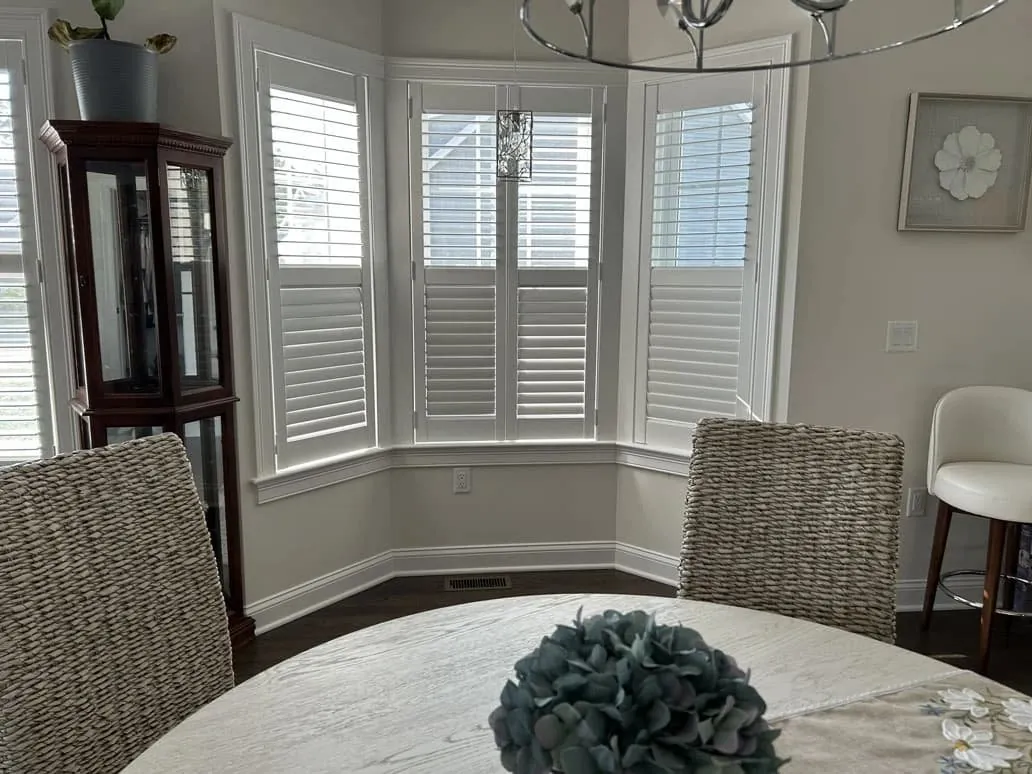
Interior shutters suit historic houses for good reason. Each panel is made for its own opening, the louvers give fine control of light on small sash and the look fits the age of the house. From outside, a row of shutters reads as orderly and calm.
Painted shutters in white or a soft color match painted trim. Stained wood shutters suit a room with stained woodwork or wide plank floors. On a tall window, a shutter divided into an upper and a lower panel lets you open the top for daylight while the bottom stays closed for privacy at street level. Our guide to shutters for older windows has more.
Wood tones and fabrics for older rooms
Not every room in an antique house wants white. Wood blinds in a tone that matches the floors or the furniture can look completely at home, and roman shades in a linen-look fabric sit quietly against plaster walls. For a study or a keeping room, a woven wood shade adds an earthy texture.
The key is to keep the outward face consistent on the street side and let the inside suit the room. Window treatments in Hingham, MA, in a period house often combine shutters in the formal front rooms with fabric shades in the bedrooms and a wood blind in a study, all reading as one house from outside.
Open-plan living at the back of a newer house
Many of the inland houses put kitchen, eating area and family room together in one long space facing the woods, lit by a broad band of windows and usually a door or two onto a deck. It is the busiest part of the house, and the coverings get used many times a day.
Across a broad band of glass, shades that move as one keep the wall tidy, and a screen fabric takes the sting out of sun dropping through the trees late in the day. A glass slider is best served by a covering that draws to the side, such as a vertical honeycomb. Hinged French doors want a shade or shutter fixed to each leaf, so it travels with the door. Under a canopy of trees, a lighter fabric often keeps the room from feeling dim.
Bedrooms, old and new
In an antique house, bedrooms upstairs may sit under lower ceilings with small windows tucked under the eaves. Inside-mount honeycomb or roller shades keep them uncluttered and stack small. In the newer houses, bedrooms are larger with bigger windows, and room-darkening honeycomb or roller fabrics keep early light out. Shutters closed tight do the same, with privacy in the bargain.
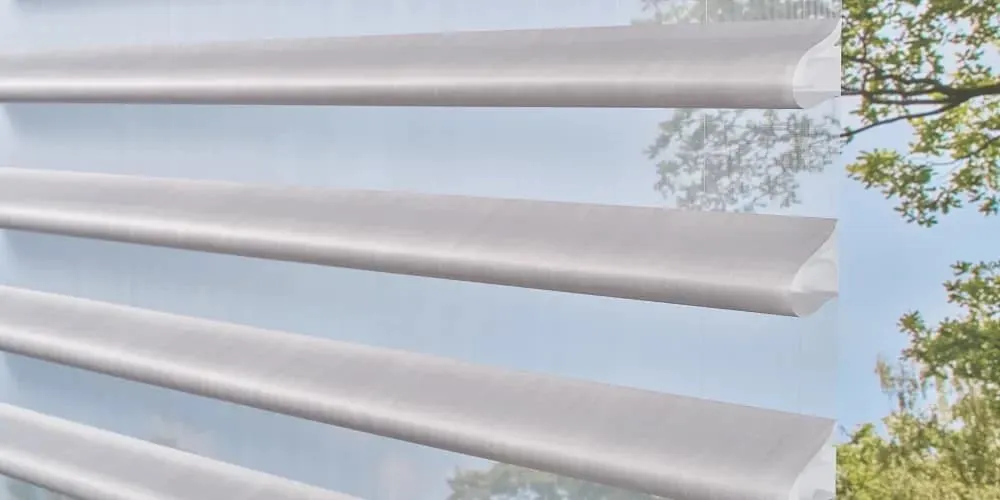
PowerView for harbor rooms and tall glass
Motorization makes sense in two places especially. In a harbor room, the light changes through the day, and PowerView schedules can lower the shades against the late sun and raise them for the evening view. In a newer house with tall windows, motorized shades take the reaching out of glass that would otherwise need a step ladder. Shades can also be grouped by room or floor and run from a remote or an app. We plan how each motor is powered at the visit. Read the motorized blinds and shades in Hingham page for the details.
Entry halls, fanlights and stair windows
The entrance of a Federal house is often its finest feature: a paneled door, a fanlight above and sometimes narrow sidelights on each side. In an antique colonial, the front door may open into a tight entry with a steep stair and a small window at the turn. The newer houses inland often have a two-story foyer with a tall window over the door.
Each of these calls for a light touch. A fanlight is almost always left uncovered, both for the daylight it gives the hall and because it is part of the house’s face to the street. Sidelights can take a slim fabric shade or a narrow shutter panel if privacy at the door matters. A small stair window in an old house suits a plain inside-mount shade in the same color as the rooms nearby. Tall foyer glass in a newer house is a natural place for PowerView, since nobody wants to climb to it. Planning window treatments in Hingham, MA, room by room includes these spaces, so the first thing a visitor sees is as finished as the rest.
Porches, sunrooms and screened rooms
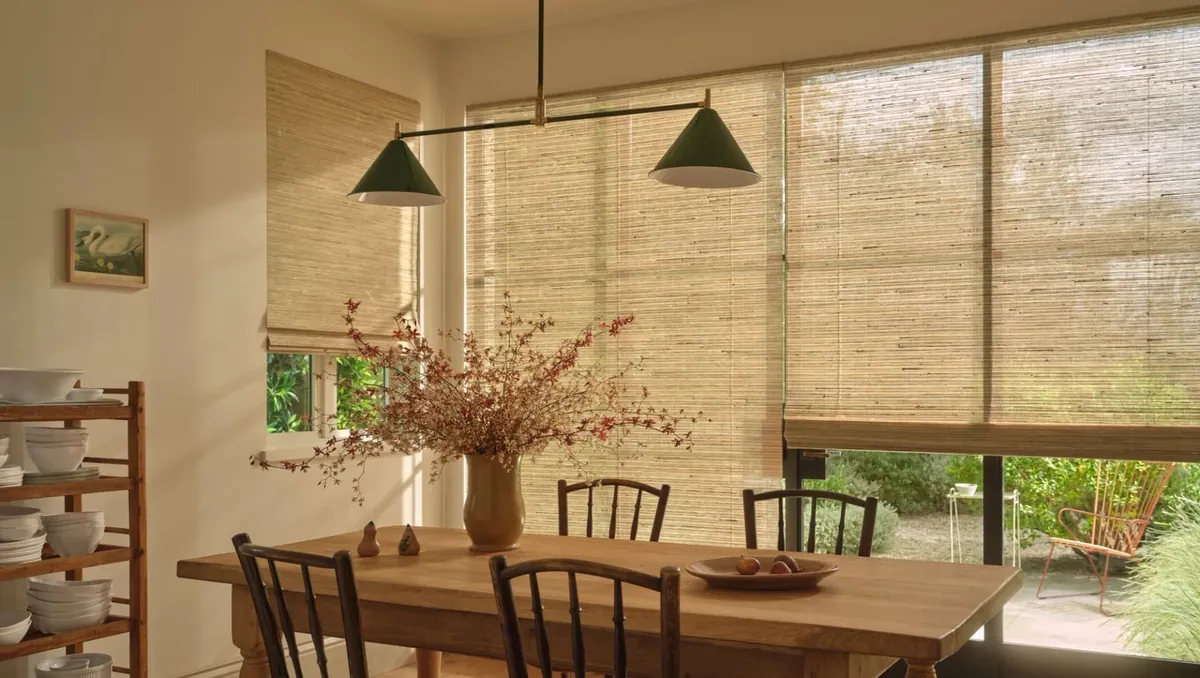
Both the old houses and the new often have a room that sits half outdoors: a sunroom added to an antique colonial, a screened porch off a newer kitchen, a glassed-in room facing the harbor. These spaces take the most light of any room and usually face the best outlook.
Screen roller fabrics keep the outlook while softening the sun, and they look crisp against wood and wicker. Woven shades suit a relaxed porch. On a harbor-facing sunroom, where low afternoon sun reflects off the water, motorized shades that lower together on a schedule save a lot of trips around the room.
Coverings you already have
An old house sometimes arrives with blinds or shades from earlier owners. A frayed cord, a shade that creeps down or a tilt that has seized is often fixable, and we welcome the chance to look. The blind and shade repair page explains more.
The value of a Gallery dealer
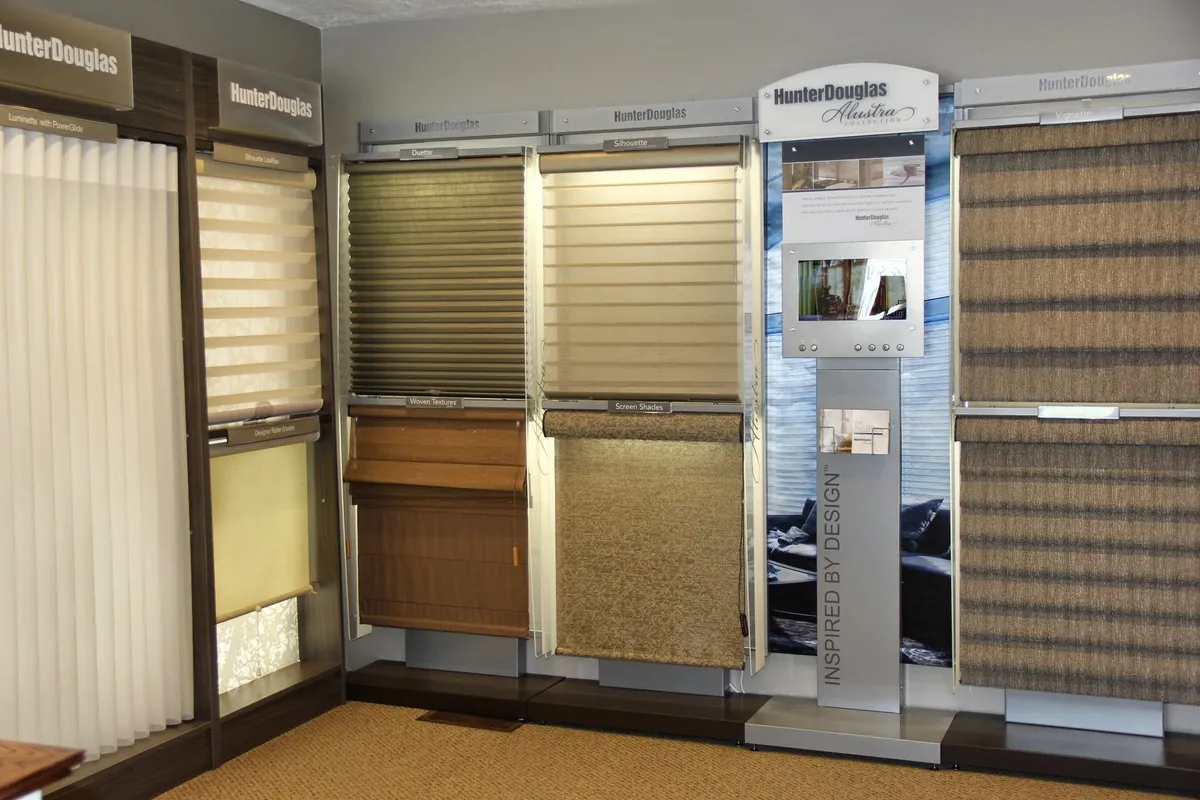
Gallery dealer status with Hunter Douglas means nothing in the line is off limits, whether the house is an antique colonial on Main Street, a Federal house near the water or a newer home among the trees. Period shutters, harbor-friendly screen rollers, sheer shadings, woven woods and whole-house PowerView all come through the same place.
Certified Hunter Douglas installers hang what we sell. Estimates are free, interior design help is on offer, and we repair coverings that are already up, so the window treatments in Hingham, MA, that we take on can be as small as one fanlight-side window or as large as an entire house.
Questions from Hingham
My house is on Main Street. What looks right from the street?
Coverings that sit inside the opening, with a white, cream or soft neutral outward face on every front window. Interior shutters are a traditional choice that looks orderly from outside.
How do I keep the harbor view and still control glare?
Screen roller shades cut glare while keeping a clear view, and sheer shadings give a soft view through fabric vanes. A shade that raises fully clears the glass when you want the whole outlook.
Will shades fit small, deep-set antique windows?
Yes. Honeycomb and roller shades mounted inside the recess stack very small and almost disappear when raised. We measure each opening at several points to allow for uneven frames.
My newer house has very tall windows. How are those operated?
PowerView motorization lets you raise and lower tall shades by remote, app or schedule, so nobody needs to reach the top of the glass.
Do you charge to prepare an estimate?
No. Each estimate is free, and accepting it is entirely up to you.
Where to begin
For a period house, begin at the front, because those windows decide how the house looks from Main Street. By the harbor, begin with the room that faces the water. Inland, begin wherever the tall glass or the worst glare is. Book a consultation, and a consultant will arrive with samples, measure each opening, depth included, and give you a free estimate to keep. Franklin is our closest showroom if you want to browse as well; the Franklin showroom page gives its location and opening times. Neighboring towns have their own pages, among them Weymouth and Rockland.
Our window treatments page lays out every shade, blind, shutter and drapery line we sell.