
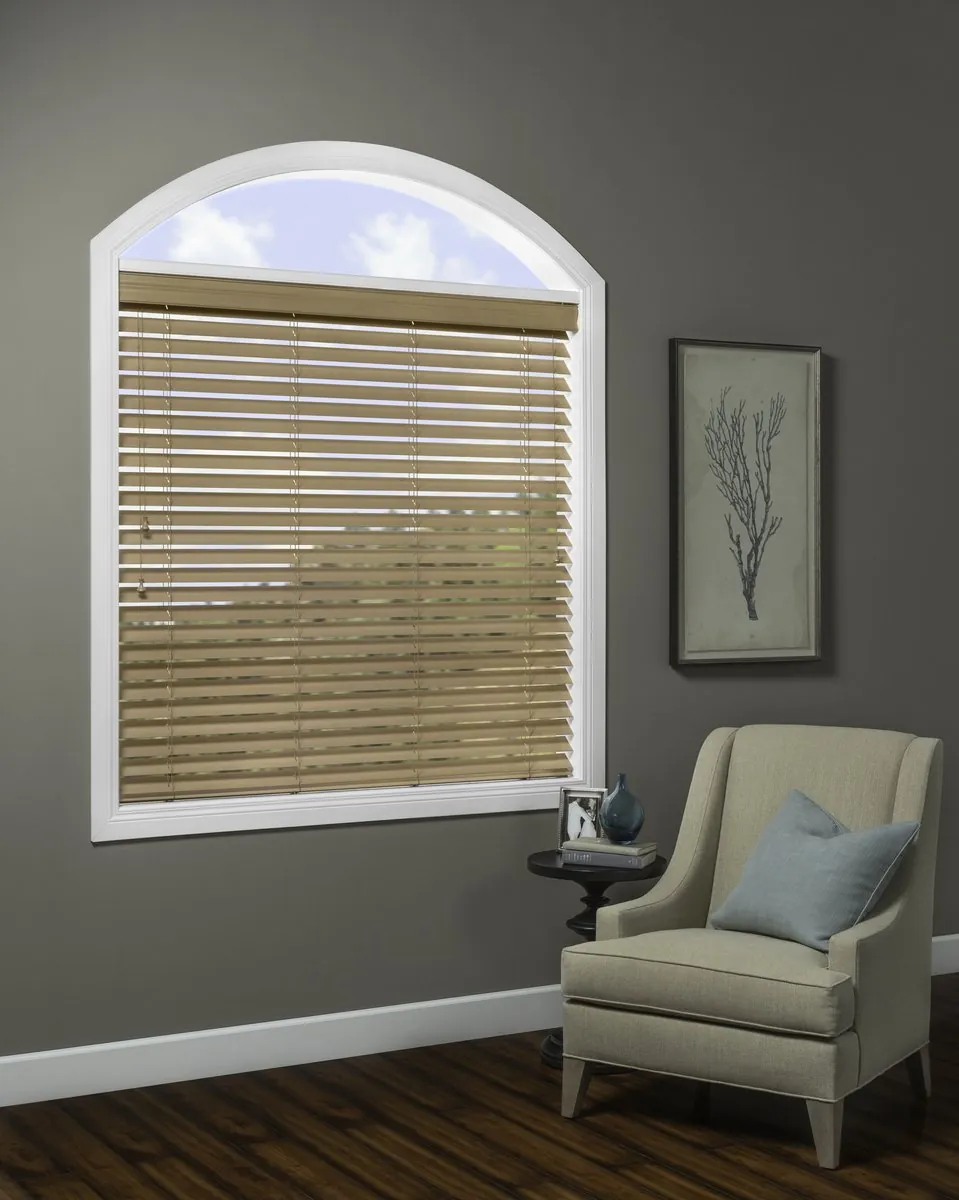
Three kinds of house, one town
Our main showroom is in Dartmouth, and the town’s houses could hardly be more varied. Down in Padanaram the older colonials and shingled capes line the lanes near the harbor. Off Faunce Corner Road and Slocum Road, whole neighborhoods of ranches went up in the post-war building years and after. And out toward Russells Mills the farm properties still have their deep-set nineteenth-century sash. Planning custom blinds in Dartmouth, MA means planning for all three.
Each asks something different of a blind. A Padanaram cape has small, close-set windows under the eaves. A ranch has broad living room glass and a slider to the yard. A farmhouse has walls thick enough that the window sits well back from the room, with a deep sill in front of it.
Then there is the light. In South Dartmouth the water-facing rooms look across Apponagansett Bay, and late in the day the low sun glances off the water and throws hard glare straight in. Slats you can tilt are one of the few coverings that let you cut that glare and still see the boats.
The blinds we fit in Dartmouth homes
Hunter Douglas makes blinds in four broad families, and every one of them earns a place in custom blinds for Dartmouth, MA houses somewhere. We bring them all to your door.
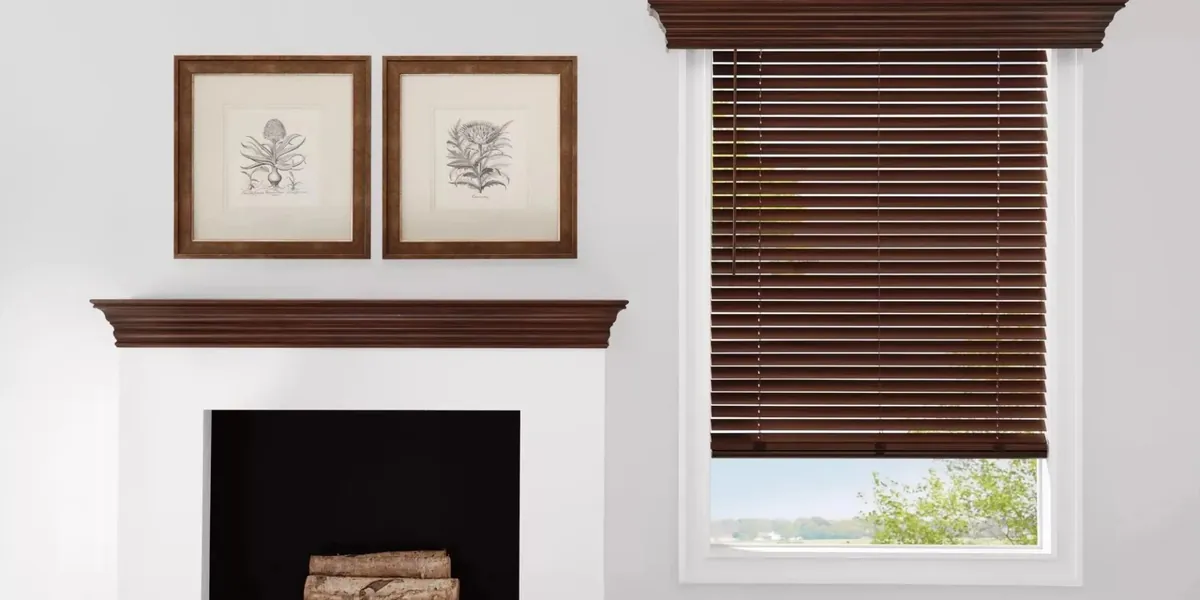
Real wood blinds
Warm grain and solid slats, stained or painted. At home in a Padanaram colonial’s front room or a farmhouse parlor with original woodwork.
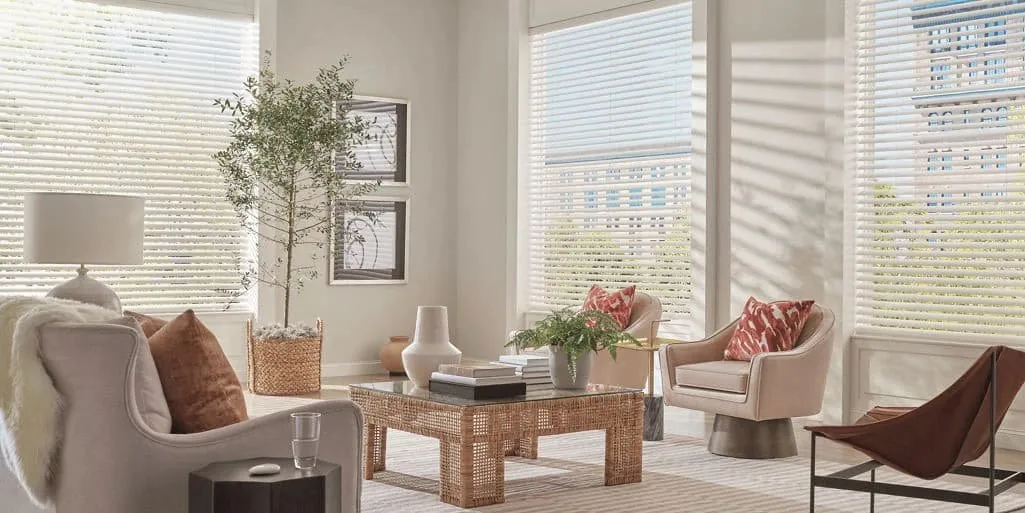
Faux wood blinds
A painted-wood look in a material that copes with steam and damp. Kitchens, baths and a ranch’s back rooms are where these usually go.
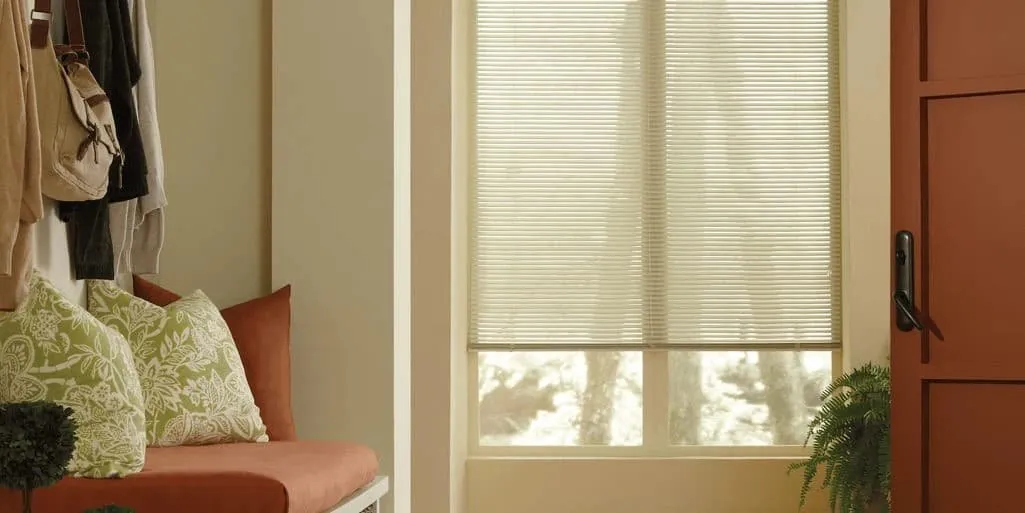
Metal blinds
Thin, light slats for a narrow entry window, a mudroom or a home office, where a slim profile matters more than a heavy one.
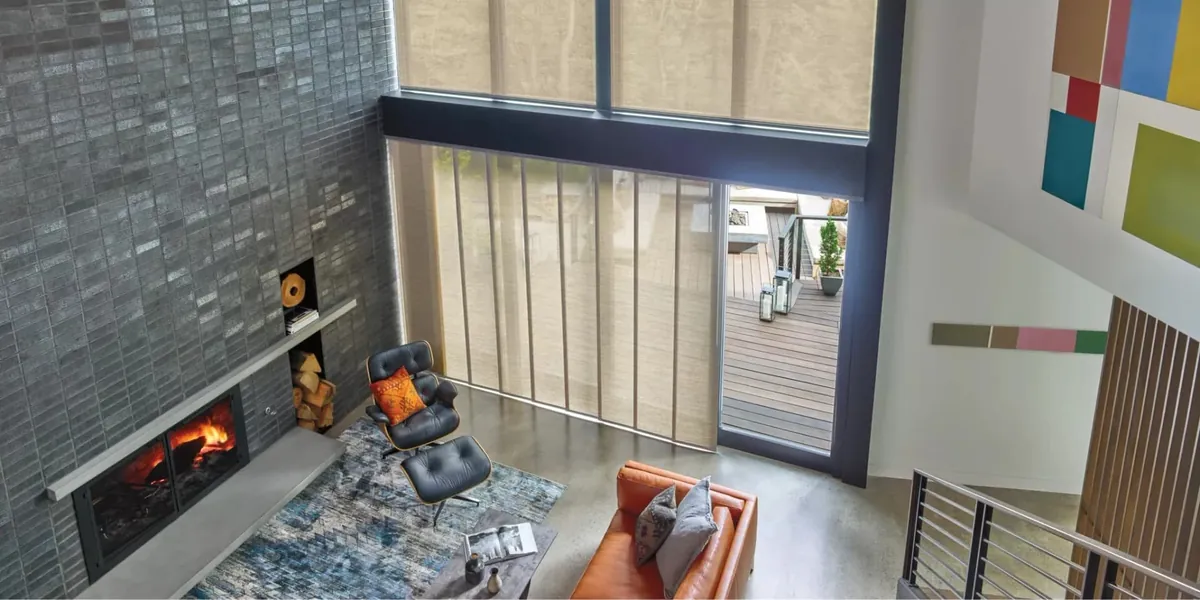
Vertical blinds and gliding panels
For the slider out of a ranch family room. Vanes or panels travel aside on a track, so the door opens without lifting anything.
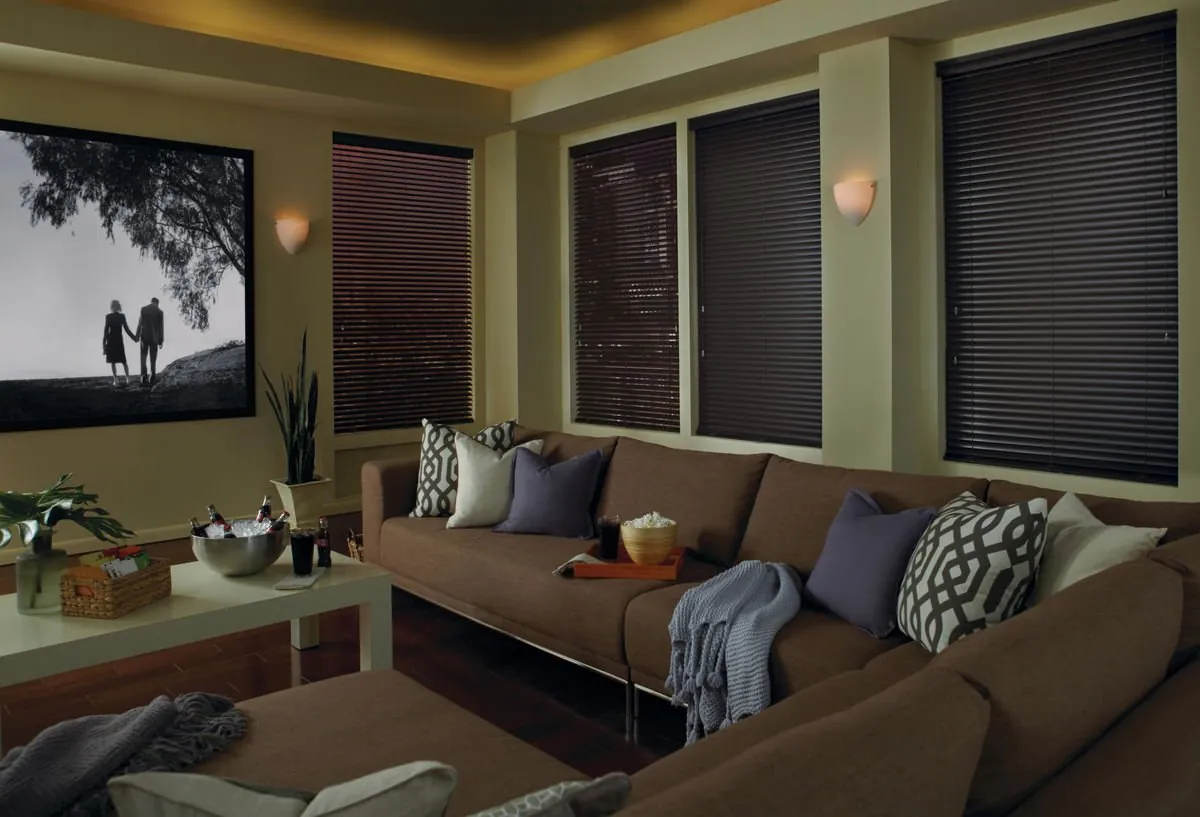
Darkening a media room
A deep-colored slat closed tight dims a basement den or a converted garage room far more than a pale one, without hanging heavy curtains.
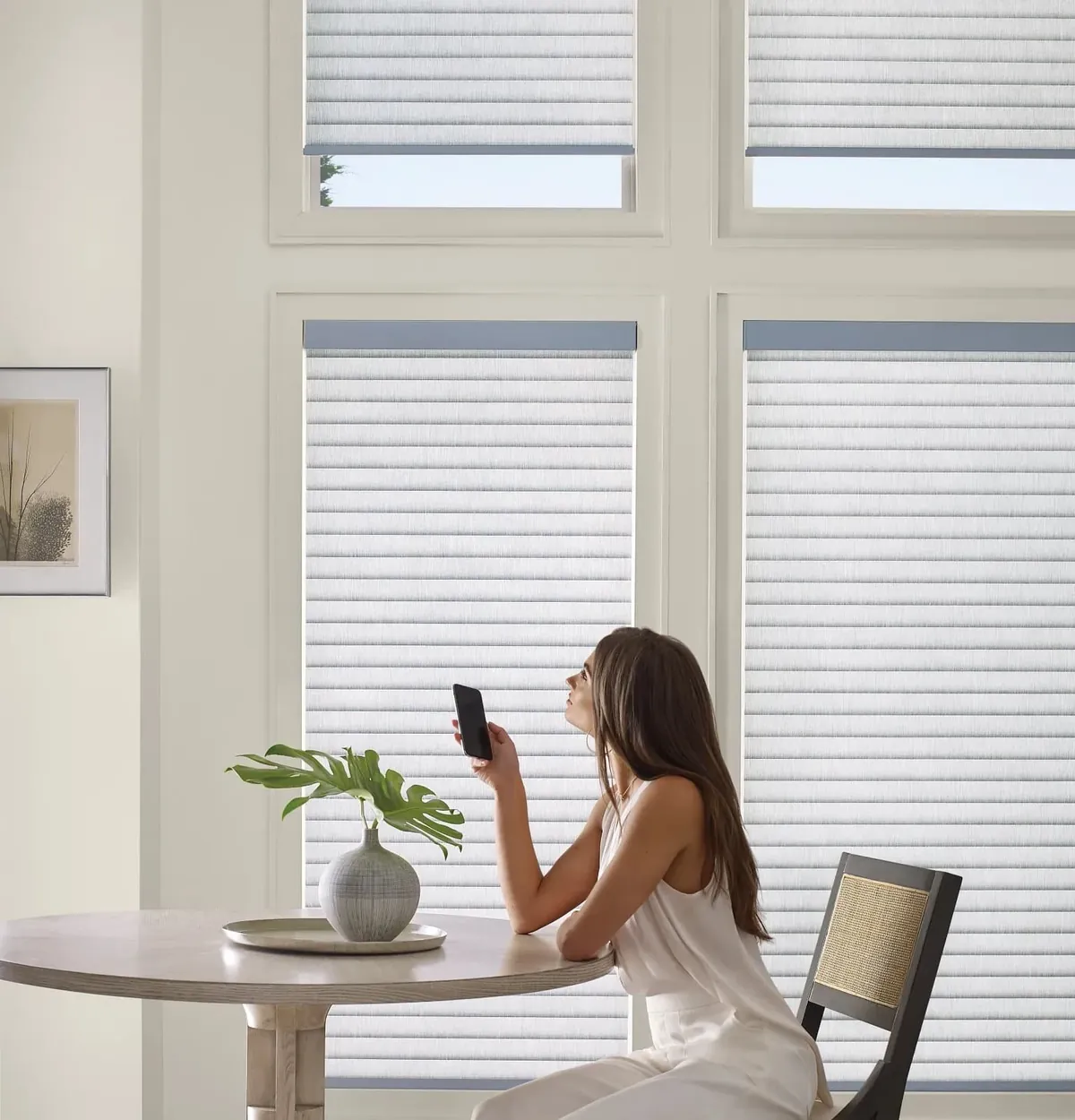
PowerView control
Motorized tilt and lift from a remote or the app, on a schedule if you like, for high windows and for the bay-facing rooms that need closing every afternoon.
Afternoon glare off Apponagansett Bay
In South Dartmouth, the water-facing rooms take their toughest light of the day in the afternoon. The sun is low, it reflects off the bay, and it lands right at eye level in a living room or kitchen. That is the hour most people reach for a covering, and also the hour they most want to look out.
A horizontal blind handles that conflict better than almost anything else. Tilt the slats downward and you look out and slightly down at the water while the direct sun above the horizon is blocked. Tilt them up as the sun sinks lower and the light bounces to the ceiling instead of into your eyes. The view never has to disappear completely for the glare to go.
Light colors on the slat help in a sun-struck room, because they reflect heat rather than soaking it up, and they keep a bright room feeling bright when the blinds are closed. Afternoon sun across salt water is hard on finishes, so on the most exposed windows we lean toward paints and faux wood that hold their color.
Water-facing houses in the village also live with salt in the air. Faux wood slats and cordless lift systems leave less exposed hardware to suffer from it, and we will tell you where a real wood blind is better kept to the inland side of the house.
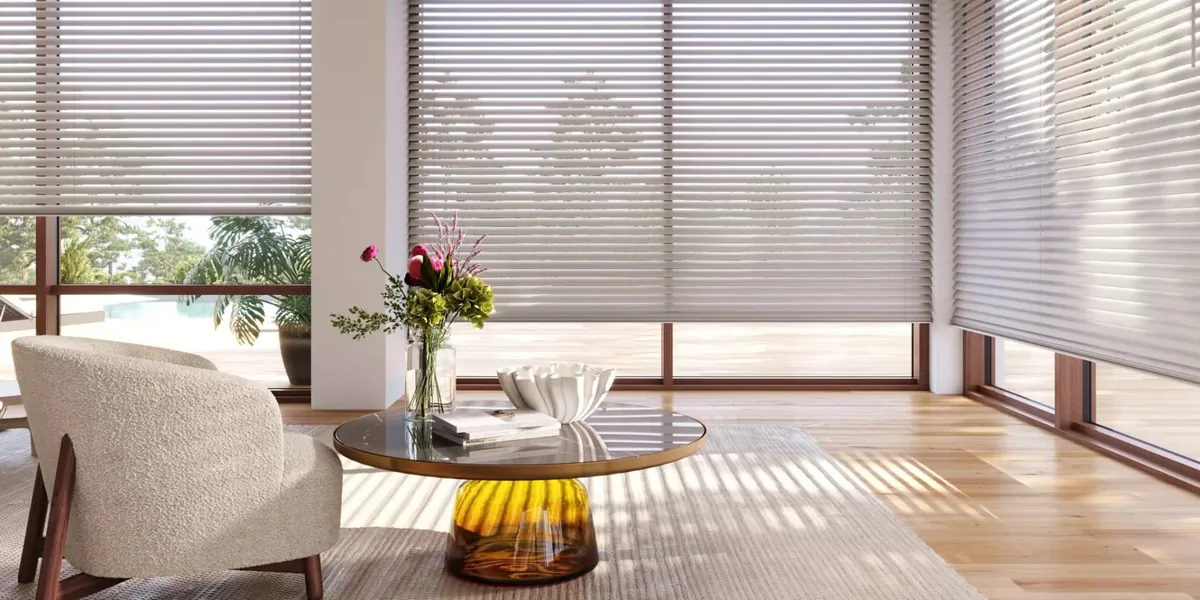
Colonials and capes in Padanaram
Padanaram’s older houses were built with modest windows, and many still have them: double-hung sash with narrow trim in the colonials, and short windows tucked under the roof line in the capes. On those openings a blind has to be neat above all. A bulky headrail or a stack that hangs low across a small window looks clumsy and steals light.
Inside mounting is the natural choice where the frame allows it, because the blind sits within the opening and the trim stays clear. In a cape bedroom with a knee wall and a low window, an inside-mounted wood or faux wood blind keeps the window looking like part of the architecture rather than something hung over it.
Capes often have a dormer or two, and dormer windows are deep, small and hard to reach. A cordless blind is the easiest to work there, since you only need to reach the bottom rail. For a dormer you cannot comfortably reach at all, motorized tilt saves leaning across a bed or a desk every morning.
Privacy is part of village living. Houses near the harbor sit close to the lane, and a front room can be a few steps from passers-by. Tilting the slats with the rounded side facing into the room closes off the view from outside while still letting daylight in at the top.
Shingled capes near the water also tend to have a mix of window sizes, because many were enlarged or extended over the years. A front window from the original house may sit beside a newer, wider one in the addition. Ordering every blind to its own opening, in the same slat color and size, ties those windows together so the front of the house reads as one, while each blind still fits its own frame exactly.
Ranches off Faunce Corner and Slocum Road
The ranch neighborhoods behind Faunce Corner and along Slocum Road are full of practical one-story houses with wide living room windows, a kitchen over the sink, and a slider out to the back. Many have been updated inside, and blinds are often part of that refresh.
A wide picture window is usually best served by two or three blinds rather than one very wide one. Each blind is lighter to raise, the slats are less likely to sag across a long span, and you can open one section while leaving the others closed. We line up the breaks with the window’s own divisions so they disappear.
The slider gets vertical blinds or gliding panels. Either draws aside with one hand, and the vanes rotate to steer the light when the door is closed. A horizontal blind on a door you use all day becomes a chore quickly, so we rarely suggest it there.
Kitchens and bathrooms in these houses take faux wood almost every time. It handles steam from the stove and the shower and wipes clean, and it can be matched in color to wood blinds elsewhere so the house looks consistent.
Headrails, valances and the finished look
A blind is more than its slats. The headrail at the top holds the tilt and lift mechanism, and on an outside mount it sits in plain view above the window. In a ranch with simple trim that rarely matters, but in a Padanaram colonial with a moulded casing it can. A matching valance or a cornice box covers the headrail and gives the window a finished top edge, the way the cornice on a wood blind beside a fireplace makes it look like part of the room.
Slat color, ladder tape or cord, and the tilt control all change the final look as well. Cloth tapes in a contrasting color give a wood blind a tailored, traditional feel that suits an older house. Plain cords keep the slats looking clean in a modern kitchen. A tilt wand hangs neatly at one side, and on motorized blinds there is nothing hanging at all. We lay out these details at your windows so you can see the combinations together rather than imagine them from a catalog.
Repairs, and blinds you already own
Not every visit is about new blinds. A blind that has stopped tilting, a frayed lift cord or a broken bracket can often be put right. We repair blinds and shades, including ones you bought elsewhere, and a look at what has failed also tells us what to suggest if a window does need something new. Many custom blinds in Dartmouth, MA have years of work left in them once a worn part is replaced, and we will say so when that is the case.
Deep sash on the Russells Mills farms
Out toward Russells Mills the houses are older and the walls are thicker. Many farm properties still have nineteenth-century sash set well back into the frame, with a deep sill in front of it. That depth is a gift for blinds: there is generally plenty of room to mount a headrail inside the opening, so the blind hides almost completely when raised and the whole frame stays on view.
The caution is the shape. Old frames have moved with the house, and a window can be slightly out of square, wider at one end or with a sill that runs downhill. An inside-mounted blind made to the wrong measurement either binds or leaves a visible wedge of light. That is why we measure each opening at several points rather than once.
Real wood suits these houses well. A stained wood blind against old trim and plaster has the right weight for a farmhouse front room, and painted wood looks at home in a bedroom with white woodwork. Faux wood goes in the kitchen and the back hall, where boots and wet coats come in.
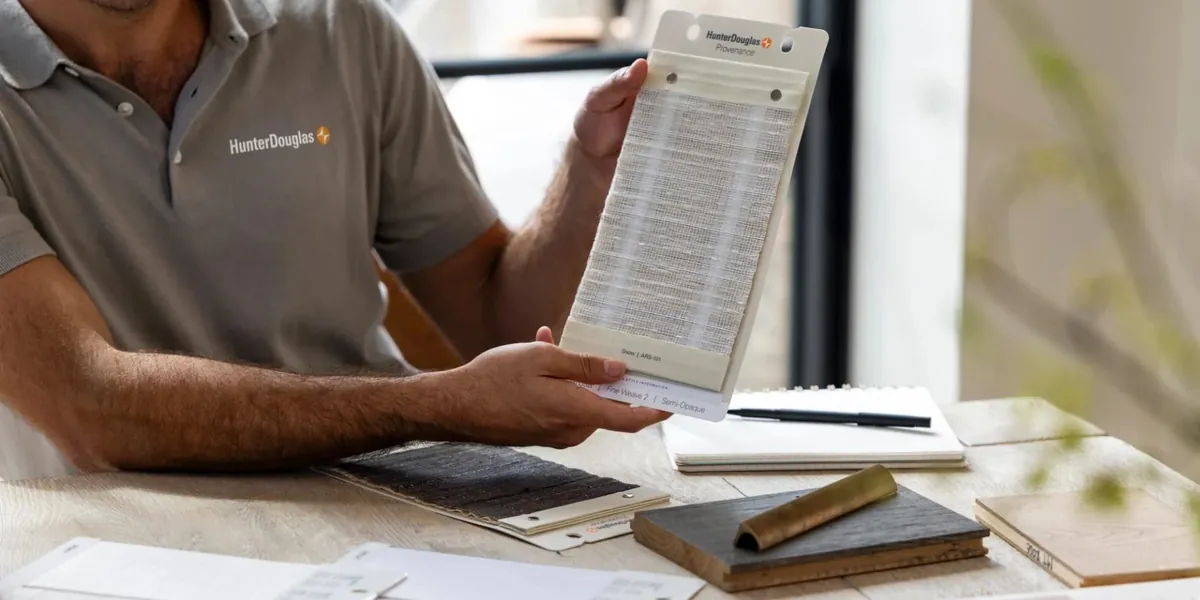
Your in-home consultation, step by step
Our showroom is in town, but many Dartmouth customers still prefer that we come to them, because the light in your own rooms decides more than any showroom can. Our vans carry samples of every blind, so we bring the showroom to you.
- Request a consultation online or with the call button, and we will agree a time that suits you.
- We arrive with wood, faux wood and metal slats, vertical vanes and the lift and tilt options.
- We start in the room that matters most to you, whether that is the bay-facing living room or a dark back bedroom.
- You tilt real samples at your own windows, at the time of day that gives you trouble if we can arrange it.
- We measure each window, check the depth for inside mounting and look for anything in the way, such as a crank handle or a radiator.
- You receive a free estimate and can take your time deciding.
Interior design consultations are offered too, if you would like help choosing colors, valances or the treatments that sit beside the blinds. You can read about what happens at an in-home consultation before the visit.
Picking a material for each room
Most houses end up with more than one kind of blind. A quick guide to how it usually falls in Dartmouth:
- Living and dining rooms in older houses: real wood, from the Hunter Douglas Parkland line, stained or painted to suit the trim.
- Kitchens, bathrooms, mudrooms: faux wood, which looks like paint on wood and does not mind moisture.
- Home offices and narrow side lights: metal blinds, with slim slats that keep a small window from feeling crowded.
- Sliders and wide glass doors: vertical blinds or Skyline gliding panels.
The wood blinds page compares real and faux wood in more depth, and our main custom blinds page shows every option. Choosing custom blinds in Dartmouth room by room, with the street-facing windows matched in color, gives you the right material where it counts and a tidy look from outside.
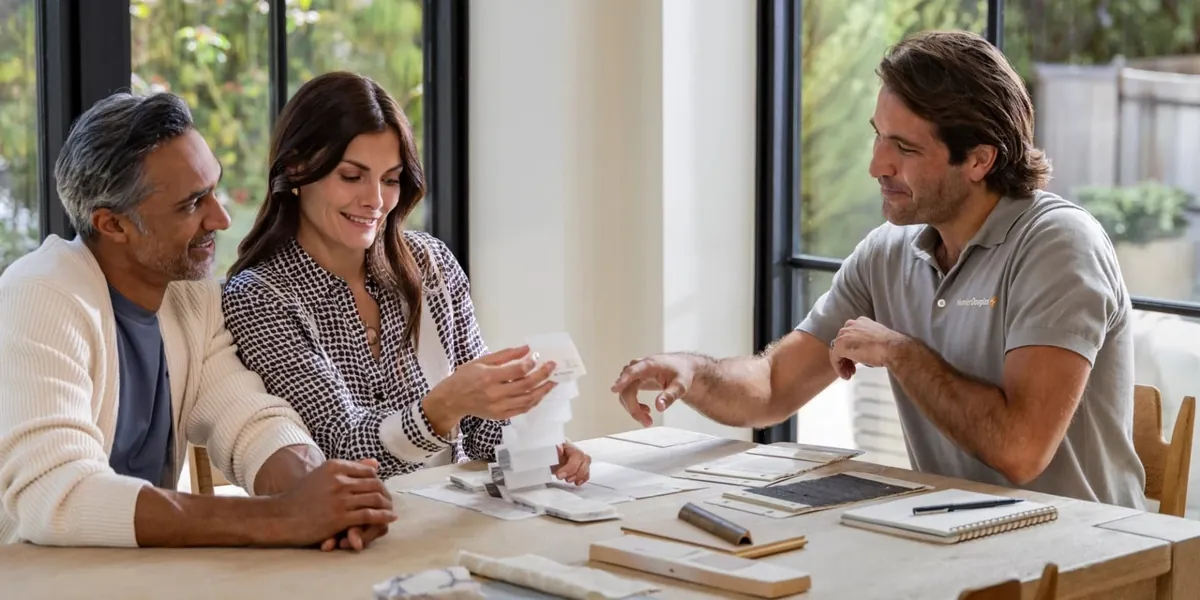
How we measure and install
Made-to-measure only works when the measuring is right. On the older houses near the harbor and out on the farms, that takes patience.
- We take the width of every opening at the top, the middle and the bottom, and use the narrowest for an inside mount.
- We take the height at both sides and the center and check whether the sill is level.
- We check the depth at the head of the frame and note any hardware that could block the headrail.
- We go over the mount, slat size, color and lift choice with you before the order is placed.
- Once the blinds arrive, our certified Hunter Douglas installers hang them, level the headrails, test every tilt and lift and show you how each one works.
The result is custom blinds in Dartmouth, MA that look as though they came with the house, fitting edge to edge with no wedge of light at the sides.
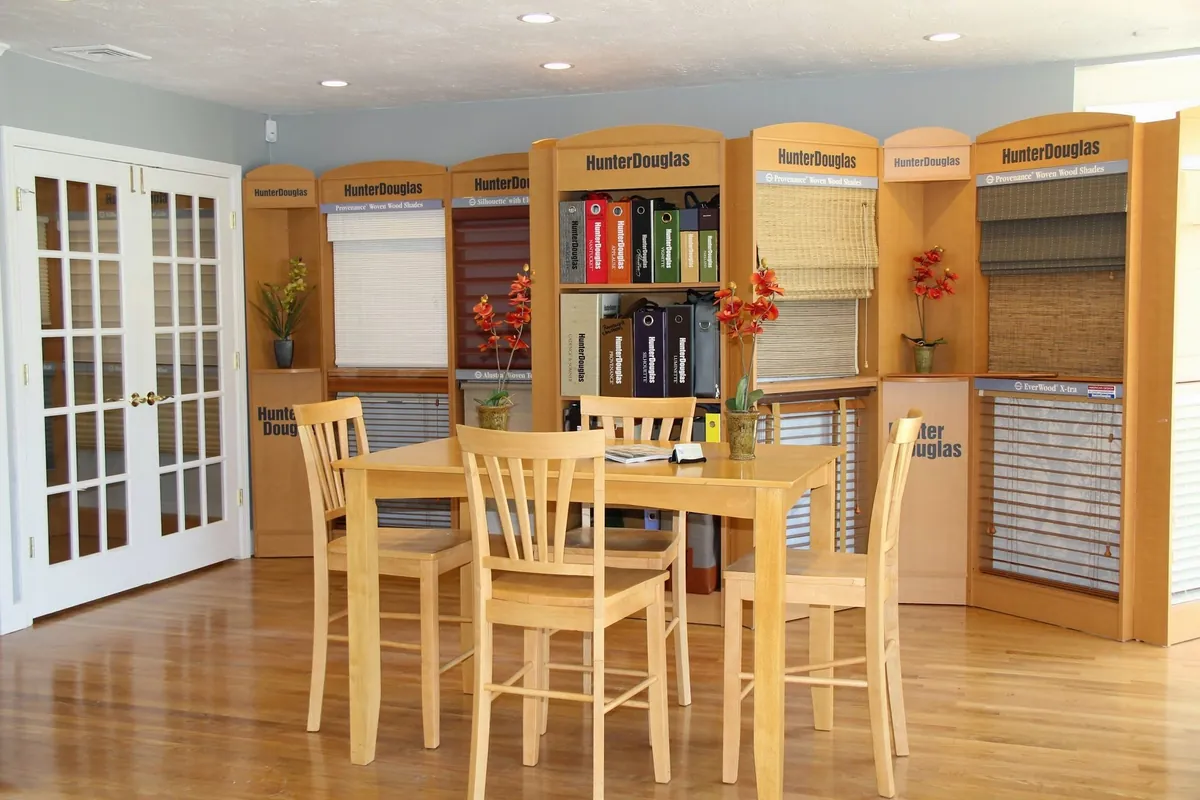
A Hunter Douglas Gallery dealer in your own town
Blinds & Designs is a Hunter Douglas Gallery dealer. The Gallery name is Hunter Douglas’s own mark for dealers who meet its standards, and for you it means access to the whole blind range, from Parkland wood and EverWood faux wood to metal and vertical blinds.
Our installers are certified by Hunter Douglas, so each blind goes up to the maker’s standard. If a tilt mechanism or a cord ever wears out, we repair blinds and shades as well, including ones you already own.
We also carry Hunter Douglas shades, shutters and drapery and window covering automation, so one consultation can cover every window. For other rooms, see roller shades in Dartmouth or plantation shutters in Dartmouth, or every service we offer locally on our Dartmouth page.
Our North Dartmouth showroom is right here in town if you would like to see the blinds in person before we visit.
Questions from Dartmouth
Can blinds cut the late-day glare off the bay without hiding the view?
Yes. Tilt the slats downward and you can still look out at the water while the low sun is blocked. As it drops further, tilting the slats up sends the light to the ceiling instead of into your eyes.
Will an inside mount work on my old farmhouse windows?
Deep nineteenth-century frames usually have room for an inside mount. The thing to check is whether the frame is still square. We measure at several points and tell you if an outside mount would hang better.
What do you suggest for a ranch slider?
Vertical blinds or Skyline gliding panels. Both draw to one side so the door opens freely, and both can be turned or moved to control light when the door is closed.
Which blinds work in a cape bedroom with a low dormer window?
A cordless wood or faux wood blind, inside mounted if the frame allows, keeps the dormer tidy and is easy to work by the bottom rail. Motorized tilt is an option for a dormer that is hard to reach.
Is there a charge for the estimate?
No. Once we have measured, you get a free estimate for the blinds you are considering. Request a consultation and we will come to you with samples.
Ready when you are
Seeing a slat tilt at your own window settles most questions in minutes. Request a consultation and we will bring every kind of blind to your home, measure each window and leave you with a free estimate. Prefer to talk first? Use the call button to reach our North Dartmouth showroom, or drop in and look around.