
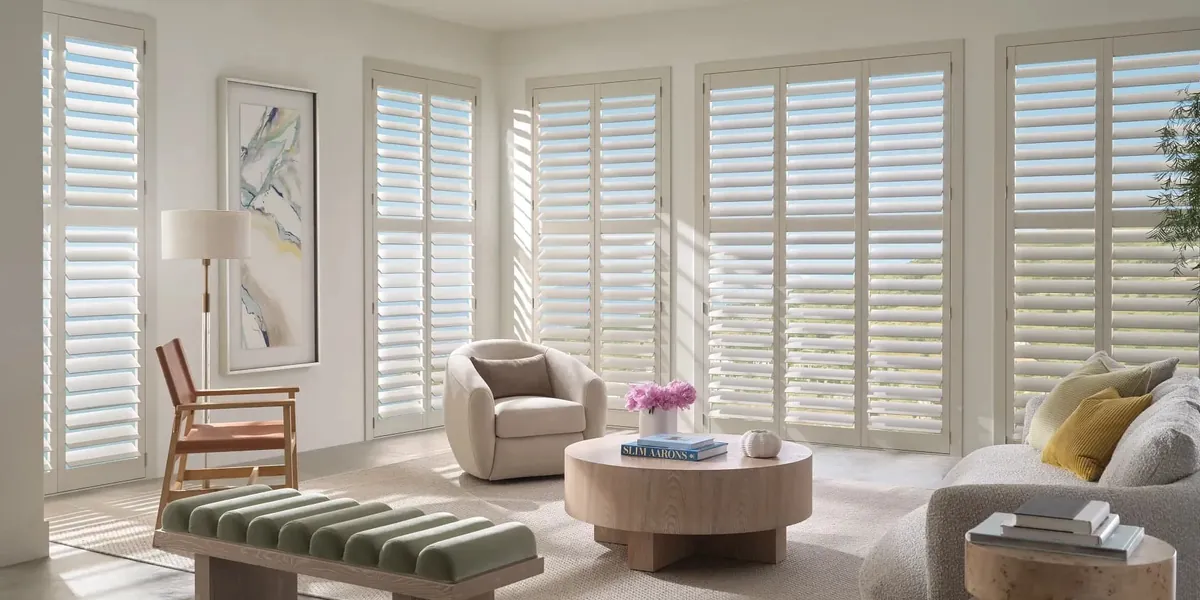
Bay glare, deep sills and a town of mixed houses
Dartmouth is our home town, and it is hard to think of a place with a wider spread of windows inside one set of town lines. Down in Padanaram there are older colonials and shingled capes with small-paned sash. Up near Faunce Corner and along Slocum Road, whole neighborhoods of ranches went up in the sixties and seventies with wide picture windows. Out toward Russells Mills, old farmhouses have sash set so far back in thick walls that the sill makes a shelf. Plantation shutters in Dartmouth, MA, have to suit all three.
Then there is the bay. Rooms in South Dartmouth that face Apponagansett Bay take the full force of the afternoon sun, reflected straight off the water. By three or four o’clock a west-facing living room can be too bright to read in and too warm to sit in.
A shutter answers that better than most coverings, because you can angle the louvers against the sun without losing the view. Because each one is built to the exact opening, it also suits windows that never came in a standard size, which describes a good share of the houses in town.
The options that shape plantation shutters in Dartmouth, MA
Once the collection is chosen, these are the details that make a shutter fit the room. We bring examples of each so you can try them against your own windows.
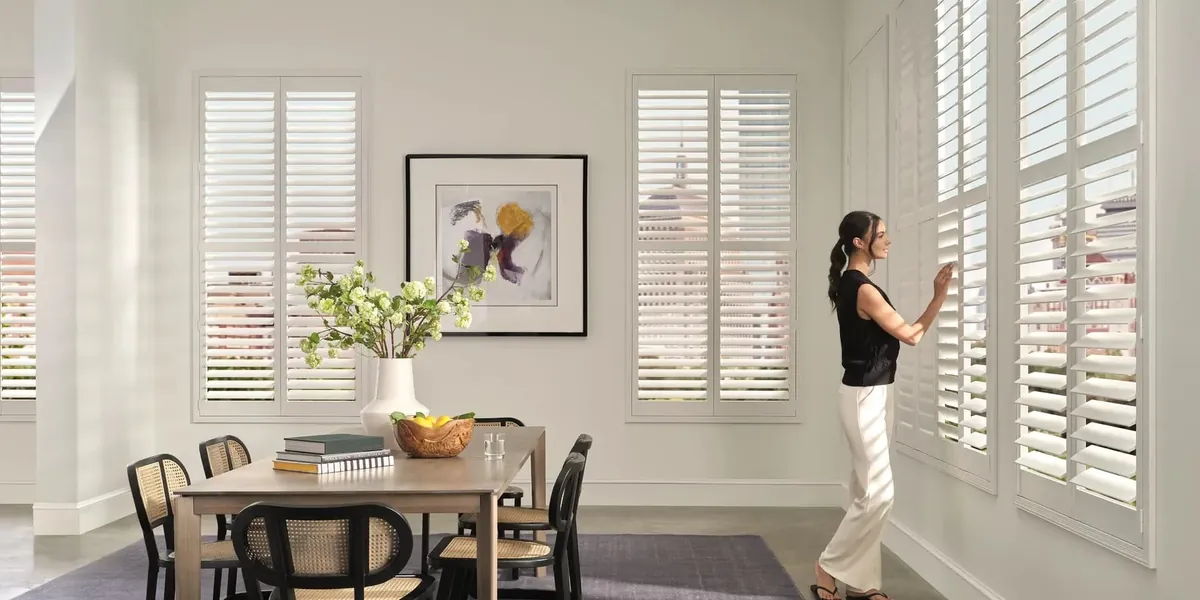
Wider louvers
Fewer blades across the glass and a clearer view when open. A good match for a ranch picture window or a room looking over the bay.
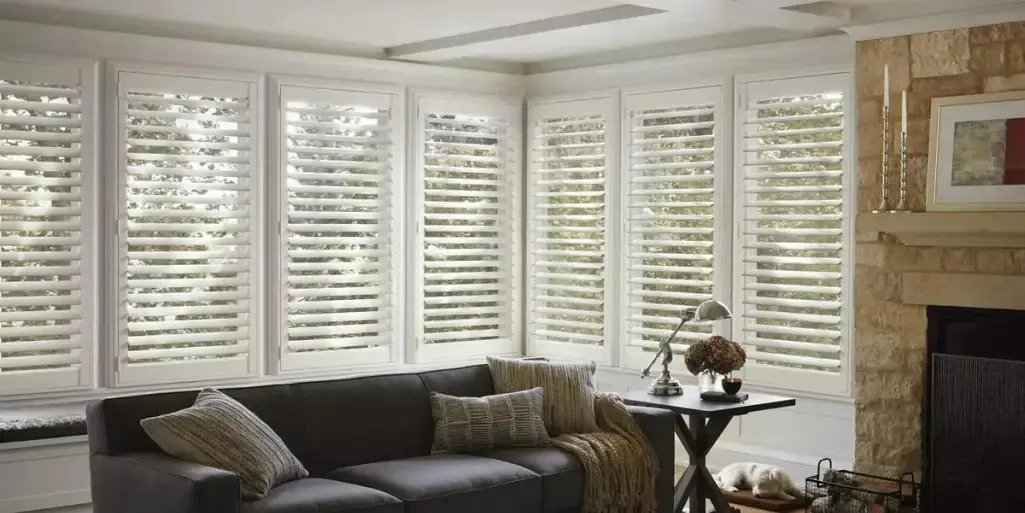
Divider rails
A rail across a tall panel so the upper and lower louvers tilt separately: privacy below, daylight above.
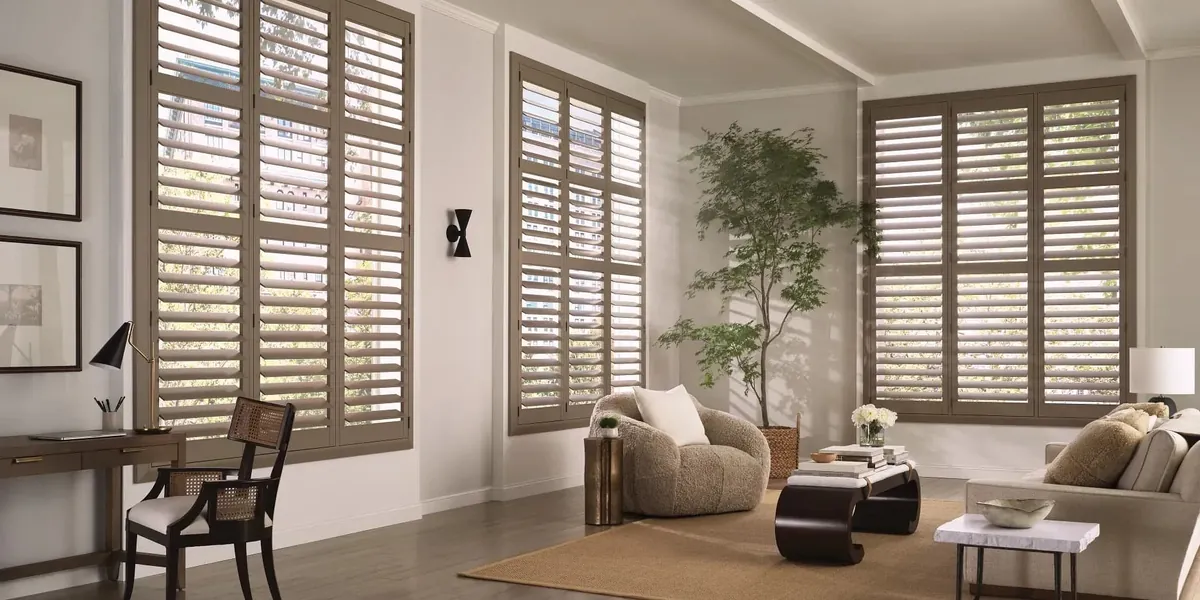
Hidden tilt
The louvers move from the side of the panel, so there is no tilt rod down the middle and the view stays clear.
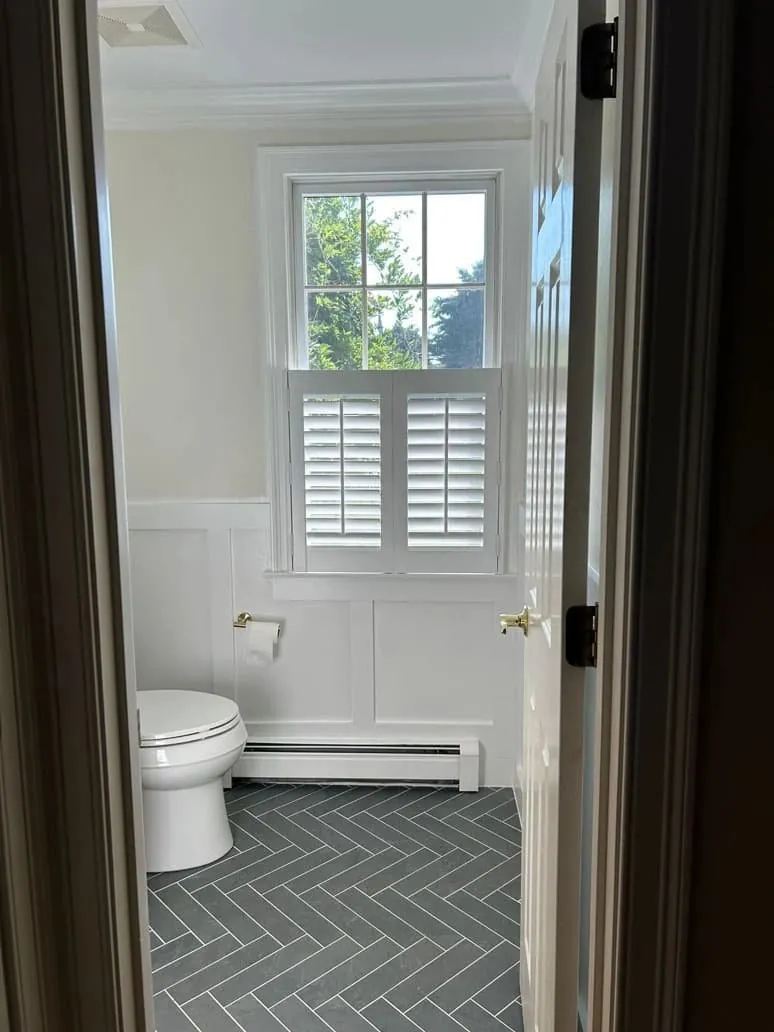
Cafe style
Panels on the lower half of the window only. Useful in a powder room or a kitchen that looks onto the street.
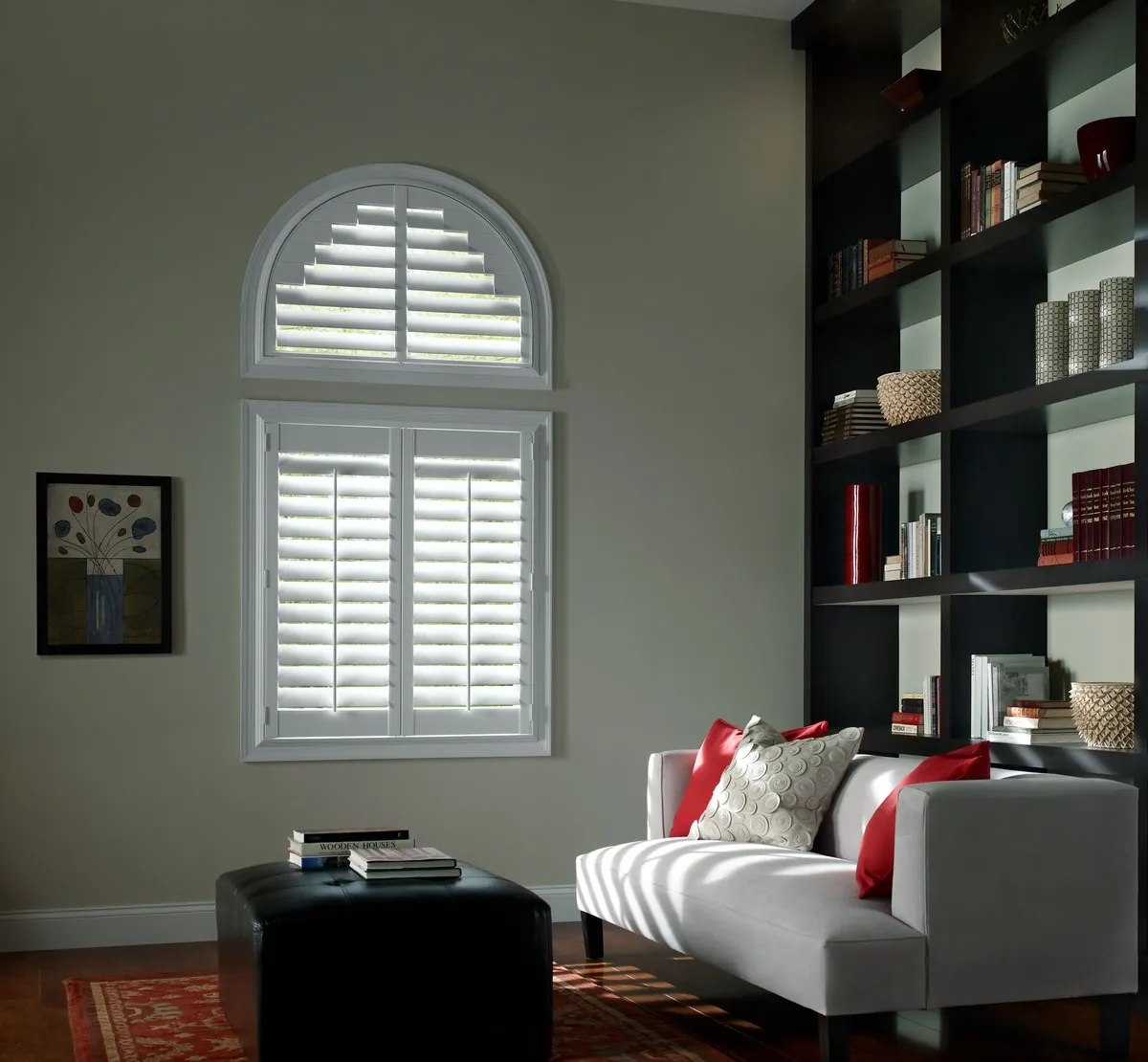
Arches and odd shapes
A fixed shaped panel can follow an arched top or a half-round so the whole opening is covered in one style.
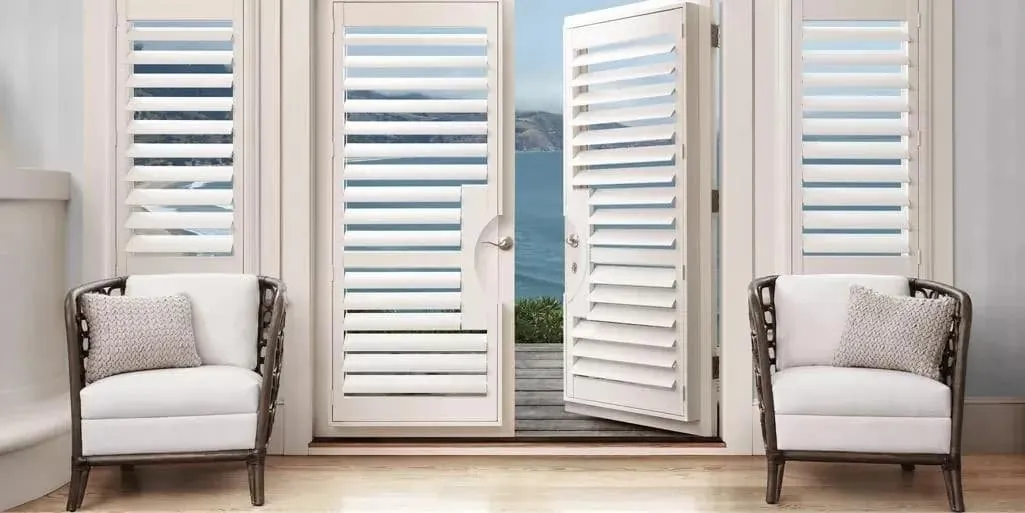
Doors
Shutters mounted on French doors swing with the door and still tilt when it is shut.
Afternoon sun off Apponagansett Bay
Water reflects light. On a sunny afternoon a room facing the bay gets the sun twice, once directly and once bounced off the surface, and both arrive low and at eye level. Shades help with the heat but usually block the water at the same time, which defeats the point of a room built for the view.
Louvers work differently. Tilted slightly downward, the blades let you look out and down toward the boats while cutting off the sun that comes in above the horizon. Tilted up, they push the light to the ceiling so the room stays bright but the glare stays off the sofa and the television. Close them fully at the hottest part of the day and the room keeps much cooler.
For bay-facing rooms we usually suggest wider louvers, because when they are open you look through fewer blades. A soft white finish reflects some of the heat back out and keeps the room light. If the room also has a slider to a deck or a set of French doors, those get shutters to match so the whole wall reads as one.
Palm Beach polysatin deserves a mention here. A sunroom or a porch enclosed with windows, with salt air off the bay and big swings of temperature through the day, is exactly the kind of room it was made for. It has no wood in it to move or crack.
Farmhouses toward Russells Mills and their deep-set sash
The old farm properties in the southern part of town were built with thick walls, and their nineteenth-century sash sits well back from the room. The sill is deep, the jambs are wide, and the original sash is often still there, with glass that has a slight wave in it.
A deep opening like that is ideal for an inside mount. The shutter frame sits within the jamb, the panels close flush with the casing, and from inside the room the window looks finished rather than covered. There is usually enough depth that the louvers can tilt freely without catching on the sash locks or the stops.
These houses also tend to have good original woodwork, and that points to Heritance. It is real hardwood and can be stained, so a farmhouse with old pine or oak trim can have shutters that sit beside it naturally. Painted Heritance in a crisp white suits a farmhouse just as well if the trim is painted.
Old windows rarely stay square, and fitting plantation shutters in Dartmouth, MA, to a farmhouse takes that into account. We measure each one at the top, middle and bottom and check the diagonal, and the frame is made to take up the difference so the panels close evenly. Our guide to shutters for older windows covers this in more depth.
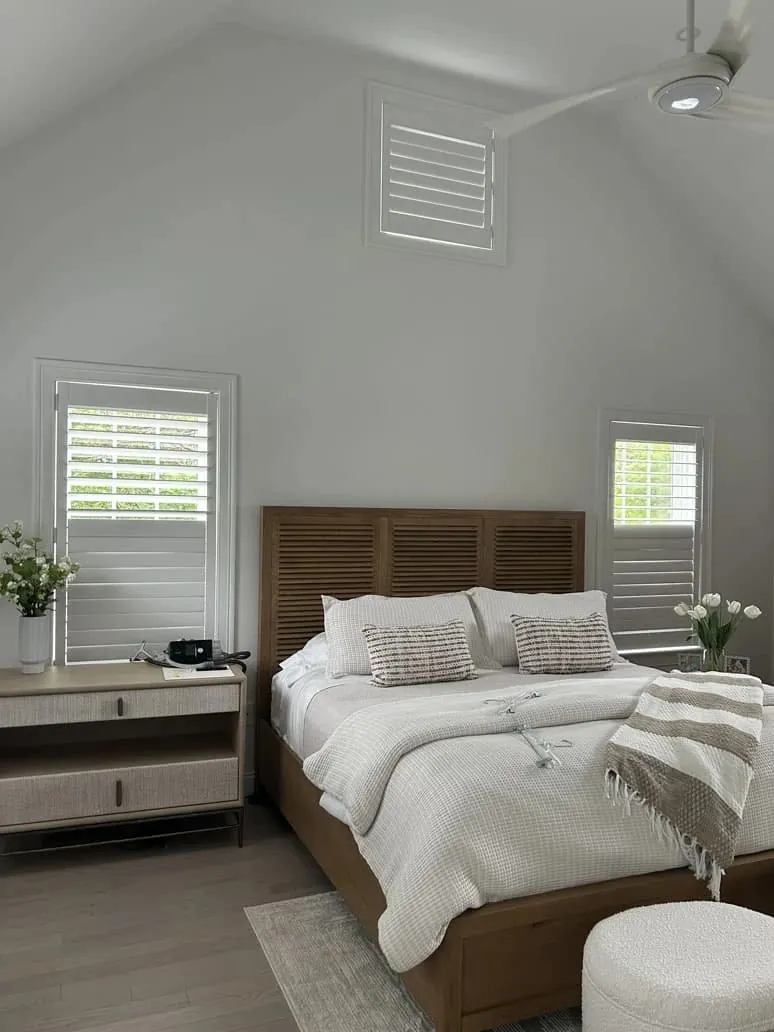
Ranches off Faunce Corner and Slocum Road
The neighborhoods around Faunce Corner Road and Slocum Road filled in during the sixties and seventies with one-story ranches and some split-levels. They have a recognisable set of windows: a wide picture window or a bow in the living room, a run of identical bedroom windows, often set a little high, and a slider out back.
Ranch windows are usually plain openings with flat trim, so there is less woodwork to preserve and more freedom in how the shutter is mounted. An outside mount on a shallow window gives the frame room and can make a modest window look bigger. A deeper frame with a decorative edge can add a bit of character to plain trim.
NewStyle is the collection most ranch owners land on. It has the look of a painted wood shutter, it holds up well on the wide panels a picture window needs, and it lets every room in a single-level house share one look. The bathrooms then get Palm Beach in the same color and louver size, and you cannot tell the difference from across the room.
A picture window often takes three or four panels, hinged so they fold back in pairs. That lets you open the window fully to clean it or simply to have a clear view on a gray day.
Colonials and capes in Padanaram
The village streets near the harbor are lined with older colonials and shingled capes. Their windows are smaller and more regular than a ranch’s: double-hung sash, often with divided lights, set in proportion to the front of the house. Inside, the rooms are smaller, and in a cape the upstairs bedrooms have knee walls and dormer windows.
A narrower louver usually looks right on these windows. It keeps the shutter in scale with small panes, and on a dormer, where the window is short and set into a sloping wall, it avoids the heavy look a big blade can have. Divider rails are popular on the street-facing rooms, for privacy at the bottom and light at the top.
Many of these houses are close to the road and to their neighbors. Cafe-style shutters, covering only the lower half of the window, are an old and simple answer in a dining room or kitchen: neighbors see a neat shutter, and you see sky and daylight above it.
Two ways to get started in Dartmouth
Since our North Dartmouth showroom is right here in town, you can start either way: come in and see the shutters, or have us come to you. Most people still want the home visit before they decide, because a sample held against your own trim, in your own light, tells you far more than a display. Our vans carry the shutter samples, so the visit looks like this.
- Request a consultation online or with the call button, and choose a time.
- We walk through the rooms with you and note which windows face the bay, which face the street and which get damp.
- You compare Palm Beach, NewStyle and Heritance samples in the louver sizes and finishes that suit each room.
- We talk through mounting, frames, divider rails and tilt style for every window.
- We measure each opening carefully, depth included.
- You get a free estimate, and the decision is yours to make in your own time.
You can read what to expect in more detail on our in-home consultation page.
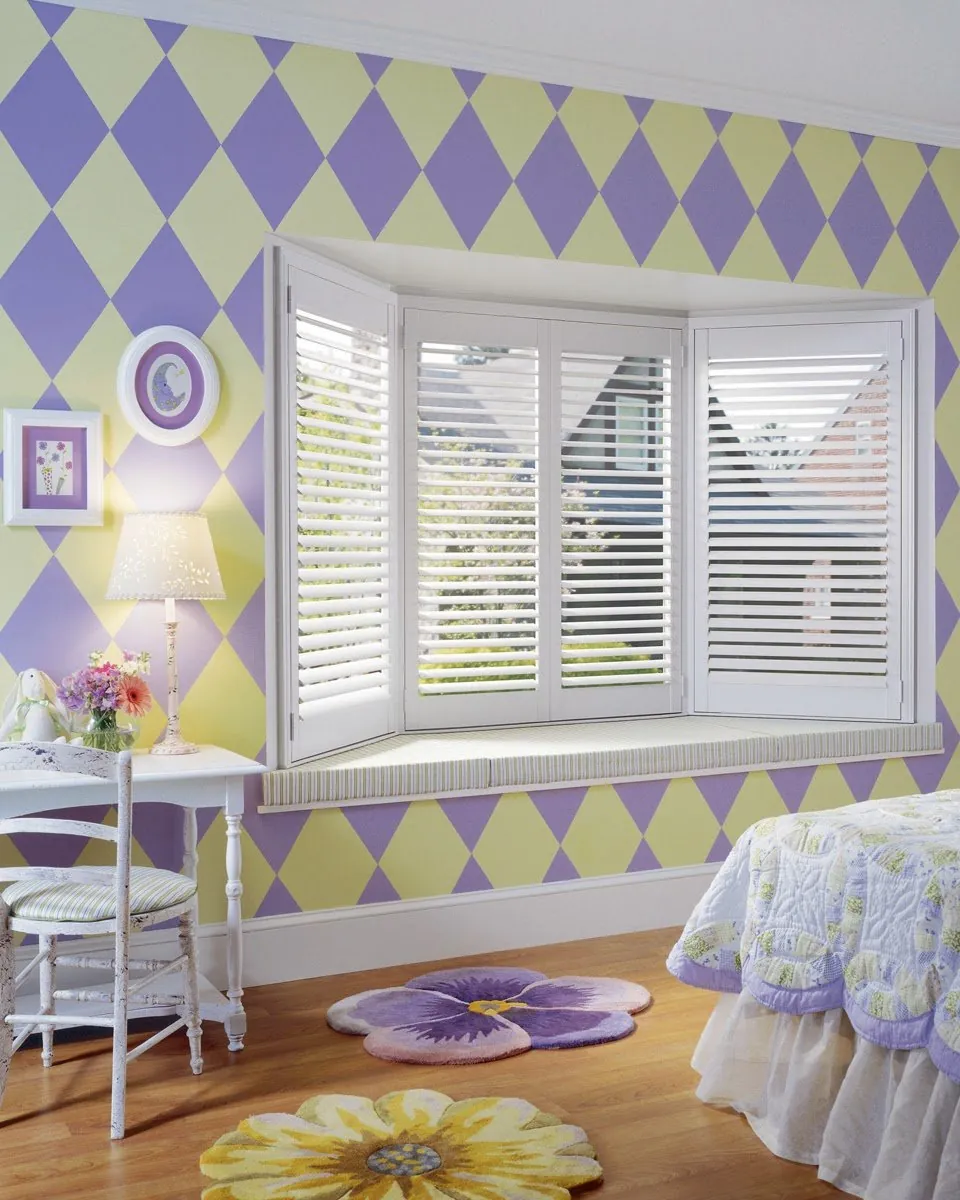
Palm Beach, NewStyle or Heritance
All three collections are true shutters, with louvers in hinged panels set in a frame. The material is the difference, and it decides where each one does best.
Palm Beach is made from polysatin and contains no wood, so it shrugs off steam and damp. Bathrooms, laundry rooms, kitchens and bay-facing sunrooms are its natural home.
NewStyle is a hybrid of wood and modern materials, with the look of a painted wood shutter. It suits living rooms and bedrooms and is the easiest way to keep a whole house consistent.
Heritance is real hardwood, painted or stained, with the widest choice of finishes. It is the one for a farmhouse or a Padanaram colonial with original woodwork worth matching.
Plenty of houses use two of the three. Our main plantation shutters page compares them in more depth.
Kitchens, baths and the rooms that get wet
Every house has a few rooms where a window covering has a harder life. In a Padanaram cape the bathroom is often tucked under the eaves with one small window and no fan, so the glass runs with condensation every morning. In a ranch the kitchen window sits right over the sink. In a farmhouse the old mudroom or laundry has a window beside a washer that fills the room with damp air.
Fabric shades do not enjoy any of those rooms, and wood can move if it gets wet often enough. Polysatin does neither. That is why we suggest Palm Beach for these windows even when the rest of the house has hardwood or NewStyle. Matched in color and louver size, the bathroom shutters look like the ones in the hallway outside. They also wipe clean with a damp cloth, which is what you want above a sink.
Many people choose plantation shutters in Dartmouth, MA, for a single bathroom first and add the rest of the house later, once they have lived with them.
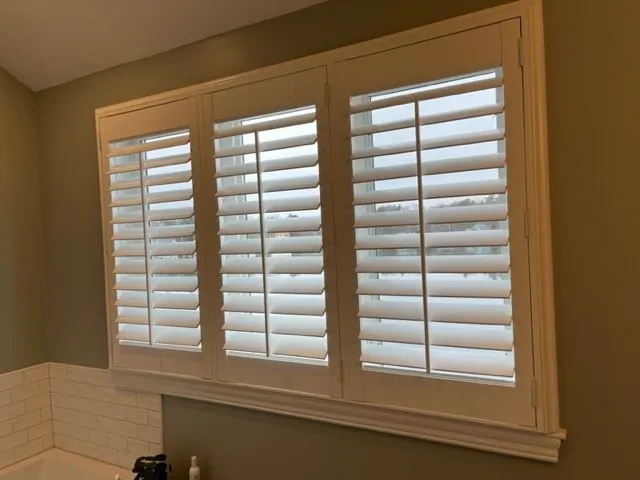
Choosing a color and finish
White is the most common choice, and for good reason: it suits almost any trim, it reflects light back into the room, and it looks clean against both old and new windows. But it is far from the only option.
Soft off-whites and creams sit better beside old painted trim that has mellowed over the years, where a bright white can make the woodwork look yellow. Grays and taupes suit a more modern room or a house with darker walls. Stains, available in Heritance, let the wood grain show and pair well with the oak and pine floors and trim in the farmhouses toward Russells Mills.
The best way to decide is to hold the samples against your own trim in daylight and again in the evening, because color shifts with the light. A west-facing room on the bay looks very different at noon and at five o’clock, and we leave time at the visit for you to see that.
Measuring and certified installation
Plantation shutters in Dartmouth, MA, are made to the measurements we take, so the measuring is where the quality of the finished job is decided.
- Each window is measured for width at three heights and for height at three points across.
- We check depth where the frame will sit and look for sash locks, cranks or stops that the louvers must clear.
- On older windows we check the diagonals to see how far out of square the opening is.
- Every mount, frame and tilt choice is confirmed with you before the order goes in.
- When the shutters arrive, a certified Hunter Douglas installer sets each frame square and plumb, hangs the panels, adjusts the hinges and checks that every louver closes flush.
That last step matters most in an old house, where the frame has to be true even when the window is not.
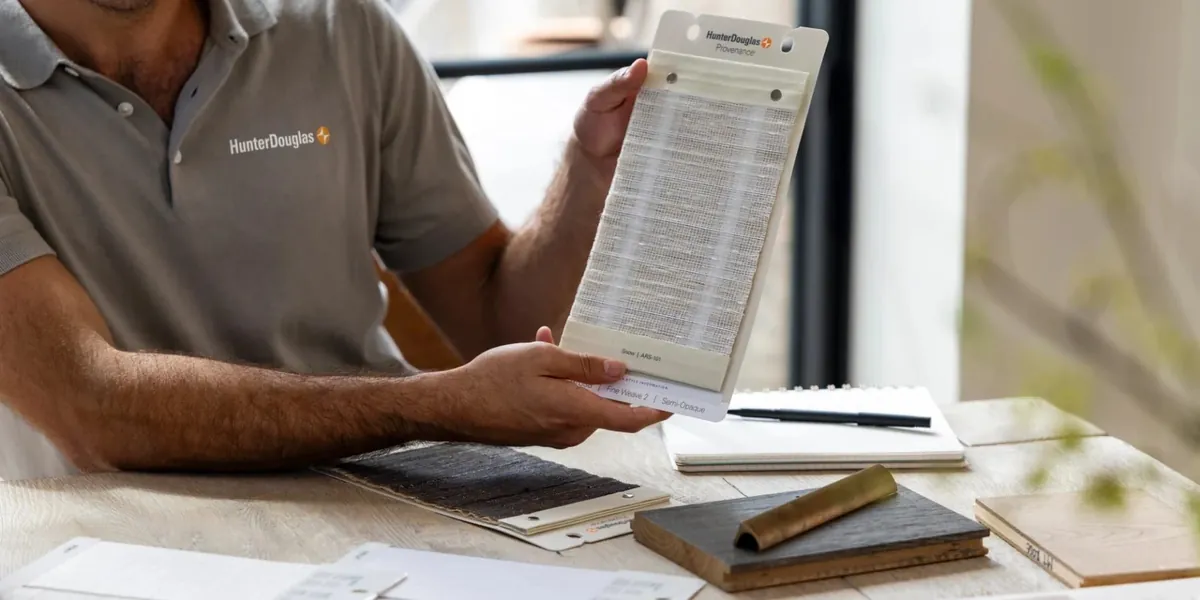
Why Dartmouth homes buy from a Gallery dealer
Blinds & Designs is a Hunter Douglas Gallery dealer, which is the designation Hunter Douglas gives dealers who meet its standards. For a shutter project it means every collection, every louver size and every frame style is on the table, so the choice for each window is made on what suits it.
We handle the job from start to finish: consultation, measuring, ordering and installation by installers certified by Hunter Douglas. Interior design consultations are available if you want help with color or with the rest of the room, and if a shutter or shade you already own needs fixing, we take on blind and shade repair as well.
If shutters are only part of the plan, look at our cellular shades in Dartmouth for bedrooms that need warmth, or see everything we offer in town on the Dartmouth page.
Questions from Dartmouth
What can I do about the glare off the bay in the afternoon?
Tilt the louvers down slightly and you keep the view of the water while the low sun is cut off. Tilt them up and the light goes to the ceiling instead. Wider louvers keep the view clearest when they are open.
My farmhouse windows are very deep. Is that good or bad for shutters?
Good. A deep jamb gives an inside-mounted frame plenty of room, so the shutter sits flush with the casing and the louvers tilt without hitting the sash. We still check each window for square, because old openings move.
Which collection makes sense for a ranch?
NewStyle is the usual choice for living rooms and bedrooms, with Palm Beach in the bathrooms. Both come in matching colors and louver sizes, so the house looks consistent from room to room.
Should I see the shutters in the showroom or at home first?
Either works. The North Dartmouth showroom is in town if you want to look first. A home visit lets you see samples against your own trim and light, and that is when we measure and give you a free estimate.
Can I mix stained and painted shutters in one house?
Yes. Heritance comes in stains and paints, so a farmhouse might have stained shutters in the front rooms and painted ones upstairs. We bring samples of both.
Pick a window and we will start there
Many projects begin with one difficult room: the bay-facing living room that is too bright by mid-afternoon, or the farmhouse parlor with deep old sash that nothing else has suited. Request a consultation and we will bring all three Hunter Douglas collections, measure your windows and give you a free estimate. Or drop in at our North Dartmouth showroom, which is right here in town, or use the call button if you have a question first.