
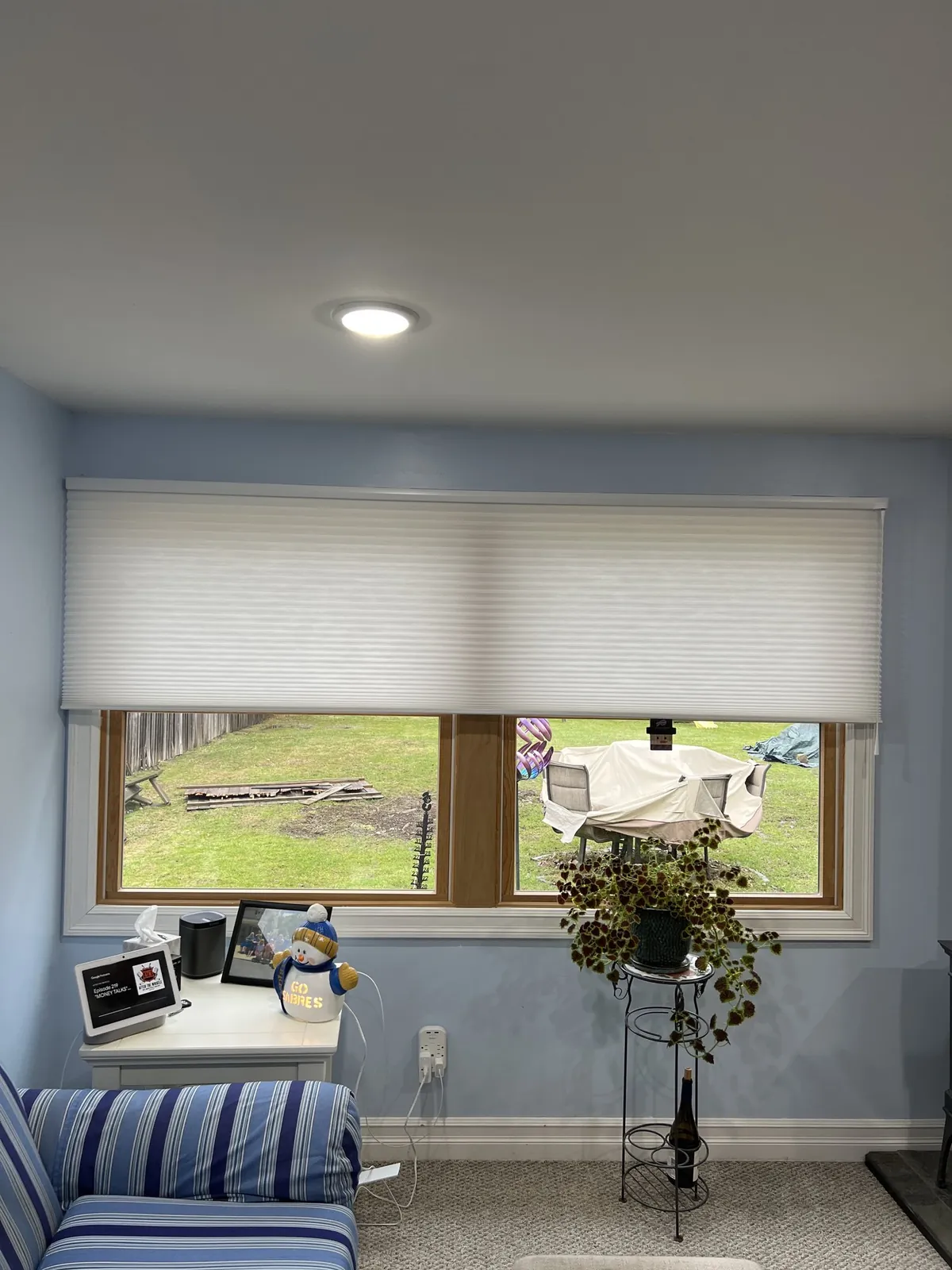
From Padanaram to Russells Mills, every window is different
Dartmouth is our showroom’s own town, and few places on the South Coast pack so many kinds of window into one map. In Padanaram the houses are older colonials and shingled capes with small panes and slim trim. Off Faunce Corner and Slocum Road you find ranches from the sixties and seventies, built around a picture window and a slider. Out toward Russells Mills the farm properties still have deep-set nineteenth-century sash in walls thick enough to hold a book on the sill. That variety is exactly why a Hunter Douglas dealer in Dartmouth, MA, needs the whole range to hand.
Then there is the water. Rooms in South Dartmouth that face Apponagansett Bay take a hard afternoon glare, sun reflected off the harbor that can wash out a living room and heat it at the same time. A treatment that suits a farmhouse bedroom would be wrong for that room, and the reverse is true too.
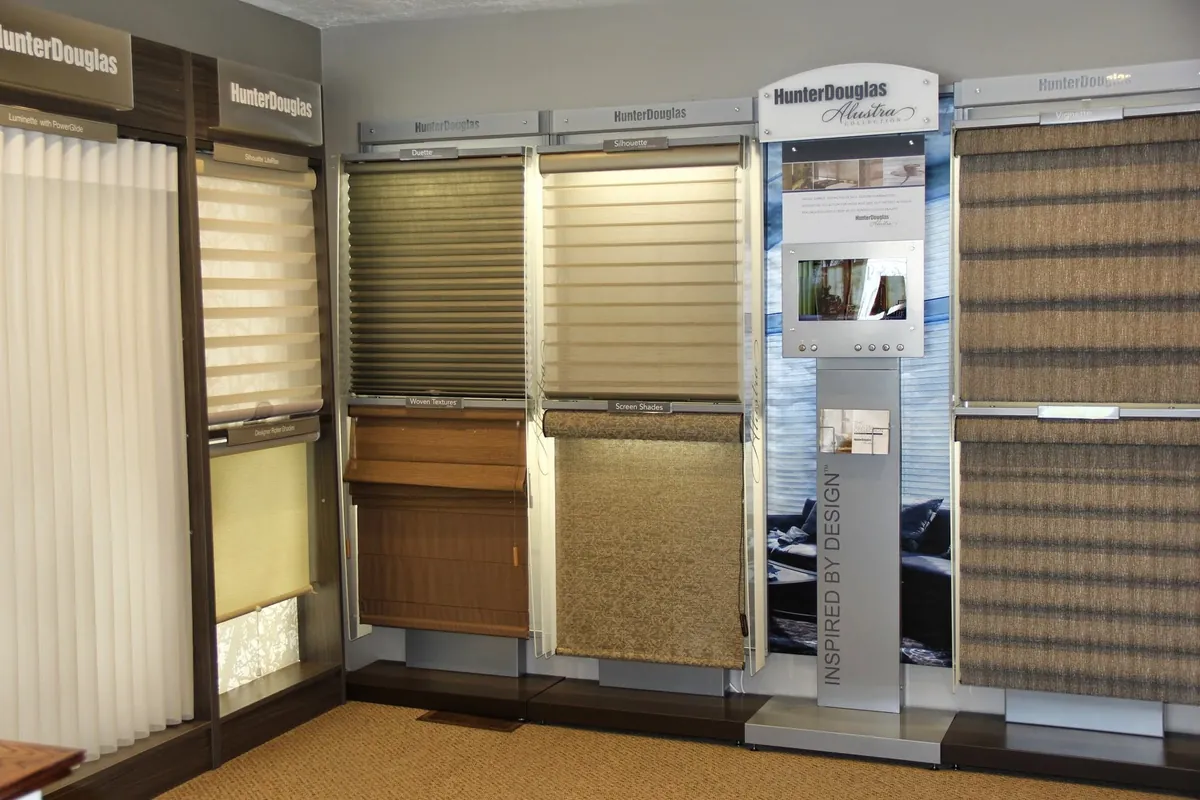
As a Hunter Douglas Gallery dealer we can choose for each opening from every shade, blind, shutter and drapery line Hunter Douglas makes. Our certified installers then fit what you choose, from the oldest sash in town to the newest sliding door.
The range a Hunter Douglas dealer in Dartmouth should offer
These are the product families we bring out most often in town. Each card links to the page where we go into that product for Dartmouth houses.
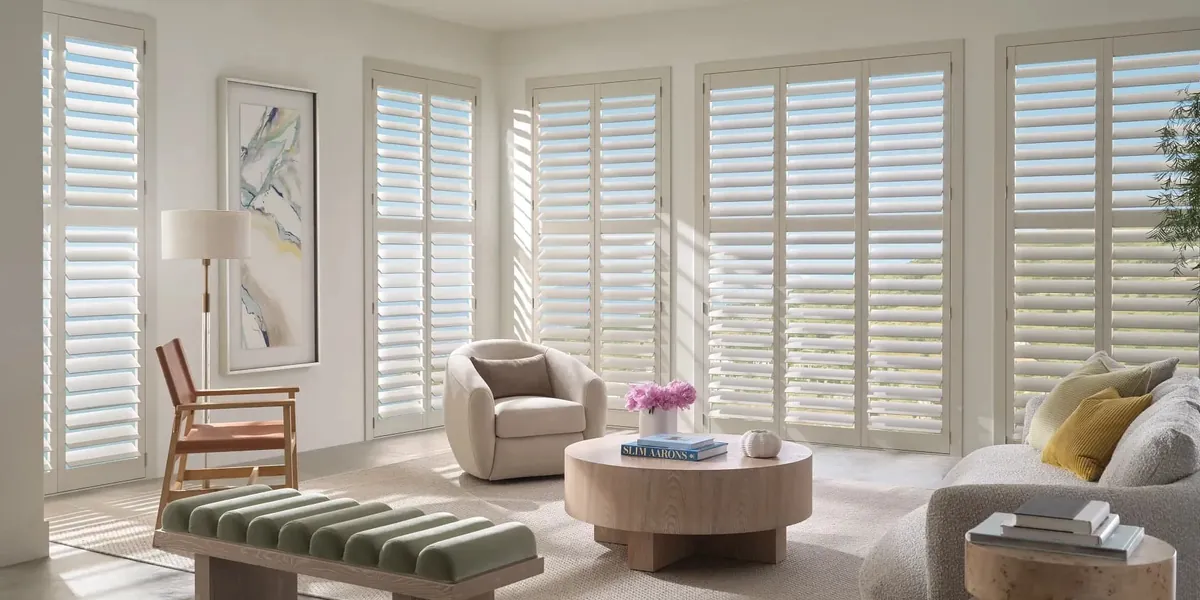
Plantation shutters
Palm Beach, NewStyle and Heritance, at home in the deep farmhouse sash out toward Russells Mills.
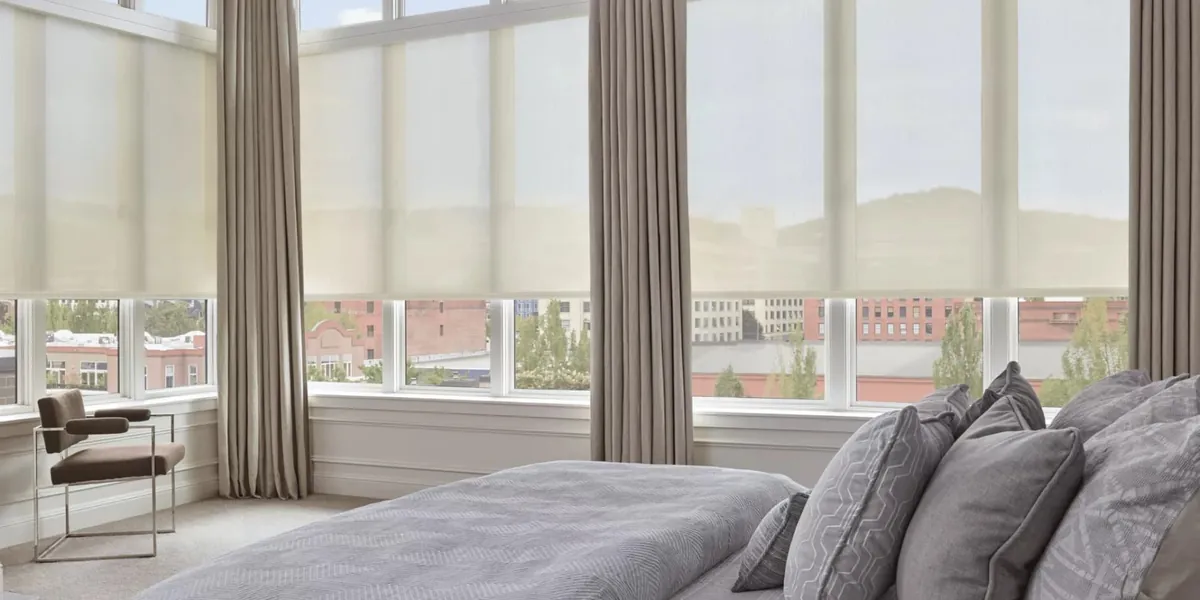
Screen and roller shades
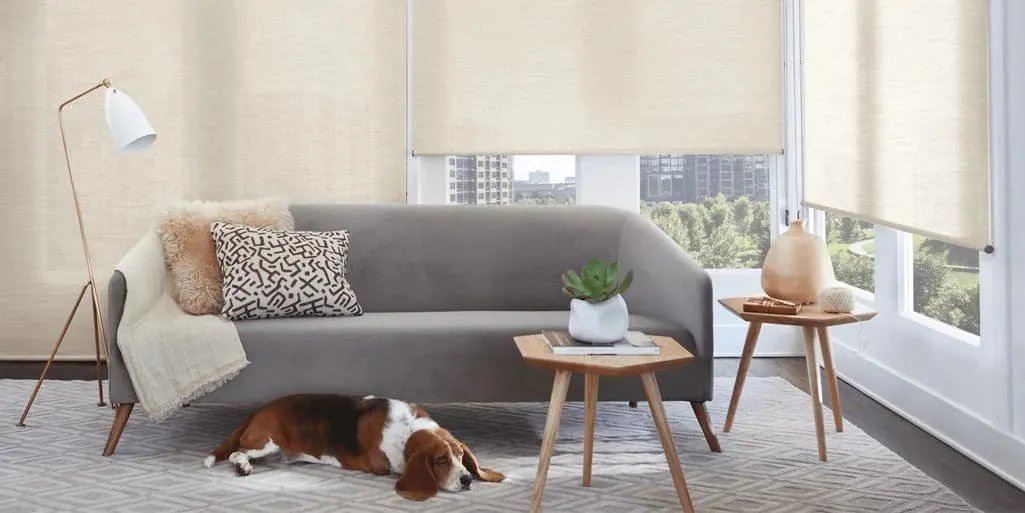
Designer and Alustra rollers and screen fabrics, the usual answer to afternoon glare off the bay.
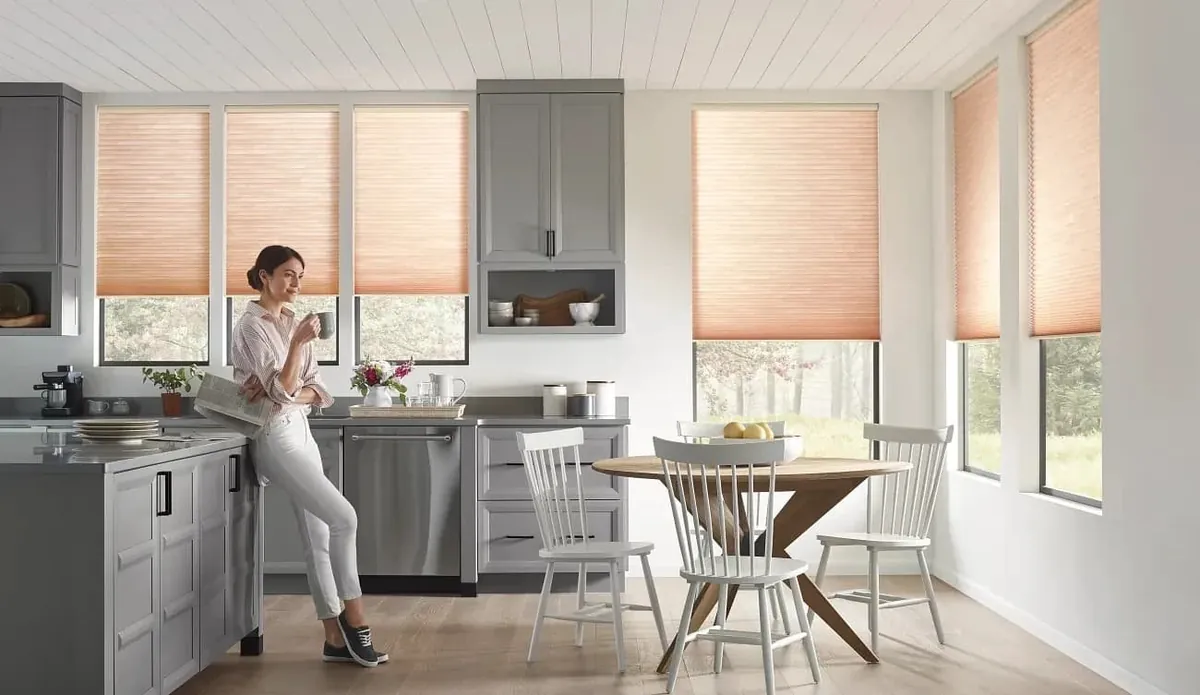
Honeycomb shades
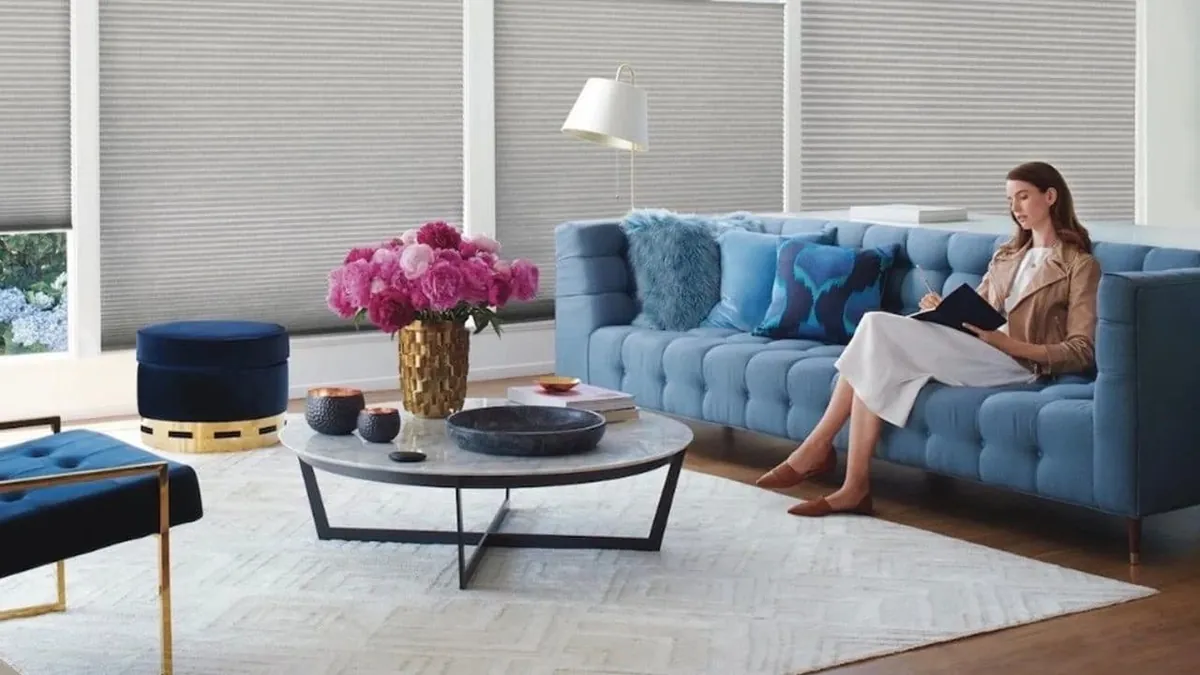
Duette and Applause, with air held in each cell, for chilly capes and colonials with original glass.
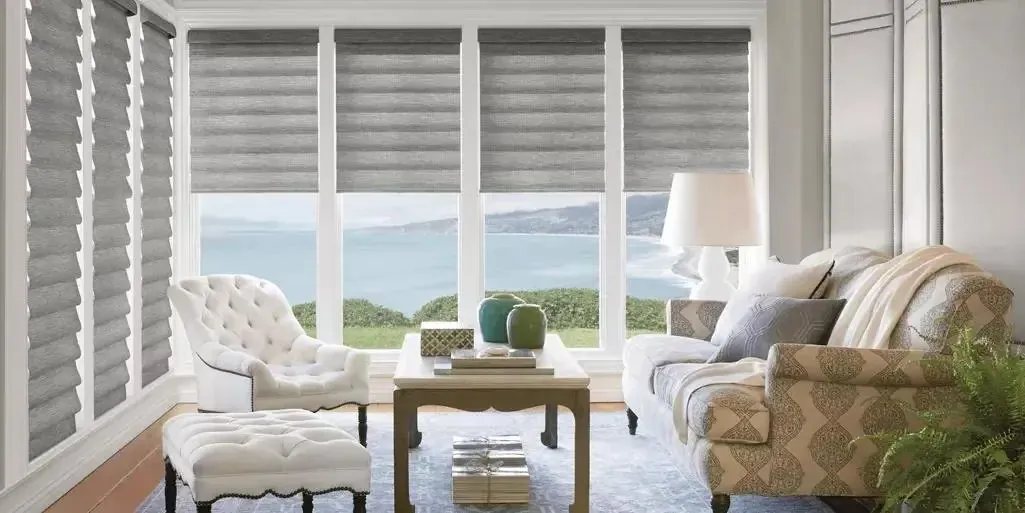
Roman shades
Vignette and Carole Roman fabrics, flat or folded, that suit the period rooms of Padanaram.
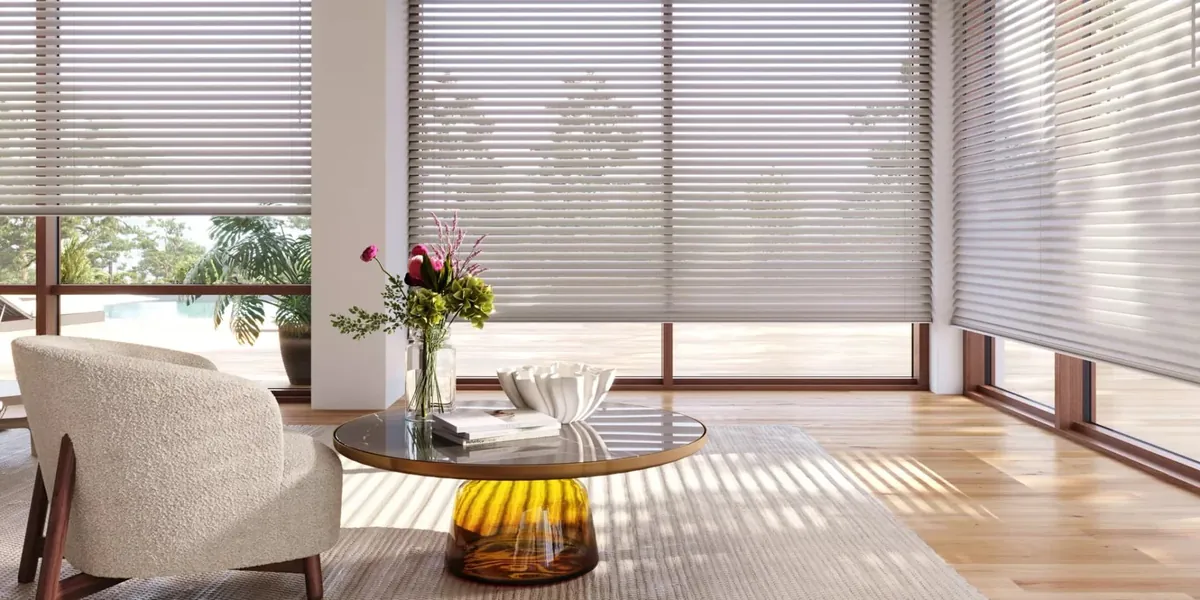
Blinds in wood and metal
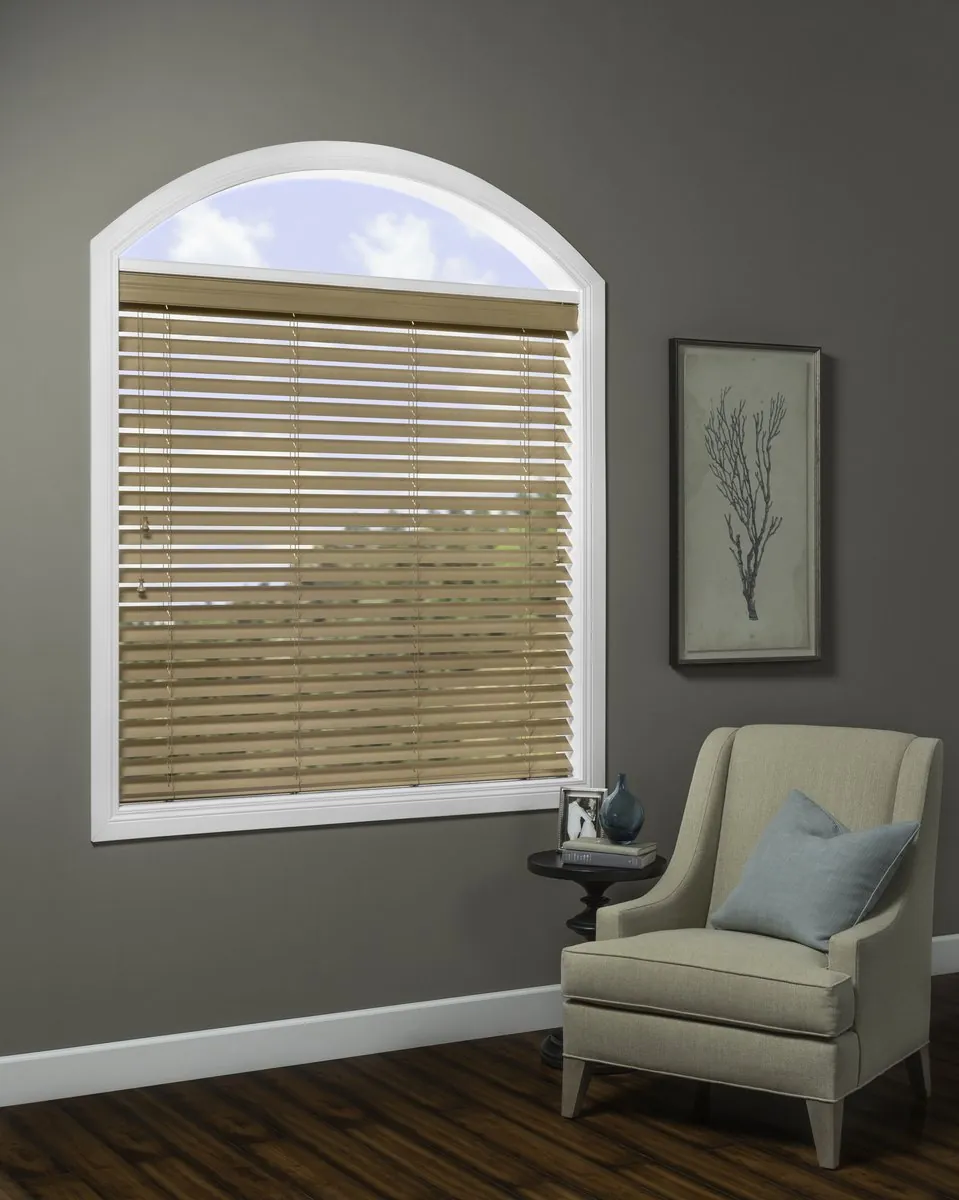
Parkland wood, EverWood faux wood, metal and Aria fabric blinds for ranch bedrooms, dens and offices.
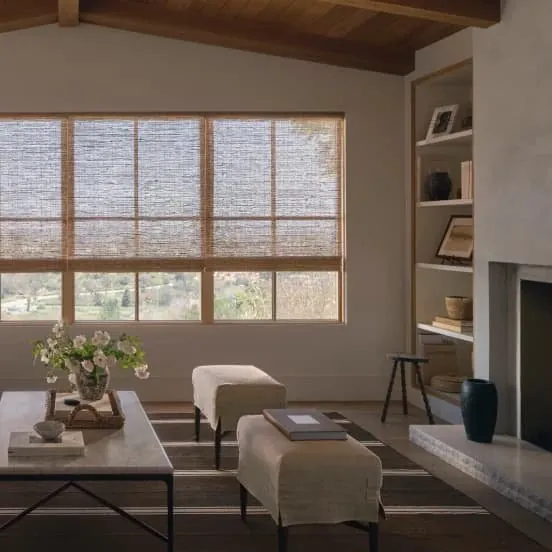
Woven shades
Provenance and Alustra Woven Textures bring natural texture to a cape or a farmhouse kitchen.
South Dartmouth rooms that look onto Apponagansett Bay
We start with the bay side because it is where people most often feel they have tried everything. The trouble is the afternoon. As the sun moves west it lands on the water and bounces back through the glass, so the glare arrives twice: once from the sky and once off the harbor. The room heats up, screens become hard to read and fabrics on the sofa fade.
Pulling down a solid shade solves the glare and throws away the reason you bought the house. The better tools let light through in a controlled way:
- Screen roller shades are woven with a set openness. A more open weave keeps more of the view; a tighter one cuts more glare. We hold several up at the glass in the afternoon so you can pick the balance yourself.
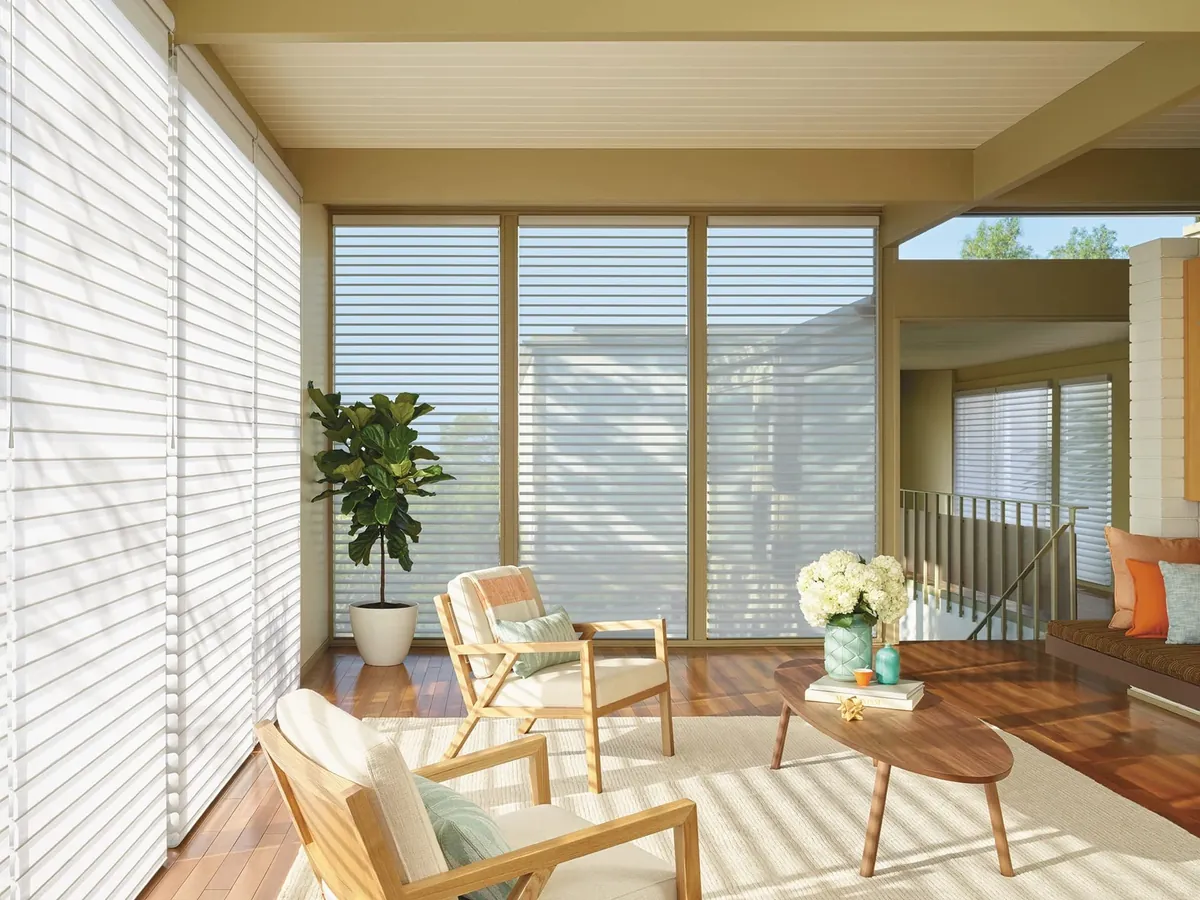
- Silhouette and Pirouette sheers filter the light through soft fabric and let you tilt the vanes to aim it, which suits a living room where the light changes all afternoon.
- Dual roller arrangements pair a screen with a solid fabric on one window, so the view-friendly layer does daytime duty and the solid layer takes over at night.
Big water-facing glass also invites motorization. With PowerView you can have the screens come down as the afternoon sun arrives and rise again at dusk, even when nobody is home.
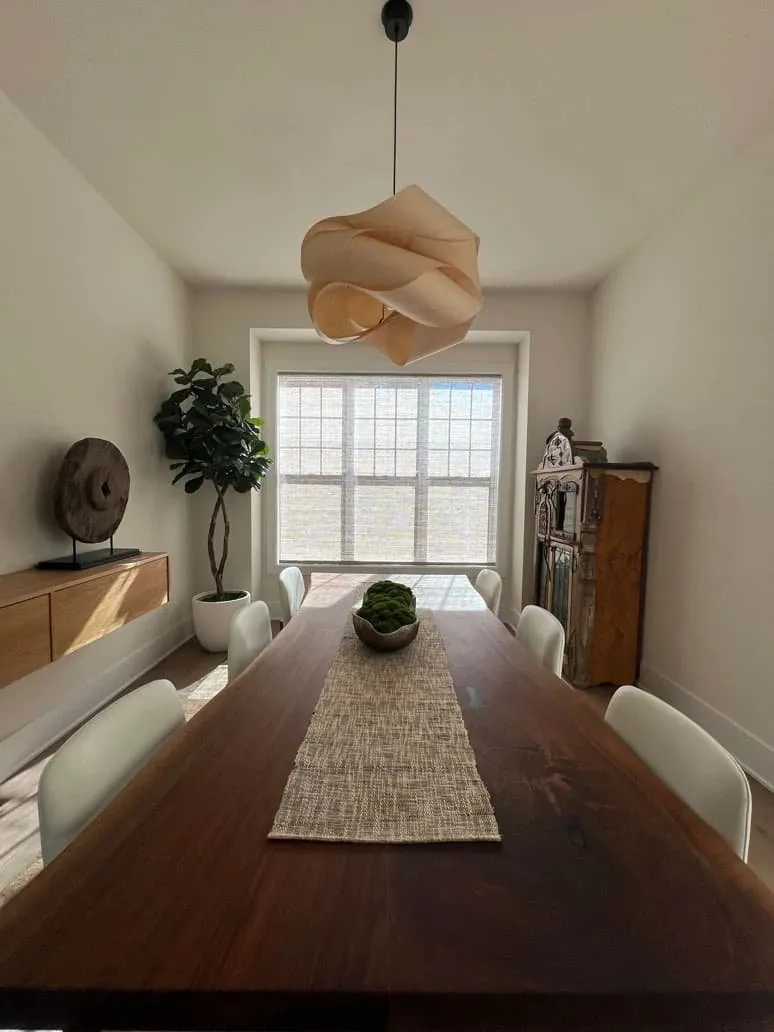
Deep sash on the farm properties toward Russells Mills
Head out past the village and the houses get older and the walls get thicker. Farmhouses here often have nineteenth-century sash set deep into the wall, leaving a generous ledge inside every window. Those openings are ideal for an inside mount, and particularly for shutters.
A shutter frame set within that depth looks like it was built with the house. Heritance offers real hardwood that can be stained to match old floors or painted to match the trim, and a louver in a size that suits the scale of the window. NewStyle gives a similar painted look in a hybrid material. Where the sash is small and the room is a bedroom, a honeycomb shade inside the opening keeps the deep sill free for a lamp or a plant.
Old farmhouse openings settle over the years. A window can be wider at the top than the bottom or slightly out of plumb. We measure each one at several points across its width and height and check that the depth is clear of the sash locks before we recommend a mount. Shutters especially reward that care, because a frame that fits snugly closes cleanly for years.
Capes and colonials in Padanaram
The village has some of the oldest houses in town, many of them with small divided panes, narrow casings and rooms where every inch counts. Treatments that are bulky or busy can overpower them.
Inside-mounted Roman shades are a natural fit: a flat fold in a plain linen keeps the period feel and stacks neatly at the top of the window. Duette honeycomb shades work in the same spaces, holding warmth in a room where the original glass lets it slip away in winter. Parkland wood blinds in a slimmer slat suit a cape’s study or dining room.
Many of these houses sit close to the street, so privacy is part of the conversation. Top-down, bottom-up shades let in daylight over the top while keeping the lower glass covered, a simple trick that often matters more than fabric choice in a front room.
Ranches off Faunce Corner and Slocum Road
The ranches closer to the main roads were built when big glass was the fashion. Living rooms tend to center on one wide picture window, bedrooms on long horizontal windows, and the back of the house on a slider to the yard. Big panes mean big heat swings across the year.
For the picture window, choose between keeping the view or keeping the warmth, or a product that does some of both. A Designer roller shade disappears into a slim cassette when raised. A Duette shade split into sections on one headrail covers a wide window and still moves as one. For sliders, a Luminette sheer or a vertical honeycomb shade draws to one side, so you are never lifting anything to get to the patio.
Ranch bedrooms usually want darkness. Room-darkening honeycomb fabrics, wood blinds with closed slats, or a roller shade in a blackout fabric all do that, each with a different look. We bring samples of all three so you can decide with your own walls in view.
Sunrooms, porches and mudrooms
Dartmouth houses collect in-between rooms. On the bay side it is often a sunroom added to catch the water view, glazed on three sides and blazing by mid-afternoon. On the farm properties it is an enclosed porch or a mudroom by the back door, with a mix of old and replacement windows that rarely match in size. Ranches sometimes have a converted breezeway between the house and the garage.
These rooms are hard because they have so much glass and so little wall. A sunroom wants something that controls heat and glare without closing the room in: screen shades, light-filtering honeycomb or woven shades that keep the room feeling outdoors. A porch with windows of different sizes benefits from one product in one color across every opening, so the mismatched sizes stop drawing the eye. Mudrooms and breezeways take a beating from boots, dogs and wet coats, so tough, easy-to-wipe options such as faux wood blinds or Palm Beach shutters make sense there.
Ask any Hunter Douglas dealer in Dartmouth to look at these rooms early in the visit. They often set the color and style that the rest of the house follows.
Choosing one dealer for a whole Dartmouth house
Plenty of people begin with one problem window and end up treating the house. That is natural in a town with so many styles: the farmhouse kitchen wants something different from the bay-side living room. The advantage of working with one Hunter Douglas dealer in Dartmouth for all of it is consistency. One person measures, one set of installers fits, and the street-facing windows can be matched in color even when the products behind them differ.
It also keeps the advice honest. Because we carry every line, nobody is steering you toward a product just because it is on the shelf. If a product you have fallen for would be the wrong one in a particular room, we will tell you. If a single product really does suit the whole house, we will tell you that too.
Drapery is part of the toolkit as well. Panels layered over a shade add softness and help a room hold warmth, and our custom drapery in Dartmouth page covers fabrics and styles.
What the in-home visit looks like
Seeing samples in your own light is the only reliable way to choose, so most Dartmouth projects begin with a visit. Our vans carry samples from across the Hunter Douglas range.
- Book through Request a Consultation or the call button, at a time that suits you.
- We tour the rooms with you, starting with whichever window bothers you most.
- You compare fabrics, louvers and slats at the glass, morning side and afternoon side.
- We measure every window and confirm a mount for each one.
- A free estimate follows for the products and the installation, with no pressure to decide that day.
- Hunter Douglas makes the order to our measurements, and our certified installers fit it and show you how everything works.
For help with color, fabric and layering beyond the windows, ask about interior design consultations. Our page on what happens at an in-home consultation answers the usual questions before we come.
Sidelights, transoms and glass doors
Front entrances in the village often carry narrow sidelights on each side of the door and a transom above it. They are lovely from the street and awkward from inside, especially when the front hall faces the road. A narrow honeycomb or Roman shade can be made for a sidelight, and many people choose a sheer fabric so the hall still gets daylight while passers-by see only a soft glow. Transoms are usually best left open unless they catch direct sun.
The ranches tend to have the opposite issue: a full-glass storm door or a patio door with blinds built into its own frame, or none at all. For a hinged glass door, a shade mounted on the door itself, with hold-down brackets at the bottom, stops it swinging when the door opens. For a slider, a product that moves sideways is easier to live with than one that lifts.
Farmhouse back doors with a small window at the top get the simplest fix of all, a small inside-mount shade or a café shutter, matched to the kitchen.
Winter on old glass, summer on new glass
The calendar matters as much as the compass in town. In winter, the original sash in Padanaram and toward Russells Mills lets heat slip out through thin glass and loose frames, and a room by the window can feel noticeably colder than the middle of the house. Honeycomb shades help most there, because the air held in each cell sits between the cold glass and the room. Lined Roman shades and drapery over a shade add another layer on the coldest windows.
In summer the problem flips. The ranches with big picture windows and the bay-side rooms with large modern glass take on heat through the afternoon. Light-colored screens and light-filtering fabrics lowered during the hottest hours keep the room usable without turning on every lamp. Shutters do both jobs reasonably well, which is one reason they are so common in older houses here.
A good Hunter Douglas dealer in Dartmouth should ask how you use each room through the year, not just what it looks like on the day of the visit. That is the conversation we have at every window.
Motorization where it earns its place
Not every window needs a motor, and we will not push one. It makes the most sense on windows that are hard to reach, on large water-facing glass, and in houses where you want the shades to work on a schedule.
PowerView lets shades move from a remote, an app on your phone or a schedule you set. In a bay-side living room that can mean screens lowering automatically when the afternoon sun arrives. In a farmhouse with a tall stair window, it means no more stretching over the banister. You can start with a few windows and add more later. How each motor is powered depends on the window, and we talk through what suits each opening before anything is ordered, so the motors are tucked out of sight on the period windows where trim matters. Our motorized blinds in Dartmouth page explains how the controls work.
Care, repair and the long run
A good window covering should last, and part of a dealer’s job is looking after it. If a shade you already own stops lifting evenly or a cord frays, we welcome blind and shade repair in Dartmouth. Salt air on the bay side and dust from a farm lane both take a toll over time, and a little attention keeps products working.
Cleaning is mostly gentle: a soft brush or a vacuum on low for most fabrics, a damp cloth for shutters and blinds. Our guide to caring for fabric shades covers the details.
Why Gallery status matters on your windows
Hunter Douglas names dealers who meet its standards Gallery dealers, and Blinds & Designs is one. For a Dartmouth homeowner that means one source for the full family: honeycomb, roller, screen, Roman, sheer and woven shades, wood and metal blinds, shutters, drapery and PowerView automation.
Our installation is certified by Hunter Douglas. The installers who come to your house are trained to fit these products the way the maker intends, which matters most on the awkward windows: an old frame that is out of square, a deep sash, a wide slider.
See the main Hunter Douglas dealer page for more on the brand and its families, or our Dartmouth page for everything we do in town.

Close to home, with samples at your table
Being based in town means the drive to Padanaram, Russells Mills or the bay side is short for us. An in-home visit lets you see every option against your own trim, your own furniture and the light that actually comes through your windows.
If you would rather browse first, the North Dartmouth showroom is right here in town. Come in, look at the products in person, and book a home visit when you are ready.
Questions from Dartmouth
Do shutters suit the deep windows in an old farmhouse?
They are one of the best fits. A deep opening lets a shutter frame sit fully inside the window so it looks built in. We measure several points across each opening first, since old frames are often out of square.
What helps with afternoon glare off the bay without losing the view?
Screen roller shades and sheer shades are the usual choices. A screen fabric with the right openness cuts glare while the water stays in sight, and sheers let you tilt the vanes to aim the light.
Can one consultation cover a whole house with different window types?
Yes. We bring samples from across the range and look at each room on its own terms, then keep the street side consistent so the house looks right from outside.
Do you also fix blinds and shades we bought years ago?
Yes, we welcome repairs on window coverings you already own. Tell us what is wrong when you get in touch and we will take a look.
How do I get an estimate?
Request a consultation. We measure your windows, show you samples and give you a free estimate for the products and installation.
Ready when you are
Request a consultation and we will come to your house with samples and a tape measure. If you have questions first, the call button reaches the showroom, or you can stop by the North Dartmouth showroom in person. Whichever you choose, the same certified installers will fit your order.