
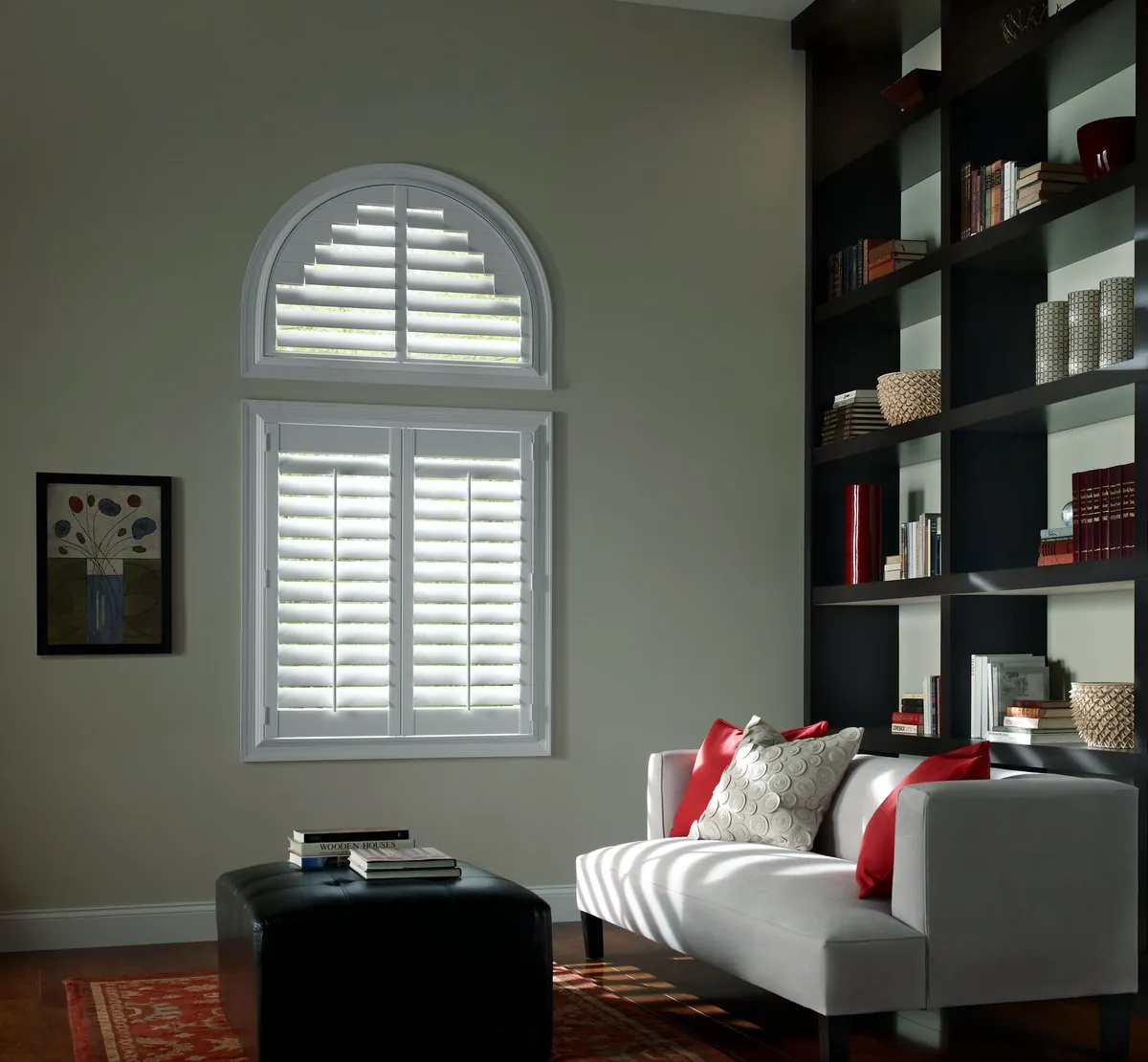
Tall windows, high ceilings and very little room to spare
New Bedford’s housing was built close together and built tall. In the North End and the West End, mill-era triple-deckers line street after street, each floor an apartment with its own run of tall, narrow double-hung windows. Above the waterfront, the historic district holds Federal houses with high ceilings and long sash that reach almost from floor to cornice. Both types put a lot of window very close to the house next door or the sidewalk. When we fit plantation shutters in New Bedford, MA, privacy and proportion are usually the first two things we talk about.
A tall, slim window looks best with a covering that follows its lines. A shutter does that naturally, with a frame that traces the opening and panels that echo the shape of the sash behind them.
The second question is depth. How far back the window sits in the wall, the reveal, decides whether the shutter can sit neatly inside the opening or has to sit on the face of the trim. In the historic district, that choice also affects how the window reads from the street. We check it on every window before suggesting anything.
Plantation shutters in New Bedford, MA, built around tall sash
These three details come up in almost every New Bedford house we measure. They are what make a shutter look as though it belongs to an old, tall window.
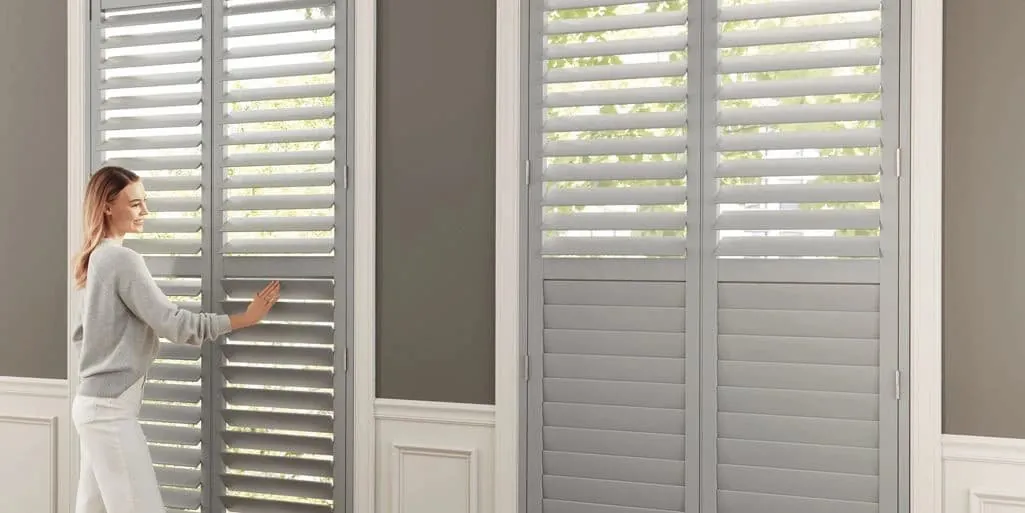
A rail across the middle
A divider rail splits a long panel so the bottom louvers can stay closed to the street while the top ones let daylight in.
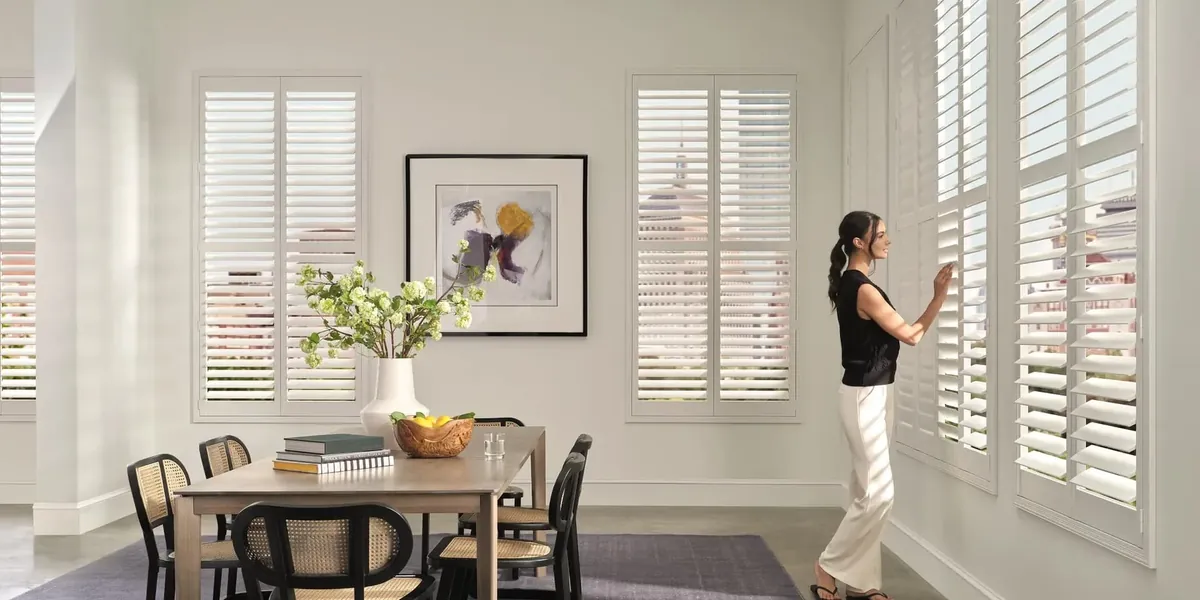
Inside the reveal
Where the window is deep enough, the frame sits within the opening and the original casing stays on show.
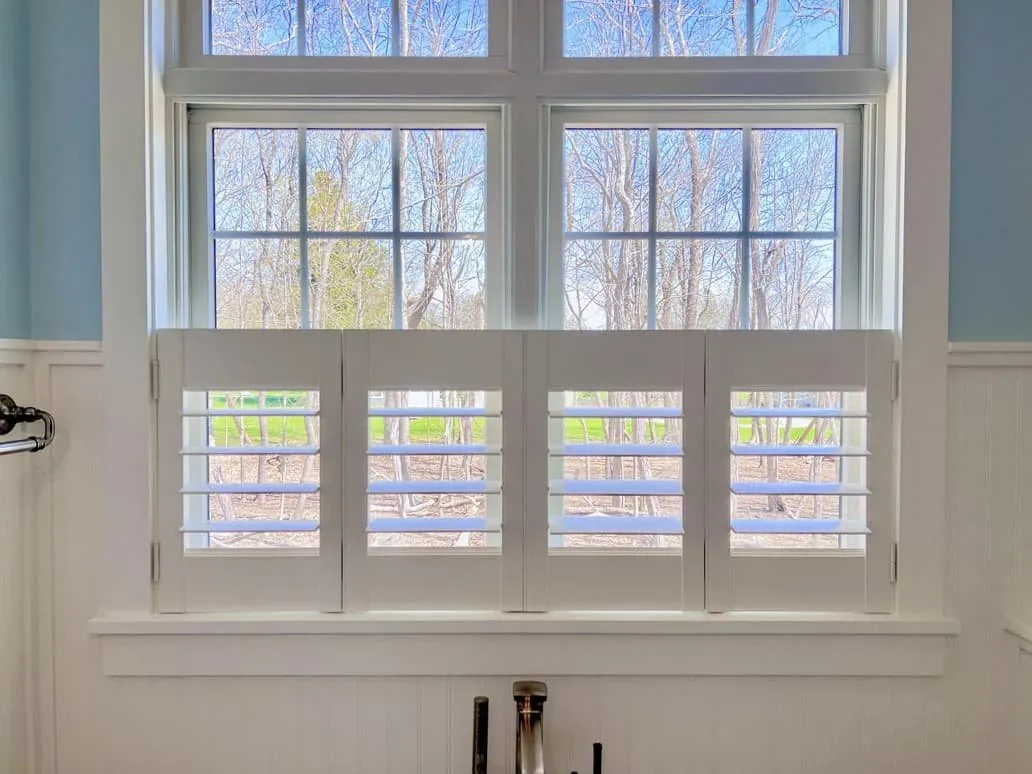
Cafe panels down low
Shutters on the lower half only, for a first-floor kitchen or bath that sits a few steps from the sidewalk.
Triple-deckers in the North End and the West End
A triple-decker gives each floor the same plan: a front room on the street, a long run of rooms down one side, a kitchen and porch at the back. The windows repeat floor by floor, tall and narrow, with the bay or the front windows looking straight at the house across the street and the side windows looking at a neighbor’s wall only a few feet away.
That closeness is what shutters handle so well. With a divider rail, the lower louvers can be closed to the house next door while the upper ones tip open to the sky. On side windows that face another building, you can angle the blades so you see daylight but nobody sees in. Unlike a shade, you are not choosing between privacy and light.
Owners of these buildings often want one look across all three floors, so the front of the house is even from the street. NewStyle is the usual choice for that: it has the look of painted wood, it comes in matching sizes for every floor, and it holds its shape on the long panels that tall sash needs. A front room on the first floor might take Heritance if the original casings have survived, with NewStyle on the floors above.
Triple-decker kitchens and bathrooms tend to be small, with one window and plenty of steam. Palm Beach, which is made from polysatin with no wood in it, is the one for those.
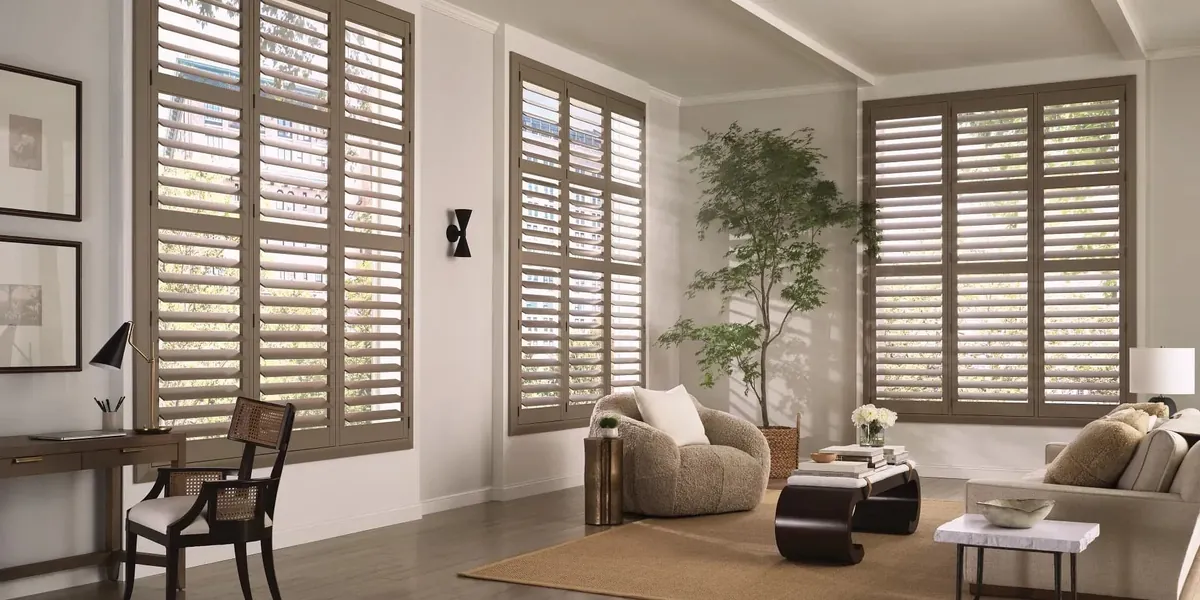
Federal houses above the waterfront
The historic district on the hill above the harbor has some of the finest early houses in the region. The Federal houses there have high ceilings, tall double-hung sash with fine muntins, deep window seats in some rooms and casings that were carved or moulded by hand. Many have been carefully restored.
Interior shutters suit these houses well. A shutter set inside a deep reveal, painted to match the trim, looks like a natural part of a period room, and from the street it reads as a tidy, even row of windows behind the glass. In a house with stained or grained woodwork, Heritance hardwood in a matching stain is the one we bring out.
The historic district has its own expectations for how a house looks, and the windows are a big part of that. A treatment that sits neatly inside the window, with an even finish facing the street, keeps that look intact. If you are unsure how your own house is treated, it is worth checking with the city before any work on the windows. Inside, the decisions are about fit and finish, and that is where we can help.
Tall Federal windows are well suited to a divider rail placed at the meeting rail of the sash behind, so the shutter lines up with the window itself. Narrower louvers often look right on the finest of these windows, keeping the panel in scale with small panes.
Why reveal depth decides the mount
The reveal is the depth of the opening between the face of the wall and the window sash. In a brick or plaster wall it can be generous. In a triple-decker with thin walls and original sash, it can be very shallow, and it is often interrupted by sash locks, pulleys and the stops that hold the window in place.
An inside mount needs enough clear depth for the frame and for the louvers to tilt without striking the sash or the lock. When that depth is there, the shutter sits within the opening, the casing stays on show and the result looks built in. It is our first choice whenever it works.
When the reveal is too shallow, an outside mount fixes the frame to the face of the casing or the wall around it. The louvers then have all the room they need, and a decorative frame can make the outside mount look intentional. On a tall window in a room with high ceilings, an outside mount can even make the window look taller still.
Some houses need both: an inside mount where the walls are thick and an outside mount on a shallow window in a later addition. We note the depth at several points on every window and talk you through the choice for each one. Our guide to shutters for older windows explains the trade-offs in more depth.
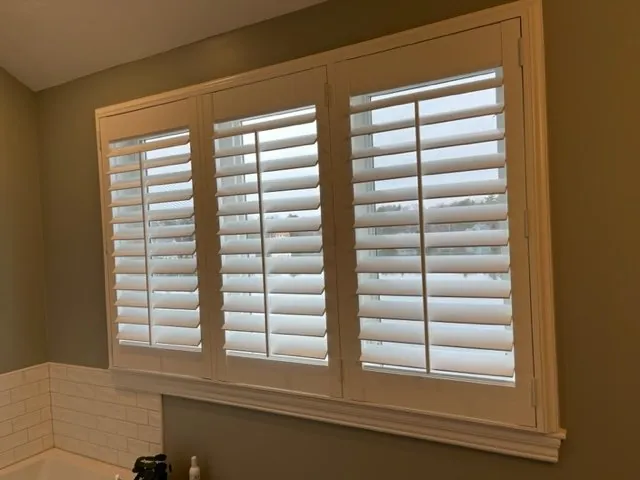
High ceilings and long panels
A window that runs most of the way to a high ceiling needs a long shutter panel, and long panels behave differently. They need a sturdy frame and good hinges so they swing without sagging. They usually benefit from a divider rail, which also stiffens the panel. And they need the frame set perfectly plumb, because a small lean at the top shows clearly by the time it reaches the sill.
This is where certified Hunter Douglas installation earns its keep. Our installers set the frame square and plumb even in a hundred-year-old house that has settled out of true, so tall panels close evenly and the louvers line up across the window.
On the tallest sash, a hidden tilt is worth considering. It moves the louvers from the side of the panel, so there is no tilt rod running the full height of the window. That keeps the face of a long shutter clean and makes it easier to reach.
How a consultation at your house works
Most New Bedford projects start at the house, because the reveal depth, the trim and the closeness of the neighbors are things you cannot judge from a showroom. Our vans carry samples, so the visit comes to you.
- Request a consultation online or use the call button, and pick a time.
- We walk the rooms with you, floor by floor if it is a triple-decker, and talk about which windows face the street or a neighbor.
- You see Palm Beach, NewStyle and Heritance samples, with louver sizes and finishes, held against your own windows.
- We measure the reveal on each window and explain where an inside or an outside mount makes sense.
- Every window is measured for width and height at several points.
- You get a free estimate and decide in your own time.
Our page on what happens at an in-home consultation has more detail.
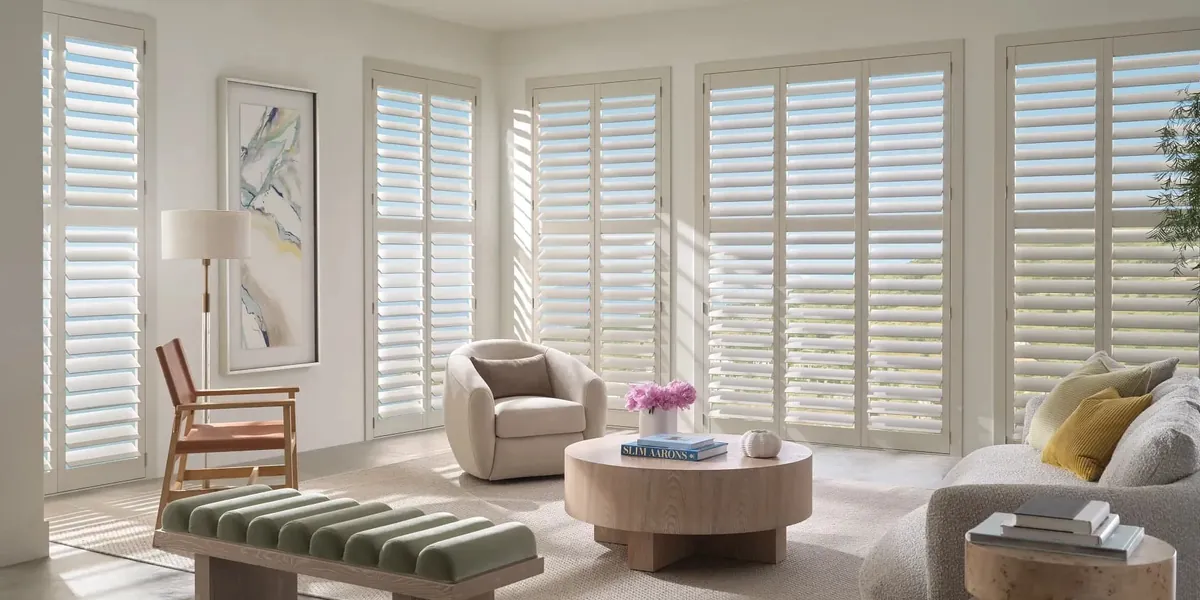
Picking a collection for each floor and room
Hunter Douglas makes three shutter collections, and in a New Bedford house it is common to use more than one.
Heritance is real hardwood, painted or stained, with the widest finish choice. It suits a Federal parlor or a front room with original casings.
NewStyle is a hybrid with the look of painted wood. It is the practical choice for matching every floor of a triple-decker or every bedroom in a Federal house.
Palm Beach is polysatin with no wood at all, so steam and damp do not affect it. It belongs in kitchens and bathrooms.
Matched in color and louver size, the three look consistent from room to room. Our main plantation shutters page compares them in more depth.
Louver size on tall, narrow windows
Louver size changes how a shutter looks on a window more than almost anything else. Wider louvers mean fewer blades and a more open view when tilted level. Narrower louvers mean more blades and a finer, more traditional look.
On the tall, slim sash typical of New Bedford, narrower louvers often keep the shutter in proportion, especially in the historic district where windows have fine muntins. A wider louver can suit a triple-decker’s front bay or a room where the view down the hill to the harbor is worth keeping open. Seeing the sizes side by side on your own window is the quickest way to decide, and that is part of every visit.
Privacy without darkness
A city house close to its neighbors often ends up with shades pulled down all day, which keeps the rooms private but dim. A shutter changes that. With the louvers angled upward, light comes in over the top of the blades and bounces off the ceiling, while anyone looking in from the street or the house next door sees only the slats.
At night, with the lamps on, closed louvers give full privacy. A divider rail lets you treat the top and bottom of a tall window differently, which is often the most useful single feature on a first-floor room. Choosing plantation shutters in New Bedford, MA, is often about exactly this: rooms that are both bright and private.
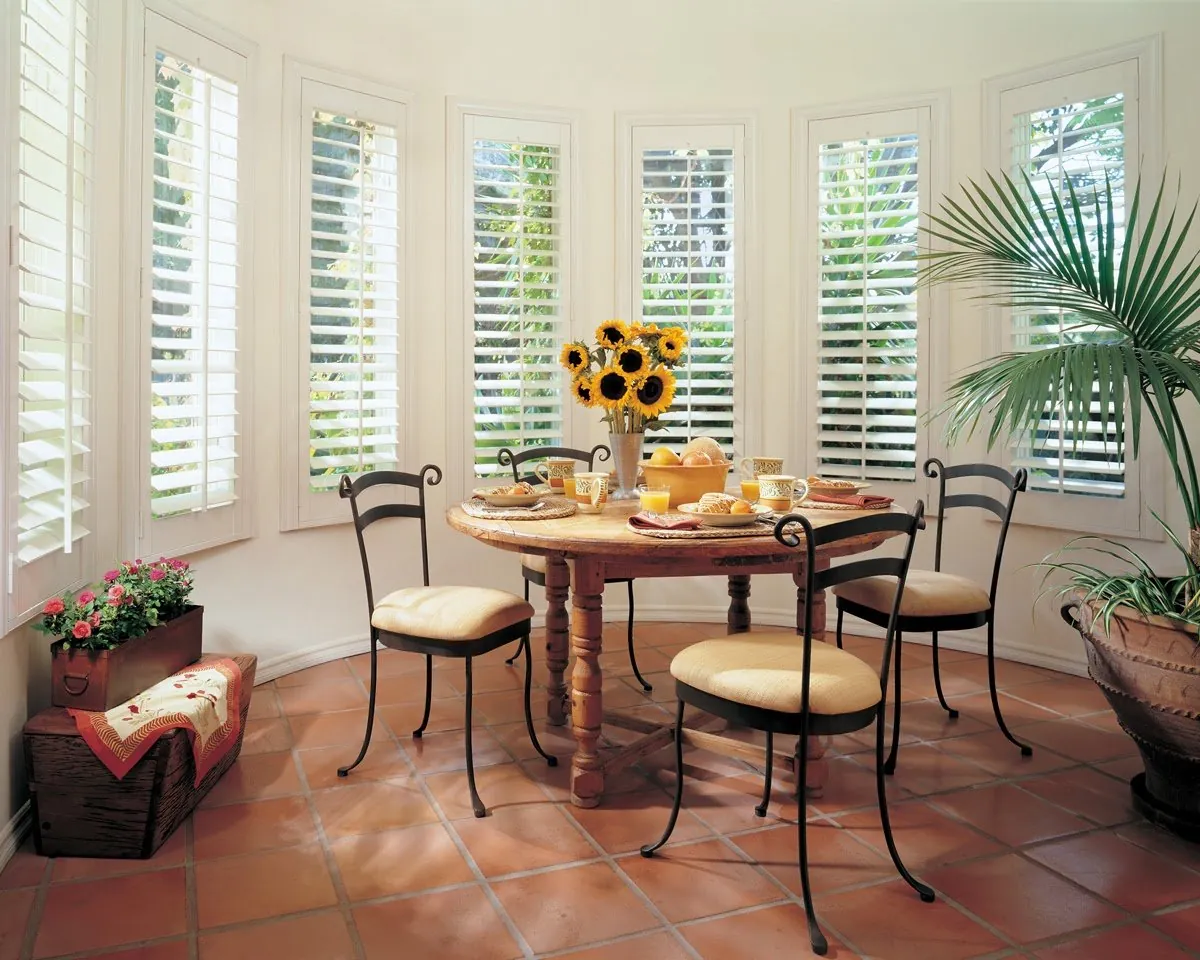
Front bays and back porches
Many triple-deckers carry a bay up the front of the building, so each apartment gets a three-sided window in its front room. A bay like that takes a separate shutter on each face, with the frames meeting tidily at the angles. Because every panel is made for its own opening, the louvers line up across all three sides when you tilt them, and from the street every floor’s bay looks the same.
At the back of the house, the porches usually open off the kitchen through a half-glass door or a pair of doors. A shutter can be mounted on a door so it swings with it and still tilts when the door is closed. We check how far the door opens and where the handle sits so the shutter never gets in the way.
Bays and porch doors are a common place to start with plantation shutters in New Bedford, MA, because they are the windows that face the street and the yard most directly.
Comfort in a tall room
A room with a high ceiling and tall sash is lovely in daylight but can be hard to keep comfortable. In winter, old single-glazed windows feel cold to sit beside. In summer, a south or west window lets in a lot of sun over a long afternoon.
Closed louvers put a solid layer between the room and the glass, which takes the edge off the chill by an old window on a winter evening. In summer, tilting the louvers against the sun keeps it off the floor and furniture while the room stays usable. Neither job needs the windows covered all day, which matters in a house built to let in light.
Shutters also keep their looks in a room that gets a lot of sun. There is no fabric to fade along the folds, and the louvers wipe clean in a minute. In a Federal house with a deep window seat, that matters: the shutter sits behind the cushion, opens back against the reveal when you want the full window, and stays tidy for years of daily use.
A Hunter Douglas Gallery dealer for older city houses
Blinds & Designs is a Hunter Douglas Gallery dealer, the designation Hunter Douglas reserves for dealers who meet its standards. You can compare every shutter collection, every louver size and the full range of frames with us, rather than choosing from whatever happens to be in stock.
Our installers are certified by Hunter Douglas, and in old, tall, out-of-square openings that training shows. We also offer interior design consultations if you want help bringing a room together, and repairs on shades and blinds you already own.
Shutters are often one part of a bigger plan. See our cellular shades in New Bedford for rooms that need warmth, or everything we offer in the city on our New Bedford page. The North Dartmouth showroom is our closest location, just west of the city.
Questions from New Bedford
My windows are very shallow. Can I still have shutters?
Yes. If the reveal is too shallow for an inside mount, the frame goes on the face of the casing instead. The louvers then have room to tilt freely, and a decorative frame makes the outside mount look deliberate.
Will shutters suit a house in the historic district?
Interior shutters set neatly inside the window, with an even finish facing the street, sit comfortably in a period house. If you are unsure how the district treats your windows, check with the city before work begins. We handle the fit and finish inside.
Can every floor of my triple-decker match?
It can. NewStyle comes in the same colors and louver sizes for every window, and Palm Beach can match it in the kitchens and baths. From the street the whole front looks even.
How do shutters give privacy when the house next door is so close?
Angle the louvers so you see light and sky but nobody can see in. With a divider rail, keep the bottom closed and the top open. At night, close them fully.
Is the estimate free?
Yes. Once we have measured, you get a free estimate for the shutters you are considering. Request a consultation and we will bring samples to your home.
See how your tallest window would look
The easiest way to judge plantation shutters in New Bedford, MA, is to see a sample panel against your own tall sash, in your own light. Request a consultation and we will bring all three collections to the house, measure every window, check each reveal and give you a free estimate. You are also welcome at our North Dartmouth showroom, a short drive from the city, or you can use the call button to ask a question first.