
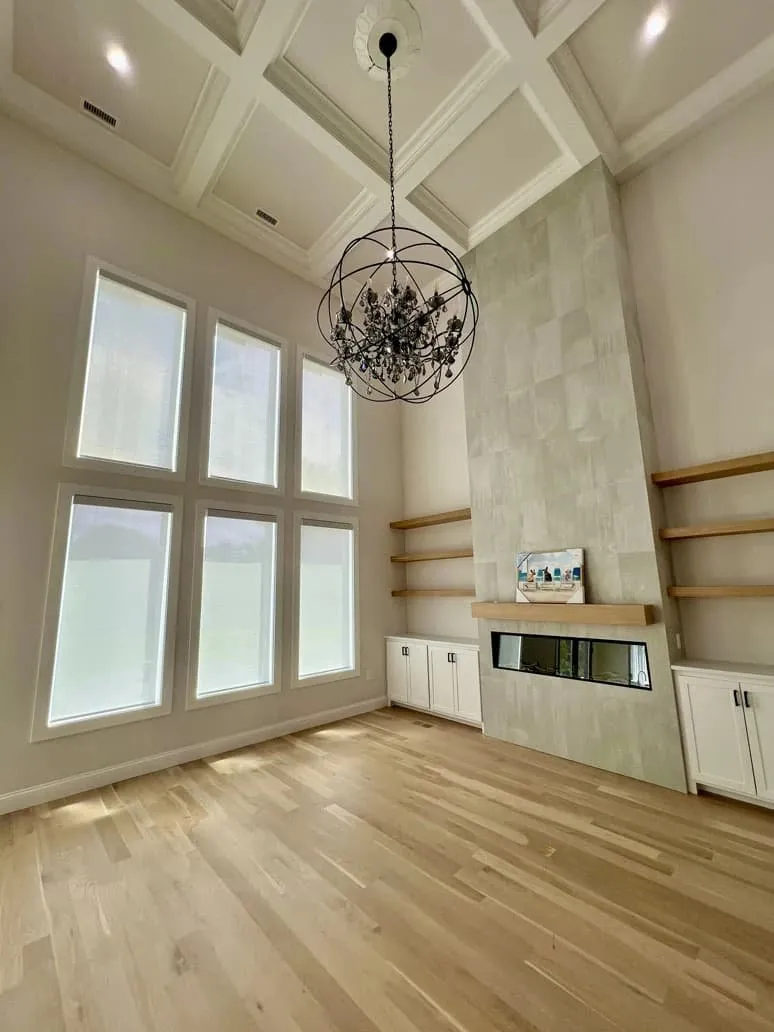
Tall sash, high ceilings and close neighbors
Climb the hill from the waterfront and the windows get taller. Federal houses in the historic district carry long, slender double-hung sash under ceilings that seem to go on forever, and the mill-era triple-deckers of the North End and the West End stack three floors of the same narrow openings one above the next. As a Hunter Douglas dealer in New Bedford, MA, those proportions are where every conversation begins.
A window that is twice as tall as it is wide behaves differently from the squat openings in a newer house. A shade has more fabric to lift and more weight on its cord or motor. It hangs a long way, so any error in level shows from across the room. And with a high ceiling above, the top of the window often sits well out of easy reach.
Then there is the frame itself. The depth of the reveal, the trim around it and, in the historic district, what the street expects to see in the glass all decide how a treatment can be mounted. On a triple-decker, the house next door may be only a driveway away, which turns privacy into a question for every floor, not just the ground.
Every Hunter Douglas family, one dealer
Being a Gallery dealer means the whole Hunter Douglas catalog is open to your windows, not a short list. These are the families we reach for most often in the city’s older housing, with a page for each in New Bedford if you want more depth.
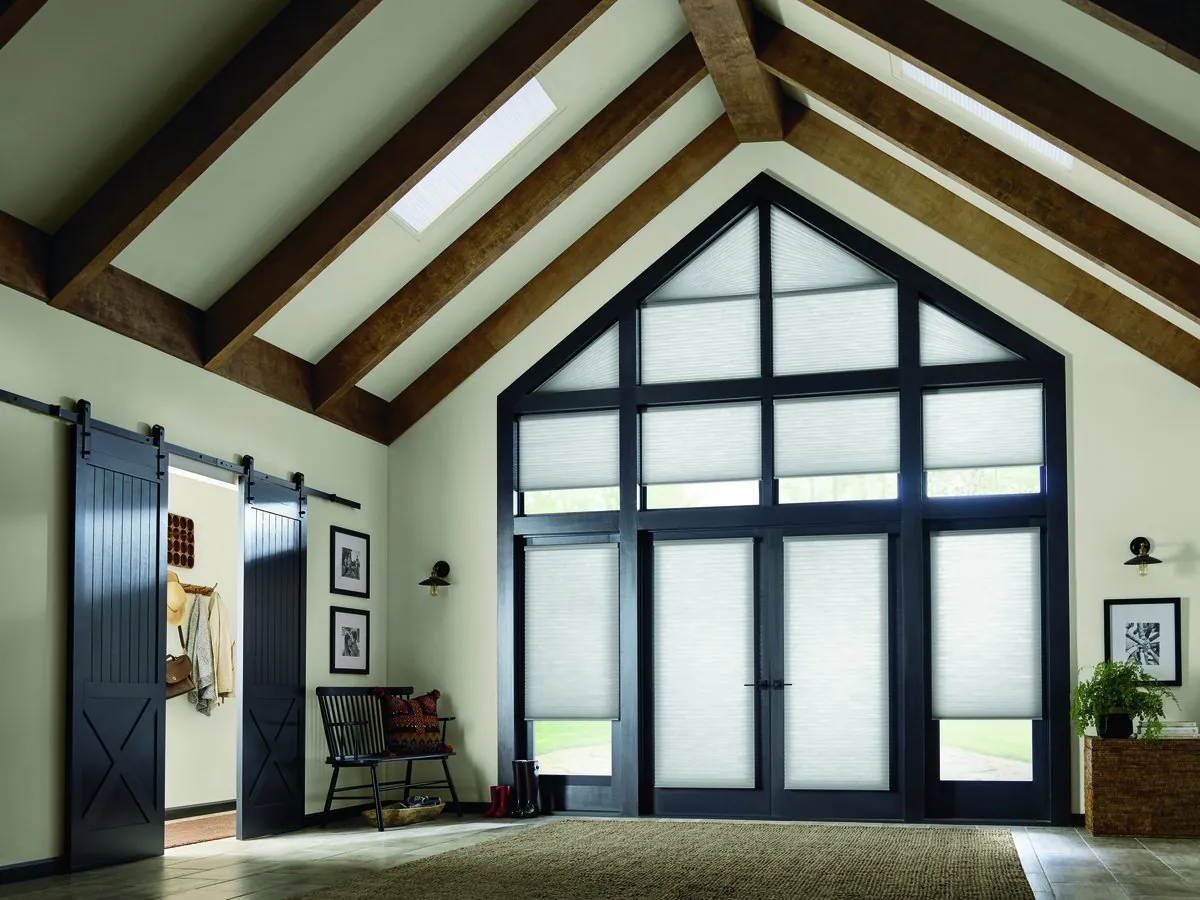
Honeycomb shades
Duette and Applause hold a layer of still air in their cells, which helps a drafty parlor with original sash feel warmer by the window.
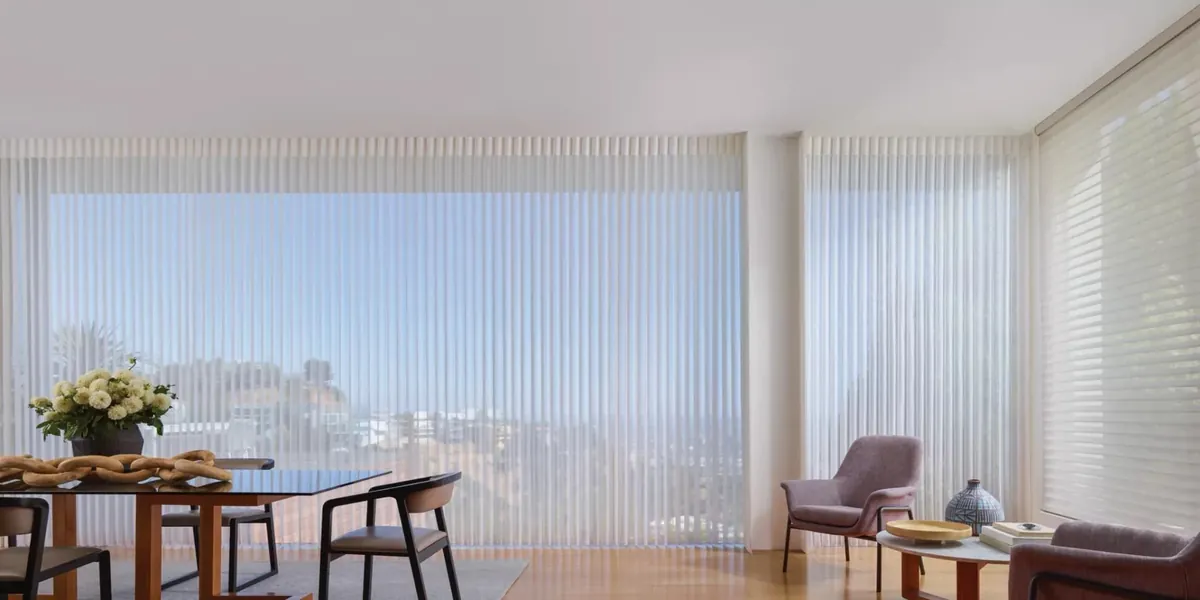
Sheer shades
Silhouette, Pirouette and Luminette soften daylight through fabric vanes, so a front room on a busy street stays bright without being on show.
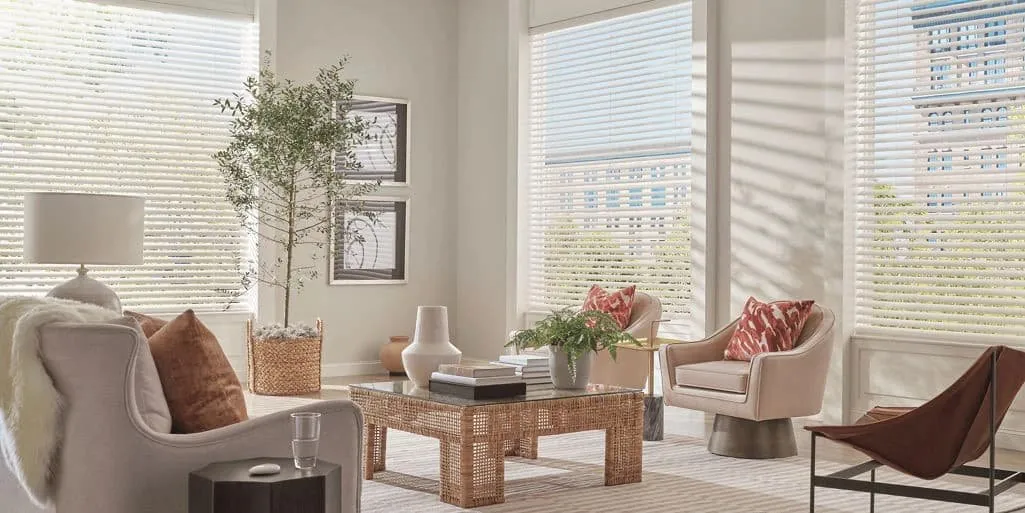
Blinds
Parkland wood, EverWood faux wood and metal blinds tilt for precise control of light between houses that sit close together.
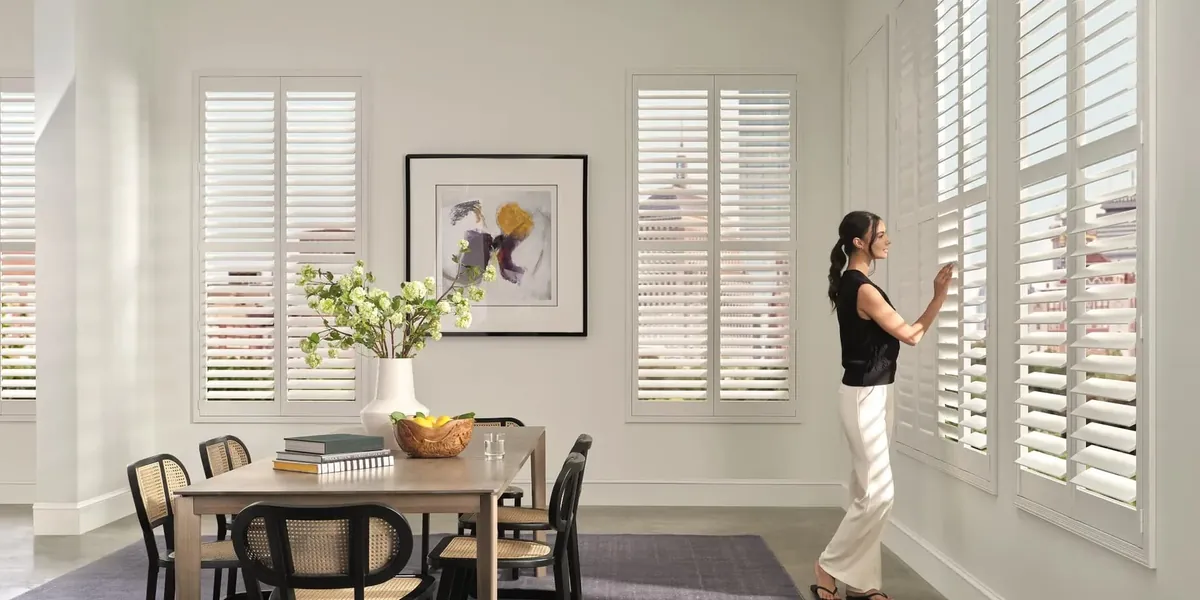
Shutters
Palm Beach, NewStyle and Heritance shutters suit a long Federal window, where a divider rail lets the top and bottom work on their own.
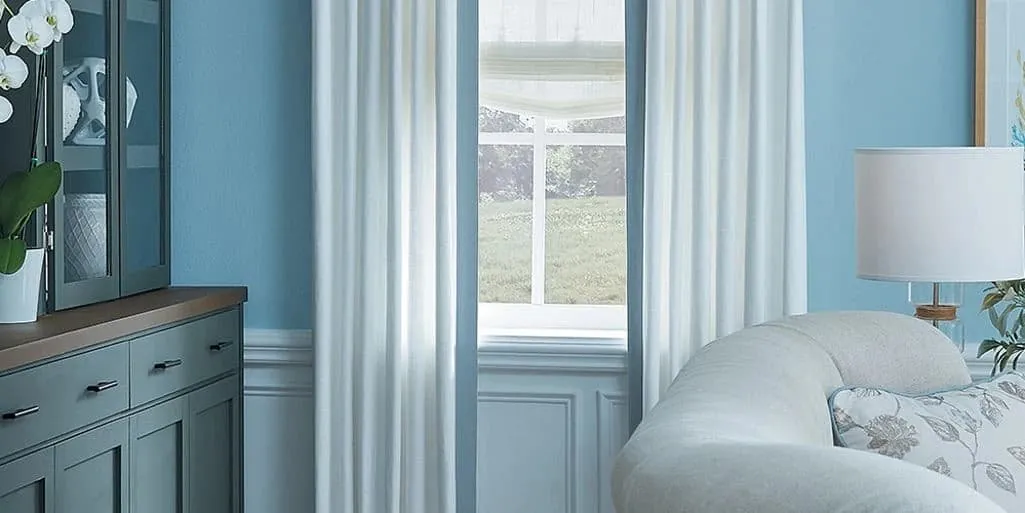
Drapery and Roman shades
Carole drapery and Vignette Roman shades give a high-ceilinged room the softness and height its architecture calls for.
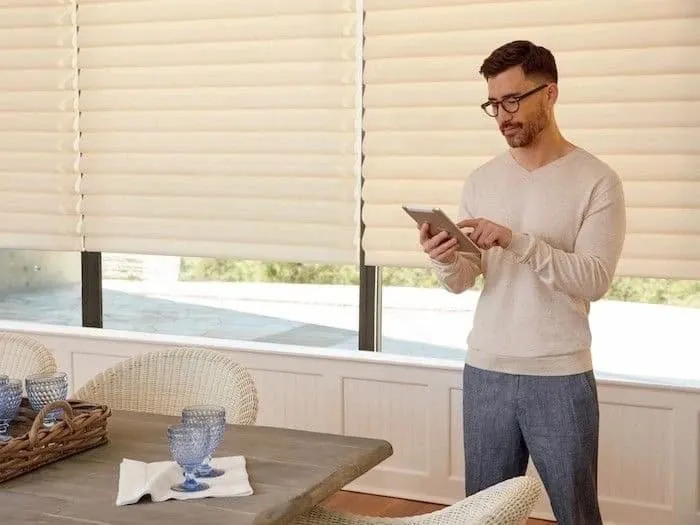
PowerView motorization
When the top of a window is beyond arm’s reach, a motor moves the shade from a remote, an app or a schedule.
Why the reveal decides the mount
Before anyone talks fabric, we look at the depth of the window opening. That depth, the reveal, is the space between the face of the casing and the sash, and it settles one of the first choices on any order: whether the treatment sits inside the frame or on the trim outside it.
An inside mount tucks the headrail into the opening. The casing stays fully visible, and when the shade is raised it nearly disappears. On a Federal house with fine original trim, that is usually what you want. But it needs enough depth for the headrail to clear the sash lock, the stops and any old pulley hardware at the top of the frame. Many of the city’s older windows have generous reveals, and some have very shallow ones where previous owners added storm panels or replacement inserts.
An outside mount goes on the casing or the wall above. It can make a narrow window look wider and a short one look taller, and it hides an opening that has been altered over the years. It also covers more of the frame, which matters on a room whose trim you have spent time restoring.
There is no single right answer. We measure each opening and talk through what each mount will look like before you decide, because on a tall narrow window the difference is easy to see.
What we check at each window
- The width of the opening at the top, the middle and the bottom, since old frames are rarely square.
- The height on the left, center and right.
- The depth of the reveal at several points, and whatever hardware sits inside it.
- How the sash opens, so a shade or shutter never blocks it.
- Where the brackets can find solid wood behind old plaster or lath.
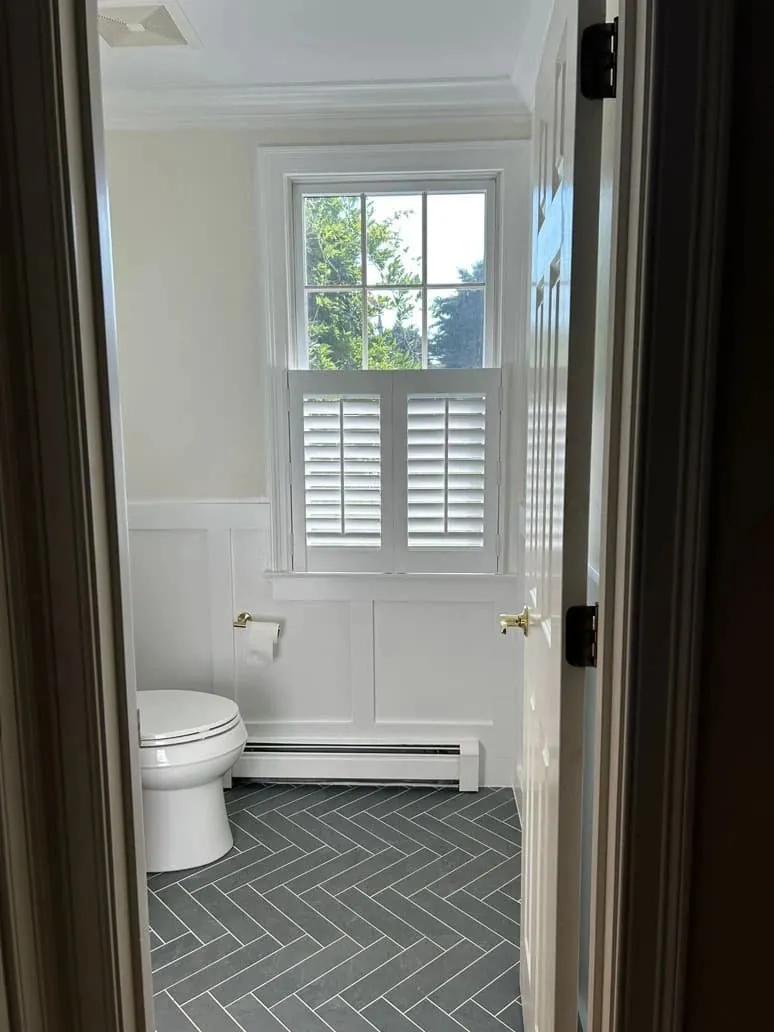
Historic district windows
In the historic district above the waterfront, a window is part of what the street sees. The houses there were built with care, and their owners tend to keep the glass looking the way it was meant to look from the sidewalk. That shapes what we suggest for the front of the house.
Treatments that live inside the frame, with neutral backs facing the glass, are the usual starting point. A honeycomb shade can be ordered with a white or ivory back so the street sees a calm, even face no matter what color you choose for the room. Shutters set inside a deep reveal read as part of the original joinery. Drapery hung high inside the room changes nothing outside at all.
If your house falls under local review, it is worth checking what applies before you commit to anything that changes the exterior view. We are glad to talk through the options that keep the outside looking as it should while the inside works the way you need.
Stair landings, bays and oddly sized openings
Older city houses are full of windows that do not match the rest. A stair landing may have one tall window set halfway between floors, out of reach from either. A Federal parlor might have a shallow bay with three narrow panes angled toward the street. Triple-deckers often have a small window in a back hall or pantry that is a different size from every other opening in the building.
As a Hunter Douglas dealer in New Bedford, we treat these as part of the job rather than leftovers. Each panel of a bay can carry its own shade, built so the bottom rails line up when they are raised together. A landing window can take a motorized shade so you never need a ladder on the stairs. A pantry window can get a simple cordless shade or a small café shutter that suits its size. Because every Hunter Douglas product is made to the measurements we take, an odd size costs you nothing in fit.
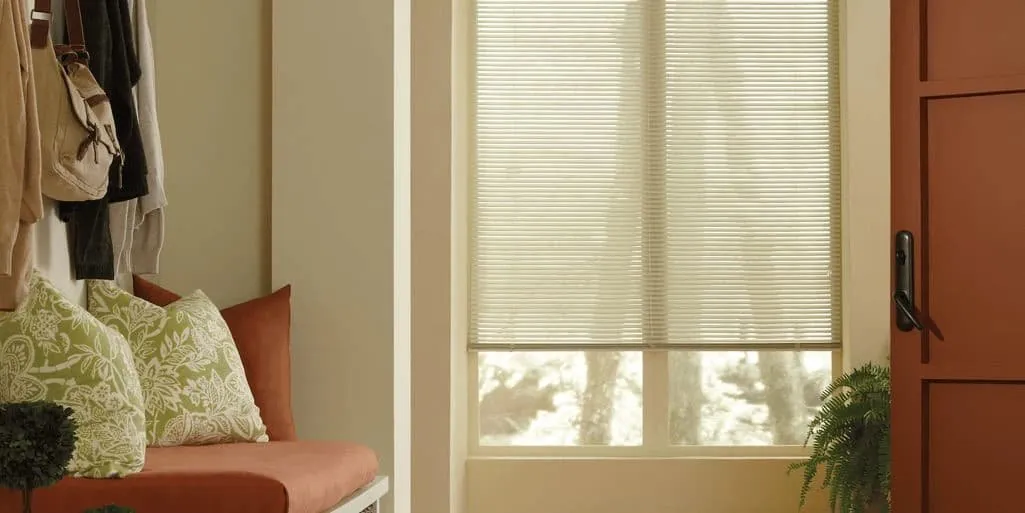
Making long, narrow sash work
A slender double-hung window in a nineteenth-century room has a rhythm of its own. Several of them along a front wall, or paired either side of a fireplace, set the character of the whole room. The right treatment respects that rhythm.
Shades that stack small. On a tall window, the bundle of fabric left at the top when the shade is raised can cover a good part of the upper sash. Honeycomb shades fold into a very compact stack, and so do roller shades, which wrap tight around their tube. Both leave the upper glass open.
Shutters with a divider rail. A Palm Beach, NewStyle or Heritance shutter on a tall window often has a rail across the middle, so the lower louvers can be closed for privacy while the upper ones tilt open for light. On a long window, the panels can also be split into upper and lower sections that swing open separately.
Height from the ceiling. In a room with very high ceilings, drapery hung close to the crown moulding makes the windows look even taller and frames them properly. Layered over a sheer or Roman shade, it gives you warmth, softness and privacy all at once.
Lift that matches the weight. A long shade carries more fabric, so the lift system matters. Cordless lifts keep the window tidy and safe. For anything out of reach, PowerView motorization handles it for you.
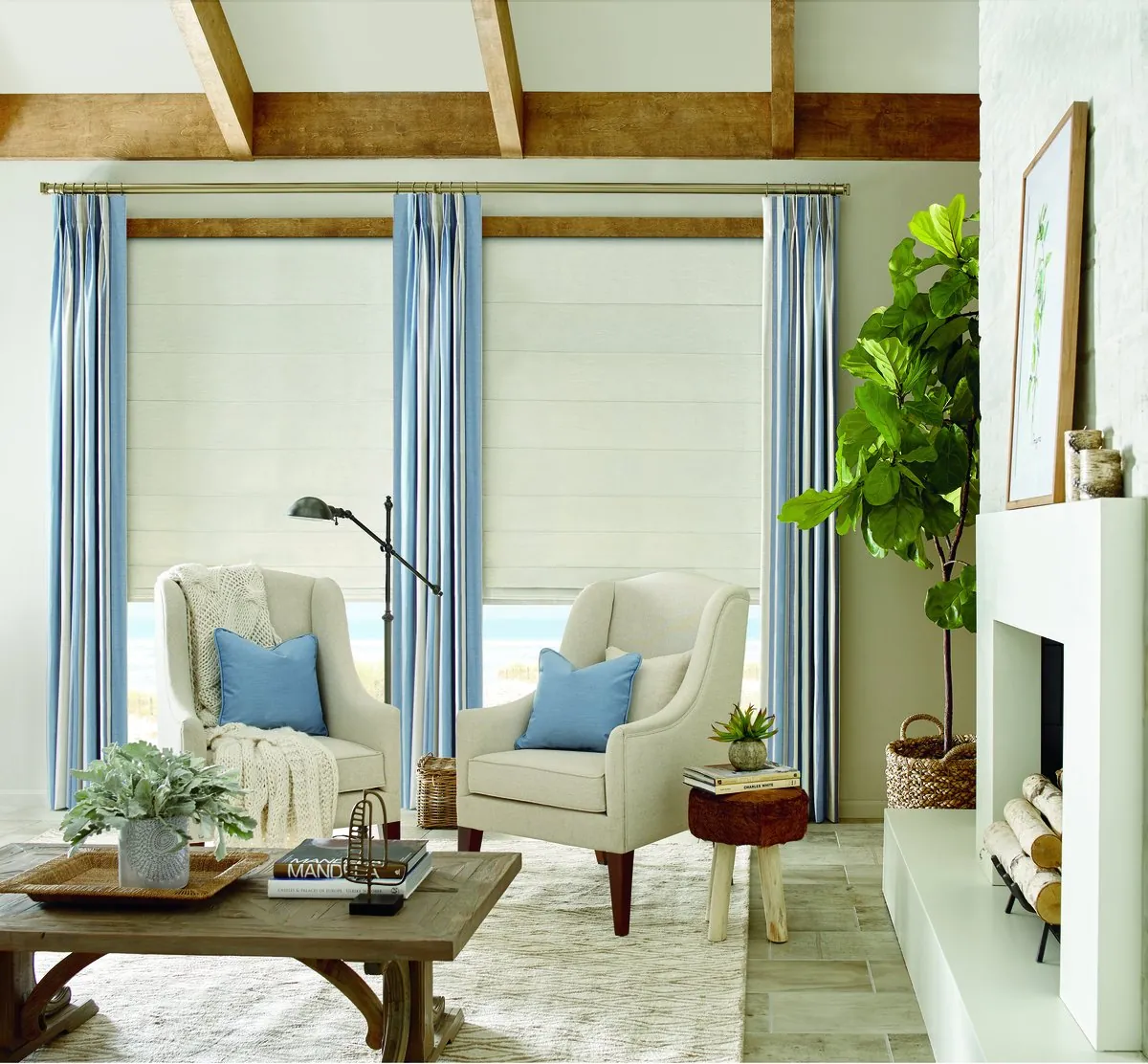
Three floors, three different rooms
Triple-deckers are a New Bedford signature, and they are not one house so much as three homes stacked on a single footprint. Each floor brings its own window questions.
The ground floor sits close to the sidewalk or the driveway, so privacy comes first. A top-down, bottom-up shade covers the lower glass while letting light in at the top. Sheer shades blur the view in while keeping the room bright.
The middle floor often looks straight across at the neighbor’s windows. Blinds and shutters, which tilt, let you angle the view up and away while light still comes in. Light-filtering honeycomb fabrics glow softly without showing shapes behind them.
The top floor, up under the roof, can run warm in summer and catch more sun. It also tends to have the least privacy pressure, so you can choose for light control and comfort instead. Many top-floor rooms suit a roller or screen shade that cuts glare while keeping a view over the rooftops.
Whether you own the whole building or one floor of it, we can work through each unit separately, with the same care on the third floor as the first.
How a consultation runs
New Bedford windows are best judged in place, with real samples against your own trim and in your own light. Our vans carry the samples, and as the shop likes to put it, “we can bring the showroom to you.” A typical visit goes like this.
- You request a consultation online, or use the call button, and we agree on a time.
- We arrive with samples across the Hunter Douglas families that suit your windows.
- We walk the rooms with you, floor by floor, and ask how each space is used.
- You hold fabrics, slats and louvers up against the glass and see them in morning or afternoon light.
- We measure every opening and check each reveal for mounting depth.
- You receive a free estimate, with time to think it over.
If a room needs a broader plan for color, fabric and layering, ask about our interior design consultations, which can happen at the same visit. To know more beforehand, read what happens at an in-home consultation.
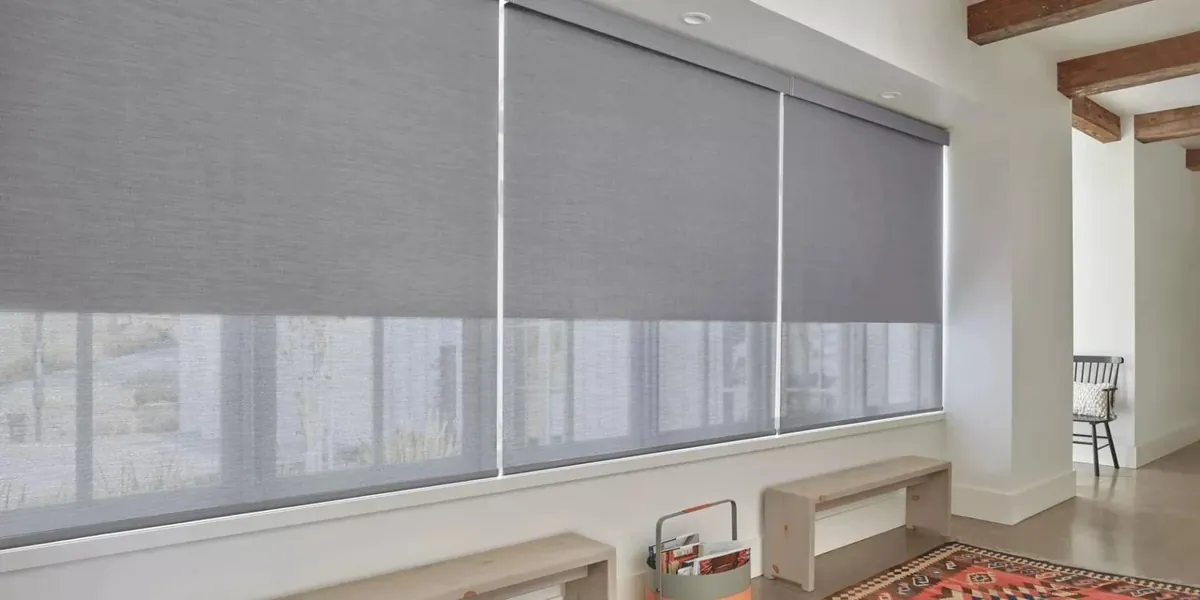
Light from the harbor side
Houses on the slope above the waterfront often face east, toward the harbor, and catch strong low sun first thing in the morning. A kitchen or bedroom on that side can be bright enough to make the start of the day uncomfortable.
Hunter Douglas gives you several ways to handle it. A Designer Screen roller shade cuts glare and keeps some view out. A room-darkening honeycomb in a bedroom keeps the space dim until you choose to raise it. Silhouette sheers turn hard light into an even glow across the room. And with PowerView, shades can lower themselves before sunrise and rise again later, without anyone climbing on a chair to reach a tall window.
For west-facing rooms that heat up in the afternoon, the same tools apply in reverse. We look at which way each window faces and suggest a fabric and openness for that window, not one answer for the whole house.
Winter at a nineteenth-century window
Original sash has charm, and it also lets cold in. Wavy old glass is thin, the meeting rail between upper and lower sash rarely seals tight, and a tall window simply has more glass to lose heat through. On a windy night off the harbor, the air beside a front window in an old parlor can feel noticeably cooler than the middle of the room.
A window covering will not replace weatherstripping, but the right one helps. Honeycomb shades hold air in their cells between the glass and the room. Lined drapery hung close to the frame does a similar job in a formal room, and a Roman shade with a lining adds a soft layer that you lower at dusk. Shutters closed tight in a deep reveal also cut the draft you feel when sitting near the window.
Choosing between them is part of what a Hunter Douglas dealer in New Bedford, MA should help you weigh: which product suits the room’s look, how often you will raise it, and how cold that particular window gets. We talk it through at the window itself, where you can feel the difference.
Getting the most from a Gallery dealer
Working with a Hunter Douglas dealer for New Bedford, MA homes who carries the full range means you are never steered toward one product simply because it is the only thing on offer. Here are a few of the side-by-side choices we help with.
- Honeycomb or Roman. Both soften a room. Honeycomb leans toward comfort and a compact stack. A Vignette Roman shade has the folds and fabric depth of drapery and suits a formal parlor.
- Wood or faux wood. Parkland real wood blinds suit a dry living room with period trim. EverWood faux wood handles a bathroom or kitchen with more steam.
- Shutters or blinds. Shutters become part of the frame, and they work beautifully in deep reveals. Blinds cost the window less depth and can be raised clear of the glass.
- Sheer or screen. Sheers diffuse light softly. Screen shades preserve more of the view and cut glare.
Hunter Douglas keeps its full catalog on its own website, so you can browse lines and fabrics ahead of the visit. Tell us what caught your eye and we will bring samples of it. Our main Hunter Douglas page sets out every family we carry, with links to shades, blinds, shutters and drapery.
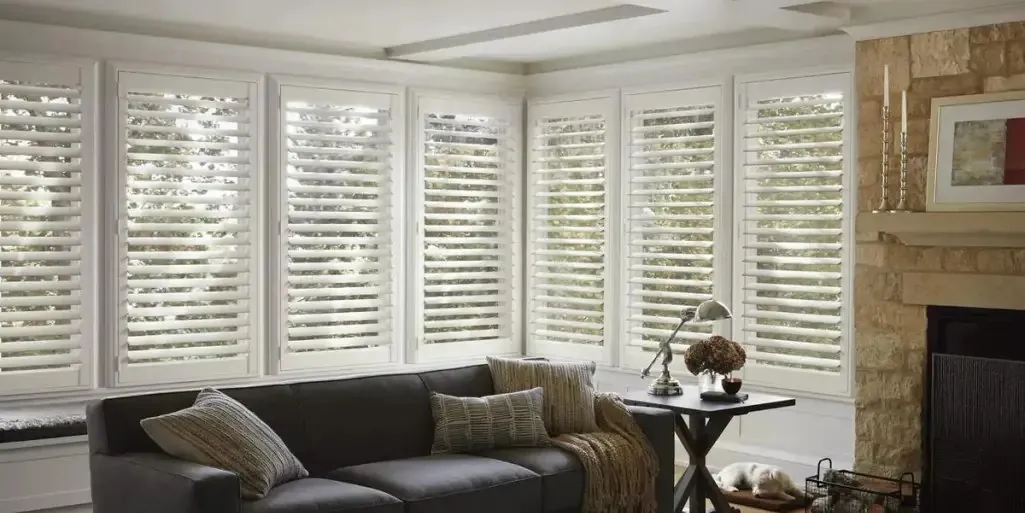
Fitting old frames properly
Installation is where a made-to-order product proves itself, and older frames ask more of an installer than new ones do. Plaster can crumble where you expect wood. A frame that has settled for a century may be out of level by enough to make a long shade hang visibly crooked. Sash weights and pulleys can sit exactly where a bracket wants to go.
Our installers are certified by Hunter Douglas. They find solid fixing points, set each headrail level even when the frame is not, and check that every shade, blind or shutter clears the sash and operates smoothly before they leave. On a motorized order, they pair each shade with its remote or the app and show you how it works.
If a window covering you already own needs attention, whether a cord has frayed or a shade no longer stays put, the same people look after blind and shade repair in New Bedford.

What Gallery status means on your street
Blinds & Designs holds Hunter Douglas Gallery dealer status, and every installation we do is certified by Hunter Douglas. Those two facts are what set a Hunter Douglas dealer in New Bedford apart: the full range to choose from, and fitting done to the maker’s standard.
Around them sits the rest of the service: in-home consultations from vans carrying samples, a free estimate for every job, interior design consultations when a room needs a fuller plan, window covering automation through PowerView, and repairs when something wears out.
That lets one visit cover the whole building. A triple-decker might take shutters on the ground floor, honeycomb shades in the bedrooms and screen shades upstairs, all measured together and fitted by the same installers. See everything we do in town on our New Bedford page, and if you are planning a softer look for a living room, our custom drapery in New Bedford page is a good next read.
Questions from New Bedford
My windows are very tall and narrow. Which treatments suit them best?
Most Hunter Douglas families can be made for a tall slender window. Honeycomb and roller shades stack small, so they leave the upper sash clear when raised. Shutters with a divider rail let the top and bottom work separately. For the highest windows, PowerView motorization saves you reaching.
My reveal is shallow. Can I still have an inside mount?
Sometimes. It depends on the exact depth and on what hardware sits inside the frame. Some shades need very little depth, and others need more. We measure at several points and tell you honestly if an outside mount on the casing would work better.
I live in the historic district. What should I think about?
How the window looks from the street. Neutral backing fabrics, treatments that sit inside the frame and drapery hung inside the room keep the outside appearance calm. If your house is under local review, check what applies before changing anything visible from outside.
Can you treat each floor of a triple-decker differently?
Yes. Each floor has its own needs for privacy, light and heat, and we look at them one by one. Many owners choose different products for each level and have them measured and installed together.
Is there a charge for the estimate?
No. The estimate is free. Request a consultation and we will come to the house with samples, measure, and give you the estimate.
Ready when you are
Three easy ways to move ahead: request a consultation and we will bring samples to your rooms, use the call button to talk it through, or call in at our North Dartmouth showroom, the closest of our locations to the city. Whichever you choose, the estimate costs you nothing.