
Why Fairhaven houses need a warmer window
Walk the streets around Poverty Point and Oxford Village and you see houses that were built long before anyone worried about a winter heating bill: tall Victorians with layered trim, and shingled cottages tucked close to the road. Out along Sconticut Neck the houses change to mid-century ranches with wide picture windows facing the water. Different as they are, they share one weak spot, the glass. That is where we start when we fit cellular shades in Fairhaven, MA.
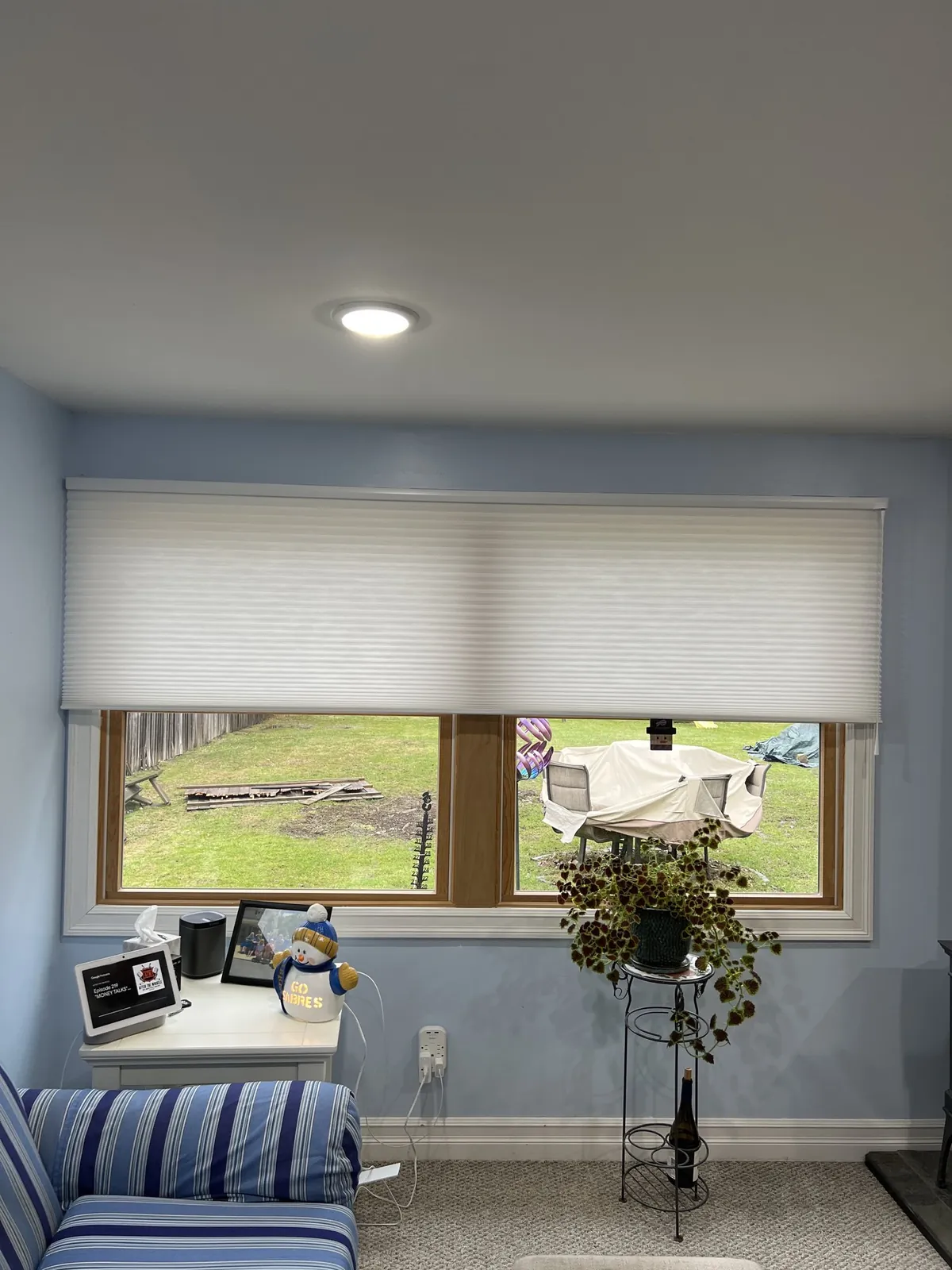
A honeycomb shade traps a layer of still air inside each cell. That pocket of air sits between the cold pane and the room, so a front parlor that used to feel chilly by the window holds its warmth into the evening. For an older house with original sash, or a ranch with a big single pane facing the harbor, it is the warmest window covering Hunter Douglas makes.
The harbor adds two more things to think about. Salt air settles on anything metal near an open window, and the morning rooms on the east side take strong, low sun straight off the water. Both shape which shade we suggest and how it goes up.
Cellular shades in Fairhaven, MA, for every kind of room
We carry the full Hunter Douglas honeycomb range. These are the choices that come up most often in Fairhaven houses, and we bring samples of each to your door.
Duette honeycomb shades
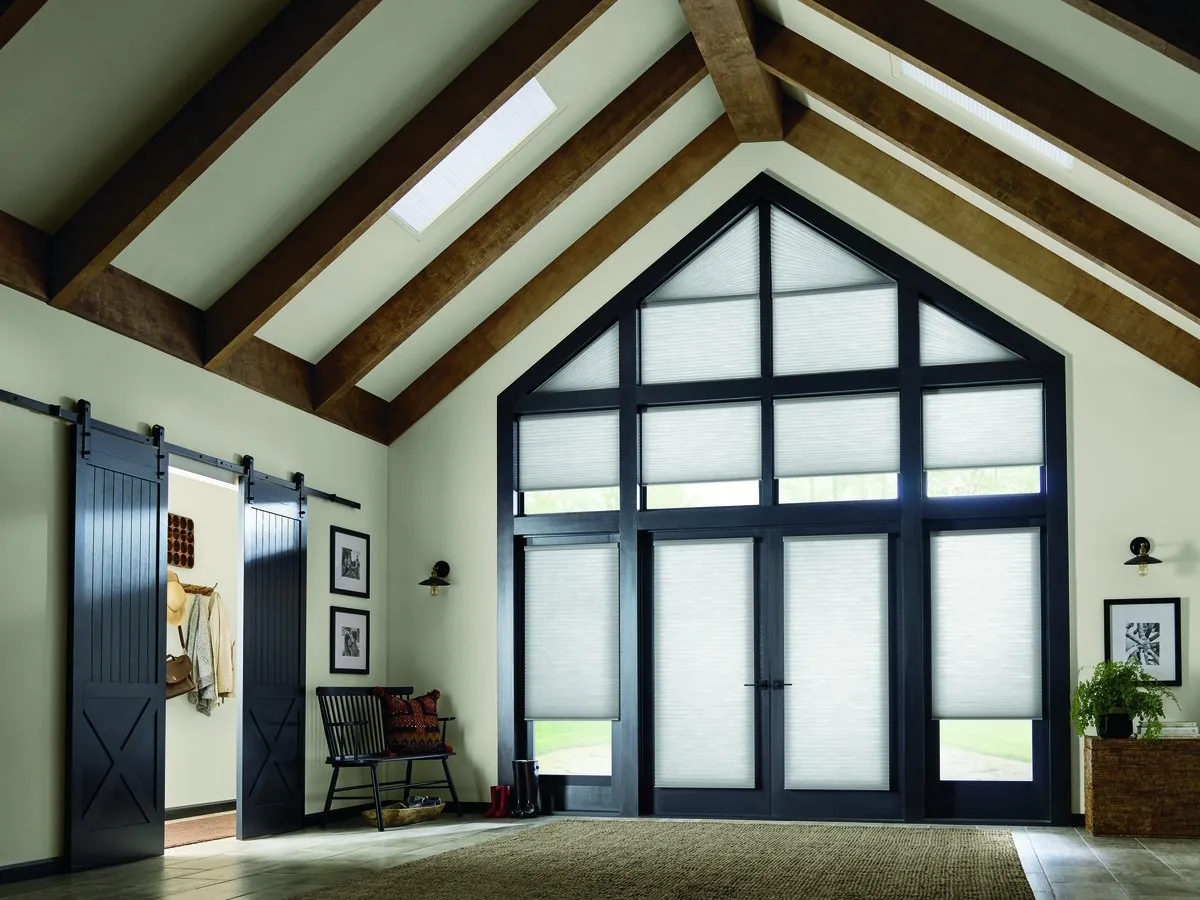
The original Hunter Douglas honeycomb, with the widest choice of fabrics, pleat sizes and lift systems. A good fit for the tall, narrow windows in a Victorian front room.
Applause honeycomb shades
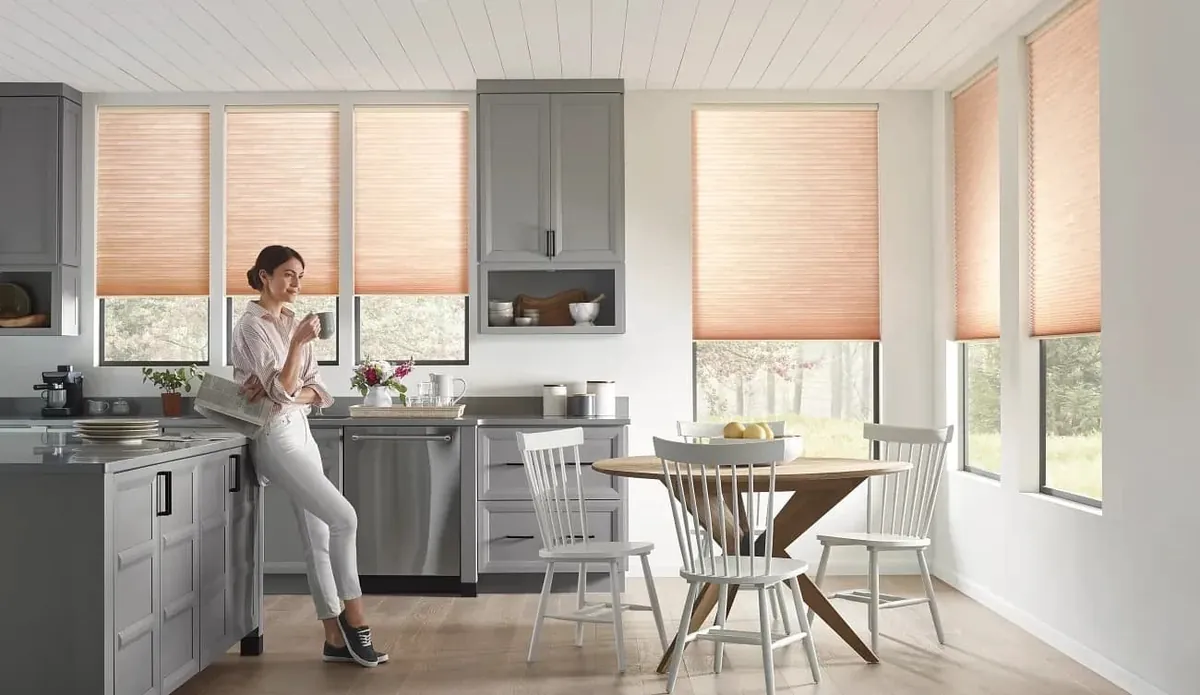
Hunter Douglas’s other honeycomb line, with its own fabric range and cell options. Often chosen for kitchens, back bedrooms and the rest of a whole-house order.
Top-down, bottom-up
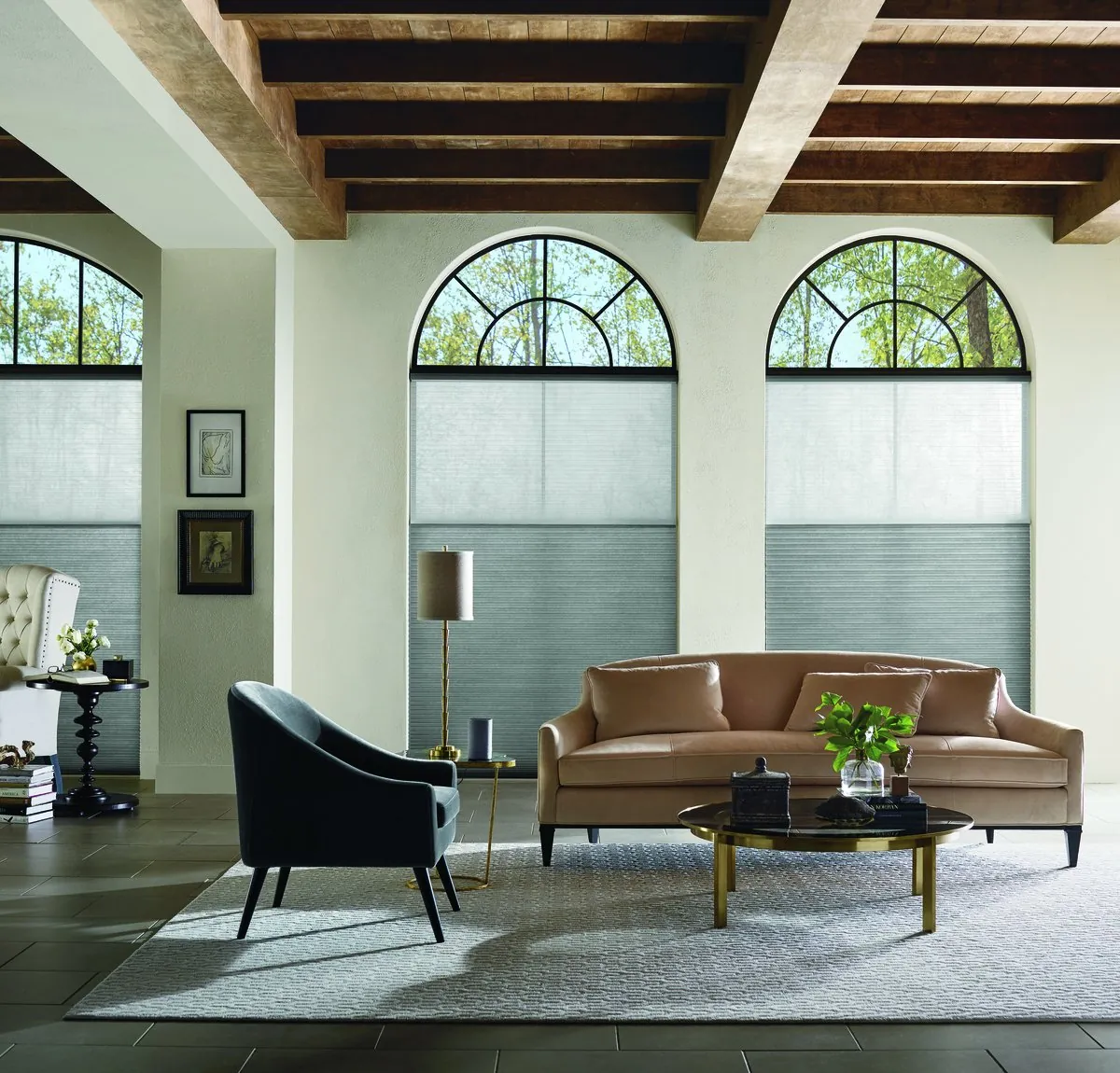
Lower the shade from the top and the harbor view stays open while the lower sash stays covered. Useful on a cottage that sits close to the street.
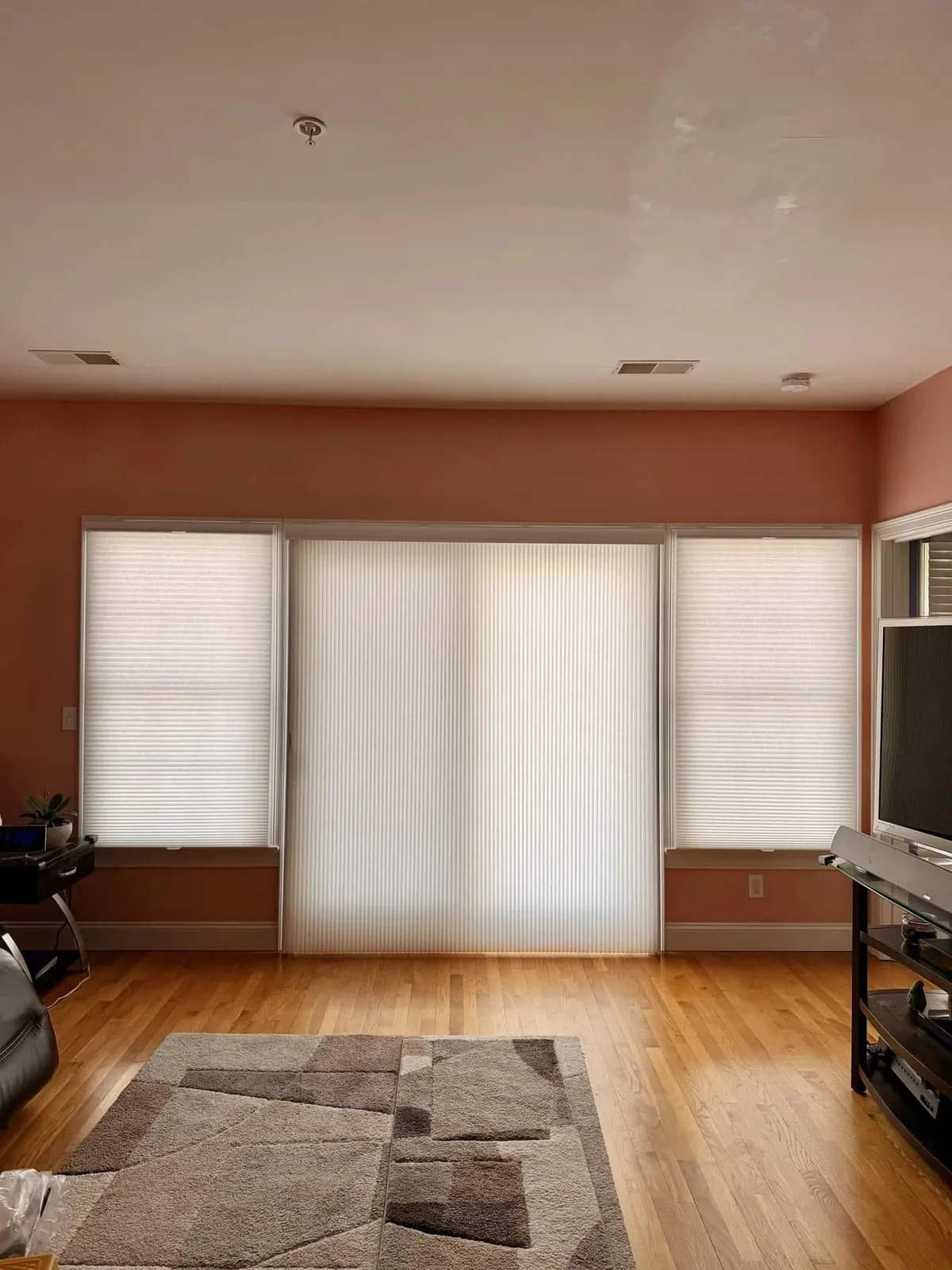
Vertical honeycomb for sliders
A honeycomb shade that travels side to side, for the slider out to a deck or patio, so the door gets the same warmth as the windows beside it.
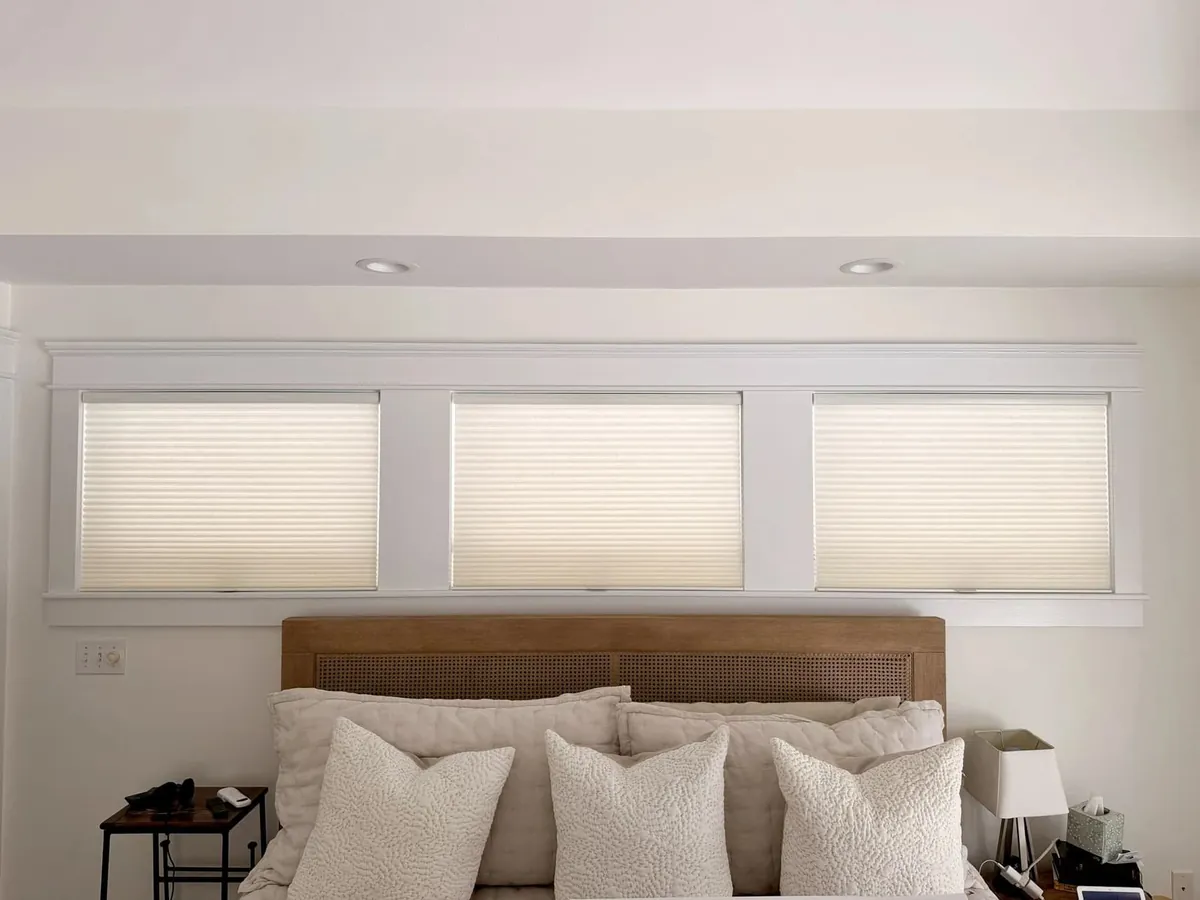
Room-darkening fabrics
For bedrooms on the east side that catch the sun at first light. The cells still hold air, and the fabric blocks the glow.
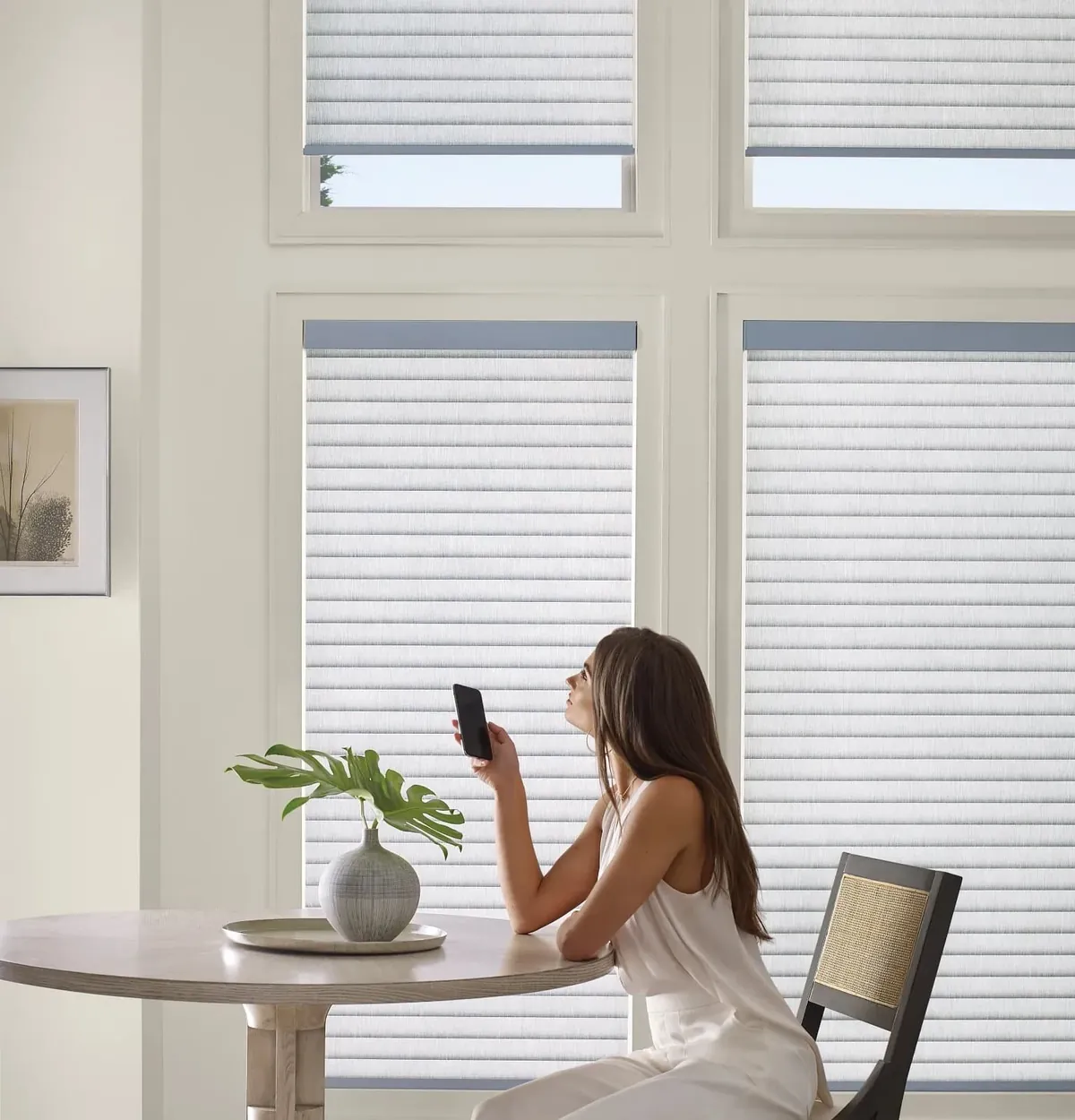
PowerView motorization
Raise every shade from your phone or a remote, or set them on a schedule. Ideal for high windows and for rooms you want closed before the sun comes up.
How the honeycomb holds heat in an old house
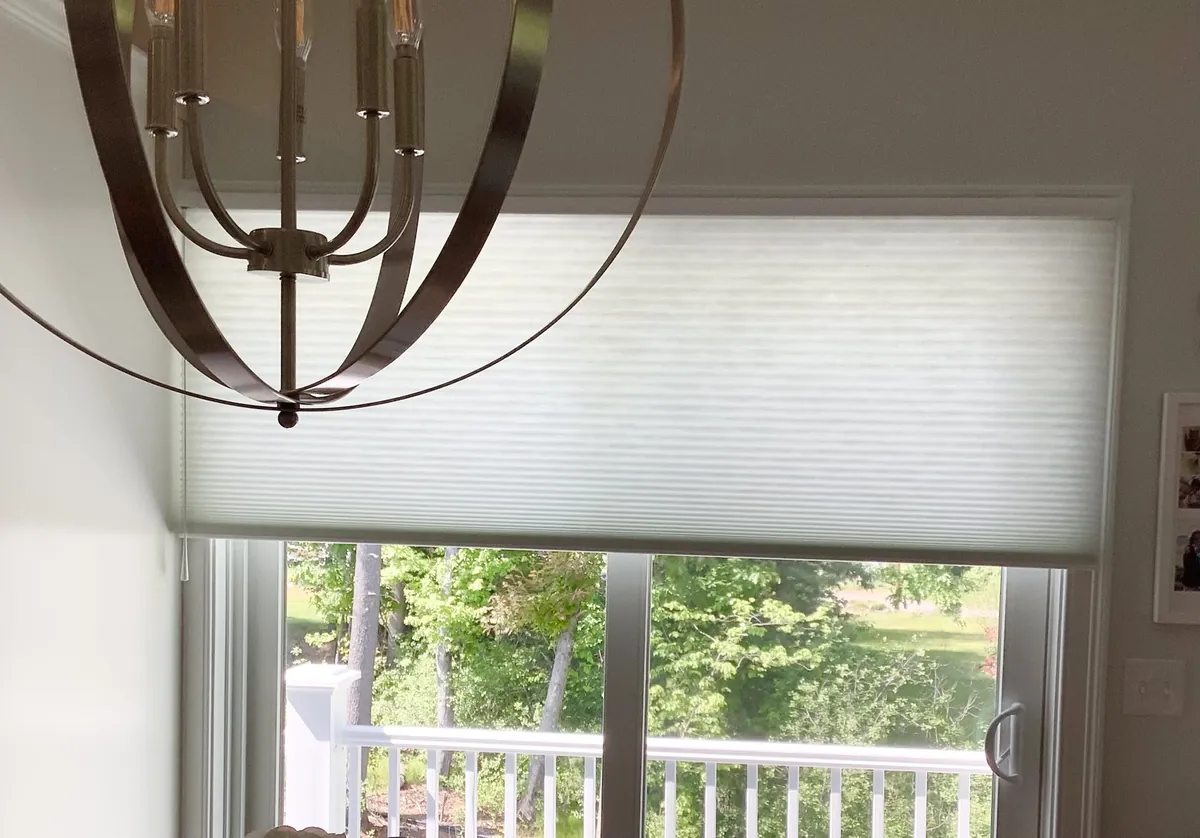
A cellular shade looks like a soft pleated shade from the front. Turn it on its side and you see the reason it works: rows of hollow cells, like a slice of honeycomb, running the full width of the window. When the shade is down, each cell holds a band of air that barely moves. Still air is a poor conductor, so the cold coming off the glass has a harder time reaching the room, and the warm air from your radiators has a harder time reaching the glass.
That matters most in the kind of house Fairhaven has plenty of. A Victorian off Main Street may still have its original wavy-glass sash, beautiful and worth keeping, but thin. A shingled cottage near the water often has windows on three sides of a small room, so a cold pane is never far from where you sit. In both cases the shade does the job a storm window does, without changing how the house looks from the street.
Some Duette fabrics add a second cell inside the first, and double-cell shades stack two rows of cells. Both give the air more places to stay put. During the consultation we put single-cell and double-cell samples side by side at your window so you can feel the difference in the fabric and see how each one filters the light.
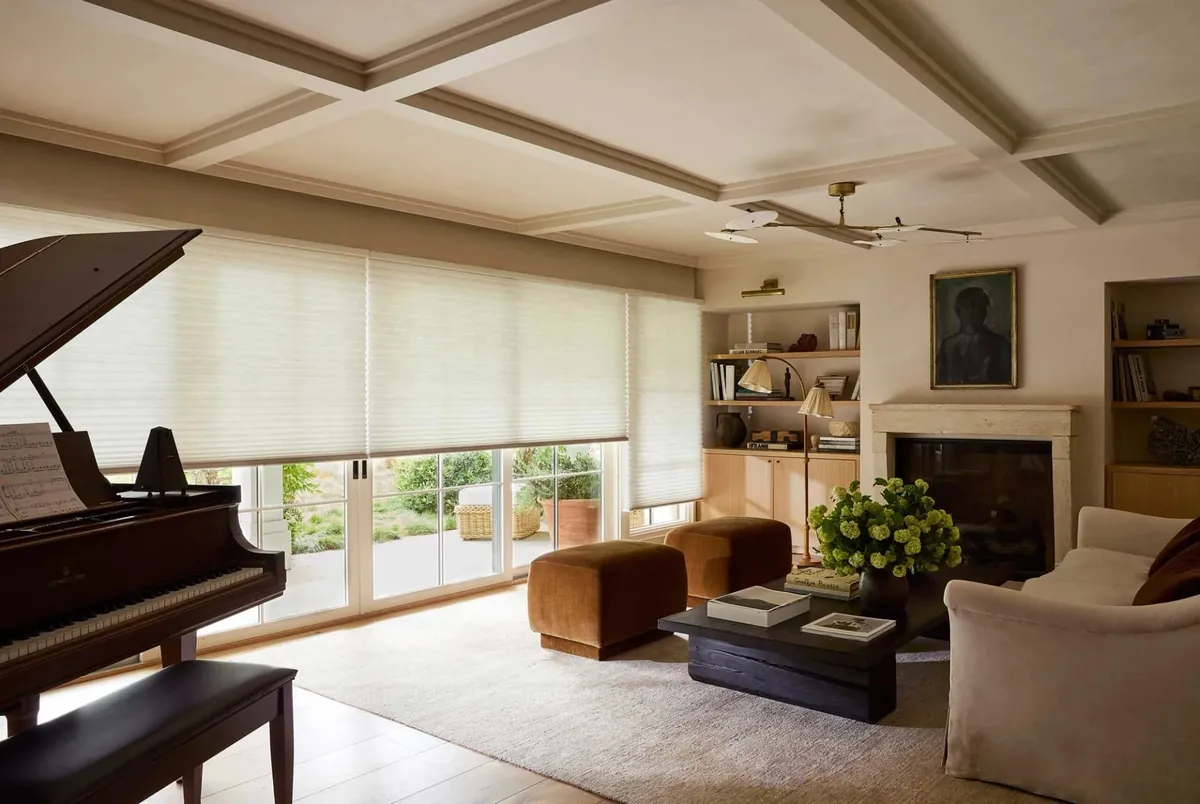
Victorian windows around Oxford Village and Poverty Point
The older streets near the village center are full of tall double-hung windows, often with deep wood casings and decorative trim that the homeowner has spent years restoring. Nobody wants a shade that hides that work. An inside mount, where the headrail sits within the window opening, keeps the casing in full view and lets the shade disappear into the frame when it is raised.
Not every old window allows it. Sash weights, pulleys and the stops that hold the sash in place can leave less depth than a headrail needs, and a window that has settled over a century is rarely square. We measure each opening at the top, middle and bottom and check the depth at several points before we recommend a mount. Where an inside mount would be too tight, a slim outside mount on the casing is the honest answer, and we will tell you so.
Bay windows and the narrow side lights that flank a Victorian front door are common here too. Honeycomb shades can be made very narrow, and each panel in a bay can be its own shade, so the whole bay lines up when you raise them together.
Ranches along Sconticut Neck
Further down the Neck the houses are lower and the windows are bigger. A mid-century ranch usually has a living room picture window, a run of sliders to the back, and bedrooms with wide horizontal windows. Those big panes lose a lot of heat on a January night and gain a lot of heat on an August afternoon.
A honeycomb shade handles both seasons. In winter it holds the warm air in. In summer, lowered during the hottest part of the day, it slows the heat coming through the glass, and a light-filtering fabric keeps the room bright enough that you are not living with the lights on.
For a picture window that is wider than a single shade, we split it into two or three shades on one headrail so they move together, or set them to move separately if you want light at one end and privacy at the other. Sliders get a vertical honeycomb shade that stacks neatly to one side when you want to step out onto the deck.
Strong morning light off the harbor
The east side of town looks across the harbor toward New Bedford, and in the morning the sun comes in low and bright, bouncing off the water. Kitchens and breakfast rooms on that side can be hard to sit in for the first hours of the day, and bedrooms facing east wake you early whether you like it or not.
There are a few ways honeycomb shades help with that. A light-filtering fabric softens the glare and spreads the light evenly across the room instead of throwing a hard patch on the table. A room-darkening fabric in the bedroom keeps the room dim until you choose to raise it. And a top-down, bottom-up shade lets you drop the top of the shade just far enough to cut the sun while it sits low over the water while leaving the rest of the window bright.
Morning sun over salt water is also hard on fabric color over time. Lighter, neutral fabrics hold up best on a window that takes direct sun every day, and we will point out the fabrics that suit a bright east window when you are choosing.
Salt air and the parts that move
A house near the harbor lives with salt in the air. Over time it finds its way onto any exposed metal near a window you leave open in summer. With a honeycomb shade, almost all of the working parts sit inside the headrail, so far less is exposed than with older corded blinds.
Cordless lift systems help here as well. With no cord or cord lock hanging at the side, there is nothing to tangle or corrode, and you simply lift or lower the bottom rail by hand. For windows that are hard to reach, such as the top sash in a stairwell or a window behind a sink, PowerView motorization does the lifting for you, and we talk through how the motors are powered and where any power connection goes on a coastal window.
When we fit the shades, our certified Hunter Douglas installers mount the brackets into solid wood, not just plaster, so the shade sits level and stays put on a window that gets opened often in the warmer months.
What happens at your in-home consultation
Most Fairhaven customers start at home, because it is the only place you can see how a fabric looks in your own light. Our vans carry samples, so we can bring the showroom to you. Here is how a visit usually goes.
- You request a consultation online or by the call button, and we agree a time that suits you.
- We arrive with honeycomb samples in a range of fabrics, colors and opacities, plus the lift options.
- We walk through the rooms with you, starting with the ones that feel coldest or brightest, and talk about how you use each one.
- You hold samples up to your own windows, morning side and afternoon side, and see how each fabric changes the light.
- We measure every window and check the depth for an inside mount.
- You get a free estimate for the shades you are considering, with no pressure to decide on the spot.
If you also want help pulling a room together, ask about our interior design consultations. We can look at fabric, color and the other window treatments in the room at the same visit. You can read more about what happens at an in-home consultation before we come.
Choosing between Duette and Applause
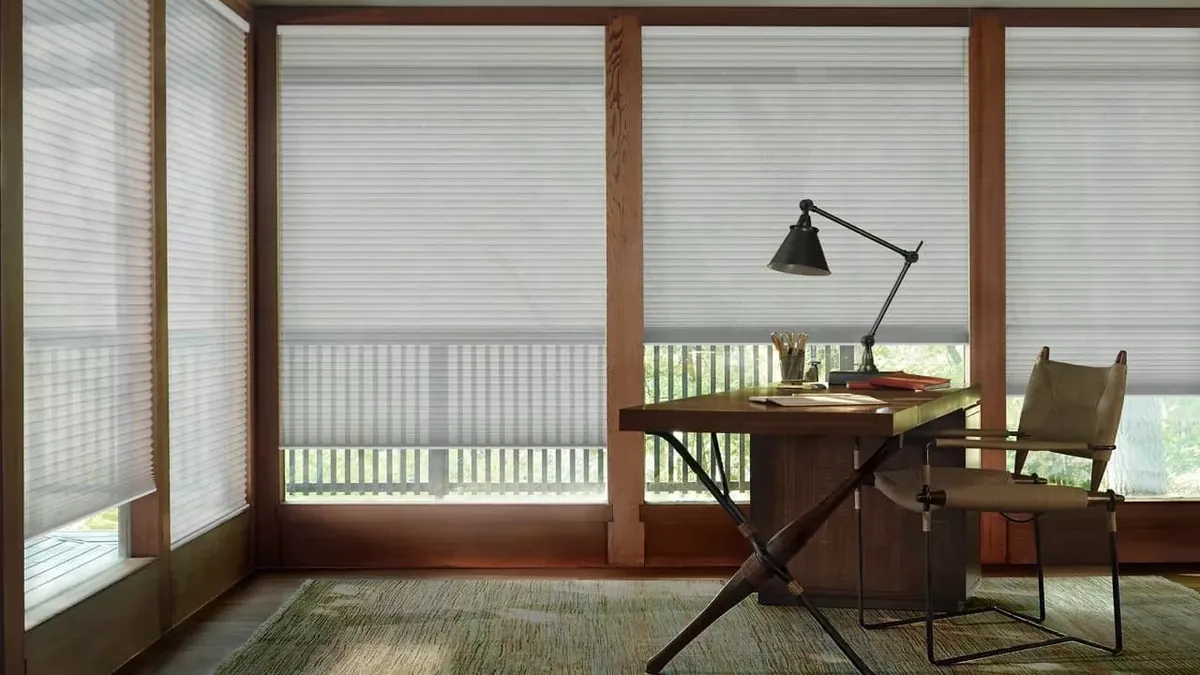
Both are true honeycomb shades from Hunter Douglas, and both hold air in their cells the same way. The difference is in the details: the range of fabrics and textures, the cell options and the lift systems each line offers. Duette has the broadest selection, including specialty shapes, very wide shades and the vertical shade for sliders. Applause has its own palette and suits many standard windows well.
In practice many orders for cellular shades in Fairhaven end up with both. A Victorian might take Duette in the front rooms, where the windows are tall and the fabric is on show, and Applause in the back bedrooms and kitchen. We lay the samples out side by side so you can choose room by room. Our Duette honeycomb shades and Applause honeycomb shades pages go into each line in more depth, and the main cellular shades page covers the whole range.
Light, privacy and the street
Many of the older houses near the center sit close to the sidewalk, with front windows only a few steps from people walking past. Privacy in those rooms matters as much as warmth. A light-filtering honeycomb shade gives you daytime privacy while the room stays bright, because the fabric glows rather than showing what is inside. At night, with lamps on, a heavier fabric or a room-darkening shade keeps the room private.
Top-down, bottom-up shades are the usual answer for a front room on a busy street. Lower the top half to let in sky and light, keep the bottom half covered, and you have both. In a cottage bathroom or a first-floor bedroom it is often the single most useful feature you can choose.
Measuring and certified installation
Getting the measurement right is what makes cellular shades in Fairhaven look built in. On older Fairhaven houses that takes care, because windows that look identical from the street rarely are.
- We measure the width at the top, middle and bottom of each opening and use the smallest figure for an inside mount.
- We measure the height at the left, center and right.
- We check the depth of the frame where the headrail will sit and note any sash hardware in the way.
- We confirm each mount and lift choice with you before anything is ordered.
- Once the shades arrive, our certified Hunter Douglas installers fit them, level each headrail, test every lift and show you how they work.
Because the shades are made to those measurements, they fill the opening edge to edge with the narrowest possible gap, which also helps them hold heat.

Why a Hunter Douglas Gallery dealer
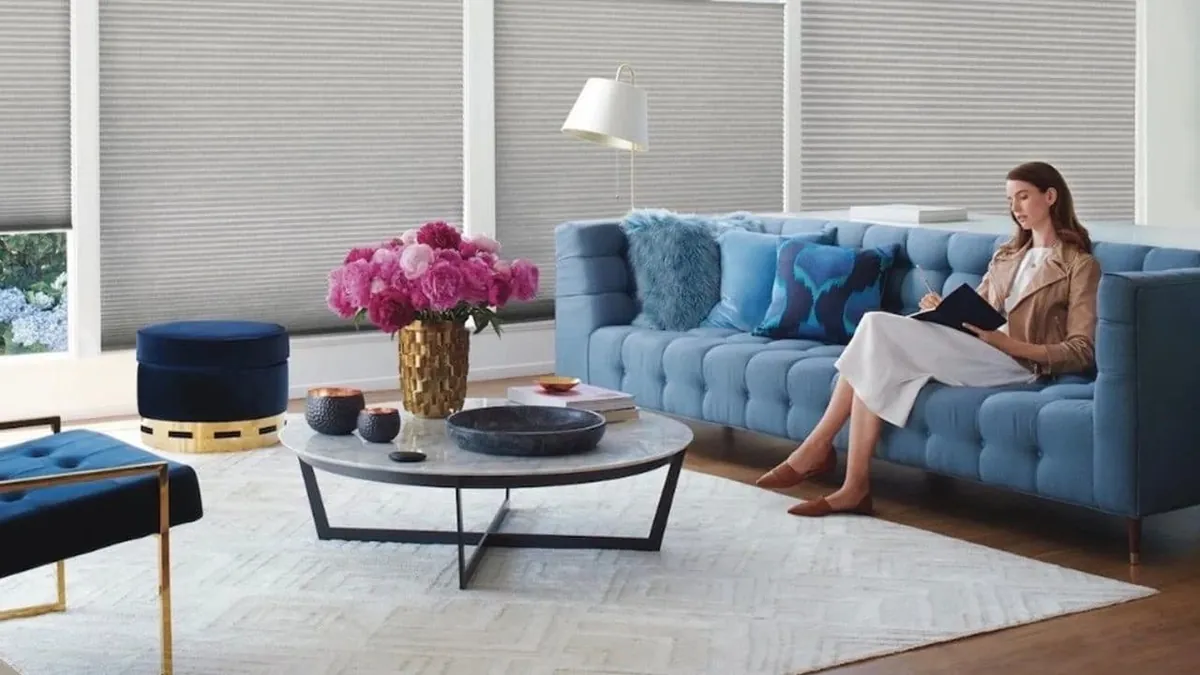
Blinds & Designs is a Hunter Douglas Gallery dealer, the brand’s own designation for dealers who meet its standards. For you it means the full honeycomb range in one place: every Duette and Applause fabric, the lift systems, the vertical shade for sliders and PowerView motorization.
Our installers are certified by Hunter Douglas, so the shades go up the way the maker intends. The same team that sells the shades fits them, and if a shade ever needs attention later we handle blind and shade repairs too.
Beyond honeycomb shades we carry Hunter Douglas blinds, shutters, roller and roman shades and drapery, so you can treat a whole house from one consultation. If you are weighing options for other rooms, see our plantation shutters in Fairhaven or roman shades in Fairhaven, or everything we do in town on our Fairhaven page.

Samples brought to Sconticut Neck and the village
A fabric chip in a store tells you very little about how a shade will look on your east window at eight in the morning or on a gray November afternoon. That is why we bring the samples to you. Our vans carry the honeycomb range, so you can hold real fabric against your own trim, in your own light, beside your own furniture.
The visit works just as well for a single cold bedroom as for every window in the house. We look at what each room needs, whether that is warmth, glare control, privacy or all three, and suggest a shade for each.
If you would rather see the shades first, the North Dartmouth showroom is our nearest location to Fairhaven, a short drive across the Acushnet River.
Questions from Fairhaven
Will cellular shades fit the original windows in my Victorian?
Usually, yes. Honeycomb shades come in very narrow widths and can be made for tall windows, bays and side lights. The question is mounting depth. Old sash hardware and settled frames sometimes leave too little room for an inside mount, so we measure each window and recommend an outside mount on the casing where that is the better choice.
Do honeycomb shades hold up near the harbor?
The working parts sit inside the headrail, so much less is exposed to salt air than with corded blinds. A cordless lift removes the cord lock altogether. We also suggest fabrics that suit a window taking strong daily sun off the water.
Can I keep my harbor view and still have privacy?
A top-down, bottom-up shade does exactly that. Lower the top to see the water and sky, and keep the lower part of the window covered from the street or the neighbors.
What can I do about the early sun in my east bedroom?
A room-darkening honeycomb fabric keeps the room dim until you raise the shade. If you want light in the room but not the glare, a light-filtering fabric softens and spreads it instead. PowerView motorization can also lower the shades on a schedule before sunrise.
Is the estimate free?
Yes. After we measure, you get a free estimate for the shades you are considering. Request a consultation and we will set a time to come to your home with samples.
Your next step
The simplest way to see what cellular shades in Fairhaven, MA, will do for your house is to hold the samples up at your own windows. Request a consultation and we will bring the honeycomb range to you, measure every window and give you a free estimate. If you prefer to talk first, use the call button, or visit our North Dartmouth showroom.