
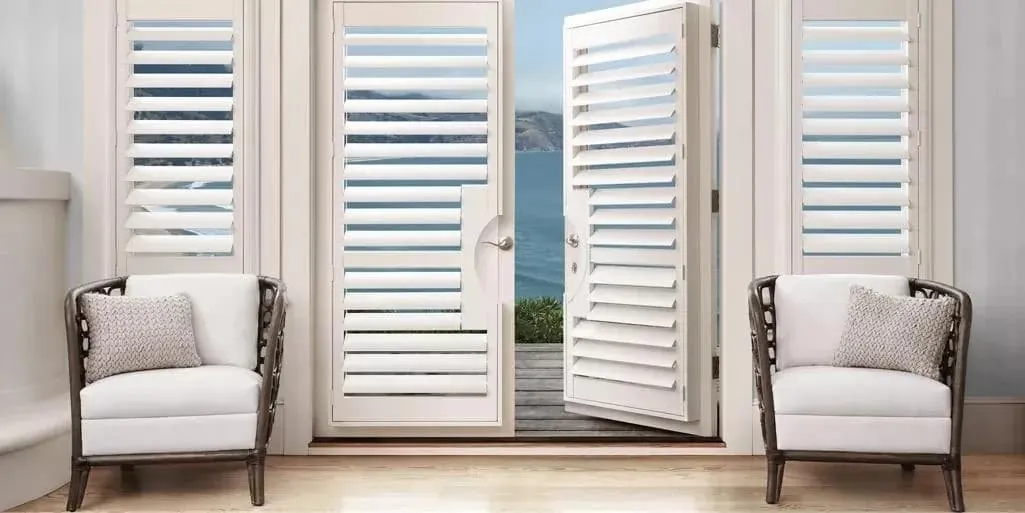
Salt air sets the rules here
Very few towns in the area live as close to open salt water as Westport does. Between the harbor, the river and the beaches out toward Horseneck, a large share of houses sit within reach of sea air, and that air reaches every window that is opened in summer. It carries salt, it carries damp, and over a few seasons it finds out which materials were a good idea. That is the starting point for any conversation about plantation shutters in Westport, MA.
The second thing is the view. On the harbor, and along the river, rooms were laid out to look at the water. Big windows, French doors and sliders face the view, and the last thing anyone wants is a covering that turns all that glass into a wall.
Shutters do well on both counts. They have no cords or fabric to hold moisture, the right collection will not swell in damp air, and a louver tilted level gives you the water with only a few slim blades in front of it. Choosing the material is where we start.
Plantation shutters in Westport, MA: what to choose for coastal rooms
There are three Hunter Douglas collections and a handful of features that matter most on the coast. These are the ones we bring to the windows when we visit.
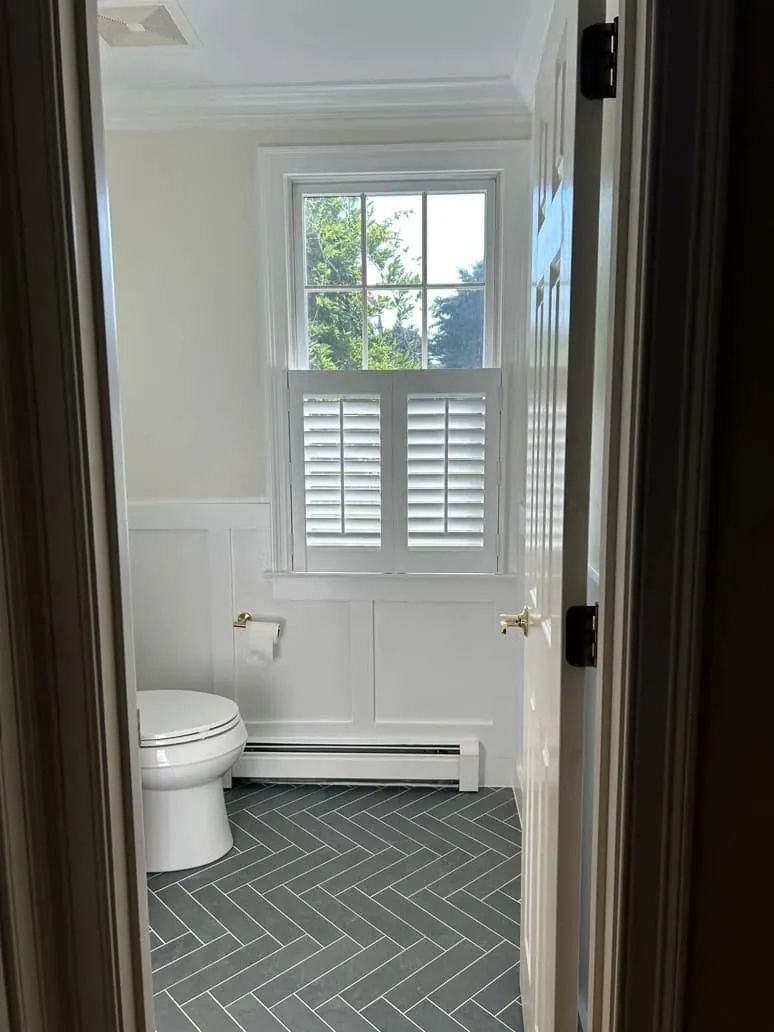
Palm Beach for sea air
Polysatin with no wood in it, so damp and salt will not make it swell or warp. Our first choice for the rooms closest to the water.
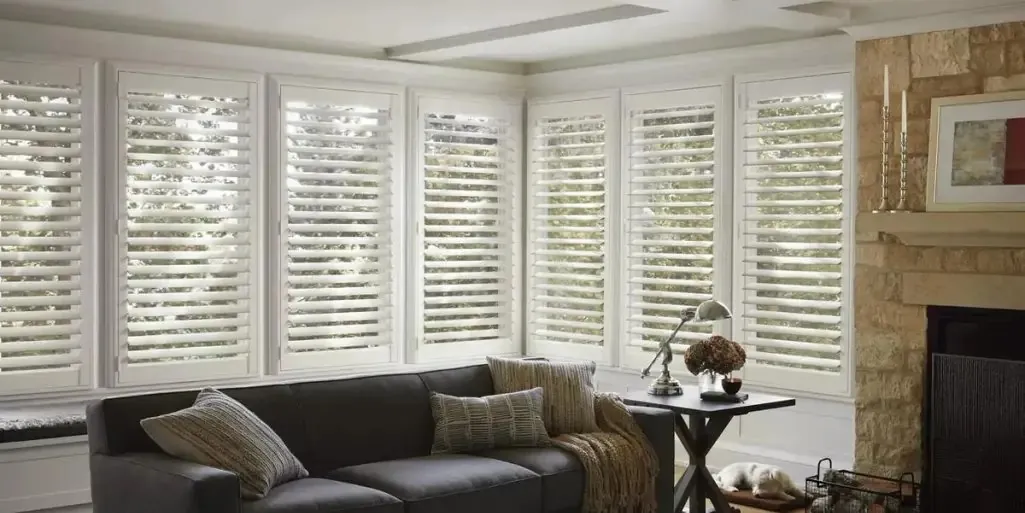
NewStyle for the rest of the house
A composite with the look of painted wood, for bedrooms and living rooms a little back from the shore.
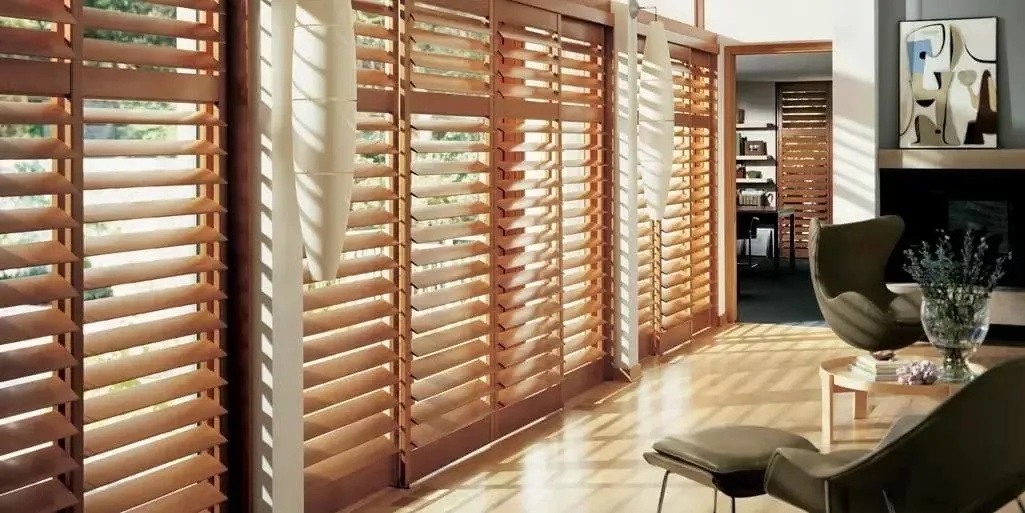
Heritance for dry rooms with fine trim
Real hardwood, painted or stained, for a farmhouse parlor or study that keeps its windows closed.
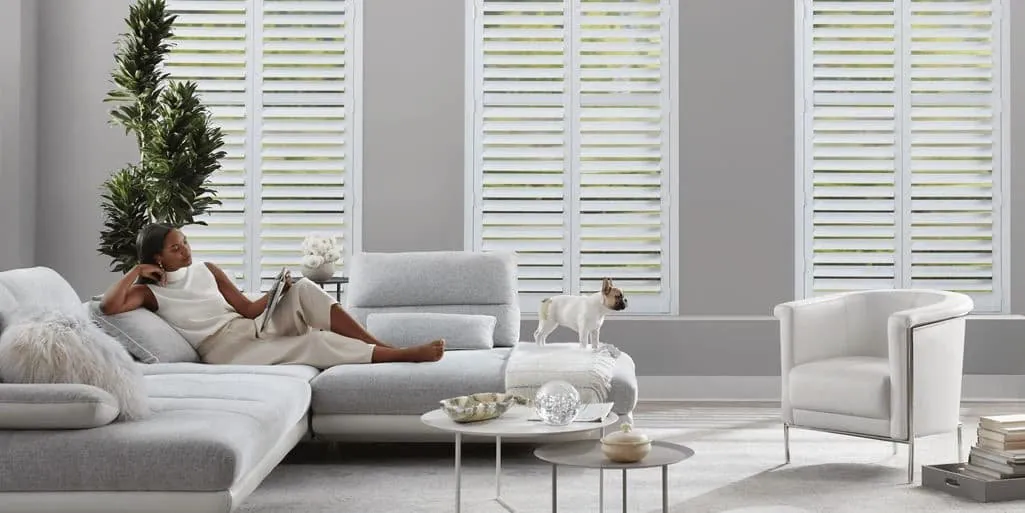
Wide louvers for the view
Fewer blades across the glass, so the water stays in view when the louvers are open.
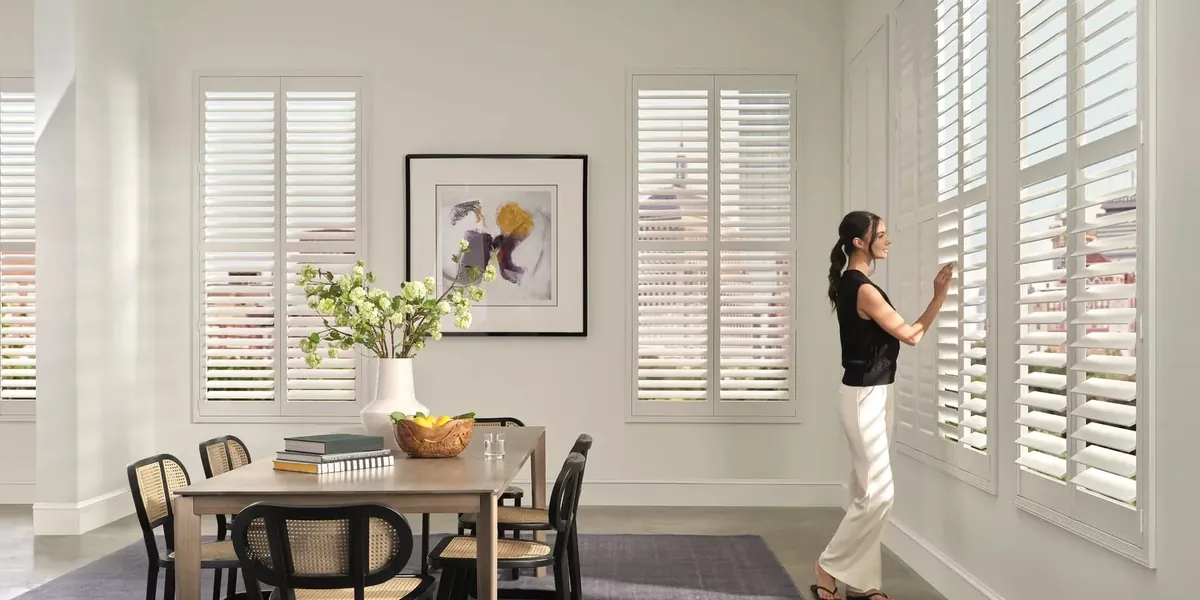
Hidden tilt
No tilt rod down the center of the panel, which means one less thing between you and the harbor.
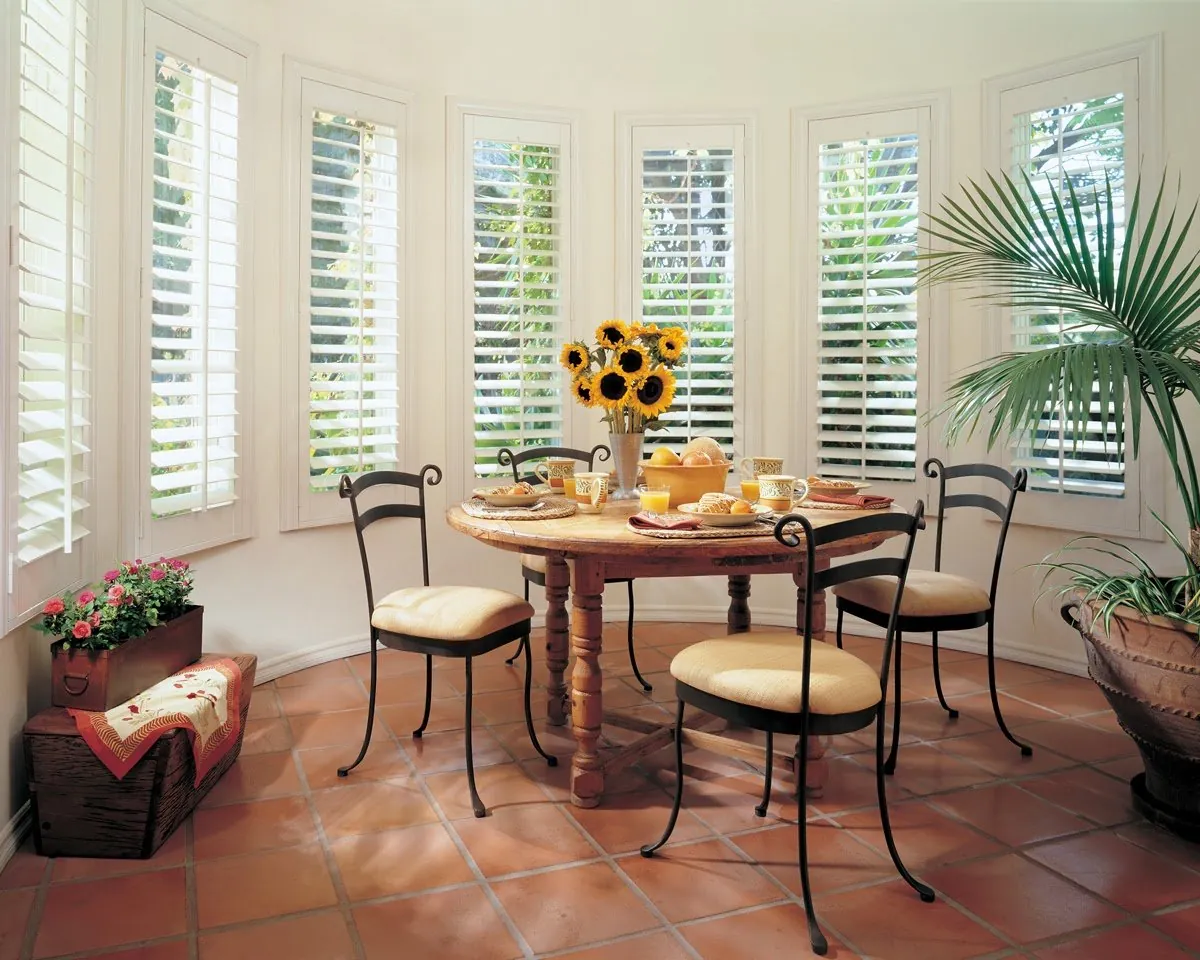
Bays and corners
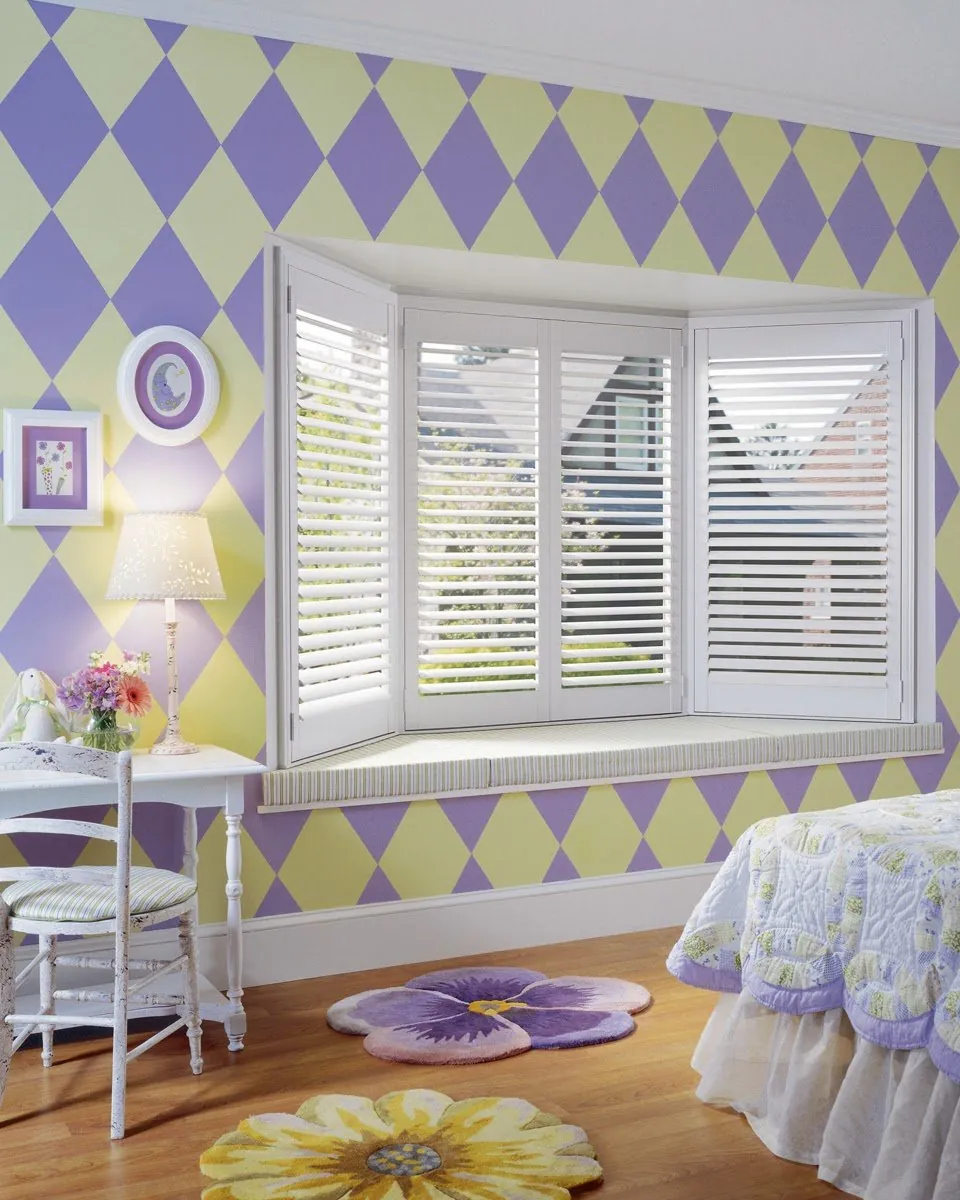
Each face of a bay gets its own panel, so a corner of windows looking at the water is covered in one style.
Harbor houses built around the water
The newer, larger houses on the harbor are a different kind of project from the older capes. They often have tall great rooms, walls of windows, transoms over doors and slider runs onto decks, all facing the water. The windows are new, square and generous, and the rooms are designed so the view is the main event.
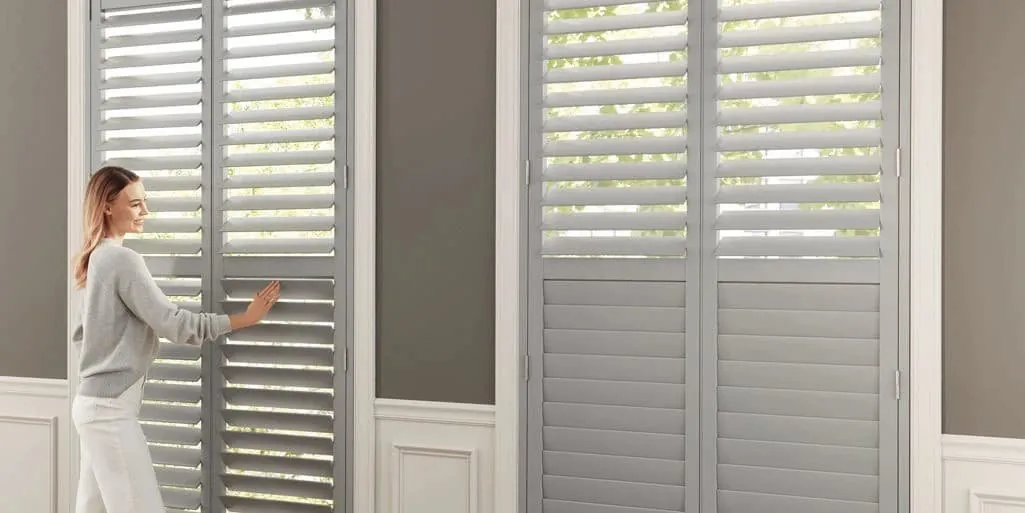
On glass like that, louver size matters. Wider louvers give the clearest view when they are open and suit the scale of a big room. Panels are often hinged in pairs or groups so they fold right back from the glass on a calm day and close again when the afternoon sun comes round. A hidden tilt keeps each panel face clean.
These rooms take a lot of sun off the water, and that is where shutters earn their keep. Tilting the louvers lets you push the glare up toward the ceiling while still looking out at the boats, and closing them during the hottest part of the day keeps the furniture and floors out of direct sun.
The rooms closest to the water, a sunroom or an enclosed porch for instance, often get Palm Beach. The bedrooms and living spaces further in are a good place for NewStyle. Matched in color and louver size, nobody will tell them apart.
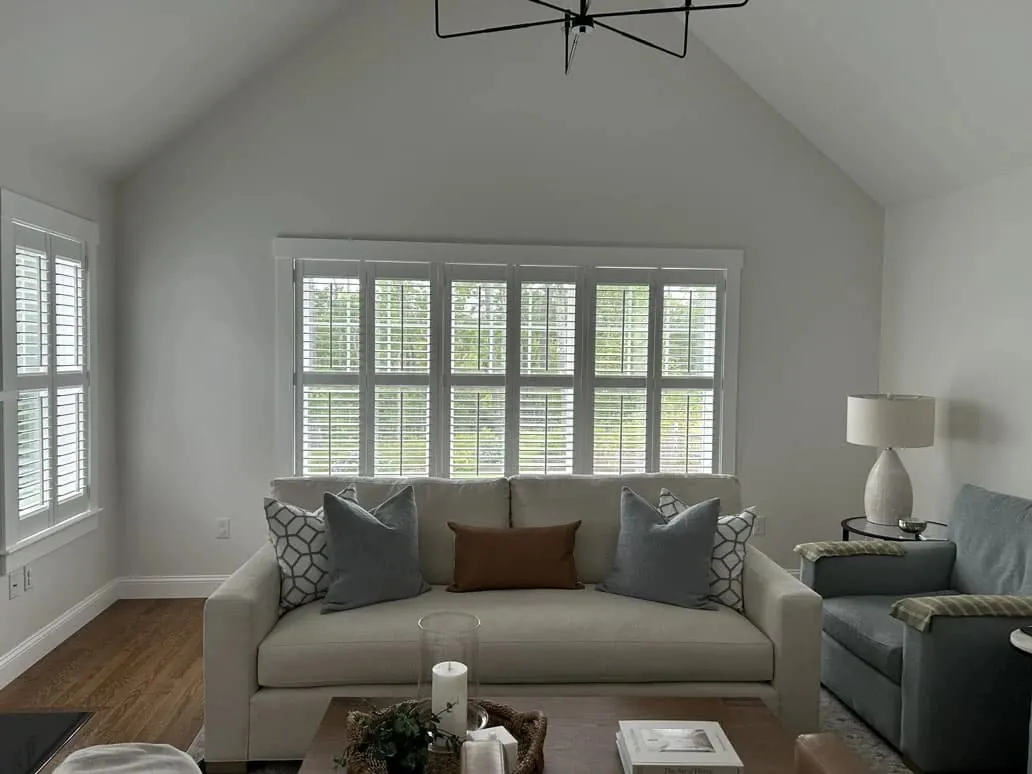
Capes and farmhouses along Main Road
Travel the length of Main Road and you pass shingled capes and old farmhouses set back on their land, many with stone walls and outbuildings. Their windows are smaller and more traditional: double-hung sash with divided lights, set in proportion to a modest front, with dormers upstairs in the capes.
These houses often have original or carefully restored trim, and that changes the choice. Where the woodwork is worth showing, an inside-mounted frame keeps the casing on view. In a farmhouse front room that stays closed up through the damp months, Heritance hardwood, painted or stained to sit with the old trim, is a good fit. In the kitchens, baths and mudrooms of the same house, Palm Beach takes over.
Narrower louvers usually suit the smaller sash of a cape or farmhouse. They keep the panel in scale with divided lights and avoid the heavy look a wide blade can have on a short window. On dormer windows tucked under the roof, a narrow louver and a slim frame are often the neatest answer.
Old farmhouse windows also tend to be out of square. We measure every opening at several points, and the frame is made to take up the difference so the panels close evenly.
Toward Horseneck and the beaches
Closer to the beaches, houses take wind and weather straight off the water. Sand gets into everything in summer, and windows get opened and closed a lot. A covering here has to be simple and tough.
Shutters suit that life. There are no cords to tangle or lift systems to fail, just hinged panels and louvers. Sand and salt wipe off the louvers with a damp cloth. Palm Beach is the natural choice for a beach house, especially one that sits closed for parts of the year, because it will not move or crack in damp air.
Cafe-style shutters, covering only the lower half of the window, suit a beach cottage well. You get privacy from the lane or the neighboring house while the top half stays open to the light, and the panels are easy to fold back fully on a warm day.
Along the Westport River
The houses near the river, on both branches, look out over marsh, water and open fields. The light changes all day and through the seasons, and the low sun of a winter afternoon can reach a long way into a room.
Being able to tilt rather than raise or lower a covering is useful here. In the morning, louvers can sit open for the light. Late in the day, angling them against the low sun cuts the glare without closing off the river. A divider rail on a taller window lets the top and bottom move separately, so you can keep the lower half angled while the upper half stays open to the sky.
River houses are often a mix of old and new, with an original farmhouse core and a later addition built to face the water. The old rooms may want Heritance and narrow louvers to suit small sash, the addition wider louvers on bigger glass. Keeping the same color throughout ties the two parts of the house together.
A visit, start to finish
On the coast, the right shutter depends on how close the room is to the water, which way it faces and how it is used. That is easier to judge in the room itself. Our vans carry samples of all three collections, so the visit comes to you.
- Request a consultation online, or use the call button, and choose a time.
- We walk the house with you and note which rooms face the water, which take the most sun and which get damp.
- You compare Palm Beach, NewStyle and Heritance samples in different louver sizes and finishes against your own windows.
- We work through frame style, mounting, hinging and tilt for each opening, including doors and sliders.
- We measure every window carefully, checking depth and squareness.
- You get a free estimate and take whatever time you need to decide.
Our page on what happens at an in-home consultation explains each step more fully.
Living with shutters by the sea
One reason people near the water choose shutters is how little upkeep they need. A quick wipe of the louvers with a soft, damp cloth removes salt and dust. In summer, when windows are open most days, doing that now and then keeps the finish fresh. Working the louvers through their full range from time to time keeps everything moving smoothly.
Material choice does most of the work. Palm Beach is built for damp and salt. NewStyle copes well in ordinary living spaces. Heritance, being real wood, belongs in rooms that are kept fairly dry and closed in bad weather. Matching the collection to the room is something we do with you at the visit, so each window gets the one that will last best where it is.
Doors, transoms and sliders onto the deck
Water-facing rooms in Westport rarely stop at windows. There are French doors onto a porch, sliders onto a deck, and on the newer harbor houses, transom windows set high above the doors to pull in more sky. Treating the doors differently from the windows beside them breaks up a wall that was designed to read as one.
French doors take a shutter mounted on each door leaf. It swings open with the door, and with the door shut the louvers still tilt like any other window. Before we recommend a frame we check the handle position and how far each door opens, so nothing catches. Transoms above can take a fixed shutter panel, with louvers that tilt for light, so the whole height of the opening matches.
Sliders are a bigger opening and need more thought. We look at how often the door is used, how much room there is to either side and what the rest of the wall is doing, and talk through the options with you at the visit. Getting the doors right is often what makes plantation shutters in Westport, MA, look planned rather than added.
Upstairs in a cape: dormers and knee walls
The second floor of a shingled cape is its own small puzzle. Bedrooms sit under the roof, with knee walls on two sides, and the windows are dormers: short openings set into a little alcove of their own. Some capes also have a small gable window at each end, often a different size from everything else in the house.
Dormers suit a shutter because the alcove gives the frame a natural place to sit. A narrow louver keeps the panel light, and because the shutter folds right back into the alcove when open, it takes up none of the bedroom’s limited floor space. Gable windows get their own made-to-measure panel, which is the advantage of a product built to fit each opening rather than picked off a shelf.
These upstairs rooms take strong morning or evening sun through a small window close to the bed. Closed louvers in a well-fitted frame keep the room dim, and tilting them a little lets in air on a summer night without letting in the first light.
How the house looks from the water and the road
Shutters are an inside treatment, but they change the outside of a house too. From the harbor, a row of windows with white shutters behind the glass looks even and finished, whether the louvers are open or closed. A mix of different shades and curtains at different heights looks patchy from the same spot.
The same is true from Main Road. A cape or farmhouse with shutters in every front window has the tidy, regular look these houses were built to have. That is one reason many owners fit plantation shutters in Westport, MA, to the whole front of the house at once, even if the back rooms come later.
Frames, mounting and big new openings
On the harbor houses, windows are usually square, deep and modern, which makes them straightforward to fit. An inside mount gives a clean, built-in look. Where windows meet at a corner, or a run of windows has narrow mullions between them, we plan the frames so the panels line up across the whole wall.
On the older capes and farmhouses, the questions are different. Is there enough depth for the louvers to clear the sash locks? Is the opening square? Is the trim worth keeping in view? Where an inside mount will not work, an outside mount on the face of the casing gives the shutter room and can square up a crooked opening.
Our certified Hunter Douglas installers set every frame plumb and level, which matters even more on a coastal house where windows and doors are opened constantly. A frame that is true lets panels swing freely and louvers close flush for years of use.
Choosing plantation shutters in Westport, MA, for a whole house usually means a mix: Palm Beach by the water and in the wet rooms, NewStyle or Heritance further in, all in one louver size and color.
A Gallery dealer for coastal homes
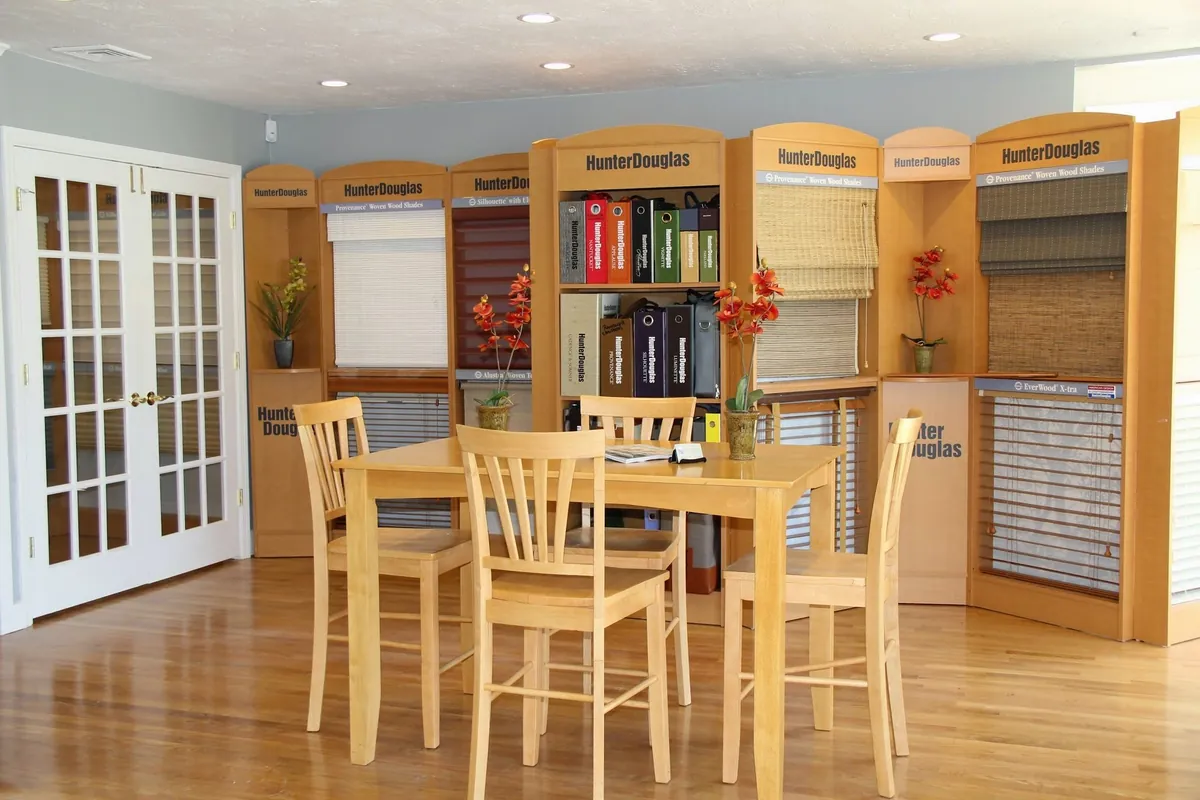
Blinds & Designs is a Hunter Douglas Gallery dealer, a designation Hunter Douglas gives dealers who meet its standards. You can see every shutter collection, louver size and frame option with us and choose for each room on its merits.
From the first visit to the last hinge, the same company does the work: consultation, measurement, ordering and installation by installers certified by Hunter Douglas. If you want help with the room as a whole, we offer interior design consultations, and if shades or blinds you already own need attention, we offer repairs.
The main plantation shutters page compares the collections, and the Palm Beach, NewStyle and Heritance pages go into each one. For other rooms, see our cellular shades in Westport, or everything we do in town on the Westport page.
Questions from Westport
Which shutter lasts best close to the water?
Palm Beach. It is polysatin with no wood, so salt air and damp do not make it swell, crack or warp. We suggest it for sunrooms, porches, bathrooms and any room that sits right on the water.
Will shutters block my view of the harbor?
Not when they are open. Wide louvers tilted level leave only a few slim blades across the glass, and panels can fold right back from the window when you want it completely clear.
Are shutters a good idea for a summer house that sits closed for months?
They are a sensible choice. There is no fabric to hold damp, no cords and very little to go wrong, and Palm Beach in particular copes with a closed-up house through the damp season.
Can you fit shutters to old farmhouse windows that are out of square?
Yes. We measure each window at several points and the frame takes up the difference, so the panels close evenly. Where an inside mount will not work, an outside mount on the casing does.
How do I get an estimate?
Request a consultation. We bring samples to your house, measure your windows and give you a free estimate for the shutters you are considering.
Bring the samples to your water-facing rooms
The best place to choose a shutter for a house by the sea is the room that faces the water, with the light coming off it. Request a consultation and we will come to Westport with all three collections, measure your windows and give you a free estimate. If you would like to look first, our North Dartmouth showroom is the nearest, or use the call button to ask us anything.