
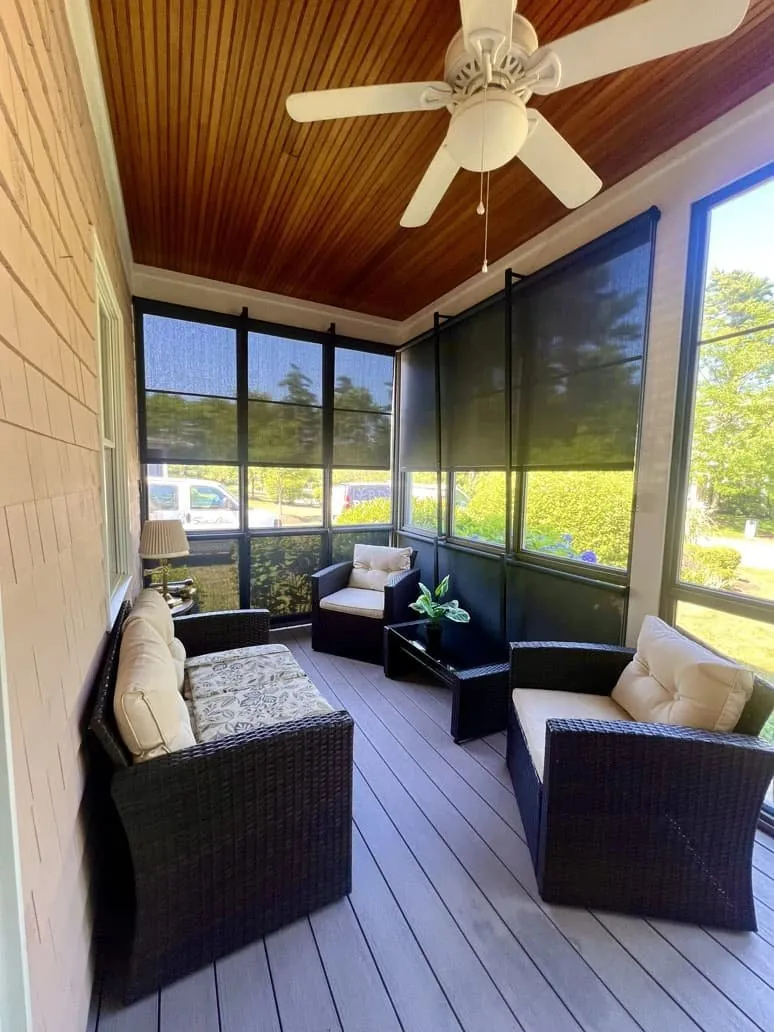
Salt, wind and a view worth keeping
Near the water, the weather writes the brief. Salt rides in on the breeze from Horseneck and the Westport River, settles on anything metal near an open window, and wears at fabrics that sit in strong sun all day. Wind finds every loose frame. Light bounces off the water and fills a room from below as well as above. Any Hunter Douglas dealer in Westport, MA has to start from that.
The houses vary as much as the coastline. Shingled capes and old farmhouses line Main Road, with small-paned windows set into thick walls and low ceilings under the eaves. Out on the harbor, larger newer homes are built around the view, with wide sliders, corner glass and great rooms that open toward the water.
Those two kinds of house ask opposite things of a window covering. The farmhouse wants something modest that sits inside the frame and keeps the room cosy. The harbor house wants something that disappears when it is not needed and tames the glare when it is, without blocking the very thing the room was designed for.
Hunter Douglas families for coastal houses
We carry the full Hunter Douglas range as a Gallery dealer. These are the families that come up most often near the water, each with its own page for Westport.
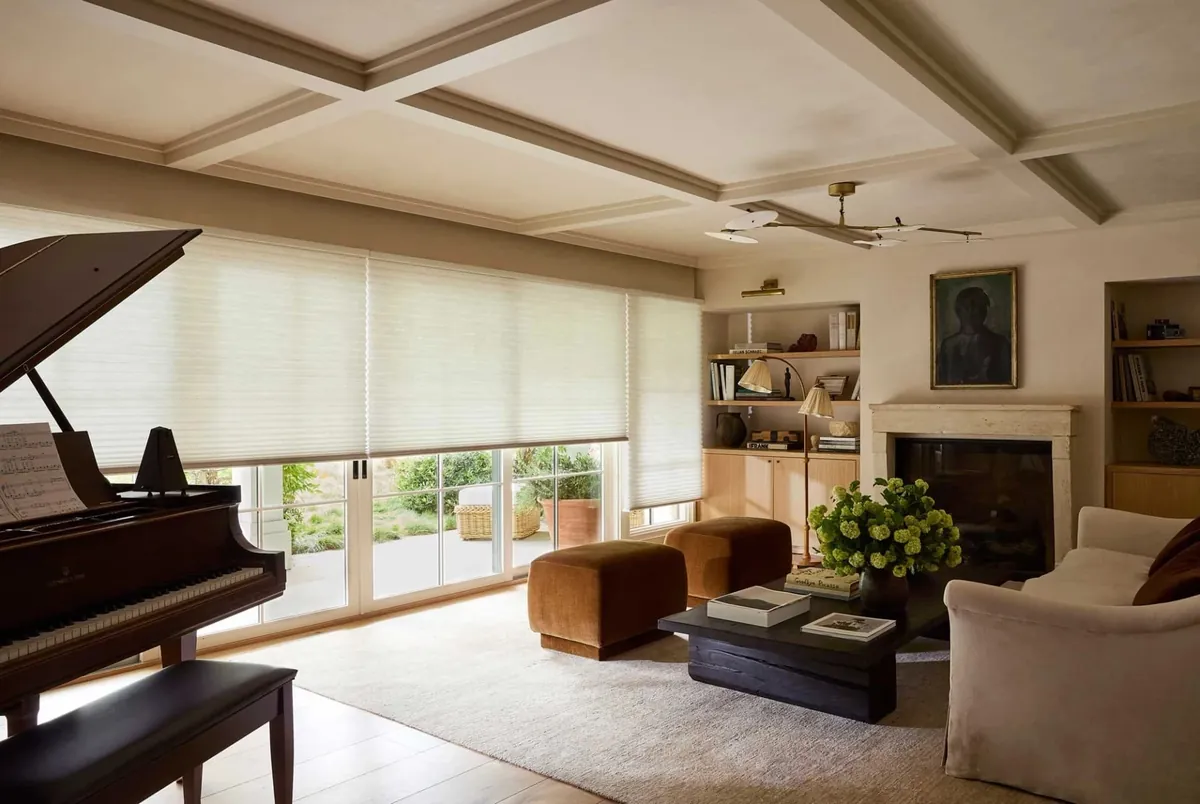
Honeycomb shades
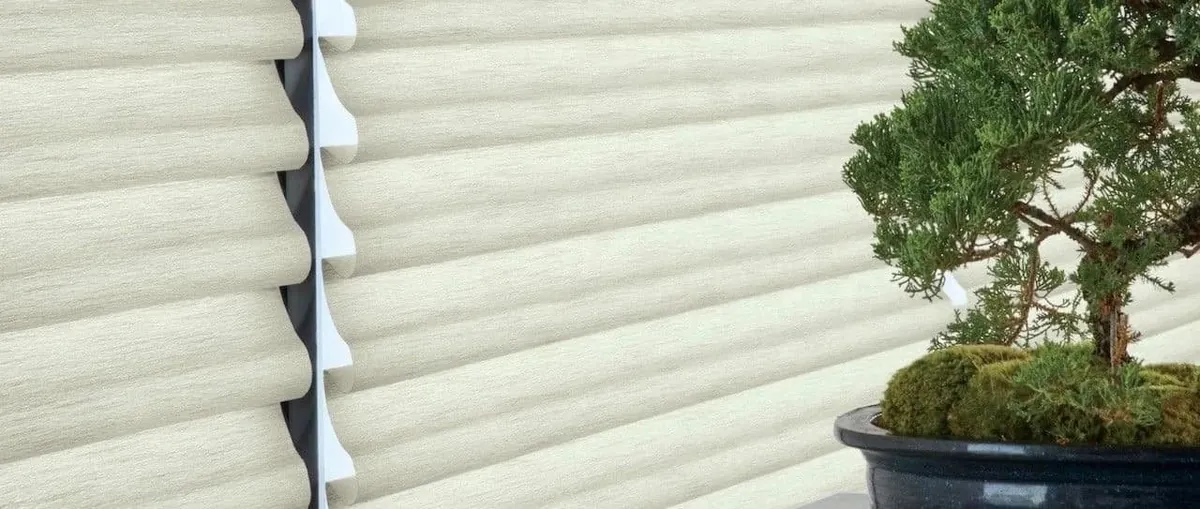
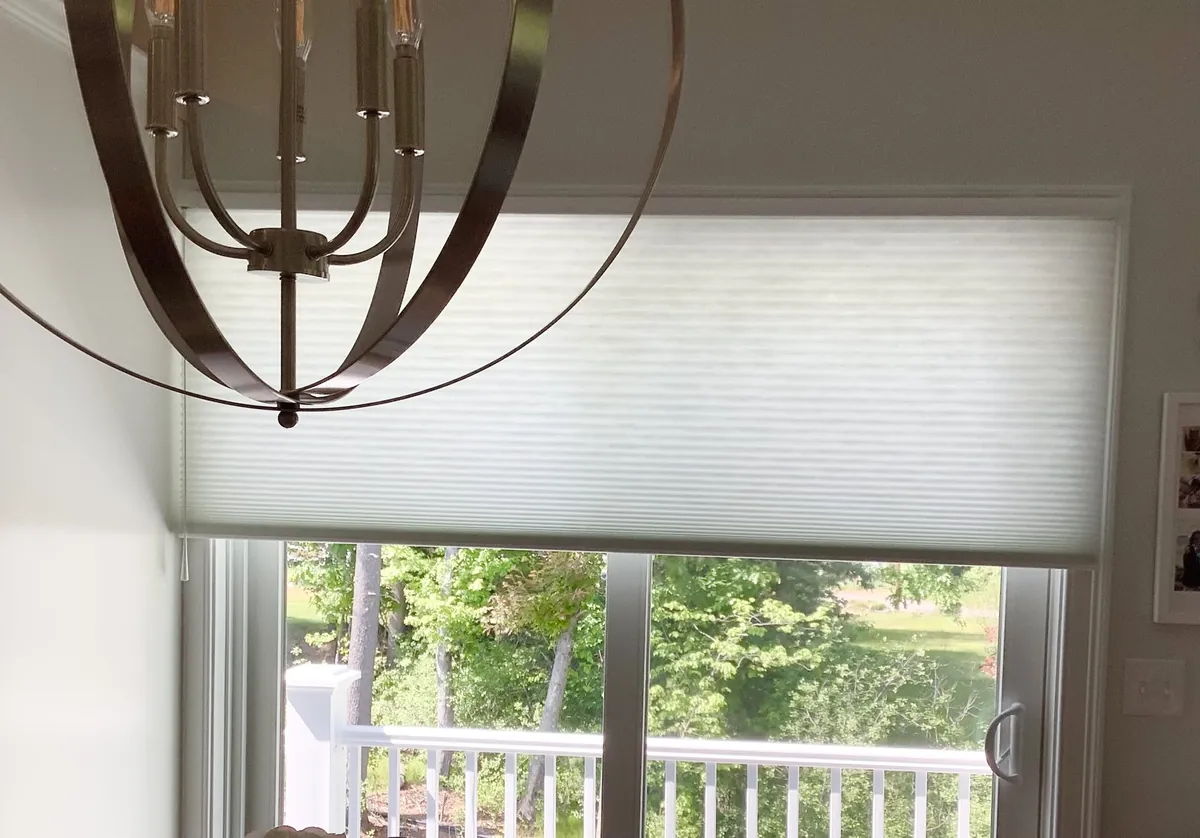
Duette and Applause trap air in their cells, which helps a farmhouse room with old sash hold its warmth on a windy evening.
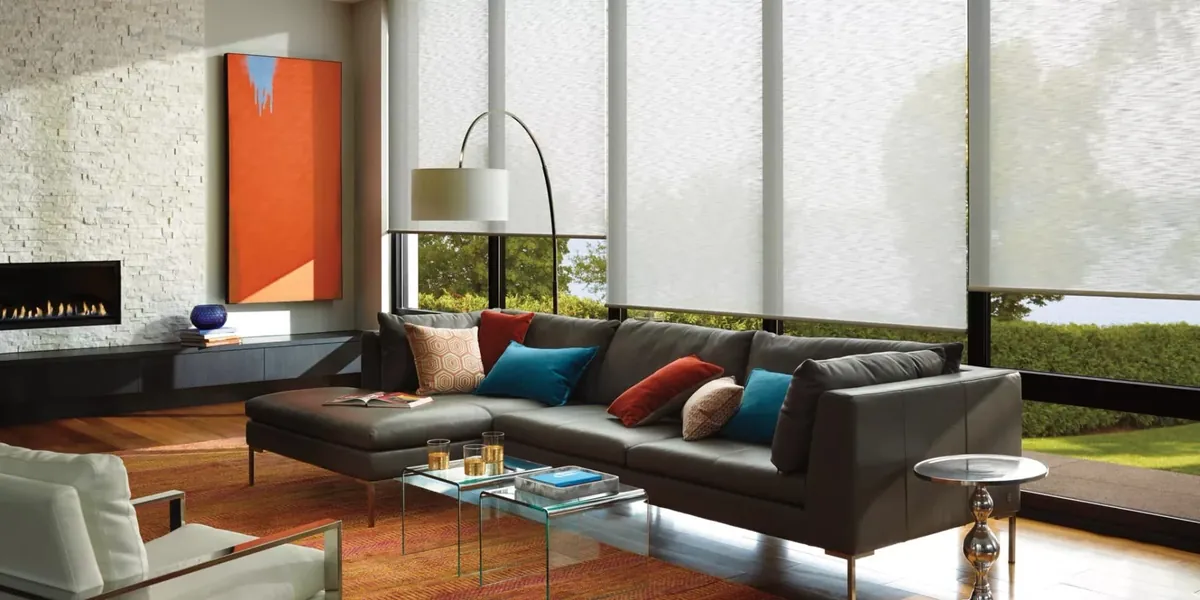
Roller and screen shades
Designer and Alustra roller fabrics and solar screens, where the openness sets how much view stays and how much glare goes.
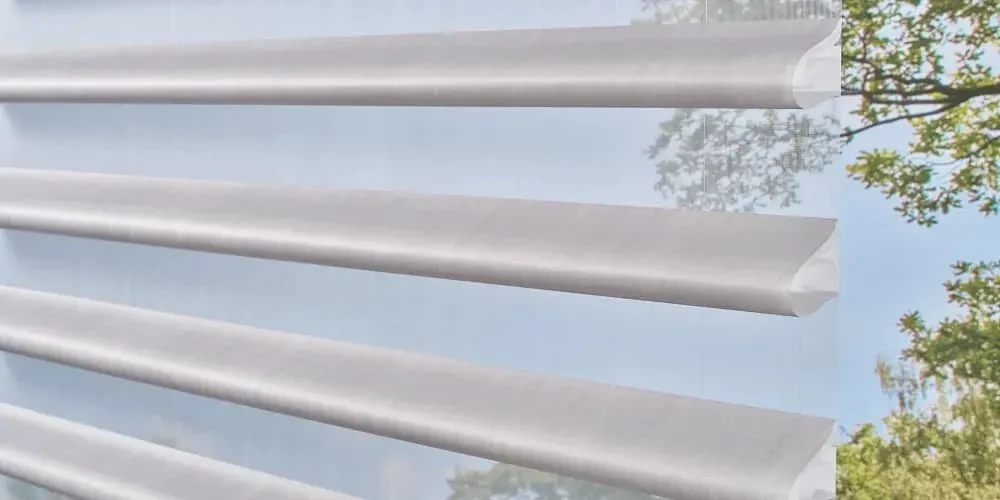
Sheer shades
Silhouette, Pirouette and Nantucket turn hard reflected light into a soft glow and keep the outdoors visible through the fabric.
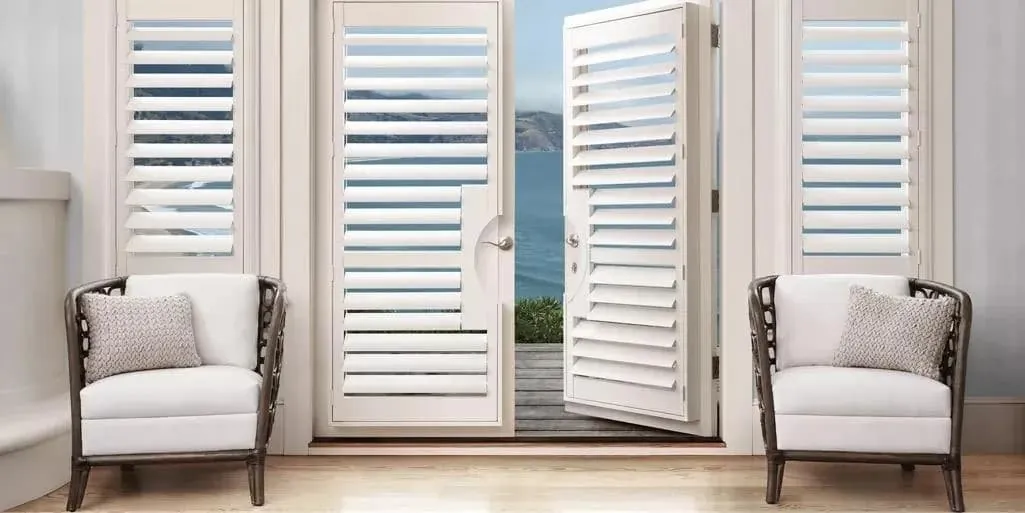
Shutters
Palm Beach polysatin shutters stand up to moisture and strong sun, and look at home in a shingled cape.
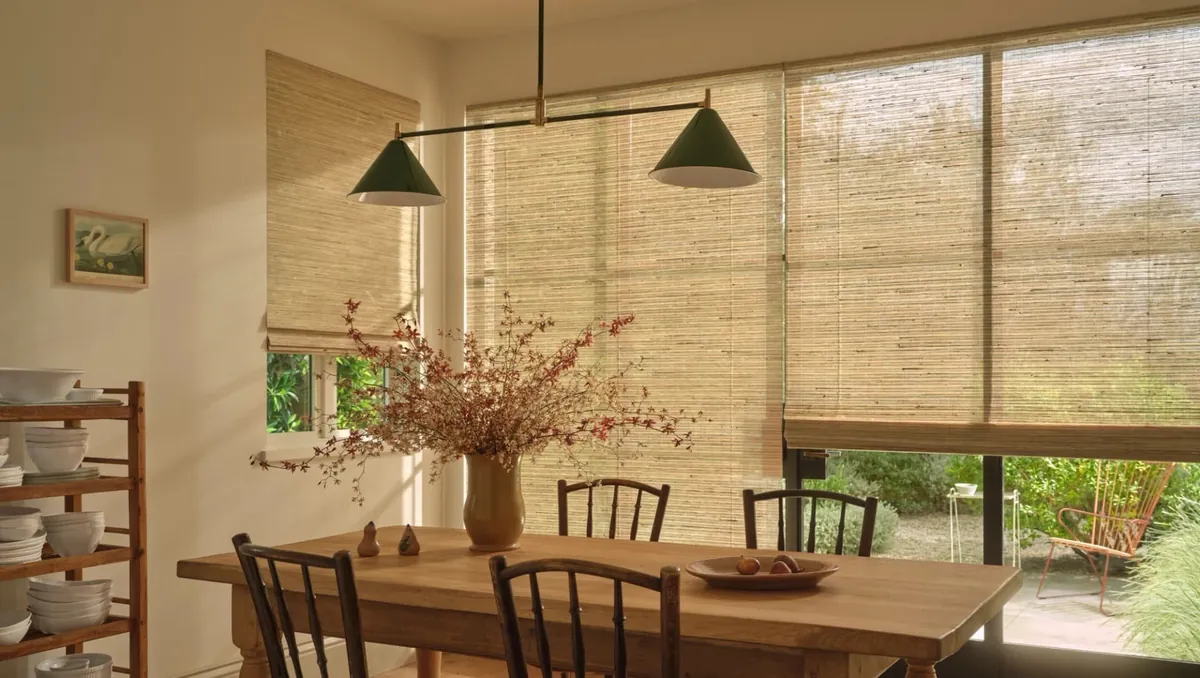
Woven and Roman shades
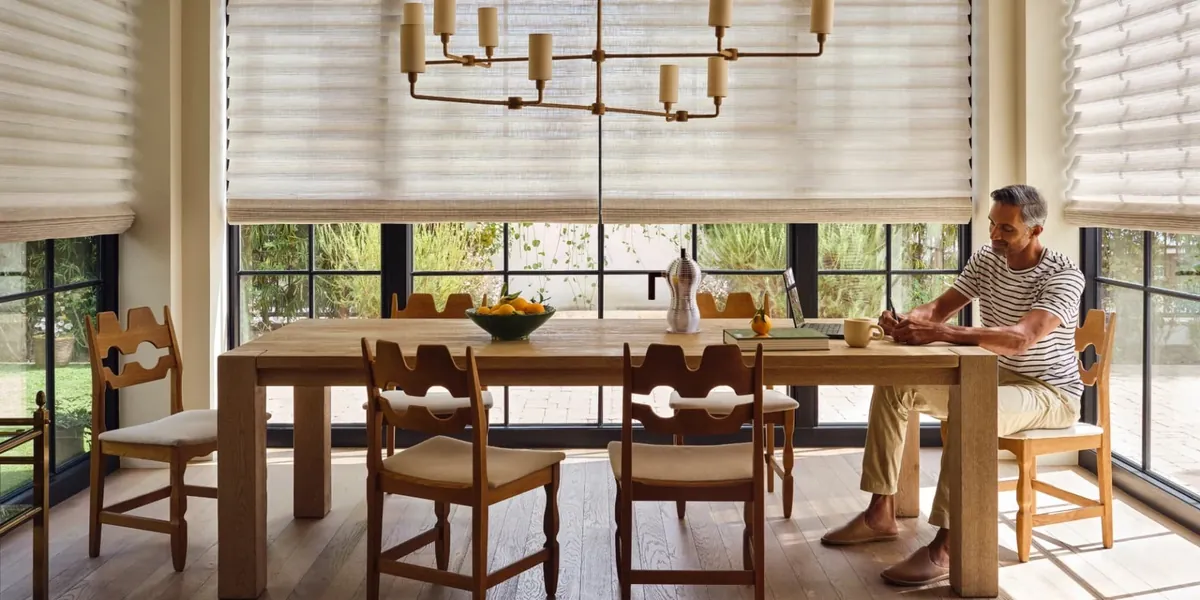
Provenance woven wood and Vignette Roman shades bring natural texture and soft folds to a farmhouse kitchen or dining room.
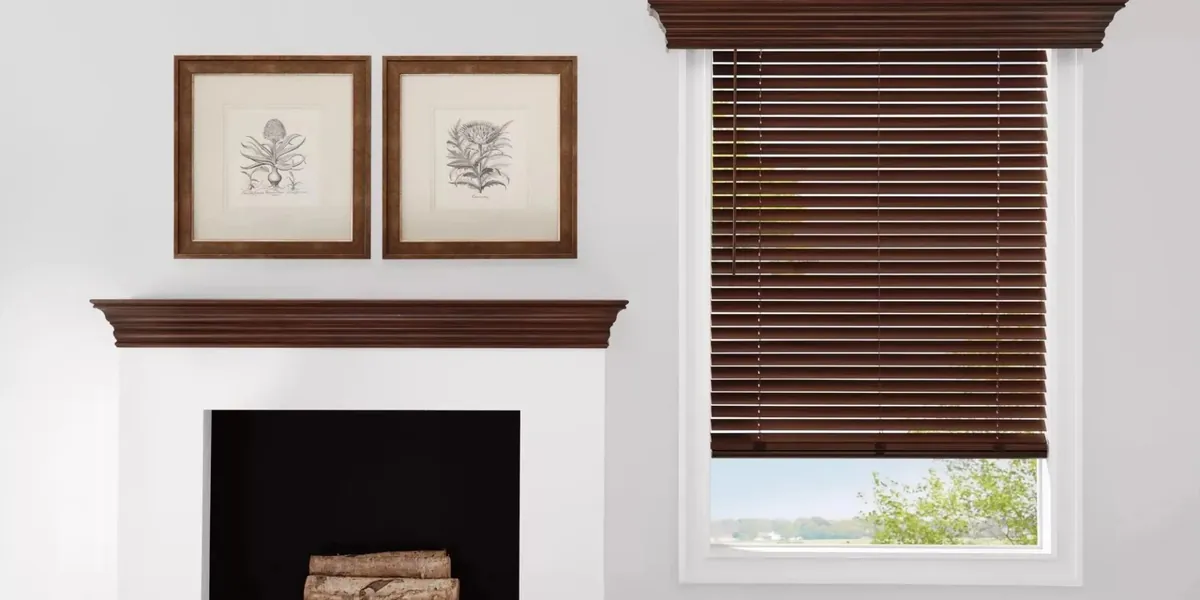
Blinds
Parkland wood and EverWood faux wood blinds tilt to steer light, with faux wood the better pick for damp rooms near the shore.
What salt air does to a window covering
Anyone who has left a bicycle outside near the beach knows what salt does to metal. Inside a house it works more slowly, but it works the same way. Each summer, with the windows open to the breeze, a fine film lands on exposed hardware: cord locks, tilt mechanisms, the ends of brackets, the ladders on old metal blinds. Over the years that film can stiffen a mechanism or mark a finish.
So near the water we look closely at how much of each product’s working parts is exposed. Honeycomb and roller shades keep almost everything hidden inside the headrail or tube. Cordless lifts remove the cord lock completely, so there is nothing hanging at the side to corrode or tangle. Shutters have very little hardware at all, just hinges and a frame. PowerView motorized shades carry their motors inside the headrail, out of the air.
Fabric matters too. A shade that sits in direct sun reflecting off water every day of the summer will fade faster than one on a shaded inland window. Lighter, neutral fabrics generally keep their color longer under that kind of light, and for a really exposed window we point out the options that suit it when you are choosing samples.
Moisture is the third factor. A bathroom or a mudroom by the back door near the shore sees damp air and wet feet. Palm Beach shutters and EverWood faux wood blinds handle that well, where real wood might warp. As a Hunter Douglas dealer in Westport, we suggest the material for the room, not just the look.
Farmhouses and capes along Main Road
The older houses along Main Road were built for working weather, with modest windows, deep walls and rooms sized to be heated. Many still have small-paned sash or divided-light replacements, and the trim around them is often simple painted wood that suits the house exactly as it is.
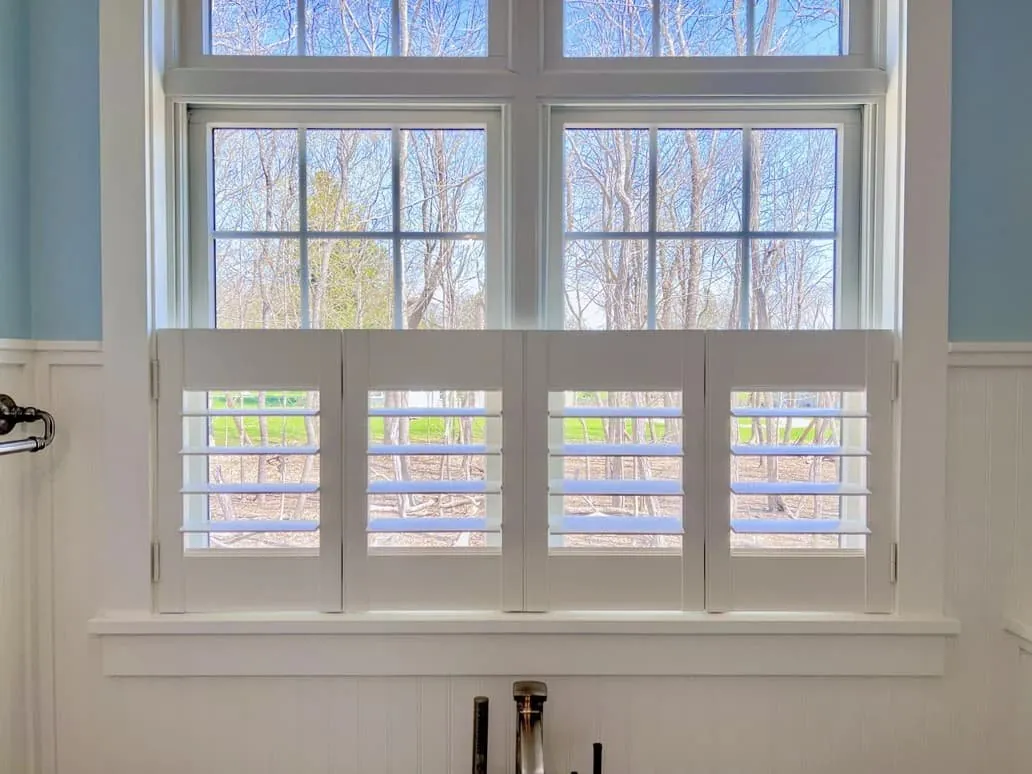
For these rooms we usually suggest treatments that sit inside the frame and keep the trim on view. A honeycomb shade mounted inside a small window almost vanishes when raised and holds heat when lowered. A café shutter on the lower half of a kitchen window gives privacy from the road while the top stays open to the fields. A Roman shade in a natural linen look fits a farmhouse bedroom without fuss.
Old frames are rarely square. A farmhouse that has stood through many winters will have openings that differ by a fraction from top to bottom, and inside mounts need the narrowest of those measurements. We measure each window at several points and check the depth carefully, because a deep wall gives plenty of room for a shutter frame, while a window with an added storm panel may leave very little.
Windows under the eaves
Capes often have bedrooms tucked under the roof, with short knee walls, dormer windows and sometimes a skylight. Dormers are small and set back into a little alcove, which suits an inside-mounted cellular or Roman shade. For a skylight or a high gable window that nobody can reach, a PowerView motorized shade runs from a remote or an app, so the room can be darkened on a summer morning without a ladder.
Rooms built for the harbor
The newer homes on the harbor are a different job altogether. Here the glass is the point. Great rooms open onto decks through wide sliders, corner windows meet without a post between them, and upstairs bedrooms often have a full wall of glass toward the water.
The first rule in these rooms is simple: nothing should block the view when it is not needed. That means treatments that raise fully out of sight, stack tightly, or slide neatly to one side. Roller shades wrap around a slim tube and can be hidden in a pocket or fascia above the window. Honeycomb shades raise into a very compact stack. Vertical honeycomb and Luminette panels slide clear of a slider in a single motion.
The second rule is glare. Light coming off open water is low, bright and constant on a sunny day, and in the afternoon it can make a west-facing great room uncomfortable to sit in. A solar screen shade cuts that glare while keeping the water visible. The openness of the screen decides the balance: a more open weave keeps more view, a tighter one blocks more glare and gives more daytime privacy.
The third is scale. A wall of glass upstairs or a double-height living room is hard to reach and hard to operate by hand. PowerView motorization lets you move every shade on that wall together, from a remote, the app or a schedule. Set them to lower during the hottest part of a summer afternoon and rise again for the sunset.
Porches, sunrooms and three-season rooms
Plenty of houses near the water have a room that is half indoors: a screened porch, a glassed-in sunroom, or a three-season room off the kitchen that faces the river. These spaces take more weather than any other part of the house. Sun pours in from three sides, the damp comes straight through the screens, and the temperature swings hard between a July afternoon and an October evening.
For a screened porch, exterior-grade solar screens or dark screen fabrics cut the glare and give some privacy from the neighbors while keeping the breeze. In a sunroom with fixed glass, roller or honeycomb shades on every pane let you shade one side at a time as the sun moves round. Motorizing a sunroom is worth considering, because its windows are often high, wide and many, and lowering them all by hand twice a day gets old quickly.
A Hunter Douglas dealer in Westport sees a lot of these rooms, and the point to settle first is how the room is used. A porch used for summer dinners needs glare control at sunset. A sunroom used as a winter reading room needs warmth after dark. We match the product to that.
Privacy after dark on the waterfront
Houses built around a view are often built with little thought for night. In daylight the glare off the water keeps passers-by from seeing in, but once the lamps go on, a wall of glass toward the harbor lights the room up like a stage for every boat and every walker on the shore road.
That makes the evening setting of a shade just as important as its daytime one. A screen shade that is perfect at noon can show silhouettes after dark, so many harbor rooms pair it with a second layer. Hunter Douglas makes dual shades that carry a screen and a solid or room-darkening fabric on one headrail. Drapery on a track beside the glass can close across the whole wall at night and stand back neatly by day. A sheer shade with tilting vanes gives you a choice in a single product, open for the view or closed for privacy.
Working through those layers is where a Hunter Douglas dealer in Westport, MA earns its place, because the right answer depends on how far the house sits from the road and the water, and which rooms you use after sunset.
Comparing products that look alike
A full catalog is only useful if someone helps you choose. Being a Gallery dealer, we can lay out the options side by side and explain the real differences.
- Screen or sheer. Both keep the view. A solar screen preserves more of it and cuts glare with a fine weave. A sheer shade, such as Silhouette, softens the light more and gives a gentler feel to a living room.
- Polysatin or hardwood shutters. Palm Beach is built to resist moisture and strong sun, which suits a coastal bathroom or a sunny porch room. Heritance is real hardwood, painted or stained, for a dry room where the grain matters. NewStyle sits between the two.
- Honeycomb or roller. Honeycomb holds air for comfort and suits bedrooms and older rooms. Roller shades give a clean, minimal look and wrap away completely, which suits modern glass.
- Woven wood or Roman. Both bring texture. Woven wood looks natural and relaxed. A Vignette Roman shade has tailored folds and a smoother fabric face.
We bring samples of whichever lines suit your windows, so you compare them in your own light rather than from a picture. Our main Hunter Douglas page sets out every family, with links into shades, shutters, blinds and drapery.
Kitchens, mudrooms and the back door
The rooms near the back door work hardest in a coastal house. Sand comes in on boots, wet towels hang by the washer, and the kitchen window over the sink gets splashed every day. Fabric shades are not always the right call here.
Faux wood blinds wipe clean and shrug off humidity. A café shutter in Palm Beach polysatin covers the lower sash of a kitchen window without minding the steam from the kettle. In a mudroom, a simple cordless roller shade in a wipeable fabric keeps things tidy and gives privacy when you change out of wet clothes. Where a farmhouse kitchen faces the road, a top-down, bottom-up honeycomb lets you lower the top for light while the bottom stays covered.
None of these need to look utilitarian. We bring finishes and fabrics that sit comfortably beside the rest of the house, so the back rooms match the front ones.
A visit to your house
Judging a fabric against the light off the water is impossible from a store counter. Our vans carry samples to your door, and the visit follows a simple pattern.
- Request a consultation online, or use the call button, and pick a time that works for you.
- We arrive with samples from the Hunter Douglas families that fit your rooms, including the coastal-friendly options.
- Together we walk the house, starting with the rooms where glare, privacy or cold bother you most.
- You hold fabrics and louvers to the glass, ideally at the time of day the light is strongest.
- We measure each opening, checking depth for inside mounts and clearance for doors and sliders.
- A free estimate follows, and you decide in your own time.
If you want help with color and fabric across a whole room, our interior design consultations can be part of the same visit. You can also read about what happens at an in-home consultation beforehand.
Sliders, decks and the doors you use every day
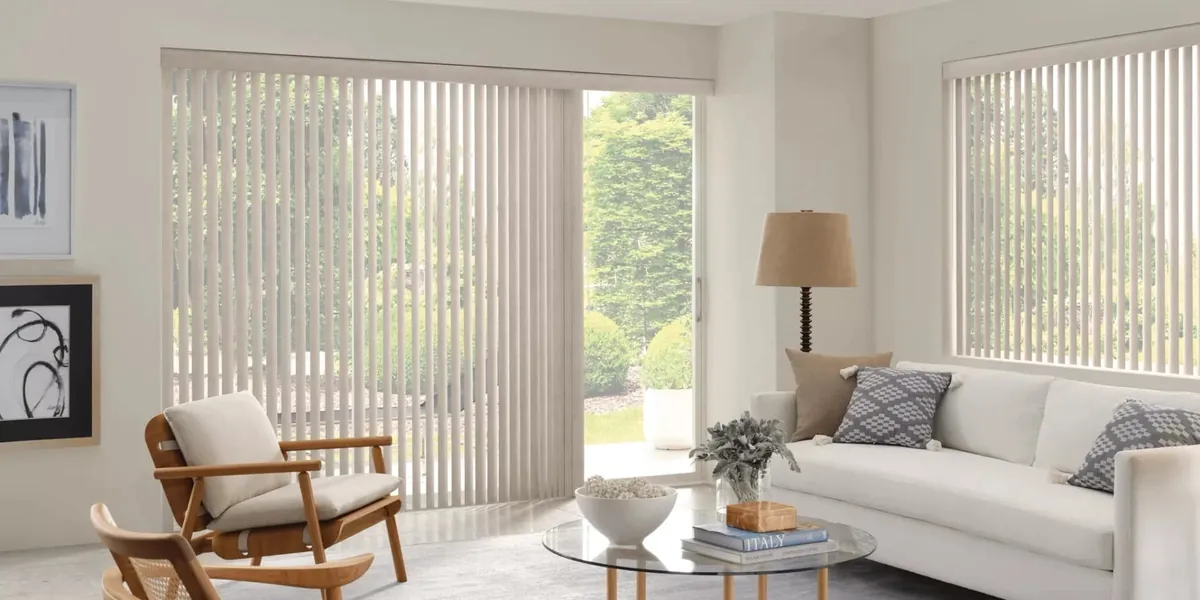
On a waterside house, the slider to the deck is the busiest window in the place. It opens dozens of times on a summer day, it takes the full weather, and it is often the biggest single panel of glass in the room.
A vertical honeycomb shade moves side to side on a track and stacks neatly at one edge, so it never gets in the way of the door. It holds air like any honeycomb, which helps on a windy winter night when the slider is the coldest surface in the room. Luminette sheers and vertical blinds do the same job with a different look.
Because the slider usually frames the main view as well, the real choice is how much light you want through it when the shade is drawn across. Light-filtering fabrics keep the room bright. Room-darkening ones suit a slider off a bedroom.
Fitted to stay put in coastal weather
Certified Hunter Douglas installation matters more than ever in a house that takes the weather. Our installers are certified by Hunter Douglas, and on a coastal job that shows in the details. Brackets go into solid framing, not just drywall or plaster, so a shade on a window that is opened all summer stays level and secure. Motors are paired and tested with the remote or app before anyone leaves. Shutter frames are scribed to openings that have shifted over time.
Working with a Hunter Douglas dealer in Westport, MA that installs its own orders also means the same people stand behind the work afterwards. If salt air has stiffened a mechanism on a shade you already own, or a cord has worn, our blind and shade repair in Westport service is glad to look at it.
Why choose a Gallery dealer
Blinds & Designs is a Hunter Douglas Gallery dealer. That means the whole family of shades, blinds, shutters and drapery in one place, with honest advice on which line suits each window. Every installation is certified by Hunter Douglas.
Around that we offer in-home consultations from vans carrying samples, free estimates, interior design consultations, PowerView automation and repairs. For a house that needs shutters in the bathroom, screen shades in the great room and honeycomb in the bedrooms, one visit covers it all, and one crew fits it.
Hunter Douglas also publishes its full catalog on its own website, which is a good place to browse before we come. To see more of what we do in town, visit our Westport page, and for automated shades on a wall of harbor glass, our motorized blinds in Westport page goes further. A softer look with full-length panels is covered on our custom drapery in Westport page.
Questions from Westport
Will salt air damage my new shades?
Most Hunter Douglas shades keep their working parts inside the headrail, so very little is exposed. Cordless and motorized lifts remove the cord lock entirely. Choosing the right material for each room, such as Palm Beach shutters or faux wood in damp spaces, also helps them last.
How do I cut the glare off the water without losing the view?
A solar screen shade is the usual answer. Its open weave lets you see out while cutting glare, and the openness you choose sets the balance. Sheer shades are a softer alternative for living rooms.
Can you reach and cover very high harbor-side windows?
Yes. PowerView motorization raises and lowers shades from a remote, an app or a schedule, so a double-height wall of glass is as easy to manage as a single window.
What works on the small windows in an old farmhouse?
Inside-mounted honeycomb, Roman or woven shades suit them well and keep the trim on view. Café shutters are a good choice on a kitchen window facing the road. We measure carefully because old frames are rarely square.
Do you charge for the estimate?
No. Estimates are free. Request a consultation and we will come to your house with samples, measure, and prepare one.
When you want to start
Book a visit through Request a Consultation, tap the call button for a quick question, or drop in to the North Dartmouth showroom, our nearest to Westport. We will take it from there.