
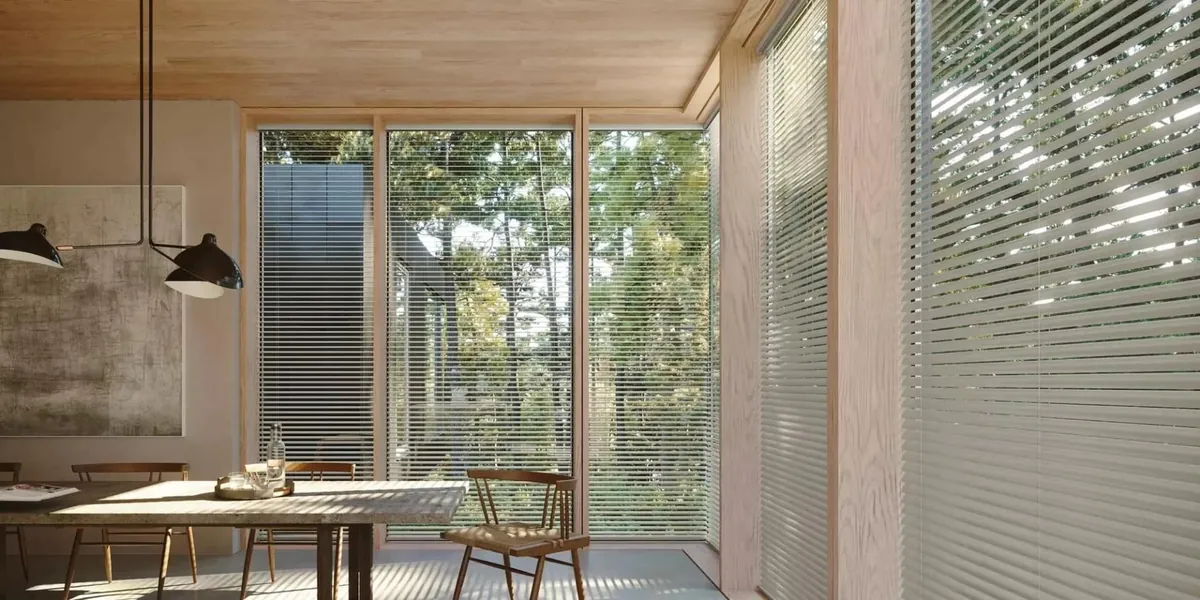
Wind, water and glare along the canal
Bourne straddles the Cape Cod Canal, and its houses take the weather that funnels along it. Cottages at Monument Beach and Pocasset face Buzzards Bay, the village housing clusters near the canal’s western end, and newer colonials fill the roads inland. Our Sagamore showroom is here in town, so planning custom blinds in Bourne, MA is work we do close to home.
Canal-side rooms deal with two things that inland rooms rarely do. The first is wind-driven weather: rain and spray pushed hard against the glass, and gusts that find every gap when a window is cracked open. The second is light that bounces. Sun comes off the water as well as from the sky, so a room can glare even when the sun itself is behind the house.
Blinds answer both. Slats that tilt give you a fine-grained way to send reflected light up to the ceiling or block it altogether, and a well-built headrail with enclosed workings stands up to damp, salty air better than coverings with exposed parts.
Custom blinds in Bourne, MA, in three materials
Every Hunter Douglas blind we fit is made to your window’s own measurements. These three families, along with vertical blinds for sliders, cover most of what Bourne houses need.
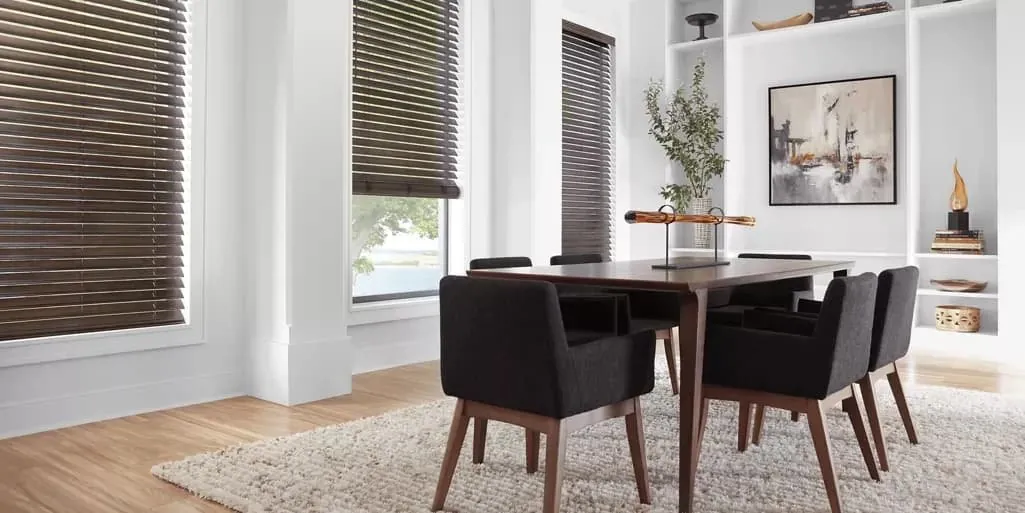
Wood blinds
Real wood for a colonial’s dining room or a living room on the sheltered side of the house. Stained or painted, they bring warmth that suits traditional trim.
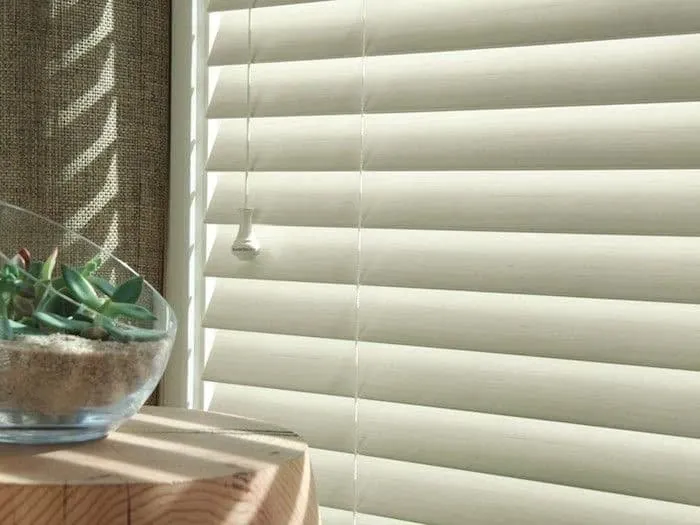
Faux wood blinds
Wood-grain looks without the worry about damp. The practical choice for beach cottages, bathrooms and any room that takes canal weather.
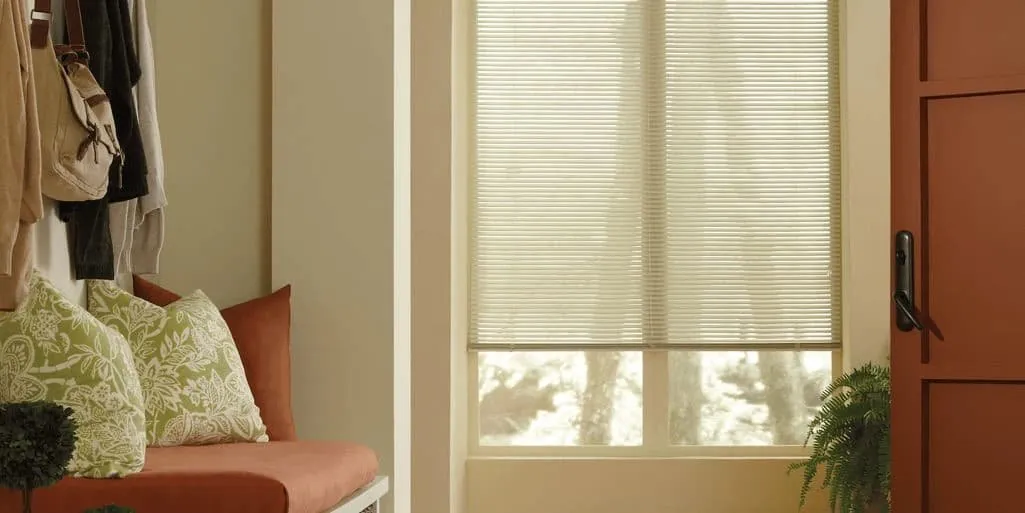
Metal blinds
Slim and light, for entry side lights, small cottage windows and home offices. A tidy profile where space is tight.
Reflected light off the bay and the canal
Glare off water is different from ordinary sunshine. It comes in low, from below the sun, and it moves as the surface moves. A room on the water side of a Monument Beach cottage can be bright to the point of squinting in the early afternoon, and a canal-facing kitchen can catch flashes of light off passing boats and choppy water.
Horizontal blinds are one of the best tools for this, because you can set the angle of every slat. Tilted with the room side of the slat angled up, the slats catch light coming from below and throw it to the ceiling. Tilted the other way, they block light from above while leaving a view down to the water. You can change the angle through the day as the light moves, with a wand at the side or with motorized tilt.
Light colors help in these rooms. Pale slats spread reflected light softly across the room instead of creating hard stripes, and they keep heat from building up against the glass on a summer afternoon. On the most exposed windows we choose finishes that hold their color under strong daily sun.
Pocasset and Monument Beach cottages
The cottages along the bay shore were often built as summer places and later winterised. They have small rooms, a lot of windows for their size, and frames that have seen plenty of salt weather. Many have a mix of original small sash and newer, larger windows added during renovations.
That mix is easy to manage with made-to-measure blinds. Each window gets a blind cut to its own opening, and keeping the same slat color and size across the cottage makes the windows look like a set even when they differ in age and shape. Faux wood is the material we suggest most here: it looks like painted wood, which suits shingle and beadboard, and it is not bothered by the damp of a house near the water.
Cottage porches turned into sunrooms are common along this shore. They tend to have long runs of windows on three sides and take light all day. Several blinds side by side, each raised on its own, let you shade the sunny side while leaving the view open on the other. On a porch that still gets opened up in summer, sturdy brackets set into solid framing keep the blinds square when the wind gets in.
When the wind gets in
A window left open on a breezy day can set a blind swinging and knocking against the frame. On doors and on windows that are often open, hold-down brackets at the bottom rail stop the blind from swaying and clattering. Inside mounts, where the blind sits within the frame, are also less exposed to gusts than blinds hung on the face of the wall.
Wind also drives rain and spray against the glass, and some of it ends up on the sill. Faux wood and metal slats shrug that off; real wood is better kept to windows that stay shut in bad weather. Cordless lift removes the cord lock at the side, which is one less exposed part in a damp corner.
Village housing near the canal
Closer to the canal’s western end, the houses are older and closer together. Many have been divided or converted over the years, and their windows face neighbors across narrow side yards. Privacy is the first job in these rooms. Slats tilted with the rounded side facing in hide the room from outside while the ceiling still gets daylight.
Smaller rooms make the stack matter. When a blind is fully raised, its slats gather at the top of the window, and on a short window a deep stack can take a noticeable bite out of the glass. A wider slat means fewer slats and a shallower stack; a narrower slat looks finer but gathers taller. We show you both at your own window. Converted houses also tend to have one or two oddly sized windows, a narrow bathroom light or a small window on a stair, left over from the original layout. Metal or faux wood in a slim slat suits these little openings, mounted inside the frame so they look deliberate rather than squeezed in.
Our separate page on custom blinds in Buzzards Bay looks at the village in more detail.
Newer colonials inland
Away from the water, Bourne has plenty of newer colonials and family houses with larger, more regular windows: double-hung sash in the bedrooms, a big window over the kitchen sink, French doors or a slider to the back deck. These houses are more forgiving to fit, since the frames are square and the openings are consistent from room to room.
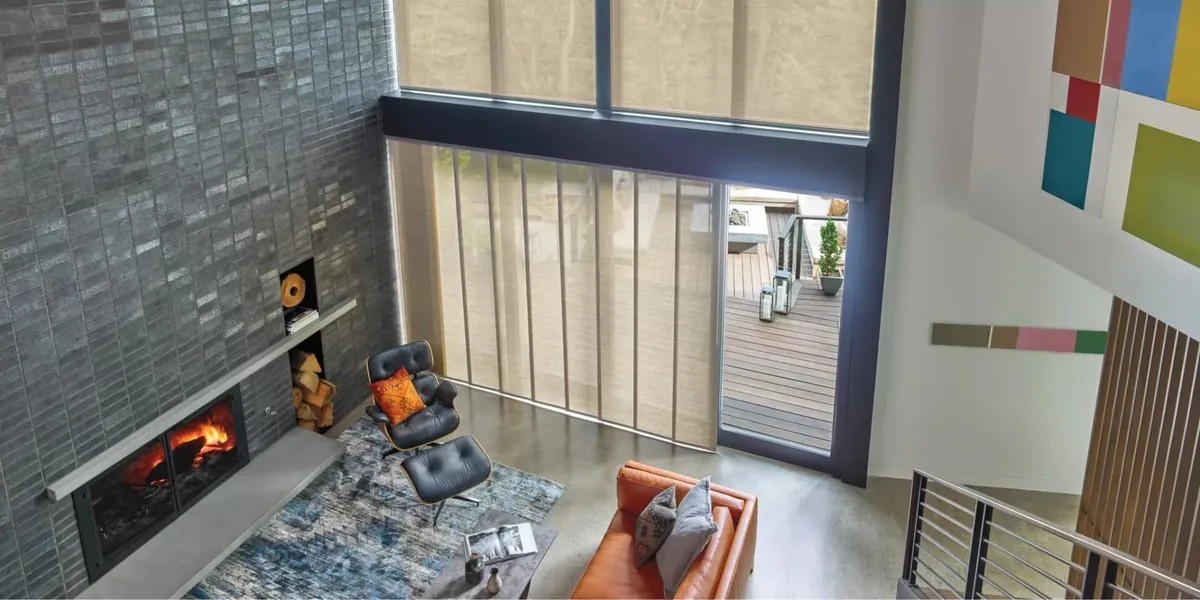
Here the choice is mostly about style and how each room is used. Real wood in the living and dining rooms, faux wood in the kitchen and bathrooms, and darker slats in bedrooms where you want a dimmer room in the morning. The slider takes vertical blinds or Skyline gliding panels, which draw aside so the door can be used freely.
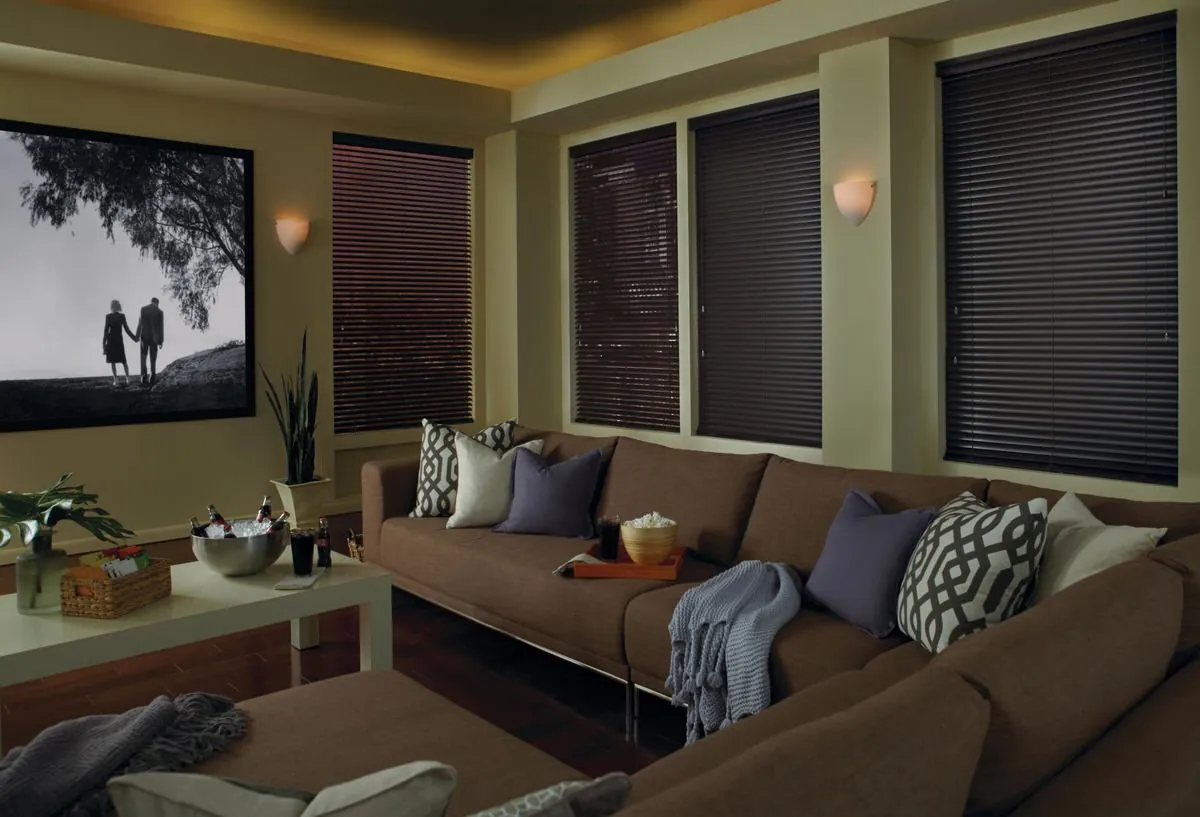
Family rooms in these houses often open onto the back yard through a wide run of windows, and they get used for everything from homework to a film on a winter evening. A blind that tilts fully closed with a deep color makes the room dim enough for the screen in the afternoon, then opens wide when the room goes back to being a playroom. Home offices off the front hall are another common request, where a blind angled just so keeps the sun off a computer screen without shutting out the yard.
For two-story entries or high windows over a stair landing, Hunter Douglas PowerView motorization lets the blinds tilt and lift from a remote or the app.
A whole-house order is common in these homes, and custom blinds in Bourne look their best when the street-facing windows share one color and slat size, so the front of the house reads as a single design.
Bedrooms on the bay side
Bedrooms that face the water get the morning in full. On the east-facing shore of a Pocasset or Monument Beach cottage, first light comes across the bay and straight onto the bed. Plenty of people like waking with the sun in summer, and plenty do not.
A blind can be set up for either. For a dimmer room, a darker slat closes tighter visually than a pale one, and an outside mount that overlaps the trim cuts the bright line of light that slips past the edges of an inside-mounted blind. For a gentler start, slats tilted upward let the room brighten slowly without sun on the pillow. Many of the custom blinds in Bourne, MA that we fit in cottage bedrooms are faux wood in a soft color, so they look light and airy by day and still darken the room well enough at night.
Motorized blinds for the windows you cannot reach
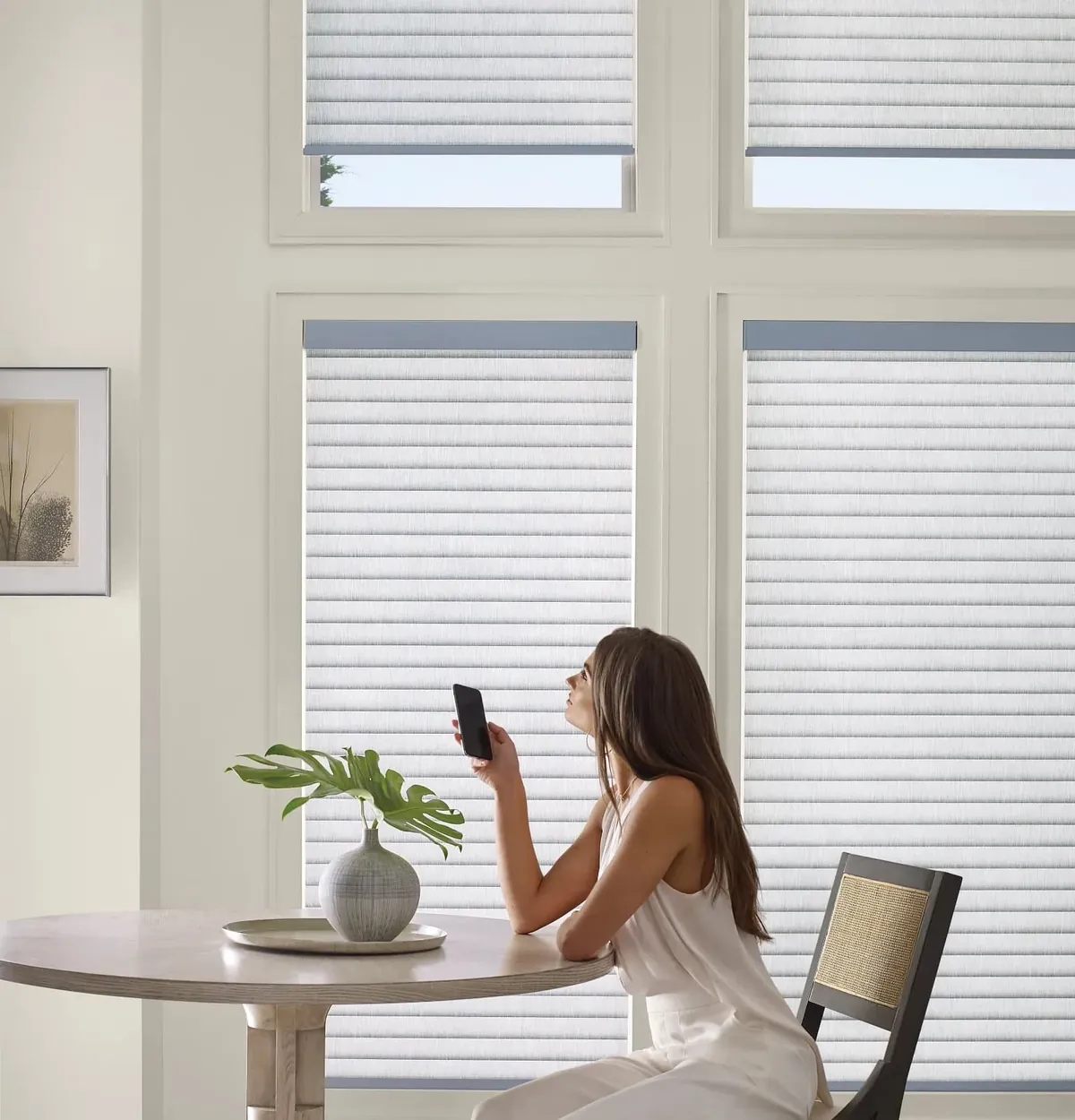
Some windows in Bourne houses are simply hard to get to: the tall glass over a cathedral-ceilinged living room, the window behind a kitchen island, a dormer above the stairs. PowerView motors handle the tilting and lifting for you, controlled from a remote, a wall switch or your phone. You can also set schedules, so the water-facing blinds tilt shut as the afternoon glare arrives and open again at dusk.
We go through how the motors are powered and how the controls work during your consultation. Our page on motorized blinds in Bourne has more on what motorization can do.
Choosing for each room
A short guide to how Bourne houses usually divide up:
- Water-facing living rooms and sunrooms: faux wood or metal in pale colors, to handle glare and damp. See EverWood faux wood blinds and metal blinds.
- Dining rooms and dry front rooms: real wood, stained or painted, from the wood blinds range.
- Kitchens, bathrooms and mudrooms: faux wood, which copes with steam and wet boots.
- Sliders and French doors: vertical blinds or gliding panels, with hold-downs on a door that stays open in summer.
The main custom blinds page brings the whole range together.
Looking after blinds in salt air
A little care goes a long way near the canal. Salt and damp leave a film on slats over a season, and wiping them down with a soft, damp cloth now and then keeps faux wood and metal looking fresh and helps the tilt keep moving freely. Real wood prefers a dry duster. Closing windows before a storm keeps driven rain off the slats and out of the headrail.
When something does wear out, it is usually a cord, a tilt gear or a bracket rather than the slats themselves. We repair blinds and shades, including ones bought elsewhere, and often a worn part is all that needs replacing. Keeping custom blinds in Bourne working season after season is part of the job, not just the first fitting.
A consultation in your own rooms
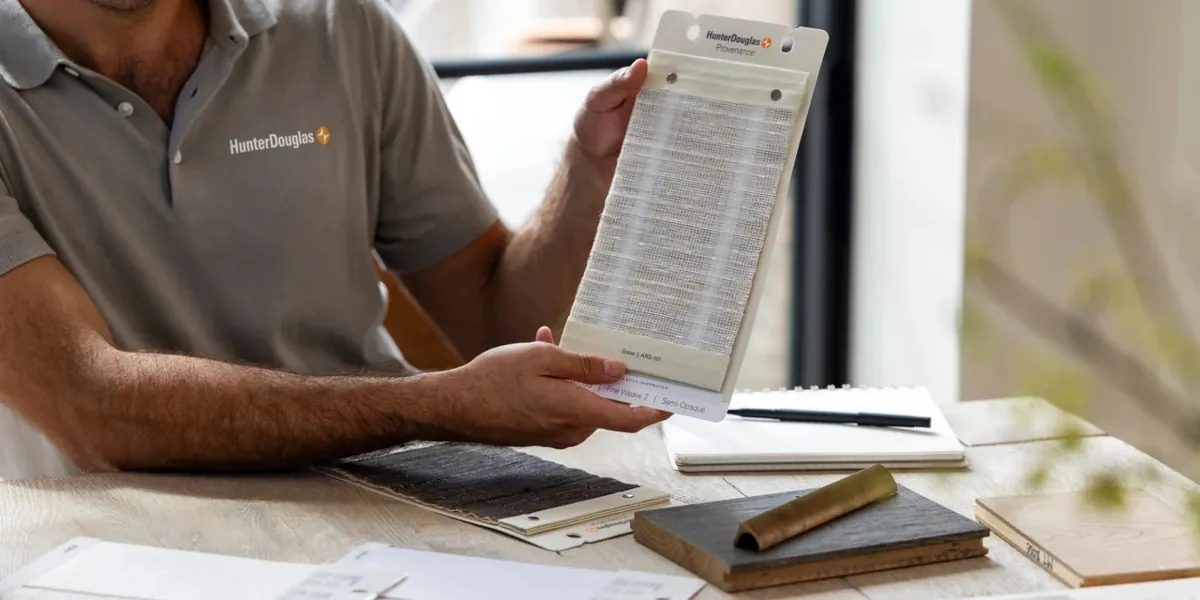
A blind sample held up in a shop tells you very little about how it will behave in a room full of reflected water light. That is why most of our Bourne visits happen at home. Our vans carry samples of every material, so we bring the showroom to you, and you see each slat against your own trim and in your own light.
We usually start in the room that bothers you most, often the one facing the bay or the canal, and work through the house from there. You try the tilt on real slats, compare wood with faux wood side by side, and see how a vertical blind handles the slider. We talk about which windows get opened in summer, which rooms take weather, and where you want privacy from the road or the neighbors. Then we measure every window and check its depth for an inside mount.
You leave the visit with a free estimate for the blinds you are considering, and plenty of time to think. If you would like help with color or with how the blinds sit alongside drapery or shutters, ask about our interior design consultations. Our guide to what happens at an in-home consultation explains the visit in more detail.
Fitting, from measurement to final check
The measuring is careful on purpose. Cottage frames that have weathered many winters of salt air are rarely perfectly square, so we take the width in several places and use the narrowest reading for an inside mount, check the height at each side, and look at the depth where the headrail will sit, noting any crank or lock in the way. Every choice, from mount and slat size to color and control, is confirmed with you before the order goes in.
Our installers are certified by Hunter Douglas. They fix the brackets into solid framing, level each headrail, add hold-downs where a door or a breezy window needs them, run every tilt and lift, and show you how it all works before they leave. That is what lets made-to-measure blinds sit straight in a frame that may not be, and keep working through canal winters.
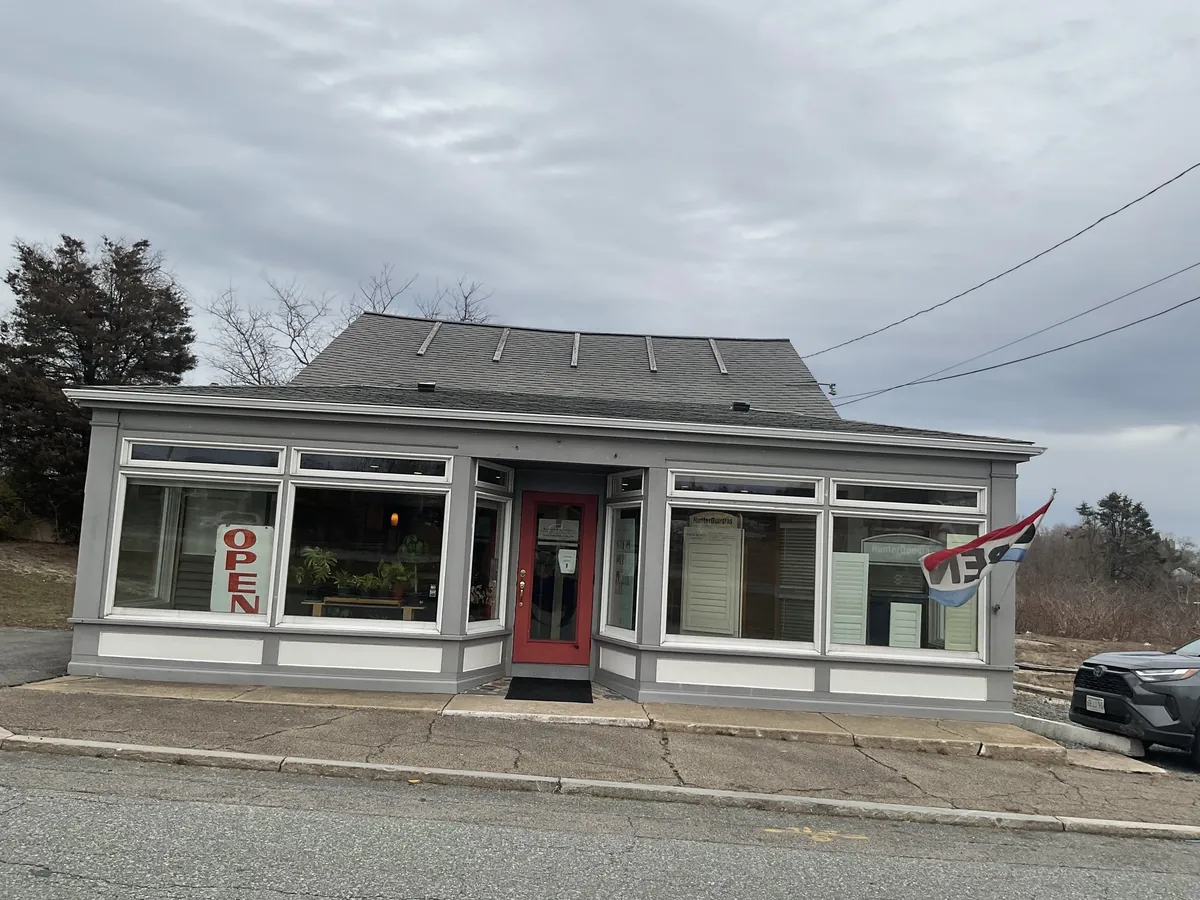
Our Sagamore showroom, here in Bourne
Blinds & Designs is a Hunter Douglas Gallery dealer, a designation Hunter Douglas gives dealers who meet its standards. The full blind range is available through us: Parkland real wood, EverWood faux wood, metal and vertical blinds, with every lift and tilt option.
Every installation is carried out by installers certified by Hunter Douglas, and we also repair blinds and shades, including ones you already have, when a cord or a tilt mechanism wears out.
Our Sagamore showroom is the nearest to you, right here in Bourne, if you would like to see the blinds before we visit. We also carry Hunter Douglas shades, shutters and drapery. For other rooms, see cellular shades in Bourne or plantation shutters in Bourne, or every service we offer in town on our Bourne page.
Questions from Bourne
How do I handle glare that bounces off the water?
Tilt the slats so the room-facing side angles upward. That catches light coming from below and sends it to the ceiling. Pale slat colors soften it further, and motorized tilt can adjust the angle on a schedule.
Which blinds suit a cottage near the bay?
Faux wood is the usual choice. It looks like painted wood, suits shingle and beadboard, and does not mind damp, salty air. Metal is another option for small windows.
My blinds knock against the frame when the window is open. Can that be stopped?
Yes. Hold-down brackets at the bottom rail keep the blind from swinging in a breeze. An inside mount also shelters the blind from gusts better than one hung on the wall.
Can I see the blinds before deciding?
You can. Our Sagamore showroom is in Bourne, and we also bring samples of every material to your home at a consultation.
Will you charge me for an estimate?
No. Estimates are free. After measuring, we give you one for the blinds you have chosen to consider.
Start with a visit
Request a consultation and we will bring wood, faux wood, metal and vertical samples to your house, measure every window and leave you with a free estimate. Or, since we are in town, use the call button to reach the Sagamore showroom and arrange a time to come in.