
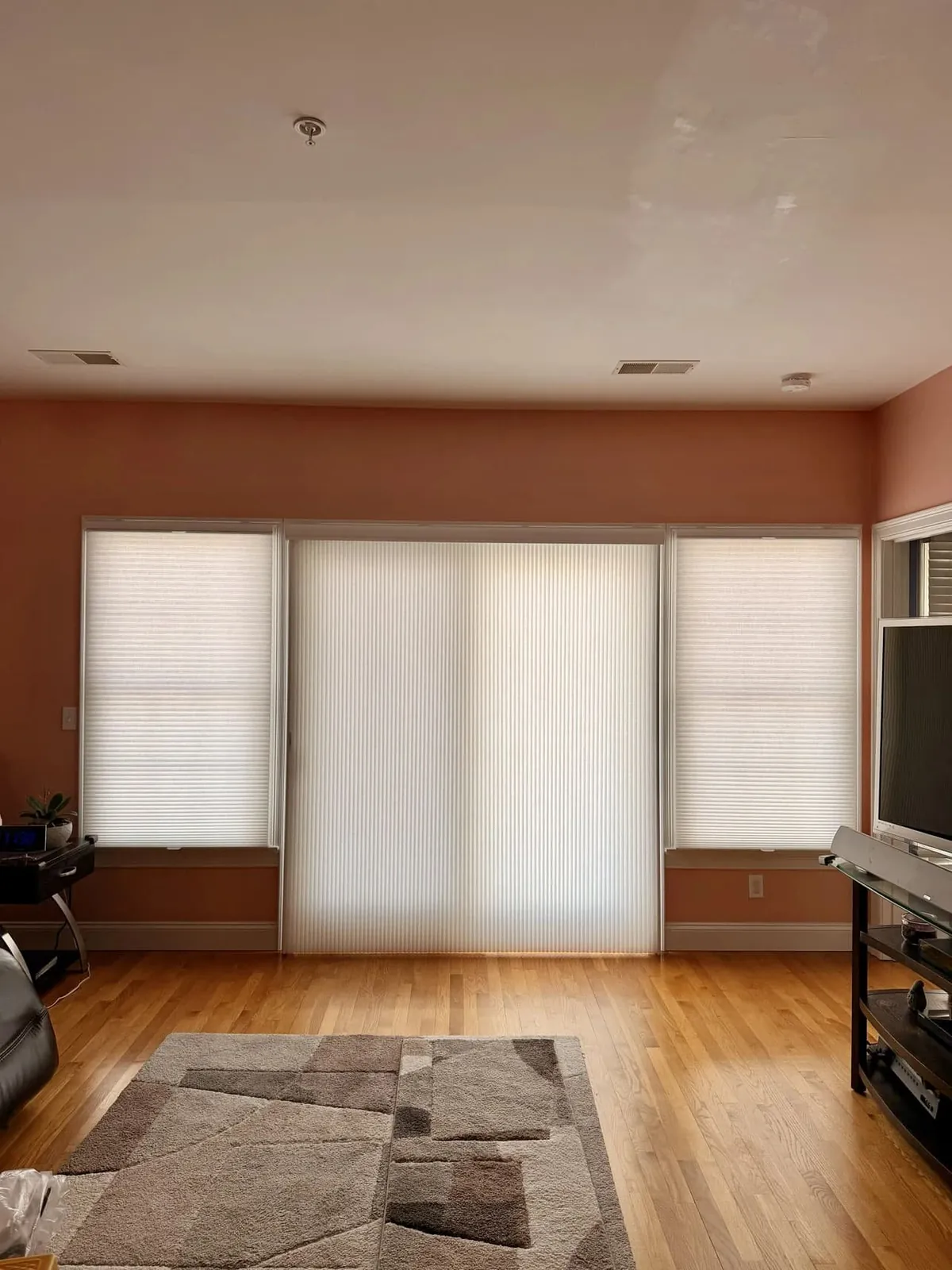
Canal wind, bay light and cottage windows
Bourne is where our Sagamore showroom sits, on Cranberry Highway, so these are the houses we know best. The town covers a lot of ground. Monument Beach and Pocasset have older cottages close to the shore, many of them added onto over the years. Buzzards Bay village has a tighter grid of houses near the canal. Inland, newer colonials sit on larger wooded lots. When you are choosing cellular shades in Bourne, MA, each part of town asks a slightly different question.
What ties them together is weather. Rooms along the canal take wind-driven rain and cold that comes straight down the waterway, and on a bright day they take hard light reflected up off the water. Cottages near the bay deal with damp air and salt. Inland houses deal with big windows and long winters.
A honeycomb shade answers more of that than most window coverings. The cells trap still air between the glass and the room, slowing the cold that comes through a window on a windy night. The fabric diffuses reflected glare. And because the works sit inside the headrail, there is very little hardware out in the salt air.
What a honeycomb shade can do for a Bourne house
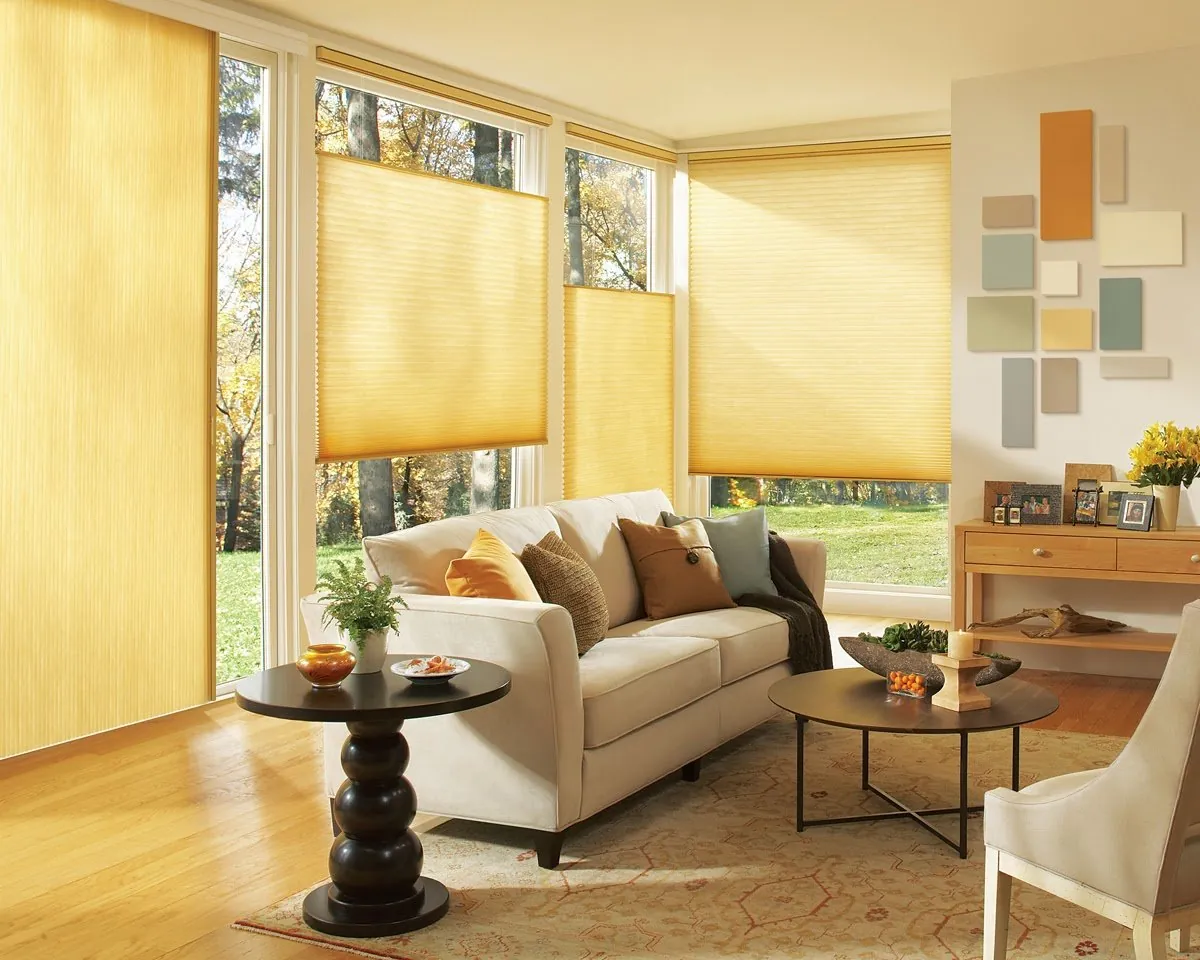
Cellular shades in Bourne, MA, come from two Hunter Douglas lines, Duette and Applause, and in more fabrics and lift options than any other shade we sell. These are the three features that matter most here.
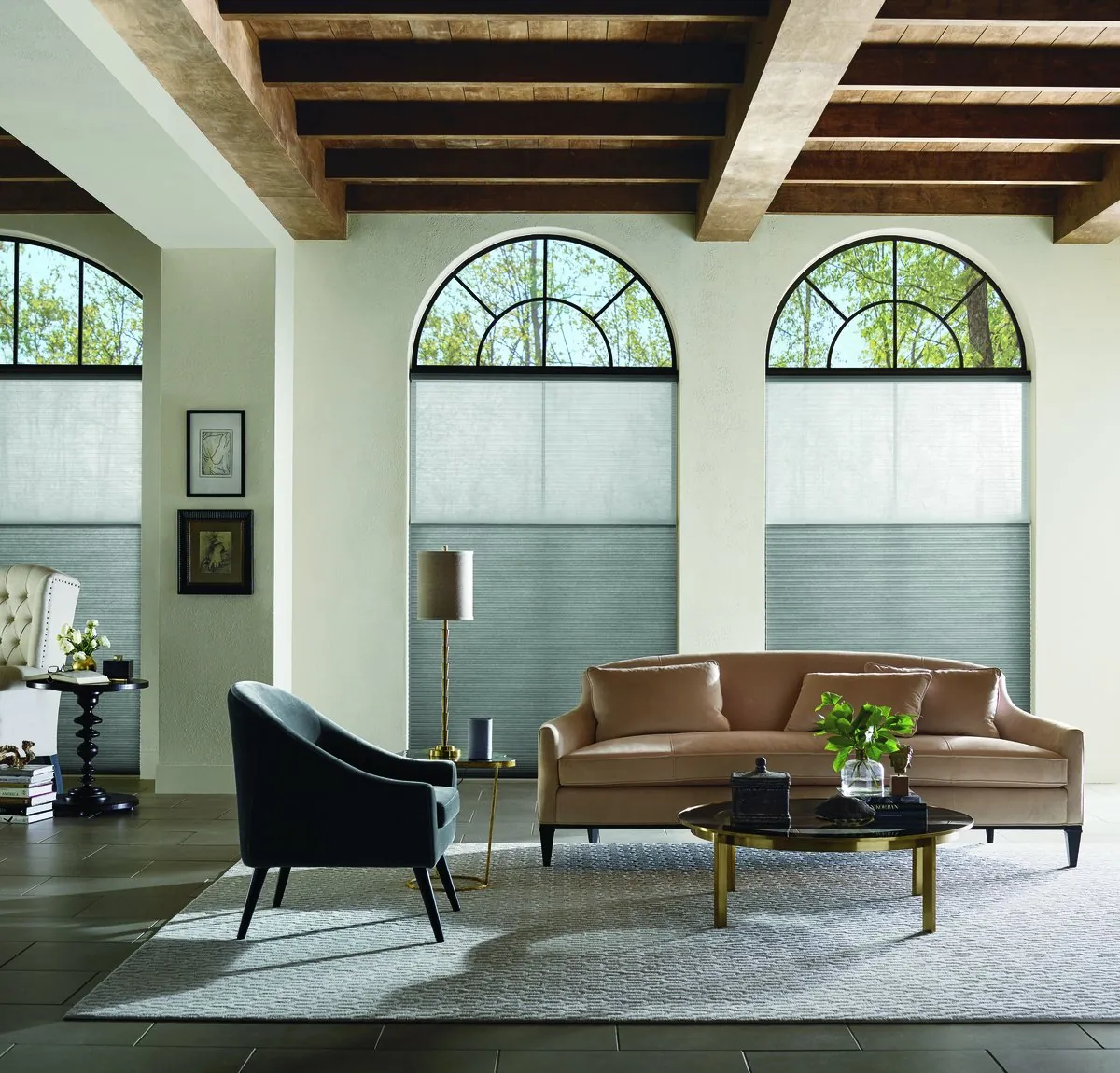
Open from the top
A top-down, bottom-up shade keeps the canal or the bay in view above while covering the lower glass from the road or a neighbor’s deck.
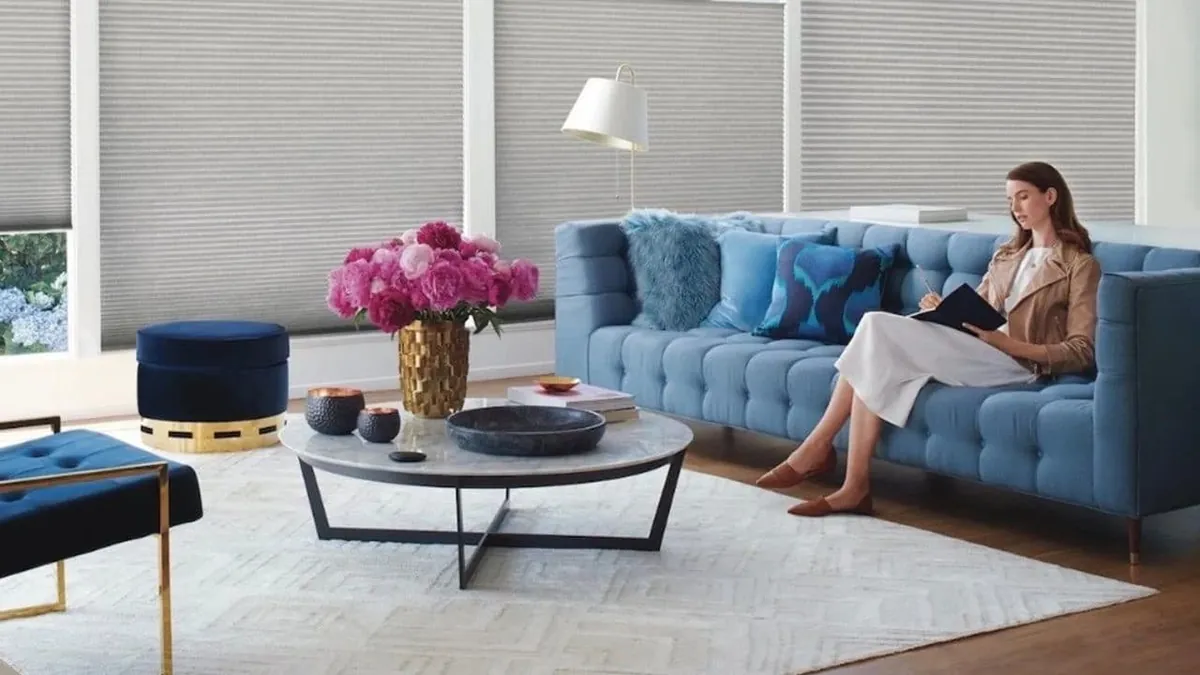
Darkening when you need it
Room-darkening honeycomb fabrics shut out the glare off the water on the brightest afternoons and still hold heat in the cells at night.
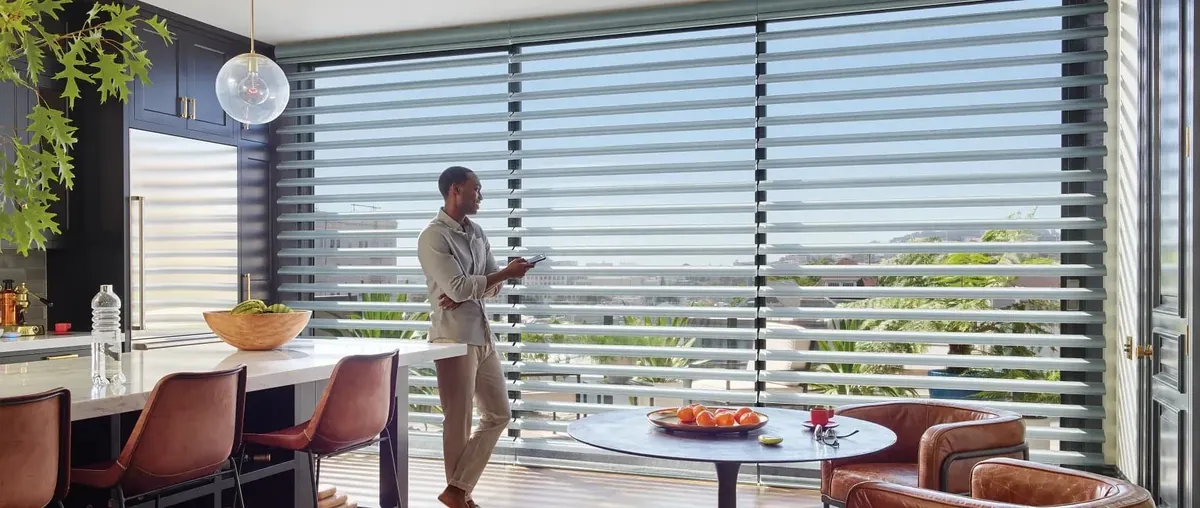
Motorized control
PowerView lets you raise or lower every shade in a room from your phone or a remote, or set them to follow the sun.
Monument Beach and Pocasset cottages
The cottages along the shore in Monument Beach and Pocasset were often built as simple summer places and then winterised, extended and updated many times over. The result is a house with a real mix of windows: small original double-hung sash in the oldest rooms, larger replacement windows in an addition, a slider onto a deck, maybe a bank of windows in a converted porch.
Honeycomb shades are one of the few treatments that can tie a mix like that together. They come in very small and very large sizes, they can be made for sliders as well as windows, and the neutral backing that shows from outside is the same on every shade. Inside, you can keep the same fabric through the whole house so the rooms feel connected, even if no two windows match.
Comfort is the other reason. A winterised cottage often has walls and windows that were not built for January. Converted porches are the classic example: lots of glass, little insulation, and cold the moment the sun goes down. A double-cell honeycomb or a Duette Architella fabric, with an extra cell inside each cell, gives these rooms the most trapped air. Our guide to cellular shades and winter heat explains how that works.
Damp air near the bay is worth thinking about too. Honeycomb fabrics are easy to keep clean with a light dusting, and the cordless lift option removes the cord and its lock from the side of the window, which leaves less to wear in salty air.
Reflected light off the canal
Water throws light. On a bright day, sun reflected off the canal or the bay comes in at a low angle and bounces off ceilings and walls, so a room can feel glary even when the sun itself is not shining through the window. Rooms on the canal side can be hardest to use in the late morning and afternoon, when the reflection is strongest.
Diffusing that light is something honeycomb shades do well. A light-filtering fabric spreads the reflected glare into a soft, even brightness, so you can see your screen and sit near the window without squinting. If you want to keep watching the boats go through, a top-down, bottom-up shade lets you lower only the top section, where the glare enters, while the water stays visible below. On the brightest windows, a Duolite design gives you a sheer layer and a darkening layer on one headrail, so you can switch between them through the day.
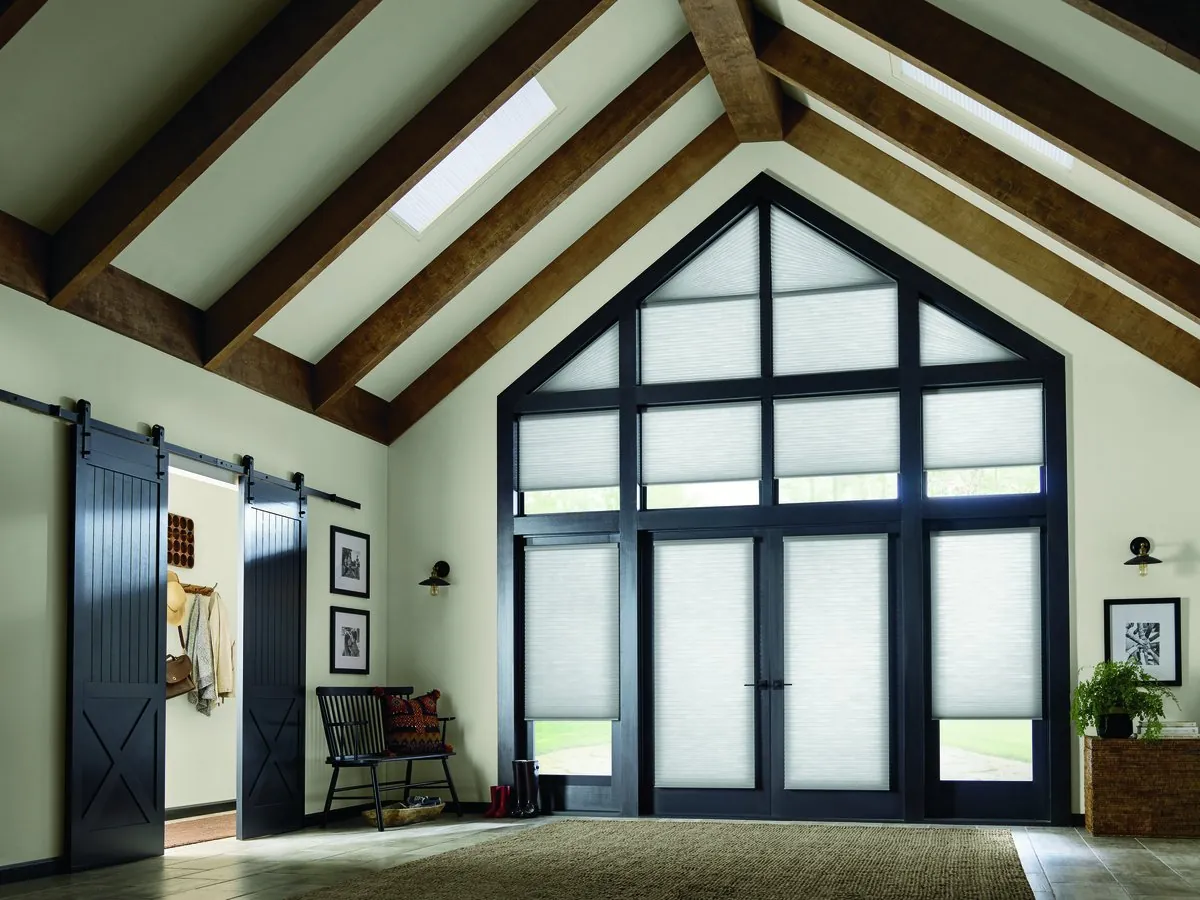
Wind-driven weather on the canal side
The canal acts like a funnel for wind, and the houses that face it feel it. Rain gets driven against the glass, cold air finds every gap in an older window, and a room that faces the water can feel noticeably colder than the rest of the house on a winter evening.
A honeycomb shade lowered at dusk puts a layer of trapped air between that cold glass and the room. It does not replace a good window, but it makes a real difference to how warm the room feels where you sit. For the windows that face directly into the weather, we usually recommend an inside mount that sits snugly within the frame, with the bottom rail resting close to the sill, so there is less room for cold air to spill around the edges.
On large canal-facing windows, PowerView can lower the shades automatically at sunset each evening, so the room is closed up before the cold sets in, even if you are not home.
Wind also tests how a shade is fixed. A window on the canal side gets opened on calm summer days and slammed shut when a squall comes up the waterway, and a loosely fixed headrail will work itself out of level over a season of that. Our installers fix the brackets into solid wood in the frame or the header, not just into plaster or drywall, so the shade stays square and runs smoothly however often the window is opened.
The village by the canal
Near the western end of the canal, the houses of Buzzards Bay village sit nearer together than they do in the rest of Bourne, on smaller lots with less space between one house and the next. Windows here tend to be modest double-hung sash, and many face a neighbor’s wall or the street a few steps away.
In these houses the first job is usually privacy, with warmth a close second. A light-filtering honeycomb lets daylight in while keeping the room private, and a top-down, bottom-up shade covers the lower sash, where a passer-by could see in, while leaving the top open. Smaller windows suit the slim stack of a raised honeycomb, which hides almost entirely in the top of the frame. If you live in the village itself, our page on cellular shades in Buzzards Bay goes into those houses in more detail.
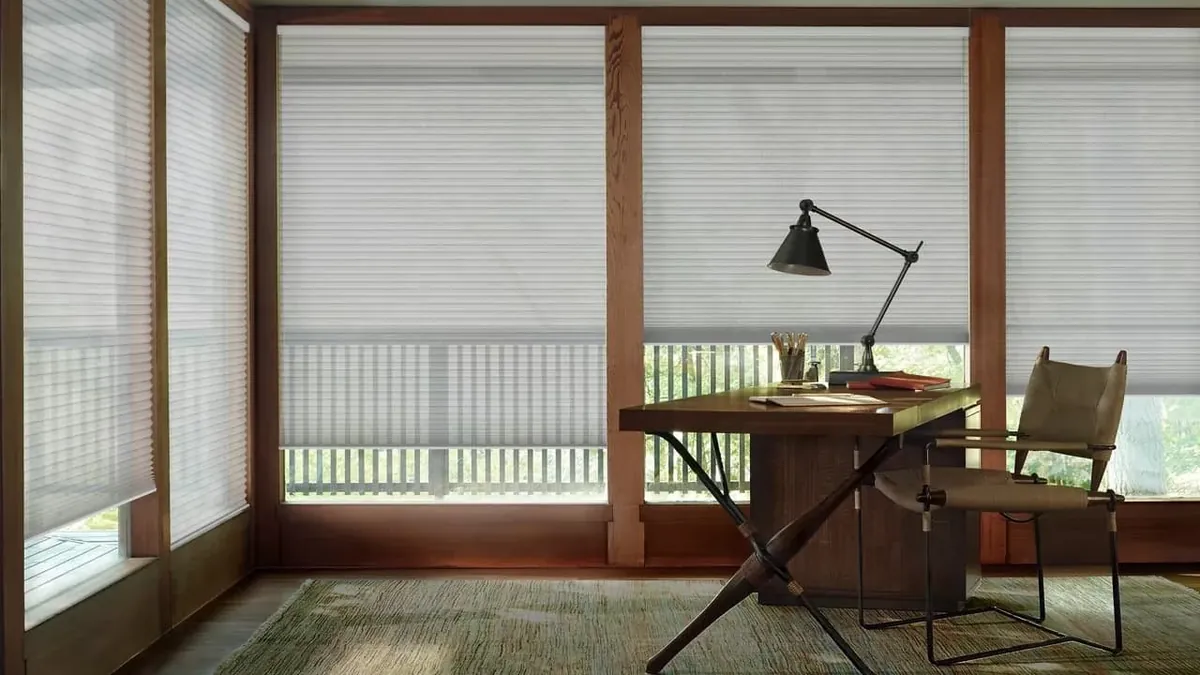
Newer colonials inland
Away from the water, much of Bourne is newer colonials on wooded lots. The windows are larger and more regular than in the shore cottages, often with a two-story foyer, a family room with tall windows or a sunroom, and sliders or French doors onto a deck.
These houses suit Duette especially well. Tall foyer windows and high family room glass are good candidates for PowerView, since the shades are out of reach. French doors take shades mounted on each door. Sliders take the Vertiglide honeycomb, which moves side to side and stacks compactly so the door is clear. Bedrooms take room-darkening fabrics. With all of it in one fabric family, the house looks finished and consistent from the street.
Many inland homes have vinyl replacement windows with shallow frames. That sometimes rules out an inside mount, and in those cases a slim outside mount above the window works well and gives better light control at the edges. We check every window before we suggest one.
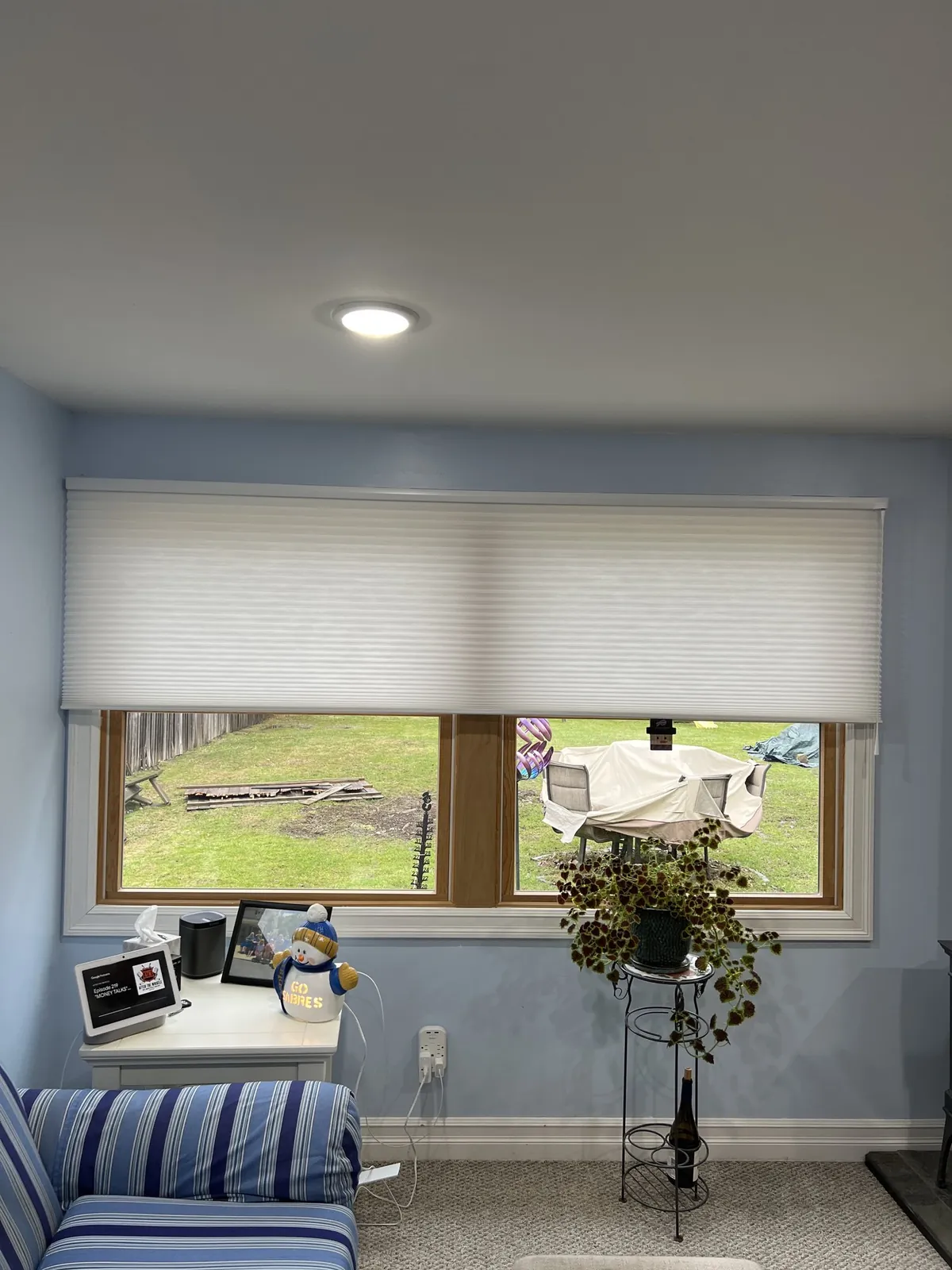
Comparing Duette and Applause at your windows
Both lines are honeycomb shades from Hunter Douglas, and both use the same air-filled cell. Duette has the deepest selection: the largest fabric library, Architella and Duolite designs, specialty shapes for arched and angled windows, extra-wide shades and the Vertiglide shade for doors. Applause has its own palette of fabrics and suits most standard windows very well.
We bring both to your home so you can hold them side by side at the same window. In a Bourne house it often makes sense to use Duette on the canal side or in the main living space and Applause in the bedrooms and back rooms, matched in tone. The main cellular shades page covers the full range, and our Duette honeycomb shades and Applause honeycomb shades pages go into each line.
Choosing how the shades are raised
The way a shade lifts affects how easy it is to live with, so we choose it window by window.
- Cordless lift is the cleanest: push the bottom rail up or pull it down and it stays put. Nothing hangs at the window, which suits bedrooms, children’s rooms and homes with pets.
- Retractable cord lift suits tall windows where the bottom rail would end up out of reach. The cord draws back into the headrail as the shade rises.
- PowerView motorization takes over where windows are high, wide or awkward to reach, and lets the shades follow a schedule.
A typical Bourne house might use cordless in the bedrooms, a cord on the tall family room windows and PowerView on the canal side, where closing the shades at the right time of day matters most. See our page on motorized blinds and shades for more on how PowerView is controlled.
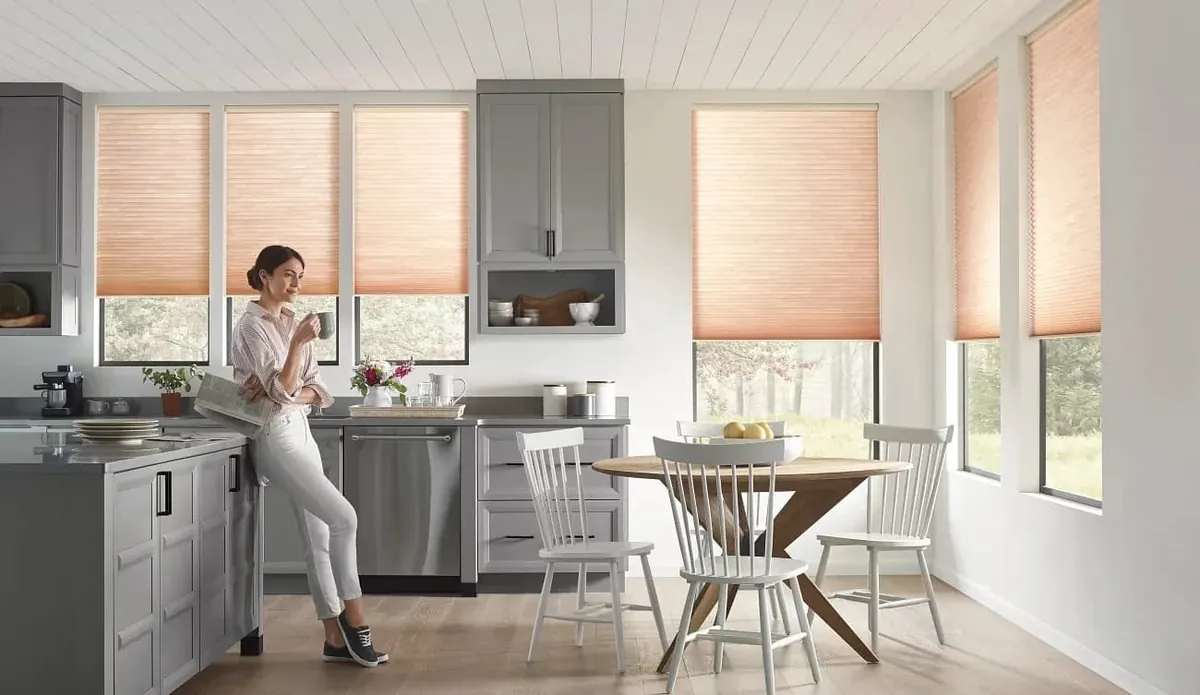
A cottage that closes for the off-season
Some of the shore cottages in Pocasset and Monument Beach are lived in all year, and some are shut for the colder months. A closed house still needs its windows handled. Shades left up let the low winter sun fade floors and furniture all season. Shades left down make the house look empty from the road.
Choosing cellular shades in Bourne for a part-time house is mostly a question of control. With PowerView, the shades can follow a daily schedule while you are away, lowering in the brightest hours and rising again in the evening, and you can check or change them from your phone. When you open the house again in spring, the shades are ready, with nothing to untangle and no cords that have stiffened over the winter. We plan where each motor gets its power during the consultation, so nothing needs attention while the house is empty.
Picking a fabric for canal and bay light
There are three broad families of honeycomb fabric, and most Bourne houses use more than one.
Sheer and semi-sheer fabrics keep the view and soften the light. They suit a canal-side living room where you want to see the water during the day. Light-filtering fabrics give daytime privacy and spread the light evenly, which suits most kitchens, family rooms and front rooms close to the road. Room-darkening fabrics block most light and suit bedrooms, especially those facing east over the bay where the morning sun comes up off the water.
Color matters as well. Pale neutrals stand up best to strong reflected sun. Whatever you choose for the inside, the street side of every honeycomb is a consistent neutral, so the house looks tidy from the road and the water.
Measuring and certified installation
Cellular shades in Bourne are each made to their own window, so the measuring is where it either fits perfectly or does not. In an older cottage that takes care.
- We check each frame’s depth and note any locks, cranks or trim that would stop an inside mount.
- We take the width at three points and the height at three points, since older openings are seldom square.
- We plan how shades meet on corner windows and how a long run of glass will break into sections.
- We confirm every mount, fabric and lift choice with you before the order goes in.
- When the shades arrive, our certified Hunter Douglas installers fit them, level each one, test the lift and show you how they work.
That last step matters. Certified installation means the shades go up the way Hunter Douglas designed them to, on brackets fixed solidly into the frame.
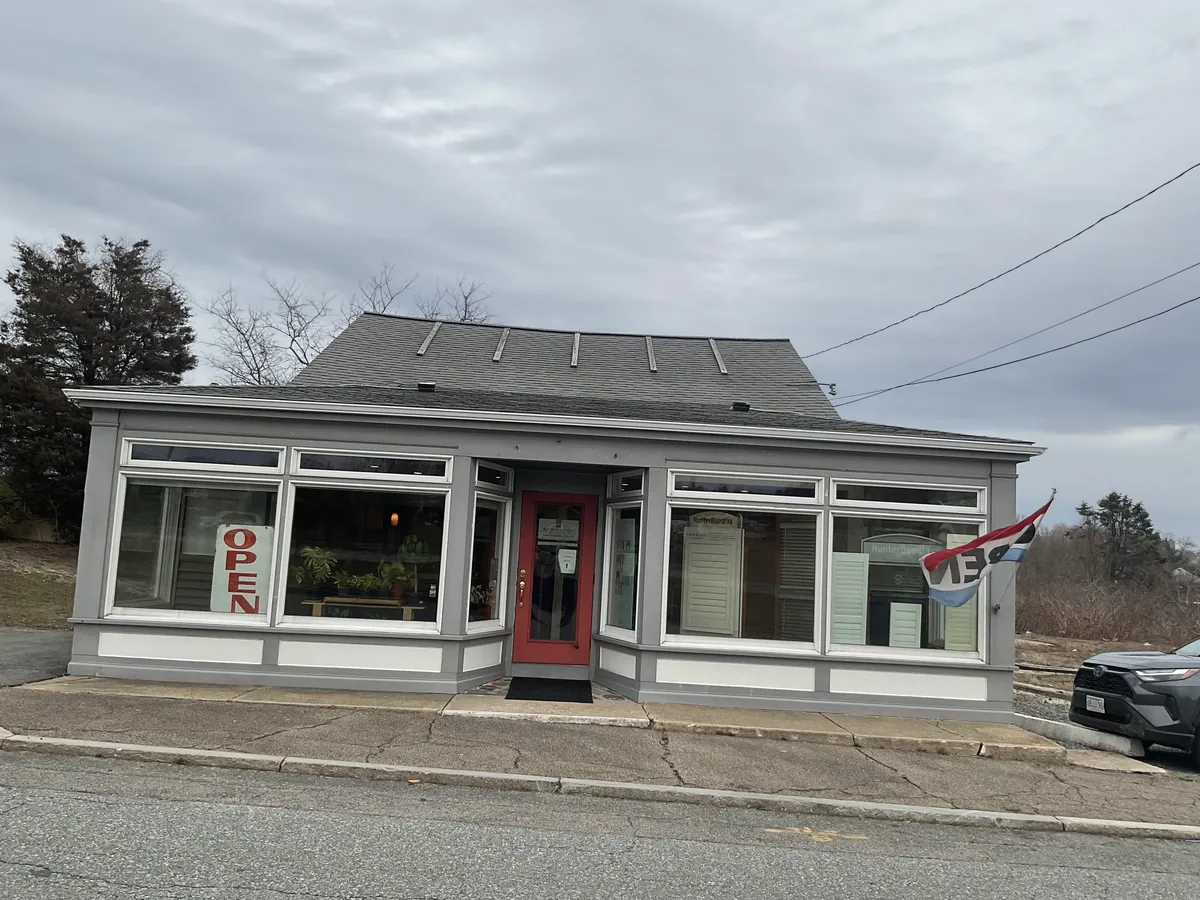
Our showroom is here in Bourne
The Sagamore showroom is on Cranberry Highway, in Bourne itself, so the shades on this page are close at hand. You are welcome to come and see Duette and Applause in person before you book a home visit.
Most customers still start at home, because the light in your own rooms is what you are choosing for. Our vans carry samples, so we can bring the showroom to you, measure every window and talk through the options in place. You can read about what happens at an in-home consultation before we come.
Why a Hunter Douglas Gallery dealer
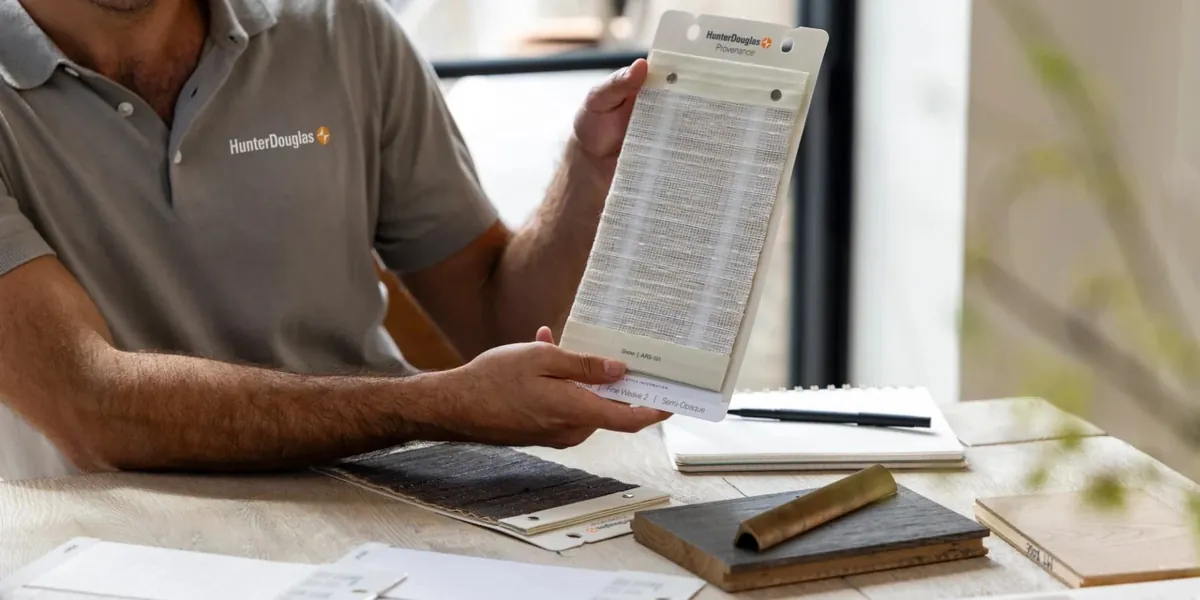
Blinds & Designs is a Hunter Douglas Gallery dealer, so every honeycomb fabric, shape and lift option Hunter Douglas makes is available to you through us. Our installers are certified by Hunter Douglas, and the same company that measures your windows fits the shades.
We also offer free estimates, interior design consultations if you want help with the whole room, and blind and shade repairs on window coverings you already own. For other rooms, see plantation shutters in Bourne, or everything we do in town on our Bourne page.
Questions from Bourne
Are honeycomb shades a good choice for a converted porch?
They are one of the best. Converted porches have a lot of glass and little insulation, and the cells of a honeycomb shade hold a layer of still air against the windows. A double-cell or Architella fabric gives the most trapped air.
What helps with glare off the canal?
A light-filtering fabric diffuses the reflected light, and a top-down, bottom-up shade lets you cover only the top of the window where the glare comes in while you keep watching the water. A Duolite design adds a darkening layer for the brightest hours.
Can the shades close themselves when the wind picks up at night?
With PowerView, you can set them to lower at sunset every evening, or close them from your phone wherever you are. They do not respond to the wind itself, but a schedule covers most evenings.
My cottage windows are all different sizes. Will the shades look like a set?
Yes. Each shade is made to its own window, but you can use the same fabric and pleat size throughout, and the side facing outside is the same neutral on every shade.
Can I see the shades before you visit?
Yes. Our Sagamore showroom is in Bourne, so you can see Duette and Applause there first. Or request a consultation and we will bring the samples to you and give you a free estimate after measuring.
Your next step
The best way to choose cellular shades in Bourne, MA, is with the samples against your own windows and the canal or the bay behind them. Request a consultation and we will bring the honeycomb range to your home, measure every window and give you a free estimate. You can also use the call button, or visit the Sagamore showroom.