
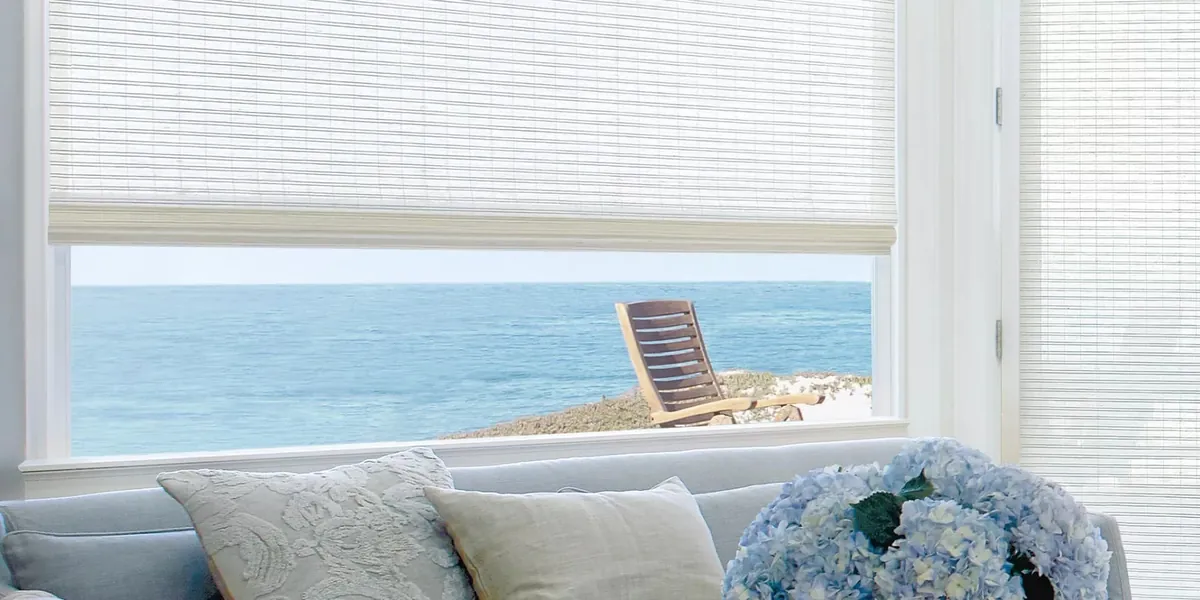
Wind, water and a lot of reflected light
Bourne sits on both sides of the canal, and a good share of its houses face water of one kind or another. Rooms that look onto the canal take weather driven straight down the cut by the wind, and on a bright day they catch hard light bouncing up off the moving water. Cottages at Monument Beach and Pocasset look across Buzzards Bay itself. Inland, newer colonials sit back among the pines with more ordinary windows but just as many rooms to dress. Every set of roman shades in Bourne, MA, we plan starts with which of those houses it is going into.
A folded fabric shade earns its place in all of them. It brings the softness of a curtain to a small cottage room without taking up floor space, and it gives a canal-side living room a way to cut glare at eye level while keeping the passing boats in view.
Because this is the town where our Sagamore showroom stands, we know these houses well, from the summer places that became year-round homes to the family colonials on the wooded lots inland.
Folds, fabrics and lifts for Bourne windows
Roman shades in Bourne come down to a handful of choices. These are the six we talk through most often.
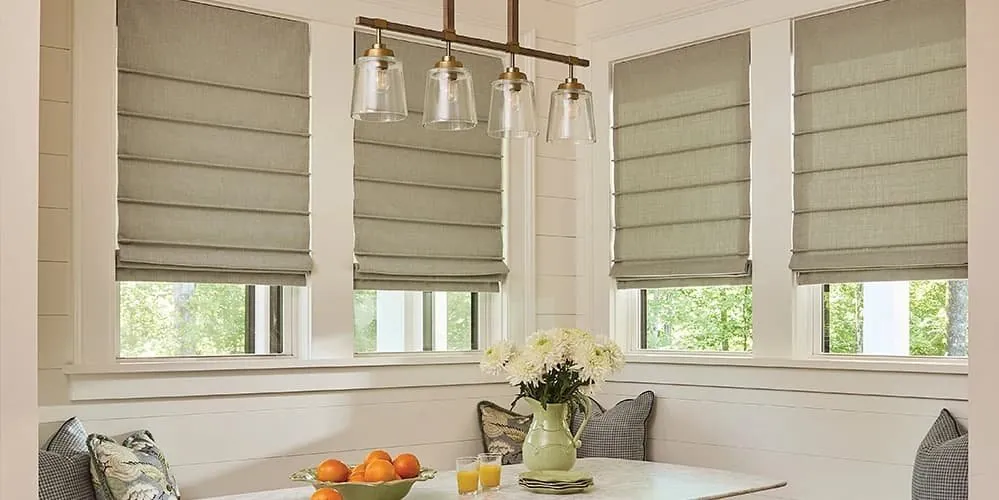
Vignette
A modern folded shade whose fabric winds up into the headrail. Good for small cottage windows where you want the glass clear by day.
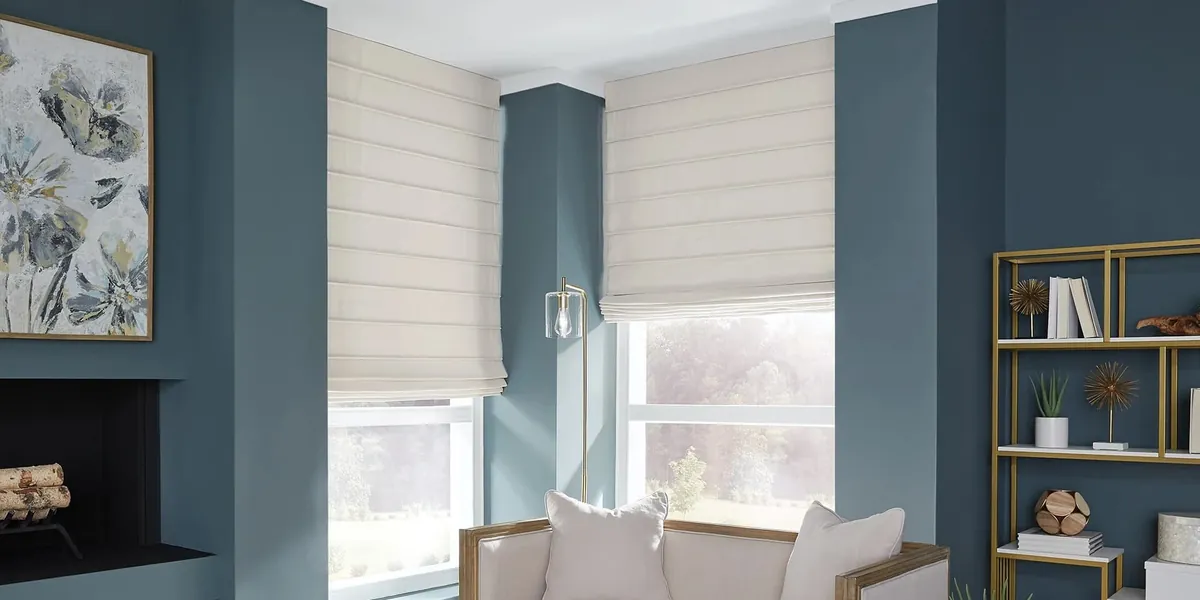
Carole Fabrics flat fold
A tailored shade sewn from your chosen fabric, smooth when down and pleated when up. Classic in a colonial dining room.
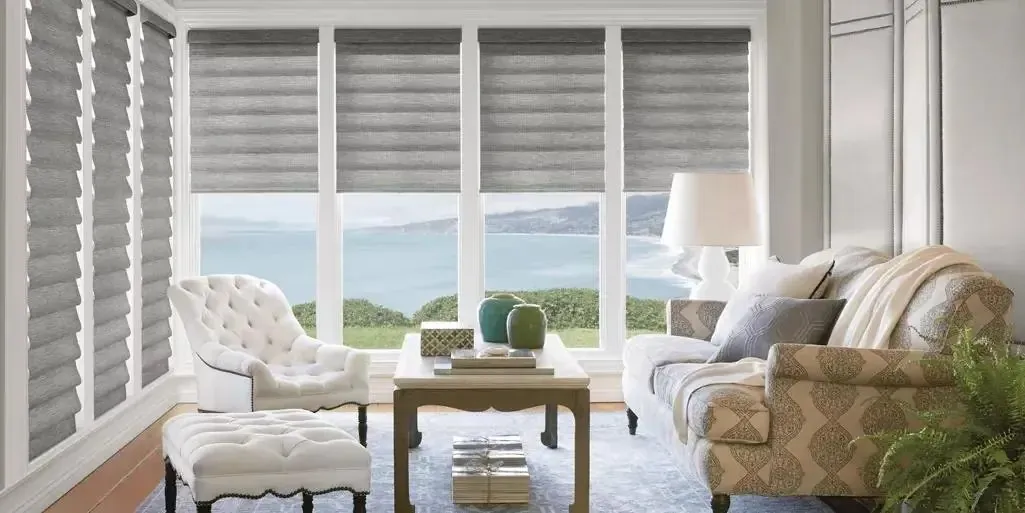
Carole Fabrics soft fold
Rounded loops of fabric from top to bottom. A gentle, casual look for a sunroom on the bay.
Paired with drapery
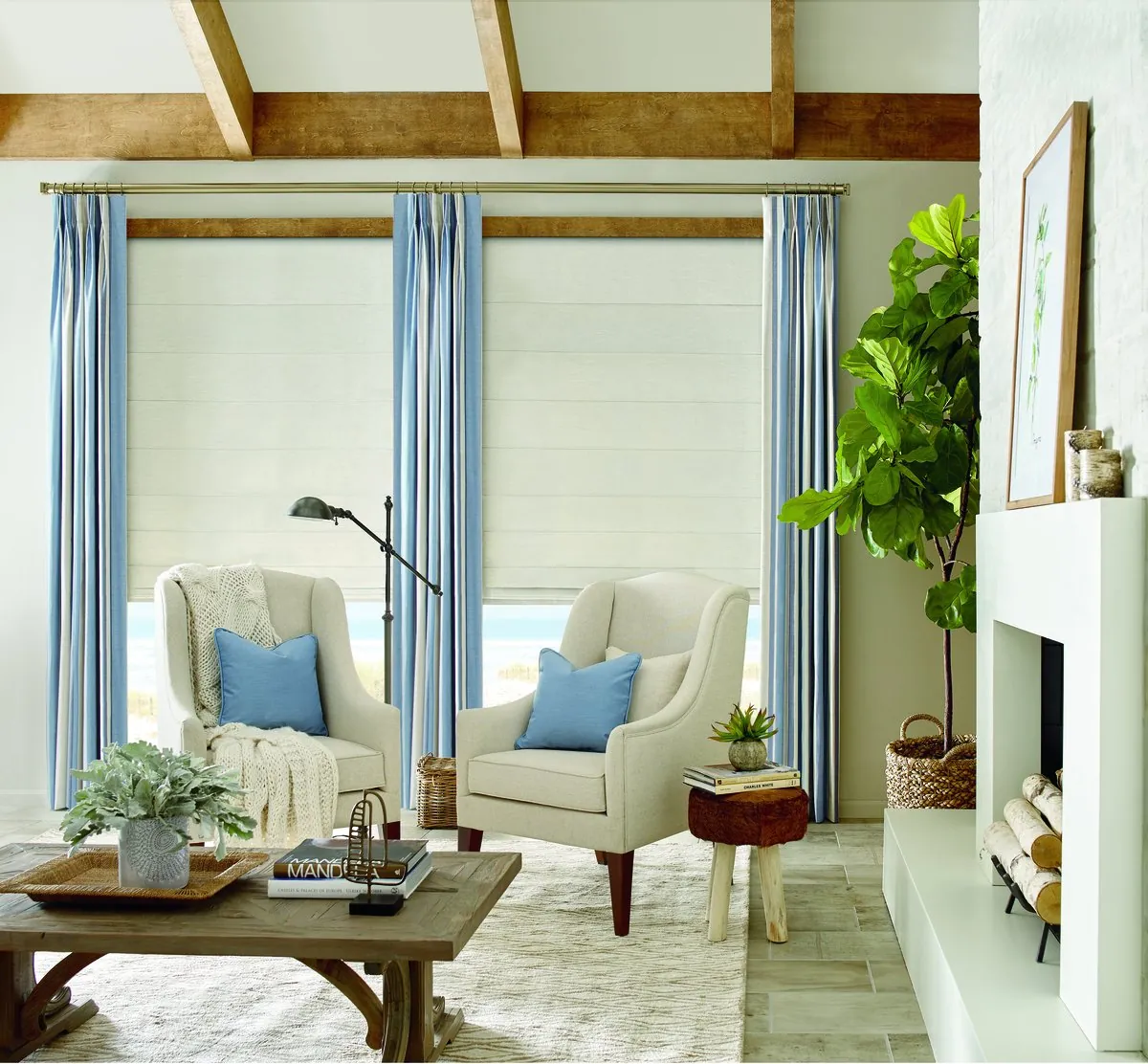
A shade inside the frame with panels either side, for a formal living room that needs height and color.
Sheer fabrics
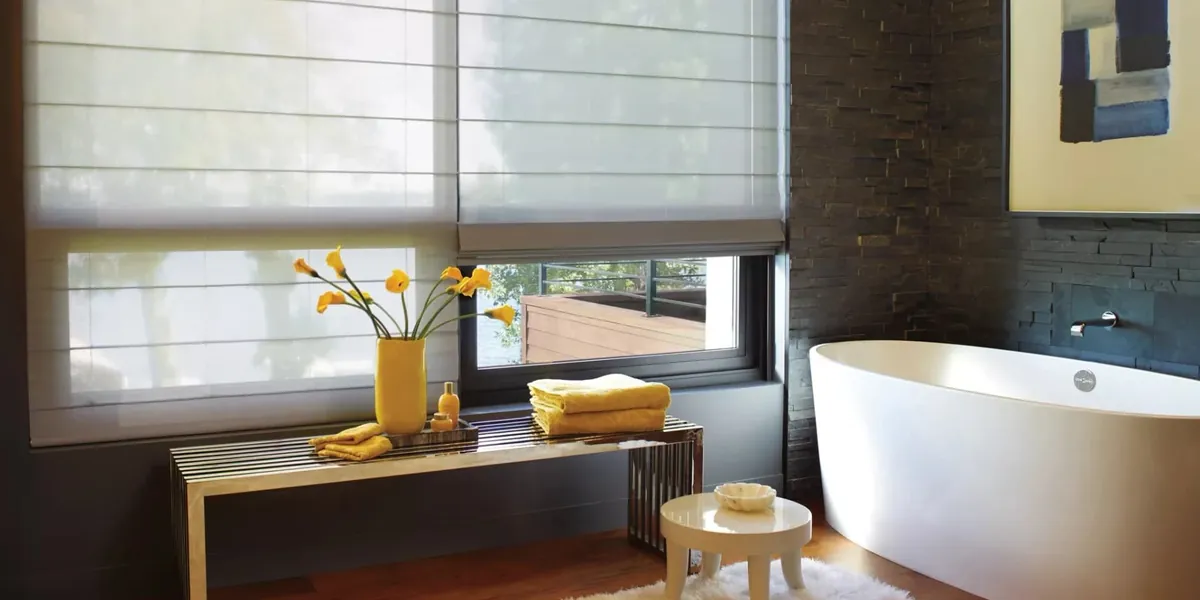
Daylight with a little privacy. Useful in bathrooms and on windows where you never want the room fully dark.
PowerView control
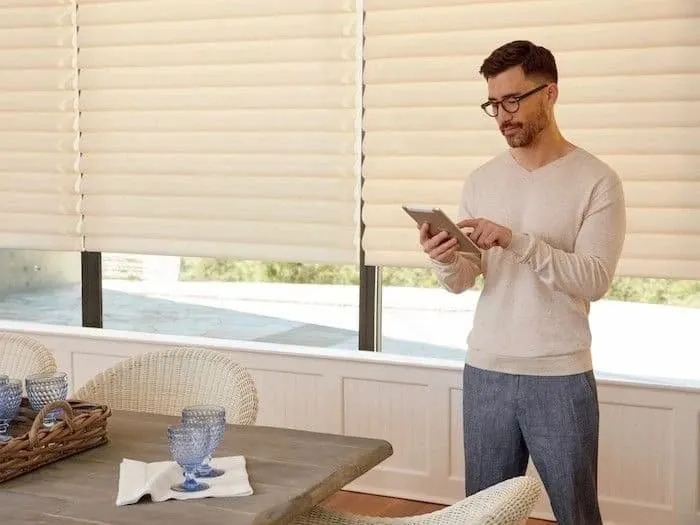
Shades that move from a remote, an app or a schedule. Worth having on a canal-side wall of glass.
Cottages at Monument Beach and Pocasset
The cottage neighborhoods along the shore were largely built as summer places, and plenty of them have since been winterised and lived in all year. They tend to have small rooms with windows on two or three sides, low ceilings, and often an enclosed porch that has become a sitting room or a dining area. Wall space is tight, and furniture usually sits right up against the windows.
That is where a folded shade beats curtains. It lives inside the window frame, so it never competes with a sofa pushed up to the sill, and it does not pile up fabric on the floor of a room that has none to spare. An inside mount keeps the simple cottage trim on show.
Cottage windows can be small and shallow, especially where replacement windows have gone into old openings or storm windows sit outside. We check the depth of every frame and look at how far the stack will hang when the shade is raised, because on a short window a sewn shade can take up a fair part of the glass. Vignette, which rolls its fabric away into the headrail, is often the better answer for those windows.
A converted porch is a special case. With windows on three sides and very little wall, the shades become the main decoration in the room. A run of matching shades in a light-filtering linen, all mounted at the same height, makes the porch look finished and takes the heat out of a summer afternoon.
Canal-side rooms
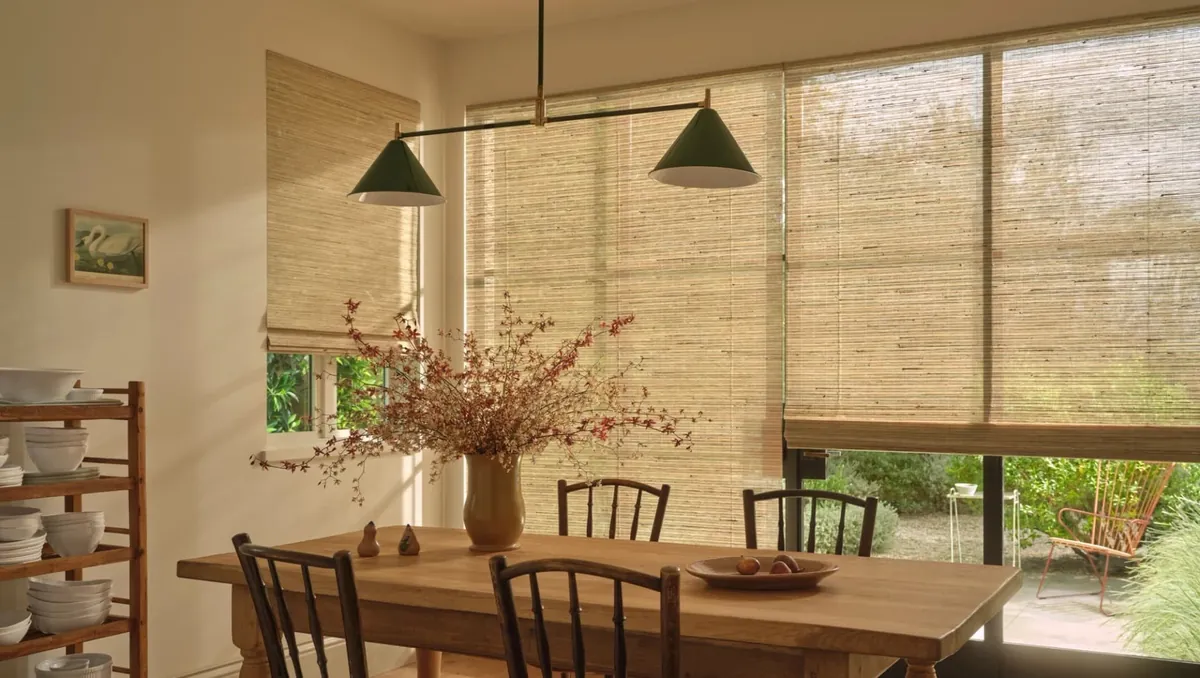
Houses that back onto the canal have a view few places can match, with ships and fishing boats sliding past all day. They also have particular demands. The canal acts like a wind tunnel, so weather comes along it with some force, and the water reflects light upward into the room for much of the day. Sun on the canal at mid-afternoon can make a living room hard to sit in.
For these rooms we usually suggest a light-filtering fabric that can be lowered partway. It softens the glare and evens out the light, while the lower part of the view stays open, or lowered further it covers the band of brightness that comes up off the water. A soft fold looks natural in a room like this, and the loops of fabric help soften the long, hard horizontal lines of a big window.
The wind matters for open windows. On a breezy day a shade with a loose cord can tap against the frame, and damp salty air reaches everything near the sash. A cordless lift removes the cord altogether. For a wide wall of glass, PowerView motorization lets you lower every shade with one button as the light changes, and set them to rise again after the sun has moved round.
Buzzards Bay village
At the western end of the canal, the village of Buzzards Bay has older houses set close together, cottages and flats above shops. Privacy comes first in rooms that look straight at the house next door. A light-filtering fabric keeps a room private by day while letting the light through, and a lined fabric does the job at night. Window openings in the older village houses are often small, so the same thinking applies as in the shore cottages: check the frame depth, keep the stack compact and mount inside where the frame allows it. Flats above the shops on Main Street can face the street directly, and a neutral lining keeps the windows tidy from the sidewalk. Our separate page on roman shades in Buzzards Bay goes into the village houses in more detail.
Newer colonials inland
Away from the water, much of Bourne’s housing is newer: two-story colonials and capes on wooded lots, with standard double-hung windows, a family room off the kitchen and several bedrooms upstairs. These houses do not have the coastal headaches, but they have a lot of windows, and most owners want them to look consistent from the street.
A common plan is a single lining color on every street-facing shade, so the front of the house looks calm and even, with different face fabrics chosen room by room inside. A Carole Fabrics flat fold might go in the dining room, a soft fold in the main bedroom, and Vignette in the kitchen and family room where the shades go up and down several times a day.
Children’s rooms need a cordless lift, with nothing hanging within reach. Bedrooms facing east benefit from a room-darkening lining, especially in summer when the sun is up very early. And a two-story entry or a stair window is often easiest with motorization, because nobody wants to climb a ladder to raise a shade.
Fabric that copes with life by the shore
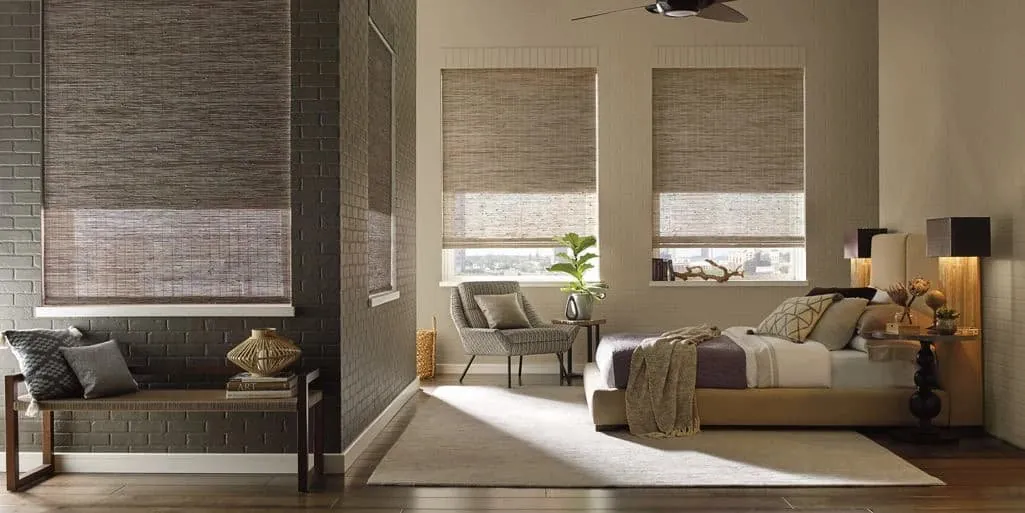
Shore houses ask more of a fabric than most. Damp air off the bay settles into soft furnishings, sand finds its way indoors, and the light reflected off the water is strong enough to fade a bold color over a few summers. None of that rules out a fabric shade, but it does shape the fabric we suggest for roman shades in Bourne, MA, houses close to the water.
For cottages at Monument Beach and Pocasset, and for canal-side rooms, we lean toward fabrics that are easy to live with: tightly woven cottons and linens in light, natural colors, and polyester blends that keep their shape in a damp room. A lining helps twice over, protecting the face fabric from the sun and giving the shade more body so it folds cleanly. We keep silks and delicate weaves for rooms that face away from the water and stay closed up through the summer.
Inland colonials can take almost any fabric, so that is where a richer color or a bolder pattern usually goes.
How each fold looks halfway up
Most of the time a roman shade is neither fully up nor fully down. It sits partway, and that is when the fold style shows most.
A flat fold, halfway up, has a smooth lower panel with a stack of neat, crisp pleats above it. It looks tailored and a little formal, and it shows a pattern clearly in both parts. It is a natural fit for a dining room or a study in an inland colonial.
A soft fold keeps its loops of fabric whether it is up or down, so halfway it looks like a gentle cascade. It is softer and more relaxed, which suits cottage living rooms and canal-side sunrooms where a crisp look would feel out of place.
A relaxed fold has a slight curve along the bottom edge, a bit like a valance, and it suits a window where you want the shade to feel casual. Vignette has its own engineered look, with even, rounded folds that stay the same depth all the way down and wind away into the headrail when raised.
The best way to decide is to see them on your own window, which is why we bring samples to the house.
Which family for which house
Vignette and Carole Fabrics are the two Hunter Douglas families we fit, and the house often points to one or the other.
In a cottage, Vignette often wins. Its compact headrail and rolled fabric leave more of a small window clear, it has no cords down the back, and its clean look suits a simple interior. It also handles wide canal-side windows well, because a raised shade barely interrupts the view.
In a colonial, Carole Fabrics often wins in the formal rooms. Each shade is sewn to order from a decorator fabric, in a flat, soft or relaxed fold, so it can be coordinated with upholstery, drapery or wallpaper. The rest of the house can then take Vignette, or a simpler Carole fabric, for everyday rooms.
Read more on our Vignette and Carole Fabrics pages, or start with the full roman shades range.
Cottages lived in all year
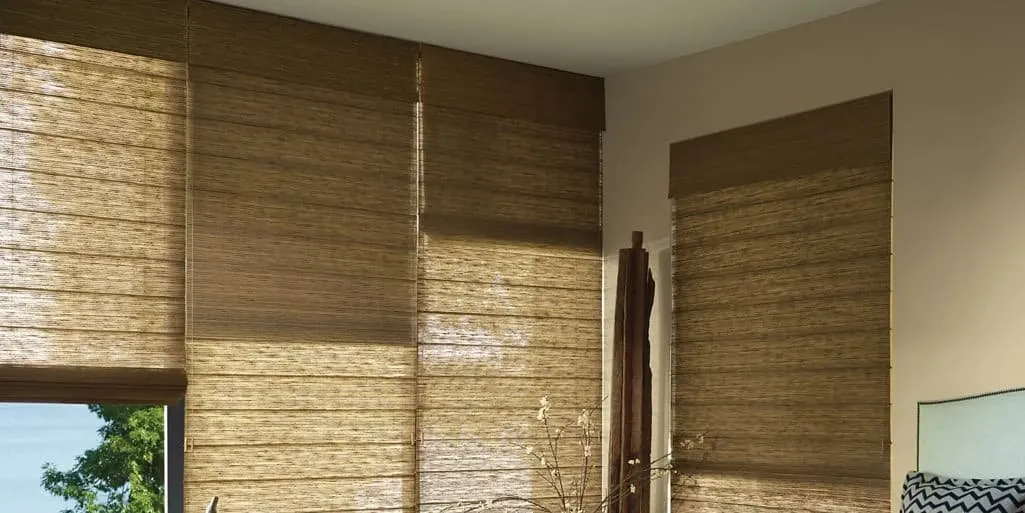
A cottage that was built for July and August behaves differently in January. Many of the Pocasset and Monument Beach houses that are now lived in year-round still have windows that were never meant for winter, and a room with glass on three sides can feel cold by the end of a winter afternoon.
A lined roman shade helps. Lowered at dusk, it puts a layer of fabric between the room and the glass and takes the chill off a sofa pushed up to the window. A thermal or room-darkening lining adds more body. If keeping heat in is the main goal for a room, we will also show you honeycomb shades, which are built for that job, and you can compare the two side by side. Many owners choosing roman shades for Bourne cottages end up with folded fabric shades in the living rooms and honeycomb in the coldest bedrooms.
Seeing samples at home
It is hard to judge a fabric on a small swatch under shop lights, and harder still to imagine it against water that changes color through the day. That is why most of our Bourne customers start with an in-home consultation. Our vans carry samples, so we can bring the showroom to you.
We come to the house, look at each room with you and listen to what is bothering you, whether that is glare off the canal, a cottage bedroom that is too bright at dawn, or a colonial dining room that just looks bare. You hold fabrics up to your own windows, in your own light, beside your own furniture and trim. We measure every opening, check its depth and talk through mount, fold, lining and lift. Then we give you a free estimate for the shades you are considering, and you decide in your own time. Our page on what happens at an in-home consultation has more.
On installation day
- Our certified Hunter Douglas installer checks each shade against the window it was made for.
- Brackets go into solid wood, not just drywall or plaster, so the shade stays put in a breezy room.
- Each headrail is set level, and on a run of shades the tops are lined up.
- Every lift is tested, cordless or motorized, and any PowerView schedules are set with you.
- You are shown how each shade works before the installer leaves.

Why a Hunter Douglas Gallery dealer
Blinds & Designs holds Hunter Douglas Gallery dealer status, which Hunter Douglas reserves for dealers who meet its standards. For your Bourne house that means one appointment covers the whole folded range, every Vignette fabric and the Carole Fabrics library, with every lift and motor.
The installers who fit our shades are certified by Hunter Douglas, and we repair blinds and shades you already have. If you are planning more than one room, ask about our interior design consultations, or see cellular shades in Bourne, plantation shutters in Bourne and the Bourne page.
Our Sagamore showroom
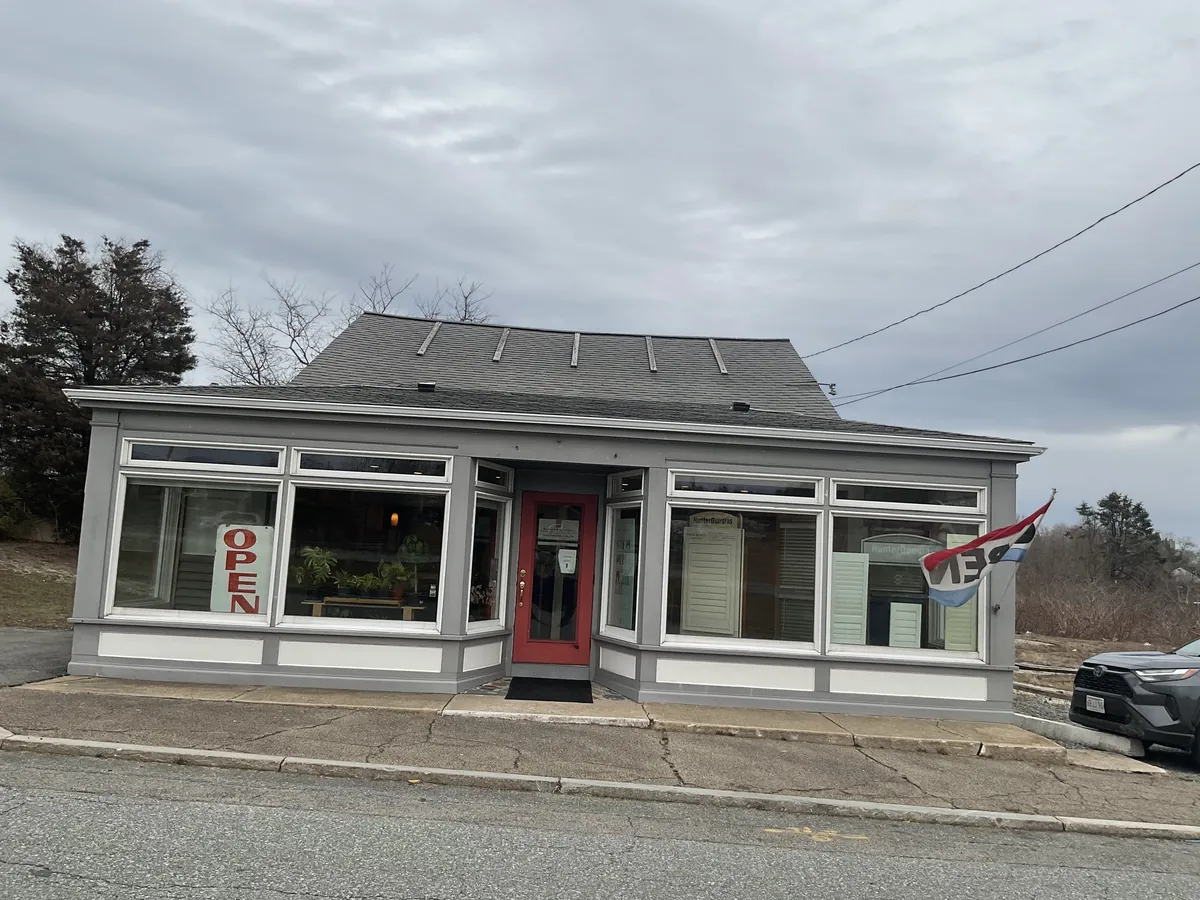
Our Sagamore showroom is right here in town, on Cranberry Highway. Stop in to see folded shades raised and lowered and to handle the fabrics before you decide.
If it is easier, we will bring the samples to your house instead. Either way, you choose with real fabric in front of you, and the same team measures, orders and fits the shades. The showroom page has the address and opening hours.
Questions from Bourne
What works best on a canal-side window with a lot of glare?
A light-filtering fabric that you can lower partway. It softens the reflected light coming off the water and keeps the room bright. A soft fold suits these rooms, and PowerView motorization makes it easy to adjust a whole wall of shades as the light moves.
My Pocasset cottage has very small windows. Will a roman shade take up too much glass?
It depends on the shade. A sewn shade stacks its fabric at the top when raised. Vignette winds its fabric into a compact headrail, so it leaves more of a small window clear. We measure and show you both.
Can every street-facing window match on a colonial?
Yes. Choosing one lining color for the street-facing shades keeps the front of the house even, while each room inside can have its own face fabric.
Are cordless roman shades available for children’s rooms?
Yes. A cordless lift has nothing hanging at the side of the window. You simply raise or lower the bottom of the shade by hand.
What does the estimate cost?
Nothing. The estimate is free once we have measured your windows.
Your next step
Choose with the fabric in your hand and your own window in front of you. Request a consultation and we will bring the full range of roman shades in Bourne, MA, to your house, measure every opening and follow up with a free estimate. To talk first, use the call button, or visit our Sagamore showroom.