
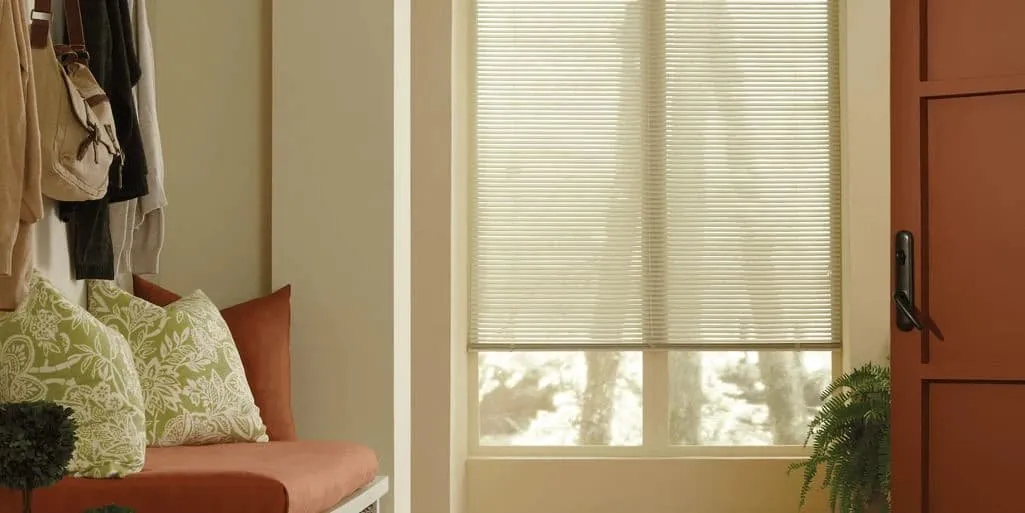
Close neighbors and small windows
The village of Buzzards Bay sits at the western end of the canal, and its housing is compact. Older houses stand a few steps apart along the side streets, cottages have been converted for year-round living, and above the shops on Main Street there are apartments with windows looking straight onto the street and across at the buildings opposite. In a place laid out this tightly, the first job for custom blinds in Buzzards Bay, MA is privacy.
Short sightlines change the way you use a window. When the house next door is close enough that you can see into its kitchen, it can see into yours, and a window that would be a pleasure in an open setting becomes one you keep covered. Blinds are well suited to that problem because they do not force a choice between privacy and daylight. Turn the slats one way and the room is screened while light still reaches the ceiling.
The windows themselves are the second part of the story. Many of the village’s older houses keep their small original openings, and a small window leaves little room for error. A blind that is a touch too narrow shows a bright strip down each side; one with a bulky headrail swallows a noticeable share of a modest pane.
Blinds that suit a compact village house
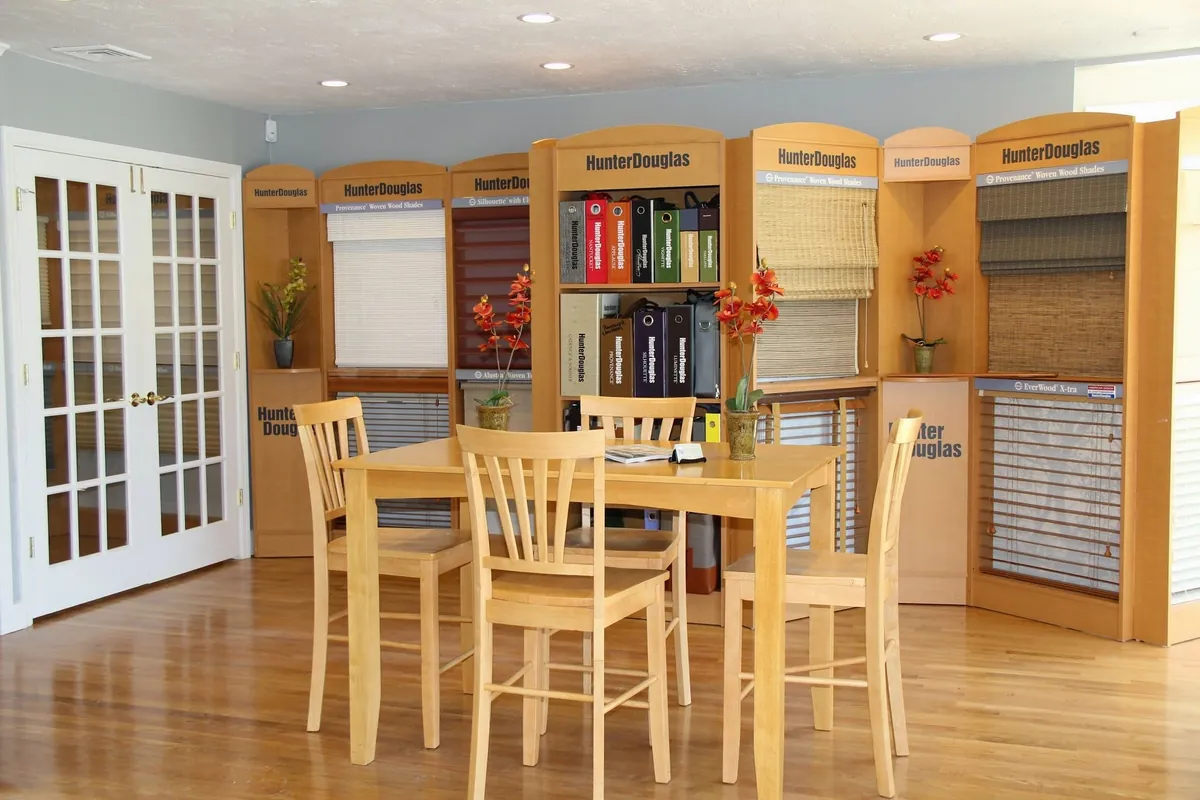
We carry the whole Hunter Douglas blind range and bring samples of each to your home. These are the options that solve the most problems when we fit custom blinds in Buzzards Bay, MA village houses.
Wood blinds
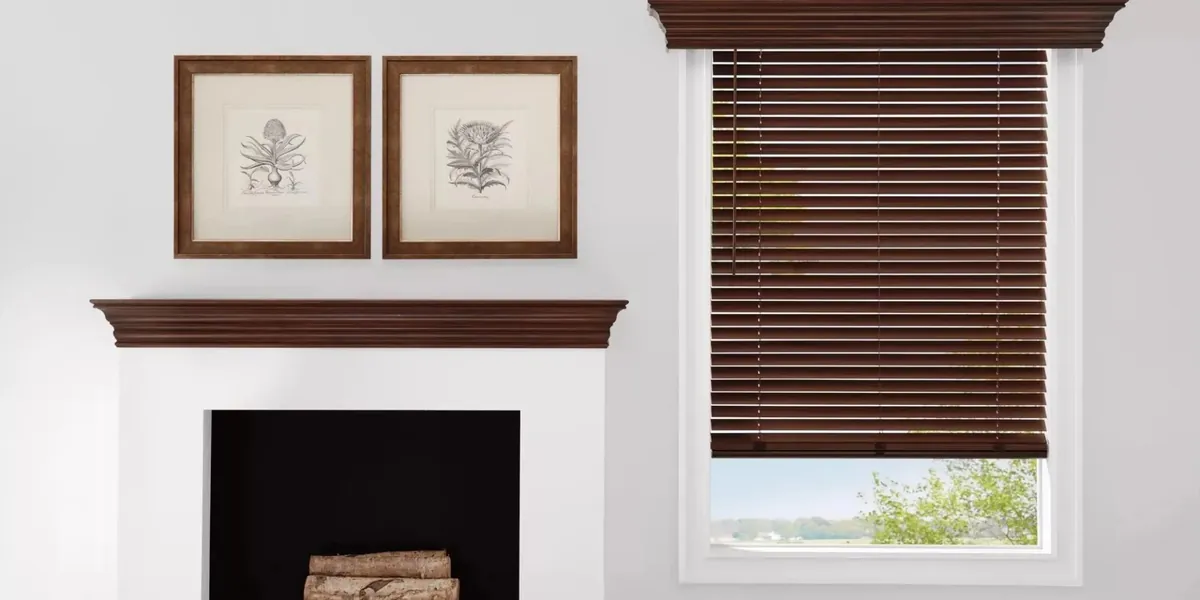
Real wood for a front room with original trim. A cornice or valance across the top hides the headrail on a small window and gives it a finished edge.
Faux wood blinds
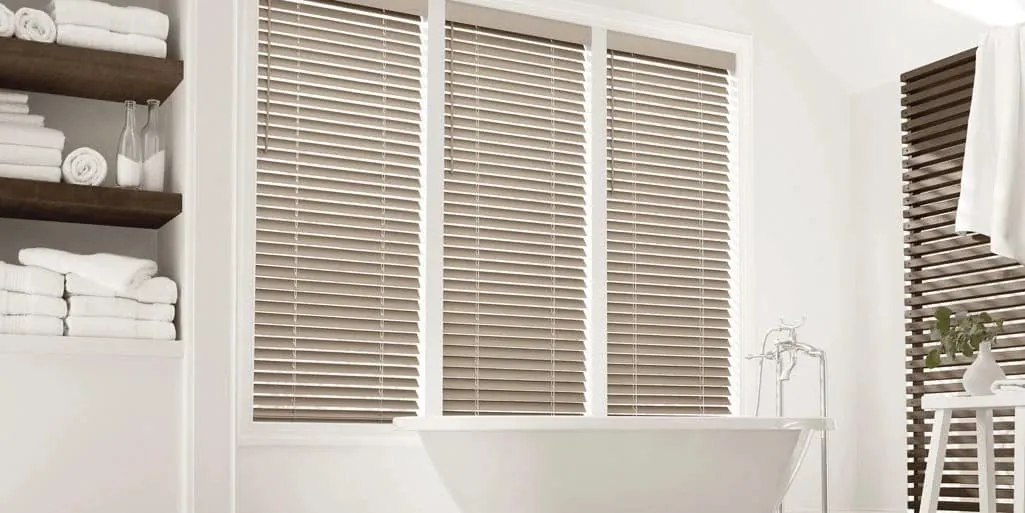
Ideal for a bathroom window facing the house next door, and for kitchens where steam and cooking would mark real wood.
Metal blinds
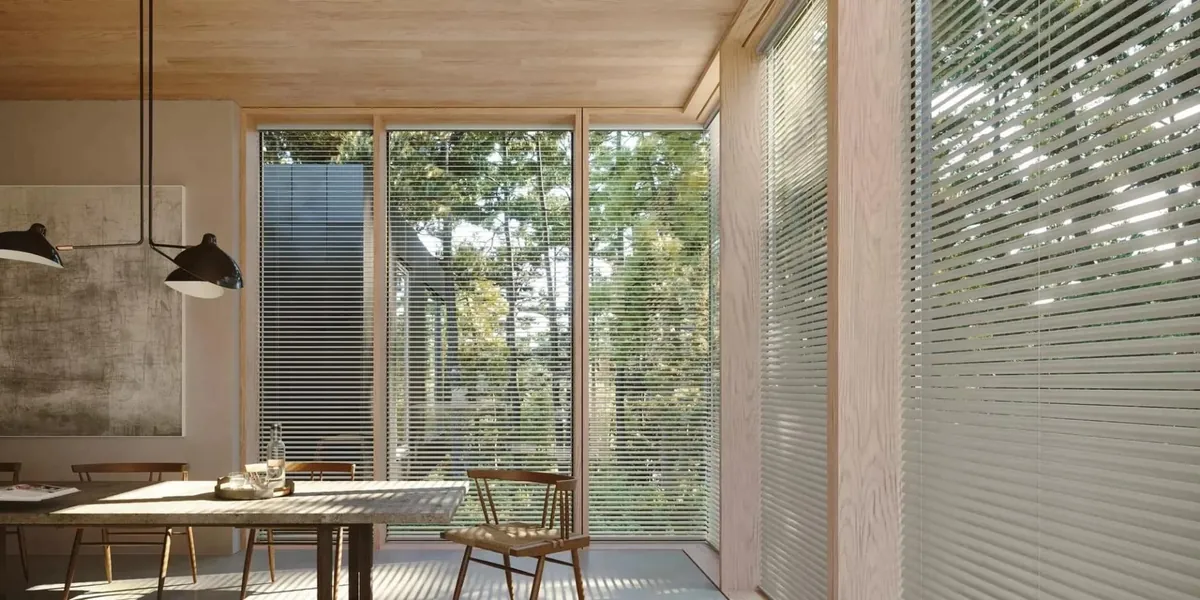
The slimmest slats and headrails we offer, which is exactly what a small or shallow opening needs to keep as much glass clear as possible.
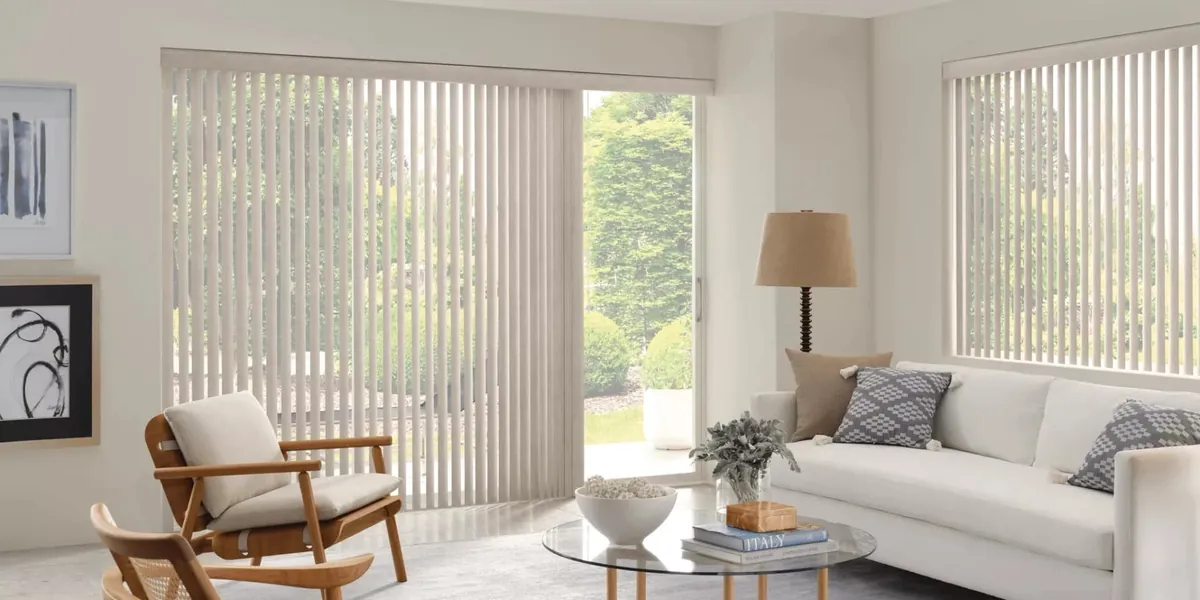
Vertical blinds
For a slider to a small deck or a back door with glass. The vanes turn to block a neighbor’s view and draw aside when you step out.
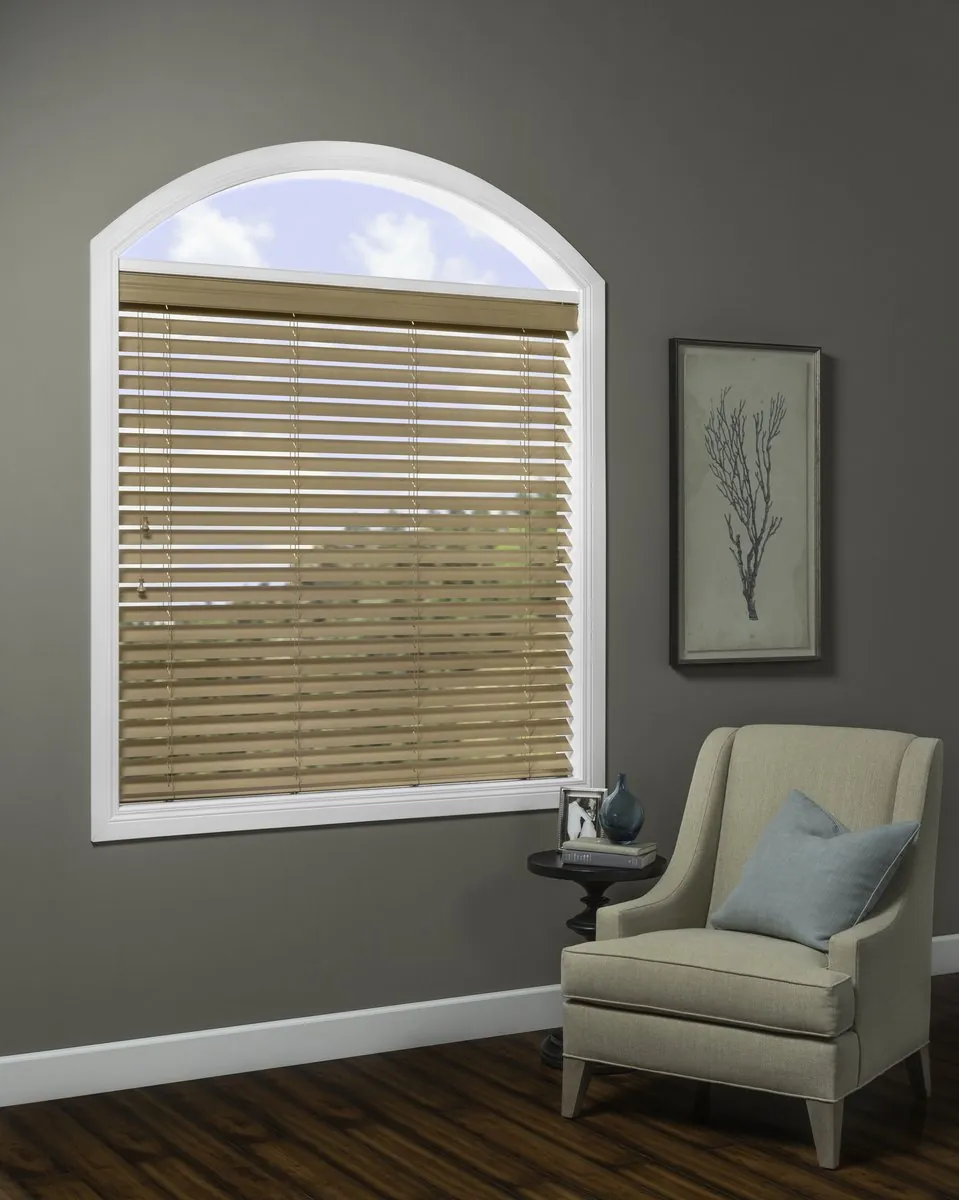
Unusual openings
Converted cottages are full of odd windows: an arched top, a narrow stair light, a window squeezed under the eaves. Each blind is made to its own opening.
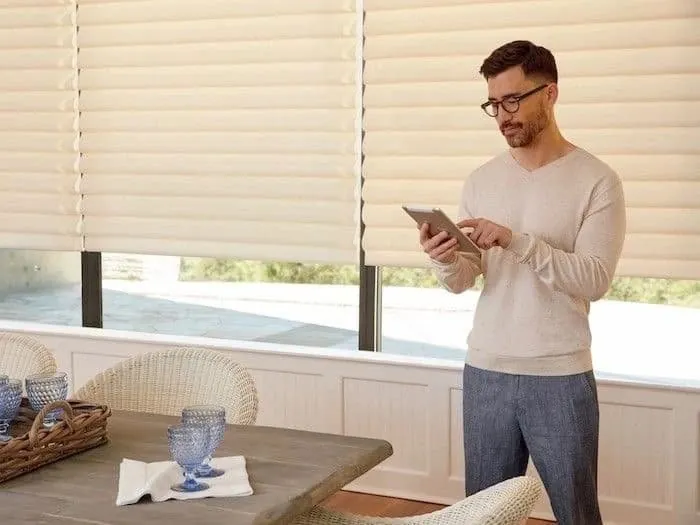
Motorized control
PowerView tilt and lift from a remote, a tablet or a schedule, so blinds close as the streetlights come on even when nobody is home.
Privacy without living in the dark
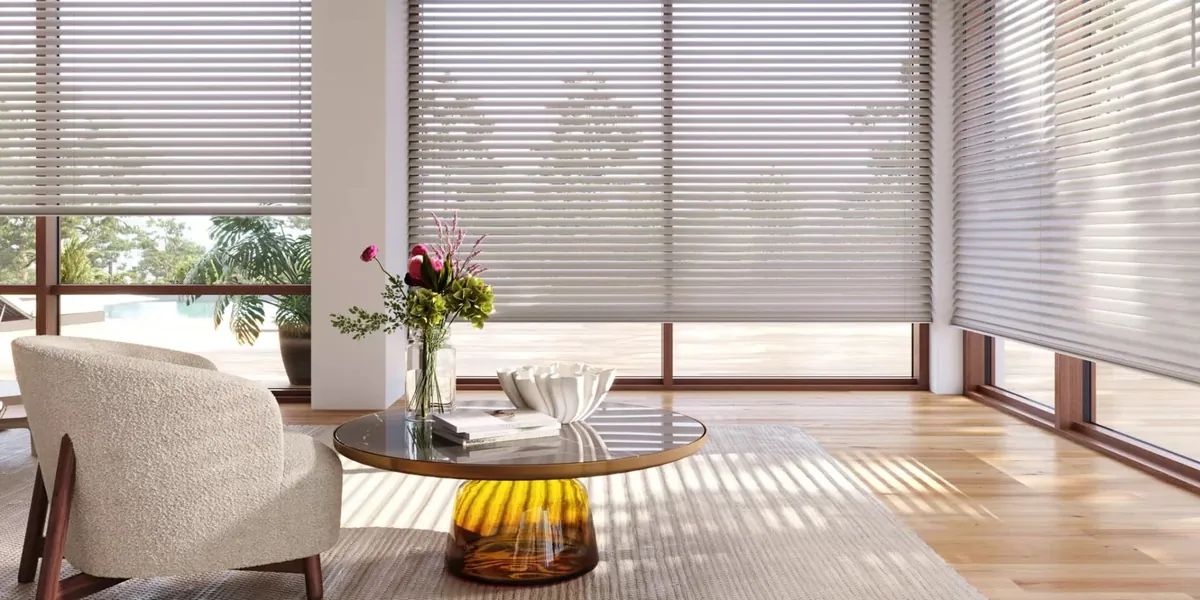
The trick with a horizontal blind is the direction of the tilt. With the slats turned so the rounded side faces into the room, someone standing on the sidewalk or at the window next door looks up at the slats and sees nothing of the room. Daylight still bounces off the slats onto the ceiling, so you are not forced to switch the lights on in the middle of the day.
Turn them the other way and the view runs downward, which is useful on an upper floor that looks onto the street, but less private from a window above yours. Most village rooms settle on the first setting during the day and close the blinds fully at night, when lit rooms are on show to anyone outside.
For bathrooms and bedrooms that face a neighbor at close range, a fully closed blind with tightly overlapping slats is the safest choice. Faux wood and wood slats close more solidly than very thin ones. An outside mount on the trim also hides the small gaps at the edges of a window, where a sliver of the room would otherwise show.
Making the most of small original openings
Small windows were normal when much of the village was built, and in many houses they remain. They bring character but also limits. Every inch of glass counts, so the blind needs to clear as much of it as possible when it is up.
Two things matter. The first is the stack: the slats gather at the top when the blind is raised, and on a short window that bundle can cover a real part of the pane. A wider slat means fewer slats and a shallower stack. The second is the headrail. On an inside mount the headrail sits within the opening, and a slim metal or low-profile headrail takes up less of a small window than a heavy one.
Small windows also make neat edges important. With a made-to-measure blind ordered to the narrowest point of the frame, the slats run close to the sides with only the narrow clearance they need, rather than leaving the bright gaps that show around a stock size.

Converted cottages
A good share of the village’s cottages started life as summer places and were later altered for living in all year. Conversions often leave a patchwork: an original window next to a newer one, a porch closed in with a row of windows, a bedroom carved out of what was once a loft with a small gable window at one end.
That patchwork is where custom blinds earn their keep. Each window is measured and made on its own, yet all of them can share one slat color and size, so the cottage looks consistent from the street even though no two windows match. A closed-in porch with windows on three sides takes several blinds side by side, each lifting on its own, so one wall can be shaded while another stays open.
Cottage bathrooms and kitchens are usually small and steamy. Faux wood handles that without warping, and it wipes clean. In a cottage that sits closed for part of the year, faux wood and metal both cope with the damp better than real wood.
Apartments above Main Street
Above the shops, apartments look directly onto the street, often with buildings across the way at the same height. That puts a living room or bedroom on view to the windows opposite at every hour, and to the lights of the street at night.
Blinds solve much of this. During the day, slats tilted upward screen the room from the building opposite while keeping it bright. At night, closed blinds stop the room being lit up like a shop window. In a bedroom over a lit street, a darker slat closed tight, with an outside mount that overlaps the frame, keeps the glow of the streetlights out much better than a pale slat mounted inside.
If you own a building with several flats, matching blinds across the street-facing windows keep the front of the building tidy. If you live in one, the blinds only need to suit your own rooms. We measure every window separately either way, because the windows in older buildings are rarely as uniform as they look from below.
Wood, faux wood or metal for each room
The choice usually falls this way in a village house:
- Front rooms with original trim: real wood, stained or painted, with a valance to hide the headrail on small windows. See wood blinds and the Parkland line.
- Bathrooms, kitchens and small steamy rooms: faux wood from the EverWood range.
- The smallest and shallowest windows: metal blinds, with the slimmest slats and headrails.
- Back doors and sliders: vertical blinds, with the vanes turned against the neighbor’s view.
All of these sit within our main custom blinds range, and most houses end up with a mix of two or three.
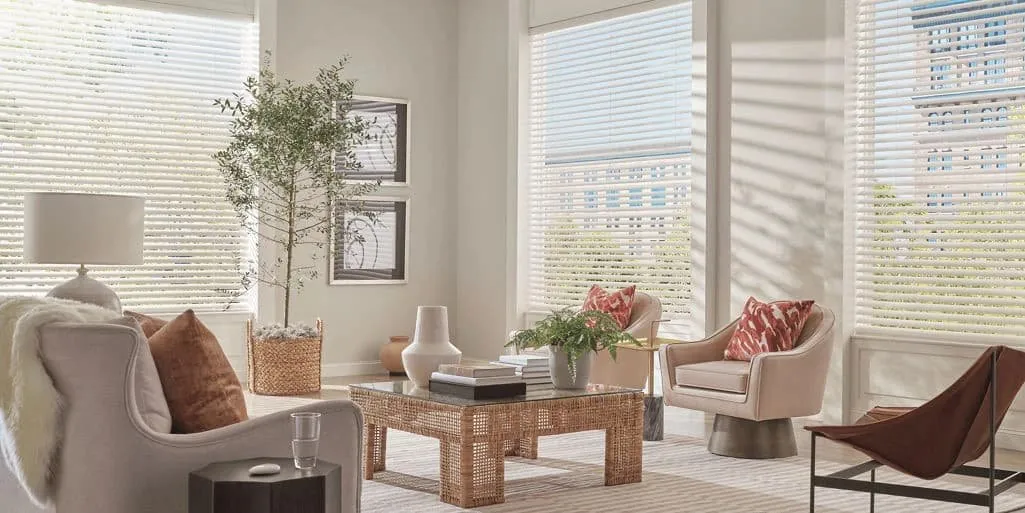
Glass doors and side lights
Close-set houses often have their front or side door only a few steps from the sidewalk or the neighbor’s drive, and many of those doors have glass: a half-light in the upper panel, a full glass back door to a small yard, narrow side lights beside the front entrance. Each one is a window straight into the hall or the kitchen.
A blind mounted on the door itself solves it. It moves with the door, so it never gets caught, and hold-down brackets at the bottom keep it from swinging when the door opens and closes. Slim metal slats suit a door best, because they add little depth and keep the door’s profile neat. On side lights, a narrow inside-mounted blind in each light covers the glass without hiding the trim, and the slats can be tilted to let some light into a dark hall while still blocking the view in.
Small back doors that open onto a deck sometimes suit a vertical blind instead, hung above the door frame and drawn aside when the door is in use. We look at how each door opens, which way it swings and what is close to it before suggesting either, since in a tight hallway a few inches of clearance can decide the answer. Getting these little openings right is a large part of what makes custom blinds in Buzzards Bay feel finished.
Light off the canal
Not every village window looks at a neighbor. Houses at the edge of the village and on the higher streets look toward the canal and the water beyond, and those rooms take bright light reflected off the surface. Here the job of a blind changes from privacy to glare.
The same tilt that hides a room from the street can steer reflected light. With the room side of the slats angled upward, light coming off the water from below is thrown onto the ceiling instead of across your eyes. Pale slats spread it gently; darker ones absorb more of it. On these windows we suggest finishes that keep their color in strong daily sun.
Planning a whole house in one visit
Because village houses are small, a whole-house plan is quite manageable, and doing it in one go means every window matches. We look at which windows face the street or a neighbor, which face the water, which are in wet rooms and which are in rooms you want dark. Custom blinds in Buzzards Bay are chosen window by window from those answers: privacy settings on the street side, glare control on the water side, faux wood where it is damp and a darker slat where you sleep.
A single slat color across the windows that face the street keeps the house tidy from outside. Inside, the colors and materials can vary to suit each room. Valances, slat sizes and tilt controls all get settled at the same visit.
What to expect at a home consultation
Our vans carry samples of every kind of blind, so we can bring the showroom to you. In a house where privacy is the issue, that matters: you can stand at your own window, look across at the house next door and see exactly what a slat setting hides.
- Before we arrive: request a consultation online or with the call button, and we will arrange a time that suits you.
- Room by room: we start with the windows that face the street or a neighbor most closely, then move to the water side, the bathrooms and the bedrooms.
- Samples at the glass: you tilt real wood, faux wood and metal slats and try vertical vanes on any door, at your own windows and in your own light.
- Measuring: we measure every opening, check its depth for an inside mount and note locks, cranks or trim that could get in the way.
- Your estimate: you receive a free estimate for the blinds you are considering, and there is no pressure to decide on the day.
Interior design consultations are available too, if you would like help pulling colors and treatments together. You can read about what happens at an in-home consultation before the visit.
Exact measurements for older frames
Older village houses have settled over time, and a small window shows every bit of that movement. Our measuring takes that into account:
- Width is taken at the top, center and bottom of the opening, and an inside-mounted blind is ordered to the narrowest of the three.
- Height is taken at both sides and the middle, so a sloping sill does not leave a gap at one corner.
- Depth is checked where the headrail goes, so the slats can tilt without catching on the sash lock.
- Every detail, from mount and color to slat size and control, is agreed with you before anything is ordered.
- Our Hunter Douglas certified installers fit the blinds into solid framing, level them, test the tilt and lift and show you how each one works.
Fitted like this, custom blinds in Buzzards Bay, MA close neatly against small frames and keep the privacy you chose them for.
The Sagamore showroom, just across the canal
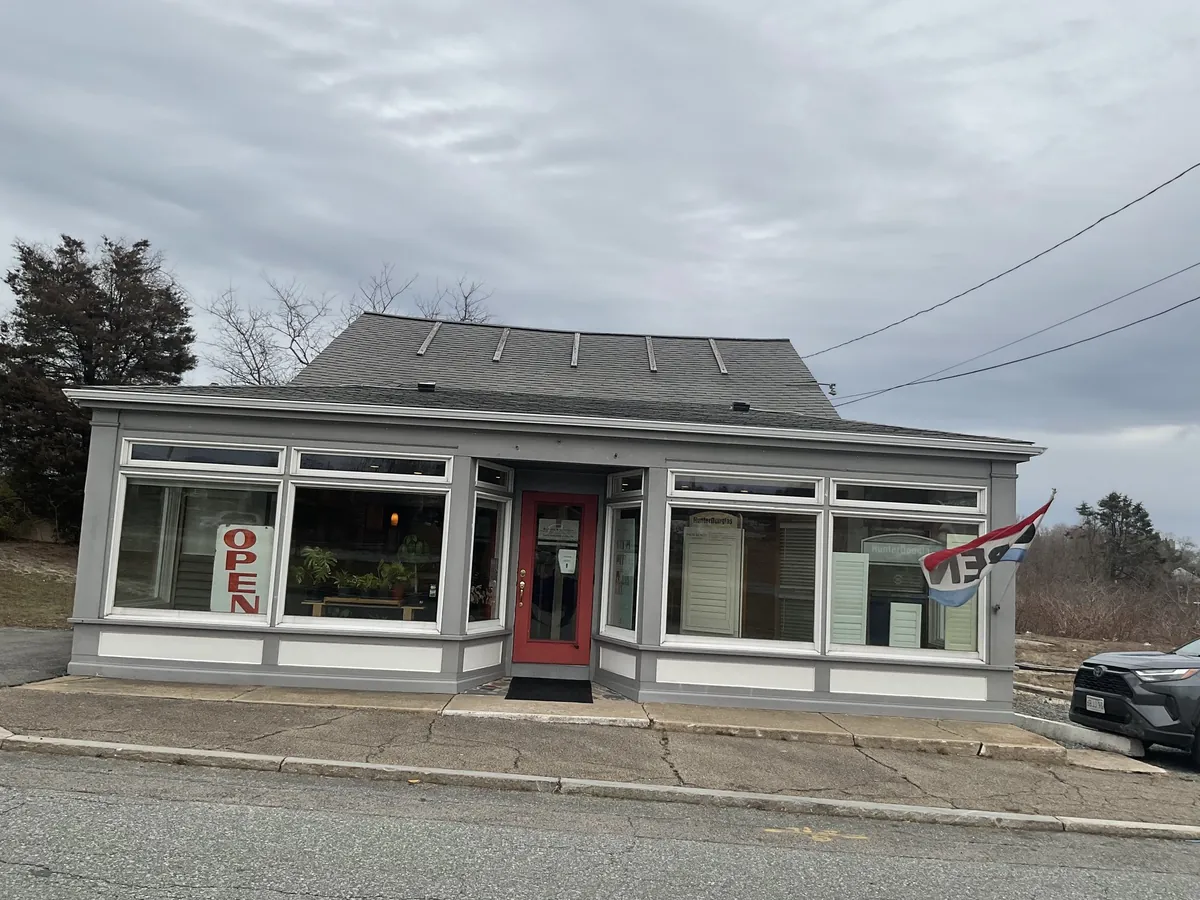
Our Sagamore showroom is the nearest to the village, a short drive along the canal, and you are welcome to see the blinds there before or after a home visit.
Blinds & Designs is a Hunter Douglas Gallery dealer, the designation Hunter Douglas gives dealers who meet its standards, so every blind in the range is open to you. Our installers are certified by Hunter Douglas. If a blind you already own has a broken cord or a stuck tilt, we repair blinds and shades too.
We also carry Hunter Douglas shades, shutters and drapery and window covering automation. For other rooms, see roman shades in Buzzards Bay or cellular shades in Buzzards Bay, or every service we offer locally on our Buzzards Bay page.
Questions from Buzzards Bay
The house next door is very close. Can blinds stop them seeing in?
Yes. Tilt the slats so the rounded side faces into the room and someone outside looks up at the slats rather than into the room, while daylight still reaches your ceiling. At night, close the blinds fully.
My windows are small. Will a blind block too much of the glass?
A raised blind does gather at the top. Wider slats and a slim headrail reduce how much glass the blind covers when it is up, and we show you the difference at your window.
What works in an apartment bedroom over a lit street?
A darker slat closed tight, mounted on the outside of the frame so it overlaps the edges, keeps out far more streetlight than a pale blind mounted inside the opening. Motorized tilt can close it at dusk on a schedule.
Can each window in my converted cottage be a different size?
Of course. Every blind is made to its own opening, and they can all share one color and slat size so the windows look like a set.
Is there a cost for the estimate?
No. After we measure, you get a free estimate for the blinds you are considering.
Getting started
Privacy is easiest to judge standing at your own window, looking across at the house next door. Request a consultation and we will bring samples of every blind, measure each opening and give you a free estimate. To talk first, use the call button to reach our Sagamore showroom, or call in and look around.