
Privacy before anything else
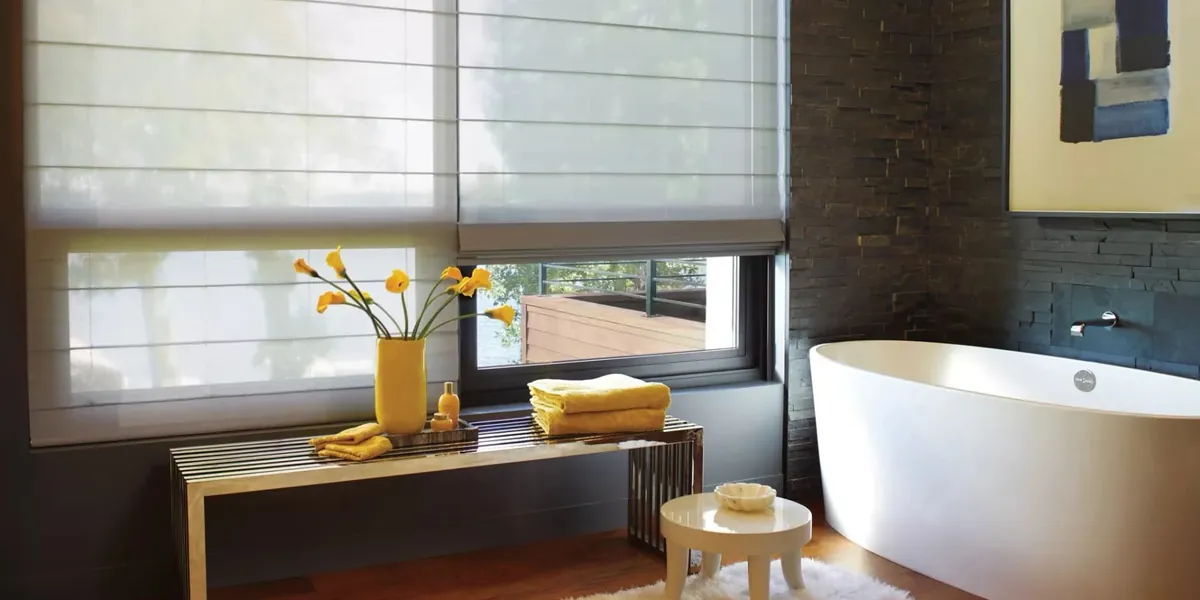
In the village center at the western end of the canal, houses stand close together. A kitchen window may look straight into the neighbor’s dining room a few strides away, and a flat above a Main Street shop has front windows facing the sidewalk and the traffic. Before color or fold even comes up, the first job for roman shades in Buzzards Bay, MA, is usually privacy.
A folded fabric shade handles that well. A light-filtering fabric lets daylight through while blurring the view in, so a room stays bright without feeling watched. A lined fabric closes the room off completely once the lights go on. And because the shade lives inside the window frame, it suits the small rooms these village houses have, where there is no wall space for heavy curtains.
The other thing that shapes every order here is the size of the windows. Many of the older houses and converted cottages kept their small original openings, and a shade on a small window needs more thought than one on a big picture window.
Three answers to a close-set street
Most roman shades in Buzzards Bay are chosen around privacy and small openings. These three options cover nearly every window we see in the village.
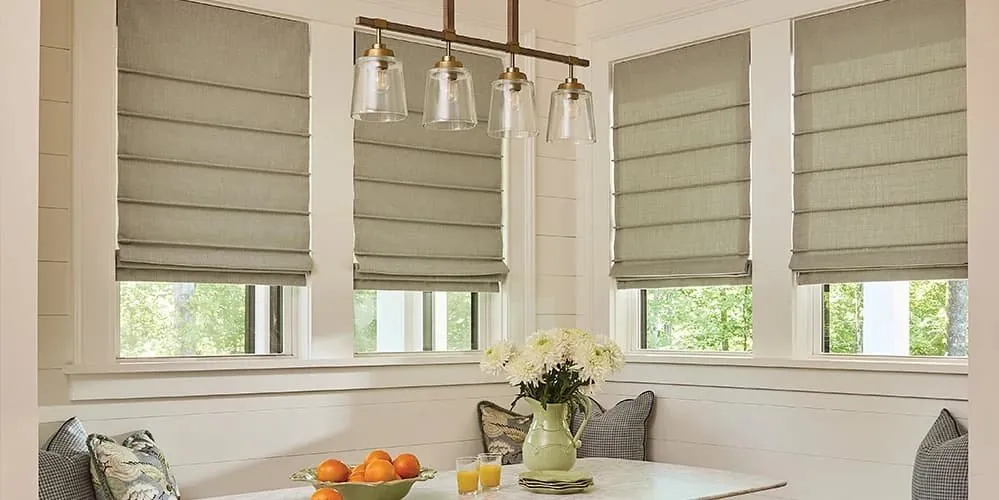
Light-filtering by day
The fabric glows with daylight but hides the room behind it. Right for a kitchen or living room that faces the house next door.
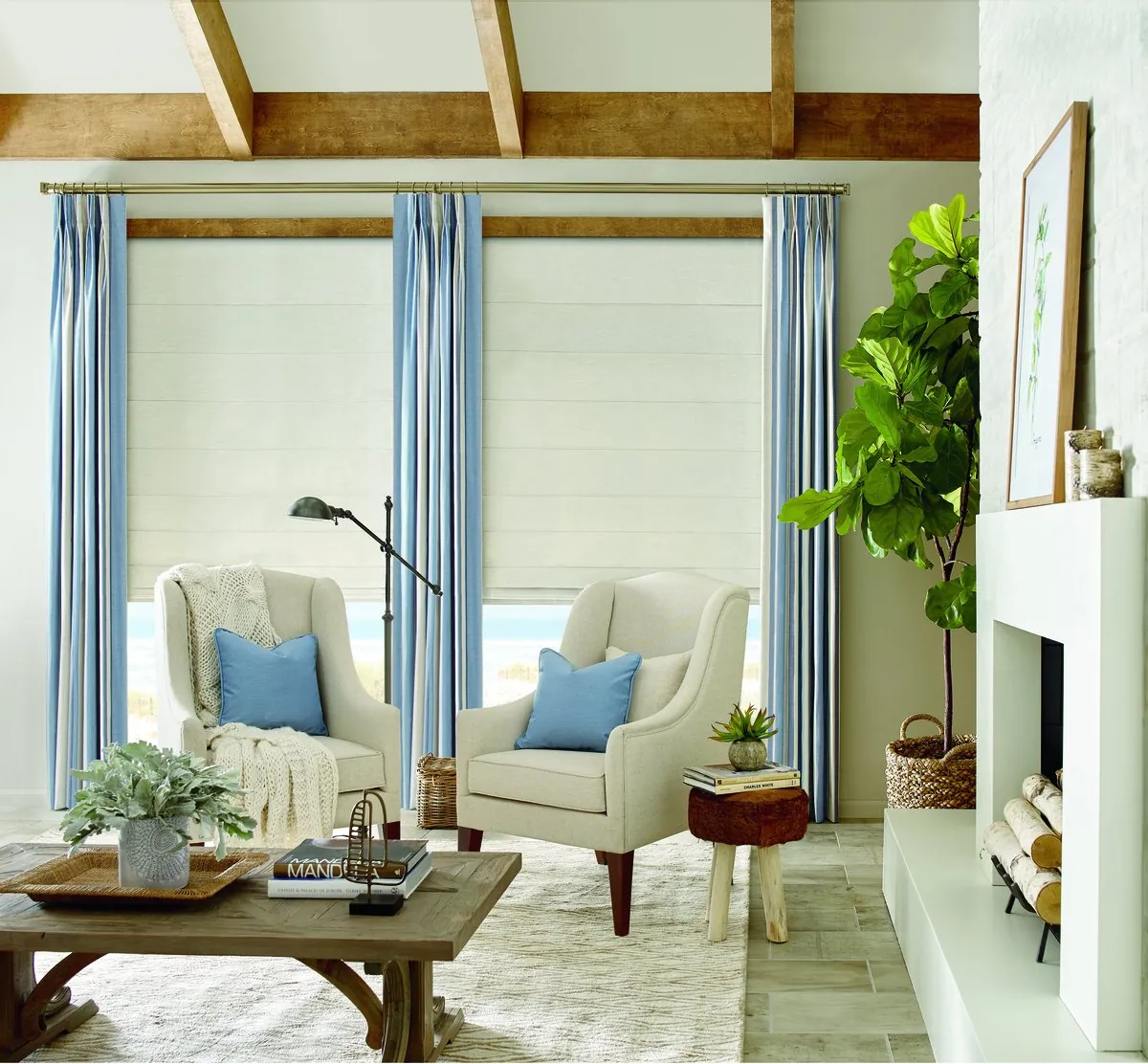
Lined for the evening
A lining behind the face fabric stops lamplight from showing silhouettes through the shade after dark.
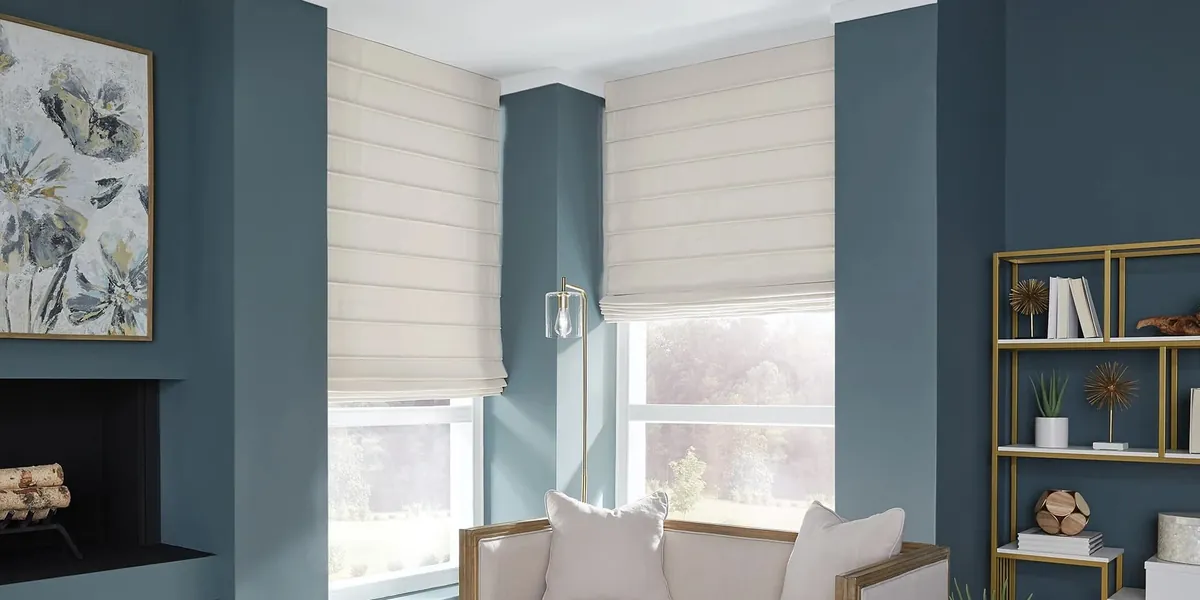
Vignette for small openings
Its fabric winds up into a compact headrail, so a short window keeps most of its glass when the shade is raised.
Houses a few steps apart
Older village streets were laid out long before anyone thought about sightlines. Side windows often face side windows, and the gap between houses can be little more than a driveway. That means rooms on the sides of the house, usually kitchens, bathrooms and bedrooms, need privacy for most of the day, not just at night.
The trick is choosing the right fabric for each room. A kitchen that faces the neighbor wants daylight, so a light-filtering fabric is the usual choice: from outside it reads as a soft, pale panel, while inside the room stays bright. A bathroom can take a sheer fabric lowered most of the way, with the top of the sash left clear for light. A bedroom on the side of the house needs a lined or room-darkening fabric, because a bedside lamp turns an unlined shade into a screen.
Front rooms that face the street have a different balance. You may want to see out during the day while people walking past see very little. A light-filtering shade lowered just past the lower sash gives you that, and it can be raised fully on a quiet afternoon.
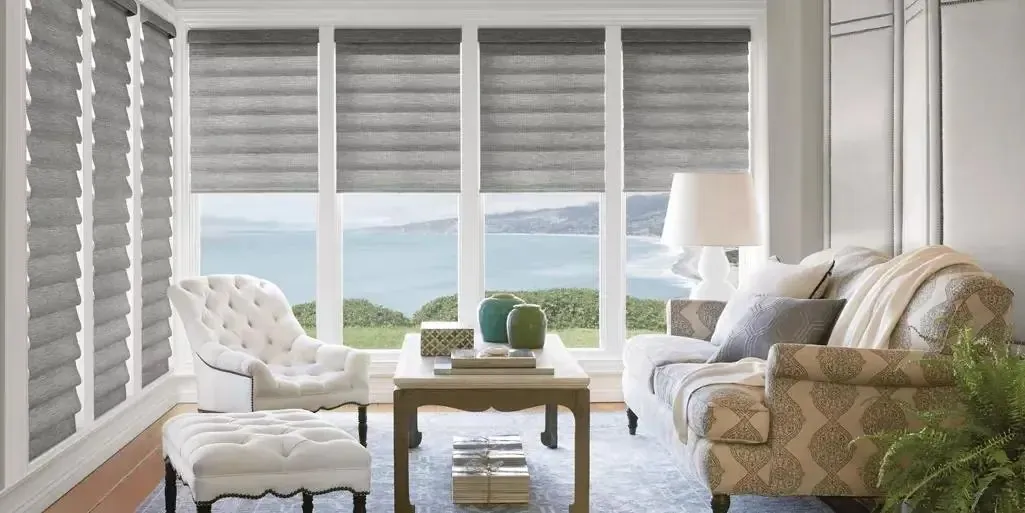
Small original openings
Plenty of village houses still have their original window openings, and many of them are small: short double-hung sash, narrow side windows, and the occasional tiny window in a stair or a bathroom. A fabric shade can look lovely on a small window, but only if it is planned for one.
The issue is the stack. When a sewn roman shade is raised, its folds gather at the top of the window, and on a short window that band of fabric can cover a good part of the glass. There are a few ways round it. Mounting the shade above the window, on the wall or the casing, lets the stack sit clear of the glass. Choosing a thinner fabric makes the stack smaller. And Vignette, which winds its fabric into the headrail instead of stacking it, often solves the problem on its own.
Small windows can also be shallow. Older frames, and frames with storm windows fitted outside, sometimes leave too little depth for a headrail. We measure that depth at every window and tell you plainly when an inside mount will not work, and what the alternative looks like.
Converted cottages
Some of the houses in and around the village started life as summer cottages and have been converted for year-round living. Conversions often leave a mix of windows: an original sash in the front room, a newer replacement window in an addition, a slider where a porch was enclosed. The sizes and depths can vary from one wall to the next.
We treat each window on its own terms. Each shade is made to its own opening, so mixed windows still look consistent once the shades are up, and we can use the same fabric and lining throughout so the room reads as one. Where an enclosed porch has a long row of windows, a run of matching shades mounted at the same height pulls the space together. A sliding door is usually better served by a different product, and we can show you options for it during the same visit.
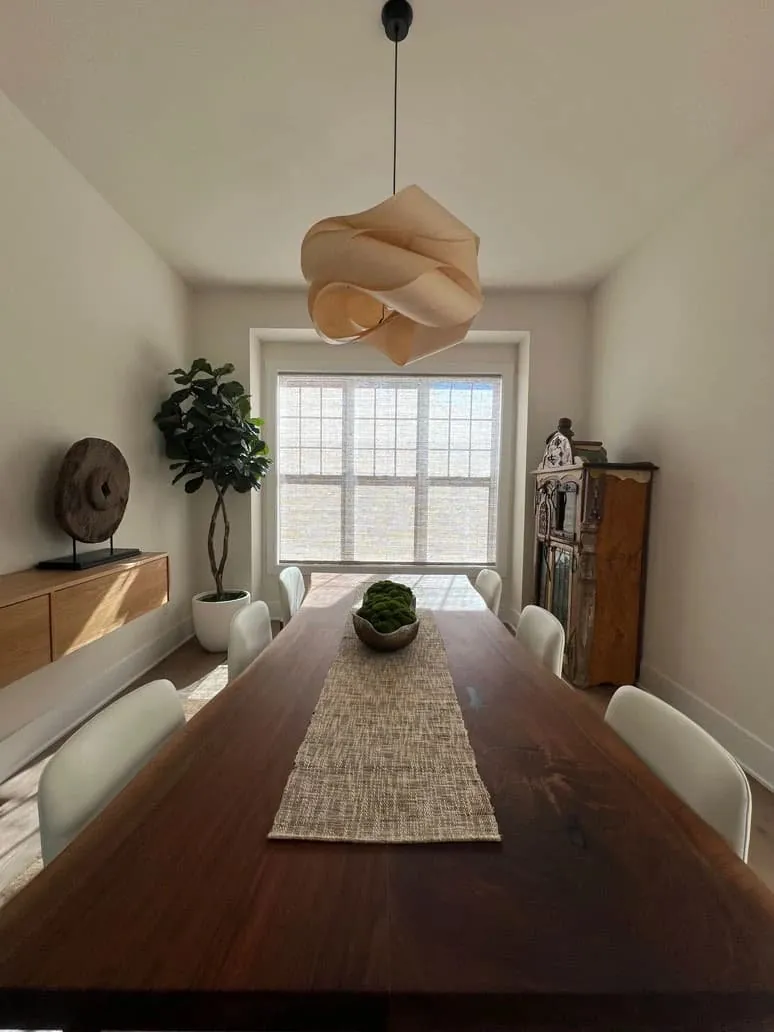
Flats above Main Street
Apartment conversions above the shops on Main Street have their own needs. The front windows look directly onto the street, so privacy matters both day and night, and from outside they are part of the face of the building. Rear windows often look onto yards or the backs of other buildings.
For street-facing windows, a neutral lining keeps the outside of the building tidy, whatever face fabric is chosen for the room inside. If you own the building and want every flat to look the same from the street, we can suggest one lining color for all of them while each flat chooses its own face fabric. Inside mounts keep the trim clear and leave the window easy to open.
Flats are often compact, with one room doing several jobs. A living room that is also a home office wants glare control on a sunny afternoon; a bedroom that faces the street wants full darkness at night. A folded shade can do either, depending on the fabric and the lining.
Rear windows in these flats are often the forgotten ones. They may look onto a parking area, a fire escape or the back of the next building, and they tend to be the windows where privacy matters most at night. A lined fabric in a color that matches the front rooms keeps the flat consistent inside while doing the harder job at the back.
Bathrooms, stairs and the odd little window
Every older village house seems to have a few windows that do not match anything else: a tiny square window in a bathroom, a narrow one halfway up the stairs, a small window tucked under the eaves in a back bedroom. They are easy to leave bare, but they are often exactly the windows that look straight at the neighbors.
These little openings are where careful measuring pays off. A shade only a hand or two wide needs a fabric with enough body to fold cleanly at that width, and a headrail small enough to fit the frame. In a bathroom, a sheer or light-filtering fabric gives privacy and keeps the room bright, and we steer you toward fabrics that are comfortable in a room with steam. On a stair window you cannot easily reach, a motorized shade saves leaning over the banister.
When we plan roman shades for Buzzards Bay houses, we go round every window with you, including these odd ones, so the whole house is covered and the fabrics tie together from room to room.
Fabric and pattern for small rooms
Small rooms and small windows change the way fabric works. A large print on a short window can look chopped off, because only part of the pattern fits on the shade. A small repeat, a narrow stripe or a plain textured fabric reads better at that size.
Color matters too. A fabric close to the wall color makes the window recede and the room feel larger, which helps in a compact cottage or flat. A contrasting fabric turns the window into a feature, which can work well in a room with plain walls and simple furniture. In a room that faces another house, a lighter fabric also makes the most of the daylight that does get in.
Texture is worth considering for the folds themselves. A crisp cotton makes sharp, tailored pleats on a flat fold. A soft linen falls in gentler folds, which suits a soft fold and a relaxed cottage room. We bring both so you can see the difference on your own window.
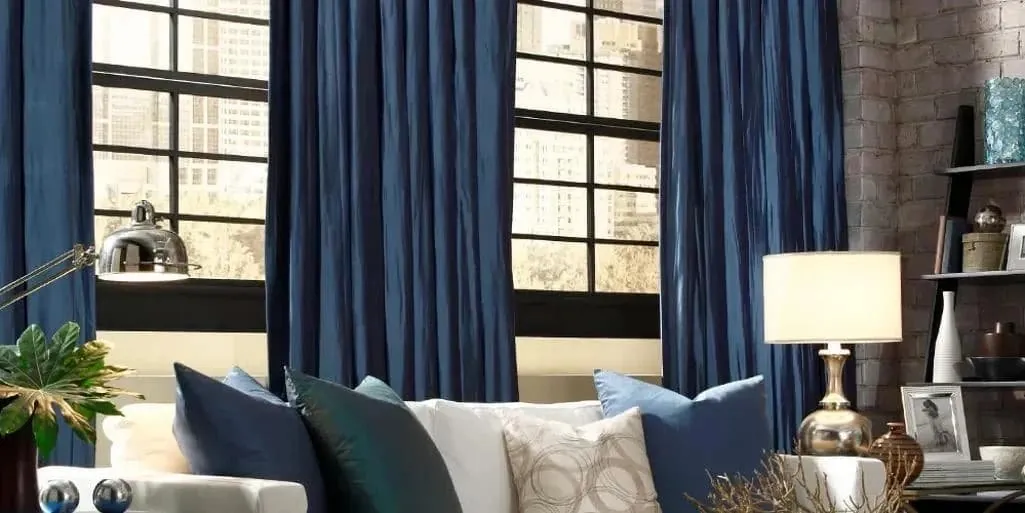
A shade with curtains in a small room
Some rooms want a little more softness than a shade alone, even in a small house. A pair of simple curtain panels on a slim rod, hung just outside the window frame, can frame a roman shade without taking much space, as long as the panels are lightweight and stack neatly at the sides. The shade does the daily work of privacy and light, and the panels add color and a softer edge.
In a compact room the balance matters. One patterned piece and one plain one usually looks better than two busy fabrics. If you would like help pulling a room together, our interior design consultations cover color, pattern and the treatments in the room at the same visit as the measuring.
Vignette or Carole Fabrics in a village house
Both families come from Hunter Douglas, and both make good roman shades for Buzzards Bay houses, but they suit different windows.
Vignette is built rather than sewn: its folds are formed into the fabric so they stay an even depth, and the shade winds up into a slim headrail when raised. There are no lift cords down the back, which matters on a street-facing window where the back of the shade is what passers-by see. On a small or short window, its compact stack is often the deciding factor.
Carole Fabrics shades are made to order from a decorator fabric of your choosing, in a flat, soft or relaxed fold. They give you more freedom with pattern and texture, and they can be matched to cushions, upholstery or drapery. On a larger front-room window, or in a room where the shade is part of the decoration, they are hard to beat.
There is more on each family on our Vignette and Carole Fabrics pages, and the roman shades page covers the whole range.
What a visit looks like
Privacy is hard to judge from a swatch in a store. You need to see how much light comes through a fabric on your own window, and how much of the room shows from outside. That is why most village customers start at home, and our vans carry samples, so we can bring the showroom to you.
- Get in touch through Request a Consultation or the call button, and we will agree a time.
- A consultant arrives with Vignette and Carole Fabrics samples in sheer, light-filtering, lined and room-darkening options.
- You show us the windows that bother you most, usually the ones facing the neighbors or the street.
- We hold fabrics up at those windows during the day, and talk about how each will look with the lamps on at night.
- Every opening is measured, with its depth checked for an inside mount and the stack height planned on short windows.
- A free estimate follows for the shades you are considering, and you decide when you are ready.
The page on what happens at an in-home consultation gives more detail.
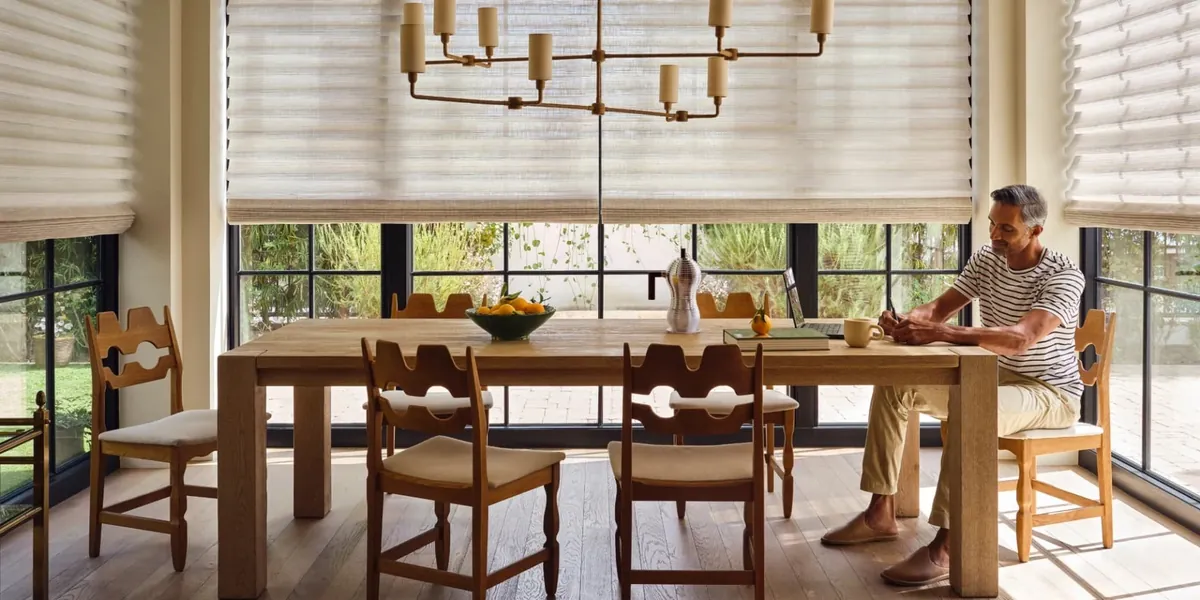
Lifts that suit a small home
In a small house or flat, a cordless lift is usually the best choice. There is no cord hanging beside the window to tangle, and nothing within reach of small children or pets. You raise or lower the shade by the bottom rail.
PowerView motorization suits windows that are hard to reach, such as a stair window or a shade above a kitchen sink, and it can lower every shade in a flat on a schedule as evening comes. Our motorized blinds and shades page explains how it works.
When the shades arrive, a certified Hunter Douglas installer fits each one into solid wood, checks that it hangs level and clears the sash, tests the lift and shows you how it works. In an older house where plaster can be soft, a sound fixing is what keeps a shade straight for years of daily use.

Why a Hunter Douglas Gallery dealer
Blinds & Designs is one of the dealers Hunter Douglas recognises as a Gallery dealer. That gives you the full folded-shade range at one visit, with every Vignette option and the Carole Fabrics library side by side, rather than a short list.
Our installers carry Hunter Douglas certification, and we repair blinds and shades already in your home. For the rest of the house, see our cellular shades in Buzzards Bay, plantation shutters in Buzzards Bay, or everything we offer on the Buzzards Bay page. Our page on roman shades in Bourne covers the shore cottages and canal-side houses across the rest of town.
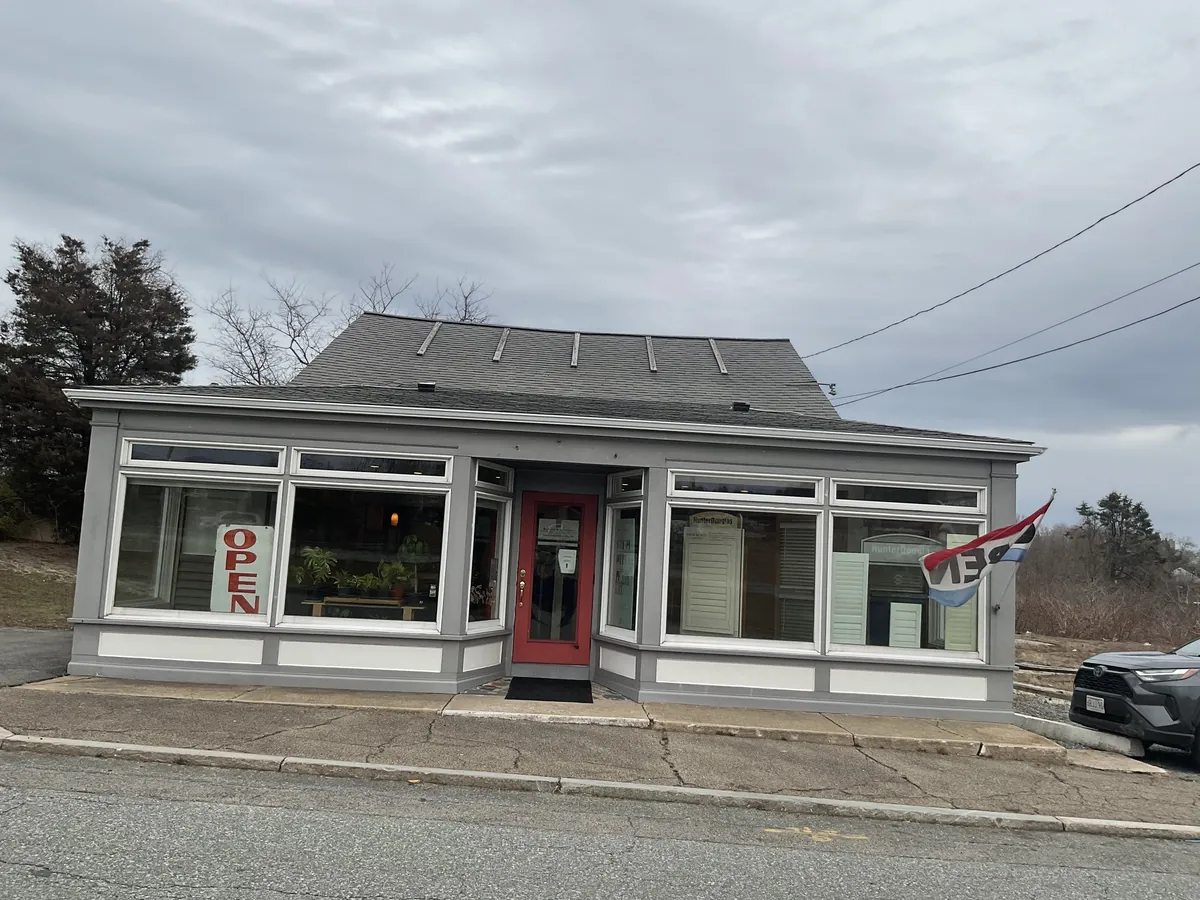
Just across the canal
The Sagamore showroom is our closest location to the village, a short drive along the canal on Cranberry Highway. Visit if you want to handle the fabrics and see a folded shade move before deciding.
If getting out is awkward, we will come to you with the samples instead. Many village customers prefer it, because it is the only way to see how private a fabric really is on their own window.
Questions from Buzzards Bay
Which fabric gives the most privacy without making the room dark?
A light-filtering fabric. It lets daylight through but blurs the view into the room, so you get privacy and light together during the day. At night, with lamps on, a lined fabric gives more privacy.
My windows are small. Will a roman shade cover too much of the glass when it is raised?
A sewn shade stacks its folds at the top, which can take up part of a short window. Mounting it above the opening, choosing a thinner fabric or choosing Vignette, which winds its fabric into the headrail, all keep more of the glass clear.
Can every flat in a building look the same from the street?
Yes. One lining color on every street-facing shade gives the building a consistent look from outside, while each flat chooses its own face fabric for the room.
What if my window frames are too shallow for an inside mount?
We measure the depth of every frame. Where it is too shallow, we mount the shade on the casing just above the opening, which still looks neat and leaves the window easy to open.
Do you charge for the estimate?
No, the estimate is free. We give it once we have measured your windows.
Book a time
Find out how private a fabric really is by seeing it on your own window. Request a consultation and we will bring samples of roman shades in Buzzards Bay, MA, to your home, measure each window and send you a free estimate. You can also use the call button, or call in at the Sagamore showroom.