
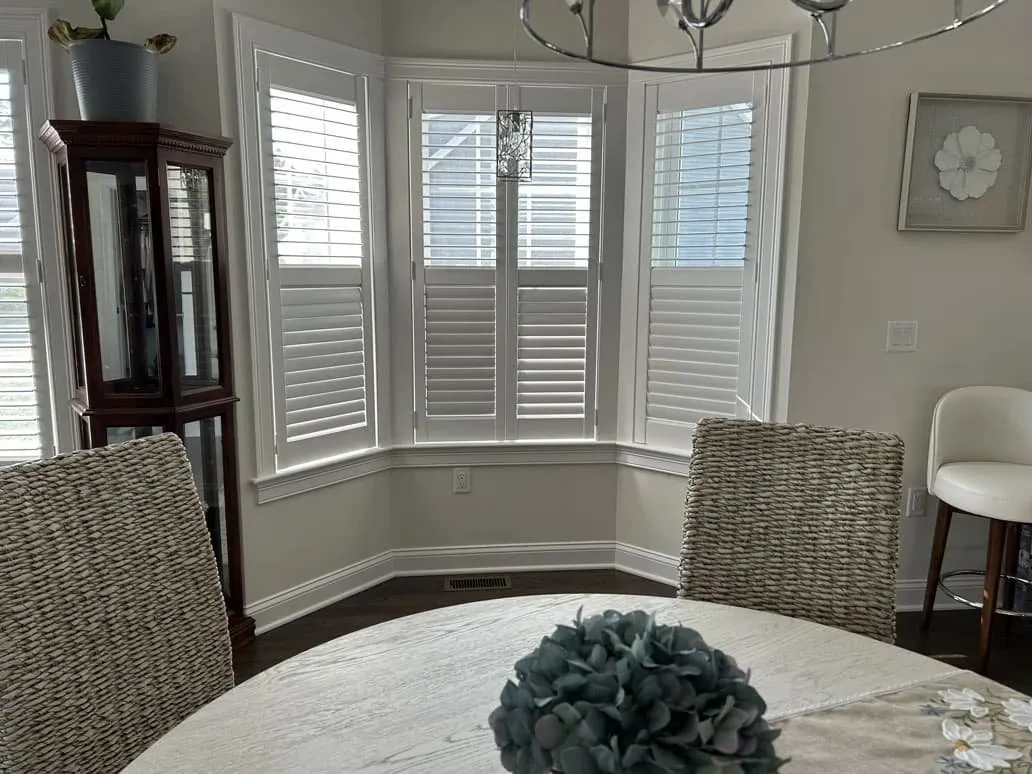
Old sash, newer houses, one town
Few towns on the Cape ask as much of a window covering as this one. Around the Grist Mill and the pond, the historic village is lined with antique capes and Federal houses whose oldest windows carry very small original sash, little panes of glass set in thin wooden muntins that were cut by hand. A short drive away, along Route 6A and out toward Forestdale, the houses are post-war ranches and newer colonials with standard double-hung units, sliders and the odd picture window. As a Hunter Douglas dealer in Sandwich, MA, we work across both, and the right answer for one street is often wrong for the next.
The village asks for restraint. A treatment there has to respect the house as it is seen from the lane, and it has to fit inside openings that were never sized for modern hardware. Out toward Forestdale the challenge flips: the windows are roomy and regular, and the question becomes which Hunter Douglas line gives each room the light, privacy and warmth it wants.
Because we are a Hunter Douglas Gallery dealer, the full family is open to us for both, and certified Hunter Douglas installation means the result is fitted the way the maker intends.
The Hunter Douglas lines that suit Sandwich houses
As a Hunter Douglas dealer for Sandwich houses, we carry every family the brand makes. These six cover most of what antique and newer houses in town need, and each links to our page for that product here.
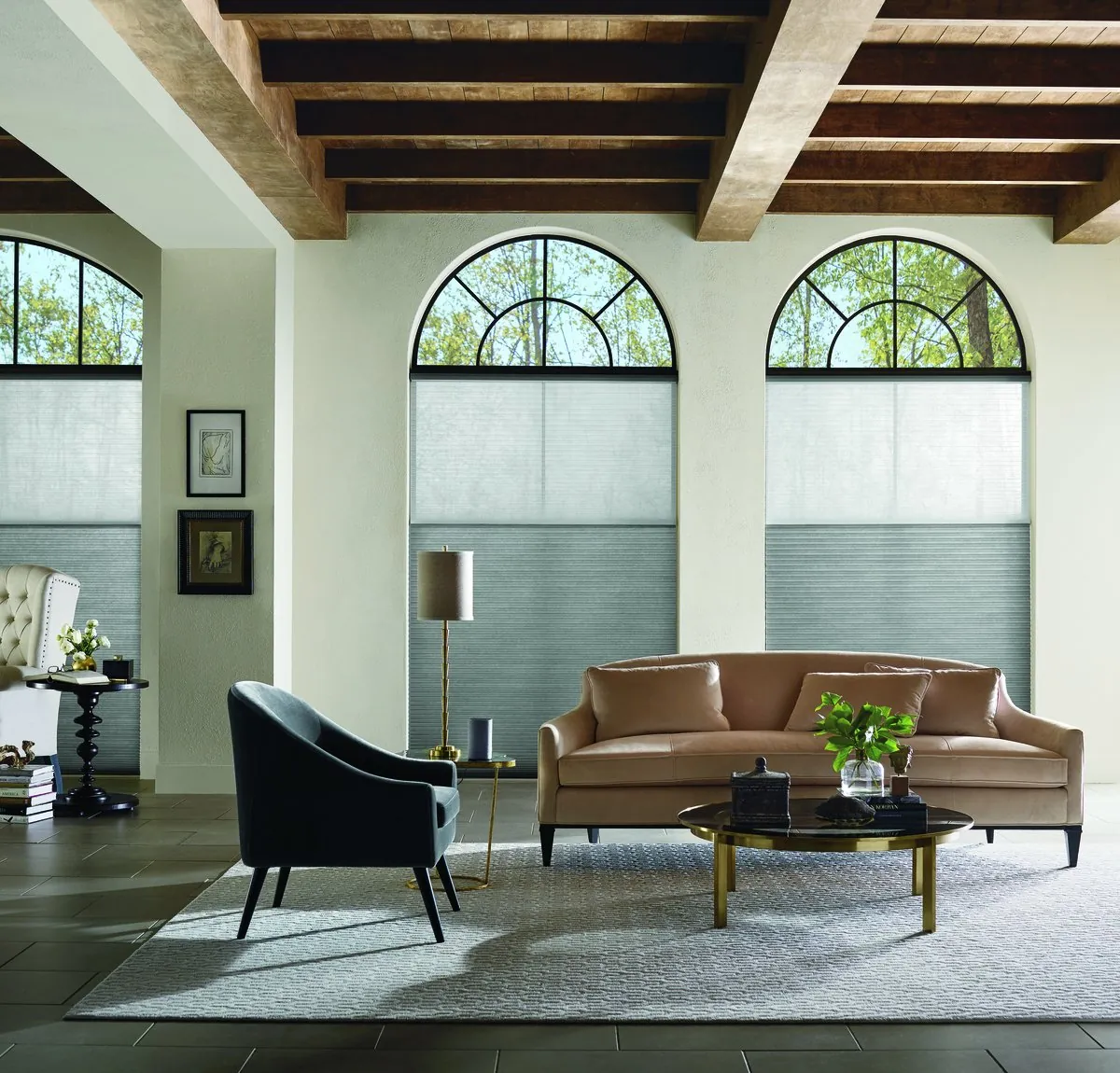
Honeycomb shades
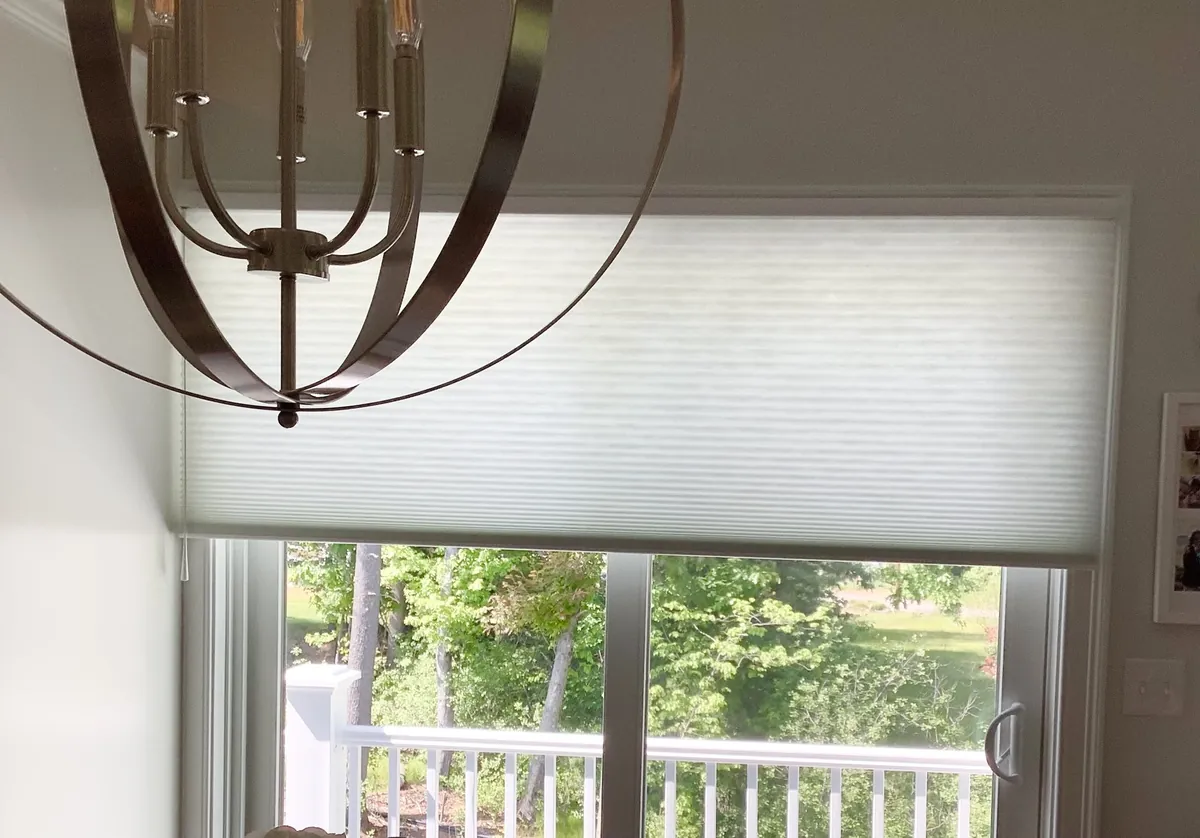
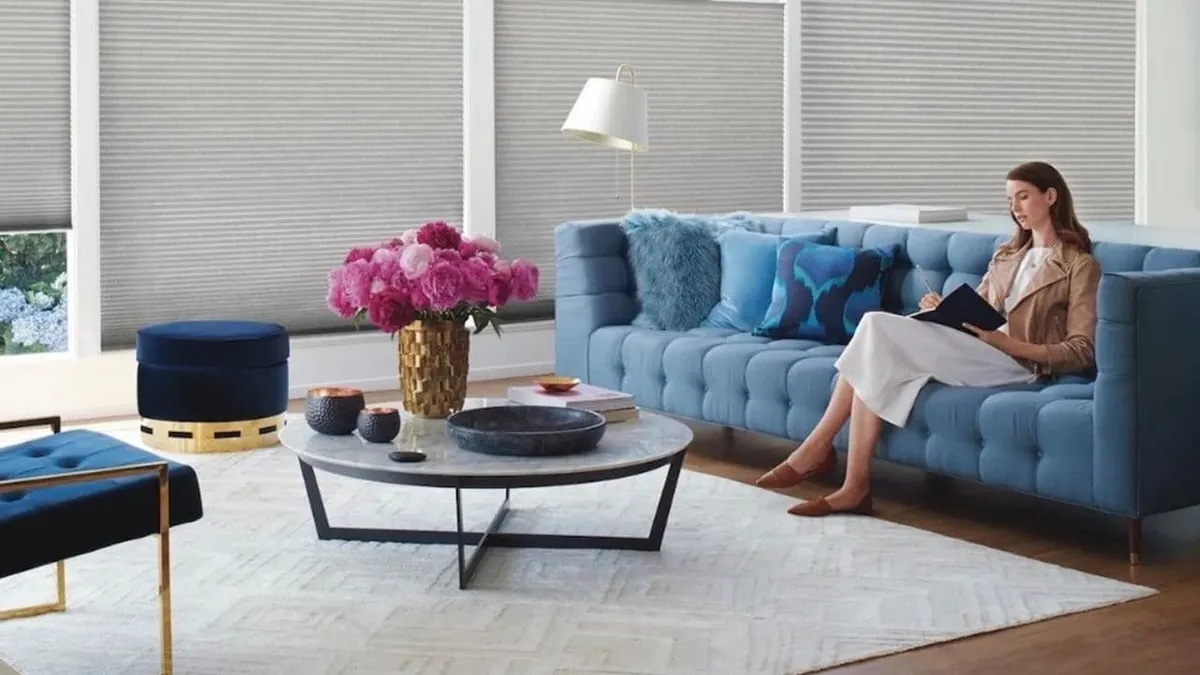
Duette and Applause hold a layer of still air in each cell, which helps a drafty antique room keep its heat. Top-down, bottom-up options leave the upper glass open.
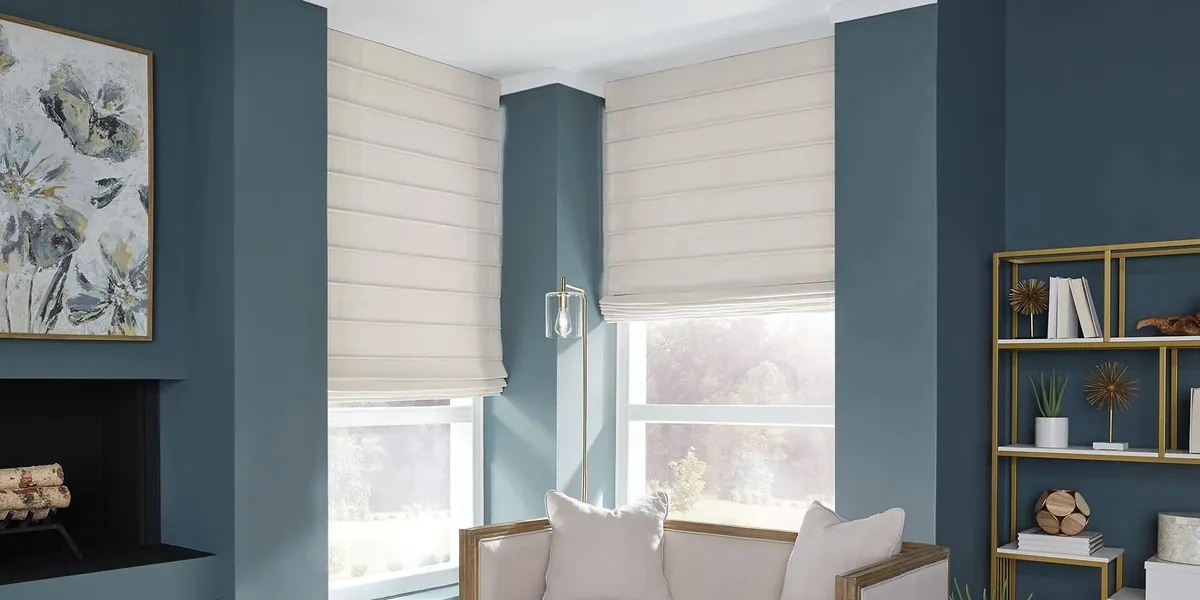
Roman shades
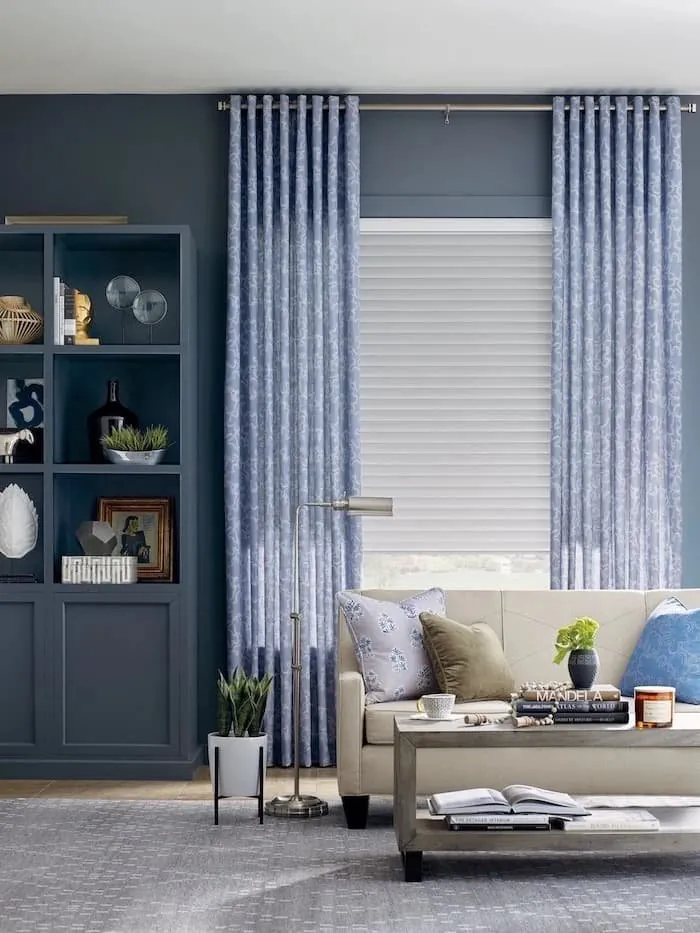
Vignette and Carole fabrics give a soft, tailored look that sits comfortably in a Federal parlor or a cape’s front room.
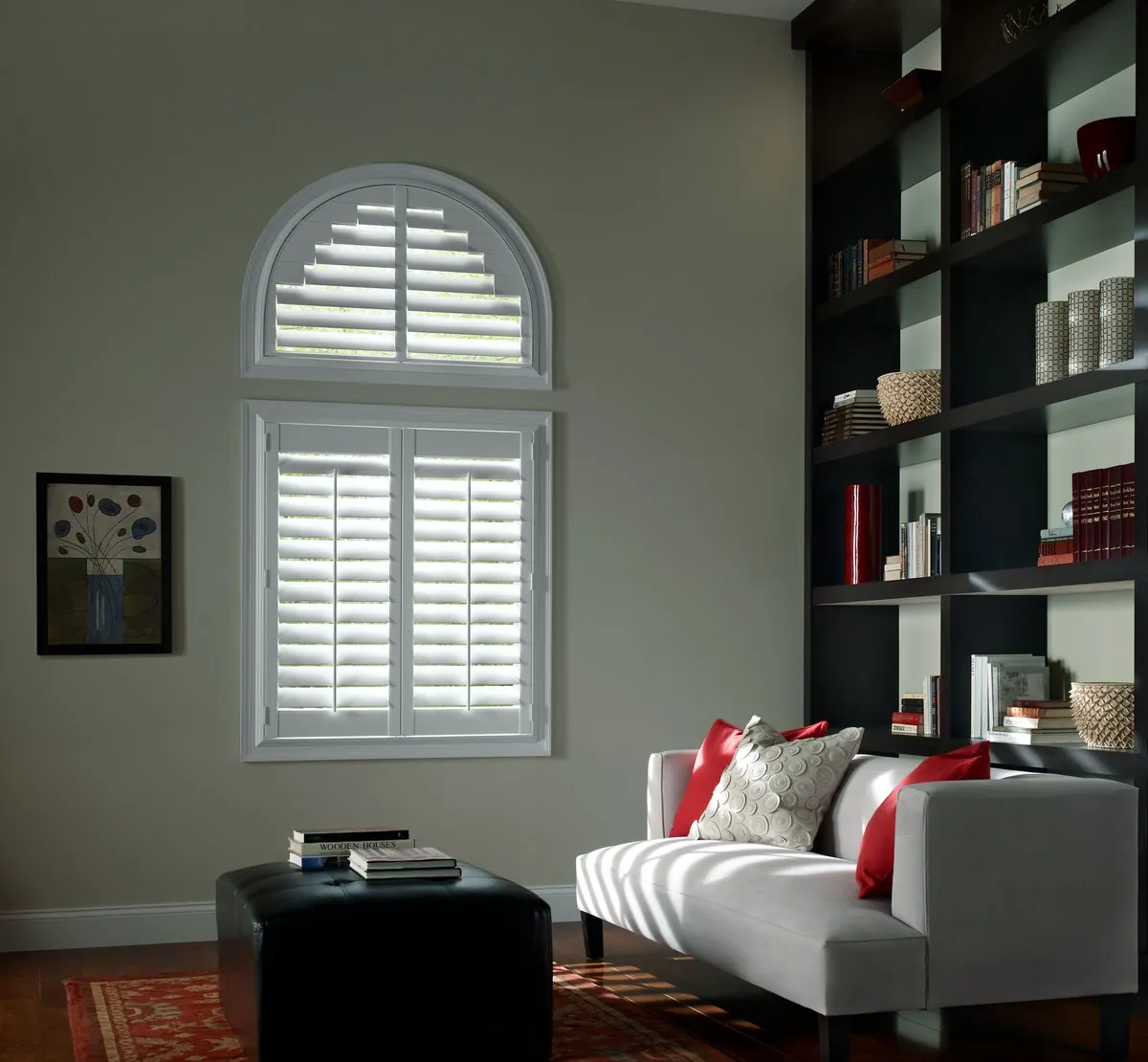
Shutters
Palm Beach, NewStyle and Heritance, each built to the opening, with a louver size chosen for the window.
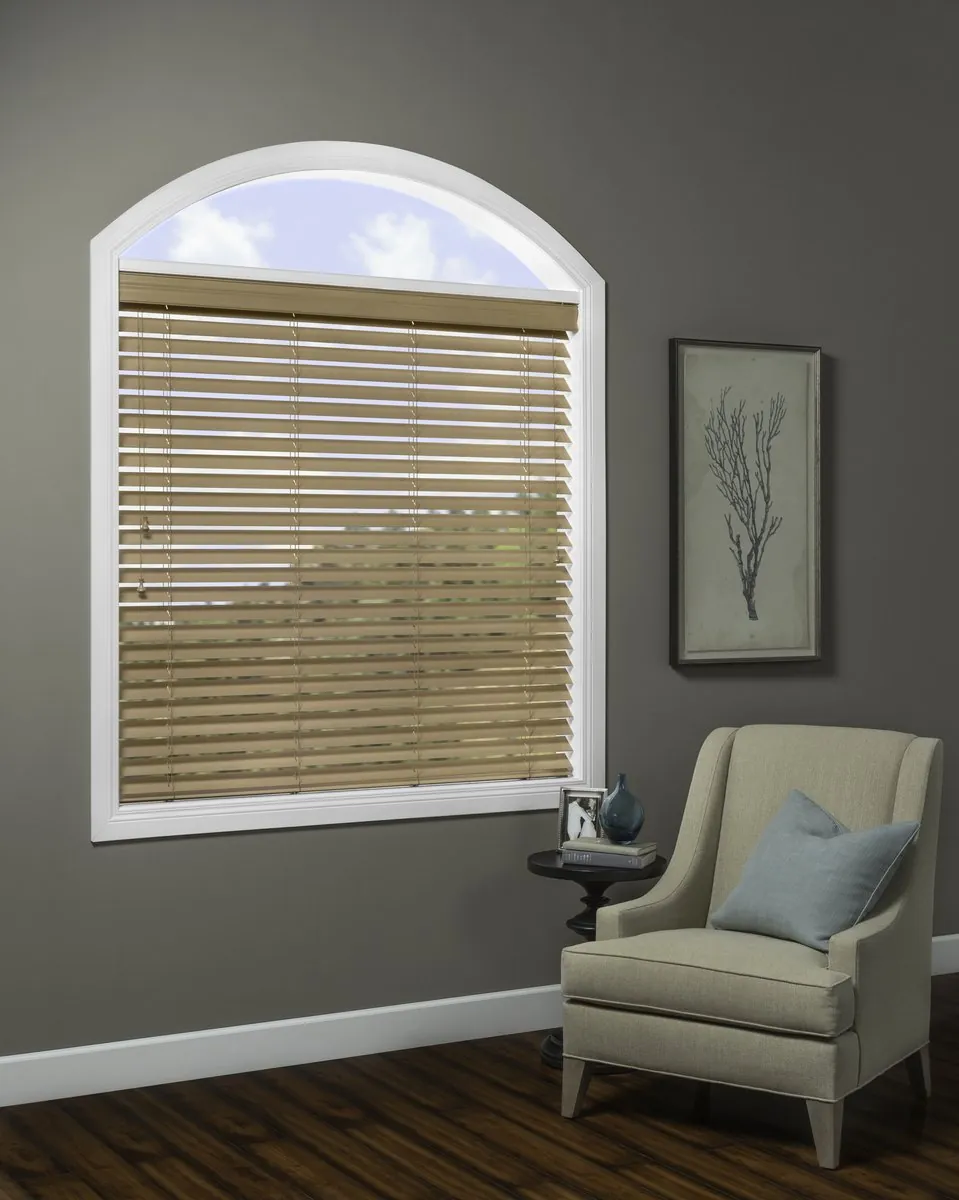
Wood and faux wood blinds
Parkland wood and EverWood faux wood, plus metal blinds, for kitchens, dens and the newer houses along the highway.
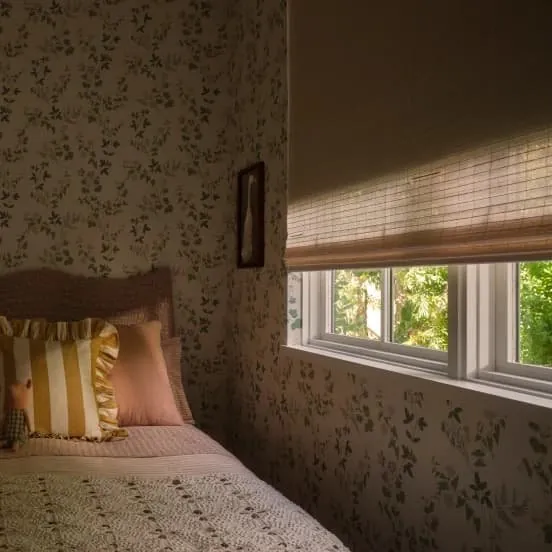
Drapery and woven wood
Carole drapery to frame a window, and natural woven shades for a relaxed, textured room.
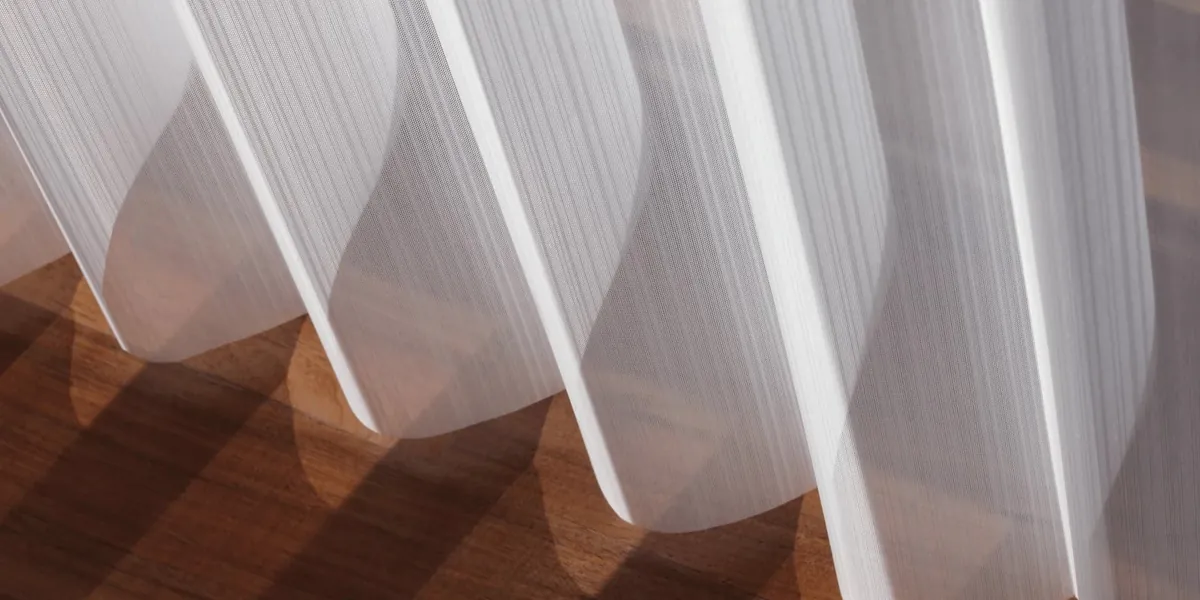
Sheer shades
Silhouette, Pirouette, Luminette and Nantucket turn hard daylight into an even glow while keeping the view.
Working with tiny panes and hand-cut muntins
The oldest sash in the village can be startlingly small. A window in an antique cape may be made up of many little lights, each no bigger than a paperback, and the whole opening can be narrow and short compared with anything built since. That scale changes the job in a few ways.
First, the headrail has to be in proportion. A bulky top rail on a tiny window looks like an afterthought. Honeycomb and Roman shades from Hunter Douglas come with slim headrails and can be made in narrow widths, so the treatment reads as part of the window rather than something hung over it.
Second, the stack matters. When a shade is raised it gathers at the top of the opening, and on a short window that gathered fabric can cover a real share of the glass. Honeycomb shades fold very tight. Flat-fold Roman shades stack deeper but bring a softer look. Shutters avoid the issue entirely, because the panels swing open and the louvers tilt, so nothing ever sits across the top pane. We talk this through at the window, where you can see the difference rather than imagine it.
Third, the frame itself. Hand-planed casings and stops are rarely the same from one window to the next, and over many winters the frames settle. We measure every opening on its own, at several points, before we suggest a mount.
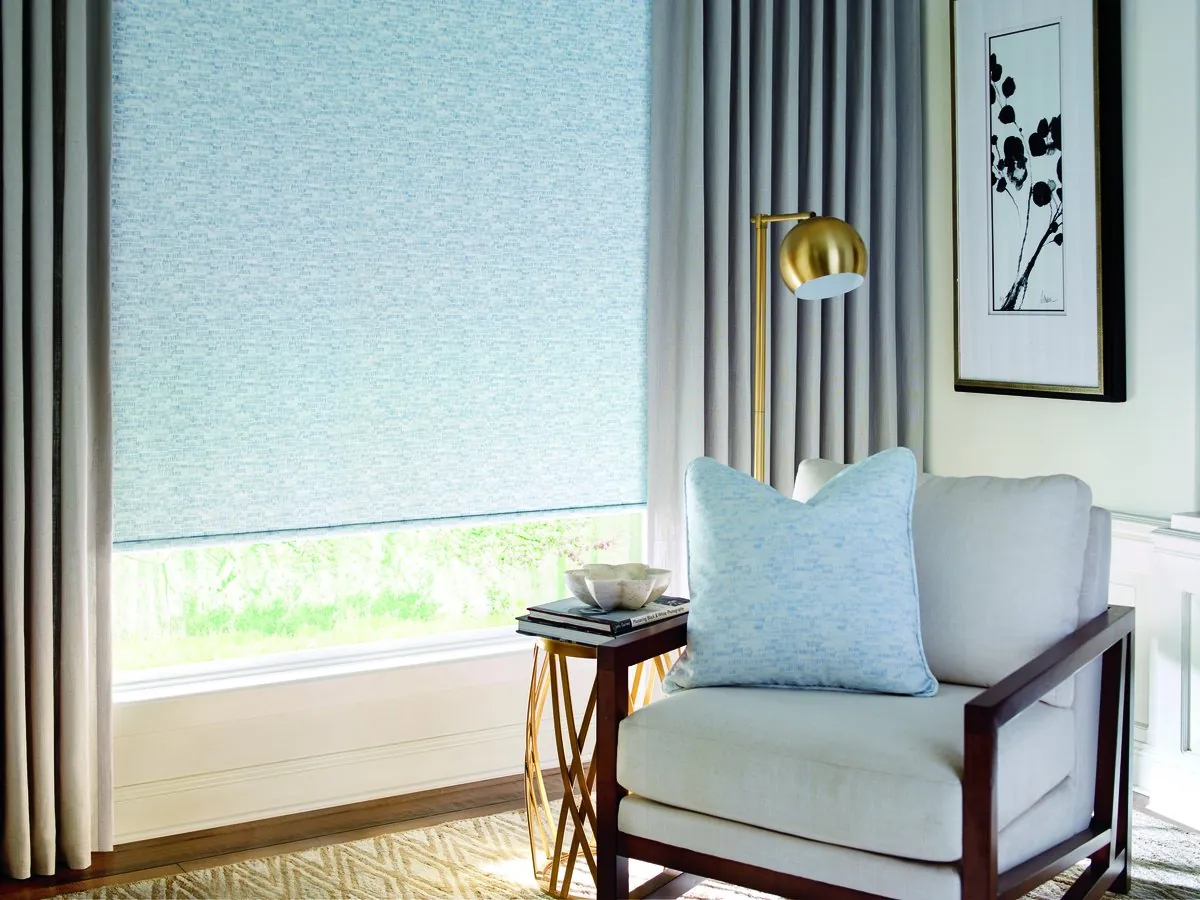
Historic village expectations
The houses around the Grist Mill sit inside a historic district, and owners there tend to care how a window looks from the street as much as how it works inside. A treatment that is visible from the lane should feel calm and consistent from one window to the next.
There are some simple ways we approach that. Light, neutral fabric backings keep the street side of each window uniform, even when you choose a bolder color for the room. Inside-mounted shades sit within the opening, so the trim and the old glass stay the first thing a passer-by sees. Shutters in a white or soft painted finish suit the period look of a cape or a Federal front. Where a house will need a decision from the district about anything that changes its exterior, that is a matter for you and the district, and we are happy to talk through the options before you ask.
None of this means the inside has to be plain. A parlor can take a rich Carole fabric for its Roman shades, or a heavier drapery panel over a sheer shade, as long as the side that faces out stays quiet.
Federal houses: taller openings, finer trim
Not every old house in the village is a low cape. The Federal houses near the center stand taller, with a symmetrical front, a fanlight or sidelights at the door and windows that are larger and more regular than a cape’s. Their trim is often the finest woodwork in the house: thin moulded casings, deep window seats and, in some front rooms, interior shutters or pockets that were part of the original build.
That trim deserves to stay visible. An inside mount keeps it clear, and a Roman shade in a fine fabric or a Silhouette sheer sits neatly within the opening. Where an old pocket or interior shutter box is still there, we look at how much depth is left for a headrail before suggesting anything.
The sidelights beside a Federal front door are their own small problem: tall, very narrow and close to the street. Honeycomb shades can be made slim enough for them, and a fixed or top-down shade gives the hall privacy without blocking the light the sidelights were built to bring in.
Ranches and colonials toward Forestdale
Head away from the village, along Route 6A or inland toward Forestdale, and the houses change. Post-war ranches have a living room picture window, a run of bedroom windows and often a slider to the back yard. The newer colonials have regular double-hung units on two floors, a family room with bigger glass and sometimes a window over the stairs that is hard to reach.
These houses give you more freedom. The openings are deeper and squarer, so almost every Hunter Douglas product mounts inside cleanly. You can treat the whole house in one consistent style, or choose by room: shutters in the front living room, honeycomb in the bedrooms for warmth and darkness, wood or faux wood blinds in the kitchen, a sheer shade where the family room faces the afternoon sun.
Sliders here usually get a product that moves side to side. Luminette sheers and the vertical honeycomb shade both clear the door completely when open. For the stair window or anything above head height, PowerView motorization lets the shade move from a remote, an app or a schedule, which you can read more about on our page for motorized blinds in Sandwich.
How a first visit runs
Most projects begin at your house, because a fabric only looks the way it will on your windows when it is in your own light. Our vans carry samples, which is what we mean when we say “we can bring the showroom to you.”
- Request a consultation online or use the call button, and pick a time that works for you.
- We arrive with samples from the Hunter Douglas lines that suit your windows.
- We go room by room and listen to what bothers you, whether that is a cold front room, glare in the kitchen or a bedroom that faces the road.
- You hold samples up at the glass and see each one by daylight.
- We measure every opening, noting depth, squareness and anything in the way of an inside mount.
- You receive a free estimate, and you decide in your own time.
If a room needs more than a window answer, our interior design consultations cover color, fabric and layering. Our guide to what happens at an in-home consultation walks through it in more detail.
Which line for which room
A Gallery dealer’s real value is helping you choose between products that look close in a brochure. These are the pairings we suggest most often for Sandwich houses.
- Front parlor of a Federal house. Tall-for-its-age windows, fine trim, a room that is on show. Vignette or Carole Roman shades, or Silhouette sheers with a drapery panel either side.
- Small-paned cape bedroom. Honeycomb shades in a room-darkening fabric, mounted inside, so the tiny opening is warm and dark at night and almost clear by day.
- Kitchen and bath. Palm Beach shutters, built for moisture, or EverWood faux wood blinds that wipe clean.
- Ranch picture window. Designer roller or screen shades to keep the view, or a set of honeycomb shades on one headrail that rise together.
- Colonial family room facing west. Pirouette or Silhouette, which tilt their vanes to soften late sun without shutting the room in.
You can look through each family on our pages for Hunter Douglas shades, blinds, shutters and drapery.
Keeping a draughty old room warm
Antique houses lose heat at the glass. Original sash, even with a storm window outside, lets the cold through, and a front room that is lovely in June can be hard to sit in by January. Hunter Douglas honeycomb shades are the usual answer. Each cell holds a band of air that barely moves, and that still air slows the cold reaching the room.
Shutters help in a different way. A closed panel of louvers fills the opening edge to edge and adds a layer between you and the pane. Drapery over a shade adds another. For the coldest rooms we sometimes suggest a honeycomb shade with a lined drapery panel, which keeps the period look and gives the window two layers on winter nights. Our page for cellular shades in Sandwich goes further into the honeycomb options.
Colors and finishes for an antique interior
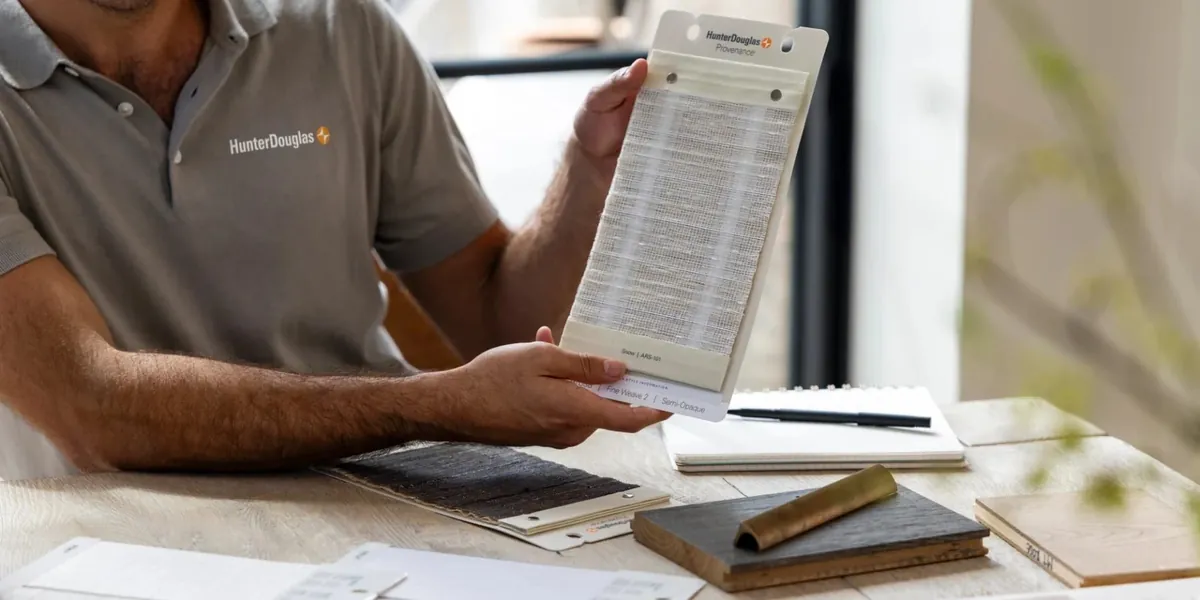
Old rooms have their own palette: painted panelling, wide pine floors, plaster walls that are never quite flat. Bright white hardware or a glossy finish can look out of place there. We bring fabric and finish samples in warm whites, creams and muted tones so you can see how each one sits against your own woodwork.
With shutters, the choice of finish is part of the decision. Heritance is real hardwood and can be painted or stained to match old trim. NewStyle gives the look of painted wood with a hybrid build. Palm Beach is the one for steamy bathrooms and kitchens. For blinds, Parkland wood in a stain that picks up the floor can look as if it has always been there.
In the newer houses toward Forestdale you have a cleaner slate, and many owners choose one neutral finish for the whole house so every window matches from outside.
Measuring openings that are never square
A window that has stood for many winters is rarely a true rectangle. The top may be wider than the bottom, the sides may lean, and the depth of the frame can change across a single sill. Made-to-order products only look built in when they are made to the real opening, so we measure with that in mind.
- We take the width at the top, middle and bottom and work from the narrowest for an inside mount.
- We take the height at both sides and the center.
- We check frame depth where the headrail will sit, and look for sash locks, pulleys or old hardware in the way.
- We agree each mount, lift and fabric with you before the order goes in.
- Our certified installers fit each piece, level it, test it and show you how it works.
Where an inside mount would be too tight, we say so and suggest a slim outside mount instead. Any Hunter Douglas dealer for Sandwich, MA houses should be measuring this way, because an antique opening punishes a guess.
Being a Gallery dealer in practice
Blinds & Designs is a Hunter Douglas Gallery dealer. For a Sandwich house that means you are not choosing from a short list: every family of Hunter Douglas shades, blinds, shutters and drapery is open, so an antique cape and a Forestdale colonial can each get the product that suits them.
Our installation is certified by Hunter Douglas. The people who measure your windows and order the work are also responsible for fitting it, so nothing is lost between the visit and the finished window.
The job does not end at installation. We handle blind and shade repair in Sandwich on window coverings you already own, and we can add PowerView motorization to suitable shades later. Every other service we offer in town is on our Sandwich page, and the brand as a whole is on our Hunter Douglas page.
Light and privacy on a village lane
Many of the older houses near the center sit close to the road, with front windows only a short step from the sidewalk. In those rooms privacy is as important as warmth. A light-filtering fabric lets daylight in while blurring the view from outside, and a top-down, bottom-up shade keeps the lower sash covered while the upper panes stay open to the sky.
On a cape where the bedrooms are tucked under the roof, the small gable windows can face a neighbor across a narrow side yard. Honeycomb in a room-darkening fabric, or shutters with the louvers tilted up, handle that quietly. Roller shades from our roller shades in Sandwich page are another option where a clean, simple line suits the room.
Kitchens, baths and the hard-working rooms
The rooms that get the most use need the toughest products. A cape kitchen often has a single small window over the sink, splashed and steamed every day, and an old bath may have one window that faces the neighbors. Palm Beach shutters are made for that kind of room: the polysatin will not warp in moisture, and the louvers tilt to let light in while keeping the view out. Cafe-style shutters on the lower half of a kitchen window keep the sink private and leave the top open.
EverWood faux wood blinds are the other common choice, easy to wipe down and steady in humid air. In a newer colonial’s mudroom or laundry, a simple Designer roller shade in a wipeable fabric does the job without fuss. We look at how each room is used before suggesting any of them.
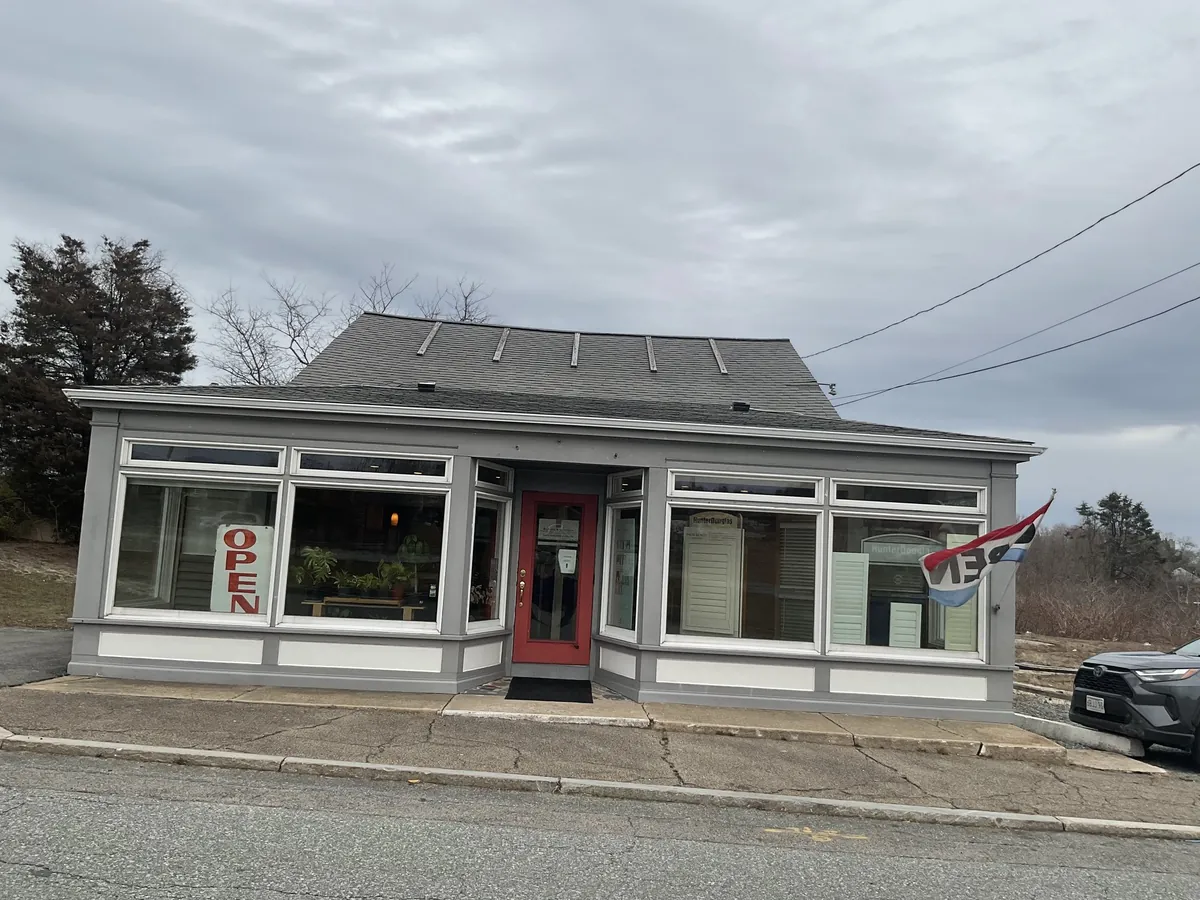
Our Sagamore showroom, just over the bridge
The Sagamore showroom is the closest of our locations to Sandwich, a short drive along the canal. If you like to see a product in person before we come to the house, it is the natural place to start.
Many customers do it the other way round: an in-home visit first, with samples at their own windows, and a stop at the showroom later if they want a second look. Either way the same Hunter Douglas dealer in Sandwich, MA handles the measuring, the order and the installation.
Questions from Sandwich
Can anything fit the very small sash in an antique cape?
Yes. Honeycomb and Roman shades can be made in narrow widths with slim headrails, and shutters are built to each opening. The question is usually frame depth, so we measure every window before recommending an inside or outside mount.
Will a treatment look right from the street in the historic district?
We suggest neutral backings and inside mounts so the street side stays calm and consistent, and painted shutters where a period look suits the house. Any formal approval the district asks for is between you and the district.
Do newer houses toward Forestdale need different products?
They have more choice rather than different needs. The openings are deeper and squarer, so nearly every Hunter Douglas line mounts inside. Sliders usually get Luminette or a vertical honeycomb shade that moves sideways.
What is the warmest option for a drafty front room?
A honeycomb shade, mounted close to the glass, is the usual first choice. For the coldest rooms a lined drapery panel over the shade adds a second layer.
Is the estimate free?
Yes. After we measure, you get a free estimate for the products and installation you are considering.
Where to go from here
The quickest way to know what suits your house is to see the samples against your own trim. Request a consultation and we will set a time to visit with the Hunter Douglas lines that fit your rooms, measure every window and leave you with a free estimate. Prefer a conversation first? Use the call button. Want to look around before anyone visits? The Sagamore showroom is the nearest stop, and you can talk to a Hunter Douglas dealer in Sandwich about your windows without any commitment.