
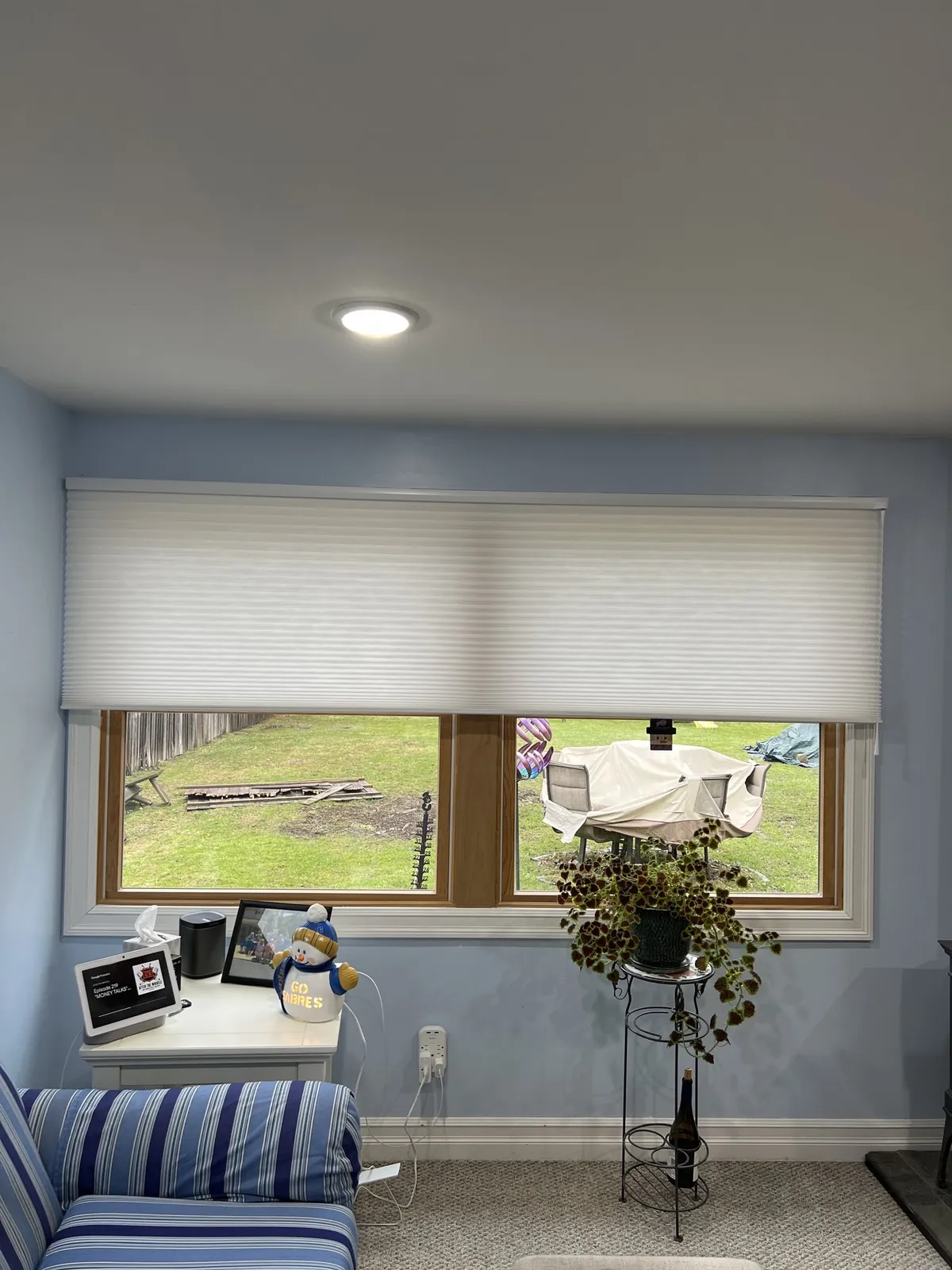
Two kinds of Franklin house, one cold pane of glass
Franklin has two housing stories, and they could hardly be more different. Around the common and up and down Main Street you find antique colonials and Victorians with tall, narrow sash, windows that were made for proportion, not for keeping a room warm. Across the subdivisions off Route 140 the houses are newer and much larger, with two-story entry glass that pours light into the front hall. Both end up asking the same thing when they look at cellular shades in Franklin, MA: how do we make the rooms beside the windows comfortable without spoiling the look of the house?
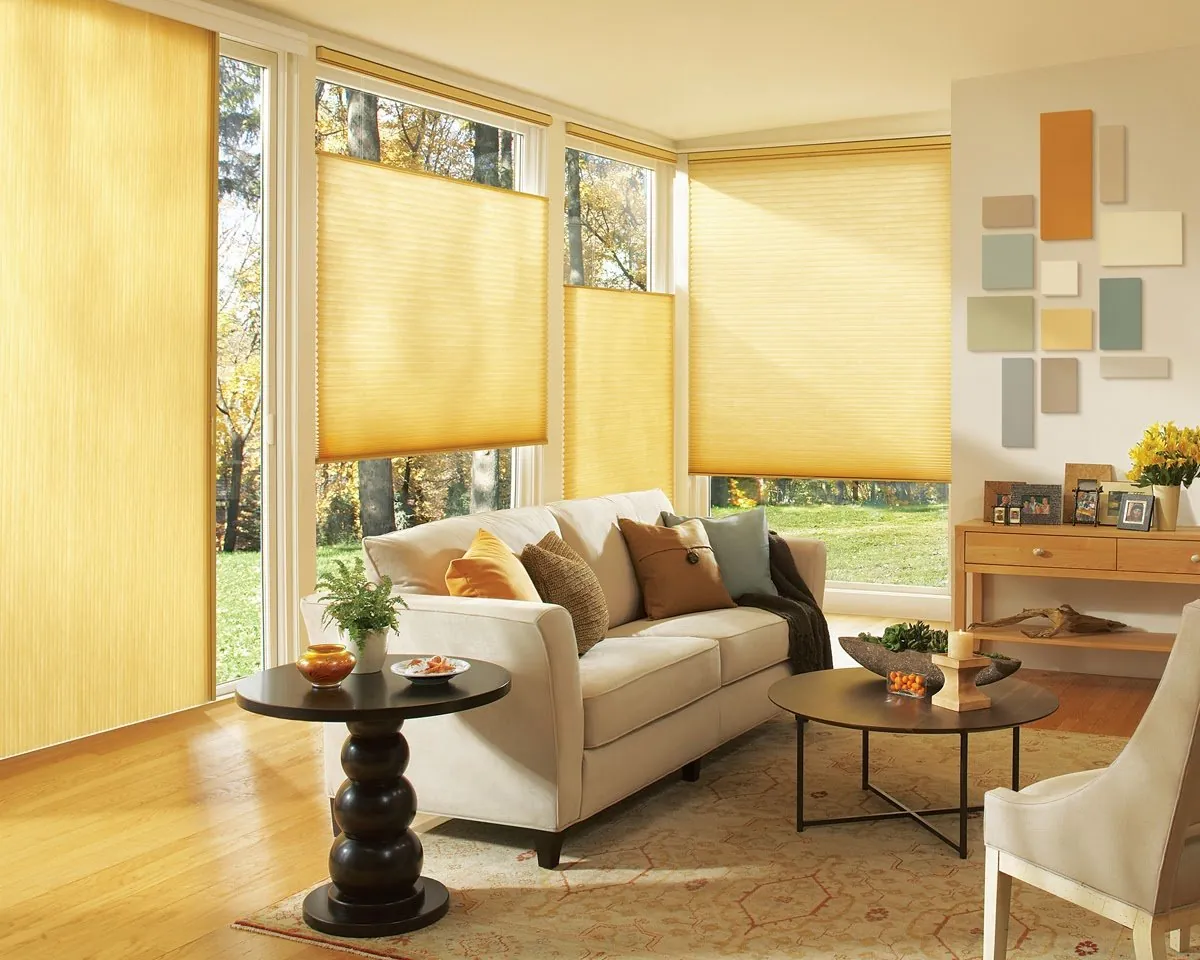
The answer starts with how the shade is built. Two layers of fabric are joined into a row of hollow tubes, and every tube traps a pocket of air that stays put once the shade is down. Air that is not moving is slow to pass heat along, so the January chill radiating from the pane takes longer to reach your chair, and the July sun beating on the glass takes longer to warm the room. In the antique houses that makes an old sash feel far less like a draught. In the newer houses it calms the big panes that turn a family room into a greenhouse by mid-afternoon.
Our Franklin showroom is right here in town, so you can see Hunter Douglas honeycomb in person before we ever measure a window.
Cellular shades in Franklin, MA, room by room
Every room asks something slightly different of a shade. These are the places we fit them most often, from the oldest houses near the common to the newest streets.
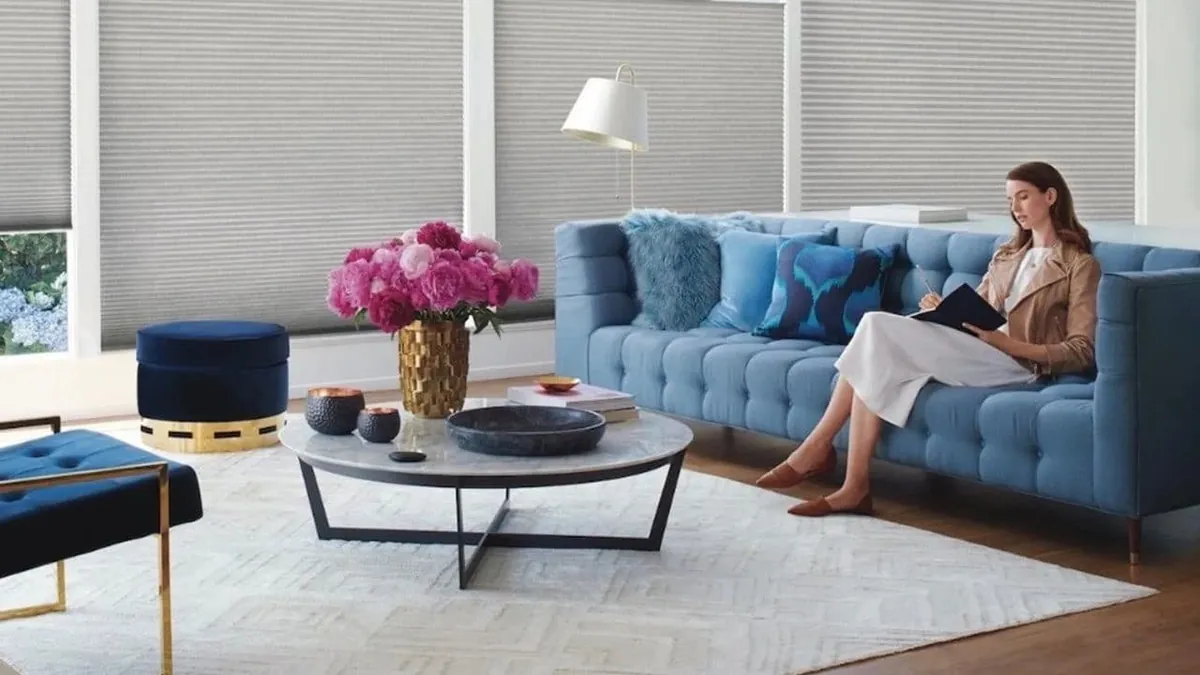
Front parlors with tall sash
A slim headrail tucked inside the casing, so the original trim stays on show and the pane stops chilling the sofa beside it.
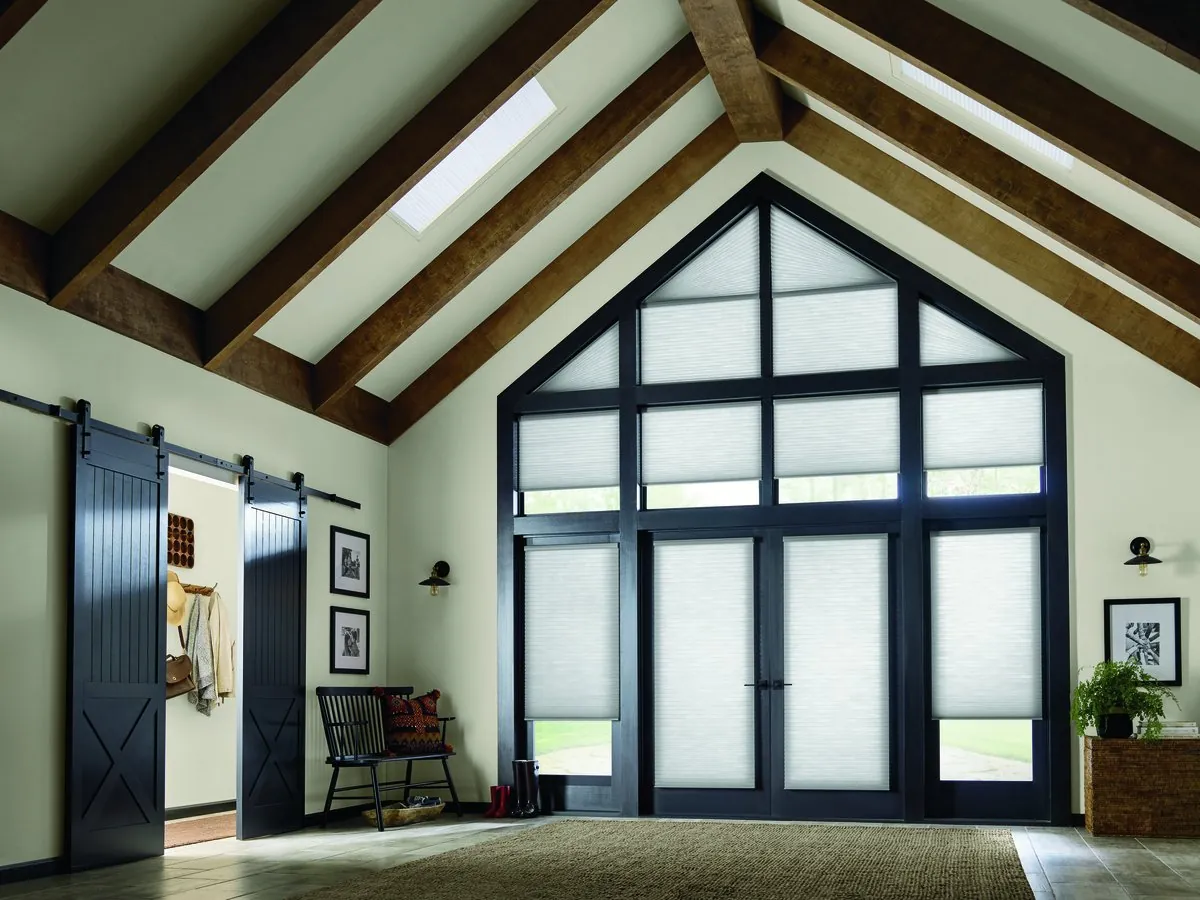
Two-story entry glass
Each pane gets its own shade, sized to line up, so the whole wall reads as one piece from the hall and from the driveway.
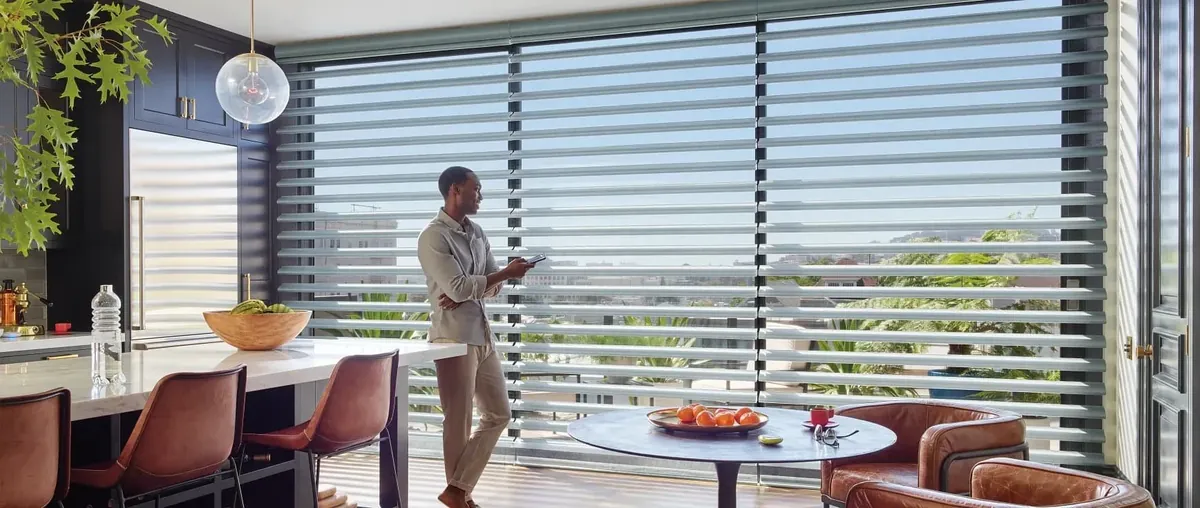
Stairwell windows
The window nobody can reach. PowerView motorization raises and lowers it from a phone, a remote or a schedule.
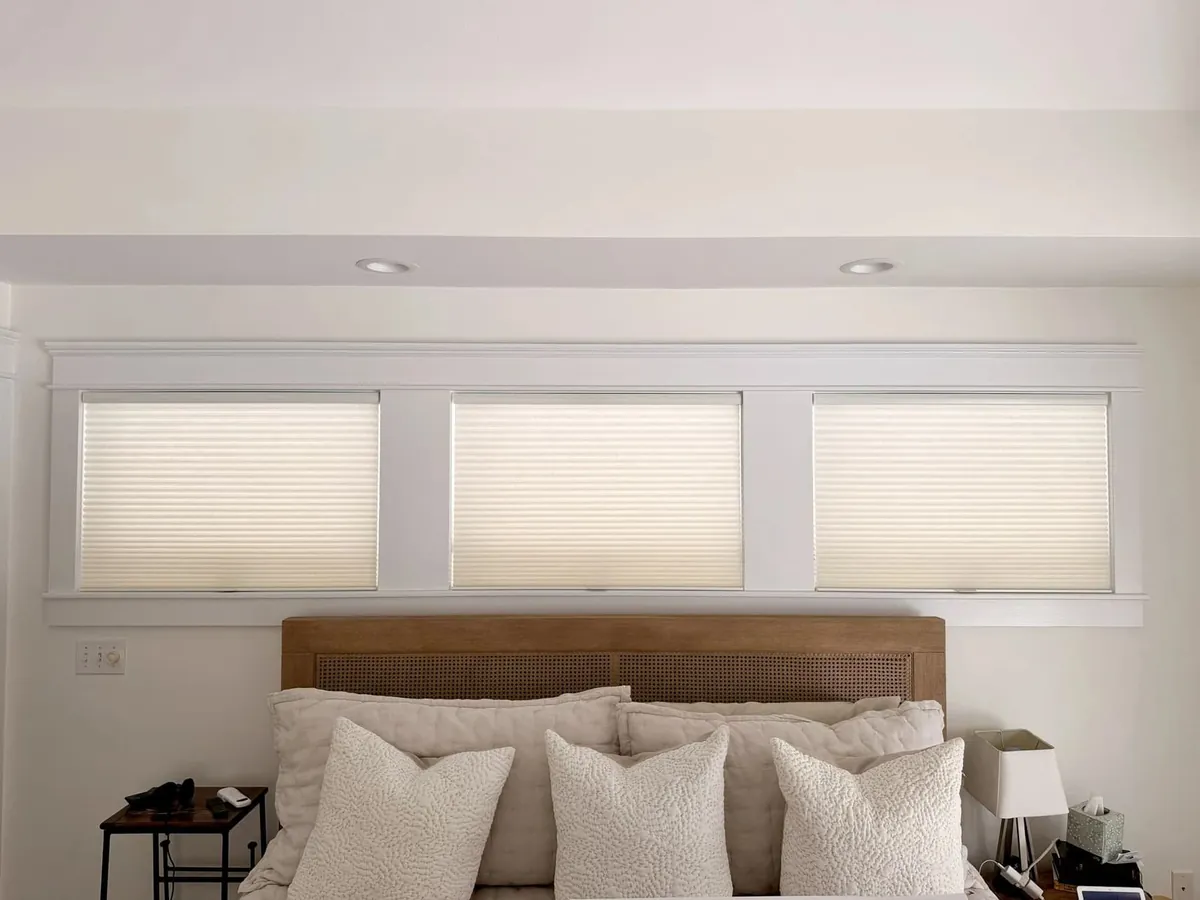
Bedrooms that need the dark
Room-darkening honeycomb fabric for the bedroom that wakes too early, with the cells still doing their insulating work.
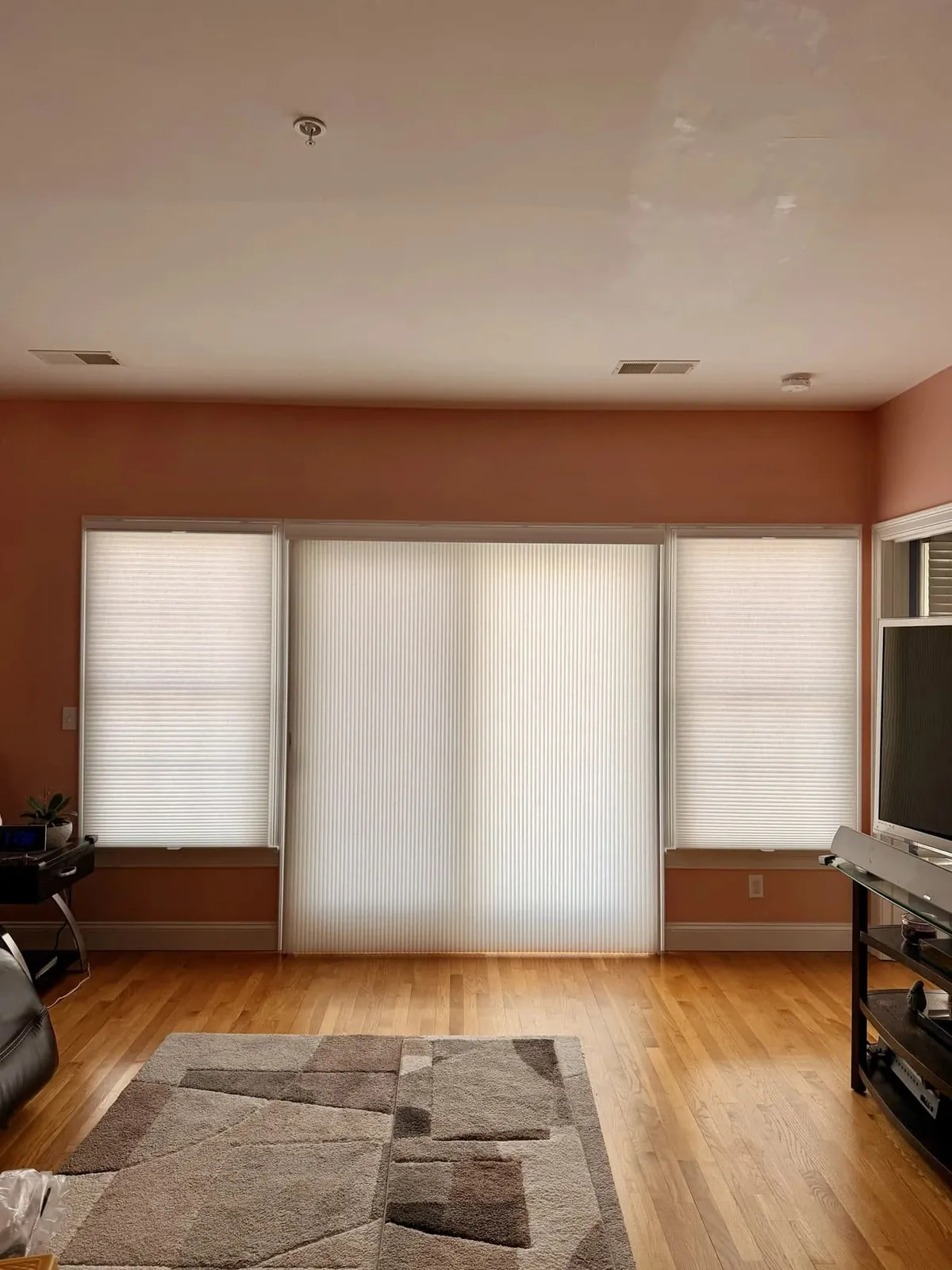
Family room sliders
A honeycomb shade turned on its side glides across the slider to the deck and parks beside the frame when the door is in use.
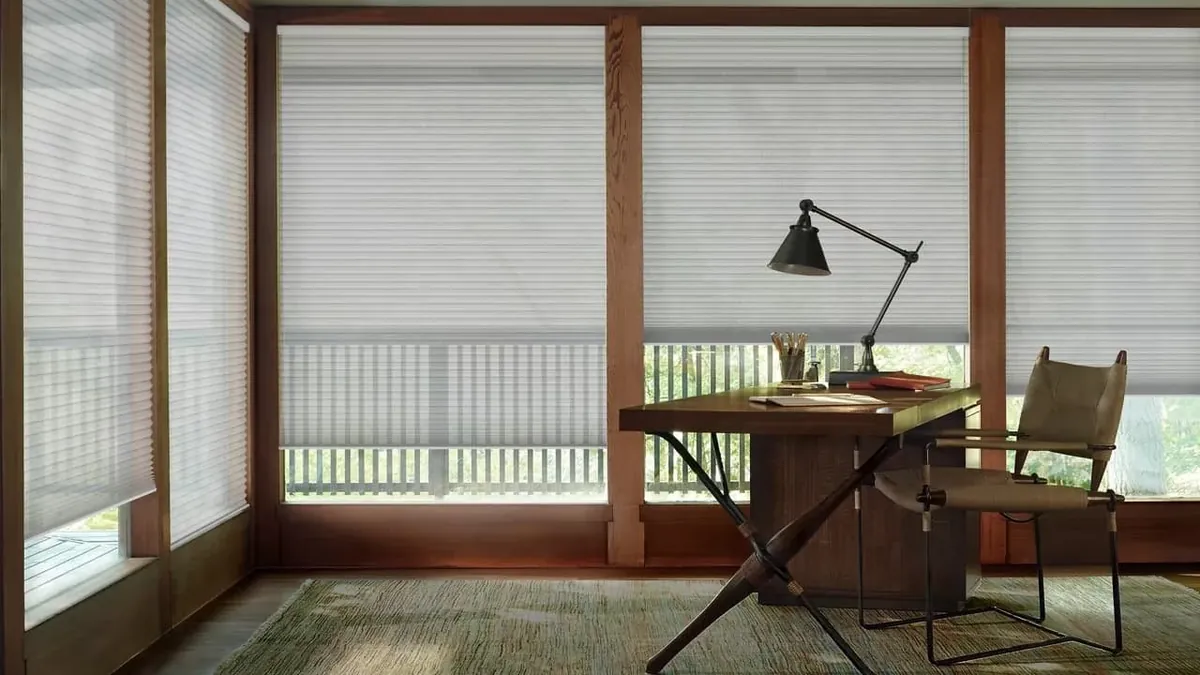
Home offices
Light-filtering fabric that takes the glare off a screen and still leaves enough daylight to work by.
Antique colonials around the common
The houses near the common and along Main Street were built when windows were tall and slim and glass was thin. Many still have their original sash, and plenty of the casings around them have been stripped, repaired and repainted with real care. A window treatment that hides that trim undoes the effort, so in these rooms we usually begin with an inside mount.
With an inside mount the headrail tucks up inside the opening itself. Raised, the shade gathers into a tidy band under the head jamb, and nearly all of the glass and every inch of the casing stay visible. Lowered, the fabric hangs a finger’s width from the pane, which is exactly where you want the cells when warmth is the goal.
The catch with an old frame is depth and squareness. The pockets for the old counterweights, the pulleys at the top of the jamb and the strips that separate the two sashes all eat into the room a headrail needs. A frame that has settled since it was built is seldom as wide at the head as at the sill. So we take several readings across each opening before we suggest how to hang the shade. Where the frame is too shallow, we mount the shade on the face of the casing instead, chosen so it still sits neatly against the trim.
Victorians on Main Street
The Victorians near the center add their own puzzles: bay windows, slim lights either side of the front door, first-floor windows that nearly touch the ceiling. Honeycomb handles all of them. The shades are made to order for slender side lights and for a parlor window taller than most doors, and a bay is treated as a set, one shade per window, all built to the same drop.
In a bay we pay close attention to how the shades sit when they are raised. Three folded bands at an even height across the bay look calm and deliberate. Three bands at slightly different heights look like an accident, however well the shades are made. Measuring every window of the bay on its own and matching the stack heights is a small extra step with a large payoff.
Bay windows on the older Victorians also tend to be the warmest seat in the house in the morning and the coldest at night, because three walls of glass surround the chair. A honeycomb shade on each face of the bay changes how usable that corner is through the winter. Of all the requests we get for cellular shades in Franklin’s older neighborhoods, the cold bay window is probably the most common, and it is one of the most satisfying to solve, because the difference is felt the first evening the shades come down.
The newer colonials off Route 140
Drive out through the subdivisions off Route 140 and the windows change completely. The houses are large and the openings are modern and standard, which makes measuring simple, but there are a lot of them, and the front of the house is often dominated by a tall wall of entry glass stacked over the front door.
That glass is lovely in the morning and hard work later in the day. A foyer facing south or west can get surprisingly warm, and the sun crossing the upper panes can reach right across the hall onto the stairs and the wood floor. In winter the same glass becomes the coldest surface in the house. Honeycomb on every pane slows the heat in both seasons and softens the light without turning the hall gloomy.
Because these houses have so many windows, it pays to think about the whole house at once. Keep one fabric family and one way of operating the shades in every room, and the front elevation looks orderly from the road, while the opacity can still change from room to room: light-filtering in the kitchen and family room, room-darkening upstairs. Bonus rooms over the garage, common in these houses, are worth singling out, because they have cold air beneath them as well as beside them and usually feel it first when the weather turns.
The stairwell problem
The stairwell windows in the newer Franklin houses are the hardest reach in town. They usually sit halfway up a two-story stair, above a drop, with nowhere comfortable to stand. A corded shade in that spot tends to stay in one position for years because nobody wants to bring a ladder in to move it.
This is the window where PowerView motorization makes the most sense. A small motor hidden in the headrail does the lifting, and you control it from the PowerView app, a handheld remote or a timetable you program once. A common setup is for the stairwell and foyer shades to come down through the hottest hours and go back up at breakfast, so the house looks after itself while you are at work.
How the motors are powered, and how the remote and app are paired, is part of the conversation at your consultation. Our certified Hunter Douglas installers then mount the brackets and connect the shades on the day of the fit. If you are motorizing more than the stairwell, our page on motorized blinds in Franklin goes further.
Duette or Applause, window by window
Duette and Applause are both genuine Hunter Douglas honeycomb, and in both the trapped air is what keeps a room comfortable. Where they part company is choice. Duette is the bigger collection: more textures and colors, more sizes, the shapes that tall Victorian sash and oversized entry glass tend to need, and a sideways-travelling version for sliders. Applause is the more focused line, with a palette of its own that sits very comfortably on the ordinary openings of kitchens, bedrooms and offices.
Many Franklin orders use both. In an antique colonial, Duette often goes in the formal rooms at the front, where the fabric sits against old trim, while Applause handles the kitchen and the upstairs. In a newer house, the foyer and stairwell might take Duette because of the size of the glass, with Applause across the bedrooms. The Duette and Applause pages describe each line, and our cellular shades page sets out every honeycomb option we fit.
Single cell, double cell and how much light you want
The other big choice is the cell itself. A single-cell shade is lighter and folds into a slimmer band when raised, which suits narrow antique sash where every bit of glass counts. A double-cell shade layers one row of tubes behind another, so there is a second blanket of still air between the glass and the room. It earns its place in the chilliest spaces, such as a bedroom on the north side or the room built over a garage in a newer house.
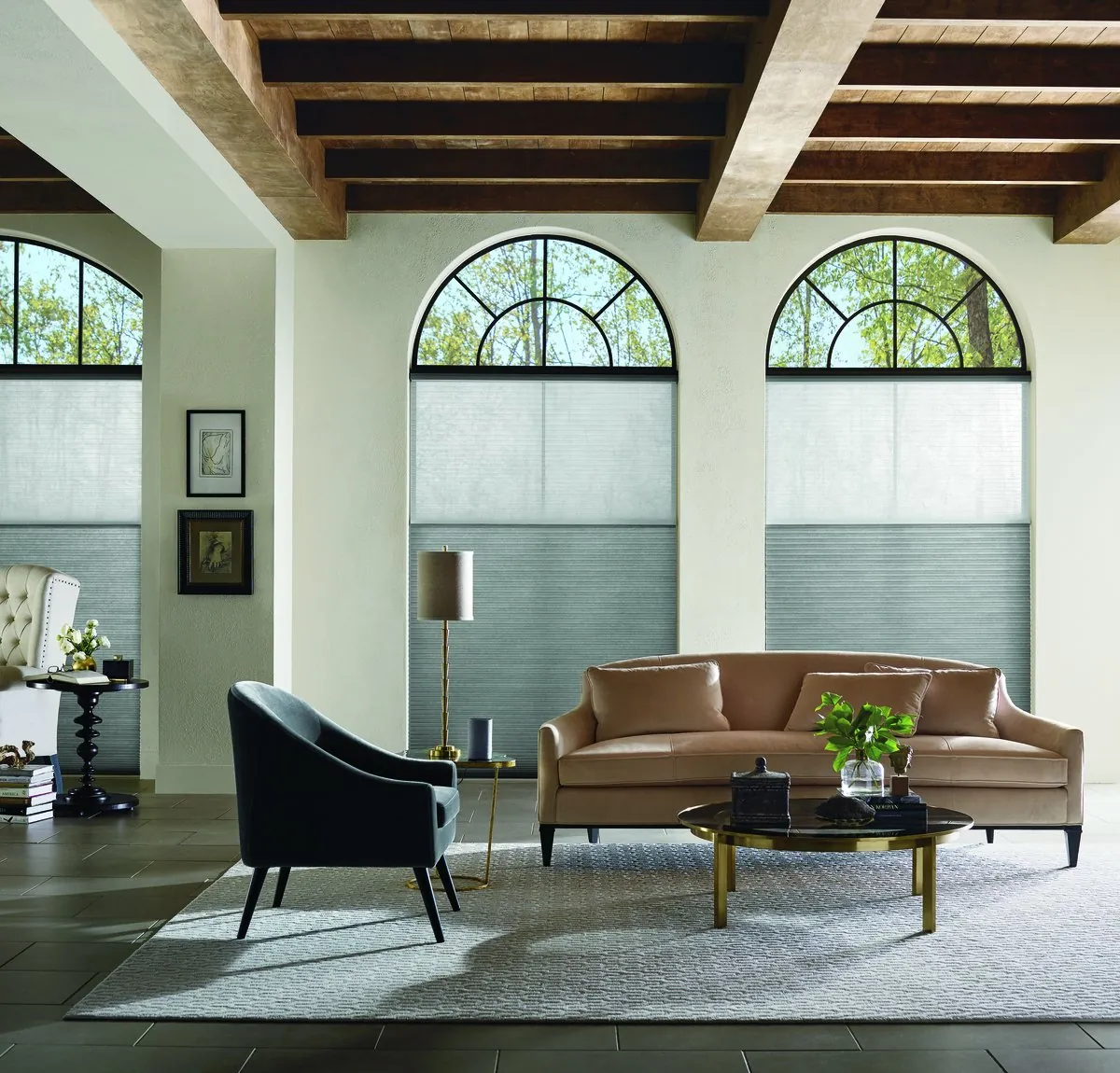
Opacity is a separate decision. Sheer and light-filtering fabrics let daylight through but blur what is behind them, so a room stays bright and still feels private during the day. Room-darkening fabrics hold back almost all the light and belong in bedrooms and media rooms. For a front room close to Main Street, a top-down, bottom-up shade can open at the head for sky while the lower glass stays screened from the sidewalk.
Bringing the samples to your house
Choosing cellular shades in Franklin is far easier with the real fabric against your own glass. Our vans carry samples, so we can bring the showroom to you. A home visit is often the better first step when the real question is how a color behaves in one particular room at one particular hour.
- Book a time through Request a Consultation or the call button.
- Tell us which rooms bother you most, the cold ones, the bright ones or the ones nobody can reach, and we begin there.
- Try the honeycomb fabrics at each window, comparing color and opacity as the light actually falls in that room.
- Decide how each shade should operate, by hand, cordless or with PowerView for the stairwell and upper entry glass.
- Every opening is measured, with the frame depth checked for an inside mount.
- A free estimate follows for the shades you have picked, and you take whatever time you need to decide.
If you are also rethinking color and fabric for a whole room, ask about our interior design consultations. Our page on what happens at an in-home consultation explains the visit in more detail.

Fitting the shades
Measuring is where a made-to-measure shade succeeds or fails, and older Franklin frames reward patience.
- Three widths are recorded on each opening, high, halfway and low, and an inside mount is built to the tightest one.
- Three heights are recorded as well, one at each side and one in the middle.
- The depth where the headrail will sit is noted, along with anything in the jamb that might get in the way.
- You sign off each window’s mount, operation and fabric before the order is placed.
- On installation day our certified Hunter Douglas installers hang each shade, check it is level, run it up and down, and walk you through the controls.
A shade built to those numbers leaves only a sliver of light at each side of the frame. That looks tidier, and it also stops warm air slipping past the edges.
See honeycomb shades at our Franklin showroom
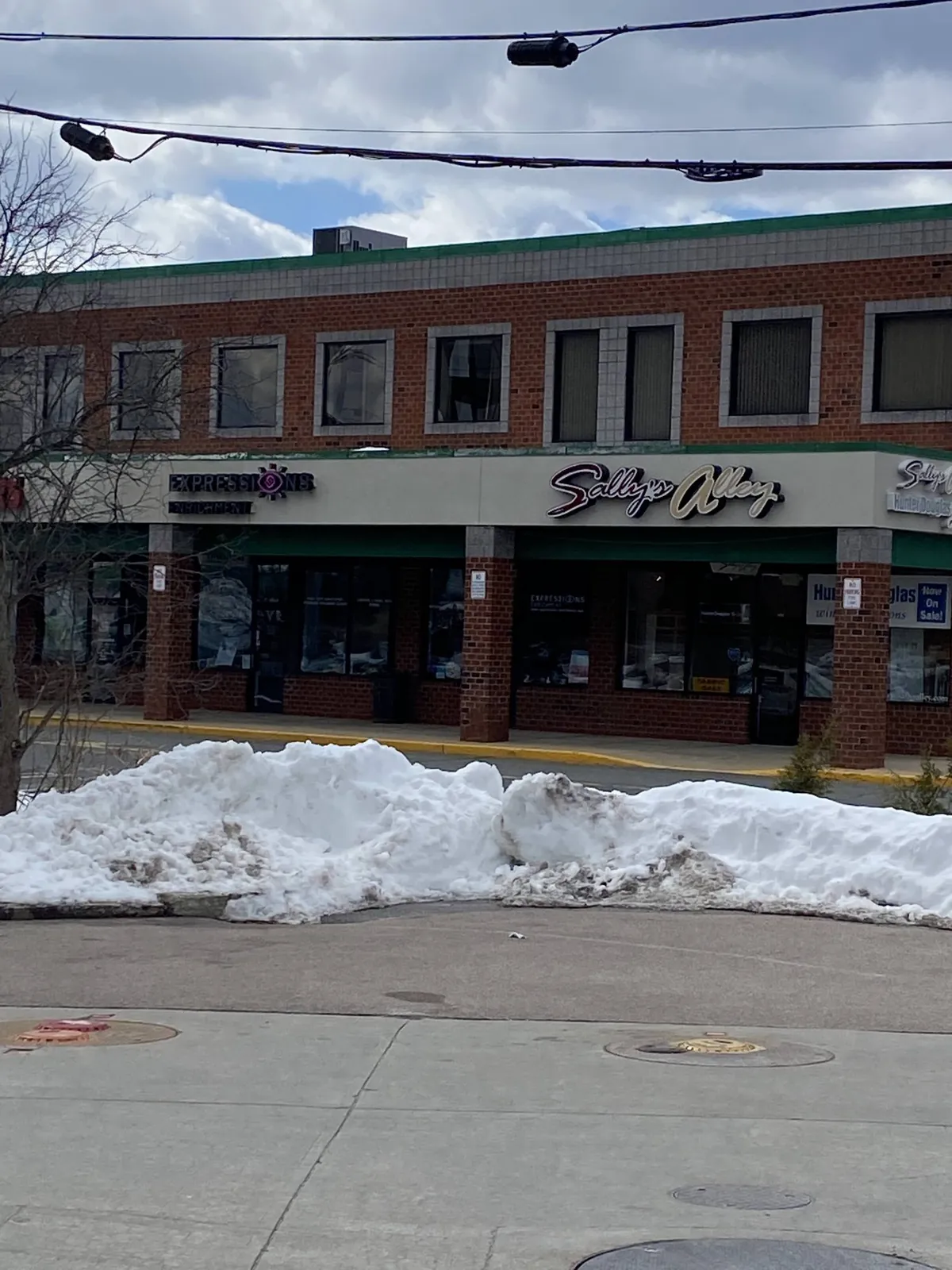
You do not have to go far to see these shades in person. Our Franklin showroom is in town, a short trip for a first look at Hunter Douglas honeycomb shades and a chat about your windows before anyone measures them.
You can stop in first to narrow the field and then book a home visit to measure and check your favorite fabrics in your own rooms, or do it the other way round. Either order works, and the estimate is free.

What a Gallery dealer brings to the job
Hunter Douglas reserves its Gallery dealer title for the dealers it ranks highest, and Blinds & Designs holds it. For a Franklin house that means you are choosing from the complete honeycomb collection, Duette and Applause in every fabric, the sideways shade for sliders and PowerView motorization, without being steered toward whatever happens to be in stock.
Installation is done by our own Hunter Douglas certified installers, who hang the shades to the maker’s standard. If an older blind or shade elsewhere in the house is giving trouble, we offer blind and shade repair in Franklin as well. And because we carry blinds, shutters, roller and roman shades and drapery too, a single visit can plan every window. See everything we offer locally on our Franklin page, or look at plantation shutters in Franklin for the antique rooms.
Questions from Franklin
Will a honeycomb shade fit inside the frame of my antique sash?
Often it will, though the answer turns on how deep the jamb is and how true the frame has stayed. We take several readings and look for anything in the jamb that would block a headrail. Where there is not enough room, the shade goes on the face of the casing instead, and we explain the choice window by window.
How do you cover a two-story wall of entry glass?
Each pane gets its own shade, built so the edges and bottom rails line up across the wall. The upper panes are usually motorized with PowerView so you never need a ladder, and the lower panes can be motorized as well or worked by hand.
Can I set the stairwell shade to close by itself?
Yes. With PowerView, the shade follows a timetable you set in the app, coming down for the hot hours and rising again in the morning, for example. You can still move it from a remote or your phone whenever you like.
Should I start at the showroom or at home?
Either works. The Franklin showroom is the quickest way to see Hunter Douglas honeycomb in person. A home visit lets you see those fabrics in your own light and gets every window measured. Many people do both.
Do I pay anything to get a figure for my windows?
No. Once the windows are measured, the estimate for your chosen shades is free.
Ready when you are
Seeing cellular shades for Franklin homes in your own rooms settles most questions quickly. Use Request a Consultation and we will arrive with the honeycomb range, measure each opening and leave you with a free estimate. Prefer to look first? Drop into the Franklin showroom, or tap the call button to talk to the showroom.