
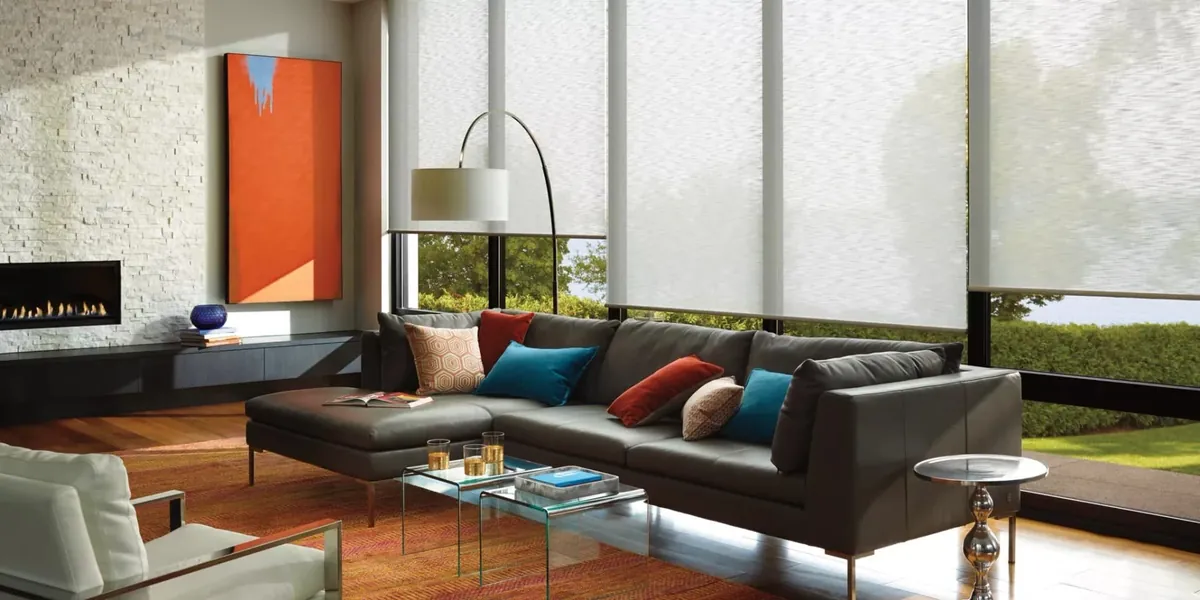
What Bellingham’s capes and ranches ask of a shade
Drive Hartford Avenue or South Main and most of what you pass is post-war: capes with dormers tucked into the roof, single-story ranches with a broad front window, and newer colonials built on the lots in between. The good news for anyone ordering roller shades in Bellingham, MA, is that most of these houses have standard modern window openings. Square frames, sensible depths and sizes that repeat from room to room make a roller simple to fit and easy to match across the whole house.
The exceptions are worth knowing about. The older village houses still have small original sash, some of it narrow enough to change which mount we suggest. And the cape bedrooms under the roof and the ranch living rooms facing the road each have their own problem: one takes early sun, the other sits in plain view of the street.
A roller shade answers both with the fabric, not the hardware. That is why the first part of any visit is spent on light and privacy, room by room.
Three ways a roller handles the light
Every Hunter Douglas roller comes down to one choice: what the fabric lets through. These are the three families we bring samples of.
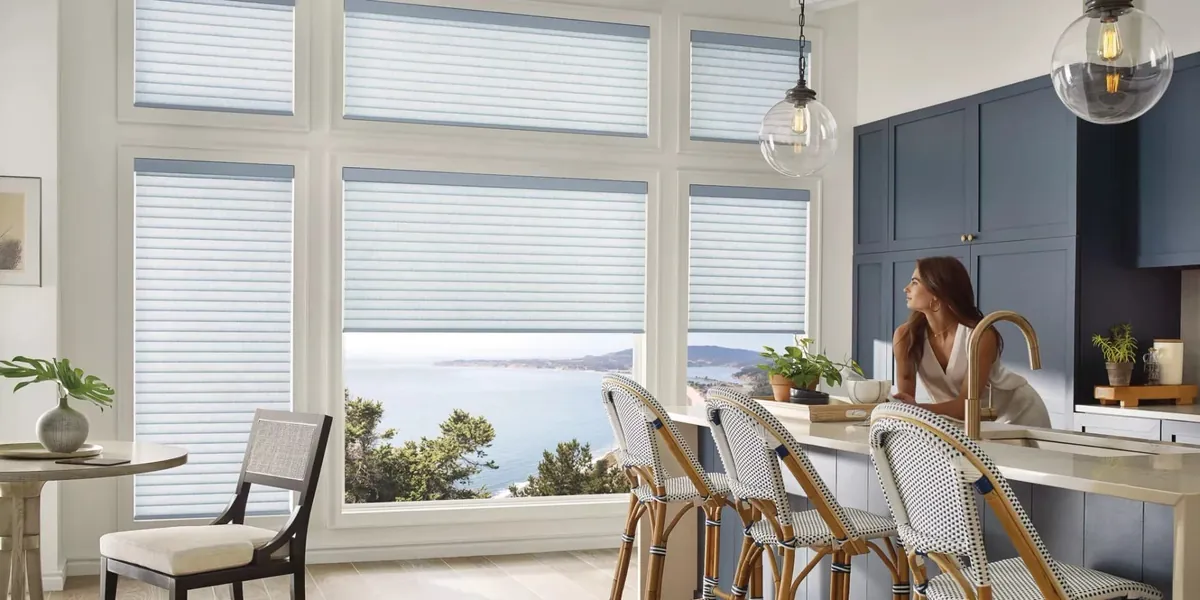
Light filtering
Daylight comes through soft and even, and the view blurs enough for privacy. The usual pick for kitchens and living rooms.
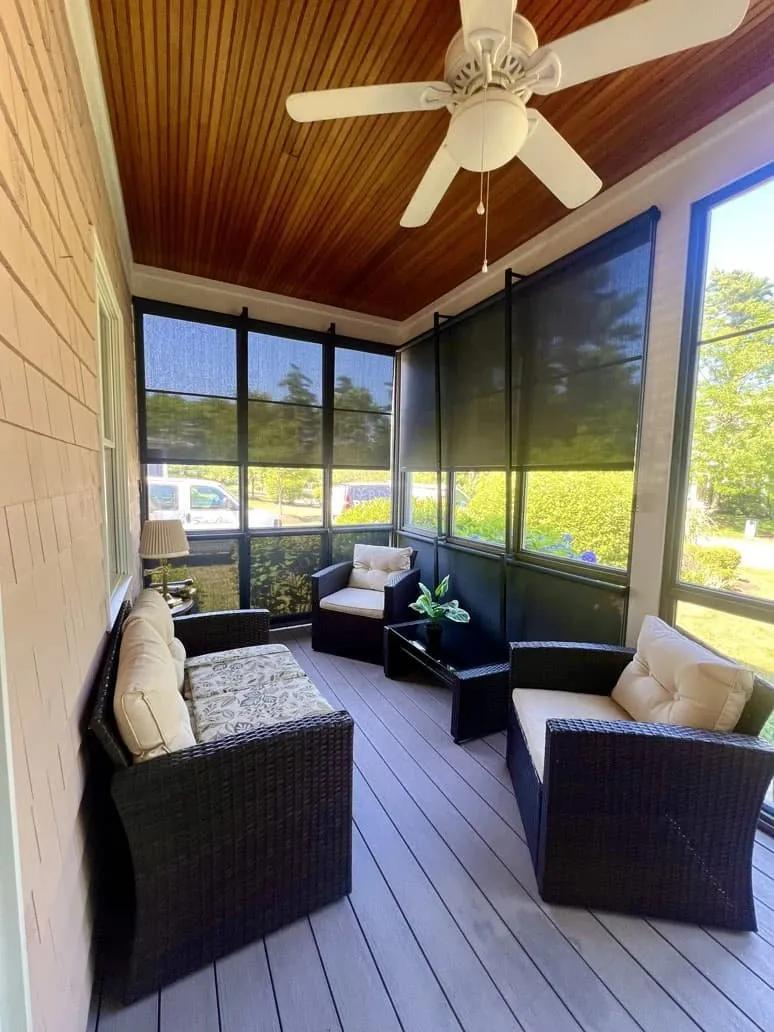
Solar screen
An open weave that cuts glare and heat while you still see the yard. Good for sunrooms, porches and west windows.
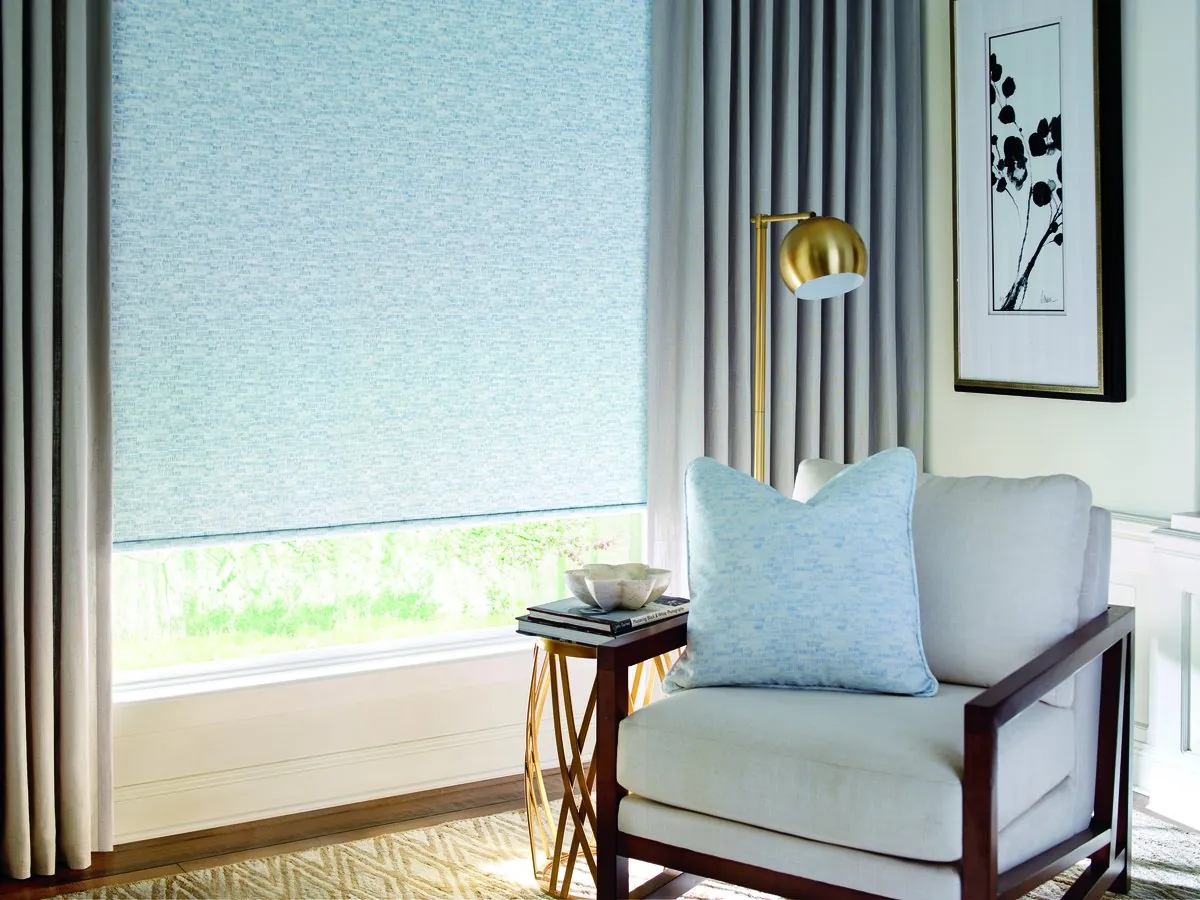
Room darkening and blackout
Dense fabric for bedrooms and media rooms, from mostly dark to no light through the cloth at all.
Why standard openings make life easier
In a house built with modern windows, the frame is usually square and the depth is enough for an inside mount. That means the headrail tucks up inside the opening, the fabric hangs flush with the trim, and the window looks finished without any hardware on the wall. Most of the newer colonials in town and a good share of the ranches fall into this group.
Repeating sizes help as well. When the bedroom windows on one side of a colonial all match, every shade can be made to the same measurements and set to the same height, so the house looks tidy from the road with every shade at one line. We still measure each window individually, because two openings that look the same are sometimes an eighth of an inch apart, but the result is a set of shades that line up.
Standard openings also leave more choice of controls. A cordless roller works well on a window you can reach easily. A continuous loop or chain suits a wider shade that is heavier to lift. PowerView motorization fits any of them, which we come back to further down.
Cape bedrooms under the roof
A Bellingham cape usually puts its bedrooms upstairs, under the slope of the roof, lit by dormer windows. Those windows are small, set back in a short tunnel of wall, and often face east or west. Morning sun through an east dormer lands right on the bed, and in summer the whole upstairs warms up fast once the sun moves round.
A blackout roller is the simplest fix for a dormer. It fits neatly inside the opening, rolls up out of the way, and stops the light coming through the fabric. The dormer’s own recess helps, because it shades the thin gaps at the sides of the shade, so a dormer bedroom often ends up darker than a flat-walled room with the same fabric.
For a child’s room or a guest room, a light filtering fabric is often enough. For a room where someone works nights or sleeps late, blackout is the honest recommendation.
The low knee walls in a cape bedroom often put furniture right under the dormer, so the shade’s control matters too. A cordless roller you can reach over a dresser is easy; a dormer above a bed or a built-in desk is a good place for a small PowerView motor and a remote on the nightstand.
Ranch living rooms that face the road
The single-story ranches along Hartford Avenue were built with a big window at the front of the living room, a few steps from the sidewalk. By day, a solid shade means giving up the light. Open curtains mean the room is on show.
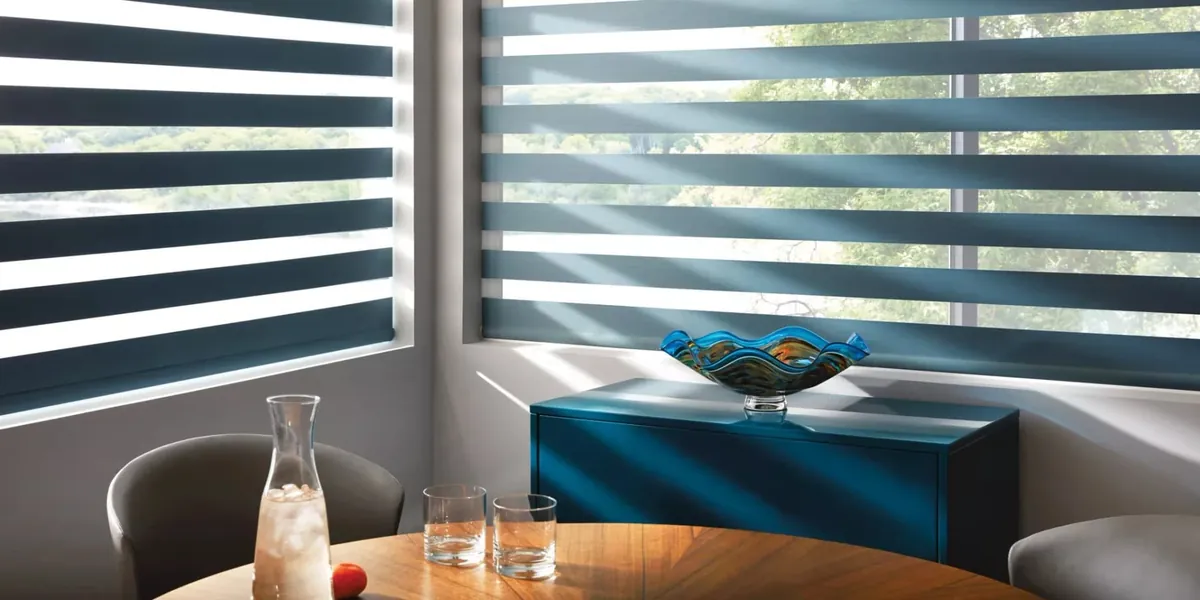
This is where a banded shade earns its place. Designer Banded has alternating stripes of sheer and solid fabric on two layers. Line the sheer stripes up and you see out through them. Shift the shade a little and the solid stripes cover the sheer ones, closing the view from outside. It handles the daytime privacy question without making the living room dark.
A light filtering roller is the other common choice for a front window. The fabric glows in daylight, so the room stays bright and people outside see a soft panel rather than the room behind it. At night, with lamps lit, a heavier fabric is the better choice, and we can show you how each sample looks from the sidewalk side as well as from the sofa.
Newer colonials on the lots in between
The colonials built between the older capes and ranches tend to be larger, with an open kitchen and family room across the back, a formal room or office at the front and four or five bedrooms upstairs. Their windows are modern and generous, often in pairs or threes, and a family room may have a slider or French doors out to a deck.
Paired and triple windows raise a question we ask in every one of these houses: one shade per window, or one shade across the lot? Separate rollers let you lower one window and leave the next open, and they sit neatly inside each frame. A single wide shade mounted over all of them looks cleaner and closes the gaps between windows, though it moves as one panel. On a long back wall, several rollers on one shared headrail give you the clean line with independent control.
Home offices at the front of these houses are a common request. A tight-weave solar screen takes the glare off a monitor while keeping enough daylight that the room does not feel shut in. For roller shades in Bellingham, MA, that front office and the family room television wall are where screen fabric does most of its work.
West windows and the afternoon sun
Plenty of lots in town run so that one long side of the house faces west. In summer, those windows take the strongest sun of the day from mid-afternoon to evening, low enough to reach far into the room. Furniture by the glass fades, a family room gets warm, and a kitchen can be uncomfortable right when dinner is being made.
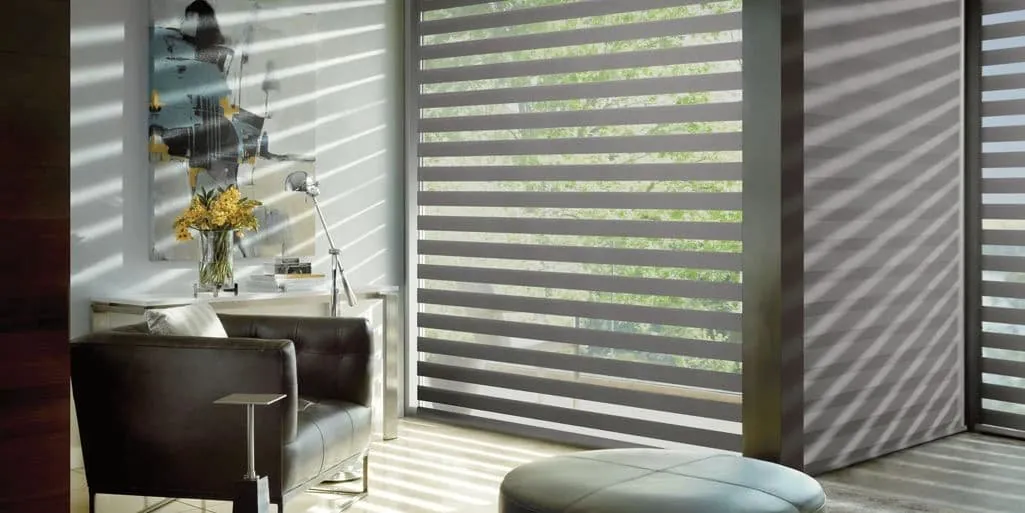
A roller handles west sun in two ways. A solar screen lowered in the afternoon breaks up the glare and some of the heat while leaving the view of the yard. A light filtering or room darkening fabric shuts the sun out more fully. Many customers choose a screen for the kitchen, where they want to keep looking out, and a denser fabric for a west bedroom.
Timing is the other piece. A shade only helps when it is down, and nobody remembers to lower every west shade at three o’clock. PowerView schedules handle that, lowering the shades on that side of the house each afternoon and raising them again in the evening.
Small sash in the village houses
The older houses in the village carry their original windows: small panes, narrow sash and deep, slightly uneven frames. Rollers fit them, but there are limits. Every roller has a smallest width it can be made at, and the fabric always stops a little short of the end of the tube, so a very narrow window shows a light gap on each side that is proportionally bigger.
On those windows we look hard at the outside mount. Fixed to the casing above the opening and made a little wider than the glass, the shade covers the gaps and still clears the trim. If you would rather keep the old casing completely clear, an inside mount with a light filtering fabric makes the gaps far less noticeable than a dark fabric would.
Where the sash is too small or too shallow for any roller to sit well, we will say so and suggest another shade. Cellular shades in Bellingham come in narrower sizes and suit small, cold windows, and plantation shutters in Bellingham work on many older frames.
Your visit, start to finish
Choosing roller shades in Bellingham, MA, is far easier with the samples against your own walls. Our vans carry the full roller range, so we can bring the showroom to you, whether you want one dormer done or the whole house.
- Book through Request a Consultation or the call button and choose a time.
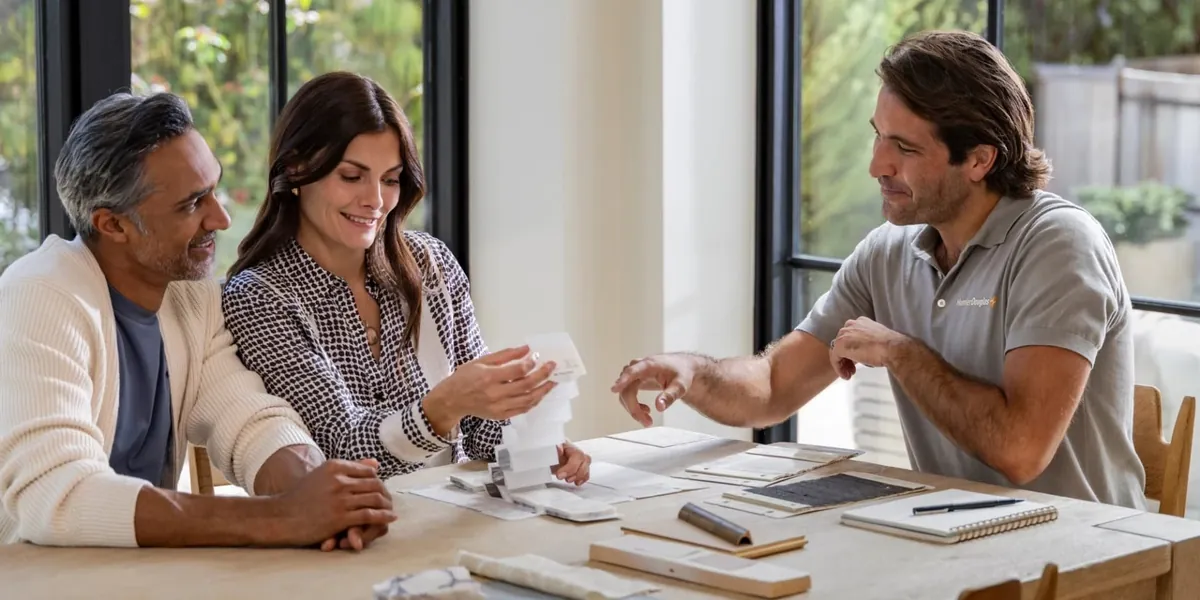
- We look at each room with you and ask what bothers you about it now: the sun, the street, the heat or the glare on a screen.
- You try light filtering, screen, banded and blackout samples at the windows themselves.
- We measure, check depth and note anything that changes the mount.
- You receive a free estimate, and you take as long as you like to decide.
If you want a second opinion on color or fabric for the room as a whole, our interior design consultations can be part of the same visit.
Openness on a solar screen, in plain terms
Solar screen is a woven fabric with tiny gaps across it, and the size of those gaps is called the openness. More open means a clearer view and more daylight, but more glare and more heat through the glass. Tighter means less glare and better daytime privacy, but the yard behind it looks softer.
Color matters nearly as much. Dark screen fabric reads as almost transparent from inside, because it soaks up light rather than bouncing it into your eyes. Light screen fabric keeps the room brighter and looks more like a solid panel from inside, with a hazier view.
For the back of a ranch or a colonial family room facing west, a medium openness in a darker color is often where people end up. We bring a range so you can compare at the window. One thing to remember is that a screen is see-through at night when the room is lit, so it suits rooms that face the yard better than rooms that face the road.
Lift choices, cordless to PowerView
How a roller goes up and down matters as much as the fabric over the years you live with it.
- Cordless: you lift or lower the bottom rail by hand. Clean to look at, with nothing hanging down, and best on windows you can reach.
- Continuous loop: a loop of chain at one side raises and lowers the shade. Useful on a wide shade that would be heavy to lift by hand.
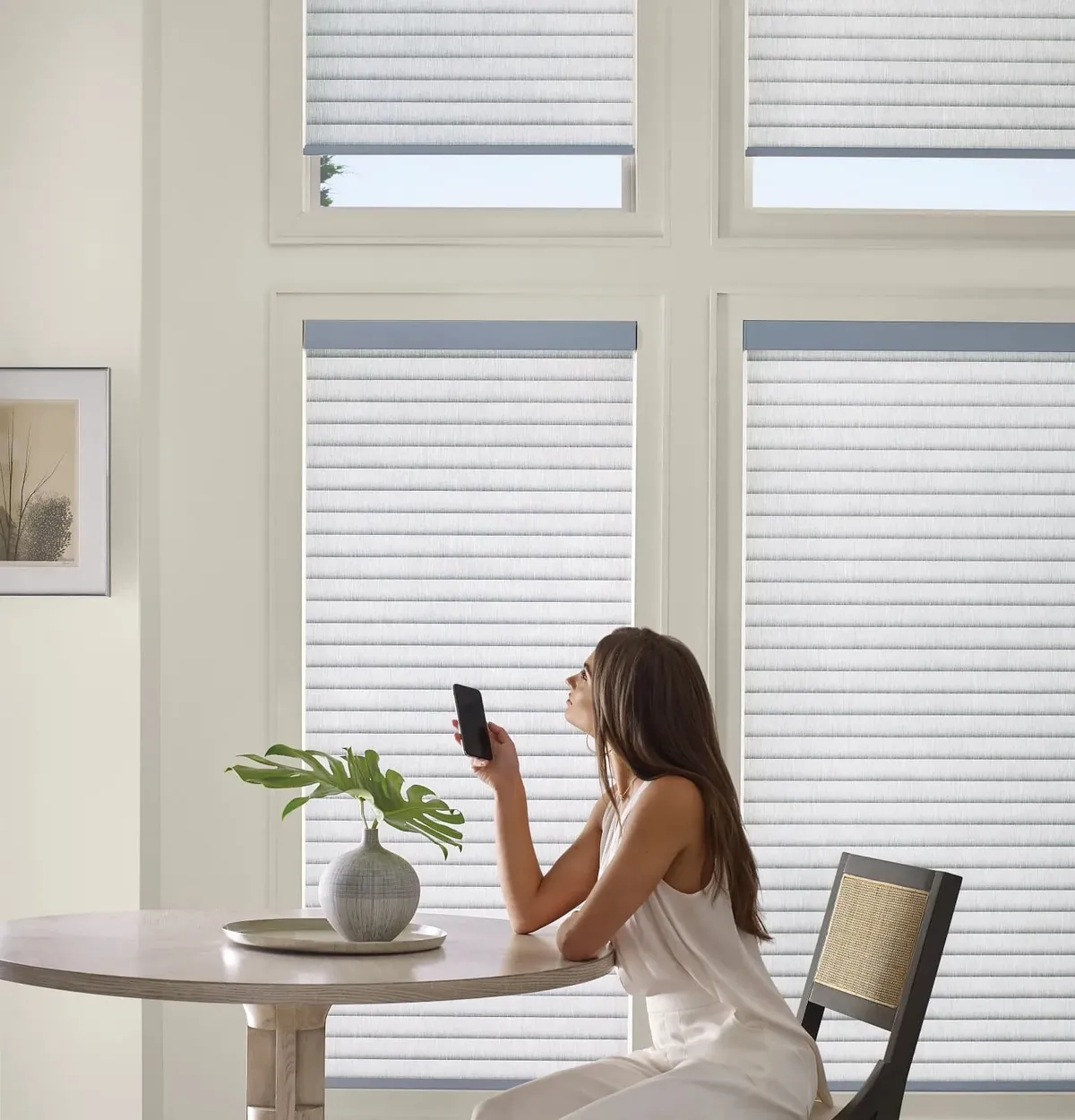
- PowerView motorization: the shade runs from your phone, a remote or a timed schedule.
Motorization is not only for big houses. In a cape, it lets you lower every upstairs shade from the bottom of the stairs on a hot afternoon. In a ranch, it lets the front window close at dusk on a schedule. See motorized blinds and shades in Bellingham for more.
How the house looks from outside
A detail most people miss until we mention it: from the street, you see the back of every shade in the house. In a colonial with a row of front bedroom windows, three different fabric colors look patchy from the road even if each room looks right inside.
There are a few ways to keep it even. Choosing fabrics in one color family for the street side is the simplest. Some roller fabrics have a neutral backing, so different room colors still read as one tone from outside. Setting the shades to the same height, by hand or on a PowerView schedule, finishes the look.
The back of the house matters less, and many customers choose freely there: a bold fabric in the family room, blackout in a bedroom, a screen on the slider.
Gallery dealer, certified installers
Blinds & Designs is a Hunter Douglas Gallery dealer, which is Hunter Douglas’s own name for dealers who meet its standards. For your roller shades in Bellingham, MA, that means every line in one place: Designer Roller, Designer Screen, Designer Banded, Sonnette and both Alustra ranges, with every lift option and PowerView motorization.
Our installers are certified by Hunter Douglas. They fix each bracket solidly, level every headrail, run each shade through its full travel and show you how the controls work before they leave. If anything needs attention later, we offer blind and shade repair in Bellingham as well.
The main roller shades page goes through each Hunter Douglas line, and the Bellingham page lists everything we do in town.
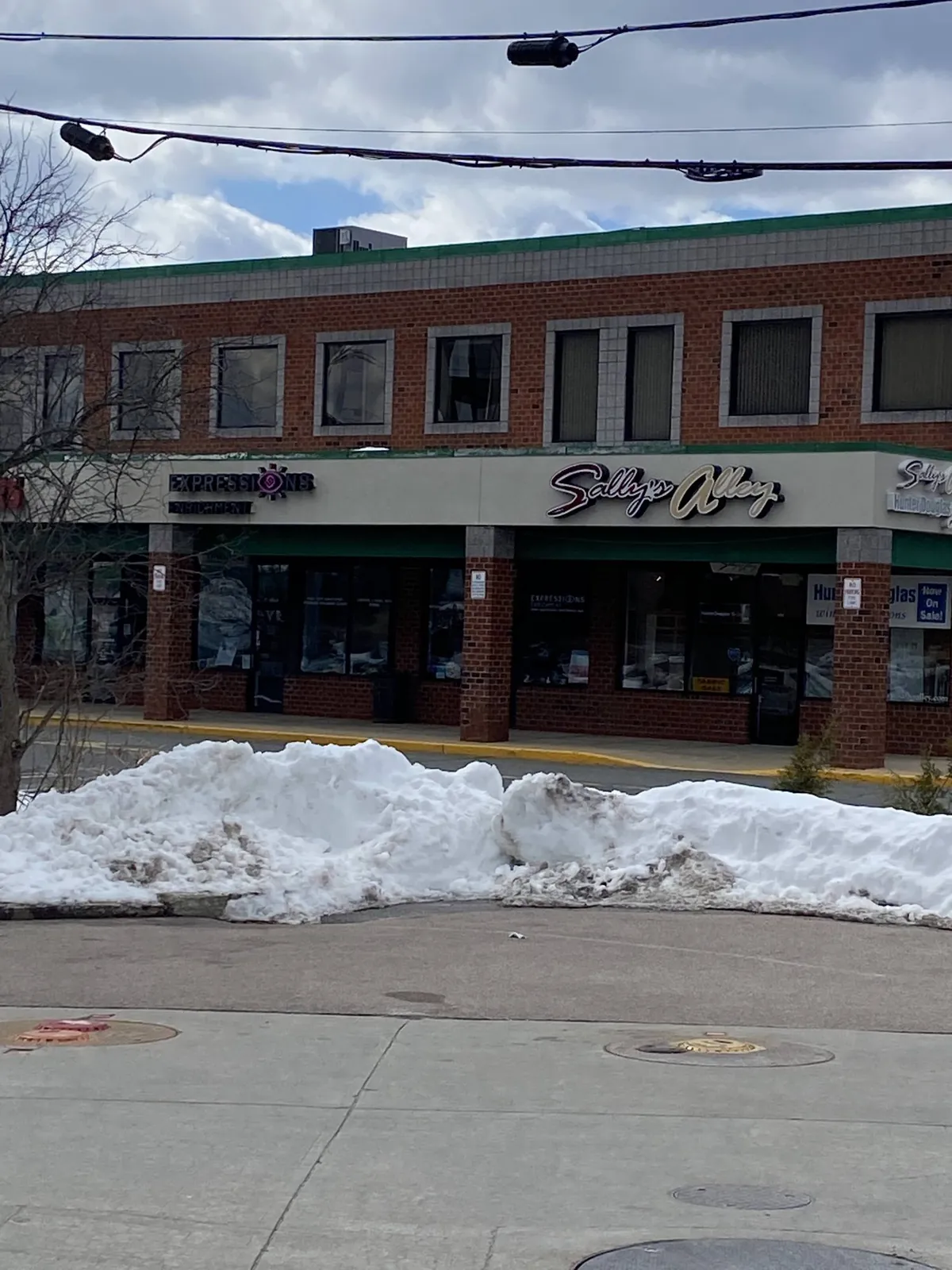
Prefer to see them first
Bellingham sits right next to Franklin, so our Franklin showroom is the nearest place to see shades in person. You can stop in, then book a home visit to try the fabrics you liked against your own windows.
If you would rather not make the trip, that is fine. Most roller orders are settled at home anyway, because the light in your rooms is what decides the fabric.
Questions from Bellingham
My windows are all standard sizes. Do I still need a measuring visit?
Yes. Openings that look identical often differ slightly, and a roller made to the wrong width either rubs or leaves a gap. We measure every window ourselves, which also lets us check depth for an inside mount.
Which roller is best for an upstairs dormer bedroom?
A blackout fabric mounted inside the dormer is the usual choice. The recess of the dormer helps hide the light at the edges, so the room gets darker than you might expect.
How can I keep my front window private but still get daylight?
A banded shade or a light filtering roller both work. A banded shade lets you switch between view and privacy with a small adjustment. A light filtering fabric stays bright and private all day.
Will a roller fit the small old sash in a village house?
Usually, with care. Very narrow windows show more side gap, so we often suggest an outside mount on the casing. If a roller will not sit well, we will tell you and suggest a shade that fits better.
Is there a charge for the estimate?
No. The estimate is free. We measure, talk through the options and give you a written estimate to consider.
Ready when you are
The quickest way to settle on roller shades in Bellingham, MA, is at your own windows. Request a consultation and we will bring roller, screen and banded samples to your house, measure every window and leave you a free estimate. Prefer to talk first? Use the call button, or visit the Franklin showroom.