
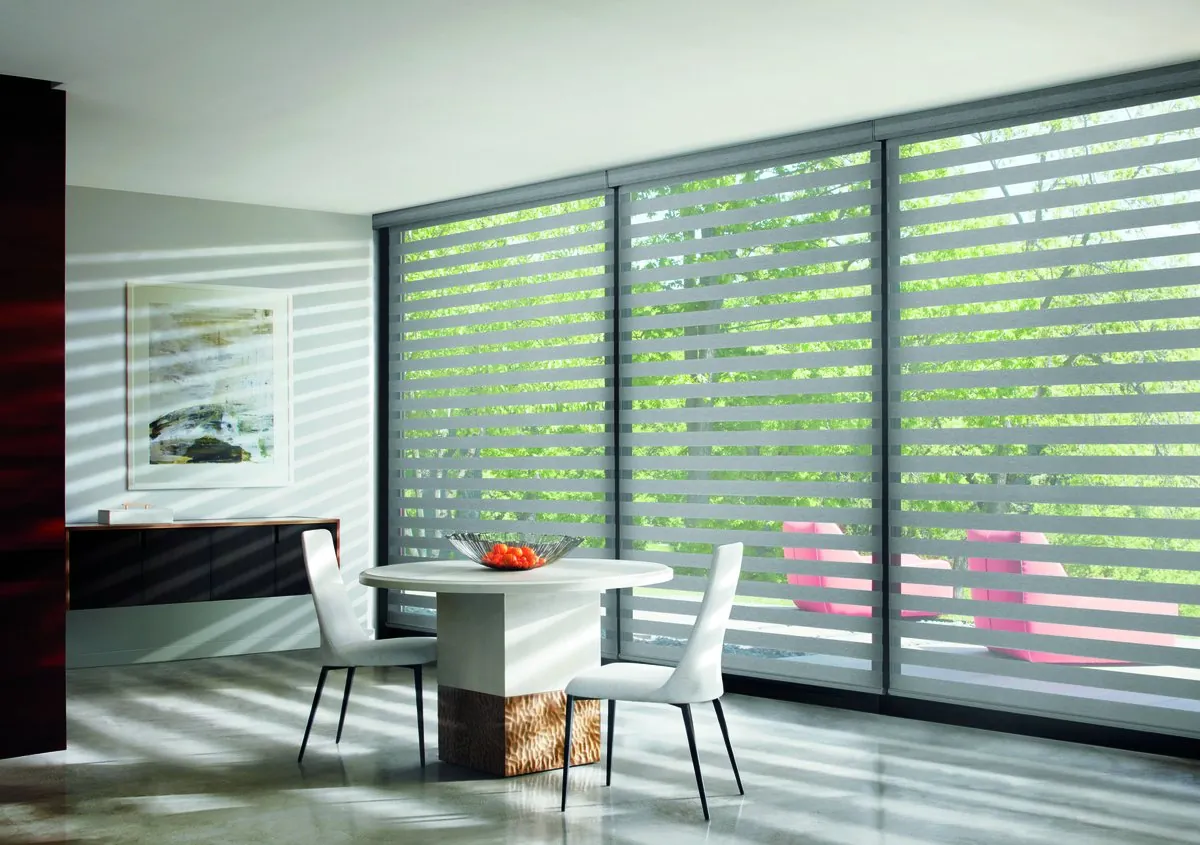
Woods, water and very different windows
Wrentham asks a lot of a window covering, because the houses vary so much. Around the common stand antique colonials with tiny original openings, small panes set into old frames that have been painted and repainted many times over. Off Route 1A and around Lake Pearl, larger newer houses sit far back from the road on wooded lots, many with modern two-story glass in a great room or across the back. The roller shades in Wrentham, MA, that we fit have to work on both.
What the newer houses have in common is space. Deep setbacks and generous lots mean the front windows are rarely close to anyone, so privacy from the road matters less than it does in a town center. What they want instead is control of light: the glare off the lake, the hard afternoon sun on a tall west wall, and the sudden brightness when the leaves come down in autumn.
The antique houses want the opposite. Their small windows let in little light to begin with, and the trim around them is often the best thing in the room. A shade there should be slim, light and close to invisible when raised.
Three Wrentham rooms, three different rollers
We bring the whole Hunter Douglas roller range on every visit. These three pairings come up again and again in town.
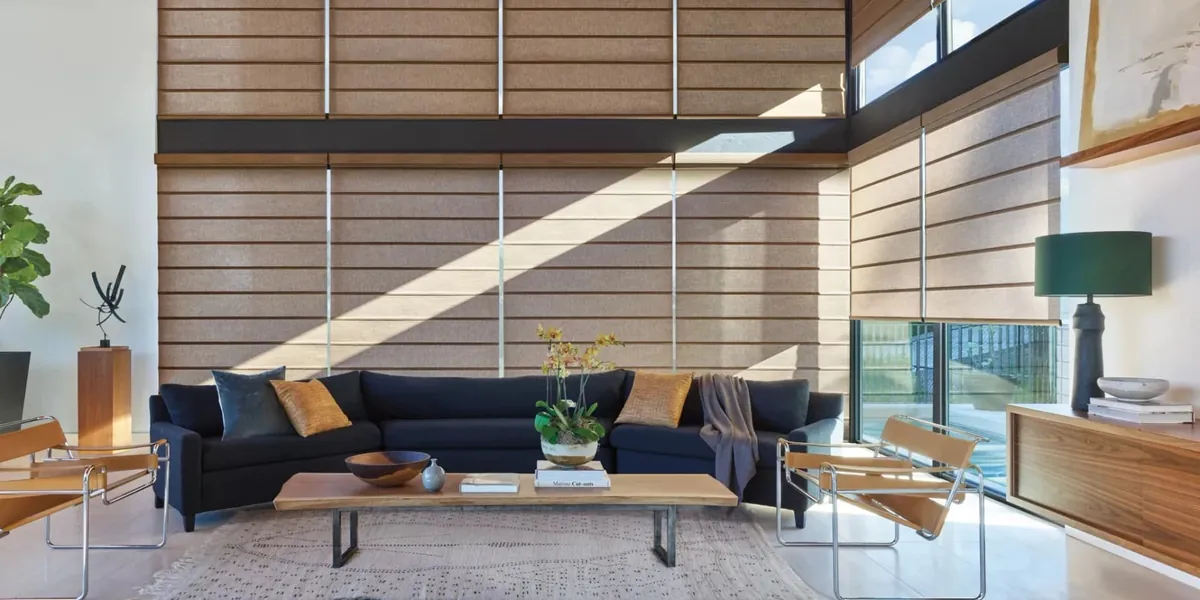
The lake-facing great room
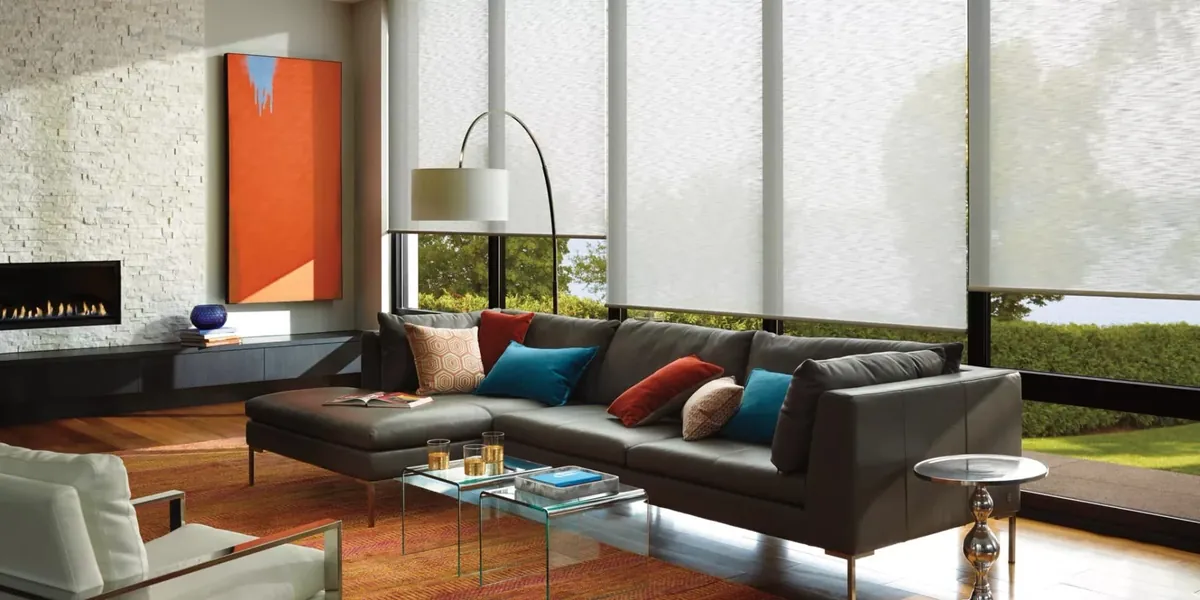
Big modern glass suits Alustra Architectural fabrics and a motor, so a double-height wall moves as one.
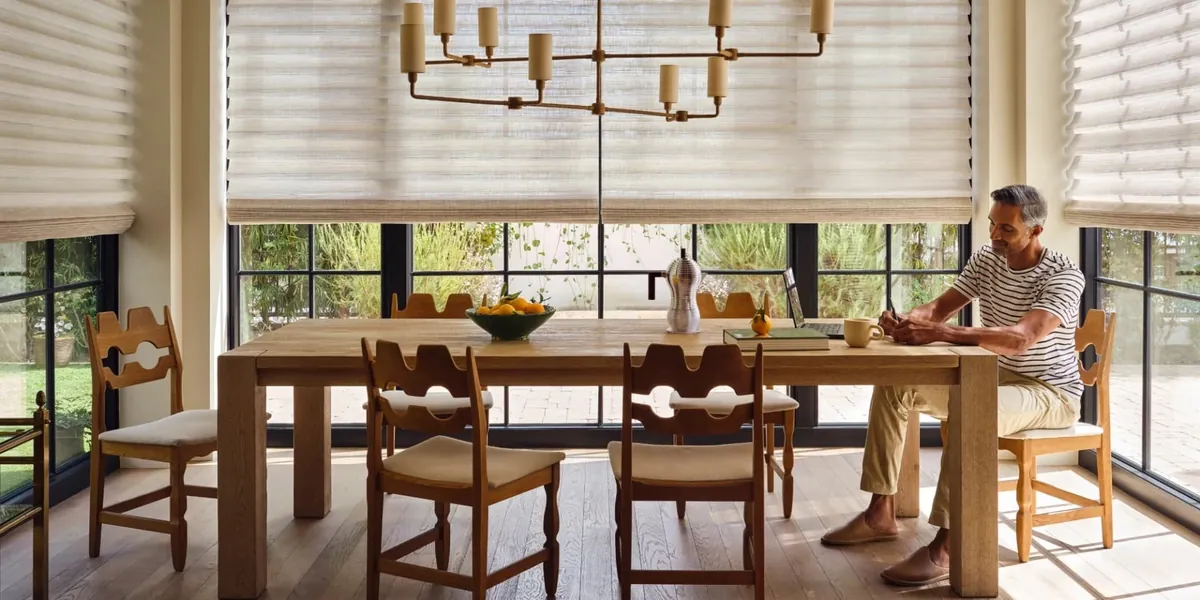
A parlor on the common
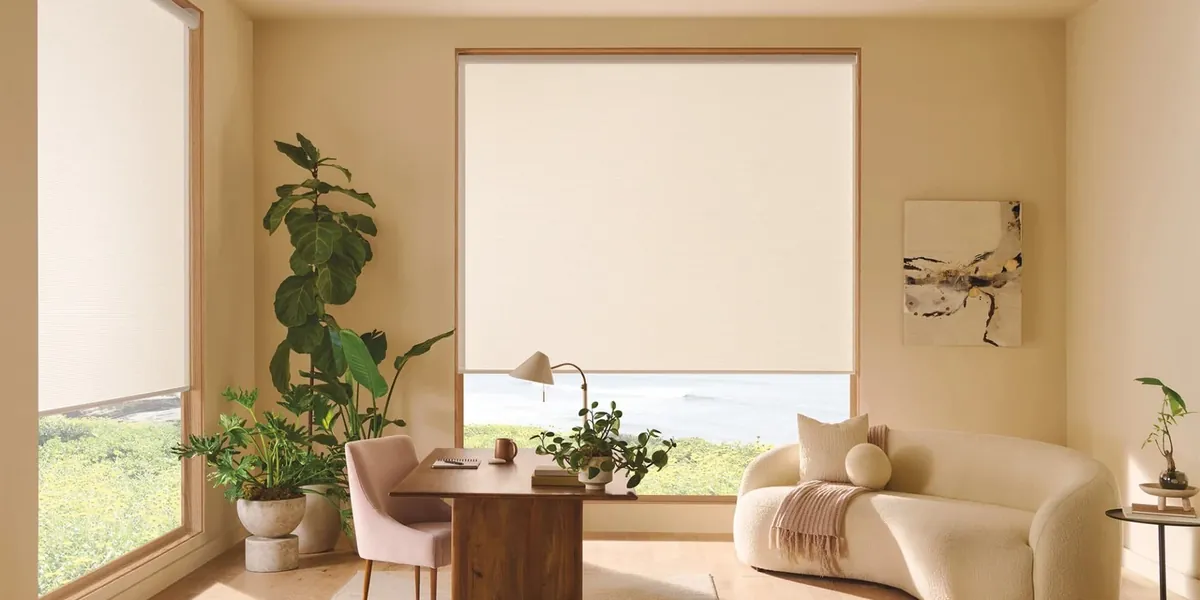
Textured, woven roller fabric softens a period room and keeps the old casing clear.
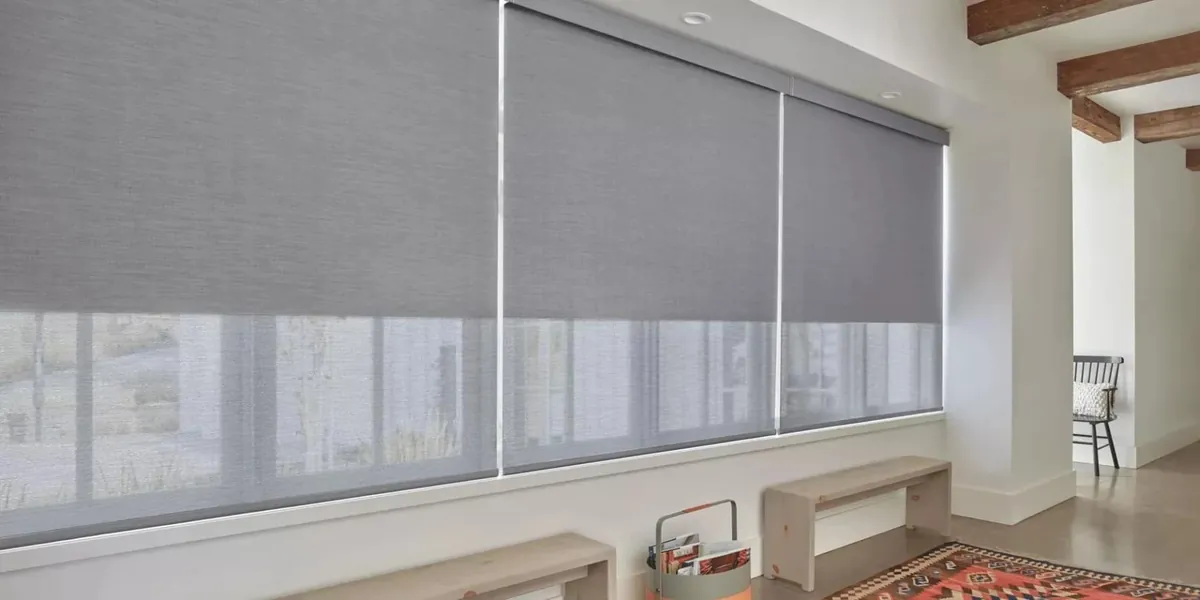
Bedrooms under the trees
Room darkening cloth for sleep, chosen with an eye on how much the canopy already shades the glass.
Glare off Lake Pearl
Houses that look out over open water deal with light from two directions: the sun overhead and its reflection bouncing up off the surface. On a bright afternoon, a lake-facing room can be brighter at eye level than it is at the ceiling, and a television or a laptop facing the windows becomes hard to use.
A solar screen is the natural answer, because the view of the water is the reason the windows are there. Screen fabric is woven with a scatter of tiny openings. How open the weave is, the openness, decides the trade between view and glare. With a looser weave, the lake stays crisp and more light reaches the room. With a tighter weave, the reflection drops further and the room calms down, but the water looks softer through the cloth.
Darker screen colors are easier to see through from inside, since they absorb light rather than throwing it back at you. That makes a charcoal or bronze screen a common choice for a lake room, even in a pale interior. A lighter screen looks brighter from inside and more like a solid panel.
We bring several weaves in a few colors, and the best test is the worst hour: lower each sample at the time of day when the glare off the water is at its strongest, and the right one is usually obvious.
Bedrooms that face the water have a different problem: the sunrise. Light coming off the lake at dawn reaches far into a room, so a lake-side bedroom usually takes a blackout or room darkening roller, sometimes layered with drapery or a sheer so the room can be bright by day and properly dark by night. We show you both combinations at the window.
Two-story glass on wooded lots off Route 1A
Many of the larger newer houses have a great room with a wall of glass rising through both floors, often a lower row of windows or doors with a second row above. It is a dramatic room, and a hard one to shade. The upper windows are out of reach, the area of fabric is large, and the room may face west into the afternoon sun.
Our approach is usually to give each window its own roller and tie them together. Shades on the lower row can be lifted by hand. Shades on the upper row are motorized with PowerView, so they rise and fall from a phone, a remote or a schedule. Grouped in the app, the whole wall can move together with one touch.
For the fabric, most great rooms suit a screen or a light filtering cloth. The goal is to cut the heat and glare of a summer afternoon while keeping the trees in view. Alustra Architectural adds a range of designer fabrics suited to a room of that scale, and we bring them along when a house has this kind of glass.
Very large openings sometimes need to be split into two or more shades. We will tell you at the measuring visit what each window allows and where the joins would fall, so nothing comes as a surprise once the shades arrive.
Tiny original openings near the common
The antique colonials around the common were built when glass was expensive and windows were small. Many keep their original sash, narrow and short, in frames that are seldom square any more.
Rollers fit these windows well when the details are right. The headrail is slim enough to sit inside most old frames, and when the shade is up it almost disappears behind the head casing. Because the fabric always stops a touch short of each end of the tube, a very small window shows a slightly larger sliver of light at each side. With a light filtering cloth in a living room, that sliver is barely noticed. In a bedroom you want dark, we may suggest mounting the shade outside the opening, overlapping the casing a little.
Old frames call for patient measuring. We take the width at three heights and the height at both sides, and check the depth where the headrail will go, looking out for sash locks and interior storm windows. Where a roller will not sit well, we say so and suggest something that will.
For roller shades in Wrentham, MA, on a period house, fabric choice is as much about look as about light. Textured and woven cloth suits a room with wide pine floors and painted panelling far better than a glossy screen.
Sonnette is another option worth seeing in an old house. Its fabric is formed into a soft curved cell rather than a flat sheet, so it has a fuller, gentler look in the window while still rolling up neatly into a small headrail. In a little front room where a flat roller can feel stark, that softness often settles the choice.
Trees, seasons and how the light changes
Wooded lots change the light inside a house through the year. In summer, a full canopy shades the windows and the rooms on the shaded side stay dim and cool. Once the leaves fall, those same rooms can be flooded with low winter sun that nobody planned for.
That makes it worth choosing fabric with both seasons in mind. A room that feels dark in July may still need a light filtering roller for the bare months. A bedroom that seems fine without a shade in summer may wake you at dawn in November. We ask about this at the visit, and we look at which trees are deciduous and which side of the house they sit on.
PowerView schedules help here too. Because the sun moves through the year, many customers set their shades to lower at different times in summer and winter, so the house responds to the season without anyone remembering to do it.
What a Wrentham home visit involves
With houses this varied, there is no substitute for seeing the samples in place. Our vans carry the range, which is what we mean when we say “we can bring the showroom to you.”
- Choose a time using Request a Consultation or the call button.
- A consultant arrives with roller, screen, banded, woven and Alustra samples.
- Together you walk the rooms, starting where the light causes the most trouble.
- You try each sample at the glass, ideally at the time of day the problem is worst.
- The consultant measures each window and checks for an inside mount.
- You get a free estimate and as long as you need to think it over.
Design help is available too. Our interior design consultations cover color and fabric for the whole room, not just the window.
Kitchens and offices in the bigger houses
The kitchens in the newer houses tend to be large and open, with a bank of windows over the sink, a breakfast area in a bay or bump-out, and often a slider beside the table. A roller over the sink has a few practical jobs: it has to clear the faucet and any window crank, stay out of the splash zone when raised, and wipe clean. A light filtering fabric keeps the kitchen bright, and one fabric carried across the sink window, the bay and the slider makes the whole space read as one.
Home offices are common in these houses, often in a front room with a pair of tall windows. Even with a deep setback, the problem there is rarely privacy; it is glare on a monitor in the late morning or afternoon. A tight-weave screen takes the glare off the screen and still lets you see the trees. If video calls are part of the day, a light filtering roller behind you softens the backlight so you are not a silhouette.
Roller shades in Wrentham, MA, for a kitchen and office are often the first rooms customers do, since those are the rooms used most in daylight.
How the house looks from the road
Deep setbacks mean a house is seen from a distance, as a whole facade rather than room by room. From the end of a long driveway, a row of front windows with shades at different heights or in different colors looks untidy, even if each room looks fine inside.
A few simple choices keep the outside calm. Picking front-room fabrics from one color family is the easiest. Some roller fabrics have a neutral backing, so a bold color inside still reads as a quiet tone from outside. And with PowerView, a schedule can set every front shade to the same height each evening.
At the back of the house, facing the woods, there is more freedom. A bright patterned roller in a playroom or a blackout cloth in a guest room will not be seen by anyone but the deer.
Sliders, porches and the back of the house
The newer houses often have a slider or French doors onto a deck or patio, and some have a screened porch. Each takes a roller in its own way.
On a slider, the shade must clear the door handle and leave the door free to open. Some customers prefer two rollers, one over the fixed panel and one over the moving door, so they can step out without raising everything. On French doors, a slim roller mounted on each door swings with it.
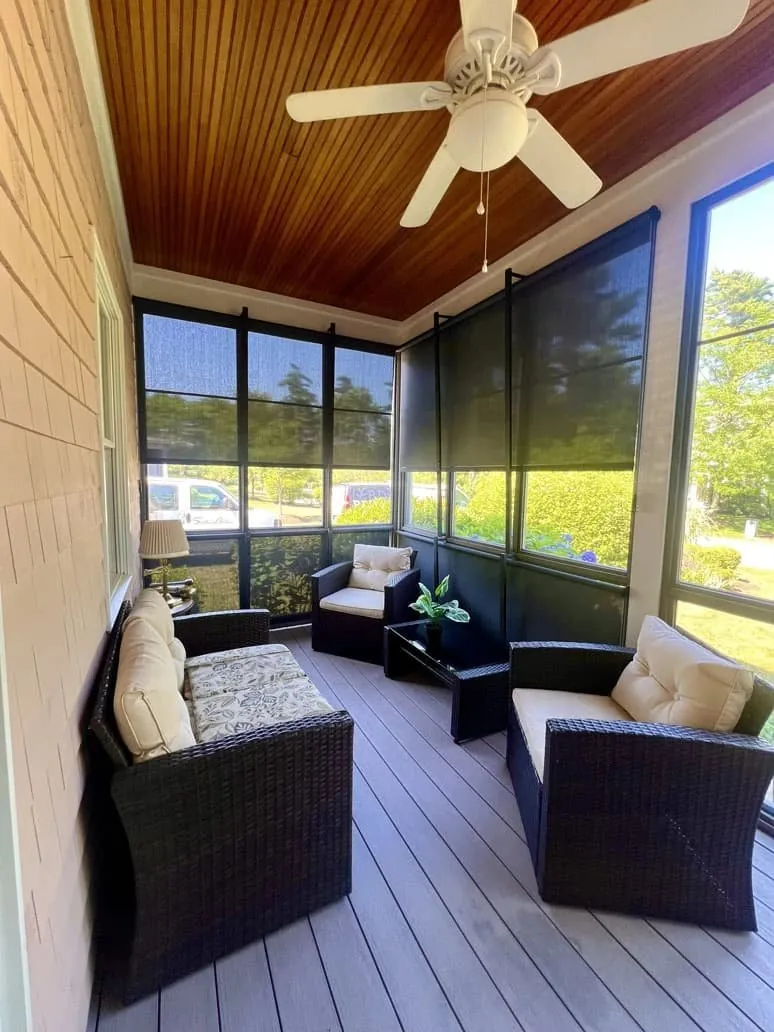
A screened porch is a classic place for a darker solar screen. Lowered on the sunny side, it cuts the glare and the heat of a summer afternoon and lets you keep looking out at the trees. Check with us on exterior conditions before ordering, so the fabric and hardware suit where they will hang.

Controls that suit a large house
In a house with dozens of windows spread over two floors, the way you raise and lower the shades shapes daily life.
- A cordless roller lifts by hand at the bottom rail. Neat and simple on windows you can reach.
- A continuous loop raises a wider, heavier shade with less effort.
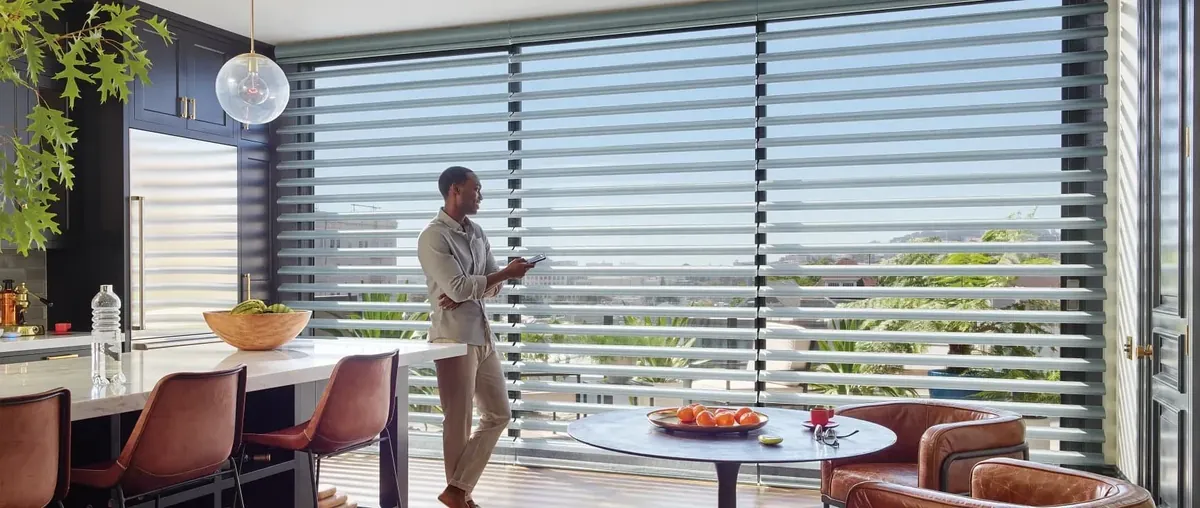
- PowerView motorization lets you control a single shade, a room or the whole house from an app, a remote or a schedule.
Many large Wrentham houses mix all three: motors on the great room and the stairwell, a loop on a wide family room shade, cordless in the bedrooms. You can read more on motorized blinds and shades in Wrentham and how motorized shades are controlled.
The work of a Gallery dealer
Hunter Douglas gives its Gallery title dealers who meet its standards, and Blinds & Designs is one of them. That brings every roller line into a single consultation: Designer Roller, Designer Screen, Designer Banded, the cellular Sonnette, and both Alustra collections, with every lift option and PowerView.
Installers certified by Hunter Douglas fit each shade, fixing brackets into solid framing on the tall walls of the newer houses and levelling headrails in the old frames by the common. If one needs looking at down the road, we offer blind and shade repair in Wrentham.
To compare the lines before we visit, see the main roller shades page. For other windows in the house, look at cellular shades in Wrentham, or see the full list of services on our Wrentham page. Many customers start with roller shades in Wrentham, MA, for the great room and come back to us for the bedrooms.
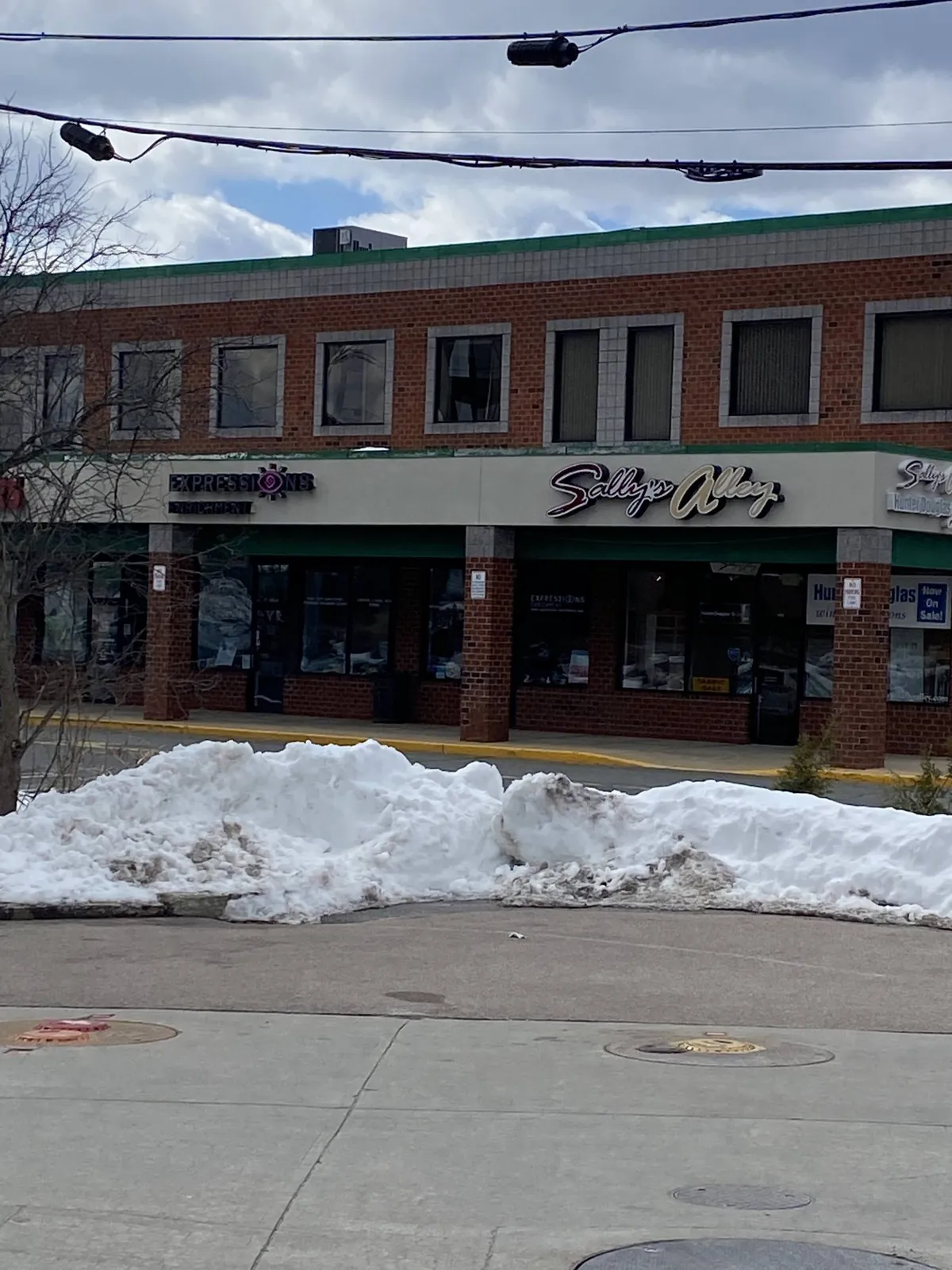
The showroom closest to Wrentham
Franklin is the nearest of our showrooms to Wrentham. If you like to see a product before anyone comes to the house, it is an easy place to start.
Then book a home visit, so the fabric you liked gets judged against your own trees, water and walls.
Questions from Wrentham
Which shade cuts the glare off the lake but keeps the view?
A solar screen. Choose the openness to balance view against glare, and consider a darker color, which is easier to see through from inside. We bring several to try at the worst time of day.
How do you handle a two-story wall of windows?
Usually with a separate roller on each window, motorized on the upper row. Grouped in the PowerView app, the whole wall can open or close together.
Will a roller suit the small old windows in my colonial near the common?
In most cases. The slim headrail sits inside many old frames. On the smallest windows a little light shows at the sides, so in bedrooms we may suggest an outside mount.
My house is shaded by trees. Do I still need shades?
Often yes, once the leaves fall. Rooms that are dim in summer can get strong low sun in winter, so we choose fabric with both seasons in mind.
Do you charge for the estimate?
No, estimates are free. We measure the windows and give you a written estimate with no obligation.
Start with a consultation
The surest way to choose roller shades in Wrentham, MA, is with the cloth in front of your own glass. Request a consultation, and we will come to the house with the roller range, measure each window and leave you a free estimate. If you would rather ask a few questions first, use the call button, or call in at the Franklin showroom.