
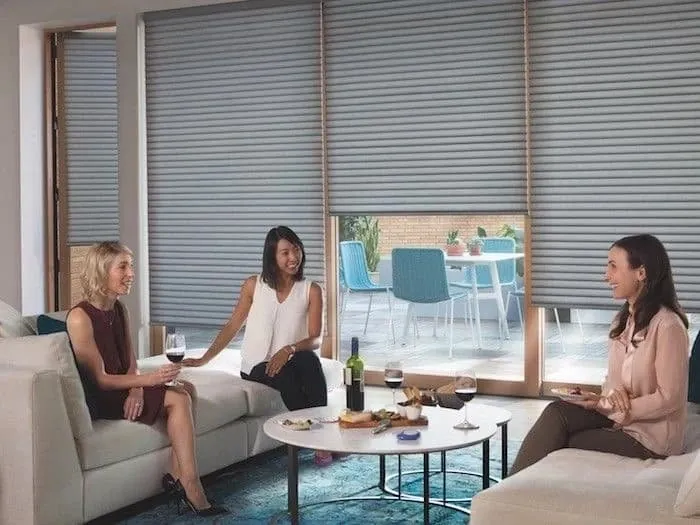
Close neighbors, front porches and tall center sash
Most of Stoughton’s housing sits on modest lots: capes, ranches and two-families, close enough together that a side window often looks straight across a driveway at the house next door. Near the center, the Victorians are taller and older, with narrow sash windows that rise most of the way from floor to ceiling. Away from the center, the openings are mostly standard modern sizes, the kind that take a shade easily.
That mix shapes how we approach roller shades in Stoughton, MA. On standard openings, the fit is straightforward and the conversation moves quickly to fabric. On the tall center sash, mounting depth and roll size come first. And in almost every house, the side windows bring up the same question: how do you keep the daylight without the neighbors’ kitchen in view, and without them seeing yours?
A roller is well suited to all of it. One piece of fabric, rolled neatly onto a tube, with a cloth chosen for exactly what that window needs.
Three Hunter Douglas rollers for Stoughton windows
Most orders here use one or more of these three. Each comes in a range of fabrics and colors, and the samples come to you.
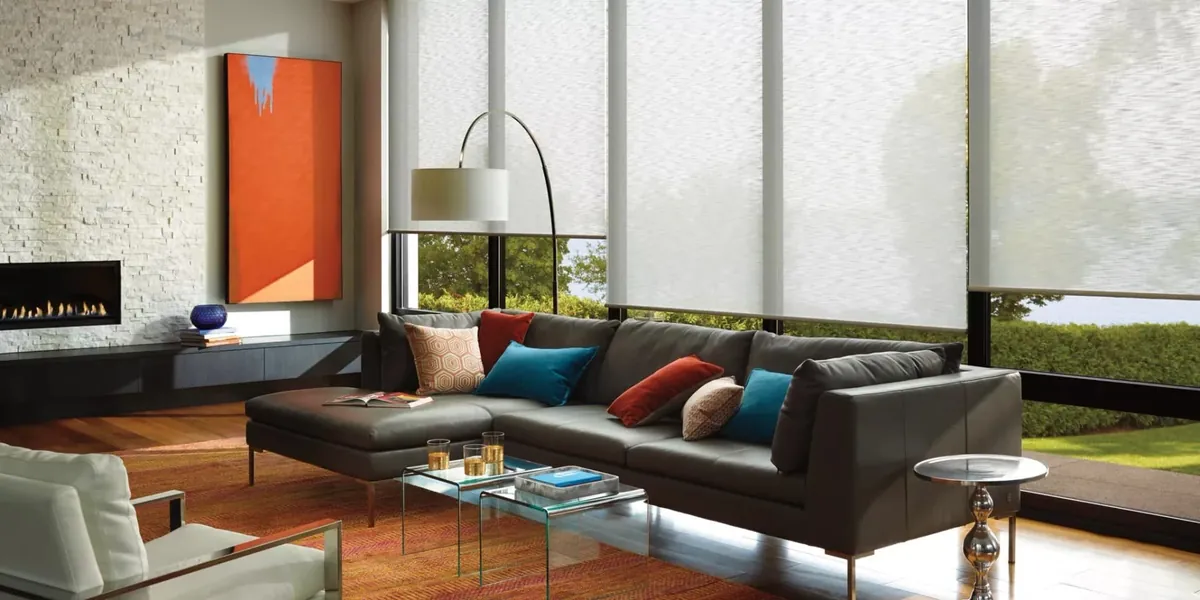
Designer Roller
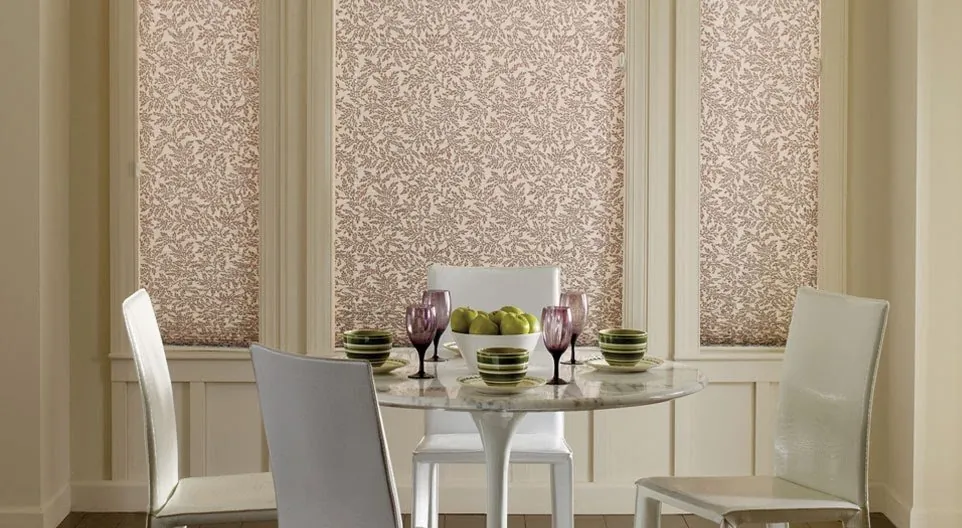
Plain and textured cloth from light filtering to blackout. The everyday choice for bedrooms, kitchens and living rooms.
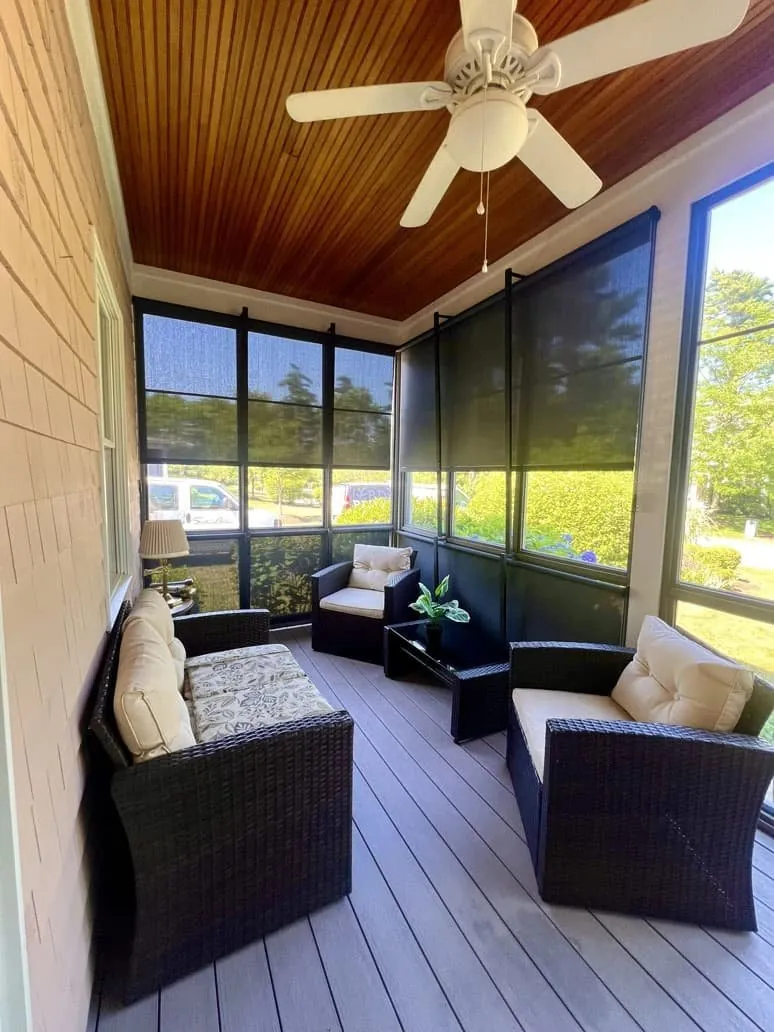
Designer Screen
Screen fabric for sunny rooms and porches where you want to keep seeing out while the glare drops.
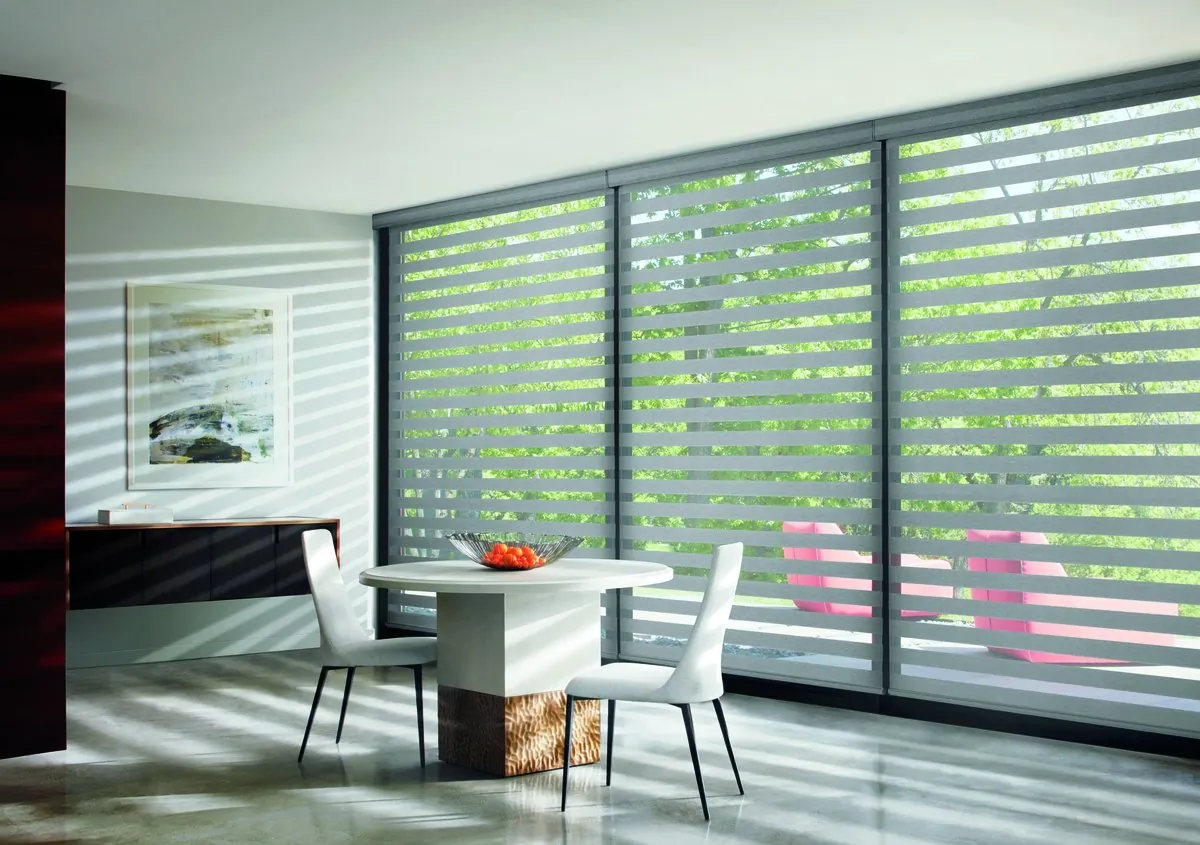
Designer Banded
Two layers of striped fabric that slide from see-through to covered, ideal for a window facing the house next door.
Side windows a driveway’s width from next door
On a modest lot, the side windows of one house and the side windows of the next are often only a few steps apart. A dining room, a stairway or a bathroom can look straight into the neighbor’s kitchen. Leaving the window bare feels exposed; closing a solid shade all day makes the room dark.
The easiest answer is a roller in light filtering cloth. The fabric lets daylight in and blurs the view, so the room stays bright while what is inside stays private. From outside, it reads as a soft, glowing panel rather than a window into the room.
Banded cloth adds finer control. With the sheer stripes lined up, you can see out. A gentle pull slides the solid stripes over them and the window is covered, without raising or lowering the whole shade. That makes it handy on a side window that you want open in the morning and closed when the neighbors are home.
Nightfall changes things. Once lamps are lit indoors, pale cloth lets silhouettes through. Side bathrooms and bedrooms are better served by denser cloth, or by pairing the roller with curtains you draw at bedtime.
Two-families, floor by floor
The two-families common in Stoughton stack one unit above another, each with its own living room at the front, bedrooms and a kitchen at the back, and often a front or rear porch on each level. Every floor has the same window layout, which makes them simple to plan: once we have measured one floor, the second usually follows the same pattern, though we still measure every window.
Many two-family orders cover both units. A consistent fabric on the front windows of both floors keeps the house looking orderly from the street. Inside, each unit can have its own choices: light filtering in the living rooms, room darkening in the bedrooms, an easy-clean cloth in the kitchen.
The porch doors deserve a word. Fixed straight onto a door, a roller covers its glass and swings along whenever the door opens. For a back porch facing a neighbor, a banded shade works well there too.
Stairways, baths and the side of the house
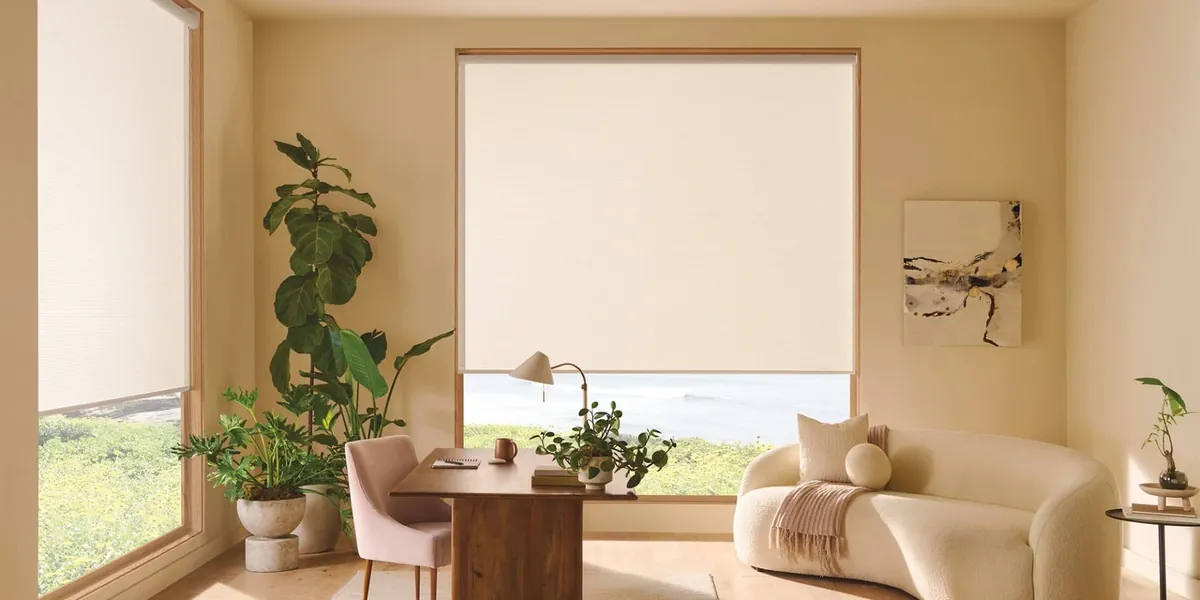
On a narrow lot, the side elevation is where many of the awkward windows end up: a stair window halfway up the wall, a small bathroom window, a pantry or laundry window. Each is close to the neighbor, and each has its own practical problem.
The stair window is often too high to reach comfortably from the steps. A cordless roller can work if the hem bar stays within reach, but many customers prefer a small PowerView motor so the shade can be raised and lowered from the landing or on a schedule. A light filtering fabric keeps the stairway bright and private at once.
A bathroom window needs privacy first, day and night, and a fabric that copes with steam. We point out cloths suited to a humid room, and suggest an outside mount where the shade has to cover the whole frame for night-time privacy.
Pantry and laundry windows are usually simple. A plain light filtering roller in a wipeable fabric, mounted inside the frame, is all they need.
Tall narrow sash near the center
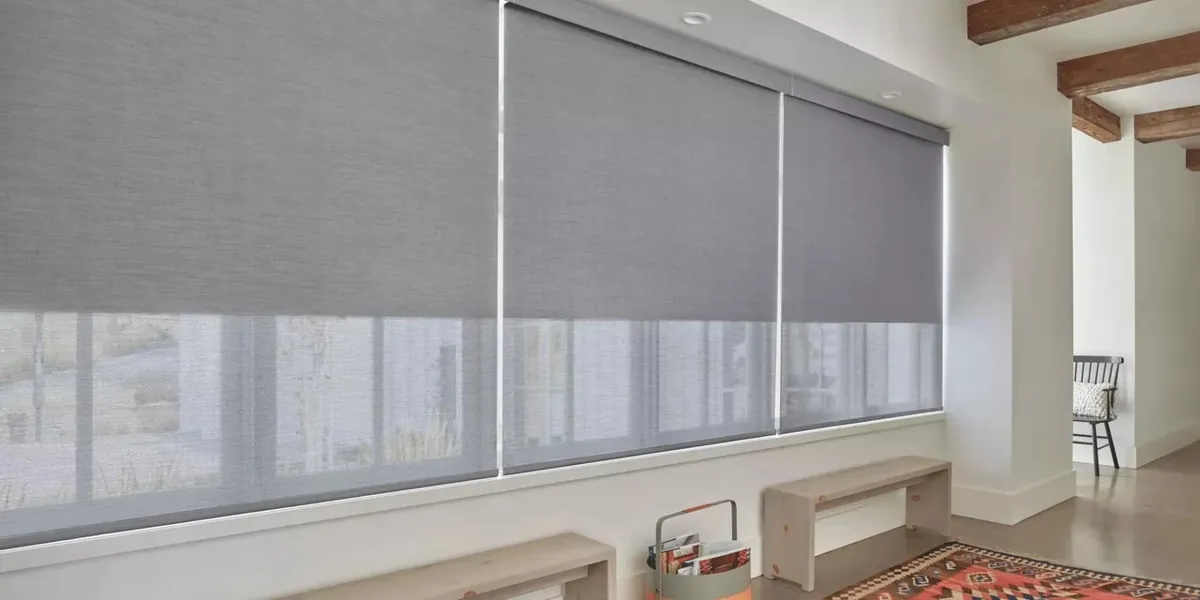
Close to Stoughton’s center, the Victorians rise with slender, lofty sash, frequently grouped two or three to a front bay. Their frames are deep and their casings are usually worth showing off. Fitted within those frames, a raised roller hides almost entirely under the top trim.
Two checks come first. Depth: cloth wound onto the tube bulks up, and a long drop makes a fat roll, which the frame must swallow while clearing the lock. Second, square: old frames move, and a window may be wider at the top than at the sill. We measure each one at several points.
If the frame cannot take it, the shade moves onto the face of the casing instead. Since you gaze upward at the top of a lofty window, covering the roll with a fascia is worth it. In a bay, each window gets its own shade so they can be raised individually and still line up neatly when they are all down.
Choosing roller shades in Stoughton, MA, for a Victorian often leads to a textured or woven cloth. It sits better against old woodwork than a smooth modern cloth.
Front bays and covered porches
Many of the Victorians and older two-families near the center have a bay at the front, three tall windows set at angles, sometimes with a covered porch outside. A bay is one of the nicest places in the house to sit, and one of the trickier to shade.
Each window in a bay gets its own roller, so the angled side windows can stay open while the center one is lowered against the sun, or the other way round. Inside mounts keep the bay’s woodwork clear and let each shade drop straight within its own frame. Where the frames are shallow, outside mounts can be set so the headrails meet neatly at the corners.
A covered porch outside the bay changes the light. It shades the lower part of the glass, so the room is dimmer than a bay facing open sky would be. That usually argues for a light filtering cloth rather than anything darker, so the room keeps what daylight the porch lets through. On the other hand, a porch close to the street brings people right up to the window, which makes a banded shade useful: open for light while the porch is empty, closed when someone is at the door.
Upstairs, the bay is often repeated as a bedroom bay. There, blackout cloth inside each frame, with the shades lowered together on a PowerView scene, gives a dark room without three separate shades to pull.
Capes and ranches away from the center
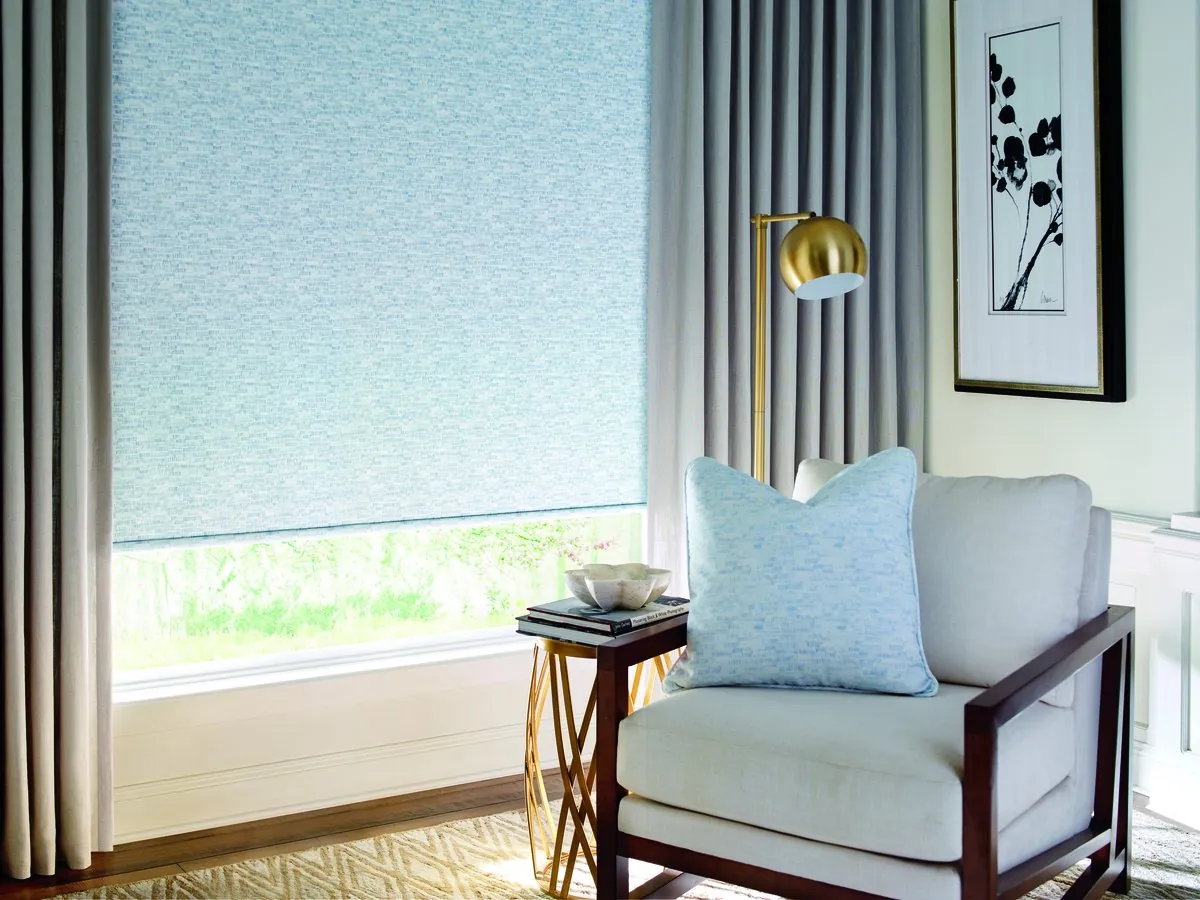
Beyond the center, fitting gets simpler. Their standard modern openings are usually square and deep enough for an inside mount, and window sizes repeat, so a set of shades lines up at the same height across the front of the house.
Capes tuck their bedrooms under the roofline, lit by dormers; blackout cloth in that recessed opening gives real darkness, since the dormer walls shade its edges. Ranches put a broad picture window in the front room, and translucent or striped cloth keeps that room private through the day while leaving it bright.
Kitchens and back rooms
Kitchens in Stoughton’s capes, ranches and two-families are usually at the back, looking onto a yard or a porch. The window over the sink is the one that gets used most, and a roller there has three jobs: clear the faucet and any crank handle, stay up out of the way while you work, and wipe clean when it gets splashed.
A light filtering fabric suits most kitchens, keeping the room bright while softening the view of the yard next door. On a back wall that faces west, a solar screen is worth comparing, because it cuts the late afternoon glare across the counters while keeping the yard in view.
Where the kitchen opens onto a back porch through a door with glass, a roller mounted on the door gives the kitchen privacy in the evening. Matching it to the window fabric keeps the room looking finished.
Roller shades in Stoughton, MA, for the back of the house are often the simplest part of the order, and the part used most every day.
Home visits across Stoughton
Stoughton orders begin in your living room, not in a store. Our shop-at-home service sends a sample van to the house so each cloth gets judged in the light it will live in.
- Pick a date online with Request a Consultation, or tap the call button.
- Your consultant unpacks roller, screen and banded swatches in a spread of colors.
- Problem windows get looked at first, then the rest of the house.
- Swatches are tried on the glass itself, side windows included.
- Each opening is measured, with frame depth noted.
- A free estimate is left with you to weigh at leisure.
If you also want help with color or the room as a whole, ask about our interior design consultations. You can also read about in-home consultations before we come.

Light filtering to blackout
Roller fabric comes in a range of opacities, and choosing the right one for each room is most of the decision.
Light filtering cloth keeps a room bright and gives daytime privacy. It suits living rooms, kitchens and the side windows of a dining room. Room darkening cloth blocks most of the light, good for bedrooms where some light at the edges does not matter. Blackout cloth stops light passing through the weave, which suits nurseries, east-facing bedrooms and anyone who sleeps during the day.
In a cape or a two-family, most houses mix two or three of these. A typical order might be light filtering at the front, blackout in the bedrooms and a screen on a sunny back porch. Roller shades in Stoughton, MA, rarely need to be one fabric throughout the house.
Solar screens, explained simply
What is a solar screen? A woven roller fabric with tiny openings across it, so you can see through it while the glare drops.
What is openness? How open that weave is. Loosen it and you see more and get more daylight, glare included. Tighten it and glare and daytime visibility both fall, and the outlook turns hazy.
Does color matter? Yes. Deep shades of screen fade from sight, so looking out is easy; pale ones brighten the room yet cloud the outlook.
Where does it work best? On a sunny back wall, a porch or a family room with a television, where you want to keep the view of the yard. It is less suited to a street-facing room at night, because a lit room shows through a screen after dark.
Motors and cordless lifts
Every roller can be raised in more than one way.
- Cordless: push up or pull down on the hem bar; nothing dangles.
- Continuous loop: a beaded chain makes light work of a broad, weighty shade.
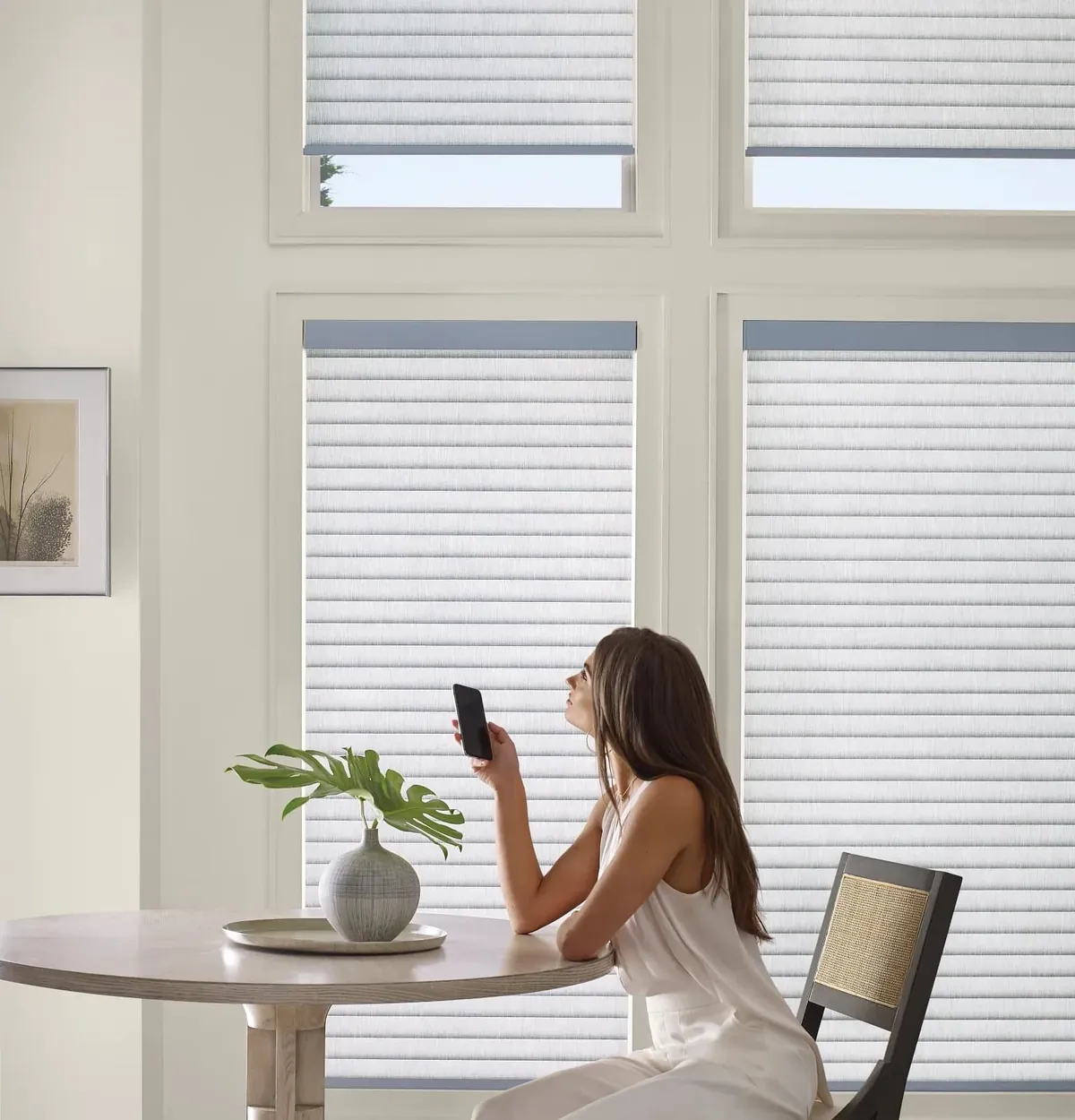
- PowerView motorization: app, handheld remote or timed scenes.
In a smaller house, motorization is often about convenience rather than reach. A schedule can lower the side shades at dusk and raise them in the morning, or close the bedroom shades before sunrise. See motorized blinds and shades in Stoughton for more.
Looking after a roller
Rollers are among the easiest shades to keep clean, because the fabric is flat and rolls away when not in use. Light dusting with a soft brush or a vacuum on low with a brush head keeps most fabrics fresh. Some cloths can be spot cleaned; we will tell you which at the visit. Our guide on caring for fabric shades has more detail.
In a kitchen or a two-family unit that sees heavy use, it is worth choosing a fabric that handles wiping. We point those out when you are choosing. In a bedroom or living room, where the shade is touched less, you can choose more freely on color and texture. Sun is the main thing that ages a fabric, so on a bright south or west window we steer you toward colors that hold up to daily light.

A Gallery dealer, with design help
Gallery is the title Hunter Douglas uses for dealers who meet its standards, and it is the title Blinds & Designs carries. In practice, one visit covers the lot: plain, screen and banded Designer fabrics, cellular Sonnette, the Alustra collections and motors for any of them.
Shades go up with Hunter Douglas certified installation. Years later, if a lift sticks or a fabric tears, there is blind and shade repair in Stoughton.
Compare the lines on our roller shades overview. For colder rooms, cellular shades in Stoughton are worth a look, and the Stoughton page gathers everything else we do locally.
Questions from Stoughton
How can I keep a side window private when the house next door is so close?
A light filtering roller keeps the room bright and blurs the view. A banded shade lets you switch between seeing out and full cover with a small adjustment. For evening privacy, a room darkening fabric or a layer of drapery helps.
Can you do both units of a two-family in one visit?
Yes. We can measure and quote both floors at once, keeping the street side consistent and choosing fabrics room by room inside.
Do rollers suit the lofty sash of a center Victorian?
Most of the time they sit inside the frame. Every window gets checked for depth and squareness, and where room runs short the shade goes on the casing face instead.
Is there a showroom in Stoughton?
No. We bring the samples to your home. If you would like to see shades first, our nearest showroom is in Franklin.
Do I pay for the estimate?
No. Measuring leads to a free estimate, and you are under no obligation.
Book a home visit
The easiest way to pick roller shades in Stoughton, MA, is with the swatches at your own windows. Request a consultation and a consultant will bring the roller range to your Stoughton home, measure each window and leave a free estimate. You can also use the call button, or visit our Franklin showroom if you would like to see shades first.