
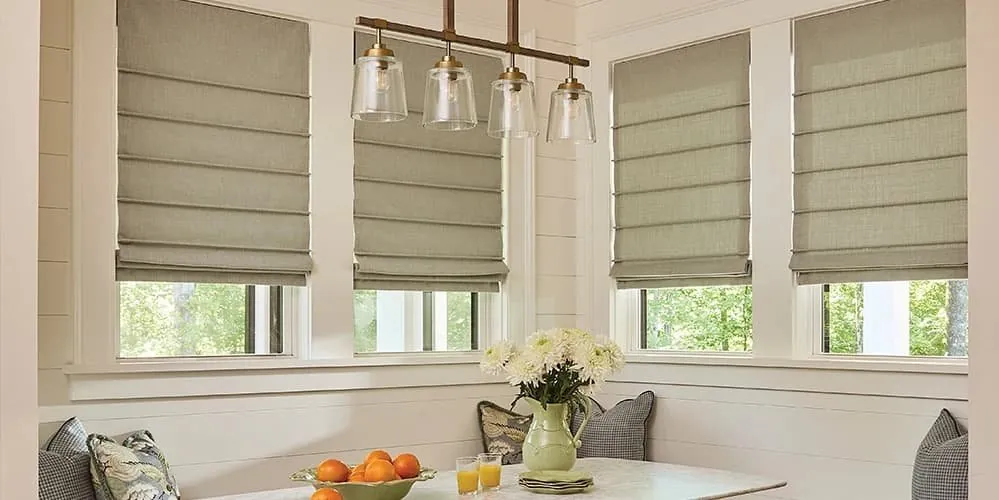
Close neighbors and practical windows
Much of Stoughton is built on modest lots: capes, ranches and two-families standing fairly close together, with a driveway or a narrow side yard between one house and the next. Near the center there are Victorians with tall, narrow sash. Most of the rest of the housing has standard modern openings, the kind that take a shade easily. Roman shades in Stoughton, MA, are mostly about two things in that setting: privacy on the windows that face a neighbor, and a softer, more finished look in rooms that are often compact.
Fabric shades in a roman fold handle both. It covers the glass completely when lowered, it can be lined so a lit room stays private after dark, and it gives a window the comfortable look of drapery without the fabric spilling into a small room. Raised, it tucks up out of the way.
Our consultants bring the samples to your house, so the choosing happens in the room itself. The shades are Hunter Douglas: Vignette, with its rolled modern fold, and Carole Fabrics, tailored to each window in flat or folded styles.
The shades Stoughton houses ask for
Three starting points cover most of what we fit in town. All of them come with us on the van.
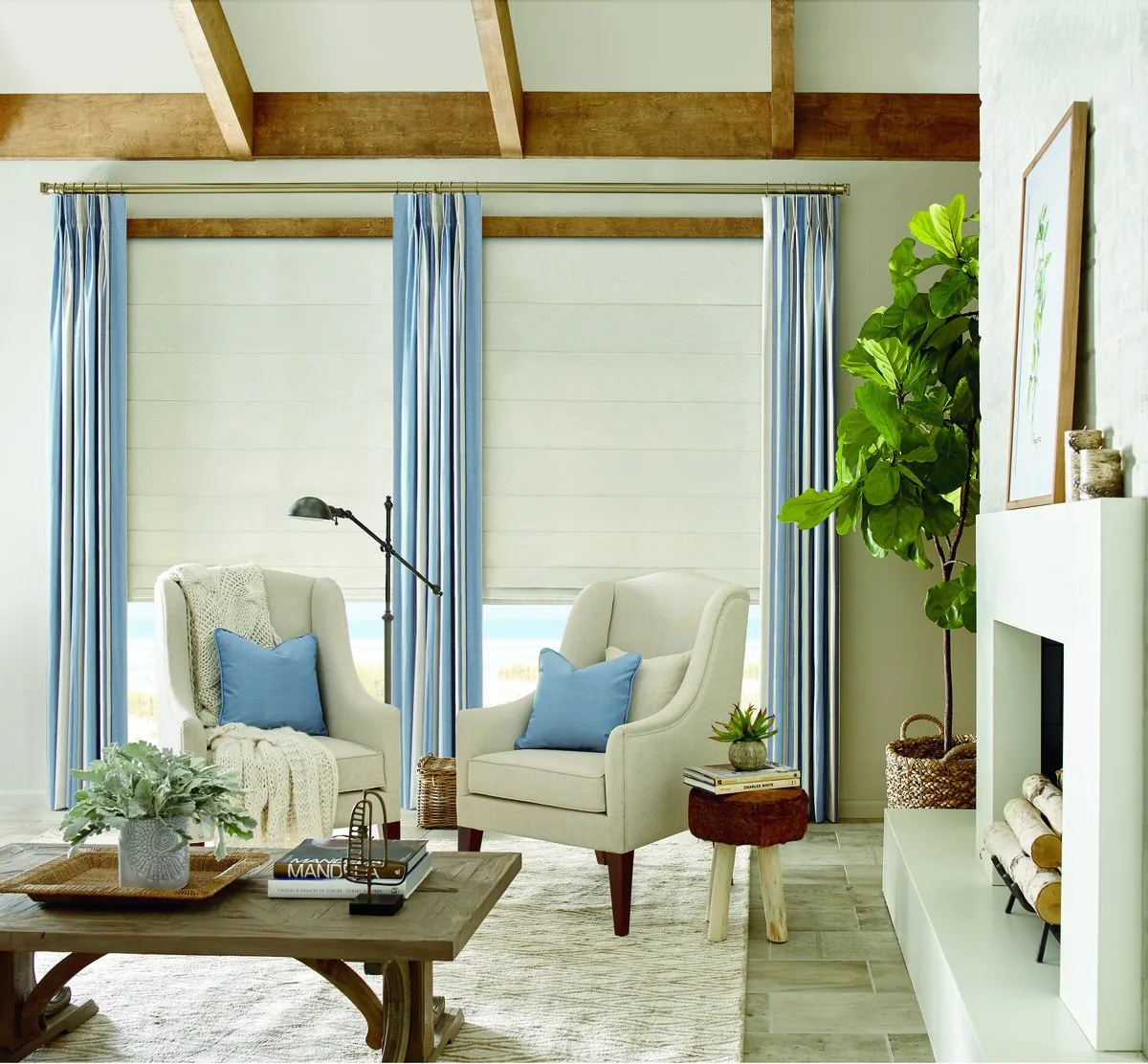
Carole Fabrics
Tailored to each opening from a deep range of decorator cloths, flat or folded. A good match for a Victorian’s tall windows.
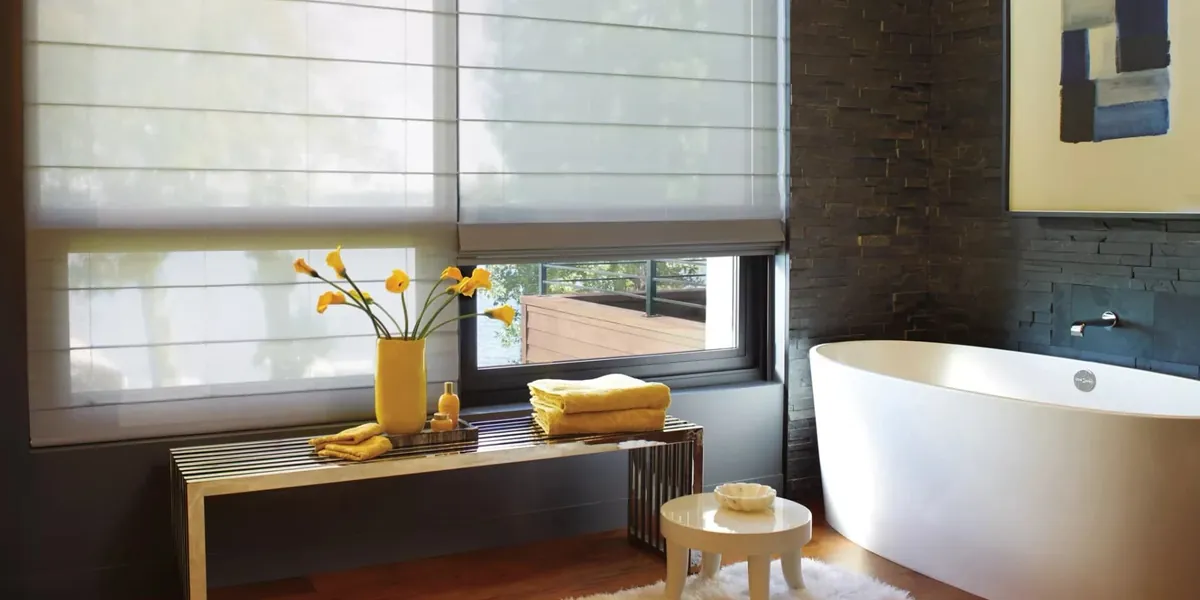
Sheer and light-filtering
Lets daylight through while blurring the view in, which suits a bathroom or kitchen window that faces the house next door.
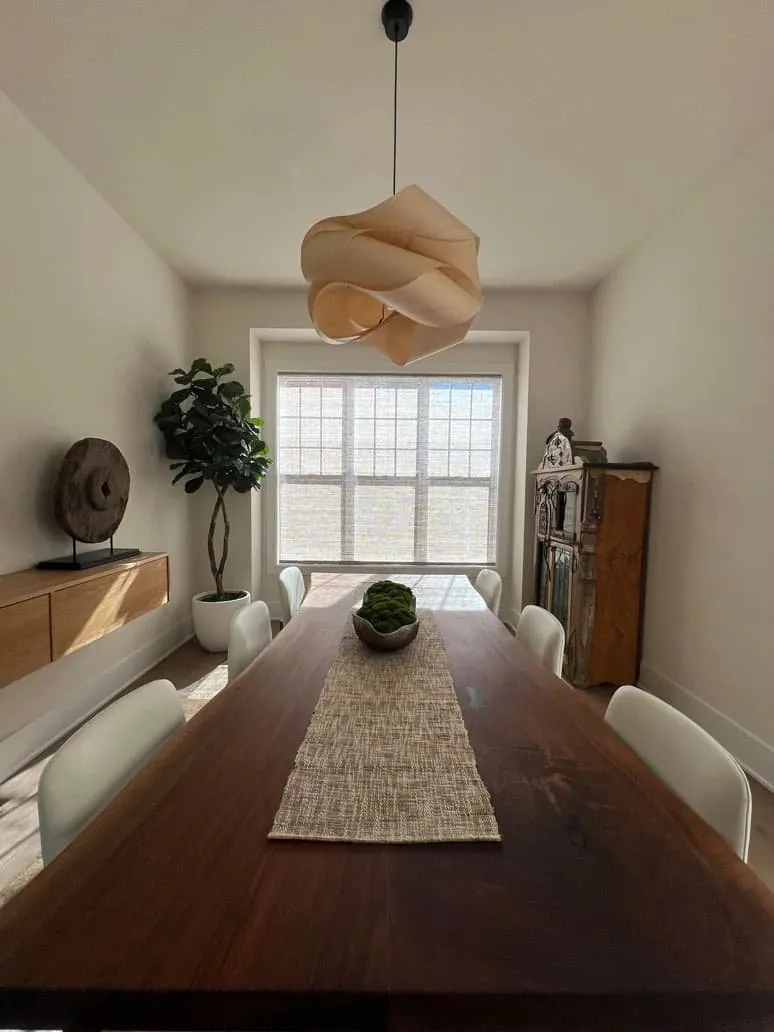
Natural woven
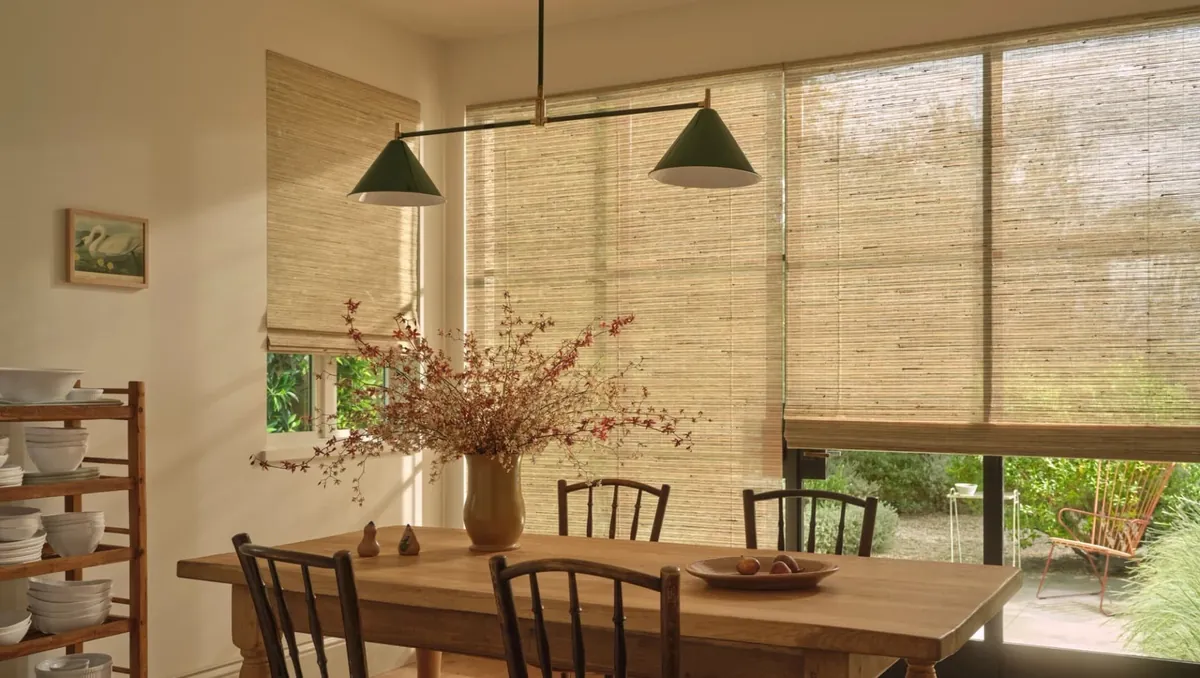
Alustra Woven Textures gives a roman shade a loomed, natural surface, for a dining room or family room that suits a relaxed look.
Side windows a driveway apart
On a modest lot, the side windows of one house often look straight across a driveway into the side windows of the next. During the day that is a minor nuisance. After dark, with the lights on, it means the neighbors can see into your kitchen, your bathroom or your stair hall as clearly as you can see into theirs.
A roman shade solves it in a way that still looks good from both sides. The first decision is the fabric weight. An unlined, light-filtering fabric gives daytime privacy because it is brighter outside than in, and it keeps a side room from feeling closed in. For any room you use in the evening, a privacy lining behind the face fabric stops the room showing through once the lamps go on. A room-darkening lining goes further and suits a bedroom on the side of the house where a neighbor’s security light or a passing car might shine in.
The second is how the shade sits. On a side window an inside mount keeps the shade neat and close to the glass, and on standard modern openings there is normally plenty of depth for it. If light leaking around the edges is a concern, mounting the shade outside the frame, a little wider than the opening, closes those gaps. We look at each side window in the house and suggest the one that suits the room. Where two windows on the same side serve different rooms, say a kitchen and a bathroom, they can share a face fabric and differ only in the lining, so the side of the house still looks even from the driveway.
Two-families: one building, two homes
Two-families are part of the fabric of Stoughton, and they bring their own planning questions. Usually there are two complete homes stacked one above the other or set side by side, each with the same window layout, and the building is seen from the street as one house.
That makes consistency from the outside worth some thought. If each unit chooses its own shades with no plan, the front of the building can end up with a patchwork of colors and heights. A simple way round it is to choose one lining color for every street-facing window in both units, even if the fabric facing into each room is different. From the sidewalk the building looks unified; inside, each home has its own look.
Because the windows in each unit tend to match, ordering for a two-family is efficient: one set of measurements often confirms the other, though we still measure every window, since frames that look identical are not always the same. Roman shades in Stoughton two-families are a popular choice for the living rooms and bedrooms, with a light-filtering fabric in the kitchens and baths.
Tall, narrow sash near the center
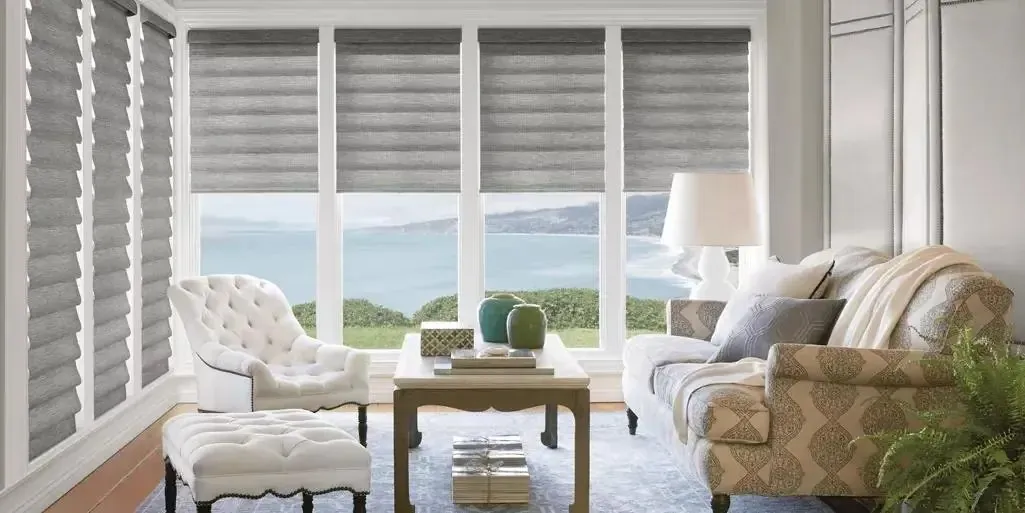
The Victorians near the center of town have tall, slim sash windows, the opposite proportions from the wide openings in a ranch. A slim window looks best with a shade whose folds are spaced to suit it: a few deep folds on a long, narrow shade look calm, while lots of shallow folds look busy. Carole Fabrics shades are sewn to order, so the fold spacing can be set for each window.
Older frames need checking before an inside mount is promised. Sash weights, pulleys and stops all take up space in the frame, and an old opening may have shifted out of square. We note the depth and the width at more than one point. Where there is room, the shade sits inside the frame and the original casing stays in view. Where there is not, the headrail goes on the casing, slightly above the glass, so the raised shade clears the top panes.
Narrow windows also suit a light lift. A cordless shade on a slim Victorian window is easy to raise by hand and leaves the window free of cords, which looks better against old trim.
Standard openings and a whole-house order
The capes and ranches across most of Stoughton have standard modern openings. They are square, they have depth, and they take an inside mount without fuss. That makes a whole-house order of roman shades simple to plan and quick to measure.
It also opens up a tidy look across the house. With every opening a standard size, the shades on each floor can stop at the same lowered height and line up from room to room. In a ranch, where the living room, kitchen and bedrooms are on one level and often visible from one another, that consistency makes the house feel calmer. In a cape, it keeps the symmetrical front looking right from the street.
A wide ranch living room window is the main exception. Rather than one large shade, it usually works better as two or three shades side by side, each one light to lift and able to move on its own. A continuous cord loop helps on a wide lined shade. When we plan roman shades in Stoughton ranches, we mark where each shade meets its neighbor so the joins fall on the window’s own dividing posts, which keeps the run looking like one window rather than three separate pieces.
Your in-home consultation, step by step
In Stoughton we lead with the visit to your house. It is where you can see the fabrics against your own walls and in your own daylight, and where we can measure every window properly. Our vans carry the samples, so there is nothing you need to fetch. Here is how the visit usually runs.
- You request a consultation online or with the call button, and we agree a convenient time.
- A consultant arrives with Vignette and Carole Fabrics sample books and lining and lift samples.
- We start with the windows that concern you most, often the side windows facing a neighbor or the tall sash near the front.
- Fabrics are held at the glass so you can compare light-filtering, privacy and darkening weights.
- Each window is measured, with the mount, the depth and the lift noted for each one.
- You receive a free estimate, room by room, with no pressure to decide on the spot.
You can find out more on our in-home consultations page and in what happens at an in-home consultation.
A room-by-room guide to fabric
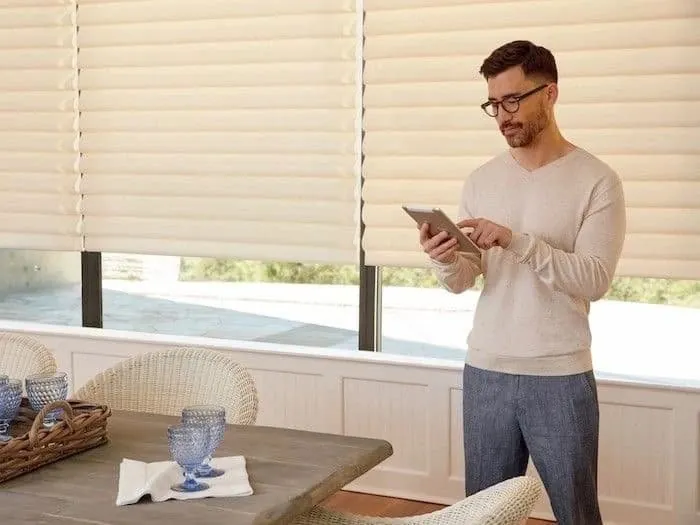
Every room has a different job, and the fabric should follow it. As a starting point:
- Living room: a light-filtering fabric for daytime brightness, with a privacy lining if the room faces the street or a neighbor and is used in the evening.
- Kitchen: a light flat fold mounted inside the frame, clear of the faucet, with a cordless lift.
- Bathroom: a sheer or light-filtering fabric if the window is high or frosted; a lined fabric if it is not.
- Bedrooms: a room-darkening lining, mounted slightly outside the frame to cut the light around the edges.
- Home office: a light-filtering fabric that can be lowered partway to cut glare on a screen without darkening the room.
- Dining room: the place for a pattern, on a flat fold so the print stays smooth.
These are only starting points. If a room takes strong afternoon sun, a lining also protects the fabric from fading. Our guide to choosing fabric for a sunny room goes into more detail.
Which Hunter Douglas line, and where
A quick way to think about the two lines:
- Vignette is the modern one. The fabric rolls away into the headrail as it rises, the folds are evenly spaced from top to bottom, and the outside face is tidy. Pick it for a ranch, a newer cape, a kitchen or an office.
- Carole Fabrics flat fold is the tailored one. One smooth panel when down, crisp layered pleats when up. Pick it for a printed or striped fabric, or for a dining room.
- Carole Fabrics folded style is the soft one. Gentle loops stay in the fabric even when the shade is lowered. Pick it for a Victorian front room or a bedroom, in a plain or textured cloth.
Nothing stops a house from using all three. Read more on the Vignette and Carole Fabrics pages, or start with the roman shades overview, which also covers Alustra Woven Textures.
Children’s rooms
A child’s bedroom asks a lot of a window covering. It needs to be dark enough for an early bedtime in June and a nap in the afternoon, and it needs to be safe. Roman shades meet both needs well. A room-darkening lining keeps the room dim with the sun still up, and a cordless lift means there is no cord anywhere near a bed or a crib. The bottom rail is simply pushed up or pulled down.
A child’s room is also a good place for some color or pattern. A cheerful print on a flat fold stays smooth and readable, and because the lining does the darkening, the face fabric can be chosen purely for the look. Many parents choosing roman shades in Stoughton for a nursery go for a fabric that will still suit the room when the child is older.
Rooms you keep closed
Every house has a room that is used less than the others: a guest room, a formal front room, a spare bedroom at the back of a two-family. Shades in those rooms tend to stay down most of the day, which is hard on fabric if the window takes direct sun. A lining protects the face fabric, and a pale or neutral color holds its look better on a sunny window. On the shaded side of the house, a deeper color is fine. PowerView can also keep such a room’s shades on a schedule, lowering them through the brightest hours so the furniture and floors are protected too.
Motorizing a roman shade
Most windows in a Stoughton house are within easy reach, so motorization is a choice rather than a necessity. Where it helps is on a window behind a sofa or over a deep counter, on a stair window, or anywhere you would rather not lift a shade at all. PowerView lets a shade move from a remote, from the app on your phone, or on a schedule, and several shades can be grouped to move together. Setting the side-facing shades to close at dusk is a simple way to keep the evening private without thinking about it. Our motorized blinds in Stoughton page covers the options across the house.
Shades with side panels
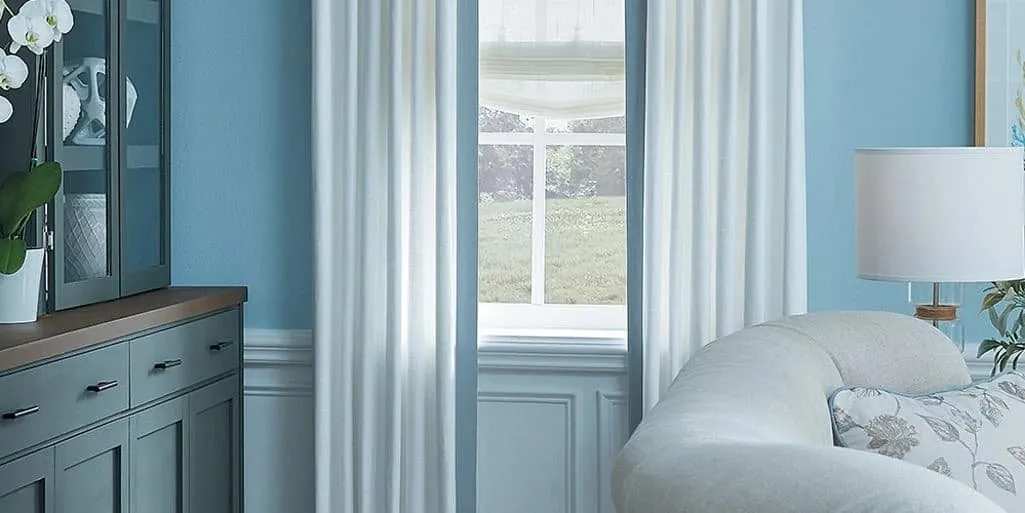
In a Victorian front room with tall windows, a roman shade inside the frame and a pair of drapery panels outside it add height and color to the room. The shade does the work; the panels frame the window. In a smaller cape or ranch room, a roman shade usually looks best on its own, because the folded fabric already brings the softness drapery would. Our interior design consultations can help if you want to plan fabric and color for a whole room.

A Gallery dealer at your door
Hunter Douglas calls dealers who meet its standards Gallery dealers, and Blinds & Designs is one of them. What that means at your door is the full catalog in our sample books: Vignette, Carole Fabrics and Alustra Woven Textures, every lining and lift, and blinds, shutters, honeycomb shades and drapery if a room is better served by something else.
The people who fit your shades hold Hunter Douglas installation certification, and they leave each headrail level and each lift tested. New work starts with a free estimate, and we are glad to look at repairs on blinds and shades you already have.
For the other services we offer in town, see our Stoughton page. For bedrooms, many customers choose a honeycomb shade beside roman shades in the main rooms; our cellular shades in Stoughton page explains why.
Questions from Stoughton
How do I stop the neighbors seeing in at night?
Choose a privacy or room-darkening lining for the side windows you use in the evening. An unlined light-filtering fabric is fine by day but can show a lit room after dark.
Can both units of a two-family match from the street?
Yes. Use the same lining color on every street-facing window in both units. The fabric facing into each room can still differ.
Will a roman shade fit inside my Victorian’s narrow window?
Usually. It depends on how much depth the frame has once the sash hardware is allowed for. If the pocket is too shallow, the shade mounts on the casing just above the glass.
Where can I see the shades?
At your house. We bring the sample books to you, which is the best way to judge color and light. If you would also like to see shades on display, our Franklin showroom is the nearest.
Is there a charge for the estimate?
No. Estimates are free, and there is no obligation to order.
Book your consultation
Fabric looks different in every house, so roman shades in Stoughton, MA, are best chosen at the window itself. Ask for a consultation and we will arrive with the sample books, measure each opening, side windows and Victorian sash included, and hand you a free estimate to consider. Or, if you would like to ask a question first, the call button is the quickest route, whether it is about one awkward side window or every room in a two-family.