
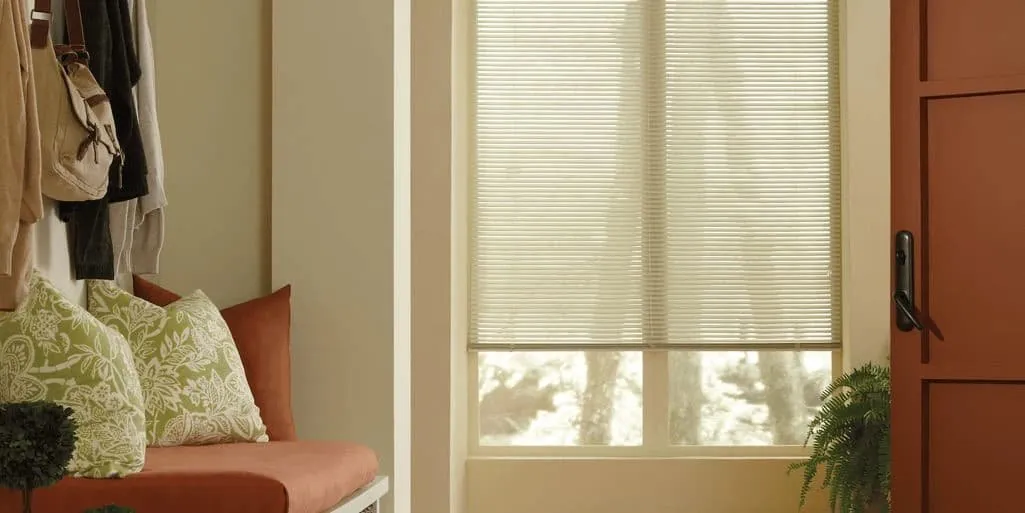
Modest lots, close neighbors and a lot of windows
Much of Stoughton is built on modest lots, with capes, ranches and two-families standing fairly close together. Around the town center the houses are older, including Victorians with tall, narrow sash. Across the rest of town the openings are mostly standard modern sizes, the kind almost any product will fit.
That mix makes the work of a Hunter Douglas dealer in Stoughton, MA, mostly about choosing well rather than working around awkward frames. Side windows often face the house next door a few steps away. Two-families have two sets of rooms stacked one above the other, each with its own needs. And the Victorians near the center ask for care with their trim and their height.
We start at your house. The van brings samples from across the Hunter Douglas range, so you see each option at your own windows before deciding anything.
Start with a visit to your house
For Stoughton we lead with in-home consultations, and for good reason. A sample on a counter tells you very little about how a fabric will look on a side window that faces a neighbor’s siding, or how much light a louver lets into a cape bedroom. At your window, the answer is obvious within seconds.
So rather than asking you to travel, we come to you with a van full of samples, which is what we mean when we say we can bring the showroom to you. Together we go room to room, settle what each space is asking for, take measurements and hand over a free estimate. Everything that follows on this page is what we would talk through during that visit.
Hunter Douglas choices for Stoughton windows
Six families that suit Stoughton houses particularly well. We bring samples of each one that fits your rooms.
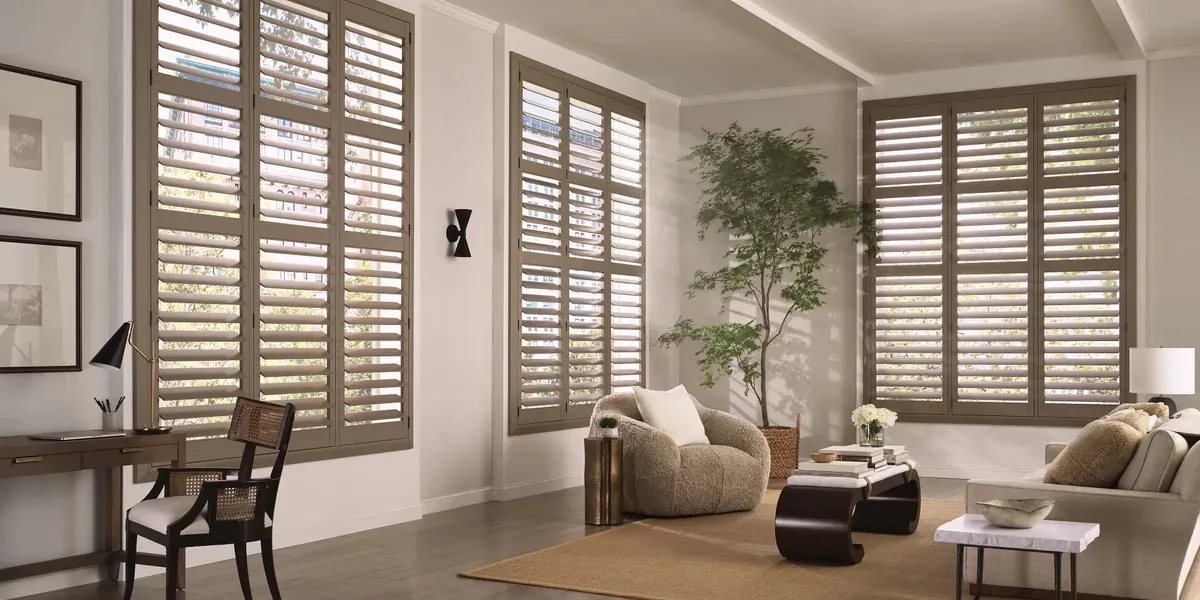
Shutters for the center Victorians
NewStyle and Heritance frames built to tall, narrow sash, with louvers sized to the window.
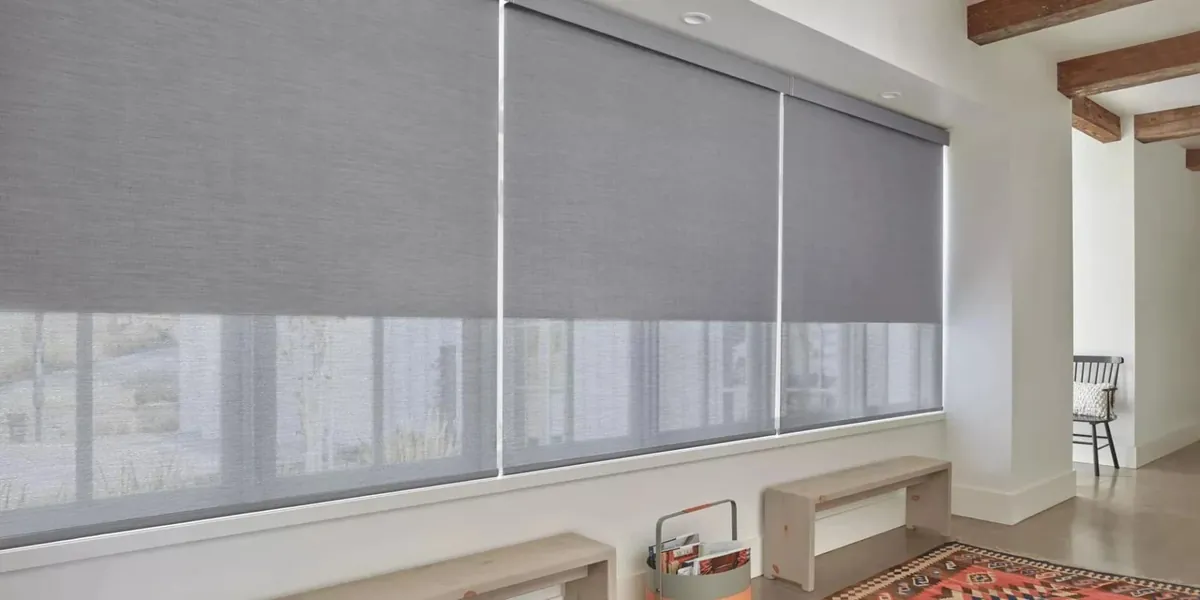
Roller shades for hallways and stairs
Designer roller shades in light-filtering or blackout fabric, slim enough for a shallow frame.
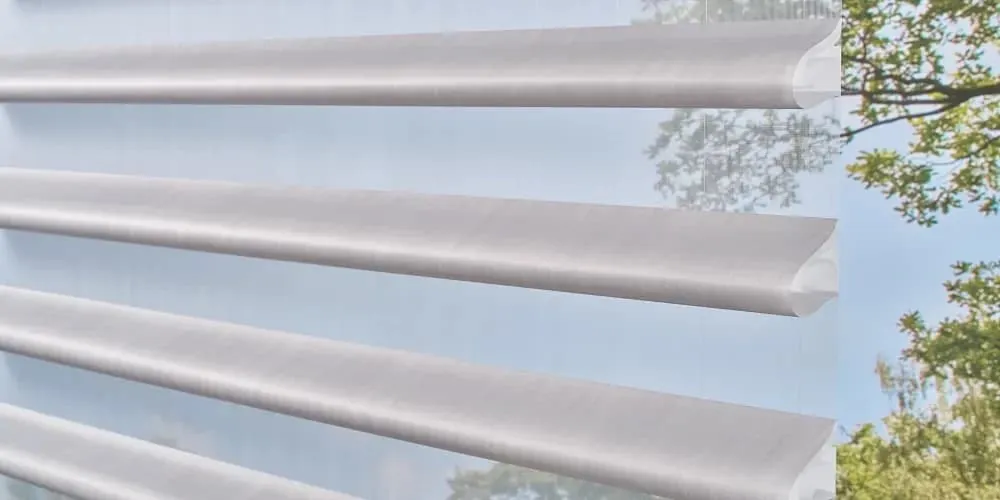
Sheers for the front room
Pirouette and Silhouette soften the light and blur the view in from a close neighbor.
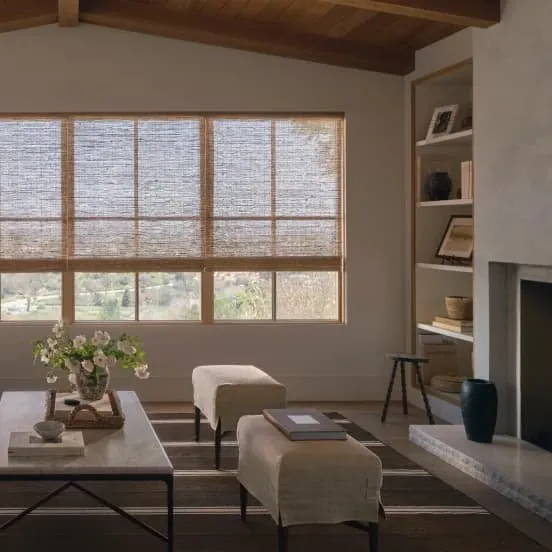
Woven shades for texture
Natural weaves that warm up a plain living room in a cape or ranch.
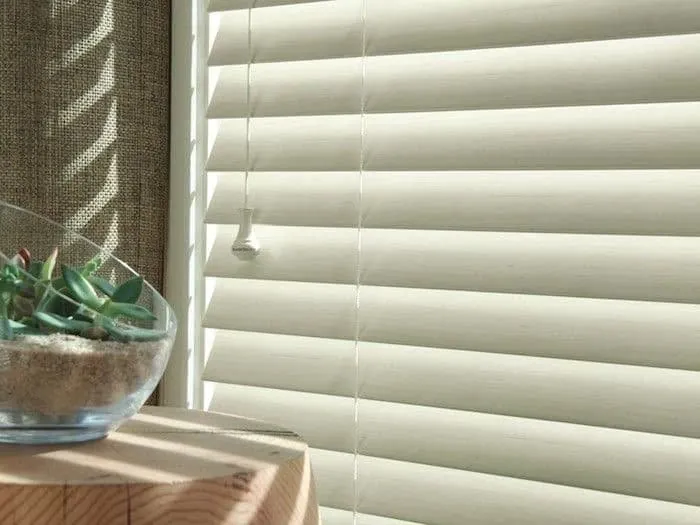
Wood and faux wood blinds
Parkland and EverWood slats tilt for privacy and light, and faux wood copes with kitchens and baths.
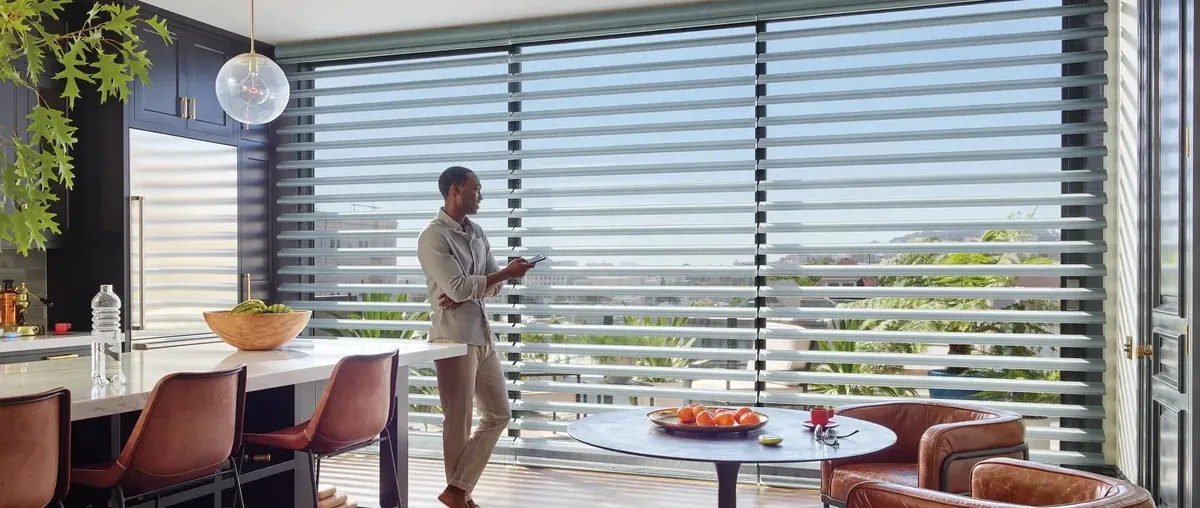
PowerView control
Motorized shades on a schedule or a phone, handy for stairwells and busy households.
Side windows that face the house next door
On a modest lot, the side of one house can be quite close to the side of the next. Windows on those walls, in dining rooms, kitchens, bathrooms and bedrooms, often look straight across at a neighbor’s windows. They need privacy at almost every hour, but nobody wants to live with the shade down and the lights on all day.
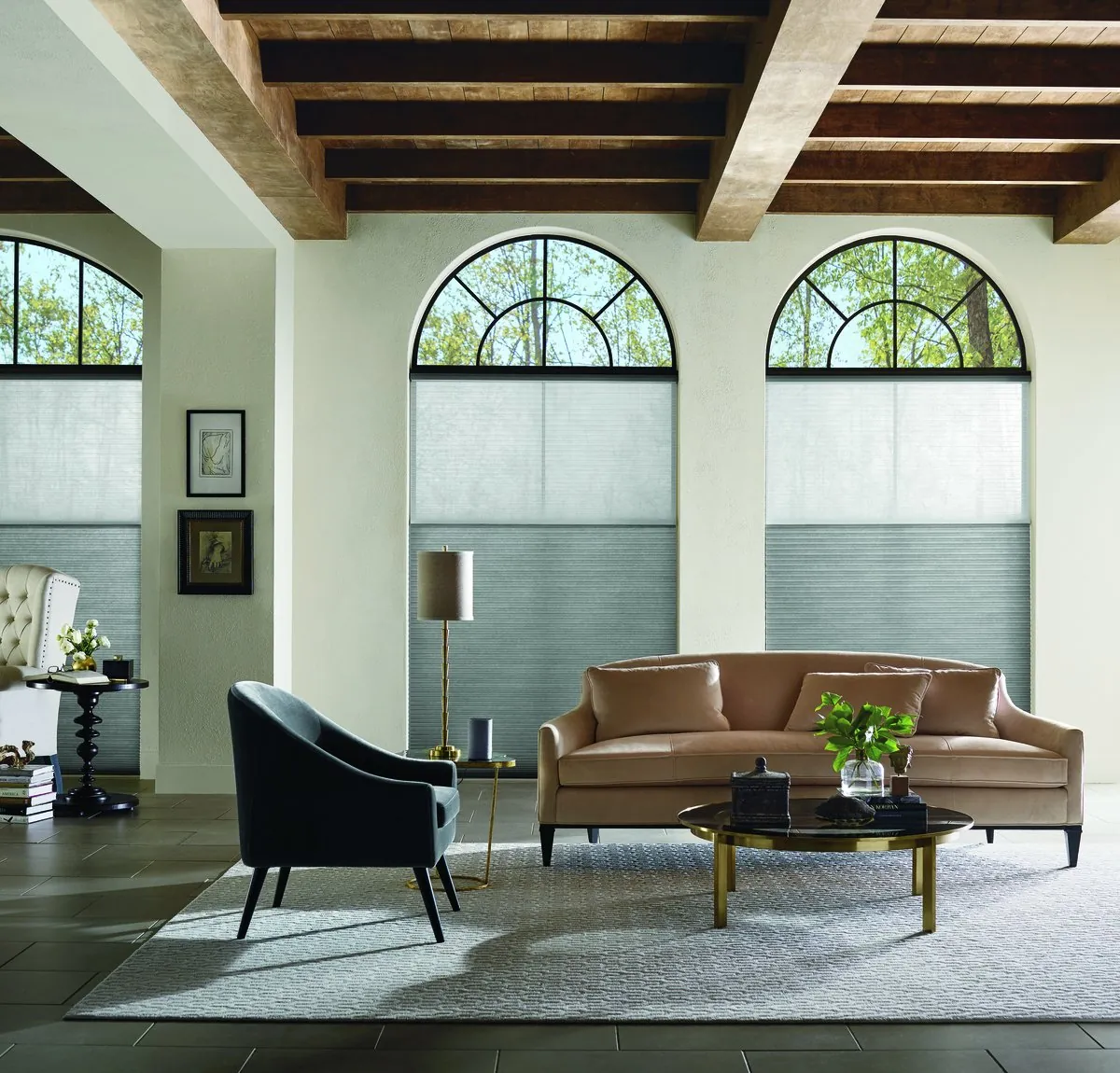
The trick is to let light in without letting the view in. A top-down, bottom-up shade does that neatly: lower the top half for daylight and sky, keep the lower half covered at eye level. Light-filtering honeycomb or Roman fabrics give privacy while still letting the room glow. Sheers blur the view in by day while softening the light.
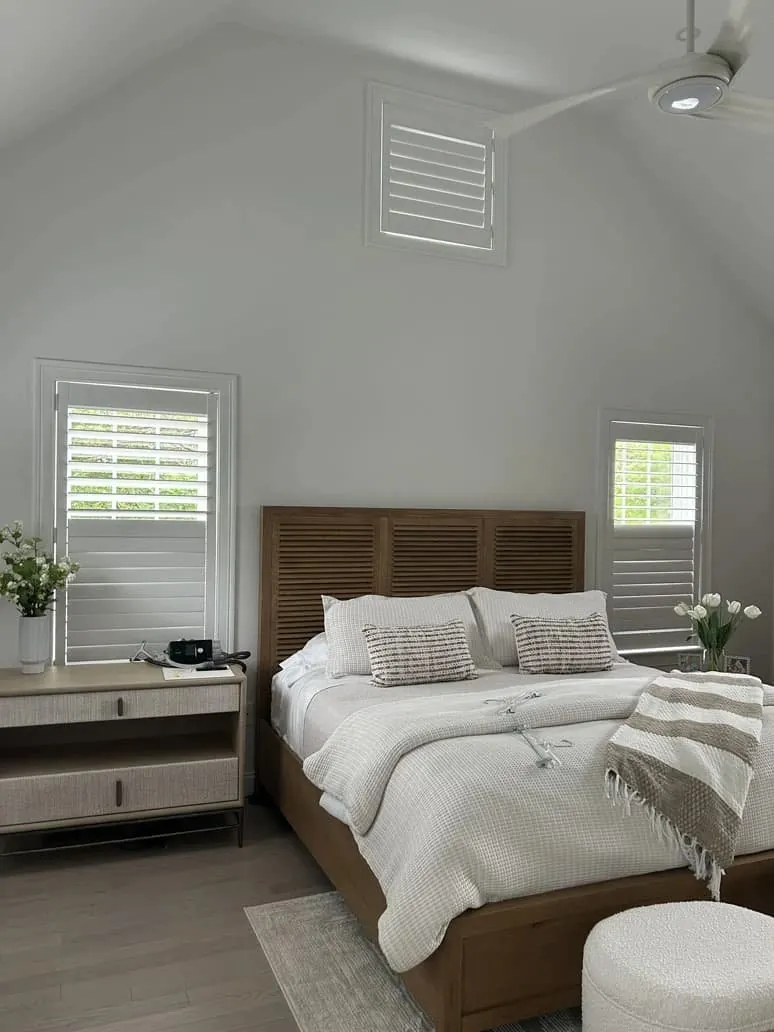
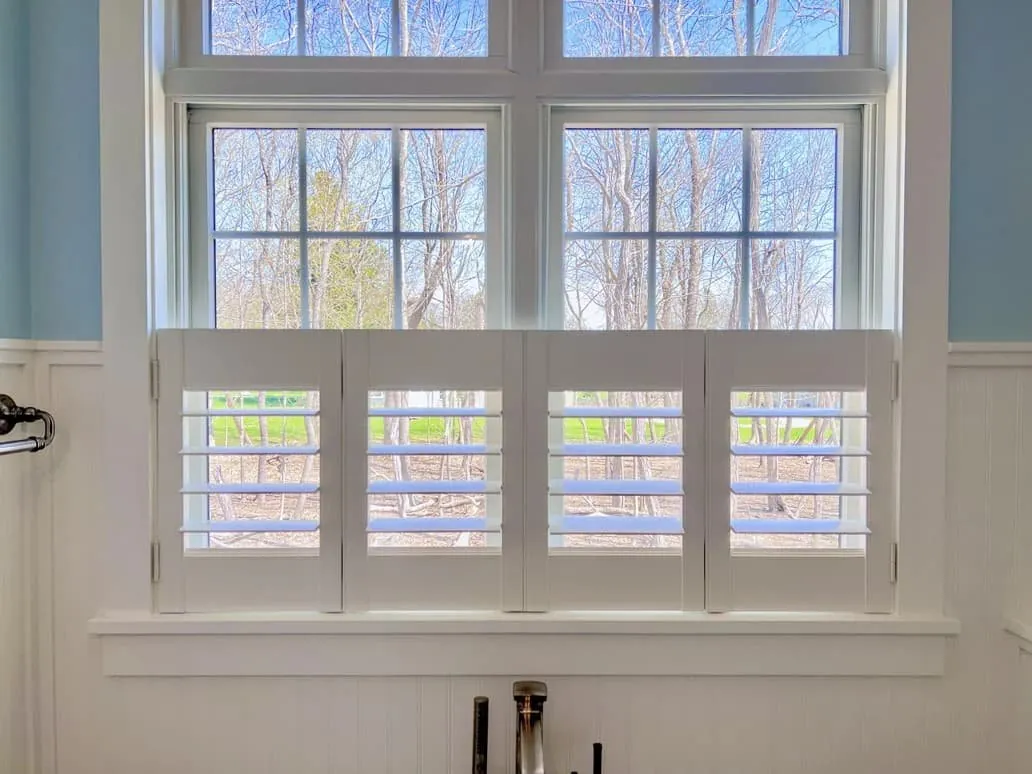
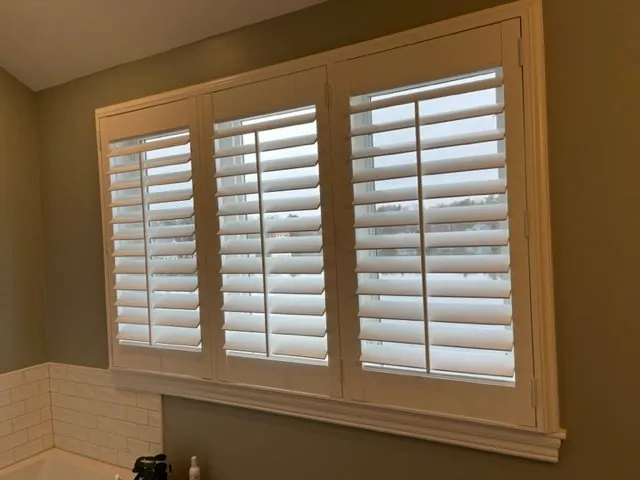
Shutters are a strong choice too. With the louvers tilted upward, light bounces off the ceiling while the line of sight from next door is blocked. Cafe-style shutters on the lower half only keep the top glass fully open.
At night, when your lights are on and the neighbor’s are too, a light-filtering fabric can show shapes. Bedrooms and bathrooms facing a close neighbor usually get a room-darkening honeycomb, a blackout roller or shutters closed tight. During the visit we hold a lamp behind the samples where it helps, so you can judge the night-time privacy of each fabric for yourself.
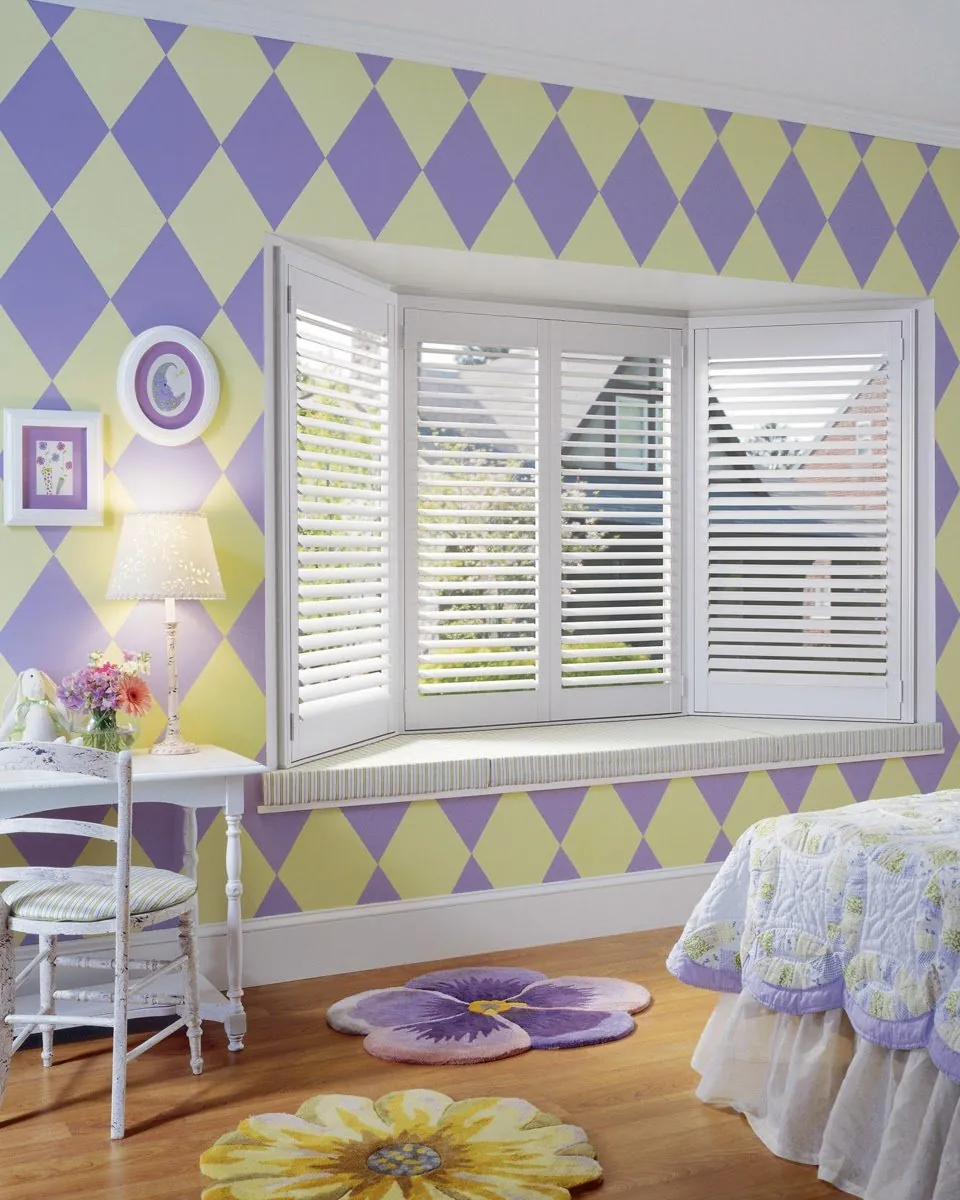
Two-families: two homes in one building
Stoughton has a good number of two-families, with one unit stacked above the other. From a window covering point of view, that means two sets of rooms with the same window sizes but often quite different needs. The upper unit may get more light and more privacy from the street; the lower unit sits closer to passing traffic and to the neighbors.
When we work on a two-family, we can fit one unit or both. Many owners like the outside of the building to look consistent, so the street-facing windows on both floors carry the same color and style of headrail, even if the products inside differ. Standard openings make that easy.
Inside, each floor gets what it needs. The lower unit’s front room might take a light-filtering honeycomb with top-down, bottom-up operation for privacy at street level. The upper unit’s bedrooms might take room-darkening shades. Kitchens and baths on both floors do well with faux wood blinds or Palm Beach shutters, which shrug off steam.
Many two-families also have a side or rear stairwell with its own windows, often high and hard to reach. A cordless roller or honeycomb works where it can be reached, and PowerView takes care of anything higher.
Victorians near the town center
Around the center, the older houses have tall, narrow sash, set in deep casings with trim worth keeping on show. A Hunter Douglas dealer in Stoughton who knows these houses starts by checking whether a product can sit inside the window opening, since an inside mount leaves every bit of the casing visible.
That depends on depth and squareness. Old sash hardware takes up room, and a frame that has moved over a century may be wider at the sill than at the head. Every opening gets measured high, middle and low, and the narrowest reading decides the size. If the depth is there, a honeycomb shade, a Roman shade or a narrow wood blind tucks in neatly. If not, we suggest a slim mount on the casing.
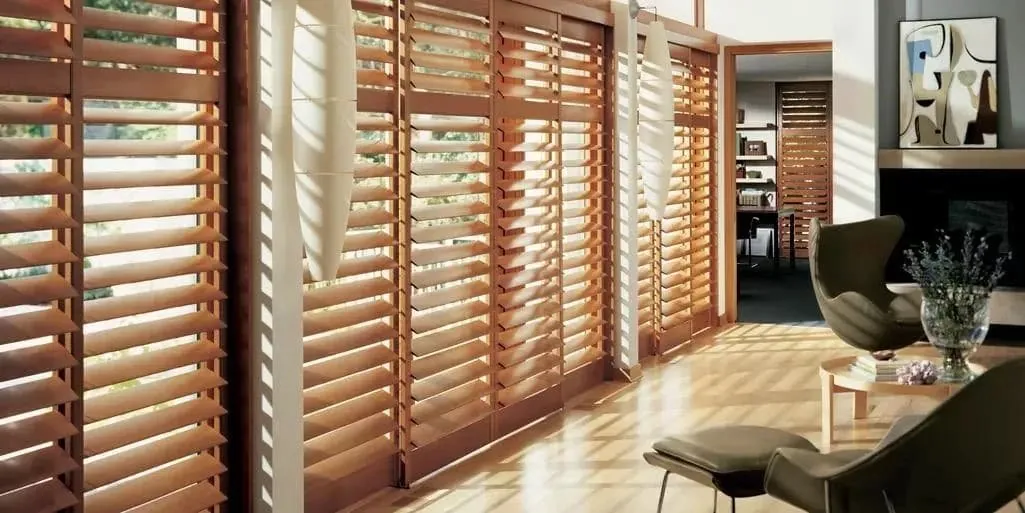
Shutters suit these tall windows especially well. Heritance hardwood frames can be painted to match old trim or stained to suit a darker room, and the louvers can be sized to the proportions of the sash. In a bay, each window gets its own panels, aligned so the whole bay reads as one.
Capes and ranches across town
The capes and ranches that make up much of Stoughton have simple, standard openings, which means almost every Hunter Douglas family is open to you.
In a cape, the upstairs bedrooms usually have dormers. Those deep little recesses suit a honeycomb shade mounted inside, often in a room-darkening fabric. Where the dormer is wide, a top-down, bottom-up shade lets in sky while keeping the lower glass covered.
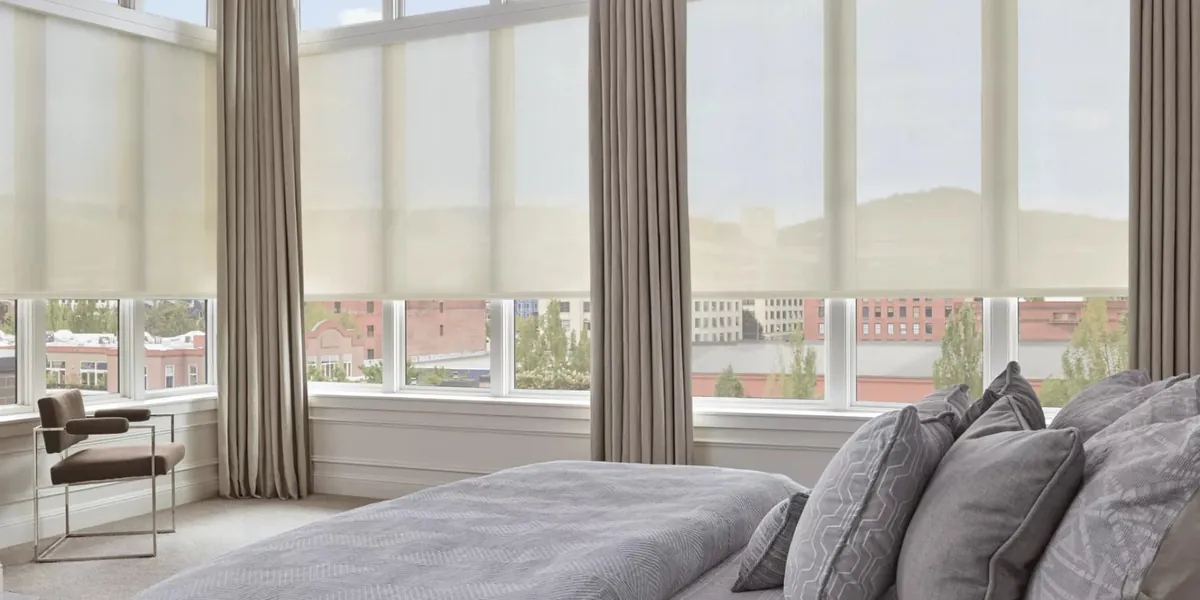
In a ranch, the living room picture window wants light and privacy together, and a light-filtering honeycomb, a sheer or a top-down, bottom-up shade covers both. A slider to the back yard needs something that moves sideways, such as Luminette vertical sheers, a vertical honeycomb or vertical blinds. A wide picture window can take two or three shades on one headrail, so they move together.
What we ask during the visit
The consultation is a conversation as much as a sales visit. We tend to ask the same handful of questions in every room, because the answers point straight to the right product.
- Do you want this room bright all day, or dark at certain times?
- Which windows look straight at a neighbor or the street?
- Is the room too hot in summer or too cold in winter?
- Is there a screen on the wall that suffers from glare?
- Are any windows hard to reach?
- Do you prefer the look of fabric, wood, or a crisp shutter?
With those answers we narrow the samples down quickly, and you spend your time comparing two or three good options rather than looking through everything.
From first visit to finished windows
- You request a consultation online, or press the call button to reach the Canton line, and we set a time.
- We arrive with samples and walk through the house, or the unit, with you.
- You compare fabrics, slats and louvers at your own windows.
- We measure every opening, checking depth on the older frames.
- You receive a free estimate for products and installation.
- Hunter Douglas makes your order to our measurements.
- Our certified installers fit everything, level it, test it and show you how it all works.
For more on the first visit, read what happens at an in-home consultation, or see our in-home consultations page.
Warmth and comfort on standard windows
Standard modern windows are better sealed than old sash, but glass is still the weakest part of any wall. On a winter night a room can feel cold near a window even with the heat on, and in summer a south- or west-facing room can warm up quickly.
Honeycomb shades help most, because the air held in each cell slows heat moving through the window. In the chilliest bedrooms a double-cell fabric gives the air two pockets instead of one. Any covering that puts fabric or wood between you and the pane helps a little, so shutters, Roman folds and lined drapery all make a difference. Roller and screen shades are more about light and glare than temperature, so they suit rooms where comfort is not the main complaint.
Front porches and entry halls
Many of the older Stoughton houses, the two-families especially, have a front porch and an entry hall behind it. The hall often has a door with glass, a side light or a small window beside the stairs. Those openings are easy to forget, but they set the first impression when you walk in and they are often the windows most on view from the street.
A slim roller shade or a metal blind suits a glass door or a narrow side light, with hold-down brackets so it does not swing when the door opens. A sheer softens a stair window while keeping the hall bright. On an enclosed front porch, solar screens or honeycomb shades turn a room that is too hot in July and too cold in January into one you can use most of the year.
When a Hunter Douglas dealer in Stoughton looks at the entry, it is worth thinking about the upstairs unit’s door and stair as well on a two-family, so both entrances look as though they belong to the same building.
Rooms that need to go dark
Bedrooms on modest lots often pick up light from a street lamp, a porch light next door or headlights turning into a driveway. Rooms used by shift workers or small children may need to be dark in the middle of the day.
Room-darkening honeycomb fabrics block most light through the fabric, and the shade’s close fit inside the frame limits gaps at the edges. Blackout Designer roller shades go darker still. Where total darkness matters, a layer of lined drapery over the shade closes the last gaps at the sides. Shutters close tightly too, though a thin line of light can show where the louvers meet.
A Hunter Douglas dealer in Stoughton can show you how dark each option gets by holding the samples up at your bedroom window in the middle of the day. Seeing the difference between a light-filtering, a room-darkening and a blackout fabric side by side, in your own room, settles the question far faster than any description.
Kitchens, baths and back rooms
Kitchens and bathrooms in Stoughton houses need practical choices. EverWood faux wood blinds stand up to humidity and wipe clean. Palm Beach polysatin shutters do the same with a more built-in look. For a little window above a tub or sink, a Designer roller with a wipe-clean fabric takes up almost no room.
Mudrooms and back halls often have a single window by the back door, sometimes in the door itself. A metal or faux wood blind or a slim roller keeps it simple. In an enclosed back porch, which many older Stoughton houses have, solar screens or honeycomb shades make the room usable for more of the year.
Cordless, motorized and child-friendly
With bedrooms and play spaces on every floor of a busy house, cordless operation is the sensible default. Nearly every Hunter Douglas line can be ordered cordless; you move the shade by its bottom rail, and there is no loop for small hands or a cat to find.
PowerView takes it further. Shades can close at dusk and open in the morning on their own, a whole room can move with one tap, and a stairwell window that nobody can reach becomes easy to use. We go over how each motor is powered, and where a remote or wall switch would live. Our motorized blinds in Stoughton page covers the options in more detail.
Color and the look from the street
On a modest lot, the front of the house is close to the sidewalk and every window is on show. A consistent backing color on the street-facing windows keeps the house looking calm and even, by day and at night. Shutters do that naturally; with shades, we choose a fabric whose outside face matches across the front.
Shutters bring one extra benefit on a modest lot: once the louvers are set, they look the same whether the room behind is lit or dark, so the front of the house stays even every evening. Fabric shades can do the same when the outer face is chosen with care, and we can show you the outside of a sample against the light so you see what the neighbors will see.
Inside, the choice is yours. Woven textures warm up a plain living room, wood blinds suit a dining room, and a patterned roller can brighten a child’s room. If you would like help pulling a room together, ask about our interior design consultations.
The full range, fitted by certified installers
As a Hunter Douglas Gallery dealer, we can offer every family the brand makes, from honeycomb and sheer shades to blinds, three shutter lines, drapery and PowerView.
Hunter Douglas certifies the people who install for us. On a Stoughton job that means brackets set true even on a crooked old frame, hardware cleared on the Victorian sash, and every shade raised and lowered before the van leaves.
Older blinds and shades in the house can often be put right rather than replaced, through our blind and shade repair in Stoughton. Our main Hunter Douglas page explains our dealer work, and the Hunter Douglas catalog online shows every line before we visit.

Brought to your door in Stoughton
Stoughton is served from our Canton territory, which runs on in-home consultations. Every appointment happens at your house, with samples laid out in the rooms they are meant for.
If you would like to see products before a visit, our nearest showroom is in Franklin; the Franklin showroom page has the details. Most Stoughton customers simply start at home.
Every service we offer in town is on our Stoughton page, with separate pages for plantation shutters, roman shades, cellular shades, custom drapery, custom blinds and roller shades.
Questions from Stoughton
My side windows look right into the neighbor’s house. What helps?
Shades that open from the top keep the eye-level glass covered and still admit daylight. Light-filtering fabrics, sheers and shutters with the louvers tilted up all give privacy by day. For bedrooms and bathrooms at night, a room-darkening fabric or closed shutters give full cover.
Can you fit both units of a two-family?
Yes. We can fit one unit or both, and keep the street-facing windows consistent on both floors while choosing what suits each unit inside.
Do I have to go to a showroom first?
No. We come to your house with samples, measure and give you a free estimate there. Most Stoughton projects never need a trip anywhere.
Will shutters fit the tall sash in a Victorian near the center?
Usually. We measure each window for depth and squareness, then build the shutter frame to the opening, inside it where the depth allows.
What does the estimate cover?
The products and installation you are considering, measured at your windows. The estimate is free.
Next steps for your Stoughton house
The right Hunter Douglas dealer in Stoughton should show you the range at your own windows and fit it properly. Book a consultation and the samples come to you; once every opening is measured you have a free estimate in hand. Want a word before then? Press the call button for the Canton line.