
From the common outward
Norwood’s houses change the further you go from the common. Close in, the older stock stands shoulder to shoulder: Victorians and two-family houses with tall sash windows, built near enough to each other that one house often shades the next for part of the day. A street or two out, post-war capes and ranches take over, on lots laid out later, with standard window sizes throughout.
That gives a blind two quite different jobs. Near the common, the tall windows need long, narrow blinds that fit old frames and make the most of light that has to squeeze between buildings. Further out, the regular windows of the capes and ranches want a neat, matching set that suits everyday family rooms. Ordering custom blinds in Norwood, MA, lets each blind be built for its own window, so the same house can have both if it needs them.
We start every Norwood order in your home. Our vans carry samples of the full Hunter Douglas blind range, so we bring the showroom to you and you decide with your own windows in front of you.
Custom blinds in Norwood, MA: the three families
Hunter Douglas makes horizontal blinds in real wood, faux wood and metal, plus vertical blinds for doors and wide spans. In Norwood we group them like this.
Wood and faux wood
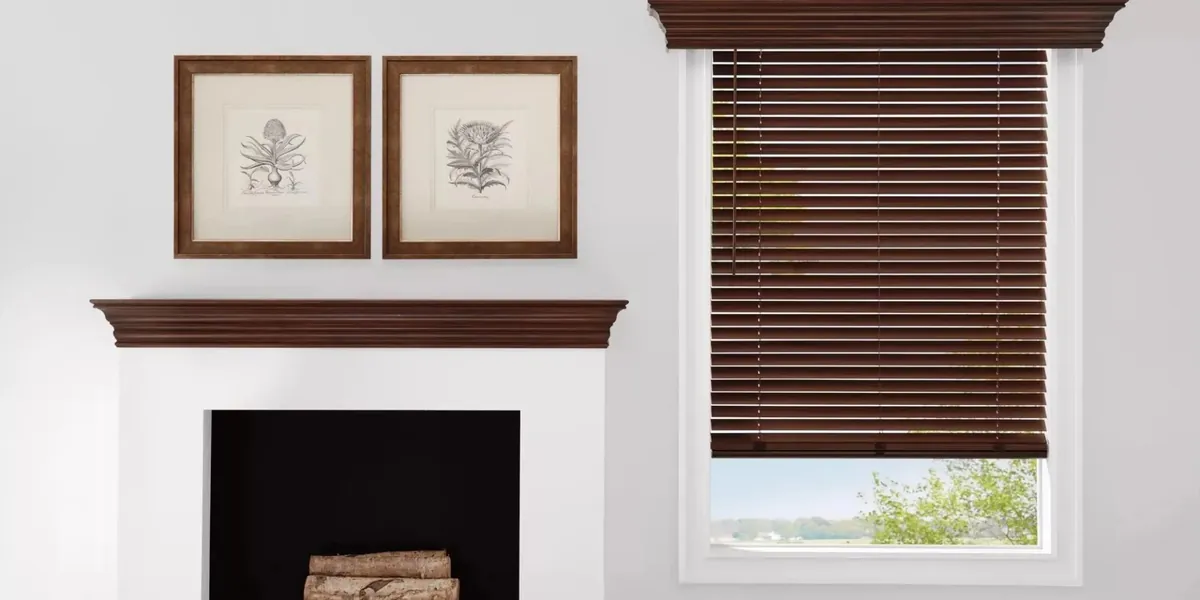
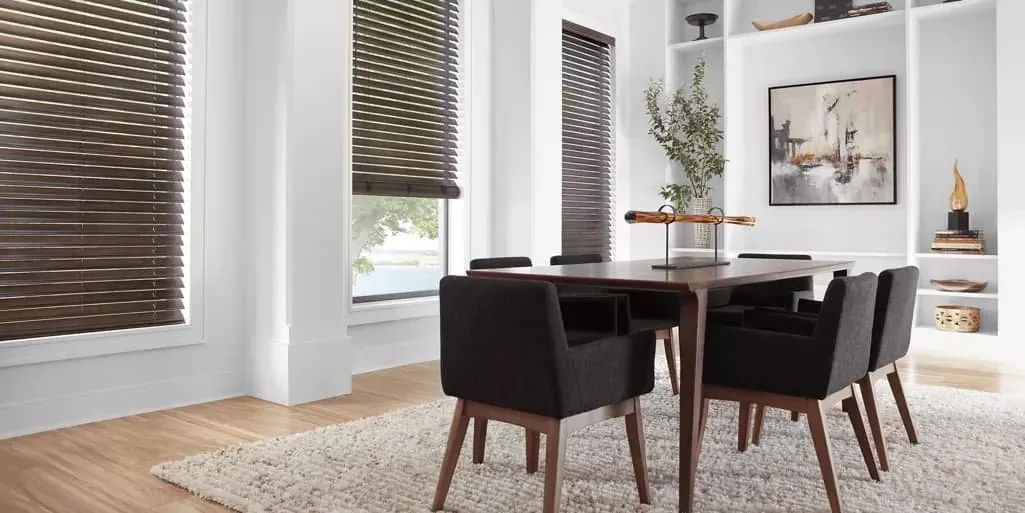
Parkland real wood for the front rooms of an older house, where the trim and floors are wood too. EverWood faux wood, matched in color, for kitchens, bathrooms and the back hall, where steam and splashes would trouble real wood. Together they cover most windows in most houses.
Metal
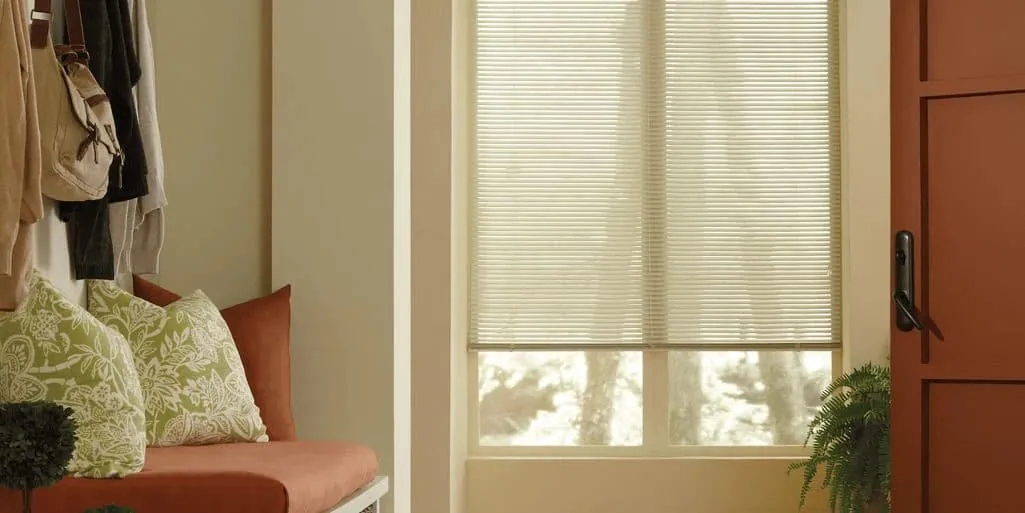
Aluminum slats with the slimmest headrail Hunter Douglas makes. The fix for shallow frames, including many replacement windows in older houses, and for glass in or beside a door. Many colors, from white to deep tones.
Vertical
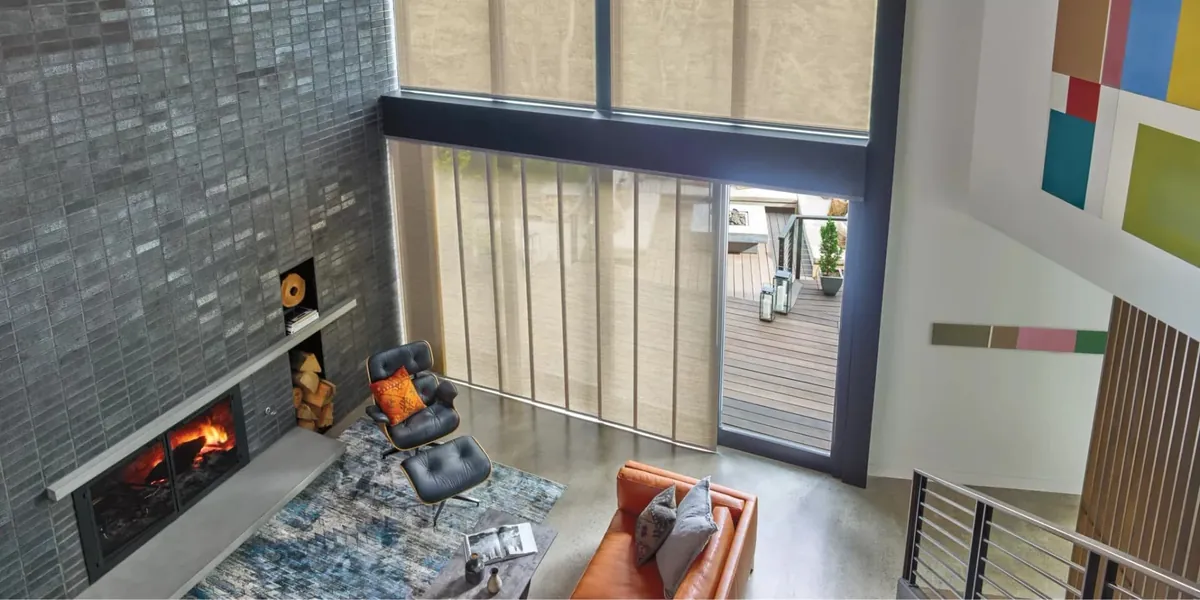
Vertical blinds, or gliding panels, for the slider from a ranch kitchen to the yard or any very wide run of glass. They draw aside so a door opens without lifting anything.
Tall sash around the common
The Victorians near Norwood’s common were built with windows that are tall and narrow, often in pairs in the front parlor and in threes in a bay. The casings are deep and the sash are heavy, and a century or more of settling means few of those openings are perfectly square.
A long blind for a window like this has to do three things. It has to fit the narrowest part of the opening so it never scrapes. It has to hang straight even when the frame is slightly out of true. And it has to stack neatly at the top when raised, so the upper glass is not lost behind a thick bundle of slats.
We measure each window at three heights across and at three points top to bottom, then check how deep the frame is where the headrail would go. Sash pulleys and stop beads can steal depth, and where they do, the blind goes on the face of the casing instead of inside it. A narrower slat usually suits these windows. It keeps the scale right on a slim opening and gathers into a shorter stack, which matters on a window that tall.
Making the most of light between close-set houses
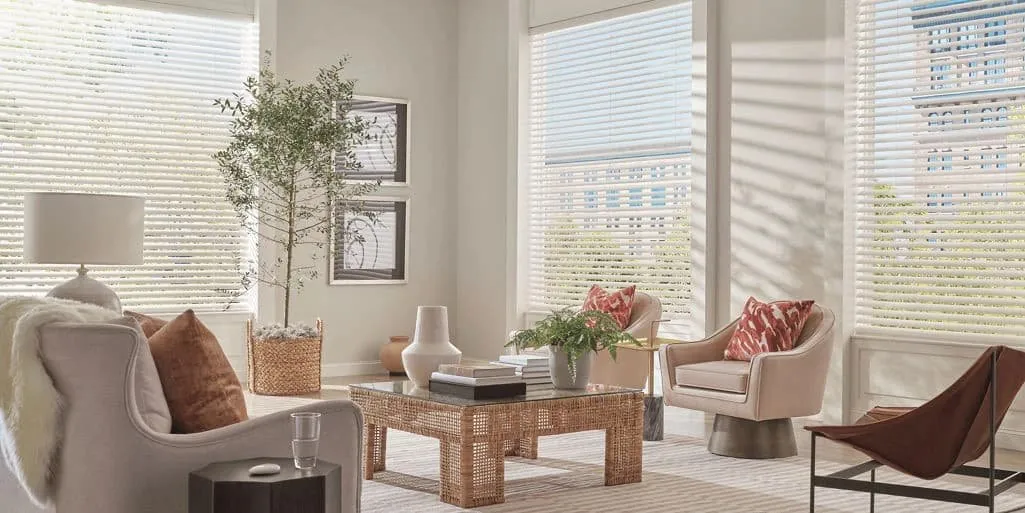
Close-set houses take light from each other. A side window that faces the next house a driveway away may only see direct sun for an hour or two, and a ground-floor room on a narrow lot can feel dim even at midday. The aim there is to let in every bit of daylight while still keeping the room private.
A horizontal blind is the right tool. With the slats tilted upward, light coming in from the side or from above is thrown onto your ceiling and spread through the room, which brightens it far more than you might expect. At the same time, the angle blocks the view in from next door. Choosing white or cream slats helps further, because a pale slat reflects light inward instead of absorbing it.
In the evenings, with lamps on, the same blind closes fully for privacy. On the side of the house facing a neighbor, that one adjustment, up by day and shut by night, is often all a window needs.
Two-families near the center
Many of the two-family houses near the center share the Victorians’ tall sash, stacked in two rows on the front of the building. When the blinds on one floor do not match the other, it shows from across the street.
If you own the building or are fitting both units, ordering together keeps the front calm: one color and one slat width on every front window, headrails at the same height on each floor. Behind that, each unit can choose for itself. One living room might take stained Parkland wood; the other painted. Both kitchens might take EverWood; a child’s room upstairs might want a cordless lift.
Side windows on a two-family are long and plentiful, because the side walls run deep along the lot. Treating them as a set, rather than one at a time over the years, saves the patchwork look that older two-families often end up with.
Replacement windows in older frames
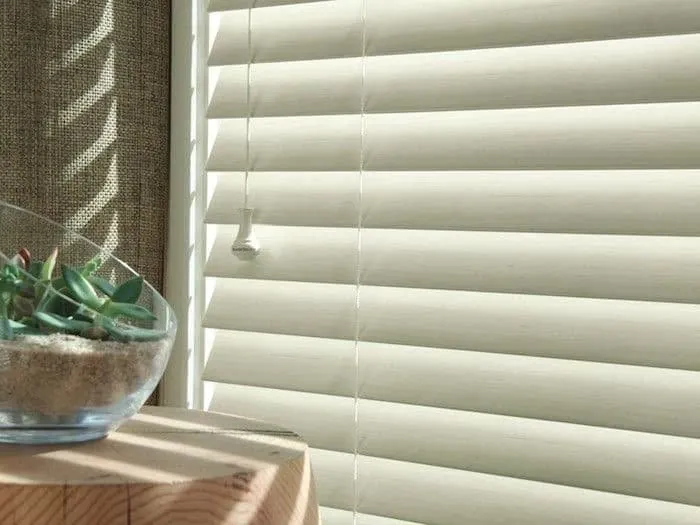
Plenty of the older houses near the common have had their original sash replaced with newer windows at some point. Those replacements sit inside the old openings, and they often leave a much shallower frame than the original, with the new window’s own frame taking up most of the depth.
That changes which blind will fit. A wood headrail may be too deep to mount inside, while a metal blind, with its slim headrail, often fits where wood will not. If neither fits inside, the blind can be mounted on the casing, a little wider than the opening, which also helps block light at the edges. We check each window rather than assume, because in the same house one window may be original and the next replaced.
Stair halls and bays in the Victorians
Two windows in a Norwood Victorian need extra thought. The first is the stair window, usually a tall sash on the landing where the staircase turns, sometimes with colored or patterned glass in the upper part. A blind on the lower sash alone keeps the upper glass on show, and a cordless lift or a PowerView motor saves leaning over the banister to reach it.
The second is the bay. A front bay usually has a wide center window and two narrower ones set at an angle, and the three are almost never the same width. Each gets its own blind, made to its own size, with the headrails aligned so they raise to the same height and the slats tilt together. From the street the bay then reads as one window, and inside it keeps the sense of space that makes a bay worth having. Getting these two right is often what makes custom blinds in Norwood feel tailored to an old house.
Capes and ranches on the outer streets
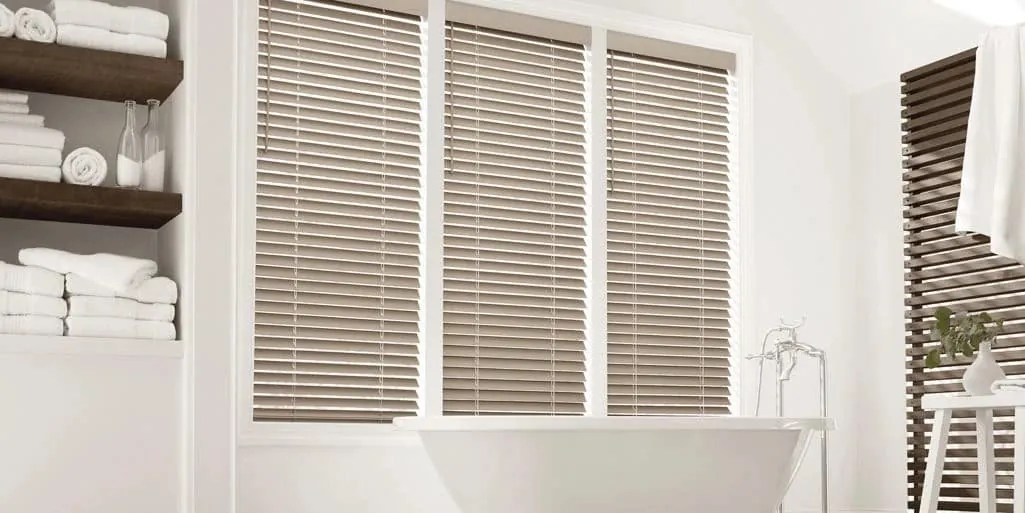
Away from the center, the post-war capes and ranches are easier ground. Their windows are standard sizes, square and repeated around the house, so a custom blind drops cleanly into each opening and the slats line up from room to room.
In a cape, the dormer windows upstairs sit in small alcoves under the roof, perfect for an inside mount that clears the glass completely when the blind is raised. In a ranch, the wide living room window is often divided into two or three blinds so one part can be open while another is closed, and the kitchen slider takes a vertical blind. Kitchens and bathrooms in both get EverWood faux wood.
For houses like these, choosing custom blinds in Norwood is mostly about the look and the daily use: which color suits the room, which slat width you prefer, and how each blind should lift and tilt.
Choose at home, in your own light
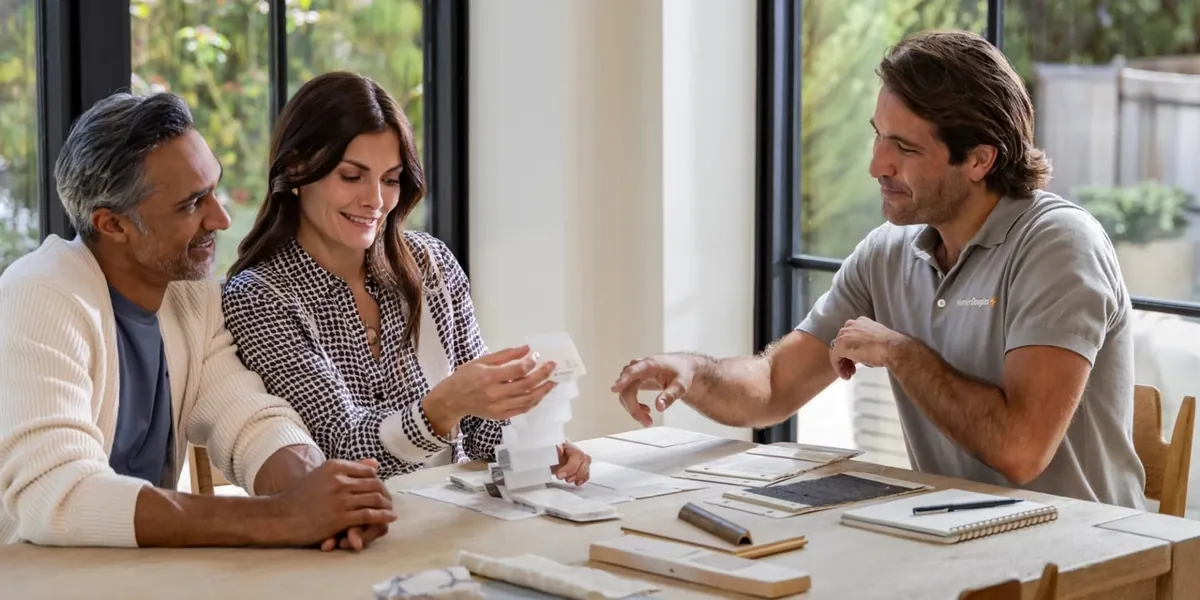
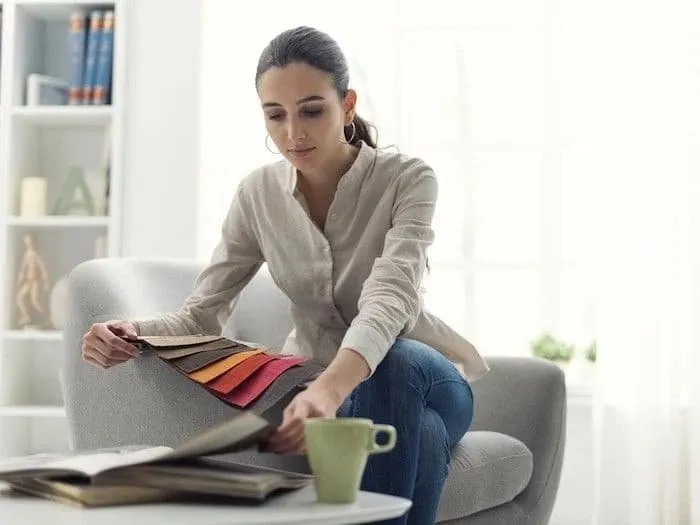
For Norwood we lead with the in-home consultation, and for good reason. Light between close-set houses is hard to judge anywhere but in the room itself, and a slat color that looks fine in your hand can look quite different on a dim side window or a bright south-facing one.
We bring samples of every material and color, the vertical vanes and the controls, and hold them at your windows. You see how far a tilted slat hides the view from next door, how much light a pale color throws back into the room, and how a narrow slat looks on your tall sash. If you would also like to see blinds in person, the nearest showroom is in Franklin. More on our in-home consultations.
How the consultation runs
- Choose a time with Request a Consultation, or reach us through the call button.
- We arrive with the samples and ask which rooms matter most to you.
- At each window we try slats at different angles and colors, so you see the effect on light and privacy straight away.
- You make your choices room by room, with no pressure.
- We measure every opening, paying close attention to old frames and replacement windows.
- You get a free estimate to consider in your own time.
Want help with a whole room, not just the window? Ask about our interior design consultations, which can happen at the same visit. Our page on what happens at an in-home consultation explains more.
Kitchens at the back of the house
In the older houses near the common, the kitchen is usually at the back, sometimes in a later addition, with a window over the sink that faces a neighboring yard. In the capes and ranches further out, it often opens to a slider and the back garden. Either way it is a working room, with steam, grease and splashes, and it needs a blind that copes.
EverWood faux wood is the answer in both. An inside mount keeps the blind clear of the tap, a cordless lift keeps cords away from the counter, and the slats wipe clean. Matched to the wood blinds in the front rooms, the kitchen looks part of the same house.
Wood or faux wood, and where each belongs
Real wood is lighter than people expect, warm to look at and available in stains that match old trim and painted finishes that match new. In a Victorian parlor, a dining room with wood floors or a study, it is the natural choice.
Faux wood earns its place in the rooms that get wet. Over a sink, in a bathroom that fills with steam, or in a back hall where boots and umbrellas drip, EverWood keeps its shape where real wood could warp. From across the house the two look alike, and they come in matching colors, so the outside of the house stays consistent.
Most whole-house orders in Norwood mix the two. Add a metal blind for a shallow replacement frame or a door, and a vertical blind for a slider, and nearly every window in an older or newer house is covered.
Color choices for older and newer streets
Near the common, trim in the older houses is often painted white or cream, sometimes stained. A blind matched to the trim lets the tall windows stay the main feature, and white slats help a dim, close-set room feel brighter.
On the outer streets, capes and ranches suit white blinds across the front for a tidy, even look, with more freedom inside: wood tones in a family room, soft grays in a modern kitchen, darker slats in a bedroom. Setting one color for every street-facing window and varying the rest is a simple rule that works on almost any house.
Cordless, corded or motorized
There are three ways to work a Hunter Douglas blind, and each has its place.
- Cordless. No cord at the side. Raise or lower the blind by its bottom rail and it stays where you leave it, with a wand for the tilt. Our first suggestion for children’s rooms and anywhere pets roam.
- Corded. The traditional pull, still useful on a large, heavy blind.
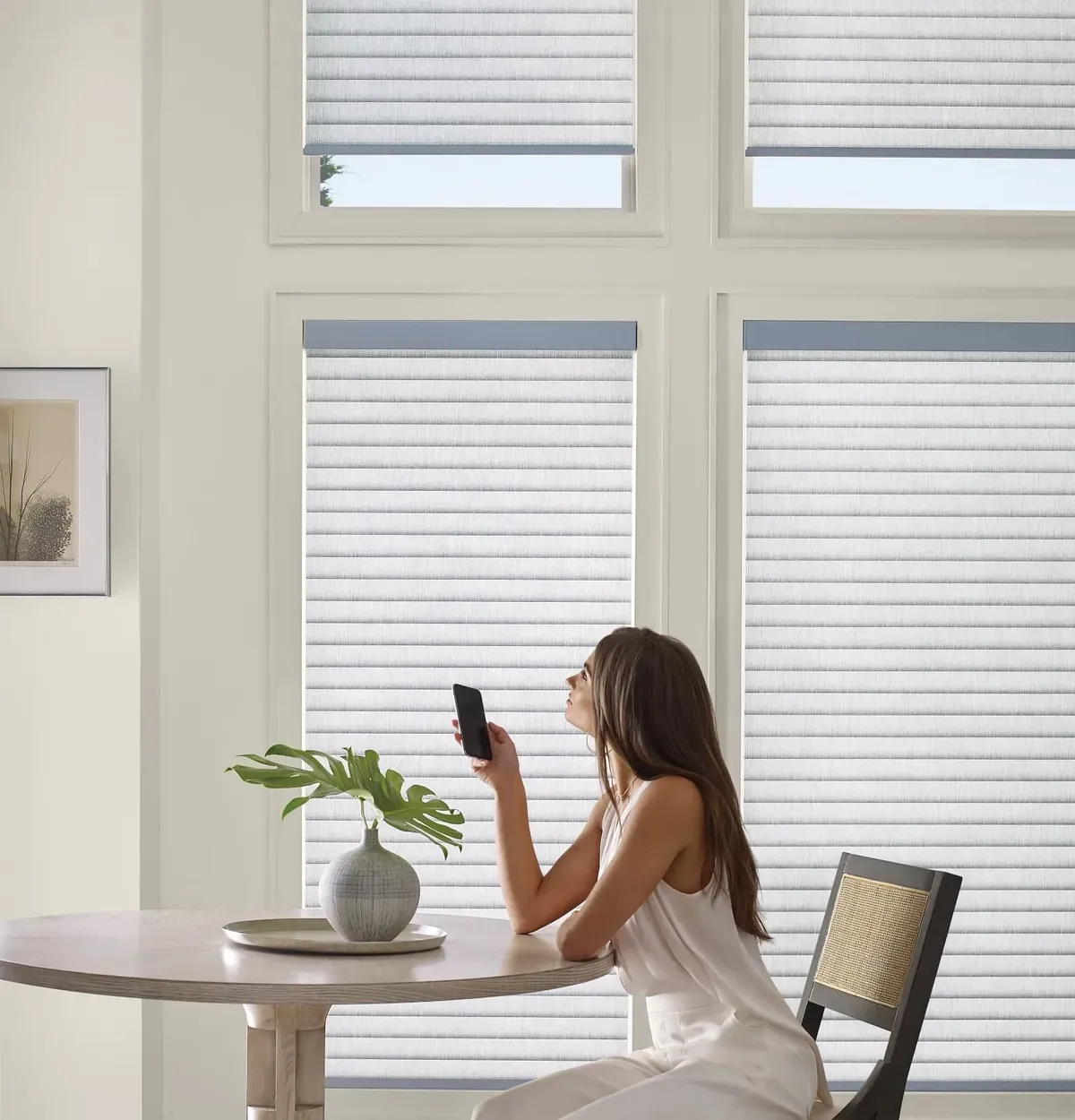
- PowerView. Motorized control from your phone, a remote or a schedule. On the tall sash near the common it saves stretching to the top of the window, and side blinds can be set to tilt shut at dusk.
We bring each one so you can try them at the window.
Measuring and installation
Every blind is made to our measurements, so we are careful. Several widths and heights per window, the depth checked for an inside mount, and anything in the frame that could interfere noted, such as a lock, a sensor or a replacement window’s own trim. Each mount and control is agreed with you before the order goes in.
When the blinds arrive, our certified Hunter Douglas installers fix the brackets into solid wood, set every blind level, test each lift and tilt, and show you how they work. That level of fit is what makes custom blinds in Norwood, MA, look like part of the house.
Why a Hunter Douglas Gallery dealer
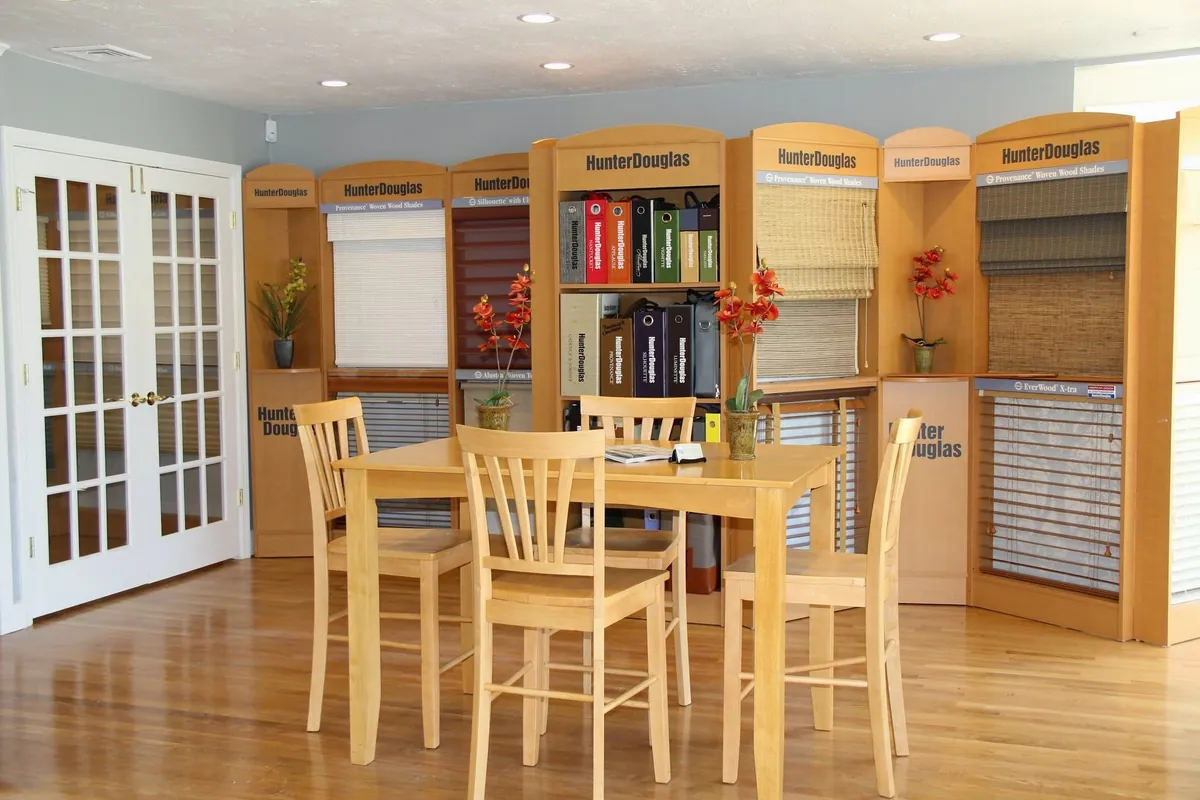
Blinds & Designs is a Hunter Douglas Gallery dealer, a status Hunter Douglas grants to dealers who meet its standards. Through us you can order every blind in the range, Parkland, EverWood, metal and vertical, in every color, slat size and control, plus PowerView motorization.
Hunter Douglas has certified our installers. If a blind needs repairing later, that is something we do as well.
For other rooms, see our cellular shades in Norwood, roman shades in Norwood or plantation shutters in Norwood, or the full list for the town on our Norwood page. The custom blinds page covers the whole range, with more on metal blinds and vertical blinds.
Questions from Norwood
My side windows face the house next door. Will blinds keep the room bright?
Yes. Tilt the slats upward and daylight is thrown onto the ceiling while the angle blocks the view from next door. Pale slats reflect even more light into the room.
My older house has replacement windows. Does that change anything?
Often. Replacement windows can leave a shallow frame, so a wood headrail may not fit inside. A metal blind usually does, or the blind can be mounted on the casing.
Can the blinds on both floors of my two-family match?
Yes. We use one color and slat width on every front window and align the headrails, while each unit chooses its own material inside.
Do I need to go to a showroom?
No. We bring the samples to your house. If you would also like to see blinds in person, the nearest showroom is in Franklin.
Is the estimate free?
Yes. After we measure, the estimate is free.
Book a home visit
Samples at your own windows settle the question quickly. Request a consultation and we will bring the Hunter Douglas blind range to your Norwood house, measure every opening and leave you a free estimate. You can also talk to us first using the call button, or see blinds in person at the Franklin showroom.